Our Top Picks
 Fender Tone Master Twin Reverb Guitar AmplifierTone Master31.7 x 26.3 x 15.9 inches45.25 poundsCheck on Amazon
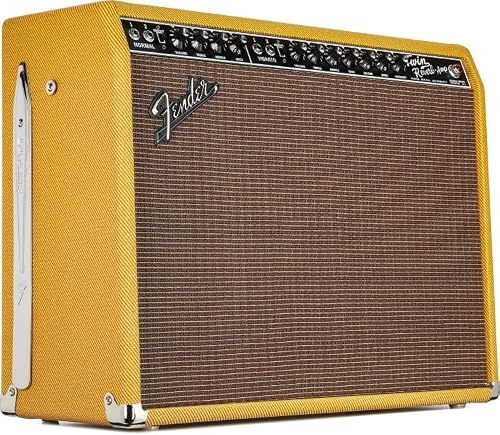
 Fender 65 Twin Reverb Guitar AmplifierTwin Reverb28.25 x 22.5 x 12.25 inches72.02 poundsCheck on Amazon
 Stromberg Mega-Twin 2-in-1 Portable Bluetooth Speaker4.72 x 4.72 x 11.81 inches3.6 poundsCheck on Amazon
 Fender Amplifiers 2273000000 68 Custom Twin Reverb AmplifierTwin Reverb10.4 x 19.9 x 26.2 inches64 poundsCheck on Amazon
What's inside
- How this guide handles evidence and recommendations
- The amplifier behind the speakers
- The load math every Twin owner should understand
- What a speaker swap actually changes
- Magnet families and cone behaviour
- The well known replacement classes
- Mixing two different speakers in one cabinet
- Weight, portability, and the neo option in practice
- The swap procedure, step by step in principle
- Mistakes that damage amplifiers or disappoint owners
- Decision paths by playing style
- Keeping the result consistent over years of use
- Reading specification sheets without being misled by them
- How the room and the stage rewrite the verdict
- Special considerations for vintage examples
- Check prices on Amazon
- A calm buying sequence that avoids second purchases
As an Amazon Associate I earn from qualifying purchases. This post may contain affiliate links at no extra cost to you.
Few amplifiers expose a speaker choice as plainly as a Fender Twin Reverb. The circuit was designed around generous clean power, a bright and open preamp voicing, and enough output to fill a stage before public address systems handled most of the work. Because the amplifier section stays composed at volumes where smaller combos begin to sag, the speakers become the main place where character can be adjusted. A different pair of twelve inch drivers can tighten the low end, soften an aggressive top, add midrange body, or change how loudly the rig feels before any pedal enters the picture.
This guide approaches the decision through published specifications, manufacturer documentation, and the accumulated reports of owners and working players. Speaker behaviour in a Twin Reverb is unusually well documented because the amplifier has remained in production, in one form or another, for decades, and because generations of players have recorded which replacements cured icepick treble, flabby bass, or excessive weight. Reading those accounts together reveals patterns that hold across musical styles even when individual taste differs.
One caution belongs at the front. A Twin Reverb is not a forgiving low wattage combo where almost any driver will survive. Its output stage, commonly rated around eighty five watts into a four ohm load, can punish an underrated speaker during a long loud set. Any shortlist therefore has to satisfy electrical requirements first and tonal preferences second. A driver that sounds glorious for ten quiet minutes at home may still be a poor match if its power handling, impedance, or mounting depth conflicts with the amplifier.
How this guide handles evidence and recommendations
Recommendations here rest on specification sheets, maker documentation, and consistent owner and community reporting rather than on any claim of firsthand product evaluation. As an Amazon Associate we earn from qualifying purchases. Where a characteristic is described, such as a hemp cone sounding smoother in the upper registers, the description reflects the voicing its maker publishes and the response many owners describe after installation. Individual cabinets, guitar pickups, room acoustics, and playing touch will always shade the final result.
The amplifier behind the speakers
From the AB763 era to the reissue lines
The original black panel Twin Reverb of the mid nineteen sixties used the AB763 circuit, a design widely regarded as a benchmark for clean guitar amplification. Two twelve inch speakers sat in an open back pine cabinet, driven by four 6L6 power tubes through an output transformer specified for a four ohm load. Reverb and vibrato were built in, the bright switch added top end emphasis, and the whole package earned a reputation as the amplifier players chose when they needed volume without distortion from the amp itself.
Fender returned to that template with the sixty five Reissue, which follows the black panel formula closely, and later with the sixty eight Custom, which leans toward the silver panel era with a modified circuit, quicker breakup behaviour, and a shared reverb and vibrato across channels. Both modern lines keep the essential format that matters for speaker shopping: a two by twelve open back combo, roughly eighty five watts of clean power, and a combined four ohm speaker load. A buyer researching replacements should confirm the exact model and year, because small differences in baffle construction and stock fittings can affect which drivers drop in without modification.
What came fitted from the factory
Vintage examples left the factory with speakers from several suppliers, most commonly Oxford drivers in many production years, with Jensen units appearing in earlier periods and JBL drivers offered as a premium option that some players ordered or retrofitted. Those JBL equipped Twins developed a devoted following for their clarity and efficiency, along with a reputation for considerable weight and an unflinching top end that suited some styles and fatigued others. Surviving original speakers also vary enormously today, since cone fatigue, reconing history, and decades of storage conditions all change how a vintage driver actually behaves.
The modern reissue line settled on the Jensen C12K as its stock ceramic driver, a choice that tells a buyer a great deal about the intended baseline. The C12K is a high power handling ceramic speaker voiced for strong lows, a present midrange, and a top end that stays controlled under the Twin circuit’s brightness. Many owners keep it happily for years. Others describe wanting more sparkle at low volume, less weight, or a midrange character closer to older American drivers, and those specific complaints are the useful starting point for any replacement search.
Why the stock sound leaves some players wanting more
Complaints about factory speakers in a Twin Reverb tend to cluster into a few repeatable themes. Some players find the low end generous to the point of looseness when a neck humbucker feeds a loud clean setting. Some want earlier speaker colouration, because the amplifier itself resists breakup so firmly. Others play mostly at home or in small rooms and want a driver that sounds balanced before the volume knob reaches stage levels. Each complaint points toward a different family of replacements, which is why naming the problem precisely matters more than pursuing a universally praised model.
Weight deserves mention in the same breath as tone. A Twin Reverb with two ceramic magnet drivers is famously heavy to carry up stairs or across a festival site. For a player whose amplifier travels weekly, shaving several pounds per speaker can be the difference between keeping the amp in regular service and leaving it at home. Neodymium drivers exist largely to answer that practical problem, and their voicing has matured to the point where reducing mass no longer demands an obvious tonal sacrifice.
The load math every Twin owner should understand
Two eight ohm speakers in parallel make four ohms
The arithmetic is simple but the consequences are serious. When two speakers of equal impedance are wired in parallel, the combined load is half the value of one driver, so two eight ohm speakers present four ohms to the amplifier. The Twin Reverb’s output transformer expects that four ohm load. Its secondary tap, the wiring harness, and the original design all assume a pair of eight ohm drivers sharing the work in parallel. Any replacement plan should reproduce that arrangement unless a qualified technician has deliberately configured something else and confirmed the transformer tap being used.
Equal sharing is the hidden assumption in that calculation. Two drivers of the same impedance split power evenly, so each speaker in a healthy pair handles roughly half of what the amplifier delivers. Pairing drivers of different impedances in parallel breaks that symmetry, sending more power to the lower impedance unit and producing a combined load that matches neither driver’s rating neatly. Mixing speaker models is a respected practice in this amplifier, as a later section explains, but the mixed pair should still consist of two eight ohm drivers so the electrical behaviour stays predictable.
Why impedance matching protects the output transformer
A tube output stage does not behave like a modern solid state power amp. The output transformer translates the high impedance of the power tubes down to the low impedance a speaker needs, and it performs that translation correctly only for the load it was designed around. Running a substantially higher load than specified can stress the transformer and power tubes when the amplifier is driven hard, because reflected voltages climb. Running far too low a load draws excess current and overheats components. Modest mismatches are a debated topic among technicians, yet the sensible position for an expensive vintage style amplifier is simple: match the intended load and remove the variable entirely.
Owners sometimes ask whether a single sixteen ohm driver could replace the pair, or whether four ohm drivers wired in series would serve. Series wiring of two four ohm speakers yields eight ohms, not four, and a single driver changes both the load and the physical coverage of the cabinet. Extension cabinets complicate the picture further, since adding an external load in parallel drops total impedance again. Every such variation belongs in a conversation with a technician who can see the actual amplifier, its transformer taps, and its wiring, rather than in guesswork based on a forum post about a different model year.
Power handling against roughly eighty five watts
Power ratings need the same care as impedance. A Twin Reverb producing around eighty five watts will, at full clean output, deliver something near forty watts to each driver in an evenly matched pair, and transients can push beyond a simple average. Conservative practice chooses drivers rated comfortably above that share, which is one reason high capacity ceramic models dominate factory fitments and replacement lists alike. A pair of drivers each rated at fifty watts or more gives a sensible margin for most players, while low wattage vintage style drivers demand honest reflection about how loudly the amplifier will actually be used.
Rating conventions also differ between makers. Some publish conservative continuous figures, others quote programme or peak numbers that flatter the product. Comparing the same style of rating across brands, and favouring a margin when the figures look optimistic, keeps the decision grounded. A speaker rarely fails dramatically at first; more often a voice coil overheats gradually, the sound grows harsh or weak, and the damage announces itself only after the warranty conversation has become awkward. Headroom in the rating is cheap insurance against that slow failure.
What a speaker swap actually changes
Efficiency, sensitivity, and perceived volume
Sensitivity, usually expressed as a decibel figure at one watt measured at one metre, predicts how loudly a speaker plays for a given input. In a high headroom amplifier the effect is easy to misread: the amplifier does not become more powerful, but a more efficient driver converts the same watts into more acoustic output, so the rig reaches a given volume earlier on the dial. A difference of a few decibels between two candidate drivers is plainly audible and roughly comparable to a substantial change in amplifier wattage. Players who struggle to keep a Twin Reverb quiet enough for small rooms often benefit from choosing a less efficient driver, while those competing with a loud drummer may welcome the opposite.
Sensitivity figures are not perfectly comparable across brands because measurement conditions vary, so treat published numbers as a guide to broad classes rather than laboratory truth. A driver advertised in the high ninety decibel range will generally play noticeably louder than one in the mid ninety range, all else equal. That broad judgement is enough for buying decisions. Pursuing a single decibel of claimed advantage between two similar models, measured under unknown conditions, is not a reliable way to choose.
Breakup threshold and where distortion comes from
In many smaller amplifiers, speaker breakup blends with power amp distortion until the two are hard to separate. A Twin Reverb separates them. The amplifier stays clean so far up its range that any grit a player hears at moderate volume often comes from pedals, and speaker breakup only joins in at genuinely loud settings with drivers that give up early. Choosing a driver with a lighter cone and lower power handling can bring some speaker colouration into reach, while a stiff high capacity driver keeps the presentation clean and immediate. Neither answer is better in the abstract; the question is where a given player wants distortion to originate in their signal chain.
Pedal users should think about this carefully. A drive pedal voiced into a clean platform usually sounds most predictable through a speaker that stays composed, because the pedal’s own clipping character remains in charge. A driver that adds its own compression and edge at stage volume can either enrich that arrangement or turn it indistinct, depending on the pedal and the music. Owner reports about specific pairings, read across several sources rather than a single enthusiastic thread, are the best available guide to how a given combination behaves in practice.
Low end tightness and the open back cabinet
An open back cabinet produces a spacious, room filling sound, but it cannot deliver the sealed punch of a closed enclosure, and its low frequency behaviour depends heavily on cone control. A driver with a strong motor and a well damped suspension keeps bass notes defined when the amplifier is loud, while a looser vintage voiced driver may bloom and blur, charmingly for some styles and frustratingly for others. Room placement matters too: a Twin Reverb near a wall gains low end reinforcement that can push a warm speaker into boominess, whereas the same rig in the middle of a stage may sound perfectly balanced.
String gauge, pickup height, and the bass control itself all interact with the speaker’s low end, which is why experienced owners adjust the whole chain before condemning a driver. Still, the broad families are consistent. Large ceramic motors with firm suspensions tend toward tightness and authority. Lighter vintage style cones tend toward openness and a softer attack. Hemp cone drivers are frequently described as controlled in the lows while remaining smooth above them. Matching that family behaviour to the complaint about the stock sound is the core skill this guide keeps returning to.
Magnet families and cone behaviour
Ceramic magnets: authority, availability, and weight
Ceramic, or ferrite, magnets dominate modern guitar speakers because they deliver strong magnetic force at modest cost. In a Twin Reverb they typically produce a firm low end, a direct attack, and dependable behaviour at high volume. The trade off is mass: a pair of large ceramic drivers contributes significantly to the total weight of an already heavy combo. Ceramic voicing varies widely by cone and dust cap design, so the magnet material alone does not dictate brightness or warmth, but players often describe ceramic drivers as the more immediate and controlled option when volume rises.
Alnico magnets: compression and vintage sweetness
Alnico magnets powered most classic American and British speakers before ceramic became standard, and they retain a loyal following for a particular behaviour under drive. As an alnico driver is pushed, its magnetic field weakens slightly, producing a gentle compression that many players hear as sweetness or sag. At the low volumes where a Twin Reverb usually lives, that effect is subtle, and the appeal is more about a softer top end and a vocal midrange. Alnico drivers usually cost more and often carry lower power ratings, two facts that matter greatly in an amplifier of this output, so an alnico pair for a Twin demands careful attention to combined handling capacity.
Neodymium: the modern answer to an old lifting problem
Neodymium magnets achieve strong fields from a fraction of the material, which is why neo drivers can cut several pounds per speaker compared with equivalent ceramic models. Early neo guitar speakers sometimes drew criticism for a hard or sterile top end, but current designs from major makers are voiced deliberately for guitar and are described by many owners as balanced and responsive. For a Twin Reverb that travels, a neo pair is often the single most practical upgrade available, changing load in and load out more than it changes the fundamental character of the amplifier.
Cones, surrounds, and dust caps
The cone translates electrical energy into air movement, and its material and treatment shape the top end more than many buyers expect. Paper cones with different doping levels break up in different ways; a lightly treated cone tends to sound open and lively, while heavier doping firms up the response and delays harshness. Ribbed cones manage flex across the surface, and the size and material of the dust cap influence the very top frequencies, with larger or softer caps generally mellowing the result. Hemp fibre cones, discussed below, stiffen the structure and are associated with a smoother high end and strong low frequency composure.
Surround behaviour matters at Twin Reverb volumes because excursion is real even in an open cabinet. A surround that controls cone travel gracefully keeps loud clean chords intact, while one that reaches its limits early adds a frayed edge that some players love in a small amp and dislike in a big clean platform. Published descriptions rarely quantify this, so the practical approach is to favour drivers with an established record in high power clean amplifiers rather than models celebrated mainly in low wattage combos.
The well known replacement classes
Jensen C12K and C12N reissues: the factory lineage
The Jensen reissue family offers the most direct route from the stock sound. The C12K, already discussed as the reissue line’s factory choice, is a ceramic driver with generous power handling, commonly published at one hundred watts, and a voicing built for exactly this amplifier class: solid lows, assertive mids, and highs that stay composed when the bright switch is engaged. Owners who like the fundamental Twin Reverb character but want assurance and consistency often simply keep or renew a C12K pair. Its weight is the main cost of that security.
The C12N sits one step toward vintage character. Also ceramic and typically rated around fifty watts, it is voiced with a looser, more open feel associated with the American drivers of the nineteen sixties, giving a chimier top and a slightly less rigid low end. In a Twin Reverb, a C12N pair asks for respect regarding volume, since the combined rating leaves less margin above the amplifier’s full output, but at the moderate levels most owners actually use, players describe a livelier response that recalls older recordings. Comparing the two Jensens is a tidy illustration of the whole replacement question: same maker, same broad family, meaningfully different stiffness, headroom margin, and feel.
Availability is a quiet advantage of this family. Jensen reissues are stocked widely, their specifications are published clearly, and their mounting dimensions are well known, which reduces the risk of a driver arriving that will not fit the baffle or clear the chassis. For an owner who wants a predictable outcome with minimal research, that infrastructure counts for a great deal, and it explains why these drivers appear in so many technician recommendations for this amplifier.
Eminence Cannabis Rex: the hemp cone smoother
The Eminence Cannabis Rex built its reputation on a hemp fibre cone and a promise to tame harsh high frequencies without dulling the amplifier. Rated in the fifty watt class and voiced in the American tradition, it is frequently chosen by Twin Reverb owners who love the clean power but find the top end fatiguing with single coil pickups at volume. Published descriptions and owner accounts converge on a consistent picture: a smooth treble, a warm and present midrange, and low end that stays controlled, making the driver popular with jazz players and with anyone using bright drive pedals into the clean platform.
Two cautions accompany the praise. First, the power rating per driver means a pair should be treated with the same respect as other fifty watt class options when the amplifier is run extremely loud for long periods. Second, the smoothing effect is the point of the design, so a player whose complaint is insufficient sparkle at low volume may find the Cannabis Rex moves the sound the wrong way. It answers the harshness complaint specifically and, by most accounts, answers it very well. Players researching the wider twelve inch landscape can compare its published sensitivity and handling figures against other candidates in our roundup of best 12 inch speakers, where the same trade offs between efficiency and voicing recur across brands.
Break in reports for hemp cones are notably consistent: many owners describe the driver as somewhat restrained when new and noticeably more open after extended playing at healthy volume. Whether that reflects cone loosening, ear adjustment, or both, the practical advice is to live with a hemp pair for some weeks of real use before judging it, and to avoid making a final decision during the first quiet evening at home.
Celestion V-Type and G12 variants: a British accent in an American amp
Putting British voiced speakers in a Twin Reverb sounds like a contradiction, yet a substantial community of owners does exactly that to gain midrange density and a different top end contour. The Celestion V-Type is the accessible entry point: a seventy watt class ceramic driver designed to blend vintage British character with enough balance to work in open back combos. In a Twin it tends to thicken the mids, round the highest frequencies, and add a hint of growl when the amplifier is finally pushed, which suits players who find the stock American voicing a little scooped for lead work.
The wider G12 family offers variations on that theme. Models in the G12M and G12H traditions differ in magnet weight, resonance, and efficiency, with the heavier magnet versions generally delivering tighter lows and more authority, and the medium magnet versions offering a woody midrange emphasis that many players associate with classic rock. Power ratings across this family vary considerably, and some beloved variants sit well below what a Twin Reverb can deliver, so the rating check described earlier becomes decisive rather than theoretical. A lower rated British driver that thrives in a twenty watt combo may live dangerously in this amplifier.
Tone aside, there is a practical point about mixing traditions. A Twin Reverb with British drivers no longer aims at the canonical clean sound heard on countless records; it becomes a hybrid, and that is either the attraction or the deal breaker. Players seeking the archetypal chime should stay in the American families, while those who use the amplifier as a loud pedal platform and want more midrange push often find the experiment worthwhile. Readers curious about how driver character shifts at smaller diameters can also browse our survey of best 10 guitar speakers, since the same maker families voice their ten inch models with recognisably similar intentions.
Weber 12F150: the vintage voiced specialist
Weber’s 12F150 occupies the specialist end of the market, built to evoke the American drivers of the nineteen sixties with modern consistency. The F designation signals a ceramic magnet, and the model is offered with configuration choices, including doping levels and power ratings, that let a buyer tune the result more precisely than most off the shelf options allow. Published character descriptions emphasise a clear top end, a balanced midrange, and lows that stay musical without the stiffness some players hear in high capacity modern drivers.
In a Twin Reverb, a properly specified 12F150 pair appeals to the owner who wants the amplifier to sound older rather than different. Surf players seeking drip friendly sparkle, country players wanting articulate twang without harshness, and anyone restoring a vintage example with tired originals will find the intent familiar. The ordering process rewards patience and specificity: because options exist, the buyer should state the amplifier model, the desired handling margin, and the tonal complaint being addressed, rather than ordering the default configuration and hoping.
Weber’s approach also underlines a wider truth about this market. Small specialist makers often publish more granular guidance about which of their variants suits a Twin Reverb than mass market brands do, because their customers arrive with exactly that question. Reading those maker notes, even when a buyer ultimately chooses another brand, sharpens the vocabulary for describing stiffness, doping, and breakup in ways that make every subsequent comparison easier.
Mixing two different speakers in one cabinet
Because a Twin Reverb houses two drivers side by side, owners can blend characters: one speaker supplying low end authority, the other adding top end detail, for example. Mixed pairs are widely reported to produce a broader, more complex sound than either driver alone, since the ear sums two slightly different responses and the combination fills gaps in each. A classic approach pairs a firm ceramic driver with a smoother or more vintage voiced partner of the same impedance and similar sensitivity.
Sensitivity matching is the rule that makes mixing work. If one driver is several decibels more efficient than the other, it will dominate and the quieter partner contributes little beyond electrical load. Keeping the pair within roughly a decibel or two of each other, on published figures, preserves the blend. Power ratings deserve equal attention, because each eight ohm driver still receives half the amplifier’s output regardless of brand, so the lower rated speaker sets the safe ceiling for the pair as a whole.
There is also a recording consideration. A microphone placed in front of one speaker captures that driver’s character, not the blend heard in the room, so engineers working with a mixed pair often try both positions and sometimes use two microphones. None of this complicates home playing, but a player who records frequently should audition each side of the cabinet individually before committing to an asymmetric pairing. For context on how differently sized drivers behave when a signal is split across them, our explainer covering best 15 inch passive speakers walks through the low frequency trade offs that larger cones introduce in reinforcement cabinets.
Weight, portability, and the neo option in practice
A fully loaded Twin Reverb can approach the mid thirty kilogram range depending on model and fitted drivers, and ceramic pairs account for a meaningful share of that total. Neodymium replacements from makers such as Jensen’s Neo line, Eminence’s lightweight ranges, and Celestion’s neo offerings can remove several kilograms from the amplifier, which matters to anyone loading into a car boot weekly. Owners who have made the change generally report that the tonal difference is smaller than the carrying difference, provided the chosen neo model was voiced for guitar rather than adapted from a reinforcement design.
Portability thinking should extend beyond the drivers. A sturdy slip cover, a trolley for flat venues, and sensible cable management all protect both the amplifier and its owner’s back, and none of them alter the sound. It is worth saying plainly because speaker discussions sometimes chase a lighter driver while ignoring the handling habits that cause most transport damage, from torn grille cloth to cracked cabinet corners. Venue reinforcement is a different world again, and readers specifying a separate stage system rather than relying on the combo alone may find our notes on best 10 inch pa speakers useful for comparing compact powered and passive options.
The swap procedure, step by step in principle
Accessing the baffle and removing the old drivers
Exact hardware varies by model year, but the general shape of the job is consistent. The amplifier is switched off, unplugged, and allowed to sit so internal voltages can settle, because tube amplifiers can retain charge after shutdown and deserve respect even during apparently simple work. The back panels come off, the speaker leads are photographed before disconnection so polarity can be restored exactly, and the drivers are unbolted from the baffle, usually from the rear on reissue models. Supporting the cone’s frame rather than touching the cone itself prevents the most common handling damage during removal.
Mounting depth and magnet clearance deserve a check before the old speakers leave the cabinet. Some high capacity drivers carry large motor structures that sit close to the chassis or reverb tank in this combo, and a few minutes with a tape measure against the published dimensions of the replacements can prevent an installation that physically will not fit. Gasket material also matters: a driver that seals unevenly against the baffle can buzz under loud low notes, so reusing intact gaskets or fitting fresh ones is part of the job rather than an afterthought.
Soldered joints versus spade connectors
Many modern Twins connect speaker leads with push on spade terminals, which makes swapping straightforward and reversible, while some vintage examples and harnesses use soldered connections. Spade terminals should fit snugly; a loose terminal can rattle, oxidise, or in the worst case detach and leave the amplifier running into an open load, which is precisely the condition an output transformer dislikes most. Soldered joints are secure but demand proper tools and care near a chassis. Owners without soldering experience lose nothing by handing that version of the job to a technician, since the labour charge is small compared with the value of the amplifier.
Polarity consistency between the two drivers is the detail that separates a correct installation from a disappointing one. If one speaker is wired in reverse relative to the other, the pair will fight each other, producing thin, hollow bass that no amount of control adjustment will fix. Keeping the photographed reference, marking the positive lead before disconnection, and confirming both cones move in the same direction with a gentle low voltage check are habits borrowed from technicians that cost nothing and prevent a frustrating diagnosis session later.
Break in expectations for new drivers
New speakers change as their suspensions loosen, typically over the first tens of hours of playing at reasonable volume. The usual direction of change is toward a slightly warmer top end, freer low frequency movement, and a general sense of relaxation compared with the stiff first impression. Makers differ in how much change they promise, and dramatic overnight transformations should be treated sceptically, but the modest effect is real enough that experienced owners delay final judgement. Playing varied material at rehearsal volume, rather than running test tones at punishing levels, is the widely recommended way to get there.
Break in also explains some conflicting owner reports about identical drivers. One player judges a pair after an hour at conversation volume and finds it dull; another reports on the same model after a month of band work and finds it open and detailed. Both may be describing their experience honestly. A buyer reading reviews should therefore weight reports that mention playing time and volume, and should be cautious about verdicts formed in the first session after installation.
Mistakes that damage amplifiers or disappoint owners
-
Fitting a four ohm pair of individual drivers, which halves the intended load to two ohms in parallel and stresses the output stage whenever the amplifier works hard.
-
Choosing fashionable low wattage drivers whose combined rating sits near or below the amplifier’s full clean output, then discovering the limit during the loudest song of a set.
-
Ignoring sensitivity and pairing a very efficient driver with a quiet partner, so the expensive blend collapses into the sound of the louder speaker alone.
-
Reversing the polarity of one driver and then blaming the new pair for the resulting thin, phasey low end that follows the owner from room to room.
-
Judging replacements within the first hour, before the suspensions have loosened and before the amplifier has been heard at the volume it was designed for.
-
Forgetting that the bright switch, pickup choice, and string condition all shape the top end attributed to the speakers, leading to a second unnecessary purchase.
One further mistake deserves prose rather than a list entry: assuming a speaker swap will repair faults that originate elsewhere. A rattling cabinet joint, a microphonic tube, a tired reverb tank, or a failing cable can all masquerade as speaker problems, and a new pair of drivers installed over an undiagnosed fault simply gives the owner a clearer reproduction of the same defect. Confirming that the amplifier is healthy, ideally during a routine service, is the unglamorous step that makes every subsequent comparison trustworthy.
Decision paths by playing style
The pedal platform player
Players who build their sound from pedals need speakers that stay neutral under whatever the board delivers. High capacity ceramic options in the factory lineage, or a firm American voiced pair with controlled highs, keep drive pedals articulate and stop fuzz from turning abrasive through the bright circuit. Efficiency can run moderately high here, because stage volume is often genuinely required, and the priority is a driver that sounds the same at the end of a long set as it did during soundcheck.
Country clean and chicken picking clarity
Country players usually ask for snap, string separation, and a top end that sparkles without slicing. Vintage voiced American drivers, including the specialist options discussed earlier, serve that brief well, particularly when paired with fresh strings and a light touch on the bass control. A slightly less efficient pair can also help here, letting the amplifier work a little harder at a given stage volume and adding a touch of liveliness that very stiff drivers sometimes withhold at moderate settings.
Jazz warmth and controlled highs
Jazz guitarists playing a Twin Reverb typically want the opposite emphasis: a rounded top, a full but disciplined low end for walking lines and chord melody, and no brittle edge on archtop pickups. Hemp cone drivers are the recurring recommendation in community discussions for exactly this brief, and smoother ceramic options with larger dust caps also feature. The amplifier’s treble and bright settings will usually sit lower in this application, and a speaker that cooperates with that approach, rather than needing brightness the player then has to remove, is the right match.
Surf sparkle and reverb forward playing
Surf playing leans on the amplifier’s reverb and on a top end that can carry picked melodies over a rhythm section. Clear, open American voiced drivers with lively highs are the traditional choice, and historically the JBL equipped examples earned their following partly in this world, prized for projection and clarity despite their weight. Modern players can approach that character with efficient ceramic or specialist vintage voiced pairs, accepting a little more top end energy as the price of the drip and shimmer the style demands.
Keeping the result consistent over years of use
Speakers in an open back combo live exposed lives, gathering dust and facing whatever a venue’s air contains. A soft brush across the cones during routine amplifier cleaning, a check that mounting bolts remain snug without being overtightened, and an occasional inspection of terminals for oxidation will keep a good pair performing as installed. Transport discipline matters as well: the amplifier should ride secured, face protected, and never with loose objects stored inside the cabinet where they can strike a cone.
Documentation helps the next decision, whenever it comes. Keeping the old drivers’ details, the new pair’s specifications, and a few honest notes about settings and impressions after the break in period turns a subjective experiment into a reference the owner can reuse. If a future change is contemplated, those notes reveal whether the complaint concerns volume, weight, brightness, or low end control, and the search can begin from evidence rather than from a vague memory that something once sounded better.
Reading specification sheets without being misled by them
Published specifications reward a sceptical reader. Frequency response ranges, for instance, are often quoted without the tolerance that would make them meaningful, so a driver claiming extension to a very high figure may simply be reporting the point where output becomes negligible. The shape of the response matters far more than its endpoints: where the midrange sits relative to the bass, whether a presence peak appears in the region where pick attack lives, and how steeply the top rolls away. Makers that publish response graphs give buyers something genuinely comparable, and learning to read those curves is a skill that transfers to every future speaker decision.
Resonant frequency and cone construction offer quieter clues. A lower resonant frequency generally supports a fuller low end in an open cabinet, while a higher one can contribute to a tighter, leaner presentation that some players prefer for definition at volume. Voice coil diameter hints at power capacity and at how a driver handles sustained loud playing, with larger coils typically shedding heat more effectively. None of these figures decides a purchase alone, but together they let a buyer predict whether a candidate belongs to the firm and controlled school or the loose and vintage school before any money moves.
Dimensions and weight, by contrast, are exact and should be treated as hard filters. Mounting depth, overall diameter, bolt pattern, and magnet clearance either fit a given Twin Reverb baffle or they do not, and discovering a conflict after delivery wastes everyone’s time. The same discipline applies to terminal style and orientation, which determine whether the existing harness reaches comfortably. A short checklist built from the amplifier’s actual measurements, taken with the back panels removed, prevents the most avoidable category of disappointment in this entire subject.
How the room and the stage rewrite the verdict
Open back combos interact with rooms more than almost any other guitar amplification format, because sound leaves from the rear as well as the front and reflects off whatever wall stands behind the amplifier. A speaker pair that seems bright on a bare stage may settle perfectly in a carpeted rehearsal room, while a warm pair that flatters a living room can disappear in a loud hall. Experienced Twin Reverb owners therefore resist judging a swap in a single environment, and they note how far the amplifier sits from walls and corners before blaming the drivers for excess bass or missing body.
Stage volume discipline adds another layer. Many venues now ask guitarists to keep stage levels moderate and let the house system carry the room, which changes what a speaker needs to do: clarity at restrained volume becomes more valuable than sheer projection. Less efficient drivers, or smoother voiced ones that remain articulate when quiet, suit that reality well. Conversely, a player in an unamplified band context, competing acoustically with drums and horns, needs every decibel the pair can honestly produce, and efficiency climbs back to the top of the priority list.
Recording follows its own logic again. Close microphones hear a small area of one cone, emphasising whatever that region does, so a pair that blends beautifully in a room may record with surprising brightness or darkness depending on placement. Moving a microphone from the cone’s centre toward its edge is the classic adjustment, and it can change the captured sound more than swapping between two similar drivers would. Owners who record often should evaluate candidates with a microphone in their usual position, because that perspective, not the standing listening position, will define their documented sound.
Special considerations for vintage examples
Owners of genuine nineteen sixties and seventies amplifiers face an additional responsibility, since original speakers form part of the instrument’s historical and financial value. A common and defensible approach stores the original drivers safely and fits modern replacements for regular playing, preserving fragile vintage cones from loud modern use while keeping the amplifier gig ready. The stored originals should sit in a dry, stable environment, protected from crushing and from the slow cone damage that sunlight and damp can cause.
Reconing is the other path when an original driver fails. A skilled reconer can return a vintage frame and magnet to working order with a modern cone kit, and the result often sounds closer to the amplifier’s youth than any new production driver. Purists debate how much originality a recone preserves, but for a playing instrument rather than a museum piece, the practical benefits are hard to argue with. Either way, the decision deserves documentation, because future owners and technicians benefit from knowing exactly what lives behind the grille cloth.
Electrical safety deserves one more mention in the vintage context. Capacitors and other components in a sixty year old amplifier age regardless of use, and a speaker upgrade is an ideal moment to have a technician confirm the amplifier’s health. Attributing a tired amplifier’s weaknesses to its speakers is an old and expensive error, and the service visit that rules it out also protects the investment in the new drivers themselves.
Check prices on Amazon
Live listings for the shortlist in this guide are pulled from Amazon below, so prices and availability are always current at the moment you look.


A calm buying sequence that avoids second purchases
-
Write down the single main complaint about the current sound, in plain language, before reading any product descriptions at all.
-
Confirm the amplifier’s required load, the stock drivers’ impedance, and the available mounting depth with the back panels removed.
-
Shortlist by power handling first, discarding any candidate whose rating leaves an uncomfortable margin beneath the amplifier’s output.
-
Compare published sensitivity figures to decide whether the rig should become louder, quieter, or stay roughly where it is.
-
Choose a voicing family that answers the written complaint, rather than the family with the loudest online following.
-
Decide between a matched pair and a mixed pair, checking that any mixed candidates share impedance and sit close in sensitivity.
-
Plan the installation, the polarity check, and a fair break in period before the first rehearsal at full volume.
-
Keep notes after several weeks of real playing, so the next decision starts from observations instead of impressions.
That sequence sounds almost too orderly for a subject musicians usually approach by instinct, yet each step exists because a predictable failure sits behind it. Skipping the load check risks the amplifier, skipping the complaint risks solving a problem nobody had, and skipping the notes guarantees the same research will be repeated from scratch in a few years. Method is not the enemy of musical judgement here; it is what allows judgement to operate on the right shortlist.
Budget thinking fits naturally into the same sequence. A pair of specialist drivers, professional installation, and a routine amplifier service can together approach the cost of a second instrument, so owners should decide in advance which of those elements matter for their situation. A confident owner with soldering experience may install at home and spend the saving on better drivers, while another may reasonably prefer a technician’s bench and a mid range pair. Both allocations can be correct, and neither should be mistaken for a universal rule.
What to do with the drivers that come out
The removed speakers deserve a decision rather than a corner of the garage. Healthy stock drivers from a reissue model retain real value to other owners restoring an amplifier or building an extension cabinet, and selling or trading them offsets part of the upgrade cost honestly. Before listing anything, a seller should photograph cone condition, note any buzzing or rubbing honestly, and record the impedance measured at the terminals, because buyers of used drivers have usually been disappointed before and reward candour with quick sales.
Keeping the originals is equally rational when storage space allows. Tastes change, amplifiers get sold, and a future owner may prize the factory configuration that the current one found limiting. Stored drivers should rest face protected, in a dry place, with their details written on the box rather than trusted to memory. Either path, resale or retention, treats the stock pair as the legitimate components they are, instead of as packaging for the upgrade that replaced them.
One last encouragement applies to owners hesitating at the edge of the project. A speaker swap in this amplifier is reversible, well documented, and supported by decades of accumulated community experience, which makes it among the lowest risk modifications in the tube amplifier world. The cabinet keeps its original dimensions, the circuit remains untouched, and the experiment can be undone in an afternoon if the result disappoints.
Ultimately, the best speakers for a Twin Reverb are the pair that satisfies the electrical rules without argument, answers the specific complaint the stock drivers provoked, and suits the music the amplifier actually plays each week. That discipline, applied calmly, turns a famously heavy and loud combo into an instrument its owner stops apologising for and simply enjoys.

