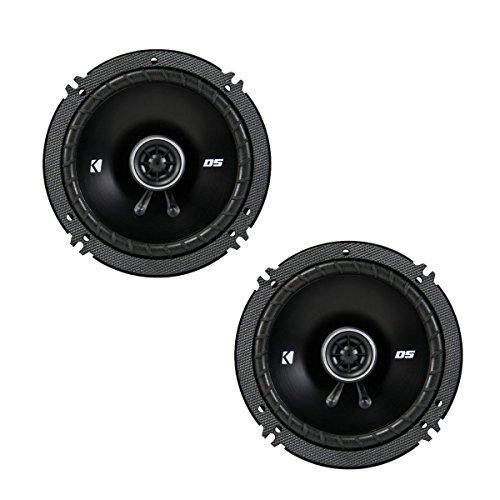
Our Top Picks
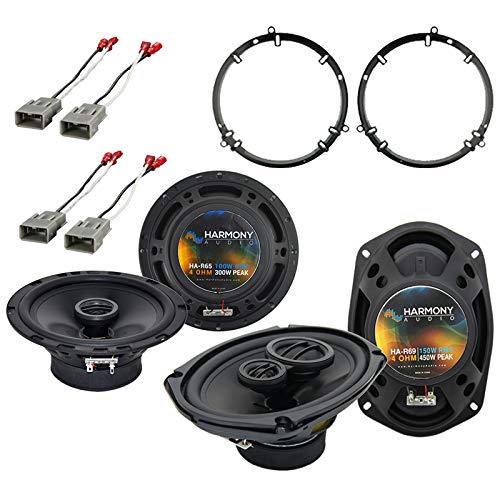 6.5 and 6x9 Speaker Package Fits Honda AccordRhythm Series16 x 11 x 11 inches13.8 poundsCheck on Amazon
 Fits Honda Civic 2006-2011 Speaker Upgrade 6.5" 300WRhythm Series10 x 16 x 8 inches10.8 poundsCheck on Amazon
 Pioneer A-Series Plus TS-A1681F 6.5" 4-Way Coaxial Car6.5” Coaxial3.5 x 6.9 x 6.9 inches1.8 poundsCheck on Amazon


What's inside
- Why the Fit rewards sensitivity more than wattage
- Three generations, one basic speaker layout
- Reading a sensitivity rating without being misled
- Coaxial convenience versus component separation
- Cone, surround, and tweeter materials in plain terms
- Mounting depth and the travelling window glass
- Adapter rings, harness plugs, and the no cut philosophy
- Door treatment: foam, sealing, and rattle control
- Tweeter placement and crossover wiring
- Living without an external amplifier
- Rear doors: fill, passengers, and honest priorities
- Polarity checks and the final sealing inspection
- A generation by generation buying checklist
- Mistakes that quietly ruin otherwise good speakers
- Tools, time, and the shape of the job
- Moisture, drainage, and why doors are wet inside
- Factory wiring, fusing realities, and signal quality
- Long term care and the second owner test
- Check prices on Amazon
- Narrowing two finalists with a pencil instead of a hunch
As an Amazon Associate I earn from qualifying purchases. This post may contain affiliate links at no extra cost to you.
Why the Fit rewards sensitivity more than wattage
A note on how this guide is funded before the technical detail begins: As an Amazon Associate, this site earns from qualifying purchases made through links on this page, and that support arrives at no extra cost to the reader. Everything below rests on published driver specifications, Honda parts diagrams, and door measurements documented by installers, because the Fit is a car where paper numbers predict the outcome unusually well.
The Honda Fit, sold as the Jazz in many markets, is a tall hatchback with thin doors, a modest factory amplifier stage, and speaker openings that have stayed remarkably consistent across three generations. That consistency is good news. A 6.5 inch driver fits the front and rear doors of nearly every Fit built between 2007 and 2020, which means the real decision is never about diameter. The decision is about sensitivity, mounting depth, tweeter strategy, and how honestly a speaker will perform when the factory head unit delivers only about fifteen to twenty watts RMS per channel on a good day.
Factory head units in small Hondas are current limited long before they are voltage limited. Turn the volume up and the internal amplifier runs out of clean output quickly, so a speaker rated for huge power handling but voiced quietly will sound strained and thin at the levels where a Fit actually lives. A driver with a sensitivity rating of 91 dB or higher, measured at one watt and one metre, converts that small electrical budget into useful loudness. Each three decibel advantage roughly doubles the acoustic output for the same amplifier effort, which is why a modest, efficient coaxial can embarrass an expensive, power hungry component set in this particular car.
Owners also need to understand what the factory system is doing electronically. Base Fit radios apply a fixed loudness contour and a bass roll off intended to protect the thin paper factory cones. Swapping speakers does not remove that contour. Efficient replacements work with it, gaining clarity and midrange presence, while the deepest bass notes remain limited by both the equalisation and the small sealed volume behind each door panel. Setting expectations along those lines prevents the common disappointment of expecting subwoofer behaviour from a door driver.
Three generations, one basic speaker layout
The first generation GD cars, spanning the 2007 and 2008 model years in North America, arrived earlier in Japan and Europe. Their front doors carry a 6.5 inch full range driver low in the panel, and higher trims add a small tweeter near the mirror sail or upper door area depending on market. Rear speakers on GD cars sit in the rear doors on five door models, again at 6.5 inches, although some base trims shipped with rear positions unpopulated behind the trim, leaving an opening and sometimes a harness waiting for hardware that was never fitted.
Second generation GE cars, sold from 2009 through 2014, kept the 6.5 inch door format and tidied the tweeter arrangement. Sport and higher trims place tweeters in small pods at the base of the A pillars or in the sail panels by the mirrors, which gives component sets a natural home. The GE door shell is slightly more accommodating than the GD, yet the window regulator and glass travel still dictate how deep a magnet can be before the descending window makes contact.
Third generation GK cars, from 2015 through 2020, continue the pattern. Front and rear doors accept 6.5 inch drivers, tweeters live in the sail area on equipped trims, and the factory radio grows a touchscreen without growing much amplifier muscle. The GK door card uses a mix of clips and a large service opening sealed by a plastic moisture barrier, and that barrier matters later when sealing and rattles are discussed. Across all three generations the mounting pattern is a shallow multi hole arrangement rather than a deep basket pocket, so adapter rings are part of nearly every serious installation.
| Generation | Model years | Front door | Rear door | Factory tweeter location |
|---|---|---|---|---|
| GD | 2007–2008 | 6.5 inch | 6.5 inch where fitted | Sail panel or upper door on higher trims |
| GE | 2009–2014 | 6.5 inch | 6.5 inch | A pillar base or sail pod on equipped trims |
| GK | 2015–2020 | 6.5 inch | 6.5 inch | Sail panel on equipped trims |
Notice what the table leaves out: dash corner speakers, centre channels, and subwoofers were never part of the mainstream Fit recipe in these years. Some markets received special editions with extra equipment, but planning around the four door positions and the tweeter pair covers the overwhelming majority of cars. That simplicity is liberating. Money that might have scattered across six mediocre locations can concentrate on the front doors, where the driver and front passenger actually listen.
Reading a sensitivity rating without being misled
Sensitivity figures need careful reading because manufacturers measure them in two common ways. A rating stated at one watt and one metre is directly comparable across brands. A rating stated at 2.83 volts looks about three decibels more generous on a four ohm driver, because 2.83 volts into four ohms is two watts rather than one. When a specification sheet mixes methods, subtract roughly three decibels from the voltage based figure before comparing it with a watt based figure, otherwise a merely average driver can appear to be an efficiency champion.
Impedance plays into the same calculation. Most aftermarket car speakers are nominally four ohms, matching the factory drivers they replace. Some component sets dip toward three ohms or slightly below at certain frequencies, drawing more current from the head unit. A healthy factory Honda radio tolerates that in most cases, yet the small amplifier runs warmer and clips earlier at high volume. For a car that will stay on factory power, a stable four ohm load with high sensitivity remains the safer engineering choice, and the loudness penalty is negligible once efficiency is accounted for.
Frequency response claims deserve similar scepticism. A door driver advertised as reaching down to 35 hertz may technically produce that tone at very low output in a laboratory baffle, but a Fit door is not a laboratory baffle. What matters for vocal clarity and guitar body is behaviour between roughly 80 hertz and 4 kilohertz, the region the door can support and the region where human hearing is most sensitive. Specifications that publish a response curve, even a simplified one, tell more truth than a single pair of endpoint numbers printed in large type.
Power handling ratings, by contrast, matter least in this application. A continuous rating of forty to seventy five watts RMS simply confirms the voice coil will not be troubled by a factory radio. Peak power numbers are marketing arithmetic and can be ignored entirely. Heat is not the enemy inside a Fit door; distortion from an overdriven head unit amplifier is, and no speaker purchase can fix clipping that originates upstream of the speaker terminals.
Coaxial convenience versus component separation
A coaxial speaker mounts its tweeter on a post or bridge directly in front of the woofer cone, so one hole, one connector, and one pair of wires completes the job. In a Fit running factory power, a well chosen coaxial is frequently the rational answer. Installation takes an afternoon, the factory wiring stays untouched, and the tweeter sits close enough to the woofer that their outputs blend before reaching the listener. Modern coaxials with a proper capacitor crossover and a rotatable or angled tweeter narrow the gap to component sets considerably.
Component sets separate the tweeter from the woofer and connect both through an external crossover network, either a compact in line module or a larger boxed unit with level adjustment. Separation buys placement freedom. Raising the tweeter to the sail panel lifts the soundstage from ankle height toward the dashboard, which changes how voices and cymbals are perceived more than any cone material ever will. The crossover also protects the tweeter with a steeper, better controlled filter slope than the simple capacitor found in most coaxials.
The catch is that component tweeters and crossovers reveal the limits of a weak source. With fifteen to twenty watts available, a component woofer of only average efficiency may play quieter than the coaxial it replaced, and the owner ends up running the volume higher into the clipped region of the factory amplifier. Component sets chosen for a Fit should therefore be the efficient members of their families, ideally at or above 91 dB sensitivity, with crossovers small enough to hide inside the door or behind the kick panel without rattling.
Labour is the other honest difference. A coaxial swap reuses the factory tweeter wiring not at all, because there is nothing extra to wire. A component installation asks for tweeter leads routed through the door jamb boot or into the cabin toward the A pillar, crossover mounting, and polarity discipline across four separate drivers in the front of the car alone. None of that is difficult, but it doubles the time and triples the number of places a buzz or a reversed wire can hide. Readers who want a single Saturday project should lean coaxial; readers planning to keep the car for years often find the component route worth its extra hours.
For shoppers comparing the broad 6.5 inch field before narrowing to this car, our companion overview of efficient models lives here: best 6 5 inch car speakers without amp and it frames the same efficiency argument across many vehicles.
Cone, surround, and tweeter materials in plain terms
Woofer cones in this size class are usually polypropylene, treated paper, woven glass fibre, or a mica reinforced polymer. Polypropylene shrugs off the humidity that collects inside a door and delivers a slightly relaxed midrange. Treated paper tends to sound lively through the vocal band and weighs little, which helps efficiency, provided the treatment genuinely seals it against moisture. Woven composites add stiffness that keeps the cone behaving as a piston higher into the midrange, at some cost in price and sometimes in sensitivity.
Surround material quietly decides longevity. Butyl rubber surrounds survive a decade of door slams, summer heat, and winter contraction without cracking, and they damp cone edge resonances predictably. Foam surrounds can sound excellent when new yet perish faster in hot climates, particularly in cars parked outdoors. A Fit door is a harsh neighbourhood: water runs down the inside of the glass, temperature swings are large, and the speaker sits low where splash reaches it. Rubber is the pragmatic surround for a car expected to serve another ten years.
Tweeter dome materials shape the top octave. Silk and textile domes present a smooth, forgiving treble that flatters the forward tweeter positions in the GE and GK sail panels. Aluminium and titanium domes extend higher and sound more incisive, which some listeners love and others find tiring at the short listening distances inside a small hatchback cabin. Piezoelectric tweeters appear in inexpensive drivers and are best avoided; their response is uneven and their integration with the woofer is usually an afterthought rather than a design goal.
Magnet size deserves a cooler head than marketing suggests. A large ferrite magnet can support high power and strong motor control, yet in a shallow door it creates the depth problem discussed later. Neodymium motors achieve respectable flux in a fraction of the depth and weight, which is precisely why shallow mount speakers for compact cars use them. Judge the motor by the sensitivity and depth figures together, not by a photograph of an imposing magnet that may never clear the window glass behind it.
Mounting depth and the travelling window glass
Every Fit door hides a moving hazard directly behind the speaker: the window glass descends into the door shell on a regulator track, passing within a modest distance of the speaker magnet. Published mounting depth for the Fit’s front doors sits roughly in the two to two and a half inch neighbourhood depending on generation and on whether an adapter ring adds standoff, but the only trustworthy method is measuring the individual car with the window fully lowered. Specifications gathered from forums vary because trim, regulator design, and previous repairs vary.
An adapter ring changes the arithmetic in the owner’s favour. A ring of half an inch to three quarters of an inch thickness moves the driver outward, buying clearance behind the magnet while pushing the cone closer to the door card grille. That trade has a limit. Push too far and the surround can contact the back of the door panel at high excursion, producing a buzz that masquerades as a blown speaker. The correct stack is the thinnest ring that clears the glass with a small safety margin, verified by lowering the window slowly while watching the magnet through the service opening.
Rear doors are more forgiving. Their glass travel and regulator layout generally leave comparable or slightly better room, and the rear speakers work as fill rather than as the main event, so a driver that barely fits the front usually fits the back comfortably. Even so, dry fit everything before final tightening. A speaker screwed down with its basket slightly cocked against an uneven factory flange will leak air around its gasket and can warp enough to make the voice coil rub, a fault that announces itself as a scratchy protest on bass notes.
Cut diameter is the forgotten dimension. Two speakers both sold as 6.5 inch can demand noticeably different mounting holes, because the category stretches from about 6.5 to 6.75 inches in basket diameter across brands. The Fit’s factory opening accepts most standard baskets through an adapter, but oversize models marketed as 6.75 inch sometimes need the adapter’s inner lip trimmed. Checking the cutout figure on the specification sheet against the adapter’s inner diameter takes one minute and prevents the classic mid install stalemate.
Adapter rings, harness plugs, and the no cut philosophy
Vehicle specific speaker adapters translate the Fit’s factory mounting pattern to the standard hole spacing of an aftermarket basket. Rings moulded from ABS or cut from PVC or marine plywood all work when their thickness is uniform and their faces are flat. Foam gasket tape belongs on both faces of the ring: one seal against the door steel, one against the speaker basket. That double seal matters more than the ring material, because an air leak behind the driver wastes the small bass output the door can generate and whistles faintly on kick drum hits.
Wiring adapters deserve the same respect. Honda uses a proprietary speaker plug, and a vehicle specific harness adapter converts it to the standard spade terminals of an aftermarket driver. Using the adapter preserves the factory wiring completely, keeps polarity identifiable, and makes the whole job reversible for a future sale. Cutting the plug off and twisting wires together saves a few currency units and costs far more in reliability, because door cavities are damp and twisted joints corrode into intermittent crackle within a couple of winters.
Spade terminal sizes are a small trap. Aftermarket speakers commonly pair a wider positive terminal with a narrower negative one, precisely so polarity cannot be reversed by feel. Harness adapters respect that convention. If a terminal must be persuaded onto a post, stop and check which post it is; forcing the narrow connector onto the wide terminal spreads it permanently and invites a loose connection later. A correctly matched pair slides on with firm finger pressure and stays put through years of door slams.
Anyone cross shopping the closely related size naming in this category will find our size explainer useful, since it untangles the labelling overlap: best 6 1 2 car speakers covers why two names describe essentially one mounting family.
Door treatment: foam, sealing, and rattle control
A Fit door panel is a thin steel skin, a plastic moisture barrier, and a trim card, none of which was designed as a speaker enclosure. Sound from the back of the cone escapes through the large service openings and cancels part of the sound from the front, especially in the upper bass. Covering those service openings with a rigid plate or a heavy sound deadening mat, while keeping the moisture barrier’s drainage logic intact, tightens the midbass audibly. The goal is a sealed, stiff baffle, not a door stuffed randomly with material.
Foam rings that surround the front of the driver and press against the back of the door card form the second half of the seal. They channel the cone’s output through the grille instead of letting it spill into the cavity between speaker and trim, where it reflects and smears the midrange. Closed cell foam is the right material because it does not absorb door moisture. These rings cost little, weigh almost nothing, and routinely deliver a clearer improvement than stepping up one price tier of speaker while leaving the factory gaps open.
Butyl deadening mat applied to the outer door skin addresses a different fault: panel resonance. The thin outer skin rings sympathetically at certain bass frequencies, adding a metallic undertone to music. A modest coverage, centred behind the speaker and on the broadest flat areas, lowers that resonance without turning the door into a heavy, water trapping sandwich. More is not automatically better. Excess mat adds weight the hinges and check strap must carry, and full coverage complicates any future window regulator repair.
Rattles usually come from the trim card and its contents rather than the speaker itself. Window switch panels, loose change in the door pocket, and clip towers that have lost their foam sleeves all join the chorus at specific frequencies. While the card is off, add thin foam tape to contact points, replace broken clips instead of forcing survivors to do double duty, and confirm every screw that came out goes back in. A door that is quiet at volume makes a modest speaker sound expensive; a buzzing door makes an expensive speaker sound broken.
Tweeter placement and crossover wiring
Where a trim level already provides sail panel tweeters, a component set drops into those pods with minor trimming or a strap of mounting tape, and the result looks factory. Cars without factory tweeters offer three realistic homes: the sail panel with a flush or surface mount cup, the A pillar trim, or the upper door card. Sail panels win on simplicity because the wiring run is short and the angle toward the occupants is naturally sensible. A pillar mounting aims higher and wider, which can widen the soundstage, but it demands more careful drilling into trim that also sits near curtain airbag hardware on GK cars, a consideration that should steer beginners toward the sails.
Angle matters as much as height. Tweeters are directional at the top of their range, so a dome firing straight across the car at the opposite window will sound different from one angled toward the listeners’ ears. Many component tweeters include angled surface cups for exactly this reason. Start with the tweeters aimed roughly at the midpoint between the front headrests, then adjust by ear over several days of familiar music. Small rotations of a few degrees change the treble balance more than most equaliser sliders do.
Crossover placement splits into two schools. Mounting the crossover inside the door keeps tweeter and woofer leads short, but exposes the unit to moisture and vibration, so it must be bagged, taped, or mounted high on the inner skin away from the window’s drip path. Mounting inside the cabin, behind the kick panel or under the dash, keeps it dry and lets the owner reach level jumpers later, at the price of running two wire pairs through the door jamb boot. For a first installation in a Fit, cabin mounting with carefully routed leads is the more forgiving choice, because a crossover that needs attention should not require removing the door card again.
Tweeter level jumpers on the crossover, often offering positions such as zero, minus two, or minus three decibels, exist because sail mounted tweeters sit close to reflective glass. Begin at the middle or lower setting. Factory Honda radios already emphasise the presence region slightly, and an unrestrained tweeter at full level will make cymbals splashy and voices sibilant at the short distances inside this cabin. Attenuation chosen at the crossover is cleaner than dragging a treble control down, because it leaves the woofer’s upper midrange untouched.
Living without an external amplifier
The brief for this guide assumes no separate amplifier, and that assumption suits the Fit’s character. An external amplifier adds a power run from the battery, a ground point, signal conversion from the factory radio, and a mounting location in a car with very little hidden space. Each of those steps is solvable, yet the combined effort only pays when the chosen speakers genuinely need the power. Efficient door speakers on factory power reach comfortable, clean listening levels for commuting, podcasts, and family trips, which describes most Fit duty honestly.
What factory power cannot do is reproduce deep bass at high level, and no door speaker purchase changes that physics. The lowest octave needs cone area, excursion, and enclosure volume that a door cannot supply. Owners who discover they want genuine low frequency weight should think of a compact powered subwoofer under a seat as a separate, later decision, while remembering that this guide’s speaker choices stand on their own without one. The door speakers handle everything from the upper bass upward; asking them to also be subwoofers only muddies their real job.
Volume discipline protects both the equipment and the result. Factory radios typically stay clean through roughly the first two thirds of their volume range, then the internal amplifier begins clipping, sending squared off waveforms that sound harsh and heat voice coils. If a system regularly needs the last third of the dial, the correct diagnosis is insufficient sensitivity or an unusually noisy commute, not a speaker defect. Efficient drivers lower the required dial position for the same loudness, which is yet another route by which sensitivity buys sound quality in this car.
Equaliser restraint helps as well. Boosting the bass control asks the small amplifier to deliver its scarcest resource, current, exactly where the door speakers are least able to convert it into sound. A gentle reduction of an overbright treble, or a small midrange adjustment for voices, costs nothing in headroom. Listeners who set the tone controls flat for the first week after an installation usually end up preferring that honesty, because new speakers change the balance they had unconsciously compensated for with the old, tired factory cones.
Rear doors: fill, passengers, and honest priorities
Rear speakers in a Fit serve the back seat and add a sense of envelopment for the front, but they sit behind the listeners, low in the doors, firing at seat cushions and cargo. Spending the same amount on the rear pair as on the front pair misallocates the budget. A competent, efficient coaxial in the rear doors matches the front in tone and sensitivity so the fader behaves predictably, while the front receives the better drivers, the sealing effort, and the tweeter attention.
Matching sensitivity between front and rear matters more than matching brand badges. If the rear pair is three decibels more efficient than the front, the soundstage collapses backward every time the fader sits at centre, and the driver ends up compensating constantly. Specification sheets make this easy to control: choose front and rear drivers within about one decibel of each other, and the factory fader becomes a genuine passenger comfort control rather than a correction tool.
Families should consider the rear doors a durability purchase. Child seats, school bags, and shopping all pass through those openings, and the lower door area collects kicks and scuffs. A driver with a robust grille strategy, meaning the door card’s own grille remains the protective layer, and a moisture resistant cone will outlast a delicate design. On GD cars where rear positions were sometimes left empty at the factory, confirm the wiring actually exists before ordering; a missing harness turns a one hour job into a wiring project through the B pillar.
Readers curious about how smaller drivers behave when bass is the priority in other cabins can browse a related survey here: best 5 25 car speakers with bass which examines the trade from the opposite end of the size range.
Polarity checks and the final sealing inspection
A speaker wired with reversed polarity still makes sound, which is why polarity errors survive so many installations. The fault reveals itself as weak, diffuse bass and a centre image that refuses to focus, because the two front woofers push and pull against each other. The classic check uses a small battery touched briefly to the speaker terminals: the cone should move outward when the battery’s positive terminal meets the speaker’s positive terminal. Perform it on the bench before installation, mark any ambiguous driver, and the in car result stops being a matter of luck.
Modern harness adapters make reversal unlikely, yet component crossovers reintroduce the risk at every junction, since woofer and tweeter each have their own pair and some crossovers deliberately invert tweeter polarity by design to smooth the crossover region. Follow the crossover manufacturer’s diagram exactly rather than improvising symmetry. If the diagram inverts the tweeter, that inversion is engineering, not an error, and correcting it by instinct will open a response dip exactly where voices live.
After the last screw, run a slow inspection before the door cards return. Lower each window fully and raise it again while listening for contact or scraping. Tug every connector gently. Confirm the moisture barrier is resealed along its full perimeter, because a barrier left hanging invites water onto the trim card and eventually into the cabin footwell. Play a familiar track at moderate volume with the engine off, walk around the car, and listen at each door for buzzes while pressing lightly on the trim in different places; a buzz that stops under a fingertip has just identified its own location.
Only then should the fader, balance, and tone controls be set for daily use, starting from flat and centred. Live with those settings for several days before judging the purchase. Human hearing adapts to a new tonal balance over repeated listening, and many installations condemned on the first evening are praised by the end of the week once the owner stops comparing them, minute by minute, with a memory of the old system that no longer exists.
A generation by generation buying checklist
GD owners start with reconnaissance. Confirm whether the rear doors contain speakers, wiring, or empty openings, and inspect the front sail panels to learn whether the car carries factory tweeters worth keeping during a coaxial swap. The GD door is the shallowest of the three generations, so depth discipline is strictest here, and shallow mount drivers or a modest adapter ring should be planned from the outset rather than discovered mid job. Rubber surrounds matter doubly on a car of this age, because any surviving factory foam in the car is already teaching a lesson about material lifespan.
GE owners hold the easiest hand. The door accepts a wide range of standard depth drivers behind an adapter ring, the sail or A pillar tweeter positions suit component sets gracefully, and the larger owner community means vehicle specific adapters and harness plugs are catalogued precisely by year and trim. A GE Sport with factory tweeters is the natural candidate for an efficient component set, while an LX on factory full range drivers gains the most per hour of labour from a quality coaxial pair and proper door sealing.
GK owners should plan around electronics and trim. The touchscreen radio’s output characteristics vary by trim, and some cars apply more aggressive factory equalisation that efficient speakers will expose, for better and worse. Door cards on the GK use clips that resent being rushed in cold weather, so a warm garage or a patient hand prevents the snapped clip that becomes next month’s rattle. Curtain airbag routing near the A pillar is the firm argument for sail panel tweeters on this generation unless the installer genuinely knows the pillar trim.
- Measure available depth with the window fully down before ordering any driver.
- Prioritise sensitivity at or above 91 dB for factory head unit use.
- Order adapter rings and harness plugs with the speakers, not after them.
- Budget foam sealing rings and gasket tape as part of the speaker purchase.
- Choose rubber surrounds for any car that parks outdoors year round.
- Keep front and rear sensitivity within roughly one decibel of each other.
- Decide the tweeter location before choosing between coaxial and component formats.
- Retain every factory part removed, bagged and labelled, until the job is finished.
Mistakes that quietly ruin otherwise good speakers
The most common error is shopping by peak power printed in the largest font on the box. That number describes a laboratory instant, not music, and it correlates with nothing a Fit owner will hear. The second error is its mirror image: buying a low sensitivity prestige driver because its materials read impressively, then blaming the radio when the car plays quieter than before. Both mistakes vanish when the sensitivity line of the specification sheet becomes the first line read instead of the last.
Skipping the dry fit ranks close behind. A speaker forced against an uneven flange, a magnet resting against the window track, or a surround kissing the trim card all produce faults that get misdiagnosed as defective drivers. Fifteen unhurried minutes of test fitting, window cycling, and connector checking prevent returns, arguments, and the slow damage of a voice coil rubbing under a warped basket. Installers who work on these cars professionally dry fit by reflex; first timers should borrow the reflex along with the tools.
Another quiet failure is leaving the factory tweeter connected alongside a new coaxial. On trims where a separate factory tweeter shares the front channel, adding a coaxial’s own tweeter without disconnecting or accounting for the original produces an overbright, phase confused top end. Decide which tweeter is doing the job. If the new coaxial is the choice, the factory tweeter should be unplugged; if a component set is the choice, its tweeter replaces the factory unit in the same home.
Finally, resist judging the installation in a stationary car with the engine off and then never again. Road noise in a lightweight hatchback masks low level detail and shifts the perceived balance upward in frequency. The settings that flatter a parked demonstration may fatigue on a motorway. Judge at cruising speed with the windows up, over familiar recordings, across several journeys. That is the environment the purchase was actually made for, and it is the only jury whose verdict matters in the end.
Owners of other small cars sometimes ask whether dash or rear shelf positions change this advice, and a look at compact driver applications may help frame that question: best 4 inch car speakers surveys the smaller format and its natural roles.
Tools, time, and the shape of the job
The tool list is mercifully short. A trim panel removal set in plastic, a Phillips driver, a socket set covering the common small sizes, a drill with a step bit only if a tweeter cup truly requires a new hole, side cutters, electrical tape, and a roll of foam gasket tape complete most installations. A multimeter or a small battery for polarity checks earns its place in the box. Everything else is patience: clips release in a specific order on each generation, and the door card that resists is usually still held by one screw hiding behind the switch panel or inside the pull handle recess.
Time estimates should be honest. A coaxial swap in both front doors, with adapters and sealing, occupies a relaxed two to three hours for a first timer. Adding rear doors adds an hour. A component installation with crossovers in the cabin and tweeters in the sails is a full day project the first time, shrinking dramatically with experience. None of these figures includes the trip to buy the one clip assortment that every project seems to demand, so ordering spare door clips with the speakers is cheap insurance against a car that must be reassembled unfinished.
Weather and light shape the experience more than skill does. Door work happens half inside a shell that swallows dropped screws, so a magnetic tray and a torch pay for themselves immediately. Cold plastic clips snap; warm ones flex. Working one door completely, from removal to reassembly, before opening the second door keeps a reference example standing beside the work and guarantees the car is never disabled on both sides at once if the day runs out.
When the job is done, keep the specification sheets and adapter part numbers with the car’s documents. A future owner, or the same owner five years later replacing a damaged driver, will bless that small act of filing. The Fit rewards owners who treat it as a long term companion, and a documented, reversible, carefully sealed speaker installation is exactly the sort of improvement that companion deserves, because the next set of ears to enjoy it may belong to whoever inherits the little hatchback and its surprisingly willing doors.
Moisture, drainage, and why doors are wet inside
New installers are often startled by the first heavy rain after a speaker swap, when a door card comes off for an unrelated job and the cavity behind it is visibly damp. Car doors are designed to get wet inside. Rain that slides down the window glass passes the outer weatherstrip, enters the shell, and is expected to drain out through holes in the bottom seam. The speaker lives in that weather path, which explains the factory driver’s plastic shield, the moisture barrier’s careful sealing, and the wisdom of choosing cones and surrounds that treat humidity as a normal working condition rather than an accident.
That drainage design imposes two duties on an installation. First, nothing the installer adds may block the drain holes or redirect water toward the trim card; a slab of deadening mat laid thoughtfully across the lower seam can turn a healthy door into a small aquarium whose contents eventually reach the cabin carpet. Second, any speaker whose basket design invites water to pool on its cone or run into its motor gap benefits from a simple baffle shield above it, the modern descendant of the foam and plastic rain guards fitted to factory drivers. Several adapter kits include such a shield, and improvising one from closed cell foam is an honourable tradition.
Corrosion follows moisture as predictably as rust follows a scratched sill. Terminals inside the door should be tight, fully seated, and ideally protected by the connector housings of a proper harness adapter, because a green, resistive joint in the speaker line quietly steals level and crackles over bumps in a way that imitates a failing driver. When a door is open for installation, a minute spent inspecting the factory connector for verdigris saves a second disassembly months later. The same inspection should cover the window regulator’s moving parts near the new magnet, since a speaker cable draped across a regulator arm will be sawn through by ordinary use.
Climate changes the emphasis but not the principles. Cars in coastal regions breathe salt air through those same drain paths, and owners there should favour drivers with coated baskets and stainless or well plated hardware. Cars in cold continental winters face condensation cycles as warm cabin air meets cold door steel, plus the brittle clip problem already mentioned. Desert cars escape most moisture concerns and instead punish foam surrounds and adhesives with heat, which circles the decision back to rubber surrounds and reputable gasket materials. The Fit was sold on every inhabited continent, and its doors ask slightly different questions in each, but they reward the same careful sealing everywhere.
Factory wiring, fusing realities, and signal quality
The wires Honda ran to the Fit’s doors are thin, and owners occasionally worry that they strangle an upgraded speaker. For the power levels a factory head unit produces, the factory gauge is adequate over the short runs involved; the voltage lost in a few metres of modest cable at twenty watts is a small fraction of a decibel, far below audibility. Rewiring doors for thicker cable is one of the least productive upgrades available at this power level, and it risks the door jamb boot, the connector pins, and the owner’s Saturday, all in exchange for a number that improves on paper only.
Where wiring genuinely matters is at the joints. Every connection in the chain, radio to harness, harness to crossover, crossover to driver, adds a small opportunity for resistance, looseness, or a strand straying toward its neighbour. The disciplined installer keeps the chain as short as the design allows, which is another quiet argument for harness adapters and against improvised splices. A short circuit in a door speaker line will usually be forgiven by the head unit’s protection circuitry, but forgiveness varies by model year, and the smell of an unhappy amplifier is a poor return on a saved connector.
Signal quality upstream deserves a word as well, because upgraded speakers are merciless toward poor sources. A compressed stream at a low bitrate, heard for years through dull factory cones, reveals its artefacts immediately through a clear tweeter: cymbals turn splashy, voices gain a watery edge, and the owner may blame the new hardware for honesty it did not previously possess. Before condemning an installation, audition it with a well recorded track from a quality source at moderate volume. Many supposed speaker disappointments are actually the moment a listener first hears their library as it truly is.
Bluetooth connections from phones add their own variables, including codec differences and the phone’s own volume and equalisation settings stacking on top of the radio’s. Setting the phone volume near its maximum clean output and making tonal decisions at the head unit alone keeps gain staging sane. Podcasts and spoken word, a large share of real Fit listening, benefit disproportionately from the clarity this whole project delivers, because consonants live exactly in the frequency region where fresh tweeters and sealed doors do their best work.
Long term care and the second owner test
A speaker installation is finished not when the last clip clicks but when it survives its first year unnoticed. Cones and surrounds need no maintenance programme, yet a brief annual listen with the engine off, sweeping the balance and fader through each corner in turn, catches the loose connector or the failing driver while the fault is still a ten minute repair. Door drain holes deserve a glance during the same ritual; a leaf or a plug of road grit at a drain announces itself by sloshing after rain, a sound no owner should ignore in a car whose speakers share that cavity.
Volume habits decide longevity more than any specification. A system played daily just below the onset of strain will outlive its owner’s interest in the car, while a system punished into clipping every Friday ages its tweeters quickly, because clipped waveforms carry disproportionate high frequency energy. The efficient speakers this guide favours are, in that sense, also the durable choice: they reach the desired loudness earlier on the dial, further from the region where the factory amplifier begins to square off its output and cook delicate voice coils.
Documentation closes the loop. Note the driver models, the adapter ring thickness, the crossover settings chosen, and the tweeter attenuation position, and keep that note with the car’s service records. If a driver is damaged years later by a careless door repair, its exact replacement can be matched for sensitivity and tone instead of guessed. If the car is sold, the note converts an invisible modification into a visible asset, because the next owner inherits knowledge rather than mysteries behind the trim.
There is a particular satisfaction reserved for the owner who, months after the job, stops noticing the stereo altogether because voices simply sound like voices and music simply sounds like music at motorway speed. That disappearance of the equipment into the journey is the true specification every figure in this guide was serving, and a small hatchback with honest doors, efficient drivers, and patient sealing achieves it more completely than cars costing far more ever manage to do.
Check prices on Amazon
Live listings for the shortlist in this guide are pulled from Amazon below, so prices and availability are always current at the moment you look.

Narrowing two finalists with a pencil instead of a hunch
When the shortlist finally holds two drivers that both fit, both seal, and both claim suitable efficiency, a small written comparison settles what browsing cannot. Draw four columns on paper: sensitivity converted to the same measurement basis, mounting depth against the space actually measured in the door, tweeter material and placement consequences, and the total installed cost including rings, harness adapters, foam, and clips. The fourth column routinely reverses the verdict of the first three, because a driver that needs an unusual adapter or a separate tweeter pod carries hidden expenses its rival avoids entirely.
Weight the sensitivity column most heavily, since it predicts the daily experience every time the engine starts. A two decibel advantage is clearly audible as ease: the same programme plays at a lower dial setting, the amplifier idles further from its strained region, and voices on a crowded motorway remain intelligible without shouting from the dashboard. Depth, by contrast, is a pass or fail gate rather than a graded virtue; a driver either clears the descending glass with margin or it does not belong in the car at all, however beautiful its specification sheet reads.
Then interrogate the warranty and the seller’s return posture with the same seriousness given to cone materials. Speakers are occasionally dead on arrival, more often in one channel than both, and a painless exchange process is worth a modest premium over a marginally finer specification from a seller who treats returns as combat. Keep the packaging until the installation has survived a fortnight of ordinary use, because the box is the difference between a refund and a shelf ornament. None of this is glamorous, yet ownership is mostly unglamorous, and the buyers who plan for it are the ones still recommending their purchase three winters later.
So the little Honda, a car designed around thrift and clever packaging, ends up teaching the same lesson in audio that it teaches everywhere else: measure the space honestly, spend on the parameter that matters, seal the gaps nobody sees, and let modest equipment, correctly installed, outperform extravagant equipment merely fitted.
One last practical habit separates satisfied owners from the rest: photograph each door before the trim card goes back on, showing the ring, the seals, the crossover position, and the cable routing. Those photographs become the map for any future repair, warranty conversation, or curious second owner, and they cost nothing but a moment of foresight while the work is still open and every decision remains visible.