Our Top Picks
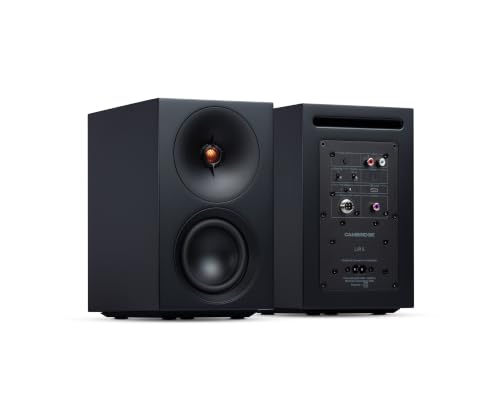


What's inside
- The amplifier on paper and what its numbers imply
- Sensitivity matching and the arithmetic of loudness
- Impedance behaviour and why the four-ohm rating matters
- Standmount and floorstanding designs in real rooms
- Tonal pairing and the character described in documentation
- Bi-wiring, bi-amping and the speaker A and B outputs
- Adding a subwoofer through the preamplifier output
- Placement, stands and the geometry of listening
- Cables, connectors and the practicalities of connection
- Digital inputs, streamers and the upgrade path
- Three room shapes and the speaker each one favours
- Mistakes that waste money and how to avoid them
- Check prices on Amazon
- Longevity, care and the pleasure of a settled system
As an Amazon Associate I earn from qualifying purchases. This post may contain affiliate links at no extra cost to you.
Money changes hands behind guides like this one, and readers deserve to know how before they read a single recommendation: if a purchase follows a link from a page like this one, the retailer may pay the publisher a commission, and the reader pays nothing extra for it. That commission is what funds the time spent working through amplifier specification sheets, speaker documentation and published reference material, and it does not influence which speakers are discussed or how their strengths are described. No amplifier was borrowed for this guide, no listening room was booked, and no claim below depends on private impressions gathered in a single afternoon. Every statement about the amplifier’s capabilities comes from the manufacturer’s own published specifications and manuals, every statement about speaker behaviour comes from speaker makers’ documentation or established loudspeaker engineering references, and the guide says so wherever a specification sheet leaves room for interpretation.
The Cambridge Audio CXA80 occupies a position that makes speaker choice unusually interesting. It is powerful enough to drive a wide range of loudspeakers with authority, yet it is not so powerful that efficiency can be ignored. It is refined enough to reward careful matching, yet it is forgiving enough to work well with speakers its owner already owns. Shoppers asking which speakers suit it are usually asking a more specific question than they realise. They want to know how much sensitivity they need, whether a four-ohm speaker is safe, how large a speaker their room can support, and whether the amplifier’s character will flatter or expose the speakers they have in mind. All four questions have answers that follow from published numbers, and this guide works through them in turn, so that the final choice rests on arithmetic and documentation rather than on brand loyalty or showroom memory.
Cambridge Audio built the CXA80 as the larger sibling in its CX series of integrated amplifiers, positioned above the CXA60 and below the separate components that make up the company’s higher ranges. The amplifier arrived in a period when streaming, computer audio and television sound were all converging on the living room, and its design reflects that convergence: a generous analogue section, a capable digital-to-analogue converter, and enough inputs to serve as the single hub of a modern system. Owners who bought it as a long-term centrepiece were not wrong to do so. A well-designed integrated amplifier does not age the way a streaming device does, and the CXA80’s combination of power, connectivity and build quality has kept it relevant long after its launch, which is why the question of matching speakers to it still draws serious attention.
Approaching the amplifier through its specification sheet is the most reliable way to begin. The numbers are not marketing decoration. Each one describes a limit or a capability that constrains the choice of speaker in a concrete way, and a buyer who understands them can eliminate unsuitable candidates before ever considering sound character. Power output, impedance ratings, distortion figures, input sensitivity and the physical layout of the amplifier all contribute, and the sections that follow take them one at a time, connecting each figure to the practical decision it informs.
The amplifier on paper and what its numbers imply
Cambridge Audio publishes the CXA80’s continuous power output as 80 watts per channel into an eight-ohm load and 120 watts per channel into a four-ohm load, measured across the audio band. Those two figures together say more about the amplifier than either does alone. The increase from eight ohms to four ohms is roughly fifty percent, which indicates a power supply and output stage that can deliver substantially more current into a lower impedance without collapsing, yet the increase is not a doubling, which would indicate an amplifier capable of behaving almost like an ideal voltage source. That middle ground is characteristic of a sensibly engineered integrated amplifier: it has genuine headroom into difficult loads, and it also has limits that a speaker designer should respect.
At the centre of that power supply sits a toroidal transformer, a component the manufacturer highlights in its documentation. Toroidal transformers are favoured in audio amplifiers because their magnetic field is largely contained within the core, which reduces stray interference with nearby circuitry, and because they can deliver high current from a relatively compact package. The CXA80 pairs its transformer with a dual mono layout, meaning the left and right channels have substantially separate power-supply and amplification paths after the transformer, which reduces crosstalk between channels and helps preserve the separation of instruments across the stereo image. These are not exotic features. They are the standard ingredients of a serious mid-range integrated amplifier, and they explain why the CXA80 earned a reputation for control and composure rather than for raw brute force.
Distortion and signal-to-noise figures fill out the picture. The manufacturer quotes total harmonic distortion at a small fraction of one percent at rated output, and a signal-to-noise ratio comfortably above ninety decibels on the line inputs. Numbers of that order indicate an amplifier whose own contribution to the sound is low enough that the speakers and the recording dominate what the listener hears, which is precisely what a buyer wants from an amplifier in this class. An amplifier that adds audible colour of its own forces every speaker choice to compensate for it, while a neutral amplifier lets the speaker’s character come through unfiltered. The CXA80 belongs in the second category by its own measurements, and that neutrality shapes the tonal discussion later in this guide.
Damping factor, a figure that describes how firmly the amplifier controls the motion of a speaker’s cone, is quoted at a level that indicates good grip on typical standmount and floorstanding designs. A high damping factor matters most in the bass, where the cone’s inertia would otherwise continue moving after the signal stops, blurring the leading edge of a bass note. The CXA80’s published figure suggests it will keep that motion in check with speakers of ordinary impedance and sensitivity, though the figure falls as impedance drops and as cable resistance rises, which is one reason the cable section later in the guide treats resistance as a real variable rather than an afterthought.
Connectivity completes the portrait. The amplifier provides multiple analogue line inputs, a moving-magnet phono stage for turntables, digital inputs including coaxial, optical and USB audio, and a preamplifier output for connection to a power amplifier or a subwoofer. The digital inputs feed an onboard converter that handles high-resolution files, which means the amplifier can serve as the digital hub of a system without an external converter. Bluetooth arrives through an optional adapter rather than as a built-in feature, a detail that matters for buyers who assume wireless connectivity is included. The speaker terminals accept banana plugs and bare wire, and they are duplicated as A and B outputs, a feature the guide explores in its own section because it affects both multi-room use and bi-wiring experiments.
Sensitivity matching and the arithmetic of loudness
Sensitivity is the first speaker specification to read after power output, because it decides how much of the amplifier’s eighty watts actually becomes sound in the room. Sensitivity, quoted in decibels at one watt measured at one metre, describes the efficiency with which a speaker converts electrical power into acoustic output. A speaker rated at 89 dB produces, from a single watt, a sound pressure level that a speaker rated at 86 dB would need roughly double the power to match. That three-decibel gap is not a subtlety. It is the difference between an amplifier cruising comfortably and the same amplifier working hard, and it becomes more important as listening distance increases, because sound pressure falls with distance in a predictable way.
For the CXA80, the practical sensitivity window sits roughly between 86 and 90 dB, with the middle of that range offering the most flexibility. Speakers in that band reach satisfying domestic listening levels with only a few watts, leaving the amplifier’s reserves untouched for dynamic peaks, which is where headroom matters. A speaker rated at 88 dB, driven by eighty watts in a room of ordinary size at a listening distance of two to three metres, can produce peaks well above the level of normal conversation and into the territory of a live acoustic performance, without approaching the amplifier’s limits. That is the comfortable centre of the pairing, and most well-regarded standmount speakers fall inside it.
Moving below 86 dB changes the arithmetic in ways that demand attention. A speaker rated at 84 dB needs roughly four times the power of a 90 dB speaker to reach the same level, which means the CXA80 would spend much of its time in the upper part of its power range during loud passages, with less reserve for peaks and a greater risk of clipping on demanding material. Such speakers are not impossible partners. Some low-sensitivity designs offer other virtues, such as extended bass from a small cabinet or a particularly refined midrange, and in a small room at modest volumes they can work beautifully. The buyer should simply understand the trade being made: low sensitivity spends amplifier power to buy something else, and the CXA80, while capable, is not an amplifier with unlimited power to spend.
Moving above 90 dB brings its own considerations, though they are gentler. Highly efficient speakers reach high levels with very little power, which leaves the amplifier idling in a range where its volume control operates near the bottom of its travel, and where channel balance and background noise can become more noticeable. Horn-loaded designs and large efficient floorstanders can also reveal amplifier noise that would be inaudible through a less sensitive speaker. None of this disqualifies efficient speakers. It simply means the pairing benefits from a clean source, a careful gain structure, and an awareness that the volume control will spend its life in the lower part of its range. Readers weighing compact, efficient designs should also keep the dedicated roundup of best 5 25 bookshelf speakers nearby, since small standmount speakers illustrate the sensitivity question in its most concentrated form.
Listening distance deserves a calculation of its own, because it is the variable most buyers forget. Sound pressure falls by roughly six decibels for each doubling of distance in free space, and while a real room adds reflections that soften that fall, the underlying relationship still holds. A listener sitting four metres from the speakers needs substantially more power than one sitting two metres away to reach the same level. Room size therefore interacts directly with sensitivity: a large room with a distant listening position pushes the buyer toward the upper end of the sensitivity window or toward larger speakers, while a small room with a close listening position makes even a modestly sensitive speaker sound effortless. The guide returns to room dimensions in the standmount and floorstanding section, where the geometry of the room becomes the deciding factor.
Impedance behaviour and why the four-ohm rating matters
Nominal impedance is the most misunderstood figure on a speaker specification sheet. A speaker labelled eight ohms does not present a constant eight-ohm load to the amplifier. Its impedance varies with frequency, rising at the driver’s resonance, falling through the midrange, and rising again at high frequencies as voice-coil inductance takes effect. A typical eight-ohm speaker may dip to five or six ohms at some frequencies and rise above twenty ohms at others, and the amplifier must cope with that variation without distress. The nominal figure is a simplified summary, useful for broad compatibility judgements and little else.
The CXA80’s four-ohm rating is the evidence that matters here. An amplifier rated to deliver 120 watts into four ohms has been designed and tested to supply the extra current a lower impedance demands, which means it will handle the impedance dips of an eight-ohm speaker without complaint and will also drive a nominally four-ohm speaker within its published limits. That rating functions as a statement of headroom. It tells the buyer that the power supply and output stage were not designed to the edge of their capability at eight ohms, and that the amplifier has reserves for the moments when a speaker’s impedance falls and its current demand rises.
Nominally four-ohm speakers deserve a careful reading of their own. Some four-ohm designs dip to three ohms or below at certain frequencies, particularly in the bass, where the amplifier is already working hardest. The CXA80 can drive such loads, yet the combination of a low dip and a demanding recording can push the amplifier toward its thermal limits during extended loud listening, and the protection circuitry may intervene. A buyer considering a four-ohm speaker should look for the manufacturer’s minimum impedance figure, usually published in the full specification sheet or the manual, and compare it with the amplifier’s capabilities. A minimum above three ohms is a comfortable partner. A minimum below that is not a disqualification, but it is a reason to listen at realistic levels and to ensure the amplifier has ventilation, because heat is the enemy of sustained high-current delivery.
Phase angle, a figure that rarely appears in marketing material yet appears in thorough speaker measurements, complicates the picture further. Impedance has both a magnitude and a phase, and when the phase angle is large at a frequency where the impedance is low, the amplifier must deliver current at a moment when the voltage is near zero, which is electrically demanding. Published speaker measurements from reputable testing publications sometimes include phase information, and a speaker with a benign phase characteristic is an easier load than its nominal impedance alone would suggest. The practical advice is simple: a speaker whose full impedance curve is published and looks smooth is a safer partner than one whose curve is hidden, regardless of what the headline nominal figure claims.
Standmount and floorstanding designs in real rooms
Room size is the variable that decides between a standmount speaker and a floorstanding one more reliably than any discussion of sound quality in the abstract. A room of twelve to eighteen square metres, which describes a great many living rooms and dedicated listening rooms, is natural territory for a standmount speaker. The listening distance in such a room is usually two to three metres, the walls are close enough to reinforce the bass, and a well-designed two-way standmount can produce satisfying low-frequency output without overwhelming the space. A floorstanding speaker in the same room can work, yet it brings more bass energy than the room may be able to absorb, and the result is often a thickening of the lower frequencies that no amount of amplifier control entirely corrects.
Rooms of twenty-five square metres and above tell a different story. At listening distances of three to four metres, a standmount speaker must work harder to fill the space, and its bass output, already limited by cabinet volume, can sound thin against the room’s own acoustics. A floorstanding speaker, with its larger cabinet and additional drivers, moves more air and reaches lower with less strain, which suits the larger volume. The CXA80 has the power to drive either type in either room, provided the sensitivity is appropriate, so the decision rests on the room rather than on the amplifier. A buyer who has measured the room, noted the listening distance, and considered how much furniture and soft furnishing the space contains is already most of the way to the right choice.
Bass extension and bass control are not the same quality, and confusing them leads to some of the poorest speaker choices in this category. Extension describes how low a speaker can reach, usually quoted as the frequency at which output has fallen by three or six decibels from the midband level. Control describes how cleanly the speaker starts and stops, how little it overhangs, and how well it distinguishes one bass note from the next. A speaker that reaches down to forty hertz yet sounds loose and indistinct is less satisfying than one that reaches only to fifty-five hertz with precision and definition, particularly with the CXA80, whose damping and current delivery reward speakers that can use control rather than merely produce depth. The amplifier cannot add control that the speaker lacks, and it cannot remove boom that the room adds, so the speaker’s own bass character and the room’s acoustics must be considered together.
Standmount speakers carry a hidden cost that buyers sometimes forget: the stands themselves. A standmount speaker needs a rigid, properly filled stand of the correct height, so that the tweeter sits at ear level when the listener is seated. Cheap, hollow stands undermine the speaker’s performance by resonating and by allowing the cabinet to rock, while a well-built stand, filled with sand or shot and spiked or padded to the floor, becomes part of the speaker system. That cost, and the floor space the stands occupy, narrows the practical gap between a standmount system and a floorstanding one, and it should be included in any honest comparison. A floorstanding speaker, by contrast, arrives as a complete unit, needing only careful placement and, in some rooms, a little experimentation with distance from the wall.
Listening distance also shapes the choice of driver configuration. A two-way standmount, with a single woofer and a tweeter, produces a coherent sound that holds together well at close range, which is why nearfield and small-room listeners so often prefer it. A three-way floorstander, with a dedicated midrange driver, can offer greater clarity and dynamic range at longer distances, where the additional driver helps the speaker maintain composure at higher volumes. Neither configuration is inherently superior. Each suits a different geometry, and the geometry of the buyer’s room is a more reliable guide than any reviewer’s preference. Shoppers comparing nominal impedance across compact designs may find the dedicated roundup of best 8 ohm bookshelf speakers useful, since eight-ohm standmount speakers are the most common partners for an amplifier of this power.
Tonal pairing and the character described in documentation
Amplifier character is a subject where documentation and folklore diverge, and the distinction matters for this guide. The CXA80 is described in the manufacturer’s own material as a detailed, open and controlled amplifier, with a presentation that leans neutral while retaining a touch of warmth in the midrange. That description is consistent with its measured performance: low distortion, a flat frequency response, and a power supply that holds its composure under load. A neutral amplifier does not impose a strong flavour of its own, which means the speaker’s character becomes the dominant influence on the sound, and the buyer’s taste in speakers can express itself without fighting the electronics.
Pairing a neutral amplifier with a bright speaker produces a bright system, and pairing it with a warm speaker produces a warm system, and both outcomes are legitimate if they match the listener’s preference and the room’s acoustics. A reflective room, with bare floors, large windows and minimal soft furnishing, emphasises high frequencies and can make an already forward speaker sound fatiguing over long sessions. In such a room, a speaker with a slightly relaxed treble or a smooth, well-damped tweeter is often the wiser partner. A heavily furnished room, with thick carpets, curtains and upholstered furniture, absorbs high frequencies, and a speaker with a little more presence in the treble can restore a sense of air and detail that the room would otherwise swallow. The room is part of the system, and tonal pairing that ignores it is incomplete.
Driver materials contribute to tonal character in ways that specification sheets hint at without fully explaining. Soft-dome tweeters, made from silk or treated textile, tend to present high frequencies with a smooth and forgiving quality, while metal-dome tweeters, made from aluminium or beryllium, can offer greater extension and resolution at the cost of revealing harshness in poor recordings. Paper and treated-paper midrange cones often produce a warm, natural vocal presentation, while metal and ceramic cones can offer greater precision and speed. None of these tendencies is a rule. Implementation matters more than material, and a well-engineered metal tweeter can sound smoother than a poorly implemented soft dome. The material is a clue, not a verdict, and it should be weighed alongside the speaker’s published frequency response and the listener’s own musical tastes.
Musical taste is the final variable in tonal pairing, and it deserves to be stated plainly. A listener whose collection leans toward acoustic music, jazz and vocal recordings will value midrange clarity and tonal naturalness above sheer output, and will likely prefer a speaker that prioritises those qualities. A listener whose collection leans toward electronic music, rock and large-scale orchestral works will value dynamic range, bass authority and the ability to play loudly without strain, and will likely prefer a speaker that prioritises those qualities. The CXA80 is capable of serving both listeners, because its power and neutrality do not favour one genre over another, yet the speaker choice will tilt the system decisively in one direction or the other. Knowing which direction the buyer wants to tilt is the purpose of the tonal discussion, and it is a question only the buyer can answer.
Bi-wiring, bi-amping and the speaker A and B outputs
Many speakers in the CXA80’s natural price range arrive with two pairs of terminals on the rear panel, linked by a metal jumper, and the presence of those terminals invites questions about bi-wiring and bi-amping. Bi-wiring runs separate cables from the same amplifier output to the high-frequency and low-frequency terminals, removing the jumper. The theoretical benefit is a reduction in interaction between the bass current and the treble signal, though the audible benefit is debated and depends heavily on cable resistance and speaker design. The manufacturer’s documentation for the CXA80 does not promise a transformation from bi-wiring, and the honest assessment is that it is an inexpensive experiment for an owner who already owns suitable cable, not a reason to choose one speaker over another.
Bi-amping is a more substantial step. It uses separate amplifier channels for the high-frequency and low-frequency sections, which requires either a second power amplifier connected to the CXA80’s preamplifier output or a second integrated amplifier, and it removes the passive crossover from the path of the bass current. The benefit is real in systems that play loudly, because the bass amplifier no longer modulates the treble supply, yet the cost and complexity are considerable, and the CXA80’s own eighty watts per channel already provide substantial headroom for most domestic systems. A buyer who is considering bi-amping should first ask whether a single more powerful amplifier, or a better pair of speakers, would deliver more improvement for the same expenditure, because the answer is often yes.
The speaker A and B outputs serve a simpler purpose. They allow two pairs of speakers to be connected to the same amplifier, with the front panel selecting A, B, or both together. The intended use is usually a second listening zone, such as speakers in another room, or a comparison between two pairs of speakers in the same room. Running both pairs simultaneously halves the impedance the amplifier sees if both pairs are eight ohms, presenting a four-ohm load, which the CXA80 can handle, yet the volume and tonal balance of the two pairs will differ unless they are closely matched. Used as a switching facility for a second room, the A and B outputs are genuinely useful. Used as a way to run two pairs at once in the same room, they are usually a compromise, and a dedicated multi-room amplifier or a speaker selector with impedance protection is the better tool.
Adding a subwoofer through the preamplifier output
A subwoofer is the most effective single addition to a CXA80 system for listeners who want deeper bass than standmount speakers can provide, and the amplifier’s preamplifier output makes the connection straightforward. The pre-out carries a full-range line-level signal, which the subwoofer’s own amplifier and crossover then filter, so the subwoofer handles the lowest frequencies while the main speakers continue to reproduce the full range. That arrangement is simple and effective, yet it has a limitation that buyers should understand: the CXA80 has no high-pass filter for the main speakers, so the standmount or floorstanding speakers keep receiving bass signals even when the subwoofer is active, and they keep spending excursion on frequencies the subwoofer could handle more efficiently.
The practical consequence is that integration requires care rather than automation. The subwoofer’s crossover frequency should be set near the point where the main speakers begin to roll off, typically somewhere in the region of fifty to eighty hertz depending on the speakers, and the subwoofer’s level should be set so that it extends the bass rather than dominating it. A level set too high produces a thick, boomy sound that obscures the midrange, while a level set too low leaves a gap between the subwoofer and the main speakers. The phase control on the subwoofer, which adjusts the timing relationship between the subwoofer and the main speakers, is the tool for closing that gap, and small adjustments, followed by listening to familiar music with a clear bass line, will reveal the setting where the bass sounds like it comes from the speakers rather than from a separate box in the corner.
Placement of the subwoofer interacts with the room in ways that the main speakers do not, because low frequencies excite room modes, standing waves that reinforce some frequencies and cancel others depending on position. A subwoofer in a corner excites the maximum number of modes and produces the loudest bass, yet it also produces the least even bass across the listening position. A subwoofer placed along a wall, away from the corner, often produces a smoother result, and experimenting with two or three positions, even if only by moving the subwoofer a short distance, can transform the result. Some listeners place the subwoofer near the listening position, which reduces the influence of room modes, though it can make the bass sound detached from the main speakers. There is no single correct position. There is only the position that measures and sounds best in the specific room, and the willingness to experiment is the price of good bass. Readers whose main interest is low-frequency extension from the speakers themselves, rather than from a separate subwoofer, should consult the dedicated roundup of best bass response bookshelf speakers before deciding whether a subwoofer is necessary at all.
Placement, stands and the geometry of listening
Placement is the least expensive upgrade available to a CXA80 owner and the most frequently neglected. A speaker placed hard against a rear wall receives a substantial boost in the bass, because the wall reinforces low frequencies, yet that boost is uneven, emphasising some notes and swallowing others, and it muddies the midrange by reflecting sound back through the cabinet. Moving the speakers away from the wall, even by thirty centimetres, reduces that reinforcement and reveals the bass the speaker was designed to produce, rather than the bass the wall imposes on it. Rear-ported speakers are particularly sensitive to wall distance, because the port needs space to breathe, and a speaker with its port blocked or choked by a nearby wall will sound congested regardless of the amplifier driving it.
Distance from side walls matters as well, though for a different reason. Early reflections from a nearby side wall arrive at the listener shortly after the direct sound, and they blur the stereo image, making instruments sound wider and less precisely located than the recording intends. A speaker placed too close to a side wall also receives a bass boost from that boundary, compounding the effect of a rear wall. The ideal is a roughly symmetrical arrangement, with both speakers the same distance from their respective side walls, the same distance from the rear wall, and the listening position forming an approximate equilateral triangle with the two speakers. Few living rooms allow that ideal exactly, and the guide does not pretend otherwise, yet moving toward it in small steps, measuring each change by ear with familiar music, will improve the result more reliably than any change of cable or accessory.
Toe-in, the practice of angling the speakers inward toward the listener, is the fine adjustment that follows placement. A speaker aimed directly at the listener produces the most precise image and the most extended treble, because the tweeter’s on-axis response is usually its flattest. A speaker aimed straight ahead produces a wider, more diffuse soundstage at the cost of some precision and some treble energy. Most listeners settle somewhere between the two, with the speakers angled so that their axes cross slightly behind the listening position, and the exact angle depends on the speaker’s dispersion characteristics, which the manufacturer sometimes publishes as a polar response or a dispersion figure. Experimenting with toe-in costs nothing, and it is the kind of adjustment that repays patience, because a change of a few degrees can shift the presentation from vague to focused.
Stands deserve a second mention in the context of placement, because the stand determines the height of the tweeter and the rigidity of the whole assembly. The tweeter should sit at approximately ear level when the listener is seated, which for most sofas and armchairs means a stand height in the region of sixty centimetres, depending on the speaker’s own dimensions. A stand that is too tall aims the tweeter over the listener’s head, while a stand that is too short aims it at the listener’s chest, and both errors tilt the tonal balance. Filling the stand with sand or inert shot adds mass and damps resonance, while spikes or rubber feet couple the stand to the floor in a way that suits the flooring: spikes for carpet, pads for hard floors. A speaker that rocks on its stand, even slightly, loses bass definition, because the cabinet’s motion absorbs energy that should reach the air.
Floorstanding speakers simplify the height question, since their tweeters are already positioned by the cabinet design, yet they are no less sensitive to wall distance and toe-in. Their larger cabinets excite room modes more strongly, which makes experimentation with distance from the rear wall even more important, and their additional bass drivers can overwhelm a small room if the speakers are pushed into corners. A floorstanding speaker placed well into the room, with space behind and to the sides, will often outperform a standmount speaker in the same position, yet a floorstander crammed against a wall will often lose to a standmount given breathing room. The room, once again, is the deciding factor, and the amplifier, for all its capability, cannot correct a placement error.
Cables, connectors and the practicalities of connection
Speaker cable is a subject that attracts more mythology than almost any other part of a hi-fi system, and the CXA80’s published specifications provide a useful anchor for separating what matters from what does not. The factor that matters most is resistance, because cable resistance adds to the impedance the amplifier sees and reduces its damping factor, loosening its grip on the speaker’s bass. Resistance rises with cable length and falls with conductor cross-section, so a long run to a distant speaker needs thicker cable than a short run beside the amplifier. For runs of up to three metres, a cross-section of two and a half square millimetres is ample for the CXA80’s power levels. For runs of five metres or more, four square millimetres is a sensible choice, particularly with four-ohm speakers, where the cable resistance forms a larger fraction of the total load.
Termination is the second practical consideration. The CXA80’s speaker terminals accept banana plugs and bare wire, and each has its merits. Banana plugs make connection and disconnection easy, which matters for owners who rearrange their systems or who need to move the amplifier for cleaning, and they provide a consistent contact area that does not degrade as quickly as a bare wire that has oxidised. Bare wire, properly stripped and tightly clamped, provides an excellent connection and costs nothing beyond the cable itself, yet it requires care: stray strands that touch the neighbouring terminal can short the amplifier’s output, and copper that has oxidised over years benefits from being re-stripped. Whichever method is chosen, the connection should be tight, the polarity should be consistent on both channels, and the cable should be routed so that it does not rest against a hot surface or a sharp edge.
Interconnect cables, which carry the signal from source components to the amplifier, deserve a brief note because they are often oversold. A well-made interconnect of reasonable construction, with proper shielding and solid connectors, will perform identically to a far more expensive one in any blind comparison that controls for level and expectation, and the money saved is better spent on speakers, stands or room treatment. What matters in an interconnect is that it is long enough to reach without strain, short enough to avoid unnecessary loops, shielded enough to reject interference from nearby power cables, and terminated with connectors that fit snugly. Beyond those requirements, the returns diminish rapidly, and the CXA80’s own low noise floor means that a competent cable will not be the limiting factor in the system.
Digital inputs, streamers and the upgrade path
The CXA80’s digital inputs are one of its most durable features, because they allow the amplifier to serve as the digital hub of a system whose sources will change over the years. The coaxial and optical inputs accept digital audio from a television, a disc player, a games console or a dedicated streamer, and the onboard converter transforms that signal into analogue audio with a resolution that handles high-resolution files. The USB audio input accepts a direct connection from a computer, which makes the amplifier a capable partner for a desktop system or a music server, and the asynchronous implementation means the amplifier’s own clock governs the timing of the conversion, reducing jitter from the source.
Adding a streamer is the most common upgrade path for CXA80 owners, and it deserves a careful description because the market offers two very different kinds of device. A streamer with its own digital output, connected to the CXA80’s coaxial or optical input, uses the amplifier’s converter, and the choice of streamer then rests on its interface, its app, and the streaming services it supports, rather than on its analogue circuitry. A streamer with its own analogue output, connected to one of the CXA80’s line inputs, uses the streamer’s converter instead, and the choice then rests on the quality of that converter as well. Neither approach is inherently better. The first keeps the signal path simpler and lets the amplifier’s converter do the work it was designed for. The second allows the buyer to choose a converter whose character they prefer, at the cost of an extra analogue stage.
A separate digital-to-analogue converter is a less common upgrade, yet it follows the same logic. An external converter, connected between a digital source and one of the CXA80’s analogue inputs, replaces the amplifier’s own converter with a different one, and the audible difference, if any, will be subtle, because the CXA80’s onboard converter is already competent. A buyer considering this step should first ask whether the money would be better spent on speakers, on room treatment, or on a better source of music, because those changes produce larger and more reliable improvements. The converter upgrade makes sense mainly for listeners who have already addressed speakers, placement and room acoustics, and who want to explore the final increments of their system’s performance.
Wireless listening deserves an honest paragraph, because many buyers assume the CXA80 includes Bluetooth as standard. It does not. Bluetooth arrives through an optional adapter that plugs into the amplifier and pairs with a phone, tablet or computer, and the adapter’s aptX support provides a higher-quality wireless link than the basic Bluetooth codec. That arrangement is a deliberate choice by the manufacturer, keeping the amplifier’s price and its analogue performance free of the compromises that built-in wireless circuitry can introduce, yet it means a buyer who wants wireless playback must budget for the adapter and must understand its limitations. Wireless audio, even with a good codec, remains a convenience feature rather than a reference source, and listeners who care about the highest quality will prefer a wired digital connection from a streamer or a computer. Shoppers who intend to rely heavily on wireless playback should look at the dedicated roundup of best bluetooth bookshelf speakers, which considers how wireless-capable speakers and systems differ from a wired amplifier setup like this one.
Three room shapes and the speaker each one favours
Abstract advice becomes concrete when it is tied to rooms that readers actually live in, so consider three common shapes. The first is a compact listening room of twelve to fifteen square metres, with a sofa two metres from the speakers and bookshelves along one wall. Here a two-way standmount speaker of moderate sensitivity, rated between 87 and 89 dB, on rigid stands and placed half a metre from the rear wall, will fill the room with ease, and the CXA80 will spend its life in the comfortable middle of its power range. A subwoofer is optional in this room, and many listeners will prefer the simplicity of a two-speaker system, adding a subwoofer only if their music demands the lowest octave.
The second shape is a typical open-plan living area of twenty-five to thirty-five square metres, where the listening position sits three metres or more from the speakers and the kitchen or dining area shares the same acoustic space. Here a larger standmount or a compact floorstanding speaker, with sensitivity toward the upper end of the window, earns its place, because the volume of air to be moved is substantially greater and the listening distance is longer. The speakers will need more space from the walls than the room may easily offer, and the compromise between placement and furniture will be a real negotiation, yet the CXA80 has the current delivery to keep such speakers under control, provided the impedance remains within the range its four-ohm rating covers.
The third shape is a dedicated listening room, where the owner has freedom to place speakers well away from walls, to treat first reflection points with absorption, and to sit at the apex of a carefully arranged triangle. Here the speaker choice can follow taste rather than compromise, and the CXA80’s neutrality becomes an asset, because it allows the chosen speakers to express their character without interference. A low-sensitivity design that would struggle in a large open-plan room can thrive here at moderate volumes, and a large floorstanding speaker can reveal its full dynamic range without exciting the room modes that a smaller, untreated space would impose. The dedicated room is where the amplifier’s dual mono layout and its low distortion figures pay their clearest dividends, because the room no longer masks them.
Mistakes that waste money and how to avoid them
Several errors recur among buyers matching speakers to this amplifier, and naming them plainly may save more money than any recommendation in this guide. The first is choosing speakers by brand reputation alone, without checking sensitivity, impedance and bass extension against the room and the amplifier. A celebrated speaker that is insensitive, difficult to drive and too large for the room will disappoint, while a less famous speaker that matches the room and the amplifier will delight, and the specification sheet is the tool that distinguishes the two before any money is spent.
The second error is spending the entire budget on speakers and leaving nothing for stands, cables and room treatment. A standmount speaker on an inadequate stand is a compromised speaker, and a well-placed speaker in a treated room will outperform a better speaker placed carelessly in a bare one. Allocating the budget across the whole system, with a sensible share reserved for the accessories that let the speakers perform, is not a dilution of the purchase. It is the purchase, properly understood.
The third error is chasing a single specification, whether that is the lowest bass extension, the highest sensitivity, or the flattest frequency response, at the expense of the balance between them. A speaker is a system of compromises, and a design that excels in one dimension usually pays for it in another. The buyer who understands the trade-offs, and who chooses the set of compromises that suits their room and their music, will end with a better system than the buyer who maximises a single number.
The fourth error is impatience. Speakers need time to settle into a room, and listeners need time to learn what a new system does well. A system judged after an hour, in an unfamiliar position, with unfamiliar music, will often be misjudged, and the urge to change cables or speakers immediately after installation is usually a response to placement or level rather than to the equipment itself. Living with a system for a few weeks, adjusting placement in small steps, and listening to familiar recordings will reveal its true character, and any decision to change something after that period will rest on a far sounder basis.
Check prices on Amazon
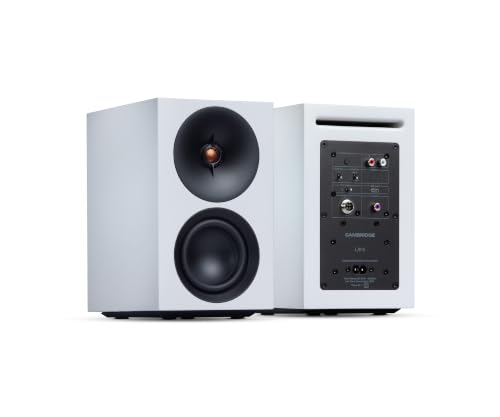
Live listings for the shortlist in this guide are pulled from Amazon below, so prices and availability are always current at the moment you look.


Longevity, care and the pleasure of a settled system
The CXA80 and a well-chosen pair of speakers form a system that should serve for many years without fundamental change, and caring for it is straightforward. Keep the amplifier ventilated, keep its vents free of dust, and avoid stacking components that generate heat directly on top of it. Keep speaker terminals tight, re-strip bare wire connections every few years if oxidation appears, and check that stands remain stable as floors settle and carpets compress. Keep the listening room’s soft furnishings in good repair, because curtains, rugs and upholstery are part of the acoustic treatment, whether or not they were bought for that purpose.
Source components will change more quickly than the amplifier or the speakers, and the CXA80’s digital inputs make those changes easy to absorb. A new streamer, a new computer, or a new television can all connect through the existing inputs, and the amplifier will continue to serve as the hub. That longevity is part of the amplifier’s value, and it is a reason to choose speakers with the same long horizon in mind: a speaker that suits the room and the listener’s taste today will still suit them in five years, while a speaker bought for a fashion or a specification will date far sooner.
There is a particular satisfaction in a system that has settled, where the speakers, the amplifier and the room have been adjusted to one another and the owner can simply listen. The CXA80 rewards that patience. Its power is sufficient, its character is honest, and its connectivity is generous, and a speaker chosen with the arithmetic of this guide in mind will let those qualities come through without strain or exaggeration. The final advice is therefore simple: measure the room, read the specification sheets, respect the sensitivity window and the impedance behaviour, place the speakers with care, and let the music, rather than the equipment, occupy the attention. A living room where the amplifier and its speakers disappear into the performance, leaving only the recording and the listener, is the proper outcome of all the measurement and matching described here, and it is an outcome the CXA80 is well equipped to deliver for years to come.

