Our Top Picks
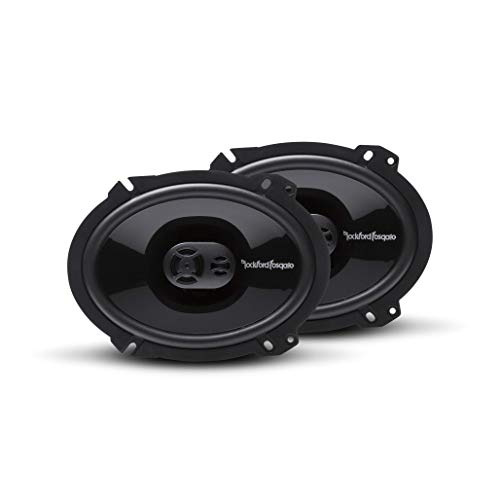
 Rockford Fosgate Prime R165X3 6.5" 3-Way Full Range6.5-Inch16 x 8.3 x 4 inches3.3 poundsCheck on Amazon
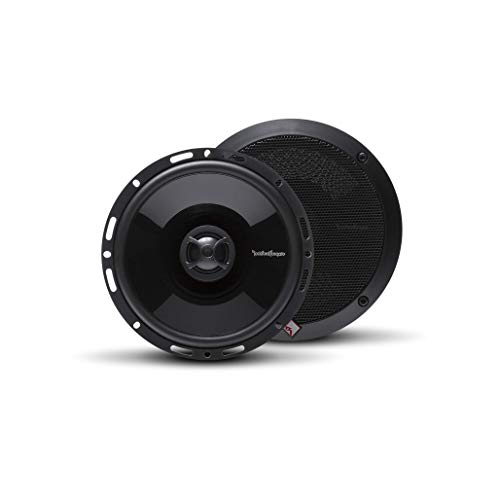 Rockford Fosgate P1650 Punch 6.5" 2-Way Coaxial Full6.5 inches4 x 6 x 5 inches5 poundsCheck on Amazon
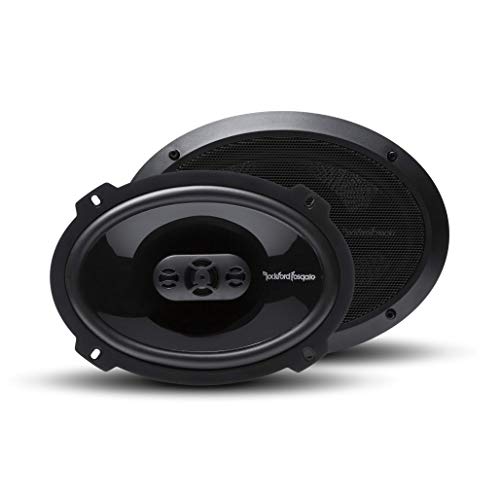 Rockford Fosgate P1694 Punch 6x9 4-Way Coaxial Full6x9 inches0 x 0 x 0 inches8.35 poundsCheck on Amazon


What's inside
- How the Punch name travelled from the nineties to the present catalogue
- Reading the catalogue without getting lost in suffixes
- The sizes that defined the era and where they fit today
- Coaxial convenience against component control
- Specifications that actually predict how a speaker behaves
- What cones, surrounds and baskets contribute
- Why these speakers reward real amplifier power
- Installation realities that specifications never mention
- Current production carrying the lineage forward
- Rear decks, oval drivers and the 6×9 question
- The 4×10 legacy and other disappearing fitments
- Buying genuinely old units without buying trouble
- Putting a system together around Punch character
- Check prices on Amazon
- Care, longevity and knowing when to stop upgrading
As an Amazon Associate I earn from qualifying purchases. This post may contain affiliate links at no extra cost to you.
Before any discussion of cones, baskets or amplifier pairings, the way this guide pays for itself deserves a plain statement: when a reader follows a link from a page like this one and buys something from the retailer on the other end, the publisher may receive a commission, and that commission arrives without adding anything to what the reader pays. That arrangement funds the hours spent reading specification sheets, owner manuals and heritage material, and it shapes nothing about which models earn a mention. No unit was borrowed, no bench session was staged, and no claim below rests on private listening impressions. Every recommendation traces to published specifications, maker documentation and established car-audio reference material, with gaps flagged wherever a datasheet leaves a question open.
Rockford Fosgate occupies a particular place in the memory of anyone who spent time around car audio in the nineteen-nineties and the first decade of the two-thousands. Punch amplifiers with their distinctive heatsinks, the deep blue and silver livery of the era, and door speakers that seemed to shrug off power levels that would have silenced lesser drivers all belong to the same mental picture. Saying a speaker is old school in this context does not mean it was manufactured decades ago, although genuinely vintage examples certainly exist. It means the design carries forward a set of priorities that defined the Punch era: generous power handling relative to size, a forward and energetic presentation, robust mechanical construction, and a voicing that favours punch and drive over polite restraint. Shoppers searching the phrase today usually want one of two things, sometimes both at once. Some want a current production speaker that keeps that character alive in a modern car. Others want an actual period piece, a driver built during the heyday itself, for a restoration or a nostalgia build. Both ambitions are legitimate, yet they demand very different kinds of caution, and this guide keeps them separated throughout.
Confusion around the term begins with the way the brand itself evolved. Rockford Fosgate, founded in Tempe, Arizona, built its reputation first on amplifiers and then on a complete ecosystem of speakers, subwoofers and signal processing. Punch became the name most closely tied to the brand’s mainstream performance line, sitting below the flagship Power series in price and ambition while inheriting much of the same engineering language. Power products were aimed at competition and high-output systems, with heavier motors, larger voice coils and more elaborate crossovers. Punch products were aimed at enthusiasts who wanted most of that capability in a package that fitted ordinary doors and ordinary budgets. That hierarchy still structures the catalogue today, and understanding it prevents the most common buying error in this category, which is treating every speaker with a Rockford badge as interchangeable.
Heritage matters here because it explains why certain specifications get emphasised in listings and forum threads while others get ignored. During the nineties, car-audio culture rewarded output. Systems were judged at shows and in parking-lot gatherings partly by how loud they could play without falling apart, and a speaker that survived abuse became a story in itself. Rockford Fosgate cultivated that reputation deliberately, publishing power-handling figures that looked conservative next to competitors and earning a name for drivers whose real-world limits sat above their printed ratings. Enthusiasts still repeat the observation that Punch speakers seemed underrated, and the observation has a plausible technical basis: generous voice-coil ventilation, sturdy suspensions and baskets that resisted flex all contribute to a driver that stays composed when pushed. Whether any single modern model lives up to that legend is a question for its own specification sheet, not for nostalgia, and the sections that follow measure current production against the same yardsticks the brand itself publishes.
How the Punch name travelled from the nineties to the present catalogue
The Punch line did not freeze in time. Over successive generations, materials changed, tweeter designs were revised, and the visual identity moved from the chunky industrial look of the early years toward the cleaner, darker styling of recent production. What remained consistent was the positioning: Punch as the workhorse performance range, Power as the flagship, and Prime as the entry point for first-time builders. A buyer who understands that ladder can read a model number with far more confidence, because the second letter or the suffix in a part number usually signals the family, and the family in turn signals the intended amplifier power, the crossover sophistication and the materials in the cone and surround.
Documentation from the maker traces this lineage in its own way. Product pages for current Punch coaxial speakers describe treated paper or mineral-filled polypropylene cones, depending on the generation, paired with silk or PEI dome tweeters and stamped or cast baskets. Power series pages describe heavier construction, larger magnets and more elaborate crossover networks, often with bi-amp capability on component sets. Prime pages describe simpler crossovers and lighter motors, aimed at head-unit power or modest external amplification. None of these descriptions amounts to a ranking of sound quality in isolation, because a well-matched Prime speaker in a treated door can outperform a Power speaker starved of power in a rattling cavity. The hierarchy describes capability and headroom, not destiny, and the guide returns to that distinction whenever a specification tempts a reader toward overspending.
One more historical wrinkle deserves attention before any shopping begins. Rockford Fosgate speakers from the nineties and early two-thousands were built in an era when car doors were simpler, damping material was less common, and factory head units delivered far less clean power than modern units. A period driver was therefore designed to make the most of limited signal quality and to tolerate rough treatment. Modern doors, by contrast, often contain complex factory amplification, active crossovers and shallow mounting cavities dictated by crash structures and window regulators. A speaker that drops neatly into a nineteen-ninety-eight sedan may not fit a current hatchback at all, even when the nominal size matches. Heritage explains character; it does not guarantee fitment, and the measurement sections below exist precisely because nostalgia cannot substitute for a tape measure.
Reading the catalogue without getting lost in suffixes
Model numbers in car audio reward a slow reading. A typical Rockford Fosgate part number compresses the family, the size, the configuration and sometimes the generation into a short string, and two models that look nearly identical on a listing page can differ in tweeter material, crossover slope or mounting depth. The safest habit is to open the maker’s own product page for the exact part number and read the specification table in full before comparing anything else. Retailer listings frequently copy specifications across generations, truncate frequency-response figures, or confuse peak power with continuous power, and those errors propagate into buying guides that never checked the source.
Size designations deserve particular care. A 6.5-inch speaker is not a single physical object. Different manufacturers measure the nominal size from different reference points, and the cutout diameter, the overall diameter including the mounting flange, and the mounting depth can all vary by several millimetres between models that share the same nominal label. Rockford Fosgate publishes cutout diameter, mounting depth and overall diameter for its current models, and those three figures together decide whether a speaker fits. A driver that clears the cutout but fouls the window regulator when the glass drops is not a fit, however correct the nominal size looks on paper. Likewise, a tweeter that protrudes too far forward can interfere with a factory grille, a problem that appears only when the door panel goes back on.
Generation changes add another layer. When a manufacturer revises a Punch coaxial speaker, the revision may keep the same nominal size and a similar appearance while changing the surround material, the tweeter diaphragm or the crossover point. The old and new versions may even share a shelf for a while as retailers clear stock. Checking the part number against the current catalogue, rather than trusting a photograph, is the only reliable way to know which generation a listing describes. This guide discusses families and design principles rather than pretending that a single snapshot of the catalogue will stay accurate indefinitely, and readers should treat any specific model mention as a starting point for verifying the live specification sheet.
The sizes that defined the era and where they fit today
Four sizes recur whenever old-school Rockford Fosgate speakers are discussed, and each one carries its own history. The 5.25-inch driver was the staple of smaller doors and rear decks in compact cars of the era, a size that balanced midbass output against the shallow cavities of the time. The 6.5-inch driver became the default door speaker across a huge range of vehicles, and it remains the most versatile size in the modern catalogue. The 6×9-inch oval driver lived in rear decks, where its larger cone area delivered bass that round drivers of the same depth could not match. The 4×10-inch oval, rarer today, was a General Motors rear-deck staple, and its continued presence in discussions of vintage systems says much about how long those cars stayed on the road.
Each size imposes its own compromise. A smaller cone moves less air, which limits low-frequency extension unless the enclosure helps, yet it also tends to offer wider dispersion and easier placement in tight doors. A larger cone reaches lower and plays louder with the same excursion, yet it demands more depth, more baffle area and more amplifier control. Oval drivers complicate the picture further, because their non-circular cones flex differently from round ones and their mounting footprints suit only specific factory openings. None of this makes one size universally better. It makes the factory opening the first decision and the desired bass character the second, in that order.
Measuring a factory location properly takes ten minutes and saves hours of frustration. Remove the door panel or the rear-deck trim, measure the cutout diameter or the rectangular opening, measure the depth from the mounting surface to the nearest obstruction with the window fully lowered, and measure the clearance between the mounting surface and the inner face of the trim panel. Note the positions of factory mounting holes and any locating tabs, because aftermarket speakers use a standardised bolt pattern that does not always align with a factory pattern. Adapter rings and spacer rings exist for most common vehicles, and they solve many depth and pattern problems, yet they also change the effective mounting depth and can push a tweeter into a grille. A speaker that fits on paper but needs a spacer that creates a new interference has not been fitted; it has been postponed.
Vehicles from the Punch era often accept modern speakers with little adaptation, because their doors were designed around the same nominal sizes. Modern vehicles are less forgiving. Crash beams, side-impact airbags, window regulators and wiring looms all compete for the same space, and some factory locations are too shallow for anything but a dedicated slim driver. The guide returns to depth and clearance in the specification section, because those numbers decide more purchases than any discussion of cone material ever will. Shoppers who intend to compare compact door options should also keep the dedicated roundup of best 3 5 inch car speakers in mind, since the smallest sizes raise the same fitment questions in a more concentrated form.
Coaxial convenience against component control
Most old-school Punch speakers that enthusiasts remember fondly were coaxial designs, with a tweeter mounted on a post or a bridge in front of the woofer cone. That arrangement exists for a practical reason: a single mounting location delivers the full frequency range, installation stays simple, and the factory wiring can often be reused. In a door, where the listener sits far off axis and the acoustic environment is chaotic, the compromises of a coaxial layout are frequently inaudible next to the benefits. The tweeter sits close to the woofer, the crossover is compact, and the whole assembly drops into one hole.
Component sets separate the woofer and the tweeter, adding an external crossover network and the freedom to place each driver where it performs best. A tweeter mounted high on a door panel or on an A-pillar reaches the listener with far less obstruction than one buried low in a door, and the resulting image stability is the main reason enthusiasts choose components despite the extra wiring and fabrication. The external crossover also allows steeper slopes and better protection for the tweeter, which matters when amplifier power rises. Power series component sets in particular offer crossover adjustments and bi-amp terminals, features that appeal to builders who enjoy tuning, while Punch component sets keep the crossover simpler and the installation closer to plug-and-play.
Choosing between the two layouts starts with an honest assessment of the vehicle and the builder. A daily driver with factory tweeter locations already moulded into the pillars is a natural candidate for components, because the car has already solved the hardest part of the installation. A vehicle with no factory tweeter location, or an owner who wants a weekend installation without cutting trim, will usually be happier with coaxial speakers, which deliver a complete system from a single location. Neither choice is a compromise in the pejorative sense. Each is an answer to a different set of constraints, and the wrong choice is the one that ignores the constraints in favour of an abstract preference picked up from a forum thread.
Tweeter material colours this decision further. Silk dome tweeters, common across Punch coaxial and component sets, tend to present high frequencies with a smooth and forgiving character that suits long listening sessions and bright factory interiors. PEI and other hard-dome materials can offer greater detail and output, yet they also reveal harshness in poor recordings or in reflective cabins. Aluminium and treated textile variants sit between those poles, and the maker’s documentation usually names the material explicitly. A reader who knows whether their cabin is reflective, whether their music collection leans toward compressed streaming or well-recorded material, and whether they favour long motorway sessions over short bursts can use tweeter material as a meaningful tie-breaker rather than a marketing curiosity.
Specifications that actually predict how a speaker behaves
Car-audio specification sheets reward readers who know which numbers carry weight and which ones decorate the page. Sensitivity, expressed in decibels at one watt measured at one metre, is the most consequential figure for anyone running modest amplifier power. A speaker rated at 91 dB will play noticeably louder from the same amplifier than one rated at 88 dB, because each three-decibel increase roughly doubles the acoustic output for a given electrical input. That difference can matter more than a large jump in amplifier power, and it explains why efficient Punch designs earned their reputation for sounding lively even on factory head units. Sensitivity figures are not perfectly comparable across manufacturers, since measurement conditions vary, yet within a single maker’s catalogue they provide a reliable relative guide.
Power handling divides into two figures that shoppers routinely confuse. RMS power, sometimes labelled continuous power, describes the level a speaker can sustain over time without thermal or mechanical damage, and it is the figure that should be matched to an amplifier. Peak power describes a brief maximum, often double or quadruple the RMS figure, and it says little about sustained listening. A speaker rated at 60 watts RMS and 120 watts peak is a 60-watt speaker in every decision that matters, and an amplifier rated at 75 watts RMS per channel is a sensible partner for it. Chasing peak figures leads to mismatched systems in both directions: amplifiers too weak to control the speaker, or amplifiers so powerful that a moment of inattention damages a voice coil.
Frequency response requires similar care. A figure such as 50 Hz to 20 kHz looks impressive until the tolerance is considered. A response quoted without a decibel window, such as plus or minus three decibels, tells the reader almost nothing about how flat or extended the output really is. Rockford Fosgate publishes frequency-response ranges for its current speakers, and the honest way to use them is comparatively: a 6.5-inch driver that reaches down to 45 Hz will produce more usable midbass than a 5.25-inch driver that starts at 60 Hz, assuming both figures were measured under similar conditions. Neither figure promises deep bass without a subwoofer, and readers who expect door speakers to reproduce the lowest octave of music will be disappointed regardless of brand. Doors are leaky, irregular enclosures, and even the best midbass driver needs help below roughly 60 Hz.
Mounting depth and cutout diameter, already discussed under fitment, belong in the specification conversation as well, because they are the numbers that turn a promising purchase into a return. The maker’s datasheet lists both, and the wise reader copies them into a notebook before ordering, alongside the factory measurements taken from the vehicle. Impedance, almost always four ohms for mainstream car speakers, determines how much current an amplifier must deliver, and it interacts with the amplifier’s own ratings in ways the amplifier section below explores. Voice-coil diameter, magnet weight and cone material all contribute to behaviour, yet none of them predicts sound quality on its own. A large magnet on a poorly designed suspension is wasted mass, while a modest motor on a well-engineered cone can outperform it. Treat individual specification lines as clues that only make sense together.
What cones, surrounds and baskets contribute
Materials science in a car door is a study in compromise, because the environment is hostile in ways a living room never is. Temperatures swing from below freezing to far above anything comfortable, humidity condenses on cold metal, sunlight strikes the door panel through glass, and vibration is constant. A speaker cone must remain stiff enough to move as a piston across its operating range, light enough to respond quickly, and durable enough to survive years of that treatment without softening, cracking or absorbing moisture.
Paper cones, treated with coatings that resist moisture, were the classic choice of the Punch era, and they remain in use because paper offers an excellent stiffness-to-weight ratio and a naturally damped character. Mineral-filled polypropylene, the other common choice in current production, trades a little of paper’s warmth for greater resistance to humidity and temperature, and it suits vehicles that see harsh climates or frequent condensation. Neither material is categorically superior. The difference lies in how each behaves at the edges of its range and how the manufacturer has tuned the suspension to complement it, details that live in the full specification sheet rather than in a one-word material label.
Surround material decides much of a speaker’s lifespan. Rubber surrounds, common in current production, resist ultraviolet light, ozone and temperature extremes, and they tend to last the life of the vehicle. Foam surrounds, common in genuinely old speakers, were lighter and more compliant, which helped efficiency, yet foam deteriorates with age, crumbling and tearing after a decade or two depending on climate and storage. That single fact explains most of the caution around vintage purchases, and the guide returns to it in the used-buying section. Santoprene and other synthetic rubber compounds occupy a middle ground, offering foam-like compliance with rubber-like durability, and they appear across the modern catalogue.
Basket design is easy to overlook because it hides behind the door panel, yet it governs how much of the motor’s energy reaches the air and how much is lost to flex. Stamped steel baskets, the standard in Punch coaxial speakers, are cost-effective and entirely adequate when the steel is thick enough and the design includes reinforcing ribs. Cast aluminium baskets, found in Power series models, are stiffer and heavier, resisting flex under high excursion and providing better heat sinking for the motor. The audible difference between the two appears mainly at high output, where a flexing basket allows the voice coil to rock and introduces distortion. At moderate volumes in a treated door, the distinction fades, which is another reason to match the basket to the intended use rather than to a prestige hierarchy.
Grilles deserve a mention because they decide whether a speaker survives its first year in a family car. Many Rockford Fosgate coaxial speakers ship with grilles included, a detail that matters when a factory grille cannot be reused or when a speaker is mounted in an exposed location such as a rear deck. A grille that stands proud of the mounting surface can interfere with a door panel, while a grille omitted from the box can leave a cone exposed to cargo or curious fingers. Checking grille inclusion on the specification sheet, rather than assuming it, prevents a small surprise from becoming a return.
Why these speakers reward real amplifier power
Rockford Fosgate built its name on amplifiers, and its speakers were designed with amplification in mind. That history shows in the power-handling figures: Punch coaxial speakers typically carry RMS ratings that sit comfortably above what a factory head unit can deliver cleanly, often in the range of fifty to one hundred watts depending on size and series. A head unit, even a good one, usually delivers somewhere in the region of fifteen to twenty-five watts of clean power per channel in real conditions, regardless of the larger number printed on its face. Feeding a speaker rated for far more power from such a source does not damage the speaker, yet it leaves much of its capability unused, and the sound can seem restrained or thin at higher volumes because the amplifier clips before the speaker reaches its stride.
Clipping is the phenomenon that confuses many first-time builders. When an amplifier is asked for more output than its power supply can deliver, the waveform flattens at its peaks, and the resulting distortion carries high-frequency energy that can destroy tweeters even at modest volume settings. A more powerful amplifier, used responsibly, is therefore safer for speakers than a weak one driven hard, because it delivers clean peaks without flattening. This counterintuitive truth underlies the brand’s long association with external amplification, and it explains why enthusiasts who pair Punch speakers with a dedicated four-channel amplifier so often describe the result as a transformation rather than an incremental improvement.
Four-ohm impedance is the standard for these speakers, and it matches the way most car amplifiers are rated. An amplifier that delivers, say, fifty watts per channel into four ohms will typically deliver more into two ohms, yet running car speakers at two ohms requires either dedicated two-ohm drivers or parallel wiring that changes the load the amplifier sees. For a straightforward installation, four-ohm speakers on a four-channel amplifier rated at a similar or slightly higher RMS figure per channel is the dependable starting point. The amplifier’s gain control then becomes the most important adjustment in the system, because gain is not a volume knob. It matches the amplifier’s input sensitivity to the head unit’s output voltage, and setting it by ear at moderate volume, or better with a multimeter and a test tone following the amplifier manual, prevents both clipping and noise.
Head-unit-only operation is not a mistake, and this guide does not present it as one. Many owners begin with speakers alone, planning to add an amplifier later, and a sensitive Punch coaxial speaker will sound perfectly enjoyable on head-unit power in the meantime. The honest framing is one of staging: speakers first, amplifier second, subwoofer third if desired, with each stage improving what came before. What the reader should avoid is the opposite sequence, buying an amplifier far beyond the speakers’ rating and then wondering why the system sounds strained, or buying speakers rated far beyond any amplifier they intend to own and then blaming the speakers for a lack of authority. Matching RMS figures within a sensible band, keeping sensitivity in view, and setting gains carefully will produce a better result than any single prestige purchase.
Shoppers narrowing their search to the smallest door locations face the same amplifier arithmetic in miniature, and the dedicated roundup of best 4 inch car speakers covers the four-inch options where limited cone area makes sensitivity and clean power especially decisive. The principles do not change with size; the margins simply get thinner, and a weak amplifier shows its limits sooner.
Installation realities that specifications never mention
A speaker is only as good as its mounting, and the door is the most difficult enclosure in audio. Unlike a bookshelf speaker, which arrives as a finished box with a known internal volume and a braced cabinet, a car door is a sheet-metal cavity full of holes, wiring, window mechanisms and water ingress. Sound from the rear of the cone leaks through those holes and cancels sound from the front, particularly in the midbass region, which is why untreated doors sound thin regardless of the speaker fitted. Addressing that problem does not require exotic materials or professional fabrication. Sealing the larger access holes with sheet material, applying damping to the outer door skin and the inner panel, and ensuring the speaker mounts to a rigid baffle rather than flexing sheet metal will improve the result more than any change of speaker model.
Baffles and foam rings solve specific problems and are worth understanding before buying. A baffle, whether a simple MDF or plastic adapter ring or a more elaborate sealed pod, gives the speaker a flat, rigid surface to bolt against, and it adapts the factory hole pattern to the aftermarket bolt circle. Foam rings, fitted between the speaker and the door panel, guide the sound forward through the grille opening rather than letting it spill into the cavity behind the panel, and they reduce rattles at the panel interface. Neither accessory is glamorous, and neither appears in marketing photographs, yet experienced installers treat both as standard practice rather than optional extras.
Wiring deserves the same unglamorous attention. Factory speaker wire is often thin, and while it suffices for head-unit power, an external amplifier benefits from proper gauge wire run directly to each speaker. Connections should be soldered or made with quality crimp terminals, protected from chafing where they pass through metal, and routed away from power cables where practical to minimise induced noise. Speaker polarity must be consistent across all locations, because a single reversed speaker produces bass cancellation that no amount of equalisation can repair. A simple polarity check, using a battery or a dedicated tester, takes moments and prevents a fault that can otherwise take hours to trace.
Door treatment at a general level means three things: add mass to panels that resonate, seal openings that leak sound, and decouple trim that rattles. Damping material applied to the outer skin reduces the drum-like resonance of large flat panels. A barrier layer on the inner skin, with holes sealed, turns the door into a closer approximation of an enclosure. Foam or felt tape at trim contact points quiets buzzes that appear only at certain frequencies. None of this requires removing the vehicle from service for a week. A single door can be treated in an afternoon, and the improvement is audible immediately, particularly in the midbass that Punch speakers are known for.
Current production carrying the lineage forward
Walking into the present catalogue with the history in mind clarifies what each family is for. Punch coaxial speakers remain the centre of gravity for most buyers, offered in the familiar round sizes and in oval formats for rear decks, with two-way and three-way variants depending on the model. The two-way arrangement pairs a woofer with a single tweeter and suits listeners who value coherence, while the three-way arrangement adds a midrange driver or a supertweeter for extra presence in the upper frequencies. That extra driver can add sparkle in a bright cabin, yet it also introduces another crossover point and another source of interference, so the choice between two-way and three-way is better made by considering the cabin and the music than by assuming more drivers automatically means more fidelity.
Punch component sets extend the same philosophy to builders who want tweeter placement freedom. A typical set includes a woofer, a separate tweeter, and a crossover network housed in a compact enclosure that can be tucked behind a door panel or under a dashboard. Some crossovers offer tweeter level adjustment, usually a small switch that attenuates the tweeter by a few decibels, which is genuinely useful in a reflective cabin where a tweeter at ear level can sound too forward.
Power series speakers occupy the top of the range, with larger motors, cast baskets and crossovers that support bi-amping on component models. Bi-amping separates the woofer and tweeter feeds so that each receives its own amplifier channel, removing the passive crossover from the high-current path for the woofer and giving the installer independent control over levels. The benefit is real in high-output systems, yet it demands twice the amplifier channels and a willingness to manage crossovers actively or through the amplifier’s own filters. For most daily-driven cars, a well-chosen Punch set on a good four-channel amplifier delivers the character buyers associate with the brand without the complexity and expense of the flagship approach.
Prime speakers, the entry family, deserve a fair hearing rather than dismissal. They use simpler crossovers, lighter motors and less elaborate baskets, yet they inherit the brand’s voicing priorities and they suit first systems, rear-fill locations and vehicles where the budget must also cover an amplifier, wiring and damping. A Prime speaker in a treated door on clean amplifier power will outperform a Punch speaker in an untreated door on a clipping head unit, which returns to the central theme of this guide: the system around the speaker matters at least as much as the badge on its grille. Readers building on a tight overall budget should allocate money across speakers, amplification and installation materials in proportion, rather than spending everything on the drivers and leaving nothing for the work that lets them perform.
Rear decks, oval drivers and the 6×9 question
Rear-deck speakers occupy an awkward position in modern car audio. In the Punch era they were often the main source of bass in a system without a subwoofer, and a pair of 6×9-inch drivers could fill a sedan cabin with low-frequency energy that round door speakers could not match. Today, many builders treat rear speakers as fill, or omit them entirely in favour of a front-focused system with a dedicated subwoofer. Both approaches have merit, and the decision depends on how the car is used. A family sedan that regularly carries rear passengers benefits from capable rear speakers, while a two-seat coupe or a competition-oriented build may not need them at all.
The oval shape is the source of both the 6×9’s advantage and its complication. A 6×9 cone has roughly the surface area of a larger round driver while fitting a rectangular factory opening, which is why manufacturers adopted it for rear decks in the first place. The trade-off is that an oval cone flexes unevenly, and its suspension must manage motion across two different axes. Modern designs address this with reinforced cones and carefully shaped surrounds, and the maker’s documentation for current 6×9 models describes cone treatments and motor structures aimed specifically at controlling that flex. The result, on paper at least, is a driver that delivers usable midbass down into the range where a subwoofer takes over, making it a practical choice for systems that have no room for a subwoofer enclosure.
Mounting a 6×9 deserves the same measurement discipline as a round driver, with one extra consideration: the rear deck is often a thin panel that flexes, and a heavy oval driver can excite resonances that colour the sound. Reinforcing the deck, or at least ensuring the speaker bolts to a flat and rigid surface, pays dividends, as does sealing the gap between the speaker and the deck so that sound from the boot does not leak into the cabin out of phase. Shoppers comparing larger oval formats should also consult the dedicated roundup of best 5 25 car speakers with bass, which examines how the mid-sized round drivers handle low-frequency duties when a rear deck is not available or not desired.
The 4×10 legacy and other disappearing fitments
Few sizes illustrate the march of automotive design as clearly as the 4×10. Once a standard rear-deck size in General Motors vehicles, it has all but vanished from new cars, surviving mainly in the restoration scene and in the catalogues of manufacturers who still serve it. Rockford Fosgate’s continued support for legacy sizes is one reason the brand retains goodwill among owners of older vehicles, because a direct-fit replacement avoids the fabrication that an adapter plate and a round speaker would require. The dedicated roundup of best 4×10 car speakers looks specifically at this narrow format, where shallow depth and a small cone area make every specification choice count.
Legacy fitments raise a question that applies well beyond the 4×10: when is it better to keep the factory size, and when is it better to adapt? Keeping the factory size preserves the trim, the grille and the factory appearance, which matters in a restoration or a car whose interior is otherwise original. Adapting to a more common size, usually by fitting an adapter plate and a round driver, opens a far wider choice of modern speakers and often improves sound quality, at the cost of fabrication and a departure from originality. There is no universal answer. A daily driver that will never be judged for originality is a good candidate for adaptation, while a show car or a carefully preserved survivor usually benefits from staying with the factory size and choosing the best available driver in that format.
Other legacy sizes, including the 3.5-inch dash speaker and the 4-inch door speaker, survive in similar niches. Dash speakers in particular have gained renewed attention as builders realise that a small driver firing upward at the windscreen can lift the soundstage in a way door speakers alone cannot. The same principles apply: measure the depth, check the impedance, confirm the mounting pattern, and remember that a small driver needs a high-pass filter to protect it from bass it cannot reproduce. A dash speaker asked to play full range will distort and fail early, while the same driver crossed over properly can transform the presentation of a modest system.
Buying genuinely old units without buying trouble
Everything so far has concerned current production, and the distinction matters enormously when the conversation turns to vintage speakers. A genuinely old Rockford Fosgate driver, built in the nineties or early two-thousands, is now several decades old, and time has acted on its materials whether or not it was ever used. Foam surrounds are the main concern. Foam oxidises and becomes brittle, and a surround that looks intact in a photograph can crumble when the cone moves for the first time in years. Rubber surrounds age more gracefully, yet they too can harden or crack, and the adhesive bonding the surround to the cone and the basket can fail. A buyer considering a vintage pair should ask for close photographs of the surrounds, the spider, the cone and the terminals, and should treat any listing that shows only a distant or stock image with suspicion.
Reconing changes the calculation. A reconed speaker has had its cone, surround, spider and voice coil replaced, which can restore performance if the work was done properly with correct parts. It can also ruin a driver if the work was done with generic parts, incorrect voice-coil dimensions or sloppy adhesive work. A seller who can name the reconing service, show receipts or describe the parts used is offering a very different proposition from a seller who mentions reconing in passing without detail. The voice coil is the heart of the matter: an incorrect coil changes the impedance, the sensitivity and the power handling, and a buyer without test equipment cannot verify it from photographs alone. When in doubt, the price of a professional inspection is small next to the cost of installing a faulty speaker and then removing a door panel twice.
Authenticity is the other vintage hazard. Popular brands attract counterfeits, and Rockford Fosgate is no exception. Genuine period speakers carry specific markings, labels and construction details that are documented in enthusiast archives and in the brand’s own heritage material, including the style of the logo, the basket stampings, the magnet label and the terminal configuration. A speaker whose label looks newly printed, whose basket lacks the expected stampings, or whose cone material does not match the documented specification for its model deserves scepticism. Buying from a seller with a long history in car audio, checking the part number against period catalogues, and comparing the unit against photographs of verified examples are all sensible precautions. If a deal looks too good for a rare period model, it usually is, and the money is better spent on current production that carries a warranty.
Storage history matters as much as age. Speakers stored in a dry, temperate garage age far better than ones stored in a damp shed or a hot attic, where temperature cycling and moisture accelerate the deterioration of adhesives and surrounds. A seller who can describe storage conditions, and who has kept the speakers in their original packaging, is offering useful information, while a seller who cannot say where the speakers spent the last decade is offering a gamble. None of this means vintage speakers should be avoided. Properly vetted period drivers can anchor a restoration beautifully, and their character is genuinely difficult to replicate. It means the purchase should be treated as the acquisition of a used mechanical component with a finite lifespan, not as the purchase of a new product with a warranty, and the price should reflect that reality without any specific figure being stated here.
Putting a system together around Punch character
A coherent system begins with the front speakers, because they carry the music the driver actually hears. Choose the largest size the doors accept, match the RMS rating to an amplifier that will be added now or later, and treat the door properly before judging the result. Rear speakers, if they are used at all, should complement the front rather than compete with it, which usually means a similar family and a conservative level setting. A subwoofer, even a modest one, relieves the door speakers of the lowest frequencies, and the improvement in midbass clarity that follows is often larger than any change of door speaker could deliver. The crossover point between the doors and the subwoofer, typically somewhere in the region of sixty to eighty hertz, deserves experimentation, because the cabin’s acoustics shift the ideal point from car to car.
Signal source quality sets a ceiling that no speaker can exceed. A factory head unit with a clean preamp output, or a modern unit with proper digital processing, gives the amplifier something worth amplifying, while a noisy or heavily equalised factory signal forces the whole system to work around a compromised foundation. Digital signal processing, whether built into the head unit or added as a separate unit, allows time alignment and equalisation that can correct for the asymmetric seating position in a car, and it is the single most effective upgrade for listeners who have already addressed speakers, amplification and damping. It is also the upgrade most often postponed, because its benefits are harder to describe in a specification sheet than a power figure, yet experienced builders consistently rank it among the highest-value additions to a mature system.
Common mistakes in this category follow a familiar pattern. Buying speakers before measuring the doors leads to returns. Choosing by peak power leads to mismatched amplification. Ignoring sensitivity leads to disappointment on head-unit power. Skipping door treatment leads to blaming the speakers for the door’s faults. Buying vintage units without inspecting surrounds leads to installing drivers that fail within weeks. Each of these errors is avoidable, and each is cheaper to avoid than to correct, which is why this guide spends more time on measurement, matching and installation than on ranking individual models. A buyer who follows the process will end with a system that sounds like the Punch era promised, whether the speakers themselves left the factory this year or three decades ago.
Check prices on Amazon
Live listings for the shortlist in this guide are pulled from Amazon below, so prices and availability are always current at the moment you look.

Care, longevity and knowing when to stop upgrading
Current production speakers ask little in the way of maintenance. Keeping grilles in place, avoiding pressure washing door panels, and addressing water leaks promptly will protect the drivers for years. If a door develops a rattle, the cause is usually a loose clip, a tired seal or a wire resting against metal, and fixing it early prevents the kind of vibration that loosens speaker mounting screws over time. Amplifier gains should be checked whenever the head unit changes, because a new source with a different output voltage changes the gain structure of the whole system, and a gain setting that was correct for one unit can drive the next into clipping.
Vintage speakers, by contrast, deserve periodic inspection. Checking surrounds annually, looking for cracks, stiffness or separation at the adhesive lines, gives early warning of deterioration before a failure damages a voice coil. Storing spare period drivers indoors, away from temperature extremes and sunlight, preserves them far better than leaving them in a garage that freezes in winter and bakes in summer. Reconing, when it becomes necessary, should be entrusted to a service that works with correct parts for the model, and the cost of that work should be weighed against the availability of a current production equivalent that carries a warranty and modern materials.
Knowing when to stop is the final discipline. Car audio rewards incremental improvement, yet each upgrade delivers less than the one before, and the point arrives where further spending changes the system more than it improves it. A well-matched set of Punch speakers, properly amplified, installed in treated doors and crossed over to a capable subwoofer, is already a complete system by any reasonable measure. Beyond that point, the remaining gains come from tuning and listening rather than from purchasing, and the time spent enjoying music in the car is worth more than the time spent chasing a specification that promises a difference the ear cannot reliably hear. The old-school spirit, at its best, was never about owning the most expensive equipment. It was about building something loud, durable and joyful with the tools at hand, and that spirit survives intact in every careful installation that follows the principles in this guide.
For the reader who came here looking for a single definitive answer, the honest summary is this: choose current production Punch or Power speakers in the largest size the vehicle accepts, verify every dimension against the maker’s own datasheet, pair them with clean amplifier power matched to their continuous rating, treat the doors as part of the enclosure, and reserve vintage purchases for restorations where originality justifies the inspection and the risk. The heritage is real, the engineering behind it is documented, and the sound that made the brand famous is still available to anyone willing to measure twice, buy once, and install with patience rather than haste. A car that carries that sound down a familiar road, with the doors sealed, the gains set, and the music playing cleanly at whatever volume the moment calls for, is the proper inheritance of the Punch era, and it remains within reach of any careful builder today.

