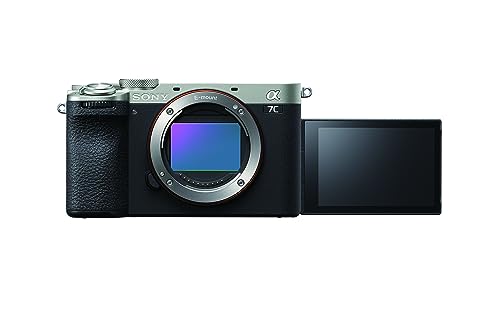
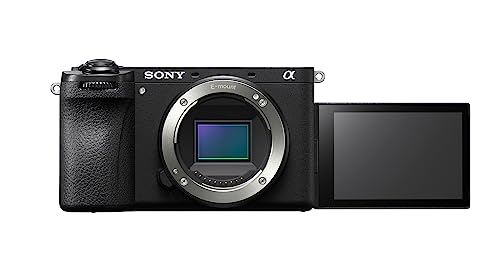
Our Top Picks
 BOVKE Camera Case for Fujifilm X100VI/ X-E5/ X100V6.68 x 4.09 x 3.39 inches0.2 poundsCheck on Amazon
 Canboc Camera Case for Fujifilm X100VI/ X-E5/ X100V/small6.6 x 4.1 x 3.4 inches0.2 poundsCheck on Amazon
 Compact Camera Case for Fuji X100VI X100V X100F6.89 x 3.35 x 4.41 inches6.49 x 3.15 x 4.2 inches0.1 poundsCheck on Amazon
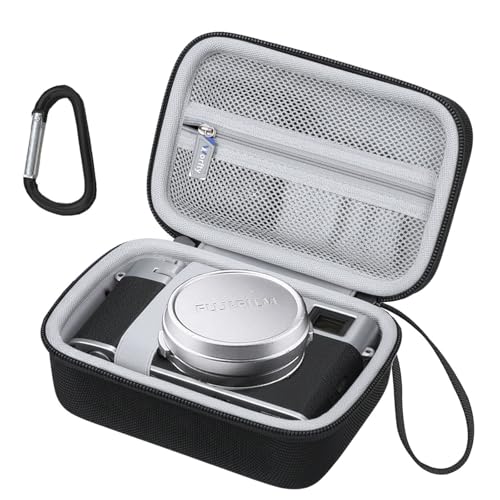 Camera Case for Fujifilm X100VI / X100V Digital6.10 x 3.35 x 3.54 inches6.49 x 4.13 x 3.3 inchesCheck on Amazon

What's inside
- Two very different kinds of protection
- Fitment is the deciding factor
- Fujifilm X100 hard carrying cases for travel and storage
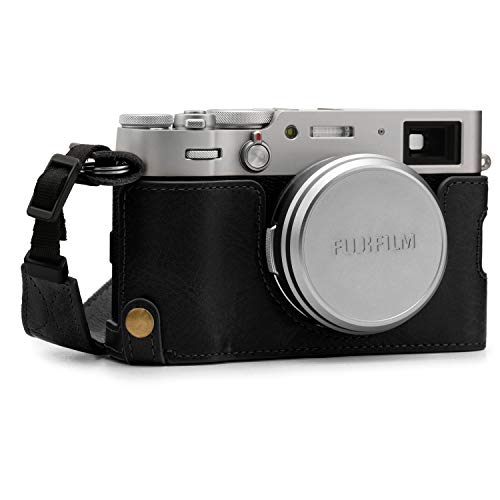
- An ever-ready genuine leather option for the Fujifilm X100V
- Compact Fujifilm carrying cases with pockets and different closures
- Sony Alpha 7C II and A7CR half cases
- A carrying box for the Canon EOS R50 and R100 kit
- Side-by-side comparison of the eight cases
- How to choose between a half case and a carrying case
- Care, storage, and everyday habits that make a case work
- Common buying mistakes to avoid
- Check prices on Amazon
- Which case fits which owner
As an Amazon Associate I earn from qualifying purchases. This post may contain affiliate links at no extra cost to you.
A mirrorless camera is not protected in the same way as a phone, a tablet, or a pair of headphones. It has a protruding lens, exposed dials, a screen that can be pressed in a bag, and a body shape that changes meaningfully from one model generation to the next. That is why the best protective cases for mirrorless cameras are not generic pouches. The useful ones in this guide are model-specific: ever-ready half cases that stay on the camera while you shoot, and hard carrying cases shaped for a particular body for travel and storage. Every product covered here was chosen because its listing names a specific mirrorless model or a small, closely related family of models, not because it claims to fit almost everything.
This distinction matters from the first paragraph because it shapes the entire buying decision. A half case protects the bottom and sides of the camera during normal use, improves grip, and leaves the controls, screen, and lens ready for a photograph. A hard carrying case does the opposite job. You put the camera inside it, close it, and carry or pack it while the camera is not in use. One is protection while shooting. The other is protection while moving. Some photographers need only one type. Many owners of a Fujifilm X100 series camera, a Sony Alpha 7C II, or a Canon EOS R50 will eventually understand why both types exist, even if they only buy one to start with.
Our research for this guide focused on fitment first, product type second, and convenience features third. We checked the exact model names in each product title, the difference between genuine leather, leather, and PU leather where the title states the material, and practical notes such as Case Only and without strap. Those small phrases change what actually arrives and what else you may need to buy. A case that looks perfect in a photograph is a poor purchase if it was made for the previous generation of your camera, if it is only the case with no accessories included, or if you expected a shoulder strap that the listing clearly says is not included.
All eight products in this guide are third-party compatible accessories. They are not official accessories from Fujifilm, Sony, or Canon, even though their titles name cameras from those makers for fitment purposes. That wording is important. Compatible means the case was designed by another brand to fit that camera model. It does not mean the camera maker manufactured it, endorsed it, or included it with the camera. Keeping that clear helps you judge materials, finish, and expectations on the merits of the case itself.
Two very different kinds of protection
The half case, sometimes called an ever-ready case, is the older idea and in many ways the more personal one. It covers the base and lower part of the camera body and is designed to remain fitted while you take photographs. The MegaGear MG1894 for the Fujifilm X100V, the SmallRig leather case kit for the Sony Alpha 7C II and A7CR, and the MUZIRI KINOKOO half case for the Sony A7C II all belong to this group. They differ in material and detail, but their purpose is shared. They add a layer between the camera and your hand, a desk, a cafe table, or the inside of a larger bag, without requiring you to remove protection every time you want to shoot.
Because a half case stays on the camera, its fit has to be precise around controls, ports, battery access, and the shape of the grip. The MUZIRI title specifically mentions a hand grip and an opening bottom, which tells you something useful about how that design tries to balance protection with access. The SmallRig title describes a kit with a wrist strap, which is a different emphasis: carry security around the wrist while the case is fitted. The MegaGear title emphasizes genuine leather and ever-ready use for one specific camera, the Fujifilm X100V. None of these should be treated as interchangeable with a Sony case or with each other across brands.
The hard carrying case group works in a completely different moment. The BOVKE case for the Fujifilm X100VI, X-E5, and X100V, the Canboc case for the X100VI, X-E5, X100V, and X100F, and the Baval case for the Canon EOS R50 and R100 with the RF-S 18-45mm lens are examples. You place the camera inside when you are travelling, commuting, or storing it, then remove it to shoot. Their value is in the shell, the closure, and the internal organization, including mesh pockets where the title mentions them. They are not meant to improve your grip in the street or to stay attached while you compose a photograph.
Between those two clear groups sit two compact Fujifilm cases that are also carrying cases, even if their shapes and closures differ. One uses a magnetic flap, a rear zipper pocket, and an internal battery pocket, and covers the Fujifilm X100VI, X100V, and X100F as well as the PowerShot V1 named in its title. The other is a black Case Only option for the X100VI and X100V, with a long compatibility list reaching back through the X100 family and a pocket for a cable and SD card. Both are for carrying and storage, not for shooting with the case fitted as a half case. Reading them that way prevents a common mistake: expecting a soft or compact carrying case to behave like an ever-ready skin.
Fitment is the deciding factor
No feature in this guide outranks fitment. A mesh pocket does not help if the shell was shaped for a different body. Genuine leather does not help if the half case blocks the wrong generation of camera. A smooth zipper does not help if your lens combination is not the one named in the title. That is why every product section below repeats the model names from its title. Repetition is deliberate. Mirrorless model names are close enough to cause expensive confusion, especially when a family has several generations with similar styling.
Consider the Fujifilm X100 line. This guide includes cases that name the X100VI, X100V, X100F, X100T, X100S, and the original X100 in different combinations. Those are not all the same fitment list. One case may name X100VI, X-E5, X100V, X100F, X100S, while another may name only the X100V, and another may stretch from X100VI and X100V back to X100F, X100T, X100S, and X100. You should not assume that because two cases both say X100 that they promise the same fit. Read your camera’s exact model name from the body or your purchase record and match it, character for character, against the title of the case you are considering.
The Sony warning is just as important. The SmallRig and MUZIRI cases in this guide are for the Alpha 7C II, also written A7C II or A7C Mark II in the MUZIRI title, and in the SmallRig case also the Alpha 7CR. They are not described here as cases for the earlier A7C. Similar naming does not establish fit. If you own the first-generation A7C, do not buy a case from this guide on the assumption that II is a minor detail. The II is the model distinction the case was made around. The same caution applies in reverse: an owner of an A7C II should not choose a case listed only for an older body without a clear statement that the newer model is included.
For Canon, the Baval case names the EOS R50 and EOS R100 mirrorless cameras with the RF-S 18-45mm lens. That lens detail is part of the fitment, not decoration. A carrying box that works for a compact kit combination may not be the right choice if you travel with a different, larger lens mounted. If your R50 or R100 is normally stored body-only, or with another lens attached, pause and consider whether the named combination matches how you will actually put the camera away. The safest purchase is always the one whose title matches both your body and your typical stored configuration.
Before ordering any case here, do a simple three-part check. First, confirm the exact camera model and generation. Second, confirm the product type: half case for shooting, or carrying case for travel and storage. Third, confirm what is included, paying special attention to phrases such as Case Only and without strap. That short routine, drawn from our research notes, prevents most of the disappointment associated with model-specific accessories.
best balancing stabilizers for mirrorless cameras
Fujifilm X100 hard carrying cases for travel and storage
The BOVKE Camera Case in Brown is a shockproof travel hard carrying case for the Fujifilm X100VI, X-E5, and X100V, with the fuller fitment in its description also naming the X100F and X100S. It includes a mesh pocket, which gives you a place to separate a small flat accessory from the camera itself inside the case. In brown, it also offers a visual alternative to the black cases that dominate this category. For an X100 owner who wants a defined hard case for a day bag, a car, or a suitcase, the appeal is straightforward: structured protection, a named fit for several X100 generations and the X-E5, and internal organization that keeps the camera from sitting loose.
The Canboc Camera Case in Black covers the Fujifilm X100VI, X-E5, X100V, and X100F, and its title also mentions a zipper mesh pocket. It is sold as Case Only. That phrase needs to be read plainly: you are buying the case, not a camera and not a bundle of accessories. The Canboc will appeal to buyers who prefer black, who want the zipper mesh pocket detail, and whose camera is one of the four models named. Compared with the BOVKE, its listed family is slightly narrower in the title provided here, so an X100S owner in particular should notice the difference and choose based on the exact list, not on a general impression that all X100 cases cover all X100 cameras.
Choosing between the BOVKE and the Canboc is therefore less about which one is universally better and more about exact fit, color preference, and how you value their pocket descriptions. Both are hard carrying cases for travel and storage. Both name the X100VI, X-E5, and X100V. The BOVKE title and fitment supplied for this guide reach to the X100S as well and present the color as brown. The Canboc is black and is explicitly Case Only. If your model appears in both lists, either could serve the same basic role. If your model appears in only one list, that list should decide for you.
Neither of these hard cases should be confused with a half case. You do not fit a BOVKE or Canboc to the camera and then walk out shooting through it. You open it, take the camera out, shoot, and put the camera back when you are done or when you need to move through a crowded or cluttered environment. That workflow is slower than an ever-ready case but offers a more complete enclosure while the camera is stored. For travel days with long gaps between photographs, that trade is often worthwhile. For a walk where the camera never leaves your hand, it may be unnecessary.
An ever-ready genuine leather option for the Fujifilm X100V
The MegaGear MG1894 Ever Ready Genuine Leather Camera Half Case is the clearest expression of the half case idea in this guide. It is compatible with the Fujifilm X100V, it is black, and its title states genuine leather. That material wording matters because not every leather-look case in this guide is genuine leather. The MUZIRI Sony case, for example, is explicitly PU leather. The MegaGear is the one whose title makes the genuine leather claim, and buyers who care about that distinction should hold the line exactly there and not transfer the claim to other products.
For an X100V owner, the MegaGear is about daily handling. A half case changes how the bottom of the camera meets a table, how the body feels in the hand, and how much of the camera is shielded during normal carrying without a full enclosure. It suits a photographer who uses the X100V as an everyday carry camera and wants protection that does not need to be removed for each photograph. The ever-ready concept is the point: the case is ready when the camera is ready.
Its limitation is equally clear. It is named for the X100V. It is not presented in this guide as a case for the X100VI, X100F, or X-E5. That narrow focus can be a strength, because a case made for one body can follow that body closely, but it means owners of other generations should look elsewhere in this guide. Do not let the shared X100 family name blur that boundary. If your camera is an X100VI, the MegaGear listing as provided here is not the match, however much you like the idea of a genuine leather half case in black.
Compact Fujifilm carrying cases with pockets and different closures
The Compact Camera Case for the Fuji X100VI, X100V, and X100F, also naming the PowerShot V1 in its title, takes a different approach from the two hard cases above. Its title describes an anti-scratch design in premium Oxford material, a magnetic flap, a rear zipper pocket, and an internal battery pocket. It is supplied without strap. That last detail must not be skipped. Without strap means the listing does not include a strap, so you should plan to carry the case in a bag, in your hand, or with a carrying method you already own, rather than expecting to hang it from your shoulder as delivered.
Its fitment list also deserves careful reading. It names the X100VI, X100V, and X100F. It does not, in the title provided, name the X-E5 or X100S. An X100VI owner therefore has a genuine choice among several carrying cases in this guide, while an X-E5 owner does not have that same choice and should stay with a case that names the X-E5. The inclusion of the PowerShot V1 in the title is also a reminder that a single case design can be marketed for more than one compact camera, which makes it even more important to confirm your exact model is listed rather than relying on approximate size.
The other compact option, the Camera Case for Fujifilm X100VI and X100V in Black, has the broadest backward reach in its title: also X100F, X100T, X100S, and X100. It includes a pocket for a cable and SD card and is sold as Case Only. For owners of older X100 generations, that long list is the headline. A photographer who has kept an X100T, X100S, or original X100 in regular use may find that newer cases focus on the X100VI and X100V and leave older bodies out. This case, as titled, brings those older models back into the conversation.
Between these two compact Fujifilm cases, the decision comes down to closure, pockets, and generation. The magnetic flap case offers an internal battery pocket and a rear zipper pocket and covers the X100VI through X100F group plus the PowerShot V1 named in its title, without a strap. The black case offers a cable and SD card pocket and covers a longer X100 lineage back to the original model. Neither is a half case. Both are for carrying a camera that you will remove to use. If you own an X100VI and value a battery pocket, the first has a clear argument. If you own an X100T or X100S, the second is the one whose title actually speaks to you.
best backpacks for sony mirrorless cameras
Sony Alpha 7C II and A7CR half cases
The Sony section of this guide is entirely about half cases, which reflects a different use pattern. The Alpha 7C II and A7CR are compact full-frame mirrorless cameras that many owners carry for long periods, change lenses on, and use as primary cameras rather than occasional compacts. A half case that stays on the body can protect the base during that constant handling while keeping the camera ready. The two options here, from SmallRig and MUZIRI KINOKOO, approach that job with different materials, colors, and included details, and they should not be merged into a single generic Sony case in your mind.
The SmallRig A7C II and A7CR Camera Leather Case Kit is described as a retro style leather camera half case with a wrist strap, made for the Sony Alpha 7C II and Alpha 7CR. The word kit and the wrist strap in the title set it apart from a case-only purchase. A wrist strap addresses a specific risk: the camera slipping from the hand during one-handed handling, street photography, or moving through a crowd. It is not the same as a neck strap or a shoulder strap, and it should be valued for what it is. For a photographer who often lifts the camera, shoots, and lowers it again in quick succession, wrist security can be more relevant than a storage pocket.
The MUZIRI KINOKOO Sony A7C II Case is a premium PU leather half case in Coffee, with a hand grip and an opening bottom, compatible with the Sony Alpha 7C II, written in its title also as A7C II and A7C Mark II. The material point is non-negotiable for honest comparison: this is PU leather, not genuine leather. PU leather is a synthetic material with a leather-like appearance. It should be considered on its own terms, including color and grip design, and not upgraded in description to genuine leather. The MegaGear Fujifilm case is the genuine leather product in this guide. The MUZIRI is the PU leather product, and its title says so clearly.
The MUZIRI’s hand grip and opening bottom are practical design signals. A hand grip feature speaks to how the case is meant to improve or support holding the camera, which is central to a half case because it lives in your hand. An opening bottom suggests attention to access from below while the case remains fitted, a detail that matters on a camera you use constantly and do not want to undress for routine tasks. We are describing only what the title states, without inventing a mechanism or a measurement, but even at that level the intent is clear: this case is designed around continued use, not storage.
Color also separates the two Sony options as presented here. The MUZIRI is Coffee, a warm tone that will suit some owners and not others. The SmallRig is presented through its retro style and kit format rather than a single color name in the title supplied for this guide. If you own an A7CR, note carefully that the SmallRig title names the A7CR alongside the A7C II, while the MUZIRI title names the A7C II family only. An A7CR owner should therefore treat the SmallRig as the Sony half case in this guide whose title directly includes their camera. An A7C II owner has both to consider and can decide based on material honesty, grip and opening bottom versus wrist strap kit, and color preference.
Both Sony cases also carry the generation warning in its sharpest form. A7C II is not A7C. If you are buying for a camera you received as a gift, bought used, or have owned through several Sony generations, confirm the full name before you order. The difference of a single Roman numeral in conversation becomes a complete fitment difference in a model-specific half case. Our research kept returning to that point because half cases, by design, follow the body closely. The closer a case follows the body, the less room there is for approximate fit.
A carrying box for the Canon EOS R50 and R100 kit
The Baval Case for the Canon EOS R50 and R100 Mirrorless Camera with the RF-S 18-45mm lens is described as a protective storage box and portable carrying box with a smooth zipper, a travel-ready design, and a shoulder strap. It is the only Canon-specific case in this guide, which makes its fitment boundaries simple to state and important to respect. It is for the R50 and R100 in the kit configuration named in its title. It is not a Fujifilm X100 case and not a Sony A7C II half case, and neither of those groups should be stretched to cover a Canon owner.
The shoulder strap distinguishes the Baval from the compact Fujifilm case that is explicitly without strap. A shoulder strap changes how a carrying box is used on a travel day. Instead of living only inside another bag, the case can be carried on its own for short movements: from a car to a viewpoint, through a hotel, or around a family event where you want the camera protected between moments of use. That does not make it a replacement for a full camera bag for a multi-lens outfit. Its title centers on one camera with the named kit lens, and its best use follows that center.
For R50 and R100 owners, the key question is whether the camera is stored with the RF-S 18-45mm lens as named. If that is your normal kit, the Baval aligns with how you already use the camera, especially if you are a newer mirrorless owner who bought the camera as a kit and wants a dedicated place for it rather than a loose corner of a backpack. If you have moved to a different primary lens, think carefully about your stored configuration before choosing a model and lens specific box. Fitment includes the lens in this case, not just the badge on the body.
Side-by-side comparison of the eight cases
| Product | Type | Camera fitment from title | Notable detail from title |
| BOVKE Camera Case, Brown | Hard carrying case | Fujifilm X100VI, X-E5, X100V, also X100F and X100S | Shockproof travel case with mesh pocket |
| MegaGear MG1894 | Ever-ready half case | Fujifilm X100V | Genuine leather, black |
| Canboc Camera Case, Black | Carrying case | Fujifilm X100VI, X-E5, X100V, X100F | Zipper mesh pocket, Case Only |
| Compact Camera Case, premium Oxford | Compact carrying case | Fuji X100VI, X100V, X100F, PowerShot V1 | Magnetic flap, rear zipper pocket, internal battery pocket, without strap |
| Camera Case for X100VI and X100V, Black | Carrying case | X100VI, X100V, X100F, X100T, X100S, X100 | Pocket for cable and SD card, Case Only |
| SmallRig Leather Case Kit | Half case kit | Sony Alpha 7C II, Alpha 7CR | Retro style leather, wrist strap |
| MUZIRI KINOKOO Case, Coffee | Half case | Sony Alpha 7C II, A7C Mark II | Premium PU leather, hand grip, opening bottom |
| Baval Case | Protective storage and carrying box | Canon EOS R50, R100 with RF-S 18-45mm lens | Smooth zipper, travel-ready, shoulder strap |
Read the table as a fitment map first and a feature map second. Start by finding your exact camera in the third column. Only then compare the details in the fourth column. That order prevents the most common error in this category, which is falling for a pocket, a color, or a material before confirming that the case was made for your body. It also reveals how uneven the choices are by camera, which is normal for model-specific accessories. X100VI owners have several carrying choices. X100V owners have both carrying and ever-ready choices. A7CR owners have one clear half case here. R50 and R100 kit owners have one dedicated box. Uneven choice is not a flaw in the guide. It reflects the listings themselves.
The table also makes the material distinctions visible in one place. Genuine leather appears only with the MegaGear. PU leather appears explicitly with the MUZIRI. Leather without the genuine qualifier appears with the SmallRig kit. Premium Oxford appears with the compact Fujifilm case. Those words are not synonyms, and a careful buyer should not treat them as interchangeable marketing. If material origin matters to you, buy the product whose title states the material you actually want, not a neighboring product whose description sounds similar at a glance.
How to choose between a half case and a carrying case
Next, consider how often you need the camera to be instantly ready. An ever-ready half case keeps the camera in shooting condition. A carrying case, by definition, requires opening and removal. For a Fujifilm X100V owner photographing a market, a family walk, or a city break where moments appear without warning, that readiness can be the deciding factor in favor of the MegaGear. For the same owner on a flight, the BOVKE or Canboc offers the enclosed protection that a half case cannot. Neither answer contradicts the other. They answer different hours of the same trip.
Then look at what else you carry with the camera. A mesh pocket, a cable and SD card pocket, a rear zipper pocket, and an internal battery pocket are not decorative extras. They reflect different small kits. A photographer who always carries a spare card and a cable will value the black X100 case that names exactly those items. A photographer whose recurring problem is a spare battery loose in a pocket will value the compact case with an internal battery pocket. A photographer who carries almost nothing else will value a clean half case more than any pocket. Match the pocket to the object you actually misplace, not to an imaginary kit.
Straps deserve the same literal reading. The SmallRig Sony kit includes a wrist strap. The Baval Canon box includes a shoulder strap. The compact Fujifilm case is without strap. Those are three different carry methods, not three versions of the same thing. A wrist strap secures a camera in use. A shoulder strap carries a closed box. No strap means the case itself must be carried another way. If you picture yourself using a strap that is not included, you are picturing a different purchase or an additional accessory you already own.
Care, storage, and everyday habits that make a case work
For a half case, the habit is different. Because the case stays on, the habit is to check its fit as part of picking up the camera, to keep the combined unit away from grit and standing water, and to remember that the top of the camera and the lens still need your attention. A half case is partial protection by design. The MegaGear, SmallRig, and MUZIRI cases cover the base and lower body area implied by the half case format. They do not enclose the whole camera. Treating them as full enclosures would misunderstand the product and could lead to careless storage.
best affordable mirrorless cameras
Common buying mistakes to avoid
The first mistake is buying by family name alone. X100, A7C, and R-series names contain multiple distinct models. A case for an X100V is not automatically a case for an X100VI. A case for an A7C II is not a case for an A7C. A case for an R50 with one lens is not automatically right for every R50 configuration. The fix is tedious but reliable: copy your exact model name, compare it to the title, and only proceed when it matches.
The second mistake is confusing a carrying case with a shooting case. If you want to photograph with protection fitted, you want a half case. If you want to enclose the camera for travel, you want a carrying case or storage box. Buying a hard case and expecting ever-ready use leads to frustration. Buying a half case and expecting travel enclosure leads to a different frustration. Both products can be good. The mistake is assigning one the other’s job.
The third mistake is ignoring inclusion language. Case Only means case only. Without strap means without strap. A kit with a wrist strap means that strap is part of that product’s appeal. These phrases are short, but they are the most concrete information in a title about what will be in the parcel. Our research treated them as headline facts, and your purchase should too.
The fourth mistake is upgrading a material in your head. PU leather is not genuine leather. A title that says leather is not automatically a title that says genuine leather. In this guide, only the MegaGear title says genuine leather. The MUZIRI title says PU leather. Respecting that difference is not pedantry. Material is one of the main reasons buyers choose one half case over another, and the only fair comparison is the one that uses the words the listings actually use.
Check prices on Amazon
Live listings for the shortlist in this guide are pulled from Amazon below, so prices and availability are always current at the moment you look.


Which case fits which owner
If you own a Fujifilm X100VI and want enclosed travel protection, start with the BOVKE in Brown and the Canboc in Black, both of which name the X100VI and the X-E5 as well as the X100V, then consider the compact magnetic flap case and the black cable and SD card case, both of which also name the X100VI. Your choice among them is about hard versus compact form, pocket type, color, and strap expectations. If you own an X-E5, narrow that list immediately to the BOVKE and Canboc as titled here, because they are the Fujifilm carrying cases in this guide that name the X-E5.
If you own a Fujifilm X100V and want protection while shooting, the MegaGear genuine leather half case is the dedicated option in this guide. If you own an X100V and want travel enclosure, you have the widest choice of any owner here: BOVKE, Canboc, the compact magnetic flap case, and the black long-lineage case all name the X100V. That breadth lets you decide by job first. Half case for the hand, hard or compact case for the bag, or one of each for a camera that earns both.
If you own an older X100F, your carrying choices as titled are the BOVKE, Canboc, compact magnetic flap case, and black long-lineage case. If you own an X100T, X100S, or original X100, read the lists more narrowly. The BOVKE fitment supplied here includes the X100S, and the black long-lineage case includes the X100T, X100S, and X100 alongside the newer models. That makes the black case especially relevant for owners keeping older X100 cameras in active use, a group that is often overlooked when new accessories concentrate on the latest generation.
If you own a Sony Alpha 7C II, compare the SmallRig leather kit with wrist strap and the MUZIRI PU leather half case with hand grip and opening bottom in Coffee. Your decision is material, carry security, access design, and color, in that order. If you own an Alpha 7CR, the SmallRig is the case here whose title names your camera. If you own an earlier A7C, neither Sony case in this guide is presented as a match for your camera, and the correct decision is to look for a case that names the A7C exactly rather than stretching one of these listings.
If you own a Canon EOS R50 or R100 with the RF-S 18-45mm lens and want a dedicated travel and storage home for that kit, the Baval box is the focused choice in this guide, with its smooth zipper and shoulder strap supporting portable use. If your Canon outfit has grown beyond that single kit configuration for storage, a dedicated box shaped around the named combination may no longer be the center of your system, and a larger bag outside the scope of this guide would be the more honest direction.
Across all eight products, the pattern is the same. The right case is not the one with the longest feature list in the abstract. It is the one whose title names your camera, whose type matches your day, whose inclusions match your expectations, and whose material is described in words you have read carefully. Protective cases for mirrorless cameras reward literal buyers. They punish approximate ones. Be literal, and the case you choose is far more likely to become the case you use every day.
Before you order, read your chosen title one final time as if it were a checklist. Camera model: present and exact. Case type: half or carrying, as intended. Material: stated in the words you expect. Inclusions: strap, pocket, or Case Only status understood. Lens configuration, where relevant: the one you actually store. If every line checks out, you have done the work that matters most in this category. The rest is simply putting the case to use, day after day, in the role it was designed for.
As an Amazon Associate, we earn from qualifying purchases made through links in this article.
Related guides
- Best Balancing Stabilizers for Mirrorless Cameras: Payload, Balancing and Native Vertical Shooting
- Best Full Frame Mirrorless Digital Cameras for Every Kind of Work
- Best Autofocus Mirrorless Cameras for Stills, Sports and Video
- Best Mirrorless Cameras for Action Photography: Six Bodies Judged on the Whole Chain