What's inside
- Where to buy
- Key Takeaways
- Quick Picks
- How did we choose the best affordable mirrorless cameras?
- What should a first-time buyer understand about kit lenses?
- How do the six cameras compare?
- How do you choose between stills-first and video-first bodies?
- What should you budget beyond the camera itself?
- What mistakes do affordable mirrorless buyers make?
- How does sensor size actually show up in your photographs?
- What should the first month with a new camera look like?
- How do you keep a mirrorless camera healthy?
- Why do creators keep asking about 4K crops and recording limits?
- Should you buy new, refurbished or second-hand?
- Why do affordable cameras reward lighting more than upgrades?
- How should you move photographs off the camera and keep them safe?
- Do the brands really render colour differently?
- Final Recommendation
- Frequently Asked Questions
- Related Guides
As an Amazon Associate I earn from qualifying purchases. This post may contain affiliate links at no extra cost to you.
gizmoverdict.com is reader-supported. When you buy through links on our site, we may earn an affiliate commission.
Where to buy
Each camera below is linked under its name to its Amazon listing, and with cameras the listing deserves a slower read than usual: confirm whether you are looking at a kit with a lens or a bare body, because the same camera name appears in both forms and the difference decides whether you can take a photograph on the day the box arrives. Specialist camera retailers are the other honourable route and often bundle a memory card or a bag, while the manufacturers’ own stores suit buyers who want a particular colour or a refurbished unit with a factory warranty. Wherever you buy, keep the receipt and the serial number together. The best affordable mirrorless cameras are not cheap cameras; they are the point where the mirrorless idea — a serious sensor, interchangeable lenses, honest video — becomes reachable without a professional’s budget, and the six below were chosen because each spends its money where photographs are actually made.
Something important happened to affordable mirrorless cameras over the last few years: the compromises moved. A decade ago, an entry-level body meant a small sensor, a dim kit lens and autofocus that hunted like it was being paid by the hour. Today’s affordable bodies carry the same APS-C and Micro Four Thirds sensors as their expensive siblings, autofocus systems descended directly from flagship technology, and 4K video that would have headlined a professional launch not long ago. What you give up now is refinement — weather sealing, dual card slots, the deepest buffers, the brightest viewfinders — rather than image quality itself. That is a profoundly better bargain, and it is why this guide can recommend every camera in it without crossing its fingers.
The honest complication is that “affordable” hides two different purchases. The first is the body or kit you buy today. The second is the lens system you are quietly marrying, because a mirrorless camera is an invitation to a catalogue: the fast prime for portraits, the travel zoom, the macro lens three birthdays from now. Canon’s RF-S mount, Sony’s E mount, Nikon’s Z mount, Fujifilm’s X mount and the Micro Four Thirds alliance each offer a different depth of affordable glass, and the right answer depends on where your photography is going, not only where it starts. This guide weighs both purchases — the camera in the box and the system behind it — for every pick.
Key Takeaways
- The Canon EOS R100 is the gentlest entry point here, a kit that teaches photography without punishing mistakes.
- Video-first creators should start with the Sony ZV-E10, whose microphone and product showcase features serve the camera-facing life.
- The Panasonic Lumix G100 remains the vlogger’s compact classic, with sound recording that punches far above its size.
- Fujifilm’s X-T30 II is the photographer’s choice, all dials and film colours, for people who shoot for the pleasure of it.
- The Sony a6400 is the stills bargain with autofocus that still embarrasses newer rivals.
- Nikon’s Z30 is the quiet livestreamer’s tool, built to sit on a desk and behave for hours.
Quick Picks
| Pick | Badge | Why it earns its place |
|---|---|---|
| Canon EOS R100 with RF-S 18-45mm | Best for Beginners | A friendly kit with a proper viewfinder and Canon’s colour science, priced for a first serious camera. |
| Sony ZV-E10 (body) | Best for Video Creators | Built around the creator workflow, with a directional microphone and autofocus tuned for faces and products. |
| Panasonic Lumix G100 | Best Compact Vlogging Kit | A tiny body with a clever tracking microphone and a kit lens, ready to film from the day it arrives. |
| Fujifilm X-T30 II with XC 15-45mm | Best for Photography Lovers | Real dials, beloved film simulations and a sensor that makes everyday scenes look intentional. |
| Sony a6400 with 16-50mm | Best Stills Value | Autofocus speed and tracking that still lead the class, in a metal-bodied kit that travels anywhere. |
| Nikon Z30 with 16-50mm | Best for Streaming and Desk Video | A compact creator camera that records for long stretches and doubles as a high-quality webcam. |
How did we choose the best affordable mirrorless cameras?
We drew the affordability line where working photographers draw it: the territory where a body with a usable kit lens costs what a careful hobbyist can justify without selling anything, and where every camera still offers a real viewfinder-or-screen experience, full manual control when wanted and a lens mount with a future. Phone-replacement compacts and toy cameras were excluded, as were ageing flagships discounted into the range, because an old flagship’s batteries, parts and video limits make it a different kind of purchase than a current affordable body.
Sensor and autofocus carried the most weight. All six picks use APS-C or Micro Four Thirds sensors large enough to separate a subject from its background and to gather light a phone cannot, and all six focus with a competence that would have been professional-grade within living memory. We judged video honestly but proportionately: 4K recording is present across the guide, yet we paid as much attention to microphones, flip screens and recording limits, because creators are failed by those details more often than by resolution. A camera that overheats at twenty minutes or records its own handling noise is not a video bargain at any price.
Finally we weighed the systems. Sony’s E mount offers the deepest bench of affordable lenses from Sony and third parties alike; Canon’s RF-S line is younger but growing and backed by Canon’s colour science; Fujifilm’s X mount is a photographer’s garden of excellent, characterful glass; Nikon’s Z mount pairs superb optics with a smaller affordable bench; and Micro Four Thirds remains the compact traveller’s system, with small lenses as its founding promise. No pick in this guide marries you to a dead end — but the marriages differ, and each section describes the household you are joining.
What should a first-time buyer understand about kit lenses?
Almost every affordable mirrorless camera is sold with a kit zoom, and the kit lens has a reputation problem it only partly deserves. These lenses are slow — their apertures gather less light than the fast primes photographers romanticise — and their corners are not where manufacturers spend money. But a modern kit zoom is sharp in the centre, covers the focal lengths a beginner actually uses, and teaches the single most valuable lesson in photography: which focal lengths your eye prefers. Photographers who shoot a kit lens for six months discover whether they live at the wide end or the long end, and that knowledge makes their first prime lens purchase a decision instead of a guess.
The practical advice is to keep the kit lens and add light, not length. The affordable fast prime in each system — the lens that opens wide, blurs backgrounds and rescues indoor photographs — is the classic second purchase, and it transforms any camera in this guide more completely than upgrading the body would. Judge the kits below by that standard: each is a competent teacher, and the cameras differ less in their kit lenses than in what the system offers you next.

Canon EOS R100 with RF-S 18-45mm — Best for Beginners
The R100 is Canon’s answer to a precise question: what does a person stepping up from a phone actually need? Its answer is a 24.1-megapixel APS-C sensor — the same class of sensor as cameras costing far more — inside a body deliberately stripped of intimidation. There is a proper electronic viewfinder, which matters more for a learner than any other single feature, because composing with the camera to your eye, in bright sunlight, teaches framing the way photographers have always learned it. The kit lens covers the everyday range from group shots to portraits, Canon’s colour science flatters skin tones straight out of the camera, and the guided menus explain themselves in plain language as you grow.
Video exists here in 4K form, though with the crop and the limitations that mark this as a stills-first camera; treat its movie mode as a capable extra for family clips rather than the foundation of a channel. The screen is fixed rather than flipping, which is the clearest sign of where Canon spent and saved. What you are buying is the gentlest possible on-ramp to the RF system: real interchangeable-lens photography, honest autofocus for faces and everyday subjects, and a body light enough that a beginner actually carries it, which is the unglamorous feature on which all photographic progress depends.
Graduation paths matter, and the R100’s is sound. Its mount accepts the growing RF-S lens line and, with Canon’s adapter philosophy in the wider RF family, the system above it is the deepest in this guide’s Canon branch. A learner who outgrows this body in three years keeps every lens. As a first serious camera for a teenager, a parent or a returning hobbyist, it is the least risky money in this guide.
- Sensor: 24.1MP APS-C CMOS
- Kit lens: RF-S 18-45mm zoom included
- Viewfinder: electronic viewfinder built in
- Video: 4K recording for casual clips
- Connectivity: Wi-Fi and Bluetooth for phone transfer
Strengths
- Viewfinder teaches real composition from the first day
- Canon colours make portraits kind without editing
- Featherweight body encourages daily carrying
Trade-offs
- Fixed screen limits self-recording and low angles
- Video is a supporting feature, not the headline
- Fewer dials than enthusiast bodies as skills grow
Best for: First-time buyers who want to learn photography properly on a friendly camera. Not suited for: Aspiring video creators, who should look at the ZV-E10 or Z30.

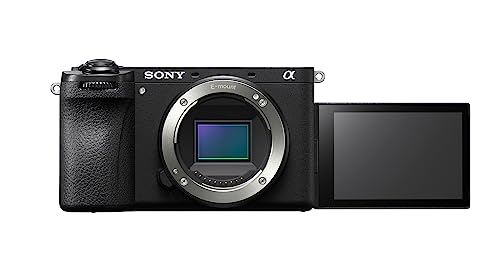
Sony ZV-E10 (body) — Best for Video Creators
The ZV-E10 was designed by asking creators what they actually do all day, and the answers are built into its body. The screen flips fully to the side so you can frame yourself without blocking the view; the three-capsule microphone on top listens in the direction the camera faces and ships with a wind muff for outdoor talking; a dedicated button throws the background into blur for the product-review look, and the Product Showcase mode snaps focus to whatever you hold up to the lens, then returns it to your face. These are not specifications. They are the removal of the ten small frictions that separate people who publish weekly from people who publish twice.
Underneath the creator furniture sits a thoroughly capable camera: a 24.2-megapixel APS-C sensor, 4K recording, 1080p at high frame rates for slow motion, and Sony’s real-time eye autofocus, which holds a moving face with a tenacity that still feels like a magic trick. It is sold here as a body, which is the honest way to buy into the deepest affordable lens system in this guide — pair it with a wide prime for vlogging or the kit zoom for generality, according to the channel you are building. There is no viewfinder, a deliberate omission that keeps the body small and the price down; stills photographers who compose by eye should take that seriously.
Endurance is the caveat to plan around. Like most compact creator bodies, long 4K sessions in warm rooms test its thermal limits, so streamers and event recorders should test their exact use case early. For the talking-to-camera, walking-and-talking, reviewing-things life it was built for, recording happens in takes rather than marathons, and the ZV-E10 is simply the most purpose-built affordable tool in this guide.
- Sensor: 24.2MP APS-C Exmor CMOS
- Video: 4K30 and 1080p120 recording
- Microphone: three-capsule directional, wind muff included
- Screen: fully articulating touchscreen
- Mount: Sony E, the deepest affordable lens bench here
Strengths
- Creator features remove real friction from filming yourself
- Eye autofocus holds faces with flagship manners
- E-mount lens choice at every budget level
Trade-offs
- No viewfinder for stills composition in bright light
- Sold as a body here, so budget for a lens
- Long continuous 4K takes can test its thermals
Best for: YouTubers, reviewers and solo creators filming themselves and their products. Not suited for: Viewfinder traditionalists or all-day event recording.

Panasonic Lumix G100 — Best Compact Vlogging Kit
The G100’s party trick is invisible in photographs of it: the camera listens in three dimensions. Panasonic built its OZO audio system into this small body, using the microphone array to track where sound is coming from and favour the voice in front of the lens over the room behind it — the single most common audio failure of beginner vlogging, addressed in hardware. Around that trick sits a genuinely tiny Micro Four Thirds camera with a 12-32mm kit lens, a proper viewfinder that many creator cameras omit, and 4K video, in a package that rides in a jacket pocket and never makes its owner feel like a film crew of one.
Micro Four Thirds is the system’s own argument. Its sensors are smaller than APS-C, gathering a little less light and blurring backgrounds a little less eagerly, and in exchange its lenses are dramatically smaller — a fact that matters at hour six of a travel day in a way it never does in a showroom. The G100 with its pancake-like kit zoom is the most portable interchangeable-lens outfit in this guide, and its 5-axis hybrid stabilisation smooths walking footage to a watchable glide. For the travel vlogger, the food creator, the musician filming sessions in small rooms, the size is not a compromise; it is the feature.
Autofocus for video is the honest weakness to name: Panasonic’s contrast-based system of this generation is a step behind Sony’s phase-detection certainty, particularly for fast-moving subjects, and the 4K mode carries a crop that narrows the kit lens’s view. Creators who film themselves at conversational distances — the G100’s home ground — rarely meet either limit. Creators filming sport should look elsewhere in this guide and know why.
- Sensor: Micro Four Thirds, around 20MP class
- Kit lens: 12-32mm zoom included
- Audio: OZO spatial microphone array with tracking
- Stabilisation: 5-axis hybrid image stabilisation
- Viewfinder: electronic viewfinder built in
Strengths
- Tracking microphone fixes beginner audio in hardware
- Smallest interchangeable-lens outfit in this guide
- Viewfinder included where rivals omit it
Trade-offs
- Video autofocus trails Sony’s phase-detection systems
- Smaller sensor gathers less light than APS-C rivals
- 4K recording narrows the field of view
Best for: Travel and lifestyle vloggers who prize portability and clean sound. Not suited for: Fast-action videographers or low-light specialists.
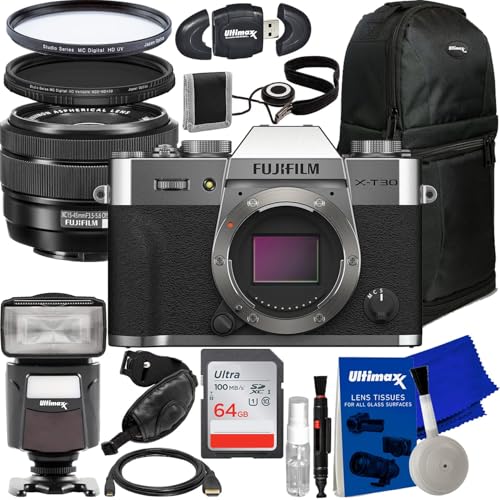
Fujifilm X-T30 II with XC 15-45mm — Best for Photography Lovers
Every other camera in this guide is operated through menus and modes; the X-T30 II is operated through dials, and the difference is a philosophy. Shutter speed has a wheel on the top plate, exposure compensation has its own dial, and the aperture lives on the lens where it lived for a century of photography. Shooting with it feels less like configuring a device and more like playing an instrument, and Fujifilm wraps that tactile pleasure in the company’s famous film simulations — colour recipes modelled on its film stocks that make straight-from-camera photographs look graded, moody and intentional. For the hobbyist who shoots for joy, no camera in this guide is more fun per photograph.
The hardware honours the romance. The APS-C sensor is Fujifilm’s well-regarded 26-megapixel generation, autofocus is quick and sure for stills, and the body is compact and handsome in the silver finish of the listed bundle — a kit that arrives with a memory card, a sling bag and accessories, so read the listing’s bundle contents carefully and value the camera and lens at its centre. Video is present and respectable in 4K, though the camera’s heart is plainly in stills, and its screen tilts rather than fully articulating, which self-filming creators will feel immediately.
Fujifilm’s X mount completes the case: it is the most photographically characterful affordable lens system here, dense with excellent primes that reward the dial-and-simulation way of shooting. Buy the X-T30 II if your camera roll is a diary and your idea of a good evening is a walk with one lens. The creators should buy the Sony; the romantics should buy this, and neither will envy the other.
- Sensor: 26.1MP APS-C X-Trans CMOS
- Kit lens: XC 15-45mm zoom in the listed bundle
- Controls: dedicated shutter and exposure dials
- Colour: Fujifilm film simulations built in
- Video: 4K recording as a supporting feature
Strengths
- Tactile dials make shooting a pleasure, not a setup
- Film simulations deliver finished-looking images directly
- X-mount primes are a hobbyist’s treasure chest
Trade-offs
- Tilting screen only, awkward for self-filming
- Video features trail the creator-focused picks
- Bundle listings vary, so verify the contents
Best for: Hobbyist photographers who shoot for the love of the process. Not suited for: Solo video creators who film themselves daily.
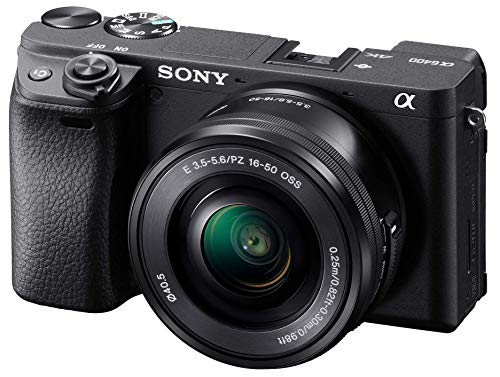
Sony a6400 with 16-50mm — Best Stills Value
The a6400 is the elder statesman of this guide, and it keeps its seat on merit: its autofocus remains the benchmark the affordable class is measured against. Real-time eye autofocus for people and animals, tracking that clings to a running child or a racing dog, and burst shooting fast enough to catch the moment inside the moment — this camera was the one that brought flagship focusing to an affordable body, and newer rivals have mostly caught up to where it already stood. Its 24.2-megapixel APS-C sensor delivers stills with detail and dynamic range that embarrass the idea that affordable means lesser photographs.
The body respects its owner, too: a metal chassis with dust and moisture resistance, a viewfinder for bright days, and a screen that flips fully upward for the occasional vlog or family self-portrait. The 16-50mm power-zoom kit lens collapses small enough that the whole outfit fits a coat pocket’s ambitions, making the a6400 the travel stills camera of this guide as much as its action camera. Video runs to 4K with Sony’s well-regarded colour profiles for those who grade their footage.
Age shows in two places, and both are survivable. The menu system is Sony’s older generation — functional, occasionally labyrinthine — and the battery is the smaller standard unit, so heavy shooters should carry a spare, as photographers always have. Neither flaw touches the photographs. If your priority is stills of moving life — children, pets, sport, street — the a6400 remains the sharpest affordable tool in this guide, and its price has settled to where its autofocus alone justifies it.
- Sensor: 24.2MP APS-C Exmor CMOS
- Kit lens: 16-50mm power zoom included
- Autofocus: real-time eye AF and tracking
- Build: metal body, dust and moisture resistance
- Screen: flips up for selfies and vlogging
Strengths
- Autofocus speed and tracking still lead the class
- Compact kit travels anywhere without negotiation
- Build quality above its price station
Trade-offs
- Older menu system takes patience to learn
- Smaller battery rewards carrying a spare
- Flip-up screen is blocked by top-mounted accessories
Best for: Stills photographers chasing family, pets, sport and street action. Not suited for: Creators needing a side-flip screen and modern menus.

Nikon Z30 with 16-50mm — Best for Streaming and Desk Video
The Z30 is Nikon’s answer to a question the other makers asked later: what does a camera owe the person who films at a desk for hours? Its answers are endurance and manners. It is built to record long sessions without the thermal anxiety of compact rivals, it works as a high-quality webcam over a simple USB connection, its tally light tells you plainly when you are live, and its stereo microphones are tuned for the voice across a desk rather than the room around it. Streamers, tutors, musicians who teach online and anyone whose camera is furniture as much as tool will recognise the design brief immediately.
As a stills and walking-around camera it is quietly capable: a 20.9-megapixel APS-C sensor, Nikon’s Z-mount optics with the excellent collapsible 16-50mm kit lens in this listing, and a fully articulating screen for the days it leaves the desk. Nikon’s colour science for skin is among the kindest here, which desk creators notice in every frame of every call. There is no viewfinder — the desk does not need one — and no in-body stabilisation, so handheld walking footage leans on the lens and your technique.
The Z mount is the consideration for the long term: Nikon’s glass is superb, and the affordable end of the catalogue is growing, though it remains slimmer than Sony’s bench. A buyer whose future is lenses in quantity should weigh that honestly. A buyer whose future is a channel, a classroom or a congregation streamed from one good desk setup should buy the Z30 and get on with the work it was shaped for.
- Sensor: 20.9MP APS-C CMOS
- Kit lens: Z DX 16-50mm zoom included
- Video: 4K recording, long-session design
- Streaming: USB webcam capability, tally light
- Screen: fully articulating touchscreen
Strengths
- Built for long desk recording sessions
- Doubles as a genuinely good webcam
- Nikon skin tones flatter on-camera presenters
Trade-offs
- No viewfinder for traditional stills work
- No in-body stabilisation for walking footage
- Affordable Z-mount lens bench is still growing
Best for: Streamers, online teachers and desk-based creators. Not suited for: Viewfinder shooters or handheld travel videographers.
How do the six cameras compare?
| Pick | Sensor | Screen | Character |
|---|---|---|---|
| Canon EOS R100 with RF-S 18-45mm | 24.1MP APS-C | Fixed | The gentle teacher with a viewfinder |
| Sony ZV-E10 (body) | 24.2MP APS-C | Side-flip | The creator’s tool, microphone and all |
| Panasonic Lumix G100 | Micro Four Thirds | Vari-angle | The pocketable vlogging kit with spatial audio |
| Fujifilm X-T30 II with XC 15-45mm | 26.1MP APS-C | Tilting | The romantic’s dial-driven stills camera |
| Sony a6400 with 16-50mm | 24.2MP APS-C | Flip-up | The autofocus benchmark for stills |
| Nikon Z30 with 16-50mm | 20.9MP APS-C | Side-flip | The desk and streaming specialist |
How do you choose between stills-first and video-first bodies?
Read the screens and the omissions; they confess everything. A stills-first camera like the R100 or X-T30 II spends its budget on a viewfinder, dials and sensor manners, and treats video as a feature the marketing department requested. A video-first body like the ZV-E10 or Z30 deletes the viewfinder without apology and spends the savings on microphones, flip screens and recording endurance. Neither philosophy is superior — but buying across them is the classic affordable-camera regret. The photographer who buys a creator body discovers the missing viewfinder on the first sunny day; the creator who buys a stills body discovers the fixed screen in the first filming session, and both discoveries arrive after the return window has begun to close.
The honest self-test takes ten seconds. Imagine your next fifty uses of the camera. If forty of them are photographs of people, places and things, buy the stills body and let its video be the bonus it is. If forty are recordings of yourself, your work or your world in motion, buy the creator body and compose stills on its screen with good grace. The genuinely hybrid shooter — and they exist — should weight autofocus and screen flexibility highest, which in this guide points at the a6400’s flip-up compromise or the G100’s viewfinder-plus-vlogging combination, and accept that hybrid always means a small tax paid to both masters.
What should you budget beyond the camera itself?
The camera is roughly two-thirds of an honest starter budget, and pretending otherwise is how good cameras end up idle. A fast, reputable memory card is not an accessory but a component: 4K video and burst stills both punish slow cards with buffering and lost moments. A second battery is the next purchase for anyone who shoots away from home, because mirrorless cameras sip power through their screens and viewfinders in a way older DSLRs never did, and a day’s shooting on one battery is optimism, not planning. A bag that fits the camera with a lens mounted — rather than demanding disassembly — decides whether the camera travels or stays in a drawer, which is to say it decides whether the entire purchase was worthwhile.
Then come the two purchases that change photographs rather than logistics. A fast prime lens, as the kit-lens section argued, is the single largest image-quality step available to any owner of these bodies, opening indoor and evening photography that the kit zoom cannot reach. And for creators, a microphone: the ZV-E10 and G100 narrow the gap with clever built-in arrays, but a small external microphone placed near the speaker remains the cheapest dramatic improvement in all of video. Buy in that order — card, battery, bag, lens, microphone — and each addition will feel like the camera growing, which is precisely the pleasure the mirrorless system was invented to sell.
What mistakes do affordable mirrorless buyers make?
The first is buying the body and starving the system: choosing by a specification duel between two cameras while ignoring that one mount offers three affordable lenses you want and the other offers none. Cameras are replaced; lens collections are inherited by their replacements. The second mistake is the opposite vanity — buying the enthusiast body with no kit lens to save money, then discovering that a bare body photographs nothing and the lens budget was spent on the badge. A kit in hand beats a dream in the catalogue, every single time.
The third is underestimating light. Buyers compare sensors in daylight and then shoot birthdays in tungsten gloom, where the kit zoom’s small aperture, not the sensor, writes the grainy result. The cure is the fast prime, honest expectations, or both. The fourth is ignoring the return-window test: record the longest video you realistically plan, shoot a burst of a moving subject, transfer files to your phone — in the first week, while changing your mind is still free. Affordable cameras are good enough now that the right one is the one whose specific compromises never intersect your actual life, and only your actual life can tell you where those lines run.
How does sensor size actually show up in your photographs?
Five of these cameras use APS-C sensors and one, the G100, uses the smaller Micro Four Thirds format, and the difference is real but routinely exaggerated. A larger sensor gathers more light across its surface, which buys cleaner images as light falls and a shallower depth of field at the same framing — the creamy background separation that makes portraits look expensive. APS-C holds that advantage over Micro Four Thirds by a margin photographers describe as roughly a stop: noticeable in a dim church, irrelevant on a bright beach. Both formats tower over a phone’s tiny sensor, which is why every camera here can produce the look that makes people ask what you shot with.
What the smaller format returns is size. Micro Four Thirds lenses are smaller because the image circle they must cover is smaller, and a G100 outfit that fits a jacket pocket has no APS-C equivalent — the a6400 comes closest and still concedes the point. This is the format trade in its honest form: a measure of low-light grace exchanged for a measure of everyday portability, and the right side of the trade depends on whether your photography happens at dusk or at distance. Wedding-adjacent shooters, gig photographers and romantics of the available-dark should weight APS-C; travellers, hikers and vloggers who carry their camera all day should weight the G100’s disappearing act.
One myth deserves retiring here: megapixels are not the difference. The G100’s resolution sits within a few megapixels of the APS-C picks, and at the print sizes and screen sizes real photographs live at, nobody has ever identified the format from the sharpness. They identify it, if at all, from the blur and the grain — the two things light, not counting, controls.
What should the first month with a new camera look like?
Week one belongs to the kit lens and the automatic modes, unashamedly. Shoot everything — the dog, the street, the family being uncooperative — and study what the camera chose: its apertures, its shutter speeds, its successes and its specific failures. A beginner who skips this week and leaps to full manual learns settings without learning photography, which is like memorising a gearbox before driving anywhere. The camera’s choices are a free tutor, and its mistakes are the syllabus for week two, when aperture priority becomes the working mode: you choose how much blur or depth a scene deserves, the camera handles the arithmetic, and the partnership that most photographers keep for life is formed.
By week three, shoot one subject three ways — the same doorway at three times of day, the same face by window light and lamplight — because comparison teaches faster than variety. Week four is for the deliberate project: a walk with one focal length, a set of portraits, a morning of street photographs, reviewed honestly in the evening with the failures kept rather than deleted. Failures are data. The photographers who improve are the ones who can say precisely why a photograph missed — focus, light, timing, nerve — and a month of that discipline with any camera in this guide will out-teach a year of casual ownership of a flagship.
Only after that month should the second lens conversation begin, and by then it answers itself: your saved favourites will cluster at a focal length and a kind of light, and the prime that serves that cluster is the correct purchase, whether it is the wide lens the vlogger’s footage keeps asking for or the portrait lens the family photographs deserve. Buying in that order — skill first, glass second, body last — is the entire economics of this guide in one sentence.
How do you keep a mirrorless camera healthy?
Mirrorless cameras expose their sensors every time a lens comes off, so lens changes are a hygiene ritual: indoors or sheltered where possible, body opening pointed downward, the exchange made in seconds rather than minutes, and the rear cap on the removed lens before it touches a bag. Dust that reaches the sensor announces itself as soft spots in skies and plain backgrounds, and while sensor cleaning is a learnable skill, prevention is cheaper than courage. A rocket blower — never canned air — lives in every sensible camera bag for exactly this reason.
Batteries and cards appreciate the same plain dealing. Charge batteries before long storage rather than after, keep a spare in rotation so neither ages alone, and retire memory cards that have ever behaved oddly, because a card’s failure mode is silence followed by absence. Firmware updates, which every maker in this guide publishes, deserve a calm half hour when they appear: they fix focusing quirks and add lens support, and installing them on a charged battery with the instructions open is the whole skill required. None of this is the romance that sells cameras, and all of it is the difference between a tool that serves a decade and a gadget that disappoints by year two.
Why do creators keep asking about 4K crops and recording limits?
Because a specification line that reads “4K” conceals two different cameras. Some bodies record 4K using the full width of the sensor, downsampling a larger image into a detailed one; others record from a cropped window of the sensor, which narrows every lens’s field of view — the wide vlogging lens becomes a merely normal one — and gathers less light in the bargain. The R100 and G100 in this guide carry crops in their 4K modes, while the Sonys and the Z30 record the wider view, and for a creator framing themselves at arm’s length that difference is not technical trivia; it decides whether the shot includes the room or only the face. Check the mode you will actually use, at the frame rate you will actually use, because cameras also divide their personalities by frame rate: several bodies that are generous at 4K24 become cropped or limited at 4K60.
Recording limits are the second concealment. Some are regulatory fossils, some are thermal honesty, and their practical meaning is identical: the camera stops. A creator recording interviews, ceremonies, lessons or services should treat the tested continuous recording behaviour of their exact body — at their resolution, in their climate — as a headline specification, and should run that test in the return window rather than at the event. The Z30’s desk endurance and the ZV-E10’s take-based design are both legitimate answers to this problem; they are answers to different working patterns, and choosing between them without knowing your own pattern is the expensive way to learn it.
Should you buy new, refurbished or second-hand?
New buys the warranty and the return window, and for a first camera both are worth real money: the return window is where the tests in this guide happen, and a beginner cannot yet distinguish a faulty camera from a confusing one. Manufacturer-refurbished units — sold by Canon, Nikon, Sony, Fujifilm and Panasonic through their own channels — are the connoisseur’s route: inspected by the maker, warrantied by the maker, and priced like used equipment, with the only sacrifice being the wait for your model to appear in the refurbished store. Several cameras in this guide have lived previous lives in those programmes, and a refurbished a6400 or X-T30 II is among the smartest purchases in affordable photography.
Private second-hand buying demands the checklist discipline: shutter count where the body reports it, a sensor inspected against a bright plain background, every dial and port exercised, and the battery’s honesty tested by an hour of shooting rather than a seller’s assurance. Buy the seller as much as the camera — a photographer upgrading within a system, with the boxes and receipts, is a different proposition from an anonymous listing with stock photographs. And whichever route you take, register the purchase, keep the serial number recorded separately, and insure the kit if it travels: cameras are among the most-stolen objects in ordinary life, and the time to learn your serial number is not the day you need it.
Why do affordable cameras reward lighting more than upgrades?
Every camera in this guide is, by the standards of a decade ago, miraculous in low light — and every one of them still produces its worst footage in the same place: a dim room at night, lit by a single ceiling bulb. The reason is arithmetic. A sensor starved of light must amplify what little it receives, and amplification is where grain, smeared detail and hunting autofocus are born. The beginner’s instinct is to shop for a better camera; the professional’s instinct is to add light, because one inexpensive panel or a repositioned lamp transforms an affordable body’s footage more completely than replacing the body would. Face a window for daytime filming and you own the finest soft light in the world, free of charge and flattering beyond its price.
Stability is the second half of the same lesson. The G100’s hybrid stabilisation, the lens stabilisation in the kit zooms here and the simple discipline of bracing elbows and shortening straps all serve one goal: footage the viewer can watch without fatigue. A small tripod that lives where you film is worth more than a gimbal bought on ambition and left in a cupboard, and the desk creators served by the Z30 learn quickly that a fixed camera at eye level, lit by a window, sounds like a studio to everyone watching. Affordable cameras do not need rescuing by accessories; they need the two oldest crafts in photography — light and stillness — applied with intent.
Audio completes the triad, and it is the element audiences forgive least. Viewers tolerate soft focus and forgive grain, but they abandon echoing, distant sound within a minute, which is why this guide weighed microphones so heavily among the creator picks and why an external microphone remains the highest-value upgrade for any of these bodies. The hierarchy of affordable production is therefore unfashionable and true: light first, sound second, stability third, and a new camera body a distant fourth — a ranking that will save the readers who believe it more money than any discount in this guide.
How should you move photographs off the camera and keep them safe?
Every camera here can send images to a phone over Wi-Fi or Bluetooth, and for the photograph you want to share this afternoon, that wireless route is the right one: quick, cable-free and good enough for social sizes. For the week’s real shooting, a card reader plugged into a computer is faster, kinder to the camera’s battery and far less temperamental, and it builds the habit that protects a growing archive — the card is copied in full, verified, and only then formatted in the camera for its next outing. Photographers who format first and copy later are not photographers for long; they are former photographers with a story.
Backup deserves the same unglamorous seriousness. A photograph that exists in one place exists provisionally, and the working rule of the profession — three copies, two kinds of storage, one of them somewhere else — scales down gracefully to a hobbyist’s life: the computer’s drive, an external drive that lives in a drawer, and a cloud folder for the keepers. Mirrorless files are larger than phone files, and an affordable camera’s archive grows by gigabytes a month rather than megabytes, so the storage plan should be made at purchase time rather than at the moment a drive announces it is full during a holiday import. Set the routine once, automate what can be automated, and the archive becomes a pleasure instead of an anxiety — the family history, accumulating safely, one card at a time.
Do the brands really render colour differently?
Yes, and at this level it is a legitimate reason to choose one camera over another, because most affordable-camera owners share photographs as the camera made them rather than after an evening in editing software. Canon’s rendering is famously kind to skin, which is why the R100 flatters family photography without effort. Fujifilm builds an entire identity on its film simulations, offering looks from restrained documentary colour to saturated slide-film drama at the turn of a dial. Sony’s colour has become steadily more natural with each generation and rewards those who do grade their work; Nikon’s rendering sits in the flattering middle; Panasonic’s is clean and neutral, a blank page for creators with a look of their own. None of these is the correct colour — colour in photography is taste wearing a lab coat — but the camera whose default rendering matches your taste will produce more photographs you love without work, and that is a specification no chart in this guide can print. If you can, handle sample galleries from each system before buying; your eye will file its opinion in about ninety seconds, and it will be right.
Final Recommendation
There is no single winner here, and any guide that names one for both a new parent and a new YouTuber is selling something. The beginner who wants to learn photography should buy the Canon EOS R100 and grow inside the RF system; the photographer who already loves photographs should buy the Fujifilm X-T30 II and enjoy every dial of it; the stills shooter chasing children and dogs should buy the Sony a6400 while its autofocus leads at this price. The creator filming alone should buy the ZV-E10, the traveller should buy the G100, and the streamer should buy the Z30 — six cameras, six honest answers, which is what an affordable guide owes its readers.
Whichever body lands in your hands, spend its first month on the kit lens and your own curiosity before buying anything else, because the camera you understand deeply will out-photograph the camera you merely own, every day of the year. And keep the purchase in proportion as the months pass: these are tools for making pictures of a life, and the life — the trip taken, the child chased, the street walked at dawn — is where the budget ultimately belongs. The best affordable camera is the one that gets carried into that life so often it stops feeling like equipment at all, and every body in this guide has carried photographers exactly there.
Frequently Asked Questions
Is a mirrorless camera still better than a phone?
For the photographs phones struggle with, decisively: low light, fast movement, real background blur, distant subjects and any image you intend to print large. The gap is physics rather than fashion — a sensor many times larger gathers light a phone’s cannot, and a real lens changes its view in ways software can only imitate. A phone remains the better camera for instant sharing and computational tricks, which is why most photographers end up using both — the phone for the everyday, the mirrorless for the moments that deserve keeping properly.
How many megapixels do I actually need?
Every camera in this guide sits between roughly 21 and 26 megapixels, and that range is a sweet spot rather than a limitation: enough for large prints and meaningful cropping, without the file sizes and low-light penalties of extreme resolutions. Chasing megapixels beyond this range is the least productive way to spend an affordable budget. What extra resolution genuinely buys is cropping freedom — the ability to recompose in editing and still print well — and the files from every sensor here already allow a sensible amount of that. Spend the difference on the lens, the light or the trip, and the photographs will show the decision far more clearly than another few million pixels ever would.
Should I buy a body only or a kit with a lens?
Beginners should buy the kit, because a camera without a lens is a paperweight and kit zooms are priced as near-gifts beside the body. The exception is the ZV-E10 in this guide, sold as a body: choose it when you already know the lens you want, typically a wide prime for vlogging, and budget for that lens in the same purchase.
Do these cameras need expensive memory cards?
They need reputable, adequately fast cards rather than expensive ones. A well-reviewed UHS-I card from a known maker covers the stills and 4K video of every camera here; counterfeit and no-name cards are the false economy that loses wedding photographs. Buy from a trustworthy seller and format the card in the camera. Keep a second card in the bag as a matter of routine, because cards fail and fill at the least convenient moments by a law older than digital photography itself, and the spare is the cheapest insurance in this entire guide.
Can I use old DSLR lenses on a mirrorless camera?
Often, yes, through the manufacturer’s adapter — Canon EF lenses on RF bodies and Nikon F lenses on Z bodies are the famous examples, and adapted lenses usually keep autofocus and stabilisation. Adapters add cost and length, so treat the route as a bridge for a beloved existing lens rather than a foundation for a new collection.
How long will an affordable mirrorless camera last?
Electronically, many years; photographically, as long as its mount’s lenses keep interesting you. Shutters on these bodies are rated for long service, batteries are replaceable, and the sensors here will not be embarrassed by their successors for a long while. The realistic limit is your own ambition, which the lens system — chosen well — is designed to absorb.
Related Guides
Ready to build around the body? These guides continue the same system-first thinking: best mirrorless cameras for beginners widens the entry-level field beyond this budget, best camera backpacks protects the kit you are assembling, and best gimbals for mirrorless cameras steadies the video side of your work. See also backpacks for sony mirrorless cameras.