What's inside
- Key Takeaways
- Quick Picks
- How Did We Match Hardware to an Engineering Degree?
- What Does Engineering Software Actually Do to a Laptop?
- The Six Contenders, Arranged by What They Ask and What They Give
- How Should a Student Set Up a New Engineering Laptop Before Term Starts?
- Which Buying Mistakes Do Engineering Students Regret Most?
- How Does Battery Life Really Behave in a Lecture Day?
- What About Group Projects, File Chaos and Backups?
- How Should the Choice Change by Engineering Discipline?
- What About Linux, Dual-Booting and the Software Nobody Mentions?
- How Should a Student Think About Upgrades Across the Degree?
- What Happens in the Placement Year and the First Job?
- How Do You Test an Engineering Laptop Before the Returns Window Closes?
- What Should Parents and Sponsors Know Before Funding One?
- A Note on Noise, Heat and the Library Test
- Why the Second Screen and the Mouse Belong in the Same Budget Conversation
- Final Recommendation
- Frequently Asked Questions
- Related Guides
As an Amazon Associate I earn from qualifying purchases. This post may contain affiliate links at no extra cost to you.
gizmoverdict.com is reader-supported. When you buy through links on our site, we may earn an affiliate commission.
Where to buy: Student budgets forgive nothing, so confirm the precise graphics card, memory and storage on the linked listing before any money moves — and read the Dell entry carefully, because that respected name is covered here without a link, deliberately.
The best college laptops for engineers must survive a degree that keeps changing its mind about what it demands. The first semester asks for documents, lectures and gentle introductions to code. By the second year the same student is rotating CAD assemblies, running MATLAB coursework, compiling projects and discovering that simulation software treats a laptop the way weather treats a tent. Final-year design projects then add team file-sharing, finite-element runs and presentation deadlines into the small hours. A laptop bought only for the first term becomes an obstacle by the third year, which is why this guide specifies for the hardest year and lets the easy ones look after themselves.
That reasoning pushes the shortlist toward gaming-class hardware, and the resemblance is not an accident. A discrete NVIDIA graphics card, a processor with real multicore depth, sixteen gigabytes of memory as a floor and cooling designed for sustained loads are exactly what engineering software orders, and the gaming market delivers that combination at prices workstation brands cannot approach. Five of the six machines below carry RTX graphics and purchase links. The sixth, Dell’s G15 5511, is discussed in prose only because the listing found for that older model is a renewed unit — a fact its review states openly and turns into buying guidance for the used market.
Two cautions frame everything that follows. First, engineering faculties publish recommended specifications that lag reality politely; treat them as a floor, not a target. Second, the glamorous specification is rarely the one that decides a student’s happiness — weight carried across campus, battery behaviour in back-to-back lectures, fan noise in a library and the price of a screen replacement after a bag accident all vote daily. The reviews weigh the engineering muscle first, because without it nothing else matters, and then judge the student life wrapped around that muscle.
Key Takeaways
- Buy for the final-year workload — simulation, CAD assemblies and design projects — not for the gentle first semester.
- Every linked pick carries RTX graphics because CAD viewports and GPU-accelerated coursework reward discrete silicon.
- The Legion 5a’s thirty-two gigabytes of memory is the headroom pick; sixteen-gigabyte machines suit most degrees with sensible habits.
- The Dell G15 5511 is prose-only here because its listing is a renewed unit; judge any such purchase unit by unit.
- Cooling design decides how much of the advertised performance survives a twenty-minute simulation run.
- A laptop that is too heavy to carry becomes a desktop that cost laptop money — weight is an engineering specification too.
Quick Picks
| Pick | Badge | Why it is here |
|---|---|---|
| Lenovo Legion 5a (RTX 5060) | Best overall | The newest RTX 5060 silicon, an OLED WQXGA screen and thirty-two gigabytes of memory — the degree-proof specification. |
| ASUS TUF Gaming A15 (RTX 4060) | Best value GPU | RTX 4060 power in ASUS’s durability-minded TUF chassis, with a terabyte of storage for project archives. |
| MSI Katana 15 HX (RTX 4070) | Best GPU step-up | An RTX 4070 and a QHD 165Hz screen for students whose simulation and rendering ambitions run ahead of the syllabus. |
| HP Victus 15 (RTX 4050) | Best budget pick | The gentlest entry into RTX ownership, keeping the engineering essentials while trimming the glamour. |
| Acer Nitro V 15 (RTX 4050) | Best Intel alternative | Intel’s i7-13620H paired with RTX 4050 graphics and a full terabyte, for students whose software prefers Team Blue. |
| Dell G15 5511 | Prose-only — renewed listing | A proven student gaming-and-engineering machine discussed without a link because the listing found sells it renewed. |
How Did We Match Hardware to an Engineering Degree?
Graphics came first because the degree’s signature software lives in viewports. CAD packages, mesh viewers and the visualisation halves of simulation tools all lean on the GPU, and the RTX cards in these machines also unlock the CUDA acceleration that engineering libraries, machine-learning electives and rendering tools increasingly assume. A student who might take a robotics, computational fluid dynamics or AI module — which is to say, a student who cannot yet know their third-year electives — should buy graphics headroom while it is cheap, because it can never be added later.
Memory was judged against the multitasking reality of coursework: the CAD package open beside the simulation, the browser carrying forty tabs of documentation, the video lecture paused mid-derivation and the team chat arguing about file versions. Sixteen gigabytes handles that load with occasional discipline; thirty-two, fitted to the Legion, removes the discipline requirement and suits the virtual-machine work some computing-adjacent courses demand. Storage was judged by accumulation — four years of projects, datasets and software installs — which is why the terabyte machines earn quiet praise throughout.
Cooling and chassis were treated as performance features rather than comforts. A simulation that runs for twenty minutes meets the machine’s sustained behaviour, not its burst speed, and gaming chassis are engineered for exactly that duty cycle in a way thin office laptops are not. The TUF’s durability positioning, the Katana’s Cooler Boost system and the Legion line’s thermal reputation all received credit, because a degree is a four-year contract and the laptop is the tool that must honour it in libraries, labs and rented rooms.
Finally, honesty about the Dell shaped the guide’s structure. An older G15 remains a rational student purchase on the renewed market, where budgets stretch furthest, but a renewed listing is a specific unit with a specific history. The prose-only review therefore teaches the checks that market demands rather than pretending a link could settle them.
What Does Engineering Software Actually Do to a Laptop?
Each discipline taxes the machine in its own dialect. Mechanical coursework leans on CAD regeneration and assembly behaviour, where processor single-core speed and graphics share the blame for every pause. Finite-element analysis is a memory-and-multicore feast: mesh a component finely enough and the solver will consume every gigabyte and thread offered, then ask how long the student is willing to wait. Electrical and computing courses compile, simulate circuits and run virtual machines, rewarding storage speed and memory again. Civil and architectural work adds large contextual models and point-cloud data that turn storage capacity into a weekly concern.
The common thread is duration. Student computing is bursty in lectures and sustained in the lab, and the sustained sessions are where grades are manufactured. A machine that throttles after ten minutes quietly taxes every assignment across a degree, a few percent at a time, in a currency of midnight hours. That is why this guide prefers gaming-derived chassis with honest cooling over slimmer machines with identical headline chips: the chip is the promise, but the cooling is whether the promise survives contact with a deadline.
There is also a software-licence dimension students discover late. Many engineering packages are licensed to students free, in versions that mirror the professional tools, and some carry hardware expectations — discrete graphics for certain viewports, specific driver behaviour for stability — that integrated-only laptops meet grudgingly. Buying an RTX machine is partly buying compatibility insurance against four years of unknown syllabuses, and insurance is cheapest before the house is on fire.
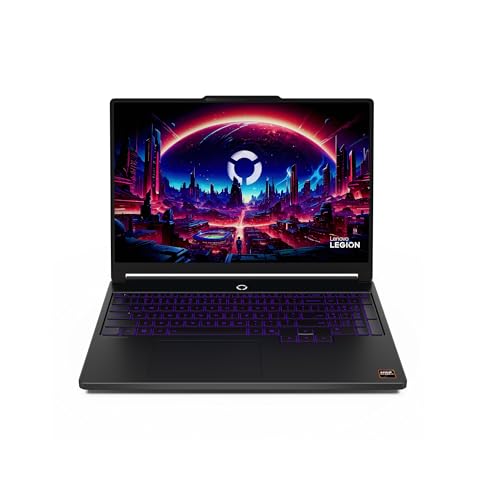
Lenovo Legion 5a (RTX 5060) — Best overall
The Legion 5a is the machine a student buys once and stops thinking about, which is the highest praise a degree laptop can earn. Its RTX 5060 belongs to the newest graphics generation, its Ryzen 7 250 provides the multicore depth simulation coursework craves, and — the figure that separates it from this entire field — it carries thirty-two gigabytes of memory with a terabyte of storage. That memory headroom is what final-year projects, virtual machines and shameless browser habits consume, and fitting it from the factory removes the upgrade errand that interrupts a semester.
The display argues just as strongly. A 15.3-inch OLED panel at WQXGA resolution and 165Hz gives CAD work a crispness that makes fine geometry legible, renders late-night coding sessions easier on the eyes, and — because students are also human beings — makes the machine a joy for the films and games that punctuate term time. Lenovo’s Legion line has spent years refining the balance between gaming aggression and public respectability, and this Eclipse Black machine can sit in a lecture theatre or a placement interview without costume drama.
Ownership realities are equally sorted: Legion cooling is designed for the sustained loads that simulations impose, the chassis feels built for a bag’s daily insults, and the platform is current enough that driver and software support will comfortably outlive the degree. It is the premium posture in this guide and should be bought by students whose course is unambiguously engineering-heavy. For them the arithmetic is simple — one machine, four years, no mid-degree replacement panic.
- Processor: AMD Ryzen 7 250
- Graphics: NVIDIA GeForce RTX 5060
- Memory and storage: 32GB memory, 1TB storage
- Display: 15.3-inch OLED WQXGA at 165Hz
- Finish: Eclipse Black
Strengths
- Only pick here with thirty-two gigabytes fitted from the start
- Newest-generation RTX graphics extend the useful life furthest
- OLED resolution makes dense CAD geometry genuinely legible
Trade-offs
- Premium positioning strains a first-year budget hardest
- Gaming-class weight makes its presence known across campus
- Specification exceeds what lighter engineering courses will use
Best for: the committed engineering student buying one machine to outlast the whole degree.
Not suited for: students still deciding between engineering and a humanities degree — buy after the commitment is real.

ASUS TUF Gaming A15 (RTX 4060) — Best value GPU
The TUF A15 has been the thinking student’s gaming laptop for several generations, and the formula’s appeal to engineers is direct: an RTX 4060 that handles CAD viewports and CUDA coursework without apology, a Ryzen 7 7735HS with honest multicore strength, sixteen gigabytes of DDR5 and a terabyte of storage, all inside a chassis line whose entire identity is durability at a fair price. TUF machines are built to a military-inspired toughness brief, and a laptop that will be backpacked through four winters of campus weather benefits from exactly that paranoia.
The fifteen-point-six-inch full HD screen refreshes at 144Hz and covers the full sRGB gamut, which matters more to engineers than to gamers: sRGB completeness means the colours in simulations, plots and presentation graphics render as intended rather than as approximations. The resolution is the specification’s modest note — WQXGA rivals are crisper — but at this size and price the panel is a rational allocation, and a dorm-room external monitor can join later when a summer job funds it.
Value engineering shows in the right places. Nothing here is the newest generation, yet everything here is sufficient for the degree’s real demands, and the money saved against the Legion can fund the accessories that student life actually consumes: the monitor, the mouse, the insurance, the replacement charger left in a library in November. For the student whose budget is a fixed fact rather than a negotiating position, the TUF is the guide’s most defensible recommendation.
- Processor: AMD Ryzen 7 7735HS
- Graphics: NVIDIA GeForce RTX 4060
- Memory and storage: 16GB DDR5, 1TB PCIe drive
- Display: 15.6-inch full HD at 144Hz, full sRGB coverage
- Wireless: Wi-Fi 6
Strengths
- RTX 4060 capability without flagship-generation pricing
- Durability-first chassis suits campus transport abuse
- Terabyte storage accommodates four years of project growth
Trade-offs
- Full HD panel is outclassed by the QHD and OLED picks
- Processor generation trails the newest silicon here
- Sixteen gigabytes may invite a mid-degree memory upgrade
Best for: the budget-disciplined engineering student who refuses to surrender discrete graphics.
Not suited for: display perfectionists — the Katana’s QHD and Legion’s OLED both out-resolve it.

MSI Katana 15 HX (RTX 4070) — Best GPU step-up
The Katana’s argument is a single component worn proudly: the RTX 4070 is the strongest graphics card in this guide, and for the student whose ambitions include heavy rendering, computational electives or machine-learning modules with real datasets, that card converts directly into hours saved and experiments attempted that lesser machines discourage. MSI pairs it with an Intel Core i7-13620H, sixteen gigabytes of DDR5 and a terabyte of NVMe storage, then cools the assembly with its Cooler Boost 5 system — a name that matters because sustained simulation work is precisely a cooling examination.
The screen keeps pace with the silicon: a fifteen-point-six-inch QHD panel at 165Hz, giving CAD work the extra legibility that full HD withholds and giving the RTX card a canvas worthy of it. Students presenting design work will feel that resolution in every review session, and students gaming after hours — a constituency this guide refuses to pretend does not exist — will feel it even more.
Katana ownership carries the gaming-laptop taxes in honest measure: it is a substantial machine to carry, its battery manners under load are those of its class, and its styling announces its origins more loudly than the Legion’s restraint. None of that diminishes the central case. A student who knows their degree bends toward computation — the FEA enthusiast, the robotics competitor, the undergraduate researcher — should buy the strongest graphics their budget can reach, because that is the one component the next four years cannot retrofit.
- Processor: Intel Core i7-13620H
- Graphics: NVIDIA GeForce RTX 4070
- Memory and storage: 16GB DDR5, 1TB NVMe drive
- Display: 15.6-inch QHD at 165Hz
- Cooling: Cooler Boost 5 thermal system
Strengths
- Strongest GPU here for simulation, rendering and ML electives
- QHD screen gives CAD detail room to breathe
- Cooling investment protects sustained coursework performance
Trade-offs
- Heaviest commitment in the bag on a cross-campus day
- Battery life under load reflects its performance priorities
- Sixteen gigabytes is the memory figure to watch in later years
Best for: computation-leaning students — simulation, robotics and undergraduate research workloads.
Not suited for: lecture-hall minimalists who carry their whole life in one small bag.

HP Victus 15 (RTX 4050) — Best budget pick
The Victus exists for the student whose spreadsheet says the RTX 4060 machines are a term’s rent too far. HP’s value line keeps the essential engineering anatomy — an RTX 4050 with six gigabytes of graphics memory, a Ryzen 7 7445HS, sixteen gigabytes of DDR5 — and trims the ceremony: half a terabyte of storage, a full HD 144Hz panel, and a design that spends its money inside the chassis. For CAD coursework, coding and mainstream simulation, that anatomy is not a compromise at all; it is the syllabus, covered.
The supporting details suit student logistics. Ethernet is fitted for dorm networks of variable virtue, the backlit keyboard serves the library’s late shift, and the webcam and Wi-Fi 6 cover the video-call obligations of group projects and remote tutorials. HP’s service footprint matters to students far from home: a machine that can be helped in most cities is worth more than a exotic one that cannot.
Storage is the discipline this pick imposes. Five hundred gigabytes fills with engineering software, project archives and a game or two faster than a fresher expects, so its owner should adopt the external-archive habit from the first semester rather than the third-year panic. Make that one concession and the Victus delivers the degree’s core demands at the friendliest figure in this guide — proof that the budget pick and the sensible pick can be the same machine.
- Processor: AMD Ryzen 7 7445HS
- Graphics: NVIDIA GeForce RTX 4050 with 6GB graphics memory
- Memory and storage: 16GB DDR5, 512GB drive
- Display: 15.6-inch full HD at 144Hz
- Ports note: Ethernet fitted for dorm networking
Strengths
- Gentlest price of entry into RTX-equipped engineering life
- Ryzen 7 muscle exceeds what the budget label suggests
- Mainstream brand support suits students far from home
Trade-offs
- Half-terabyte storage demands an archiving routine
- RTX 4050 is the floor of the discrete class, not its future
- Panel and chassis lack the premium picks’ polish
Best for: the first-year student whose budget is fixed and whose course is genuinely technical.
Not suited for: hoarders of project archives who will not maintain an external drive.
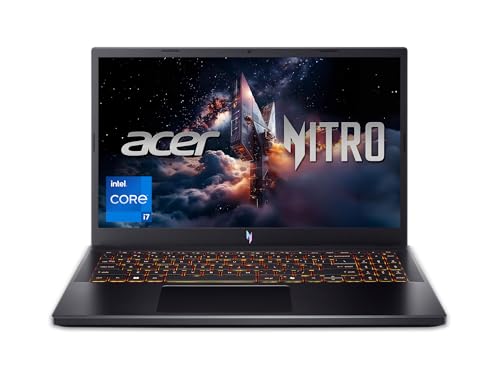
Acer Nitro V 15 (RTX 4050) — Best Intel alternative
The Nitro V answers a question some engineering students genuinely face: what if the software, the faculty’s lab machines or the student’s own history all live on Intel’s side of the fence? Acer pairs a Core i7-13620H — a ten-core processor with serious sustained pace — with the same RTX 4050 class as the Victus, then out-storages its budget rival with a full terabyte of Gen 4 storage. Sixteen gigabytes of DDR5 and a 165Hz full HD IPS panel complete a specification that reads, line by line, like the Victus’s argument answered by a different design team.
That storage figure deserves emphasis because it changes student behaviour. A terabyte absorbs the engineering software stack, two years of projects and the datasets coursework accumulates, without the quarterly eviction notices a half-terabyte drive issues. Students are not archivists by temperament, and the machine that forgives their filing habits will be loved more than a marginally faster machine that nags. Acer’s Nitro line also keeps the ownership story simple: a known value brand, a gaming-derived cooling arrangement and ports for the dorm desk’s growing population of peripherals.
Between the Nitro and the Victus, the honest verdict is that the degree will not notice the difference while the filing cabinet will. Choose the Nitro for its Intel platform and its storage generosity; choose it also if its keyboard and design language suit the hands that will live on them for four years. In a category of close calls, those human factors are not tiebreakers of last resort — they are the substance of ownership.
- Processor: Intel Core i7-13620H
- Graphics: NVIDIA GeForce RTX 4050 laptop GPU
- Memory and storage: 16GB DDR5, 1TB Gen 4 drive
- Display: 15.6-inch full HD IPS at 165Hz
- Wireless: Wi-Fi 6, backlit keyboard fitted
Strengths
- Terabyte storage at the budget tier forgives student filing
- Intel platform suits faculties standardised on it
- Fastest-refresh panel among the value picks
Trade-offs
- RTX 4050 shares the class floor with the Victus
- Gaming styling is plainer here than Legion polish
- Memory upgrade may feature in a demanding final year
Best for: Intel-preferring students who archive everything and apologise for nothing.
Not suited for: students chasing the strongest graphics per degree — that road leads to the Katana.
Dell G15 5511 — Prose-only: the listing found is a renewed unit
The G15 5511 is included under an explicit label: the listing located for this older Dell is a renewed unit, so the model is discussed here without a purchase link. That framing matters because the G15 has been a fixture of engineering dormitories for years — a gaming-derived Dell with the cooling, graphics options and price posture students gravitate toward — and readers shopping the used market will meet it constantly. A guide that ignored it would leave those readers to judge it unaided; a guide that linked a renewed unit as if it were fresh stock would fail them worse.
As a model, the 5511 generation represents the honest middle of its era: eleventh-generation Intel power in its common configurations, RTX graphics in the builds students sought, and a chassis that favoured cooling and serviceability over slimness. For coursework, a well-kept example still covers CAD, coding and mainstream simulation capably, which is precisely why the renewed market in them is active. Students with the tightest budgets often find their best graphics-per-money ratio in exactly this territory.
The conditions are unit-specific and non-negotiable. A renewed purchase buys one particular machine’s battery health, thermal state, screen condition and warranty paperwork, so the buyer must interrogate the seller’s grading, confirm the exact graphics fitted to that unit, and secure return terms that allow a week of real coursework as the test. Do that diligence and the G15 can be the smartest money in this entire article. Skip it, and the savings can evaporate into a battery replacement and regret. This guide’s links stay with new stock; the G15 stands as the used market’s representative, respected and clearly labelled.
- Status: Covered without a link — the listing found is renewed stock
- Class: Previous-generation Dell gaming-engineering crossover
- Reputation: Cooling-first chassis, widely deployed in student life
- Buying route: Renewed and used channels, judged unit by unit
- Key checks if buying renewed: Exact GPU fitted, battery health, grading, returns window
Strengths
- Proven student workhorse with deep parts and advice ecosystem
- Renewed pricing can deliver RTX power on the smallest budgets
- Serviceable design suits a four-year ownership plan
Trade-offs
- No new-stock route offered in this guide
- Every unit carries its own history and battery story
- Generation age shortens the software-support runway
Best for: the meticulous bargain hunter willing to audit a specific renewed unit properly.
Not suited for: anyone expecting a fresh warranty with zero homework — the linked five exist for them.
The Six Contenders, Arranged by What They Ask and What They Give
| Pick | Graphics | Memory / Storage | Display | Defining bargain |
|---|---|---|---|---|
| Legion 5a | RTX 5060 | 32GB / 1TB | 15.3-inch OLED WQXGA 165Hz | Pay once, think never again |
| TUF Gaming A15 | RTX 4060 | 16GB / 1TB | 15.6-inch FHD 144Hz | Durability and GPU value intertwined |
| Katana 15 HX | RTX 4070 | 16GB / 1TB | 15.6-inch QHD 165Hz | Maximum graphics for computation fans |
| Victus 15 | RTX 4050 | 16GB / 512GB | 15.6-inch FHD 144Hz | Lowest entry into the RTX class |
| Nitro V 15 | RTX 4050 | 16GB / 1TB | 15.6-inch FHD IPS 165Hz | Intel platform, generous storage |
| G15 5511 | Varies by renewed unit | Varies by unit | 15.6-inch class | Used-market value — no link |
Read the memory column as a timeline: sixteen gigabytes serves the early degree comfortably everywhere, while the Legion’s thirty-two is the only configuration that waves the final year through without a thought. Read graphics as ambition: the 4050 pair cover the syllabus, the 4060 covers the syllabus with margin, and the 4070 and 5060 cover the student who intends to exceed the syllabus. Storage is the quiet column — the Victus’s half terabyte is the only figure that demands a compensating habit, and students know honestly whether they possess it.
How Should a Student Set Up a New Engineering Laptop Before Term Starts?
Use the quiet weeks before term, because the same tasks performed in week six become emergencies. Install the faculty’s software stack while support forums are calm and licences are fresh, then open the largest sample files the department provides and watch how the machine behaves. Set up the backup system before the first irreplaceable project exists: cloud sync for documents and code, an external drive for project archives, and version discipline for group work so that the file named final truly is.
Configure the machine for its two lives. In the lab profile, plugged in and docked to a monitor if the budget stretched, performance comes first. In the lecture profile, battery conservation, quiet fans and a screen brightness that survives a bright theatre matter more. Learn the function keys, set the sleep behaviour so a closed lid in a bag does not become a slow cooker, and record the machine’s serial numbers and warranty details somewhere that is not the machine. Students who perform this boring liturgy in September are the ones whose laptops are non-events in May.
Which Buying Mistakes Do Engineering Students Regret Most?
The canonical regret is the beautiful thin laptop bought for its looks in August that meets finite-element coursework in February and surrenders. The second is buying the processor headline and starving everything else — eight gigabytes of memory behind a flagship chip is a sports car on bicycle wheels. A third is ignoring the accidental-damage question: student laptops live beside coffee, rain and crowded bags, and the cost of one screen replacement can exceed the price gap between the Victus and the Legion.
Students also under-buy storage and over-buy novelty. A previous-generation machine with a terabyte and sixteen gigabytes serves a degree better than a launch-day model with half the storage, and the renewed G15 discussion in this guide exists because the used market is a legitimate strategy when it is shopped with diligence. Finally, students forget the four-year lens: the cheapest laptop is the one bought once, and every mid-degree replacement converts a saving into a surcharge.
How Does Battery Life Really Behave in a Lecture Day?
Gaming-class laptops carry a reputation for thirst that needs qualifying. Under simulation or gaming load, all six machines here measure their freedom in small numbers of hours, and no honest guide will pretend otherwise. Under lecture conditions — notes, slides, documentation, Wi-Fi, a dimmed screen — the same machines stretch dramatically further, because the discrete graphics can idle while the efficient cores handle the light work. The practical skill is profile discipline: battery-saver settings and modest brightness in lectures, full power plugged in for coursework, and a charger carried on the days the timetable stacks four sessions deep.
Dorm and library geography matter as much as chemistry. Seats near sockets are a resource students learn to hunt, and a compact charger that lives in the bag — rather than migrating between desk and bag until the day it is forgotten — is worth more than a marginal specification upgrade. Buyers choosing between the picks should weigh this lightly: all are gaming-class machines with gaming-class appetites, and the student’s habits will decide battery happiness far more than the badge on the lid.
What About Group Projects, File Chaos and Backups?
Engineering degrees run on shared files, and shared files fail in predictable ways: the version edited on a laptop that stayed home, the dataset too large for the chat app, the single copy of the simulation that lived on a drive which died the night before the deadline. A student’s laptop is therefore also a node in a team system, and its storage and reliability choices affect four other people’s grades. The terabyte machines ease the local-copy problem, but the real fix is procedural — one agreed cloud home for the project, naming discipline, and a rule that no result exists until it exists in two places.
Individual backup is the same lesson at personal scale. Code belongs in version control, documents in synced storage, and project archives on an external drive that is not carried in the same bag as the laptop. The student who internalises this in year one is immune to the most common catastrophe in undergraduate engineering, which is not a failed exam but a failed drive in deadline week. Every machine in this guide is fast enough to make backing up painless; the discipline, as ever, is the specification that ships separately.
How Should the Choice Change by Engineering Discipline?
Mechanical and aerospace students live closest to this guide’s centre of gravity: CAD assemblies, FEA and the occasional CFD module reward the graphics and memory hierarchy exactly as ranked, with the Katana and Legion serving the simulation enthusiasts and the TUF covering the mainstream degree superbly. Civil and architectural students should weight screen size and storage more heavily, because contextual models, site data and drawing sets accumulate relentlessly; the terabyte machines and the QHD or OLED panels earn their keep in those departments, and a civil student’s final-year project archive can dwarf a mechanical student’s entire degree.
Electrical, electronic and computing-adjacent engineers should interrogate a different column. Their workloads compile code, simulate circuits, run virtual machines and increasingly train modest neural networks, which shifts value toward memory and processor depth and slightly away from viewport graphics — though the RTX cards remain valuable for CUDA coursework. For those students the Legion’s thirty-two gigabytes is arguably underpriced by this guide’s general ranking, and the Nitro’s Intel platform may suit departments whose lab infrastructure and toolchains grew up on it. Chemical and process engineers, whose simulation tools are famously patient and famously hungry, should read the memory and cooling paragraphs twice and the screen paragraphs once.
The undecided first-year — a real and numerous constituency — should buy the balanced machine rather than the specialised one. That is the TUF’s home ground, with the Victus as its budget shadow: enough graphics for any department’s second year, enough storage for any archive, and no money stranded in a specialisation the student may abandon by Christmas. Specialisation is a third-year luxury; the first-year purchase should maximise the number of futures it keeps open.
What About Linux, Dual-Booting and the Software Nobody Mentions?
Sooner or later an engineering student meets a tool that assumes Linux: a robotics stack, an embedded toolchain, a research group’s scripts, a computing module taught entirely in a terminal. The machines here meet that moment in three ways — a virtual machine for light work, the Windows Subsystem for Linux for a surprising amount of serious coursework, or a dual-boot arrangement for the committed. Memory is the currency all three spend, which is another quiet argument for the Legion’s thirty-two gigabytes and for choosing configurations whose storage can spare a partition without eviction notices.
Hardware temperament matters in the margins. Mainstream gaming lines from Lenovo, ASUS, MSI, HP and Acer accumulate extensive community documentation, so the student who searches a wifi quirk or a fan-control question at midnight will find answered threads rather than silence. That community memory is a genuine ownership asset, and it is one more reason this guide stays with high-volume models rather than exotic imports. A student laptop is a four-year relationship with a machine and with the internet’s collective knowledge of that machine.
Driver discipline deserves a final mention in this context. Engineering software values stability over novelty, so the student should update graphics drivers deliberately — before a new term, not during deadline week — and keep a note of the version that behaved. The fastest way to convert a reliable laptop into a forum post is to accept every update the moment it appears; the second fastest is to accept none for four years. Term boundaries are the natural maintenance windows, and a machine maintained on that rhythm rarely embarrasses its owner.
How Should a Student Think About Upgrades Across the Degree?
Some components in these machines can grow with the degree and some cannot, and knowing which is which shapes the purchase. Graphics are forever: the RTX card fitted at purchase is the card that graduates. Processors likewise. Memory and storage, by contrast, are upgradeable in many gaming-class chassis — though the buyer should verify the specific model’s arrangement on its documentation rather than assuming, because designs vary and some memory is soldered beyond reach. The rational strategy follows directly: spend on the permanent components at purchase, and let the replaceable ones start modest if the budget insists.
That logic reframes the sixteen-gigabyte picks kindly. A TUF or Katana whose memory can be lifted to thirty-two gigabytes in the third year is a machine with a planned second wind, and the upgrade’s cost, spread across the degree, is gentler than buying the headroom on day one. Storage upgrades follow the same arc, with the caveat that cloning a drive mid-semester is a chore best scheduled for holidays. The Victus’s half terabyte, judged this way, is a starting position rather than a verdict — provided its owner actually performs the upgrade or the archiving before the drive’s fullness becomes a personality trait.
What should never be deferred is the unglamorous protection: the warranty posture, the accidental-damage decision and the backup system. Those cannot be retrofitted after the accident, and they protect the degree rather than the device. Students are often advised to buy the best laptop they can afford; the more precise advice is to buy the best permanent specification they can afford, protect it properly, and let the replaceable parts catch up when summer work pays.
What Happens in the Placement Year and the First Job?
A degree laptop’s final examination often arrives off-campus. Placement and internship employers issue their own machines for anything sensitive, but students still present portfolios, run personal projects and interview from their own hardware, and a machine that has survived three years of coursework becomes evidence of the owner’s competence in the room. The Legion’s presentability, the TUF’s battle-tested honesty and even a well-kept renewed G15 all tell that story adequately; a laptop held together by hope and a dying battery tells a different one.
The transition also changes the software picture. Professional licences replace student ones, projects grow teeth, and the graduate discovers which of the degree’s habits were subsidised by the university’s labs. A machine bought with headroom — the thirty-two-gigabyte configuration, the stronger graphics cards — crosses that boundary gracefully and serves the first job’s evenings and freelance beginnings. A machine bought at the floor of the first-year syllabus arrives at graduation already retired. This is the deepest sense in which the Legion earns its premium: it is not a student laptop at all, but a first professional machine that happens to attend university.
None of which obliges any student to overspend. The graduate who bought the Victus, archived diligently and upgraded once owns a perfectly honourable tool, and the degree’s value was never stored in the laptop anyway. The machine’s job is to never be the reason a deadline, an idea or an opportunity was missed — and judged by that standard, every linked pick in this guide can hold its head up at graduation.
How Do You Test an Engineering Laptop Before the Returns Window Closes?
Install the real workload, not a benchmark’s impression of it. Open the sample assembly your faculty provides, regenerate it, rotate it with every visual effect the software offers, and time a representative simulation or export with a stopwatch and a notebook. Then repeat the heavy test after twenty minutes of continuous work, because the second number — the warm number — is the one the degree will live with. A machine whose performance falls off a cliff as it heats has told you something no specification sheet would, and it has told you while a return was still a polite transaction.
Test the student life around the performance. Carry the machine across the longest campus walk in the bag you actually own. Take notes on battery through a double lecture with the settings you will really use. Type an essay on the keyboard, present from the machine to a society meeting, and join a video call from a noisy common room. Weaknesses found in this fortnight are purchasing data; weaknesses found in month four are just weather. The picks in this guide come from high-volume lines with predictable behaviour, but the individual unit in your hands is the only one whose behaviour matters, and the window for judging it is short.
Finally, verify the paperwork against the silicon. Confirm the graphics card, memory and storage the machine reports against the listing that sold it, because configuration mix-ups happen in every channel and are painless to resolve immediately and miserable later. Register the warranty, photograph the serial label, and file the receipt with the same dull efficiency. Engineers respect systems that are verified rather than assumed; a laptop purchase is a small system, and it deserves the same respect.
What Should Parents and Sponsors Know Before Funding One?
The person paying for an engineering laptop often asks a fair question: why does a student need what looks like a gaming machine? The honest answer is that engineering software and modern games make near-identical demands — discrete graphics, multicore processors, serious cooling — and the gaming market simply sells that combination at student prices, while the workstation market sells it at corporate ones. The RGB lighting is not the point; the RTX card behind it is doing coursework. Sponsors should therefore judge the purchase by the graphics, memory and storage lines, and treat the gaming branding as the discount mechanism rather than as a distraction.
The funding conversation should also include the whole system rather than the laptop alone: a monitor for the desk if funds allow, an external drive for backups from the first week, insurance or accidental-damage cover proportionate to student life, and a bag that protects the investment on wet pavements. A mid-priced laptop with those companions will serve a degree better than a flagship machine carried uninsured in a tote bag. And the four-year framing helps everyone: divided across a degree, the difference between the adequate pick and the right pick is usually smaller than a single term’s textbook bill, while the difference in daily friction compounds in the opposite direction.
A Note on Noise, Heat and the Library Test
Every machine in this guide can be loud when it is working hard; the question is how it behaves when it is working lightly, in the places students actually study. Fan curves that hunt up and down during note-taking, coil whine audible in a silent reading room, a chassis that warms the palms during an essay — these are the irritations that decide whether a laptop is loved in year two, and none of them appear in a specification table. The first-fortnight audition should therefore include an hour of ordinary study in the quietest room available, with the machine on battery, doing nothing more dramatic than documents and documentation.
Heat management is also a furniture question. Gaming laptops exhaust through vents that beds, sofas and laps obstruct enthusiastically, and a machine that throttles on a duvet is not faulty — it is suffocating. A cheap laptop stand or even a hard board transforms both the thermals and the posture, and students who work in bed, which is to say most students, should treat that accessory as part of the purchase. The degree is long, the library is far, and the machine will spend hundreds of hours in improvised workplaces; a few degrees of cooling and a few centimetres of screen height are worth more than their price in every one of those hours.
Why the Second Screen and the Mouse Belong in the Same Budget Conversation
Engineering work expands to fill two screens the moment it is offered them: CAD on one, the drawing, datasheet or derivation on the other, and no more alt-tab amnesia about which dimension was being checked. A modest external monitor for the dorm desk is therefore not an indulgence but a productivity instrument, and students choosing between the Legion alone and the TUF plus a monitor should weigh the second arrangement seriously — for desk-bound coursework it can be the faster system in every way that a human notices. All the linked machines here drive external displays happily, and the gaming lines’ port selections assume exactly that desk arrangement.
The mouse deserves its sentence too. Trackpads serve lectures, but CAD is a precision instrument’s work, and a proper mouse — ideally one whose extra buttons the student maps to their software’s favourite commands — returns its cost in the first month of modelling. Taken together, monitor and mouse convert any pick in this guide into a small workstation for desk hours while preserving the laptop’s freedom for everywhere else, and that dual life is the real shape of an engineering degree. Budget for the system, not just the centrepiece, and the centrepiece will feel faster than its specification.
One last piece of arithmetic for the undecided: divide each candidate’s price by the eight terms of a typical degree and the differences shrink into pocket money per term, while the daily experience of the machine — its screen at midnight, its patience with a simulation, its silence in the library — remains at full size. Students feel laptops daily and pay for them once. Weight the daily feeling accordingly, choose the configuration that the final year will thank you for, and then spend the rest of the summer thinking about engineering instead of about computers.
Final Recommendation
Buy the Legion 5a if the budget can be stretched to it, because its memory, graphics generation and screen make it the one purchase in this guide that a student will never need to explain to their future self. The TUF A15 is the value champion for everyone else, the Katana serves the computation devotees, and the Victus and Nitro divide the budget tier by storage and platform preference. Treat the G15 5511 as the renewed market’s standing invitation — attractive, legitimate, and to be accepted only after the unit-level checks its review describes.
Frequently Asked Questions
Do engineering students really need a gaming laptop?
They need what gaming laptops happen to contain: discrete graphics, strong multicore processors, generous memory options and cooling built for sustained loads. A workstation would serve too, at prices student budgets rarely survive, which is why this guide’s linked picks all come from gaming lines.
Is sixteen gigabytes of RAM enough for a four-year degree?
For most students, yes, with ordinary habits about open applications. Those expecting virtual machines, heavy simulation or machine-learning electives should favour the Legion’s thirty-two gigabytes or plan a mid-degree memory upgrade where the model allows one.
Can these laptops run CAD and simulation software?
Yes — that is the premise of the shortlist. The RTX cards handle CAD viewports and GPU-accelerated tools, while the processors cover regeneration and solving. Extremely large professional-scale models belong on faculty workstations, which universities provide for exactly that purpose.
Is a renewed Dell G15 a sensible student purchase?
It can be the smartest money in this guide or a false economy, and the difference is diligence: verify the exact unit’s graphics, battery health, grading and return terms before committing. Buyers unwilling to do that homework should choose a linked new machine.
How important is the screen for engineering work?
More than gamers admit. Fine geometry, dense plots and long coding sessions reward resolution and colour completeness, which is why the Legion’s OLED and the Katana’s QHD panel earn their premiums, while the full HD picks remain entirely workable.
How heavy is too heavy for a campus laptop?
Judge by the whole bag rather than the laptop alone: machine, charger, notebook, bottle and the day’s extras together. Most students adapt happily to a gaming-class machine when the rest of the load is disciplined, and resent even a light laptop when the bag is a junk drawer. If your campus involves long walks or cycling, favour the lighter end of this guide’s class and test the full load on your longest route during the returns window.
What if my course turns out to be mostly programming?
Then the calculus shifts kindly in your favour: every machine here is overqualified for compiling and running coursework code, and the decision should be made on keyboard comfort, screen quality for long reading sessions and memory for virtual machines or containers. The Legion and Nitro make particularly comfortable programming homes, while the budget picks leave money for the monitor that coding marathons reward. A student who discovers in year two that their heart belongs to software has not wasted a dollar on the RTX card either — machine-learning modules will find uses for it that the syllabus has not announced yet.
Should I wait for back-to-school sales?
Student pricing cycles are real, and a flexible buyer can save meaningfully by watching them — but buy the configuration the degree needs, not the configuration the sale happens to feature. A discounted machine with half the storage is not a bargain; it is a different, lesser purchase wearing a rosette.
Related Guides
Students equipping a full study setup should also read our guide to dorm-room monitors for engineering coursework, our notes on backup drives and student data discipline, and our roundup of creator laptops for rendering projects.



[…] out the meeting setup with our guide to home-office lighting and camera placement, our roundup of docking stations for hybrid workers, and our comparison of business laptops for […]