Our Top Picks
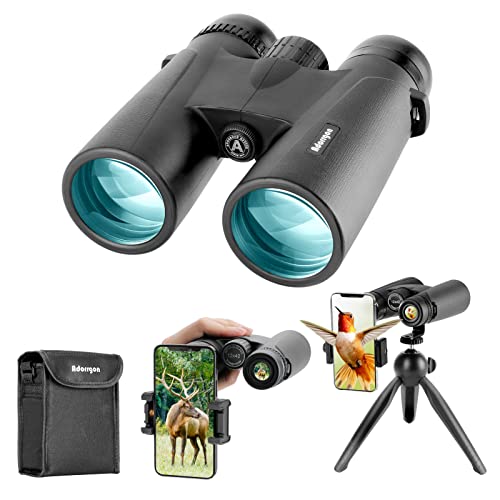 Adorrgon 12x42 High Powered Binoculars for Adults12x425.75 x 4.95 x 2.1 inches1.1 poundsCheck on Amazon




What's inside
- How aging eyes and hands change what works
- Exit pupil: the brightness number to check first
- Eye relief: room for glasses and comfort without them
- Why 7x and 8x beat 10x for most older hands
- Weight, balance, and the 600 gram guide line
- The focus wheel and diopter: controls that respect stiff fingers
- Field of view: finding the bird before it moves
- Twist-up eyecups, interpupillary distance, and a repeatable fit
- Grip, texture, and handling with gloves or damp hands
- Neck strap or harness: sharing the load
- Waterproofing, fog proofing, and honest outdoor use
- Well known lines, described by design rather than scores
- Matching the binocular to the outing
- Setting up a new binocular, step by step
- Common buying mistakes older users can avoid
- Check prices on Amazon
- How this guide was prepared and funded
As an Amazon Associate I earn from qualifying purchases. This post may contain affiliate links at no extra cost to you.
The best binocular for a senior is rarely the one with the highest magnification on the box. It is the one that can be lifted without strain, focused without a struggle, and used with glasses for twenty minutes without sore eyes, a sore neck, or a blurred view that never quite settles. Aging changes the optics a person needs and the mechanics a person can enjoy. Pupils open less widely in dim light than they once did, hands may shake a little or tire sooner, joints may object to small stiff controls, and many readers wear glasses full time. A good choice respects all of that at once, rather than treating comfort as an afterthought.
This guide works through the numbers that matter most for older eyes and hands, explains them in plain language, and shows how they play out in the garden, on a bird walk, at a sports ground, and on a trip. It draws on published specifications and manufacturer documents for widely sold lines such as Nikon Prostaff, Celestron Nature DX, Vortex Diamondback HD, Bushnell H2O, and Athlon Neos, described here by their design traits rather than by scores or prices. Read the sections in order if you are starting from zero, or jump to the topic that matches the problem you already know you have, whether that is fogged lenses, a focus wheel that hurts to turn, or a view that swims every time you lift the binocular.
How aging eyes and hands change what works
In younger eyes the pupil can open wide in shade or at dusk, letting a narrow beam of light from a binocular still feel bright. With age that range narrows. A pupil that once opened to seven millimetres may now open to five or less in the same light, and it reacts more slowly when you move from bright sun to tree shade. That single change explains why a compact binocular that felt fine at forty can feel dim and tiring at seventy, even though the glass itself has not changed. It also explains why brightness for a senior is less about marketing words and more about a simple ratio you can check before buying.
Vision correction adds a second layer. Glasses, contact lenses, cataract surgery, and differing strength between the two eyes all affect how a binocular should be set up. A model that assumes bare eyes and a perfect match between left and right will frustrate a wearer whose eyes differ by a step or two. Long eye relief, a forgiving diopter adjustment, and eyecups that stop at repeatable positions turn a daily adjustment chore into a ten second routine. Without those traits, the user spends the outing adjusting instead of looking.
Hands change the equation just as much. Grip strength falls gradually, arthritis can make small knurled wheels painful, and a mild tremor that is barely noticeable at rest becomes obvious at ten times magnification. Weight that seems trivial in a shop for thirty seconds becomes a real load after ten minutes of holding a binocular to the eyes at a feeder or a nest box. Design that helps here is not glamorous: lower power, lighter bodies, larger controls, textured surfaces, and straps that share load across the shoulders. Yet those plain traits decide whether the binocular gets used every week or stays in a drawer.
Exit pupil: the brightness number to check first
Exit pupil is the width of the light beam that leaves each eyepiece and enters your eye. You can see it by holding a binocular at arm length toward a bright wall and looking at the small bright circle in each eyepiece. The size follows a simple division: objective lens diameter divided by magnification. An 8×42 model gives 42 divided by 8, or 5.25 millimetres. A 10×42 gives 4.2 millimetres. A small 10×25 compact gives only 2.5 millimetres, which is why compacts often feel dim in shade even when their glass is decent.
For older eyes, look for an exit pupil of at least 4 millimetres, and prefer 5 millimetres or a little more when you often watch in shade, woodland, early morning, or late evening. That size matches or slightly exceeds what an older pupil can take in during the day and in moderate low light, so the view does not clip at the edges when your eye moves a fraction. It also makes eye placement more forgiving. With a larger exit pupil you do not have to hold your eyes in one exact spot to avoid black crescents at the edge of the view, a fault often called kidney beaning or blackout.
Common senior friendly formats follow directly from the math. A 7×35 gives 5 millimetres. An 8×42 gives 5.25 millimetres. An 8×56 gives 7 millimetres, though the larger lenses add weight that may cancel the benefit for many hands. A 7×50 also gives a very wide beam, but again the body grows heavier and bulkier. For most older users the sweet spot is 8×42, with 7×35 as a lighter alternative for daytime use and smaller hands. Both keep the beam generous without turning the binocular into a burden.
Exit pupil is not the whole brightness story. Lens coatings, prism quality, and glass type affect how much light gets through and how clean the contrast looks. Fully multi coated optics, where all air to glass surfaces carry multiple coating layers, lose less light and show less glare than basic coated optics. Phase coated roof prisms keep contrast sharper. Still, coatings cannot rescue a beam that is too narrow for the eye using it. Check exit pupil first, then look at coatings, rather than the other way round.
Twilight use deserves a separate word. Many seniors enjoy dawn chorus walks or evening garden watching, when light is soft and birds are active. In those hours a 5 millimetre plus exit pupil and good coatings earn their keep. A compact with a 2.5 millimetre beam may be fine at noon on a beach and disappointing at dusk under trees. If most of your watching happens in full daylight, a slightly smaller beam can still serve, but there is little downside to the 8×42 format beyond a modest size increase over a compact.
Eye relief: room for glasses and comfort without them
Eye relief is the distance from the outer surface of the eyepiece lens to the point where your eye sees the full field of view. It is measured in millimetres and printed in the specification table. If the distance is too short and you wear glasses, your glasses hold your eye too far back, and the view narrows to a tunnel with dark edges. You end up pressing the binocular against the lenses, scratching coatings, smearing glass, and still missing the outer field where a bird may be moving.
For glasses wearers, treat 15 millimetres as a minimum and 17 to 20 millimetres as comfortable. Thicker frames, deep set eyes, or glasses that sit farther from the face all push the need toward the longer end of that range. If you do not wear glasses for distance, shorter relief can still work, but longer relief rarely hurts, provided the eyecups extend far enough to hold your eyes at the right distance and block side light. That is why eyecup design and eye relief must be judged together, not as separate line items.
Try this check with any model you are considering, using the published figure and, when a shop allows it, your own glasses. With eyecups fully down, you should see the whole circular field with a crisp edge, without pressing hard. If you must push the binocular into your glasses to widen the view, the relief is too short for you, whatever the brochure implies. Sunglasses count too. Many seniors wear prescription sunglasses outdoors, and a binocular that only works with thin everyday frames will fail on the bright days when it is needed most.
Contact lens wearers sit between the two cases. The lens adds almost no distance, so relief needs resemble bare eye use, but dry eyes and wind can make longer sessions less comfortable. Eyecups that shield side wind help, and a slightly larger exit pupil reduces the strain of precise placement when eyes water. Bifocal and progressive lens wearers should also note which part of their lens they look through at distance; a binocular is a distance instrument, so set it up while looking through the distance zone, not the reading zone at the bottom of the lens.
After cataract surgery, light sensitivity and contrast perception can change for a while, and the two eyes may be corrected at different times. A forgiving binocular with long relief, a wide exit pupil, and a diopter ring with enough range helps during that adjustment period. If one eye has been corrected to near plano and the other still needs a lens, the diopter can balance the pair at the binocular, though glasses that correct astigmatism still need to stay on, because a diopter only adjusts focus difference, not astigmatism.
Why 7x and 8x beat 10x for most older hands
Magnification multiplies everything, including shake. At 7x a small hand movement moves the image a little; at 10x the same movement moves it a lot, and at 12x a resting tremor can turn a perched bird into a bouncing smudge. Many buyers assume more power must show more detail, but detail lost to motion is detail lost for good. A steady 8x view of a warbler usually reveals more plumage, more behaviour, and more enjoyment than a shaking 10x view of the same bird, and it does so with less eye fatigue.
Lower power brings two quiet bonuses. First, the field of view widens, so finding and following a moving subject gets easier, a point covered in its own section below. Second, depth of field grows, meaning more of the scene stays acceptably sharp without constant refocusing. In a garden that means a feeder, a fence, and a shrub behind it can all stay readable while birds move between them. On a sports field it means play stays clear as it moves ten yards, without your fingers working the wheel every second.
There are still fair uses for 10x. Shore watching, distant raptors over open country, and seated viewing with elbows braced on knees or a railing can tame the shake, and some experienced users with steady hands prefer the reach. The honest test is duration. If you can hold a 10x steady for the length of a typical watch, several minutes at a time, it may suit you. If the image starts to swim after half a minute, step down to 8x or 7x and enjoy the steadier picture. No specification table can make that judgement for your hands.
Zoom binoculars deserve caution here. Models that advertise a wide zoom range, such as 10 to 30 times, usually narrow the field, dim the view at higher settings, and add mechanical complexity and weight. Their exit pupil shrinks as power climbs, exactly when steadiness also falls. For senior use a fixed, moderate power from a well made line is almost always the better tool. Simplicity is a feature, not a compromise, when the goal is a clear view without fuss.
Image stabilised models exist and can help a strong tremor, but they add cost in weight, battery care, and bulk, and they sit outside the mainstream lines discussed in this guide. For most readers, lowering power and lightening the load solves the shake problem more simply. Resting elbows on a chair arm, a car window frame, or a walking companion’s offered support, sitting rather than standing, and leaning against a tree or post all help too, and they cost nothing.
Weight, balance, and the 600 gram guide line
Weight is the specification people underestimate most. A binocular near 600 grams, roughly the weight of a small paperback novel in each hand combined, can be held up for minutes by most adults. Push toward 800 or 900 grams and shoulders, neck, and wrists begin to protest, above all when the arms are raised and unsupported. For senior buyers, treat about 600 grams as a sensible ceiling for a full size model carried and held by hand, and look below that figure if arthritis, a past shoulder injury, or reduced strength is part of the picture.
Balance matters almost as much as the number on the scale. A body that carries its weight evenly between the hands, with the focus wheel falling naturally under the index fingers, feels lighter than a nose heavy design of the same mass. Short, wide bodies often balance well for smaller hands. Rubber armour adds a few grams but improves grip and protects against knocks, a trade most senior users should accept gladly. Magnesium or polycarbonate chassis help keep weight down without feeling fragile, and several mainstream lines now use them in mid sized models.
Think about the whole carried load, not the binocular alone. A padded case, a wide strap, and perhaps a small field guide or phone add up on a walk. If the outing is a two hour bird walk, every extra hundred grams is carried thousands of steps. If the binocular lives by a kitchen window for garden watching, weight matters less than for a traveller, and a slightly heavier 8×42 that never leaves the house can still be a fine choice. Match the weight decision to the real pattern of use, not to an imagined expedition.
Compact binoculars tempt buyers with very low weight, sometimes under 300 grams, but the trade is a narrow exit pupil, a smaller field, tighter eye relief, and tiny controls that are hard on stiff fingers. For a coat pocket spare they have a place. As a main binocular for older eyes, a mid size 8×32 or full size 8×42 usually serves better despite the extra grams, because the controls grow to a usable size and the view opens up. The 8×32 format in particular deserves attention: exit pupil of 4 millimetres, weight often well under the guide line, and a body that suits smaller hands.
The focus wheel and diopter: controls that respect stiff fingers
A large centre focus wheel you can turn gently
The centre focus wheel is the control you will touch most, hundreds of times on a busy morning. For arthritic or weak fingers it should be large in diameter, wide enough for two fingertips, and textured so it turns without a hard pinch. A wheel that moves smoothly through its whole range with light, even resistance lets you follow a bird from a near feeder to a far treetop with one or two easy turns. A wheel that is stiff, gritty, or very small forces a grip that hurts and a motion that jerks the image at the very moment you need it still.
Focus speed is a balance. Very fast focus, where a quarter turn runs from close to far, sounds convenient but overshoots easily when fingers are less precise, leaving the user hunting back and forth. Very slow focus is tiring and loses moving subjects. A moderate ratio, roughly one and a half turns from close focus to infinity, suits most senior hands. Close focus distance also matters for garden and nature use: a model that focuses down to about two metres lets you watch butterflies, feeders outside a window, and flowers in detail, while a model that stops at five metres will frustrate close range watching.
Some designs place the wheel well and some bury it between thick barrels. Look for a wheel that your index fingers reach without stretching, with room for gloves in cold weather. Winter bird walks test this point hard. Thin gloves plus a small recessed wheel can make focus nearly impossible, while a large raised wheel stays usable. If you watch mainly in winter, weigh this trait heavily.
A diopter ring that is easy to set and hard to knock
The diopter adjustment corrects the focus difference between your two eyes. It usually sits on the right eyepiece as a ring, or near the centre wheel as a smaller dial. For senior users the ideal diopter moves with firm clicks or clear resistance, carries visible plus and minus marks, and, on some models, locks once set. A loose diopter that drifts in a bag or against clothing leaves one eye slightly blurred all day, a common hidden cause of headaches and the feeling that a binocular is simply not sharp.
Setting it correctly takes one minute and should be part of the first day routine. Cover the right lens, focus the left eye sharply on a distant sign or branch with the centre wheel, then cover the left lens and turn only the diopter until the right eye sees the same target sharply, without touching the centre wheel. Note the diopter position once set. If the view later feels off, check that the ring has not moved before blaming your eyes or the glass. Users whose eyes differ greatly should confirm the diopter range in the published specification covers their difference; most models offer about plus or minus three or four steps, which handles common differences well.
Locking diopters, found on some higher steps within mainstream lines, are worth valuing if you share the binocular or carry it loosely in a bag. A non locking ring is not a deal breaker, though; a small piece of tape over a set ring is an old field trick, and a snug case reduces knocks. What matters is that the ring can be turned by stiff fingers in the first place. Tiny flush rings that need a fingernail are a poor match for arthritic hands, however neat they look.
Field of view: finding the bird before it moves
Field of view is the width of the scene you can see at a set distance, often printed as feet at one thousand yards or as an angle in degrees. A wider field means you raise the binocular and the subject is already in the picture, or near its edge, rather than lost while you sweep around hunting for it. For seniors watching birds that flit, grandchildren who run, or boats that move, that difference decides whether the moment is seen or missed.
As a guide, an 8x model showing around 7.5 to 8.5 degrees, roughly 390 to 445 feet at one thousand yards, feels generous. A narrow model near 6 degrees feels like looking through a tube. Lower magnification helps again here, since field generally widens as power falls, one more reason 7x and 8x suit reactive watching. Be careful when comparing figures: some makers print the apparent field, which sounds larger, so compare the real angular field or the feet at distance figure across models for a fair match.
A wide field also reduces the seasick feeling some users get when scanning. When more of the scene stays in view, panning across a hedgerow or a shoreline feels calmer, and the eyes work less to rebuild the picture after each move. Edge sharpness matters too. No binocular is perfectly sharp to the very edge, but better designs keep the outer third usable rather than smeared, so a bird near the edge stays identifiable while you centre it. Published figures do not capture edge quality well, which is one reason the mainstream lines with established optics tend to be safer picks than unknown labels with bold field claims.
For readers who also enjoy optics for other outdoor tasks, the same wide field logic carries over when you compare gear for a trail or a shoreline walk, and our notes sit alongside related topics such as best affordable trail cameras for readers planning a broader kit. The point for this guide stays narrow, though: in a binocular for older eyes, field width is not a luxury figure. It is a finding aid, as practical as a large focus wheel.
Twist-up eyecups, interpupillary distance, and a repeatable fit
Eyecups do three jobs: they hold your eyes at the correct relief distance, block stray light from the sides, and protect the eyepiece lenses. Twist-up eyecups, which rotate out and stop at two or more set positions, suit seniors best. Glasses wearers leave them fully down. Bare eye users twist them out to the stop that gives a full field without blackout. Click stops matter because they let you return to the same position every time, even by feel, without guessing.
Older fold down rubber cups still work, but they perish over years, fold unevenly, and offer no middle positions. Multi step twist cups in firm plastic or metal with a rubber rim are more durable and more repeatable. The rim should be soft enough not to press on glasses lenses if light contact happens, and wide enough not to dig into the eye socket during a long watch. If you wear glasses, check that the cup diameter clears your frames without catching when you lift the binocular away quickly.
Interpupillary distance, the spacing between the two barrels, adjusts by opening or closing the centre hinge until the two circular views merge into one. The published range, often about 56 to 74 millimetres on full size models, should cover your spacing; narrower faces and smaller heads should check the lower end of the range carefully. The hinge should move firmly and stay where you set it. A floppy hinge that collapses in your hands forces constant readjustment and is a genuine fault for weaker hands, not a minor annoyance.
A repeatable morning routine ties these settings together: hinge width set, eyecups at your known stop, diopter at its mark. Once those three are habits, lifting the binocular becomes automatic, and the first view of the day is sharp in seconds. Write your settings on a small card kept in the case if memory or sharing makes them drift. Households that share one binocular between two people with different glasses will find that card saves a daily argument about who moved what.
Grip, texture, and handling with gloves or damp hands
A binocular for senior hands should be holdable when hands are cold, damp, or less strong. Deep rubber armour with a pebbled or ribbed texture gives purchase without demanding a hard squeeze. Smooth glossy barrels, however smart they look in a photograph, slide in wet garden conditions and after sunscreen on a summer trip. Thumb rests or shaped undersides on some bodies help the hands settle in the same place each time, reducing fatigue on a long watch at a hide or a harbour wall.
Shape interacts with hand size. Long slim barrels suit larger hands; short wide roof prism bodies often suit smaller hands better than traditional porro prism shapes, though a good porro design can offer a very secure two handed grip and a welcome sense of depth in the view. There is no single right shape, only the shape your hands can hold steady for minutes. If buying without handling is unavoidable, favour models whose published length and width match hands like yours and whose weight stays under the guide line, since an oversized body is hard to return to a comfortable grip once fatigue sets in.
Objective lens caps and eyepiece covers sound minor until they are lost on a walk. Tethered caps that hang from the body stay with the binocular; loose caps vanish into pockets and grass. For arthritic fingers, caps should pop off with a light pull, not a fingernail pry. A rain guard that covers both eyepieces at once and rides on the strap is genuinely useful in British style drizzle, coastal mist, and garden showers, keeping drops off the lenses you look through most closely.
Buttons and badges matter less than balance, but protruding decorations where fingers rest can annoy over a long hold. Clean barrel design, recessed branding, and a strap lug that does not dig into the palm all add up to comfort that is only noticed when it is missing. Readers with a strong tremor may also try holding the binocular with both elbows tucked firmly into the body and the strap snug around the neck as a brace, a simple technique that steadies many users more than they expect.
Neck strap or harness: sharing the load
How a binocular hangs between views shapes how the neck and shoulders feel at the end of an outing. A thin cord strap concentrates the whole weight on a small strip of neck and is the first thing to replace. A wide, padded neoprene neck strap spreads the load and adds a little spring that softens bounce while walking. For a binocular under 600 grams, a good padded strap is enough for most garden and short walk use, and it is simple to put on over any coat.
A chest harness takes the next step. Elastic or webbing straps cross the back and hold the binocular against the chest, spreading weight across both shoulders and the torso. The binocular does not swing when you bend for a dropped glove or a garden gate, it stays clear of binocular vs camera bumps, and the neck carries almost nothing. For seniors with neck pain, past neck surgery, or a two hour walk ahead, a harness is often the single upgrade that changes a binocular from tiring to easy. The trade is a little more effort getting in and out of it, and a warmer layer against the chest in summer.
Fit the strap or harness at home, not at the trailhead. Set the length so the binocular rests at upper chest height, reachable without stretching and high enough not to bounce on the stomach while walking. Quick release clips help arthritic fingers if they are large and positive; tiny clips that need a pinch and a twist defeat the purpose. Some users pair a harness for walks with a plain padded strap by the window at home, swapping in seconds if the fittings allow, and that two setup habit is worth copying.
Wrist straps suit only the lightest compacts and are not recommended as the sole support for a full size model; a slip then becomes a drop. Whatever you choose, attach it before the first outing and check the lugs and knots after the first few walks, since new webbing can settle. A binocular that survives years of garden use usually does so because it was never dropped, and the strap is the cheapest insurance in the whole kit. For action oriented trips where a camera also comes along, readers sometimes compare carry systems next to topics like best 1080p action cameras, but for binocular use the rule stays simple: spread the load, stop the swing, keep the lift short.
Waterproofing, fog proofing, and honest outdoor use
Garden watching, bird walks, coastal trips, and open sports grounds all expose a binocular to rain, dew, breath condensation, and quick moves between warm rooms and cold air. A sealed, waterproof body keeps rain and splashes out during normal use, though waterproof in this class does not mean built for swimming or for hosing down. Nitrogen or argon filled tubes resist internal fogging when you step from a heated car into frosty air, the classic moment when a cheap unsealed binocular mists inside and stays misted for the rest of the morning.
Look for clear language in the published specification: waterproof, fog proof, and an O-ring sealed construction, rather than vague words like weather resistant, which may mean little more than shrugging off a light sprinkle. Rubber armour helps here too, sealing joints and cushioning the knocks that can break a seal. Lens coatings that shed water exist on some models and do help in drizzle, but they do not replace a sealed body.
Care habits protect the sealing you paid for. Wipe rain off with a soft cloth and let the binocular dry at room temperature with caps off after a wet outing, instead of sealing it damp into its case. Do not leave it on a sunny car dashboard, where heat can stress seals and lubricants, or in a freezing car overnight in deep winter. Blow loose grit off lenses with a blower before wiping, since garden dust and beach sand scratch coatings when rubbed in dry. A little care of this kind is why well kept mainstream binoculars often serve for a decade or more.
Fog on the outside of the eyepieces from your own breath is normal in cold weather and is not a sealing failure. Hold the binocular a fraction away from the face on very cold days, let body heat differences settle, and wipe outer surfaces only with a clean microfibre cloth. Internal fog, moisture visible inside the lens that does not clear in a warm room, is a fault to raise with the maker under warranty terms rather than a problem to open at home. Never attempt to open a sealed binocular yourself; the gas fill and alignment are workshop jobs.
Well known lines, described by design rather than scores
Nikon Prostaff: a clear step up in a familiar range
The Nikon Prostaff family is widely sold and often chosen by buyers moving up from a basic model. In its common 8×42 form it offers the senior friendly arithmetic this guide favours, a generous exit pupil, eye relief at the comfortable end for glasses wearers, and a weight that sits near the guide line rather than far above it. The focus wheel is a full size centre wheel with a positive feel, and the twist-up eyecups give repeatable stops. Eco glass and multi coated optics are recurring themes in the maker’s documents for the line, and the rubber armoured body is sealed against rain and internal fog in the versions most often listed for bird and general outdoor use.
Within the range, smaller 8×30 or similar formats trim weight for travel and smaller hands at some cost in exit pupil, while the 10x versions serve steadier hands that want reach. A senior choosing in this family should start with the 8×42, compare the lighter format only if weight is the dominant concern, and confirm the eye relief figure for the exact version, since specifications shift a little between generations of the same name.
Celestron Nature DX: accessible birding features in a compact frame
Celestron Nature DX models are popular with new bird watchers and garden observers, and the 8×42 is the version that best matches senior needs in the line. Published material for the family stresses phase coated BaK-4 prisms, fully multi coated optics, a close focus suited to feeders and butterflies, and a sealed fog proof body with rubber armour. Eye relief on the 8×42 version is generally listed at a glasses friendly figure, and the weight stays manageable for handheld use across a morning walk.
The line also includes 8×32 and 10×42 forms. The 8×32 keeps the handling light and the field wide, a good match for smaller hands and travel bags, while the 10×42 narrows the exit pupil and asks more of the hands. Twist-up eyecups, a centre focus wheel of usable size, and a tripod adaptable socket on many versions round out a practical design. As with any family sold for years, check the exact version’s figures before deciding, because Celestron has revised details over time.
Vortex Diamondback HD: wide field and a strong service reputation
Vortex Diamondback HD binoculars are known among birders for a notably wide field of view in the 8×42 class, which directly helps the finding problem described earlier in this guide. The maker’s published material highlights HD optical elements, fully multi coated lenses, phase coated prisms, a magnesium chassis on recent versions, and a sealed, fog proof build. Eye relief is listed at a level that works for many glasses wearers, and the weight of the 8×42 sits close to the senior guide line, remarkable given the wide field.
The focus wheel on this line is large and grippy, a point many owners with weaker hands value, and the diopter sits on the right eyepiece with clear markings. Vortex also publishes an unconditional service promise in its home market, which appeals to buyers who plan to keep one binocular for many years; terms vary by country, so read the version that applies where you live. In this family the 8×28 and other compacts are much less senior friendly than the name suggests, with tight relief and narrow beams, so stay with the 8×32 or 8×42 for the uses in this guide.
Bushnell H2O: built around wet conditions
The Bushnell H2O line states its purpose in its name. These binoculars are described by the maker as waterproof and fog proof with O-ring sealing and gas filling, textured rubber armour for a non slip grip in wet hands, and optics aimed at bright, clear views in damp coastal and lakeside settings. For seniors whose watching centres on reservoirs, estuaries, boat trips, or simply a rainy garden, that wet weather focus is a rational specialism rather than a gimmick.
Formats in the family vary widely, from compacts to 10×42 roof prism models and larger porro forms. Senior buyers should apply the same filters as anywhere else: prefer the 8×42 roof prism versions for exit pupil, relief, and balance, treat the small compacts as pocket spares, and confirm the weight of the exact model, since some versions run heavier than rivals of the same format. The chunky armour that helps grip can add bulk in small hands, a trade to weigh against the weather protection.
Athlon Neos: simple, light, and easy to live with
Athlon Neos models occupy the straightforward end of the market, and that simplicity can suit seniors well. The maker’s documents for the line describe BaK-4 prisms, fully multi coated optics, waterproof and fog proof construction, and twist-up eyecups, in bodies that tend to run light for their format. The 8×42 version gives the favoured exit pupil, and published eye relief figures for the family are generally workable with glasses, though checking the exact version matters here as elsewhere.
Controls on the Neos line are uncomplicated, with a centre wheel sized for normal fingers and a standard right eye diopter. For a buyer who wants a first serious binocular for the garden and local walks without a long feature list to learn, that plainness is a merit. As with Bushnell, the family badge covers several sizes, so let the arithmetic lead: 8×42 first, 8×32 if weight rules, and compacts only for travel spares. Readers comparing across these five families will notice the pattern this guide keeps returning to, that the badge matters less than whether the chosen format hits the exit pupil, relief, weight, and control targets together.
Matching the binocular to the outing
Garden and feeder watching from a window or chair
Garden use is forgiving on weight and demanding on close focus and ease. The binocular may live on a windowsill or a side table, lifted for a minute at a time as birds arrive at feeders eight to fifteen metres away. Close focus near two metres covers the nearest feeder and the odd butterfly on a patio plant. A wide field helps when several birds move at once, and a generous exit pupil keeps the view bright under the shade of a fence or tree. An 8×42 from any of the families above serves this pattern beautifully, and because travel weight hardly matters at home, this is the one setting where a slightly heavier model is no real penalty.
Watching through window glass deserves a note. Open the window when you can, since double glazing softens detail and adds reflections, above all at an angle. If opening is not practical in winter, sit square to the glass and close to it, keep the glass clean, and accept a small loss. Many garden watchers keep the binocular without its case at home, caps off and settings ready, so a brief visit from a shy species is not missed while fumbling with a bag.
Bird walks and nature reserves
On a walk, weight, strap comfort, and weather sealing join the optical list. The binocular hangs for an hour or two, lifts often, and may get rained on at a reserve with no shelter. A harness earns its place here for neck comfort, and a sealed fog proof body earns its place when a cold hide follows a warm visitor centre. Field of view and focus speed matter more on the move, since warblers and waders rarely wait. Choose 8×42 for general walks, or 8×32 if the route is long, the hills are real, and your shoulders have opinions.
Carry a small microfibre cloth in a pocket that stays dry, keep the rain guard on between lifts in wet weather, and learn the focus wheel direction by feel so your eyes stay on the bird while your fingers work. Group walks move at the group’s pace, so a binocular that sets up fast, hinge, eyecups, and diopter already done at home, keeps you with the group instead of trailing behind adjusting.
Travel, cruises, and sightseeing
Travel adds luggage limits and variety: harbour views, distant landmarks, seabirds from a deck, and perhaps a whale watching boat where spray is guaranteed. An 8×32 strikes a fine travel balance, light in a day bag, bright enough for daytime coastal light, and wide in field for scanning water. If evening port arrivals or shaded forest excursions feature heavily, the 8×42’s larger exit pupil justifies its extra size. Either way, waterproof sealing matters more on boats than almost anywhere else, and a floating strap exists for the truly cautious on small craft.
For readers building a wider travel kit, related coverage touches travel optics alongside subjects such as best 4k action cameras inexpensive, though the binocular decision itself should stay anchored to the fit and arithmetic in this guide rather than to bundle offers.
Sports, concerts, and grandchildren on stage
For sports from the stands, distance is greater and play moves fast across a wide area. The wide field of an 8x helps follow a ball or a race without losing the wider play, and depth of field keeps a moving game readable. Some seated users with braced elbows manage 10x happily at a stadium, and that is a legitimate exception to the general advice, because the seat itself supplies the steadiness that standing removes. At outdoor grounds, weather sealing and a secure strap matter in a crowd where knocks are common.
At indoor concerts and school stages, light is lower and distances shorter. Exit pupil becomes the star: an 8×42 or even a 7x model keeps faces bright in theatre light where a compact goes dull. Theatre style opera glasses are light and pretty but usually lack the relief, field, and focus quality for a full evening with glasses. A mainstream 8×32 or 8×42, set up before the lights fall, serves far better and travels to the sports ground the next weekend as well.
Setting up a new binocular, step by step
First, set the hinge. Hold the binocular to your eyes and open or close the centre hinge until the two round views merge into a single circle with no dark overlap in the middle. Note whether the hinge feels firm; it should hold that width while you focus and while the binocular hangs.
Second, set the eyecups for how you will actually watch. With glasses on, start with cups fully down or at the lowest click. Without glasses, twist them out one stop at a time until the field is full and round with no black edges, and you can blink comfortably without lashes brushing the lens. Remember the stop number or feel so you can return to it.
Third, set the diopter as described earlier, using a distant, detailed target such as a sign, a chimney, or a far tree against the sky. Take your time; this is a once in a while setting, not a daily one. Fourth, practise the focus wheel across its range, near feeder to far treetop, until the direction and speed feel natural. Fifth, fit the strap or harness and adjust its length at chest height, then walk around the house and garden with it to catch any swing or dig before the first real outing.
Finally, record your settings. Hinge position can be marked by feel, diopter by its number, eyecups by their stop. A short note in the case helps after a grandchild has borrowed the binocular or a friend has tried it at a match. Recheck the diopter after any change in prescription, eye surgery, or new glasses, since the balance between your eyes may have shifted even when the change feels small in daily life.
Common buying mistakes older users can avoid
- Choosing 10x or higher for the promise of detail, then losing that detail to hand shake within a minute of lifting the binocular.
- Choosing a tiny compact for its low weight, then struggling with a dim view, tight eye relief, and controls too small for stiff fingers.
- Ignoring eye relief figures while wearing glasses, and discovering the tunnel view problem only after the return window feels complicated.
- Overlooking weight over about 600 grams for handheld use, above all for walks where the binocular is carried for hours.
- Accepting a stiff, small, or gritty focus wheel in the shop and hoping it will loosen, when a smooth large wheel was available in the same class.
- Treating weather resistant wording as equal to a sealed waterproof and fog proof build, then meeting internal fog on the first cold morning.
- Forgetting the strap, and carrying the whole load on a thin cord that makes the neck ache long before the eyes tire.
Each mistake on that list is understandable, because headline numbers push buyers toward power and smallness. The corrective is to rank the quiet specifications first: exit pupil, eye relief, weight, wheel, field, and sealing. A model that wins on those six will please its owner for years, even if another model advertises a larger power figure on the box in bolder type. For readers who also inspect property, vehicles, or garden structures with optics as part of home projects, related reading such as best borescopes and inspection cameras covers a very different tool, and it underlines the same lesson in another form: fit the instrument to the hand and eye that will use it.
Check prices on Amazon
Live listings for the shortlist in this guide are pulled from Amazon below, so prices and availability are always current at the moment you look.


How this guide was prepared and funded
Selections here rest solely on published specifications and manufacturer documents, compared against the fit thresholds set out above; no product named was handled directly for this page, and no maker supplied a sample or influenced inclusion. This site stays running when readers buy through retail listings linked from its pages, at no added cost to them, which is why clear thresholds matter more here than novelty. Choose the 8×42 that fits your glasses, your hands, and your usual outing, set it up once at home, and let the next quiet minute at the feeder belong entirely to the goldfinch, not to the wheel.


