What's inside
- Where to buy
- Key Takeaways
- Quick Picks
- How did we decide what affordable really means?
- Why is the cheapest phone so often the expensive one?
- How do the six affordable all-rounders compare?
- How do you keep an affordable phone affordable for four years?
- What mistakes do affordable phone buyers keep making?
- How does affordable differ from the budget guides?
- Three households, three different affordable answers
- A second look at each pick: the ownership detail that matters
- What about repairs, warranties and handing the phone down?
- When is the right time to buy an affordable phone?
- What do affordable phones do brilliantly, and where do they honestly struggle?
- Where do affordable phones hide in carrier shops and seasonal sales?
- Is buying affordable also the greener choice?
- How do you set up an affordable phone for a family member?
- What will an affordable phone cost to run each month?
- What should you do in the first month with an affordable phone?
- What about buying affordable phones as gifts or for a small team?
- Final Recommendation
- Frequently Asked Questions
- Related Guides
As an Amazon Associate I earn from qualifying purchases. This post may contain affiliate links at no extra cost to you.
gizmoverdict.com is reader-supported. When you buy through links on our site, we may earn an affiliate commission.
Where to buy
Follow the link on a phone’s name to reach its listing, and check the configuration and condition notes there before ordering. This is the original affordable guide in this batch — the one that defines what the word should mean. The best affordable android phones are not the cheapest phones on the shelf, and this page will not pretend otherwise. Affordable, properly understood, is a relationship between what a phone costs across its whole life and what it gives back across that life: the years it stays secure, the repairs it never needs, the replacement it postpones. A phone that is cheap for eighteen months and then forces a replacement is expensive. A phone that costs a little more and serves four years is the bargain.
That framing changes the ranking in ways readers may find surprising. Support windows count heavily here, because a phone retired early by its maker’s indifference is a phone whose price must be divided by fewer years. Battery generosity counts, because the affordable phone’s owner is the least likely to carry flagship accessories or charge at a desk all day. Storage headroom counts, because filling a phone is the quiet tax that pushes owners into premature upgrades. Camera quality counts in a specific way — not spec-sheet ambition, but the ability to take the family photograph without regret, because the affordable phone is often the household’s only camera.
Six phones passed that whole-life test. They are all-rounders rather than specialists: none of them is the fastest, the most beautiful or the most photographic phone in the wider market, and every one of them is a phone a sensible person can buy, use hard for years and replace without a story of regret. Where a listing is renewed, we say so and judge the model, since the seller grades the unit. Where a phone carries a condition — a network tie, a shorter support window — it is printed in its section rather than buried, because an affordable phone bought wrongly is the least affordable outcome of all.
Key Takeaways
- The Samsung Galaxy A16 5G is this guide’s definition of affordable done right: a modest price divided by an unusually long supported life, with a fine screen and expandable storage along the way.
- The Motorola Moto G 2025 is the all-rounder for buyers who value a clean, quick feel and a battery that minds itself.
- Google’s Pixel 7a, renewed, delivers a camera no other affordable phone can touch, for buyers whose photographs matter most.
- The Galaxy A25 is the step-up pick: a little more money buys noticeably calmer multitasking and a smoother screen.
- Motorola’s Moto G Power 5G 2024 remains the endurance specialist, a renewed bargain for people whose days are long and whose chargers are far away.
- The TCL 50 XL 5G gives T-Mobile households the biggest screen in the guide for the gentlest money, with its network tie stated plainly.
Quick Picks
| Pick | Badge | Why it earns its place |
|---|---|---|
| Samsung Galaxy A16 5G | Best Overall Value | Years of Samsung support wrapped around a bright AMOLED screen and expandable storage. |
| Motorola Moto G 2025 | Best Clean All-Rounder | Light software, a big screen and a strong battery make it the easiest affordable phone to live with. |
| Google Pixel 7a | Best Affordable Camera | Pixel photography and wireless charging at a renewed price nothing else here can answer. |
| Samsung Galaxy A25 | Best Step Up | More memory headroom and a 120Hz screen for buyers stretching slightly for calm. |
| Motorola Moto G Power 5G 2024 | Best Endurance Bargain | A big battery and generous memory in a renewed package priced for patience. |
| TCL 50 XL 5G (T-Mobile) | Best Big Screen for Less | A huge, smooth display for readers and viewers on T-Mobile’s network. |
How did we decide what affordable really means?
We priced each candidate across a four-year life rather than at the checkout. That meant crediting phones for every year of security support they promise, because a supported phone can be kept safely and an unsupported one should not be. It meant crediting expandable storage and generous built-in capacity, because storage pressure is the most common reason affordable phones get replaced while still working. It meant crediting battery size and charging convenience, repair familiarity and accessory availability — the unglamorous infrastructure that decides whether a small problem costs a little money or a whole phone.
It also meant discrediting the usual bait. A phone with a dazzling launch discount and a two-year support window scored worse than its price suggested. A phone with a huge camera megapixel count and a miserable screen scored worse than its marketing promised. And any phone whose listing hid its configuration or network conditions behind vagueness was marked down, because affordable buyers have the least slack for a wrong purchase. The six survivors are not the six cheapest phones we could find. They are the six whose total cost of being owned — money, time, frustration, longevity — came out lowest against what they return.
Why is the cheapest phone so often the expensive one?
Because phones are bought in years, not in transactions. The ultra-cheap handset typically combines three quiet debts: a support window that ends while the hardware still works, storage that fills and slows the phone into daily irritation, and a battery that was small when new and is smaller now. Each debt comes due as either a repair, a workaround or a replacement, and the replacement is where the arithmetic collapses — two cheap phones across four years usually cost more than one affordable phone across the same span, while delivering a worse experience in every one of those years. The affordable buyer is not the buyer who spends least. The affordable buyer is the buyer who spends once, wisely, and then stops thinking about phones for years.

Samsung Galaxy A16 5G — Best Overall Value
The A16 wins this guide on arithmetic. Samsung built an inexpensive phone and then promised it years of Android upgrades and security patches, a commitment that transforms its value, because every one of those years is a year its owner does not spend on a replacement. Around that promise sits a thoroughly sensible handset: a large AMOLED display that makes everything look a class better, a durable build, fast charging by the standards of its price, 5G for US networks, and expandable storage so the photo library can grow without evicting apps.
The ownership experience is calm rather than thrilling. Performance handles the everyday rotation — messages, maps, social apps, video calls, photography — with composure, though Samsung’s fuller software occasionally reminds you this is not a flagship when several heavy apps compete. The camera is a dependable daylight companion. Judged as a photograph of a purchase, the A16 is unremarkable; judged as a four-year film, it is the most affordable phone in this guide, because it simply refuses to become obsolete on any schedule but its owner’s.
- Display: large AMOLED
- Storage: expandable via memory card
- Software: Samsung One UI with a long update promise
- Charging: fast wired charging for its class
- Network: 5G, US version
Strengths
- Support longevity that redefines value at this price
- Bright screen and card expansion age gracefully together
- Samsung’s repair and accessory ecosystem everywhere
Trade-offs
- Performance is composed, not quick, under heavy multitasking
- Night photography is serviceable rather than special
- Plastic build feels practical rather than premium
Best for: Buyers purchasing for years — parents, teenagers, themselves — on a disciplined budget. Not suited for: Gamers or anyone who swaps phones annually for novelty.

Motorola Moto G 2025 — Best Clean All-Rounder
Some budget phones feel fast in the shop and tired by spring; this Motorola is bought by the people who can tell the difference, because they notice software before they notice specifications. Motorola’s near-stock Android carries so little extra weight that the phone feels quicker than its specifications promise, and it stays that way, because there is no layer of duplicate services quietly ageing in the background. The big screen is bright and smooth for the class, the 50-megapixel camera is a willing daylight performer, and the battery is sized for owners who measure charging in evenings, not opportunities.
The listed unit is renewed, which pulls its cost down toward the very bottom of this guide while the hardware stays modern; read the seller’s grading as you would with any renewed purchase. Motorola’s update window is shorter than Samsung’s, which is the honest price of its cleanliness, and the reason it sits second here rather than first. For a buyer on a two-to-three-year rhythm — or buying a first phone, a work phone or a spare that must simply behave — the Moto G’s combination of feel, screen and stamina is the most likeable in the guide.
- Display: large panel with high refresh for its class
- Main camera: 50MP
- Memory: 4GB RAM, 128GB storage on the listed unit
- Software: near-stock Android
- Battery: full-day-plus cell
Strengths
- The cleanest, quickest-feeling software in the guide
- Battery and screen both punch above the price
- Renewed pricing makes it one of the cheapest modern phones here
Trade-offs
- Shorter support window than the Samsung picks
- Heavy multitasking will still close background apps
- Low-light camera results are ordinary
Best for: Buyers who want an affordable phone that feels fresh every time they pick it up. Not suited for: Five-year keepers counting on patches to the very end.
Google Pixel 7a — Best Affordable Camera
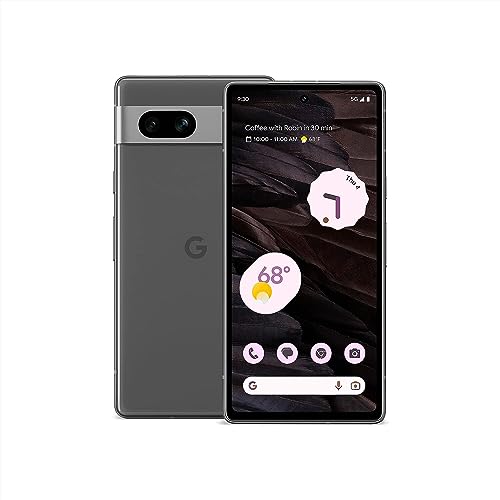
Every affordable guide has one phone that cheats, and here it is the Pixel 7a. Its camera carries Google’s processing at full strength, producing stills — especially of people, especially in poor light — that no other phone in this guide can approach, and its renewed price has fallen to a level where that camera is effectively being given away with a competent phone attached. Wireless charging, a rarity at this money, a bright 90Hz OLED screen and clean Google software complete a package that reads like a pricing error.
The debits are time’s, not design’s. The 7a’s support window is the shortest among this guide’s serious contenders, its chip warms under sustained load, and charging is slow. Its renewed condition varies by seller, so the battery story deserves a read before ordering. None of that changes the verdict for its buyer: if the affordable phone in your household is also the family camera — and it usually is — the 7a’s photographs will be giving pleasure long after its other compromises are forgotten.
- Display: 6.1-inch OLED, 90Hz
- Main camera: high-resolution with Google processing
- Charging: wired plus wireless
- Software: clean Android with Google features
- Storage: 128GB on the listed configuration
Strengths
- Camera quality from a different league than its price
- Wireless charging at an affordable renewed cost
- Compact, friendly size for smaller hands
Trade-offs
- Shortest remaining support of the top picks
- Slow charging and a warm chip under load
- Renewed battery condition needs checking
Best for: Families and photographers whose budget phone is their main camera. Not suited for: Buyers planning the longest possible ownership.

Samsung Galaxy A25 — Best Step Up
The A25 exists for the reader who finishes the A16’s section nodding, then worries about the word composed. Its memory headroom is a clear step beyond the guide’s floor, and the effect is a phone that keeps apps alive, switches without ceremony and absorbs a busy day without developing the reload habit that teaches owners to hate their phones. The 120Hz AMOLED screen reinforces the impression: this is the affordable phone that does not feel affordable in the hand or on the eye.
Samsung’s support commitment and expandable storage carry over, as does a stabilised 50-megapixel camera that behaves well in the mixed light of real life. The listed unit is renewed, which narrows the price gap to the A16 considerably and makes the step up a question of small money rather than a new budget category. If the phone is a primary device for someone who uses it constantly — a student, a gig worker, a parent running a household from it — the A25’s calm is the best-value upgrade in this guide.
- Display: AMOLED, 120Hz
- Memory: a step above the floor, with card expansion
- Main camera: 50MP with stabilisation
- Software: Samsung One UI, long support
- Storage: 128GB on the listed configuration
Strengths
- Noticeably smoother multitasking than the floor models
- Screen quality that flatters everything it shows
- Renewed pricing keeps the upgrade painless
Trade-offs
- Still not a gaming phone in any serious sense
- Costs more than the strictest budget allows
- Renewed condition varies across sellers
Best for: Heavy everyday users buying their main phone on a budget. Not suited for: The absolute minimum spend, where the A16 and Moto G rule.

Motorola Moto G Power 5G 2024 — Best Endurance Bargain
The G Power line has one idea and executes it faithfully: a phone should outlast its owner’s day, and then the next one. The 2024 Power pairs its large battery with generous memory for its class — 8GB of RAM and 128GB of storage on the listed renewed unit — a big 120Hz display and Motorola’s clean software, producing an affordable phone whose defining experience is the absence of battery anxiety. For delivery riders, site workers, travellers and anyone whose charging opportunities are weather-dependent, that absence is worth more than any camera trick.
As the older Power model, its support window is shorter than the 2025 phones here, and its camera is a fair-weather friend. The renewed market is where it shines, pricing all that endurance within reach of the tightest sensible budgets. Buy it for the job it was built for — long days, far from sockets, with maps and messages running throughout — and it will repay you in the specific currency of never once, in a year of ownership, watching a battery icon turn red at the wrong moment.
- Display: large panel, 120Hz
- Battery: large cell built for multi-day light use
- Memory: 8GB RAM, 128GB storage on the listed unit
- Main camera: 50MP class
- Software: near-stock Android
Strengths
- Endurance that defines its category
- Generous memory for a renewed bargain
- Clean software keeps it feeling willing
Trade-offs
- Older model with a shorter remaining support window
- Camera is for daylight and documentation, not artistry
- Large body and weight follow the large battery
Best for: Workers and travellers whose days outrun ordinary batteries. Not suited for: Photography-led buyers or pocket minimalists.
TCL 50 XL 5G (T-Mobile) — Best Big Screen for Less
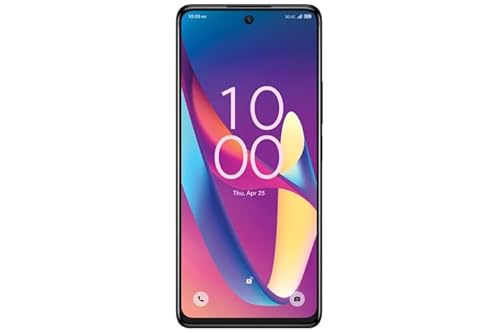
TCL’s proposition is written on its face: a 6.78-inch, 120Hz display — the largest and among the smoothest in this guide — attached to a phone priced for the bargain shelf. For the affordable buyer whose phone is primarily a reading and viewing machine, that screen is not a luxury but the entire point: articles are legible, video is generous, video calls with family feel like visits, and text can be set large without turning every page into a scroll marathon. The battery, just over five thousand milliamp-hours, is sized to feed the display honestly.
The condition is the network named in its title. This listing serves T-Mobile and its partner networks; households on that network get remarkable screen value for their money, and everyone else should take the A16 or the Moto G instead. TCL’s support window is also shorter than Samsung’s, so this is a phone for the next few years rather than the next half-decade. Within those stated boundaries, the 50 XL is the easiest affordable recommendation in the guide to explain: the most screen, for the least money, for the people whose eyes asked first.
- Display: 6.78-inch, 120Hz
- Battery: just over 5,000mAh
- Main camera: 50MP
- Network: T-Mobile on this listing
- Memory: modest class, media-centred
Strengths
- The biggest, most comfortable reading screen here
- Battery honestly matched to the display
- Gentle pricing for T-Mobile households
Trade-offs
- One network’s listing; others must look elsewhere
- Support window shorter than Samsung’s
- Big body challenges small hands and pockets
Best for: T-Mobile readers, viewers and video-callers on a budget. Not suited for: Any other network’s customers.
How do the six affordable all-rounders compare?
| Phone | Badge | Value engine | Standout quality | Main compromise |
|---|---|---|---|---|
| Samsung Galaxy A16 5G | Best Overall Value | Years of support | Longevity per pound | Composed performance |
| Motorola Moto G 2025 | Best Clean All-Rounder | Light software | Feel and battery | Shorter updates |
| Google Pixel 7a | Best Affordable Camera | Renewed pricing | Photography | Support window |
| Samsung Galaxy A25 | Best Step Up | Memory headroom | Calm multitasking | Costs a step more |
| Motorola Moto G Power 5G 2024 | Best Endurance Bargain | Battery size | Multi-day stamina | Older model |
| TCL 50 XL 5G (T-Mobile) | Best Big Screen for Less | Screen size | Reading comfort | Network tie |
Every phone in the table wins on a different definition of value, which is the guide’s thesis in miniature: affordable is not a price, it is a fit between a phone’s strengths and an owner’s life, stretched across years. Identify your value engine — support, software, camera, calm, stamina or screen — and the table points at your phone without further argument.
How do you keep an affordable phone affordable for four years?
The purchase is only the first act of frugality; the rest is housekeeping. Fit a case and a screen protector on day one, because the most common way an affordable phone becomes expensive is a cracked screen in month three. Turn on automatic updates and cloud photo backup immediately, while the phone is empty and the setup is painless. Keep a fifth of the storage free, and if the phone accepts a memory card, buy one early while it is a choice rather than an emergency. Restart the phone weekly, not from superstition but because modest hardware genuinely benefits from a clean start.
Then protect the battery, the component whose ageing ends more affordable phones than any other. Avoid leaving the phone on a hot dashboard or a sunny sill, use the manufacturer’s battery-protection setting if it offers one, and do not treat a nightly full charge as a moral duty — topping up when convenient is fine. Finally, resist the annual itch. The market will announce shinier phones every season; your affordable phone, properly kept, will still be doing its job through several of those announcements, and every year it serves is a year its price-per-year falls further. Frugality is a system, not a moment.
What mistakes do affordable phone buyers keep making?
The deepest mistake is dividing by the wrong number: judging a phone by its price instead of its price per supported year. The second is buying storage by optimism — choosing the smallest configuration, filling it by spring, and spending the phone’s life deleting photographs. The third is ignoring the listing’s fine print, where the renewed grade, the network tie and the exact configuration live; two picks in this guide carry conditions that are excellent for the right buyer and disqualifying for the wrong one, and both print those conditions in their names.
Fourth, buyers skip the accessories budget and then resent the phone for the cracked screen that a modest case would have prevented. Fifth, they load the new phone with every app from the old one, including the heavy services they no longer use, and conclude the hardware is slow. An affordable phone rewards a deliberate owner: a short app list, free storage, a case, automatic updates. Given those four gifts, every phone in this guide will serve longer and feel faster than its price has any right to promise.
How does affordable differ from the budget guides?
Readers who have browsed this batch of guides may wonder how this page differs from a budget ranking, since the shelves overlap. The distinction is the question being asked. A budget guide asks what can be bought for the least money without disaster. This guide asks what should be bought by a person who wants to spend sensibly once and be done — the all-rounder question. That is why support years, storage headroom and repair ecosystems weigh so heavily here, and why a renewed former favourite like the Pixel 7a can outrank newer, cheaper hardware: its camera and its remaining life return more across the ownership than a rock-bottom price returns at the till.
The practical consequence is a shortlist with no true bottom-feeder on it. Every pick here is a phone we would hand to a family member with the words you will not need another for years — and mean it. If your circumstances demand the absolute floor, the honest floor models exist and are reviewed elsewhere in this batch with their limits stated. If your circumstances allow the small step from cheapest to affordable, this page is where that step lands, and it is the step we would take with our own money.
Three households, three different affordable answers
Consider a family of four replacing two phones in the same month, with a teenager’s first handset also due. Their affordable answer is a portfolio, not a model: the A16 for the teenager, because its support window will outlast school contracts and its price forgives the statistically likely accidents; the Pixel 7a renewed for the parent who takes every family photograph, because those images are the household’s archive; and the A25 for the parent who runs a small business from a phone, because calm multitasking is a work tool. Total spent is a fraction of one flagship, every phone is supported, and each device matches the hands it will live in. That matching, repeated across the household, is what affordable actually looks like in practice.
Now consider a self-employed driver whose phone is a business asset: navigation all day, calls through a headset, photographs of deliveries, banking in the evening. Their affordable answer is the G Power 2024 renewed, bought for the battery that treats a twelve-hour day as a starting point, with the Moto G 2025 as the alternative if a newer model matters more than the last hours of stamina. The wrong answer for this household would be the cheapest phone in the shop, whose small battery would tax every working day and whose early replacement would arrive, expensively, in the middle of a contract season. Affordable, for the driver, is measured in uninterrupted working days.
Finally, consider a retired couple buying one phone each, their first smartphones after years of shared basics. Their affordable answer is the TCL if their network allows — big text, big screen, video calls with grandchildren rendered generously — or the A16 where it does not, with its support window promising that the phones will not need replacing while the couple is still mastering them. For this household the decisive features are legibility, simplicity and the absence of future shopping. Notice that none of the three households chose by price alone, and all three ended up spending less across four years than the household that simply buys the cheapest phone twice.
A second look at each pick: the ownership detail that matters
The A16’s card slot is a savings account
Expandable storage rarely headlines a review, but on the A16 it quietly restructures the phone’s economics. A modest memory card, bought once, absorbs the photo library’s growth for years, which keeps the internal storage breathing, the phone responsive and the owner out of the upgrade market. Families in particular should note the trick: the child whose phone this is will fill any fixed storage eventually, and the A16 is the pick that answers that inevitability with a card slot instead of a new handset.
The Moto G’s cleanliness compounds
Light software pays interest. Because the Moto G starts with less background machinery, it accumulates less digital sediment, needs fewer of the resets and purges that heavier phones demand, and greets its owner in year two with something close to its year-one manners. Owners who value their time — the currency affordable guides too often ignore — should price that cleanliness properly. It is the difference between a phone that is maintained and a phone that simply works.
The 7a’s photographs outlive the phone
Every other virtue in this guide expires with the handset, but the Pixel 7a’s photographs do not. The portraits of children, parents and holidays that it takes this year will be looked at for decades, long after its support window and its battery are history. That is the deepest sense in which the renewed 7a is affordable: it converts a modest, short-lived purchase into permanent family assets of a quality that phones costing it company at the till simply cannot produce.
The A25 buys back your patience
Quantify the A25’s step up honestly and it is measured in seconds saved and irritations avoided, hundreds of times a month: the app that is still open, the map that does not reload, the camera that is ready. For an owner whose phone is a tool of their trade or the hub of a household, those seconds are wages and temper. The A25 is the pick for buyers who have done that arithmetic and decided their patience is worth more than the small difference on the receipt.
The G Power’s battery is a safety feature
For the workers and travellers who choose the G Power, endurance is not convenience but margin: the phone that is alive at the end of a shift can call, navigate and summon help. That is why this guide treats its battery as the headline rather than a specification, and why its owners describe their loyalty in almost moral terms. An affordable phone that never leaves you stranded has repaid its price in a currency no benchmark measures.
The TCL’s screen is an accessibility bargain
Large, smooth, inexpensive: the TCL’s display trio matters most to the buyers least served by the phone industry — those whose eyes need size and whose budgets need mercy. Set the text large and the 50 XL still shows a useful amount of every page, which is the difference between a phone that includes its owner and one that quietly excludes them. On the right network, it is the most humane affordable phone in this guide.
What about repairs, warranties and handing the phone down?
Affordable ownership assumes things will occasionally go wrong, and plans for it cheaply. Every model in this guide is popular enough that independent shops stock its screens and batteries and can quote repairs from memory; that ecosystem is itself a value feature, and it is one reason obscure ultra-cheap brands were excluded from this ranking however low their prices sat. Before buying renewed, read what warranty or return window the seller includes, and treat a clear, written promise as worth a small premium over a vague one.
Plan the cascade at purchase, too. An affordable phone bought today is tomorrow’s hand-me-down: to a child, a parent, a drawer as the household spare, a charity that refurbishes devices for people who need them. The picks with the longest support windows cascade furthest, because the second owner inherits the remaining patches along with the hardware. Buying with the second life in mind is the final refinement of the affordable philosophy — the phone’s price divided not by one owner’s years, but by everyone’s.
When is the right time to buy an affordable phone?
The affordable market rewards the unhurried. Prices on the current generation soften as successors are announced, and renewed stock deepens after every flagship launch season, when trade-ins flood the refurbishers. A buyer who can wait for those rhythms will usually find the A25’s territory priced like the A16’s, or a better-graded renewed 7a for the money of a rougher one. The discipline is to decide the model and the acceptable condition first, then let timing choose the unit — never the reverse, because a bargain on the wrong phone is the most expensive purchase in this entire category.
The wrong time is the emergency: the drowned phone, the shattered screen the week of a trip. A household that keeps one charged spare — often yesterday’s affordable pick, cascaded exactly as this guide describes — never has to buy in a panic at full price. That, in the end, is the affordable system complete: buy well, keep long, cascade down, and let the market’s urgency belong to other people.
What do affordable phones do brilliantly, and where do they honestly struggle?
Begin with the brilliance, because it is extensive. Communication — calls, messages, group chats, video calls — is fully solved at this money; no one in this guide will ever lose a conversation to their phone’s price. Photography in daylight is solved for sharing purposes, and in the 7a’s case solved outright. Navigation, banking, music, podcasts, reading and the entire administrative layer of modern life — tickets, timetables, two-factor codes, school apps, health portals — all run happily on every pick here. A decade ago that sentence would have been a fantasy at these prices. The affordable phone of today is not a reduced phone; it is a complete one with specific, knowable edges.
The edges deserve equal clarity. Demanding games sit beyond this class, with the A25 offering the warmest welcome and even that being a compromise. Low-light photography separates the 7a from the field and the field from the flagships. Sustained heavy multitasking — the professional pattern of documents, maps, camera and calls in constant rotation — will tax the floor models and merely occupy the A25. Video creators will want more storage, more processing and better microphones than this money buys. None of these edges is a scandal; they are the honest borders of the territory, printed here so that buyers whose lives cross them can step up a class with their eyes open rather than discover the border at midnight before a deadline.
There is one more brilliance worth naming: repairability of routine. Because these are among the most common phones on earth, their knowledge base is universal. Any fault you encounter has been encountered, documented and solved publicly a thousand times; any part you need is on a shelf nearby; any teenager in the family can probably perform the software half of the rescue. Expensive phones purchase performance. Affordable phones, chosen from the popular ranks as these are, purchase a world that knows how to keep them alive — and across four years, that world is worth a great deal of performance.
Where do affordable phones hide in carrier shops and seasonal sales?
Carrier shops are a legitimate hunting ground for this class, because the Galaxy A and Moto G families are the phones networks use to make line offers attractive. A promotion can put a supported, warrantied A16 in your hand for less than a renewed listing costs outright — worth checking before ordering, provided you read the promotion’s structure as carefully as this guide reads listings: credits spread across a contract are a price too, denominated in commitment. The unlocked route in this guide remains the flexible default, but the affordable buyer compares both, because at this end of the market the channel can matter as much as the model.
Seasonal sales follow the rhythms described earlier: successor announcements soften the outgoing generation, and the big shopping events deepen renewed stock. The affordable buyer’s calendar therefore has two golden windows — the weeks after a model’s successor appears, and the trade-in-rich weeks after flagship season. Outside those windows, prices are fair rather than foolish. Inside them, the patient buyer with a decided shortlist can often climb one full pick up this ranking for the money they had budgeted for the pick below, which is the market’s way of paying interest on homework.
Is buying affordable also the greener choice?
Usually, yes, and for structural rather than sentimental reasons. The greenest phone is the one that stays in service longest, and this guide’s entire method — support years, storage headroom, repairability, cascades — is a longevity method. A renewed 7a or G Power is a device whose manufacturing cost to the planet has already been paid and is now being fully used; an A16 kept for four years and handed down for two more extracts more service from its materials than two short-lived novelties ever will. Buyers who care about that ledger can follow this guide’s recommendations with a clear conscience, because the affordable philosophy and the sustainable one turn out, on inspection, to be the same philosophy wearing different hats.
How do you set up an affordable phone for a family member?
Affordable phones are disproportionately bought by one person for another, and the setup is where their value is protected or squandered. Before handing the phone over, finish the boring work yourself: system updates installed, accounts signed in, photos backing up automatically, the weekly restart scheduled if the model offers it, and the home screen reduced to the handful of things the user actually does. Set text size for their eyes, not yours. Put the case on. Write the unlock details down somewhere the user controls, and register a trusted contact for account recovery, because the most common affordable-phone emergency is not hardware at all — it is a locked account and a forgotten password on a Sunday evening.
Then agree the phone’s boundaries out loud. Which apps live on it, which accounts stay off it, what happens when the storage warning appears, who gets called when something looks strange. Those five minutes of conversation prevent the slow accumulation of inherited apps, mystery subscriptions and dismissed warnings that makes modest phones feel old before their time. A phone set up this way will serve its owner so quietly that the setup itself is forgotten — which is precisely the outcome the affordable philosophy is buying.
What will an affordable phone cost to run each month?
Less than its owner fears, if two traps are avoided. The first is the storage subscription spiral: a phone bought too small pushes its owner into paid cloud tiers and, eventually, into an early upgrade, so the card slot on the Samsungs and the generous configurations elsewhere in this guide are monthly savings disguised as specifications. The second is the accessory drip — cheap chargers that fail, cases that crack, cables that fray — which a single purchase of decent basics ends. Beyond those, an affordable phone on a sensible SIM-only plan is among the cheapest connected devices a household can run: no insurance tier is rational at these replacement costs, repairs are priced for the real world, and the phone’s own longevity keeps the largest cost of all, replacement, years away.
What should you do in the first month with an affordable phone?
Treat the first month as the phone’s settling-in period and your own audit. In week one, verify the fundamentals: calls clear in your usual places, data honest on your commute, the camera producing what the listing promised, and — for renewed units — the battery behaving like the grade described. In week two, tune the phone to its owner: prune the apps that arrived uninvited, arrange the home screen by real use, and set the backup and update machinery running if setup somehow skipped it. In weeks three and four, simply live with it, noting the two or three frictions that genuinely recur; most dissolve into habit, and the ones that do not are usually a settings page away from solved.
Keep the paperwork from this month — receipt, listing screenshot, condition notes, warranty terms — in one place, physical or digital. Affordable phones are kept for years and handed down between owners, and that small archive is what turns a future repair, claim or resale from an archaeology project into a five-minute task. It is the last piece of the affordable system: the purchase was researched, the setup was deliberate, the records are kept, and the phone can now do the only job left, which is to disappear into a life and be useful in it for as long as possible.
What about buying affordable phones as gifts or for a small team?
Gift buyers should weight this guide’s criteria differently in one respect: choose the phone whose setup you are willing to perform. A gifted A16 or Moto G, delivered configured — accounts ready, case fitted, family contacts loaded — is worth far more than a technically superior phone handed over in a sealed box with an afternoon of configuration attached. The TCL makes a particularly kind gift for older relatives on the right network, because its screen forgives eyes and its size forgives uncertainty. And for the recipient’s sake, include the receipt and the listing details in the box; a gift whose paperwork travels with it can be exchanged, repaired and supported without an awkward conversation.
Small teams and sole traders face the fleet version of the same decision, and the guide’s logic scales cleanly. Standardise on one model — the A16 for its support window, the Moto G for its cleanliness, the G Power for field endurance — and the whole fleet shares cases, chargers, knowledge and spares. A drawer with one spare unit of the standard model is cheaper than any insurance arrangement, and a new starter can be working within the hour. The affordable philosophy, applied to a business, is simply this guide with a purchase order attached: buy the supported all-rounder, keep it for years, cascade it down the team, and let the flagship market keep its drama to itself.
Final Recommendation
Buy the Galaxy A16 5G if you want the definition of the category: the longest supported life, a screen that flatters, storage that grows, at a price that respects a budget. Buy the Moto G 2025 if feel matters most, the Pixel 7a if photographs matter most, the A25 if your days are busy, the G Power if your days are long, and the TCL if your eyes vote first and your network agrees.
Affordable was never about finding the smallest number on a shelf edge; it is about the phone that, years from now, will have cost you the least money, the least worry and the fewest replacements — and by that honest measure, the six phones above are the cheapest Android phones in the world.
One last habit separates the buyers who prove that claim from the buyers who merely hope it: decide the replacement trigger today, while the phone is new. Agree that this handset will be replaced when its security support ends, when its battery no longer serves its owner’s day even after a replacement cell, or when its owner’s life genuinely outgrows it — and not one season before, whatever the advertisements say. A phone bought with its ending already defined is a phone whose middle years are free of shopping, and those free years are the entire dividend the affordable philosophy pays.
Frequently Asked Questions
How much should I spend on an affordable Android phone?
Spend enough to buy support years and storage headroom, which in practice means the territory these six phones occupy rather than the shelf below them. The right figure is the one that buys a phone you can keep safely for three to four years; anything cheaper that forces an early replacement costs more in the end. If the budget is genuinely fixed below this territory, buy the longest-supported phone it reaches rather than the fastest, and revisit this guide’s floor models — a supported phone ages in years, while an unsupported one ages in risks.
Is a renewed phone a good affordable choice?
Yes, when the seller grades condition clearly and offers returns — as the renewed picks here assume. A renewed Pixel 7a or Galaxy A25 delivers hardware a new phone at the same money cannot match. Check battery notes and network compatibility on the listing, and inspect the phone during the return window. The affordable arithmetic favours renewed purchases in one more way: the first owner’s depreciation is the largest single discount in the phone market, and a careful renewed buyer collects it while surrendering only cosmetic novelty in return.
How long will an affordable phone last?
Three to four years is a realistic plan for the top picks here, with the A16’s support window making the longer end safe. The battery will soften first; a replacement battery in year three, widely available for these popular models, is far cheaper than a new phone and resets the clock. Judge the phone at that point by its support calendar rather than its birthday: a handset with patches still flowing and a fresh battery is, for every practical purpose, a younger phone than a neglected newer one.
Do affordable phones get security updates?
The good ones do, for years — that is a core criterion of this guide. Samsung’s picks lead on longevity, Google’s 7a has a shorter but still meaningful runway, and Motorola and TCL run shorter windows, which their sections state plainly so you can plan ownership length around them. Turn automatic updates on and leave them on: a support window only protects an owner who lets the updates install, and the monthly patch is the cheapest security product in the entire phone market, because it is already included in the price.
Is an affordable phone a good first phone for a teenager?
It is the natural choice. The picks here cover the social, photographic and school-app duties teenagers actually have, their prices forgive the accidents teenagers statistically have, and the longer-supported models like the A16 will still be secure when the phone is handed down to a sibling. Fit a serious case, set up the family account controls, and choose storage generously, because a teenager’s photo and video library grows faster than any adult’s prediction of it.
Can an affordable phone handle mobile banking and payments?
Yes, on the supported models in this guide, which is most of them — that is precisely why support length is a headline criterion here. Keep the phone updated and locked, install banking apps only from the official store, and retire any handset from account duty once its security patches end, whatever its hardware still manages.
What matters more, storage or memory?
For affordable ownership, storage pressure ends more phones early, so favour generous or expandable storage; memory decides how calm the phone feels day to day, which is why the A25’s headroom earns its step-up badge. Ideally, buy both — the picks here were chosen to make that possible at this money. If a listing offers two configurations and the price gap between them is small, take the larger without debating it: storage is the one upgrade whose value grows every single month you own the phone.
Related Guides
Comparing value from other directions? These companions complete the picture: best mid range android phones for the class above, judged on experience rather than economy, best 3gb ram android phones for an honest look at the very bottom of the memory ladder, and best 5g android phones for verdicts organised by network segment from flagship to budget. You may also want our guide to best 5G phones on a budget.



[…] guides continue the affordable-and-free theme: best android phones with expandable storage how to switch carriers and keep your number budget phones with the longest software support You may also want our guide to best 5G cell […]