What's inside
- Where to Buy a Small Phone in a World That Stopped Making Them
- Key Takeaways
- Quick Picks
- How Did We Choose These Picks?
- Why Did the 4-Inch Phone Disappear?
- The Best 4 Inch Screen Android Phones You Can Still Buy, Examined
- How Do the Six Compare on the Things Small-Phone Buyers Measure?
- How Small Is Small Enough? Measuring the Phone Against Your Hand
- Do Small Phones Take Worse Photographs?
- What About the True 4-Inch Classics?
- What Is It Actually Like to Read and Watch on a Small Screen?
- Are Flip Foldables the New Small Phone?
- How Can You Make a Modern Phone Feel Smaller Than It Is?
- Can a Small Phone Still Do a Serious Job of Work?
- Which Accessories Make Sense at This Size?
- What Should You Check When Buying a Discontinued Small Phone?
- How Should You Set Up a Small Phone for a Child or an Older Relative?
- What Mistakes Do Small-Phone Hunters Make?
- Which Small Phone Fits Which Life? A Scenario Tour
- How Do You Care for a Legacy Compact So It Lasts?
- Final Recommendation
- Frequently Asked Questions
- Related Guides
As an Amazon Associate I earn from qualifying purchases. This post may contain affiliate links at no extra cost to you.
gizmoverdict.com is reader-supported. When you buy through links on our site, we may earn an affiliate commission.
Where to Buy a Small Phone in a World That Stopped Making Them
Let us begin with the truth this whole guide is built on: if you are searching for the best 4 inch screen android phones, the phone you are picturing no longer exists as a new product. The last genuinely 4-inch Android handsets — and the slightly larger 4.3 and 4.6-inch compacts that carried the torch after them — left production years ago, casualties of a market that voted for bigger screens with its wallet, again and again, until manufacturers stopped offering the choice. Anyone who tells you otherwise is selling old stock, a mislabelled listing, or a toy.
So this guide does the honest version of the job. It cannot sell you a new 4-inch phone, but it can sell you the smallest real Android phones still worth buying — the handsets that come closest to that vanished ideal while remaining safe, supported and pleasant in 2026. Every pick below is available through Amazon and major retailers, several as renewed listings, and each was chosen because it preserves as much of the compact experience as the modern market allows: one-handed reach, a light pocket, a screen your thumb can cross without gymnastics.
The six span a useful range. At one end sit two genuine survivors from the compact era’s last stand, the Galaxy S10e and Pixel 4a, both under six inches and both still charming. At the other sit the smallest current-generation phones from Google and Samsung, which trade a few millimetres for years of software support. Somewhere in that span is the right compromise for every small-phone loyalist — and this guide will also tell you, plainly, what you give up with each step up in size, and how to claw some of the compact feeling back with settings and accessories whatever you choose.
One more piece of honesty frames everything below: screen size is measured diagonally, and diagonals flatter. A 6.1-inch phone sounds barely larger than a 5.8-inch one, and in the hand the difference is indeed small; both are a world away from a true 4-inch handset, and this guide never blurs that gap. What it offers instead is a ladder — from the genuine compacts of the recent past, through the smallest phones of the present — with the trade at each rung described in plain terms, so that whichever you choose, you choose it with your eyes open and your thumb informed.
Key Takeaways
- No manufacturer sells a new 4-inch Android phone today; the smallest credible screens cluster between 5.8 and 6.2 inches, and this guide ranks those.
- The Galaxy S10e, at 5.8 inches with flagship hardware and a headphone jack, is the closest living relative of the true compact.
- The Pixel 4a matches it on size and beats it on weight, though its age means buying carefully and cheaply.
- For a small phone with a long, secure future, the Pixel 8a and Galaxy S23 are the modern answers at 6.1 inches.
- Old compacts like Sony’s XZ1 Compact survive as prose-only curiosities here — delightful, but unsupported and unsuitable for banking or work.
- One-handed modes, gesture navigation and a well-chosen case can make any of these feel smaller than the spec sheet claims.
Quick Picks
| Model | Distinction | Why it makes the cut |
|---|---|---|
| Samsung Galaxy S10e | Closest to a True Compact | A 5.8-inch flagship with a flat screen, a jack and a card slot — the compact era’s high-water mark. |
| Google Pixel 4a | Best Featherweight | Barely there in the hand at 5.81 inches, with a camera that still embarrasses newer budget phones. |
| Google Pixel 8a | Best Modern Compact | The smallest current Pixel recipe: 6.1 inches, a superb camera and years of updates ahead. |
| Samsung Galaxy S23 | Best Compact Flagship | Full flagship speed and cameras in the smallest body Samsung’s premium line offers. |
| Google Pixel 7a | Best Small-Phone Value | Most of the Pixel magic at 6.1 inches, now circulating at gentle renewed prices. |
| Google Pixel 8 | Best for Long-Term Keepers | A 6.2-inch screen, seven years of support and flagship polish for the buyer who keeps phones longest. |
How Did We Choose These Picks?
Size was the entry ticket and we measured it the way hands do: screen diagonal first, then width and weight, because a tall narrow phone can feel smaller than a shorter wide one. Anything above 6.2 inches was excluded no matter how good it was — this guide’s promise is smallness, and a list that drifts upward betrays it. Within the size gate, we then demanded the things that make a phone safe to own in 2026: a processor that still runs modern apps without complaint, a battery that survives a day, and a software story we could describe without wincing.
That last test split the field into two honest camps, and the guide keeps them labelled. The S10e and Pixel 4a are legacy picks: delightful hardware whose manufacturer support has ended or thinned, suitable for light duties and buyers who understand the trade. The other four are current picks with years of updates ahead. We also verified buyability — small phones churn through renewed listings quickly, and every model here was findable through mainstream channels at the time of writing. What we would not do is pad the list with ancient 4-inch stock of dubious origin just to match the keyword literally; those phones appear below as history, not as recommendations.
We also weighted something spec sheets ignore: how a small phone ages in the hand. Light phones get dropped less, gripped more confidently and carried more willingly, and a phone that is carried is a phone that gets used for the camera, the note and the call that a slab left on a table would have missed. That carry factor is the compact category’s quiet superpower, and it informed the ranking throughout — the picks are ordered not by millimetres alone, but by how completely each one preserves the feeling of a phone that is simply, unobtrusively there.
Why Did the 4-Inch Phone Disappear?
The short answer is that we killed it, collectively, at the checkout. Through the early 2010s, screen sizes crept upward a few millimetres a year, and each creep sold better than the last. Video moved to the phone, then work did, then everything did, and a 4-inch canvas — delightful for calls and messages — became a keyhole for the photographic, cinematic, spreadsheet-filled life phones now host. Manufacturers read their sales data, not our nostalgia, and one by one the compact lines were cancelled: Samsung’s Mini series faded, Sony’s Compact line — the last serious small Android, at 4.6 inches — ended, and even Apple, the final holdout with its mini, retired the idea.
Physics helped push. A modern phone is mostly battery, and a small body means a small battery trying to power 5G radios and bright screens; the smaller the phone, the harder that arithmetic bites. Heat, antenna space and camera modules all want volume too. The result is the landscape this guide maps: the floor for a credible new Android phone now sits around six inches, and the surviving small phones are either older designs, like the two legacy picks below, or the smallest entries in flagship families, where miniaturisation is a luxury the price can fund. Understanding that landscape is the difference between shopping for what exists and grieving for what does not.
It is worth adding that the demand never vanished — it was outvoted, not extinguished. Small-phone communities remain vocal, every compact launch rumour travels far beyond its evidence, and the second-hand prices of the best old compacts hold up suspiciously well for discontinued electronics. Manufacturers know this; they simply also know that the marginal buyer, choosing in a shop, reaches for the bigger screen. Until that reach changes, the compact survives the way this guide presents it: as a connoisseur’s category, served by the smallest flagships and the best of the back catalogue, for buyers deliberate enough to seek it out.
The Best 4 Inch Screen Android Phones You Can Still Buy, Examined

Samsung Galaxy S10e — Closest to a True Compact
If the compact era has a tombstone worth visiting, it is this phone. The S10e took Samsung’s 2019 flagship formula and poured it into a 5.8-inch body with a flat screen — no curved edges stealing width — a side fingerprint reader, a headphone jack and a microSD slot. Read that list again, because it describes a phone the industry no longer makes at any price: small, fully featured, and unapologetic about it. In the hand it remains a revelation for anyone coming from a modern slab; the thumb reaches everything, the weight is a rumour, and the whole device disappears into a pocket designed before phones became paperbacks.
The honest caveats are age and support. Samsung’s update window for this generation has closed, so while the hardware still runs everyday apps gracefully — the flagship chip inside was built with headroom — it should no longer be the phone that holds your banking life, and its battery, in renewed units especially, will not match its younger self. Treat it as what it is: the best small Android experience still circulating, ideal as a light-duty daily, a media-and-messages phone, or the device that proves to a sceptic that small was better. Buy a well-graded renewed unit, price it as the classic it is, and it will charm you daily.
- Display: 5.8-inch AMOLED, flat
- Extras: headphone jack, microSD slot, side fingerprint reader
- Storage: 128GB plus expansion
- Status: legacy pick — manufacturer updates have ended
Strengths
- The smallest, most complete flagship package of its era.
- Flat screen and light body make one-handed use effortless.
- Keeps the jack and card slot modern phones abandoned.
Trade-offs
- No further security updates; keep sensitive accounts elsewhere.
- Renewed batteries vary; expect to charge nightly.
- Cameras, while pleasant, trail the modern picks here.
Best for: compact purists, light users and anyone who wants the true small-phone feel with real flagship bones. Not suited for: banking-heavy users or buyers who need a phone to last five more years.

Google Pixel 4a — Best Featherweight
The 4a is the phone people describe with the word “sweet”. At 5.81 inches and barely 143 grams, it is the lightest serious Android of its generation, wrapped in a soft-touch polycarbonate shell that needs no case to be grippable and shows no fingerprints to be vain about. Google’s camera processing of that era still produces photographs — particularly of people, particularly in awkward light — that hold their own against budget phones years younger, which is why second-hand 4as change hands with a small cult following attached.
Like the S10e, it is a legacy device now: its update runway has ended, its single rear camera has no ultrawide tricks, and its modest battery assumes a gentle day. None of that prevents it being a lovely answer to specific questions. A phone for a grandparent who wants something light and simple. A festival phone, a running phone, a second phone for the car. A first phone for a careful teenager. Bought cheaply and knowingly, as this guide insists, the 4a is not a compromise — it is a small, honest tool that still does its original job beautifully.
- Display: 5.81-inch OLED
- Weight: about 143 grams — the lightest here
- Extras: headphone jack, rear fingerprint reader
- Status: legacy pick — software support has ended
Strengths
- Featherweight comfort nothing modern matches.
- Camera processing that still flatters people and food.
- Simple, uncluttered software with no bloat.
Trade-offs
- Support has ended; not a phone for sensitive accounts.
- Single camera and modest battery by current standards.
- Plastic build is practical rather than premium.
Best for: minimalists, grandparents, and anyone wanting a light second phone with a kind camera. Not suited for: power users, gamers or a household’s only handset.

Google Pixel 8a — Best Modern Compact
The 8a is where this guide’s two stories — small, and sensible — finally meet. At 6.1 inches it is larger than the legacy pair, and we will not pretend otherwise; but it is the smallest phone in Google’s current line-up, it keeps the one-handed spirit alive for average hands, and it replaces the legacy picks’ compromises with a modern promise: years of updates, a 120Hz OLED, wireless charging, water resistance, and a camera that is not merely good for a small phone but good full stop. For most small-phone seekers landing here, this is the pick that ends the search.
Daily life underlines the point. The Tensor-powered features that make Pixels feel considerate — call screening, transcription, photo clean-up tools — all run here, the battery is a genuine all-day unit rather than a legacy survivor, and the size still permits the thumb-swipe-down, one-handed shuffle that big phones forbid. It lacks a card slot and a jack, the modern taxes, and its bezels are a touch generous. But judged as the smallest phone you can buy new with a long, safe future, the 8a has no serious rival in this list or outside it.
- Display: 6.1-inch OLED, 120Hz
- Camera: 64MP main with Google processing
- Extras: wireless charging, IP67 sealing
- Support: long update horizon from Google
Strengths
- Modern safety and support in the smallest current Pixel body.
- Camera quality that leads the small-phone field.
- All-day battery removes the legacy picks’ main anxiety.
Trade-offs
- Bigger than the true compacts it succeeds.
- No microSD slot or headphone jack.
- Design is tidy rather than striking.
Best for: small-phone loyalists who still want a phone that is fully current and fully supported. Not suited for: purists for whom anything over six inches is a tablet.

Samsung Galaxy S23 — Best Compact Flagship
Samsung’s base flagship is the small phone for people who refuse the word “compromise” in any direction. The 6.1-inch AMOLED is bright and fluid, the Snapdragon inside is a full-strength flagship chip rather than a tuned-down variant, and the triple camera covers wide, standard and a genuine 3x telephoto — a lens the small-phone world rarely gets, because zoom hardware wants the volume small phones deny it. In renewed circulation, which is how this listing presents it, the S23 has become the thinking person’s compact flagship: last cycle’s premium hardware at this cycle’s mid-range money.
Ownership is equally grown-up. The build is glass and aluminium with proper water resistance, the ultrasonic fingerprint reader is quick, and Samsung’s update commitment still has years to run from its 2023 launch. Battery life is the one place the small body shows: a full, busy day is achievable, a careless one is not, and heavy users will meet their charger by evening. But for the buyer whose definition of small is “flagship, shrunk” rather than “simple, shrunk”, nothing else in this guide is really competing.
- Display: 6.1-inch AMOLED, 120Hz
- Cameras: triple system with 3x telephoto
- Build: glass and aluminium, IP68
- Condition: renewed listing — check grade and battery terms
Strengths
- True flagship speed and cameras at compact size.
- Telephoto lens is a rarity among small phones.
- Premium build with years of support remaining.
Trade-offs
- Battery is the smallest here; heavy days end at a charger.
- No card slot or headphone jack.
- Renewed condition varies between listings.
Best for: professionals and enthusiasts who want flagship everything in the smallest Samsung shell. Not suited for: battery-first buyers or anyone needing expandable storage.
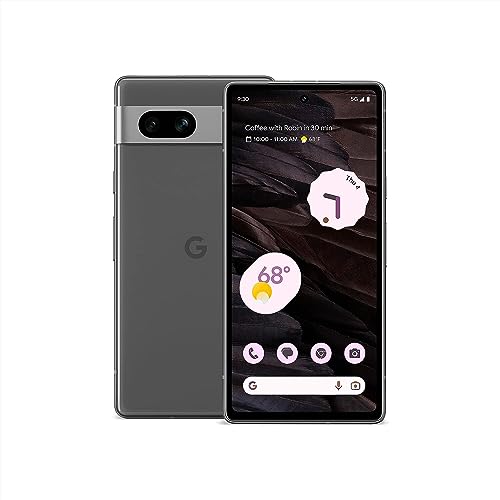
Google Pixel 7a — Best Small-Phone Value
The 7a is the value play among the modern picks: a 6.1-inch Pixel with the camera, the clean software and most of the intelligence of its flagship siblings, now priced by the renewed market like a budget phone. Its 64-megapixel main camera, fed by Google’s processing, remains the easiest route in this guide to photographs that look considered rather than captured, and the addition of wireless charging — a first for its line at launch — means it docks happily into an existing Pixel household’s habits.
Set expectations in two places. The Tensor chip of its generation runs warm under sustained load, so marathon gaming sessions throttle sooner than on the Samsung picks; and its update horizon, while still running, is shorter than the 8a’s marathon commitment. For the everyday workload — messages, maps, music, photographs of people who will not sit still — neither matters much. What matters is that this is a small, kind, capable phone at a price that leaves room in the budget for the case, the charger and the coffee, and value like that deserves its badge.
- Display: 6.1-inch OLED, 90Hz
- Camera: 64MP main with computational processing
- Extras: wireless charging, clean Google software
- Condition: renewed listing — verify grade before ordering
Strengths
- Pixel camera quality at a budget-adjacent price.
- Comfortable size with a grippy, friendly design.
- Wireless charging at a price that rarely includes it.
Trade-offs
- Runs warm during long gaming or video sessions.
- Support window shorter than the 8a’s.
- Charging speeds are unhurried.
Best for: value seekers who want the Pixel camera without the Pixel flagship bill. Not suited for: heavy gamers or buyers maximising years of updates per pound.

Google Pixel 8 — Best for Long-Term Keepers
At 6.2 inches the Pixel 8 is the largest phone in this guide, and its inclusion needs its defence stated plainly: it earns its place not on size but on time. Google’s seven-year update commitment for this generation is the longest in the small-phone world, which means the 8 is the pick for the buyer whose real requirement is not the smallest phone today but the phone they will not have to replace — the one that stays secure, current and hand-down-able deep into the next decade. Judged on cost per supported year, it may be the cheapest phone here.
The phone itself justifies the patience. The 120Hz OLED is bright and handsome, the dual camera is superb for stills, and the build — glass, aluminium, IP68 — feels like the flagship it is. In renewed form it also undercuts its own launch positioning considerably. It gives up the telephoto of the S23 and asks a little more hand than the rest of this list.
In the hand, the 8’s extra size over the 8a buys refinement you can feel: a more premium frame, a slightly larger and brighter canvas, and the sense of a flagship that happens to be the small one rather than a small phone that happens to be good. For buyers cross-shopping the two Google picks, that tactile difference — plus the longer runway counted from a flagship launch — is the real decision, and it is a pleasant one to have to make.
But if your small-phone loyalty is really a keep-it-longer loyalty, this is the handset that honours it longest, and its extra two millimetres over the 8a buy a meaningfully more premium object.
- Display: 6.2-inch OLED, 120Hz
- Support: seven years of updates from launch
- Cameras: dual system with flagship processing
- Condition: renewed listing — grade and warranty vary
Strengths
- The longest support runway of any phone here.
- Flagship screen, build and stills camera.
- Renewed pricing softens the premium positioning.
Trade-offs
- The biggest handset in a guide about small phones.
- No telephoto lens for distant subjects.
- Tensor warmth under sustained gaming loads.
Best for: keepers — buyers who hold a phone for five-plus years and want it secure throughout. Not suited for: size purists, who should take the 8a or the legacy pair.
How Do the Six Compare on the Things Small-Phone Buyers Measure?
| Phone | Screen | Support status | Defining virtue | Main caveat |
|---|---|---|---|---|
| Galaxy S10e | 5.8-inch | Ended (legacy) | Jack, card slot, flat screen | Ageing battery in renewed units |
| Pixel 4a | 5.81-inch | Ended (legacy) | Lightest body here | Single camera, modest battery |
| Pixel 8a | 6.1-inch | Current, long runway | Modern camera and safety | No jack or card slot |
| Galaxy S23 | 6.1-inch | Current | Flagship speed, telephoto | Smallest battery here |
| Pixel 7a | 6.1-inch | Current, shorter runway | Value for the camera | Warm under load |
| Pixel 8 | 6.2-inch | Longest runway | Seven years of updates | Largest in the guide |
Two honest patterns stand out. First, the size race is effectively over below six inches: the two sub-six phones are both legacy devices, and no amount of wishing changes what the current market builds. Second, support is the new small-phone battleground — the modern picks justify their extra millimetres by promising years the classics cannot. Choose which currency you value, millimetres or years, and the table reads itself.
How Small Is Small Enough? Measuring the Phone Against Your Hand
Diagonal inches are a marketing number; your hand measures in reach. The useful test is the thumb arc: hold the phone as you normally would and see whether your thumb can sweep from the bottom corner to the opposite top without the grip shifting. On the S10e and 4a, most hands pass without effort. On the 6.1-inch picks, most hands pass with a small shuffle. On the Pixel 8, the shuffle becomes a strategy — which is precisely why software one-handed modes exist, and why we keep insisting they be switched on rather than discovered by accident in month three.
Width matters more than height in this test, because height can be negotiated with a grip shift while width is a constant stretch. It is also why the tall, narrow shapes of modern phones feel smaller than their diagonals suggest: a 6.1-inch phone of today’s proportions is closer in the hand to a 5.5-inch phone of the old proportions than the numbers imply. Small-phone hunters upgrading from a genuinely old handset often find the modern picks less alien than feared — the screen grew mostly upward, into space the thumb visits rarely, rather than outward into the palm’s working area. Measure with your hand, not the headline, and the modern small phone may surprise you kindly.
Do Small Phones Take Worse Photographs?
They used to, and the reason was space: camera modules, especially stabilised and telephoto ones, are physical objects that want depth and width. The modern picks in this guide show how far miniaturisation and computation have closed the gap. The Pixel pair lean on processing to extract flagship-grade stills from compact hardware, and the S23 performs the minor miracle of fitting a real telephoto into a 6.1-inch body. What small phones still concede is mostly at the extremes — the longest zooms, the largest sensors, the most elaborate video stabilisation live in the big Ultra-class bodies — and in sustained video, where a small chassis sheds heat less easily.
For the photography most people actually do — family, food, travel, the dog — the modern small picks are not a compromise worth a second thought, and the legacy pair remain pleasant daylight companions. If anything, the small phone has one photographic virtue the slabs cannot copy: it is unobtrusive. A 4a raised at a family dinner is a camera; an Ultra raised at the same table is an event. The best photographs are the ones nobody posed for, and small phones have been quietly winning that contest for years.
What About the True 4-Inch Classics?
They deserve their paragraph of respect, because some readers will go looking anyway. Sony’s Xperia XZ1 Compact, with its 4.6-inch screen and flagship internals, was the last great small Android; the earlier X Compact and Z5 Compact carried the same torch, and Samsung’s Galaxy S4 Mini and its siblings served the 4.3-inch crowd a decade ago. As objects, many still power on, still feel wonderful, and still take a decent photograph in daylight. As phones for 2026, they fail the tests that matter: no security support, app compatibility fraying, batteries a decade into their decline, and network technologies moving on without them.
Our advice is to enjoy them the way you would a classic car. If you own one, it makes a charming music player, e-reader or desk clock. If you are tempted to buy one as a daily phone because the size is perfect, understand that you are purchasing a hobby, not a handset — keep banking, work accounts and anything sensitive on a supported device, and let the little Sony do the light duties it can still do gracefully. Nostalgia is a fine reason to keep a phone. It is a poor reason to trust one.
There is a middle path some readers take, and it is worth blessing explicitly: run a classic compact as a deliberate second device. A Z5 Compact or an S4 Mini loaded with music, podcasts and an e-reader app, connected to Wi-Fi and nothing sensitive, gives you the 4-inch feel in the hours when feel is what you want — reading in bed, walking the dog, travelling light — while a supported phone from this guide’s modern picks carries the accounts and the obligations. It is not the single small phone of memory. It is, in 2026, the most honest way to keep that memory in daily service.
What Is It Actually Like to Read and Watch on a Small Screen?
Better than the size suggests, and the reason is proximity. A small phone is held closer, and at closer range a 5.8 or 6.1-inch OLED with flagship density renders text that is, to the eye, every bit as crisp as a larger panel held further away. Reading in bed — one hand, lights low, the other hand free — is the small phone’s home fixture, and owners consistently describe it as the use they would miss most. E-books, long articles and messages all sit comfortably; where the small canvas asks for compromise is in side-by-side work, split-screen multitasking and spreadsheets, which are tolerable rather than pleasant.
Video is the honest trade. A film on a 6.1-inch screen is a personal screening, not a cinema, and most small-phone owners accept the exchange knowingly: they watch more on the household television and use the phone for the clips, calls and episodes that suit it. What the small screen never compromises is the camera viewfinder and the photograph itself — your pictures are the same files whatever you view them on, and the modern picks here capture images that look superb when they reach a big screen at home.
Are Flip Foldables the New Small Phone?
Every small-phone conversation eventually meets the flip foldable, and it deserves a fair hearing. Folded, a modern flip is genuinely tiny — smaller in the pocket than any phone in this guide — and unfolded it becomes a full-size handset, which its makers present as having the cake and eating it. The honest assessment is that it solves the pocket problem and not the hand problem: in use, it is a big phone, with a big phone’s reach, plus a hinge to baby and a price that buys two of this guide’s picks. For the buyer whose complaint is purely about pockets and bags, it is a real answer. For the one-handed-use loyalist who is this guide’s core reader, it is an elegant detour.
There is also a durability ledger to keep. Hinges and folding screens have improved enormously, but they remain moving parts and flexible panels in a category where the slab phones here are sealed, rated and boring in the best way. Small-phone people tend to keep phones a long time; a long time is exactly what a hinge must survive. We watch the category with genuine affection and recommend it to the curious with open eyes — but the six slabs above remain the safer custodians of the compact tradition for now.
How Can You Make a Modern Phone Feel Smaller Than It Is?
Software is the small-phone owner’s secret weapon, and every modern pick here carries the tools. One-handed mode — a swipe or shortcut that shrinks the active screen toward the bottom corner — turns the 6.1 and 6.2-inch phones into temporary 4-inch phones exactly when reach matters, which is the closest the modern world comes to honouring this guide’s keyword. Gesture navigation removes the stretch to on-screen buttons; a well-chosen launcher grid pulls your most-used apps into the thumb’s home territory at the screen’s lower half; and the double-tap and edge shortcuts on Samsung and Google handsets put the notification shade — the longest stretch of all — on a downward flick instead.
Hardware helps too. A slim case with texture beats a bulky one for grip confidence, a ring or strap converts reach anxiety into security, and a smaller phone in a pocket often pairs with a larger tablet or laptop at home — the two-device pattern many former compact owners quietly adopt, letting each tool be the right size for its job. None of this resurrects the 4-inch phone. All of it explains why most people who make the jump to a 6.1-inch pick stop mourning within a fortnight.
Two smaller tricks deserve a place in the kit. First, the keyboard: every phone here can shrink its keyboard to one side or float it lower, and enabling the one-handed keyboard for messaging marathons saves more thumb strain than any other single setting. Second, the lock screen and home screen are prime real estate that most people waste on decoration; put the camera, the torch and your three daily apps within the thumb’s resting arc, and the phone’s effective size — the distance your thumb travels in a day — shrinks by a distance you can feel by Friday. Smallness, in the end, is partly a property of the phone and partly a property of how thoughtfully it has been arranged.
Can a Small Phone Still Do a Serious Job of Work?
For most jobs, demonstrably yes, because most phone work is communication wearing a costume. Email, messaging, calendars, approvals, photographs of documents, two-factor codes, maps between sites — none of these asks for a large canvas, and all of them benefit from a phone that is easy to hold on a platform, in a corridor, or halfway up a ladder with the other hand occupied. Nurses, surveyors, couriers, teachers and tradespeople have quietly preferred smaller phones for years for exactly this reason: the tool that is always comfortably in hand beats the tool that is theoretically more capable in a bag.
The exceptions are real and worth naming. If your work involves reviewing detailed drawings, editing video, living in split-screen, or presenting from the handset itself, size is a work tool and you should buy it without guilt. But notice how specific those exceptions are. The average professional’s phone is a communications terminal with a camera, and at that job the modern picks in this guide — supported, secure, all-day — are not the small compromise. They are, for many hands, the correct instrument.
Which Accessories Make Sense at This Size?
The small phone’s accessory logic inverts the big phone’s. Where a slab needs a bulky case to survive and a grip to be held, a compact needs only a slim shell — the whole point is the size, and armour that doubles the thickness betrays it. Choose thin, textured cases that preserve the one-handed gift, and consider going without a screen protector on the modern picks’ toughened glass if your life is gentle, though a protector remains cheap insurance on the legacy pair whose screens are no longer economical to replace. A short charging cable for the bag and a small power bank for travel days complete the kit; the legacy phones’ modest batteries make the power bank a genuine companion rather than a just-in-case.
Audio deserves a thought, because two of these phones keep the headphone jack and four do not. Owners of the S10e and 4a can run any wired earbuds ever made, which runners and travellers tend to love. Owners of the modern picks should budget for USB-C earbuds or a compact Bluetooth set — and may find, as many do, that wireless buds are the one modern convenience that genuinely suits a small phone, removing the cable that used to connect pocket to ear like a kite string.
What Should You Check When Buying a Discontinued Small Phone?
Buying a legacy compact well is a skill, and it compresses into a short inspection. Battery first: ask for the health figure or the seller’s minimum guarantee, and on arrival, watch the first day’s drain with a detective’s eye — a battery that falls off a cliff between forty and twenty percent is telling you its age, and the returns window is when to act on the information. Screen second: display a full white page and a full black one, checking for burn-in ghosts and dead patches, the two ageing marks of older OLED panels. Third, the ports and buttons: a worn charging port that only connects at an angle will annoy you daily, and it is exactly the kind of fault a good grading process catches and a bad one hides.
Then the paperwork checks, which matter more on old phones than new: confirm the handset is unlocked and not bound to a previous owner’s account, confirm the model number matches the listing (small phones have regional twins with different network bands), and keep the invoice until the returns window closes. None of this is meant to frighten; the S10e and 4a are common, well-understood devices with deep renewed supply, and most purchases go entirely smoothly. It is meant to convert the small risk that remains into a checklist you can finish in ten minutes.
How Should You Set Up a Small Phone for a Child or an Older Relative?
Small phones are disproportionately bought for other people — a child’s first handset, a parent’s upgrade — so the setup matters as much as the selection. For an older relative, begin with legibility: raise the text and display size one notch (the small screen forgives it), place the five essential apps on the home screen’s first row, and put a one-tap contact widget for family where a photo frame would go. Turn on the emergency information screen, add the medical and contact details, and practise the two gestures that matter — answering a call and opening the camera — before the phone leaves your kitchen table.
For a child, the supported modern picks earn their premium: family controls, app approvals and location sharing all assume current software, which is another reason the legacy pair, charming as they are, should not be a child’s main phone. Set the content filters, the purchase approvals and a charging routine — small batteries and forgotten chargers are a predictable pairing — and choose the grippy case together so it actually stays on. In both cases, the small phone’s virtue is the same: it asks less of its owner. Set it up to ask even less, and it becomes the kindest technology in the house.
What Mistakes Do Small-Phone Hunters Make?
The first is buying ancient stock at romantic prices. A sealed 4-inch phone from a decade ago is a collectible, and should be priced and treated as one — not bought as a daily driver whose battery has been ageing in its box since before some apps existed. The second is the mirror image: refusing every modern option because none is exactly 4 inches, and ending up with a 6.7-inch phone by default when the contract renews. The 6.1-inch picks in this guide are dramatically closer to the compact experience than the mainstream slab; purity that ends in a bigger phone helps no one.
Third, buyers of legacy picks forget the support question until an app refuses to install. Decide in advance what a legacy phone is for — light duties, a defined account set, a limited lifespan — and it will delight; expect it to be a full modern handset and it will disappoint on schedule. Fourth, people shop by diagonal alone. Width and weight decide comfort as much as the headline number, which is why this guide lists the S10e’s flat, narrow body as a virtue and why holding any candidate, even briefly, beats a week of specification comparison.
Which Small Phone Fits Which Life? A Scenario Tour
Picture the runner first: phone in a shorts pocket or an armband, music on, tracking on, nothing else wanted. That life belongs to the Pixel 4a, whose weight is so low it stops being a consideration, provided its owner keeps the serious accounts on a supported phone at home. Picture the commuter with one hand on a rail and the other on the phone, reading, replying, changing trains: that is S10e territory for the purist, or 8a territory for the pragmatist, and the difference between them is not size but how much of modern life the phone must carry alone.
The professional whose phone is a tool of record — photographs of work, documents, two-factor codes for everything — should be on the S23 or the Pixel 8, where support and cameras justify hands that stretch slightly further. The grandparent who wants a phone that feels like the phones they remember, light and uncomplicated, is the 4a’s happiest owner, set up by family with large text and the serious stuff kept simple. And the teenager whose first phone should be capable but not precious is the 7a’s natural constituency. Small is not one need; it is a family of needs wearing the same coat, and this guide’s six exist because no single handset covers them all.
How Do You Care for a Legacy Compact So It Lasts?
If you choose one of the legacy picks, a little stewardship goes a long way. The battery is the component living on borrowed time, so treat it gently: avoid leaving the phone on a hot dashboard, charge it on a slow brick overnight rather than a fast one when time allows, and consider a professional battery replacement if a well-kept unit’s only sin is stamina — the S10e and 4a are both common enough that parts and technicians still know them well. A fresh battery in a graded renewed compact is the closest thing to a new small phone the market currently offers.
Software hygiene matters more on an unsupported phone. Keep the app list short and mainstream, browse with an up-to-date browser, and let a supported device handle banking, health and work identity. Cases for these models are still plentiful and cheap, which is fortunate, because a phone you plan to keep beyond its support window deserves armour. Do these things and a legacy compact is not a risk; it is a well-run vintage machine, giving its owner the size the modern market forgot, at the price of a little informed care.
Final Recommendation
If your heart is set on the smallest real thing, buy the Galaxy S10e knowingly — graded, warrantied, priced as a classic — and enjoy the last true compact flagship every day it serves. If your head makes the decision, buy the Pixel 8a: it is the smallest phone that asks no apologies about safety, camera or stamina, and it will still be receiving updates when the legacy pair are museum pieces. The S23 serves the compact-flagship loyalist, the 7a the value hunter, the Pixel 8 the long keeper, and the 4a remains the featherweight charm option for light duties. The 4-inch phone is gone, and this guide will not pretend otherwise — but the small-phone life, one-handed and unburdened, survives in these six, for those who choose it deliberately, on purpose, rather than by accident or default.
Frequently Asked Questions
Can I still buy a brand-new 4-inch Android phone anywhere?
Not from any major manufacturer. The size class ended years ago, and listings claiming otherwise are typically old stock, mislabelled budget devices with larger screens, or novelty toys. The smallest credible new Android phones sit around 6.1 inches, which is why this guide ranks the smallest real options instead.
Are the Galaxy S10e and Pixel 4a still safe to use?
For light duties, yes; for a primary phone holding banking and work accounts, we would steer you to the supported picks. Both legacy phones have left their manufacturers’ update windows, so treat them as charming secondary or light-use devices and keep sensitive accounts on a patched handset.
What was the last great truly small Android phone?
Sony’s Compact line, ending with models like the XZ1 Compact at 4.6 inches, is the usual answer — flagship power in a genuinely small body. Samsung’s S10e at 5.8 inches carried the idea furthest into the modern era, which is why it leads this guide’s picks.
Will a 6.1-inch phone really feel small?
Compared with the 6.7-inch mainstream, unmistakably. Most owners adapt within days, especially with one-handed mode enabled and apps arranged low on the home screen. Compared with a true 4-inch phone, no — and this guide would rather tell you that than sell you a surprise.
Do small phones have worse battery life?
Generally, yes — a smaller body holds a smaller battery, and the legacy picks show their age here. The modern picks compensate with efficiency, and the Pixel 8a in particular is a genuine all-day phone. Heavy users should still expect the compact tax: a top-up habit on long days.
Is there any sign manufacturers will revive compact phones?
Occasionally a small model is rumoured, and niche makers experiment at the margins, but the sales data that killed the category has not reversed. Buy for the market that exists: the smallest current phones are good, supported and — as this guide shows — closer to the compact spirit than their diagonals suggest.
Does a smaller phone mean a worse signal or slower internet?
No. Antenna design has kept pace with miniaturisation, and every pick here handles modern networks as well as its larger siblings — the legacy pair are 4G-era devices, which is a generation question rather than a size one. If coverage matters most, choose by network support and carrier, not by dimensions.
Where is the safest place to buy a discontinued small phone?
Through mainstream retailers and established renewed programmes that state a condition grade, test the battery and offer returns. Avoid listings that will not describe the battery or the warranty; on a legacy handset those two details decide whether you have bought a delight or a project.
Should I replace the battery in an old compact or buy a modern small phone?
If the phone is otherwise sound and its duties are light, a professional battery replacement is inexpensive and can restore a legacy compact to cheerful service — it is the single best money you can spend on an S10e or 4a. If the phone must carry banking, work and years of future use, put the same money toward the Pixel 8a or Galaxy S23 instead, where the support runway justifies the investment.
Can an old small phone still work as a spare handset or a child’s first phone?
Yes, and this is where the legacy picks make the most sense. As a spare, an S10e or Pixel 4a handles calls, messages, music, podcasts and offline maps perfectly well, and its size suits a glovebox, gym bag or festival pocket where losing it would sting less. For a child, the same limits apply twice over: set it up on Wi-Fi first, remove payment methods and work or banking apps, sign it into a supervised account where the software allows, and agree that sensitive logins live elsewhere. What it should not become is anyone’s main vault — no password manager, no primary email, no two-factor codes — because the missing security updates matter most exactly there.
Related Guides
Still weighing size against everything else? See best 64gb android phones for the storage angle, best all time android phones for the platform’s defining handsets, and best 5g affordable phones if the budget matters as much as the dimensions.



[…] value from other directions? These companions complete the picture: best mid range android phones for the class above, judged on experience rather than economy, best 3gb ram android phones for an […]