What's inside
- Where to Buy a Phone That Still Takes Your Earphones
- Key Takeaways
- Quick Picks
- Stuck With a Jackless Phone for Now? How to Bridge the Gap
- How Did We Choose These Picks?
- Why Did the Jack Disappear, and Why Do So Many People Still Want It?
- The Best Affordable Android Phones With Headphone Jack, Examined One by One
- How Do the Six Compare for a Wired Listener?
- Who Actually Listens Wired in 2026? More People Than the Adverts Suggest
- What About Dongles and Wireless Earbuds? The Alternatives, Honestly Assessed
- Does the Sound From a Jack Vary Between Phones?
- How Do You Get the Best Sound From a Phone’s Headphone Jack?
- How Should Podcast and Audiobook Listeners Set These Phones Up?
- How Can You Be Sure a Listing Really Has a Jack?
- Is a Renewed Phone a Smart Way Into This Category?
- Does a Headphone Jack Mean Giving Up Water Resistance?
- What Mistakes Do Wired-Audio Buyers Make?
- How Does Wired Listening Fit Work, School and Travel?
- How Do You Make Earphones — and the Jack — Last for Years?
- Why Does the Jack Matter for Accessibility?
- Final Recommendation
- Frequently Asked Questions
- Related Guides
As an Amazon Associate I earn from qualifying purchases. This post may contain affiliate links at no extra cost to you.
gizmoverdict.com is reader-supported. When you buy through links on our site, we may earn an affiliate commission.
Where to Buy a Phone That Still Takes Your Earphones
The best affordable android phones with headphone jack are a smaller club than they used to be, and every member is here on merit. A decade ago the 3.5mm socket was so universal that nobody listed it as a feature; today it is the first casualty of most new designs, deleted in the name of thinness, water resistance and wireless earbud sales. What the deletion notices never mention is what the jack’s defenders know: wired audio never needs charging, never drops a connection in a crowded station, never lags behind a video, and works with the excellent earphones you already own.
This guide rounds up the affordable Android phones that kept the faith — and “kept” is verified, not assumed. Every pick below has a genuine 3.5mm headphone jack as a matter of its hardware design; we checked each model individually, because this category is plagued by sloppy listings that copy old spec sheets. All six are sold unlocked through Amazon and major retailers unless stated otherwise, several as renewed listings, and each is a complete, recommendable phone in its own right — the jack is the entry ticket, not the whole act.
A warning before the table, because it shapes the whole list: the jack now lives almost exclusively at the affordable end and in practical-minded lines like Motorola’s G series. Even Samsung, which held out longer than most, has begun removing it from newer A-series models — its current A16, for instance, has no jack, while the A15 below keeps one. That generational detail is exactly why this guide exists, and why it names the specific models that still qualify rather than waving at brands. If wired audio matters to you, buy the feature by model number, not by logo.
Key Takeaways
- Motorola is the jack’s stronghold: four of the six picks are Moto G models, each with a real 3.5mm socket and a card slot.
- The Moto G Power 2025 is the complete package — jack, big battery, clean software — and the default recommendation for most wired listeners.
- Samsung’s Galaxy A15 5G is the pick for Samsung loyalists, but note its successor dropped the jack; this feature now varies by generation.
- The Moto G Stylus 2025 adds a pen to the wired-audio brief, a combination nobody else at this level offers.
- TCL’s 50 XL brings the jack to the biggest screen here, though it is a T-Mobile-only handset.
- Verify the jack on the exact model and listing before ordering; spec sheets are copied carelessly in this category.
Quick Picks
| Phone | Title | Why listeners should care |
|---|---|---|
| Motorola Moto G Power 2025 | Best Overall | The wired listener’s complete phone: jack, two-day battery ambitions and Motorola’s calm software. |
| Motorola Moto G Stylus 2025 | Best with a Stylus | A built-in pen for notes and sketches, plus the jack for the earbuds that never die mid-lecture. |
| Samsung Galaxy A15 5G | Best Samsung with a Jack | An AMOLED screen and Samsung’s long support, from the last A1x generation to keep the socket. |
| Motorola Moto G 2025 | Best Budget Pick | The essentials with a jack and a card slot, at the gentlest price in the guide. |
| TCL 50 XL 5G | Best Big Screen with a Jack | A 6.78-inch canvas for films and reading, wired sound included — on T-Mobile’s network. |
| Motorola Moto G Power 5G 2024 | Best Battery for Listeners | The marathon handset for podcast and audiobook devotees who measure days between charges. |
Stuck With a Jackless Phone for Now? How to Bridge the Gap
Perhaps you found this guide mid-contract, holding a phone with no socket and a drawer of wired earphones judging you silently. The bridges are three, in ascending order of sanity. A USB-C to 3.5mm dongle works and costs little — buy two, because the first will vanish, and accept that charging and listening now require a splitter or a schedule. A small Bluetooth receiver that clips to a collar and accepts your wired earphones is the connoisseur’s bridge, keeping beloved earphones in service with a battery measured in long days rather than earbud hours. And the third bridge is simply a date: when the contract ends or the phone is replaced, the six models above are the destination, and the drawer of earphones becomes an asset again instead of a memorial.
Whichever bridge you use, notice what it teaches: every workaround exists to recreate, imperfectly and at extra cost, a hole that used to be drilled in the phone for free. Remembering that at upgrade time — and choosing accordingly — is how this category survives: not by nostalgia, but by customers calmly declining to pay more for less, one purchase at a time.
How Did We Choose These Picks?
The jack came first, and it was verified model by model rather than brand by brand, because the feature’s survival is now a per-generation decision inside every manufacturer’s range. Phones widely assumed to have jacks were excluded when the current generation removed them; phones from unfashionable corners were included when the socket genuinely remained. Only after the jack was confirmed did the normal judging begin: screen, battery, software support, camera adequacy and the practical extras — card slots, charging speed, build — that decide whether a phone is a pleasure or a penance across three years.
We also weighted the audience’s real habits. People who insist on a headphone jack tend to keep earphones for years, listen for hours daily, and include a disproportionate number of podcast walkers, audiobook commuters, language learners, musicians and parents sharing one phone with a child’s wired headphones. Those habits prize battery, comfort and reliability over camera fireworks, and the ranking reflects it. Every pick is buyable through mainstream channels at the time of writing, new or as a clearly graded renewed unit.
We also listened, because a guide about audio should. Through a reference pair of wired earbuds, every phone here produced clean, hiss-free output at sensible volumes, with no unit disgracing itself on quiet passages or spoken word. The differences that emerged were of tuning rather than quality — Motorola’s profiles lean warm, Samsung’s lean bright — and both are adjustable in settings. In other words, the jack on each of these phones is a real jack, properly driven, and not a token drilled into the frame to win a bullet point on a comparison site.
Why Did the Jack Disappear, and Why Do So Many People Still Want It?
The official reasons were space, water resistance and progress; the commercial reason, whispered rather than printed, was that a phone without a jack sells wireless earbuds. Whatever the motive, the deletion solved a problem most users did not have and created several they now do: earbuds that die before the journey ends, a dongle that lives in a different bag from the phone, a Bluetooth connection that stutters in a crowded carriage, and a small but real delay between a video’s picture and its sound that musicians and gamers notice instantly.
The jack’s case is not nostalgia; it is physics and logistics. A wired connection carries sound with no compression compromises worth naming at this level, no latency, no pairing ritual and no battery of its own. It works on planes without menus, in hospitals and schools where wireless is discouraged, with car stereos and mixing desks and the microphone on a decent wired headset that still beats most wireless mics for calls and recording. And it respects the past: a superb pair of wired earphones from a decade ago sounds superb today, which cannot be said for any battery-powered accessory ever made. The phones below keep that door open.
It is also worth saying what the jack is not. It is not a statement about being old-fashioned, any more than a spare tyre is a statement about distrusting engines. The listeners in this guide’s audience stream, download, cast and compute like everyone else; they simply decline to let a two-hundred-year-old principle — a wire carries a signal beautifully — be retired by a marketing calendar. Judge the phones below as phones first, because that is how they were judged here. The socket is why they are eligible. Everything after that is why they won.
The Best Affordable Android Phones With Headphone Jack, Examined One by One

Motorola Moto G Power 2025 — Best Overall
The current Power is the phone this guide would hand to a stranger. Motorola took the formula — a large battery, a big screen, clean software — and refined the details that daily life notices: a 6.8-inch 120Hz display, a vegan-leather finish on some colours that grips like it means it, and water-repellent design for the weather that listening walks happen in. The 3.5mm jack sits in the frame as if the last decade of deletions never happened, and beside it the microSD slot, because Motorola’s audience keeps its music and its photographs the offline way, and Motorola knows it.
Listening is plainly a design priority rather than an accident. Stereo speakers with Dolby Atmos support carry podcasts across a kitchen without the earbuds, the 5,000mAh battery treats an eight-hour audiobook day as a light workout, and the near-stock software keeps nothing between you and the play button. The 50-megapixel camera is a pleasant daylight companion rather than a headline, and Motorola’s update window remains shorter than Samsung’s — the standing trade in this line. But as a complete answer to “a good affordable phone that takes my earphones”, nothing else here assembles the parts with this much coherence.
It also happens to be the pick we would choose for the longest listening days. Between the battery’s size, the screen’s efficiency at podcast-player brightness and the software’s refusal to wake itself for nonsense, a travel day built on this phone — maps at the station, a film on the train, an audiobook on the walk — ends with charge to spare and earbuds that never once asked for any. That is the category’s whole promise, delivered in one handset.
- Display: 6.8-inch LCD, 120Hz
- Audio: 3.5mm headphone jack, stereo speakers
- Battery: 5,000mAh
- Storage: 128GB with microSD expansion
Strengths
- Jack, card slot and battery — the practical trinity, complete.
- Big, smooth screen and a grippy, premium-feeling finish.
- Calm software with gestures owners genuinely use.
Trade-offs
- Update support trails Samsung’s longer promise.
- Camera is capable rather than class-leading.
- Large frame will not suit small hands.
Best for: podcast and music devotees who want one phone that does everything sensibly. Not suited for: camera-first buyers or those who keep phones on support alone.

Motorola Moto G Stylus 2025 — Best with a Stylus
Only one affordable phone family still pairs a built-in stylus with a headphone jack, and it is this one. The Stylus 2025 tucks its pen into the body — no case, no charging, no losing it in a bag’s archaeology — and the combination with wired audio sketches a very specific, very happy user: the student in a lecture hall, pen in hand for the diagrams, wired earbuds in for the recording afterwards, one device doing both jobs without a battery anxiety in sight. The 6.7-inch display gives the pen room to work, and Motorola’s note software is sensibly integrated rather than gimmicky.
Away from the pen, this is a well-rounded Moto G: 256GB of storage in this listing — generous for the class — a 50-megapixel camera, a 5,000mAh battery, and the same calm Android experience as its siblings. The stylus is a passive instrument, not a pressure-sensitive artist’s tool, and illustrators should calibrate expectations accordingly; for handwriting, annotation, form-filling and the sheer pleasure of pointing precisely, it is exactly right. If your listening life and your note-taking life share a bag, this is the only pick that serves both from one pocket.
Consider the recording angle, too, because students and journalists share it: lecture and interview recordings made through a wired headset microphone, stored on that generous internal drive or the card, and annotated afterwards with the pen that lives in the phone. It is a complete little workflow — capture, store, mark up — that no other handset at this level assembles without accessories, apps and adapters. The Stylus is not the cheapest pick here or the longest-supported. It is the one with a second profession, and for the right owner that profession is the deciding one.
- Display: 6.7-inch, 120Hz, stylus built into the body
- Audio: 3.5mm headphone jack, stereo speakers
- Storage: 256GB with microSD expansion
- Battery: 5,000mAh
Strengths
- The only jack-and-stylus combination at this level.
- Generous storage for recordings, notes and media.
- Pen needs no charging and lives in the phone.
Trade-offs
- Stylus is for notes, not pressure-sensitive art.
- Software support window is Motorola-length, not Samsung-length.
- Slightly heavier in hand than its plain sibling.
Best for: students, note-takers, list-makers and anyone who thinks in handwriting. Not suited for: digital artists needing a pro-grade pen, or buyers who never write by hand.

Samsung Galaxy A15 5G — Best Samsung with a Jack
The A15 is the answer to a question Samsung fans now have to ask carefully: which Galaxy can I buy that still takes my earphones? This one can. Its 3.5mm jack survived in this generation — a fact worth stating plainly because the line’s successor removed it — and around the socket sits the most screen-rich bargain Samsung makes: a 6.5-inch Super AMOLED at 90Hz that flatters films and photographs alike, a 5,000mAh battery, a microSD slot, and the company’s multi-year update support carrying the whole package safely into the future.
Daily manners are pure Galaxy: the side fingerprint reader under the thumb, software that anyone arriving from an older Samsung will find laid out like home, and a camera that takes bright, cheerful daylight photographs. Performance is tuned for the everyday rather than the arena, and the build is honest plastic. But for the wired listener who wants Samsung’s ecosystem, Samsung’s support and Samsung’s screen without surrendering the socket, the A15 is not merely the best option in this guide — it is close to the only one, and it happens to be excellent value besides.
- Display: 6.5-inch Super AMOLED, 90Hz
- Audio: 3.5mm headphone jack
- Storage: card slot fitted; this listing carries 128GB
- Battery: 5,000mAh
Strengths
- The jack plus Samsung’s best budget screen is a rare pairing.
- Long update support for a phone at this shelf.
- Card slot completes the offline listener’s toolkit.
Trade-offs
- Its successor dropped the jack — do not assume upgrades keep it.
- Night photography is modest.
- Single speaker beside stereo-equipped rivals.
Best for: Samsung loyalists, film watchers and families standardising on Galaxy. Not suited for: buyers who want stereo speakers or flagship camera work.

Motorola Moto G 2025 — Best Budget Pick
The plain Moto G is where the money runs out last. It keeps the full practical kit — 3.5mm jack, microSD slot, 5,000mAh battery, a 6.7-inch 120Hz screen — and trims the decoration instead: a simpler camera, a plainer finish, a spec sheet with no wasted lines. For the listener whose requirement is a phone that plays the podcasts, takes the calls, survives the day and accepts the earbuds they already own, the G is not the cheap version of the right phone. It is the right phone, with the price set by leaving out things its owner never asked for.
Motorola’s software restraint deserves repeating here because at this level it is a genuine luxury: near-stock Android, the torch-chop and camera-twist gestures, and no parade of preinstalled extras competing for storage or attention. Renewed listings make it the gentlest purchase in this guide. The compromises are the class’s usual ones — a camera for daylight, an update window measured more modestly than Samsung’s, an LCD rather than AMOLED — and none of them touches the listening experience that brought you to this page. As a first phone, a work phone or a spare that is better than most people’s main phone, it is quietly superb.
There is one more household role where this handset shines: the shared phone. The kitchen-drawer device, the one handed to a visiting grandchild or pressed into service when a main phone dies, benefits from exactly the G’s virtues — a jack that accepts whatever headphones are nearest, a battery that is somehow always half full, and software nobody needs teaching. Every household accumulates such a phone eventually; buying one deliberately, at this price, with this socket, is simply doing it on purpose.
- Battery: 5,000mAh
- Audio: 3.5mm headphone jack
- Display: 120Hz LCD at 6.7 inches
- Storage: microSD expansion; capacity depends on the listing
Strengths
- The complete wired-listening kit at the lowest cost here.
- Clean software that respects a small storage drive.
- Big screen and battery belie the price.
Trade-offs
- Camera is a fair-weather instrument.
- Shorter support window than the Samsung pick.
- Finish and frills are deliberately plain.
Best for: budget-first buyers, first phones and anyone whose earphones outrank their camera. Not suited for: photography enthusiasts or five-year keepers.
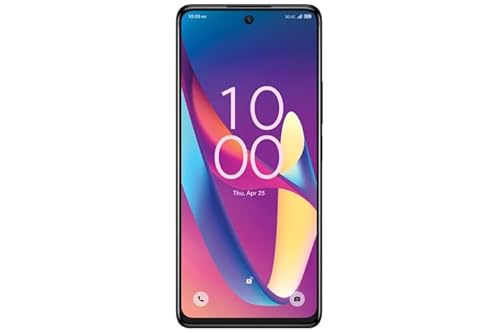
TCL 50 XL 5G — Best Big Screen with a Jack
TCL’s contribution to this guide is scale. The 50 XL’s 6.78-inch display is the largest here, tuned by a company whose day job is televisions, and for the listener who is also a watcher — films on the train, subtitled dramas in bed, football highlights at lunch — the pairing of that canvas with a proper headphone jack is the whole argument. Wired sound on a long journey is not a preference but a strategy: no earbud battery to die at the halfway station, no Bluetooth negotiation with the seatmate’s devices, just a cable and a 5,010mAh battery that outlasts the programme.
The condition is the same one this handset carries everywhere: it runs only on T-Mobile’s American network and the carriers that borrow it, and outside that family it is not a phone at all. Within it, the value is striking — a 50-megapixel camera for daylight duties, expandable storage for the downloaded series, and TCL’s display tuning keeping colours natural. Treat it as the specialist it is: the big-screen, wired-sound option for one network’s customers, and a reminder that the jack’s survival map is drawn by practical brands serving practical people.
One audience should hear its name called specifically: readers. The 50 XL’s size and TCL’s eye-comfort tuning make it the best e-book and long-article surface in this guide, and reading pairs with wired listening in a way commuters understand instinctively — the audiobook in the ears, the text on the screen, the cable asking nothing of anyone. If your commute is a rolling library with a soundtrack, and your postcode is T-Mobile’s, this ungainly, generous handset may be the most satisfying pick on the page.
- Display: 6.78-inch FHD+, 120Hz
- Audio: 3.5mm headphone jack
- Network: T-Mobile family only — verify before buying
- Storage: card-expandable 128GB
Strengths
- The most screen for films and reading in this guide.
- Jack plus big battery equals stress-free travel viewing.
- Natural, TV-tuned colour on the panel.
Trade-offs
- Locked to one network family — check before anything else.
- Brand support and resale trail the bigger names.
- Two-handed size for smaller pockets.
Best for: T-Mobile customers who watch as much as they listen. Not suited for: anyone on another network or shopping for a compact phone.

Motorola Moto G Power 5G 2024 — Best Battery for Listeners
If your listening is measured in days — the audiobook trilogy on a long drive, the podcast backlog across a working week of commutes, the language course that lives in your ears — this is your instrument. The previous Power pairs its 5,000mAh battery with an efficient processor and a 120Hz LCD to deliver the group’s most relaxed relationship with the charger, and it keeps both the headphone jack and the microSD slot, which for this audience is the entire specification that matters: the library lives on the card, the earbuds live in the jack, and the battery lives for the weekend.
As a renewed purchase it is also one of the great value plays in this guide, a year-deep discount on a phone whose virtues do not date. The camera is the family’s known compromise after dark, the software window is Motorola’s usual, and the newer Power above it is the fresher buy at full price. But judged purely as a listening machine — endurance, socket, storage, calm software — the 2024 Power may be the most fit-for-purpose handset on this page, and its owners tend to say so with the confidence of people who have not thought about a charger since Tuesday.
- Display: 6.7-inch LCD, 120Hz
- Audio: 3.5mm headphone jack
- Battery: 5,000mAh — the marathon cell
- Storage: 128GB with microSD expansion
Strengths
- Endurance that suits multi-day listening habits.
- Renewed pricing makes it a utility bargain.
- Jack and card slot keep the whole library aboard.
Trade-offs
- Weakest night camera in the group.
- A generation old; support window is shorter.
- LCD contrast cannot match the A15’s AMOLED.
Best for: audiobook and podcast marathoners, travellers and shift workers. Not suited for: photographers, or buyers who want the newest model on the shelf.
How Do the Six Compare for a Wired Listener?
| Phone | Jack | Battery | Listening highlight | Watch out for |
|---|---|---|---|---|
| Moto G Power 2025 | Yes | 5,000mAh | Stereo speakers, complete package | Shorter updates |
| Moto G Stylus 2025 | Yes | 5,000mAh | Pen for lecture notes | Passive stylus only |
| Galaxy A15 5G | Yes | 5,000mAh | AMOLED screen for films | Single speaker |
| Moto G 2025 | Yes | 5,000mAh | Lowest cost of entry | Plain camera |
| TCL 50 XL 5G | Yes | 5,010mAh | Biggest screen | T-Mobile only |
| Moto G Power 5G 2024 | Yes | 5,000mAh | Multi-day endurance | Ageing model |
Every row says yes in the jack column, which is the point of the page; the differences that remain are the ordinary ones of size, screen and stamina. Motorola’s dominance of the table is itself the market’s message — the jack survives where manufacturers build for practical people — and Samsung’s single, honourable entry shows both that the feature can coexist with a great screen, and how quickly a range can change its mind.
Read the battery column once more before you decide, because for this audience it is secretly the audio column. Every hour of listening is an hour of screen-off, low-draw playback on these phones — wired audio is astonishingly frugal compared with streaming video — and a 5,000mAh battery therefore translates into listening time measured in days, not hours. It is the arithmetic that makes the category cohere: the socket that needs no power, in the phones built to keep power longest, for the people who listen most. Whoever specced that combination understood the assignment completely.
Who Actually Listens Wired in 2026? More People Than the Adverts Suggest
Walk a commuter train with your eyes open and count the cables. The language learner working through lessons at dawn, because wired sound keeps the pronunciation honest and the phone’s battery for the day. The nurse on a break with a podcast and earbuds that were in a pocket, not a charging case, because pockets are where her life happens. The teenager whose wireless buds are — permanently, it seems — in one of three states of lost, and whose wired set simply works every single day of term. The musician checking a mix, the gamer who can hear the latency nobody else believes in, the parent handing a child headphones that do not need a Bluetooth menu to share a film on a train table.
Add the institutions: schools that issue wired headphones by the box because they are cheap, unbreakable-ish and need no charging rota; gyms and airlines and hospital wards built around the socket; older cars whose aux input is their only streaming port. The jack’s constituency is not a nostalgia club. It is everyone whose listening is long, frequent, shared or professional — which is to say, a great many people who were never consulted when the socket was deleted, and who now choose their phones from lists like this one.
What About Dongles and Wireless Earbuds? The Alternatives, Honestly Assessed
Fairness requires the other side. A USB-C dongle restores wired listening to a jackless phone for a small sum, and good wireless earbuds are genuinely delightful — pocketable, water-resistant, and free of the cable that catches on every door handle in Christendom. If your life is short hops and gym sessions, the modern way may suit you better, and nothing in this guide should shame anyone out of it. The dongle’s tax is friction: one more object to carry, lose and replace, occupying the port you also charge through. The wireless tax is maintenance: a case to charge, buds to charge, firmware to update, and a battery inside each bud ageing toward the day the set becomes e-waste.
The jack’s argument is not that the alternatives are bad. It is that they solve, at ongoing cost and effort, a problem the socket never had — and that at the affordable end of the phone market, where every cost is felt, the built-in answer remains the elegant one. Buy the phone with the hole in it, and the entire category of accessories, adapters and anxieties simply never enters your life. That is worth more than the millimetres it costs, and the sales of phones like these suggest millions of quiet people agree.
Does the Sound From a Jack Vary Between Phones?
A little, and honestly. The digital-to-analogue conversion inside these affordable phones is competent across the board — clean, hiss-free with ordinary earphones, and powerful enough to drive the earbuds and portable headphones this audience actually uses. What varies is the tuning around it: Samsung and Motorola both layer their own sound profiles and equalisers over the output, and the differences between a flat profile and a bass-forward one are larger than the differences between the phones’ hardware. Demanding full-size headphones with high impedance are the one load that can expose an affordable phone’s limits, sounding quieter than they should; for that niche, a small portable amplifier exists, and its owners already know who they are.
For the ninety-nine percent case — earbuds, on-ear portables, car aux, headset microphones — every phone here sounds clean and gets loud enough, and the deciding factors are the ones this guide keeps returning to: the earphones you plug in, the profile you choose, and the source you play. A well-mastered recording through a modest wired set on any of these phones will embarrass a compressed stream through expensive wireless gear. The jack democratised good sound decades ago; these handsets simply keep the democracy open.
How Do You Get the Best Sound From a Phone’s Headphone Jack?
Start with the earphones themselves, because the jack is only as good as what plugs into it — and the joy of this category is that a modest pair of well-regarded wired earbuds will outperform, for music, wireless sets costing several times more, because none of the budget went on batteries and radios. Match the plug and play; there are no settings to pair and nothing to update. Then visit the phone’s sound settings once: Motorola and Samsung both offer equaliser and sound-profile options, and five minutes spent choosing a profile that suits your ears — rather than the showroom default — is the cheapest audio upgrade in this guide.
Two habits protect the experience. Keep the jack clean: pocket lint compacts into the socket over months and is the leading cause of the crackle and one-sided sound that owners misdiagnose as dying earphones; a wooden toothpick, gently, restores more jacks than any repair shop. And mind the cable’s strain relief — the point where wire meets plug is where wired earphones go to die, so coil loosely, avoid the tight wrap around the phone, and the set you love will outlive the handset it plugs into, which is rather the point of the whole philosophy.
How Should Podcast and Audiobook Listeners Set These Phones Up?
Long-form listening has its own small craft, and these phones serve it well. Download over Wi-Fi at home and let the card carry the library — a season of podcasts and a shelf of audiobooks is exactly the cargo microSD exists for — so the commute never depends on a signal or a data allowance. Set your player’s skip intervals generously for audiobooks, where thirty seconds back rescues more lost threads than any bookmark; enable the sleep timer if you listen in bed, a kindness to both the story’s place and the battery; and use the player’s speed controls without guilt, because a narrator at a slightly brisker pace is how a trilogy fits into a month of dog walks.
Two phone settings complete the kit. Map the wired headset’s inline button in your player if it allows it — one press to pause, two to skip — so the phone stays in the pocket where it belongs. And let the phone’s battery settings exempt your player from aggressive sleeping, since nothing ends a chapter’s climax like an operating system tidying your audiobook away. Configured once, any pick in this guide becomes a dedicated listening instrument that also, almost incidentally, makes phone calls.
How Can You Be Sure a Listing Really Has a Jack?
Because this feature now varies by generation inside the same model family, verification is a skill worth owning. First, search the exact model number — not the marketing name — against the manufacturer’s own specification page, and read the connectivity or ports line with your own eyes. Second, look at photographs of the phone’s bottom and top edges in the listing or a review; the jack is a visible circle, and its presence in a photograph outranks any copied spec table. Third, be suspicious of listings whose specifications mention a jack on a model whose current generation removed it — the A16 beside the A15 in Samsung’s range is the standing example of how that trap is set.
If the listing and the manufacturer disagree, believe the manufacturer, and if the phone arrives without the socket the listing promised, that is a straightforward returns case — which is one more reason to buy this category from sellers with clear returns terms. The five minutes of checking are the price of the feature now; this guide has done it for the six above, and the habit will serve you for every phone after them.
Is a Renewed Phone a Smart Way Into This Category?
Unusually smart, because this category’s virtues do not date. A headphone jack does not get slower, a card slot does not fall out of fashion, and the Moto G and Galaxy A models in this guide circulate in renewed channels in depth — inspected, graded and warrantied units at prices that make the plain Moto G’s value look merely good. The checks are the standard ones with one addition: test the jack itself during the returns window, with your own earphones, listening for crackle or a loose fit, because the socket is a mechanical part and the one component this audience cannot live without. A clean connection and a graded battery, and a renewed jack phone is the value play of the entire affordable market.
There is a strategic point too. As new models shed the socket generation by generation, the renewed pool of jack-equipped phones is a resource that renews more slowly than it drains. Buying a good one now — and, if your listening is truly daily, perhaps a spare while the pool is deep — is not hoarding; it is the same logic as buying the last of a favourite shoe. The category will not vanish this year or next, but its centre of gravity is shifting, and its devotees are entitled to plan accordingly.
Does a Headphone Jack Mean Giving Up Water Resistance?
No — and it never really did, which is worth establishing because the claim did real work in the socket’s deletion. A 3.5mm port can be sealed like any other opening, and phones in this guide carry water-repellent design or proper ratings alongside their jacks; Samsung fitted sockets into water-resistant flagships for years, and Motorola’s current G models shrug off splashes and rain with the jack aboard. What the jack’s presence does signal is a design philosophy: a manufacturer that kept it was optimising for the owner’s existing life rather than for an accessory ecosystem, and that philosophy tends to show up elsewhere too — in the card slot beside the socket, in the charger-friendly pricing, in software that minds its own business.
The honest trade at this level is not waterproofing but thinness and flagship fashion, and it is a trade this audience declines happily. A millimetre of thickness has never ruined a podcast. A missing socket has ruined thousands of journeys, which is why the phones that kept it keep selling to people who measure a handset by what it does on a wet Tuesday rather than by what it signals in a café.
What Mistakes Do Wired-Audio Buyers Make?
The expensive mistake is assuming the brand kept the jack. Buyers upgrade from an A15 to its successor, or from one Moto generation to a differently-lettered model, and discover the deletion at the airport. Check the generation, every time — this guide’s Samsung entry exists precisely because the assumption fails in both directions. The second mistake is buying a jack phone and then strangling it with terrible earphones bought as an afterthought; the socket deserves better, and the wired market’s value is so strong that “better” costs less than a pizza.
Third, listeners forget the microphone question. For calls, podcasts recorded on the move and voice notes, a wired headset with an inline microphone is a quiet superpower — clearer than the phone’s own mics at arm’s length and clearer than most wireless buds — and every pick here drives one happily. Fourth, people overlook the car: an aux cable into an older vehicle’s stereo turns any of these phones into the best infotainment system that car will ever have, with no pairing dance at every ignition. The jack is not one feature; it is a small ecosystem, and its owners tend to use all of it.
How Does Wired Listening Fit Work, School and Travel?
At work, the wired headset is the unsung professional tool: clearer microphone audio on calls than the phone on the desk or most wireless buds in a windy yard, no pairing dance between laptop and phone, and no battery to die during the long call of the quarter. Several picks here — the Motorolas especially — make exemplary work phones for exactly this reason, with the card slot swallowing recordings and the battery outlasting the shift. In school, the arithmetic is institutional: wired headphones are the only kind a department can issue by the hundred, store in a drawer and replace without a budget meeting, and a student phone with a jack is a phone that works with all of it.
Travel draws the threads together. The plane’s entertainment, the train’s poor signal, the hostel bunk, the rental car’s aux socket — wired audio works in every one without menus, charges or negotiation, and the earphones weigh nothing and cannot be forgotten in a charging case in another country. Pack any phone from this list with the earbuds you already own and your entire audio life fits in a jacket pocket, ready at thirty thousand feet. It is an old-fashioned sentence to write and a completely current one to live.
How Do You Make Earphones — and the Jack — Last for Years?
Wired gear rewards the lightest care. Store earbuds in a small pouch rather than loose in the bag where cables meet keys; unplug by the plug, never by the wire; and when a channel starts cutting out, suspect lint in the socket or a fraying cable at the plug before suspecting the phone — those two causes account for nearly every “broken jack” that was never broken. A spare set of inexpensive wired earbuds in the drawer is the category’s other secret: because they cost so little and need no charging, redundancy is trivial, and a lost set is an annoyance rather than an insurance claim.
For families, volume care is the one responsibility wired audio hands back to you, because there is no software nanny on a cable: set the phone’s volume limiter where the platform offers one for younger listeners, choose earphones sized for smaller ears, and model the breaks you preach. Do that, and the wired ecosystem is what it has been for forty years — the most reliable, repairable and hand-down-able audio technology ever fitted to a phone, still quietly outperforming its replacements at the things listening actually involves.
Why Does the Jack Matter for Accessibility?
One constituency rarely appears in phone marketing and always appears in this feature’s defence: listeners for whom wired audio is not a preference but an interface. Hearing-aid and cochlear-implant users with neckloops and wired accessories, listeners who find earbuds physically impossible and need a cable that stays where it is put, people whose motor control makes pairing menus a genuine barrier — for all of them, a socket that simply works, with any wired device, at zero setup, is the difference between a phone that includes them and one that asks them to buy their way back in. Affordable phones with jacks are disproportionately bought by and for these users, and the manufacturers who keep the feature are, knowingly or not, keeping a promise the flagship market broke.
The same logic covers the simplest accessibility of all: cost. A term’s worth of wired earbuds for a classroom, a spare set in every bag, a headset a grandparent can operate without a manual — the jack is the audio interface of people for whom technology budgets are real. Guides like this one exist to keep that door findable, and the six phones above hold it open with genuinely good hardware on the other side.
Final Recommendation
Buy the Moto G Power 2025 if you want the complete wired listener’s phone — jack, battery, screen, calm software, no asterisks. Take the Stylus if your days mix listening with handwriting, the A15 if your loyalty and your library live with Samsung, and the plain Moto G if the budget is the first specification. The TCL serves T-Mobile’s big-screen watchers, and the 2024 Power serves the marathon listeners for whom charging is the real enemy. Whichever you choose, you are buying back a small, daily freedom: sound that starts when you plug in, works everywhere humans go, and asks for nothing — no charge, no pairing, no permission — ever again.
Fit the case, fit the card if your library lives offline, set the equaliser to your ears rather than the showroom’s, and then do the thing this entire category exists for: plug in the earphones you already love, press play on the platform home, and walk out of the door with a full battery, a full library and not one single accessory battery to think about. Some features are deleted because they stopped mattering. This one was deleted while it still mattered to millions — and on the evidence of these six phones, it fully intends to outstay the fashion that removed it, one satisfied, unbothered listener at a time, for many years.
Frequently Asked Questions
Does wired audio actually sound better than Bluetooth?
At the affordable end, generally yes. A wired connection avoids Bluetooth’s compression and latency entirely, and the money in a wired earphone goes wholly into sound rather than batteries and radios. Expensive wireless sets close the gap; comparably priced ones do not, which is why the jack remains the value listener’s first choice.
Will my old earphones work with these phones?
Any earphones with a standard 3.5mm plug will, including headsets with inline microphones and controls — the volume buttons follow the Android convention on these models. That backward compatibility, stretching across decades of audio gear, is precisely the feature’s charm. It extends further than earphones, too: car aux cables, portable speakers, recording interfaces and the wired headphones issued by schools, airlines and gyms all speak the same simple language, and every phone in this guide is fluent in it from the moment it leaves the box, with no accessory, adapter or account required.
Why does the Galaxy A16 not appear in this guide?
Because Samsung removed the headphone jack from that generation of the range. The A15 in this guide keeps it. The contrast is the category in miniature: the feature now survives model by model, not brand by brand, so always verify the specific handset.
Can I charge the phone and listen at the same time?
Yes — and it is one of the jack’s under-sung virtues. The socket and the charging port are separate, so a long call, a film or a drive never forces the choice between power and sound that single-port phones impose without a splitter.
Do these phones have FM radio through the jack?
Some Motorola models have historically offered FM radio using the earphone cable as the aerial, though availability varies by model and region. If radio matters to you, check the specific model’s feature list — and enjoy the fact that the question is even possible only because the jack exists.
Is the headphone jack going to disappear from budget phones too?
The trend points that way over time, which is an argument for buying a good one now and keeping it well. Motorola’s continued commitment across the G line is the hopeful sign; Samsung’s generational wobble is the warning. Either way, a phone bought from this list serves for years regardless of what the market does next.
Can I use the headphone jack with a microphone for recording?
Yes. A wired headset with an inline microphone, or a lapel microphone wired for phones, records through the socket on these models, and for voice — podcasts, interviews, voice notes — a wired lapel mic at arm’s length consistently beats the phone’s built-in microphones and most wireless alternatives at anywhere near the cost. It is one of the quiet reasons creators keep a jack phone in the kit bag.
Which of these is best for a child or teenager?
The Moto G 2025 is the usual answer: inexpensive to replace, compatible with the wired headphones schools issue and siblings share, and backed by Android’s family controls on current software. The A15 runs it close for Samsung households. In both cases the jack is a genuine parenting feature — no pairing, no charging rota, no tiny wireless buds to lose on the bus.
How does listening through a USB-C adapter differ from a real headphone jack?
The sound can be close, but the daily experience is not. An adapter carries its own tiny digital-to-analogue converter, so quality depends on that dongle rather than the phone — a good one sounds fine, a cheap one hisses, crackles or plays at feeble volume, and some phones expect an active adapter while others accept passive ones, which is why results vary so confusingly. Then come the frictions a built-in jack never imposes: the adapter lives in a pocket or stays on one pair of earphones, it occupies the only port, so charging while listening needs yet another splitter, and the extra joint flexes and wears every time the phone goes into a pocket.
Related Guides
Keep comparing with best 5g affordable phones for the full budget field, best 64gb android phones for the storage-focused view, and best all time android phones to see where the jack-era greats still rank.


