What's inside
- Where to buy
- Key Takeaways
- Quick Picks
- How did we translate a decade-old spec into modern picks?
- The picks in detail: what the budget buys now that the old spec is history
- What did 8 megapixels and 5.5 inches actually mean back then?
- How do you choose between these six without a spreadsheet?
- Comparison table
- What mistakes do buyers of budget phones keep making?
- How do you set up a budget phone so it stays fast for years?
- What does a week with each pick actually look like?
- What should you expect from these cameras after dark?
- What is the true cost of owning a phone at this level for three years?
- When is the previous generation the smarter buy?
- Can phones at this level handle games and group video calls?
- How readable are these phones for ageing eyes?
- Why does 5G matter even at the bottom of the market?
- What should you do with the phone this one replaces?
- Can a phone from this guide stand in for home internet in a pinch?
- How much storage and memory do you really need at this level?
- Final Recommendation
- Frequently Asked Questions
- Related Guides
As an Amazon Associate I earn from qualifying purchases. This post may contain affiliate links at no extra cost to you.
gizmoverdict.com is reader-supported. When you buy through links on our site, we may earn an affiliate commission.
Where to buy
All six phones in this guide are listed on Amazon in the US, unlocked unless a pick’s section says otherwise, and several are renewed units — flagged where they occur, with the first-week checks that make renewed buying safe. Prices at this end of the market move with stock, so treat the “under 200” in the keyword as the budget frame these phones live inside rather than a promise about any single listing on any single day.
This keyword is a fossil, and a charming one. The best 8mp and 5.5 inch screen android phones under 200 describes the budget phone of roughly a decade ago, when an 8-megapixel camera was a selling point worth printing on a box and a 5.5-inch screen made a phone the big one in its class. People still search for it — because the numbers feel like a safe, sufficient specification, the phone equivalent of asking for a car with four wheels and a radio. The good news, and it is genuinely good, is that the modern budget phone has left that specification so far behind that meeting it is no longer the challenge. Every phone in this guide exceeds the camera figure several times over and carries a larger, sharper, brighter screen than the 5.5-inch target, while staying inside the same under-200 budget frame the keyword sets.
So read this guide as a translation. The keyword asks: what is the honest, sufficient phone for not much money? The modern answer is a set of devices whose cameras start where flagships once lived, whose screens run to sizes and refresh rates the old spec never dreamed of, and whose real differences lie elsewhere — in battery life, software support, screen quality and how long the phone will stay pleasant. Those are the axes we have ranked them on. The 8MP and 5.5-inch figures get their respectful paragraph of history below; the picks get the scrutiny your money deserves.
Key Takeaways
- The keyword’s spec is a decade old: modern budget phones multiply the 8MP camera figure and exceed the 5.5-inch screen as a matter of routine.
- The Moto G 2025 is the straightforward answer — clean software, a big screen and a 50MP-class camera inside the budget frame.
- The Galaxy A16 5G and A15 5G bring Samsung’s AMOLED screens and long support to the bottom of the market.
- The TCL 50 XL 5G offers the biggest, smoothest screen here for media lovers on T-Mobile.
- The Galaxy A25 is the step-up pick for buyers who can stretch within the frame for a better all-round phone.
- The Moto G Power 5G 2024 is the battery-first alternative, a prior-generation endurance phone at renewed prices.
Quick Picks
| Pick | Badge | Why it is here |
|---|---|---|
| Motorola Moto G 2025 | Best Straightforward Answer | Clean software, a large smooth screen and modern camera hardware with zero fuss. |
| Samsung Galaxy A16 5G | Best Screen and Support | An AMOLED display and years of updates where rivals offer neither. |
| Samsung Galaxy A15 5G | Best Renewed Samsung Value | The previous A-series recipe — AMOLED, 5G, expandable storage — at renewed prices. |
| TCL 50 XL 5G (T-Mobile) | Best Big Screen for Media | A 6.78-inch 120Hz display and a large battery for video-first buyers on T-Mobile. |
| Samsung Galaxy A25 | Best Step-Up Pick | The most complete phone here for buyers stretching within the budget frame. |
| Motorola Moto G Power 5G 2024 | Best Battery-First Alternative | Prior-generation Power endurance with 5G, at a renewed listing’s gentle cost. |
How did we translate a decade-old spec into modern picks?
We treated the keyword as a budget and a promise rather than a literal filter. The budget is the under-200 frame, applied as the neighbourhood these phones live in. The promise is sufficiency: a phone that photographs properly, displays clearly and lasts the day. We then ranked current budget Androids on the qualities that separate them now that the old spec is universally beaten — display technology, camera competence in real light rather than megapixel arithmetic, battery behaviour, software support length, and network fit for US buyers. Every pick had to be verifiable in our pool with a real listing; anything we could not confirm stayed out, however loudly its spec sheet shouted the old numbers.
One more principle: no nostalgia picks. It would be easy to fill this list with the actual 8MP, 5.5-inch phones of the keyword’s era, still floating around the internet at tempting prices. They would be terrible purchases — aged batteries, abandoned software, cameras that the modern picks lap effortlessly. This guide exists to honour the intent behind the search, not its literal wording, and the intent was never “a phone from 2016”. It was “a good phone for under 200”. Here are the six that answer it.
The picks in detail: what the budget buys now that the old spec is history

Motorola Moto G 2025 — Best Straightforward Answer
If the keyword’s spirit could be distilled into one modern phone, it would look like the Moto G 2025: no drama, no gimmicks, just the complete everyday instrument at a budget-respecting cost. Against the fossil spec it is almost unfair — a camera system built around a sensor many times the old 8MP figure, a display far larger and smoother than 5.5 inches, and 5G connectivity the keyword’s era had not yet switched on. But the numbers are the least of it. What makes the Moto G the first pick is Motorola’s restraint: near-stock Android that behaves identically in month one and month twelve, a home screen free of the advertising and duplicate apps that infest this price class, and performance tuned for the apps people actually open.
The renewed unlocked listing in our pool suits the phone’s role perfectly. This is the device for the buyer who wants the search to end — for a parent replacing a cracked handset, a worker needing a dependable line phone, a student whose budget is a fact rather than a preference. Run the renewed checks in the first week (battery stamina across two normal days, screen condition, charging port), and what remains is simply a good phone: quick enough, clear enough, photographing well enough, and honest in a way that more decorated budget rivals rarely manage. The old keyword asked for sufficiency. The Moto G 2025 is what sufficiency grew up to be.
- Display: large, smooth-scrolling screen well beyond the old 5.5-inch mark
- Camera: modern high-resolution main camera, many times the 8MP era’s detail
- Network: 5G-era unlocked model for US carriers
- Memory/storage on this listing: 4GB RAM, 128GB storage
- Condition on this listing: renewed — run the first-week checks
Strengths
- The calmest, cleanest software in this price class.
- Exceeds the keyword’s camera and screen figures without breaking a sweat.
- An undemanding phone that stays pleasant as it ages.
Trade-offs
- Memory is modest; heavy multitaskers will notice the ceiling.
- No premium materials or fast-charging heroics.
- Renewed condition varies by unit — inspect promptly.
Best for: anyone who wants the search over and a good phone in hand. Not suited for: gamers or buyers wanting flagship touches.

Samsung Galaxy A16 5G — Best Screen and Support
The Galaxy A16 5G wins its place on two qualities the keyword’s era could not have imagined at this price: an AMOLED display and a software commitment measured in years. The screen first. AMOLED at the bottom of the market was unthinkable when 5.5 inches was a headline; here it is standard equipment, bringing deep blacks, vivid colour and sunlight legibility that make every photograph, map and video on the phone look like it cost more than it did. If your phone is your main window for family photos and evening video, this is the display in the guide that flatters both.
Support is the second quality, and the more valuable one over time. Samsung’s update policy for this line means the A16 will still be receiving security patches and system updates when most of its price-class rivals are abandonware — which is another way of saying it will still be safe for banking and still compatible with the apps that quietly raise their minimum requirements each year. Add expandable storage, super-fast charging support and a camera that covers the everyday repertoire with Samsung’s bright, shareable processing, and the A16 becomes the budget phone for people who buy rarely and choose carefully. It is not the fastest phone here. It is the one most likely to still be a pleasure in year four.
- Display: large AMOLED — the best screen technology in this guide
- Camera: modern multi-lens system, far beyond the 8MP era
- Network: 5G, unlocked US version
- Storage: expandable by memory card
- Support: Samsung’s long update commitment for the class
Strengths
- AMOLED screen quality nothing else at this level matches.
- Software longevity that protects the purchase for years.
- Expandable storage for photo and media hoarders.
Trade-offs
- Performance is adequate rather than brisk under heavy loads.
- Low-light photography is honest, not heroic.
- Plain plastic build next to glass-backed rivals.
Best for: careful buyers who keep phones for years and value the screen daily. Not suited for: speed-first buyers or heavy gamers.

Samsung Galaxy A15 5G — Best Renewed Samsung Value
The Galaxy A15 5G is the A16’s recipe one generation earlier, and the renewed market is where that recipe becomes a bargain. Everything that made the model a bestseller remains: the AMOLED display that embarrasses LCD rivals, the 5G connectivity, the expandable storage, the camera system that handles family life with Samsung’s characteristic brightness. What changes with a renewed international-version listing is the route to ownership — lower cost, a little more diligence required. Check the band fit for your carrier on the exact unit, verify battery behaviour in the first week, and confirm the return terms before you need them.
Judged as a translation of the keyword, the A15 is almost comic in its generosity: the fossil spec asked for 8 megapixels and five and a half inches, and this phone answers with a modern multi-camera system and an AMOLED screen a full class larger, inside the same budget frame, with change left for a case and a memory card. Its software support runway is shorter than the A16’s — the honest cost of buying a generation back — and its performance, while smooth for everyday work, will not be mistaken for a flagship’s. For the buyer whose priority is the most Samsung per dollar right now, it is the pick. For the buyer whose priority is years, the A16 above it earns the difference.
- Display: AMOLED, larger and brighter than the era’s 5.5-inch standard
- Camera: modern system with Samsung processing
- Network: 5G, unlocked international version — verify your carrier’s bands
- Storage on this listing: 128GB, expandable
- Condition on this listing: renewed
Strengths
- The most Samsung hardware per dollar in this guide.
- AMOLED display and expandable storage at renewed prices.
- Everyday performance that covers family life comfortably.
Trade-offs
- International version: band and warranty checks are your homework.
- Shorter remaining support window than the A16.
- Renewed unit — the first-week inspection matters.
Best for: value hunters comfortable doing five minutes of verification. Not suited for: buyers who want the longest support or zero homework.
TCL 50 XL 5G (T-Mobile) — Best Big Screen for Media
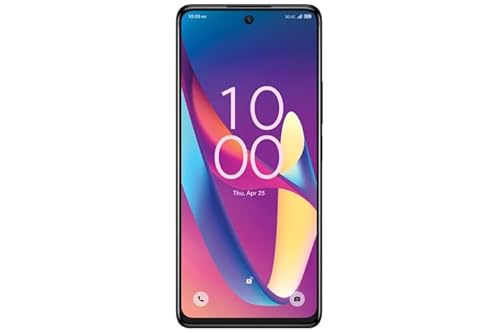
Somewhere in the keyword’s ancestry is a buyer who wanted the big screen — 5.5 inches was the phablet size of its day, chosen by people who watched, read and browsed more than they phoned. The TCL 50 XL 5G is that buyer’s modern heir, and it does not do things by halves: a 6.78-inch FHD+ display at 120Hz, a battery sized to feed it, and a 50MP camera for the moments between episodes. Video, football streams, recipe sites propped on the counter, video calls with the grandchildren held at arm’s length — this is the phone in the guide built for the screen-first life, inside the same budget frame.
The catch is in its name: this listing is the T-Mobile version, provisioned for that network. For a T-Mobile customer that is a feature — activation is a SIM swap, network features behave, and there is no band homework at all. For everyone else it is a fence, and the unlocked picks around it are the answer. Within its world, the TCL is a lot of phone: the 120Hz smoothness makes even scrolling feel like an upgrade, the big battery ends media-heavy days with margin, and the build is honest plastic-and-glass budget work. If your viewing happens on your carrier’s own device and your evenings are measured in episodes, this is the most entertaining phone the budget frame holds.
- Network: T-Mobile version — carrier provisioned
- Display: 6.78-inch FHD+, 120Hz — the largest, smoothest here
- Camera: 50MP main camera
- Battery: large cell matched to the big screen
- Colour on this listing: Slate Gray
Strengths
- The media experience of the guide: size, smoothness and stamina together.
- Zero network homework for T-Mobile customers.
- Battery that treats a streaming evening as a light workout.
Trade-offs
- T-Mobile only — a fence for everyone else.
- Big in the hand and pocket; strictly a two-handed media device.
- Update cadence trails Samsung’s at this level.
Best for: T-Mobile customers who watch more than they type. Not suited for: other carriers’ customers or small-hand devotees.

Samsung Galaxy A25 — Best Step-Up Pick
Every budget guide needs the phone for the buyer who reads the frame, decides they can live at its top edge, and wants the most complete device that still respects it. The Galaxy A25 is that phone here. It takes the A-series formula and turns every dial a notch: a brighter, smoother display than its cheaper siblings, a camera system with optical stabilisation that steadies both photographs and video, performance with genuine headroom, and the same long Samsung support that makes the A16 such a safe long-term hold. It is the pick for the buyer who keeps a phone three or four years and wants those years to feel less like a compromise with every passing one.
The renewed unlocked listing in our pool is what keeps it inside this guide’s conversation — renewed pricing pulls a step-up phone into the budget frame, at the cost of the usual first-week diligence. In return you get the most balanced device here: the screen for media, the camera for family, the stamina for a working day, and none of the carrier fences or band homework of the picks around it. If the keyword brought you here expecting to spend the least possible, the Moto G and A16 will serve you well. If it brought you here to spend the frame wisely, the A25 is the wisest spend in the list.
- Display: bright, smooth AMOLED-class screen
- Camera: stabilised main camera for steadier photos and video
- Network: 5G, unlocked
- Storage on this listing: 128GB
- Condition on this listing: renewed
Strengths
- The most complete all-round phone in the guide.
- Stabilised camera noticeably steadier for video and low light.
- Samsung support longevity at a renewed price.
Trade-offs
- Sits at the top of the budget frame rather than its middle.
- Renewed stock means the standard arrival checks apply.
- Still a plastic-bodied budget phone in look and feel.
Best for: buyers stretching within the frame for a phone to keep for years. Not suited for: the strictest minimum spenders.

Motorola Moto G Power 5G 2024 — Best Battery-First Alternative
The Moto G Power line has always answered a different question from the rest of the budget market: not “how much phone can this money buy?” but “how long can this phone go?” The 2024 Power, with 5G aboard and a renewed listing’s gentle pricing, is the endurance candidate of this guide — a phone whose battery is the headline and whose everything else is competently arranged around it. For the delivery driver, the carer on overnight rounds, the festival volunteer, the grandparent who charges a phone the way they water a plant — occasionally and on no schedule — that priority order is not a compromise. It is the entire point.
The supporting cast is stronger than the battery-first brief requires. The configuration in our pool pairs generous memory with ample storage, the camera is a modern high-resolution unit that handles daylight and documents without fuss, and Motorola’s clean software sips power instead of wasting it on background clutter — one reason the Power line’s real-world stamina beats its paper figures. Being a generation older than the 2025 models here trims its support runway and its price in roughly equal measure. Judge it as what it is: the marathon runner in a field of sprinters, offered at the friendliest cost in the guide, for buyers whose days are longer than other people’s batteries.
- Battery: the design’s headline — built for multi-day light use
- Camera: modern high-resolution main camera
- Network: 5G, unlocked
- Memory/storage on this listing: 8GB RAM, 128GB storage
- Condition on this listing: renewed
Strengths
- Stamina that outlasts every other pick here.
- Generous memory and storage for the class.
- Clean software that protects the battery it advertises.
Trade-offs
- A generation old: shorter remaining update runway.
- Display and charging are solid rather than class-leading.
- Renewed unit — battery verification in week one is the whole game.
Best for: long-day workers and forgetful chargers. Not suited for: buyers wanting the newest model or the longest support.
What did 8 megapixels and 5.5 inches actually mean back then?
Context is kind to the old numbers. An 8MP camera in the budget class of its era sat behind a small sensor with modest processing, and its photographs showed it: fine in sunshine, grainy and smeared indoors, with video that wobbled. The megapixel count was never the real limit — the sensor and the software were — which is why the modern budget camera, with a similar-sized sensor but a decade of computational photography behind it, produces night shots the old phones could not approach at any megapixel count. When a modern pick in this guide offers a 50MP main camera, the honest translation is not “six times the camera”. It is “a camera from a different civilisation”, one that merges frames, steadies hands and rescues light automatically.
The 5.5-inch screen has aged the same way. It was the large size of its moment, fitted into bodies made wide by bezels; today’s budget screens start around that figure’s neighbourhood and run far beyond it, with higher resolution, faster refresh and brightness that survives a bus stop in August. The lesson the fossil keyword teaches is that specifications expire but intentions do not. “Enough camera, a clear big screen, not much money” was a good brief in 2016 and remains one now — it is simply answered by different numbers, which is why this guide ranked the phones on the qualities behind the numbers rather than the numbers themselves.
How do you choose between these six without a spreadsheet?
Ask three questions in order. First: how long will you keep it? If the answer is years, the Samsungs’ support and screens lead — A16 for the middle of the frame, A25 at its top, A15 if renewed value matters more than runway. Second: what fills your day? If it is video and browsing, the TCL’s giant smooth screen (on T-Mobile) or the A16’s AMOLED answer it; if it is work away from chargers, the Moto G Power 2024 was built for your calendar. Third: how much fuss will you tolerate? If the answer is none — no band checks, no renewed inspection rituals, just a phone that works — the Moto G 2025’s clean simplicity is the shortest path from this page to a good decision.
Notice what the questions never ask: megapixels and inches. By the time a modern budget phone is on this list at all, its camera and screen have cleared the keyword’s bar with room to spare, and the differences that will actually reach your daily life are stamina, support, screen quality and software manners. Choose on those, and the fossil spec will have done its last useful service — pointing you at the right budget, then stepping aside.
Comparison table
| Phone | Screen story | Camera story | Best at | Watch out for |
|---|---|---|---|---|
| Moto G 2025 | Large, smooth | Modern high-resolution | Fuss-free everyday use | Modest memory |
| Galaxy A16 5G | AMOLED, expandable storage | Bright Samsung processing | Years of supported use | Adequate performance |
| Galaxy A15 5G | AMOLED at renewed cost | Modern multi-camera | Samsung value per dollar | Band/warranty checks |
| TCL 50 XL 5G | 6.78 in, 120Hz | 50MP main | Media on T-Mobile | Carrier-locked world |
| Galaxy A25 | Bright, smooth AMOLED-class | Stabilised main camera | Most complete package | Top of the frame |
| Moto G Power 5G 2024 | Large, practical | Modern high-resolution | Battery endurance | Older generation |
What mistakes do buyers of budget phones keep making?
The keyword itself teaches the first: shopping by a specification that has expired. A buyer who finds an actual 8MP, 5.5-inch phone still on sale somewhere and buys it for its fidelity to the search has purchased a museum piece with a dying battery. Buy the intention, not the numbers. The second mistake is ignoring software support, the invisible specification: two phones can look identical on the shelf while one receives four more years of security updates than the other, and by year three that difference is the difference between a phone and a liability.
Third, budget buyers skip the renewed checks and the band checks — the five minutes of diligence this guide keeps prescribing — and then blame the category when an unchecked unit disappoints. Fourth, they forget the accessories in the arithmetic: case, protector, perhaps a charger and a memory card are part of a budget phone’s real cost, and planning for them beats discovering them. Finally, they buy storage for the person they are today; photographs and apps grow, and the phone with room to spare is the one still pleasant when the others are full.
How do you set up a budget phone so it stays fast for years?
Budget phones rarely slow down because their hardware gives up; they slow down because their storage fills and their software accumulates. The setup that prevents it takes twenty minutes on day one. Turn on automatic photo backup and set originals to clear from the device once safely stored — photographs are the number-one storage consumer, and a phone kept below eighty percent full stays responsive for years. Decline the optional extras during setup: the duplicate galleries, cleaners and promotional apps offered along the way are weight the phone will carry daily, and every one of them can be added later if genuinely wanted, which they almost never are.
Then establish three habits. Install updates when they arrive rather than letting them queue — on the Samsung picks especially, those updates are the support advantage you paid for, delivered. Restart the phone weekly; it clears the accumulated small disorders of a working week and takes ninety seconds. And audit your apps each season, deleting what has not been opened since the last audit without ceremony. A budget phone treated this way does not feel like a compromise in year three. It feels like the phone of a person who knows what they are doing, which is the best outcome this price class offers. Write the setup down as you do it — the accounts, the backup destination, where the photographs go — and keep the note with the phone’s box. Future you, or the family member who inherits the tech-support role, will be grateful for the map long after the twenty minutes are forgotten.
What does a week with each pick actually look like?
The Moto G 2025’s week is unremarkable, which is its highest praise: messages, maps, a school play photographed without drama, a battery that minds its business. The A16’s week is prettier — its AMOLED screen makes the evening scroll and the family video call look expensive — and quieter in the background, because its updates arrive like weather, regularly and without incident. The A15’s week matches the A16’s at a discount, with one extra errand: the band check before the SIM went in, five minutes that bought total peace for the remaining years.
The TCL’s week belongs to the sofa and the kitchen counter — streamed matches on that big smooth screen, recipes at readable size, a battery that treats a double-episode evening as a warm-up. The A25’s week is the most complete: the steadiest video of the children’s game, the brightest screen at the bus stop, the sense that nothing asked of it all week reached its ceiling. And the Moto G Power 2024’s week is measured in the negative space of charging — the cable stayed in the drawer from Monday to Wednesday, and the phone became the one lent to a visiting relative whose own had died, because it is always the one with charge. Six different weeks, six different households; the guide’s job is matching yours to the right one.
What should you expect from these cameras after dark?
Expect competence with limits, honestly described. In a lit restaurant, at a birthday table, on an evening street, every pick here produces photographs you will keep — the modern processing that defines this generation sees to that, merging frames and steadying exposure in ways the keyword’s era could not attempt. The A25’s stabilisation gives it the steadiest hand for video and the cleanest results when the subject will not sit still. The Samsungs generally hold colour and skin most pleasingly in mixed indoor light; the Motorolas are a step plainer and often a touch more honest.
Where the budget shows is at the edges: a dim bar with a moving subject, a concert from the back, a pet at dusk. There, expect some softness and some grain, and deploy the free techniques — brace against a doorframe, tap to focus on the face, take three frames and keep the best. What you should not expect is failure. The distance between these cameras and a flagship’s at night is real but narrower than the distance between these cameras and the 8MP generation the keyword remembers — and that second distance is the one your family photographs will actually live in.
What is the true cost of owning a phone at this level for three years?
The handset is the first payment, not the whole story, and budget buyers deserve the whole story. Add a case and screen protector at the start — at this level they are not accessories but the difference between a three-year phone and a nine-month one, since a screen repair can approach the value of the device itself. Add a memory card for the Samsungs if your photo library lives on the phone. Add, for the renewed picks, nothing but diligence — the first-week checks are free, and they are what convert a renewed price into a renewed bargain rather than a renewed gamble.
Against those small costs, set the savings the right pick generates. The long-supported Samsungs defer the next purchase by a year or more compared with an unsupported rival. The Power’s battery defers the power banks and replacement urgency that heavy users otherwise buy. The unlocked picks avoid carrier financing entirely, which at this level can quietly add a third again to a phone’s cost across a contract. Totalled honestly, the cheapest phone to own for three years in this guide is rarely the cheapest phone to buy this week — it is the one whose support, stamina and repairability keep the future bills from arriving.
When is the previous generation the smarter buy?
Three of these six picks are renewed or a generation old, and that is a deliberate feature of this guide rather than an apology. The previous generation of a good budget line — the A15 beside the A16, the 2024 Power beside its successor — typically keeps ninety percent of what made the line worth buying: the screen technology, the camera approach, the build. What it surrenders is time: a year of support runway, a year of battery youth. What it returns is money, sometimes a substantial share of the frame, which the wise buyer redirects into the things that extend a phone’s life — the case, the card, the spare cable — rather than into a slightly newer logo.
The discipline that makes the trade safe is the inspection ritual this guide repeats because it works: two honest days of battery observation, a screen examined on plain backgrounds, ports and buttons tested, updates installed, and the return window treated as a deadline rather than a formality. A previous-generation phone that passes is not a compromise purchase; it is the market’s inefficiency harvested. A current-generation phone bought carelessly, by contrast, is just a newer way to own the wrong device. Generation is a number. Condition and fit are facts. There is one more circumstance where the older model wins outright: buying in multiples. A family or a small team equipping three or four people at once multiplies every saving and every mistake by the headcount, and the renewed previous generation is where uniform, capable devices can be had for everyone inside one sane total. Standardising on a single model — ideally the A15 or the Power, the two renewed veterans here — also standardises the chargers, the cases and the troubleshooting, which anyone who has ever been a family’s unpaid IT department will recognise as the real luxury.
Can phones at this level handle games and group video calls?
Video calls first, because they matter to more households: yes, comfortably, all six. Front cameras across this guide are modern units with processing that flatters faces in ordinary room light, microphones are clear, and the screens — the Samsungs’ AMOLEDs especially — make the other end of the call look good. A family call, a telehealth appointment, a work check-in: none of these will expose the budget. Games are the more graded answer. The everyday canon — puzzles, card games, the farming and matching titles that fill waiting rooms — runs beautifully everywhere here. Mid-weight 3D games run well on the A25 and acceptably elsewhere with settings adjusted. The heaviest competitive titles will find the ceiling of every phone in this guide, fastest on the leanest-memory Moto G 2025.
The buyer’s rule is proportional: if gaming is a garnish on your phone use, any pick serves; if it is a main course, the A25 is the only one here we would hand to a keen player, and even then with expectations set to “very playable” rather than “flagship”. For everyone else, the budget buys far more phone than the games most people actually play will ever ask for.
How readable are these phones for ageing eyes?
More readable than the keyword’s generation ever was, for two reasons: size and light. The screens here are larger than 5.5 inches across the board, and Android’s display scaling turns that size into genuinely large text without turning the interface into a maze — the controls grow with the words on the Samsung and Motorola software alike. Brightness is the second gift: modern budget panels, AMOLED above all, stay legible in daylight that would have washed the old screens to grey, and their contrast keeps text crisp at sizes where older LCDs blurred.
Set up for the reader in question, not for the person doing the setting: text at the size actually read comfortably, the home screen reduced to the essential dozen apps in the largest grid, voice typing taught once and practised together, and the flashlight and magnifier shortcuts placed where a thumb finds them in the dark. Add the emergency details to the lock screen — a contact number and any essential medical note the owner wants there — and set the phone to answer calls with a button press rather than a swipe if swiping is the gesture that arthritic hands find least reliable. None of this costs anything. All of it is the difference between a phone that is owned and a phone that is used, and at this end of the market the setup afternoon is worth more than any single specification in this guide. A budget phone configured with that care is not a lesser gift than a flagship configured carelessly. It is, for the hands and eyes that receive it, the better phone outright.
Why does 5G matter even at the bottom of the market?
Because networks are rebuilt forward, and a phone bought today will live on tomorrow’s version of them. Carriers continually refarm spectrum toward 5G, which means the LTE-only budget phone — still sold, still tempting — is buying a shrinking share of the network’s investment with every passing year. Every pick in this guide is a 5G phone, and that is not future-proofing vanity; it is the difference between a device whose connection improves as the network matures and one whose connection quietly thins. For a buyer keeping a phone three or four years, which is this guide’s typical reader, that trajectory is worth more than a slightly larger screen or a slightly faster chip.
The present-tense benefits are real too: 5G areas deliver the responsive browsing and quick uploads that make a budget processor feel faster than it is, because so much of a phone’s perceived speed is actually waiting on the network. A budget phone on a good 5G connection feels modern; a faster phone on a congested old band feels tired. Choose the radio for the years you will keep the phone, and the rest of the experience follows.
What should you do with the phone this one replaces?
First, do not wipe it in the first week. Keep it charged and intact until the new phone has survived its probation — every account logged in, every authenticator moved, every photograph accounted for. That overlap is the cheapest insurance in the whole purchase. Once the new phone is proven, the old one has four honourable futures: the household spare in a drawer, charged quarterly; a dedicated device for music, podcasts or a child’s first phone; a trade-in or sale that returns some of the frame to your pocket; or a donation, wiped properly, to someone whose current phone is worse.
Whichever future you choose, wipe it properly — remove the accounts first, then factory-reset, so the next owner’s setup is clean and your data is genuinely gone. And keep its cable if it matches the new phone; at this budget, the spare charger in the car or the kitchen is worth more than the few dollars the old handset’s accessories would fetch. A budget purchase done well leaves the household better equipped than it found it, in more ways than the new phone itself.
Can a phone from this guide stand in for home internet in a pinch?
For a pinch, yes — and the pinch arrives more often than people plan for: the outage evening, the gap between moving out and the new connection, the rural weekend. All six picks can share their connection as a hotspot, and on 5G that hotspot is honest broadband for a laptop’s email, documents and video calls. The Moto G Power 2024 is the natural choice for the role thanks to its battery, with the TCL close behind; the others manage an evening without complaint. Watch two things: your plan’s hotspot allowance, which is a contract matter rather than a phone matter, and heat — a phone hotspotting for hours on a charger is working hard, so give it air and a flat surface.
There is a quieter version of the same trick worth knowing: the phone as the children’s or the guest room’s internet for a weekend, the phone as the market trader’s card-terminal connection, the phone as the allotment shed’s radio streamer. Each is a small job a fixed connection cannot do and a television cannot either, and each is handled by every device in this guide without a murmur. Versatility of that kind never appears in a comparison table, yet it is often the thing owners mention first when a budget phone has served them for years — not the specification they bought, but the dozen small rescues they did not foresee.
What this capability should not do is seduce anyone into cancelling a fixed connection they rely on for work. It is a bridge, not a foundation. But as a bridge it changes the value maths of the whole guide: the budget phone is not merely a phone, it is the household’s emergency internet, and that alone justifies choosing its battery and its radio with the care this guide has spent on them.
How much storage and memory do you really need at this level?
Storage first, because it is the specification that ages loudest. The 128GB fitted across this guide is the honest minimum for a phone kept for years: the system and its updates take their share, the essential apps take theirs, and what remains must hold a growing photo library and the offline maps and music of a travelling life. The Samsungs’ memory-card slots change the equation in their favour — a card turns storage from a fixed budget into an expandable one, and for the buyer who keeps photographs on the device rather than in a cloud, that single feature can outrank every other difference in this guide. The Motorolas and the TCL ask you to live within their walls, comfortably at 128GB if your photos back up to the cloud, tightly if they do not.
Memory — RAM — is quieter but decides how the phone feels when you ask it to juggle. The leaner configurations here handle the everyday sequence of messages, browser, camera and maps without complaint, and show their limits only when a dozen heavy apps rotate at once. The more generous configurations, like the Power 2024’s in our pool, buy smoothness in exactly that juggling. Match the memory to the multitasking you actually do: a focused user will never meet the ceiling, and a chronic app-switcher should buy the headroom now, because it is the one specification no accessory can add later. One practical test before ordering: count the apps you genuinely rotate through in an hour of your busiest phone use. If the answer is four, every phone here is generously specified. If it is fourteen, weight your choice toward the picks with the larger memory figures and treat the leanest configurations as what they are — honest phones for focused people, which is a compliment and a boundary at the same time.
Final Recommendation
Let the old numbers retire with honours: they described a good phone once, and the six phones above are what that description buys today. Take the Moto G 2025 if you want the clean, simple answer; take the Galaxy A16 5G if you keep phones for years and look at their screens all day; take the A25 if you can stretch to the top of the frame, the A15 if renewed value sings to you, the TCL if your life is video on T-Mobile, and the Moto G Power 2024 if your days outlast batteries. Whichever you choose, you will hold a camera and a screen that the keyword’s era would have filed under science fiction — for the same modest money, which is the happiest ending a fossil search can have. Do the small diligence, keep the storage breathing room, and the phone you bought by translating an old search into a new answer will repay you in the only currency that matters at this level: years of not having to think about it.
Frequently Asked Questions
Do any of these phones actually have an 8MP camera or a 5.5-inch screen?
No — and that is the point of the guide. Those figures describe the budget phones of about a decade ago. Every pick here exceeds them substantially, with modern high-resolution cameras and larger, sharper screens, inside the same under-200 budget frame the keyword sets.
Why not just buy one of the original phones that matches the spec?
Because a phone is more than its spec sheet. The originals carry decade-old batteries, software that no longer receives security updates, and network fit from a previous era. They are charming as collectibles and frustrating as telephones. The picks here honour the keyword’s intent — a good phone for the money — with hardware that can still do the job.
Is “under 200” a safe frame for all six picks?
It is the budget neighbourhood these models live in, applied as the keyword’s frame rather than a per-listing price promise. Renewed and carrier listings drift with stock, so check the current listing before ordering — and if a price has wandered far from the frame, the other five picks are your comparison set.
Which pick has the best camera for family photos?
The Galaxy A25, for its stabilised main camera and Samsung’s people-friendly processing, with the A16 close behind for buyers in the middle of the frame. All six handle daylight family photography well; the differences appear in low light and motion, where stabilisation earns its keep.
Do these phones work on all US carriers?
The unlocked Samsungs and Motorolas are built for broad US carrier use. Two picks need a note: the TCL is a T-Mobile version for that network, and the A15’s international version deserves a band check against your carrier’s list before ordering. Five minutes of checking prevents the only bad outcome available here.
Should I buy the case and memory card at the same time?
Yes — they are part of the purchase, not an afterthought, and at this level they belong in the same budget decision as the phone. A budget handset’s screen repair can rival its value, which makes the protector the best-value line item in the whole transaction. Buy them together and the phone starts its life protected rather than merely intending to be.
Is it worth paying more for the A25 over the A16?
If you will keep the phone for years and you photograph moving subjects or shoot video often, yes: the stabilised camera and extra headroom repay the stretch daily. If your use is messaging, browsing and daylight photos, the A16’s screen and support deliver most of the experience in the middle of the frame, and the saving is real.
How long will a phone at this price realistically last?
Three to four years with care, longest for the Samsungs thanks to their update commitments. Battery care, a case, and keeping storage below roughly eighty percent full are the habits that decide whether a budget phone reaches that span or fades in year two.
What should I check first when a renewed budget phone arrives?
Treat the first days as an inspection, not just a setup. Check the screen for marks that only show on plain backgrounds, test every button, the speakers, the microphones and both cameras, and make one real call on your own SIM. Charge the phone fully, then use it normally and note how the battery behaves overnight and through a busy afternoon. Confirm the storage and model match the listing, run the maker’s updates, and keep the packaging until the return window closes. A renewed phone that passes those ordinary tests in week one usually settles into unremarkable, dependable service afterwards.
Related Guides
Shoppers working to this same modest budget tend to ask what comes next, and the answers live in the best budget Android phones with long software support, budget phones with the best battery life, and how to check a renewed phone in its first week.



[…] flagships of every size at renewed prices, best affordable android phones for all-round value, and best mid range android phones if a larger modern handset is acceptable after […]