What's inside
- Where to buy
- Key Takeaways
- Quick Picks
- How did we pick the best 2 year old android phones?
- What should you honestly expect from a renewed flagship?
- How do the six secondhand flagships compare?
- How do you check a renewed phone properly in its first days?
- Why does remaining software support matter more than the chip?
- What mistakes do renewed phone buyers keep making?
- How does a two-year-old flagship compare with a new mid range phone?
- How does each of these phones photograph two years on?
- What does owning a renewed flagship actually cost over two years?
- When do renewed prices fall furthest?
- Which older flagships did we leave out, and why?
- How do you move your life onto a renewed phone without losing anything?
- How easy are these phones to repair and accessorise?
- What do renewed condition grades actually mean?
- Which storage size should you hunt for in a renewed phone?
- What if you are buying for a teenager or a parent?
- Final Recommendation
- Frequently Asked Questions
- Related Guides
As an Amazon Associate I earn from qualifying purchases. This post may contain affiliate links at no extra cost to you.
gizmoverdict.com is reader-supported. When you buy through links on our site, we may earn an affiliate commission.
Where to buy
Every phone in this guide is a renewed or refurbished listing, reached by following the link on its name. That is deliberate: the entire point of shopping among the best 2 year old android phones is to let the first owner absorb the steepest depreciation while you collect the flagship hardware that remains. Buy from sellers who state a condition grade plainly, offer a return window, and describe what arrives in the box. If you prefer a shop counter, carrier refurb programmes and manufacturer outlet stores stock some of these models too, though rarely with the same breadth of choice.
Two years is a magic age in the phone market. A handset that launched to fanfare and flagship pricing has, by its second birthday, shed an enormous share of its cost while keeping nearly all of its capability. The screens are still excellent, the cameras still embarrass most new mid range phones, and the processors still run everything a normal person installs. What has genuinely aged is narrower: the battery has lived a life, the software support clock has two fewer years on it, and the bragging rights have moved on. If you can price those three honest caveats correctly, a two-year-old flagship is the smartest purchase in the whole Android market.
This guide ranks six such phones, all from the generation that launched across 2023 and early 2024, and it is frank about the renewed market they now live in. None of the listings here is a factory-sealed new phone, and we will not pretend otherwise. Condition varies by seller and grade, batteries have history, and the sensible buyer checks the details we flag in each section. In exchange for that diligence you get titanium-era build quality, proper telephoto cameras and flagship screens at prices that undercut brand-new mid range handsets with weaker hardware in almost every department.
Key Takeaways
- The Samsung Galaxy S23 remains the sweet spot of this age bracket: compact, quick, properly water resistant and still inside Samsung’s update window for years to come.
- Google’s Pixel 8 is the photographer’s bargain, because its camera processing has barely aged even as its price has fallen away.
- The Galaxy S24 is the youngest phone here and the one to pick if remaining software support matters more to you than the deepest discount.
- Battery condition is the great variable of renewed buying, so favour sellers who test and state battery health over sellers who stay silent about it.
- The Pixel 7a undercuts everything else in the guide while keeping the camera character that made it famous at launch.
- Every phone below launched as a flagship or flagship-adjacent model, so their screens, builds and cameras sit a class above comparably priced new phones.
Quick Picks
| Pick | Badge | Why it earns its place |
|---|---|---|
| Samsung Galaxy S23 | Best Overall | The complete flagship package in a manageable size, now selling for what a modest new phone costs. |
| Google Pixel 8 | Best Camera Value | Google’s image processing and long support promise make it the thinking photographer’s secondhand steal. |
| Samsung Galaxy S24 | Longest Future | The newest model here carries the most remaining update years, stretching its second life furthest. |
| Samsung Galaxy S23+ | Best Big Screen | A larger display and bigger battery turn the S23 formula into an all-day media machine. |
| Google Pixel 8a | Best Google All-Rounder | Nearly all of the Pixel 8’s intelligence in a slightly simpler body at an even gentler price. |
| Google Pixel 7a | Lowest Entry Price | The cheapest route in this guide to a genuinely excellent camera and clean Android software. |
How did we pick the best 2 year old android phones?
Age alone is a useless filter, because plenty of two-year-old phones were mediocre on launch day and have not improved since. We began instead with the models that reviewers and owners still speak of warmly, the flagships whose hardware was generous enough to survive two years of software growth. From that shortlist we applied three tests. First, remaining software support: a phone abandoned by its maker is a liability however shiny it looks, so everything here still receives security updates with years left to run. Second, parts and repair reality: screens and batteries for popular flagships remain widely available, which keeps a secondhand phone maintainable. Third, the renewed market itself had to be healthy, with multiple sellers and clear grading, because a brilliant phone you cannot buy confidently is no recommendation at all.
We also weighed the honest costs of age. Battery wear is real, and a two-year-old cell that has been charged daily will not match its launch-day endurance; the phones below were chosen partly because they started with strong batteries, leaving more margin after two years of use. Cosmetic condition varies across renewed grades, and we say plainly where a model’s glass-heavy design shows wear more readily. Finally, we checked that each phone’s radios and bands suit modern US networks, since a bargain that cannot hold a signal is not a bargain.
The result is a list split between two philosophies. Samsung’s S-series phones bring hardware completeness: zoom lenses, water resistance, fast chips and bright screens. Google’s Pixels bring software intelligence: the best still cameras of their generation and the cleanest Android experience, backed by unusually long support promises. Both routes are defensible, and the sections below make the trade-offs explicit so you can choose with your eyes open.
What should you honestly expect from a renewed flagship?
Expect excellence with fingerprints on it. A renewed flagship has been tested, cleaned and graded, but it has also been lived with. The best sellers disclose battery health, include a charging cable and stand behind the phone with a warranty or return period; the vaguer end of the market does none of those things, and the price difference between the two is usually small enough that the careful seller is worth choosing. Cosmetically, higher grades arrive looking nearly new, while budget grades may carry micro-scratches that vanish under a case and screen protector, which most owners fit anyway.
Expect, too, that the phone’s remaining life is measured in support years rather than hardware years. The glass and metal of a flagship will outlast its update window comfortably. That is why this guide keeps returning to support clocks: a two-year-old Samsung or Pixel with four or more years of patches ahead is a sound tool, while any phone near the end of its updates should be priced as a short-term device whatever its condition. Buy the remaining years, not just the hardware, and the renewed market becomes remarkably rational.

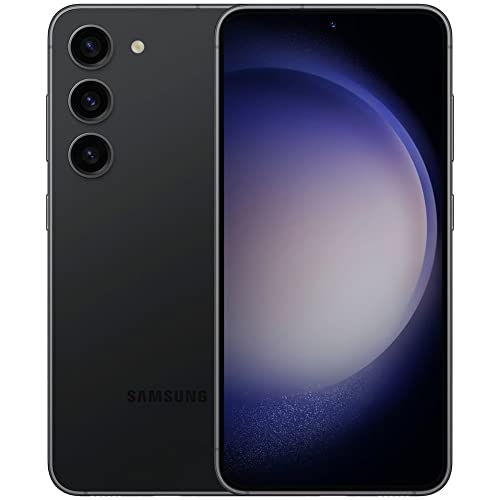
Samsung Galaxy S23 — Best Overall
The S23 was the compact flagship done right, and two years have not changed that verdict. Its 6.1-inch AMOLED screen is bright and fluid, the Snapdragon chip inside was the generation where Samsung’s US models stopped compromising on performance, and the triple camera system includes a proper telephoto lens that new phones at this price simply do not offer. It slips into pockets that reject today’s larger handsets, works one-handed on a crowded train, and carries an IP68 rating that has already proved itself in two years of other people’s weather.
As a renewed purchase the S23 makes particular sense because its size made it a careful owner’s phone, and the renewed market for it is deep and competitive. Samsung’s support promise still has years to run, covering both Android upgrades and security patches, so the phone’s second life is not a countdown. Battery expectations should be set honestly: a well-kept unit will still clear a normal day, though heavy users may notice the cell is not as tireless as it was in its first spring. Against any brand-new phone at a similar cost, the S23 counters with better cameras, a better screen and a better build. That is the whole argument for this category in one handset.
- Display: 6.1-inch AMOLED, 120Hz
- Cameras: triple system with optical telephoto
- Chip: flagship Snapdragon of its generation
- Build: IP68 water and dust resistance
- Storage: 128GB on the listed configuration
Strengths
- Flagship camera range, including real zoom, at a mid range outlay
- Compact body that remains easy to live with one-handed
- Years of Samsung updates still ahead of it
Trade-offs
- Battery is the smallest here, and two years of wear shows on heavy days
- Charging speeds were modest even at launch
- Renewed cosmetic grades vary, so read the seller’s description closely
Best for: Buyers who want the complete flagship experience in a sane size without flagship money. Not suited for: Screen-hungry media fans or anyone who needs two-day battery life.

Google Pixel 8 — Best Camera Value
Cameras age more slowly than any other part of a phone, because so much of the result is software, and Google’s software was ahead when the Pixel 8 launched and remains ahead now. Portraits hold their edges, night scenes keep their atmosphere without turning to soup, and the phone’s editing tools can rescue shots that lesser cameras would have ruined at capture. For a buyer whose priority is a camera roll full of keepers, the renewed Pixel 8 is arguably the best value anywhere in Android, full stop.
The rest of the phone supports the camera gracefully. The 6.2-inch OLED screen is bright and colour-accurate, the Tensor chip handles Google’s intelligence features without strain, and the support promise is the longest Google had ever offered at the time, which means this two-year-old phone still has a long, secure future. Its renewed listings are plentiful. The honest caveats are battery life that is good rather than great, and a chip that warms up under sustained gaming. Neither touches the camera argument, and the camera argument is why this phone is here.
- Display: 6.2-inch OLED, high refresh
- Main camera: 50MP with Google computational photography
- Chip: Google Tensor with on-device AI features
- Software: longest support window of its launch era
- Storage: 128GB on the listed configuration
Strengths
- Still photography that shames new phones costing far more
- Exceptionally long remaining update support for its age
- Call screening and transcription features that save time weekly
Trade-offs
- No telephoto lens, so distance work relies on cropping
- Battery endurance is ordinary, and age trims it further
- Tensor performance trails the Snapdragon Samsungs in games
Best for: Photographers and Google-service devotees shopping with a sensible head. Not suited for: Mobile gamers or buyers who need optical zoom.

Samsung Galaxy S24 — Longest Future
Strictly speaking the S24 is the youngster of this guide, arriving at the start of 2024, and that youth is its entire selling point. Samsung launched it with a seven-year support promise, so a renewed S24 bought today still has the longest protected future of any phone on this page. If your plan is to buy once and keep the phone until it genuinely cannot continue, this is the rational choice: flagship hardware, the brightest screen Samsung had made to that point, and a support runway that extends deep into the decade.
In daily use the S24 refines rather than reinvents the S23 formula. The display is a touch larger and considerably brighter, the design flatter and more assured, the battery slightly larger, and the Galaxy AI features add genuinely useful summarising and translation tricks. As a renewed buy it costs more than the S23, which is the honest tension in this ranking: you are paying a premium not for today’s experience, which is similar, but for tomorrow’s extra years. Buyers who keep phones longest should pay it gladly. Buyers who swap every couple of years should save the difference and take the S23.
- Display: 6.2-inch AMOLED, very high brightness
- Cameras: triple system with optical telephoto
- Chip: flagship Snapdragon of its generation
- Support: seven-year update promise from launch
- Storage: 128GB on the listed configuration
Strengths
- Most remaining software support of any pick here
- Brightest, most outdoor-friendly screen in the guide
- Complete flagship hardware with real zoom and IP68 sealing
Trade-offs
- Renewed prices sit highest in this list alongside its youth
- Day-to-day gains over the S23 are incremental, not dramatic
- Charging pace remains unhurried by current standards
Best for: Keep-it-for-years buyers who value the longest possible secure lifespan. Not suited for: Bargain hunters chasing the deepest possible discount.
Samsung Galaxy S23+ — Best Big Screen
Everything the standard S23 does well, the Plus does on a bigger canvas with a bigger battery behind it. The 6.6-inch display turns video, games and split-screen multitasking into the main event, and the larger cell answers the base model’s one real weakness by lasting through heavy days with something left over. The camera system mirrors its smaller sibling’s, telephoto included, and the same flagship chip keeps the whole experience swift. For buyers who found the S23 tempting but cramped, this is the same argument at a more comfortable scale.
The renewed market treats the Plus kindly, because it was the middle child at launch and never carried the Ultra’s pricing altitude, so its secondhand values settled early. Its size cuts both ways after two years: the larger glass panels show their history more readily, so grade selection matters, and a case is close to compulsory. Samsung’s update window still has years to run. If your phone doubles as your television, your games console and your reading device, the S23+ is the two-year-old to beat.
- Display: 6.6-inch AMOLED, 120Hz
- Cameras: triple system with optical telephoto
- Battery: larger cell than the standard S23
- Build: IP68 water and dust resistance
- Storage: 256GB on the listed configuration
Strengths
- Big, bright screen paired with genuinely all-day battery life
- Same complete camera system as the smaller S23
- Generous storage on the listed unit suits media-heavy owners
Trade-offs
- Two-handed size will not suit everyone, especially in smaller pockets
- Larger glass surfaces make cosmetic grade worth paying attention to
- Heavier than the compact picks for long reading sessions
Best for: Media-first buyers who want the S23 formula at full size. Not suited for: One-handed users or strict minimalists.

Google Pixel 8a — Best Google All-Rounder
The 8a arrived a little after its bigger brother and promptly made the buying decision awkward by keeping most of what mattered. The same Tensor intelligence, a closely related camera experience, a bright 120Hz screen and Google’s long support promise all survived the transition to the cheaper model. What changed was the frame material, the charging pace and the price. In the renewed market those launch-day savings compound, making the 8a the easiest Google recommendation in this guide for anyone who does not specifically need the Pixel 8’s finer hardware touches.
Ownership is undemanding in the best way. The phone is a comfortable size, the software is uncluttered, and the camera produces the same recognisably Pixel results: contrasty, detailed and trustworthy in rotten light. Its plastic construction has a hidden secondhand advantage too, shrugging off the small knocks that would mark a glass back. Battery life is a dependable day. Buyers choosing between this and the Pixel 8 should ask whether the 8’s better build and slightly stronger camera are worth the difference in the renewed listings on the day they shop; often the honest answer is that the 8a’s value wins.
- Display: 6.1-inch OLED, 120Hz
- Main camera: high-resolution sensor with Google processing
- Chip: Google Tensor with AI features
- Software: long Google update commitment
- Storage: 128GB on the listed configuration
Strengths
- Pixel camera character and intelligence at the gentlest Google price here
- Durable-feeling construction that hides secondhand wear well
- Long support window keeps it safe for years
Trade-offs
- Charging is slow by the standards of this list
- Plastic frame lacks the flagship tactility of the Samsung picks
- Water resistance rating is a step below the true flagships
Best for: Value-led buyers who want Google’s brain and camera without flagship tax. Not suited for: Buyers who prize premium materials above all else.
Google Pixel 7a — Lowest Entry Price
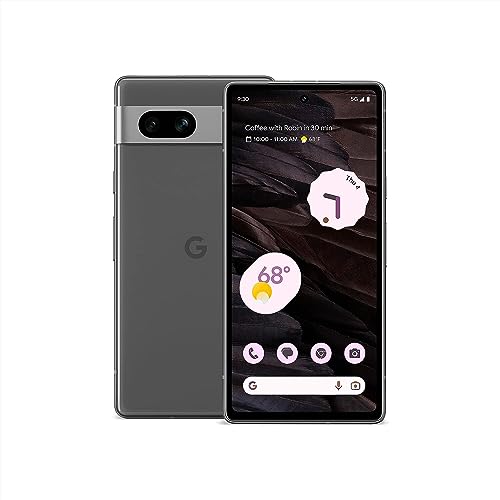
The 7a is the elder of this guide, and its presence here is a compliment to how well it was made. At launch it embarrassed phones costing far more, chiefly through a camera that traded blows with flagships, and that camera has not forgotten its tricks. Night photography, portraits and everyday snaps still come out with the confident Pixel look. Add a 90Hz OLED screen, wireless charging that phones at its renewed price rarely offer, and clean software, and the 7a becomes the guide’s answer to a simple question: how little can you spend without buying something you will regret?
The caveats are the honest ones of age. Its support window, while still running, is the shortest in this guide, so plan on a shorter ownership horizon than the S24 or Pixel 8 offer. The Tensor chip of its generation runs warmer under load, and charging is leisurely. Battery wear matters most here too, so a seller who states battery condition is worth a small premium. Treated as a two-to-three-year phone bought at a genuinely low price, the 7a remains a shrewd purchase; treated as a five-year commitment, it is the wrong tool.
- Display: 6.1-inch OLED, 90Hz
- Main camera: high-resolution sensor with Pixel processing
- Charging: wired plus wireless charging
- Chip: Google Tensor of its generation
- Storage: 128GB on the listed configuration
Strengths
- Camera quality wildly disproportionate to its renewed price
- Wireless charging at a price point that almost never includes it
- Compact, friendly size with clean, simple software
Trade-offs
- Shortest remaining support window in this guide
- Chip warmth and slow charging date it under pressure
- Battery condition varies most on the oldest model here
Best for: Tight budgets that refuse to accept a bad camera as the price of saving money. Not suited for: Anyone planning to keep the same phone beyond its support window.
How do the six secondhand flagships compare?
| Phone | Badge | Launch era | Standout quality | Main compromise |
|---|---|---|---|---|
| Samsung Galaxy S23 | Best Overall | 2023 flagship | Complete compact flagship | Smallest battery |
| Google Pixel 8 | Best Camera Value | 2023 flagship | Camera processing | No telephoto |
| Samsung Galaxy S24 | Longest Future | 2024 flagship | Remaining update years | Highest renewed prices here |
| Samsung Galaxy S23+ | Best Big Screen | 2023 flagship | Screen and battery size | Two-handed bulk |
| Google Pixel 8a | Best Google All-Rounder | 2024 mid-premium | Pixel experience for less | Slow charging |
| Google Pixel 7a | Lowest Entry Price | 2023 mid-premium | Camera per pound spent | Shortest support left |
The pattern in the table is a trade between money now and years later. The 7a asks least today and offers the fewest tomorrows. The S24 asks most and offers the most. The S23 and Pixel 8 occupy the balanced middle, which is why they lead the ranking. None of the six is a trap; the only real mistake available is buying one whose remaining support window does not match the length of time you intend to keep it.
How do you check a renewed phone properly in its first days?
Treat the return window as an inspection period and use it methodically. On day one, examine the phone under bright light: look for screen burn-in by displaying a plain white and then a plain grey image, check the camera lenses for scratches, and run your fingernail around the frame for dents that suggest a hard drop. Test every button, both speakers, the earpiece and the fingerprint reader. Photograph a detailed scene with every rear lens and the front camera, then zoom into the results; a hazy patch in the same place on every shot points to lens damage rather than your technique.
Across the first week, live with the battery before judging it. A renewed phone’s battery gauge often needs a few full cycles to calibrate, so early readings can look pessimistic. By the fourth or fifth day you will know the truth: a healthy unit in this class should carry a normal day of use without anxiety. Run the manufacturer’s built-in diagnostics, which both Samsung and Google provide, and confirm the phone’s identity and lock status in the settings so you know it is fully yours and fully unlocked. If anything fails these checks, use the return window without sentimentality; the renewed market’s great advantage is that another unit is always a few clicks away.
Why does remaining software support matter more than the chip?
Shoppers fixate on processors because they are easy to compare, but a two-year-old flagship chip remains fast enough for everything ordinary people do, and it will stay that way for years. The support clock is the real expiry date. When security patches stop, banking apps, work email and cautious owners all start looking for the exit, and the phone’s useful life ends even though its hardware is fine. This is why the S24’s long runway commands a premium, why the Pixel 8’s generous promise makes it such a strong secondhand buy, and why the 7a, delightful as it is, should be bought as a shorter-term device.
There is a resale corollary. A renewed phone you later sell or hand down carries its remaining support years as part of its value. Buying the longer-supported model today often returns a portion of its higher price at the far end, while the cheapest option can become worthless the moment its patches end. None of this requires loving software updates; it only requires recognising that in the secondhand market, time is the product being bought and sold.
What mistakes do renewed phone buyers keep making?
The most common error is buying on cosmetic grade alone while ignoring battery information. A flawless-looking phone with a tired battery will annoy you every single day, while a lightly marked phone with a strong battery becomes invisible inside a case within a week. Prioritise sellers who test and disclose battery health, and treat silence on the subject as information in itself. The second error is forgetting the accessories: renewed phones may arrive with a cable only, or nothing at all, so confirm what is in the box before assuming your old charger is compatible with the phone’s fastest charging mode.
Third, buyers neglect the lock check. A phone that is not fully unlocked, or that remains tied to someone else’s account, ranges from inconvenient to useless. Buy from sellers who guarantee a clean, unlocked device and verify it on arrival by signing in with your own accounts and inserting your own SIM before the return window closes. Fourth, people compare renewed prices against the wrong benchmark: the rival of a renewed flagship is not its launch price but the new phone at the same money today. Judged that way, honestly and without nostalgia, the phones in this guide win most of their comparisons.
How does a two-year-old flagship compare with a new mid range phone?
Put them side by side and the pattern is consistent. The older flagship wins on camera hardware, screen quality, build materials, water resistance and usually raw performance. The new mid range phone wins on battery freshness, warranty length, remaining support years in some cases, and the simple pleasure of an unmarked device that has only ever been yours. Neither victory is total, which is why both markets thrive. Buyers who photograph a lot, game, or simply enjoy fine hardware tend to be happier with the renewed flagship. Buyers who keep phones until they die and hate uncertainty tend to be happier buying new.
The deciding question is how you feel about the battery. A new phone’s battery is at one hundred percent of its design capacity; a renewed phone’s is not, and no grading system fully removes that uncertainty. If your days are long and charger access is rare, the new phone’s freshness may be worth more than the flagship’s finer screen. If your days include a desk, a car or a kitchen counter where a charger lives, the renewed flagship’s advantages dominate. Answer that one question honestly and the choice between the two markets usually answers itself.
How does each of these phones photograph two years on?
Camera systems reveal their true quality slowly, because launch reviews test them for days while owners test them for years. The patterns below come from what two seasons of real use have shown about each model in this guide.
Samsung Galaxy S23 camera, revisited
The S23’s triple system has aged gracefully because it was built on versatility rather than a single party trick. The main camera remains dependable in the mixed light of restaurants and school halls, the ultrawide handles interiors without the smeared corners that plague cheaper phones, and the telephoto continues to be the feature owners mention most, because children’s football matches and concert stages do not move closer out of politeness. Samsung’s colour tuning runs vivid, which flatters landscapes and occasionally overcooks skin tones, a preference question rather than a flaw. Video is steady and sharp, and the whole system behaves predictably, which matters more over two years than any single spectacular result.
Google Pixel 8 camera, revisited
The Pixel 8’s camera has aged the best of any in this guide, for a simple reason: Google kept improving it after launch. Software updates refined its night mode and portrait handling, so a Pixel 8 bought renewed today photographs better than the same hardware did in its first month. Its style is recognisably Google — contrasty, detailed, honest about shadows — and its weakness is equally familiar: without a telephoto, distant subjects depend on digital zoom, which is good for a phone camera and still visibly digital. For stills of people, pets, food and cities, it remains the benchmark at this money.
Samsung Galaxy S24 camera, revisited
The S24’s cameras were a refinement of the S23’s rather than a reinvention, and two years on that reads as maturity. Processing became a touch more natural, particularly with skin tones and bright skies, and the AI-assisted editing tools that launched with the phone have grown more useful with practice. Owners report the same telephoto advantage as the S23, with slightly better consistency in tricky light. If photography is your deciding factor between the two Samsung generations, the honest summary is that the S24 is a small step forward in polish and a large step forward in remaining lifespan, and the second of those is the one worth paying for.
Samsung Galaxy S23+ camera, revisited
Sharing the S23’s camera hardware, the Plus produces identical photographs, and the differences are ergonomic rather than optical. The bigger screen makes a genuinely better viewfinder and editing surface; reviewing a day’s shooting on the phone itself stops feeling like a compromise. The larger battery also changes photographic behaviour in practice, because owners stop rationing: more video at family events, more bursts at sports days, less anxiety about the last ten percent. Photographers who shoot all day away from chargers will feel the Plus’s advantage in their habits, not just their results.
Google Pixel 8a camera, revisited
The 8a’s camera was the launch review’s headline — flagship photography at a mid price — and it remains the model’s identity. Its sensor is a step below the Pixel 8’s, which shows mainly in the darkest scenes and the finest detail, but the processing character is the same and the results sit comfortably beside its brother’s in daylight. For social photography, family documentation and travel snaps, the difference between the two Pixels matters far less than the difference between either of them and a typical budget phone. The 8a is the value photograph of this entire guide.
Google Pixel 7a camera, revisited
Age has been kind to the 7a’s camera in the way it is kind to good lenses generally: the fundamentals were right. Its main sensor still gathers light well, its night mode still rescues evenings, and its portraits still please. What dates it is speed — processing takes a beat longer, and rapid-fire shooting of toddlers or dogs produces more misses than the newer Pixels manage. Judged as a stills camera for a patient photographer, it remains remarkable at its renewed price. Judged as a tool for capturing fast-moving chaos, its younger relatives earn their premium.
What does owning a renewed flagship actually cost over two years?
The purchase price is only the opening line of the ledger. A renewed flagship may need a battery replacement during your ownership, and for popular Samsung and Google models that service is widely available at independent repair shops as well as through official channels, at costs far below a new phone. Budget for it mentally and the phone’s economics still win comfortably against buying new. A case and screen protector are the other near-certain expense, and they protect both the phone and its resale value, since cosmetic condition is a grading criterion when you eventually sell it on.
Set against those costs are the savings that rarely get counted. A renewed flagship needs no expensive insurance tier to make financial sense, because its replacement cost is modest. Its depreciation from here is gentle; the first owner already paid the steep part of the curve, so a well-kept S23 or Pixel 8 sold in two years returns a healthy share of what you paid. And because the hardware is strong, you are less likely to pay the hidden tax of an early upgrade, which is where budget phones often stop being cheap. Total the whole picture — purchase, a possible battery, protection, resale — and the renewed flagship is usually the least expensive way to own excellent hardware, provided you bought the right unit in the first place.
When do renewed prices fall furthest?
Renewed pricing breathes with the launch calendar. When a new flagship generation arrives, trade-ins flood the refurbishers, supply of the two-year-old models rises, and prices soften for a few months. That is the window this guide is written for: the generation that has just become two years old in large numbers, with healthy stock and competitive sellers. Prices also dip around major shopping events, though renewed stock is finite, so the exact colour or storage size you want may sell through early in a sale.
The practical advice is to decide your model and your acceptable condition grade in advance, then buy promptly when a unit matching both appears at a fair price from a reputable seller. Hesitation in the renewed market is punished differently than in the new market: the specific phone you were considering is a single physical object, and when it is gone, its replacement may be a different grade from a different seller at a different price. Preparation plus decisiveness is the whole strategy.
Which older flagships did we leave out, and why?
Readers may wonder about the glamorous absentees. The Ultra-class phones of the same generations — Samsung’s S23 Ultra and S24 Ultra, and Google’s Pixel Pro models — are magnificent secondhand machines, and if your budget reaches them they deserve consideration. They sit outside this guide because their renewed prices remain high enough to compete with new upper-mid range phones, which changes the value equation this article is built on. The phones ranked here are the ones whose prices have fallen into genuinely disruptive territory. The same logic excludes foldable phones of the era: their screens and hinges introduce secondhand risks that a careful buyer can manage, but they belong in a specialist guide rather than a general one.
OnePlus’s flagships of the period were also considered. They offer speed in abundance and their renewed listings can be tempting, but their software support windows and update cadence trail Samsung’s and Google’s, which matters disproportionately in a purchase whose whole value rests on remaining lifespan. Similarly, older models from the generation before — the S22 family and Pixel 7 Pro — now sit close enough to the end of their support windows that we would only recommend them at prices low enough to treat them as short-term phones. The six picks here were chosen because each one balances price, hardware and remaining years without asking the buyer to make an uncomfortable exception.
How do you move your life onto a renewed phone without losing anything?
Start before the new phone arrives. Back up your current handset completely — photos, messages, app data and two-factor accounts — and write down the passwords you normally let your old phone remember, because a renewed phone is a fresh start that will ask for all of them. Update the old phone fully, since transfer tools work best between current software versions. If you use an authenticator app for work or banking, follow its specific transfer process rather than assuming the general phone transfer will carry those codes across; this single step prevents the most stressful migration failures.
When the renewed phone is in hand and has passed the inspection checks described earlier, run the manufacturer’s transfer tool with both phones plugged into power and placed side by side. Samsung’s and Google’s tools both handle the heavy lifting, including most app data and message history. Then work through a short deliberate checklist: banking apps signed in, authenticator codes working, photos visible, messages intact, Bluetooth accessories re-paired, and your SIM or eSIM active with data flowing. Only once that list is complete should you wipe the old phone, and even then, keep it in a drawer for a fortnight as an insurance policy before selling or recycling it. A calm migration is mostly a matter of refusing to rush the order of operations.
How easy are these phones to repair and accessorise?
One underappreciated virtue of buying a popular two-year-old flagship is that the world is set up to maintain it. Cases, screen protectors, mounts and chargers for the S23 family and the Pixel 8 line fill entire shop displays, and they are discounted now that the models are no longer new. Independent repair shops know these phones intimately, stock their screens and batteries, and can usually turn common repairs around the same day. Compare that with an obscure new budget phone, whose cracked screen may mean weeks of waiting for parts, and the secondhand flagship’s practicality advantage becomes concrete.
Battery replacement deserves a specific mention because it is the repair renewed buyers are most likely to commission. On all six models here it is a routine, well-documented job. A phone bought renewed with a tired battery, refreshed with a new cell a year into your ownership, can end up outlasting a mid range phone bought new — for less total money. When you shop, this also means a cosmetically excellent unit with a weak battery is not necessarily a bad buy: price the battery service into your comparison and it may be the smartest unit on the page.
What do renewed condition grades actually mean?
Grade labels are not standardised across the industry, which frustrates buyers until they learn to read them as each seller’s internal language rather than a universal scale. At the top sit the excellent or premium grades, describing phones that may have been display units, open-box returns or simply very carefully owned; these typically show no visible marks at arm’s length. The middle grades describe honest wear: light scratches on the frame or screen that disappear under a protector, perhaps a faint scuff on a corner. The lowest grades are functional phones with visible cosmetic history, sold cheaply to buyers who case everything anyway.
The intelligent way to use grades is to match them to your own habits. If every phone you own lives in a case from day one, the middle grade is usually the value summit, because you are paying only for wear you will never see. If you carry phones naked and care about their appearance, the top grade is worth its premium. What grades never describe is internal health, which is why the battery and diagnostics checks elsewhere in this guide matter more than the letter or label a seller assigns. A mid-grade phone with a tested, healthy battery is a better purchase than a pristine phone whose seller says nothing about its cell.
There is also an environmental ledger worth acknowledging. Every renewed phone in this guide is a device that did not need to be manufactured this year, using minerals, energy and shipping that a new phone would have consumed. Buying secondhand does not excuse the industry anything, but it does mean your purchase extracts more life from resources already spent. For buyers who care about that arithmetic, the two-year-old flagship is doubly satisfying: the finest hardware of its generation, kept in service for the full span it was engineered to serve.
Which storage size should you hunt for in a renewed phone?
Renewed stock turns storage into a treasure hunt, because you choose from what sellers have rather than a tidy configuration menu. The base sizes on these models — 128GB on most listings here — suit streamers and cloud users comfortably. Video shooters, offline media hoarders and anyone who keeps large games installed should hold out for the larger tiers where they exist, as with the S23+ listing in this guide, because none of these phones accepts a memory card and a full phone is a slow, grumpy phone. The price gap between storage tiers usually narrows in the renewed market compared with launch pricing, which makes the bigger tier one of the best-value upgrades available to a secondhand buyer.
Whichever size you choose, audit the phone’s storage on arrival as part of your inspection. Confirm the capacity matches the listing, check that no previous owner’s data lingers anywhere, and confirm the phone reports a healthy amount of free space after a factory reset. Then set up cloud photo backup immediately; on a phone you intend to keep for years, the discipline of offloading your library is what keeps a modest storage tier feeling spacious in year three.
What if you are buying for a teenager or a parent?
Secondhand flagships solve two classic family problems at once. For a teenager, they deliver the camera and gaming credibility that matter socially, in a device whose loss or breakage stings financially far less than a new flagship would; fit a serious case, enable the location and account protections, and the phone becomes a sensible first flagship. For a parent, the same phones offer large, bright screens, simple and familiar software — particularly the Pixels, whose uncluttered interface and call screening protect against the scam calls that target older users — and hardware that will not need replacing again for years. In both cases the renewed route converts money that would have bought a forgettable new phone into hardware the recipient will genuinely enjoy, and that is why so many of these listings end their journey as family hand-me-downs bought deliberately rather than inherited by accident.
Final Recommendation
For most buyers, the Samsung Galaxy S23 is the two-year-old phone to beat: complete hardware, a proper zoom camera, years of support remaining and a renewed price that undercuts new phones it outclasses. The Pixel 8 runs it close and passes it for photographers, while the S24 is the pick for anyone whose planning horizon stretches furthest. The 7a proves how far a small budget can go when it is spent on the right generation.
Buy the remaining years as carefully as you buy the hardware, check the battery story before the cosmetic one, and a two-year-old flagship will feel less like a compromise than what it actually is: yesterday’s best phone, bought at today’s sensible price, with its finest qualities entirely intact.
Keep the seller’s paperwork, the condition description and your inspection notes together in one folder, digital or otherwise. If you later claim on a warranty, sell the phone onward, or simply want to remember what grade you bought when you shop for its replacement, that small archive will repay the minute it took to assemble.
Frequently Asked Questions
Is it safe to buy a renewed Android phone?
Yes, when the seller grades condition honestly, tests the device and offers a return window. The checks in this guide — battery behaviour, screen condition, lock status, camera clarity — take under an hour across the first days and remove nearly all of the risk that makes buyers nervous. The renewed market for popular flagships is mature and competitive, which works in the buyer’s favour: sellers who cut corners on testing or disclosure are quickly outcompeted by those who treat grading as a promise.
How much battery wear should I expect after two years?
A carefully used phone typically retains the great majority of its original capacity, while a heavily charged one loses more. In practice, expect a renewed flagship to last a normal day, and favour sellers who state a tested battery health figure over those who make no mention of it. Remember that your own habits after purchase matter too: a renewed battery treated gently, kept away from heat and not held at full charge for days on end, will repay that care by ageing slowly through your ownership.
Will a two-year-old phone still get Android updates?
The phones in this guide were chosen because their support windows remain open. Samsung’s S23 and S24 families and Google’s Pixel 8 line still receive version upgrades and security patches, with the S24’s runway the longest of the group thanks to its seven-year promise from launch.
Does renewed mean the phone is water resistant?
The original IP rating describes the phone as manufactured. Seals age, and a phone that has been opened for repair may not retain its full resistance, so treat a renewed phone’s water resistance as a safety net rather than an invitation, whatever its original rating says.
Can I get a warranty on a renewed phone?
Many renewed sellers include a limited warranty or at least a return period, and some offer extended cover for a fee. Read what the warranty actually covers — battery thresholds and accidental damage are commonly excluded — and weigh paid extensions against the phone’s modest replacement cost before adding one. For many buyers the standard return window plus a reputable seller’s reputation is cover enough, and the money saved is better held toward a future battery service.
Are renewed phones good gifts?
They can be excellent gifts, particularly for younger family members, because flagship hardware at a renewed price survives drops and distractions with less financial pain attached. Choose a top cosmetic grade for a gift, include a case in the box, and set the phone up in advance so the recipient’s first experience is delight rather than configuration.
What should I do first when my renewed phone arrives?
Inspect it under bright light, sign in with your own accounts, insert your SIM, run the built-in diagnostics, and photograph test scenes with every lens. Then use it normally for several days to judge the battery before deciding whether to keep it, while the return window is still open.
Related Guides
Exploring the value end of the Android market from another angle? These companion guides continue the theme: best mid range android phones for the strongest current models bought new, best affordable android phones when the budget is the first consideration, and best 5g android phones for a ranking organised around modern network performance.