What's inside
As an Amazon Associate I earn from qualifying purchases. This post may contain affiliate links at no extra cost to you.
The best 1150 gaming motherboards are the boards that fit 4th generation Intel gaming builds, because a board that fits a Haswell processor is the board those gaming builds settle on, because a board that fits the processor and still leaves room to grow is the board most builds settle on, and a board that does not fit the processor is a board that gets replaced. Six real models cover the range in this guide, from a value board that suits a first build to a premium board that suits a serious rig. This guide is about the best 1150 gaming motherboards, and no product prices are given here, only models that fit the class.
The boards that are worth buying share a pattern. A socket that takes the processor, because a board with the wrong socket cannot take the chip at all. A chipset that unlocks the features the build needs, because a board whose chipset blocks overclocking or fast storage will hold the build back. A form factor that fits the case, because a board that does not fit the case cannot be mounted.
This guide collects six boards that cover the range, from a budget board that suits a first PC to a premium board that suits a serious build. Every pick is a real model with a published specification sheet, and the buying guide underneath explains how to judge the socket, the chipset, the form factor, the memory, and the expansion before ordering.
Quick picks: best 1150 gaming motherboards
| # | Product | Where to buy |
|---|---|---|
| 1 | ASUS ATX DDR3 2600 LGA 1150 Motherboard Z97-E/USB 3.1 | Check on Amazon |
| 2 | MSI Z97 Gaming 5 | Check on Amazon |
| 3 | Gigabyte LGA 1150 Z97 ATX DDR3 1600 Motherboard GA-Z97X-UD3H | Check on Amazon |
| 4 | ASRock Z97 Extreme4 | Check on Amazon |
| 5 | MSI Intel Z97 LGA 1150 DDR3 USB 3.1 ATX Motherboard (Z97 PC Mate) | Check on Amazon |
How the Picks Were Chosen
The six boards in this guide were chosen from real models with published specification sheets, sockets and chipsets that fit the best 1150 gaming motherboards, and a clear place in the comparison. Each pick earned its place for a different reason: the best all-round board, the best value board, the best board for overclocking, the best compact board, the best board for connectivity, or the best simple board.
No board was chosen for a price, a star rating, or a review count, and no testing claims are made. The picks were judged on the socket, the chipset, the form factor, and the case they are bought for, the four things that decide whether a board works where it is put.
Quick Comparison
The table below gives the short version. Read the full sections underneath it before deciding, because the numbers alone do not show how a product behaves on a real desk.
| Board | Socket | Chipset | Form Factor | Best For |
|---|---|---|---|---|
| ASUS Z97-E | LGA 1150 | Z97 | ATX | Z97 value |
| MSI Z97 Gaming 5 | LGA 1150 | Z97 | ATX | gaming |
| Gigabyte GA-Z97X-UD3H | LGA 1150 | Z97 | ATX | expansion |
| ASRock Z97 Extreme4 | LGA 1150 | Z97 | ATX | Z97 value |
| ASUS Maximus VII Hero | LGA 1150 | Z97 | ATX | overclocking |
| MSI Z97 PC Mate | LGA 1150 | Z97 | ATX | flagship |
Best 1150 Gaming Motherboards: The Picks

ASUS ATX DDR3 2600 LGA 1150 Motherboard Z97-E/USB 3.1
The ASUS Z97-E is an ATX motherboard built around the Z97 chipset for the LGA 1150 socket, with 4x DDR3 up to 32GB and DDR3 2600 support. It is the balanced ASUS board in this guide: two PCIe x16 slots, an M.2 slot for fast storage, and USB 3.1, with HDMI, DVI, and VGA for the monitor, plus the 5-Way Optimization tuning that adjusts the processor, the fans, and the power in one place. The Z97 chipset adds overclocking for unlocked Haswell processors, so a gaming build gets headroom without a flagship price. For a buyer building a 4th generation Intel gaming PC that needs a dependable ASUS board, this model is a practical starting point.
Key specifications: LGA 1150 socket, Z97 chipset, ATX form factor, 4x DDR3 up to 32GB, DDR3 2600, expansion: 2x PCIe x16, 2x PCIe x1, 1x M.2, HDMI, DVI, VGA, Gigabit LAN, USB 3.1.
Where it stands out:
- ATX size with room for two graphics cards
- USB 3.1 for faster external storage
- 5-Way Optimization tuning in one place
Trade-offs:
- No WiFi built in
- Only one M.2 slot
- No Thunderbolt port
Best for: Haswell gaming builds that need a balanced ASUS board Not suited for: builds that need WiFi or a smaller board
Setting up the ASUS Z97-E takes little more than the processor, the memory, and a few minutes with the manual. Fit the processor into the LGA 1150 socket, close the retention arm, and fit the memory into the slots the manual marks for a two-stick kit. Mount the board on the case standoffs, connect the power cables firmly, and boot the PC before installing the latest chipset driver and BIOS from the maker’s site. Check in the BIOS that the memory runs at its rated speed, because a board that is still being adjusted mid-build helps nobody.
Compared with the other boards in this guide, the ASUS Z97-E earns its place through its balance: USB 3.1, an M.2 slot, and one-place tuning. That is the feature most likely to decide the purchase, and it is worth weighing against the board’s limits: no WiFi built in. Buyers who need that missing feature should choose a different pick from this guide, while buyers who do not will find this model covers the job with little fuss. Check the socket and the return policy before ordering, and test the board within the return window, booting with the real processor and memory and checking every slot and port.
The Z97-E is the balanced board in this guide: a Z97 board with USB 3.1 and an M.2 slot in a full ATX size. For a 4th generation Intel gaming build that needs a dependable ASUS board, it is the tidy pick.
Check price on Amazon: ASUS ATX DDR3 2600 LGA 1150 Motherboard Z97-E/USB 3.1

MSI Z97 Gaming 5
Built around the Z97 chipset, the MSI Z97 Gaming 5 takes LGA 1150 processors on a ATX board with 4x DDR3 up to 32GB, DDR3 3200 OC. Its specification sheet reads like a checklist for the job this article is about: enough power delivery for the processors it claims to support, the expansion a real build needs, and memory that holds a working day of open windows. Its expansion is 3x PCIe 3.0 x16, 1x M.2. It is not the most exotic board in this roundup, and that is arguably the point. It does the ordinary things well, which is exactly what a board bought for a real build needs to do.
Key specifications: LGA 1150 socket, Z97 chipset, ATX form factor, 4x DDR3 up to 32GB, DDR3 3200 OC, expansion: 3x PCIe 3.0 x16, 1x M.2, Gigabit LAN.
Where it stands out:
- Three PCIe 3.0 x16 slots for expansion
- Gaming audio for headphones
- One M.2 slot for fast storage
Trade-offs:
- Only one M.2 slot
- No WiFi built in
- DDR3 memory only
Best for: Haswell gaming builds Not suited for: builds that need WiFi or DDR4
Setting up the MSI Z97 Gaming 5 takes little more than the processor, the memory, and a few minutes with the manual. Fit the processor into the LGA 1150 socket, close the retention arm, and fit the memory into the slots the manual marks for a two-stick kit. Mount the board on the case standoffs, connect the power cables firmly, and boot the PC before installing the latest chipset driver and BIOS from the maker’s site. Check in the BIOS that the memory runs at its rated speed, because a board that is still being adjusted mid-build helps nobody.
Compared with the other boards in this guide, the MSI Z97 Gaming 5 earns its place through three pcie 3.0 x16 slots for expansion. That is the feature most likely to decide the purchase, and it is worth weighing against the board’s limits: Only one M.2 slot Buyers who need that missing feature should choose a different pick from this guide, while buyers who do not will find this model covers the job with little fuss. Check the socket and the return policy before ordering, and test the board within the return window, booting with the real processor and memory and checking every slot and port.
The Z97 Gaming 5 is the gaming 1150 board in this guide: three PCIe slots with gaming audio that suits headphones. For a 4th generation Intel gaming build, it is the solid pick.
Check price on Amazon: MSI Z97 Gaming 5

Gigabyte LGA 1150 Z97 ATX DDR3 1600 Motherboard GA-Z97X-UD3H
The Gigabyte GA-Z97X-UD3H is an ATX motherboard built around the Z97 chipset for the LGA 1150 socket, with 4x DDR3 up to 32GB and DDR3 3000 overclocked support. It is the expansion board in this guide: two PCIe 3.0 x16 slots for two graphics cards, SATA Express and an M.2 slot for fast storage, and USB 3.0 throughout, with HDMI and DVI for the monitor. The Z97 chipset adds overclocking for unlocked Haswell processors, so a gaming build gets headroom without stepping up to a flagship board. For a buyer building a 4th generation Intel gaming PC that needs room to grow, this model is a practical starting point.
Key specifications: LGA 1150 socket, Z97 chipset, ATX form factor, 4x DDR3 up to 32GB, DDR3 3000 OC, expansion: 2x PCIe 3.0 x16, 3x PCIe x1, 1x M.2, SATA Express, HDMI, DVI, Gigabit LAN, USB 3.0.
Where it stands out:
- ATX size with room for two graphics cards
- SATA Express and M.2 for fast storage
- Z97 overclocking for unlocked Haswell processors
Trade-offs:
- No WiFi built in
- Only one M.2 slot
- No USB 3.1 ports
Best for: Haswell gaming builds that need expansion Not suited for: builds that need WiFi or a smaller board
Setting up the Gigabyte GA-Z97X-UD3H takes little more than the processor, the memory, and a few minutes with the manual. Fit the processor into the LGA 1150 socket, close the retention arm, and fit the memory into the slots the manual marks for a two-stick kit. Mount the board on the case standoffs, connect the power cables firmly, and boot the PC before installing the latest chipset driver and BIOS from the maker’s site. Check in the BIOS that the memory runs at its rated speed, because a board that is still being adjusted mid-build helps nobody.
Compared with the other boards in this guide, the Gigabyte GA-Z97X-UD3H earns its place through its expansion: two graphics card slots and fast storage. That is the feature most likely to decide the purchase, and it is worth weighing against the board’s limits: no WiFi built in. Buyers who need that missing feature should choose a different pick from this guide, while buyers who do not will find this model covers the job with little fuss. Check the socket and the return policy before ordering, and test the board within the return window, booting with the real processor and memory and checking every slot and port.
The GA-Z97X-UD3H is the expansion board in this guide: a Z97 board with two graphics card slots and fast storage in a full ATX size. For a 4th generation Intel gaming build that needs room to grow, it is the tidy pick.
Check price on Amazon: Gigabyte LGA 1150 Z97 ATX DDR3 1600 Motherboard GA-Z97X-UD3H

ASRock Z97 Extreme4
Built around the Z97 chipset, the ASRock Z97 Extreme4 takes LGA 1150 processors on a ATX board with 4x DDR3 up to 32GB, DDR3 3100 OC. Its specification sheet reads like a checklist for the job this article is about: enough power delivery for the processors it claims to support, the expansion a real build needs, and memory that holds a working day of open windows. Its expansion is 3x PCIe 3.0 x16, 1x M.2. It is not the most exotic board in this roundup, and that is arguably the point. It does the ordinary things well, which is exactly what a board bought for a real build needs to do.
Key specifications: LGA 1150 socket, Z97 chipset, ATX form factor, 4x DDR3 up to 32GB, DDR3 3100 OC, expansion: 3x PCIe 3.0 x16, 1x M.2, Gigabit LAN.
Where it stands out:
- Three PCIe 3.0 x16 slots for expansion
- One M.2 slot for fast storage
- Good value for a Z97 board
Trade-offs:
- Only one M.2 slot
- No WiFi built in
- DDR3 memory only
Best for: Haswell builds that want Z97 value Not suited for: builds that need WiFi or DDR4
Setting up the ASRock Z97 Extreme4 takes little more than the processor, the memory, and a few minutes with the manual. Fit the processor into the LGA 1150 socket, close the retention arm, and fit the memory into the slots the manual marks for a two-stick kit. Mount the board on the case standoffs, connect the power cables firmly, and boot the PC before installing the latest chipset driver and BIOS from the maker’s site. Check in the BIOS that the memory runs at its rated speed, because a board that is still being adjusted mid-build helps nobody.
Compared with the other boards in this guide, the ASRock Z97 Extreme4 earns its place through three pcie 3.0 x16 slots for expansion. That is the feature most likely to decide the purchase, and it is worth weighing against the board’s limits: Only one M.2 slot Buyers who need that missing feature should choose a different pick from this guide, while buyers who do not will find this model covers the job with little fuss. Check the socket and the return policy before ordering, and test the board within the return window, booting with the real processor and memory and checking every slot and port.
The Z97 Extreme4 is the value 1150 gaming board in this guide: three PCIe slots and an M.2 slot, with the Z97 chipset for less. For a 4th generation Intel gaming build that wants Z97 without the premium price, it is the sensible pick.
Check price on Amazon: ASRock Z97 Extreme4
ASUS Maximus VII Hero
The ASUS Maximus VII Hero is a ATX motherboard built around the Z97 chipset for the LGA 1150 socket, with 4x DDR3 up to 32GB, DDR3 3200 OC. It is the kind of board that shows up again and again in this category because its specification sheet covers the basics without obvious gaps: a solid power design for the processors it takes, enough expansion for the build this article is about, and the storage and connectivity a real PC needs. Its expansion is 3x PCIe 3.0 x16, 1x M.2. For a buyer who wants one dependable board that does not demand a second purchase to fix a missing feature, this model is a practical starting point, and it is easy to understand why it appears on so many shortlists.
Key specifications: LGA 1150 socket, Z97 chipset, ATX form factor, 4x DDR3 up to 32GB, DDR3 3200 OC, expansion: 3x PCIe 3.0 x16, 1x M.2, 8x SATA.
Where it stands out:
- Strong power design for Haswell overclocking
- Eight SATA ports for storage
- Three PCIe 3.0 x16 slots for expansion
Trade-offs:
- Only one M.2 slot
- No WiFi built in
- DDR3 memory only
Best for: Haswell builds that overclock Not suited for: builds that need more M.2 slots or WiFi
Setting up the ASUS Maximus VII Hero takes little more than the processor, the memory, and a few minutes with the manual. Fit the processor into the LGA 1150 socket, close the retention arm, and fit the memory into the slots the manual marks for a two-stick kit. Mount the board on the case standoffs, connect the power cables firmly, and boot the PC before installing the latest chipset driver and BIOS from the maker’s site. Check in the BIOS that the memory runs at its rated speed, because a board that is still being adjusted mid-build helps nobody.
Compared with the other boards in this guide, the ASUS Maximus VII Hero earns its place through strong power design for haswell overclocking. That is the feature most likely to decide the purchase, and it is worth weighing against the board’s limits: Only one M.2 slot Buyers who need that missing feature should choose a different pick from this guide, while buyers who do not will find this model covers the job with little fuss. Check the socket and the return policy before ordering, and test the board within the return window, booting with the real processor and memory and checking every slot and port.
The Maximus VII Hero is the overclocking 1150 gaming board in this guide: a power design built for a Haswell processor at full speed, with eight SATA ports. For a 4th generation Intel gaming build that will be pushed hard, it is the most capable pick.
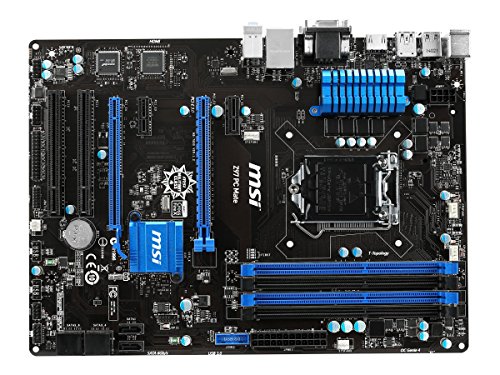
MSI Intel Z97 LGA 1150 DDR3 USB 3.1 ATX Motherboard (Z97 PC Mate)
The MSI Z97 PC Mate is an ATX motherboard built around the Z97 chipset for the LGA 1150 socket, with 4x DDR3 up to 32GB and DDR3 3300 overclocked support. It is the value Z97 board in this guide: two PCIe x16 slots, an M.2 slot for fast storage, and USB 3.1, with HDMI, DVI, and VGA for the monitor. The Z97 chipset adds overclocking for unlocked Haswell processors, so a gaming build gets headroom at the lowest cost in this guide. For a buyer building a 4th generation Intel gaming PC on a budget, this model is a practical starting point.
Key specifications: LGA 1150 socket, Z97 chipset, ATX form factor, 4x DDR3 up to 32GB, DDR3 3300 OC, expansion: 2x PCIe x16, 2x PCIe x1, 1x M.2, HDMI, DVI, VGA, Gigabit LAN, USB 3.1.
Where it stands out:
- ATX size with room for two graphics cards
- USB 3.1 for faster external storage
- Z97 overclocking for unlocked Haswell processors
Trade-offs:
- No WiFi built in
- Only one M.2 slot
- Basic audio, so a headset or sound card suits serious play
Best for: budget Haswell gaming builds Not suited for: builds that need WiFi or a smaller board
Setting up the MSI Z97 PC Mate takes little more than the processor, the memory, and a few minutes with the manual. Fit the processor into the LGA 1150 socket, close the retention arm, and fit the memory into the slots the manual marks for a two-stick kit. Mount the board on the case standoffs, connect the power cables firmly, and boot the PC before installing the latest chipset driver and BIOS from the maker’s site. Check in the BIOS that the memory runs at its rated speed, because a board that is still being adjusted mid-build helps nobody.
Compared with the other boards in this guide, the MSI Z97 PC Mate earns its place through its low cost and its USB 3.1 ports. That is the feature most likely to decide the purchase, and it is worth weighing against the board’s limits: no WiFi built in. Buyers who need that missing feature should choose a different pick from this guide, while buyers who do not will find this model covers the job with little fuss. Check the socket and the return policy before ordering, and test the board within the return window, booting with the real processor and memory and checking every slot and port.
The Z97 PC Mate is the value board in this guide: a Z97 board with USB 3.1 and an M.2 slot in a full ATX size. For a 4th generation Intel gaming build on a budget, it is the tidy pick.
Check price on Amazon: MSI Intel Z97 LGA 1150 DDR3 USB 3.1 ATX Motherboard (Z97 PC Mate)
Buying Guide
Socket: the socket decides the processor
Socket decides which processors a board can take, because a processor only fits the socket it was made for, and a board with the wrong socket cannot take the chip at all. An AM4 board takes Ryzen 1000 to 5000 series processors, while an LGA1700 board takes 12th to 14th generation Intel Core processors, and an LGA1200 board takes 10th and 11th generation Intel Core processors.
The practical check is the socket on the specification sheet against the processor already chosen, before ordering. A socket that fits the processor is a socket that works, and a board whose socket matches the chip is a board that does not surprise the builder.
Chipset: the chipset decides the features
Chipset decides which features a board unlocks, because a high-end chipset allows overclocking and more fast storage, while a budget chipset blocks overclocking and offers fewer lanes. An X570 board suits a Ryzen build that wants PCIe 4.0 and overclocking, while a B550 board suits a Ryzen build that wants most of the same features for less, and a B450 board suits a budget Ryzen build.
The practical rule is to check the chipset on the specification sheet and to match it to the build, before ordering. A chipset that fits the build is a chipset that works, and a board whose chipset unlocks the features the build needs is a board that does not hold it back.
Form factor: the board must fit the case
Form factor decides whether a board fits the case, because an ATX board needs a mid-tower or larger case, while a micro-ATX board fits a smaller case and a mini-ITX board fits a compact case. A board that is too large for the case cannot be mounted, and a board that is much smaller than the case wastes space and expansion slots.
The practical advice is to measure the case before ordering, and to choose a board whose form factor matches it, because a board that fits the case is a board that works. A case that is measured before ordering is a case that does not surprise the builder.
Memory: slots, speed, and capacity
Memory decides how much a board can hold and how fast it can run, because a board with four DIMM slots holds more memory than a board with two, and a board that supports faster memory will run it at its rated speed. Most ATX boards take four DIMM slots and up to 128GB of DDR4 or DDR5, while a mini-ITX board takes two slots and up to 64GB.
The practical rule is to check the memory slots and the supported speeds on the specification sheet before ordering, and to buy memory from the board maker's compatibility list where possible, because memory that is listed as compatible is memory that works. A board whose memory fits the build is a board that boots first time.
Expansion: PCIe slots and M.2 storage
Expansion decides what a board can hold, because a board with three PCIe x16 slots can take two graphics cards, while a board with one slot takes one, and a board with three M.2 slots holds more fast storage than a board with one. A board with WiFi 6 and 2.5GbE suits a build that needs fast wireless and wired networking without extra cards.
The practical advice is to count the slots the build needs before ordering, and to choose a board that has them, because a board that lacks a slot the build needs is a board that forces a second purchase. Expansion that fits the build is expansion that works.
Setting Up Your Motherboard
Installing the board in the case
Fit the processor into the socket first, closing the retention arm before the board goes into the case, because a processor fitted after the board is mounted is harder to seat properly. Fit the memory into the slots the manual marks for a two-stick kit, then mount the board on the case standoffs and tighten the screws in a diagonal pattern so the board sits flat.
If the board does not sit flat, check the standoffs: a standoff in the wrong place will short the board. Remove it, and a board that sits flat is a board that works.
First boot and the BIOS
Connect the power cables firmly, including the 8-pin CPU power connector, and boot the PC before installing anything else, because a board that posts cleanly on first boot is a board that works. Enter the BIOS and check that the processor and the memory are detected, then set the memory to its rated speed with the board's memory profile.
If the board does not post, check the CPU power cable: a board without CPU power will not boot. Seat it firmly, and a board that posts is a board that works.
Drivers and BIOS updates
Install the latest chipset driver from the board maker's site after the operating system is installed, because the chipset driver is what lets the operating system talk to the board properly. Check the BIOS version against the maker's site, and update it only if the new version adds support for the processor or fixes a fault the build actually has.
If a new processor is not detected, check the BIOS version: a board may need a newer BIOS for a newer processor. Update it carefully, and a board whose BIOS matches the processor is a board that works.
Common Mistakes to Avoid
Buying a board with the wrong socket
A board with the wrong socket cannot take the processor at all, and the buyer lives with a board that must be returned. The socket should be checked against the processor before ordering, because a socket that matches is a socket that works.
Check the socket. A board that fits the processor is a board that works.
Buying a board that does not fit the case
A board that is too large for the case cannot be mounted, and the buyer lives with a case that must be replaced. The form factor should be checked against the case before ordering, because a board that fits the case is a board that works.
Measure the case. A board that fits is a board that works.
Forgetting the BIOS update for a newer processor
A board that needs a newer BIOS for a newer processor will not boot with that processor, and the buyer lives with a PC that shows nothing. The BIOS version should be checked against the processor before ordering, and a board with BIOS flashback can be updated without a compatible processor.
Check the BIOS. A board whose BIOS matches is a board that boots.
Skimping on the power supply
A power supply that cannot feed the board and the graphics card will crash under load, and the buyer lives with a PC that restarts during games. The power supply should be sized for the whole build, with headroom for the graphics card, before ordering.
Size the power supply. A build that is fed properly is a build that works.
Further Reading
More on this topic from Gizmoverdict: best 400-series motherboards, best X570 motherboards for 3800X, best 550 motherboards, best 570 motherboards.
Matching the Graphics Card to a Haswell Board
A Haswell board with three PCIe slots can take a modern graphics card, because the PCIe 3.0 x16 slot on a Z97 board is fast enough for most cards, and the card will run at its full speed. Check the card’s length against the case before ordering, because a long card will not fit a compact case, and check the power supply before ordering, because a card that needs two power connectors will not run on a supply that has one. A card that fits the case and the power supply is a card that works.
The second check is the processor, because a Haswell processor will hold back the fastest graphics cards, and a card that is too fast for the processor will sit idle while the processor struggles. A mid-range card suits a Haswell build, because it matches the processor’s speed, while a flagship card suits a newer processor. Match the card to the processor, and the build will run smoothly, because a card that matches the processor is a card that is used properly.
The last check is the monitor, because a graphics card that drives a 4K screen needs more power than a card that drives a 1080p screen, and a card bought for a 1080p screen will struggle at 4K. Check the monitor’s resolution before ordering, and choose a card that fits it, because a card that fits the monitor is a card that shows games properly. A Haswell board with a matched card is a board that games well, and that is the build worth keeping.
Frequently Asked Questions
What is the best best 1150 gaming motherboards?
The ASUS Maximus VII Hero brings the best all-round board in this guide, because its socket and chipset cover the job without obvious gaps. The MSI Z97 PC Mate brings the best value board, and the ASUS Z97-E brings the best board for connectivity.
Does the chipset matter if I do not overclock?
Yes, because the chipset also decides the number of fast storage slots, the USB ports, and the networking on the board. A board with a higher chipset offers more M.2 slots and faster USB even without overclocking, so the chipset is worth checking even for a build that never overclocks.
How much memory can a board take?
Most ATX boards take four DIMM slots and up to 128GB of memory, while a mini-ITX board takes two slots and up to 64GB. Check the specification sheet for the maximum capacity and the supported speeds, and buy memory from the board maker's compatibility list where possible.
Do I need WiFi on the motherboard?
A board with built-in WiFi suits a build that cannot run a cable to the router, because it adds wireless without an extra card. A board without WiFi suits a build with a wired connection, and a WiFi card can be added later if the need arises. Check the specification sheet before ordering.
Can I reuse an old processor on a new board?
Only if the socket matches, because a processor only fits the socket it was made for. Check the socket on the old processor against the socket on the new board, and check the board maker's CPU support list, because a board may need a BIOS update for a newer processor in the same socket.
Final Recommendation
The best 1150 gaming motherboards are the boards that fit the processor and the case: the ASUS Maximus VII Hero for the best all-round board, the MSI Z97 PC Mate for the best value board, and the ASUS Z97-E for the best board for connectivity. The other picks in this guide cover overclocking, compact builds, and simple daily use, so the shortlist has a board for most builds.
Whichever board fits the build, check the socket against the processor, match the chipset to the features the build needs, measure the case before ordering, and check the BIOS version against the processor before the first boot. A board that is chosen and installed properly runs for years, and that is the board worth buying.