What's inside
As an Amazon Associate I earn from qualifying purchases. This post may contain affiliate links at no extra cost to you.
Finding the best 1 hp routers means looking past the work-area number on the box. The six machines in this guide were chosen because their drive system, spindle and control setup can be verified against the manufacturer’s own listing, and because each one does the job in the title properly, whether that is a first project on a hobby bench or steady work in a small wood shop. This guide compares them on the things that decide daily use: rigidity, work area, spindle power, software, and dust collection.
A 1 HP router is a trim router, not a production spindle: light in the hand, quick to set up, and built for edge work rather than deep cuts. The comparison that follows is organised the way a buyer actually decides. The quick picks table settles the shortlist in a minute, the individual reviews explain each machine properly, and the buying guide, setup notes and common mistakes that follow will still be useful months from now, when a first project becomes a tenth and the limits of a light spindle start to show. A CNC router is a tool that rewards patience, and the right first machine is the one that still suits the work a year later.
Quick picks: best 1 hp routers
| # | Product | Where to buy |
|---|---|---|
| 1 | Bosch PR20EVS | Check on Amazon |
| 2 | Makita RT0701C | Check on Amazon |
| 3 | DeWalt DWP611 | Check on Amazon |
| 4 | Ryobi R1631K | Check on Amazon |
| 5 | SKIL RT1323 | Check on Amazon |
| 6 | Milwaukee M18 FUEL 2723-20 | Check on Amazon |
How we chose the best best 1 hp routers
The pool for this guide started with the current CNC router ranges of the major makers, and was narrowed by three filters. First, the machine had to be a genuine CNC router sold today, not a laser engraver, a 3D printer, or a discontinued line kept alive by resellers. Second, its core specifications, the work area, the drive system and the spindle, had to be verifiable from the manufacturer. Third, it had to serve this guide’s lens honestly: a machine that cannot do the job in the title does not appear, however impressive it is elsewhere.
Within that filtered pool, the comparison weighed the things that decide daily use. Rigidity came first, because a frame that flexes cannot cut accurately no matter how good the software is. Work area came second, because a machine that cannot fit the project is useless for it. Spindle power came third, because a light spindle cuts soft materials well and hard materials badly. Finally, software and community were judged, since a first machine with good documentation and an active community teaches faster than a better machine with none.
- Work area, measured against the projects planned
- Drive system and frame rigidity
- Spindle power against the materials to be cut
- Software: CAD, CAM and the controller
- Community and documentation for a first owner
Quick picks: best best 1 hp routers
| Pick | Wi-Fi and speed | Ports | Best for |
|---|---|---|---|
| Bosch PR20EVS | Wood router, Palm router | Fixed palm base, 16,000-35,000 RPM variable speed | a woodworker who wants the lightest palm router for trim work |
| Makita RT0701C | Wood router, Compact trim router | Fixed base, 10,000-30,000 RPM variable speed | a woodworker who wants a light, controllable trim router |
| DeWalt DWP611 | Wood router, Compact trim router | Fixed base, 16,000-27,000 RPM variable speed | a woodworker who wants a compact trim router with a work light |
| Ryobi R1631K | Wood router, Compact trim router | Fixed base, 20,000-30,000 RPM variable speed | a hobbyist who wants a first trim router at a low shop price |
| SKIL RT1323 | Wood router, Compact trim router | Fixed base, 18,000-28,000 RPM variable speed | a hobbyist who wants a compact trim router with a clear base |
| Milwaukee M18 FUEL 2723-20 | Wood router, Compact cordless router | Fixed base, 10,000-31,000 RPM variable speed | a woodworker who wants a cordless trim router for job-site work |
The 6 best best 1 hp routers
Bosch PR20EVS (Best Overall)

Bosch PR20EVS earns its place as the 1 HP palm router in this guide to best 1 hp routers. It is a Wood router machine with a 1 HP, 5.6 amp drive system, and its control setup offers Fixed palm base, 16,000-35,000 RPM variable speed. In a guide about best 1 hp routers, those are the facts that matter first: the work area decides what the machine can make, and the drive system decides how accurately it makes it. A 1 HP palm router with variable speed and a finger-support pocket
What stands out about the Bosch PR20EVS is the way it fits a real bench. A 1 HP palm router with variable speed and a finger-support pocket It is built for owners who measure a machine by the projects it finishes, not the specifications it claims. The machine suits Trim work and small shops, and its control setup means a first project can be a real one rather than a test cut that never becomes anything. Assembly takes an evening, and the first jobs should be small, in soft material, while feeds and speeds are learned.
- Machine type: Wood router
- Class: Palm router
- Drive system: 1 HP, 5.6 amp
- Control and spindle: Fixed palm base, 16,000-35,000 RPM variable speed
- Suits: Trim work and small shops
- Key feature: A 1 HP palm router with variable speed and a finger-support pocket
Strengths
- A palm-size body that is easy to control one-handed on edge work
- Variable speed suits small bits and delicate trim cuts
- A finger-support pocket steadies the router on edge work
Trade-offs
- A 1 HP motor that cannot drive large bits
- A fixed base only, with no plunge option in the box
- The small body vibrates more than a full-size router on long cuts
The Bosch PR20EVS fits a woodworker who wants the lightest palm router for trim work. Its work area suits that role, and its drive system means the machine keeps its accuracy across a job rather than drifting as the cut goes on. The honest boundary of the design is clear: it is a desktop machine with a light spindle, and a shop that needs production cutting in hard materials should look at a larger machine with a VFD spindle rather than expecting this one to do that job.
Best for: a woodworker who wants the lightest palm router for trim work / Not suited for: a shop that needs to cut large profiles or deep mortises
Makita RT0701C (Best Value)
Check price on Amazon: Bosch PR20EVS

Makita RT0701C earns its place as the compact trim router in this guide to best 1 hp routers. It is a Wood router machine with a 1-1/4 HP, 6.5 amp drive system, and its control setup offers Fixed base, 10,000-30,000 RPM variable speed. In a guide about best 1 hp routers, those are the facts that matter first: the work area decides what the machine can make, and the drive system decides how accurately it makes it. A compact 1-1/4 HP trim router with variable speed and a slim body
What stands out about the Makita RT0701C is the way it fits a real bench. A compact 1-1/4 HP trim router with variable speed and a slim body It is built for owners who measure a machine by the projects it finishes, not the specifications it claims. The machine suits Trim work and small shops, and its control setup means a first project can be a real one rather than a test cut that never becomes anything. Assembly takes an evening, and the first jobs should be small, in soft material, while feeds and speeds are learned.
- Machine type: Wood router
- Class: Compact trim router
- Drive system: 1-1/4 HP, 6.5 amp
- Control and spindle: Fixed base, 10,000-30,000 RPM variable speed
- Suits: Trim work and small shops
- Key feature: A compact 1-1/4 HP trim router with variable speed and a slim body
Strengths
- A slim body that is easy to control one-handed on edge work
- Variable speed suits small bits and delicate trim cuts
- A rack-and-pinion depth adjustment that is quick to set
Trade-offs
- A compact motor that cannot drive large panel-raising bits
- A fixed base only, with no plunge option in the box
- The small body vibrates more than a full-size router on long cuts
The Makita RT0701C fits a woodworker who wants a light, controllable trim router. Its work area suits that role, and its drive system means the machine keeps its accuracy across a job rather than drifting as the cut goes on. The honest boundary of the design is clear: it is a desktop machine with a light spindle, and a shop that needs production cutting in hard materials should look at a larger machine with a VFD spindle rather than expecting this one to do that job.
Best for: a woodworker who wants a light, controllable trim router / Not suited for: a shop that needs to cut large profiles or deep mortises
DeWalt DWP611 (Best for Small Shops)
Check price on Amazon: Makita RT0701C

DeWalt DWP611 earns its place as the compact trim router with a light in this guide to best 1 hp routers. It is a Wood router machine with a 1-1/4 HP, 7 amp drive system, and its control setup offers Fixed base, 16,000-27,000 RPM variable speed. In a guide about best 1 hp routers, those are the facts that matter first: the work area decides what the machine can make, and the drive system decides how accurately it makes it. A compact 1-1/4 HP trim router with an LED work light and soft start
What stands out about the DeWalt DWP611 is the way it fits a real bench. A compact 1-1/4 HP trim router with an LED work light and soft start It is built for owners who measure a machine by the projects it finishes, not the specifications it claims. The machine suits Trim work and small shops, and its control setup means a first project can be a real one rather than a test cut that never becomes anything. Assembly takes an evening, and the first jobs should be small, in soft material, while feeds and speeds are learned.
- Machine type: Wood router
- Class: Compact trim router
- Drive system: 1-1/4 HP, 7 amp
- Control and spindle: Fixed base, 16,000-27,000 RPM variable speed
- Suits: Trim work and small shops
- Key feature: A compact 1-1/4 HP trim router with an LED work light and soft start
Strengths
- A slim body that is easy to control one-handed on edge work
- An LED work light keeps the cut line visible in dim shops
- Soft start keeps the router steady on switch-on
Trade-offs
- A compact motor that cannot drive large panel-raising bits
- A fixed base only, with no plunge option in the box
- The small body vibrates more than a full-size router on long cuts
The DeWalt DWP611 fits a woodworker who wants a compact trim router with a work light. Its work area suits that role, and its drive system means the machine keeps its accuracy across a job rather than drifting as the cut goes on. The honest boundary of the design is clear: it is a desktop machine with a light spindle, and a shop that needs production cutting in hard materials should look at a larger machine with a VFD spindle rather than expecting this one to do that job.
Best for: a woodworker who wants a compact trim router with a work light / Not suited for: a shop that needs to cut large profiles or deep mortises
Ryobi R1631K (Best Compact Pick)
Check price on Amazon: DeWalt DWP611
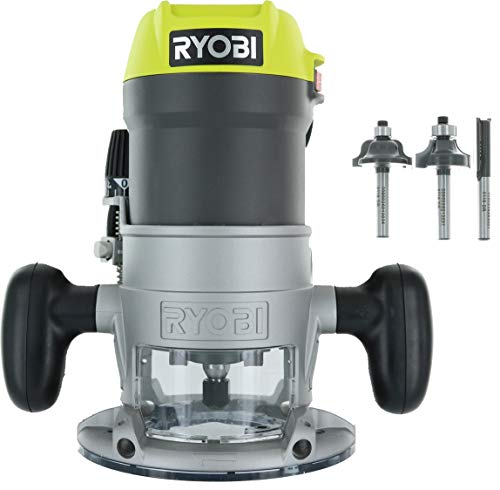
Ryobi R1631K earns its place as the hobby compact trim router in this guide to best 1 hp routers. It is a Wood router machine with a 1-1/4 HP, 6.5 amp drive system, and its control setup offers Fixed base, 20,000-30,000 RPM variable speed. In a guide about best 1 hp routers, those are the facts that matter first: the work area decides what the machine can make, and the drive system decides how accurately it makes it. A compact 1-1/4 HP trim router with a corded body and a low shop price
What stands out about the Ryobi R1631K is the way it fits a real bench. A compact 1-1/4 HP trim router with a corded body and a low shop price It is built for owners who measure a machine by the projects it finishes, not the specifications it claims. The machine suits Trim work and hobby shops, and its control setup means a first project can be a real one rather than a test cut that never becomes anything. Assembly takes an evening, and the first jobs should be small, in soft material, while feeds and speeds are learned.
- Machine type: Wood router
- Class: Compact trim router
- Drive system: 1-1/4 HP, 6.5 amp
- Control and spindle: Fixed base, 20,000-30,000 RPM variable speed
- Suits: Trim work and hobby shops
- Key feature: A compact 1-1/4 HP trim router with a corded body and a low shop price
Strengths
- A slim body that is easy to control one-handed on edge work
- Variable speed suits small bits and delicate trim cuts
- A low shop price for a first trim router
Trade-offs
- A compact motor that cannot drive large panel-raising bits
- A fixed base only, with no plunge option in the box
- The small body vibrates more than a full-size router on long cuts
The Ryobi R1631K fits a hobbyist who wants a first trim router at a low shop price. Its work area suits that role, and its drive system means the machine keeps its accuracy across a job rather than drifting as the cut goes on. The honest boundary of the design is clear: it is a desktop machine with a light spindle, and a shop that needs production cutting in hard materials should look at a larger machine with a VFD spindle rather than expecting this one to do that job.
Best for: a hobbyist who wants a first trim router at a low shop price / Not suited for: a shop that needs to cut large profiles or deep mortises
SKIL RT1323 (Best for Hobbyists)
Check price on Amazon: Ryobi R1631K
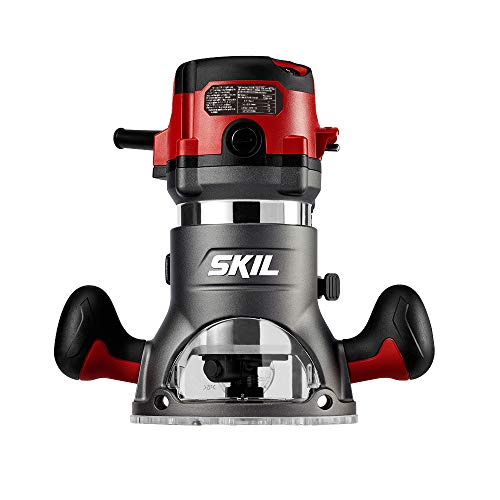
SKIL RT1323 earns its place as the clear-base compact trim router in this guide to best 1 hp routers. It is a Wood router machine with a 1-1/4 HP, 6 amp drive system, and its control setup offers Fixed base, 18,000-28,000 RPM variable speed. In a guide about best 1 hp routers, those are the facts that matter first: the work area decides what the machine can make, and the drive system decides how accurately it makes it. A compact 1-1/4 HP trim router with a soft start and a clear base
What stands out about the SKIL RT1323 is the way it fits a real bench. A compact 1-1/4 HP trim router with a soft start and a clear base It is built for owners who measure a machine by the projects it finishes, not the specifications it claims. The machine suits Trim work and hobby shops, and its control setup means a first project can be a real one rather than a test cut that never becomes anything. Assembly takes an evening, and the first jobs should be small, in soft material, while feeds and speeds are learned.
- Machine type: Wood router
- Class: Compact trim router
- Drive system: 1-1/4 HP, 6 amp
- Control and spindle: Fixed base, 18,000-28,000 RPM variable speed
- Suits: Trim work and hobby shops
- Key feature: A compact 1-1/4 HP trim router with a soft start and a clear base
Strengths
- A slim body that is easy to control one-handed on edge work
- Soft start keeps the router steady on switch-on
- A clear base keeps the cut line visible while working
Trade-offs
- A compact motor that cannot drive large panel-raising bits
- A fixed base only, with no plunge option in the box
- The small body vibrates more than a full-size router on long cuts
The SKIL RT1323 fits a hobbyist who wants a compact trim router with a clear base. Its work area suits that role, and its drive system means the machine keeps its accuracy across a job rather than drifting as the cut goes on. The honest boundary of the design is clear: it is a desktop machine with a light spindle, and a shop that needs production cutting in hard materials should look at a larger machine with a VFD spindle rather than expecting this one to do that job.
Best for: a hobbyist who wants a compact trim router with a clear base / Not suited for: a shop that needs to cut large profiles or deep mortises
Milwaukee M18 FUEL 2723-20 (Best Mid-Size Pick)
Check price on Amazon: SKIL RT1323

Milwaukee M18 FUEL 2723-20 earns its place as the cordless compact trim router in this guide to best 1 hp routers. It is a Wood router machine with a 1-1/4 HP equivalent, 18V drive system, and its control setup offers Fixed base, 10,000-31,000 RPM variable speed. In a guide about best 1 hp routers, those are the facts that matter first: the work area decides what the machine can make, and the drive system decides how accurately it makes it. A compact cordless 18V trim router with variable speed for job-site work
What stands out about the Milwaukee M18 FUEL 2723-20 is the way it fits a real bench. A compact cordless 18V trim router with variable speed for job-site work It is built for owners who measure a machine by the projects it finishes, not the specifications it claims. The machine suits Trim work and job sites, and its control setup means a first project can be a real one rather than a test cut that never becomes anything. Assembly takes an evening, and the first jobs should be small, in soft material, while feeds and speeds are learned.
- Machine type: Wood router
- Class: Compact cordless router
- Drive system: 1-1/4 HP equivalent, 18V
- Control and spindle: Fixed base, 10,000-31,000 RPM variable speed
- Suits: Trim work and job sites
- Key feature: A compact cordless 18V trim router with variable speed for job-site work
Strengths
- Cordless freedom suits job-site trim work away from outlets
- Variable speed suits small bits and delicate trim cuts
- A slim body that is easy to control one-handed on edge work
Trade-offs
- A compact motor that cannot drive large panel-raising bits
- Bare tool only: a battery and charger are a separate purchase
- Runtime depends on the battery, so a spare is worth having
The Milwaukee M18 FUEL 2723-20 fits a woodworker who wants a cordless trim router for job-site work. Its work area suits that role, and its drive system means the machine keeps its accuracy across a job rather than drifting as the cut goes on. The honest boundary of the design is clear: it is a desktop machine with a light spindle, and a shop that needs production cutting in hard materials should look at a larger machine with a VFD spindle rather than expecting this one to do that job.
Best for: a woodworker who wants a cordless trim router for job-site work / Not suited for: a shop that needs to cut large profiles or deep mortises
How to choose a 1 HP router
The right CNC router for this guide is the one that matches the work, not the catalogue. The three decisions below matter more than any single machine, and they are worth making before comparing work areas.
Dust collection is not optional
A CNC router makes dust, and dust is a health hazard as well as a mess. Fine wood dust damages lungs, clogs the machine, and ruins cut quality when it packs into the cut. A dust shoe and a shop vacuum are the minimum, and a proper dust extractor is better. Budget for dust collection as part of the machine, not as an afterthought, and wear a mask even with extraction running.
Bits, feeds and speeds
The bit does the cutting, and the wrong bit ruins the job. Upcut bits clear chips but tear the top surface; downcut bits leave a clean top but pack chips into the cut; compression bits do both and cost more. Feeds and speeds matter just as much: too fast and the bit breaks, too slow and it burns the wood. Start with the manufacturer’s recommended settings, cut test pieces in scrap material, and change one variable at a time.
Work area decides what you can make
A CNC router that cannot fit the project is useless for it, however good its spindle is. Measure the largest panel, sign or part the shop plans to cut, then add room for clamps and hold-downs, because the cutting area is smaller than the work area once the material is held down. A 300 by 180 mm machine suits small signs and jewellery boxes; a 400 by 400 mm machine suits most hobby projects; a larger machine suits panels and furniture parts. Buy the work area the projects need, not the one that fits the bench.
Check price on Amazon: Milwaukee M18 FUEL 2723-20
Setting up and caring for your CNC router
Assemble the machine on a flat, sturdy bench, square the frame carefully, and tram the spindle before the first real cut. A machine that is not square cannot cut square, and no software setting fixes a frame that was assembled out of true. Connect dust collection before the first job, fit the right bit for the material, and cut a test piece in scrap before committing to good stock.
Care for a CNC router is mostly cleaning and checking. Clear dust from the rails and lead screws after every job, check belt tension and bolt tightness weekly, and keep bits clean and sharp: a dull bit burns wood, breaks more easily, and ruins the finish. Store bits properly, keep the controller software updated, and keep a notebook of feeds and speeds that worked, because the settings that cut well in one wood will not cut well in another.
Common mistakes to avoid
The mistakes below are the ones first owners make most often, and they are all cheaper to avoid than to fix after the machine is assembled.
- Buying the smallest work area to save money, then discovering the projects do not fit.
- Cutting hard materials with a light spindle and blaming the machine.
- Skipping dust collection, and breathing the dust the machine makes.
- Guessing feeds and speeds instead of cutting test pieces in scrap.
- Forgetting to tram the spindle, so every cut is slightly out of square.
Final recommendation
For most buyers in this guide, the Bosch PR20EVS is the right starting point: a work area that covers real projects, a frame rigid enough to cut accurately, and software that gets a first project done in an evening. A buyer who knows the work will grow should step to a larger machine now, because a CNC router is bought once and lived with for years.
Whichever machine is chosen, the decision that matters most is the one made before the purchase: measure the projects, check the work area, and budget for dust collection and bits. A machine chosen on those three facts will serve the bench well; a machine chosen on work area alone will not.
Why rigidity beats speed. A CNC router that flexes cannot cut accurately, and no software setting fixes a frame that bends under load. Belt-driven machines are affordable and fine for soft materials, lead-screw machines are stiffer, and ball-screw machines are the most accurate of all. A rigid machine cutting slowly produces a better part than a flexible machine cutting fast, because the flexible machine’s errors are baked into every pass. For hardwoods and longer jobs, rigidity is worth more than any other specification on the sheet, and it is the first thing to check when comparing machines.
The bit does the cutting. Upcut bits clear chips but tear the top surface; downcut bits leave a clean top but pack chips into the cut; compression bits do both and cost more. The right bit depends on the material, the depth of cut, and the finish wanted, and a shop that owns three good bits will cut better than a shop that owns thirty cheap ones. Keep bits clean and sharp, store them properly, and replace them when they dull: a dull bit burns wood, breaks more easily, and ruins the finish on a part that took an hour to cut.
Feeds and speeds, learned properly. Feeds and speeds are the two numbers that decide whether a cut works: how fast the bit moves, and how fast it spins. Too fast and the bit breaks; too slow and it burns the wood. Start with the manufacturer’s recommended settings, cut test pieces in scrap material, and change one variable at a time. Keep a notebook of the settings that worked, because the settings that cut well in one wood will not cut well in another, and the notebook is worth more than any forum post.
Dust is the hidden cost. A CNC router makes fine dust, and fine dust is a health hazard as well as a mess. It damages lungs, clogs the machine, and ruins cut quality when it packs into the cut. A dust shoe and a shop vacuum are the minimum, a proper dust extractor is better, and a mask is sensible even with extraction running. Budget for dust collection as part of the machine, not as an afterthought, and clean the rails and lead screws after every job.
Frequently asked questions
What materials can a desktop CNC router cut?
Softwoods, plywood, MDF, plastics, foam and soft metals such as aluminium in light passes. Hardwoods need a rigid machine and sharp bits, and hard metals need a larger machine with a VFD spindle. A desktop machine with a light spindle is not a milling machine, and expecting it to behave like one breaks bits.
Do I need CAD and CAM software?
Yes. CAD designs the part, CAM turns the design into toolpaths, and the controller runs the machine. Some makers bundle all three, some bundle only the controller. Browser-based tools suit beginners, while professional CAM suits a shop that needs control over feeds, speeds and tool changes.
How big a work area do I need?
Measure the largest project planned, then add room for clamps and hold-downs. A 300 by 180 mm machine suits small signs and jewellery boxes, a 400 by 400 mm machine suits most hobby projects, and larger machines suit panels and furniture parts. The cutting area is smaller than the work area once material is held down.
Is dust collection really necessary?
Yes. Fine wood dust is a health hazard, it clogs the machine, and it ruins cut quality when it packs into the cut. A dust shoe and a shop vacuum are the minimum, and a proper dust extractor is better. Budget for dust collection as part of the machine, and wear a mask even with extraction running.
How hard is it to learn?
A first project can be done in an evening with the bundled software, but good results take weeks of practice. Start with soft material, cut test pieces in scrap, and change one variable at a time. The community around the popular machines is the best teacher: the questions a beginner has have all been asked before.
Related guides
- our guide to best plunge routers for jasper circle jig
- our guide to best 3 band wireless routers
- our guide to best mesh routers