Our Top Picks
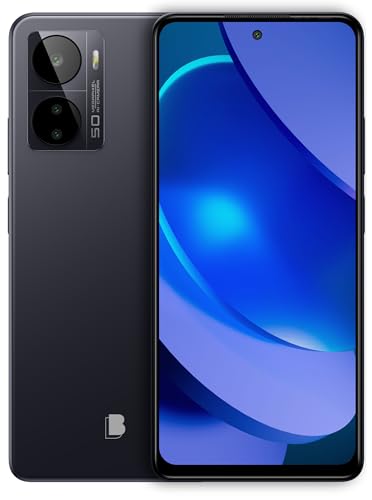
 6Pack Adhesive Card Holder for Back of Phone3.42 x 2.24 x 0.19 inches0.5 x 2 x 3 inchesCheck on Amazon
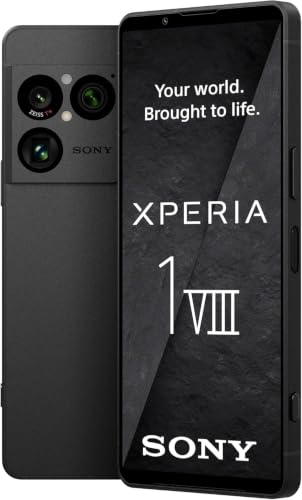
 Phone Card Holder Stretchy Wallet Pocket Credit Card4-inch LCDs or larger0.14 x 2.3 x 3.55 inches0 poundsCheck on Amazon
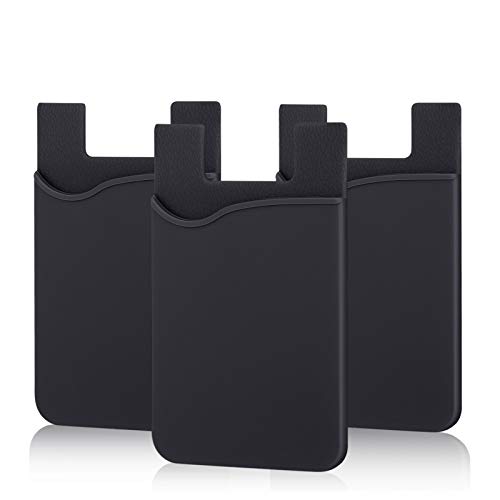 Adhesive Phone Card Holder3.42 x 2.24 x 0.12 inches0.12 x 3.42 x 0.12 inches0.07 poundsCheck on Amazon


What's inside
- What a card sleeve is, and the three families that matter
- Card capacity and retention: how pockets hold, stretch, and let go
- RFID and NFC: what shielding linings do, and when they matter
- Wireless charging and magnetic mounts: where cards get in the way
- Fit and sizing: matching a sleeve to a modern phone
- Materials: leather, linings, fabrics, and the details that decide lifespan
- Protection limits: what a sleeve cannot do, stated plainly
- Carry patterns: pockets, bags, straps, and the minimal-wallet calculation
- Care and longevity: keeping leather, elastic, and linings in good order
- How to choose: a decision sequence that avoids the common regrets
- Check prices on Amazon
- Questions buyers ask most, answered directly
As an Amazon Associate I earn from qualifying purchases. This post may contain affiliate links at no extra cost to you.
A card sleeve for a smartphone answers a simple, stubborn problem: most people leave home with a phone, a payment card, an identity card, and perhaps a transit card, yet they do not always want a full wallet, a bulky folio, or a phone case that turns a slim handset into a brick. A sleeve solves that tension in a deliberately partial way. It covers the phone for transport, or it attaches to the phone, and it gives those few cards a defined home. It does not try to carry coins, a long receipt, a bundle of notes, or a loyalty card for every shop in town. That restraint is the point. When the design is honest about its limits, a sleeve can make a daily carry lighter, quicker to check, and easier to keep tidy. When the design pretends to do more than it can, pockets bulge, cards slip, charging fails, and the phone itself becomes harder to use.
This guide works through the three main families of card sleeve, the real differences in capacity and retention, what radio-frequency shielding does and does not do, how cards interact with wireless charging and magnetic mounts, how to size a sleeve for modern large phones, which materials age well, where protection stops, how people actually carry these products, and how to look after them. Everything here rests on published dimensions, material grades, manufacturer documentation, and widely used standards for contactless cards and wireless power. Card counts, thickness figures, and screen sizes are physical facts you can verify with a ruler and the maker product page, and they matter more than styling photographs that hide seams, pocket openings, and the true bulk of a loaded sleeve.
If you buy through links in this guide, the retailer may pay this site a commission and you will pay no extra for your purchase.
What a card sleeve is, and the three families that matter
The first family is the slip sleeve with an outside card pocket. Think of a simple pouch, open at one end, shaped closely to the phone. The phone slides in for transport and slides out for use, bare and unencumbered while you hold it. On the front or back of that pouch sits a flat pocket, sometimes divided into two slots, for cards. The appeal is separation. At a desk, in a hand, or on a call, the phone feels like a phone, with no added thickness and no flap to fold back. In a pocket or bag, the sleeve takes the scuffs, keeps the screen away from keys, and keeps cards with the device you are least likely to forget. People who dislike cases, who swap phones onto stands and mounts often, or who work at a desk all day tend to prefer this layout.
The second family is the wallet sleeve. The name covers two related forms. One is a slip pouch with a larger card section, perhaps three or four slots plus a central compartment for folded notes. The other is a fitted or semi-fitted cover that stays on the phone and carries cards on its back or under a front flap. Both aim at wallet replacement rather than wallet reduction. The promise is bolder: leave the separate wallet at home for most days. That promise only holds if your real wallet is already lean. If you carry six cards, cash in several notes, coins, and paper, no slim sleeve will absorb that load without distortion. If your daily set is a bank card, an identity card, a transit card, and one folded note for emergencies, a wallet sleeve can credibly replace the wallet on workdays, school runs, gym trips, and evenings out.
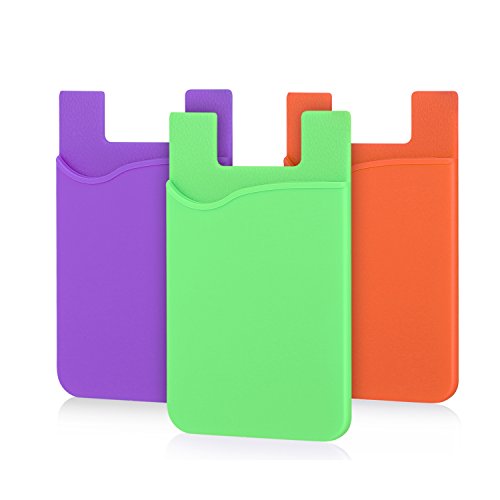
The third family is the stick-on card holder. This is a small pocket, usually fabric, synthetic leather, or silicone, with an adhesive back that bonds to the rear of a phone or to the rear of a smooth case. It adds almost no structure and very little weight. It simply gives one to three cards a home on a device that otherwise has nowhere to put them. Students, runners, festival visitors, and anyone who wants a backup card attached to the phone they already carry often choose this route. The trade is permanence and placement. Adhesive works best on smooth, flat, clean surfaces, struggles on textured silicone and heavily curved backs, and leaves the pocket exactly where you placed it, which may sit over a charging coil or a magnetic alignment ring if you place it without checking.
Who should skip a sleeve entirely? Anyone who needs drop protection first, anyone who carries many cards, and anyone whose phone lives on wireless chargers and magnetic mounts. A sleeve is a carry solution first and a protection solution second, a limit later sections address directly.
best 3rd party iphone chargers
Card capacity and retention: how pockets hold, stretch, and let go
Capacity figures look simple. One card, two cards, three cards, four cards. The lived reality depends on card thickness, pocket cut, and material behaviour over time. A standard payment card follows the ID-1 format defined in ISO/IEC 7810, roughly 85.6 millimetres long and 53.98 millimetres wide, with a typical thickness near 0.76 millimetres for a rigid plastic card. Embossed numbers, where they still exist, add local height. Metal payment cards are heavier and less flexible. Hotel key cards and paper transit tickets are thinner and bend more easily. A pocket rated for three cards may accept three flat plastic cards comfortably, accept two cards plus a folded note with effort, and reject a metal card plus two plastic cards without forcing the seams.
Stitched pockets hold their shape through thread and cut. A leather or synthetic pocket sewn on three sides starts with a fixed opening width. Early on it may feel tight, and makers of leather goods often note a break-in period during which the material relaxes around the load it carries most often. That relaxation is real and useful up to a point. A pocket that has moulded to two cards will hold two cards with a reassuring friction. The risk comes when you stretch that same pocket to four cards for a holiday, then return to one card for daily use. Leather that has yielded may not fully return, and the single card can then move more freely than it did when the sleeve was new. The practical rule is to choose a sleeve for your usual load, not your maximum imaginable load, and to treat overstuffing as a temporary exception rather than a habit.
Elastic pockets behave differently. Woven elastic webbing and stretch fabrics grip by tension, so they adapt to one card or three with less fuss and they recover their grip better after a heavier load, at least while the elastic fibres remain lively. The cost is lifespan and feel. Elastic loses tension through repeated stretching, heat, and age, a process often called fatigue. A stretch pocket that held cards firmly in its first year may allow more movement later, especially if it lives in a warm car or a sunny bag. Elastic also tends to show card edges more clearly and offers less abrasion resistance than a stitched leather pocket. For a stick-on holder that you may replace every year or two, that trade can be sensible. For a leather sleeve you hope to keep for many years, stitched construction usually ages more gracefully.
Retention also depends on orientation. A pocket whose opening faces upward when the phone is upright keeps cards settled by gravity for most of the day. A pocket that opens to the side can be quicker to use with one hand, yet cards may creep when the phone is carried in a loose bag and tumbled among other items. A pocket on the outside of a slip sleeve faces the world, so its cards are easy to reach but also exposed to friction from pocket linings and bag interiors. A pocket that sits between the phone and the sleeve wall shields cards from that friction, but adds a step: you may need to slide the phone partly out before you can reach the card slot. Neither layout is wrong. They serve different priorities, quick access on the outside, calmer storage on the inside.
Cards carried flat against the phone body deserve a separate note. On fitted wallet covers and stick-on holders, cards sit directly over the rear panel. That keeps the whole package thin, yet it means every removal drags the card across the surface below it, and any grit trapped between card and phone can mark both. A thin fabric divider or a lined pocket floor reduces that contact. On slip sleeves, cards sit against the sleeve wall rather than the phone, so the phone screen and back are separated from card edges by the sleeve material itself. If you are particular about keeping a handset unmarked without a case, that separation is a quiet but genuine advantage of the pouch form.
Finally, consider how a sleeve handles the card you use most. Good designs give that card its own slot, a slightly wider opening, or a thumb cut that lets you push the card up without digging with a fingernail. Poor designs stack all cards in one tight cavity, so removing the bottom card means removing every card above it, in public, with one hand occupied. Look for photographs that show the pocket empty and loaded, check whether slot dividers are stitched all the way down or only at the top, and read the stated card count as a maximum for flat plastic cards rather than a promise for every mix of materials.
RFID and NFC: what shielding linings do, and when they matter
Many sleeves advertise a radio-frequency identification blocking lining. To judge that claim you need to know what is being blocked. Most contactless payment cards, passports, and modern access cards communicate at 13.56 megahertz under standards in the ISO/IEC 14443 family, the same frequency band used by near field communication in phones. At that frequency, a reader powers a passive card chip through a magnetic field at very short range, typically a few centimetres. A shielding lining works by placing a conductive layer between the card and the outside world, which weakens that field and makes an unintended read far harder while the card stays inside the shielded pocket. Makers usually achieve this with a metallised fabric or foil layer laminated inside the pocket wall.
That description contains two limits that marketing often blurs. First, shielding only works for pockets that are actually lined. In a sleeve with three slots, sometimes only one slot sits behind the shielding layer, while outer slots remain unshielded for quick tap access. Check which slot is protected before you assume the whole wallet section is covered. Second, shielding only works while the card is inside. The moment you lift a card out to pay, it behaves like any other contactless card. Shielding is therefore a storage safeguard, not a change to the card itself, and it does not affect the chip-and-PIN or magnetic stripe functions of the same card at all.
How large is the risk that shielding addresses? Unauthorised reading of contactless cards, often called skimming in headlines, requires a reader held very close to the card, usually within a crowded setting, and modern payment cards add further barriers. They transmit dynamic data for each transaction rather than a reusable secret, they do not reveal the printed card number and name in the same way older speculation suggested, and card networks monitor for odd patterns. Documented losses from this specific route remain small compared with online card fraud and lost-card misuse. That does not make shielding worthless. It makes it a low-cost comfort for people who carry cards in crowded transport, who hold access badges with less sophisticated protections, or who simply prefer a physical barrier. It should not, on its own, decide a purchase over fit, retention, and charging behaviour.
There is also a daily convenience cost. A shielded pocket blocks your own intended taps as reliably as it blocks anyone else. If you use a transit card without removing it, or you like to tap a wallet cover directly on a reader, a fully shielded layout will frustrate that habit. Some designs answer with a single unshielded quick-access slot on the outside and shielded slots behind it. That split is worth looking for if you ride public transport daily. Keep the transit card in the open slot, keep payment and identity cards behind the lining, and you get speed where you need it and shielding where you value it.
Phone payments sit in a different category. When you pay with a phone, the handset uses its own near field communication radio, tokenised credentials, and a biometric or passcode gate before any transaction begins. The phone does not broadcast payment data while it rests in a sleeve, and a shielding lining around a separate plastic card has no effect on the phone radio unless the lining wraps the phone itself in a way that makers have specifically engineered around. Confusing these two systems leads to two common errors: expecting a shielded sleeve to protect phone payments that already have their own safeguards, and expecting a sleeve to block a transit card tap that you actually want to make. Keep the systems separate in your mind and the product descriptions become much easier to read.
One more distinction matters for office and campus cards. Some access badges operate at a lower frequency, around 125 kilohertz, while others use the 13.56 megahertz band. A lining tuned and marketed for payment-card frequencies may behave differently with a low-frequency badge. If shielding an access badge is your main goal, check the maker documentation for the frequencies covered rather than relying on a generic blocking claim on the front of the packaging. If the documentation names no frequency at all, treat the claim as a general comfort feature rather than a measured specification.
Wireless charging and magnetic mounts: where cards get in the way
Wireless charging moves energy through a pair of coils, one in the charger and one in the phone, aligned across a short gap. Anything placed in that gap changes the transfer. A fitted wallet cover or a stick-on pocket puts cards directly in the gap. A single thin card may still allow charging on some combinations of phone and charger, yet makers of phones and chargers consistently advise removing cards before charging, and for good reasons that go beyond speed. Payment cards with magnetic stripes can be affected by the fields involved, chips and antennas add metal and electronics where the system expects a clear path, and extra thickness reduces alignment tolerance, which can turn a reliable overnight charge into a warm phone that gained little charge by morning.
Heat deserves emphasis because it is easy to ignore. When coils are misaligned or obstructed, more energy turns into heat in the phone, the cards, and the charger. Heat shortens battery health over time and makes a phone uncomfortable to pick up. Metal payment cards, metal plates for car mounts, and the foil layers in some shielding linings all worsen this picture. If a sleeve layout requires you to remove cards before every charge, that step needs to fit your routine honestly. A slip sleeve has a natural advantage here: you take the phone out to use it, and you can place that bare phone on a charger with nothing in between. The sleeve itself never enters the charging path. For people who charge wirelessly several times a day, that separation may outweigh every other design difference in this guide.
Magnetic alignment systems add a second layer. Many recent phones include a ring of magnets around the charging coil to snap chargers and accessories into the correct position. A thick card pocket on the back weakens that snap, shifts the alignment, or prevents accessories from seating at all. Detachable magnetic wallet pouches are designed around this system, with their own magnets matched to the ring, and they are meant to be removed before charging. A generic stick-on pocket has no such matching. Placed over the ring, it can block chargers, wallets, stands, and car mounts that rely on that magnetic connection, even if the pocket itself feels thin. Before bonding any adhesive holder, hold it against the phone back, note where the coil and ring sit for your model from the maker support pages, and choose a position that respects that area, or accept that magnetic accessories will no longer be part of your setup.
Car mounts raise the same issue in a different form. Magnetic dashboard mounts often require a metal plate on the phone or case. That plate belongs nowhere near a charging coil, and it competes for the same flat rear space that a card pocket wants. Sleeve users avoid most of this conflict because the phone comes out of the pouch bare, ready for a mount that grips the handset itself. Fitted wallet users need to decide which accessory wins the back of the phone: cards, a mount plate, or a magnetic wallet. Trying to stack all three usually produces a package that charges poorly, mounts weakly, and holds cards loosely.
Practical layouts that keep charging possible share a few traits. Slip sleeves keep the phone bare outside the pouch. Detachable pouches come off in one motion and go back on just as quickly. Fitted covers with cards on a front flap keep the rear panel clear, though the flap must be folded away from the charger rather than trapped beneath the phone. Stick-on holders placed low on the phone back, away from the central coil area on models where that geometry allows it, interfere least, but they still add thickness and should be treated as a compromise. In every layout, the honest test is your own charger, your own cards removed or in place as you intend to live, and a full overnight cycle rather than a brief indicator light check.
Fit and sizing: matching a sleeve to a modern phone
Sizing errors cause more returns and more quiet dissatisfaction than any other sleeve issue. Phones have grown, camera modules have grown with them, and a sleeve cut for an earlier generation can grip a newer handset too tightly, cover a side button, or leave the top corner exposed. Start with the phone itself. Maker specification pages list height, width, and depth in millimetres. Write those three numbers down. Then decide whether the phone will enter the sleeve bare or inside a slim case, because that decision changes every dimension that matters. A thin case can add a millimetre or more on each side and several millimetres around the camera area, which is enough to turn a snug sleeve into a struggle.
Sleeve makers list compatibility in two ways, and the difference matters. Some name specific phone models, which is the clearest guide when your model appears. Others give internal dimensions or a maximum phone size. Internal dimensions are the honest figure: the space inside the pouch, not the outside measurement across seams. Compare your phone-plus-case dimensions against the internal width and height, and leave a small margin for the seam thickness and for the ease of sliding the phone in with one hand while holding cards in the other. A sleeve that requires two hands and full attention every time will annoy you in queues, on platforms, and at doors, exactly where a sleeve should feel effortless.
Screen size labels mislead more than they help. A 6.1-inch phone and a 6.7-inch or 6.9-inch phone differ not only in display diagonal but in body width and height, and two phones with the same diagonal can have different body shapes because of bezel and aspect ratio differences. A sleeve sized for a compact 6.1-inch class handset will not accept a large model, and a sleeve sized for the largest models will let a compact phone swim, tilt, and slide out more easily in a bag. Buy for the body dimensions of the phone you own, not for the diagonal printed on its box, and if you plan to change phones within the sleeve expected life, consider whether your next handset is likely to stay in the same size class.
Access details separate thoughtful sleeves from simple pouches. A thumb notch, a shallow cut at the top centre of one wall, lets you push the phone up with a thumb rather than shaking the sleeve or fishing with fingertips. A pull tab goes further: a fabric strip inside the pouch connects to the phone, and a gentle tug lifts the handset partway out. Pull tabs help on tighter leather sleeves during the break-in period, but they add a moving part that can twist or wear. A charging cutout at the base lets you top up with a cable while the phone rests in the sleeve, useful at desks and in cars, though it leaves the bottom edge less protected. Side cutouts matter on fitted covers, where buttons and switches must stay reachable, and any cover that makes volume keys vague or blocks a fingerprint sensor in daily use will be abandoned quickly, however handsome it looks.
Camera geometry needs a check on fitted designs. A raised camera plateau can catch on a pocket edge, tilt a phone inside a pouch, or sit under a card slot and create a hard lump that wears the lining. Slip sleeves usually swallow the plateau without drama if the internal height allows for it, but a sleeve that ends exactly at the camera edge can leave lenses near the opening, exposed to coins and keys in the same bag compartment. A slightly taller sleeve that covers the full body, with the opening above the camera area, gives calmer protection. When in doubt between two sizes, and when the maker offers both, the size that covers the whole phone with a modest margin is usually the calmer daily choice, provided the phone does not rattle loosely inside it.
Materials: leather, linings, fabrics, and the details that decide lifespan
Leather dominates the slip sleeve market, and leather grades are not marketing poetry; they describe which part of the hide you are getting. Full-grain leather comes from the top layer of the hide with its natural surface largely intact. It tends to be durable, it develops a patina as oils, light, and handling change its tone, and it shows natural marks that some buyers love and others read as flaws. Top-grain leather has had that surface lightly sanded and finished, giving a more uniform look and good durability at a lower cost, with a slightly less distinctive ageing character. Products described only as genuine leather often use lower layers of the hide with a heavy finish; they can look tidy on day one yet crack or peel sooner at fold points and pocket edges. Corrected and bonded materials sit further down that scale. None of this requires expertise to use: if a maker names the grade, the tannery style, and the thickness, that transparency usually signals a product built to be kept.
Vegetable-tanned and chrome-tanned leathers behave differently in a sleeve. Vegetable tanning, using plant-derived tannins, often produces a firmer leather that moulds well and ages with rich colour change, but it can be stiffer at first and more sensitive to water spots. Chrome tanning produces softer, more pliable leather with strong colour consistency and better resistance to everyday moisture. For a pocket that must grip cards and flex daily, pliability matters, and many well-regarded sleeves use chrome-tanned or combination-tanned leather for the pocket walls while keeping a firmer body panel. What matters for you is less the label and more the pairing: a body firm enough to protect, a pocket flexible enough to release cards without a fight.
Inside the sleeve, the lining guards the screen. Microfiber linings, with their fine split fibres, are popular because they feel soft, add a small amount of padding, and help wipe light smudges as the phone slides in and out. That benefit only holds if the lining stays clean. Grit carried into a sleeve becomes an abrasive held against the glass by the snug fit, so a soft lining is not a substitute for shaking out a pouch and keeping it in a reasonably clean compartment. Some sleeves use smooth synthetic linings that slide more easily and pick up less debris, trading a little softness for easier entry. Unlined leather sleeves rely on the flesh side of the hide, which can be smooth or suede-like depending on finishing; a rough interior is a warning sign for a product meant to house a glass-fronted phone.
Neoprene sleeves take a different path. The closed-cell foam rubber, familiar from laptop sleeves, gives light cushioning, shrugs off splashes, and stretches enough to accept phones across a narrow size range. It will not develop character, it can hold odours if stored damp, and its card pockets, often elastic or neoprene slots on the outside, hold cards less crisply than stitched leather. For sport, travel, and wet-weather commuting, those compromises can be the right ones. Woven technical fabrics, including ballistic-style nylons and recycled polyester weaves, offer strong abrasion resistance at low weight, crisp modern styling, and pockets that keep their shape without a break-in period. Their weakness is at the edges and openings, where fraying or coating wear appears first, so binding quality matters as much as the headline fabric.
Elastic webbing appears as pocket material, as a money band, and as a retention strap across a sleeve opening. Good webbing has dense weaving, clean heat-cut ends, and stitching that anchors it at multiple points rather than a single line that can tear out. Silicone stick-on pockets offer grip and a soft touch, and they stretch to accept an extra card, but silicone attracts lint, can drag against pocket linings when you slide the phone away, and may loosen its hold as the material warms. Hard-shell card attachments in polycarbonate give the crispest card action, with a defined click or slide, at the cost of thickness and a rigid lump in a trouser pocket.
Stitching and edge finishing tie all of this together. Look for even stitch spacing, thread that sits in a shallow groove rather than proud of the surface where it will rub, and reinforced stitching at pocket corners, because corners take the stress every time a card enters at a slight angle. Edges may be burnished, painted, folded, or bound. Burnished leather edges feel smooth and resist moisture well when done carefully. Painted edges give colour-matched neatness but can crack after long flexing. Folded edges add thickness and strength at openings. On fabric sleeves, bound edges with a tightly woven tape usually outlast raw folded hems. These are small observations, yet they predict lifespan better than brand language, and they are visible in close product photographs if you know to look at corners, openings, and the base of the pouch rather than the centre of the panel.
Protection limits: what a sleeve cannot do, stated plainly
A sleeve protects against the slow, ordinary damage of daily transport: scratches from keys and coins, scuffs from bag hardware, light knocks against a desk edge, dust and lint settling on ports and lenses, and the small abrasions that make a phone look tired long before it stops working. A padded or leather sleeve does that job well, and for many owners that is the damage that actually accumulates. A sleeve also enforces a helpful habit. A phone that lives in a defined pouch tends to live in a defined pocket or bag compartment, away from the hardest and sharpest neighbours.
What a sleeve does not provide is structured drop defence. A fitted case wraps the corners, raises a lip around the screen and cameras, and uses materials chosen to absorb and spread impact energy when the phone strikes a hard floor corner-first, which is how many damaging drops land. A slip sleeve, by contrast, leaves the phone bare the moment you take it out, which is precisely when a drop is most likely: in your hand, in motion, perhaps outdoors over pavement. Even while the phone is inside, a thin sleeve offers limited corner cushioning and no raised lip once the handset is removed for use. Wallet covers with flaps improve screen coverage during transport, yet many add bulk without adding serious impact structure, and a flap that flies open in a fall protects little.
Screen exposure follows the same pattern. Inside a closed or deep sleeve, the screen is covered and calm. In a stick-on or back-pocket layout, the screen depends entirely on whatever case or protector you pair with it. Buyers who know they drop phones often, who work on building sites, who cycle with a phone in a jersey pocket, or who hand the phone to small children regularly should treat a sleeve as a companion to a case, or choose a proper protective case with card storage, rather than expecting sleeve fabric to perform a structural role it was never built for.
Water resistance needs the same honesty. Leather dislikes soaking, neoprene and woven synthetics tolerate splashes better, and almost no open-top sleeve keeps rain out of its opening during a downpour. A sleeve inside a bag buys time and keeps light spray off the phone. It is not a dry bag, and it does not seal ports. If your commute involves standing in rain with a phone in an outer pocket, solve that problem with the bag or jacket first and let the sleeve handle cards and scratches within that larger system.
The trade, stated fairly, is feel and simplicity against impact defence. A bare phone in the hand is thinner, lighter, and pleasanter to use, its buttons and gestures unfiltered, its wireless charging and mounts unobstructed. Many adults with desk-based days, careful habits, and carpeted or wooden floors at home find that trade entirely rational. The mistake is not choosing a sleeve; the mistake is choosing one while telling yourself it does the work of a rugged case. Decide which risk dominates your own history with phones, cracked screens or cluttered pockets, and let that history, rather than product photography, settle the question.
Carry patterns: pockets, bags, straps, and the minimal-wallet calculation
Pocket carry is the sternest test of any sleeve. Front trouser pockets reward thinness and punish hard corners, thick card stacks, and sticky outer materials that drag against the lining. A slip sleeve with cards on the side facing away from your leg usually feels calmer, and a total loaded thickness that stays modest keeps the outline discreet and sitting comfortable. Back pocket carry is common and risky in equal measure: sitting on a phone and cards stresses both, and a back pocket is the easiest target for theft in a crowd. Jacket inside pockets suit sleeves beautifully, giving a flat, accessible home with less pressure and less lint than trousers, which is one reason leather slip sleeves pair so naturally with blazer and coat routines.
Bag carry relaxes the thickness limits and raises a different set of questions. In a handbag, tote, backpack, or gym bag, a sleeve earns its keep by keeping phone and cards together and findable, and by keeping the screen away from everything else in the compartment. A slightly firmer sleeve, a brighter lining, or a wrist strap that loops over a bag organiser can make retrieval quicker. In a crowded commuter bag, a sleeve with a retention strap or a deeper cut reduces the chance of the phone sliding out when the bag tips. If your bag has a dedicated phone pocket, measure the sleeve against that pocket too; a loaded wallet sleeve may no longer fit a compartment designed for a bare handset.
Lanyards and wrist straps divide opinion, and the division is mostly about context. A wrist strap on a slip sleeve helps at markets, festivals, school gates, and travel checkpoints, anywhere the phone comes out repeatedly in a crowd and a fumble would mean pavement. A crossbody cord turns a wallet sleeve into a small carried item in its own right, freeing pockets entirely, which many people prefer in summer clothing with poor pockets. The cautions are mechanical. Attachment points must be anchored through reinforced material, not glued to a surface layer, and a strap should detach or break away under a hard snag rather than dragging the phone with it. Check how the strap connects, whether the hardware can scratch the phone, and whether the cord length suits your body and coat.
Now the minimal-wallet calculation, done with real objects rather than optimism. A lean daily set might be one payment card, one identity card, one transit or access card, and one folded banknote tucked behind them. That set fits nearly every wallet sleeve and most two-slot slip sleeves, and it covers the great majority of ordinary days for people who pay by phone or card and rarely use cash. Add a second payment card, a driving licence separate from the identity card, a health or membership card, and a house key, and you have moved into the largest wallet sleeves only, with thickness and retrieval both suffering. Coins almost never belong in a sleeve; they bulge, they rattle, they wear linings, and they belong in a small separate pouch if you truly need them. A single flat house key can sometimes ride in a note compartment, but a key with sharp teeth against a phone screen or card chips is a poor neighbour, and a separate key loop on a strap is a kinder solution.
Care and longevity: keeping leather, elastic, and linings in good order
Leather sleeves ask for little, but not nothing. Keep them dry where you can, let a wet sleeve air at room temperature away from radiators and direct sun, and never force-dry it with heat, which can stiffen and crack the surface. Light surface dirt usually lifts with a soft, slightly damp cloth and nothing stronger. Conditioning is the point where enthusiasm often overshoots. A small amount of a conditioner made for the leather type, applied rarely and buffed well, can keep a dry sleeve supple. Heavy or frequent application darkens leather, softens structure, and can loosen the snug grip that a slip sleeve depends on, so restraint is part of the craft. Store a leather sleeve empty and unstacked when it is out of use for a long period, so pockets rest at their natural size rather than stretched around a forgotten load.
Colour transfer deserves a mention for new leather and pale fabrics. Freshly dyed leather can mark light clothing in the first weeks, and dark denim can mark pale leather in return. Keeping a new sleeve in a bag compartment rather than a white trouser pocket at first, and giving it a gentle wipe before early use, avoids most surprises. Sunlight will also change leather tone over months. Many owners value that evolution as patina; if you want an even tone, rotate the sleeve out of a sunny bag window or car seat and accept that natural materials record their environment.
Elastic and stretch fabrics age on a different clock. Their enemies are heat, ultraviolet light, and permanent stretch. A stick-on elastic holder left on a phone that runs warm, in a car that bakes daily, will loosen sooner than one kept in a temperate bag. You can slow fatigue by carrying your usual card count rather than the maximum, by removing cards at night if the holder is your bedside storage, and by replacing an adhesive holder when retention fades rather than trusting a loose pocket over pavement. Adhesive itself has a lifespan. When you remove a stick-on holder, clean residue gently with methods the phone maker approves for its rear panel, and never bond a fresh holder over old residue, dust, or a cracked surface.
Linings need the simplest routine of all: empty the sleeve weekly, turn it gently, shake out grit and lint, and wipe microfiber with a clean dry cloth. That thirty-second habit protects screens more reliably than any lining material claim, because trapped grit, not soft fabric, is what scratches glass inside a snug pouch. Check stitching at pocket corners during the same routine. A loose thread caught early can be trimmed carefully or repaired by a cobbler or the maker; a torn corner ignored for months becomes a card that slips. Zips, snaps, and magnetic closures on hybrid designs benefit from the same glance: keep snaps free of grit, keep magnetic surfaces clean, and confirm that a closure still aligns before you rely on it in a crowded bag.
Expect honest lifespans rather than indefinite service. A well-made leather slip sleeve, used daily and kept reasonably dry, can serve for years and often looks better in year three than in week one. A fabric sleeve may show edge wear sooner but shrugs off weather that would trouble leather. An elastic stick-on holder is best treated as a consumable with a shorter horizon, replaced when grip fades. Judged on cost per year of calm daily use, the durable sleeve you choose carefully and maintain lightly usually wins over the novelty holder replaced in frustration, and that long view is the right frame for the shortlist thinking that follows.
How to choose: a decision sequence that avoids the common regrets
Start with the phone, not the sleeve. Confirm the exact model, its body dimensions, and whether it will ride bare or in a slim case. That single fact eliminates whole shelves of near-miss products. Next, count the cards you carried on each of the last seven ordinary days, not the cards you own and not the cards you might need on an exceptional trip. Choose capacity for that ordinary number, with at most one spare slot. Third, decide where the phone will charge. If wireless charging and magnetic accessories anchor your desk, car, and bedside, favour a slip sleeve or a detachable pouch. If you charge by cable and rarely use mounts, a fitted wallet cover or a stick-on holder becomes a fair option. Fourth, decide how the phone should feel in your hand during use: bare, which points to a pouch, or covered, which points to a fitted design.
Then weigh the secondary factors in the order they will affect you daily. Retention comes before shielding for most buyers, because a card lost on a pavement is a worse day than a theoretical read in a crowd. Access comes before extra capacity, because the card you use ten times a day should leave and return without a performance. Material comes before colour, because grade and construction decide whether the sleeve still pleases you after a year of pockets and bags. Straps, stands, and finger loops come last; they are pleasant additions on a sound foundation and distractions on a weak one.
Regrets in this category follow familiar patterns. Buyers choose the largest capacity and live with bulk they never use. Buyers bond an adhesive holder over a charging coil and discover the conflict at bedtime. Buyers pick a sleeve for a phone they are about to replace with a larger model. Buyers expect drop defence from fabric and learn otherwise on concrete. Every one of those outcomes is avoidable with the sequence above and ten minutes with a ruler, a card count, and the maker dimension pages for the phone and the sleeve side by side.
Check prices on Amazon
Live listings for the shortlist in this guide are pulled from Amazon below, so prices and availability are always current at the moment you look.



Questions buyers ask most, answered directly
Will a card sleeve damage my payment cards?
Used normally, no. Cards are built for wallets, pockets, and readers, and a lined sleeve pocket is a gentle environment by comparison. The cautions are specific rather than general. Do not leave cards in a sleeve during wireless charging, because heat and field exposure are poor conditions for stripes and chips. Do not force a metal card into a pocket cut for thin plastic cards, because bent corners and strained seams help nobody. Keep grit out of shared pockets, since abrasion, not storage, is what dulls a card. Follow those points and a sleeve is as kind to cards as any conventional wallet.
Can I tap a transit card without removing it from the sleeve?
Sometimes, and it depends on layers. A single card in an unshielded outer slot, held flat against the reader, often taps reliably. Add a shielding lining, a second card behind it, or a phone in the same pouch, and readers may detect several items at once, reject the tap, or read the wrong card, a problem transport operators often call card clash. The dependable routine is one tap card, alone in an outer slot, or the card removed for the tap. If your commute depends on a flawless gate tap twice a day, design your carry around that tap rather than hoping a stacked wallet section will behave.
Does a sleeve work with a slim phone case already fitted?
It can, if you size for the combination. Measure the phone in its case and compare those figures with the sleeve internal dimensions, paying special attention to width and to camera height. Many sleeves are cut for a bare handset and will resist a cased one or stretch into a distorted shape that ages poorly. Some makers offer a larger size explicitly for cased phones. If that option exists and a case is non-negotiable for you, take it, and accept the added bulk as the price of having both layers rather than forcing a bare-phone sleeve into a role it was not cut for.
How many cards is the sensible maximum?
For most people, three. One payment card, one identity card, and one transit, access, or backup card cover the ordinary day with room for a folded note in many designs. Four cards suit genuine wallet replacement if the rest of your carry is truly minimal. Beyond four, thickness, retrieval, charging conflicts, and pocket strain all grow faster than usefulness, and a compact conventional wallet paired with a plain phone sleeve usually serves better than a sleeve stretched past its purpose.
Is leather always the best material?
No. Leather is the best answer for longevity, feel, and graceful ageing in dry, ordinary daily use. Woven fabric is lighter and tougher against abrasion and rain. Neoprene cushions lightly and suits sport and travel. Elastic stick-on holders win on thinness and simplicity for a single backup card. The best material is the one matched to your weather, your bag, your charging habits, and the lifespan you expect, which is why this guide treats materials as trade-offs with named strengths rather than as a league table with one winner.
Carry only what the day truly needs, keep the charging path clear, size for the phone in your hand rather than the phone in an advertisement, and a modest sleeve becomes one of those rare accessories that quietly removes friction from every single outing.