Our Top Picks


What's inside
- The cell itself: what the specifications actually say
- The NFC trap built into the genuine battery
- Standard capacity versus extended capacity
- Battery cases: the third route
- Age, authenticity, and the label
- Swelling: what it means and why it matters
- Charging a removable cell outside the phone
- Care rules drawn from manufacturer guidance
- Reading a specification table like an editor
- The buying checklist
- End of life: recycling a lithium-ion cell
- Carrying and storing a spare cell safely
- Check prices on Amazon
- Putting the decision together
As an Amazon Associate I earn from qualifying purchases. This post may contain affiliate links at no extra cost to you.
The Samsung Galaxy Note 4 belongs to a generation of phones that treated the battery as a replaceable part rather than a sealed component. The back cover lifts away, the cell sits in an open bay, and a fresh pack can be seated in seconds without tools, heat, or adhesive. That simple mechanical arrangement is the reason a buying guide for this phone still matters years after launch: the handset itself often remains sound while the original lithium-ion cell gradually loses the ability to hold a useful charge. Choosing a replacement sounds straightforward, yet the market for this particular pack is crowded with look-alike cells, optimistic capacity labels, and listings that omit the one detail that decides whether near-field communication keeps working. This guide works through the published specifications, the model codes printed on genuine labels, the physical dimensions of the battery bay, and the manufacturer guidance on storage and disposal, so that a replacement purchase can be judged on verifiable facts rather than on packaging claims.
One disclosure belongs near the front. This guide rests entirely on published specifications and manufacturer documents, drawn from spec sheets, service documentation, and retailer specification listings, with no personal use of the products described. Where retail links appear alongside this guide, purchases made through those links may earn the site a commission from the retailer, and that commission is paid without any extra cost to the buyer. Nothing in the pages that follow depends on private impressions of a handset or a cell; every claim about capacity, voltage, dimensions, or compatibility can be traced back to a printed label, a datasheet figure, or a documented specification that any reader can check independently.
The cell itself: what the specifications actually say
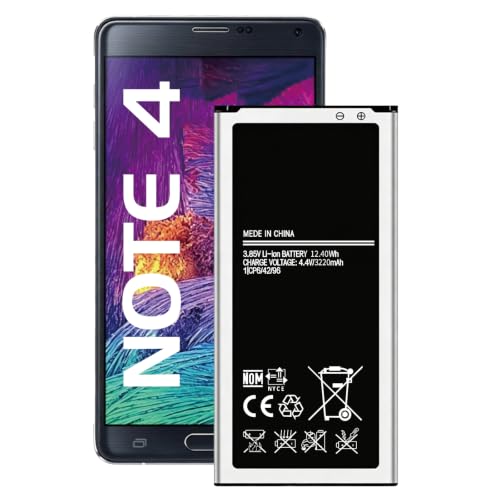
The genuine replacement cell for the Galaxy Note 4 carries the model codes EB-BN910BBE and EB-BN910BBU. The two codes describe the same electrical part sold through different regional and retail channels, and the suffix difference has no effect on fit, capacity, or behaviour inside the phone. A listing that names either code is describing the correct family of pack; a listing that names a code from a neighbouring model, such as the Note 3 or Note 5 families, is describing a different cell with different dimensions, even when the product photograph looks nearly identical. Model code matching is therefore the first and most reliable filter in the whole purchase, because it is printed on the cell itself and can be compared character by character before any money changes hands.
Electrically, the pack is a single-cell lithium-ion unit rated at 3,220 milliamp-hours with a nominal voltage of 3.85 volts. Multiplying those two published figures gives an energy content of roughly 12.4 watt-hours, the number that governs how long the phone can draw a given load before the cell reaches its lower voltage limit. The nominal figure of 3.85 volts, rather than the 3.7 volts printed on many older lithium-ion packs, reflects the higher-voltage chemistry Samsung adopted for this generation, and it matters when an external charger is involved: a charger designed for the cell must terminate at the charge voltage that corresponds to this chemistry, which the phone and the official charging accessories handle automatically. A generic charger that treats every bare lithium cell as a 3.7-volt part may stop early or behave inconsistently, which is one reason the charging section later in this guide favours accessories documented for this exact pack.
Physically, the cell is a flat rectangular prism that fills most of the width of the phone’s rear bay. Published dimensions place it at roughly 97 millimetres long, 58 millimetres wide, and a little over 5 millimetres thick for the standard-capacity version, with small tolerances between production runs. Those figures explain why near-fit substitutes cause trouble: a cell a millimetre too thick makes the back cover bow and refuse to seat on its clips, while a cell slightly too short can shift in the bay and break contact when the phone is knocked. The genuine pack also carries a small recess and label markings that align with the bay’s moulding, details that photographs in a listing often reveal if they show the cell from more than one angle.
The four-pin contact layout
At the top edge of the cell sits a row of four gold-coloured contacts, and the phone’s battery bay carries the matching spring pins. Two of those contacts deliver power, while the remaining connections let the phone read information from the pack, including a temperature sensor line that allows the handset to slow or stop charging if the cell becomes too warm. This arrangement is why a cell can appear to fit yet still misbehave: if the contact strip is misaligned, printed on a slightly different pitch, or recessed too deeply into a thick aftermarket label, the phone may refuse to boot, may report an implausible battery temperature, or may lose power when flexed. Published service documentation treats the contact block as part of the cell’s specification, so a listing photograph that shows the contact row clearly is worth more than one that hides it behind a glare-heavy studio shot.
The contact layout also explains a small but persistent confusion in listings, where sellers photograph the cell upside down or mirrored and the contacts appear to sit at the wrong end. Orientation in a photograph proves nothing by itself; what matters is that the contact row exists, that it carries four pads, and that its position relative to the label’s printed arrow matches the genuine layout. Buyers who compare a listing image against the label diagram in Samsung’s own documentation can usually spot a mislabelled pack for a different model within a few seconds, because neighbouring Note generations moved the contact block or changed its spacing.
Which Note 4 variants share the bay
The Note 4 was sold in a wide family of variants identified by codes in the N910 series, including the N910F, N910C, N910H, N910U, N910W8, and the carrier-specific versions sold in the United States such as the N910A, N910T, N910P, and N910V. Despite differences in processor, modem bands, and regional software, these variants share the same battery bay, the same contact geometry, and the same EB-BN910 cell family. A replacement bought for one variant therefore fits the others, which simplifies the search considerably: the buyer needs to match the cell code, not hunt for a carrier-specific battery that does not exist. The notable exceptions sit at the edges of the family. The Note 4 Duos, sold in some markets with dual SIM trays, also accepts the same cell, while the Note Edge, which shares much of the Note 4 platform, uses a smaller, differently shaped pack and must not be treated as compatible merely because the two phones launched together.
Regional documentation occasionally prints the capacity with a typical and a minimum figure side by side, a convention that confuses listings which quote only the smaller number as though it described a different, inferior cell. The typical capacity is 3,220 milliamp-hours; the minimum figure, a few percent lower, is the floor that a production cell is guaranteed to meet under the standard measurement conditions in the datasheet. Both numbers describe the same genuine pack. A seller who advertises the minimum figure honestly is not offering a weaker battery, and a seller who advertises a dramatically higher figure for a cell of identical thickness is making a claim that the physics of the format cannot support, a point the extended-capacity section examines in detail.
The NFC trap built into the genuine battery
The single most overlooked fact about this phone’s battery is that the near-field communication antenna is not inside the handset. On the Galaxy Note 4, the NFC antenna loop is built into the battery itself, bonded to the cell beneath its outer label, and it connects to the phone through the contact arrangement at the top of the pack. Remove the genuine cell and the phone loses its NFC coil entirely. That design decision, sensible in an era when the battery was expected to be swapped routinely, creates a trap for modern buyers: the cheapest unbranded replacement cells omit the antenna altogether, because leaving out the loop and its contacts makes the cell cheaper to produce. The phone powers on, charges normally, and shows no warning. Only when the owner tries to read a tag, pair an accessory, or use a payment or transit function does the missing hardware announce itself, silently and completely.
Listings handle this fact unevenly. Careful sellers state plainly that a cell includes the NFC antenna, sometimes repeating the point in the specification table and again in the description, because they know it decides returns. Less careful sellers bury the omission in a line such as “NFC not supported” deep in a block of copied text, or use the phrase “with chip” in a way that refers to the protection circuit rather than the antenna, inviting the buyer to assume more than is being promised. Some listings say nothing at all, and silence on this point should be read as an absence, not as a neutral gap: a manufacturer who paid for the antenna tooling has every reason to advertise it, and a listing that never mentions NFC almost always describes a cell that does not contain the loop.
How to check a listing for an antenna-equipped cell
Three checks, applied together, separate antenna-equipped cells from bare ones with reasonable confidence. First, the specification text should name NFC support explicitly and tie it to the battery, not merely list NFC among the phone’s general features copied from a handset review. Second, the model code should match the genuine EB-BN910 family, since documented genuine cells include the antenna by design; an unbranded cell with no code at all has no such assurance behind it. Third, the photographs should show the cell’s rear face and label in enough detail to read the printed markings, because genuine-style labels carry the NFC-related markings and regulatory text in consistent positions. A listing that fails the first check but passes the other two deserves a direct question to the seller before purchase, and the answer should be a plain yes or no about the antenna in the battery, not a restatement of the phone’s feature list.
There is also a functional check after delivery that requires no equipment beyond the phone itself and a known NFC tag, a contactless card, or another NFC-capable device. With the replacement cell fitted and the phone’s NFC setting switched on, holding the back of the handset against a tag should produce the usual detection response within a second or two. If the same tag reads instantly with the old genuine cell and never reads with the new one, the antenna is absent or defective, regardless of what the listing claimed. Performing that check during the return window, rather than weeks later when NFC is next needed, is the difference between a simple return and a sunk cost.
For owners who never use NFC, an antenna-free cell is not automatically a bad purchase. The trade is legitimate when it is made knowingly: a lower-cost cell for a spare handset, a media player conversion, or a phone used purely for calls and browsing gives up nothing its owner values. The harm in this market is not the existence of antenna-free cells but their sale by implication, where the buyer reasonably assumes a like-for-like replacement and discovers the omission only in use. Reading listings with that distinction in mind turns the NFC question from a trap into an ordinary specification choice.
Standard capacity versus extended capacity
Standard-capacity replacements aim to reproduce the original cell exactly: 3,220 milliamp-hours, the original thickness, the original weight, and full compatibility with the factory back cover and the entire ecosystem of cases moulded for the phone. For most owners this is the correct default, because the Note 4 was balanced around that pack. The cover seats flush, the phone keeps its intended profile in the hand, wireless add-ons and docks designed around the standard shell continue to fit, and the battery gauge behaves as the software expects, since the phone’s charge reporting was calibrated for a cell of this size.
Extended-capacity cells take the opposite approach. By making the cell substantially thicker, manufacturers can fit more active material into the same footprint, and such packs are sold with a deeper replacement back cover that replaces the factory cover and bulges outward to enclose the thicker cell. The trade-offs are physical and immediate. The phone becomes noticeably heavier and thicker, the replacement cover’s finish and clip quality vary widely, and almost no standard case fits over the enlarged rear, so the owner typically gives up case protection or hunts for one of the few cases moulded for the extended shell. Camera and flash openings in the deeper cover must align precisely, and a poorly moulded cover can shade the lens at its edges or muffle the speaker.
Printed capacity versus real capacity
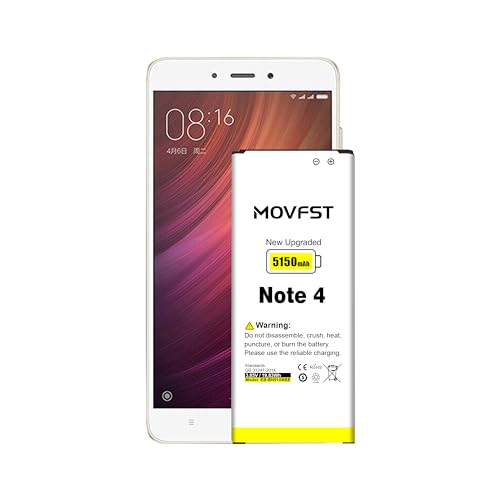
Capacity claims on extended cells deserve particular scepticism, because the label is the one part of the product the buyer cannot verify before purchase and the part most easily exaggerated. The honest ceiling for a given volume is set by the energy density of the chemistry, and while a genuinely thicker cell can legitimately hold much more than the standard pack, claims should scale with the added thickness in a plausible way. A cell sold as a modest increase in a standard-thickness body is claiming something the format cannot deliver; a thick cell with a doubled claim is at least geometrically plausible, though plausibility is not proof. Published reviews of extended packs from the phone’s active years repeatedly found real delivered capacity falling short of label figures, sometimes by a wide margin, and that pattern is a property of the market rather than of any single brand.
A practical way to reason about an extended cell is to weigh it, literally. Energy storage in this chemistry scales with mass, so a cell claiming far more capacity than the standard pack should weigh proportionally more than the roughly 55 grams of the original. An extended pack that arrives weighing about the same as the standard cell cannot contain the claimed capacity, whatever the label says, and that single measurement, taken on an ordinary kitchen scale, resolves most inflated claims without any electrical equipment. Weight cannot confirm an honest claim, since mass alone does not prove the internals are well made, but it can disprove a dishonest one in seconds.
Extended cells also change the phone’s relationship with its charging accessories. A much larger cell takes proportionally longer to fill from the standard charger, the phone’s remaining-charge estimate may drift because the gauge was calibrated for the smaller pack, and the deeper cover can interfere with the fit of desktop docks. None of these points rules the format out; for a user who values two days of use over slimness and who accepts the cover and case compromises, a well-made extended pack from a seller whose stated specifications stay consistent across listings is a rational choice. The mistake is buying one by accident, on the strength of a headline number, without noticing that the listing’s small print mentions a special back cover at all.
Battery cases: the third route
Between a like-for-like cell and a thick extended pack sits a third option that leaves the internal battery alone entirely: the battery case. A battery case wraps the phone in a protective shell carrying its own lithium cell, which feeds power into the handset through its charging port. Capacities for cases made for this model were commonly quoted in the same broad range as a single internal cell or somewhat above it, though case capacity and delivered charge are different things, because energy is lost in the conversion from the case’s cell voltage up to charging voltage and again inside the phone. A case whose cell matches the internal pack’s milliamp-hour figure will not double the phone’s runtime; it will add a substantial fraction of a full charge, and honest listings for cases tend to describe the gain in those terms.
Pass-through behaviour is the specification that decides how convenient a battery case feels in daily use. Better designs charge the phone first when plugged in and then refill the case’s own cell, allow data sync through the case without removing it, and pass the phone’s fast-charging behaviour through where the design supports it, while simpler cases charge themselves and the phone in a fixed order or block data transfer entirely. The published specification sheet for a case should say which of these it does; a case that requires removal every time the phone must connect to a computer becomes a burden within a week. Button coverage, port access, and the depth of the lip around the screen also belong in the specification, because the case becomes the phone’s exterior for as long as it is fitted.
The bulk trade-off differs from the extended-cell route in an important way. A battery case adds thickness and weight too, often more than an extended pack, but the addition is reversible in seconds and the phone inside remains a standard phone: remove the case and the factory cover, standard cases, docks, and the original silhouette all return. That reversibility suits owners whose heavy days are occasional, such as travel days, festivals, or long shifts, and who prefer a slim phone the rest of the time. The costs are that the case’s own cell ages alongside the internal one, that the charging port takes the mechanical strain of the case connection, and that a case cannot rescue a phone whose internal cell has swollen or failed outright, because the handset still depends on its own battery to run. A battery case supplements a healthy cell; it does not replace a dead one.
Age, authenticity, and the label
Lithium-ion cells age on the shelf as well as in use, which makes the production date of a replacement pack a genuine specification rather than a curiosity. A cell manufactured years ago and stored at full charge in warm conditions may deliver noticeably less than its rated capacity from the first day it is fitted, even though it has never powered a phone. Genuine Samsung labels print a date code alongside the model and serial information, and retailer listings for old stock occasionally show that code in photographs clearly enough to read. Fresher stock is preferable within reason; a cell produced within the last few years and stored properly will generally outlast a nominally identical cell from the phone’s launch era, and a seller who rotates stock and can state production dates plainly is offering information that costs an honest seller nothing to give.
Label printing itself carries signals. Genuine labels use crisp, consistent type, aligned blocks of regulatory text, and a serial number whose format matches documented examples. Counterfeit and low-grade cells often betray themselves in the printing before any electrical property is measured: blurred characters, misspelled words in the caution text, logos slightly the wrong shape, or a label that sits crookedly over the cell’s seams. Holographic elements appeared on genuine retail packaging for this family of batteries, and their presence is a supporting signal rather than a guarantee, since packaging is easier to imitate than a cell and since a genuine hologram can accompany a swapped product. No single visual cue settles authenticity; the pattern of several cues agreeing is what builds or destroys confidence.
Weight as a rough authenticity signal
Weight deserves its own discussion because it is the one authenticity check any buyer can perform precisely. The genuine standard-capacity cell weighs approximately 55 grams, a figure that follows from its published capacity and the known energy density of its chemistry. A standard-format replacement that weighs dramatically less, in the low forties of grams or below, cannot contain the full complement of active material its label claims; the missing mass has to come from somewhere, and in practice it comes from thinner electrodes and less stored energy. A small kitchen scale therefore exposes the most common fraud in this market, the standard-size cell with an inflated label, more reliably than any visual inspection. Weight near the genuine figure does not prove a cell is genuine or well made, but weight far below it proves the capacity claim false, and that asymmetry makes the check valuable.
Seller consistency is the final authenticity signal, and it is available before purchase. A seller whose listings state the same model code, the same capacity, the same voltage, and the same NFC position across every channel is describing a real, stable product. A seller whose figures drift between listings, whose photographs mix two different label designs, or whose specification table names a different phone model than the title is describing stock they do not control or understand. In a market where the product cannot be inspected in person, the coherence of the published information is a proxy for the coherence of the supply behind it.
Swelling: what it means and why it matters
A swollen cell is the most important safety topic in this guide, and the signs are easy to recognise once described. A healthy pack is flat; a failing pack develops a pillow-like bulge, most visible when the cell is laid on a flat surface and rocks instead of resting still, or when it spins freely like a top on a table. In the phone, swelling shows up as a back cover that no longer sits flush, a battery that must be forced into or out of its bay, or a screen that begins to lift at its edges under pressure from below. Any of these signs means the cell should be removed from service, handled gently, and kept away from heat and puncture risk while disposal is arranged.
Chemically, swelling is gas generation inside a sealed cell. As a lithium-ion cell ages, is overcharged, is exposed to heat, or suffers internal damage, side reactions in the electrolyte produce gases that the sealed pouch or can cannot vent, so the enclosure inflates. The gas itself and the reactions producing it are symptoms of a cell whose internal structure is degrading, and continued charging of a swollen cell adds energy to a system that is already demonstrating it cannot manage that energy normally. That is why the guidance from manufacturers and fire services converges on the same point: a swollen cell is not a diminished cell to be nursed along, it is a retired cell, and no saving on a replacement justifies keeping one in a bedside drawer or a pocket.
Swelling also reframes the bargain-hunting instinct. The very cheapest cells in this market are cheap partly because their protection circuits, separator quality, and manufacturing consistency are the places where cost can be removed invisibly. A protection circuit board sits at the top of every legitimate pack for this phone and guards against overcharge, over-discharge, and short circuits; its absence or poor construction is not visible in a photograph. Paying a little more for a cell from a seller with consistent specifications, a stated NFC position, and a readable date code is not brand snobbery, it is buying the invisible parts of the product that determine how it behaves at the end of its life.
Charging a removable cell outside the phone
The removable design unlocks a charging pattern that sealed phones cannot copy: the bare cell can be charged outside the handset in a wall or dock charger built for the pack. Samsung’s own accessory for this phone combined a spare cell with a compact charging cradle and a small carrying case, and third-party chargers followed the same pattern, gripping the cell by its contact end and feeding it at a modest rate while the phone itself stays in use on its other battery. Published charge rates for such cradles are lower than the phone’s own fast charging, typically filling a standard cell over several hours, which suits overnight or desk-based rotation rather than emergency top-ups. The cradle’s job is steadiness, not speed, and a charger documented for the EB-BN910 family, with the correct contact spacing and termination voltage for the 3.85-volt chemistry, is the version to seek.
Understanding charge rates helps set expectations for the whole ecosystem around this phone, from wall adapters to the cradles just described.
best android cell phone chargers
That wider charger picture matters because a spare-cell routine only works if the owner is never caught with two empty packs and one slow cradle, so the planning section below returns to it directly.
A second cell plus an external charger changes the phone’s daily pattern in a way that surprises people who have only used sealed handsets. The phone is never tethered and never waits: when the fitted cell runs low, the owner swaps in the charged spare, drops the depleted cell into the cradle, and walks away with a full battery in under a minute. There is no battery-percentage anxiety on a long day, no hunting for an outlet in an airport, and no compromise of carrying a power bank and cable for the phone itself. The costs are the discipline of rotation and the small risk of carrying a bare cell, which should travel in its case or a pocket free of keys and coins, since the exposed contacts must be kept away from loose metal.
Portable power still has a place in this ecosystem, particularly for charging the cradle’s cell indirectly through a powered hub or for supporting the phone on days when the spare was forgotten.
best affordable phone portable chargers
Travellers in particular tend to combine both systems, rotating cells at the hotel while carrying portable power for everything else in the bag.
Car charging and the two-port question
For drivers, the Note 4’s original fast-charging support makes the car adapter a more useful accessory than it was for earlier phones, provided the adapter genuinely supports the phone’s higher-rate mode rather than merely fitting the socket.
Two-port adapters earn their place on long drives because the same socket often has to serve a passenger’s phone or a navigation tablet at the same time, and a well-specified two-port unit divides its output without collapsing to the slowest rate on both sockets.
The dedicated fast-charge car adapters deserve a separate mention from general multi-port units, since their published output stages are matched to the phone’s charging profile.
With the correct adapter, a half-hour drive returns a meaningful share of a charge, which pairs naturally with the spare-cell system: the cradle refills cells at home while the car keeps the fitted cell topped up between stops.
Care rules drawn from manufacturer guidance
Manufacturer guidance for lithium-ion cells of this era is consistent across brands, because it follows from the chemistry rather than from any one company’s preferences. Store a spare cell partly charged rather than full or empty; the commonly documented storage level is around half charge, which slows the calendar ageing that proceeds fastest at the extremes. Store it cool and dry, away from radiators, sunny windowsills, and car interiors in summer, since heat accelerates every degradation reaction the cell undergoes. A spare kept in those conditions loses capacity slowly enough to remain useful for years, while the same cell stored fully charged in a hot drawer can lose a noticeable share of its capacity in a single season.
Deep discharge is the other behaviour the guidance warns against. A lithium-ion cell that is run until the phone shuts down and then left empty for weeks can fall below the voltage at which ordinary chargers will safely revive it, and the protection circuit may lock it out permanently. The practical rule is simple: recharge soon after a swap rather than leaving the depleted cell sitting in a bag, and if a cell must be stored, bring it to roughly half charge first. The phone’s own shutdown point already protects against the worst depths during normal use; the risk comes from neglect after removal, not from using the phone until it turns itself off.
Rotation discipline keeps two cells ageing together instead of one cell doing all the work while the other quietly ages on the shelf. Alternating cells with each charge, or marking them with a small label and swapping weekly, spreads the cycle count evenly and means both cells are exercised regularly, which also surfaces a failing cell early, while it is still a spare rather than the only cell available. Two cells of similar age and condition give the rotation system its full benefit; pairing a fresh cell with a heavily worn one still works, but the worn cell’s shorter runtime will dictate the rhythm of the day.
Heat during charging and use
Heat deserves separate emphasis because it is the factor owners control most directly. Charging generates warmth, and charging a phone under a pillow, in direct sun on a dashboard, or inside a thick case in a hot room stacks external heat on top of it. The phone monitors cell temperature through the sensor line in the contact block and will slow or pause charging when the cell grows too warm, behaviour that owners sometimes mistake for a fault. It is a protection, and the correct response is to move the phone somewhere cooler rather than to seek a stronger charger. Likewise, a cell that becomes hot to the touch during ordinary charging, rather than mildly warm, should be removed from service and inspected for swelling, because abnormal heat and gas generation are related symptoms.
Cleaning the contacts is the smallest care task and one of the few that involves the bay itself. The spring pins in the phone and the pads on the cell can accumulate pocket lint and oxidation over years of swaps, showing up as intermittent shutdowns when the phone is jolted. A dry, soft cloth or a cotton bud lightly applied to the pads restores contact in most cases; liquids and abrasives have no place near the contact block. If shutdowns persist with clean contacts and a known-good cell, the fault lies in the phone’s pins or power circuitry rather than in the battery, and further battery purchases will not repair it.
Reading a specification table like an editor
Most listings for this cell present the same handful of fields, and each field can be checked against the documented values in seconds. The model code should read EB-BN910BBE or EB-BN910BBU. The capacity should read 3,220 milliamp-hours for a standard-format cell. The nominal voltage should read 3.85 volts, and a listing that prints 3.7 volts for this model has copied its table from a different battery, which casts doubt on every other figure in the same table. The chemistry should be stated as lithium-ion, the form as a removable pack for the Note 4, and the NFC position should be stated in words. A table that passes all five checks can still describe a mediocre cell, but a table that fails any of them is telling the buyer, in advance and in writing, that the seller’s information cannot be trusted.
Photographs deserve the same structured reading. The most useful listing images show the cell’s front label legibly, the rear face, and the contact row at the top edge, because those three views between them expose the model code, the date code, the regulatory text, and the connector geometry. Stock photographs reused across dozens of unrelated listings carry less weight than a seller’s own photograph of the actual stock, and a listing whose images show two different label designs in the same gallery is usually a listing assembled from borrowed material. None of this requires expertise; it requires only the willingness to compare what is shown against what the documentation says should be there.
When the phone itself is the problem
Not every short runtime is a battery fault, and a careful buyer considers the handset before ordering a second replacement in a row. A phone that drains a known-good cell rapidly may be running a misbehaving application, struggling for signal in a weak-coverage area, or suffering a fault in its charging circuitry that leaves every cell undercharged. The removable design makes diagnosis unusually easy: the same cell can be observed across a calm day with light use, the phone’s own battery statistics screen can be read for the largest consumers, and a cell that performs normally after a restart or in a different routine points back at software or conditions rather than at the pack. Replacing a healthy cell cures nothing, and the cost of the check is only attention.
Battery percentage behaviour after fitting a new cell also deserves a calm reading. The phone estimates remaining charge from voltage and usage history, and a fresh cell can produce estimates that jump or drift for the first few charge cycles while the gauge relearns the pack’s characteristics. Manufacturer guidance for this generation treats a few full charge and discharge cycles as the normal settling period. A percentage reading that behaves oddly on day one and steadies by day four is a gauge learning, not a defective cell, whereas a cell that shuts the phone down abruptly at a reported forty percent, repeatedly and after settling, is showing a genuine capacity or internal-resistance problem that justifies a return.
The buying checklist
The whole guide condenses into a short sequence of checks that can be applied to any listing in a few minutes. First, match the model code character by character against EB-BN910BBE or EB-BN910BBU, and walk away from listings that substitute a neighbouring model’s code or print no code at all. Second, confirm that NFC support in the battery is stated explicitly if the phone’s NFC functions matter to its owner, and treat silence on the point as a negative answer. Third, read the capacity and voltage figures and reject standard-format cells claiming capacities far above 3,220 milliamp-hours, since the format cannot contain them. Fourth, look for a date code or a seller willing to state the production period, preferring fresher stock. Fifth, weigh the cell on arrival and compare it with the roughly 55-gram genuine figure. Sixth, check the seller’s consistency across listings, because drifting specifications predict drifting quality.
Seventh, decide the format before choosing the product. A standard cell preserves the phone’s shape, cover, cases, and docks, and suits the great majority of owners. An extended cell buys runtime with thickness, weight, a replacement cover, and the loss of ordinary cases, and suits owners who have weighed those costs deliberately. A battery case buys reversible extra power for occasional heavy days and suits owners whose internal cell is still healthy. Choosing the format first prevents the commonest disappointment in this market, which is not a faulty product but a correctly functioning product of the wrong kind, bought because its headline number was the largest on the page.
Eighth, plan the rotation if a spare is part of the purchase. A second cell delivers its full value alongside an external cradle charger documented for this pack, a small case to protect the spare’s contacts in transit, and a simple alternation habit so both cells age together. Ninth, perform the arrival checks inside the return window: weight, label legibility, fit under the factory cover, contact behaviour, and the NFC check against a known tag. Tenth, keep the documentation the listing provided, since a seller’s own published specifications are the reference point for any return claim if the delivered cell contradicts them.
Bundled listings deserve one caution of their own. Sellers often package a cell together with a cover, a cradle, or a simple case, and the bundle can be good value, but each component should still pass its own checks separately: the code on the cell, the documented rate on the cradle, and the fit of the cover all matter independently, whatever the combined presentation suggests.
End of life: recycling a lithium-ion cell
Every cell discussed in this guide will eventually reach the end of its useful life, and its disposal is part of the purchase decision rather than an afterthought. Lithium-ion cells must not go into household rubbish. The metals and chemistry inside are recoverable and worth recovering, the cell retains enough stored energy to start a fire if crushed or punctured in a waste truck or sorting facility, and waste regulations in many regions treat loose batteries as hazardous material for exactly those reasons. The correct routes are the ones documented by local authorities and retailers: municipal hazardous-waste collection points, battery recycling boxes in electronics stores, and take-back schemes run by manufacturers and carriers, all of which accept loose phone cells without charge in most areas.
Preparing a retired cell for that journey takes a minute. Tape over the contact row with ordinary non-conductive tape so the terminals cannot short against other batteries or metal in the collection container, keep each cell separate rather than loose in a bag of mixed batteries, and store it somewhere cool and out of the way until the trip to the collection point. A cell awaiting recycling should not be charged again “one last time” to check it; a retired cell stays retired.
Why a swollen cell must never be posted or binned
A swollen cell needs stricter handling than a merely tired one. It must not be sent through the post, because postal and courier networks prohibit damaged and swollen lithium cells for the straightforward reason that a pressurised, gas-filled cell in a sorting depot or an aircraft hold is a fire risk that cannot be monitored. It must not be placed in household rubbish or in a standard battery recycling box without declaring it, because collection staff and facility machinery are not expecting a cell in that condition. The documented route is to carry it, gently and in a non-metal container, to a hazardous-waste facility or a retailer collection point that accepts damaged cells, and to tell the staff plainly that the battery is swollen so it can be placed in the appropriate sand-filled or fire-resistant container. If a swollen cell is too distorted to remove from the phone safely, the whole handset goes to the same destination rather than being forced apart at a kitchen table.
Owners sometimes hesitate at this point because the phone still works and the swelling looks minor. The chemistry described earlier in this guide is the answer to that hesitation: the bulge is gas produced by reactions that should not be happening, inside a sealed enclosure with no vent, and the trend runs in one direction only. A cell that has begun to swell does not recover, does not stabilise as a slightly thicker battery, and does not become safer with gentle use. Retiring it promptly is the cheapest decision in the entire life of the phone.
Carrying and storing a spare cell safely
A bare spare cell is a small energy store with exposed terminals, and the way it travels decides whether the rotation system stays convenient or becomes a hazard. The contact row sits unprotected at the top of the pack, and loose metal in a pocket or bag — keys, coins, a pen clip — can bridge those contacts if it settles across them. The documented solution is unglamorous: the spare rides in the rigid case that Samsung supplied with its charging kit, or in any close-fitting plastic box or pouch that covers the contact end and keeps the cell separate from metal clutter. A cell carried that way can be forgotten safely for a whole journey; a cell dropped loose into a handbag cannot, however short the trip.
Storage at home follows the same logic at a slower pace. The spare not currently in rotation belongs in a cool drawer, in its case, at roughly half charge, away from the radiators and sunlit shelves discussed in the care section. Owners with two spares sometimes label each cell with the month it entered service, written on a small piece of tape on the rear face, never across the contacts or the label’s printed codes. That tiny habit turns rotation from a memory exercise into a visible system: the oldest cell is obvious at a glance, a cell that has swollen slightly is easier to spot against its dated companions, and the moment when the whole set deserves replacement stops being a guess.
Airport and airline rules are the last practical detail for travelling owners. Spare lithium cells belong in cabin baggage rather than checked luggage under the dangerous-goods rules published by airlines and regulators, with terminals protected against short circuit, which the rigid case already achieves. A spare fitted inside the phone travels under the ordinary rules for devices; spares outside it attract the specific restrictions, so the case and the cabin bag are not optional refinements but the documented way to carry the rotation system through an airport at all.
Check prices on Amazon
Live listings for the shortlist in this guide are pulled from Amazon below, so prices and availability are always current at the moment you look.


Putting the decision together
The Note 4’s removable battery is both its charm and its complication. The charm is obvious: a worn cell is a five-minute problem, a spare in a cradle turns a long day into a non-event, and the handset can outlive several batteries without a single screw being turned. The complication is that the buyer, not a service bench, now makes the judgements a technician once made — reading codes, weighing claims against physics, spotting the missing antenna, judging the age of stock from a printed date. Those judgements are all learnable, and every one of them rests on published information rather than on specialised equipment or insider knowledge.
For the typical owner, the recommendation that emerges from the specifications is unglamorous and firm. Buy a standard-capacity cell whose label carries the correct EB-BN910 code, whose listing states the NFC antenna in words, whose capacity and voltage figures match the documented values exactly, and whose seller describes the same product the same way everywhere it appears. Add a documented external charger and a second identical cell if the phone’s days are long. Store the spare near half charge, keep both cells away from heat, rotate them evenly, and retire either one at the first sign of swelling. That programme preserves everything the phone was designed to do, including the tap-to-pair convenience hidden inside its battery, and it avoids every trap this guide has catalogued.
Owners tempted by the largest numbers on the page should return, one final time, to the arithmetic that opened this guide. A standard-format cell holds about 12.4 watt-hours because its volume and chemistry allow that much and no more; a thicker cell holds more because it is thicker, and pays for the gain in weight and bulk; a case adds energy from outside the phone and loses some of it in conversion. There is no fourth possibility hiding in a listing somewhere, no standard-size cell that quietly doubles the original capacity, and recognising that single fact protects a buyer from most of the disappointment this market can offer.
Checked by code, weighed on a scale, and read against its own documents, the right Note 4 battery stops being a gamble and becomes what it should have been all along: a small, knowable part, chosen once and then forgotten about for years.


