What's inside
- Key Takeaways
- Quick Picks
- How We Chose These Picks
- What Is the SATA Ceiling, and Why Does It Matter?
- How Do You Replace a Hard Drive With a SATA SSD?
- Will a SATA III Drive Work in an Older SATA II Machine?
- What Does 3D NAND Actually Mean for a Buyer?
- The Six SATA Drives Under the Magnifier
- How Should You Verify the Upgrade Once the Drive Is In?
- Six Drives, One Ceiling: The Comparison in Full
- Which SATA Buying Mistakes Still Catch People Out?
- What Happens to a SATA SSD After Its First Machine Retires?
- When Is a Second SATA SSD Better Than One Large One?
- Final Recommendation
- Frequently Asked Questions
- Related Guides
As an Amazon Associate I earn from qualifying purchases. This post may contain affiliate links at no extra cost to you.
gizmoverdict.com is reader-supported. When you buy through links on our site, we may earn an affiliate commission.
Where to buy: all six drives link to their Amazon listings from the Quick Picks table and again from their full reviews below. SATA SSD listings often present several capacities on one page, so verify the capacity in the title against the option selected before ordering — a 1TB roundup can still sell you a 250GB drive if a different capacity tab is active at checkout.
The best solid state SATA hard drives occupy a peculiar and honourable position in modern computing: they are not the fastest storage money can buy, and they have not been for years, yet they remain the correct purchase for an enormous installed base of machines. Every desktop and laptop built around a 2.5-inch drive bay and a SATA cable — which is to say, most computers sold across two decades — can take one of these drives in minutes, and each one wakes up afterwards feeling years younger. SATA is the interface of continuity, and these are its best current citizens at the 1TB-and-above tier.
Five of the six picks hold 1TB; the sixth, Crucial’s BX500, doubles that to 2TB for machines whose storage appetite is the real problem. The stated read figures cluster with unusual tightness — 535 to 560MB/s — and that clustering is the article’s first lesson: the SATA III connection imposes a ceiling that all honest drives approach and none can pass, so the interesting differences between these drives live elsewhere. They live in what each title chooses to declare, in the character of each maker’s line, in warranty-era reputation carried in the buyer’s memory, and in how a drive behaves during the unglamorous middle of its life rather than in a launch benchmark.
Read on for the ceiling explained properly, the six drives examined one by one, a buying guide that separates meaningful differences from marketing weather, and the installation and cloning guidance that turns whichever drive you choose into a finished, verified upgrade rather than a component sitting forgotten in a drawer.
Key Takeaways
- SATA III itself caps these drives near the stated figures; 535–560MB/s read is the interface’s ceiling, not a ranking of effort.
- Samsung’s 870 EVO and Crucial’s MX500 are the establishment pair at 1TB, both stating up to 560MB/s in their titles.
- Kingston’s KC600 states no speed figure at all in its title, so its pace rests on the SATA standard rather than a printed claim.
- Crucial’s BX500 at 2TB is the capacity outlier, doubling the room for machines whose problem is volume rather than velocity.
- WD’s Blue SA510 prints the fullest connection description — SATA III 6 Gb/s and the 2.5-inch/7mm body — in its title.
- Every pick is a cabled 2.5-inch drive that installs exactly where a mechanical hard drive lived, with no slot or adapter logic involved.
Quick Picks
| Pick | Badge | Why it earns its place |
|---|---|---|
| Samsung SSD 870 EVO SATA III 2.5" 1TB | The Benchmark of the Class | Up to 560MB/s stated, from the line that has defined SATA SSD expectations for a generation of upgraders. |
| Crucial MX500 1TB 3D NAND SATA 2.5 Inch Internal SSD | The Establishment Alternative | Matching 560MB/s claim and declared 3D NAND, from Crucial’s long-running mainstream performance line. |
| Western Digital 1TB WD Blue SA510 SATA Internal SSD | The Fully Described Connection | SATA III 6 Gb/s and the 7mm body both printed in the title, at up to 560 MB/s. |
| Sandisk SSD Plus 1TB Internal SSD | The Plain-Spoken Terabyte | Up to 535 MB/s stated without decoration, from SanDisk’s straightforward value line. |
| Kingston 1024G KC600 SATA3 2.5" SSD | The Quiet Professional | Kingston’s KC600 line at 1024GB, a business-flavoured drive whose title keeps its counsel on speed. |
| Crucial BX500 2TB 3D NAND SATA 2.5-Inch Internal SSD | The Two-Terabyte Answer | Double capacity at up to 540MB/s, for machines drowning in files rather than starved of speed. |
How We Chose These Picks
The selection began with the interface itself, strictly enforced: cabled SATA, 2.5-inch form, internal installation. M.2 sticks — even the SATA-protocol ones — belong to a different article, because the machines this roundup serves have bays and cables, not slots. Capacity was the second filter, set at the terabyte tier where a system drive stops needing supervision, with one deliberate exception in spirit: the 2TB BX500 was included not as a sixth terabyte rival but as the answer to a different question that SATA buyers ask constantly, which is how much room the old interface can still reasonably hold.
Within that frame, the six were chosen to represent the class’s real decision space rather than its spec-sheet podium. The famous pair — Samsung’s EVO line and Crucial’s MX line — had to be present, because any honest account of SATA SSDs runs through them. Western Digital’s Blue and SanDisk’s Plus represent the storage giants’ mainstream and value answers. Kingston’s KC600 represents the business-leaning corner, where the title’s silence on speed is itself information about the audience addressed. And the BX500 represents the capacity-first philosophy that Crucial sells under a different badge from the MX500, a distinction this article will keep returning to, because confusing the two Crucial lines is the most common shopping error in this category.
Stated figures were transcribed from titles exactly, and where a title declines to state a figure — the KC600 on speed — the review says so and applies the title-silent rule rather than importing numbers from elsewhere. On SATA, that restraint costs the reader nothing: the interface’s ceiling is a matter of public engineering, and every drive here lives within sight of it.
What Is the SATA Ceiling, and Why Does It Matter?
SATA III moves data at 6 gigabits per second before overhead, which works out in practice to sequential transfers in the mid-500 megabytes per second — precisely where the stated figures in these titles cluster. This is a hard architectural ceiling, set by the connection standard rather than by any drive’s ambition, and it produces the defining feature of this market: flagship and budget SATA drives post nearly identical headline numbers, because both are pressed against the same roof. When Samsung’s 870 EVO and SanDisk’s SSD Plus state 560 and 535 respectively, the 25-megabyte gap describes a rounding of approach to the ceiling, not a difference you will feel between two machines on your desk.
It is tempting to read that as SATA being obsolete, and for a brand-new performance build it is the wrong interface — NVMe drives state figures in the thousands and mean them. But the ceiling argument cuts the other way for the machines SATA serves. The misery of a mechanical hard drive was never its top transfer speed; it was the milliseconds burned on every seek, thousands of times a day. SATA flash abolishes the seek entirely while delivering its capped transfers instantly, which is why a drive stating 535MB/s transforms a computer just as completely as one stating 560. The ceiling limits bulk copying between fast devices, a rare event in the life of an office desktop, and leaves untouched the responsiveness that made you shop for an SSD in the first place.
The mature way to shop this category, then, is to treat the stated read figure as a threshold check — is it in the 530s or above, confirming a healthy modern drive? — and move on to the differences that persist after the ceiling equalises everyone: capacity, the completeness of the title’s declarations, the character of the maker’s line, and the drive’s behaviour under sustained writing and across years. Those are the axes the detailed reviews use, and they are why this roundup can recommend six drives with near-identical headline numbers without contradicting itself.
How Do You Replace a Hard Drive With a SATA SSD?
The mechanical half of the job is the same ritual whichever pick you buy. Back up first — before tools, before cables — because every later step assumes your files exist somewhere else. Then decide between cloning the old drive, which carries your Windows installation and programs across intact, and a clean install, which rebuilds the system fresh. Cloning needs the SSD connected during the copy, by spare SATA cables in a desktop or a USB adapter for a laptop; a clean install needs a Windows USB stick prepared in advance. Both routes end at the same place: old drive out, SSD into its caddy or bay, the same two SATA cables reconnected, cover closed.
Desktops add one small wrinkle: many cases provide only 3.5-inch bays, and a 2.5-inch SSD mounts into them with an inexpensive bracket, or sits in a dedicated 2.5-inch mount behind the motherboard tray in newer cases. Laptops add a different one: the old drive’s caddy and screws transfer to the SSD, and the SA510’s 7mm thickness, printed in its title, suits the slimmest bays. Neither wrinkle survives contact with a screwdriver and ten unhurried minutes.
After the first boot, three finishing touches complete the upgrade properly. Confirm in the BIOS or UEFI that the SATA controller runs in AHCI mode, the setting modern operating systems expect. Check that the operating system recognises the drive as an SSD and has scheduled its flash maintenance accordingly — modern Windows does this automatically when it detects the drive type. And leave meaningful free space on the drive rather than filling it to the last gigabyte, because flash maintains itself in the empty margins. Do those three things and the upgrade is not merely installed but finished, in the sense that it will still feel finished in three years.
Will a SATA III Drive Work in an Older SATA II Machine?
Yes, and this backward compatibility is one of the interface’s quiet graces. SATA generations negotiate: plug a SATA III drive into a SATA II port and the connection runs at the older standard’s rate, roughly halving the sequential ceiling, while the drive itself works without complaint, adapters or settings. The machine that results still boots and launches like a different computer, because — as this article has argued from its first section — the transformation lives in flash’s access times, which no SATA generation taxes. Owners of genuinely old desktops sometimes apologise for their ports when ordering; the apology is unnecessary. The drive will simply be saving its full sequential pace for a later machine, and when that machine arrives, the same drive moves across and stretches.
The reverse journey also works: an elderly SATA II SSD in a modern SATA III board runs at its own ceiling and nobody is harmed. This two-way tolerance is why SATA storage accumulates in households instead of expiring — a drive bought for one machine serves in the next, then in a spare, then in an enclosure. When you choose among the six picks here, you are therefore not buying for one computer’s remaining life but for a small career of service, and that perspective favours the established lines and the larger capacities, which remain useful in the widest range of second and third assignments.
One generation note deserves care: the very first SATA standard is rare enough in surviving machines to ignore, and every pick here assumes at least a SATA II port, which covers effectively every computer still in service. If your machine is old enough to predate SATA entirely, it belongs to a different article and a different century of storage — and, in all likelihood, to a museum rather than a desk.
What Does 3D NAND Actually Mean for a Buyer?
Three of these titles declare 3D NAND, two declare nothing about flash, and one — the TEAMGROUP-style TLC declaration seen elsewhere in the wider market — reminds us that flash type is a real axis of difference, so the term deserves a plain explanation. NAND flash stores data in cells, and early flash laid those cells out flat on the silicon, shrinking them to fit more. Shrinking eventually made cells fragile neighbours, so the industry began stacking cells in layers — dozens of floors of storage on one chip — which is the “3D” in the name. Stacked cells can be larger, hardier and cheaper per gigabyte than the last flat generations, which is why 3D NAND underpins essentially every modern SSD worth buying.
For a buyer, the declaration functions as a modernity check. A drive stating 3D NAND is built on the current manufacturing approach, with the endurance and cost characteristics that come with it. A drive whose title says nothing — the SA510, the SSD Plus, the KC600 — is not thereby exposed as old-fashioned; business and value listings often omit the term for brevity, and the flash inside may be perfectly contemporary. The title-silent rule used throughout this roundup handles the uncertainty honestly: declared facts are used, undeclared ones are left to the maker’s documentation, and no pick is convicted on the evidence of an absence.
The buyer’s working rule is simple. Treat a 3D NAND declaration as a small positive — information volunteered is information verified — and treat its absence as neutral rather than negative, especially from lines whose audiences read datasheets instead of retail titles. On no account should the term outweigh capacity or line character in the decision: a 2TB drive with undeclared flash serves an archive better than a 1TB drive with declared flash, every day of the archive’s life.
The Six SATA Drives Under the Magnifier
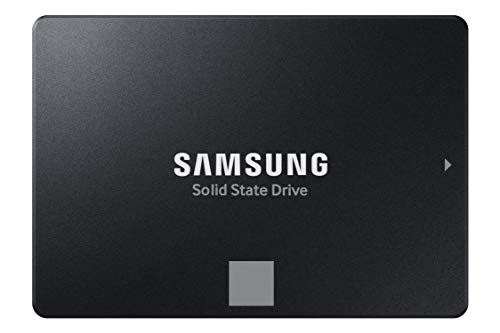
Samsung SSD 870 EVO SATA III 2.5" 1TB — The Benchmark of the Class
Every category has a drive against which the others are measured, and in SATA that drive has worn Samsung’s EVO badge for years. The 870 EVO’s title states the class ceiling — read speeds up to 560MB/s — and addresses its audience without embarrassment: IT pros, creators, everyday users. That breadth is earned. The EVO line’s long tenure at the top of this market means its behaviour is the known quantity of the category, the drive other drives’ reviews reference when they say “as fast as”, and the one a cautious buyer chooses when the premium over rivals is small enough to ignore.
What the premium buys, on SATA, is not speed — the ceiling forbids it — but depth of polish around the speed. Samsung designs its own controllers and flash, and the EVO line’s reputation rests on consistency: sustained behaviour that stays near its claims during long writes, firmware that ages without drama, and a software ecosystem on the PC side that upgraders have used for a decade of migrations. None of that appears in a title, and this review confines itself to what the title declares — 1TB, SATA III, 2.5-inch, up to 560MB/s — but a roundup that ignored why this particular drive anchors the category would be pretending the market has no memory.
The honest counterweight is that the ceiling taxes the flagship most. A buyer paying EVO money receives EVO consistency, not EVO velocity beyond the standard, and a household desktop that boots and browses will feel the MX500 or even the SSD Plus as its equal in every daily interaction. The 870 EVO is the recommendation when the machine matters, the workload writes seriously, or a simple preference for the category’s reference drive ends the deliberation.
- Capacity: 1TB
- Interface: SATA III
- Body: 2.5-inch internal
- Read speed: up to 560MB/s
- Audiences named in title: IT pros, creators, everyday users
- Write speed: Not stated in the listing title — verify with Samsung documentation
Strengths
- The category’s reference drive, with the ceiling figure stated plainly.
- A line whose long market tenure makes its behaviour the known quantity of SATA.
- Addresses professional and everyday audiences in one listing without hedging.
Trade-offs
- The ceiling means its premium buys polish and consistency, not extra pace.
- Write figure absent from the title despite the flagship positioning.
- Light-duty machines will never perceive what the extra money purchased.
Best for: a buyer seeking the reference SATA drive for a machine that matters. Not suited for: a strict-budget rescue, where the same transformation arrives from cheaper picks.
There is a fleet angle to the EVO’s candidacy that home buyers share more often than they expect: the second machine. A household upgrading its main desktop to an 870 EVO this year tends, when the laptop’s turn comes, to buy the same drive again — one migration process learned, one set of expectations, one spare cable arrangement understood. Consistency across a household’s machines is a soft benefit that never appears in a title, yet it quietly governs repeat purchases across this entire category.
One more EVO consideration belongs to creators specifically, since its title names them: project files and media libraries involve sustained reading and writing in large blocks, the pattern where line consistency shows itself most clearly. A creator running a SATA machine as a deliberate choice rather than a stopgap — a quiet studio desktop, a machine built around older interfaces — is precisely the audience for whom the flagship’s steadiness under load repays its premium, even at a shared ceiling.

Crucial MX500 1TB 3D NAND SATA 2.5 Inch Internal SSD — The Establishment Alternative
The MX500 is the other half of the establishment pair, and its title makes the same ceiling claim as the Samsung — up to 560MB/s — while adding a declaration the Samsung omits: 3D NAND, printed in the name itself. That has been the MX line’s character across its long life: Crucial’s mainstream-performance SATA range, positioned a deliberate half-step below flagship pricing while conceding almost nothing in the specifications a title can carry. For years the SATA question in forums and offices has effectively been “EVO or MX”, and the honest answer has always been that both are right.
Choosing between them, in the absence of a speed difference the ceiling forbids, comes down to texture. The MX500’s buyer gets a declared flash type, a maker that manufactures its own NAND through its parent, and a line with an enormous installed base whose long-term behaviour is public knowledge. In service the drive delivers the full SATA transformation — the instant boots, the vanished update evenings — and its terabyte matches the Samsung’s room exactly. If the EVO is the category’s reference, the MX500 is its reference alternative, the drive that keeps the reference honest.
Where the MX500 asks for clear eyes is in its own family tree. Crucial also sells the BX500, two picks below, and the badges differ by one letter and a whole philosophy: MX is the performance line, BX the value line, and the 2TB BX500 in this roundup trades a little stated pace for double capacity. Neither is the other’s inferior in absolute terms — they answer different questions — but a buyer ordering a BX in the belief it is an MX has been failed by nobody except the alphabet. This review exists partly to prevent exactly that.
- Capacity: 1TB
- Interface: SATA
- Body: 2.5-inch internal
- Flash: 3D NAND
- Read speed: up to 560MB/s
Strengths
- Matches the flagship’s stated ceiling figure with flash type declared.
- An enormous installed base makes its long-term behaviour public knowledge.
- Mainstream-performance positioning without flagship pricing habits.
Trade-offs
- One letter separates it from the value-line BX500, an invitation to ordering errors.
- No write figure in the title, as with most of this field.
- At the ceiling, its advantages are consistency and pedigree rather than measurable pace.
Best for: buyers seeking the establishment alternative with its flash type in writing. Not suited for: a capacity-first brief, where its own sibling’s 2TB is the better Crucial answer.
The MX500 also rewards a mention for its behaviour as a hand-me-down. Because its line’s characteristics are so widely documented, a used MX500 moving from a retired desktop into a child’s first laptop arrives with known quantities: how it should perform, how its health reports read, what its remaining life plausibly looks like. In a category where drives cascade through households for a full decade, that public knowledge is a genuine and lasting asset, and it belongs to the establishment lines alone.

Western Digital 1TB WD Blue SA510 SATA Internal SSD — The Fully Described Connection
Western Digital’s title is the most completely engineered sentence in this roundup: capacity, line, model, interface with its data rate spelled out as SATA III 6 Gb/s, the 2.5-inch/7mm body, and a stated figure of up to 560 MB/s. Nothing a SATA buyer needs to verify is missing. That completeness suits the Blue line’s position in WD’s range — the mainstream tier of the company that spent decades as the default name in hard drives, now expressing the same dependability in flash. The SA510 is the pick for the buyer reading titles the way engineers read datasheets and wants every field populated.
The 7mm detail deserves its emphasis. Both thicknesses of 2.5-inch drive exist in the wild, and slim laptops built for 7mm drives reject thicker ones absolutely. WD prints the dimension in the title where a shopper can act on it, rather than in a specification table three clicks deep. Combined with the full data-rate declaration, the SA510’s listing performs a small act of respect for the buyer’s time that this roundup wishes were contagious.
In service, expect the ceiling-standard transformation with mainstream-line manners. The Blue name also carries a quiet ecosystem advantage in households that already run WD external drives and backups: one maker’s utilities and habits across the storage shelf. None of that elevates the SA510 above the EVO or MX500 in pace — the ceiling forbids — but as a total listing, judged on how completely it answers a SATA buyer’s questions before purchase, it is arguably the strongest document in the six.
- Capacity: 1TB
- Interface: SATA III 6 Gb/s
- Body: 2.5-inch / 7mm
- Read speed: up to 560 MB/s
- Line: WD Blue mainstream range
Strengths
- The most completely specified title in the roundup, data rate and thickness included.
- 7mm body suits the slimmest laptop bays without a second thought.
- Mainstream line from one of storage’s oldest names, with the ceiling figure stated.
Trade-offs
- Flash type is not declared in the title, a gap in an otherwise complete document.
- Write figure, as with its peers, goes unstated.
- Its completeness is a listing virtue; the drive itself performs at the shared ceiling.
Best for: a buyer after a fully documented terabyte, thickness and data rate in writing. Not suited for: a buyer for whom declared flash type outranks every other specification.
WD’s Blue naming carries one more practical implication: shelf recognition. In a physical store or a parts drawer, the Blue band is findable at a glance, and in a household standardising on it, spares and swaps stay simple across years of machines. Storage is infrastructure, and infrastructure rewards boring consistency — a truth the SA510’s completely documented title seems designed to express in miniature.

Sandisk SSD Plus 1TB Internal SSD — The Plain-Spoken Terabyte
The SSD Plus is SanDisk’s value line wearing its intentions openly: a terabyte, SATA III 6 Gb/s, the 2.5-inch/7mm body, and a stated figure of up to 535 MB/s. That last number is the lowest in the roundup, and the correct response to it is a shrug informed by the ceiling section above — 535 sits within touching distance of the interface’s practical roof, and no boot screen or program launch will ever reveal the difference between it and a 560 claim. What the figure actually communicates is positioning: the Plus line spends its engineering budget on being inexpensive and adequate, and states its adequacy without cosmetics.
SanDisk’s flash pedigree is the counterweight to the value positioning. This is a company whose memory cards and flash products fill cameras and phones worldwide, and the Plus line applies that manufacturing depth to the simplest possible proposition: a standard SATA terabyte that performs the standard transformation. For the second machine, the hand-me-down laptop, the desktop in the spare room — the computers whose upgrade budget competes with every other household priority — that proposition is exactly calibrated. The transformation those machines need is binary, spinning or not spinning, and the Plus delivers the right side of the binary.
Its limits are the honest limits of its tier. Sustained writing is not its stage, the title declares no flash type, and nothing about the listing courts a professional workload. A machine earning money by moving files deserves the climb to the EVO or MX500. A buyer reviving a family computer should recognise the Plus for what it is: the transformation itself, plainly priced and plainly stated, from a maker that knows flash.
- Capacity: 1TB
- Interface: SATA III 6 Gb/s
- Body: 2.5-inch / 7mm
- Read speed: up to 535 MB/s
- Line: SanDisk value range
- Flash type: Not stated in the listing title — verify with SanDisk documentation
Strengths
- Plain value positioning from a maker with deep flash manufacturing roots.
- Full connection and body details stated despite the budget tier.
- Delivers the complete SATA transformation where the workload is everyday computing.
Trade-offs
- Lowest stated read figure of the six, even if the ceiling makes it academic.
- Flash type undeclared in the title.
- Not built or billed for sustained professional writing.
Best for: a buyer prioritising the transformation at value pricing for a secondary machine. Not suited for: a primary workstation whose writing workload deserves a performance line.
Consider the SSD Plus in a desktop that already boots from flash, working as the bulk drive beside the system disk. A terabyte of plain value storage, dedicated to the game library or the photo archive, frees the system drive to stay lean and quick, and the Plus’s price tier makes that division of labour affordable where a performance drive would feel extravagant. Many of the happiest SATA installations are exactly this: one proud drive for the system, one plain drive for the bulk, each doing the work its tier does best.

Kingston 1024G KC600 SATA3 2.5" SSD — The Quiet Professional
The KC600’s title is the shortest in the roundup — brand, capacity expressed as 1024G, model, interface, form factor, full stop — and that brevity is a positioning statement. Kingston’s KC line addresses business and managed deployments, procurement teams ordering drives by the tray for office fleets and evaluate them on datasheets circulated through procurement rather than on retail titles. The retail listing inherits that terseness. No speed is claimed, no audience is courted, no adjective appears. For the right buyer, the silence reads as confidence; for others, it reads as homework.
This roundup applies its rule without exception: with no figure in the title, the KC600’s pace is treated as standard SATA behaviour, which the ceiling section has already established is no hardship. The drive’s real candidacy rests on the KC line’s business character — consistency across large deployments, a maker with an enormous memory and storage operation behind it, and a capacity stated in the engineer’s 1024GB rather than the marketer’s round number. A small office refreshing a row of identical desktops is this drive’s natural habitat, where one verified image clones onto every unit and the fleet behaves as one machine.
For a single home upgrade, the KC600 asks more faith than its rivals: every competing title in this roundup states at least a read figure, and a home buyer comparing documents will find this one the thinnest. That is not a verdict on the drive, only on its paperwork. Buy it when its line’s business intent matches your purpose — uniformity, procurement, a fleet — and buy one of the fully documented rivals when the purchase is a single machine and a single decision.
- Capacity: 1024GB
- Interface: SATA3
- Body: 2.5-inch
- Line: Kingston KC business range
- Speed: Not stated in the listing title — verify with Kingston documentation
Strengths
- Business-line character aimed at fleets and managed deployments.
- Capacity stated in full 1024GB form rather than rounded marketing numbers.
- Kingston’s scale in memory and storage stands behind the line.
Trade-offs
- The thinnest title in the roundup; no speed or flash information at all.
- Home buyers must consult documentation the rivals render unnecessary.
- Its fleet virtues are invisible in a single-machine purchase.
Best for: a buyer working to uniform drives for several identical machines. Not suited for: a single home upgrade decided by comparing listing titles alone.
The KC600’s 1024GB phrasing offers a small lesson in reading this market. Consumer listings round capacities for tidiness; engineering listings state them exactly, and the difference signals audience rather than generosity — every “1TB” drive in this roundup holds the same class of capacity, expressed in the dialect of its intended reader. A buyer comparing the KC600 against the terabytes here is comparing equals in size, however the numbers are dressed.

Crucial BX500 2TB 3D NAND SATA 2.5-Inch Internal SSD — The Two-Terabyte Answer
The BX500 closes the roundup by changing the question. Every other pick asks which terabyte; this one asks whether a terabyte is enough, and answers with two. Its stated figure — up to 540MB/s — sits mid-field, its 3D NAND is declared in the title, and its value-line badge (BX, not MX, a distinction this article has flagged twice and now retires) tells you where Crucial positioned it: capacity per pound above all. For the machine whose hard drive failed under the weight of a photo archive, a music library and a decade of downloads, this is the pick that solves the actual problem.
Two terabytes on SATA also extends the interface’s useful life in a way worth appreciating. A desktop with a 2TB SSD, a sane backup habit and everyday workloads has no storage reason to be replaced; the drive removes the last mechanical component and doubles the room in a single afternoon’s work. The value-line design means marathon copies settle to plainer speeds once the fast cache is spent, but archives are written once and read for years, and reading is where this drive’s stated figure and flash access times do their work.
Set against its own sibling, the choice is philosophical. The MX500 buys the performance line’s consistency at 1TB; the BX500 buys twice the room at a half-step’s stated pace. Households that fill drives should choose room, because a full performance drive underperforms a half-empty value drive in every way that matters by year two. Households that write heavily and store lightly should choose the MX. The BX500’s presence here ensures the SATA conversation ends, as it should, with capacity given its due.
- Capacity: 2TB
- Interface: SATA
- Body: 2.5-inch internal
- Flash: 3D NAND
- Read speed: up to 540MB/s
Strengths
- Double the capacity of every other pick, at a mid-field stated figure.
- 3D NAND declared in the title despite the value positioning.
- Half-empty operation at this size keeps flash in its happiest condition for years.
Trade-offs
- Value-line design settles during very long single copies once its cache is spent.
- The BX badge invites confusion with the performance-line MX500.
- Capacity beyond a library’s real size is spending without a return.
Best for: a buyer seeking maximum SATA room for an archive-heavy machine. Not suited for: a light-storage laptop, where the second terabyte would never be visited.
A final BX500 scenario deserves its sentence: the home server or media PC built from a retired desktop. Such machines write logs, ingest recordings and serve files around the clock at household scale — a diet of constant small duties where two terabytes of inexpensive flash, with no moving parts to wear or hear, quietly outclasses the spinning drives these machines usually inherit. The value line’s compromises were designed for exactly this economics.
How Should You Verify the Upgrade Once the Drive Is In?
A finished installation deserves a short verification ritual, partly to catch the rare problem early and partly because the numbers are satisfying. Begin with the obvious: the machine should boot dramatically faster and the operating system should report the new capacity correctly in its storage settings, allowing for the universal gap between marketed and formatted figures. Then run one large file copy — a few gigabytes between folders — and watch it sustain speeds in the neighbourhood of the drive’s stated figure rather than collapsing after the first seconds; a brief burst followed by a crawl on a fresh, mostly empty drive is the one result worth investigating.
Next, confirm the system’s own housekeeping has recognised the drive. Modern Windows detects an SSD and adjusts its maintenance schedule automatically, replacing defragmentation with the optimisation routine flash actually wants; a quick visit to the drive tools panel shows which regime is active. While there, check the SATA mode question one final time if the machine’s BIOS offered any doubt — AHCI should be the reported arrangement — and glance at the drive’s health readout in whatever utility you favour, where a new drive should report a clean bill without persuasion.
Finally, live with the machine for a day before wiping or reassigning the old hard drive. The old drive is your undo button: if anything about the new installation misbehaves — a missing program, a licence that objects, a file that never cloned — the original system still exists intact, one cable swap away. Only when a full day of ordinary use has passed without surprises should the old drive be formatted into its second career as backup storage. Verification is not distrust of the new drive; it is the discipline that makes upgrades boring, and boring is the highest praise storage hardware can ever earn.
And a closing BX500 note on noise, of all things: in a media PC or a bedroom desktop, removing the last spinning drive removes the last mechanical sound the machine makes. Owners consistently describe the silence as an upgrade in itself, and at two terabytes the BX500 is the pick most likely to be the drive that finally achieves it, because it is the one that can hold everything the old disk held, with the system besides.
Six Drives, One Ceiling: The Comparison in Full
Arranged together, the six describe a market the ceiling has made honest. Five terabytes-and-change of declared capacity, stated reads within a 25MB/s band, and differentiation pushed entirely into character: Samsung’s reference polish, Crucial’s two philosophies at two capacities, WD’s documentary completeness, SanDisk’s plain value, Kingston’s business brevity. The table collects the declared facts; the paragraphs around it carry the judgement.
| Drive | Capacity | Stated read | Declared flash | Character |
|---|---|---|---|---|
| Samsung 870 EVO | 1TB | Up to 560MB/s | Not in title | Reference flagship |
| Crucial MX500 | 1TB | Up to 560MB/s | 3D NAND | Mainstream performance |
| WD Blue SA510 | 1TB | Up to 560 MB/s | Not in title | Fully documented mainstream |
| SanDisk SSD Plus | 1TB | Up to 535 MB/s | Not in title | Plain value |
| Kingston KC600 | 1024GB | Not stated in title | Not in title | Business line |
| Crucial BX500 | 2TB | Up to 540MB/s | 3D NAND | Capacity-first value |
Which SATA Buying Mistakes Still Catch People Out?
The standing mistake is shopping by the stated read figure as if this were the NVMe market, agonising over 535 versus 560 while the ceiling renders the contest void. The second is the Crucial alphabet error — ordering a BX500 in the belief it is an MX500, or dismissing a BX500 as a failed MX500 — when the two lines are deliberate alternatives. Third comes interface confusion in the other direction: buying an M.2 SATA stick for a machine with only a cabled bay, or a cabled drive for a machine with only a slot, because the word SATA appears in both listings. Form factor is a physical fact; check the machine, not the adjective.
Process mistakes complete the set. Cloning onto a smaller drive without first reducing the old drive’s used space below the new capacity strands the job halfway. Skipping the AHCI check leaves some machines in a legacy mode that dulls the upgrade they just paid for. And filling the new drive completely — easiest with a 1TB swapped for a 1TB that was already full — removes the free margin flash needs, quietly taxing the machine the upgrade was meant to free. Every mistake on this list is a five-minute check avoided, which is why this article keeps making them.
A final mistake is social rather than technical: accepting a well-meant hand-me-down recommendation without checking it against your own machine. A friend’s NVMe triumph, a colleague’s server-grade SATA array, a sibling’s bargain from a brand nobody can identify — each was the right answer to a different computer’s question. Your machine’s bay, your library’s size and your workload’s writing habits define your correct pick, and the six drives above were chosen so that every combination of those three factors has an honest representative among them.
What Happens to a SATA SSD After Its First Machine Retires?
Plan for the drive to outlive the computer. This is not optimism but arithmetic: a SATA SSD installed in a seven-year-old desktop today will, in the normal course of things, still be a healthy drive when that desktop is retired, because flash ages by writing and household writing is gentle. The drive’s second career options are unusually good precisely because its interface is universal. It can move into the replacement machine as a storage drive beside a faster system disk. It can drop into a inexpensive USB enclosure and become the household’s backup drive, a role where its silence and lack of moving parts beat the old spinning disk it once replaced. Or it can cascade to a child’s machine, a media box, a workshop computer — the long tail of duties that keep useful hardware in service.
That cascade reframes the purchase maths of this entire roundup. A drive evaluated only against its first machine’s remaining years looks like a short investment; evaluated across a decade of assignments, the established lines and the generous capacities pull ahead, because they remain welcome in more future roles. The 2TB BX500 will find work anywhere. The 870 EVO’s consistency will be trusted with the important second assignment, not merely the spare one. Even the plain SSD Plus, bought for a spare-room machine, will end its days as somebody’s backup drive and be thought of kindly.
Two habits protect that future value. Keep the drive’s health visible by leaving its maker’s utility installed or checking its status occasionally, so a decline is a managed event rather than a surprise. And when the drive changes machines, wipe it deliberately rather than informally deleting files — a proper secure erase returns it to factory freshness, clears your data completely, and gives the next assignment a clean start. Storage that is this durable deserves an owner’s manual of exactly two short sentences, and those are they.
When Is a Second SATA SSD Better Than One Large One?
Desktops with two bays invite a division of labour that one big drive cannot replicate: a terabyte for the system and programs, a second drive for the archive, each replaceable and upgradable independently. The arrangement also isolates risk — a failing archive drive never takes the system with it — and it lets a household grow storage in stages, adding the BX500’s second terabyte only when the library actually demands it. Laptops with a single bay get no such choice, which is why capacity decisions there deserve the extra thought this article keeps recommending: buy the size the machine’s whole remaining life needs, because there is no second shelf to add later.
Final Recommendation
The Samsung 870 EVO is the default recommendation for a primary machine: the category’s reference drive, at the ceiling figure, from the line by which the class is judged. The Crucial MX500 stands beside it as the equal alternative, and choosing between them by the day’s pricing is not a compromise but a recognition of parity. Take the WD Blue SA510 when a fully documented listing and a 7mm body matter, the SanDisk SSD Plus when the machine is secondary and the budget is the argument, and the Kingston KC600 when the purchase is really about several machines behaving identically. The Crucial BX500 2TB is the recommendation whenever the honest problem is room — and for archive-heavy desktops it outranks every terabyte here. SATA’s ceiling means none of these drives will embarrass the others on a specification sheet; what separates a good purchase from a great one is matching the drive’s character to the machine’s life, and a SATA drive matched that carefully will still be quietly outrunning the hard drive it replaced on the day the computer itself is finally retired.
Frequently Asked Questions
Is SATA fast enough, or should I hold out for NVMe?
For a machine with a SATA bay, the question answers itself — NVMe needs a slot the machine does not have. For a machine with both, NVMe is faster at bulk transfers, but the daily transformation of an old computer comes from flash access times, which SATA delivers in full. SATA is not the consolation interface; it is the correct one for the machines built around it. Owners delaying a SATA upgrade while saving for a hypothetical future computer usually discover, when the SSD finally goes in, that the future computer was unnecessary — the old one’s problem was storage all along.
Why do all the speeds cluster between 535 and 560MB/s?
Because the SATA III connection itself is the limit. Its 6 Gb/s rate, after overhead, lands in the mid-500s of megabytes per second, and every healthy modern drive presses against that ceiling. The small gaps between titles describe approaches to the roof, not differences in daily feel.
What is the difference between the Crucial MX500 and BX500?
Positioning. The MX500 is Crucial’s mainstream performance line; the BX500 is its value line. In this roundup the MX500 appears at 1TB with a 560MB/s stated figure, the BX500 at 2TB with 540MB/s — performance polish versus capacity per pound. Both are legitimate; confusing their badges is the only error available.
Can I use one of these drives in a laptop and later move it to a desktop?
Yes. The 2.5-inch SATA form is common to both, the cables are the same, and the data travels with the drive. A desktop may need a mounting bracket for its larger bays, and the operating system installation may need attention when the surrounding hardware changes, but the drive itself is equally at home in either machine.
Does the KC600’s missing speed figure mean it is slow?
No — it means Kingston’s business-line title does not print one. This roundup therefore describes the KC600 as a standard SATA performer and refers readers to Kingston’s documentation for the figure. On an interface with a hard ceiling, an unstated figure is a paperwork gap, not evidence of a slow drive.
How long should a SATA SSD last in everyday service?
Years beyond the machine’s likely remaining life, under household and office workloads — long enough that the drive you choose today will probably be inherited by your next computer rather than retired with this one. Flash wears by writing, and everyday writing is light; the habits that protect any SSD — keep some capacity free, avoid using it as a constant-throughput scratch disk — apply here unchanged.
Will a SATA SSD make an old dual-core machine feel new?
It will make it feel dramatically less old in every interaction, which is the honest and complete version of the promise. Storage was the bottleneck for boots, launches and updates, and those become fast; the processor’s own work — encoding, heavy spreadsheets, modern games — continues at its original pace. Most owners find the storage side was the part they were actually suffering from.
Related Guides
SATA is one branch of the storage family tree. Our roundup of the best solid state hard drives at 1 terabyte widens the view to faster interfaces at this capacity, the guide to the best cheapest SSDs covers the strict-budget end, and our look at the best laptop solid state hard drives focuses on machines where thickness and form factor rule the decision.


