Our Top Picks


What's inside
- What saturation diving actually asks of a wristwatch
- The helium problem, molecule by molecule
- Helium escape valves: automatic, manual, and where they sit
- Depth ratings at 300, 600, and 1000 metres, translated honestly
- ISO 6425 and what the standard actually demands
- Case construction: monocoque shells and screw down casebacks
- Bezels, luminous material, and reading time in a bell
- Clasps, extensions, and wearing a watch over exposure protection
- Movement sealing, crowns, and the service calendar
- The professional families, described by character
- How to choose among the tiers without overspending on depth
- Living with a saturation watch on dry land
- Buying used: where professional history shows
- Common misunderstandings worth retiring
- Closing perspective for a very specialised shelf
- A short history of the chamber watch
- Comparing the helium strategies side by side
- Crystals, gaskets, and the small parts that decide everything
- Straps and bracelets beyond the clasp
- A working day, seen through the watch
- Ownership costs and the discipline of pressure checks
- Final checks before money changes hands
- Dial design as an instrument, not a decoration
- Check prices on Amazon
- Quartz or automatic in a chamber watch
As an Amazon Associate I earn from qualifying purchases. This post may contain affiliate links at no extra cost to you.
A note on how this guide earns its keep: As an Amazon Associate, this publication may earn from qualifying purchases made through links on this page, and that support never changes which specifications get emphasised or criticised here.
What saturation diving actually asks of a wristwatch
Saturation diving is a working method, not a depth record. Commercial divers who repair pipelines, inspect platform legs, or maintain subsea valves cannot surface after every shift, because the decompression obligation from deep work would consume most of the working day. Instead they live for weeks inside a pressurised chamber complex on the support vessel, breathing a mixture dominated by helium with a carefully limited oxygen fraction, and travel to the seabed inside a closed bell that keeps them at storage pressure the whole way down and back. Their tissues become fully saturated with the breathing gas at that pressure, which is where the method gets its name, and a single controlled decompression at the end of the rotation brings them back to surface pressure over several days.
A watch worn inside that system faces a problem no ordinary dive watch ever meets. Helium atoms are extraordinarily small, small enough to migrate through gasket materials that hold water out without any difficulty at all. During days spent in the chamber, helium slowly works its way past the seals and into the watch case, until the pressure inside the case equals the pressure of the living quarters. Nothing goes wrong while everyone stays at depth. The trouble arrives during decompression, when chamber pressure falls steadily while the helium trapped inside the case can only escape through those same seals at a far slower rate. A pressure difference builds across the crystal, pushing outward, and on a conventionally sealed watch the result can be a crystal that lifts or pops completely free of its seat.
That single failure mode explains nearly every design feature discussed in this guide. A saturation diving watch is not simply a dive watch with a bigger number on the dial. It is a case engineered either to let helium out quickly through a dedicated one way valve, or to keep helium from entering in the first place through construction so tight that no valve becomes necessary. Everything else, from bezel action to clasp length, supports long working days in bells, chambers, and wet suits rather than recreational reef visits.
Recreational and technical divers who never enter a chamber sometimes buy these watches for their overbuilt cases and deep ratings, and there is nothing wrong with that choice. The engineering is real, the finishing on professional models is serious, and the watches tolerate knocks that would trouble slimmer pieces. But the purchase makes most sense when the buyer understands which features answer the helium problem, which answer ordinary water resistance, and which are simply the styling language of a professional tool.
The helium problem, molecule by molecule
Helium earns its place in deep breathing mixtures because it produces far less narcosis than nitrogen and reduces breathing resistance at pressure, yet its atomic scale creates the sealing headache. A helium atom measures roughly a third of a nanometre across, and the gas diffuses through elastomer gaskets by dissolving into the material and migrating through it, a process driven by the pressure difference across the seal. Given days at storage pressure, which on deep contracts can correspond to well over one hundred metres of seawater, the interior of a watch case quietly fills with helium at chamber pressure.
Decompression schedules for saturation divers are deliberately slow, stretching across days, but even that pace outruns the rate at which helium can diffuse back out through compressed nitrile or silicone gaskets. Manufacturers describe the resulting differential in terms of the crystal and its retaining system, because the crystal presents the largest flat surface facing outward pressure from within. Acrylic crystals on vintage professional models sometimes domed visibly before failing. Modern sapphire crystals, seated in machined recesses and held by threaded retaining rings or heavy press fits with engineered gaskets, resist far better, yet the cleanest solution remains giving the gas an intentional exit path.
Two philosophies dominate. The first adds a helium escape valve, a small one way fitting that opens when internal pressure exceeds external pressure by a set margin and vents gas before the differential can threaten the crystal. The second builds the case so completely that helium ingress becomes negligible over a normal saturation rotation; monocoque cases with no caseback opening and crystals screwed down under substantial rings follow this route. Both approaches appear on respected professional models, and specifications sheets state plainly which route a given reference takes.
Helium escape valves: automatic, manual, and where they sit
Automatic valves that vent on their own
An automatic helium escape valve behaves like a tiny spring loaded check valve built into the case wall. At equal pressures it stays shut, sealed against its seat, contributing nothing to daily wear. When the gas inside the case pushes outward beyond the calibrated threshold, the spring yields, the seal lifts, and helium escapes until pressures nearly equalise again. The diver does nothing, remembers nothing, and can stay focused on the decompression schedule posted in the chamber. Rolex fits this style of valve to the Sea-Dweller family, Omega builds one into the conical ten o clock crown like fitting on many Seamaster professional models, and Breitling uses an automatic design on its deep rated Superocean references.
Placement follows case architecture more than fashion. The classic position sits on the left flank of the case at nine o clock, opposite the winding crown, where the valve stays clear of the wrist and rarely contacts equipment. Omega moves its manual automatic hybrid to ten o clock and shapes it like a small crown that must be unscrewed before it can vent, blending deliberate operation with a familiar silhouette. What matters in specifications is the stated opening behaviour and whether the maker describes the valve as automatic, because marketing photographs alone cannot tell you how a given fitting behaves during decompression.
Manual valves that the diver opens deliberately
Manual designs ask the wearer to unscrew a dedicated crown before or during decompression, opening a channel for gas to leave. Several Doxa SUB references and various boutique professional models follow this pattern, and some place the valve crown at two o clock rather than on the flank. The advantage is mechanical simplicity and a seal that, once screwed home, is as positive as the main crown. The drawback is human: a forgotten valve leaves the crystal exposed to exactly the differential the fitting exists to prevent, which is why chamber crews who issue watches tend to favour automatic systems for pooled equipment.
Whichever style a watch uses, the valve is a service item. Its tiny gasket ages, its spring can weaken, and a competent pressure service includes checking that the valve opens and reseats correctly. Buyers examining a used professional diver should ask whether the last service record mentions the valve at all, because a watch that passes a simple water resistance check may still carry a valve seal long past its sensible life.
Depth ratings at 300, 600, and 1000 metres, translated honestly
The number printed on a saturation watch dial states the depth at which the maker guarantees water resistance under the conditions of the relevant standard, expressed in metres or feet. A 300 metre rating already exceeds the storage depth of most commercial saturation work, which commonly takes place between roughly 60 and 200 metres, and it exceeds any recreational limit by a wide margin. Watches rated to 600 metres add structural margin in case thickness, crystal thickness, and gasket compression. References rated to 1000 metres and beyond, including designs tested well past that figure, exist partly because professional buyers equate reserve capacity with durability, and partly because the engineering required makes the watch nearly indifferent to pressure in any plausible use.
Static test pressure and working reality differ, and honest guides should say so. Standards require testing above the rated depth, so a compliant 300 metre watch has already survived pressure corresponding to greater depth on the test rig. Dynamic pressure from swimming strokes, often invoked in internet arguments, adds only a trivial amount at these scales. The practical differences between the three rating bands show up elsewhere: case height climbs from roughly 14 millimetres on many 300 metre models toward 17 or 18 millimetres on the deepest designs, weight follows, and crystal diameter sometimes shrinks to keep the pressure loaded area manageable.
Choosing among the bands is therefore mostly about wearability and taste. A diver who genuinely works in saturation will be issued or will select a watch the employer and insurer accept, usually a 300 or 600 metre professional reference with a documented service path. A shore based enthusiast gains nothing measurable from the deepest rating except the pleasure of the object itself, which is a legitimate reason, provided the thicker case still sits comfortably under a cuff and the owner accepts the heft on a bracelet.
ISO 6425 and what the standard actually demands
ISO 6425 is the international standard that governs watches labelled as diver’s watches, and its requirements reach far beyond a pressure number. The current edition sets conditions for resistance to water pressure, thermal shock, magnetic fields, shock, salt spray, and the operation of controls under water. It requires that elapsed time remain readable in darkness at a stated distance, that the bezel resist accidental movement, and that the watch keep running after exposure to an overpressure expressed as a percentage above its rating. A watch conforming to the standard carries a depth marking in metres that the maker stands behind in a way decorative water resistance claims never attempt.
Several clauses matter directly to saturation models. The standard addresses watches intended for mixed gas diving and expects the maker to state suitability for that environment, which is the formal home of the helium valve discussion. It also requires resistance to an external force on the strap attachments, legibility of running indication in total darkness, and a device that shows whether the watch is still operating, usually a luminous tipped seconds hand. When a specifications sheet cites ISO 6425 compliance by name, each of those clauses has been addressed through type testing rather than assumed.
Buyers should distinguish full compliance from phrases such as built to ISO specifications or ISO style, which carry no defined meaning. Makers of established professional lines, including Seiko with its Prospex saturation references and Citizen with the professional Promaster range, publish compliance plainly. Some Swiss professional models follow the standard closely while certifying through internal regimes the brands describe separately; in those cases the published test pressures, helium provisions, and service requirements tell the substantive story, and the absence of one particular label matters less than the completeness of the data.
Markings on the dial that carry information
Professional dials compress a surprising amount of specification into a few lines of print. The depth figure states the guaranteed rating. Wording such as helium safe, mixed gas, or saturation signals the intended environment on models that use it. The word diver’s, in the regulated sense, implies standard compliance in markets that enforce the terminology. None of this print decorates; each line corresponds to a test or a design provision, and comparing dial text between two references often reveals which one the maker positions for chamber work and which merely borrows the aesthetic.
Case construction: monocoque shells and screw down casebacks
Every opening in a watch case is a potential path for water going in and a path for helium going both ways. A conventional case has at least three: the crystal seat, the crown tube, and the caseback. The caseback is usually the largest opening of all, closed by a threaded ring of steel carrying a gasket that compresses as the back is torqued home. Well made screw down casebacks are entirely trustworthy at professional depths, and most saturation watches from Swiss makers use them because they simplify movement service enormously.
A monocoque case removes that opening altogether. The case is machined from a single block with the movement cavity open only at the top, the movement loads from the dial side, and the crystal retaining system becomes the sole large closure. Seiko pioneered this architecture for saturation work in the nineteen seventies and still uses it on the so called Tuna family, whose shrouded cases are loaded from the front and sealed with a threaded crystal ring. With no caseback gasket to age and no back to flex under pressure, helium ingress slows dramatically, and several monocoque references omit the escape valve entirely because so little gas accumulates during a rotation.
The trade off arrives at service time. A front loading case demands that the crystal assembly come apart for any movement work, which adds labour and requires the correct gaskets and torque discipline on reassembly. Independent watchmakers vary in their willingness to handle these cases, so an owner should confirm a service route before buying, particularly for older references whose gasket kits may be stocked only by the maker’s own centres.
Materials and the shroud question
Professional saturation cases appear in stainless steel, titanium, and occasionally ceramic or composite shroud combinations. Titanium cuts weight substantially, which matters on a 48 millimetre case, and resists seawater corrosion superbly, though it marks more easily than hardened steel. Seiko’s outer shroud, a protective shell screwed around the inner case on Tuna models, guards the bezel and case flanks against the knocks of bell and rig work; recreational owners either love its industrial honesty or find it visually overwhelming. Omega’s Ultra Deep line instead pursues depth through a proprietary steel alloy and thick sapphire, reaching ratings far beyond saturation needs while keeping a comparatively conventional silhouette.
Bezels, luminous material, and reading time in a bell
The unidirectional rotating bezel remains the primary elapsed time device on an analogue saturation watch, and the standard behind these watches insists it turn only counterclockwise so that an accidental knock can shorten, never lengthen, the apparent remaining time. Professional bezels use 60 or 120 clicks per revolution, deep knurling that gloved fingers can grip, and an insert of ceramic, sapphire, or anodised aluminium carrying a luminous marker at the zero position. On working models the first fifteen or twenty minutes may be fully graduated, reflecting decompression stop habits inherited from earlier eras of diving.
Luminous performance is specified rather than decorative here. Dial markers and hands use phosphorescent pigment, most often Super-LumiNova in Swiss models or Lumibrite in Seiko’s, charged by light and glowing through a shift. In the dim red light of a chamber at night, a freshly charged dial reads instantly, and the luminous seconds pip confirms the movement still runs, a check the standard explicitly values. Buyers comparing models should look at marker area and hand width in photographs; broad sword or arrow hands with generous luminous fill stay legible far longer than slender dress style hands with a sliver of pigment.
Digital professional models take a different route. Casio’s Frogman family, though aimed at scuba rather than chamber saturation, shows how a depth sensor, dive log, and backlight can replace the bezel altogether, and some working divers prefer a dive computer for primary timing regardless. The analogue saturation watch persists because it needs no battery management, survives electromagnetic and pressure environments gracefully, and functions as a backup instrument whose failure modes are visible at a glance.
Clasps, extensions, and wearing a watch over exposure protection
A saturation diver’s watch spends part of its life over a dry suit cuff or a thick neoprene glove gauntlet, and the bracelet or strap must accommodate that bulk without tools at the bell hatch. Professional clasps therefore include a diver’s extension, a folding section hidden inside the clasp that releases to add length, plus a finer ratcheting adjustment on many modern designs. Seiko’s ratchet clasp extends in small increments as the wearer pulls, Omega’s professional clasps slide through several positions, and Rolex fits the Sea-Dweller with a two stage system combining a quick adjustment and a longer folding extension for suit work.
The numbers matter when comparing specifications. A simple flip out extension typically adds around 15 to 20 millimetres of circumference, enough for a thin wet suit but marginal over a dry suit with undergarments. Ratcheting systems add similar totals in finer steps, letting the wearer snug the watch down over a compressed cuff at depth. Rubber straps sidestep much of this by offering generous length and many adjustment holes, and several professional models ship with both a bracelet and a long rubber strap in the box for exactly this reason.
Security receives equal attention. Folding clasps on professional models lock with a positive double mechanism, and the extension, when closed, sits flush so it cannot deploy accidentally against a railing or valve handle. Strap keepers on rubber are wide and stiff. These details rarely headline a product page, yet they decide whether the watch stays put during the physical work of a dive, which is the entire point of wearing it there.
Movement sealing, crowns, and the service calendar
The winding crown is the opening a wearer operates daily, so its sealing receives layered defences: multiple gaskets inside the crown and tube, a threaded interface that compresses the stack when screwed home, and guards machined into the case flank that shield the crown from side impacts. Professional models specify crown operation clearly, including whether the crown can be used to set the watch while it remains sealed for water resistance, and owners should never operate pushers or crowns under water unless the maker explicitly permits it for that reference.
Inside, movements in saturation watches favour robustness over thinness. Automatic calibres with hacking seconds, quickset dates, and power reserves between roughly 40 and 70 hours cover most professional references. High accuracy quartz movements power several Seiko saturation models, trading the romance of gears for superior shock tolerance and a battery that lasts years, an appealing profile for an issued tool. Magnetic resistance has improved across the category, with silicon hairsprings and non magnetic alloys in newer Swiss calibres pushing resistance far beyond the modest threshold the standard requires.
Service intervals govern real world reliability more than any single specification. Makers generally recommend pressure testing every one to two years and a full service at intervals of roughly five to seven years depending on the calibre and use pattern. Gaskets take a compression set over time, lubricants migrate and dry, and the helium valve’s own tiny seal ages on the same clock. A saturation watch that misses its pressure checks is, for working purposes, an expensive ordinary watch, because its guarantee rests on seals whose condition nobody has verified.
What a proper pressure service includes
A thorough service visit replaces every gasket, including crown, caseback or crystal ring, valve, and any pusher seals, then tests the empty case and the finished watch at pressures related to its rating. The watchmaker inspects the crystal seat for corrosion, checks bezel action and spring condition, and examines the clasp extension for worn pins. Owners should keep these records; a documented chain of pressure services supports both safe use and resale value, and gaps in the paperwork on a used professional diver justify either a price conversation or a walk away.
The professional families, described by character
Japanese professional lines built for chamber work
Seiko’s saturation heritage runs deepest. The Tuna family, from the quartz powered mid sized references to the large automatic Emperor Tuna, pairs monocoque cases with shrouds, ceramic or titanium construction, and dials of exemplary legibility. Specifications across the family include ratings of 600 or 1000 metres, no helium valve by design, and movements ranging from high torque quartz to the brand’s upper tier automatic calibres. For readers whose other wrist time goes to connected training pieces, our roundup of best adventure fit smartwatches covers the electronic side of expedition kit, though nothing in that category attempts chamber duty.
Citizen approaches the same problem through the Promaster professional line, where the flagship saturation capable references use titanium monocoque style construction, Eco-Drive light powered quartz movements that remove battery changes from the ownership equation, and ratings reaching 1000 metres on the dedicated professional model. The brand’s long history with working divers in Japanese waters shows in details such as the left side crown position on some references, keeping the crown away from the back of the working hand.
Swiss professional lines and the valve tradition
Rolex effectively created the category’s defining feature, introducing the helium escape valve on the Sea-Dweller in the late nineteen sixties after chamber trials exposed the crystal problem. Current Sea-Dweller references rate to 1220 metres, and the larger Deepsea line extends to 3900 metres with a ring lock architecture that loads the crystal and caseback against a nitrogen alloy compression ring. Finishing, bracelet engineering, and residual values lead the field, while case thickness and weight ask commitment from the wearer.
Omega’s saturation story runs through the Seamaster family. The Planet Ocean line offers 600 metre ratings with automatic helium valves and modern coaxial movements, while the revived Ploprof, a distinctive asymmetric design from the nineteen seventies, rates to 1200 metres and wears its valve crown prominently. The Ultra Deep pushes the same lineage to 6000 metres in a production watch, a figure so far beyond saturation storage depths that it functions as a demonstration of case engineering rather than a working requirement.
Doxa, Breitling, and Tudor fill out the Swiss picture with distinct personalities. Doxa’s SUB 300T and SUB 1500T carry the brand’s no decompression bezel scale and vivid dial colours rooted in nineteen sixties scuba. Breitling’s Superocean professional references combine 1000 metre and deeper ratings with notably slim cases for the class. Tudor’s Pelagos, in titanium with an automatic valve and a 500 metre rating, has become the value minded professional’s default, its snowflake hands and matte surfaces reading as pure instrument.
How to choose among the tiers without overspending on depth
Start with environment rather than aspiration. A diver entering commercial saturation work will encounter employer rules, insurer expectations, and chamber crew habits that narrow the field to established professional references with local service support. Everyone else is buying capability margin and design character, and should weigh case dimensions first. Measure your wrist, note that lug to lug distance predicts wearability better than diameter alone, and treat anything beyond roughly 52 millimetres lug to lug as a deliberate oversized statement rather than a daily companion.
Next, decide the helium philosophy you prefer. Valve equipped Swiss models offer conventional casebacks and straightforward movement access, at the cost of one more seal to maintain. Monocoque Japanese models minimise ingress by architecture and ask more of the service network when movement work comes due. Neither answer is wrong; they suit different ownership styles, and specifications sheets make the distinction plain once you know to look for valve mentions and case construction notes.
Then weigh movement type against your routine. Automatic calibres reward daily wear and punish neglect with nothing worse than a stopped watch, while quartz saturation models run accurately through months of storage and shrug off shocks that would concern a balance assembly. Readers who split time between a mechanical diver and a connected watch for training metrics will find our guide to best activity smartwatches useful for the fitness side of that rotation, since no mechanical saturation piece will ever log a workout.
A specification checklist worth copying
- Stated suitability for mixed gas or saturation use, not merely a deep number on the dial.
- Helium provision named explicitly: automatic valve, manual valve, or sealed monocoque construction.
- Compliance language that references ISO 6425 directly, or published test data of equivalent completeness.
- Case height and lug to lug distance measured against your wrist and your shirt cuffs.
- Clasp extension type and total added length, if suit wear is genuinely planned.
- Service interval, pressure test recommendation, and a named route to gaskets for that reference.
- Luminous layout with a running indication visible in darkness, per the standard’s intent.
- Bracelet end link fit and lug width, commonly 20, 22, or 24 millimetres, for strap changes.
Working through that list against published specifications takes an evening and prevents the two classic mistakes in this category: buying a deep styled watch with no helium provision for actual chamber exposure, and buying a genuine professional instrument so large that it never leaves the drawer.
Living with a saturation watch on dry land
Most saturation watches sold will never see a chamber, and ownership satisfaction then depends on ordinary virtues. Weight distribution matters through a workday; titanium references and rubber straps reduce fatigue noticeably. Bezel action should feel positive without sharpness, crown winding should be smooth rather than gritty, and the dial should read at a glance in office light as readily as in a bell. The deep cases sit tall, so door frames and desk edges become acquaintances, and hardened coatings or shrouds earn their keep in the first month of honest wear.
Rotation habits help mechanical models. A watch worn in rotation with other pieces, including the connected models covered in our overview of best running smartwatches for those who train seriously, will stop between wears unless kept on a winder, and repeated crown use for resetting is normal ownership rather than a fault. Quartz saturation models sidestep the question entirely and make natural grab and go instruments for travel to dive destinations.
Storage deserves a sentence of its own. Keep the watch dry, rinsed after any salt water exposure, and away from strong magnetic sources where possible, even with improved modern resistance. Rinse the bezel while rotating it to clear grit from the click mechanism, work the clasp extension occasionally so its pivots stay free, and note the date of the last pressure service somewhere you will actually see it before a dive trip.
Buying used: where professional history shows
The used market for saturation watches is active, and honest working examples carry their history on the case. Shroud screws with polished slots, bezels with insert scratches, and clasps with desk diving swirls are cosmetic. More significant are signs of amateur opening: chewed caseback notches on conventional cases, crystal rings with tool marks on monocoque models, and valve crowns that turn without the expected resistance. Any of these shifts the burden onto a full maker service before the watch should be trusted at depth.
Paperwork tells the complementary story. Original purchase documents, service receipts naming gasket replacement and pressure results, and a consistent ownership chain support both authenticity and condition. Frankenwatches assembled from mixed references exist in this category because professional parts interchange across years; comparing dial print, hand shape, and case engraving against the maker’s references for the stated year is patient, worthwhile work. Buyers who prefer wrist presence with connected features for everyday wear sometimes cross shop our selection of best mens smartwatches, but a used saturation piece answers an entirely different brief, and its value lies in verified mechanical integrity.
Common misunderstandings worth retiring
First, depth rating is not a licence to ignore service. A 1000 metre watch with eight year old gaskets is less trustworthy in a chamber than a freshly serviced 300 metre watch, because seals, not case steel, set the practical limit over time. Second, the helium valve does nothing for water resistance during a dive; it sits sealed under pressure and only vents gas moving outward during decompression, so its presence neither strengthens nor weakens the watch while submerged. Third, a watch does not need a valve merely because it is deep. Recreational and technical diving on open circuit or rebreathers never exposes the case interior to helium at chamber pressures for days, because the watch stays outside the body at ambient pressure and any helium reaching it does so dissolved in tissue, not as a pressurised atmosphere around the seals.
Fourth, thicker is not automatically better made. Case height follows from rating, crystal diameter, and movement choice, and several makers achieve 600 metres in cases slimmer than competitors’ 300 metre designs through careful engineering. Judge the specification set as a whole. Fifth, professional heritage does not excuse poor legibility or a bezel that turns like a jar lid; the working origin of these watches sets a functional bar that styling exercises sometimes fail, and published specifications plus handling impressions from reputable retailers will reveal which side of that bar a reference occupies.
Closing perspective for a very specialised shelf
Saturation diving watches occupy the far end of the dive watch shelf, where engineering answers a gas physics problem most wearers will never face. That is precisely their appeal when bought with clear eyes. Choose the helium strategy that matches your service access, let case dimensions veto anything your wrist cannot carry, respect the pressure test calendar as part of the purchase, and the watch will deliver decades of indifferent toughness. Whether it ever rides a bell to a pipeline or simply commutes through rain and meetings, a genuine saturation piece remains the most overqualified timekeeper most of us will ever strap on, and there is a particular satisfaction in knowing exactly why every millimetre of it exists.
A short history of the chamber watch
The category began with embarrassment. In the nineteen sixties, navies and commercial firms experimented with divers living under pressure for extended periods, and watches returned from those early habitat and chamber trials with crystals displaced or missing. Engineers at first suspected water pressure during the dive itself, yet the failures clustered around decompression, which redirected attention to gas trapped inside the case. Once helium diffusion was identified as the mechanism, two responses emerged in parallel: strengthen the crystal retention so the case could tolerate the differential, or provide the gas a controlled exit. The valve solution, patented and commercialised at the end of that decade, became the signature answer, and the strengthened case solution matured into the monocoque professional watches of the nineteen seventies.
Japanese development followed the demands of domestic commercial and scientific diving. Seiko worked with professional divers and marine research programmes, iterating through hi-beat automatic professional models before arriving at the shrouded monocoque format that still defines its saturation line. The design language of those watches, with the crown moved to four o’clock, the shroud bolted around the case, and the dial reduced to bold luminous geometry, was drawn for gloved hands and poor visibility rather than showroom appeal. Swiss makers refined the valve route instead, shrinking the fitting, automating its operation, and eventually integrating it so neatly that many owners of modern Sea-Dweller or Planet Ocean references never notice the small device on the case flank.
Modern saturation watches inherit both lineages and add contemporary materials. Ceramic bezel inserts resist the scratches that aluminium accumulated, sapphire crystals replaced acrylic and mineral glass, and movement manufacture consolidated around a smaller number of highly developed calibres. Depth ratings climbed well beyond any chamber’s storage pressure, partly as engineering demonstration. Yet the underlying specification questions a buyer should ask remain the ones framed fifty years ago: how does gas leave this case, how was that proven, and who will service the seals?
Comparing the helium strategies side by side
| Approach | How it works | Strengths | Watch outs |
|---|---|---|---|
| Automatic escape valve | A spring loaded one way fitting opens once the gas trapped inside pushes harder than the chamber outside, venting until the two sides nearly balance. | No action required from the diver during decompression; conventional caseback keeps movement service simple. | The valve gasket and spring join the service list; a neglected valve may vent late or reseat poorly. |
| Manual escape valve | The wearer unscrews a dedicated crown, often at two or nine o’clock, to open a venting channel before decompression. | Mechanically simple, with a positive screwed seal during the dive itself. | Depends entirely on the wearer remembering; unsuitable for pooled issue watches used by rotating crews. |
| Sealed monocoque case | No caseback opening exists, the movement loads from the top, and helium ingress across a rotation stays negligible. | Fewest large seals to age; nothing for the diver to operate; proven across decades of Japanese professional use. | Movement work requires opening the crystal assembly, so confirm a willing service route before purchase. |
Reading the table against a specifications sheet turns a vague professional label into a concrete architecture. If a listing for a deep watch mentions neither a valve nor monocoque construction nor any mixed gas statement, the honest conclusion is that the maker built a strong recreational diver and borrowed saturation styling. That may still be a fine watch, but it should be priced and trusted as what it is.
Crystals, gaskets, and the small parts that decide everything
Sapphire dominates professional crystals because its hardness resists the scratches that would cloud legibility and because it can be machined thick enough, commonly three to five millimetres on deep references, to carry pressure loads across its diameter. The crystal never works alone. It presses against a gasket, often an L shaped or rectangular section ring, and the retaining system, whether a threaded ring or a press fit with a tension ring, must keep that compression even as the case flexes microscopically under load. On monocoque designs the crystal ring is effectively the caseback, which is why its threads and torque specification receive unusual attention in service documentation.
Gasket materials have settled into a small set of proven elastomers. Nitrile compounds handle oils and general service well, silicone offers wide temperature tolerance, and fluorocarbon materials appear where chemical resistance matters. What unites them is ageing: each takes a set, hardens slowly, and loses the elastic recovery that makes the seal. Temperature cycling in a chamber, where living quarters stay warm while the bell and water stay cold, works gaskets harder than steady recreational use, one more reason the service calendar for a working saturation watch is measured conservatively.
Crown tubes deserve a mention because they are replaceable wear parts on many professional cases. A tube that has been cross threaded, corroded, or worn oval will defeat a brand new crown gasket, and competent services inspect the tube as carefully as the seals it carries. Buyers of vintage professional references should budget for tube replacement as a routine possibility rather than a surprise.
Straps and bracelets beyond the clasp
The attachment system between case and wrist carries the watch through work that shakes, snags, and floods. Solid end links on professional bracelets resist the stretching and rattling of folded designs, and screwed link pins stay put where friction pins might drift. A single failed spring bar remains the classic way to lose a watch overboard, which is why some professional models use shoulderless bars that can only be removed by drilling or cutting, and why many working divers add a fabric pass through strap as a redundant path: if one bar fails, the case stays captured on the strap rather than sinking away.
Rubber compounds for professional straps are chosen for cold flexibility and resistance to petroleum products encountered on deck. Ventilated or accordion sections near the lugs expand as a wet suit compresses and relaxes with depth, keeping the watch snug without constant adjustment. Keepers should be generous and the buckle tang thick, because these small parts are operated with gloves more often than bare fingers. Sizing a bracelet for suit use means leaving the extension as reserve rather than consuming it in daily adjustment, a detail jewellers do not always raise unless the buyer mentions diving plans.
A working day, seen through the watch
Consider how the features assemble across an ordinary saturation rotation. The diver wakes in the chamber complex at storage pressure, checks the bell schedule, and notes the time from a watch that has been breathing helium alongside its owner for a week. Inside the bell, descending to the worksite, the bezel is set when the task begins, timing exposure against the dive plan while a computer handles the primary profile. On the seabed, the shroud or case flanks take the knocks against structure, the luminous dial reads through murk when a lamp angle catches it, and the clasp extension, opened over the suit cuff at the hatch, keeps everything seated. Back in the chamber, days later, decompression begins, and either the little valve on the flank sighs gas outward as pressure falls or the monocoque case simply holds what negligible helium entered. Nothing about that sequence requires drama from the watch, which is the highest compliment a tool can earn.
That ordinariness also explains why saturation watches appeal to people who will never decompress from anything deeper than a swimming pool. The design brief demanded reliability under neglect, legibility under stress, and seals that forgive an imperfect owner. Those virtues translate directly to travel, fieldwork, workshops, and the general abrasion of daily life, provided the wearer accepts the size that pressure engineering imposes.
Ownership costs and the discipline of pressure checks
Budgeting for a saturation watch means budgeting past the purchase. Full services on professional calibres cost meaningfully more than services on simple dress movements, because case work, gasket sets, valve parts, and pressure verification add labour and materials. Pressure checks between services are comparatively inexpensive and quick, and many owners schedule them annually before dive season, treating the receipt as the watch’s licence for another year of trust. Insurance and employer schemes for working divers sometimes specify exactly this rhythm, which tells recreational owners something useful about how professionals think: the calendar, not the depth figure, is what keeps a watch professional.
Storage between rotations matters as well. A watch kept in a warm, dry safe with its crown screwed down ages its gaskets slowly and predictably. One kept in a damp kit bag after salt water use invites corrosion at the crystal seat and crown tube, the two places a pressure test will later fail. Rinsing in fresh water, drying with a soft cloth, and an occasional rotation of the bezel to distribute its spring load are humble habits with outsized effects on service outcomes.
Final checks before money changes hands
Before buying any saturation watch, new or used, run one last pass over the evidence. Confirm the exact reference number and match it against the maker’s published specifications rather than a retailer’s summary, because retailer copy in this category frequently conflates recreational and professional lines. Verify the helium provision in the maker’s own words. Ask who services the reference in your country and what a full gasket service involves. Try the watch on, with the bracelet sized, and sit with its height for a few minutes rather than a few seconds. If the answers hold together and the case sits kindly on your wrist, you are choosing among engineering philosophies rather than between good and bad watches, and that is a comfortable place from which to buy a machine built to spend its life under pressure, quietly venting helium while its owner sleeps through the long, slow ascent.
Dial design as an instrument, not a decoration
Professional saturation dials follow a strict visual grammar developed for low visibility. Large applied indices carry generous luminous fill, the twelve o’clock marker is doubled or otherwise distinguished so orientation survives a quick glance, and the minute track stays crisp because elapsed timing depends on it. Date windows, where fitted, sit at three o’clock with a contrasting wheel, though some purist references omit the date entirely to keep the dial symmetrical and uncluttered. Hands are oversized by dress watch standards, with the minute hand usually the longest and broadest element, since the bezel and minute hand together answer the diver’s real question of how long, rather than the landsman’s question of what time.
Colour choices carry functional history. Black dials maximise contrast for luminous material, white and orange dials emerged from visibility studies and brand traditions in the nineteen sixties and seventies, and blue dials dominate modern production largely as a concession to style. None of these is objectively superior in chamber light, where luminous output matters more than dial hue, but a matte finish that refuses reflections is a genuine functional trait worth seeking in photographs and in person. Gloss dials under a flat sapphire can mirror a lamp or a chamber porthole at exactly the wrong angle.
Text on the dial is kept short on true professional models, often just the brand, the family name, the depth figure, and the movement note. When a dial becomes crowded with additional claims, the design has usually drifted toward the boutique end of the shelf, which does not condemn the watch but does tell an attentive buyer where its maker’s priorities settled. Compare the restraint of the professional references against fashion led deep divers and the distinction becomes obvious at a glance, long before any specification sheet is opened.
Check prices on Amazon
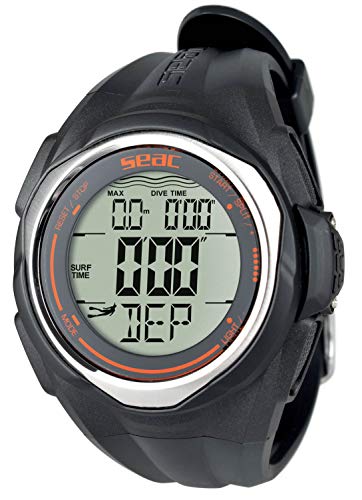
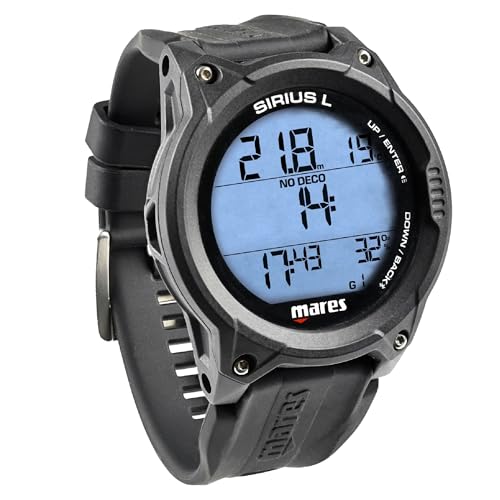
Live listings for the shortlist in this guide are pulled from Amazon below, so prices and availability are always current at the moment you look.

Quartz or automatic in a chamber watch
The movement debate inside this category is more practical than romantic. Quartz saturation references, particularly the Japanese professional models, offer accuracy measured in seconds per month, movements with few moving parts to disturb under shock, and cases that can be slimmer because no rotor needs clearance. Their batteries are sized for multi year life, and a low charge warning through the seconds hand gives fair notice before a rotation. For an issued watch that may sit in a stores locker between contracts, that combination is close to ideal.
Automatic references answer with independence from battery logistics and a service ecosystem that any competent watchmaker understands in principle, even if case parts remain brand controlled. They also carry the category’s heritage, since the original chamber watches were mechanical, and many buyers simply prefer a sweeping seconds hand on an instrument of this character. Modern professional automatics resist magnetism far better than their ancestors, keep rate well within chronometer tolerances in the certified examples, and ask only to be worn or wound regularly to stay ready.
Neither choice compromises the saturation mission, because the mission lives in the case, the seals, and the helium strategy rather than in the oscillator. Decide by your own habits: the watch that gets serviced on schedule and worn with confidence is the right one, whichever way its hands are driven, and the diver who trusts it completely will forget it is there until the moment its quiet competence matters most.
One last practical note concerns documentation supplied with a new purchase. Professional references ship with instruction material that covers the valve, the extension clasp, and the recommended pressure check rhythm in the maker’s own words, and that booklet deserves a full read before the watch meets water. Keep it with the warranty card and any service receipts in a single folder. Should the watch ever be sold, that tidy paper trail speaks for the owner’s diligence more persuasively than any advertisement wording, and should it stay in the family, the next wearer inherits the knowledge needed to keep its seals, valve, and bezel working exactly as the engineers intended.