What's inside
As an Amazon Associate I earn from qualifying purchases. This post may contain affiliate links at no extra cost to you.
gizmoverdict.com is reader-supported. When you buy through links on our site, we may earn an affiliate commission.
Where to buy: each linked model below goes to its Amazon listing, where you can check price on Amazon and confirm the exact bundle, cable length and recorder compatibility before ordering. Models described without a link are covered in prose so you can compare the category fairly.
Shopping for the best 2k 4mp cameras sounds simple until the listings start mixing three different animals under one label: wired Power over Ethernet cameras that record around the clock to a recorder, turret and bullet variants of the same 4MP sensor, and a solar wireless outlier that wakes up for events instead of streaming all day. All six picks here resolve at 2K, meaning a 2560 by 1440 frame from a 4-megapixel sensor, which sits in a genuinely useful middle ground. You get noticeably more facial and plate detail than an old 1080p camera delivers, without the storage appetite and network load of an 8MP 4K feed chewing through a hard drive.
The honest dividing line in this roundup is not resolution at all, because every camera here shares it. The real split is infrastructure. Five of these cameras expect a PoE switch or an NVR with PoE ports, a cable run to every mounting point, and a recorder or compatible software at the other end. One of them, the Hiseeu solar model, expects sunshine, a decent Wi-Fi signal and your acceptance that event-based recording is a different promise from continuous recording. Neither approach is wrong. They simply solve different properties, different budgets of patience, and different tolerances for drilling holes in exterior walls.
This guide walks through what 4MP actually buys you at driveway distances, where infrared range figures stop mattering, and why a dome, a turret and a bullet built around similar sensors behave differently once weather, vandals and spiders enter the picture. Read the recorder warnings carefully. More disappointment comes from cameras bought without anything to record to than from any sensor shortcoming, and the manufacturer notes on several of these listings say so in unusually blunt language worth taking seriously.
One more framing note before the picks themselves. Resolution marketing encourages buyers to shop by a single number, yet two cameras with identical 4MP sensors can produce wildly different evidence depending on lens quality, infrared layout and where they are bolted. That is why the reviews below spend as much time on housings, power and recording behaviour as on the sensor they all share. Judge each pick against the position it would occupy at your property, not against an abstract league table, and the right choice usually identifies itself.
Key Takeaways
- Every pick captures 2560 by 1440 video; choose on power, housing and recorder fit instead of pixels.
- PoE models here need an NVR or PoE switch and will not record anything standing alone.
- Turret housings resist spider webs near the lens better than domes or bullets with IR rings.
- The Hiseeu solar camera trades continuous footage for cable-free mounting and event clips.
- Built-in microphones appear across this group, yet audio laws differ by place, so check yours.
- Night range claims describe ideal darkness; porches, walls and rain shorten every figure quoted.
Quick Picks
| Pick | Badge | Why it earns a place |
|---|---|---|
| Anpviz 4MP PoE IP Turret Security Camera | Best everyday turret | A microphone-equipped turret with sensible night range for porches and side doors. |
| Anpviz 4MP PoE IP Dome Camera | Best under a ceiling | A long-claimed IR dome for porches, shopfronts and covered entries. |
| Anpviz 4MP PoE IP Bullet Camera | Best for long approaches | A hundred-foot IR claim and human detection aimed down driveways. |
| CQH 4MP PoE IP Turret Camera | Best third-party recorder fit | A turret with human detection and a mid-range night claim. |
| 4MP PoE Vandal Dome Camera | Best where hands can reach | A vandal-rated dome with a 2.8mm lens for low, exposed mounts. |
| Hiseeu 4MP Solar Security Camera | Best cable-free corner | A dual-lens solar camera with auto tracking and a touchscreen hub. |
How did we choose these 2K cameras?
Selection started with a hard filter: the camera had to be a genuine 4MP device with a verifiable listing, a named manufacturer or a clearly specified generic build, and enough published detail to judge its power source, night vision arrangement and recording requirements without guessing. Cameras that hid their power requirements behind lifestyle photography were set aside, because a security camera is infrastructure, not decor, and infrastructure should state plainly what it plugs into.
The six survivors were then spread deliberately across the shapes a buyer actually chooses between. There is a vandal-resistant dome for low ceilings and shopfronts, turret cameras that dominate current PoE installs, a long-range bullet for driveways and gates, and one solar wireless camera for the fence line or outbuilding where trenching a cable would cost more than the camera itself. Keeping one slot for the solar design matters because plenty of readers searching this category have exactly one awkward corner that wiring cannot reach.
Finally, each model was judged on the honesty of its own listing. Anpviz, to its credit, prints a warning that its cameras do not work independently and need a recorder or PoE supply behind them. That kind of candour earned trust rather than costing it. Listings were also checked for microphone inclusion, ingress ratings, lens angle and stated infrared reach, and those figures are reported here as manufacturer claims with the caveats they deserve, never as laboratory measurements of our own.
A note on evidence standards applies to everything that follows. Infrared distances, fields of view and detection claims in the picks are the manufacturers’ published figures, quoted so you can compare models on a common scale, and each review flags where real-world conditions predictably erode them. Where a listing was vague, the review says so rather than filling the gap with invention. A camera guide that bluffs about specifications teaches readers to bluff about their own requirements, and the properties being protected deserve better arithmetic than that.
The picks are also deliberately free of cloud dependence. Every wired model here records to local hardware under your physical control, and even the solar camera keeps its clips on local storage in its standard configuration. Subscriptions exist in this market for remote storage and richer alerts, and some households will value them, but no pick in this roundup stops working the month a subscription lapses, which is a property worth more than any single feature when a system is expected to serve for a decade.
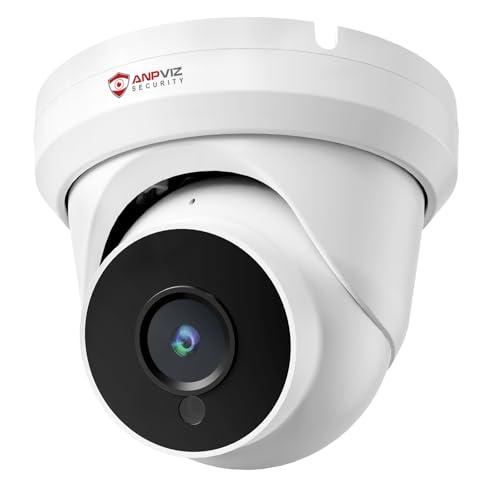
Anpviz 4MP PoE IP Turret Security Camera — Best everyday turret
The Anpviz turret is the camera in this group that most readers should picture first, because the turret format has quietly become the default shape of sensible home PoE installs. Its ball-and-socket eyeball sits in a compact housing that tucks under a soffit or porch ceiling without dominating the brickwork, and the split-window face keeps the infrared emitters apart from the lens. That separation sounds like a footnote until you have owned a dome whose own night light fogged its picture, or a bullet wrapped in a spider’s web that turned every night clip into a glowing white curtain.
Specification honesty is this model’s quiet strength. The stated infrared reach is fifty feet, a modest figure next to the hundred-foot claims elsewhere in this roundup, and it reads like a number measured against a real garden rather than a marketing department’s optimism. In practice it covers a porch, a side return and a typical suburban driveway apron, which is where identification actually happens. The built-in microphone adds context that video alone misses: the sound of a gate latch, a vehicle idling, voices deciding whether a house looks empty. Check your local audio rules, then appreciate how much a soundtrack clarifies a silent clip.
Anpviz also deserves credit for printing its warning where buyers cannot miss it: this camera does not work independently. It needs a PoE source and something to record to, whether that is the company’s own NVR, a third-party ONVIF recorder or PC software. Treat that sentence as the product’s defining feature rather than fine print. Buyers who arrive with a recorder get a dependable, weather-sealed turret at the sensible centre of the 4MP market. Buyers who expected a standalone gadget get a lesson, delivered by the listing itself, before any money is wasted.
Daily life with this camera is uneventful in the best way. The IP66 sealing shrugs off driven rain, the housing has no flat ledge where webs anchor across the glass, and the wide fixed lens covers an entrance zone without the fisheye exaggeration that makes people at frame edges look like carnival mirrors. Pair it with sensible motion zones on the recorder and it settles into the background of the house, which is precisely what infrastructure should do.
A word about pairing this turret with recording software rather than a hardware NVR, since many readers will do exactly that. On a PC-based system the camera’s main stream feeds recording while its lower-resolution sub-stream feeds the live grid, and setting both correctly is the difference between a smooth sixteen-camera wall and a stuttering mess on an older machine. The turret behaves predictably in that role, holding its frame rate and reconnecting cleanly after a router reboot, two unglamorous virtues that matter more across five years of ownership than any headline feature printed on the carton.
- Sensor: 4MP, 2560 by 1440 output
- Lens: fixed wide angle for entrances
- Night vision: infrared rated to 50ft
- Audio: built-in microphone
- Weather rating: IP66 housing
- Power: PoE, recorder or switch required
Strengths
- Turret body keeps night glare down
- Microphone included for context
- Compact size suits soffit mounting
Trade-offs
- Shorter infrared reach than bullet sibling
- Needs recorder bought separately
- Fixed lens limits fine framing
Best for: Homeowners adding a first wired camera over a door or porch.
Not suited for: Long driveways needing detail far beyond the infrared rating.

Anpviz 4MP PoE IP Dome Camera — Best under a ceiling
The dome version of Anpviz’s 4MP line answers a different architectural question from its turret sibling. Some mounting points are ceilings: porch roofs, shop canopies, garage interiors, the underside of an apartment walkway. A dome belongs there, its rounded cover presenting no grip and no obvious lens direction to anyone glancing up. That ambiguity is a genuine deterrent in retail and shared-building settings, where a camera that might be watching tends to behave people almost as well as one that certainly is.
Its headline figure is the ninety-eight-foot infrared rating, roughly double the turret’s claim. Treat the gap as partly housing and partly optimism, but the direction is believable: domes of this class often carry a fuller ring of emitters around the lens, and under a canopy the light has surfaces to work with. Where the rating deserves suspicion is outdoors in open rain, where every dome ever made loses distance to weather and to the slow film of dust that settles on a downward-facing cover. Budget a twice-yearly wipe with a soft cloth into ownership, the way you would budget gutter clearing.
The microphone is present here too, which matters more in a dome’s typical habitat than outdoors. In a small shop or a covered loading area, audio turns a disputed timeline into a settled one, and the same legal caution applies with extra force indoors where expectations of privacy run higher. Post the notice, check the rules for your setting, and record audio only where you are entitled to. The camera will happily capture everything; judgement about whether it should remains stubbornly human work.
Like every Anpviz PoE model, this dome is a component, not a system. It expects a recorder or PoE switch behind it and offers nothing without one. Within a planned install, though, it fills the ceiling-mounted slot with a sealed, tamper-shy housing and a night claim strong enough for forecourts and yards. Choose it for the architecture it suits rather than the number on its box, and keep its cover clean enough to deserve that number.
Consider where this dome earns its keep in a small business rather than a home. A convenience store or cafe gains a camera that customers barely register, angled from the ceiling corner across the till and the door in one frame, with audio that settles arguments about what was said during a refund dispute. Staff should know it records sound, signage should say cameras operate, and the owner should set retention to the shortest period that covers a chargeback cycle. Configured with that restraint, the dome becomes a quiet witness rather than an atmosphere problem, and its long infrared claim turns useful after closing time when the only light in the building is its own.
- Sensor: 4MP with 2K recording
- Night vision: infrared rated to 98ft
- Audio: built-in microphone
- Housing: dome for ceiling mounting
- Weather rating: IP66 sealed
- Power: PoE only, no standalone mode
Strengths
- Long claimed infrared throw
- Dome shape discourages casual tampering
- Microphone fitted as standard
Trade-offs
- Dome cover needs periodic cleaning
- Reflections possible if cover degrades
- Recorder required before use
Best for: Covered entrances, retail canopies and low ceilings within reach.
Not suited for: Exposed walls where a turret sheds weather and webs better.

Anpviz 4MP PoE IP Bullet Camera — Best for long approaches
Every camera family needs a member that simply stares down a line, and in the Anpviz 4MP range that job falls to this bullet. The elongated body, the sunshield over the lens and the standoff bracket all serve a single purpose: holding a steady, obvious watch over a driveway, a gate approach or the side passage where bins and ladders live. Its infrared claim reaches a hundred feet, the strongest in the trio, and while real gardens will tax that figure, a bullet’s larger face genuinely does pack more emitters than a compact turret can.
Human motion detection is the second reason this model exists. A camera covering a long outdoor approach sees endless irrelevant movement: hedges in wind, headlights sweeping, the neighbour’s cat conducting its nightly inspections. Filtering alerts toward people-shaped events is what separates a system you check from a system you mute. The detection runs in the camera and passes events to a compatible recorder or app, and its quality will vary with mounting angle. Side-on views of a path, where a walking figure changes shape frame by frame, trigger far more reliably than head-on views down a drive.
The wide viewing angle, in the region of a hundred and ten degrees, cuts both ways and deserves an honest paragraph. It lets one bullet cover a driveway and the pavement beyond, which feels efficient, but it spreads the sensor’s pixels across so much scenery that a face at the far end occupies very few of them. The fix is aiming discipline: tilt the camera so the far third of the frame is the gate itself, not the street behind it, and let nearer ground fill the rest. A bullet rewards owners who think like photographers about where the subject will stand.
Ownership chores are modest. The conspicuous housing deters casual interference yet invites the occasional thrown glance from teenagers, so mount it properly high with fixings into masonry rather than cladding, and seal the cable entry so wind-driven rain cannot follow the wire indoors. Given a recorder behind it and a disciplined aim, this is the pick for properties whose risk arrives along one predictable line, which describes a great many driveways in the world.
One practical test separates a well-aimed bullet from a decorative one, and it takes five minutes on installation evening. Walk the approach at normal pace after dark, once empty-handed and once carrying a box at chest height the way a courier or a thief both might, then review the footage indoors. If your face stays readable through the middle third of the walk, the aim and height are right. If the picture blooms white when you near the camera, the infrared is bouncing off a nearby wall or the unit sits too low, and a small re-angle now saves a year of washed-out clips.
- Sensor: 4MP, 2K resolution
- Night vision: infrared rated to 100ft
- Detection: human motion alerts in camera
- Field of view: wide, around 110 degrees class
- Audio: built-in microphone
- Power: PoE, recorder required
Strengths
- Longest night claim of the Anpviz trio
- Human detection trims false alerts
- Sunshield suits exposed walls
Trade-offs
- Conspicuous shape invites attention
- Wide angle spreads pixels thinly
- Cable entry needs careful sealing
Best for: Driveways, gates and side passages with one clear approach line.
Not suited for: Discreet installs or very wide yards needing identification everywhere.

CQH 4MP PoE IP Turret Camera — Best third-party recorder fit
CQH occupies the pragmatic corner of this roundup: a 4MP turret with human detection, a sixty-five-foot infrared claim and no ecosystem ambitions. That last quality is the point. Cameras from smaller brands live or die by how gracefully they join systems the buyer already owns, and a standards-following PoE turret that streams cleanly to a mixed-brand recorder or to PC software earns its place without demanding loyalty to anyone’s cloud, app or subscription desk.
The numbers sit in the sensible middle. Sixty-five feet of claimed night reach covers the depth of most residential plots from a wall above the back door, and the turret housing keeps the infrared and the lens in their separate windows so the picture stays usable at that range. Human detection onboard means the camera itself can flag the events worth a recorder’s attention, though how richly those flags surface depends on the recorder at the other end. With a matching or generous NVR you may get tidy person-labelled timelines; with basic software you may get motion markers and honest video, which is still most of the value.
Due diligence matters more with a smaller brand, and this guide will not pretend otherwise. Buy one unit first, confirm it holds a stable stream on your exact recorder for a week, check that its time stays synchronised and that night mode switches cleanly at dusk, and only then order companions for the other corners of the house. Support channels will be thinner than a global brand’s, firmware updates less frequent, and the manual more translated than written. For many technically comfortable owners that trade is entirely fair, because the hardware format itself is proven and the price of admission is lower.
Mounted well, the CQH disappears into the same background as its Anpviz rival: a small eyeball under the eaves, watching the gate, ignoring the hedge. Its case rests on flexibility. If your system is a deliberate mixture of brands gathered over years, or a software recorder on a home server, this turret speaks the right protocols and spends its budget on the sensor and housing rather than on an ecosystem you never asked to join.
Firmware is the honest caveat with value turrets, this one included. Set the camera up, disable any automatic update behaviour you do not control, and then leave the firmware alone unless a specific fault forces your hand, because a camera that streams perfectly for years on an old build beats a bricked one chasing a changelog nobody needed. Keep a note of the admin password in a password manager rather than on a label under the eaves, and record the camera’s MAC address in the same note; when a recorder is replaced years later, those two scraps of administration rebuild the system in an afternoon instead of a weekend.
- Sensor: 4MP, 2560 by 1440
- Night vision: infrared rated to 65ft
- Detection: human motion detection onboard
- Housing: turret eyeball, outdoor rated
- Power: PoE single-cable install
- Recording: NVR or software required
Strengths
- Mid-range infrared suits most gardens
- Human detection reduces alert noise
- Turret mount adjusts aim easily
Trade-offs
- Smaller brand support network
- Feature depth varies by recorder
- Confirm ONVIF profile before bulk buying
Best for: Owners running Blue Iris or mixed-brand recorders who want turret value.
Not suited for: Buyers wanting one brand’s app and support across the whole system.
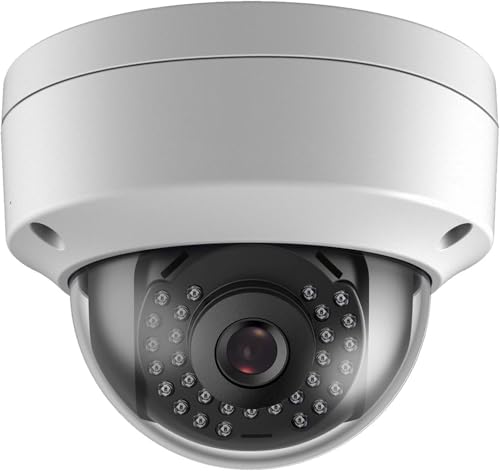
4MP PoE Vandal Dome Camera — Best where hands can reach
Some cameras live within reach of the people they watch, and for those positions the housing stops being packaging and becomes the product. This generic vandal dome is built around that truth. Its hardened cover and recessed fixings are meant to survive the casual swipe, the thrown can and the screwdriver curiosity that a low-mounted camera in a car park, stairwell or shopfront eventually meets. The 4MP sensor inside is ordinary for this roundup; the shell around it is the entire argument.
The 2.8mm lens gives the wide, corner-friendly view that reachable indoor-outdoor spots usually need. Mounted in the corner of a parking level or above a doorway, it takes in the door, the approach and the wall a person would have to cross, all in one frame. Width costs reach, as always: faces stay identifiable within the first several metres and become descriptive rather than evidentiary beyond that. For deterrence and incident reconstruction in confined spaces, description is often enough, especially when a second camera or a staffed entrance covers identity.
Night performance is rated to sixty-five feet, though a dome’s real night enemy is nearer than any target: its own cover. Scratches, cleaning swirls and condensation scatter infrared back into the lens, so the vandal dome’s strength and weakness share an address. Fit it with care, avoid abrasive cleaning forever after, and if the cover eventually clouds, replacing the dome or the whole modestly priced unit beats squinting through a fogged picture. The IP66 sealing handles weather well; it cannot handle a scouring pad.
Because this is an unbranded build, buy it the way professionals buy generic hardware: one unit, tested against your recorder for a fortnight, examined for stream stability and honest night pictures, then multiplied if it behaves. There is no ecosystem to charm you and no app to lock you in, just PoE, ONVIF-style streaming and a shell designed to be ignored by everyone except the person who tries to move it and discovers it will not move.
Placement geometry decides whether this dome’s toughness ever gets tested usefully. Put it where a person must pass within its near field to reach the thing being protected: the meter cupboard, the bicycle store door, the rear entrance of a small warehouse. A vandal dome watching an empty yard from a low wall invites interference and records little of value, while the same unit above a doorway records every approach at identifying distance and rarely gets touched, because reaching it means standing in its picture at point-blank range. Toughness is the insurance policy; geometry is the actual security.
- Sensor: 4MP, 2K video
- Lens: 2.8mm wide angle
- Night vision: infrared rated to 65ft
- Housing: vandal-resistant dome, IP66
- Power: PoE, recorder required
- Focus: fixed, set at factory
Strengths
- Tough dome for reachable spots
- Wide lens covers corners well
- Sealed against weather and dust
Trade-offs
- No brand ecosystem behind it
- Wide view limits distant detail
- Dome glare if cover gets scratched
Best for: Low mounts in car parks, stairwells and shopfronts within arm’s reach.
Not suited for: High eaves where a turret’s easier aim and cleaning win.

Hiseeu 4MP Solar Security Camera — Best cable-free corner
The Hiseeu solar camera is the honest exception in a wired roundup, included because every property has one position where the wired argument collapses: the bottom gate, the allotment shed, the barn corner two fields of mud away from the nearest socket. For those coordinates, a camera that harvests its own power and talks over Wi-Fi is not a compromise on the real system. It is the only system that will ever exist there, and judging it against PoE standards it never claimed to meet helps nobody.
Understand its recording bargain precisely. A battery camera cannot stream continuously without draining itself, so it sleeps, wakes on motion, records the event and sleeps again. Modern wake-up is fast, and the dual-lens arrangement with auto tracking lets this model follow a person or vehicle across its view rather than waving at a fixed slice of fence. Still, the seconds before a trigger can be missing, a slow approach under the sensitivity threshold may record late, and a week of storms can outspend a small panel’s income. Entrances to the house itself deserve wired certainty; this camera guards the perimeter’s awkward edges.
The bundle thinking is generous. Dual-band Wi-Fi gives placement flexibility where the 5GHz band reaches and a fallback where only 2.4GHz survives the walls, and the touchscreen monitor included in this class of kit gives the household a glanceable view without opening an app, which grandparents and house-sitters genuinely appreciate. Auto tracking produces lively clips, though it also means the camera’s parked position matters: set its home view on the gate, tune the tracking sensitivity so swaying washing stops auditioning for attention, and let the pan mechanism rest overnight.
Siting is a solar discipline. The panel wants unobstructed sky for a good slice of the day, the camera wants a Wi-Fi signal that survives winter rain on the walls between it and the router, and both wants live within the same few metres of fence. Walk the spot with a phone first, check signal where the camera will sit, and be honest about shade from summer foliage. Given sun and signal, this Hiseeu turns the unwatchable corner into a watched one, which is a bigger upgrade than any resolution step in this entire guide.
Battery reality deserves one more plain paragraph. In midwinter at northern latitudes, a small solar panel may gather a fraction of its summer harvest while the camera works its longest nights, so heavy event traffic at a busy gate can outrun the budget. The mitigations are mundane and effective: raise the panel’s tilt toward the low winter sun, trim detection zones so passing traffic on the road stops waking the camera, and accept a slightly longer clip interval. Owners who treat the power budget as a design constraint get years of service; owners who ignore it get a flat camera in February and a grudge against the whole category.
- Sensor: 4MP with dual-lens design
- Power: solar panel plus rechargeable battery
- Recording: event clips, not continuous
- Tracking: automatic pan following motion
- Connectivity: dual-band Wi-Fi to hub or app
- Screen: bundle includes 10-inch touchscreen monitor class
Strengths
- No cable run needed at all
- Auto tracking follows movement
- Dual-band Wi-Fi widens placement options
Trade-offs
- Event recording can miss build-up seconds
- Battery depends on sun and season
- Wi-Fi range limits mounting spots
Best for: Gates, sheds and fence lines far from power and network sockets.
Not suited for: Main entrances where every second must be recorded continuously.
How do the six 4MP picks compare side by side?
| Model | Standout trait | Watch out for |
|---|---|---|
| Anpviz 4MP PoE IP Turret Security Camera | Balanced turret with microphone | Modest night reach |
| Anpviz 4MP PoE IP Dome Camera | Ceiling-friendly dome, long IR claim | Cover maintenance matters |
| Anpviz 4MP PoE IP Bullet Camera | Long-throw bullet with detection | Visible, wide-angle trade-offs |
| CQH 4MP PoE IP Turret Camera | Flexible turret for mixed systems | Support thinner than big brands |
| 4MP PoE Vandal Dome Camera | Vandal dome, 2.8mm wide lens | Generic support, wide-view limits |
| Hiseeu 4MP Solar Security Camera | Solar dual-lens with tracking | Event-based, weather-dependent |
What should you check before buying a 4MP camera?
Does 4MP actually improve identification over 1080p?
A 4MP frame carries roughly twice the pixel count of a 1080p frame, and the gain shows up exactly where security footage earns its keep: when you zoom into a recorded clip after something has happened. A face crossing a driveway at ten metres stays recognisable a moment longer, a delivery driver’s uniform logo survives, and the difference between a fox and a small dog stops being guesswork. Live viewing on a phone looks similar between the two resolutions, because the phone screen and the app’s sub-stream hide the gap. The evidence file is where 2K pulls ahead.
There is a ceiling to the benefit. Pixel density across the scene depends on lens angle as much as sensor size, so a very wide 4MP camera spreading its pixels over a broad yard can identify less at the gate than a narrower 1080p camera aimed down a path. Match the lens to the choke point you care about. Doors, gates and parked cars deserve tighter framing; open lawns get detection and deterrence value but rarely courtroom-grade faces, whatever the megapixel count printed on the box.
What does a PoE camera need before it records anything?
Power over Ethernet sends electricity and data down one network cable, which is elegant once the supporting kit exists and useless before it does. A PoE camera needs either a network video recorder with built-in PoE ports, a standalone PoE switch feeding a plain recorder or server software, or at minimum a PoE injector for bench testing. Without one of those, the camera in this roundup will not light up, will not record, and in most cases will not even appear on your network. The Anpviz listings state this outright, and it applies to the CQH and the generic dome here just as firmly.
Budget the whole chain, not the camera alone. Cable rated for outdoor runs, a recorder with enough channels for future additions, a surveillance-grade hard drive sized for your retention target, and the switch wattage to run infrared at night all belong in the same spreadsheet. A useful rule is to leave two recorder channels spare, because camera systems grow: the blind corner you tolerate today becomes next spring’s extra turret, and replacing a recorder early costs more than buying headroom once.
How long will 2K footage fill a hard drive?
Continuous 4MP recording with modern H.265 compression typically consumes somewhere in the region of ten to twenty gigabytes per camera per day, swinging with scene activity, frame rate and bitrate settings. A busy street-facing view with constant motion costs far more than a quiet side passage. Four cameras recording around the clock can therefore cycle a two-terabyte drive in roughly three to five weeks, which most households find acceptable, while businesses with incident-review obligations often target longer retention and buy capacity accordingly.
You can stretch retention without surrendering the moments that matter. Dropping the frame rate on overview cameras, tightening motion zones so swaying branches stop triggering segments, and letting the recorder keep a lower-resolution sub-stream for older days all help. What you should not do is switch a camera covering an entrance to motion-only recording to save space and then discover, after a parcel vanishes, that the pre-event seconds you needed were never written. Entrances deserve continuous recording; the drive space is cheaper than the regret.
Which housing shape suits which mounting spot?
Domes belong under soffits, porch ceilings and shop canopies where the lens looks down and the rounded cover shrugs off casual tampering. Their weakness is infrared reflection: dust, moisture or a scratched bubble can bounce the camera’s own night light back into the lens and fog the image. Turrets split the lens and the infrared into separate windows on a ball mount, which is why installers favour them outdoors; spiders also find fewer flat ledges to build across, and a web in front of an IR emitter is the classic cause of a camera that blinds itself nightly.
Bullets earn their place on long, narrow views. The sunshield, the obvious directional presence and the standoff from the wall suit driveways, side gates and warehouse aisles, and their larger bodies often carry the longest infrared arrays in a range, as the hundred-foot claim on the Anpviz bullet below illustrates. The trade is visibility: a bullet announces itself, which deters some people and tempts others to test its mounting screws, so fit bullets high, use proper fixings, and route their cables where a casual tug cannot reach them.
What should you do on installation day?
Bench-test every camera before a ladder leaves the ground. Connect it to the recorder, confirm the stream, the microphone and the night mode, set its password and time zone, and label the cable with the camera’s intended position. Ten minutes at a desk prevents the special misery of discovering a dead unit after its cable has been clipped neatly through a wall. Photograph each camera’s view in daylight and again after dark, and keep those stills; they become your reference when a hedge grows, a neighbour builds an extension, or a view quietly drifts off the gate it was meant to watch.
Finish with the unglamorous settings that decide whether footage helps you later. Synchronise every camera to the same time source so clips from different angles agree about when things happened. Turn on person or vehicle detection where the recorder supports it, draw motion zones that exclude public pavement if your local rules require care, and export one test clip to a phone or computer to prove the playback path works. A system you have never successfully exported from is a promise, not evidence.
How do privacy masks and recording schedules help?
Most recorders paired with these cameras can blank out rectangles of the frame permanently, and the feature deserves use rather than curiosity. Mask the neighbour’s garden, the bathroom window across the alley, any patch of ground that is not yours to document. The mask is burned into the recording, so footage you later hand to police or an insurer never carries images you had no business keeping. It is the single easiest step a camera owner can take toward being a good neighbour while keeping a serious system.
Schedules are the other underused courtesy. A camera over a side passage shared with the house next door might record continuously during the night hours when nobody legitimately uses it, then drop to motion-only during the day when neighbours hang washing and children pass through. Aligning the schedule with the rhythm of the place keeps the evidence value where risk actually lives and trims the archive of hours of other people’s ordinary lives, which also makes reviewing an incident dramatically faster.
When is a second camera better than a better camera?
Buyers routinely ask whether stepping up to a higher-resolution single camera would cover a front garden better than two 4MP units, and the answer is almost always no. Resolution cannot see around the corner of a porch, through a parked van or past the shadow line where a wide lens loses the far gate. Two modest cameras at right angles to each other, one on the door approach and one across the driveway, produce overlapping evidence that survives a failure, a spider web or a deliberately turned housing on either unit.
The economics agree with the geometry. A second turret from this roundup plus its cable run usually costs less than the jump to a flagship camera, and it adds a channel of redundancy no flagship offers. Plan the recorder with spare channels from the start, run the second cable while the ladders and drill are already out, and the marginal effort of the extra view is an hour rather than a project. Coverage is a property of positions, not of pixels, and this category’s sensible prices make positions affordable.
What does maintaining a wired system actually involve?
Wired cameras ask little, but not nothing. Twice a year, walk the system the way weather does: check each housing for water tracks, clear the spider silk that bridges lens and infrared, confirm the cable clips have not chafed where they cross a gutter edge, and review one night clip from every camera to catch slow failures like a dying infrared array or a dome cover gradually clouding. These ten minutes per camera are the entire maintenance contract, and they are why wired systems outlast the novelty gadgets that share their shelves.
Once a year, audit the digital side with the same plain diligence. Confirm the recorder’s drive health report shows no growing error count, export one clip from the oldest day of retained footage to prove the archive is real, update passwords that departing household members or staff once knew, and re-aim any camera whose view has been quietly eaten by a growing hedge. A system maintained at this rhythm does not produce surprises, and in security work the absence of surprises is the product being bought.
Which mistakes catch 4MP camera buyers most often?
Buying cameras with nothing to record to
The single most common failure in this category is a box of PoE cameras arriving at a house with no recorder, no PoE switch and no plan for either. The cameras are not broken; they are incomplete, like buying taps without plumbing. Retail listings do disclose this, sometimes in capital letters, yet the headline price of a camera alone anchors expectations. Price the recorder, drive, switch and cable in the same sitting as the cameras, and the system you install will be the system you thought you bought.
Mounting for the widest possible view
New owners instinctively aim cameras to see everything, and end up identifying nothing. A single camera stretched across a front garden, a driveway and a stretch of street spreads its four million pixels so thinly that faces dissolve into smudges. Narrow the aim to the asset or the doorway, accept that neighbouring ground goes unwatched, and add a second camera later if a genuine blind spot remains. Two honest views beat one panoramic shrug every time something actually happens.
Trusting infrared numbers as guarantees
Night-vision distances on listings are measured in open darkness against cooperative targets. Your mileage shrinks with fog, rain, dusty domes, walls just outside the frame bouncing light back, and insects holding conventions in front of the lens. Treat the quoted figure as a ranking tool between models rather than a promise about your garden. If a gate sits at the edge of a camera’s claimed range, step up a class or add a modest separate infrared illuminator or a warm porch light, which also improves colour detail.
Ignoring audio rules and neighbours
Most cameras in this roundup include a microphone, and hearing a conversation clearly is not the same as being entitled to record it. Audio surveillance rules are stricter than video rules in many jurisdictions, and they apply to your driveway as much as to a shop floor. Check the position where you live, disable audio on cameras that overlook shared spaces if required, and tell household members and regular visitors the microphones exist. A camera system should protect relationships as carefully as it protects property.
Final Recommendation
It is also worth saying what this category will not do, however carefully you shop. No 4MP camera reads a licence plate at motorway distance, sees through fog or identifies a hooded figure determined to stay unidentified. What it does, reliably and affordably, is document your own ground well enough to deter the casual opportunist, settle the everyday disputes and give police or insurers something solid when the unusual happens. Bought with that expectation, every pick here can deliver it.
If your home already has a recorder, or you are ready to buy one, the turrets in this group are the sensible centre of gravity: the Anpviz turret for a supported, microphone-equipped everyday install, the CQH where its newer listing and human detection fit a Blue Iris or third-party recorder setup, and the vandal dome wherever hands can reach the hardware. Choose the bullet when one long approach matters more than wide coverage, and reserve the Hiseeu solar camera for the corner that cable cannot reach, accepting event clips as its honest bargain.
Whichever route you take, spend the saved effort on placement, retention and one exported test clip, because those decide whether the system helps on the one bad day it exists for. A 4MP badge never identified anybody by itself; a well-aimed turret above a gate, recording continuously to a drive with room to spare, does it quietly every night of the year.
Finally, buy in the order the system demands rather than the order adverts present. Recorder and drive first, because they define capacity; cable and switch second, because they define reach; cameras last, chosen per position from the shapes above. Readers who follow that sequence rarely join the regretful chorus of camera owners with beautiful hardware and nowhere to plug it in, and their first evening of footage tends to arrive on schedule, which is the only launch day a security system ever gets.
There is a modest ritual that closes every good install in this category, and it belongs in this guide’s final words. On the first evening, sit down with the household, open the live views one by one, and agree together what each camera is for, what it should never be pointed at and who may ask for footage to be deleted. Systems that begin with that conversation rarely become neighbourhood disputes, and the cameras settle into their proper role, unnoticed guardians of an ordinary, well-kept home, rather than monuments to suspicion.
Frequently Asked Questions
Do these 2K cameras work with any brand of recorder?
Most PoE cameras here follow the ONVIF standard, so they usually stream to third-party recorders and software such as Blue Iris, though advanced features like in-camera human detection events may only pass fully to a matching or compatible NVR. Test one camera against your recorder before buying a full set, and expect basic video to work more universally than smart alerts.
Can a PoE camera run from a normal network switch?
A standard switch supplies data but no power, so the camera stays dark. You need a PoE switch, a recorder with PoE ports, or a PoE injector between the ordinary switch and the camera. Check the switch’s total watt budget as well as its per-port rating, since infrared at night raises each camera’s draw.
Is the solar camera a replacement for a wired system?
It covers spots wiring cannot reach, but it records events rather than every second, sleeps to protect its battery and depends on Wi-Fi strength at the mounting point. Treat it as a supplement for gates, sheds and fence lines. Entrances and valuables deserve the continuous coverage that only a powered camera sustains through a dark, rainy week.
How high should an outdoor camera be mounted?
Around two and a half to three metres balances two competing needs: high enough to resist tampering and see over cars, low enough that faces are not just the tops of heads and hats. Angle the camera slightly down across the approach path rather than straight at it, so people cross the frame and give the lens a three-quarter face.
Do I need permission to record the street beyond my gate?
Rules vary widely by country and sometimes by city. Many places allow cameras covering your own property with incidental public areas, while audio recording and deliberate surveillance of neighbours attract stricter limits. Check local guidance before installation, use privacy masking where the recorder offers it, and aim at your assets rather than along the pavement.
What memory card does the solar model use?
Solar Wi-Fi cameras of this type typically record clips to a microSD card in the camera or hub and may offer optional cloud plans. Capacity and plan details change between bundles, so confirm the card size included and the maximum supported on the listing before ordering, and format the card in the camera itself for reliability.
Related Guides
Keep researching with our neighbouring camera guides: Choosing a recorder for PoE cameras Turret versus dome housings explained Solar camera placement that actually works
Related guides
- Best Sony Full Frame Cameras for Astrophotography: Sensitivity vs Resolution
- Best Basic Phones Camera Buyers Can Trust: Flip Phones and Simple Handsets That Still Take a Photograph
- Best Affordable Android Tablets: Five True Android Slates and One Fire OS Specialist, Clearly Labelled
- Best Airbnb Security Cameras: Compliant Outdoor Cameras and Noise Sensors for Hosts


