What's inside
- Key Takeaways
- Quick Picks
- How Did We Choose These Budget AT&T Handsets?
- Which AT&T Prepaid Phones Deserve a Closer Look?
- How Do the Six Picks Compare Side by Side?
- What Does Prepaid Actually Mean for the Ownership Experience?
- How Do You Set Up a Prepaid Phone for a Relative or a Spare Line?
- Which Mistakes Do Budget Prepaid Buyers Make Most Often?
- How Long Can a Phone From This Shelf Stay Useful?
- What Should a Crew, a Landlord or a Small Business Look For Here?
- How Does the Spare-Phone Drawer Change the Calculation?
- What Happens at Activation, and What Can Go Wrong?
- How Should a First Phone for a Young User Be Chosen From This Shelf?
- Which Accessories and Habits Extend a Budget Phone’s Life?
- How Does This Prepaid Shelf Compare With Buying an Older Flagship?
- What Is the Kindest Way to Hand One of These Phones to Somebody?
- Final Recommendation
- Frequently Asked Questions
- Related Guides
As an Amazon Associate I earn from qualifying purchases. This post may contain affiliate links at no extra cost to you.
gizmoverdict.com is reader-supported. When you buy through links on our site, we may earn an affiliate commission.
Where to buy: each handset below links to its Amazon listing from the Quick Picks table and again from its detailed section. Prepaid stock turns over quickly, so treat the listing page as the final word on availability and on what the box contains.
The best at and t smartphones under 100 live in the prepaid corner of the market, and this guide treats that address honestly from the first paragraph. The figure in the keyword names a budget segment — the shelf where carriers place their simplest smartphones for prepaid lines — rather than a price printed against any pick here, because prepaid pricing shifts with promotions and sellers and a number quoted in a guide would be stale before it was useful. What can be judged durably is the hardware, the network arrangement and the fit for the line the phone will serve, and those are the terms on which the six picks below are weighed.
Most of this set is AT&T prepaid by design: the Radiant Max and the Galaxy A16 carry the prepaid label in their titles, the Galaxy A15 is listed for AT&T, and the LG Phoenix 3 wears the old GoPhone prepaid branding. These are phones for AT&T’s prepaid world — bought for a line on that network, activated into its plans, and not intended to wander. One pick breaks the pattern deliberately: the TCL A30 is unlocked, included as the escape hatch for a reader who wants this segment’s simplicity without the carrier tie. And one pick is a historical exhibit with a warning label, the Nokia Lumia 635, a Windows Phone from another era that this guide discusses frankly rather than recommending as a modern daily handset.
The realistic jobs for this shelf are well defined: a first phone, a spare line, a handset for a relative whose needs stop at calls and messages, a work-crew phone whose loss would be an annoyance rather than a disaster. Judged against those jobs, several of these picks are genuinely well aimed — particularly the two Samsung models, whose storage figures would have been unthinkable in this segment not long ago. Judged as miniature flagships, all six would fail, and no honest guide should set them that examination.
Our Top Picks
Key Takeaways
- No prices are printed per pick; the keyword’s figure names a budget segment, and prepaid pricing moves too fast for a guide to quote responsibly.
- Four picks are AT&T prepaid or AT&T-listed handsets, intended for AT&T prepaid lines rather than for other carriers.
- The Galaxy A16 5G carries the set’s strongest specification: 128GB of storage, 4GB of RAM, a 6.5-inch HD+ display and Android 14 per its title.
- The TCL A30 is the unlocked exception, free of the AT&T tie, with a stated 8MP rear camera and a 3,000mAh battery.
- The Nokia Lumia 635 is a legacy Windows Phone; this guide treats it as a period piece, not as a sensible primary phone today.
- The LG Phoenix 3 and the Radiant Max are the segment’s traditional prepaid shapes: 16GB and 32GB respectively, built for calls-first duty.
Quick Picks
| Pick | Badge | Why it earns its place |
|---|---|---|
| AT&T Prepaid Radiant Max | Carrier’s own prepaid model | AT&T’s own-brand prepaid handset with a 6.5-inch HD+ display and 32GB of storage. |
| Samsung Galaxy A16 5G | Strongest specification | 128GB, 4GB of RAM and 5G on an AT&T Prepaid listing — the segment’s ceiling. |
| Samsung Galaxy A15 5G | 5G with 64GB | The previous A-generation’s 5G handset for AT&T, with double the Radiant Max’s storage. |
| AT&T GoPhone LG Phoenix 3 | Traditional prepaid basic | A 16GB 4G LTE GoPhone-era handset for the simplest AT&T prepaid duty. |
| Nokia Lumia 635 | Legacy exhibit | A Windows Phone sold under the AT&T Go Phone name — discussed as history, not as a modern recommendation. |
| TCL A30 | Unlocked alternative | An unlocked 5.5-inch handset with 32GB of storage for readers avoiding the carrier tie. |
How Did We Choose These Budget AT&T Handsets?
The shortlist was built from the segment as it actually exists: AT&T’s prepaid shelf and its near neighbours. Carrier-branded prepaid phones are a distinct species from unlocked budget phones — they are specified by the carrier for its own plans, sold through its channels, and locked to its network by design — so the guide weights them as a group and marks the one unlocked exception clearly. Within the shelf, picks were chosen to span the segment’s real range: the carrier’s own-brand model, two Samsung generations that raise the segment’s ceiling, a traditional GoPhone-era basic, and the legacy Nokia that still circulates in this search’s results and deserves an honest explanation rather than silent inclusion.
Specification honesty acted as the second filter. Titles in this segment are sometimes terse to the point of evasion, and where a title omits a figure — a battery size, a camera count — the spec boxes below mark it not stated rather than borrowing the number from a sibling model or a memory of the device. The two Samsung titles are the most forthcoming here, which is part of why those phones anchor the recommendations: a buyer can tell, from the title alone, what the A16 and A15 actually are.
The third pass was a reality check about purpose. Nothing in this segment should be sold to a reader as a multi-year primary phone for heavy app use, and the guide’s verdicts are written accordingly — best-for lines that name spare lines, first phones, relatives and crews, and not-suited lines that name the demands these handsets will not meet. A budget phone judged against its real jobs can be a good phone; judged against a flagship’s jobs, it can only be a disappointment arranged in advance.
Which AT&T Prepaid Phones Deserve a Closer Look?

AT&T Prepaid Radiant Max — Carrier’s own prepaid model
The Radiant Max is AT&T’s own-brand entry on its own prepaid shelf: a 6.5-inch HD+ display, 32GB of storage, in Cobalt Blue, sold explicitly as a prepaid smartphone. Carrier house-brand phones occupy a particular niche — they are the handset the network itself hands across the counter when a prepaid customer needs a phone today — and they should be judged by that niche’s standards: straightforward activation on the home network, a screen large enough for messages and maps, and hardware specified for communication rather than for connoisseurship.
On those standards the Radiant Max is coherent. The display size matches the Samsung picks below, which matters more for daily comfort than any other single figure here; the storage doubles the old 16GB prepaid norm, giving photographs and apps a workable allowance; and the prepaid arrangement is the whole point — this phone belongs to an AT&T prepaid line and makes no pretence of travelling elsewhere. A reader whose line, plan and expectations all live inside AT&T Prepaid will find it the segment’s most direct purchase. A reader with any thought of changing networks should skip to the TCL at the end of this guide and not look back.
- Network position: AT&T Prepaid, per the listing title
- Display: 6.5-inch HD+
- Storage: 32GB
- Finish: Cobalt Blue
- RAM: Not stated in the listing title — verify with AT&T documentation
- Camera figures: Not stated in the listing title — verify with AT&T documentation
Strengths
- The carrier’s own prepaid model, aligned with its plans and activation.
- Large 6.5-inch screen for messages, maps and photographs.
- 32GB doubles the storage of the segment’s older basics.
Trade-offs
- Prepaid tie to AT&T is total by design.
- Title omits RAM and camera detail, so verification is needed.
- House-brand support and accessories are narrower than Samsung’s.
Best for: a straightforward AT&T Prepaid line needing a phone today.
Not suited for: any other network, or specification-led shopping.

Samsung Galaxy A16 5G (SM-A166U) — Strongest specification
The Galaxy A16 5G is the pick that redraws this segment’s ceiling. Its title states 128GB of storage with 4GB of RAM, a 6.5-inch HD+ display, 5G, Android 14, on an AT&T Prepaid listing in blue. A few years ago, 128GB belonged to phones several shelves up; finding it on a prepaid listing changes what a budget line can be. Photographs stop being a rationed resource, apps stop queuing for space, and the phone’s useful life stretches accordingly — the single most common cause of budget-phone misery is storage exhaustion, and this handset postpones it further than anything else here.
Samsung’s presence compounds the advantage. The A-series brings a mature interface, a broad accessory ecosystem and a maker’s support network that house-brand phones cannot match, all inside the prepaid arrangement. The honest boundaries remain: this is an AT&T Prepaid phone, its HD+ resolution is a budget-class figure, and 4GB of RAM sets a calm pace under multitasking. But within the segment the keyword describes, the A16 is the clear first recommendation — the phone a family should choose when the prepaid line is a real person’s real phone, expected to serve daily rather than merely to exist.
- Network position: AT&T Prepaid, per the listing title
- Display: 6.5-inch HD+
- Memory and storage: 4GB RAM, 128GB storage
- Connectivity: 5G
- Operating system: Android 14, per the title
- Model code: SM-A166U
Strengths
- 128GB storage transforms the budget ownership experience.
- 5G and Android 14 give it the set’s most current foundation.
- Samsung’s interface, accessories and support behind a prepaid price class.
Trade-offs
- AT&T Prepaid tie, like the rest of the carrier shelf.
- HD+ resolution rather than a sharper panel.
- 4GB of RAM enforces a measured pace with many apps open.
Best for: a prepaid line serving as a genuine daily phone.
Not suited for: other carriers, or heavy multitasking.

Samsung Galaxy A15 5G — 5G with 64GB
The A15 5G is the previous step of the same staircase: Samsung’s earlier A-generation 5G handset, listed for AT&T in Blue Black, with 64GB of storage stated in its title. Read beside the A16, it is the same argument at half the storage — a real smartphone from a major maker, on the carrier’s network, with 5G aboard — and for a lighter user that halving may never be felt. A calls-and-messages line with a modest photo habit lives comfortably inside 64GB for years, and the A15’s generation of Samsung hardware and software remains thoroughly serviceable for exactly those duties.
The choice between the two Samsungs is therefore a storage forecast rather than a quality verdict. Photograph daily, keep music and maps on the device, or hand the phone to a teenager, and the A16’s 128GB earns its place. Buy for a spare line, a relative’s calls-and-texts phone, or a crew handset whose contents are wiped between jobs, and the A15 covers the brief with room to spare. Either way, the buyer stays inside Samsung’s ecosystem of cases, chargers and support, which in this segment is a comfort the house-brand picks cannot offer.
- Network position: AT&T, per the listing title
- Storage: 64GB
- Connectivity: 5G
- Finish: Blue Black
- Display size: Not stated in the listing title — verify with Samsung documentation
- RAM: Not stated in the listing title — verify with Samsung documentation
Strengths
- Samsung quality and support in the prepaid segment.
- 64GB is a workable allowance for a light-to-moderate user.
- 5G aboard, where the segment’s older basics carry LTE only.
Trade-offs
- Half the A16’s storage at a similar family position.
- Title omits display and RAM figures.
- An earlier generation, with the shorter runway that implies.
Best for: a light-to-moderate prepaid user inside AT&T.
Not suited for: a large photo library or a long storage runway.
AT&T GoPhone LG Phoenix 3 — Traditional prepaid basic
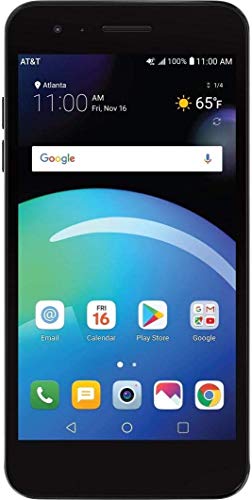
The Phoenix 3 is the segment’s elder statesman: an AT&T GoPhone prepaid handset with 4G LTE and 16GB of memory, from the era when GoPhone was the carrier’s prepaid banner. Its specification is the traditional prepaid shape — enough phone for calls, texts and the occasional photograph, in a black handset that asks nothing of its owner beyond charging and answering. There are still lines in the world whose entire requirement is that shape, and for those lines the Phoenix 3’s simplicity is not a lack but a match.
Candour about age is required. Sixteen gigabytes is a tight allowance that fills with the system, a few apps and a season of photographs; the software generation is the one named by its era, and modern apps with higher minimum requirements will pass it by. LG’s exit from the phone business, covered in this batch’s companion guide, closes the support story entirely. The Phoenix 3 should therefore be bought the way the Phoenix models were framed there: as a defined, near-term tool for a specific AT&T prepaid job — a spare, a stopgap, a line for a light user — with no illusions carried into the transaction.
- Network position: AT&T GoPhone prepaid
- Connectivity: 4G LTE
- Storage: 16GB
- Finish: Black
- Display size: Not stated in the listing title — verify with LG documentation
- Operating system: Not stated in the listing title — verify with LG documentation
Strengths
- The simplest possible AT&T prepaid proposition.
- Familiar GoPhone-era arrangement for existing prepaid users.
- Undemanding hardware for calls-and-texts duty.
Trade-offs
- 16GB storage is the set’s tightest allowance.
- Ageing platform with a closed support story.
- LTE only, in a set where the Samsungs carry 5G.
Best for: a minimal AT&T prepaid line or a short-term spare.
Not suited for: app-rich daily use or long-term primary duty.

Nokia Lumia 635 (AT&T Go Phone) — Legacy exhibit
The Lumia 635 requires the plainest paragraph in this guide. It is a Windows Phone, sold under AT&T’s Go Phone prepaid banner with no annual contract, from the period when Microsoft’s mobile platform was a living third option in the market. That platform has since been discontinued entirely: its app store closed, its services wound down, its ecosystem retired. Whatever this handset’s virtues in its day — and the Lumia line had real ones, including a distinctive interface and Nokia’s build quality — it cannot function as a modern smartphone in any sense a buyer in this search intends.
It is included because it still surfaces in this segment’s listings and searches, and because a guide that ignored it would leave its readers to discover its nature alone. The legitimate reasons to buy one are narrow and knowing: a collector completing a Windows Phone shelf, a tinkerer curious about a dead platform, a prop or a period piece. For a working line — for a relative, a spare, a crew — every other pick in this set serves better, and the A16 serves best. Let the Lumia be what it honestly is: a well-made artefact from the three-platform era, retired with honours, not a bargain.
- Platform: Windows Phone — a discontinued operating system
- Network position: AT&T Go Phone prepaid, no annual contract, per the title
- Storage: Not stated in the listing title — verify with Nokia documentation
- Display: Not stated in the listing title — verify with Nokia documentation
- App ecosystem: The platform’s store and services have been discontinued
- Modern primary-phone suitability: Not suitable — legacy device
Strengths
- A genuine piece of smartphone history from the three-platform era.
- Nokia-era build and a distinctive, coherent interface.
- Of real interest to collectors and platform historians.
Trade-offs
- Its operating system and app store are discontinued entirely.
- Cannot serve as a modern primary phone in any practical sense.
- Support, parts and services belong to a closed chapter.
Best for: collectors and the knowingly curious.
Not suited for: a working line, a relative, or any modern app need.
TCL A30 — Unlocked alternative
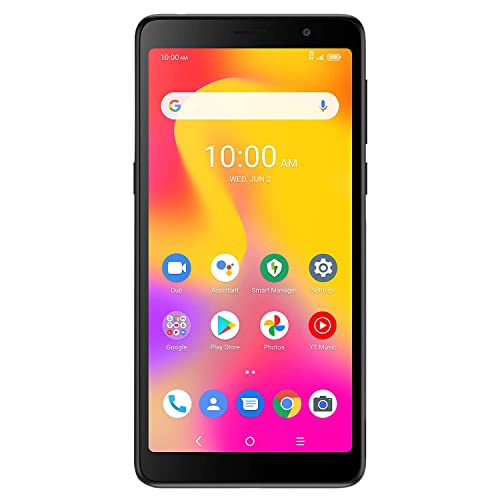
The TCL A30 closes the set by stepping off the carrier shelf. Its title describes an unlocked smartphone with a 5.5-inch HD+ display, an 8MP rear camera, 32GB of storage with 3GB of RAM, a 3,000mAh battery and Android 11, in Prime Black. Every figure the AT&T house models omit, this title states — and the first word of the description is the most valuable: unlocked. A reader who wants this segment’s simplicity and scale without marrying the handset to AT&T’s prepaid plans will find the A30 is the only pick here that offers that bargain.
The specification is modest and should be read as such: the camera figure is a basic one, the memory enforces a calm pace, and Android 11 places the software a generation behind the A16’s Android 14. But the phone’s role in this guide is specific — it is the control in the experiment, the proof that the segment’s simplicity is available without the carrier tie for readers whose plans live elsewhere or whose future network is undecided. Buy it for freedom and adequacy, in that order, and it will not disappoint; buy it expecting Samsung-class polish and the fault will lie in the expectation, not the handset.
- Network position: Unlocked, per the listing title
- Display: 5.5-inch HD+
- Camera: 8MP rear camera
- Memory and storage: 3GB RAM, 32GB storage
- Battery: 3,000mAh
- Operating system: Android 11
Strengths
- Unlocked — the only pick free of the AT&T prepaid tie.
- Complete, honestly stated specification in the title.
- Compact 5.5-inch size suits smaller hands and pockets.
Trade-offs
- Modest camera and memory figures by the set’s standards.
- Android 11 trails the A16’s software generation.
- 3,000mAh battery is the smallest stated here.
Best for: this segment’s simplicity on a network of your choosing.
Not suited for: photography-led use or heavy multitasking.
How Do the Six Picks Compare Side by Side?
| Pick | Network position | Storage | Screen per title | Standing |
|---|---|---|---|---|
| AT&T Prepaid Radiant Max | AT&T Prepaid | 32GB | 6.5-inch HD+ | Carrier house model |
| Samsung Galaxy A16 5G | AT&T Prepaid | 128GB | 6.5-inch HD+ | Segment’s strongest spec |
| Samsung Galaxy A15 5G | AT&T | 64GB | Not stated in title | Earlier Samsung generation |
| AT&T GoPhone LG Phoenix 3 | AT&T GoPhone prepaid | 16GB | Not stated in title | Traditional prepaid basic |
| Nokia Lumia 635 | AT&T Go Phone | Not stated in title | Not stated in title | Legacy Windows Phone |
| TCL A30 | Unlocked | 32GB | 5.5-inch HD+ | Unlocked alternative |
What Does Prepaid Actually Mean for the Ownership Experience?
Prepaid is a billing philosophy before it is a phone category: service paid in advance, in defined allowances, without a contract’s long shadow. For many households that philosophy is the attraction — a line whose cost is known, whose commitment is a month at a time, and whose handset can be as simple as the Radiant Max without a salesperson’s eyebrow rising. The phones on this shelf are specified for that world, which is why their titles lead with the carrier arrangement rather than with camera poetry.
The ownership rhythm follows from the philosophy. Refills or monthly plan renewals become a household habit, best automated or calendared so the line never lapses at an inconvenient moment. The handset’s lock to the carrier is the trade at the centre of the bargain: the phone is inexpensive partly because it is a citizen of one network, and it should be bought by a reader who finds that citizenship acceptable for the phone’s whole working life. A reader who might port the number elsewhere next year belongs with the unlocked TCL, even at a humbler specification, because freedom compounds in value exactly when plans change.
Support runs through the carrier’s channels for the prepaid picks, which is a mixed inheritance: abundant physical shops and a well-trodden activation path, balanced against house-brand hardware whose accessories and parts live in a narrower ecosystem. The Samsung picks soften that trade with a major maker’s infrastructure behind the carrier’s counter. Either way, the first day’s tasks are the same — activate, test the line from home, set the refill reminder — and a prepaid phone that clears those tasks has kept the only promise its segment makes.
How Do You Set Up a Prepaid Phone for a Relative or a Spare Line?
Begin with the line, not the handset. Activate the service, confirm the number, and make a test call from the room where the phone will live before any personalisation begins — a prepaid phone that cannot hold its home corner’s signal has failed its only examination, and the return window is the time to learn it. Then set the refill or renewal reminder in two places: the phone’s own calendar and the family’s, because a spare line’s commonest death is an unnoticed lapse rather than any hardware fault.
Personalisation for this segment is an act of mercy through subtraction. On the Samsungs and the TCL, raise the text size, arrange the few real functions on the first screen, and silence the notifications that do not correspond to a person. Programme the family’s numbers as favourites, record the phone’s own number on a card in the case, and rehearse the three acts — answer, call, call back — with the recipient’s fingers doing the work. On the Phoenix 3, the same mercy applies in miniature: fewer choices exist, and the rehearsal is shorter, which is precisely its remaining charm.
Finish with the unglamorous kit: a charger that lives where the phone sleeps, a case that makes the handset grippable and findable, and a note of the account PIN and the carrier’s support number kept with the household’s important papers. A prepaid phone succeeds as a routine — charged, reachable, renewed — and routines are built from placements and reminders far more than from specifications. Set the routine in week one and even the humblest pick in this set will serve its line faithfully.
Which Mistakes Do Budget Prepaid Buyers Make Most Often?
The first mistake is shopping the segment’s headline instead of the handset. The figure in the keyword is a neighbourhood, and within it the A16 and the Phoenix 3 are entirely different purchases; the right one depends on the line’s job, not on the shelf label. The second mistake is ignoring the lock’s permanence — buying an AT&T prepaid phone for a family that may move networks, when the unlocked TCL was sitting in the same set asking to be chosen. The third is underbuying storage: 16GB suits a disciplined minimalist and quietly punishes everybody else within a season.
The fourth mistake is treating the Lumia 635 as a functioning bargain rather than as the artefact it is; its platform’s closure is total, and no price makes a discontinued ecosystem current. The fifth is skipping the activation rehearsal — discovering at a relative’s kitchen table, gift already given, that the line, the number or the signal has a problem that a quiet test the day before would have caught. And the sixth is expecting flagship manners from segment hardware: these phones are honest tools for defined jobs, and the buyer who matches the job to the tool will be better served than the buyer who spends the same money resenting the difference.
How Long Can a Phone From This Shelf Stay Useful?
Longevity in the budget segment is decided by three clocks, and they tick at different speeds. The first is storage: a phone dies socially the month it begins refusing photographs, and on that clock the A16’s 128GB runs for years, the A15’s 64GB runs respectably, the 32GB pair run a shorter honest course, and the Phoenix 3’s 16GB is already near the end of its tether for any but the most disciplined owner. The second clock is software: Android 14 on the A16 has the longest runway of updates and app compatibility ahead of it, Android 11 on the TCL a shorter one, and the Phoenix generation’s clock has effectively stopped — while the Lumia’s stopped so completely that its platform’s closure is the whole story.
The third clock is the network’s, and prepaid buyers feel it more than most. Carriers retire technologies and re-farm spectrum on their own schedules, and a phone’s welcome on the network depends on the carrier continuing to support its class of device. The 5G Samsungs hold the strongest position against that clock; the LTE handsets depend on LTE’s long twilight, which carriers currently describe in years rather than months; and any handset in this set should be checked against AT&T’s current device policies at activation, because the carrier, not the calendar, has the final word.
None of this makes the segment a bad purchase — it makes it a purchase to size correctly. A phone bought for a defined job with a defined horizon — a school year, a contract’s duration, the seasons a relative needs a simple line — can complete that job entirely inside its clocks’ limits and retire with honours. The disappointment stories in this segment almost never involve a phone that failed; they involve a phone asked to outlive its clocks by an owner who was never told the clocks existed. This guide’s unfashionable insistence on stating them is the kindest thing it can do for its readers.
What Should a Crew, a Landlord or a Small Business Look For Here?
Some of the most rational buyers of this shelf never appear in its advertising: the contractor who needs three identical handsets for a site, the landlord who keeps a phone for tenants and tradespeople, the small café whose delivery line lives in a drawer by the till. Their requirements invert the consumer’s. Uniformity beats excellence — three of the same model, with the same case and the same charger, are worth more than a mixed drawer of marginally better phones — and replaceability beats durability, because a handset that can be swapped by lunchtime without paperwork is a system, while a precious one is a vulnerability.
Against those requirements the set sorts itself briskly. The Radiant Max and the A15 are the fleet-shaped picks: current enough, carrier-aligned, and simple to activate in multiples on the same prepaid arrangement. The A16 is the choice where the crew phone doubles as a camera for documenting work, its storage swallowing site photographs without a weekly purge. The Phoenix 3 serves the single spare-line role where the job is purely telephonic. And the TCL’s unlocked status suits the business whose lines may migrate between carriers as contracts change — the one buyer for whom the lock is not a footnote but the headline.
The administration matters as much as the handsets. Keep a simple register — which phone holds which number, which person carries it, when its plan renews — on paper in the office rather than in somebody’s memory. Standardise the PIN, the case colour by crew, and the charger location at the depot. Budget phones fail small businesses not through their specifications but through drift: the unrecorded number, the lapsed refill, the phone that left with a former employee. A shelf this inexpensive deserves, and rewards, exactly that much system.
How Does the Spare-Phone Drawer Change the Calculation?
Every household and most businesses eventually keep a drawer phone: the handset that exists for the lost-phone week, the visiting relative, the teenager whose main device is in for repair, the power cut that outlasts the primary phone’s battery. The drawer inverts several of this guide’s judgements, and honestly so. Storage matters less, because the spare’s library is temporary. Camera quality matters less, because its photographs are stopgaps. What matters is readiness — a phone that wakes after months asleep, accepts a SIM without argument, and holds a charge through the emergency it was kept for.
Readiness has one enemy in this set, and it is the carrier lock’s interaction with time. A locked prepaid spare serves only while the household’s life runs through that carrier; the moment the emergency involves a different network’s SIM, the locked phone is furniture. That is the drawer argument for the TCL A30, whose unlocked status makes it the set’s natural keeper despite its humbler specification, and a secondary argument for choosing a spare aligned with the carrier the household actually uses. A drawer phone should also be charged and woken a few times a year — batteries dislike long neglect — and its line’s status checked, since a prepaid number left unrefilled can be reclaimed by the carrier while the handset sleeps innocently on.
Judged as drawer phones, then, the set’s order shuffles: the TCL leads on freedom, the Radiant Max follows for an AT&T household wanting the carrier’s own simple handset, and the Samsungs — almost too good for the drawer — serve best as the phones that graduate from daily duty into the drawer years later, when their replacements arrive. Even the Phoenix 3 finds its honourable niche here, as the pre-activated spare on a known prepaid line. Only the Lumia fails the drawer test outright, because a spare that cannot run the modern world’s basic services is not a spare at all, merely a souvenir with a SIM tray.
What Happens at Activation, and What Can Go Wrong?
Activation is where prepaid purchases meet reality, and a calm first hour prevents most of the segment’s horror stories. The sequence is unglamorous: charge the phone, insert the SIM the arrangement provides or expects, power on, and follow the carrier’s activation path — by the included instructions, the carrier’s website, or its support line — until the number is confirmed live with a test call in both directions and a test text for company. Data should be verified on the mobile network with Wi-Fi switched off, because a phone that browses happily on home Wi-Fi can still be unprovisioned where it matters, out in the world.
The common failures are all clerical, which is good news, because clerical failures have clerical cures. A SIM seated badly or a tray not fully home; an activation completed for the wrong line in a multi-line account; a number port that needs another hour to settle; an account PIN recorded nowhere. Each is solved by patience and by the support number being findable — which is why this guide keeps insisting the PIN and the support contact be written down with the household papers on day one. The one failure that is not clerical is signal: if the phone cannot hold the network in the rooms and routes where it will live, no setting will save it, and the return window, not the support line, is the correct destination.
Porting a number into a prepaid arrangement deserves its own sentence of respect. Keep the old service alive until the port completes, keep the old account’s details — number, PIN, account holder’s name exactly as written — at hand for the request, and expect a window where the old phone rings for some callers and the new one for others. Families porting a relative’s long-held number should schedule the change for a quiet day, warn the important callers, and keep both handsets charged side by side until the new one has caught a full day of real traffic. Done that way, even the number’s move is a non-event, which is the highest praise any activation can earn.
How Should a First Phone for a Young User Be Chosen From This Shelf?
A child’s first phone is one of this segment’s defining use cases, and it reframes the guide’s judgements in a parent’s favour. The priorities become: a line whose cost is bounded and known, which prepaid provides by design; a handset whose loss or breakage is a lesson rather than a catastrophe, which this whole shelf provides by position; and enough capability for calls, messages, photographs and the family’s chosen safety apps — no more, because every extra capability is a negotiation the parent did not schedule. Against those priorities, the set divides by the child’s age and the family’s network life.
For a younger child whose phone is really a reachability device, the prepaid basics argue well: the Radiant Max on the family’s existing AT&T prepaid habits, or the Phoenix 3 for the narrowest brief of all, with the understanding that its software generation limits the app conversation entirely — a limitation some parents will file under features. For an older child whose phone must carry school platforms, photographs and a social life conducted by message, the A16 is the shelf’s honest answer: its storage survives a teenager’s camera roll, its Android generation runs the required apps, and its prepaid line keeps the monthly boundary firm.
Whichever is chosen, the setup is the parenting. Accounts created with the parent’s oversight, location sharing agreed openly rather than installed quietly, the family’s charging station established in a shared room, and a written agreement — brief, kind, signed by both parties with due ceremony — about the phone’s hours and duties. A budget handset makes an excellent first phone precisely because it keeps the stakes low while those habits form. When the habits are proven and the handset has been survived, the upgrade conversation can happen on evidence, which is a better foundation than any launch event.
Which Accessories and Habits Extend a Budget Phone’s Life?
A budget phone’s enemies are mundane: the drop onto concrete, the storage that silently fills, the battery cycled carelessly, the update deferred until the phone sulks. The accessory list that answers them is short and cheap, which suits the segment. A case with a raised lip and a grippy edge answers the drop; in this class the case should be fitted before the phone’s first outing, because budget handsets are disproportionately carried by the young, the busy and the gloved, all of whom drop things professionally. A screen protector from a multipack answers the keys and coins of the pockets these phones live in.
Storage discipline answers the second enemy, and it is a habit rather than a product. Photographs backed up over Wi-Fi and pruned monthly; downloaded media treated as borrowed rather than owned; the apps audited each season and the unused evicted without sentimentality. On the 128GB A16 these habits are a luxury of tidiness; on the 32GB pair they are the difference between a phone that serves its term and one that spends its second year apologising. Where a model accepts a memory card, a modest card dedicated to photographs is the cheapest life-extension in this entire guide — confirm the slot for the exact model first, and format the card in the phone.
Battery habits answer the third enemy with similar modesty. These phones do not ask for laboratory care; they ask not to be baked on dashboards, frozen in cars overnight, or left flat for months in the drawer this guide has already discussed. A nightly charging place, used routinely, beats every optimisation trick. And the update habit answers the last enemy: install system and app updates over Wi-Fi when they arrive, during a quiet hour, rather than letting them accumulate into an afternoon’s disruption. A budget phone maintained on these four habits will routinely outserve a neglected phone from two shelves up, which is the segment’s quiet rebuke to specification snobbery.
How Does This Prepaid Shelf Compare With Buying an Older Flagship?
Every reader of this guide faces a fork that deserves a fair hearing: the same money that buys a new prepaid handset from this shelf also reaches, in the refurbished market, toward an older flagship — a phone that was once somebody’s top shelf. This batch’s companion guide to leftover LG models walks that road in detail, and the comparison is instructive. The older flagship offers the finer screen, the stronger camera and the more generous original specification. The new prepaid phone offers a fresh battery, a current-enough software generation in the Samsungs’ case, a maker’s warranty position, and a body that has never been dropped by a stranger.
The deciding factors are rarely photographic. They are the battery’s unknown biography in the refurbished handset, the update runway remaining to it, and the buyer’s appetite for verification work — checking lock status, condition grades and seller histories with the diligence that market demands. A reader with the time and temperament for that diligence can be rewarded handsomely. A reader buying at a carrier counter for a line that must work tonight — the prepaid shelf’s native customer — is not being unsophisticated in choosing the new, warranted, carrier-aligned handset; they are buying certainty, which is a legitimate product.
Within this set, the A16 narrows the fork almost to vanishing point for its segment: 128GB of storage and a current Android generation are precisely the arguments usually made for the refurbished flagship, delivered here in a new prepaid box. The fork remains real at the shelf’s lower end, where the Phoenix 3’s generation asks the refurbished question loudly. But even there, the answer depends on the job: for a defined, telephonic, near-term line, the simple new-or-simple-old prepaid basic, activated in minutes on its home network, keeps a charm that no amount of flagship pedigree quite replaces.
What Is the Kindest Way to Hand One of These Phones to Somebody?
Many phones from this shelf are bought by one person for another, and the handover deserves the same care as the choice. Activate the line before the giving, not during it, so the recipient’s first experience is a working phone rather than a queue and a PIN. Load the family’s numbers, set the text size generously, place the charger where the phone will sleep, and write the number and the refill date on a card that lives in the case. Then make the first call together, send the first photograph together, and leave the old phone charged in a drawer for a fortnight against forgotten contacts.
Resist the farewell lecture. A new phone handed over with twenty instructions teaches none of them; the same phone handed over with three — answer like this, call like this, charge it here — and a promise to return next week for questions teaches all three permanently. Budget handsets ask so little of their owners that the handover can afford to be gentle, and gentleness, in this segment above all, is what gets a phone carried, charged and answered for years.
One week later, make the follow-up visit that the handover promised. By then the recipient will have real questions — a ringtone too quiet, a photograph that would not send, a refill reminder that arrived confusingly — and each can be settled in minutes at the kitchen table, with the recipient’s own fingers doing the tapping so the lesson lodges where it will be used. That second visit, unglamorous as it sounds, is the difference between a phone that becomes part of a life and a phone that becomes part of a drawer, and it costs nothing but an hour the giver had already decided to spend.
Bring the spare charger on that visit, and leave it plugged in beside the recipient’s chair or bed — the second charging place is the cheapest insurance in this entire guide, because a phone with two homes is a phone that is almost never found flat at the moment it is needed. Note, too, anything the recipient has already personalised unaided: a changed wallpaper, a new contact added alone, a photograph set as the home screen. Those small acts are the sound of a phone being adopted, and they deserve to be praised out loud, because confidence compounds exactly like interest. If the visit instead reveals a genuine mismatch — a screen the recipient cannot read comfortably, a lock that strands the line they actually use — act on it inside the return window without embarrassment, because an exchanged phone is a success of the process, not a failure of the gift. The willingness to swap, stated warmly and early, also frees the recipient to be honest about small discomforts they would otherwise have hidden out of gratitude, and hidden discomforts are how phones end up in drawers. Ask directly, listen fully, and believe the answer the first time it is given, without arguing the recipient out of their own honest experience of the device.
Final Recommendation
Inside AT&T Prepaid, the Galaxy A16 5G is this segment’s clear first choice — its 128GB alone justifies the position, and its 5G and Android 14 foundation stretch its useful life past every rival here. The A15 serves a lighter user nearly as well, the Radiant Max is the carrier’s own straightforward answer, and the Phoenix 3 remains a defined, short-term tool for the simplest line. The TCL A30 is the pick that steps outside the carrier’s fence, and the Lumia 635 belongs to collectors rather than to callers. Match the lock to the line, the storage to the habit, and this modest shelf will do its modest work well.
Frequently Asked Questions
Why are no prices printed for these phones?
Because prepaid pricing moves with promotions, sellers and stock, and a figure printed in a guide would mislead within weeks. The keyword’s number names the budget segment these phones inhabit; the listing page, checked on the day of purchase, is the only honest place for the current figure.
Can an AT&T prepaid phone here be used on another carrier?
Plan on no. The Radiant Max, the two Samsungs as listed, and the Phoenix 3 are AT&T prepaid products, built and locked for that network’s prepaid service. The exception in this set is the TCL A30, which is sold unlocked and can join another carrier subject to the usual compatibility check.
Which pick has the most storage?
The Samsung Galaxy A16 5G, with 128GB stated in its title — double the A15’s 64GB and four times the 32GB of the Radiant Max and the TCL A30. In this segment, that gap is the difference between a phone that ages gracefully and one that begins asking for deletions within the year.
Is the Nokia Lumia 635 still usable as a main phone?
No, and this guide is blunt about it deliberately. The Lumia 635 runs Windows Phone, a discontinued platform whose app store and services have closed. It survives as a collector’s piece and a curiosity. Any reader needing a working line should choose from the other five picks.
What is the difference between the Galaxy A16 and A15 here?
On stated evidence: generation and storage. The A16 is the later model with 128GB, 4GB of RAM, a stated 6.5-inch HD+ display and Android 14, on an AT&T Prepaid listing. The A15 is the earlier 5G generation with 64GB stated and fewer figures in its title. Both are Samsungs for AT&T; the A16 simply carries the stronger sheet.
Can these phones run the apps a family depends on?
The two Samsungs and, within its generation’s limits, the TCL run the standard messaging, banking, school and social apps of the moment, subject to each app’s minimum Android version — Android 14 on the A16 gives the longest compatibility runway here. The Phoenix 3’s older platform will meet app limits sooner, and the Lumia 635’s discontinued platform runs essentially none of the current catalogue, which is the practical core of this guide’s warning about it.
What should be checked in the first week with a prepaid phone?
Signal where the phone will live, in both directions of call, with Wi-Fi off for the data test; the refill or renewal arrangement, confirmed and calendared; the number’s behaviour for the family’s important callers; and the battery across two ordinary days. Prepaid problems are overwhelmingly clerical and surface immediately, which makes the first week — inside the return window — the right time to find them.
Does 5G matter in this segment?
For calls, texts and light app use, LTE serves adequately, which keeps the Phoenix 3 and the TCL rational for their narrow jobs. 5G’s value here is longevity and busy-area capacity over a long ownership — one more reason the two Samsung picks, which carry it, anchor the recommendations for a daily phone.
Related Guides
Readers weighing this shelf against neighbouring options may also find our guide to leftover LG phones still on sale useful, alongside the roundup of unlocked phones for camera, calls and texts and our look at simple phones chosen for older users.