Our Top Picks



What's inside
- Why boxing is a uniquely difficult measurement problem
- Chest straps and the electrical signal of the heart
- Optical armbands and the case for moving the sensor up the arm
- Wrist watches: useful everywhere except under the glove
- Fit, security and staying in place when the sweat starts
- Connections: getting the number to a watch, a phone and an app at once
- Lag, smoothing and what interval traces really show
- Batteries: coin cells, charging cradles and the training week
- Reading the data: zones, recovery and honest limits
- Choosing by the training you actually do
- A short buying checklist before spending anything
- Heat, drift and why late rounds always look harder
- Checking a sensor against reality before trusting it
- Total cost of ownership, honestly counted
- Group sessions, coach displays and shared data
- Check prices on Amazon
- The first month with a new sensor: building a baseline
As an Amazon Associate I earn from qualifying purchases. This post may contain affiliate links at no extra cost to you.
Boxing asks more from a heart rate monitor than almost any other gym sport, and the reason is not simply that the work is hard. A runner settles into a rhythm. A cyclist holds a position. A boxer, by contrast, spends three minutes snapping the wrists through punches, clinching, slipping and resetting, then sits on a stool for sixty seconds while the heart rate falls, then does it all again. The sensor has to survive hand wraps pulled tight over the wrist, gloves laced or strapped over those wraps, sweat that arrives early and stays, and impacts that travel up the arm every time a hook lands on a heavy bag. Choosing the best heartrate monitors to wear for boxing therefore starts with anatomy and mechanics, not with app features or screen brightness.
This guide compares the three formats that can realistically stay on the body during boxing training: chest straps that read the electrical signal of the heart, optical armbands worn on the upper arm or forearm, and wrist watches with optical sensors on their backs. Each format measures something slightly different, sits somewhere different, and fails in a different way when training gets violent. Manufacturer specification sheets, which this guide draws on throughout, are useful for battery chemistry, transmission standards and onboard memory, but they cannot tell you whether a strap will migrate down a wet ribcage in round eight. That judgement comes from understanding the forces involved, and it is where the sections below spend most of their time.
Why boxing is a uniquely difficult measurement problem
Consider what happens at the wrist during a single combination. The jab extends with the forearm rotating, the cross follows with the opposite rotation, and a hook finishes with the wrist flexed and the glove striking a surface that does not give much. Under the glove, cotton or gel wraps compress the soft tissue of the wrist and the back of the hand. Any optical sensor pressed into that environment faces two problems at once: the blood volume in the capillaries beneath it is being squeezed by external pressure, and the sensor itself is being shaken at exactly the moments when heart rate is changing fastest. Optical heart rate depends on a clean, stable light path into the skin. Boxing systematically destroys both conditions at the wrist.
The interval structure compounds the difficulty. A typical session might alternate three-minute rounds with one-minute rests, or run shorter conditioning bursts of thirty seconds with even shorter recoveries. Heart rate can climb forty beats per minute inside a hard round and drop twenty during the rest minute. A sensor with slow smoothing will still be reporting the climb while the boxer is already sitting down, and it will still be reporting the fall when the next round is underway. Coaches who program work from heart rate zones need the transitions captured promptly; a trace that lags by ten or fifteen seconds at every change misstates how much time was actually spent in the intended zone, and over twelve rounds those errors accumulate into a distorted picture of the session.
Sweat, grip and the clinch
Sweat changes the interface between sensor and skin in opposite ways depending on the technology. For an electrical chest strap, moisture is initially helpful, because the electrodes need a conductive path and dry skin on a cold morning can produce erratic readings until the wearer warms up. Later, heavy sweat mixed with movement can let a poorly fitted strap slide. For optical sensors, sweat forms a film that scatters light and, on the forearm, arrives alongside chalk dust and glove dye. Then there is gripping: holding pads, tying laces between rounds, and clinching all involve sustained forearm contraction, which restricts local blood flow and can flatten the optical pulse signal precisely when the wearer glances down expecting a number.
Sparring adds a further constraint that solo sports never face: another person. Equipment worn during sparring must not present hard edges to a partner, must not snag, and must stay legal under gym rules that often prohibit watches and jewellery outright. A rigid watch case under a glove cuff is uncomfortable for the wearer and unwelcome for anyone catching punches. This is why the practical contest in boxing is usually between a chest strap hidden under a shirt and an optical band hidden under a sleeve, with the watch relegated to everything that happens outside the rounds themselves.
Chest straps and the electrical signal of the heart
A chest strap does not estimate heart rate from blood flow. Two or more electrodes on the strap sit against the skin of the ribcage, roughly at the level of the lower sternum, and detect the small voltage changes produced each time the heart muscle depolarises. That electrical event is the same signal a medical electrocardiogram records, reduced here to timing: the electronics identify the sharp R peak of each beat and calculate heart rate from the interval between successive peaks. Because the measurement is electrical rather than optical, it does not care about skin pigmentation, tattoos over the sensing area, ambient light leaking under a band, or the temporary squeezing of blood vessels in a gripping forearm. The signal originates at the source.
This directness explains the format’s reputation during violent exercise. When a boxer throws, the ribcage certainly moves, and breathing during hard rounds is anything but regular, yet the electrodes move with the chest rather than bouncing against it, and the R peak remains a large, unambiguous event compared with background muscle noise. Electrical straps also respond essentially beat by beat. There is no need to average several pulse waves to separate signal from motion artefact, so the reported rate can follow a surge within a second or two. For interval work built around short recoveries, that immediacy is the single strongest argument for the format, ahead of any question of comfort or convenience.
What the electrodes need from the skin
The strap’s weakness is contact. The electrodes must stay flat against skin that is curving, expanding with each breath and, during boxing, twisting as the torso rotates into punches. Manufacturers address this with wide elastic straps, silicone gripper dots or strips along the inner face, and electrode panels made from conductive fabric or rubberised material that flexes with the chest. Fit guidance on specification sheets usually reduces to a simple instruction — snug enough that the strap cannot be pulled away from the body — but the practical test is dynamic: a strap that feels secure while standing still may still creep during skipping or shadow boxing, when vertical bounce is at its worst. Wearing the strap slightly higher, with the sensor module centred on the sternum, and wetting the electrode area before the session both improve early contact.
Heart rate variability deserves a mention here, because electrical straps are the format that records it credibly. The interval between beats is not perfectly constant, and the pattern of its variation is used by many training platforms to estimate recovery status overnight or readiness in the morning. Deriving that pattern requires millisecond-accurate timing of each beat, which an electrical signal provides naturally. Optical systems can approximate it at rest, when the wearer is still, but during or immediately after rounds the pulse wave is too disturbed for the fine timing to be trusted. Boxers who care about morning readiness scores should therefore treat the chest strap as the reference instrument and everything else as a convenience.
Representative chest strap models, on specification
Two model families illustrate what the electrical format currently offers, and they are best understood through their published specifications rather than through any ranking. The Polar H10 pairs a removable sensor pod with a soft textile strap, transmits on Bluetooth and ANT+ at the same time, and — unusually — can record one training session into its own internal memory without any receiving device nearby. Its battery is a replaceable CR2025 coin cell, with manufacturer figures in the region of several hundred hours of transmission. The Garmin HRM-Pro family takes a different route: the electronics are integrated into the strap rather than clipping on and off, the device also captures running-style dynamics for other sports, and it likewise offers dual transmission plus onboard storage of activity data when the wearer is out of range of a watch. Both approaches assume the strap will be rinsed after use and that the textile element is a consumable that eventually loses elasticity.
Those specification differences matter in a boxing gym for mundane reasons. A detachable pod can move to a fresh strap when the old one stretches, and it can be removed before the strap goes in a wash. An integrated design removes a possible point of separation during clinch work but means a worn strap and tired electronics are replaced together. Coin-cell power suits boxers who train in places without convenient charging and who would rather swap a battery twice a year than remember another cable. None of this changes the electrical principle, which is identical across the category; it changes ownership friction, and ownership friction decides whether a device is still being worn in month six.
Optical armbands and the case for moving the sensor up the arm
Photoplethysmography — PPG — works by shining light, usually green, into the skin and measuring how much returns. Blood absorbs green light strongly, so the returning signal pulses as blood volume in the tissue rises and falls with each heartbeat. Algorithms then separate that pulse from everything else the sensor sees: movement, changes in pressure, ambient light. On a resting wrist the method is elegant. On a moving limb it becomes a signal-processing battle, and sensor placement is the main weapon. Moving the optical sensor from the wrist to the upper arm or the upper forearm changes the battle’s terms completely.
The upper arm is mechanically quieter. It does not flex at a joint every time a punch lands, it is not compressed by wraps, and the biceps and triceps provide a thicker, more stable bed of tissue with consistent blood flow. A band worn there, under a t-shirt sleeve, experiences acceleration that is broadly in line with the body’s movement rather than the violent, independent motion of a gloved hand. The Polar Verity Sense represents this category in specification terms: a small optical pod held in an armband, worn on the upper arm or forearm, with Bluetooth and ANT+ transmission, internal memory for a long session, and a rechargeable battery charged through a proprietary cradle or USB adapter depending on generation. The details vary, but the concept is constant — keep the light path stable by choosing a calmer postcode on the arm.
Forearm versus upper arm placement
Forearm placement is the compromise many boxers try first because it feels familiar, close to where a watch would sit, and easy to adjust between rounds. It is also the riskier of the two armband positions for this sport. The forearm houses the muscles that grip, pronate and stabilise the wrist; during pad work those muscles contract hard and repeatedly, changing tissue pressure under the sensor. Sleeves and wrap tails can also creep down and foul the band. Upper arm placement demands a moment of adjustment — the band must sit flat, snug enough not to rotate, usually on the outer or rear of the arm — but once set it tends to stay forgotten, which is the highest compliment training equipment can earn. Fighters with larger arms should check the strap length in the specification before assuming the included band will fit over a pumped biceps late in a session, when arm circumference is measurably larger than at rest.
Accuracy expectations for a well-placed armband should be calibrated honestly. Against an electrical reference, a good optical armband typically tracks steady and moderately varying work closely, with small delays and occasional brief dropouts during the most chaotic exchanges. It will not match beat-by-beat timing, and its heart rate variability output should not be treated as equivalent. What it offers instead is a genuinely wearable compromise: no chest pressure during deep breathing, no rigid case at the wrist, and a profile flat enough to sit under clothing during sparring without presenting a hard surface to a partner. For many recreational boxers, whose training decisions are about zone discipline rather than laboratory precision, that compromise is the rational centre of the market.
Wrist watches: useful everywhere except under the glove
It would be wrong to dismiss wrist watches, because they do several jobs around boxing very well. They record sleep duration and continuity, estimate resting heart rate across the night, track easy roadwork and strength sessions without fuss, and present heart rate during the day without asking the wearer to put anything on. Readers comparing general-purpose models will find broader context in roundups such as best activity smartwatches, where the emphasis falls on all-day wear rather than on what happens inside a glove. The problem is specific and physical: the boxing glove and wrap system occupies, compresses and shakes exactly the patch of anatomy the watch needs to sit still on.
Some boxers try wearing the watch higher, above the wrap line on the forearm, or reversed on the inner wrist. These improvisations occasionally produce a trace, but the sensor was shaped for the wrist’s contours, the strap length assumes a wrist’s circumference, and the algorithms assume wrist-like motion. Readings gathered this way should be treated as indicative at best. A more defensible pattern is division of labour: let the watch handle the twenty-three hours outside training, including sleep and recovery metrics, and let a strap or armband — often broadcasting to that same watch, which stays safely at ringside or in a kit bag — handle the rounds. Several ecosystems support exactly this arrangement, with the watch acting as display and recorder for an external sensor it is not wearing.
When a wrist sensor alone is enough
There are training lives in which the watch alone suffices. A beginner doing two technical sessions a week, working mostly at conversational intensity with long coaching pauses, will learn more from simply attending regularly than from precise zone data, and a wrist trace that is broadly right about effort is adequate. Likewise, a boxer in a rehabilitation phase, shadow boxing without impact, keeps the wrist comparatively still and uncompressed if gloves are off, and optical readings improve accordingly. The mistake is extrapolating from those calm conditions to hard sparring or conditioning circuits. Sensor performance is conditional, and honest buying advice has to name the conditions rather than declare a winner in the abstract.
Durability points the same way. Watch cases and straps are not designed to be crushed inside a glove cuff round after round, and sweat plus wrap friction is unkind to charging contacts and strap keepers. Gym policies aside, repeatedly forcing a watch into that space shortens its life for the sake of the least reliable data it will ever produce. Keeping the watch off the hand during rounds is simultaneously the accurate choice, the comfortable choice and the economical one — a rare alignment that should make the decision easy.
Fit, security and staying in place when the sweat starts
Every format lives or dies on fit, and boxing punishes marginal fit faster than endurance sports do. A chest strap should be adjusted on dry skin before warm-up, tight enough that it resists a firm downward tug, with the electrode panel moistened and the module centred. Once skipping starts, the strap experiences vertical oscillation; once bag rounds start, torso rotation tries to walk it sideways. Silicone gripper elements help, but elastic tension does most of the work, and elastic ages. A strap that has survived two years of rinsing may look fine on the hanger while having lost the recovery that kept it planted. Manufacturers sell replacement straps separately for this reason, and treating the strap as a yearly consumable is cheaper than blaming the electronics for dropouts caused by a tired band.
Women boxers face an additional fitting variable that specification sheets rarely discuss: interaction with a sports bra. A chest strap worn directly below or overlapping a bra band can be pressed, displaced or made uncomfortable, and the workable positions — just under the band, or integrated where a compatible bra allows — are individual. Armbands sidestep the issue entirely, which is one reason they are frequently the format women training partners recommend to each other. Comfort here is not a soft consideration. A sensor that distracts during rounds will be left in the kit bag, and an unworn sensor has an accuracy of exactly zero.
Sparring, contact and gym rules
Contact changes the safety calculation. A chest strap’s module is a small, hard object on the sternum; worn under a shirt during body sparring it can be driven into the chest by a punch, and some gyms therefore restrict hard modules during sparring while permitting soft optical bands on the arm. Other gyms ban everything and expect monitoring only during solo work. There is no universal rule, so the practical advice is to ask the coach before assuming any device is sparring-legal, and to favour the lowest, softest profile when contact is involved. An armband pod should sit where a sleeve covers it, oriented so its flattest face is against the arm, and its strap should have no loose tail that a partner’s glove can catch during a clinch.
Bag work and pad work sit at the permissive end of the spectrum: no partner is endangered, and the main risks are self-inflicted — a strap knocked loose by a body shot on the bag is impossible, but a watch crushed in the glove remains a self-inflicted cost. Conditioning circuits involving ropes, medicine balls and burpees reintroduce bounce and floor contact; chest straps can be pressed uncomfortably during floor exercises, and armbands can be rolled by a mat. Checking the sensor after the first circuit, rather than discovering a displaced band from a ruined trace afterwards, is a habit worth building into the warm-up routine.
Connections: getting the number to a watch, a phone and an app at once
Modern sensors are radios as much as they are instruments. The two transmission standards that matter are Bluetooth Low Energy and ANT+, and the useful question is not which is better but how many simultaneous connections a given sensor supports on each. A common boxing setup wants two listeners at once: a watch or gym display showing the live number, and a phone app recording the session for later review. Sensors that broadcast on both standards simultaneously — Bluetooth to the phone, ANT+ to the watch, for instance — solve this elegantly. Others offer two Bluetooth channels. The specification sheet states the count; buyers should read that line specifically, because a sensor with a single connection will force a choice the first time a coach asks to see the live trace while the boxer’s own app is recording.
Readers who already own a watch and are weighing broader replacements may also want the wider landscape covered by best fitness and music smartwatches, since music storage and gym connectivity often arrive together in that category. For the sensor itself, though, range and obstruction matter more than features. Bluetooth signals are absorbed by the human body, so a phone left in a bag across a crowded gym may drop a sensor worn on the far side of the torso during certain movements. Keeping the phone within the same room, elevated and not buried under kit, prevents most dropouts. ANT+ behaves similarly at gym distances. Neither standard was designed to punch through a building, and neither needs to.
Onboard memory and the phone-free session
Internal memory is the specification that quietly transforms gym logistics. Phones are unwelcome at ringside in many clubs, and they are vulnerable everywhere in a space full of dropped weights and spilled water. A chest strap or armband that records a session internally — the H10 and Verity Sense families both advertise a single-session or multi-hour store in their specifications — can be worn alone, then synchronised afterwards when the phone is retrieved. The trace is complete, including the rounds, because the recording never depended on a radio link surviving the session. Buyers should confirm two details: whether memory recording must be started from an app before the session, and whether starting it that way precludes a simultaneous live broadcast. Implementations differ, and the difference decides whether a coach can still watch live numbers.
Data ownership follows from connection choices. Sessions recorded into a manufacturer’s app can usually be exported or forwarded to third-party analysis platforms, but the routes vary and occasionally sit behind subscriptions. A boxer building a long-term training record should check export options before the record grows, not after. Heart rate files are small and standardised; there is rarely a technical reason they cannot move. The friction, where it exists, is commercial, and it is easier to route around at purchase time than at migration time.
Lag, smoothing and what interval traces really show
The difference between electrical and optical sensing becomes most visible at transitions. An electrical strap registers the heart’s acceleration almost as it happens, because each beat announces itself electrically before the mechanical pulse has travelled anywhere. An optical sensor must wait for the pulse wave to reach the arm, then average enough beats to distinguish the pulse from motion noise, then often apply further smoothing so the displayed number does not jitter. The result is a delay commonly of several seconds, and longer at the start of a hard effort when motion is greatest and the algorithm is least certain. During a three-minute round this barely matters. During thirty-second conditioning intervals it matters enormously: the optical trace may peak during the rest period, and a naive reading of the graph would conclude the boxer recovered into their hardest effort.
None of this makes optical data useless for intervals; it makes it data that must be interpreted with its delay in mind. Session totals, average heart rate across a whole round, and trends across weeks remain meaningful from a well-placed armband. What should not be done is second-by-second coaching from an optical display — telling a boxer to ease off because a lagging number finally crossed a threshold the body crossed earlier. Electrical sensing supports that live coaching; optical sensing supports review. Choosing between them is partly choosing when the information will be used.
Dropouts, spikes and cadence lock
Every boxer who has worn an optical sensor knows the two classic artefacts. The first is the implausible spike — a reading far above any plausible heart rate, produced when the algorithm locks onto a rhythmic motion such as skipping cadence or repeated bag impacts instead of the pulse. This is sometimes called cadence lock, and it tends to appear at steady, repetitive work where motion frequency sits near heart rate frequency. The second artefact is the dropout, where the trace falls to nothing or freezes because contact was lost. Electrical straps have their own version early in a session, when dry electrodes can produce wild values until sweat establishes contact. Recognising artefacts matters because training software will happily average them into zone totals. A trace with a two-minute spike is not evidence of heroic effort; it is evidence of a sensor that lost the plot while its wearer was skipping.
Mitigation is mostly mechanical. Optical bands should be snug, positioned away from tendons and bone, and given a few minutes of warm-up wear before hard work so the algorithm settles. Chest straps should be moistened and checked during the first round break. Reviewing a trace with an eye for physics — heart rate cannot jump sixty beats in two seconds, nor fall to resting during a hard round — catches most artefacts before they pollute a training log.
Batteries: coin cells, charging cradles and the training week
Power strategy sounds trivial until a sensor dies before the main sparring session of the week. Coin-cell chest straps, typically using a CR2025 cell, run for months of regular training — manufacturer figures for leading models run to several hundred hours — and announce their decline gradually through dropouts rather than sudden death. Replacement takes a coin or a fingernail, a minute, and no cable. The environmental cost of disposable cells and the small risk of a counterfeit replacement cell are the honest downsides. Rechargeable armbands and watches invert the pattern: no cells to buy, but a rhythm of charging every week or two depending on session load, with armband specifications commonly quoting roughly twenty to thirty hours of recording per charge. Miss the rhythm and the device is a bracelet.
Boxers training twice a day should do the arithmetic explicitly. Two sessions totalling three hours of recording per day consume a rechargeable armband’s charge in about a week, and the natural charging moment — overnight, beside the phone — must be remembered like any other kit routine. Coin-cell users instead need a spare cell in the kit bag and the discipline to replace it at the first sign of erratic traces rather than the tenth. Neither system is superior; they suit different temperaments, and the worst choice is the one whose maintenance pattern its owner will not follow.
Care, hygiene and the shared-gym reality
Sweat is saline and corrosive, and boxing produces it in industrial quantities. Chest strap textiles should be rinsed after every session and washed regularly, with the electronic pod removed where the design allows; armband straps need the same treatment, because a salt-stiffened band fits worse and smells like a warning. Sensor contacts should be dried before charging, and optical windows wiped with a soft cloth, since a smeared lens degrades the light path in ways owners often misdiagnose as failing electronics. Gyms also share space if not equipment: a sensor left on a bench is a sensor that will be sat on, so a small hard case in the kit bag pays for itself quickly. Replacement straps, bands and charging cables are all available as spares for major models, and confirming that before purchase is a quiet form of insurance.
Water resistance ratings deserve a precise reading. Most sensors in this category tolerate sweat, rain and rinsing easily, and some are rated for swimming, which is useful for boxers who cross-train in the pool. What ratings do not promise is resistance to the solvents in some cleaning sprays or to prolonged immersion in hot water, so the rinse-and-air-dry routine in manufacturer guidance should be followed literally rather than improvised with detergents.
Reading the data: zones, recovery and honest limits
A heart rate number is only useful inside a framework. Zone systems divide effort by percentages of maximum heart rate, but the maximum used must be the boxer’s own, ideally observed during a genuinely maximal conditioning session, rather than a formula based on age that can miss an individual’s true maximum by ten beats or more in either direction. With a wrong maximum, every zone boundary shifts, and a boxer can spend a camp training one zone too low while the app applauds. An electrical strap makes observed maxima trustworthy because it captures the peaks; an optical trace that lagged at the peak will understate it, which is another reason the hardest conditioning sessions are the ones most worth strapping up properly for.
Recovery between rounds is the second framework, and it is where boxing data gets genuinely individual. How far heart rate falls in the sixty seconds between rounds reflects fitness, heat, hydration and accumulated fatigue, and its trend within a session — each rest minute recovering a little less — tells a coach when technique is about to disintegrate under exhaustion. Comparing the same drill across a training camp, with the same sensor in the same position, is far more informative than comparing absolute numbers between different boxers or different devices. Consistency of instrument is a methodological virtue that costs nothing.
Sleep, readiness and the watch’s home ground
Outside the gym, the balance of usefulness reverses. Night-time measurement rewards the device that is already on the body and unnoticed, and that is the watch. Resting heart rate trends, sleep duration and timing, and overnight variability estimates from a watch worn loosely in bed provide the recovery context that makes daytime traces interpretable. This is the natural place to mention categories like best adventure fit smartwatches for boxers who also train outdoors, and best all around smartwatches for those who want one device to cover work, sleep and easy training. The pattern that emerges across serious training setups is rarely a single device; it is a watch for life and an external sensor for rounds, sharing data into one record.
A word of restraint about readiness scores is warranted. Composite scores compress several signals into one number with proprietary weighting, and they can be useful prompts — a conspicuously poor score on the morning of hard sparring deserves respect — but they are not medical instruments. Persistent abnormalities, palpitations, chest pain or unusual breathlessness are matters for a clinician, not for a different sensor. Heart rate monitors for sport measure performance variables in healthy training; they do not diagnose, and buying advice should never imply otherwise.
Choosing by the training you actually do
Heavy bag and pad work
Solo bag rounds and coach-held pads are the least restricted environment: no partner to protect, freedom to wear any format, and long, hard efforts where accuracy pays. A chest strap is the default recommendation here because nothing about bag work interferes with it, and its beat-by-beat trace captures the shape of each round faithfully. An armband runs it close and will suit anyone who dislikes chest pressure during deep breathing between combinations. Either way, this is the session type where heart rate targets can be coached live with confidence, provided the sensor is electrical or the coach understands optical delay.
Sparring
Sparring reverses the priorities: safety and gym rules first, data second. Ask what the gym permits. Where monitoring is allowed, the soft, covered, low-profile option wins — an armband under a sleeve, or a soft-strap electrical sensor under a shirt where modules are permitted. Expect some data loss during clinch-heavy rounds and accept it; the rounds that matter most for safety are the ones where attention belongs on the partner, not on a display. Many boxers sensibly record only their non-sparring conditioning and treat sparring load through round counts and perceived exertion, which remain respectable measurement tools with a long history in the sport.
Conditioning circuits and roadwork
Conditioning is where interval fidelity is tested hardest, and where the electrical strap earns its keep most clearly. Short bursts with incomplete recovery produce exactly the rapid transitions that expose optical lag, and the resulting data often drives programming decisions for the following week. For roadwork, by contrast, steady running is optical sensing’s easiest task, and a watch or armband alone will usually produce a clean trace; boxers doing their miles before dawn may value the watch’s simplicity over ultimate precision. Matching the instrument to the session, rather than demanding one device excel at everything, is the mature approach this guide has been building towards.
A short buying checklist before spending anything
Confirm the transmission standards and simultaneous connection count against the watch and phone you already own. Confirm onboard memory if phones stay in the locker room at your gym. Check strap or band sizing against your actual chest or arm measurement, including post-warm-up expansion. Decide honestly between coin-cell and rechargeable maintenance. Verify that replacement straps and cables are sold separately, and ask your coach what is permitted during sparring. Finally, plan the division of labour with any watch you already wear for sleep, so the new sensor fills the rounds-shaped gap rather than duplicating what the watch already does well.
Readers should also be clear about what no purchase will fix. A sensor cannot create recovery that sleep and food have not provided, cannot make an unsafe sparring session safe, and cannot substitute for a coach’s eye on technique deteriorating under fatigue. What it can do — when the format matches the sport’s peculiar demands of wrapped wrists, bent joints, explosive intervals and shared rings — is tell the truth about effort, session after session.
Heat, drift and why late rounds always look harder
Any boxer who has reviewed a full session trace has seen the pattern: identical bag rounds produce higher heart rates in round nine than in round two, even though the punching has not intensified and may have slowed. This is cardiovascular drift, and understanding it prevents misreading the data. As core temperature rises and fluid is lost to sweat, blood volume falls slightly and the body diverts more blood to the skin for cooling. Stroke volume — the amount of blood ejected per beat — declines a little, so the heart compensates by beating faster to deliver the same output. The trace is honest; the interpretation must account for the physiology. A coach comparing rounds within a session should expect late-round inflation of perhaps five to ten beats at the same external workload on a hot day, and should judge conditioning progress by comparing the same round number across weeks rather than early rounds against late ones.
Gym environment amplifies or softens the effect. A small, crowded boxing gym in summer, full of bodies and short on moving air, is effectively a mild heat chamber, and heart rates recorded there will sit higher than identical work done in a ventilated space in winter. Neither trace is wrong. This is also why a single sensor used consistently matters: drift comparisons only mean something when the instrument, position and session structure are held constant. It is also a practical argument for weighing before and after long sessions where facilities allow, since fluid loss is the modifiable part of the drift equation, and drinking plans built on guesswork routinely underestimate what a twelve-round session in wraps and a vest actually costs.
Checking a sensor against reality before trusting it
Because no consumer sensor in this guide is a medical device, a sensible owner validates a new purchase informally before building training around it. The simplest check requires no equipment: during a steady, moderate effort — easy skipping or a slow bag round — count the pulse at the neck or wrist for fifteen seconds during a brief pause and multiply by four, then compare with the displayed value once it settles. The numbers should be close. A second check exploits structure: perform a hard round, then watch the first thirty seconds of rest. A responsive sensor shows the peak near the end of the round and a clear fall during the stool minute; a heavily smoothed or lagging device shows the peak arriving suspiciously late. Neither check is a laboratory validation, but together they reveal gross error and excessive delay, which are the two faults that actually corrupt training decisions.
Comparing two devices worn simultaneously for one session is equally revealing and often surprising. A chest strap and an armband worn together will agree closely during steady work and diverge at transitions, with the optical trace rounding off peaks the electrical trace captures sharply. Seeing that divergence once, on your own body and your own session, teaches more about interpretation than any specification table. It also settles placement questions empirically: if the armband diverges most during pad rounds, moving it higher on the arm and repeating the comparison shows whether the change helped. This kind of self-check, documented in a training log, turns a purchase into an instrument the owner actually understands.
Competition rules and the amateur bout problem
Training data can create an expectation of competition data that the rules will not satisfy. In sanctioned amateur bouts, wearable electronics are not permitted on the boxer in the ring, for reasons of safety and fairness that should be obvious. The practical consequence is that heart rate information on fight night comes from preparation, not from live measurement: the boxer and coach who know, from months of recorded training, what a given pace costs and how recovery behaves between hard rounds can pace a bout intelligently without any display. This is a genuine argument for recording training diligently even if the numbers are never reviewed in real time. The archive becomes a pacing education. It is also a reason not to become psychologically dependent on a live display during sparring; a skill that only works while a number is visible will desert its owner exactly when the number is banned.
Professional contexts differ in their backstage customs, but the in-ring position is the same in spirit: the contest itself is uninstrumented. Monitors belong to the camp — to sparring weeks, conditioning blocks, weight-making periods where monitoring exertion alongside restricted intake deserves particular care and ideally professional supervision. Framing the device as a training instrument rather than a competition accessory keeps expectations aligned with how the sport is actually governed.
Total cost of ownership, honestly counted
The purchase price of a sensor is the beginning of its cost, not the whole of it. Chest strap owners should budget for replacement textile straps, typically needed somewhere between yearly and every couple of years depending on washing discipline and session frequency, plus coin cells. Armband owners should expect eventually to replace the band and, years sooner than they would like, to confront a rechargeable battery that no longer holds its original capacity and is not user-replaceable in most designs. Watch owners face straps, charging cables and the economics of a device whose battery ageing affects far more than heart rate. None of these costs is unreasonable, but comparing formats on headline price alone understates the rechargeable formats’ convenience and overstates nothing so much as the cheapness of a strap whose elastic dies mid-camp.
There is also a cost in attention. A device that demands firmware updates at the gym door, that loses pairings, or that requires a phone to be present for features its owner assumed were onboard, taxes exactly the mental bandwidth training needs. Specification reading before purchase — the memory behaviour, the connection count, the export routes discussed earlier — is largely an exercise in pre-paying that attention once, cheaply, instead of repeatedly at the worst moments. The calmest technology in a boxing gym is the technology nobody has to think about between the first warm-up round and the final stretch.
Group sessions, coach displays and shared data
Many clubs now run conditioning sessions where a whole squad’s heart rates appear on a wall display, colour-coded by zone, so the coach can see at a glance who is working, who is coasting and who is in trouble. Boxing gyms adopting this format should understand its technical basis: the display system listens for broadcasts from each athlete’s sensor, which is why sensors that transmit openly on standard protocols integrate easily while closed or single-connection devices may not join the board at all. A boxer buying a sensor with squad sessions in mind should ask the coach which receiving system the gym uses before buying, since compatibility here is binary and unfixable afterwards. There is also a social dimension worth naming. Public zone displays motivate some athletes and shame others, and they can tempt a tired boxer into pursuing a colour rather than completing technically sound work. Coaches who use the board as information rather than theatre get the benefit without the distortion.
Shared data raises a modest privacy point that adult athletes should settle for themselves. A broadcast heart rate signal can be received by any compatible device in range, which in a gym means training partners’ watches may occasionally capture a neighbour’s sensor during pairing confusion — the classic moment when two boxers both see the same implausibly identical trace. Naming sensors where the app allows it, and pairing at home rather than in a crowded changing room, prevents most mix-ups. None of this is a security crisis; heart rate is not a password. It is simply tidier to know whose trace is whose before a coach builds a camp around the wrong person’s numbers.
Finally, remember that the trace is a record of one variable. Boxing performance also lives in punch output, accuracy, footwork quality, sleep, mood and the simple willingness to begin the next round properly. The athletes who extract the most from heart rate monitoring treat it as one honest witness among several, consulted regularly and believed about the narrow thing it measures. That discipline — not the price of the sensor, not the length of its feature list — is what separates a useful instrument from an expensive distraction, and it is available to any boxer with any format described in this guide.
Check prices on Amazon
Live listings for the shortlist in this guide are pulled from Amazon below, so prices and availability are always current at the moment you look.
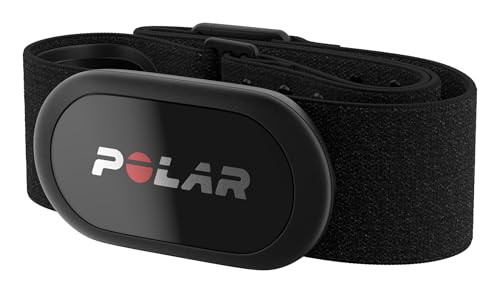
Polar H10 Heart Rate Monitor Chest Strap - ANT + Bluetooth, Waterproof HR Sensor for Men and Women, Black, M-XXL

The first month with a new sensor: building a baseline
New owners tend to judge a monitor by its first week, which is exactly the wrong sample. The first sessions with any format involve placement experiments, pairing hiccups and the novelty effect of watching a number that used to be invisible. A fairer approach is to treat the first month as baseline construction: wear the sensor for every session, in the same position, with the same warm-up routine, and record the session type alongside the trace. By the end of four weeks the log contains comparable bag sessions, comparable conditioning sessions and enough rest-day context to show what an ordinary hard day looks like for this particular body. Only against that baseline do later deviations mean anything — a conditioning trace that suddenly sits eight beats higher than its four-week pattern is information; the same trace in week one is just a number.
The baseline month is also when fit problems declare themselves honestly. A strap that will migrate starts migrating in week two, once novelty-driven carefulness fades. An armband position that only works when remembered precisely will be forgotten on a rushed evening and produce the dropout that teaches the better position. Owners who note these small failures in the log, rather than deleting the imperfect sessions, end the month with both an instrument and a method. That combination, far more than any single specification, is what the purchase was actually for.
Guides like this one are reader-supported in a general sense: some outbound connections in our wider coverage take the form of retailer links, and if a reader buys through one of them, a commission may be earned through affiliate arrangements at no additional cost to that reader. That arrangement has no bearing on the order in which formats are discussed here, on the criticisms made of any format, or on the repeated advice in these pages that equipment already owned and correctly worn usually beats new equipment bought on impulse.
When the bell goes and the wraps are tight, the sensor worth owning is simply the one still quietly telling the truth in round ten — everything else in this guide is how to make sure yours is that one.
Related guides
- Best 25–35 Inch Monitors With Lowest Display Lag: An Honest Ranking Without Invented Numbers
- Best 1440p 165Hz Monitors: One Native 165Hz Pick, Three 180Hz Upgrades, an Overclock Headline and a 160Hz Ultrawide
- Best 24 Inch Monitors
- Best Senior Monitors: Bigger Text, Honest Eye-Care Claims and Six Comfortable Picks


