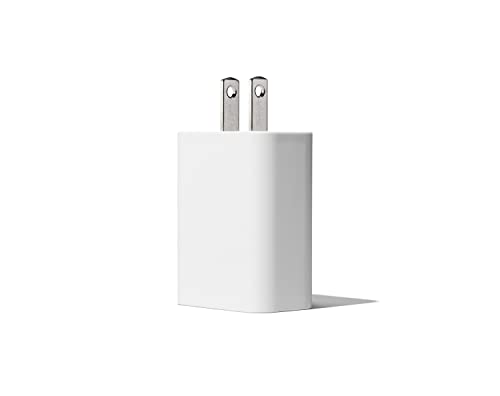
Our Top Picks


What's inside
- What a single port charger is, and why it still earns its socket
- Two connectors, two eras: USB-A and USB-C single port chargers
- Matching wattage to the device: phones, tablets, and thin laptops
- GaN changed what a charger can look like
- Safety certification is the specification that matters on the worst day
- Folding prongs, small housings, and the realities of travel sockets
- Heat under sustained load, overnight charging, and honest expectations
- The cable is half the charger, and its rating is printed nowhere obvious
- A short buying workflow that prevents the usual regrets
- Three setups, three sensible answers
- Common misunderstandings worth retiring
- How long a good charger lasts, and when to retire one
- Check prices on Amazon
- Conclusion: matching the charger to the person, not the headline
As an Amazon Associate I earn from qualifying purchases. This post may contain affiliate links at no extra cost to you.
What a single port charger is, and why it still earns its socket
A single port wall charger is exactly what its name describes: one mains plug, one output socket, one device at a time. In a market that advertises port counts the way restaurants advertise portion sizes, that simplicity can look like a limitation. It is better understood as a commitment. Every watt the charger is rated for belongs to the one device connected to it. Nothing is divided, nothing is renegotiated when a second cable appears, and the behaviour a buyer read on the specification sheet is the behaviour the charger delivers at midnight, at a desk, or in a hotel room. Predictability is the product.
Multi-port chargers divide a shared pool of power according to internal rules that vary by manufacturer and sometimes by which port is used first. Connect a laptop alone and it may receive the full pool; add a phone and the pool splits, sometimes gracefully, sometimes in proportions buried in a footnote diagram. For a charging station serving a family, that trade is sensible. For a single traveller with one phone, or a worker whose laptop must charge at full speed during a short break, the division is pure cost with no benefit. A single port brick removes the entire question. The device negotiates, the charger supplies up to its rating, and nobody needs to memorise a splitting chart.
There are quieter advantages too. A single output means a simpler internal design, fewer components sharing the thermal budget, and a housing that can shrink around one well-understood job. It means one cable to carry, one connection to check when charging seems slow, and one specification to match against a device’s requirements. It also means the charger is cheap to duplicate: one for the bedside, one living permanently in a travel bag, one in a work drawer, each identical, each known. Owners who standardise on a single model stop thinking about charging altogether, which is the highest compliment a piece of infrastructure can earn.
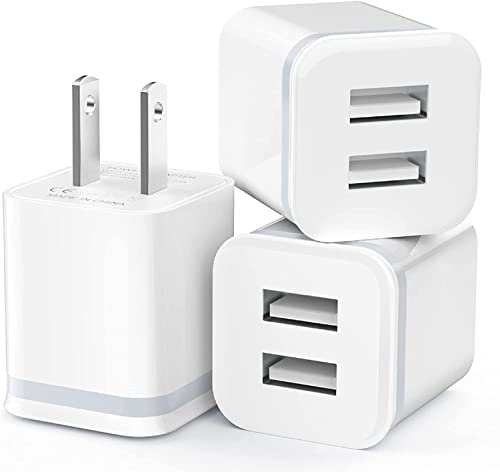
None of this argues that multi-port chargers are a mistake; households with many devices genuinely benefit from them, and the comparison in best 2 port usb chargers shows how well a two-port design can serve a phone-and-tablet routine. The argument here is narrower. When one device matters most, or when space, weight, and simplicity dominate, the single port format is not the budget compromise it is sometimes mistaken for. It is the focused tool, and choosing it well requires understanding the two connector eras it spans, the fast-charge systems it may speak, and the wattage classes that separate a phone brick from a laptop power supply.
Two connectors, two eras: USB-A and USB-C single port chargers
The rectangular USB-A port defined charging for more than a decade, and single port USB-A chargers remain widely available, inexpensive, and perfectly adequate for slow, undemanding work. In its basic form, a USB-A charger offers 5 volts at modest current, historically around 1 amp for early phone adapters and 2.4 amps in later, better designs, delivering somewhere between 5 and 12 watts. That is enough for wireless earbuds cases, older phones, e-readers, and overnight charging where speed is irrelevant. USB-A’s limits are equally clear: the connector was never designed for high power, its fast-charge extensions are proprietary negotiations layered onto an old standard, and no modern laptop charges from it.
USB-C changed the ceiling and the logic. The connector is reversible, mechanically stronger in daily use, and designed from the start to carry the USB Power Delivery protocol, in which charger and device exchange messages and agree on a voltage and current combination both support. A single port USB-C charger is therefore not one fixed supply but a small menu of supplies, and the device picks from the menu. That negotiation is why the same compact brick can trickle-charge earbuds at 5 volts in the morning and feed a thin laptop at 20 volts in the afternoon without either device being exposed to a voltage it did not request.
Choosing between the connectors is mostly a matter of inventory honesty. A household still running older phones, handheld consoles, and accessories with USB-A cables at the device end may keep a USB-A brick in service for years, and there is no virtue in replacing what works. But any new purchase intended to serve a current phone, tablet, or laptop should be USB-C, because that is where the power, the protocol support, and the cable ecosystem now live. Buying a fresh USB-A-only charger for a modern phone in the current market is buying yesterday’s ceiling at today’s prices.
Quick Charge 3.0 on USB-A: the 18-watt refinement of an older idea
Qualcomm’s Quick Charge family was the fast-charge answer of the USB-A era, and version 3.0 is its most common surviving form in single port chargers. According to Qualcomm’s published documentation, Quick Charge 3.0 lets a compatible device request voltage in small increments across a range from about 3.6 volts up to 12 volts, rather than jumping between a few fixed steps, so the phone can hold the most efficient charging point as its battery fills. In practical charger terms it is an 18-watt class system, typically expressed as combinations such as 5 volts at 3 amps, 9 volts at 2 amps, or 12 volts at 1.5 amps. For a compatible phone of its generation, that roughly triples the speed of a basic 5-watt brick during the first, fastest portion of a charge.
The caveats matter as much as the headline. Quick Charge only engages when both charger and device support it and the cable is sound; attach a device from a manufacturer that pursued its own scheme, or a phone built around USB Power Delivery, and the same charger falls back to ordinary slow charging. Readers comparing dedicated models in this class will find the field laid out in best 3 0 quick charge wall chargers. For a buyer whose current phone is a Quick Charge device and whose next phone is uncertain, a USB-A Quick Charge brick is a reasonable present-tense purchase with a known expiry date. For anyone buying with a five-year horizon, USB-C Power Delivery is the protocol that will still be relevant when the next two phones arrive.
USB Power Delivery: fixed voltage profiles behind the wattage numbers
USB Power Delivery, usually shortened to PD, is the standard that organises modern USB-C charging, and its structure explains the wattage classes used throughout this guide. A PD charger advertises a set of fixed voltage profiles, most commonly 5 volts, 9 volts, 15 volts, and 20 volts, each with a maximum current. Multiply a profile’s voltage by its current and the result is the power available at that step. A typical 30-watt charger, for example, might offer 5 volts at 3 amps, 9 volts at 3 amps, 15 volts at 2 amps, and 20 volts at 1.5 amps. The connected device selects the highest profile it can use, the charger switches to it, and charging proceeds at that agreed rate until the device asks to step down as its battery approaches full.
This profile system is why wattage alone is an incomplete specification. A charger could reach a respectable wattage only at a voltage a given device never requests, leaving that device on a lower step. Phones commonly favour the 9-volt profile, many tablets use 9 or 15 volts, and laptops generally require the 20-volt profile to charge at full speed, or to charge at all while running. Reading a charger’s profile list, printed on its casing or specification sheet, tells a buyer more than the wattage badge on the box. A 45-watt charger with a 20-volt profile at a healthy current is a laptop charger; a hypothetical 45-watt design without one would be a curiosity that laptops would ignore or sip from reluctantly.
Current ceilings deserve the same attention. Within the standard PD range, currents up to 3 amps travel over ordinary USB-C cables, while profiles above that, up to 5 amps in the extended range, require cables rated and electronically marked for the higher current, a subject this guide returns to when discussing cables. For single port chargers up to 65 watts, the familiar profiles cover the field: 20, 30, 45, and 65 watts are not arbitrary marketing steps but the natural products of the standard voltages and currents. Understanding that arithmetic turns charger shopping from badge comparison into profile matching, which is a far more reliable way to predict how a particular phone, tablet, or laptop will actually behave on a particular brick.
Matching wattage to the device: phones, tablets, and thin laptops
The most common single port mistake is buying wattage by anxiety rather than by device. Extra headroom is harmless electrically, because a device draws only what it requests, but it is not free: higher-rated chargers are larger, heavier, and more expensive, and a traveller carrying a 65-watt brick to charge a phone that caps at 25 watts is hauling capability that will never be used. The reverse mistake is worse. An under-rated charger does not damage a demanding device, but it may charge it painfully slowly, or merely slow its discharge while it runs, which feels like failure because, functionally, it is. Matching classes to devices avoids both errors.
Phones occupy the 20 to 30 watt band. Most current phones fast-charge somewhere in the low-to-mid twenties of watts at their peak, holding that rate while the battery is low and tapering as it fills, so a 20-watt PD charger captures nearly all the speed most phones can use, and a 30-watt model adds headroom for the hungrier models and a margin of future-proofing. Below 20 watts, charging still works but the fast-charge advantage fades; a basic 12-watt USB-A brick can take well over twice as long to bring a large modern phone from empty to the halfway point where a 20-watt PD charger arrives quickly. For overnight charging, none of this matters, and the gentlest charger in the house is arguably the right one. For top-ups between commitments, the 20 to 30 watt class is the phone sweet spot.
Tablets ask for more, in the 30 to 45 watt range. Their batteries are two to three times a phone’s capacity, their screens draw more while in use, and their manufacturers design their charging around that scale. A phone-class 20-watt charger will charge a tablet, eventually, and may barely break even if the tablet is simultaneously streaming video at full brightness. A 30-watt charger restores reasonable times, and 45 watts suits the largest tablets, particularly when they are being used at a desk while charging. Buyers who charge a phone and a tablet from the same single port brick, at different times, should size for the tablet: the 45-watt class covers both gracefully, since the phone simply requests its smaller share. The dedicated field is surveyed in best 45w usb c chargers, which is the natural starting point for that middle class.
Thin and light laptops define the top of the single port range, at 45 to 65 watts. Ultraportable machines are commonly supplied with adapters in exactly this band, and their requirement is the firmest of the three categories because a laptop under load is a moving target: processor bursts, a bright display, and attached accessories all draw from the same supply that is also trying to fill the battery. A 45-watt charger serves the lightest machines well and is the smallest size that deserves the name laptop charger. A 65-watt model is the safer universal choice, covering nearly every thin laptop, charging tablets and phones without strain, and holding a size advantage over the 90 and 100 watt bricks that heavier workstations need. Owners of gaming laptops or mobile workstations should look beyond this guide’s classes entirely; those machines expect 100 watts or proprietary supplies well beyond it, and no 65-watt brick will substitute.
Two subtleties complete the matching picture. First, peak wattage is a beginning-of-charge figure for phones and tablets alike: lithium batteries accept maximum current only in their lower and middle states of charge, then taper deliberately to protect cell life, so a bigger charger does not compress the final, slow portion of a charge at all. Judging a charger by the time from empty to half, rather than empty to full, gives the fairer comparison. Second, the device’s own stated requirement, printed in its manual or on its original adapter, outranks every general rule in this section. Classes guide the search; the manufacturer’s figure settles it.
GaN changed what a charger can look like
For decades, the size of a wall charger was dictated by silicon switching transistors and the magnetics around them, and a 65-watt adapter was a genuinely bulky object. Gallium nitride, shortened to GaN, altered that equation. GaN is a semiconductor material whose transistors can switch at higher frequencies with lower losses than comparable silicon parts. Higher switching frequency allows smaller transformers and capacitors to do the same work, and lower losses mean less energy wasted as heat inside the casing. The visible results are the two qualities buyers notice immediately: a GaN charger is smaller than a silicon charger of the same rating, and it runs cooler while delivering it.
The mechanism is worth understanding because it explains the limits as well as the benefits. Every charger converts alternating current from the wall into the direct current a device consumes, and the conversion involves switching the current on and off many thousands of times per second. Each switch wastes a small amount of energy. GaN transistors complete those switches faster and more cleanly, so the per-switch waste falls, and the designer can push the switching frequency higher still, which is what permits the magnetics to shrink. Efficiency figures for well-designed GaN adapters commonly sit in the high eighties to low nineties percent at typical loads, against lower figures for older silicon designs, and the missing percentage points in either case become heat that the casing must shed.
Successive generations of GaN devices have refined the integration further, packaging the controller and power transistor together, shrinking the supporting circuitry, and improving behaviour at light loads where chargers spend much of their plugged-in lives. Buyers do not need to track generation names; the practical signs of a mature design are a stated efficiency, a casing that stays comfortable at full output, and a size advantage that does not come at the cost of flimsy construction. GaN is not magic, and it does not repeal thermal physics. A tiny 65-watt brick still converts 65 watts and must shed several watts of heat through a small surface, so a well-designed GaN charger uses its casing as a heatsink and may feel distinctly warm at full load. Warm is the design working. Painful is not, whatever the transistor material.
GaN also reshaped travel arithmetic. When a 65-watt laptop-capable charger shrinks to the size of an old 20-watt phone brick, the case for carrying one charger for everything strengthens enormously, and the single port format benefits most of all: one small brick, one cable, every device in the bag served in turn. That convergence is the main reason the single port category has revived rather than faded in the multi-port era. The charger’s job did not get more complicated; it got smaller, cooler, and easier to carry everywhere, which quietly changes how often it is actually at hand when a battery runs low.
Safety certification is the specification that matters on the worst day
Chargers are mains appliances. One side of the circuit connects to household voltage, the other side connects to a device held in the hand and kept beside the bed, and the charger’s insulation system is what keeps those two worlds apart. That is why recognised safety certification is not a decorative logo but the central buying criterion after wattage matching. In North America, the marks to look for are UL and ETL, indicating that the design has been evaluated by an accredited testing laboratory against standards covering insulation, temperature rise, fault behaviour, and resistance to foreseeable misuse. Equivalent accredited marks serve the same role in other regions. The mark should be accompanied by a listing or file number that can be checked against the certifier’s public directory.
Inside a certified design sits a family of protections that buyers should expect to see named in specifications. Over-voltage protection guards the output if a component fails. Over-current and short-circuit protection limit or shut down the output when a damaged cable or faulty device draws too much. Over-temperature protection reduces output or switches off before internal heat reaches damaging levels. Surge tolerance helps the charger survive the small mains disturbances that travel through household wiring. None of these features announces itself in normal use, which is precisely their nature: they exist for the abnormal minute, the frayed cable, the failing device, the faulty socket, when an unprotected charger converts a small fault into heat, smoke, or a ruined phone.
Unbranded chargers of unknown origin invert every one of those assurances. Investigations of ultra-cheap adapters by safety bodies and engineers have repeatedly found inadequate insulation distances between mains and output sides, missing or counterfeit certification marks, components rated below the stresses they carry, and casings that soften or ignite under fault conditions. The savings on offer are a few units of currency; the assets at risk are a phone worth hundreds of times more, the laptop beyond it, and the room both are charging in. This is not a close trade. A certified charger from an identifiable manufacturer, with a real listing number and a specification sheet that names its protections, is the minimum sensible purchase, and any listing that cannot state who made the charger should be treated as having answered the safety question already.
Practical verification takes minutes. Check that the certification mark is crisp and correctly formed, that a file number is printed, and that the number resolves in the certifier’s directory to the product type being sold. Confirm the manufacturer’s name and the electrical ratings are printed on the casing itself, not only on a box that could accompany anything. Be suspicious of marks that are subtly misdrawn, of spellings that wobble, and of chargers that feel implausibly light for their rating, since transformers, filtering, and heatsinking all have mass. These habits, applied once at purchase, protect every charge that follows. Readers scaling up to the highest-output class will find the same certification discipline emphasised in best 100w chargers, where the energy involved makes the discipline more important, not less.
Folding prongs, small housings, and the realities of travel sockets
A charger’s specification sheet describes its electrical life; its prongs and housing describe its physical one, and travel exposes every weakness in both. Folding prongs are the single most valuable physical feature a travel charger can have. Prongs that fold flat into the housing cannot snag bag linings, scratch a laptop lid sharing the same compartment, or bend when the charger is stepped on in a dark hotel room. They also make the brick pack smaller in every dimension that matters, turning an awkward spiked object into a smooth pebble that drops into any pocket of a bag. For a charger that will live at home in one socket, fixed prongs are fine. For anything that travels weekly, folding prongs justify choosing one model over another with identical electronics.
Size interacts with socket geometry in ways buyers rarely anticipate. Hotel and airport sockets are frequently recessed, tightly paired, mounted in floor boxes, or half-hidden behind furniture, and a wide charger body can block the neighbouring outlet or refuse to sit flush in a recessed plate. Compact GaN housings earn their keep here twice over: they fit where larger bricks foul adjacent sockets, and their lighter weight stays seated in loose, worn outlets that heavier adapters slowly slide out of under their own cable’s pull. Orientation matters too. A charger whose cable exits in line with the wall, rather than straight out into the room, sits better behind a bedside table and strains its socket less. None of these details appears in a wattage table, and all of them decide whether the charger is pleasant or infuriating by the third night of a trip.
Input range completes the travel picture. A charger printed with an input spanning 100 to 240 volts at 50 to 60 hertz works, with only a passive plug-shape adapter, in most of the world’s sockets, because its electronics accept whatever the local mains provides and still deliver the same negotiated output. That single printed line is worth checking before any international trip; a charger rated only for a narrow domestic input range must not be carried abroad on the assumption that a plug adapter alone makes it safe, since a shape adapter changes nothing electrical. Frequent travellers crossing regions with different prong standards sometimes prefer chargers with interchangeable prong heads, which remove the separate adapter entirely, but a sound wide-input brick plus one sturdy shape adapter remains the simpler, lighter system for most itineraries.
Airport and hotel charging etiquette contains one safety point worth stating plainly. Public USB ports built into furniture and walls are convenient, but they are unknown power sources with unknown wiring and, in the case of data-capable ports, an unnecessary data connection to a stranger’s infrastructure. A traveller carrying their own single port brick and cable can use the ordinary mains socket beside those ports instead, keeping charging under the control of a certified charger they chose themselves. The brick weighs little, works faster than most furniture ports, and removes a whole category of doubt from a routine act. It is the travel argument for this entire category in miniature: one small, known, certified charger beats an anonymous port every time.
Heat under sustained load, overnight charging, and honest expectations
Every charger warms in use, because conversion losses leave as heat, and the honest question is never whether a brick gets warm but how warm, where, and for how long. A single port charger delivering its full rating to a laptop for two hours is performing its hardest sustained work, and a casing that feels warm to the touch, evenly across its surface, is behaving as designed. Heat becomes a warning when it concentrates in one sharp hotspot, when the casing grows too hot to hold comfortably, when a plastic or electrical smell accompanies it, or when the connected device begins cycling its charging as thermal protection intervenes. Any of those signs ends the session and starts an investigation, beginning with the cable and the socket before the charger itself is condemned or cleared.
Design quality shows most clearly in this sustained behaviour. A well-engineered charger holds its rated output until the device tapers its request, managing internal temperature through component choice, layout, and the casing’s surface area. A marginal design may advertise the same wattage yet throttle itself after twenty minutes, delivering a fraction of its promise for the remainder of the charge, a pattern that spec-sheet shopping cannot detect and that reveals itself only in long, loaded sessions. This is one reason identifiable manufacturers with published specifications and warranties deserve preference: sustained output is a claim a serious maker can be held to, while an anonymous listing answers to nobody when its brick quietly gives up at minute thirty.
Overnight charging raises a different set of questions, mostly about batteries rather than bricks. Modern phones, tablets, and laptops manage their own charging intelligently, tapering current as they fill and holding at full with only small maintenance draws, and many now offer settings that cap the charge level or delay completion until shortly before a set alarm, reducing the hours a battery spends at maximum charge. From the charger’s side, overnight duty is light duty: a brief period of real work followed by hours of near-idle. The practical safety habits are environmental rather than electronic. Charge on a hard surface rather than bedding, keep the charger uncovered and ventilated, use a sound cable, and let a certified charger’s protections stand guard. On those conditions, overnight charging with a quality single port brick is an ordinary, well-understood routine practised by hundreds of millions of devices nightly.
Owners who want to be gentlest with battery longevity can adopt two habits without buying anything. Avoid routinely charging in hot environments, since heat during charging is the combination lithium cells like least, and do not treat a full, fast charge as the default when a slower one fits the schedule; the overnight hours forgive a modest charger entirely. Neither habit requires anxiety. Batteries are consumables with multi-year lives under normal use, and the difference between careful and careless treatment is measured in gradual capacity over years, not in any single night’s outcome.
The cable is half the charger, and its rating is printed nowhere obvious
Charger discussions focus on the brick because the brick carries the wattage badge, but the cable in series with it can silently cap everything. A USB-C cable is rated for a maximum current, and the common ratings divide the market. Standard cables are rated to 3 amps, which at the 20-volt PD profile means a 60-watt ceiling. Cables rated to 5 amps raise that ceiling to 100 watts, and they are required to carry an electronic marker, a small chip in the connector known as an e-marker, that announces the cable’s current and data capabilities to the charger and device during negotiation. Without that announcement, a well-designed PD system deliberately holds itself to the 3-amp, 60-watt limit, because the system cannot assume an unmarked cable is safe beyond it.
The practical consequences arrive in predictable disguises. A 65-watt laptop charger paired with an ordinary 60-watt cable may charge the laptop slightly below its best rate, or behave perfectly because the laptop’s own ceiling sits at the boundary; the same cable under a future 100-watt setup would be a hard bottleneck. A bargain cable with thin conductors adds resistance, drops voltage along its length, warms at its connectors, and can make an excellent charger look unreliable. Cable length compounds resistance, so the longest cable in the drawer is rarely the best charging cable, however convenient its reach. For single port setups, where one cable serves everything, the economical move is one short-to-medium, clearly rated cable kept with the charger, rather than a rotation of anonymous leads of unknown pedigree.
Data speed is the cable specification buyers most often confuse with charging ability. A cable advertised by its data transfer rate may still be a 60-watt charging cable, and a thick, expensive-looking cable may carry no e-marker at all. The two capabilities are engineered separately. When buying, look for the charging figures stated in watts or amps, and for explicit mention of e-marker in cables claiming ratings above 60 watts. When troubleshooting slow charging, swap the cable before blaming the brick; it is the cheaper component, the more frequently damaged one, and the culprit in a surprising share of cases. A cable with a frayed jacket, a loose connector, or visible damage near either end should be retired outright, since a failing cable in a high-current PD circuit is a heat source waiting for a load.
USB-A cables live under simpler rules, because their currents are lower, but condition still governs performance. Quick Charge at 18 watts pushes meaningful current through a USB-A cable, and a worn or very thin example will sag enough to slow or destabilise the negotiated rate. Keeping one known-good cable with each charger, labelled if the household runs several similar leads, turns charging from a small daily lottery into a system whose behaviour can be predicted and, when it changes, diagnosed in one swap.
A short buying workflow that prevents the usual regrets
Charger purchases go wrong in a small number of repeatable ways, and a five-minute workflow prevents nearly all of them. Begin with the hungriest device the charger must serve, not the most frequently charged one. A charger sized for a laptop will charge a phone beautifully; a charger sized for a phone will not return the favour. Find that device’s own figure, on its original adapter or in its manufacturer’s documentation, and treat it as the floor. If the charger will serve only phones, the floor is the phone’s fast-charge figure, usually in the low-to-mid twenties of watts, and a 30-watt purchase closes the question with headroom to spare.
Next, confirm the protocol and the profiles, in that order. The charger must speak the system the device expects, USB Power Delivery for nearly all current USB-C devices, Quick Charge for the USB-A generation that used it. Then read the profile list and verify the specific voltage the device favours is present at a useful current: 9 volts for most phones, 20 volts for laptops. A charger that passes both checks will perform as its badge promises. A charger checked only by wattage may not, and the disappointment will arrive disguised as a slow laptop or a phone that never quite fast-charges.
Then apply the safety filter without negotiation. Identifiable manufacturer, accredited certification with a checkable listing number, named protections covering over-voltage, over-current, short-circuit, and temperature. This filter eliminates a large share of the cheapest listings, and that is its purpose. Follow it with the physical filter: folding prongs if the charger travels, a housing size that will not block neighbouring sockets where it will live, a wide input range if it crosses borders. Finally, budget for the cable in the same purchase, rated at or above the charger’s class, with an e-marker if the setup exceeds 60 watts. A charger bought through all five filters rarely needs replacing for any reason other than a new device with a genuinely different appetite.
Three setups, three sensible answers
Abstract wattage classes become concrete when attached to real routines. Consider first the bedside setup, the most common single port deployment in any home. Its demands are modest and specific: charge one phone overnight, every night, without noise, glare, or heat near bedding. Speed is nearly irrelevant across eight hours, so a compact 20 or 30 watt GaN charger is more than sufficient, and its small housing leaves the neighbouring socket free for a lamp or clock. The features that matter here are reliability, a cool idle, and a cable long enough to reach the phone’s resting place without tension. This is also the setup where standardising helps most: the same known charger on both sides of a shared bed, or in a guest room, ends every negotiation about whose brick is whose.
The desk setup serves a working day rather than a night. A laptop sits at its centre, drawing real power for hours, with a phone visiting occasionally. Here the 65-watt class earns its place, sized to the laptop’s requirement, holding its output through long sessions without throttling, and accepting the phone in the laptop’s absences. Cable choice matters more at a desk than anywhere else, because the cable is handled, bent, and trapped under objects daily; a sound, correctly rated cable, routed once and left alone, outlasts a drawer of substitutes. Heat management is a desk concern too: the charger belongs in open air on or under the desk, not buried in a cable box with three other warm power supplies sharing a pocket of still air.
The travel setup optimises for absence: the charger must be forgotten until needed, then work everywhere. A 45 or 65 watt GaN brick with folding prongs and a wide input range is the classic answer, small enough to live permanently in a bag, strong enough to serve the laptop that justifies the trip, and quick enough to exploit a forty-minute layover for a phone top-up. Travellers whose trips involve only a phone and a tablet can step down to 45 watts and save a little more space. The travel charger is also the one most worth duplicating rather than moving: a brick that lives in the bag cannot be left behind on the bedside table, which is where most travel charging stories actually begin.
Common misunderstandings worth retiring
A few durable myths distort charger buying, and each collapses under a sentence of mechanism. The first holds that a higher-wattage charger will force power into a small device and damage it. In a negotiated USB-C PD system, the device requests a profile and draws the current it is designed for; a 65-watt charger connected to a phone that asks for 20 watts is simply a 20-watt supply with headroom, in the same way a household socket rated for far more than a lamp remains safe for the lamp. Oversizing costs money and pocket space, not devices.
The second myth claims fast charging inherently ruins batteries, so the slowest charger is always the kindest. Battery wear is driven mainly by heat, by time spent at very high and very low states of charge, and by total cycles, and a certified fast charger operating within the device’s own requested profile keeps all three within the envelope the device manufacturer designed for. The device, not the brick, controls the taper near full, and it will not request a rate it cannot accept. An owner who prefers slow overnight charging for longevity is making a reasonable choice; an owner who fears a certified 30-watt brick will injure a phone designed for it is worrying at the wrong component. The anonymous uncertified charger at any wattage is the greater battery risk, because its voltage quality, not its speed, is what the device cannot defend against.
The third myth treats all chargers with the same badge wattage as interchangeable. Two 65-watt chargers can differ in their profile lists, their sustained output before thermal throttling, their idle consumption, their certification, their cable inclusion, and their warranty. Wattage is the entry ticket to a class, not a description of the product. The sections above exist because the differences beneath the badge are exactly the differences between a charger that serves quietly for five years and one that is replaced, with muttering, inside a year.
A fourth, quieter misunderstanding concerns standby draw. A charger left plugged in without a device consumes a small amount of power to keep its circuitry awake, and modern designs hold that figure to a fraction of a watt. Across a household and a year the total is real but modest, and unplugging chargers between uses remains a reasonable tidiness habit rather than an economic necessity. The far larger energy question is efficiency under load, where a few percentage points separate designs, and that is one more argument for the GaN generation: the most efficient charger is also, not coincidentally, usually the smallest and coolest one on the shelf.
How long a good charger lasts, and when to retire one
A well-made single port charger has no moving parts, no battery of its own, and no software to fall out of date, so its service life is governed by slower forces: heat cycles, component ageing, and physical wear at its two ends. Electrolytic capacitors inside the casing gradually change character over years of warmth, which is one reason a charger that lives in open air outlasts one baked in a crowded power strip enclosure. The prongs loosen their spring, the USB-C socket’s tongue wears through thousands of insertions, and the cable, flexed daily, usually reaches the end of its life first. In realistic household service, a certified charger from an identifiable maker should be expected to work for many years, and a purchase decision can fairly be made on that horizon rather than on a single season.
Retirement signs are mostly sensory, and owners should trust them. A charger that develops a new buzzing or whining loud enough to notice across a quiet room has changed its behaviour, even if it still charges. A casing that cracks, a prong that wobbles in its housing, a port that grips cables loosely or only at an angle, or heat that has clearly increased at the same workload all mark a unit approaching the end of trustworthy service. So does any scorch mark, discolouration, or melted distortion around the port or prongs, which ends the discussion immediately: unplug the unit, do not use it again, and route it to electronic waste collection rather than household rubbish. Chargers contain metals and circuitry that recycling streams are set up to recover, and a retired brick kept in a drawer as a doubtful spare tends to return to service in an emergency, which is precisely when a doubtful spare is least welcome.
Warranty and support belong in this calculation at purchase time, because they are the measurable difference between a manufacturer standing behind a design and a listing that will have vanished by next quarter. A stated warranty period, a support channel that answers, and a model number stable enough to search for are unglamorous virtues, yet they predict the ownership experience better than any feature list. The same logic governs the question of future standards. Power Delivery continues to evolve, with extended ranges reaching toward higher voltages for specialised equipment, but the profiles that serve phones, tablets, and thin laptops, the entire territory of this guide, are stable and widely implemented. A 65-watt PD charger bought carefully today is not a bet on a passing fashion; it is an implementation of a settled standard, and the devices arriving over the next several years will negotiate with it in exactly the language it already speaks. Buyers can therefore choose on present needs with unusual confidence, knowing the protocol beneath their purchase has finished changing in every way that matters to a single port brick.
Check prices on Amazon
Live listings for the shortlist in this guide are pulled from Amazon below, so prices and availability are always current at the moment you look.


Conclusion: matching the charger to the person, not the headline
The right single port charger is the one whose class matches the largest device it must serve, whose protocol and profiles match that device’s expectations, whose certification can be verified, and whose shape suits the socket it will inhabit. Everything else is refinement. Stated as profiles, the recommendations of this guide reduce to a handful of clear cases, and most readers will recognise themselves in exactly one of them.
The phone-only owner, charging overnight and topping up occasionally, should buy a certified 20 to 30 watt USB-C PD charger, GaN for size if the price gap is small, with folding prongs if it will ever travel. This is the easiest purchase in the category and the one most likely to be duplicated around the house. There is no benefit in reaching higher up the wattage ladder, and the money saved is better spent on a second identical unit for the travel bag or office drawer, because a charger that is present beats a stronger charger that is elsewhere.
The phone-and-tablet owner should step up to the 30 to 45 watt class, sized for the tablet and shared by the phone in turn. The 45-watt end of that range suits large tablets and anyone who uses a tablet at a desk while it charges. Cable rating needs one glance at this level: ordinary 60-watt-capable cables cover the whole class, so no e-marker hunt is required, but cable condition still governs real-world speed, and one known-good lead should be kept with the charger as a set.
The thin-laptop owner should buy by the laptop’s printed requirement, which will land at 45 watts for the lightest machines and 65 watts for the mainstream of ultraportables. Choose the 65-watt class when in doubt, insist on the 20-volt profile at a healthy current, verify certification with particular care because this charger will work hard for long stretches, and pair it with a cable rated for the full output. This charger becomes the household’s universal brick almost by accident, serving every phone and tablet it meets, and it is the single purchase most likely to simplify a whole bag, desk, and bedside at once.
The owner of an older Quick Charge phone, still served by USB-A, has the simplest decision and the clearest horizon. An 18-watt Quick Charge 3.0 charger is inexpensive, well understood, and exactly matched to the device in hand. Its replacement, when the phone is eventually replaced, will be a USB-C PD model in the classes above, and no money spent then will be wasted, because the PD charger will serve the new phone at full speed from its first charge. Buying for the device owned today, while understanding the direction of the standard, is not short-sightedness; it is the correct order of operations.
The frequent traveller overlays one filter on whichever profile fits: folding prongs, the smallest certified GaN housing in the required class, and a printed input range spanning 100 to 240 volts. Weight and volume saved here are saved on every trip, and the wide input range converts most of the world’s sockets into friendly territory with nothing more than a passive shape adapter. A traveller who carries a laptop should let the laptop set the class and accept a brick a few grams heavier than a phone-only traveller needs; the alternative, a laptop sipping from an under-rated charger in a departure lounge, is the one travel outcome this entire guide exists to prevent.
Across all five profiles, the discipline is identical and deliberately unglamorous. Read the device’s requirement. Read the charger’s profiles rather than its badge. Verify the certification rather than admiring its logo. Respect the cable as a rated component rather than an afterthought. Buy from a maker who can be found again if the product misbehaves. A single port charger chosen that way is not an exciting purchase, and that is the point: the best charging equipment disappears into the routine, noticed only in the moment a traveller, a worker, or a tired phone owner realises they have stopped thinking about power at all.
One final practical suggestion ties the profiles together. Whatever class is chosen, write the charger’s wattage and profile strengths on a small label and fix it to the housing, or keep a note with the travel kit listing which device each charger serves. Households accumulate similar-looking white and black bricks faster than memory can track them, and a ten-second label applied on the day of purchase prevents the slow, confused substitutions that leave a laptop on a phone charger for a working afternoon. The label is also a quiet audit: a brick that cannot be labelled confidently, because nobody remembers its rating or its maker, is a brick whose place in the household deserves reconsidering.
When readers buy through retailer links on this page, a small commission may support our editorial work at no additional cost to the reader, under affiliate arrangements that apply across many of the guides published here. That support is welcome and genuinely useful, and it plays no part in the wattage classes, profile checks, or certification advice set out above, which rest on the published specifications of the charging standards and the stated requirements of the devices themselves.
So choose the smallest certified brick that fully feeds the biggest device you own, pair it with a cable rated to match, and that single quiet socket will go on doing its one job flawlessly long after chargers with longer feature lists have been forgotten in a drawer.