Our Top Picks
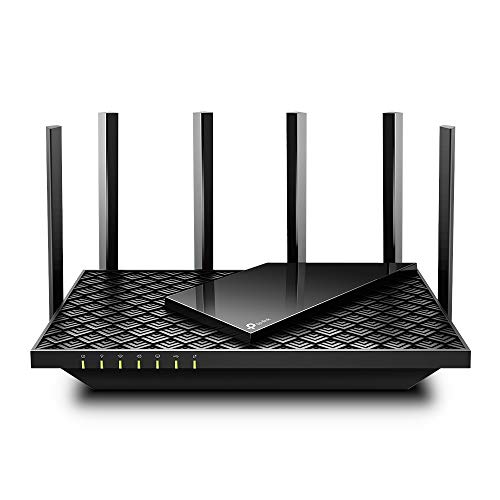
 TP-Link AC1200 WiFi Router Dual Band Wireless Internet5.7 x 9.1 x 1.5 inches5.7 x 9.1 x 1.5 inches1.45 poundsCheck on Amazon
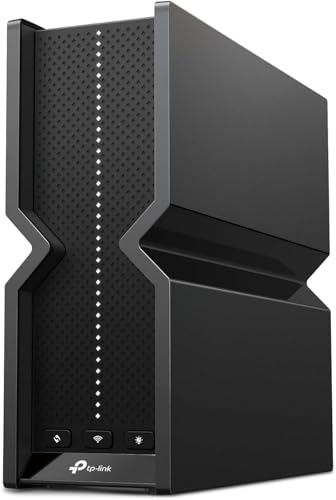
 TP-Link AC1200 Gigabit Dual Band WiFi RouterWi-Fi 5 AC12008.46 x 4.92 x 1.81 inches0.71 poundsCheck on Amazon



What's inside
- The hotel router is really a system
- Radio planning: walls are the specification
- Capacity: the eight o’clock problem
- Roaming: the corridor test
- Guest access: portals, codes and the property system
- Segmentation: guests, staff, payments and things
- Power and plumbing: PoE budgets and backhaul
- Management: the network as a maintained thing
- What the new Wi-Fi generations actually change in a corridor
- Encryption for an open door: WPA3 and enhanced open
- Conference floors and the density spike
- Retrofitting the old building
- The circuit behind the radios
- Spectrum is shared: neighbours, radar and interference
- The room full of things
- How a property knows it worked
- The boutique exception, honestly bounded
- The staff network nobody reviews
- The portal as a public document
- Refresh cycles: knowing when to replace
- Antennas: the shape of a cell
- The classic complaints, translated
- The real price of the system
- Acceptance testing: making the installer prove it
- The network’s own appetite
- Documentation: the network’s memory
- Casting: the guest, the phone and the television
- The client fleet is a moving target
- The wired port’s quiet persistence
- Rogues, twins and the security perimeter in the air
- Long stays and the serviced-apartment hybrid
- Lobbies, terraces and the public face
- Pilot before property-wide
- Firmware, vulnerabilities and end of support
- The front desk is part of the system
- Designing for the worst room
- Single points of failure
- Reading an access point datasheet without being read by it
- Check prices on Amazon
- How to choose wireless routers and access points for a hotel
As an Amazon Associate I earn from qualifying purchases. This post may contain affiliate links at no extra cost to you.
The hotel router is really a system
Nobody buys a single router for a hotel, whatever the keyword says. What a hotel actually buys is a system: a gateway or controller at the centre, managed switches in the risers, and access points distributed through corridors and rooms, all of it expected to serve hundreds of strangers’ devices simultaneously, securely, and without a single call to the front desk. The “wireless router” in a hotel listing is therefore shorthand for the access-point-and-controller architecture this guide evaluates, and the buying questions are architectural. How many radios per floor? Which channels, at what power? How do guests authenticate, how are they isolated from each other and from the hotel’s own systems, and what happens to the whole design at eight in the evening when every room streams at once?
This guide judges hotel wireless the way a network designer would: by radio planning, capacity arithmetic, roaming behaviour, security segmentation and power budgets. Headline speed figures — the gigabits on the box — describe one radio under laboratory conditions and predict almost nothing about a corridor on the ninth floor. The quantities below predict a great deal.
Radio planning: walls are the specification
Wireless signals obey materials. Drywall costs a signal a few decibels; brick and concrete cost more; the bathroom pod — foil-backed, tiled, plumbed with metal — is a small fortress in every hotel room, and the lift shaft is a vertical canyon of steel. A design begins with a survey, predictive on software with the building’s floor plans and materials, then validated on site with measurements in real rooms. The target figures are known: a received signal around −65 dBm at the pillow and the desk supports full-rate service; below −75 dBm, devices cling and crawl. Access points belong where the survey says, which is usually in corridors serving a small number of rooms each, or inside rooms themselves in dense modern designs — and emphatically not where the ceiling happened to have a convenient hatch.
Two bands divide the labour. The 2.4 GHz band reaches further and penetrates better, offers only three non-overlapping channels, and is crowded with interference from neighbouring buildings, Bluetooth and the Internet of Things devices hotels increasingly install. The 5 GHz band offers many more channels, shorter reach and the capacity that modern service depends on; 6 GHz, where regulation and client support allow, extends the same logic. A hotel design treats 2.4 GHz as the coverage layer of last resort and builds capacity on 5 GHz, with channel widths chosen for density — narrower channels, more of them, reused across distance — rather than for the widest possible pipe to a single room.
Transmit power and the shouting problem
The commonest amateur error in hotel wireless is turning every access point to maximum power. A loud access point is heard by rooms it cannot serve, while the guest’s phone — transmitting at a fraction of that power — cannot answer loudly enough to be understood; the result is the full-bars, no-service paradox that fills review sites with complaints. Professional design balances the two directions: access-point power is set to match typical client power, cells are kept small and numerous, and the network is judged by the weakest client’s experience rather than the strongest signal in the corridor. Minimum-rate settings prune the slowest legacy rates, which otherwise consume airtime grotesquely, since a single distant device transmitting slowly occupies the channel for everyone attached to that radio.
Capacity: the eight o’clock problem
Hotel wireless fails at a predictable hour, when occupancy, streaming and video calls peak together. Capacity planning therefore counts not rooms but simultaneous active devices — realistically two to three per occupied room, plus staff devices, televisions increasingly fed by streaming, and the conference floor’s separate surge. Each access point radio can serve only a limited number of actively contending clients before airtime contention degrades everyone; design rules of thumb place a few dozen active clients per radio as the working ceiling for good experience, far below the association limits printed in datasheets. The uplink behind the radios must be summed with the same honesty: a floor of access points on gigabit uplinks converges on switches and a gateway whose internet circuit is the final, shared bottleneck, and per-guest bandwidth management — fair-use shaping rather than hard cruelty — keeps one room’s backup upload from eating the floor’s evening.
Airtime, not bandwidth, is the currency being spent. A channel can carry only one transmission at a time, and every slow transmission — a distant guest’s phone labouring at a legacy rate, a sensor whispering its hourly report — spends the same currency as a fast one while delivering a fraction of the data. This is why density design obsesses over minimum rates, client counts per radio and the prompt eviction of clients to nearer radios: the goal is not to make any single connection spectacular but to keep the shared medium’s time divided fairly among the many. A hotel network that feels fast at the peak is one whose airtime accounts were balanced in the design, months before the guests arrived to spend it.
Quality-of-service markings separate the traffic that cannot wait — voice calls, video meetings — from the traffic that merely wants to be fast. A hotel selling itself to business travellers is really selling the reliability of a video call at the peak hour, and the specification that delivers it is unglamorous: enough radios, enough uplink, and shaping configured by someone who understood both.
Roaming: the corridor test
A guest walking from room to lift to lobby crosses many cells, and the device — not the network — decides when to roam. Phones are famously sticky, clinging to a weakening access point because its signal remains barely usable, and the walk to the lift becomes a corridor of buffering. The standards family exists precisely to civilise this: 802.11k gives devices a map of neighbouring access points, 802.11v lets the network suggest a better home and explain why, and 802.11r speeds the security handshake so voice calls survive the move. A hotel system should support all three, with the caveat that a minority of older devices misbehave under 802.11r and are best served by a compatible configuration rather than excluded. Band steering belongs to the same toolkit, nudging dual-band clients onto 5 GHz where capacity lives, gently enough that the nudge is not experienced as a drop.
Guest access: portals, codes and the property system
The captive portal is the hotel network’s front door, and its design is a negotiation between security, law and the guest’s patience. Common models authenticate by room number and surname against the property management system, by access code issued at check-in, by social or email registration, or by paid tiers. Integration with the property system buys the elegant behaviours guests remember: access that activates at check-in, extends automatically when the stay is extended, and expires at checkout without staff touching anything. Session limits, device counts per room and idle timeouts are policy expressed as configuration, and the portal’s other duty is legal — presenting terms, and in many jurisdictions supporting the logging that lawful-intercept and data-retention rules require of public network operators.
The portal is also a security boundary that must be built sceptically. Before authentication, a guest device should reach the portal, the hotel’s own pages and little else; the walled garden is a firewall policy, not a web page. MAC-address-based session persistence, which lets a device reconnect without re-authenticating, is a convenience with a known weakness — addresses can be spoofed — and modern device randomisation of addresses has made portal design harder, pushing better systems toward account-based or passpoint-style approaches that survive address rotation.
Passpoint and the future of not logging in
Passpoint, built on Hotspot 2.0, replaces the portal ritual with certificate-based automatic connection: the device negotiates securely with the network on first encounter and reconnects forever after like a home network, encrypted from the first frame. Mobile carriers use it for offload; hotels can use it through roaming consortiums or their own loyalty applications. For the repeat business guest it removes the single most annoying interaction in hotel technology. A system bought today should at least not foreclose it: WPA3 and 802.11u-capable infrastructure keeps the door open, while portal-only legacy kit closes it for the life of the installation.
Segmentation: guests, staff, payments and things
A hotel network carries at least four populations that must never meet: guests, staff operations, payment systems and the growing flock of connected things — locks, thermostats, televisions, minibar sensors. Virtual LANs draw the boundaries, with separate address space, separate firewall policy and separate wireless names where appropriate. Guest-to-guest isolation within the guest network is a baseline, not a feature: one guest’s compromised laptop must not be able to scan the room next door. The payment segment answers to card-industry compliance, which demands documented segmentation and testing. Staff systems — the property system, door-lock servers, point of sale — sit behind stricter policy still. The router at the centre earns its keep as a firewall and traffic referee among these worlds, and its specification should be read for the number of networks it can segment, the throughput of its inspected traffic, and the sanity of its policy interface, rather than for its wireless headline, which in a controller architecture may not even live in the same box.
Power and plumbing: PoE budgets and backhaul
Access points in corridors are powered through their Ethernet cables, and Power over Ethernet turns a switch specification into a design constraint. Each access point draws a known wattage; a switch has a total PoE budget as well as per-port limits, and a design that multiplies access points by watts and forgets the budget discovers the error at installation, one dark corridor at a time. The same arithmetic governs the small uninterruptible supplies that keep the network alive through power flickers — a hotel network that dies with every elevator-induced sag will be remembered for it. Backhaul follows the same discipline: access points deserve gigabit at minimum, with multi-gigabit uplinks for the highest-density radios, switches stacked or linked with headroom, and the gateway’s routing throughput — with security features actually enabled — exceeding the internet circuit it guards.
Management: the network as a maintained thing
A hotel network is never finished; it is maintained. Centralised management — controller-based or cloud — is what turns a hundred radios into one system: a single configuration, pushed consistently; firmware staged and scheduled for the quiet hours; health dashboards that notice a dying access point before the reviews do; and logs that let an engineer answer the only question guests ever ask, which is what happened in room 412 at nine last night. Guest-experience monitoring, synthetic tests that continuously measure association, authentication, portal and throughput from a probe’s perspective, separates professional operations from hopeful ones. The buying consequence is that the management platform is part of the product: its licensing model, its alerting, its historical depth and its behaviour when the internet connection to a cloud controller is lost all belong in the evaluation, alongside the radios it manages.
What the new Wi-Fi generations actually change in a corridor
Wi-Fi 6 brought the hotel-relevant feature its predecessors lacked: OFDMA, which lets one radio serve several clients within a single transmission interval by dividing the channel, turning the airtime economics of many small transactions — messages, page loads, voice packets — decisively in the network’s favour. Multi-user MIMO extends the same idea spatially. For a property, these are capacity features, and they matter exactly where hotels hurt, in density. Wi-Fi 6E added the 6 GHz band’s clean spectrum where regulators allow it; Wi-Fi 7 widens channels further and adds multi-link operation, whose benefits accrue first to backhaul-like and premium uses rather than to the ordinary guest phone, most of which will remain 5 GHz clients for years. The buying discipline follows: choose the generation for its density behaviour and its radio count per box, keep channel widths modest in dense floors, and remember that the guest’s oldest device sets part of the experience no infrastructure can fully repeal — a truth the minimum-rate and airtime-fairness settings exist to soften.
Encryption for an open door: WPA3 and enhanced open
The classic hotel network was open — no password, portal as the only gate — which left every guest’s traffic readable by every other radio in range. The modern answer is layered. Enhanced Open, built on opportunistic wireless encryption, encrypts each guest’s link without any password at all, defeating passive snooping while keeping the walk-up experience. WPA3 in its personal form serves staff and long-stay networks with a password that resists offline guessing; its enterprise form, with 802.1X authentication, serves staff devices individually credentialed. Transition modes let old and new share a network name during migration, at some cost in purity. A system specified today should support the full set, because the security posture of a guest network is now part of a property’s reputation and, in the payment segment’s case, part of its audited compliance.
Conference floors and the density spike
Event space breaks residential assumptions. A ballroom holds hundreds of people in one open volume, all associating at the start of a keynote, all uploading at its end. The design answers are specialised: more radios at lower power rather than fewer at higher, antennas chosen and aimed for the room’s geometry including high ceilings, wired drops for presenters and streaming encoders so the most critical traffic never touches the air, and event-specific network names with their own policies and bandwidth commitments. Capacity is sold to event clients as a product, with tiers and guarantees, and the network that cannot measure and enforce per-event allocations cannot honourably sell them. Hotels serious about events treat the ballroom as a separate design problem with its own survey, its own channel plan and its own peak arithmetic — the eight o’clock problem compressed into a single room at nine in the morning.
Retrofitting the old building
New construction is the easy case: cable pathways in the drawings, ceiling access everywhere, a riser that makes sense. The industry’s harder and commoner problem is the beloved old building — thick walls that eat signal, listed interiors that forbid visible kit, risers full of history and no spare conduit. Retrofit design leans on in-room access points fed by whatever cabling exists, including clever reuse of telephone or coax pathways with appropriate converters, on radios concealed in furniture-grade enclosures, and on surveys repeated room type by room type because no two floors of an old hotel are the same building. The specification that matters most in a retrofit is the access point’s mounting and cabling flexibility; the second is the management system’s patience with a heterogeneous estate during the years the upgrade takes. Romance, in hotel wireless, is a materials problem, and it is solved with measurements rather than nostalgia.
The circuit behind the radios
A flawless radio design behind an undersized internet circuit is a fast queue at a closed door. Circuit sizing starts from the same peak arithmetic as the radios: occupied rooms multiplied by devices multiplied by a realistic simultaneous-throughput allowance, summed with conference commitments and staff operations, then given headroom for the growth of guest expectations, which has compounded relentlessly for two decades. Failover is the second half of the specification: a property whose bookings, payments and doors depend on connectivity should survive a circuit failure on a second, diverse path, with the gateway failing over without human attendance at 3 a.m. The gateway’s role in this is underappreciated — it must route, inspect, shape and fail over at full circuit speed with every feature enabled, a throughput figure that must be read in the security-on column of its datasheet, where numbers shrink honestly.
Spectrum is shared: neighbours, radar and interference
A hotel does not own its air. Neighbouring buildings radiate into its rooms; the property across the street may be running its radios at full shout; microwave ovens, wireless cameras and a city’s worth of Bluetooth occupy the 2.4 GHz commons. Parts of the 5 GHz band are shared with radar, and access points using those channels must vacate when radar is detected — a designed behaviour that becomes a mysterious roaming event if nobody planned for it. Professional design surveys the neighbourhood as well as the building, prefers the cleaner channels, treats radar-shared channels as capacity with an asterisk, and builds the channel plan to be re-run when the environment changes, because it will. The management platform’s radio-resource automation earns its licence here, re-planning around new interference continuously rather than leaving a static plan to rot.
The room full of things
The modern guest room is a small data centre of other people’s devices: a television expecting to stream and to receive casts from guest phones, a lock reporting to its server, a thermostat, perhaps voice control, sensors for occupancy and minibar. Each class needs network admission without a browser — portals being unkind to devices without screens — and each needs isolation proportionate to its trustworthiness, which for consumer-grade connected things is modest. Private pre-shared keys, which give each room or device class its own credential on a shared network name, have become the practical instrument: the television in one room can discover the guest’s phone in the same room for casting, and no other room’s anything. A hotel system should be specified for this granularity, because the alternative — one shared password for every thing in the building, changed never — is the kind of decision that ages into an incident report.
How a property knows it worked
The success of a hotel network is measurable in three currencies. The first is operational telemetry: association success, authentication failures, roaming behaviour, per-radio airtime and the synthetic guest-journey tests described earlier, trended over months. The second is human: front-desk complaint counts and the Wi-Fi mentions in guest reviews, which correlate with network quality more honestly than any satisfaction survey, since guests praise beds unprompted but mention wireless mainly when it failed them. The third is commercial: repeat corporate accounts and event rebookings, whose decision-makers run their own corridor tests with a laptop and a video call. A property reviewing a wireless investment should read all three, because each catches failures the others miss — telemetry sees the dying radio, reviews see the dead corner the survey missed, and the corporate travel manager sees the truth at eight in the evening.
The boutique exception, honestly bounded
Not every property needs the full architecture, and honesty requires mapping the exception. A small guesthouse with a handful of rooms, simple construction and a proprietor who is also the IT department can be served well by business-grade mesh or a small managed system, provided its limits are understood: consumer mesh nodes rarely offer property-system integration, serious segmentation or the roaming standards, and their backhaul shares the same air as their guests. The boundary is crossed when any of three things appears — payment traffic on the same network, a conference or event promise, or a room count where one node’s failure becomes a corridor of complaints. Below that boundary, the boutique should still adopt this guide’s disciplines in miniature: radios placed by measurement rather than hope, power kept modest, guests isolated from the office machine, and a spare node on the shelf.
The staff network nobody reviews
Guests write the reviews, but staff live on the network all day: housekeeping handsets and radios-over-Wi-Fi, maintenance tablets, the front desk’s systems, kitchen displays, the engineer’s laptop in the plant room where signal goes to die. Operational traffic has different virtues — coverage in service spaces guests never see, voice quality for push-to-talk style communication, priority that survives the guest peak — and a design that surveys only guest areas will fail the people who run the building, quietly, in back corridors and basements. The specification should therefore name the service spaces in its coverage targets and include staff voice in its quality-of-service design. A hotel whose housekeepers lose their handsets’ connection on the top floor has bought a guest network and an operational problem in the same invoice.
The portal as a public document
The captive portal is a web property with legal and accessibility obligations of its own. It should work with screen readers and keyboard navigation, present its terms in the languages the property’s guests actually speak, load on the oldest browser in the building, and complete its task in the fewest possible interactions — every additional field is paid for in front-desk queues. Its data collection is a policy decision with regulatory weight: the email address demanded for marketing must be justified against the jurisdiction’s privacy law and the property’s actual use of it, and the logs retained for network security must be stored with the care their sensitivity deserves, since they amount to a record of guests’ presence and devices. The portal is where the network’s engineering meets the property’s ethics, and both should be designed.
Refresh cycles: knowing when to replace
Hotel wireless ages on two clocks. The hardware clock runs five to eight years before radios, standards and security support fall behind the guest fleet. The expectation clock runs faster: the throughput and reliability guests consider normal compounds with every home-network upgrade they make, so a system can be technically functional and experientially obsolete while its radios still pass every self-test. Wise properties budget the refresh as a cycle rather than an emergency, replace in phases floor by floor, and reuse the survey discipline each time, since the building will have changed around the network — new furniture, new neighbours, new things in every room. The specification habit that survives every refresh is the one this guide opened with: measure the building, count the peak, segment the populations, and let the radios be the last decision rather than the first.
Antennas: the shape of a cell
An access point’s antenna pattern is the shape of its intentions. The common ceiling-mounted unit radiates a hemisphere downward, which is why ceiling placement in a corridor serves the rooms along it in a predictable ellipse and why the same unit mounted high in an atrium wastes its pattern on the air above the guests. Wall-mounted and in-room units carry patterns shaped for their positions. Directional antennas, the panels and patches of conference and outdoor design, throw their energy in a chosen direction and are the correct answer for long corridors, pool decks and ballrooms — and the wrong answer anywhere their aim was guessed rather than surveyed. Integrated antennas have made modern units discreet enough for guest-room ceilings, which matters more than it sounds: the best placement is often the visible one, and a radio hidden above a metal ceiling tile by an embarrassed installer is a radio in a cage. Aesthetics and physics negotiate in every property; the survey is where the negotiation should happen, with the pattern diagrams open on the table.
The classic complaints, translated
Hotel wireless complaints form a small taxonomy, and each species has a known cause in this guide’s terms. “Full bars but nothing loads” is the asymmetric-power problem or a captive-portal failure, signal without service. “Fine all day, dead at nine” is capacity — airtime or circuit — meeting the peak it was never sized for. “Only in the bathroom” and “only by the window” are materials and neighbour interference respectively, the building and the city asserting themselves. “It keeps asking me to log in” is session policy colliding with device address randomisation. “My call dies in the lift lobby” is roaming without the standards family, in the building’s most shielded geography. A property that classifies its complaints this way discovers they are a free diagnostic service, each report pointing at a layer of the design; a property that answers them with a more powerful router is treating five diseases with one louder radio.
The real price of the system
The radios are the visible fraction of a hotel network’s cost. Cabling and installation in an occupied building — night work, room access negotiated floor by floor — routinely rivals the hardware. Licences for management platforms recur annually and should be summed across the system’s life, not discovered in year two. The internet circuit is a monthly commitment sized by the peak arithmetic. Support contracts, spare units and the periodic re-survey complete the honest budget. Against this stands the revenue side, which properties increasingly measure: Wi-Fi quality’s fingerprints are on review scores, corporate rate negotiations and event rebookings, and the industry’s direction — from charging guests for access toward treating premium connectivity as an included utility — reflects where the value was found to sit. The buying error is to compare two systems on radio prices; the buying discipline is to compare five-year costs of ownership against the three currencies of success, telemetry, reviews and rebookings.
Acceptance testing: making the installer prove it
A hotel network should be accepted the way a building system is accepted — against written criteria, measured in the finished spaces. The criteria translate this guide directly: signal at or above the design threshold at pillow and desk in a sample of every room type; a roaming walk from the furthest room to the lobby on a live voice call without a drop; portal completion timed on the oldest device the property can find; the eight o’clock load simulated or observed at the first full-occupancy weekend with per-guest shaping verified; segmentation probed by attempting, from the guest network, to reach staff and payment addresses and being refused. Each criterion is binary, measurable and attributable, which is what distinguishes acceptance from a walk-through with a phone showing bars. Properties that write these tests into the installation contract discover that installers design differently when the tests are known in advance — the survey gets done, the power gets balanced, the channel plan gets drawn — because the building, not the brochure, will grade the work.
The network’s own appetite
A property-wide system consumes power continuously — each access point drawing its watts around the clock, switches and controllers adding theirs — and the total belongs in the property’s energy accounting, where it is modest but not nothing. Efficiency features exist and should be specified: radios that can reduce service gracefully in genuinely empty wings, target-wake-time scheduling from the newer standards that lets sleeping client devices sip rather than gulp, and PoE scheduling on ports serving spaces with closed hours. The balance to strike is against readiness: a network that powers down its lobby radios at night will meet the early-departing guest’s 4 a.m. checkout with a cold start, and the savings are rarely worth the review. Energy discipline in hotel wireless is therefore mostly procurement discipline — efficient hardware at the refresh — rather than operational theatre.
Documentation: the network’s memory
The final specification is paper. A professional installation leaves behind the survey, the channel and power plan as built, the segmentation map, the portal policy, the circuit details, the admin credentials in the property’s vault and the acceptance results — the complete memory of why the network is as it is. Properties that lack this inheritance discover its value at the first staff change or the first expansion, when a new engineer must reverse-engineer intentions from configurations. Buyers should treat the documentation package as a deliverable with the same contractual standing as the hardware, because a network that cannot be understood cannot be maintained, and an unmaintainable network is a future replacement purchased early. This, too, is a specification — the one that governs all the others after the installers have gone home.
Casting: the guest, the phone and the television
The feature guests attempt most and networks fumble most is putting their own content on the room’s television. Discovery protocols were designed for home networks where everything may see everything; a hotel must let a phone discover exactly one television — its own room’s — while guest isolation forbids discovery in general. The engineering answers are known: discovery reflectors that forward the necessary multicast traffic selectively, room-scoped credentials that bind the phone and the television into a temporary private group, or casting systems that sidestep discovery with codes and cloud rendezvous. Each has failure modes, and the specification question is blunt — which mechanism, tested with the common phone platforms, in a room whose neighbours are also trying. Properties that solve casting remove a category of front-desk calls and a paragraph from their negative reviews; properties that ignore it have chosen, by default, the network where the television is furniture.
The client fleet is a moving target
Infrastructure is bought for years; the devices that use it turn over in months and arrive with their own opinions. The guest fleet now spans phones that randomise their addresses, laptops with aggressive power saving that sleep through beacons, game consoles with primitive network stacks, e-readers that speak only 2.4 GHz, wearables that borrow a phone’s connection, and a long tail of medical and accessibility devices whose connectivity is not optional for their owners. A hotel system earns its specification in this diversity: compatibility modes that do not punish the whole network for the oldest client, a 2.4 GHz layer maintained deliberately rather than resentfully, and support processes that treat “my device won’t connect” as a network datum rather than a guest failing. The design target is not the flagship phone in the launch video; it is the seventh device in the seventh room, five years into the system’s life, at the peak hour — a standard this guide has applied to every layer, and the one by which the property’s reviews will eventually grade it.
The wired port’s quiet persistence
One specification survives every wireless generation: the wired Ethernet port in the room or the work desk. It serves the guest whose laptop must join a corporate network with the lowest possible drama, the presenter whose stream cannot ride shared air, the engineer debugging the wireless itself, and the access point in the room that needs backhaul. Wireless-first design should not become wireless-only dogma; a property renovating rooms should pull cable while the walls are open, because cable is cheap in a renovation and priceless afterward, and because every wired device is airtime returned to the wireless fleet. The router at the centre of the system should be judged partly on how gracefully it treats its wired citizens — port counts, VLAN assignment per port, PoE for the desk phone and the in-room access point alike.
Rogues, twins and the security perimeter in the air
A hotel’s wireless perimeter is public by definition, and it attracts a known fauna. The rogue access point — a guest’s travel router plugged into the room port, an employee’s helpful hotspot — re-broadcasts the network without its policies and can bridge the guest segment to places it must not reach. The evil twin imitates the hotel’s network name from the car park, harvesting credentials from devices that join carelessly; protected management frames and encrypted onboarding are the technical counters, and guest education at the portal is the human one. Enterprise systems offer wireless intrusion detection that notices these apparitions and locates them by triangulation between radios. A property need not buy every countermeasure, but the specification conversation should happen with the threats named, because the network that carries payment-adjacent traffic in a public building is a security system whether or not it was bought as one.
Long stays and the serviced-apartment hybrid
Between the hotel and the residence sits the long-stay property, whose guests live on the network for weeks: working remotely, gaming, running a household’s worth of devices, expecting the network to behave like a home connection with a front desk. The specification shifts accordingly — per-unit private networks rather than per-session portals, wired drops that matter, bandwidth commitments measured in weeks rather than evenings, and device counts per unit that dwarf the transient room’s. Systems serving both transient and long-stay populations on one infrastructure should be specified for the harder resident case in segmentation and identity, with the portal layer applied only where stays are short. The general lesson is the guide’s recurring one: the correct design follows the actual population’s behaviour, measured, and not the category printed on the building’s sign.
Lobbies, terraces and the public face
Public spaces invert the guest-room problem: instead of many small cells behind doors, one large volume where guests dwell with laptops for hours, hold informal meetings and judge the property’s competence. High ceilings demand antenna intention — a radio twenty feet up with a hemisphere pattern serves the floor weakly and unevenly, so public-space design uses lower mounting, wall patterns or directional units aimed like lighting. Outdoor terraces and pool decks add weather ratings, sun and chlorine to the specification, plus the legal transmit limits that differ outdoors in some jurisdictions. These spaces are also where the property’s brand is photographed, so the discreet industrial design of modern units is a functional specification, not vanity. The design habit is constant — survey the actual volume, model the actual occupancy — applied to rooms whose failure is public in a way a bedroom’s never is.
Pilot before property-wide
The prudent procurement pattern for a property-wide system is a pilot: one floor or one wing, installed to the full design — survey, segmentation, portal integration, acceptance tests — and lived with through several full-occupancy weekends before the estate-wide commitment. The pilot converts every claim in every datasheet into the property’s own measurements, exposes the building’s surprises while they are still cheap, and trains the staff who will live with the management platform. Vendors confident in their systems welcome pilots; the evaluation should weight that welcome. The pilot’s results then become the contractual baseline for the full installation, with the acceptance criteria of the pilot floor written as the standard every floor must meet. It is the same discipline this guide has recommended to the individual buyer of every product category — test the actual unit in the actual conditions inside the window where changing one’s mind is still possible — scaled to a building.
Firmware, vulnerabilities and end of support
Network infrastructure is software with antennas, and it inherits software’s obligations. Access points and gateways accumulate published vulnerabilities across their lives; the vendor’s patch cadence and the platform’s ability to stage updates safely across a property — a few radios first, watched, then the estate — are security specifications as real as any encryption standard. End-of-support dates deserve a line in every evaluation: a system whose vendor will stop patching it in three years is a three-year system whatever its hardware promises, and in a building whose refresh cycle is seven, that mismatch is a future incident with a date. The management platform should inventory firmware versions across the estate and report drift, because the access point forgotten on an old release in a service cupboard is the one the auditors and the attackers will both find first.
The front desk is part of the system
Every hotel network has a human interface, and it works the front desk. The specification is incomplete until it includes what happens when a guest reports a problem: a staff view that shows whether the guest’s room and device are associated, authenticated and passing traffic; a one-action remedy for the common cases — reissuing a code, extending a session, whitelisting a difficult device with an expiry; and an escalation path to someone who can read the logs, with the logs retained long enough to be useful. Properties that equip the desk this way convert network incidents from review material into service recovery, which guests reliably rate more kindly than silent perfection would suggest. The router purchase that ignores the desk has specified the network and forgotten the hospitality, in a building whose entire business is the second of those.
Designing for the worst room
Every property has a worst room: the one at the corridor’s end, wrapped around the lift shaft, above the kitchen’s extraction plant, its bathroom pod between the bed and every plausible radio. Networks are remembered by their worst rooms, because the guest in that room writes the review the property deserves for its average. Design discipline therefore inverts the usual order: find the worst rooms in the survey, design their service first — an in-room radio if that is what the materials demand — and let the easy rooms inherit the margin. The same principle governs the worst hour and the worst device, and a specification process that keeps asking “and in the worst room, at the worst hour, on the oldest device?” will arrive at a system whose ordinary performance takes care of itself. It is the hospitality version of an engineering truth: systems are graded at their edges.
Single points of failure
A system diagram should be read for the boxes whose failure takes the building with them. The gateway is one; the core switch is another; a single on-premise controller is a third, unless the access points are specified to keep serving guests — on their last configuration, with local authentication fallbacks — when the controller or its cloud is unreachable. Redundancy is bought selectively: dual gateways or a cold spare with a current configuration export, stacked or paired core switches, controller architectures whose failure mode is graceful degradation rather than silence. The evaluation question is always the same and always worth asking aloud in the vendor meeting: when this component dies at the worst hour, what exactly do the guests experience? A precise, boring answer is the sound of a system that was designed; a confident wave at reliability in general is the sound of a future incident being scheduled.
Reading an access point datasheet without being read by it
The datasheet’s honest numbers are the radio count and bands, the antenna gain and pattern, the Ethernet and PoE requirements, the maximum associated clients, and the certifications. Its theatre is the aggregate throughput figure, computed by summing every radio’s laboratory maximum as if one guest could use them all at once through a wall. Read past the theatre for the density evidence: support for the current standards’ multi-user features, airtime fairness, band steering, the roaming trio, and the management platform’s depth. Then translate the shortlist into the building’s terms — the survey’s cell count, the switch budget, the portal integration — because an access point is not good or bad in the abstract; it is sufficient or insufficient for a particular floor, at a particular hour, behind a particular bathroom pod. That translation, from catalogue to building, is the whole craft this guide has described.
Check prices on Amazon
Live listings for the shortlist in this guide are pulled from Amazon below, so prices and availability are always current at the moment you look.


How to choose wireless routers and access points for a hotel
Begin with the building, not the catalogue. Commission the survey, count the rooms and the construction materials, and derive the access-point density and placement from measured signal targets rather than from a rooms-per-radio guess. Specify the system as a whole — controller or cloud management, switching with a PoE budget that closes on paper, a gateway whose inspected throughput exceeds the internet circuit — and require the roaming trio, band steering and per-guest shaping as named features, not brochure adjectives.
Then interrogate the guest journey as a specification: portal integrated with the property system, access that lives and dies with the stay, segmentation that isolates guests from each other and from payments and staff, and logging that satisfies the jurisdiction’s rules. Finally, plan the peak rather than the average — the eight o’clock test with full occupancy — and the maintenance rather than the installation: staged firmware, health alerting and a spares shelf with a configured replacement access point, because in a hotel the network is a utility, and utilities are judged on their worst evening, not their best.
Write the acceptance criteria into the contract before the first radio is ordered, pilot the design on the hardest floor, and keep the documentation package as a deliverable equal to the hardware. A property that buys this way is not buying routers at all; it is buying measured signal in every room, a front desk equipped to help, and evenings in which several hundred strangers stream, call and work without ever learning the network’s name — which is, in the end, the only product a hotel network sells.
Disclosure: this guide is reader-supported, and links within our guides may earn us a commission at no cost to the buyer. That support pays for specification research of the kind above. We deliberately quote no prices or availability, which shift constantly; verify both, and the radio specifications, before committing a property.
Judge hotel wireless by the guest who never thinks about it — the call that survives the corridor and the lift lobby, the stream that holds at eight on the fullest night of the year, the login that simply works on the oldest laptop in the building — because in a hotel the network has succeeded precisely when it disappears, leaving only the stay it was built to serve. Everything in this guide — the surveys, the channel plans, the segmentation maps, the power budgets, the acceptance walks with a phone held to an ear — exists to protect that disappearance, and a property that holds its suppliers to the standard will find the standard quietly repaid, night after occupied night, in the reviews that never mention the Wi-Fi at all — the five stars given to the room, the view and the breakfast, by guests who worked, called home, streamed their programmes and slept without once wondering how any of it reached them through three floors of concrete and steel, past a hundred neighbouring networks, in the busiest airtime hour of the property’s week. That invisibility is not an accident or a default; it is an achievement purchased with surveys and arithmetic, and it is renewed every time the property measures again instead of assuming — when a floor is refurbished, when a neighbour’s network appears, when the guest fleet turns over, when the ballroom sells a larger conference than the last design imagined. The buildings change, the standards change, the guests’ expectations change on a schedule nobody controls; the discipline — measure first, design for the peak and the worst room, verify in the finished space, with real devices in real rooms at real hours — must not, because it is the only part of the whole system entirely within the property’s own direct, permanent, unshared and fully answerable sole control.