What's inside
- Key Takeaways
- Quick Picks
- How did we sort cuff watches from optical trackers?
- What actually happens inside each mechanism?
- The six watches, reviewed one by one
- What about readings during exercise, travel and illness?
- Side by side: the six compared
- Which buying mistakes recur in this category?
- How should you take a reading that means anything?
- What should you check on the listing before ordering?
- How do the apps and records differ between the classes?
- Who should skip this category entirely?
- What does living with a cuff strap actually feel like?
- How long should you trial a watch before judging its readings?
- Final Recommendation
- Frequently Asked Questions
- Related Guides
As an Amazon Associate I earn from qualifying purchases. This post may contain affiliate links at no extra cost to you.
gizmoverdict.com is reader-supported. When you buy through links on our site, we may earn an affiliate commission.
Where to buy: each of the six watches below is sold on Amazon, and the product names in the Quick Picks table and in every detailed review link straight to the listing, where the strap, the charging arrangement and the current variant can be checked before ordering. Blood pressure watches are a category where the listing page matters more than usual, because two genuinely different measuring mechanisms hide behind almost identical product names, and the listing is where that difference is spelled out.
Anyone shopping for the best smartwatches with blood pressure monitor quickly runs into a fork that most roundups never explain. One branch holds watches with an inflatable cuff built into the strap: a small air pump fills a bladder against the wrist, and the watch takes its reading the way a home arm cuff does, only smaller. The other branch holds ordinary fitness trackers whose rear optical sensor produces a blood pressure figure as an estimate alongside heart rate and blood oxygen. Those are not two prices for the same thing. They are two different instruments wearing similar packaging, and this guide keeps the two classes labeled separately in every table, spec box and verdict, so a reader can tell at a glance which mechanism a given pick actually uses.
What this guide will not do is tell you that any wrist device on this page measures blood pressure accurately, diagnoses anything, or replaces a validated upper-arm cuff or a clinician’s reading. No listing here earns that language, and none gets it. The cuff watches are described as cuff watches because their titles describe an airbag or an air pump. The optical trackers are described as estimate-class devices because their titles describe a sensor-based monitor function with no cuff anywhere in the design. If a number on a watch face ever disagrees with how you feel, the watch is the thing to doubt, and the guide sections below return to that point more than once because it is the single most important sentence in the whole category.
With that framing settled, the six picks divide cleanly. Two are inflatable-cuff watches, from KEALTHTECH and BP Doctor, and four are optical-estimate trackers from MorePro, two unbranded listings, and FTTMWTAG. The cuff pair suits a reader who wants the reading itself to be the reason for the purchase. The optical four suit a reader who wants a general fitness watch that also shows a blood pressure figure as one tile among many. Neither group is the wrong group; they answer different questions, and the detailed reviews keep returning to which question each watch answers.
Key Takeaways
- Only two of the six picks physically inflate: the KEALTHTECH and the BP Doctor Pro carry an airbag cuff and an air pump cuff respectively, and they are the picks to study if the reading is the point of the purchase.
- The other four picks are optical-estimate trackers, meaning the blood pressure figure comes from the same rear sensor that handles heart rate, with no cuff involved at any stage.
- Screen size separates the cuff pair more than brand does: the KEALTHTECH shows a 2.06-inch AMOLED panel, while the BP Doctor Pro works with a 1.95-inch display and leans harder into data sharing and reminders.
- Three of the optical trackers carry an IP68 waterproof rating in their titles, which makes them the easier picks for someone who never takes a watch off, in the shower or out of it.
- Nothing on this page is a medical device in any sense this guide will claim; treat every reading as information to discuss with a professional, never as a diagnosis.
Quick Picks
| Pick | Badge | Why it is here |
|---|---|---|
| KEALTHTECH Airbag Cuff Watch | Cuff class — largest screen | An inflatable airbag cuff paired with a 2.06-inch AMOLED display and a 530mAh battery, the most complete cuff package in this set. |
| BP Doctor Pro Blood Pressure Watch | Cuff class — sharing focus | An air pump cuff design whose title stresses data sharing and reminder monitoring, aimed at households where readings get passed along. |
| MorePro Fitness Tracker (BP) | Optical estimate — named brand | A recognised tracker name offering the blood pressure tile alongside oxygen, sleep, steps and calories in an IP68 body. |
| Smart Watch with BP Monitor | Optical estimate — sport depth | More than 120 sport modes behind the health tiles, for the reader whose training log matters as much as the estimate tile. |
| Fitness Tracker with BP Monitor | Optical estimate — straightforward | A plain-spoken tracker covering heart rate, oxygen, blood pressure, sleep and 120 sports modes without extra theatre. |
| FTTMWTAG Smart Watch (BP) | Optical estimate — calls on wrist | The only optical pick here whose title promises answering and making calls, wrapped around a 1.85-inch waterproof body. |
How did we sort cuff watches from optical trackers?
The sorting rule for this guide was mechanical, and deliberately so. A pick went into the cuff class only when its listing title named physical inflation hardware: an airbag cuff in one case, an air pump cuff in the other. Everything else went into the optical-estimate class, because a title that lists blood pressure beside heart rate, blood oxygen and sleep, with no cuff mentioned, is describing a sensor-derived figure. Where a title was silent about a detail a buyer would want — case dimensions, strap material, app name — the spec boxes below say that plainly instead of guessing, following the same honesty rule used across our wider smartwatch coverage, including the best smartwatches with sleep tracking guide, where sensor claims get the same treatment.
Beyond the mechanism split, picks were weighed on the ordinary things that decide whether a watch survives its first month: screen size and type, because a health watch gets glanced at in poor light; battery capacity where a title states one; water resistance where a title claims a rating; and the breadth of the everyday tracking around the headline feature, since nobody wears a watch for one tile alone. Compatibility was checked the same way, with Android and iPhone support counted only where a title states it. Two picks fell out during selection: a cuff watch whose listing never clarified whether its strap bladder was replaceable, and an optical tracker whose title promised a medical certification it could not name. A category built on trust cannot carry either kind of vagueness.
What actually happens inside each mechanism?
An inflatable cuff watch works on the oscillometric principle, scaled down. The pump pushes air into a bladder inside the strap, the strap tightens until it briefly restricts blood flow in the wrist, and as the air releases in a controlled way the watch’s pressure sensor reads the oscillations in the vessel wall. That is the same family of method a home upper-arm cuff uses, with the obvious caveat that the wrist is a harder place to measure from than the upper arm: wrist position relative to the heart changes the reading, which is why cuff-watch instructions make such a fuss about sitting still with the wrist raised and supported. The hardware consequence is bulk. A strap that hides a bladder and a pump cannot be as slim as a plain silicone band, and the watch case has to house the pump as well as the usual electronics.
An optical tracker does something entirely different. Its rear sensor shines light into the skin and reads the returning signal, from which heart rate is derived directly. The blood pressure figure that some trackers display is then estimated from pulse characteristics rather than measured against a squeezed vessel. There is no inflation, no tightness, and no moment where the watch physically samples pressure. That does not make the tile useless — a consistent estimate, taken the same way at the same time of day, can still show a wearer a trend worth mentioning at a check-up — but it does mean the figure should be read as an approximation generated by software, in a different league from a cuff reading. Readers comparing this category with the best ecg smartwatches will recognise the pattern: headline health features on wrist devices range from genuinely instrumented to purely estimated, and the listing title is usually honest about which, if you read it for mechanism words rather than feature words.
Position and routine matter to both classes, in different ways. Cuff readings shift with wrist height, arm tension and recent movement, so the ritual — sit, rest the arm, keep still, keep the wrist near heart level — is part of the product whether the box says so or not. Optical estimates shift with fit: a loose strap, a cold wrist or a tattoo under the sensor can all move the number. Either way, a single reading means very little. A run of readings taken under the same conditions means more, and a run of readings that suddenly changes character means it is time to check against a proper arm cuff, not time to panic and not time to shrug.
The six watches, reviewed one by one

KEALTHTECH Airbag Cuff Watch — Cuff class, biggest display
The KEALTHTECH leads this guide because it is the most fully realised version of the cuff idea in the current listings. Its title names the airbag cuff first, which is the right priority: the strap inflates, the watch takes its reading against a physically pressurised wrist, and the rest of the feature list — round-the-clock heart rate, sleep tracking, blood oxygen monitoring — orbits that central mechanism. Around it sits a 2.06-inch AMOLED display, the largest screen among the six picks, and AMOLED matters here for a practical reason: a reading is only useful if the digits are legible at arm’s length in kitchen light, and a big bright panel serves that better than the small LCDs this category used to ship with.
The 530mAh battery stated in the title is the other quietly important detail. A pump is a mechanical load, and cuff watches live or die on whether the wearer can take several readings a day without the watch dying by Thursday. A stated capacity gives a buyer something concrete to weigh, unlike the vague endurance language elsewhere in this category. The watch also answers and makes calls according to its title, which rounds it into a plausible only-watch for someone who wants the cuff without giving up ordinary smartwatch behaviour. It is pitched at men and women in the listing, and nothing in the stated design narrows that.
- Mechanism class: inflatable-cuff watch (airbag cuff, per the listing title)
- Display: 2.06-inch AMOLED
- Battery: 530mAh, as stated in the title
- Also tracks: heart rate around the clock, sleep, blood oxygen
- Calls: answer and make calls, per the title
- Case size and strap-bladder replacement: Not stated in the listing title — verify with the maker’s documentation
Strengths
- A real inflatable airbag cuff, so the blood pressure function rests on physical pressure rather than a software estimate.
- The 2.06-inch AMOLED panel is the most readable screen in this six-watch set, which suits a feature built around checking numbers.
- A stated 530mAh battery capacity, a concrete figure in a category that usually hides behind adjectives.
Trade-offs
- A strap hiding an airbag will wear bulkier than a plain band, and the title gives no case dimensions to judge that bulk by.
- Cuff readings demand a still, raised, supported wrist, so this is a sit-down ritual rather than a glance-anywhere feature.
- The title does not say whether the cuff bladder can be replaced when it eventually wears, a real ownership question for a mechanical part.
Best for: a reader whose main reason for buying is the reading itself, taken seated and on a routine, with the big screen making each result easy to check. Not suited for: wrists that need a slim, low-profile watch under a tight shirt cuff, because a strap built around an inflatable bladder cannot disappear the way a plain band does.

BP Doctor Pro Blood Pressure Watch — Cuff class, household sharing
The second cuff watch takes a slightly different angle on the same mechanism. Where the KEALTHTECH leads with display and battery, the BP Doctor Pro’s title leads with the air pump cuff and then spends its remaining words on what happens after the reading: data sharing, reminder monitoring, sleep monitoring and sports tracking, across Android and iOS. That emphasis sketches a particular household — one where readings are not a private tile on a wrist but a record that gets shown to a spouse, an adult child, or a clinician at the next appointment, and where reminders to take the next reading matter as much as the reading itself.
Its screen, at 1.95 inches as titled, gives up a little size to the KEALTHTECH while staying comfortably in the large-watch class, so digits remain readable without squinting. The sports tracking in the title is worth a sentence of caution: a cuff watch is a deliberate, seated instrument, and its exercise features are best treated as background logging rather than the reason to buy. Nobody should choose an inflatable-strap watch as a training partner. Chosen as a household health record that happens to live on a wrist, though, the BP Doctor Pro’s stated priorities line up coherently, and its reminder framing is something none of the optical picks below even attempt.
- Mechanism class: inflatable-cuff watch (air pump cuff, per the listing title)
- Display: 1.95 inches
- Sharing: data sharing and reminder monitoring, per the title
- Also tracks: sleep, sports activity
- Compatibility: Android and iOS, per the title
- Battery capacity: Not stated in the listing title — verify with the maker’s documentation
Strengths
- An air pump cuff places it in the physical-measurement class rather than the estimate class.
- Data sharing is named in the title, suiting households where readings get reviewed by someone other than the wearer.
- Reminder monitoring addresses the most common failure of home readings, which is simply forgetting to take them on schedule.
Trade-offs
- No battery capacity appears in the title, so endurance between charges has to be confirmed from the maker’s own documentation.
- The 1.95-inch display, while large, is the smaller of the two cuff screens here.
- Its sports tracking sits awkwardly on a watch whose strap is engineered around an inflatable bladder rather than a snug training fit.
Best for: a household that wants cuff readings kept, reminded and shared, with the record-keeping treated as part of the product. Not suited for: training sessions that need a light, tight-fitting tracker, since an air-pump strap is engineered for seated readings rather than being bounced through intervals.
MorePro Fitness Tracker (BP) — Optical estimate, the familiar name
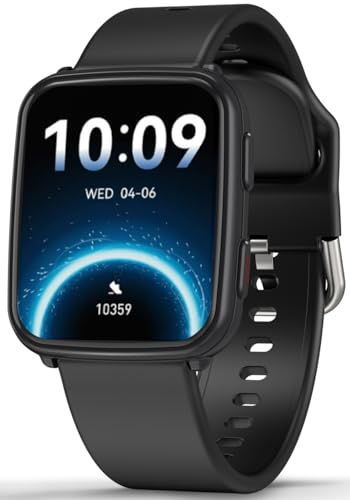
MorePro is the name in the optical group that many tracker shoppers will already recognise, and its title reads like a checklist of the modern budget-tracker formula: round-the-clock heart rate and a blood pressure monitor function, blood oxygen and sleep tracking, a step and calorie counter, and an IP68 waterproof rating, for women and men on Android and iOS. Read that list with the mechanism label in mind. The blood pressure element here is an optical estimate, produced by the same sensor family that handles the heart-rate tile, and the honest way to use it is as a trend tile — a figure that means something across weeks of consistent wear, not as a number to act on in isolation.
Judged as a tracker rather than as a measuring instrument, the package is well judged. IP68 in the title means it can stay on through handwashing, rain and showers without the daily removal ritual that kills tracking consistency, and consistency is exactly what an estimate tile needs to be worth anything at all. Steps and calories are the unglamorous core of these devices, and they are present. What the title does not offer is any call handling or a stated screen size, so this is a quiet, phone-dependent companion rather than a wrist communicator, and readers who want calls on the wrist should look at the FTTMWTAG at the end of this list instead.
- Mechanism class: optical-estimate tracker (no cuff in the title)
- Health tiles: heart rate around the clock, blood pressure monitor function, blood oxygen, sleep
- Activity: step and calorie counting
- Water resistance: IP68, per the title
- Compatibility: Android and iOS, for women and men
- Display size: Not stated in the listing title — verify with the maker’s documentation
Strengths
- An IP68 rating in the title supports the always-on wear that makes any trend tile meaningful.
- The full everyday set is present: heart rate, oxygen, sleep, steps and calories in one device.
- A recognised tracker brand name, which usually means a more settled companion app than the unbranded listings offer.
Trade-offs
- The blood pressure figure is an optical estimate, a class below the cuff watches in what the number can claim.
- No call answering or making is mentioned, so the phone stays involved in every conversation.
- Screen size goes unstated in the title, leaving readability to be confirmed before ordering.
Best for: always-on daily wear, with the blood pressure tile kept as one trend among several, inside a waterproof tracker from a known name. Not suited for: a seated daily reading routine that needs physical measurement, because no optical sensor arrangement substitutes for an inflating cuff.

Smart Watch with BP Monitor — Optical estimate, sport-led
This unbranded listing earns its slot on depth of activity coverage. Its title stacks the expected health tiles — round-the-clock heart rate and blood pressure monitoring, a pedometer, sleep tracking — and then adds more than 120 sport modes, a count none of the other optical picks match in print. For a reader whose week is built around varied training, that breadth is the argument: the watch follows the workouts in detail and shows the blood pressure estimate as part of the recovery picture, rather than pretending the estimate is the main event.
The IP68 rating in the title supports that sporting pitch, since a watch with 120 modes that cannot get wet would be a contradiction. Compatibility with Android and iPhone is stated, and the listing addresses women and men alike. The honest caveats are the familiar ones for unbranded listings: the title gives no screen size, no battery figure and no brand name to hold accountable, so the companion app experience is a gamble the listing cannot settle. What can be said is that the stated feature architecture is coherent — deep sport logging, continuous health tiles, waterproofing to match — and for the sport-first reader, that architecture is the decision. The same rating-first logic applies to any wetter category a reader might cross-shop afterwards.
- Mechanism class: optical-estimate tracker (no cuff in the title)
- Sport modes: more than 120, per the title
- Health tiles: heart rate and blood pressure around the clock, pedometer, sleep tracking
- Water resistance: IP68, per the title
- Compatibility: Android and iPhone
- Battery capacity and display size: Not stated in the listing title — verify with the maker’s documentation
Strengths
- More than 120 sport modes is the deepest activity library in this optical group.
- IP68 waterproofing matches the training pitch instead of undermining it.
- Pedometer and sleep tracking round out the daily picture beside the headline health tiles.
Trade-offs
- The blood pressure tile is an estimate from an optical sensor, not a cuff measurement.
- An unbranded listing leaves the companion app’s quality and longevity unanswerable from the title.
- Neither battery capacity nor screen size is stated, so two everyday qualities need outside confirmation.
Best for: a varied training schedule that wants deep sport logging with the health tiles riding along, in a body that can stay on in the rain. Not suited for: purchases that require a named maker standing behind the app and the warranty, since this listing carries no brand to hold to account.

Fitness Tracker with BP Monitor — Optical estimate, no-nonsense
The second unbranded optical tracker in this set is close in spirit to the MorePro, and the comparison between them is instructive. Its title lists heart rate around the clock, blood oxygen and blood pressure monitoring, sleep tracking, 120 sports modes, step and calorie counting, and IP68 waterproofing, for Android and iPhone — note the spelling of the phone platform in the listing itself, a small reminder that unbranded listings reward careful reading. On paper the sport count matches the previous pick and the health set is complete, which makes this the value-shaped option in the optical class: everything the category promises, nothing extra claimed.
The estimate caveat applies here with full force, and this pick is a good place to practise the right mental habit. When a tracker at this level shows a blood pressure figure, the productive question is never whether the number is right in an absolute sense; it is whether the number moves consistently when your routine changes — after a salty week, during a stressful stretch, across a new exercise habit. Used that way, as a prompt to check properly with an arm cuff when the trend shifts, the tile earns its place on the screen. Used as a substitute for checking properly, it does not, and no wording in this guide will pretend otherwise.
- Mechanism class: optical-estimate tracker (no cuff in the title)
- Health tiles: heart rate around the clock, blood oxygen, blood pressure monitor, sleep
- Sport modes: 120, per the title
- Activity: step and calorie counting
- Water resistance: IP68, per the title
- Display size: Not stated in the listing title — verify with the maker’s documentation
Strengths
- A complete stated set: health tiles, 120 sports modes, steps, calories and IP68 in one listing.
- Nothing in the title overreaches — no certification language, no miracle claims, just the tracker formula.
- Android and iPhone compatibility are both stated outright.
Trade-offs
- The blood pressure function is an optical estimate, with all the limits of that class.
- No brand name stands behind the listing, so app polish and update support are unknowns.
- Call handling is absent from the title, keeping the phone central to communication.
Best for: the full tracker formula at its most straightforward in this listing, with the estimate tile treated as a trend prompt only. Not suited for: acting on a single wrist reading, because an optical estimate cannot carry that weight and this listing claims nothing that changes that.

FTTMWTAG Smart Watch (BP) — Optical estimate, wrist calls
The FTTMWTAG closes the optical group by adding the one everyday feature the other three trackers lack: its title promises answering and making calls from the watch, alongside 24-hour blood pressure, heart rate, SpO2 and sleep monitoring on a 1.85-inch waterproof body in Stone Black. That combination reframes the device. This is less a dedicated health tracker and more a general smartwatch that includes the estimate tile in its health suite, which is the right hierarchy — calls, notifications and a large-ish screen up front, health tiles behind them.
The 1.85-inch display is the only stated screen size in the optical group, and it is a sensible size for a call-handling watch, since contact names and call controls need room. The title says waterproof without attaching a rating code, so the cautious reading is splash confidence rather than the IP68 specificity of its three group-mates, and swimmers should treat that distinction seriously. Compatibility with iPhone and Android is stated. As with every optical pick here, the blood pressure element is an estimate generated from sensor data, and the review scores the watch on its smartwatch merits first because that is what its own title does.
- Mechanism class: optical-estimate tracker (no cuff in the title)
- Display: 1.85 inches
- Calls: answer and make calls, per the title
- Health tiles: 24-hour blood pressure, heart rate, SpO2, sleep monitoring
- Finish: Stone Black, per the title
- Water resistance rating code: Not stated in the listing title — verify with the maker’s documentation
Strengths
- Wrist calling separates it from the rest of the optical group and suits phone-in-pocket days.
- A stated 1.85-inch display removes the guesswork its group-mates leave about screen size.
- The health suite still covers blood pressure, heart rate, oxygen and sleep around the clock.
Trade-offs
- The blood pressure tile is an optical estimate, not a measurement against pressure.
- Waterproof is claimed without a rating code in the title, a weaker promise than the IP68 listings.
- No sport-mode count is stated, so training depth cannot be compared from the title alone.
Best for: one general smartwatch in this set — calls included — whose health suite happens to carry the estimate tile itself. Not suited for: pool and open-water wear, because the title’s waterproof wording carries no rating code to confirm immersion limits.
What about readings during exercise, travel and illness?
Three situations reliably distort wrist readings, and a buyer should hear about them before the first confusing number arrives. Exercise raises pressure legitimately and recovery lowers it slowly, so a cuff reading taken within half an hour of training describes the training, not your baseline; the routine sessions this guide recommends should sit well away from workouts. Travel scrambles everything an estimate relies on — broken sleep, cabin dryness, restaurant salt, long sitting — so treat travel-week tiles as weather, not climate, and wait for home routine to reassert itself before drawing conclusions. Illness is the third case, and the rule there is simple: a feverish, dehydrated or medicated body produces readings that belong to the illness, and the correct response to a worrying number while unwell is a proper check and, where symptoms demand it, professional care, not a second glance at the wrist.
None of that makes the watches less worth owning. It makes them worth owning with a map of their blind spots, which is the difference between a tool and a toy in this category.
Side by side: the six compared
| Watch | Class | Display | Distinguishing stated feature |
|---|---|---|---|
| KEALTHTECH Airbag Cuff Watch | Inflatable cuff | 2.06-inch AMOLED | 530mAh battery stated in the title |
| BP Doctor Pro | Inflatable cuff | 1.95 inches | Data sharing and reminder monitoring |
| MorePro Fitness Tracker | Optical estimate | Not stated in the title | IP68 rating from a recognised tracker name |
| Smart Watch with BP Monitor | Optical estimate | Not stated in the title | More than 120 sport modes |
| Fitness Tracker with BP Monitor | Optical estimate | Not stated in the title | 120 sports modes with step and calorie counting |
| FTTMWTAG Smart Watch | Optical estimate | 1.85 inches | Answer and make calls from the wrist |
Which buying mistakes recur in this category?
The first mistake is shopping by the feature word instead of the mechanism word. Two listings can both say blood pressure in their first five words while describing a pump-and-bladder instrument and a software estimate respectively, and a buyer who reads only feature words will not know which one arrived until the strap does or does not inflate. Read for airbag, air pump and cuff. If none of those words appears, you are looking at an estimate, whatever the headline implies.
The second mistake is treating any wrist figure — cuff or estimate — as a verdict on your health. A watch can inform a conversation with a clinician; it cannot hold that conversation. Readers who need readings they can act on should own a validated upper-arm cuff and use the watch, whichever class they choose, as the convenient layer between proper checks. The third mistake is sloppy routine: cuff readings taken standing at a bus stop and estimate trends gathered through a loose strap both produce noise, and noise acted upon is worse than no data at all. The fourth is ignoring the ownership details — whether a cuff bladder can be replaced, whether the app exports data, whether reminders exist — because a health watch is a years-long habit, and habits die on small frictions. Finally, buyers forget to check what a title does not say. Every spec box in this guide carries a caution line where a title stayed silent, and those silences are part of the product.
How should you take a reading that means anything?
For a cuff watch, build the ritual the mechanism expects. Sit down, rest for a few minutes, support the arm so the wrist sits near heart level, keep both feet flat, and stay still and quiet while the strap inflates and settles. Take readings at the same times each day, because a morning figure and an evening figure answer different questions, and mixing them muddies any trend. Log how you felt alongside the number; a reading taken after climbing stairs or an argument is a reading about stairs and arguments.
For an optical tracker, the discipline is fit and consistency. Wear the strap snug enough that the sensor stays planted through wrist movement, keep the sensor clean, and let the trend accumulate for weeks before drawing any conclusion at all. When a trend shifts noticeably, that is the cue to verify with an arm cuff, not to adjust anything based on the wrist figure alone. Both classes reward the same virtue — boring regularity — and punish the same vice, which is treating a single number as news. Readers building a broader health-watching setup may also find the best smartwatches with fall detection guide useful, since it applies the same claim-by-claim reading to a different headline feature.
What should you check on the listing before ordering?
Cuff buyers should hunt for four specifics that titles often bury. First, strap sizing: an inflatable bladder has to wrap the wrist fully to pressurise evenly, so a wrist near either end of the stated strap range deserves a message to the seller before money moves. Second, bladder and pump language: a listing that describes the inflation cycle, the pressure range or the deflation behaviour is telling you the mechanism is engineered rather than decorative. Third, replacement parts: a cuff strap is a wear item in a way a silicone band is not, and a maker who sells spare straps is planning for the watch to be owned for years. Fourth, the charging arrangement, because a cuff watch that needs a proprietary puck every second night will quietly fall out of a daily routine.
Optical-tracker buyers have a different checklist. Sensor placement and strap design decide whether the estimate stays consistent, so look for a strap that can be worn snugly without discomfort and a case back that sits flat. App quality decides whether trends are visible at all: a tracker whose app shows only today’s figure, with no weekly or monthly view, wastes the one thing an estimate is good for. Export options matter for the same reason — a wearer who can hand a clinician a simple record gets more from the device than one whose data is trapped in a graph. And update history matters quietly: optical estimation is software, and software that never improves never gets more trustworthy.
Both classes share one pre-purchase test that costs nothing. Decide, before ordering, what you will actually do with the readings. A reader who will log a cuff reading morning and evening, note it in the app, and bring the trend to appointments has a use case that justifies the cuff pair’s bulk and ritual. A reader who simply wants to glance at a health dashboard while training has a use case the optical four serve honestly. Trouble starts when the use case is vague — a hope that owning the watch will somehow settle a health question — because no device in either class can carry that hope, and disappointment with an honest product is still disappointment.
How do the apps and records differ between the classes?
A cuff watch’s app is fundamentally a record book. Its job is to store dated, timed readings, present them in a sequence a clinician can scan, and nudge the wearer when a scheduled reading is missed — the BP Doctor Pro’s title names data sharing and reminder monitoring precisely because those are the record book’s two essential tricks. The quality questions are clerical rather than technical: can readings be exported, can a second person view them, does the app distinguish a morning reading from an evening one, and does it let you annotate a reading taken after exercise or medication? A cuff watch with a weak record book wastes its one genuine advantage, which is producing numbers worth keeping.
An optical tracker’s app is a dashboard instead. Its job is breadth: heart rate curves, sleep stages, oxygen tiles, step history and the blood pressure estimate arranged as one more panel in the wall. The quality questions there are about visibility of trends — whether the estimate panel can be viewed across a month, whether it sits beside the sleep and activity data that might explain its movements, and whether the app resists dressing an estimate in the visual language of a clinical chart. The MorePro and the two unbranded trackers live or die on exactly this: their hardware formula is standard, so the app is where the ownership experience is decided.
Data ownership deserves one plain paragraph. Health records accumulate value over years, and a watch bought today may be replaced by a different brand in three years. Before committing to either class, check whether the app lets you export your history in a form another service can read. A maker who makes export easy is confident you will stay for the product; a maker who locks readings inside one app is asking your future self to start the record over. That consideration rarely appears in feature lists, and it outlasts every feature on them.
Who should skip this category entirely?
Honesty requires a section most roundups omit. Some readers should not buy any of these six watches. Anyone whose clinician has asked for readings to guide treatment decisions needs a validated upper-arm cuff and a paper or app log, not a wrist experiment, and the money for a cuff watch is better spent on the proper instrument plus a spare set of batteries. Anyone who knows they will not maintain a seated routine should skip the cuff pair, because an inflatable watch used casually produces casual numbers with a false air of authority — arguably worse than the optical trackers, whose estimates at least announce their softness by arriving without ceremony.
Equally, a reader who wants a watch purely for training should notice that only the optical group even pretends to be a training device, and a dedicated running watch will out-serve all four of them on the road. The category this guide covers is a specific one: wrist devices that put a blood pressure function — measured or estimated — at the centre of the purchase. Inside that category the six picks are honestly sorted. Outside it, better tools exist for almost every neighbouring job, and the related guides at the foot of this page point toward several of them.
What does living with a cuff strap actually feel like?
Ownership texture matters because a health watch succeeds only if it stays on the wrist. A cuff strap is thicker and stiffer than a normal band, since it carries a bladder that must hold its shape to pressurise evenly. Owners feel that difference most at a desk, where the wrist rests against a hard surface for hours, and under a jacket cuff in winter. The inflation cycle itself becomes a small daily ceremony: a tightening, a pause, a slow release, a number. Some wearers come to value that ceremony because it forces thirty still seconds into a morning. Others find it theatrical and stop using it within a month, at which point the watch is just a heavy tracker. Neither reaction can be predicted from a spec sheet, which is why the return window deserves respect in this category more than most — buy from a listing whose returns terms you have actually read.
The optical four ask far less of the wearer, and that is their real advantage. They charge, they strap on, they gather. Their ownership risk is not ceremony fatigue but indifference: an estimate tile glanced at twice and forgotten delivers nothing, because its entire value sits in accumulated trend. A wearer who opens the app weekly and actually looks at the month’s shape will get something real from a MorePro or its unbranded rivals. A wearer who never opens the app owns a step counter with extra menu pages. The honest dividing line in this whole category is not cuff versus optical; it is whether the buyer has a routine — seated readings or weekly trend checks — that the device can serve. Hardware follows habit, or it follows nothing.
How long should you trial a watch before judging its readings?
Give either class a fortnight of disciplined use before forming a view. For a cuff watch, that means the same two seated sessions daily, logged without cherry-picking: the temptation to delete an alarming reading and retake until a calmer number appears is universal, and it quietly falsifies the record. Keep the outliers, annotate the circumstances, and let the average across fourteen days speak. For an optical tracker, a fortnight is the minimum for the estimate to settle into a personal baseline, since the first days of any tracker are polluted by novelty — more movement, more checking, worse sleep from excitement about sleep scores. Judge the trend from week three onward, and judge it against how you feel and against occasional arm-cuff checks, never against a single dramatic tile.
One more trial discipline applies to both: change one thing at a time. A wearer who starts a cuff routine, a new exercise habit and a new sleep schedule in the same week will never know which change moved the numbers. The watch, whichever class, is a measuring layer over a life; it cannot untangle variables its owner tangled. Readers who keep that humility about the data will find these devices genuinely useful companions to proper checks. Readers who want the watch to be the check itself are shopping in the wrong category, and this guide would rather lose the sale than mislabel the instrument.
Final Recommendation
Choose by mechanism first and features second. If the reading itself is the purchase, the KEALTHTECH is the strongest cuff package here — the biggest AMOLED screen, a stated battery capacity, and the airbag design — while the BP Doctor Pro is the cuff pick for households that share and schedule readings. If a general tracker with an estimate tile is the honest goal, the MorePro is the settled name, the two unbranded listings compete on sport depth, and the FTTMWTAG is the one that also takes calls. Every route is legitimate once the class label is understood. A watch that inflates earns its numbers a hearing; a watch that estimates earns its numbers a question, and knowing which of those two sentences describes the box in your hand is the whole art of buying in this category.
One last consideration belongs to gift buyers, who purchase a large share of this category. A cuff watch given to a parent carries an implicit message about routine, and it lands best when the giver also sets up the app, the reminders and the first fortnight of seated sessions together with the recipient. An optical tracker given casually asks less and should be framed as such — a general wellness companion, not a monitoring promise. Matching the gift’s framing to the device’s actual class is the kindest version of the honesty this whole guide is built on.
Frequently Asked Questions
Can a smartwatch replace an upper-arm blood pressure cuff?
No. Cuff watches use a related principle at a harder measuring site, and optical trackers estimate rather than measure. A validated upper-arm cuff remains the reference for readings anyone intends to act on, and a clinician’s measurement outranks both.
How do I tell a cuff watch from an optical tracker in a listing?
Look for mechanism words: airbag, air pump, cuff, inflates. A title containing them describes physical measurement hardware. A title that lists blood pressure among heart rate, oxygen and sleep tiles, with no cuff vocabulary, describes an optical estimate.
Why does wrist position change a cuff watch reading?
Pressure at the wrist varies with its height relative to the heart, and the vessel there is smaller and less forgiving than at the upper arm. Sitting still with the wrist supported near heart level removes the largest avoidable source of variation.
Is an optical blood pressure estimate good for anything?
As a trend prompt, yes: consistent wear can show a figure drifting across weeks, which is a reasonable cue to check properly with an arm cuff and mention at a check-up. As a single actionable number, no.
Do the cuff watches here need a phone nearby?
Both cuff picks are smartwatches with phone ecosystems around them, and the BP Doctor Pro’s title explicitly covers Android and iOS with data sharing. Expect the app to be where records, reminders and sharing live.
How often should readings be taken with either class?
Consistency beats frequency. Two cuff sessions a day at fixed times produce a cleaner record than eight scattered attempts, and an optical tracker worn continuously produces a better trend than one charged and forgotten in a drawer. Whatever rhythm you choose, keep it boringly regular for at least a fortnight before reading anything into the results, and keep the circumstances — seated, rested, same arm, same time — as constant as the schedule itself, because a trend built from inconsistent conditions is mostly a record of the conditions.
Does a bigger screen actually help on a health watch?
More than marketing suggests. The numbers are the product here, and digits that can be read without reaching for glasses get read more often, which feeds the routine everything depends on. That is why the cuff pair’s 2.06-inch and 1.95-inch panels are scored as genuine advantages in this guide rather than cosmetic ones, and why the optical picks whose titles omit screen size carry a caution line in their spec boxes: an unstated display is an unknown at the exact point where this category lives or dies, which is the daily glance.
Related Guides
Readers weighing adjacent health features can continue with the best smartwatches with sleep tracking, compare instrumented features in the best ecg smartwatches, or step back to the broader field in the best all around smartwatches roundup.


