Our Top Picks
 Weize Platinum AGM Battery Group 24FGroup Size 24F6.81 x 10.75 x 8.19 inches46.07 poundsCheck on Amazon
 Mighty Max Battery MM-G24 Start and Stop CarGroup 2410.75 x 6.75 x 9 inches47.9 poundsCheck on Amazon
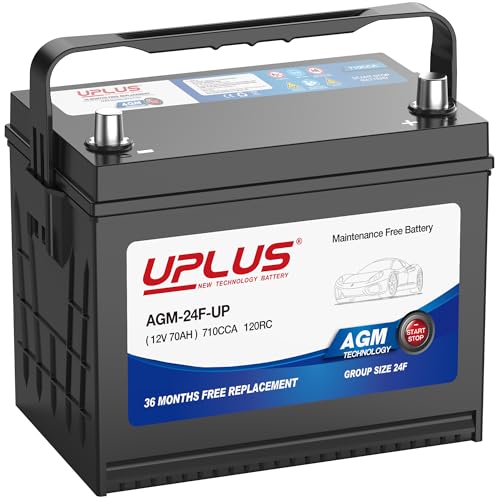
 Mighty Max Battery MM-G24F Start and Stop CarGroup 24F10.75 x 6.75 x 9 inches46.2 poundsCheck on Amazon

What's inside
- Group 24 dimensions and what the numbers describe
- Group 24 versus 24F: polarity decides cable fit
- Reading cold cranking amps without overstating them
- Flooded, AGM, and dual-purpose designs compared
- How to read a group 24 label line by line
- Testing a battery before blaming it
- Charging practice for group 24 batteries
- Installation details that protect the new battery
- Warranty terms translated into plain language
- Safety rules for handling lead-acid batteries
- Recycling and the core charge system
- Matching group 24 choices to real vehicles
- A maintenance calendar that fits real ownership
- Buying checklist for group 24 and 24F
- Cold climates, hot climates, and long storage
- Troubleshooting common group 24 complaints
- Standards, markings, and why they matter
- Final decision sequence
- Check prices on Amazon
- Disclosure
As an Amazon Associate I earn from qualifying purchases. This post may contain affiliate links at no extra cost to you.
Choosing a replacement car battery starts with fit, and fit begins with the group size printed on the label of the unit already under the hood. Group 24 belongs to a sizing system maintained by Battery Council International, usually shortened to BCI, which assigns each group number a maximum case length, width, and height along with a defined terminal arrangement. For group 24, catalogues list an envelope near 10.9 inches long, 6.9 inches wide, and 8.7 inches tall, although individual manufacturers may sit a fraction below those ceilings. Hold-down clamps, tray walls, and cable reach all assume that envelope, so a battery that is taller or longer than the tray allows can chafe against brackets or leave the cables strained. Verifying the physical envelope before comparing electrical ratings prevents the common mistake of buying strong specifications in a case that cannot be secured properly.
Under the hood of many older sedans, coupes, and light trucks, group 24 became a familiar footprint because engine bays of that era offered a long, narrow tray and generous vertical clearance. Modern engine compartments pack accessories more tightly, yet the group survives in classic cars, imported models from earlier decades, and a wide range of marine and recreational applications. Cross-reference charts in parts catalogues map original equipment fitments to group 24 when the factory tray, cable length, and hold-down style match its dimensions. Drivers restoring older vehicles often find that period-correct trays accept little else without modification. Keeping the original group also preserves the intended cable routing, which matters because starter cables are cut to length at the factory and rarely include slack for a relocated terminal.
Group 24 dimensions and what the numbers describe
Length near 10.9 inches runs along the long axis of the rectangular case, measured across the widest points of the molded polypropylene shell rather than across the terminals. Width near 6.9 inches describes the short axis, and height near 8.7 inches is typically quoted to the top of the case, with total height to the top of the posts running slightly higher depending on the source table. Shoppers comparing listings should confirm which height convention a seller uses, because a quarter inch of post height can decide whether a battery cover or cross-brace clears. Ribs molded into case sides, lifting handles that fold flat, and recessed carry straps all live inside the maximum envelope when a design follows BCI limits closely. Measuring the old battery with a tape, then comparing those readings with the tray itself, gives a practical check that no catalogue entry can replace.
Tray clearance deserves separate attention from raw case size. Rubber pads, corrosion-resistant coatings, and aftermarket insulation blankets each consume a few millimeters around the footprint, and a battery that drops in bare may bind once those layers return. Height clearance matters most near the hood line, where a too-tall installation risks contact between a terminal and sheet metal on rough roads. Factory hold-downs for this group commonly use a wedge block at the case foot or a top frame that clamps across the lid, and each style needs the case ledge or lid profile it was shaped for. Loose retention lets the battery shift under braking, stressing plates and terminals with every movement. Snug retention, torqued firmly without cracking the case foot, protects internal connections that vibration would otherwise fatigue over months of driving.
Group 24 versus 24F: polarity decides cable fit
Polarity layout separates group 24 from its close relative, group 24F, and confusing the two causes more returns than any capacity misunderstanding. On a standard group 24, viewed from the front of the case with terminals nearest the viewer, the positive post sits on the left and the negative post on the right. Group 24F reverses that arrangement, placing positive on the right, which is why the F variant is often described in catalogues as reverse polarity or reverse terminal. Ford applications popularized the reversed layout, and the letter in the designation traces back to that association in industry shorthand. Cable sets in a 24F vehicle are routed and cut for the reversed posts, so installing a standard 24 can force cables to cross over the lid, stretch to reach, or sit at angles that loosen under vibration.
Identifying the correct variant takes less than a minute with the old battery still installed. Positive posts are slightly larger in diameter than negative posts on top-terminal designs, roughly 19.5 millimeters against 17.9 millimeters in SAE practice, and the positive side carries a plus marking molded into the lid or printed on the label. Cable color alone should never decide the question, because replacement cables and previous repairs may not follow factory colors. Photographing the installed layout before removal preserves a reference for the new unit, including which cable carries the smaller clamp. When a listing shows a terminal diagram, matching that diagram against the photograph is more reliable than trusting a title that may abbreviate the variant. Retail counters routinely ask which variant a vehicle needs, and answering from a photo avoids a second trip.
Several neighboring groups invite confusion during cross-shopping. Group 34 is shorter in height, group 27 is longer, and group 78 uses side terminals in many applications, so none substitutes freely for a 24 or 24F without checking tray space and cable style. Some vehicles accept an alternate group through factory-approved tray positions, yet approval depends on hold-down geometry rather than on case volume alone. Dual-terminal designs that add side posts to a top-post case can broaden fitment, though unused side terminals need insulating caps in tight engine bays. Reading the fitment notes for a specific year, engine, and trim remains essential because manufacturers sometimes changed battery groups mid-model-year. Parts catalogues flag those splits by production date, which appears on the driver door jamb label of most vehicles.
Reading cold cranking amps without overstating them
Cold cranking amps, abbreviated CCA, describe the current a fully charged battery can deliver for 30 seconds at 0 degrees Fahrenheit while holding at least 7.2 volts across its terminals. That definition comes from standardized BCI and SAE test practice, which makes CCA one of the few figures that can be compared across brands with reasonable confidence. Higher CCA generally means stronger winter starting reserve, especially for engines with high compression, thick cold oil, or long cable runs to the starter. Exceeding the vehicle maker recommendation by a moderate margin is electrically harmless, because the starter draws what it needs rather than consuming everything the battery can supply. Chasing the highest CCA in the group, however, can trade away plate durability in some designs, since packing more thin plates into the same case raises surface area while reducing plate thickness.
Cranking amps quoted without the word cold follow a warmer test at 32 degrees Fahrenheit and produce a larger, more flattering number for the same battery. Marine cranking amps use that warmer reference as well, so a dual-purpose label may show MCA prominently beside a smaller CCA figure. Comparing one brand CCA against another brand CA or MCA inflates the apparent difference and misleads winter buyers in cold states. Starter draw varies with engine size and temperature, but a healthy margin above the factory CCA specification matters most when batteries age, because capacity fades gradually and the weakest starts arrive on the coldest mornings. Vehicles that sit for weeks between drives also benefit from reserve beyond the minimum, since parasitic loads draw the charge down before the next start is attempted.
Reserve capacity, abbreviated RC, measures minutes of discharge at a 25-amp load until voltage falls to 10.5 volts at about 80 degrees Fahrenheit. That figure predicts how long lights, ignition, and fuel delivery can run if the charging system fails, and it also hints at tolerance for accessory loads during short trips. Group 24 batteries commonly publish RC values in a broad band shaped by plate design and intended service, with deep-cycle-leaning versions favoring RC over peak cranking. Amp-hour ratings, more common on marine and recreational labels, express capacity at a stated discharge rate, often the 20-hour rate, and should not be converted casually into RC without manufacturer data. Buyers who run pumps, radios, or camping loads from a dual-purpose unit should weigh RC and amp-hours more heavily than a small CCA advantage.
Flooded, AGM, and dual-purpose designs compared
Conventional flooded batteries fill each cell with liquid electrolyte that bathes the lead plates, and most designs in this group allow the caps to be removed for inspection on serviceable versions. Water is consumed slowly during charging as electrolysis splits a small fraction into hydrogen and oxygen, so electrolyte level checks belong in seasonal maintenance for any unit with removable caps. Only distilled or demineralized water should top up a low cell, added after charging in most guidance, because tap water introduces minerals that shorten plate life. Flooded construction keeps purchase cost comparatively low and tolerates straightforward charging profiles, which explains its persistence in older vehicles and budget-conscious fleets. Drawbacks include acid spill risk if the case tips, faster self-discharge during storage, and sensitivity to chronic undercharging that leaves lead sulfate hardened on the plates.
Absorbent glass mat construction, shortened to AGM, suspends electrolyte in fiberglass separators compressed between the plates, so the case can be sealed and mounted without free liquid sloshing inside. Sealed construction reduces routine maintenance to terminal care and charge management, and the low internal resistance of AGM designs supports strong cranking and faster recharge acceptance. Vehicles with heavy electrical loads, frequent short trips, or start-stop-adjacent duty cycles often specify AGM because it recovers from partial discharge more gracefully than a basic flooded unit. Charging voltage limits matter more here, since excessive voltage can dry out a sealed battery that cannot be refilled. Heat also ages AGM quickly, so under-hood temperatures in hot climates deserve weight in the decision. Owners planning bench charging for a sealed unit should start with the selection criteria collected under best 12 volt battery chargers, then confirm the voltage limits printed for the specific battery before connecting anything.
Dual-purpose marine and recreational batteries attempt a compromise between starting punch and moderate cycling ability. Thicker plates than a pure starting battery, combined with chemistry tuned for repeated partial discharge, let one unit crank an engine in the morning and run a trolling motor, bilge pump, or cabin lights afterward. Compromise cuts both ways, because a dual-purpose unit rarely matches a dedicated deep-cycle battery for cycle count or a dedicated starting battery for peak CCA in the same case size. Boat and RV owners accept that trade when space allows only one battery bank position in group 24 dimensions. Terminal hardware on marine versions often adds wing-nut studs beside automotive posts, easing accessory connections but demanding careful torque so lugs stay tight in vibration. Salt air accelerates terminal corrosion, making protective sprays and snug boots more than cosmetic in coastal service.
Gel chemistry appears occasionally in group 24 searches, yet it serves a narrower niche than either flooded or AGM for starting duty. Silica-thickened electrolyte gives gel cells excellent deep-discharge behavior in some stationary roles, but charge voltage windows are tighter and cranking output per case volume is generally lower. Most vehicle charging systems were not calibrated for gel limits, so accidental overvoltage becomes a realistic ownership risk. Unless a vehicle or vessel maker names gel explicitly, mainstream guidance steers starting applications toward flooded or AGM choices. Lithium starting batteries in this footprint exist at the margins of the market, with built-in management electronics and very different weight, but their charging requirements, cold-weather behavior, and cost structure fall outside conventional lead-acid guidance. Owners considering a chemistry change should confirm alternator compatibility and warranty terms in writing before departing from the original specification.
How to read a group 24 label line by line
Labels concentrate a surprising amount of decision data into a few square inches, starting with the group designation itself and the polarity variant letter. Directly beside the group marking, most brands print CCA and RC or MCA, followed by a voltage statement that should read 12 volts for every unit in this class. Date codes appear either as a small round sticker with month and year or as a code stamped into the case near a terminal, and freshness matters because lead-acid batteries self-discharge on the shelf. A unit that sat discharged in a warehouse ages faster than one sold soon after manufacture and kept on maintenance charge. Asking a counter clerk to decode an unfamiliar date format is reasonable, and reputable sellers rotate stock so the freshest units move last rather than first. When two otherwise equal batteries differ by several months of shelf age, the fresher example is usually the wiser purchase.
Warranty language on the label or hang tag separates free-replacement periods from prorated periods, a distinction explored further below. Reserve figures sometimes hide in smaller print on the side label rather than the top, and some brands publish amp-hour data only in specification sheets. Handling warnings, recycling marks, and electrolyte hazard pictograms complete the standard label set, along with manufacturer contact details and country of origin. Photographing the full label of the old battery captures model numbers that cross-reference tools can decode instantly. Core charge notices also appear at the register rather than on the label, reminding buyers that the old unit has return value. Keeping the purchase receipt with the label photo creates a complete record if a warranty question arises two winters later.
Terminal style deserves a line-by-line check as well. Top posts dominate group 24 automotive service, while some listings add threaded studs or combination terminals aimed at marine accessory wiring. Post caps in red and black signal polarity at a glance, but molded plus and minus signs remain the authority when caps have been swapped. Certain fleet and import applications use slightly different post placements within the same group envelope, so a diagram check beats an assumption. Adapters that convert post styles exist, though each added interface adds resistance and a loosening point. Restorers aiming for original appearance may also care about lid color, cap style, and label design, since group 24 spans decades of production across many brands. Functional fit still comes first, because a visually perfect battery with reversed polarity helps nobody.
Testing a battery before blaming it
Slow cranking invites quick conclusions, yet a disciplined check sequence separates a weak battery from a tired starter, corroded cables, or a failing alternator. Resting voltage offers the first clue: after the battery sits for several hours without charging or heavy loads, a healthy flooded unit reads near 12.6 to 12.7 volts, while readings near 12.2 volts suggest roughly half charge and anything near 11.9 volts points to deep discharge or damage. Surface charge from a recent drive inflates readings, so turning headlights on briefly or waiting overnight improves honesty. AGM units rest slightly higher when full, often near 12.8 volts, which is why chemistry belongs in the interpretation. A multimeter across the posts takes seconds and prevents replacing a good battery that merely needed a full charge and a parasitic-draw investigation.
Load testing applies a controlled draw, traditionally half the CCA rating for 15 seconds, while voltage is watched for collapse below roughly 9.6 volts at room temperature. Carbon-pile testers in parts stores perform this check, and modern conductance testers estimate health from internal resistance without a heavy draw. Either method works best on a battery charged beforehand, because testing a discharged unit condemns many recoverable batteries. Hydrometer readings on serviceable flooded cells add cell-level detail: specific gravity near 1.265 indicates full charge in most climates, and a spread greater than about 0.050 between cells signals a failing cell that charging cannot cure. Sealed designs skip hydrometer access entirely, leaving voltage, conductance, and cranking behavior as the available evidence. Recording results with dates turns guesswork into a trend line at the next slow start.
Charging-system checks complete the picture before money changes hands. With the engine running at a fast idle and loads switched on, system voltage at the battery typically sits between about 13.8 and 14.4 volts for conventional regulators, though smart charging systems vary output deliberately by temperature and load. Voltage far above that band risks cooking the battery, while voltage below it leaves the battery chronically short of full charge. A voltage-drop check across each cable during cranking exposes hidden corrosion inside clamps that look clean outside. Parasitic draw measured in series after modules fall asleep should settle to a small milliamp figure specified by the vehicle maker; a glove-box lamp or a module that never sleeps can drain a group 24 in days. Fixing the draw protects the replacement battery from repeating the same slow decline.
Charging practice for group 24 batteries
Smart chargers suit modern ownership because they adjust current through bulk, absorption, and float stages instead of pushing a fixed rate until someone remembers to disconnect. For a group 24 in the typical capacity band of this size, a charger in the mid-single-digit to ten-amp range restores a discharged unit overnight without excessive heat. Guidance collected under best 10 amp battery chargers helps match charge rate to capacity, since a ten-amp unit on a small battery and a two-amp maintainer on a large one both create avoidable problems. Deeply discharged batteries sometimes read so low that an automatic charger refuses to begin, and manufacturer instructions for that condition should be followed rather than improvised jump-start tricks on the bench. Charging in a ventilated space, away from sparks and open flame, addresses the hydrogen that flooded cells vent during the final stage.
Temperature changes how a battery accepts charge. Cold electrolyte reacts slowly, so a battery brought in from winter storage may need hours at modest current before voltage rises normally, while a hot battery after summer driving should rest before charging to avoid compounding thermal stress. Temperature-compensated chargers adjust voltage slightly for ambient conditions, a refinement that matters most for sealed AGM units in unheated garages. Equalization charges, deliberate controlled overcharges used on some flooded industrial batteries, belong only where the manufacturer explicitly permits them, and never on sealed designs. Sulfation from months at partial charge responds poorly to heroic measures; slow charging at low current gives the best chance of recovery, and a battery that will not hold above roughly 12.4 volts after a full charge and rest has usually reached the end of useful service.
Maintainers earn their place when a group 24 vehicle hibernates. Classic cars, seasonal boats, and spare trucks can sit for months, and a quality maintainer holds float voltage near 13.2 to 13.6 volts without boiling electrolyte or drying a sealed case. Disconnecting the negative cable reduces parasitic drain during storage but does not stop self-discharge, which runs faster in warm storage than in a cool garage. Owners with vehicles that serve both road and dock sometimes choose chargers that handle mixed fleets, and the comparison points under best 6v and 12v battery chargers matter when a household also keeps older 6-volt equipment. Whatever device is selected, fused leads, spark-proof connections, and automatic shutoff behavior deserve priority over headline amperage. A printed log of charge dates taped inside the garage cabinet sounds old-fashioned, yet it settles arguments about whether a stored battery was maintained or forgotten.
Installation details that protect the new battery
Removal order is a safety rule rather than a preference: negative cable first, positive last off, then positive first on and negative last during installation, so a wrench touching body metal cannot complete a circuit through the positive post. Memory savers plugged into a diagnostic port can preserve radio and module settings on newer vehicles, though owners should confirm compatibility before relying on one. Lifting a group 24 by its strap with two hands respects its considerable weight, commonly in the mid-forty to sixty pound range depending on construction, and keeps the case level so electrolyte stays where it belongs. Setting the case squarely in the tray before attaching cables prevents the rushed tilt that cracks a case foot against a tray edge. Hold-down hardware goes on before final cable torque in most sequences, anchoring the battery so clamp tightening does not shift its position.
Terminal cleaning decides whether a strong battery can actually deliver its current. Wire brushes shaped for posts and clamps expose bright metal, and a thin film of dielectric grease or a treated felt washer slows the return of corrosion without insulating the clamped joint itself. Clamps should seat fully down the tapered post and tighten without spreading or rocking; a clamp that bottoms out its bolt while still loose has stretched beyond service and needs replacement. Cable ends with green corrosion wicking under the insulation carry resistance inside the conductor, and cutting back to bright copper or replacing the cable restores cranking performance that no battery upgrade can match. After installation, a gentle wiggle check on each clamp and a start test with headlights watched for dimming confirm the basics. Disposing of the old unit happens at the same counter in most purchases, closing the loop described in the recycling section below.
Warranty terms translated into plain language
Warranty structure influences long-term cost as much as any electrical figure on the label. Free-replacement periods promise a new battery at no charge if the unit fails a proper test within the stated window, while prorated periods credit only a shrinking fraction of the purchase value toward a replacement. Two batteries with identical total warranty length can differ sharply in value when one front-loads free replacement and the other prorates from the first year. Claims require proof of purchase and a failed test at an authorized seller, and commercial use, racing, or deep-cycle service in a starting-only battery can void coverage. Reading exclusions before purchase takes minutes and prevents the frustration of learning at the counter that a marine application excluded a car battery warranty. Nationwide seller networks matter for travelers, because a warranty honored only at one local shop helps little when a failure happens three states away.
Date discipline supports any future claim. Sellers record the sale date from the receipt rather than the manufacture date on the case, so a lost receipt can shorten effective coverage by the months the battery sat in inventory. Digital receipts and photographed paperwork stored with vehicle records solve that fragility. Some brands register warranties through an online form, and completing that step while the paperwork is at hand avoids a scramble later. When a replacement is issued under warranty, the new unit usually inherits the remaining term of the original purchase rather than starting a fresh full term, a detail that surprises owners who assume the clock resets. Asking how replacement terms work at the time of purchase sets expectations accurately. Fleet buyers negotiate these points in volume agreements, but individual owners benefit from the same clarity at retail counters.
Safety rules for handling lead-acid batteries
Sulfuric acid electrolyte demands respect in every flooded design and caution even around sealed cases that can vent under abuse. Eye protection is the single most valuable habit, because a splash during cable removal or a case crack during lifting threatens vision before pain warns of contact. Skin contact calls for immediate flushing with clean water, and contaminated clothing should be rinsed and removed promptly. Baking soda solution neutralizes acid spills on concrete or tray surfaces, applied slowly until fizzing stops, after which the residue still requires careful cleanup and disposal under local rules. Rings, watches, and metal bracelets come off before terminal work, since jewelry can bridge a post to ground and heat violently in a fraction of a second. Smoking and grinding stay far from charging batteries, because vented hydrogen collects near the lid and ignites readily.
Short-circuit energy in a group 24 is formidable even though voltage sounds modest. A wrench laid across both posts can weld itself in place and spray molten metal, and a dropped socket near exposed terminals carries the same risk during installation. Insulated terminal covers, replaced after every service, form a cheap barrier against accidents in crowded engine bays. Children should never handle batteries or play near stored units, and stored batteries belong on a shelf or pallet where terminals cannot contact tools or shelving metal. Cracked cases, swollen sides, or a rotten-egg odor stronger than faint traces indicate damage or severe overcharge, and such units should be isolated outdoors and handled by a retailer or recycler rather than charged again. First-aid guidance printed on the label itself gives the fastest reference in an emergency, which is one more reason to keep labels legible rather than peeling them off.
Recycling and the core charge system
Lead-acid batteries are among the most completely recycled consumer products, with lead, plastic, and acid all recoverable through established collection channels. Core charges at purchase create the economic nudge: a deposit is refunded when the old battery returns, ensuring spent units flow back instead of accumulating in garages or entering landfill streams where lead and acid do real harm. Retailers, repair shops, and municipal hazardous-waste programs accept returns, and transport to the drop point should keep the battery upright, terminals covered, and the case contained in case of leakage. Never discard a battery in household trash, and never drain electrolyte onto soil or into drains. Recyclers neutralize or reprocess acid, smelt lead for new plates, and grind polypropylene cases into pellets that become new cases, closing a loop that has operated for decades. Returning the core promptly also settles the purchase paperwork while the transaction is fresh.
Matching group 24 choices to real vehicles
Daily-driven sedans and coupes from the decades when group 24 was common need dependable CCA at the factory level, honest RC for accessory loads, and nothing exotic. For those cars, a quality flooded or AGM unit at the specified variant, fresh by date code, answers nearly every requirement. Owners in northern states gain from CCA headroom and from garaging habits that keep the battery out of the deepest cold, while desert owners should weight heat tolerance and warranty network over peak cranking numbers they will rarely use. Short-trip urban patterns argue for periodic full charging regardless of chemistry, because alternators restore starting energy quickly but replace deep accessory discharge slowly. Adding modern loads such as dash cameras with parking mode increases parasitic draw, and that arithmetic belongs in the replacement decision. A battery slightly stronger in RC often serves a camera-equipped commuter better than one chosen for CCA alone.
Accessory charging inside the cabin connects loosely to battery health, because phones and tablets topped up during drives draw from the same electrical system. Efficient in-car charging reduces the time accessories spend plugged in with the engine off, a habit that quietly drains reserve capacity in parked cars. Selection notes under best 18w car chargers cover compact adapters suited to that role, and pairing sensible cabin charging with a healthy group 24 keeps both the battery and the devices ready. Engine-off accessory use should stay brief in any case, with headlights and blower counted as far heavier draws than a phone. Drivers who tailgate, camp from the car, or run inverters at job sites should calculate total amp-hours honestly and consider whether a dual-purpose unit or a separate auxiliary battery fits the load better than a starting battery alone.
Recreational vehicles and boats using group 24 as a house or starting battery impose cycling demands that pure automotive service never sees. Solar controllers, shore-power converters, and alternator charging may all feed the same bank, and each source needs voltage settings compatible with the chosen chemistry. Battery monitors that count amp-hours in and out give a truer picture of state of charge than voltage alone in a working bank. Wiring runs in RVs are long, so voltage drop at charging sources deserves measurement at the battery posts rather than trust in a dashboard gauge. Where two group 24 units are paralleled, matching age, chemistry, and capacity keeps one unit from dragging the other down, and replacing both together is standard practice for that reason. Seasonal layup for boats and RVs follows the same storage rules as cars: full charge, clean terminals, cool location, and periodic checks through the off-season.
A maintenance calendar that fits real ownership
Monthly attention takes five minutes and catches most problems while they are still cheap. Glancing at the case for swelling, cracks, or leakage, confirming the hold-down has not loosened, and checking that terminal covers sit in place form the visual pass. Any white or green crust at the posts calls for cleaning at the next opportunity rather than the next season. Vehicles driven daily rarely need manual charging, but a resting-voltage spot check each month reveals charging-system drift before a no-start morning does. Garage-kept classics and seasonal vehicles deserve a voltage check on the same monthly rhythm, with a maintainer connected whenever readings trend downward. Writing the date and voltage on a card kept in the glove box builds the trend record that makes later diagnosis faster and more honest.
Seasonal service deepens the routine twice a year. Before winter, a load or conductance check, electrolyte level inspection on serviceable flooded units, and a full slow charge prepare the battery for cold cranking season. Before summer, the same checks matter because heat accelerates water loss and plate corrosion, and more batteries fail in the first autumn cold snap from damage accumulated during summer than from winter itself. Cable ends, tray condition, and the alternator belt or charging connections belong in the seasonal pass. Air-conditioning loads and cooling fans raise electrical demand in summer traffic, exposing marginal charging systems during idling. Addressing a slipping belt or a corroded ground strap in mild weather is far easier than repeating the repair beside a road in January.
Signs a group 24 is near the end
Cranking that slows progressively over weeks, especially after overnight rests, ranks as the classic warning. Headlights that brighten noticeably when engine speed rises can indicate either a weak battery or charging trouble, and testing separates the two. Repeated jump starts within a short span should trigger a full diagnosis rather than a standing appointment with booster cables, because each deep discharge shortens remaining life further. A battery older than its warranty free-replacement period that fails a load check after proper charging has given fair notice. Swelling, terminal posts lifting from the lid, or electrolyte that will not clear are physical verdicts no charger can reverse. Replacing on evidence rather than on a roadside emergency preserves both schedule and bargaining position.
Questions to settle at the counter
Asking which variant, 24 or 24F, the catalogue lists for the exact vehicle prevents the most common fitment error. Confirming the manufacture date, the free-replacement length, and where warranty service is honored turns vague assurances into checkable facts. Clarifying whether the quoted unit is flooded or AGM, and whether the vehicle charging profile suits that chemistry, avoids a mismatch that shortens life quietly. Checking core charge amount and return window completes the transaction cleanly. Staff at a good parts counter answer these questions daily and respect a buyer who asks them in order. Bringing the old battery or its label photo to the counter speeds every one of those conversations.
Buying checklist for group 24 and 24F
Fit comes first in any sensible order of operations: group number, variant letter, terminal style, and tray measurements confirmed against the vehicle. Electrical fit follows, with CCA at or above the maker specification and RC appropriate to accessory habits and climate. Chemistry comes third, decided by charging system compatibility, mounting location, maintenance appetite, and budget over the full service life rather than the purchase day alone. Freshness ranks next, because a recent date code preserves the shelf portion of service life for the buyer instead of the warehouse. Warranty structure and seller network close the list, converting a commodity purchase into supported ownership. Skipping early steps to chase a headline number later in the list is how mismatched batteries end up back at the return desk.
Price comparisons belong at the end of the checklist deliberately, after equivalent units have been identified. Comparing a fresh AGM with nationwide free replacement against an aged flooded unit on clearance is not a comparison of like with like, and the cheaper ticket can cost more per year of service. Cost per year across the expected service life, using warranty length as a rough proxy, gives a fairer yardstick. Installation services bundled by some sellers add value for owners without tools or lifting capacity, since a group 24 is heavy enough to make a driveway swap genuinely awkward. Core return handling, receipt storage, and a photograph of the installed battery finish the purchase routine. That photograph, taken before the hood closes, later settles questions about cable routing and clamp orientation without another disassembly.
Online ordering adds one verification step: the listing variant and terminal diagram must match the vehicle, not merely the group number in the title. Shipping a lead-acid battery involves weight surcharges and carrier rules, and local pickup often wins on freshness because stock rotation is visible at the counter. Marketplace listings for used batteries deserve skepticism, since state of charge, age, and internal condition cannot be verified from photographs. A used unit with unknown history may serve a project car briefly, but depending on one for daily transport invites the exact roadside failure this guide works to prevent. Remanufactured or blemished units sold with clear labeling and warranty can suit budget builds, provided the seller tests and dates them honestly. Transparency, in the end, is the feature that separates a bargain from a gamble.
Cold climates, hot climates, and long storage
Winter punishes every weakness in a starting system at once. Oil thickens, engine friction rises, starter draw climbs, and the chemical reactions inside the battery slow down, so available cranking power falls exactly when demand peaks. A battery that delivers its full rated CCA at 0 degrees Fahrenheit may offer far less at colder temperatures, which is why northern buyers treat factory CCA as a floor rather than a target. Block heaters, garaging, and clean connections each recover part of that winter margin without any change to the battery itself. Battery blankets and insulated boxes moderate overnight cold soak for vehicles parked outside, although they must be fitted so terminals and vents stay clear. Synthetic engine oil in the correct grade reduces cranking load measurably on the coldest mornings, a reminder that starting is a system problem rather than a battery-only problem.
Summer damage accumulates quietly and announces itself later. Heat speeds the chemical aging of plates, increases water loss in flooded cells, and raises self-discharge rates for stored units, so a battery can lose more life during two hot summers than during the winters that get blamed for its failure. Parking in shade, keeping electrolyte at the correct level, and avoiding chronic overcharge from a faulty regulator all slow that decline. Desert fleets often schedule battery replacement by age rather than waiting for failure, because data from their own service records shows a predictable lifespan under local conditions. Individual owners can borrow that discipline by noting installation dates and planning replacement before a long trip when a battery approaches the end of its expected span. Voltage checks after heat waves catch overcharge damage early, while the vehicle still starts reliably enough to reach a parts counter under its own power.
Storage longer than a month calls for a deliberate routine. Starting from a full charge matters most, since a battery stored discharged sulfates steadily and may never recover its former capacity. Disconnecting the negative cable or using a battery switch stops vehicle parasitic loads, and a maintainer suited to the chemistry holds charge without the overvoltage risk of an unattended manual charger. Cool storage slows self-discharge, but freezing a discharged battery is destructive because discharged electrolyte approaches the freezing point of water and expanding ice can crack the case; a fully charged battery tolerates deep cold far better. Periodic checks every month or two during storage, with a recharge whenever voltage sags toward 12.4 volts for flooded units, keep the battery ready for spring. Recording storage dates beside the unit prevents the common error of rediscovering a battery two seasons later and expecting it to perform.
Troubleshooting common group 24 complaints
Engine cranks slowly only in the morning
Overnight rest exposes self-discharge, parasitic draw, and temperature effects together, so a battery that starts willingly all day but struggles at dawn is giving specific information. Measuring resting voltage before the first start, then again after a drive, separates a battery that will not hold charge from one that never receives a full charge. A draw test after the vehicle sleeps identifies modules or lamps consuming the overnight reserve. Corroded grounds often worsen when cold and damp, which is why morning-only symptoms sometimes vanish after cable service alone. Fuel and ignition faults can mimic slow cranking, yet they do not lower measured cranking voltage the way electrical faults do. Working through voltage, draw, and connections in that order usually finds the culprit within an hour.
New battery, same starting problem
Replacing the battery without testing the rest of the system sometimes changes nothing, and the unchanged symptom is itself diagnostic. Starters with worn brushes or dragging armatures draw excessive current that even a fresh group 24 cannot satisfy for long, and a current-draw check during cranking exposes that excess. Alternators that charge only intermittently leave each new battery progressively discharged, repeating the original failure on a slower schedule. Incorrect variant installation can also masquerade as a bad battery when reversed cables were forced into place and loosen under vibration. Returning to measurements rather than parts-swapping protects the new battery warranty as well, since repeated deep discharge from an unfixed vehicle fault can be excluded from coverage. A written record of charging voltage and draw results gives the warranty counter evidence that the vehicle, not the battery, owns the fault.
Frequent water loss or a hot case
Flooded cells that need water every few weeks are being overcharged, running too hot, or both, and the pattern should trigger a regulator check before the plates expose and warp. One cell consuming far more water than its neighbors points to internal damage in that cell. A case that feels hot to the touch after a drive, or that smells strongly of rotten eggs, signals excessive gassing and possible thermal runaway in sealed designs, which warrants immediate professional attention and no further charging attempts. Vent caps clogged with dirt can distort pressure behavior in serviceable units, so cap inspection belongs in the same visit. Correcting charging voltage early can save a battery caught in the first stages of overcharge; ignoring the signs converts a regulator repair into a battery replacement as well.
Standards, markings, and why they matter
Standardized ratings exist because battery claims were once impossible to compare between brands. BCI publishes the dimensional tables and rating definitions that let a buyer in any state interpret CCA, RC, and group size the same way, while SAE procedures describe how cranking tests are performed and reported. Manufacturers may add proprietary names for plate alloys, separators, or case designs, but the standardized figures underneath remain the common language of the category. When a listing omits standardized numbers and offers only marketing language, that absence tells a careful reader something important. Specification sheets from reputable makers publish test conditions alongside results, including temperature and discharge rate, so the numbers can be audited rather than merely admired. Keeping that standard in mind protects buyers from inflated warm-temperature figures presented as if they were cold ratings.
Regional standards differ enough to confuse imported listings. European EN ratings and Japanese JIS case codes describe related but non-identical measures, and a battery marketed primarily under a foreign standard may quote cranking performance on a different test cycle. Cross-reference tables translate case sizes approximately, yet terminal position and hold-down style still need physical confirmation. Vehicles imported with JIS-sized batteries sometimes accept a group 24 through an adapter tray, a conversion that should be documented for the next owner. Gray-market listings that mix standards in a single title deserve extra scrutiny of the fine print. Domestic retail channels simplify all of this by stocking BCI-labeled units with counter support, which is one reason most owners buy this category locally rather than by mail.
Environmental rules shape ownership at the end of service rather than the beginning. Many jurisdictions classify spent lead-acid batteries as hazardous waste when discarded improperly, while treating them as a valuable commodity when returned through retail channels, and the core system bridges those two views. Transport rules for damaged or leaking batteries are stricter than for intact returns, so a cracked case should be declared to the receiving shop before it goes into a vehicle trunk. Shops keep spill kits and dedicated containment for damaged units, another reason to hand problems to professionals early. Responsible handling from purchase through return keeps lead in the industrial loop and out of soil and water, and it costs the owner nothing beyond the trip already being made to buy the replacement.
Final decision sequence
Standing at the shelf with several group 24 options in view, a calm sequence prevents second-guessing later. Confirm the variant and terminal layout against the photograph of the old installation, then compare CCA and reserve figures among units that match that layout, ignoring anything that does not fit regardless of its numbers. Choose chemistry according to the vehicle charging profile and the maintenance attention the battery will realistically receive, because the best chemistry on paper fails early when its charging limits are ignored in practice. Check the date code on the actual unit being handed over, not on a display example, and ask the warranty questions while the answers can still change the purchase. Arrange the core return, keep the receipt with vehicle records, and photograph the finished installation at home. Followed in order, those steps convert a confusing category into a routine purchase that should not need revisiting for years.
One last habit separates satisfied owners from repeat shoppers in this category: revisit the installation after the first week of driving. Clamps settle, hold-downs relax slightly as the case finds its seat, and a two-minute recheck of torque, covers, and cable clearance confirms everything stayed where it was placed. Voltage measured at that visit also establishes the baseline figure for later comparisons, turning future troubleshooting into arithmetic rather than guesswork. Batteries rarely fail without warning when someone is watching the trend, and group 24 ownership rewards exactly that kind of light, regular attention across seasons, climates, and changes in how the vehicle is used.
Check prices on Amazon
Live listings for the shortlist in this guide are pulled from Amazon below, so prices and availability are always current at the moment you look.


Disclosure
Gizmo Verdict publishes buying guidance supported by reader purchases made through links on its pages, which may earn the site a commission at no added cost to the reader. Specifications and standards summarized here come from manufacturer documentation and Battery Council International references, and readers should confirm fitment for a specific vehicle before ordering. A careful tape measurement today is worth more than a hurried exchange tomorrow.