Our Top Picks
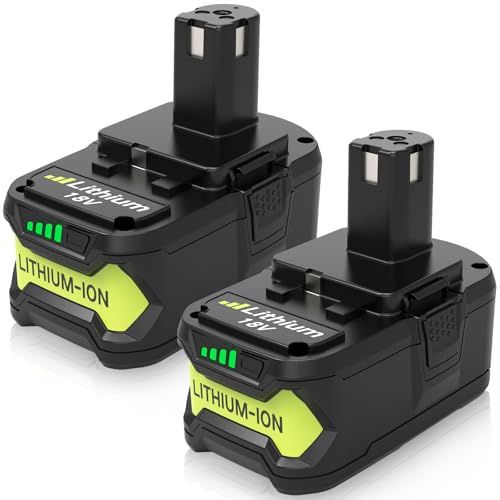
 RYOBI 18-Volt ONE+ Lithium-Ion 4.0 Ah High Capacity7.44 x 6.1 x 3.74 inches2.2 poundsCheck on Amazon


What's inside
- Why a single battery platform rewards careful capacity choices
- Compact packs in the 1.5 to 2 amp-hour class
- The everyday 4 amp-hour tier and why it became the default
- High-capacity packs in the 6 to 8 amp-hour class
- HP packs, extra contacts and Brushless tools that can use them
- Genuine packs versus third-party compatible alternatives
- Backward compatibility reaching back to 1996
- Standard charging, rapid charging and the heat between them
- Temperature, storage and the quiet habits that decide lifespan
- Gauges, cycle counts and reading a pack’s health honestly
- Runtime expectations across tool families
- Damage, safety warnings and knowing when a pack must retire
- Seasonal rhythms and the batteries that follow them
- Check prices on Amazon
- Building the right fleet for the work you actually do
As an Amazon Associate I earn from qualifying purchases. This post may contain affiliate links at no extra cost to you.
First, the funding: some links on this page are referral links, and if you follow one and complete a purchase, the seller may pay this site a commission. That payment never adds anything to the amount you hand over at checkout, and it never decides which pack gets described favourably here. Capacity figures, discharge claims and compatibility statements below come from published manufacturer specifications and documented owner feedback, and the ordering of the tiers reflects how the packs behave in ordinary use rather than any commercial arrangement behind the scenes.
Why a single battery platform rewards careful capacity choices
The appeal of the Ryobi ONE+ system rests on a simple promise that has held for decades: one battery shape, one charger family, and a catalogue of tools that keeps growing around them. A drill bought this year accepts the same stem-style pack as a lantern bought years earlier, and that continuity changes how buying decisions should be framed. Instead of asking which battery belongs to a particular tool, the smarter question is which capacity tier belongs to a particular kind of work. A pack is not good or bad in isolation, because its value emerges from the match between stored energy, physical weight, discharge capability and the electrical appetite of whatever it clicks into.
Voltage alone explains very little here. Every pack in this guide carries the same nominal eighteen-volt rating, yet runtime and responsiveness differ dramatically between the smallest compact option and the largest high-capacity brick. The difference lives in amp-hours, which describe how much charge the cells can deliver before voltage sags below a useful level, and in the internal arrangement of those cells, which governs how hard the pack can be pushed without overheating. Two packs sharing a voltage label can therefore feel like entirely different power sources once a demanding tool starts drawing sustained current.
Understanding that distinction protects buyers from two opposite mistakes. The first mistake is buying only the largest packs available, then discovering that a heavy battery turns an overhead drilling job into an endurance contest for shoulders and wrists. The second mistake is relying entirely on compact packs, then watching a circular saw stall partway through dense sheet material because the small cells cannot sustain the required discharge rate. Neither error reflects poor manufacturing; both reflect a mismatch between energy storage and task profile, and both are avoidable once the tier structure is understood.
There is also a fleet consideration that single-tool owners often overlook. Batteries age as a group when they are rotated evenly, whereas a lone pack pressed into daily service accumulates cycles far faster than its shelf mates. Spreading work across several mid-sized packs usually delivers better long-term value than concentrating every cycle into one flagship unit, because lithium cells degrade with cumulative throughput regardless of how carefully each individual cycle is managed. A thoughtful buyer therefore plans a small stable of complementary packs rather than hunting for one mythical battery that excels at everything.
Cost per amp-hour provides another useful lens, provided it is treated as arithmetic rather than as a shopping slogan. Dividing the cost of a pack by its rated capacity reveals which tiers the manufacturer positions as value anchors and which carry a premium for compactness or advanced electronics. Compact packs frequently cost more per unit of stored energy than mid-sized ones, because miniaturisation and low-volume sales both push against economy. High-capacity packs can swing either way depending on promotional cycles, which is why the calculation deserves repeating at the moment of purchase instead of being memorised from an older comparison.
Finally, remember that published capacity describes a new pack under controlled conditions. Real runtime depends on ambient temperature, tool efficiency, material resistance and how aggressively the trigger is used, so any runtime estimate should be read as a range rather than a promise. The sections that follow break the range into its three main tiers, explain the high-performance variant that cuts across them, and then turn to compatibility, charging and storage, where most premature battery deaths quietly originate.
Compact packs in the 1.5 to 2 amp-hour class
Compact packs occupy the lightest corner of the ONE+ range, and their design priority is unmistakable: keep the tool balanced and the wrist unburdened, even if that means accepting modest runtime. Inside the slim housing sits a single row of cylindrical lithium cells, an arrangement that limits both total stored charge and the rate at which that charge can leave the pack. For short, intermittent jobs this limitation rarely matters, because the tool rests between bursts and the cells recover during each pause. A homeowner driving a handful of screws, inflating a bicycle tyre or trimming a small hedge will finish long before the gauge becomes a concern.
Weight distribution explains why experienced users keep at least one compact pack even after buying larger ones. A drill driver carrying a small battery keeps its centre of gravity close to the grip, which improves control during delicate assembly work and reduces the tendency of the tool to nose-dive when set down. Technicians working inside cabinets, electricians fitting hardware above head height, and anyone assembling flat-pack furniture benefit from that balance in ways a specification sheet cannot capture. Fatigue accumulates silently across hundreds of small movements, and shaving weight from the tool pays compound interest over a long afternoon.
The trade-off appears when compact packs meet continuous-draw tools. Sanders, grinders, fans and vacuums do not pause politely between bursts; they pull current steadily until the pack is empty, and a small cell group reaches its comfortable limit quickly. Voltage sag under sustained load can make a tool feel strangely tired even while the fuel gauge still shows remaining charge, because the cells are delivering energy less efficiently under strain. Heat builds in the same situation, and repeated hot cycles shorten the useful life of a compact pack faster than gentle intermittent use ever would.
Charge time, by contrast, is where compact packs quietly shine. Their small capacity refills quickly even on a basic charger, so a two-pack rotation can sustain light work almost indefinitely: one pack drives screws while its partner recovers, and the swap takes seconds. This rotation pattern suits drills, impact drivers and inspection lights particularly well, since those tools sip rather than gulp. Owners whose work is mostly assembly, repair and adjustment may find that a pair of compact packs covers nearly everything they do, with larger batteries reserved for occasional heavy sessions.
Buyers should also note that compact packs serve as excellent diagnostic references. When a tool behaves oddly, testing it with a small known-good pack isolates whether the fault lives in the tool or in a larger battery whose electronics may be misbehaving. Keeping one simple, healthy compact pack in the kit therefore has troubleshooting value beyond its runtime. It is the baseline against which stranger symptoms can be judged, and its modest cost makes that insurance easy to justify.
The sensible verdict on this tier is neither enthusiasm nor dismissal but placement. Compact packs belong on light, bursty, overhead and precision work, and they belong in every kit as spares and references. They do not belong on hungry saws, extended sanding sessions or jobsite fans expected to run through lunch. Placing them correctly extends their lifespan considerably, because cells treated within their comfort zone degrade slowly and predictably rather than collapsing early under chronic strain.
The everyday 4 amp-hour tier and why it became the default
If one capacity defines the ONE+ experience for most owners, it is the four amp-hour pack, and its popularity is no accident. Doubling the stored charge of a compact pack transforms the rhythm of a working day: a saw completes a full set of cuts between swaps, a blower clears an entire driveway in one pass, and a reciprocating saw survives demolition work without constant trips to the charger. The pack achieves this by arranging more cells in parallel groups, which not only stores more energy but also shares the electrical load more widely. Each individual cell works less hard for a given tool demand, and that gentler treatment shows up as steadier voltage under load.
That parallel architecture deserves a moment of attention, because it explains behaviour that puzzles many first-time buyers. A four amp-hour pack does not merely last twice as long as a two amp-hour pack on a demanding tool; it often lasts more than twice as long, because the smaller pack wastes energy as heat when strained near its limits. Efficiency improves when cells operate comfortably inside their discharge envelope, so stepping up a tier can deliver disproportionate gains on saws, grinders and other sustained-draw equipment. On gentle tools the advantage narrows back toward simple arithmetic, since a drill driver barely stresses either pack.
Physically, the everyday tier remains manageable on handheld tools. It adds noticeable weight compared with a compact pack, yet the bulk sits low and close to the handle on most designs, preserving acceptable balance for drilling, driving and light sawing. Owners who spend entire days with a tool in hand sometimes alternate between this tier and compact packs depending on the task, treating the choice like a gear selection rather than a permanent commitment. That flexibility is precisely what a shared platform is supposed to provide, and it explains why twin packs at this capacity appear so frequently in seasonal bundles described by retailers.
From a cost perspective, this tier usually represents the sweet spot of the range. Manufacturing volume is highest here, competition among bundle configurations is fiercest, and the cost per amp-hour typically undercuts both the compact tier and the specialised high-performance variants. Buyers building a fleet from scratch will generally get the most working hours per unit of spending by anchoring the collection at this size, then adding one compact pack for finesse work and one large pack for stationary or outdoor equipment. That three-tier spread covers nearly every scenario the platform offers without duplicating strengths.
Rotation discipline matters most at this tier because these packs do the bulk of the work. Labelling packs with a purchase month, cycling them in order, and avoiding the habit of always grabbing the same favourite unit spreads wear evenly across the fleet. When one pack eventually fades, its decline is easier to spot against siblings of similar age, and replacement can be planned rather than discovered mid-project. Fleet habits like these sound fussy until the first time a neglected pack fails during a job that cannot pause.
For readers whose charging bench is still taking shape, it is worth seeing how multi-bay equipment changes rotation habits, and the overview at best 3 bank chargers shows how sequencing several packs overnight reshapes the morning routine for owners who run more batteries than any single-port unit can comfortably serve.
High-capacity packs in the 6 to 8 amp-hour class
At the top of the range, packs grow taller, heavier and unapologetically specialised. Six and eight amp-hour class batteries exist for tools that treat energy as a consumable on an industrial scale: mitre saws chewing through trim all morning, chainsaws working through a fallen limb, leaf blowers clearing long rural driveways, and portable power stations or inverters borrowing the pack as a reservoir. On such equipment, runtime stops being a convenience and becomes the constraint that decides whether a job finishes today or drags into tomorrow. Large packs push that constraint far enough out that planning can focus on the work itself.
The internal layout changes character at this size. Multiple parallel cell groups deliver high total capacity while keeping per-cell stress moderate, even when the tool draws heavily for minutes at a time. That stress distribution is the hidden dividend of capacity: a big pack loafing at half its comfortable discharge rate ages more gracefully than a small pack sprinting at its ceiling, provided heat is allowed to escape. Users who run demanding tools daily sometimes find that a large pack outlasts expectations formed by compact batteries, not because its chemistry differs, but because its working conditions are kinder relative to its size.
Weight, however, is the unavoidable tax. A high-capacity pack hanging beneath a handheld circular saw shifts balance, slows repositioning and tires the guiding arm on repetitive cuts. Mounted beneath a stationary saw or slotted into a mower, the same mass becomes irrelevant or even stabilising. The tier therefore rewards honest self-knowledge about where the battery will spend its life. Buyers who picture it mainly on benchtop and outdoor equipment will love it; buyers imagining it on a drill used overhead will quietly stop reaching for it within a month.
Charging time scales with capacity in ways that catch new owners off guard. A basic charger that refills a compact pack quickly may need several hours with a large one, which changes overnight planning and makes charger selection a genuine part of the purchase rather than an afterthought. Owners adopting this tier usually pair it with a faster charger, accepting the modest extra warmth of rapid charging in exchange for a fleet that actually recovers between workdays. Ignoring that pairing produces the familiar frustration of a flagship battery that is never ready when needed.
There is also a reserve strategy worth adopting with large packs. Because they hold so much energy, they make excellent emergency reservoirs for lights, radios, fans and device charging through the platform accessories during a power cut. Keeping one large pack stored at a sensible partial charge, then topping it when severe weather threatens, turns the tool shelf into a modest resilience asset. That secondary role strengthens the value case for a tier whose headline runtime figures can otherwise look excessive for weekend projects.
Judged fairly, the high-capacity class is neither a luxury nor a default. It is a specialist tool for sustained draw, stationary mounting and reserve duty, and it earns its place when at least one of those roles recurs regularly. Bought for a clear role, it tends to become indispensable; bought on the assumption that bigger is automatically better, it becomes the heaviest object on the shelf and the least used.
HP packs, extra contacts and Brushless tools that can use them
The letters HP appear across the upper reaches of the ONE+ catalogue, and they describe a conversation between battery and tool that standard packs cannot hold. Alongside the familiar power terminals, HP batteries carry additional contacts positioned to meet corresponding points inside HP Brushless tools. When those contacts meet, the tool learns that its power source can safely deliver stronger current, and its controller raises the ceiling on what the motor may draw. The result, according to published manufacturer descriptions, is greater torque and speed under heavy load in applications where an ordinary pack would trigger protective limits earlier.
It helps to understand what does not change. An HP pack clicked into a standard tool behaves like a conventional battery of similar capacity, because the extra contacts simply have nothing to talk to. Nothing is harmed, nothing is unlocked, and no hidden performance waits to be discovered by jiggling the connection. Conversely, an HP Brushless tool running on a standard pack still works perfectly well; it merely operates within the lower current ceiling that the simpler battery negotiates. The system was designed so that every combination functions, with the pairing of both HP elements simply raising the top end.
Brushless motors are the natural partners for this arrangement because their electronic controllers already manage power delivery moment by moment. A brushed motor draws what it draws, limited mainly by its windings, whereas a brushless controller can request more current precisely when a fastener seats, a blade bites or a wheel meets resistance. That moment-by-moment negotiation is where extra discharge headroom converts into felt performance rather than brochure language. Owners whose demanding moments are rare may never notice the difference, while users who regularly drive long structural screws or cut dense hardwood will recognise the steadier motor note immediately.
Cell selection inside HP packs also tends toward higher discharge capability, which matters even outside the contact conversation. Sustained heavy draw generates heat, and cells chosen for stronger current delivery run cooler at a given load than economy cells would. Cooler operation protects capacity over hundreds of cycles, so the HP premium partly buys longevity under hard use rather than only peak output. Buyers comparing an HP pack with a standard pack of identical amp-hour rating should therefore weigh duty cycle honestly: gentle use narrows the gap to almost nothing, while daily heavy use widens it steadily.
Deciding whether the premium makes sense starts with an inventory of the tool rack. Count the HP Brushless tools actually owned, note how often each faces its hardest material, and consider whether future purchases are likely to join that category. A rack dominated by lights, inflators and light drivers gains little, however impressive the badge looks in photographs. A rack built around brushless saws, grinders and high-torque drivers gains the most, and for those owners the HP tier stops being an upgrade and becomes the correct specification.
One caution completes the picture: high-performance labelling attracts imitation, and packs claiming equivalent capability without the genuine contact arrangement or documented cell pedigree deserve the scepticism detailed in the next section. The contact geometry is visible and checkable, which gives buyers a rare physical test in a market full of unverifiable claims. If the extra terminals are absent, the pack cannot hold the HP conversation, whatever its wrapper promises.
Genuine packs versus third-party compatible alternatives
Every mature battery platform attracts independent makers offering compatible packs below the genuine price, and ONE+ is no exception. The appeal is obvious, especially for owners feeding low-stakes tools or replacing a faded pack on a tight budget. The risk is equally real, because a battery is not a passive container: it contains protection electronics, thermal sensing and cell-matching decisions that determine how safely it behaves across years of charging. Evaluating an alternative therefore means evaluating an entire engineering chain that the buyer cannot see, hidden inside a shell designed to look reassuringly familiar.
Genuine packs carry the advantages of a single accountable system. Cells are selected and matched under one quality programme, the fuel gauge is calibrated against known cell behaviour, and warranty support treats tool and battery as partners rather than as suspects in a dispute. When a genuine pack misbehaves, the service path is documented and the replacement criteria are published. That infrastructure costs money, and it forms a large part of the price difference that alternatives exploit. Buyers are not merely paying for plastic and lithium when they choose the original; they are paying for the absence of ambiguity when something goes wrong.
Third-party quality spreads across a wide spectrum. Some independent makers use reputable branded cells, honest capacity ratings and competent protection boards, and documented owner feedback for those brands reads as calmly satisfied. Others chase a headline capacity number with cells of unknown origin, optimistic labelling and minimal electronics, and their feedback histories fill with early failures, swelling and gauges that behave erratically. The tragedy of the category is that both kinds can look identical in a listing photograph, distinguished only by research the buyer must do before money changes hands.
Several practical checks improve the odds considerably. Weight is the simplest: genuine capacity requires genuine cell mass, so a pack claiming large numbers while feeling suspiciously light is contradicting physics. Listings that name the cell manufacturer, state watt-hours alongside amp-hours, and publish recognised safety certifications signal a maker expecting scrutiny. A seller with a stable trading history, a reachable support address and a returns window measured in weeks behaves differently from a disposable storefront, and that difference predicts the ownership experience better than any single specification.
Role separation offers a pragmatic middle path for households determined to save. Place genuine packs on saws, grinders and any tool whose failure would be expensive or dangerous, and let a carefully vetted alternative feed a work light, a fan or a radio where disappointment costs nothing but convenience. That division concentrates trust where consequences live while still capturing savings at the margins. What it should never become is a fleet built entirely from the cheapest available packs, because correlated weaknesses surface together, usually during the busiest week of the season.
Anyone researching charging behaviour for smaller cells alongside tool packs will find a useful contrast in the survey at best 18650 chargers, since the discipline of matching charger intelligence to cell chemistry applies at every scale, even though the hardware itself could hardly look more different.
Backward compatibility reaching back to 1996
Platform longevity is easy to claim and hard to prove, yet the ONE+ stem design carries receipts stretching back to the system’s original launch in 1996. Manufacturer materials describe current lithium packs as fitting tools from that entire span, which means a battery bought this season can wake a drill old enough to have assembled furniture in a previous century. That continuity is not a nostalgic footnote; it reshapes the economics of ownership, because every pack purchased joins a fleet whose tools accumulate rather than expire. A replacement tool purchase never orphans the batteries already on the shelf.
The chemistry transition hidden inside that story deserves care. Early ONE+ tools shipped with nickel-cadmium packs, and the chargers built for that chemistry must never be asked to charge lithium batteries, because their charging logic predates the safeguards lithium cells require. Modern dual-chemistry and lithium chargers handle the current range properly, and they are the only safe bridge between eras. Owners inheriting a mixed garage of old tools and older chargers should audit the charging bench first, retiring nickel-era units from battery duty even though the tools themselves remain welcome on modern packs.
Older tools also interpret modern packs through older expectations. A drill from the early years cannot use HP contacts, cannot report pack temperature to anything, and may draw current in a blunter pattern than a current brushless design. None of that prevents satisfying work; it simply means the newest battery behaves as a generous, long-lasting reservoir rather than as a performance partner. Many owners find that a fresh mid-capacity pack transforms a tired-feeling legacy tool, because the original complaint was often a dying nickel pack rather than a dying motor.
The second-hand market benefits enormously from this stability. Used ONE+ tools hold value because buyers know fresh batteries still fit them, and sellers can demonstrate a tool honestly with a modern pack instead of apologising for an exhausted original. Estate sales, hand-me-downs and workshop clearances all feed machines back into service that a fragmented platform would have stranded. For households watching both budget and waste, that extended working life is among the strongest arguments the platform makes, even though it never appears in a runtime chart.
Compatibility does carry one housekeeping duty: contacts accumulate grime across decades. A legacy tool that behaves intermittently on a known-good pack often needs nothing more exotic than its terminals cleaned and its latch inspected for wear. Treating those small mechanical interfaces with occasional attention keeps the promise of the system alive in practice rather than only in marketing copy. The platform’s genius was always mechanical honesty, and a minute with a dry cloth honours it better than any accessory purchase.
Standard charging, rapid charging and the heat between them
Chargers shape battery life as surely as tools do, yet they are usually chosen by whatever happened to be bundled in a kit box. The range spans slow single-port units that refill a pack over several unhurried hours, rapid chargers that restore a mid-sized battery during a meal break, and sequential multi-port stations that work through a fleet overnight. Each style embeds a philosophy about the trade between time and thermal stress. Slow charging is gentle and cool, rapid charging is convenient and warmer, and modern protection electronics exist precisely to keep that warmth inside safe boundaries when the charger and pack are genuine partners.
The physics behind the trade is straightforward. Pushing current faster generates more resistive heat inside cells, and heat is the currency in which lithium ageing is paid. A pack rapid-charged daily in a hot workshop will surrender capacity sooner than an identical pack slow-charged in a cool room, even though both deliver identical performance when new. That does not make rapid charging reckless; it makes it a tool to deploy deliberately, for the pack needed at dawn, rather than as the default treatment for every battery in the fleet. Rotation spreads the burden, so no single pack absorbs every fast cycle.
Charger indicators deserve more trust than guesswork and less than faith. A completed-charge light means the charger believes its work is finished, based on voltage and temperature behaviour it observed during the cycle. Leaving packs sitting on an idle charger for days is discouraged in manufacturer guidance, not because catastrophe looms, but because small parasitic behaviours and repeated top-up logic serve no purpose once charging ends. Removing a finished pack and storing it properly is a five-second habit that aligns with every care document the industry publishes.
Households comparing charger categories across voltage systems often start with the roundup at best 12 volt battery chargers, which illustrates how charging expectations formed around smaller platforms translate, and where they stop translating, when a high-capacity eighteen-volt fleet enters the picture.
Charge timing also interacts with storage plans in a way worth planning around. A pack charged fully on Friday for a project that slips to next month will sit at maximum voltage for weeks, quietly ageing faster than it needed to. Owners who learn to charge with the calendar in mind, topping packs when work is genuinely imminent and leaving them partial when it is not, extract noticeably longer service from the same hardware. The charger, in other words, is where intention meets chemistry, and a little scheduling discipline outperforms most accessories sold to rescue neglected batteries.
Temperature, storage and the quiet habits that decide lifespan
Ask a battery engineer what kills tool packs early and the answer rarely involves dramatic abuse. It involves a vehicle baking in summer sun with the packs inside, a charger operating in an unheated outbuilding through deep winter, and shelves where batteries sit forgotten at empty or brim-full for entire seasons. Lithium chemistry ages through a slow internal drift that heat accelerates and extremes of charge encourage. Every care habit that matters is really a defence against that drift, and none of them requires equipment beyond a thermometer’s worth of common sense.
Cold deserves a nuanced reading, because its effects are mostly temporary while heat’s effects are mostly permanent. A chilled pack delivers weaker performance and may trip protection under loads it handles easily when warm, yet it recovers as its cells return to room temperature through gentle use or a spell indoors. Heat, by contrast, consumes lifespan irreversibly: capacity lost to a summer of dashboard storage does not return in autumn. Owners in hot climates should therefore treat shade and indoor storage as non-negotiable, while owners in cold climates mainly need patience and a warm room for charging, since charging a frozen pack is the one cold behaviour guidance consistently forbids.
Storage charge sits at the centre of every serious care routine. Guidance aimed at lithium tool batteries converges on keeping idle packs somewhere near half charge, a level that minimises both the stress of maximum voltage and the danger of drifting toward deep discharge. Garden-season batteries benefit most visibly from this ritual, because they may sleep from the last autumn cut until the first spring growth. A mid-winter check, with a gentle top-up if the gauge has sagged, prevents the unhappy discovery of a pack that protected itself into a state a normal charger refuses to revive.
Physical storage matters in smaller ways that add up. Keep packs dry, off concrete floors that wick cold, and away from metal clutter that could bridge terminals in a drawer. Store them where a swelling or damaged pack would be noticed rather than hidden, and retire any pack whose housing cracks, whose latch stops holding, or whose behaviour changes suddenly. A battery that has been dropped hard onto concrete deserves inspection and suspicion in equal measure, because internal damage can hide behind an intact-looking shell.
None of these habits is glamorous, and that is exactly why they separate owners whose packs last for many seasons from owners who conclude, wrongly, that batteries are disposable. The chemistry rewards moderation in all things: moderate charge, moderate temperature, moderate discharge, and regular gentle exercise instead of feast and famine. Treat the fleet as a living asset with preferences, and it will repay the courtesy in years of unremarkable, dependable service.
Gauges, cycle counts and reading a pack’s health honestly
Nearly every modern ONE+ pack carries a fuel gauge, and learning to read it as an estimate rather than an oracle prevents most field frustration. The gauge infers remaining charge largely from voltage behaviour, which shifts with load and temperature, so a reading taken under heavy draw will look bleaker than one taken at rest a minute later. Owners who check the gauge after a pause, indoors, get the most truthful picture the little display can offer. Treating its segments as thirds of a working day, rather than as precise percentages, matches how the underlying measurement actually works.
Health assessment goes beyond the gauge. A pack that once ran a blower through the whole garden and now quits halfway has told its owner something important, provided the comparison controls for temperature and tool condition. Keeping a rough mental log of such benchmarks, tool by tool, turns vague suspicion into usable knowledge about which pack is fading. Writing the purchase month on the housing with a paint marker supports that log effortlessly, because age context converts anecdotes into patterns when several packs are compared side by side.
Cycle counting is mostly invisible to owners, since the platform does not present a dashboard of lifetime statistics, yet the concept still guides good decisions. Every full discharge and recharge consumes a portion of the pack’s designed life, and partial cycles consume proportionally less, which is why shallow, frequent use is gentler than repeated deep draining. Owners who swap packs at the first sign of sagging performance, instead of squeezing the last reluctant minutes from a tired battery, are quietly buying extra seasons. The tool may finish the cut either way, but the pack remembers the difference.
There comes a point where honesty requires retirement. A pack that swells, vents an unusual smell, becomes hot during gentle charging, or loses charge rapidly while sitting unused has crossed from ageing into risk, and no remaining runtime justifies keeping it in service. Recycling routes for lithium tool batteries are widely published by manufacturers and retailers, and using them closes the loop responsibly. Retiring one pack promptly also protects the fleet’s reputation in the owner’s mind, because a single alarming failure tends to colour trust in every healthy battery beside it.
Shoppers who also maintain high-output charging gear for other equipment may recognise similar diagnostic thinking in the guide at best 10 amp battery chargers, where reading charger behaviour carefully is treated as the earliest warning system a battery owner gets.
Runtime expectations across tool families
Translating capacity tiers into expectations works best when tools are grouped by appetite rather than by department. At the gentle end sit lights, radios, inflators, glue guns and small fans used intermittently, equipment that treats even a compact pack as a generous reservoir. Owners routinely underestimate how far a small battery stretches here, because the published capacity of the pack dwarfs the modest hourly draw of a lamp or a tyre pump. For emergency kits and travel bags, that mismatch is a gift: the lightest pack in the fleet doubles as the most portable power insurance in the house.
The middle appetite group contains the drills, impact drivers, multi-tools and jigsaws that define most home workshops. Their draw arrives in bursts separated by measuring, marking and repositioning, which gives cells breathing room and lets the everyday tier shine. Runtime in this group is governed less by raw capacity than by work rhythm, and two mid-sized packs rotated calmly will outlast one enormous pack simply because the rotation eliminates charger waiting. This is also the group where operator technique matters most, since sharp bits, correct speeds and pilot holes all reduce the energy each task extracts.
At the hungry end, circular saws, angle grinders, chainsaws, blowers and vacuums convert stored charge into noise and motion without pause. Here capacity stops being a comfort and becomes the schedule itself, because every swap interrupts a cut line, a clearing pattern or a cleaning route. High-capacity and HP packs earn their keep in this group, not through any mystery, but through the arithmetic of parallel cells sharing a heavy load. Owners who feed hungry tools from compact packs are not saving money; they are spending cell lifespan to rent runtime at the worst possible exchange rate.
Outdoor equipment adds weather to the arithmetic. Cold morning air stiffens cells and trims effective capacity, wet grass and dense growth raise the load on mowers and trimmers, and long properties turn every swap into a walk back to the building. Planning outdoor runtime with a deliberate margin, and carrying the spare pack to the far end of the property rather than leaving it by the door, separates a finished job from an abandoned stripe of uncut lawn. The platform’s garden range rewards the same fleet thinking as the workshop, with the everyday tier as its backbone and large packs reserved for the machines that roam farthest.
Published runtime figures from the manufacturer should be read as orientation within these groups, never as guarantees across them. A figure measured on a new pack, in mild weather, cutting clean material with a sharp blade describes an ideal that real gardens and real timber rarely provide. The experienced owner builds a personal conversion factor from the first few projects, learning that a personal fleet delivers, say, most of the published figure in summer and noticeably less in winter, and plans purchases around that lived ratio rather than around brochure optimism.
Damage, safety warnings and knowing when a pack must retire
Lithium tool batteries are robust consumer products, but they concentrate enough energy to deserve respect when damaged. The warning signs published across manufacturer safety literature form a consistent list: a housing that swells or cracks, a pack that becomes unusually warm during mild charging, hissing or venting sounds, a sweet chemical odour, or a sudden change in runtime that arrives without explanation. Any one of these signals ends the conversation about squeezing more value from the pack. It leaves service, stays away from chargers, and travels through a published recycling route rather than into household waste.
Drops deserve special judgement because their damage hides. A pack that falls from a bench onto concrete may keep working while an internal connection weakens or a cell shifts against its neighbour, and the failure can surface weeks later under load. Owners should inspect dropped packs for cracked seams and rattling, watch their next few charging cycles with unusual attention, and retire anything whose behaviour has changed in ways that cannot be explained by temperature or workload. Sentimentality about a favourite battery is understandable and entirely misplaced; the fleet concept exists precisely so that one retirement never stops the work.
Water is the other quiet enemy. Rain during outdoor work, a flooded garage corner or a pack left in wet grass introduces moisture into vents and terminals that were designed for dust, not immersion. Drying a damp pack thoroughly at room temperature, without heat guns or radiators, is the conservative response described in care guidance, and a pack that was genuinely submerged belongs in the retirement conversation rather than back on a saw. Corrosion on terminals, visible as discolouration around the contacts, tells a similar story and responds only briefly to cleaning before returning.
Charging areas repay a moment of design. A clear, ventilated bench surface, away from solvents, paper clutter and direct sun, with packs visible rather than buried under rags, turns charging from a background risk into a supervised routine. Smoke detection in the workshop, already wise for a dozen other reasons, completes the picture. None of this implies that charging a genuine, undamaged pack is a hazardous ceremony; it simply acknowledges that stored energy deserves a tidy home, and that nearly every documented battery incident begins with damage, misuse or neglect that a tidy routine would have caught earlier.
Finally, keep the paperwork of the fleet in one place: receipts, purchase dates and warranty terms for packs and chargers together. When a pack fades early, that folder converts frustration into a claim, and when a charger misbehaves, it proves the pairing history that service staff will ask about. Organisation is an unglamorous battery technology, yet it quietly outperforms most accessories, because it ensures that the protections the manufacturer built into the purchase are actually available on the day they are needed.
Seasonal rhythms and the batteries that follow them
A battery fleet lives a different life in each season, and owners who anticipate those shifts get smoother years from the same hardware. Spring concentrates outdoor work into a few eager weekends, when packs that slept through winter return to mowers, trimmers and blowers all at once. That first fortnight is when neglected storage habits announce themselves, because a pack parked empty since autumn may need coaxing or replacement before the season truly starts. A gentle recommissioning routine, charging each pack fully, running it on a light tool, and noting any that behave strangely, turns spring surprises into a calm checklist completed before the grass grows tall.
Summer tests heat discipline more than any other virtue. Workshops warm up, vehicles become ovens, and long outdoor sessions push packs toward their thermal limits by midday. Rotating batteries so that a warm pack rests in shade while a cool one works is a small courtesy with measurable effects on longevity, and scheduling the heaviest cutting for morning hours helps tools and operators alike. Owners in hot regions learn to read a pack’s temperature by hand the way gardeners read soil moisture, instinctively and without ceremony, and that instinct is worth more than any single accessory.
Autumn brings the long storage question back into focus as garden tools retire and workshop projects move indoors. This is the season to clean terminals, charge packs to their resting level, and store them where winter temperatures stay moderate and dry. It is also the honest season for fleet accounting: which packs faded, which chargers became bottlenecks, and which capacity tier was always missing when a project needed it. Notes made in autumn become the shopping list that winter promotions can serve intelligently, replacing the guesswork that fills January with regret.
Winter, finally, rewards the indoor fleet and punishes forgetfulness in equal measure. Heating-season projects, repairs and assembly work keep drills and drivers busy while outdoor packs rest, and a mid-season check on the resting batteries prevents the slow drift toward deep discharge. Cold workshops demand that charging move indoors, where temperatures sit inside the band that guidance documents describe, and tools stored in unheated spaces benefit from batteries kept separately in the warm. Viewed across the whole year, the fleet is less a collection of products than a small seasonal system, and tending it in rhythm with the calendar is the closest thing battery ownership has to a secret.
There is one more seasonal habit worth adopting before the fleet discussion closes, and it concerns borrowing. Platforms with long compatibility histories accumulate in families, streets and workplaces, so packs migrate between households whenever a project needs extra hands. Labelling each battery clearly, and agreeing that borrowed packs return charged to a resting level rather than empty, prevents the quiet resentment and accidental neglect that lending otherwise breeds. A fleet that travels well between trusted workshops is a social asset as much as an electrical one, and clear labels are the entire technology required to keep it that way across years of shared projects and returned favours.
Check prices on Amazon
Live listings for the shortlist in this guide are pulled from Amazon below, so prices and availability are always current at the moment you look.


Building the right fleet for the work you actually do
Every recommendation in this guide collapses, in the end, into a portrait of the owner’s real week. A renter maintaining a small flat needs assembly, drilling and cleaning power, and will thrive with compact packs plus one everyday battery for the vacuum. A homeowner with a garden, a workshop and a queue of renovation projects needs the full ladder: compact for finesse, several everyday packs in rotation, and a high-capacity unit feeding outdoor equipment through long sessions. A renovator working daily adds HP packs where brushless tools dominate and treats rapid charging as infrastructure rather than indulgence.
Notice what that portrait method avoids: it never starts from a catalogue page. It starts from tasks, frequencies and frustrations, then assigns capacities to roles the way a kitchen assigns knives. The most common fleet error is duplication without differentiation, five identical packs bought because a bundle looked generous, leaving the owner rich in one capability and poor in every other. A smaller, deliberately varied fleet outperforms it in almost every real week, because variety is what a shared platform was engineered to reward.
Growth should follow evidence. When a project repeatedly stalls waiting for a charged pack, the fleet needs capacity or charging speed, and the stalled moments themselves reveal which one. When a tool feels clumsy all afternoon, the fleet needs a lighter option, not a stronger one. Keeping a short list of such frictions, reviewed whenever a purchase tempts, converts battery buying from impulse into design. Over several seasons the fleet quietly becomes a fingerprint of the work, which is precisely what a mature platform should allow.
Budget planning benefits from the same honesty. Spread purchases across the year, watch for the bundle cycles that retailers publish around major holidays, and let the everyday tier absorb most of the spending because it absorbs most of the work. Reserve premium spending for the specific roles, HP performance or high capacity, that the friction list has actually identified. Money saved by refusing unnecessary premiums funds the replacement cycle later, when the oldest packs begin their graceful decline and a planned purchase beats an emergency one.
And when the shelf finally holds that varied, labelled, sensibly stored fleet, the platform’s original promise comes fully into view: grab any tool, grab the pack its job deserves, and work without thinking about power at all. A battery collection done well disappears into the background of every project, and the projects themselves, finished shelves, cleared gardens, repaired fences and lit rooms, become the only evidence that any of these choices mattered.