Our Top Picks
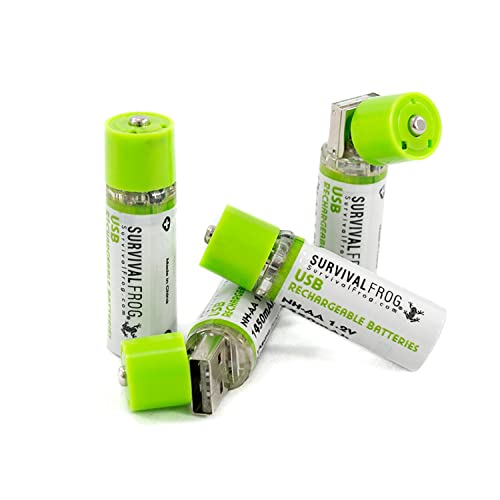 Survival Frog EasyPower USB AA Rechargeable Batteries -1.2V/1450ONLY USB BATTERIES2.5 x 0.6 x 2.4 inches0.19 poundsCheck on Amazon
 Maxfree Rechargeable AA Batteries Lithium with Charger2.82 x 2.04 x 2.83 inches0.65 poundsCheck on Amazon


What's inside
- A battery with its own charging socket
- USB-C versus micro-USB: more than a differently shaped hole
- Steady 1.5 volts: the regulated lithium advantage
- Charge times, indicators, and the cable-per-cell reality
- Cycle life: what the big number quietly assumes
- Devices that suit these cells beautifully
- Wireless microphones deserve special caution
- Game controllers, hungry motors, and sharp endings
- Where these cells are the wrong tool
- Reading a specification sheet like a sceptic
- Cost, waste, and the household routine
- A sensible first trial
- AAA cells: the same idea in a tighter space
- Heat, port care, and the small habits that preserve a socket
- Charging away from a wall socket
- Pairs, quads, and keeping states straight in series devices
- What presenters, teachers, and performers should organise before term starts
- Children, grandparents, and instructions that survive real life
- When a purpose-built rechargeable pack beats loose cells
- Troubleshooting the complaints that appear in owner reviews
- How many cells does a household actually need?
- A note on firmware, displays, and learning devices
- Check prices on Amazon
- Buying checklist for port-charged AA and AAA cells
As an Amazon Associate I earn from qualifying purchases. This post may contain affiliate links at no extra cost to you.
Before the recommendations, one housekeeping point: links on this page can earn referral income for the site when readers choose to buy through them, and that income keeps the writing independent and free to access. It does not promote one cell over another. The judgements below rest on manufacturer specification sheets, connector standards documents, device support pages, and owner accounts published in reviews and community discussions.
A battery with its own charging socket
Every household drawer once held the same small ritual: a plastic bay charger, a tangle of loose cells, and a quiet argument about which pair was fresh. USB-rechargeable AA and AAA cells promise to retire that ritual. Each cylinder carries a tiny socket near its positive end, accepts power from a phone cable or laptop port, and signals progress through a small indicator light. No cradle, no spring-loaded bay, no dedicated block occupying a kitchen socket for an evening.
The appeal is obvious for travellers, presenters, parents, and anyone whose devices are scattered across rooms rather than gathered near one charging station. A spare cell can refuel from a power bank in a bag, from a computer during a meeting, or from a bedside hub overnight. For occasional users who recharge a few times a year, eliminating a separate charger feels like genuine progress rather than novelty.
Inside, however, these are not ordinary cells with a hole drilled in the top. Most AA and AAA products with a direct charging port contain a lithium cell, a charging circuit, and a regulator that converts internal voltage into a steady output suited to equipment built for disposable batteries. That electronics package occupies space, influences capacity, determines how abruptly the cell stops, and explains why two products with identical external dimensions can behave quite differently in a microphone, a toy, or a game controller.
A smaller group of port-equipped products takes another path, and some familiar rechargeable AA cells still rely on nickel-metal hydride chemistry charged in a conventional bay rather than through a socket on the cell. Comparing a regulated lithium product against a nickel alternative is therefore not a simple contest between new and old. It is a choice between voltage profiles, warning behaviour, charging habits, storage characteristics, and tolerance for the quirks of particular devices.
This guide separates those questions. It explains the difference between connector types, why a constant one-and-a-half volts can be both a blessing and a trap, how long charging really takes when several cells need attention, what cycle claims assume, and which gadgets welcome port-charged power. It also names the situations where an ordinary disposable or a bay-charged nickel cell remains the wiser purchase, because convenience at the socket does not guarantee satisfaction inside the device.
USB-C versus micro-USB: more than a differently shaped hole
Early generations of these cells commonly used micro-USB. The connector is small, familiar from older phones, and adequate for the modest current involved. Its weaknesses are equally familiar: the plug fits only one way, the socket can feel fragile, and many households have gradually discarded the cables needed to feed it. A product supplied without a cable may therefore be less convenient than its listing suggests if every other device in the home has moved on.
Newer designs increasingly adopt USB-C. Reversibility sounds trivial until you are refuelling a microphone cell in dim light before an event, or helping a child recharge a torch during a camping trip. The plug enters either way, the connector standard is current, and the same lead that serves a modern phone, tablet, earbuds case, or laptop may serve the battery as well. That shared ecosystem is the strongest argument for the newer socket, stronger than any theoretical difference in charging speed at these tiny capacities.
Speed deserves a reality check. A cell cannot accept unlimited current merely because its connector belongs to a standard capable of delivering far more power to a laptop. Internal charging circuits limit input to protect a small lithium reservoir and manage heat in a sealed cylinder. Many products specify input around five volts at a modest current, and some charge deliberately slowly. A high-output wall adapter will simply be negotiated down or ignored beyond what the circuit requests; it will not force a one-hour miracle where the maker designed a two-hour process.
Port placement affects daily handling. On many AA designs the socket sits on the side near the positive terminal or beneath a removable cap, while AAA versions face tighter packaging constraints. A cap protects against pocket lint and moisture but can be lost by a child within a week. An exposed socket collects dust unless owners store cells in a case. Before buying, consider where the port sits relative to the device contact: in a minority of gadgets, extra length, a cap ridge, or a slightly wider shoulder can prevent a battery door from closing cleanly.
Cable architecture matters as much as connector shape. Some bundles include a split lead that feeds two or four cells from one source, turning a single socket into a small charging tree. Others expect one cable per cell, which quietly multiplies clutter. A photograph of the included lead tells you more about real convenience than a headline promising charger-free living. If no split lead is included, price the extra cables and hub ports honestly into the comparison.
Steady 1.5 volts: the regulated lithium advantage
Disposable alkaline cells begin above their nominal rating and slide downward throughout service. Equipment designed around them expects that slope. A regulated lithium AA holds output near one-and-a-half volts for most of its usable charge, then drops sharply when the internal reservoir approaches its limit and protection intervenes. For devices that dislike sagging voltage, that flat profile can feel transformative: a torch stays bright, a motor keeps its pace, and a wireless peripheral avoids the flaky final third familiar from ageing disposables.
Game controllers illustrate the benefit. Many controllers become unreliable, disconnect, or complain about low power while an alkaline pair still holds energy that the electronics cannot use confidently. A regulated cell can deliver a stable supply until late in the cycle, extending the satisfying portion of play. Owner reports frequently praise that consistency, while also noting the ending arrives with little ceremony. A spare charged pair within reach converts that abrupt ending from a ruined evening into a brief pause.
Toys with motors respond similarly. A train that crawls for days on fading disposables may run briskly and predictably on regulated cells, then stop outright when protection cuts in. Parents who understand that pattern can stage swaps before a party or journey. Parents expecting a long, gentle decline may interpret the sudden halt as a defect. Neither reaction changes the electronics; the discharge curve is the product, for better and worse.
The flat profile confuses battery meters. Devices estimate remaining life from voltage, a method that works tolerably when voltage slopes downward and fails when a regulator holds the line. Indicators may display full strength for most of the cycle and then collapse. Some equipment with sophisticated metering can learn or be configured for different chemistries, but most household gadgets cannot. Judge readiness by time in service, keep spares for critical uses, and treat any percentage readout as decoration rather than data.
The 1.2-volt nickel-metal hydride alternative
Nickel-metal hydride rechargeables operate around a nominal 1.2 volts, lower than both fresh disposables and regulated lithium products. Most modern electronics accept that level comfortably because designers know an alkaline cell spends much of its life in a similar region. Low-self-discharge nickel variants transformed the category years ago by retaining charge during months in a drawer, making them dependable for remotes, clocks in some households, photographic accessories, and children toys rotated irregularly.
The discharge curve slopes more gradually, so equipment often provides some warning before failure. Charging requires a bay unit, ideally one that monitors each cell individually and terminates using temperature or voltage behaviour appropriate to the chemistry. That extra hardware is the price of admission, but a good charger serves many sets over years and can also reveal a weakening cell through inconsistent finishing times or abnormal warmth.
Capacity comparisons between chemistries need care. Nickel AA products often advertise higher milliamp-hour figures than the effective capacity quoted for regulated lithium rivals. Voltage differs, so watt-hours provide the fairer measure: multiply capacity by nominal output to estimate stored energy, then remember that regulator losses and device cutoffs shape usable runtime. A controller, mouse, or microphone may extract that energy with different efficiency. Specification arithmetic narrows the field; lived experience in your own device settles the contest.
Cost patterns diverge too. Nickel cells are mature, widely available, and often inexpensive per unit, especially in multipacks from established makers. Port-charged lithium cells cost more because every unit carries its own electronics. Households with many devices and an existing quality charger may find nickel decisively cheaper. Households with two remotes and no charger at all may reach the opposite conclusion once the price of a bay unit enters the basket.
Charge times, indicators, and the cable-per-cell reality
Manufacturers quote charging durations under friendly conditions: an appropriate source, a comfortable room temperature, and a cell starting from its normal empty point rather than a protection state that needs recovery. Real sessions vary. A weak port on an elderly laptop, a hub shared with hungry phones, or a split cable feeding four cells can extend the wait. Heat also persuades charging circuits to slow down, which is protective behaviour rather than a fault.
AA products commonly need a few hours, while smaller AAA cells may finish sooner because their reservoir is smaller, not because their electronics are magically faster. Treat any claim of extremely rapid charging with curiosity and look for the input specification. If a maker states both charge current and capacity, simple division gives a rough floor before charging losses and the slower final phase are considered. Marketing that contradicts its own arithmetic deserves no trust.
Indicator lights differ in usefulness. A simple red-to-green change confirms completion but says little during the long middle stretch. Pulsing patterns can indicate charging, faults, or a poor connection depending on brand, and colour-blind users may struggle to distinguish states. Keep the tiny instruction card until the signals become familiar. If a light never changes after a plausible interval, try a known-good cable and source, inspect the socket for lint, and stop if the cell becomes warm beyond mild comfort.
Charging several cells exposes the hidden arithmetic of convenience. Four AA cells for a controller pair and a toy may require four sockets, two split leads, or a hub with enough ports. A conventional bay charger suddenly looks elegant by comparison: drop in the set, press nothing, collect everything from one place. Port-charged cells shine when the number needing attention is small or locations are scattered. They lose their shine when a household stages a weekly mass refuel on the kitchen counter.
There is also the question of charging while travelling light. One split cable plus a phone adapter can maintain a microphone pair and a torch cell without a bulky cradle, which is a genuine advantage in a presenter kit or a family car. Airlines and venues care about loose lithium products, so keep cells in their case with ports protected, and follow carrier rules for spares. Convenience should never become an excuse for carrying unprotected cylinders rattling among keys and coins.
Cycle life: what the big number quietly assumes
Packaging often promises hundreds or even more than a thousand cycles. Those figures usually come from controlled conditions: moderate discharge, a defined endpoint, sensible temperatures, and capacity measured until it falls to a specified fraction of the original value. A cycle also means one full equivalent discharge, not necessarily one dramatic run from brimful to empty. Ten short top-ups after partial use accumulate wear in a more complicated fashion than a simple tally of plug-in events.
Real households impose harsher patterns. A toy may drain cells deeply and then sit forgotten for weeks. A microphone pair may be topped up before every event regardless of remaining charge. A controller set may live warm beside a console. None of this makes the product fragile, but it does mean the printed cycle figure should be read as an upper guide under kind treatment rather than a personal guarantee. The economically important question is simpler: will the cell survive enough rotations to beat the disposables it replaces in your particular routine? For weekly users, usually yes. For a clock changed annually, almost certainly no.
Owners can extend service by avoiding unnecessary heat, removing cells from devices that will sit unused for months, and recharging before storage if the maker recommends a partial or full state for its design. Do not leave port-charged cells connected to a cable indefinitely after the indicator reports completion unless instructions explicitly permit it. Most circuits terminate properly, yet a tidy habit of unplugging finished cells reduces heat exposure and frees ports for the rest of the household.
Devices that suit these cells beautifully
Television and streaming remotes are gentle hosts. Their draw is tiny, their compartments are standard, and their owners notice the benefit over months rather than minutes. A regulated pair can serve for a long stretch and then be restored overnight from a bedside hub. The main caution concerns remotes with unusually tight doors or contacts positioned where a port cap adds bulk. Test fit with the door fully closed and every button working before declaring success.
Computer mice and keyboards fall into a similar sweet spot, though usage varies wildly between a home office and a spare laptop bag. A wireless mouse that receives daily work will cycle cells often enough to justify the purchase, and stable voltage prevents the pointer lag or disconnections that sometimes appear near the end of a disposable cell. Travellers appreciate topping up from the same laptop that the mouse serves, provided the port remains accessible without removing the cell in designs that allow that arrangement; many still require removal, so check before assuming.
Torches and headlamps used around the house reward stable output, especially models whose drivers were designed for disposable voltage. Brightness holding steady through an evening of loft work or a power cut feels reassuring. Outdoor users should consider temperature and runtime more carefully, and should verify water resistance after installation because a thicker cell or raised cap can prevent a tail switch or battery door from sealing as designed.
Children toys divide by appetite. Board games with sound effects, bubble machines used briefly, remote-controlled novelties for indoor play, and educational gadgets often behave well. Large ride-on toys, powerful trains under continuous load, and anything that devours disposables in an afternoon may expose limited capacity, current limits, or thermal protection. Read the toy maker guidance where rechargeables are mentioned, and keep adult supervision around charging leads in play areas as a matter of ordinary care.
Wireless microphones deserve special caution
Presenters, performers, teachers, and worship teams often look at rechargeable AA cells with understandable longing because handheld transmitters consume disposables at an alarming rate during busy weeks. Regulated lithium products can provide consistent voltage and predictable session length, which professionals value. Yet audio introduces a complication absent from a television remote: electrical noise.
The regulator inside a cell switches power electronically, and in some combinations of cell, transmitter, receiver, and cabling, that activity can contribute hiss, whine, or intermittent artefacts. Many combinations remain perfectly clean, and reputable makers serving the audio market address compatibility directly. The risk is model-specific rather than universal. Published owner feedback contains both enthusiastic reports from regular presenters and frustrated accounts involving particular microphone systems, which is exactly why a trial during rehearsal matters more than a trial in a living room.
Never debut an unfamiliar power source at a wedding, examination, broadcast, or paid performance. Run the complete audio chain for longer than the planned event, move the transmitter through the actual space, and listen on headphones for artefacts that room speakers might mask. Note runtime with the display and transmitter settings configured as they will be used. If any doubt survives rehearsal, fresh disposables or the microphone maker approved rechargeable system should carry the day.
Series behaviour also matters in transmitters using two cells. A regulated pair may end almost together, which sounds tidy until the audio drops without the long warning a sloping chemistry provides. Professionals mitigate that risk with scheduled swaps and spares in the kit bag. Hobbyists recording at home can tolerate an interruption and may value economy over ceremony. The right answer depends on the cost of silence in your setting.
Game controllers, hungry motors, and sharp endings
Controllers reward frequent cycling, which plays to the economic strength of rechargeables. Port-charged cells remove the need for a dock or a bay unit near the television, and a split cable can restore a pair during a meal break if the design and input allow meaningful progress in that window. Still, owners should learn each product behaviour during ordinary play before a long cooperative session. The controller warning may appear only moments before shutdown because the device is reading a regulated voltage it cannot interpret historically.
Households can solve that social problem with choreography: one pair in service, one pair charged, and a rule that swaps happen between matches rather than mid-boss. Teenagers adapt quickly when the charged spares live in a fixed place. Chaos returns when cells migrate between controllers, toys, and microphones without any record of state. A small labelled box near the console is worth more than another lecture about responsibility.
Motor-heavy devices test current delivery. A cell can possess adequate stored energy yet struggle when a stalled motor, a climbing train, or a foam blaster demands a surge. Protection may intervene, speed may sag, or runtime may disappoint compared with a high-drain nickel alternative designed for such work. Specification sheets sometimes state maximum continuous discharge; compare that figure with device demands where known. When the figure is absent, a cautious trial in one non-critical toy reveals more than a page of generic promises.
Where these cells are the wrong tool
Wall clocks, remote sensors, smoke-related devices where makers specify particular batteries, and other equipment expected to run unattended for a year or more rarely reward rechargeable substitution. The labour of swapping dominates any saving, self-discharge and regulator consumption become relevant, and an abrupt endpoint can silence a device without warning. Always follow equipment instructions for safety-related products, and do not experiment where a maker prohibits rechargeable cells.
Low-drain does not automatically mean suitable. Some clocks advance erratically on voltages that differ from their design expectations, while certain sensors report battery health using thresholds tuned to alkaline decline. A product can function during a weekend trial and still produce misleading alerts months later. For rarely opened compartments, the boring reliability of a fresh disposable or a low-self-discharge nickel cell, where approved, often wins by doing nothing surprising.
Devices using many cells in series amplify both cost and management burden. An eight-cell toy or a large lantern may need two split cables, a sizeable hub, and disciplined rotation to avoid mixing states. A bay charger handling the whole set at once becomes more attractive, as does a purpose-built rechargeable pack from the device maker. Port-charged cells scale gracefully to pairs and quartets; beyond that, the household is building a small power station on the counter.
Cold outdoor equipment also deserves scrutiny. Lithium products can lose usable capacity in low temperatures, and charging a cold cell immediately after bringing it indoors may be restricted by maker guidance. Allow equipment to return toward room temperature before charging unless instructions state otherwise. For winter camping or emergency kits stored in a vehicle, disposables with strong shelf performance may be the prudent primary plan, with rechargeables serving everyday duty at home.
Storage, self-discharge, and the forgotten drawer
A regulated lithium cell contains electronics that sip a minute amount of power even while resting. Quality designs keep that appetite low, but a cell stored for many months should not be assumed ready for a critical evening without a check. Nickel low-self-discharge products have an excellent record in this role, which is one reason they remain relevant despite older charging habits. Whichever chemistry you choose, a twice-yearly drawer audit prevents the classic discovery that every spare is flat on the night they are needed.
Store cells in a rigid case, away from heat and metal clutter, with charged and depleted examples separated by position or label. Port caps, where supplied, should be refitted after charging. If a cell has been dropped hard, crushed in a door, exposed to water inside the socket, or shows wrapper damage near the terminal, remove it from service and use an approved recycling route. The electronics that make these products convenient also make casual repair inappropriate.
Reading a specification sheet like a sceptic
Start with output. A regulated lithium AA should state its delivered voltage plainly and describe whether that figure holds across most of the cycle. Continue to capacity, then convert to watt-hours for comparison. Look for input requirements, expected charging duration, maximum discharge current, operating temperature range, and cycle definition. A maker willing to publish those details in a stable document earns more confidence than one offering only lifestyle photographs and a bold promise.
Dimensions deserve a ruler, not a glance. AA and AAA are standard designations, yet electronics, caps, and wrappers can push individual products toward the generous edge of tolerance. Most devices cope. Tight designer remotes, sealed torches, and toys with rigid moulded channels may not. Measurements in millimetres on the datasheet allow comparison with a cell that already fits well. If your device barely accepts ordinary disposables, order a small quantity first.
Certification and traceability matter because each unit contains a lithium reservoir plus charging electronics. Look for a real manufacturer identity, support contact, model number, and safety documentation that corresponds to the exact product. Marketplace listings sometimes borrow certificates from unrelated items. A quick search on the maker site for the same model resolves many doubts. Absent any verifiable maker presence, the saving rarely compensates for the uncertainty.
Reviews become useful when filtered by device. Praise from remote owners cannot settle microphone noise, and a complaint from a ride-on toy owner may say nothing about performance in a keyboard. Search within feedback for your gadget category, charging duration, port durability, and behaviour after several months rather than first impressions recorded on delivery day. Repeated reports of caps vanishing, sockets loosening, or indicators failing form a pattern worth respecting.
Cost, waste, and the household routine
The financial case depends on rotation speed. A presenter replacing microphone disposables weekly can recover a premium purchase surprisingly fast. A family powering one remote may need years, during which a cell can age out before reaching its advertised cycle potential. Neither outcome makes the product inherently good or bad; it makes usage frequency the deciding variable. Estimate annual disposable consumption for the target device before buying a fleet.
Waste arithmetic follows the same logic. A long-lived rechargeable displaces many single-use cells and their packaging. A short-lived novelty displaced by frustration after three charges does not. Buying fewer, better-documented cells for the devices that cycle most often produces a stronger environmental result than converting every drawer indiscriminately. Keep disposables for the few roles where they genuinely excel, without treating that pragmatic exception as failure.
Routine design determines whether good intentions survive February. Put the split cable where swaps actually happen, not in a pristine box in another room. Label charged spares. Agree which devices belong to the port-charged pool and which remain on nickel or disposable power. Mixed systems fail when a depleted regulated cell is placed into a bay charger by a helpful relative, or when a nickel cell is hunted for a socket it does not possess. Clear physical separation prevents both errors.
A sensible first trial
Choose one forgiving device for the first set: a remote, a mouse, a household torch, or a controller used during ordinary evenings. Avoid beginning with a microphone needed for an important event, a toy promised for a birthday morning, or a safety-related gadget. Live with the cells through several complete cycles. Note how long charging takes from your usual source, whether the indicator is legible, how the device behaves near the end, and whether the port collects dust in its normal home.
If the trial succeeds, expand by device category rather than by enthusiasm alone. Controllers may justify a second rotating pair. A presenter may add a dedicated set that never migrates into toys. Parents may keep one chemistry for playroom equipment to simplify instructions for grandparents and babysitters. Expansion works when each pool has a home, a cable, and a simple rule understood by everyone who touches it.
If the trial disappoints, diagnose before discarding the whole concept. A poor fit might reflect one oversized brand. A sudden ending might be acceptable in a different device with spares nearby. Noise in one microphone does not condemn use in a remote. Conversely, repeated warmth, a loose socket, swelling, or a damaged wrapper condemns that individual cell regardless of category. Safety observations override curiosity every time.
AAA cells: the same idea in a tighter space
Everything attractive and awkward about the AA format intensifies in AAA. The socket, charging board, regulator, and protective cap must share a much slimmer cylinder, leaving less room for stored energy. Runtime expectations should shrink accordingly. A AAA product that serves a remote admirably may struggle in a bright pen torch or a musical toy simply because the reservoir behind the electronics is modest. Comparing headline capacity across sizes without adjusting expectations leads to unfair verdicts.
Fit becomes even more delicate. Some AAA compartments rely on narrow channels and light spring pressure, and a slightly long cell can make a battery door bulge or a contact miss. Headphones, small radios, presentation clickers, and miniature torches all package their power differently. Measure an existing disposable, compare the datasheet drawing, and pay attention to whether a charging cap must remain attached during use or is removed before installation. Designs differ, and losing a tiny cap in a carpet is a rite of passage nobody requested.
Charging behaviour can also differ between sizes from the same brand. A smaller cell may finish sooner, accept a lower input current, or use a different indicator pattern despite sharing packaging artwork with its larger sibling. Read the instruction card for the exact size in hand. Households running both formats benefit from storing the two cards together in the battery case, because memory blurs distinctions that seemed obvious during the first week of ownership.
Heat, port care, and the small habits that preserve a socket
A charging cell should feel no more than mildly warm. The electronics convert power in a confined space, so a faint rise is unsurprising, but pronounced heat signals a problem with the source, the cable, the socket, or the cell itself. Stop the session, allow the unit to cool on a non-flammable surface, and inspect before trying a different known-good lead. Never leave charging cells buried under bedding, inside a closed toy, or in a hot vehicle while they refuel.
Lint is the quiet enemy of tiny connectors. Pockets, handbags, and playroom floors introduce fibres that pack into a socket and prevent a plug from seating fully. A dry puff of air or a gentle brush with a clean, soft tool can clear debris; metal implements and liquids have no place inside the port. If a plug rocks, stops halfway, or charges only when held at an angle, retire the cable first and examine the socket under bright light before blaming the cell.
Caps deserve a routine. Where a design uses a tethered cap, confirm the tether has not cracked. Where caps detach completely, store them in the same compartment of the case every time, because a cap rolling across a kitchen counter will find the one gap in the floorboards. A missing cap does not always disable a cell, yet it exposes the connector to the dust and moisture the designer intended to exclude, shortening the useful life of the feature that justified the purchase.
Charging away from a wall socket
Power banks make these cells unusually flexible. A presenter can restore a microphone pair during a train journey, a parent can revive torch cells inside a tent using a bank kept for phones, and a field worker can top up a headlamp from a vehicle port during lunch. That freedom works best when the bank itself has enough reserve and does not shut down prematurely because the tiny charging current falls below its automatic cutoff threshold. Some banks interpret a nearly finished battery cell as a disconnected device and stop delivering power, leaving an indicator dark and an owner puzzled.
Laptop ports present a similar variation. Sleeping computers may suspend power, older ports may supply limited current, and hubs divide capacity among attached accessories. None of these behaviours indicates a defective battery. For an important deadline, charge from a reliable mains adapter and confirm completion before departure rather than trusting an overnight session attached to equipment that might sleep, update, or be unplugged by a colleague.
Solar charging panels marketed for travel can also feed these cells through a suitable regulator or bank, but intermittent sunlight stretches sessions and may produce confusing indicator behaviour. Use solar as a patient top-up method during expeditions rather than as a promise for a performance that evening. Shade, cloud, panel angle, and heat all influence delivery, and the cell electronics can only accept what arrives.
Pairs, quads, and keeping states straight in series devices
Many gadgets use cells together, and together is the operative word. Partners in a controller or transmitter should share brand, age, chemistry, and charge state. A freshly charged regulated cell beside a depleted twin creates confusing behaviour: output may look strong until the weaker partner reaches cutoff, after which the device stops or behaves erratically. Charging partners in the same session, storing them in the same labelled slot, and swapping them as a unit prevents most of that confusion.
Rotation systems need not be elaborate. Two small boxes marked ready and spent outperform a sophisticated spreadsheet nobody updates. When a device stops, its cells move to the spent box; when charging finishes, they move to ready. Guests and children can follow that rule without understanding regulator curves. The system collapses only when somebody returns a half-used cell to ready out of optimism, so make the rule absolute: a cell leaves a device only for the spent box, without exceptions for apparently short outings.
Mixing port-charged lithium with nickel or disposable partners in one device is a poor idea even when voltages look compatible on paper. Discharge curves, internal resistance, and cutoff behaviour differ, causing uneven depletion and misleading symptoms. If a device needs four cells, supply four of the same kind. If the household cannot yet afford four, wait, use a coherent alternative set, or choose a different device for the trial. Coherence matters more than novelty.
What presenters, teachers, and performers should organise before term starts
People who speak for a living burn through AA cells in patterns that reward planning. A teacher moving between classrooms, a trainer running workshops, or a musician using wireless equipment several nights weekly can build a dependable rotation with surprisingly little equipment: two sets per transmitter, one split cable in the work bag, one mains adapter at home, and a hard case that keeps charged and depleted pairs apart. The routine becomes invisible after a fortnight.
Venue surprises still happen. A borrowed transmitter may use a different cell count, a sound engineer may insist on fresh disposables for a recording, or a house system may have a known noise history with regulated products. Carrying a small sealed pack of quality disposables as an emergency fallback is not a betrayal of rechargeable principles; it is professional prudence. The fallback exists for the day when reputation matters more than saving two cells.
After each event, resist the urge to top up every pair automatically without thought. Note which set actually served, which remained spare, and whether any audio oddity occurred. A simple line in a notebook or phone note builds a personal compatibility record more valuable than generic online opinion, because it describes your transmitter, your receiver, your room, and your habits. Over a season, that record tells you exactly how many sets the work truly requires.
Children, grandparents, and instructions that survive real life
Household technology succeeds when the least technical person present can operate it safely at midnight. Port-charged cells ask users to find a small socket, choose a cable, interpret a light, and remember which chemistry must never enter a bay charger. That is manageable, but only if the household removes ambiguity. Put a short instruction label inside the battery case lid, written in plain language and large enough to read without spectacles.
For children, charging should be an adult-supervised activity with cables kept away from beds and water. Toys themselves may be simple, yet the charging session introduces mains adapters, hubs, and small caps into a play space. Establish a charging spot on a shelf or counter rather than allowing leads to trail across floors. A child who learns that cells refuel in one place also learns where charged spares live, which reduces the frantic searches that precede birthday parties and school trips.
Grandparents and visiting relatives benefit from separation more than explanation. If a remote uses port-charged cells, keep a charged spare pair in the same drawer and make swapping the only task expected of a visitor. Keep nickel cells and their bay charger in a different room or a clearly different box. Most cross-charging mistakes happen during helpful tidying, not careless misuse, so design the storage to make the correct action the obvious action.
When a purpose-built rechargeable pack beats loose cells
Some controllers, cameras, microphones, and tools offer a manufacturer-designed rechargeable pack with contacts, metering, and a dock shaped for the device. Such packs often cost more than loose cells, yet they can report remaining charge accurately, charge without opening a compartment, and avoid fit compromises entirely. For a device used daily by several people, that integration may be worth more than the flexibility of standard cylinders.
Loose port-charged cells retain one advantage: they move between unrelated gadgets. A pair can serve a remote this month and a torch next month, while a proprietary pack is stranded when its host device retires. Households that value interchangeability and own many AA or AAA compartments will lean toward loose cells. Households devoted to one heavily used system may prefer the pack. Recognising which household you are prevents buying both solutions and using neither well.
Troubleshooting the complaints that appear in owner reviews
The most frequent complaint is a device stopping without warning. In a regulated product that behaviour usually reflects design rather than failure, particularly when the same cell charges normally and then delivers a reasonable period of service. Measure that period roughly. If a controller runs for many evenings and ends abruptly, the pattern is expected. If service collapses to a fraction of its early life, capacity has faded, a partner cell is weak, or the device draw exceeds what the product can sustain.
A cell that refuses to charge invites a methodical sequence. Swap the cable, then the source, then inspect the socket, then allow a cool cell to rest before trying once more. Some protection circuits need a short recovery interval after deep discharge, and some power banks shut down because the draw is tiny. If several known-good arrangements fail, or the indicator behaves erratically across attempts, stop cycling the product through hopeful experiments and contact the maker while the purchase is still documented.
Short runtime in a toy may reveal a mismatch rather than a defective unit. Motors draw surges during startup, climbing, or stalling, and a protection circuit responds to those peaks. Move the set into a remote or mouse for a week. Strong performance there confirms that the cells are healthy but unsuited to the original load. That distinction saves owners from returning good products and buying an identical replacement destined to repeat the experience.
Intermittent operation in a microphone deserves conservative handling. Remove the combination from important work immediately, even if the problem vanishes during a quiet check at home. Audio faults depend on radio conditions, transmitter settings, cable routing, and nearby electronics, so a single clean rehearsal cannot erase a documented failure under performance conditions. Keep notes, preserve the suspect set for low-stakes use if it proves electrically sound elsewhere, and let reliability outrank thrift.
How many cells does a household actually need?
Count devices before counting bargains. List every AA and AAA compartment, estimate how often each one empties, and mark which items would cause genuine inconvenience if they stopped tonight. Remotes, controllers, work microphones, and a bedside torch usually rank high. Decorative gadgets used twice a year rank low. That ranking reveals a modest starter fleet: active sets for the top few devices, plus one rotating spare set for the category you use most.
Multipack discounts tempt buyers to convert everything at once, but unopened ambition ages in a drawer just as cells do. A staged approach spreads cost, reveals compatibility gradually, and prevents a single unsuitable brand from colonising the entire house. After three months, the devices that truly cycle will have identified themselves through behaviour rather than guesswork. Expand only there, and let low-use compartments keep their existing power arrangement without apology.
Households with children often discover that toy turnover changes the answer each school year. A games console phase gives way to musical instruments, then to torches for reading under blankets. Standard sizes preserve flexibility through those transitions, which is a quiet strength of loose cells over proprietary packs. Keep the fleet generic, labelled, and small enough to audit in five minutes, and it will adapt as interests move on.
A final inventory habit helps during holidays and outages. Once each season, gather every port-charged cell, charge the spares, inspect wrappers and caps, and confirm that the split cable still lives in its assigned place. Discard nothing in haste, but recycle any unit showing damage through the proper channel. That brief ritual keeps the system trustworthy and prevents the slow drift toward a drawer full of anonymous cylinders whose history nobody can reconstruct with confidence when the lights go out.
A note on firmware, displays, and learning devices
A small number of modern gadgets attempt to identify battery chemistry or learn usage patterns over several cycles. Wireless peripherals may adjust their low-power warnings after observing discharge behaviour, and some transmitters allow the user to select a battery type in a menu. Explore those settings before judging a regulated cell harshly. Choosing the profile closest to its output can improve warnings, although no setting can create a slope where the regulator deliberately provides none.
Firmware updates occasionally change power management, extending sleep efficiency or altering shutdown thresholds. A combination that behaved poorly a year ago may behave better now, and the reverse can also occur. When troubleshooting, record the device firmware alongside cell brand and age. That detail rarely appears in casual reviews, which is one reason online experiences conflict so sharply between owners of apparently identical equipment bought in different seasons.
Where a device offers a rechargeable pack of its own, its software usually understands that pack intimately. Loose cells cannot match that communication because they present only voltage at two contacts. Accepting that limitation clarifies the trade: standard cylinders bring freedom and interchangeability, while integrated packs bring information. For a bedside remote, information hardly matters. For a medical-adjacent monitor or a professional transmitter, follow the equipment maker guidance and value information over improvisation every single time without exception.
Keep expectations anchored during the first month. A new routine always feels slower while people learn socket positions, indicator meanings, and storage rules, then it fades into background habit. Judge the system after that learning curve, not during the first confusing evening when a cable is missing and a controller dies mid-game. Equally, do not let early novelty disguise a genuine mismatch: repeated heat, poor fit, audio interference, or runtime far below the maker figures are facts, not teething troubles, and they justify returning a product while the receipt and packaging remain within easy reach at home.
Write the purchase date on the storage case and keep the tiny manual folded beneath the spare set. Months later, when a cell weakens or a cap disappears, that information turns guesswork into a decision. Support conversations also move faster when a model number and purchase window are available without excavating old emails. Small administrative habits rarely feature in advertisements, yet they separate a dependable household system from a collection of gadgets slowly losing their instructions, cables, and credibility one drawer at a time over the years ahead.
One last perspective may help undecided readers. Disposable cells ask nothing of a household except replacement, and they repay that simplicity with waste and recurring expense. Bay-charged nickel cells ask for a charger and a routine, and repay it with maturity and gentle warnings. Port-charged lithium cells ask for cables, attention to indicators, and tolerance of abrupt endings, and repay it with freedom from the cradle and remarkably steady service. None of the three is universally correct. The household that names its priorities honestly, device by device, will choose well far more often than the household chasing a single technology to rule every drawer, toy box, microphone case, and bedside table in the building.
Check prices on Amazon
Live listings for the shortlist in this guide are pulled from Amazon below, so prices and availability are always current at the moment you look.


Buying checklist for port-charged AA and AAA cells
Confirm the connector your household actually uses, and whether a split cable is included. Confirm regulated output, capacity expressed in watt-hours, input specification, charging duration, and any maximum discharge figure. Check dimensions against your tightest device. Search owner feedback for your gadget type, especially microphones and motor-driven toys. Verify the maker, its support route, and recycling guidance. Buy the smallest sensible quantity first, keep the instruction card, and record the month of purchase on the storage case.
Reject listings that hide chemistry, quote capacity without voltage, promise implausibly fast charging without input figures, or use photographs of several different products as though they were one. Reject also any suggestion that a port-equipped lithium cell should be placed in a conventional bay charger unless its maker explicitly designs and documents that dual method. Convenience features do not repeal electrical instructions.
Port-charged AA and AAA cells succeed when their particular gifts match the job: no separate cradle, stable voltage, easy topping up away from home, and economical repetition in devices used every week. They disappoint when owners expect endless storage, gentle warnings, silent operation in every audio chain, or effortless management of a dozen cells at once. Start with one honest trial, let the routine reveal itself, and then decide whether the little socket on the end of a familiar cylinder has earned a permanent place in your household or belongs only in a travel kit carried for specific, well-understood work.