What's inside
- Key Takeaways
- Quick Picks
- How Did We Judge Phones by a Promise Instead of a Processor?
- What Do Update Commitments Actually Cover — Patches, Upgrades and End Dates?
- How Do the Six Long-Support Picks Compare?
- How Do Regions, Variants and Sellers Change the Promise?
- Why Does This Category Matter More for Hand-Me-Down Phones?
- How Do You Keep a Phone Safe and Useful for Its Whole Supported Life?
- What Mistakes Do Long-Term Buyers Keep Making?
- Final Recommendation
- Frequently Asked Questions
- Related Guides
As an Amazon Associate I earn from qualifying purchases. This post may contain affiliate links at no extra cost to you.
gizmoverdict.com is reader-supported. When you buy through links on our site, we may earn an affiliate commission.
Where to buy: The handsets reviewed below are each matched to a checked listing for the model under its own name, spanning two makers with seven-year flagship commitments, one mid-range line in its generous era, and one small company that has bet its existence on longevity. One warning belongs at the top of this particular guide: not one of these listing titles prints the update commitment that is the entire subject of the article, so every review separates what the title says from what the maker has publicly committed to, and tells you which is which.
The best android phones for security updates are bought by a particular kind of reader: the one who keeps a phone for five, six, seven years, who regards a handset as a tool to be maintained rather than a fashion to be rotated, and who understands that a phone’s most important specification is the date on which it stops being safe. A phone that no longer receives security patches is not merely old — it is a banking terminal, a password vault and a family photo archive running on software whose newly discovered holes will never be closed. The hardware can be flawless and the phone can still be finished. This guide is about not buying a finished phone by accident.
The good news is that the industry’s leaders have turned update longevity into a public competition. Google committed its recent Pixel generations to seven years of updates, and Samsung matched that commitment for its flagship lines and extended multi-year support deep into its A-series — commitments announced openly by both companies for the model lines represented here, and discussed in the reviews below as published policy, clearly separated from the listing titles, which print none of it. The sixth chair belongs to Fairphone, the small maker that treats longevity as its entire reason to exist, with a published support horizon for the Fairphone 5 that stretches toward 2031 and a repairable design that lets the hardware keep up with the software.
Two distinctions will recur, and the reader who masters them can shop this category without any guide at all. The first is between security updates and operating-system upgrades: the monthly or quarterly patches that close holes matter most for safety, while the big version upgrades matter for features and app compatibility, and a maker’s commitment may cover different spans for each. The second is between a commitment and a habit: some makers publish exact end dates and keep them, others publish generous language and deliver unevenly across regions and carriers. Unlocked phones bought outright, like every pick here, generally receive their updates on the maker’s schedule rather than a carrier’s, which is one more argument for the unlocked route this roundup happens to be built from.
A final honesty note, in this guide’s house style. Where a number of years appears below, it is the maker’s widely published commitment for that model line — the sort of figure announced at launch and documented in the maker’s own support pages — and the spec boxes still record, truthfully, that the listing title itself states no such thing. Verify the current commitment for the exact model and region before purchase, because policies are living documents and the maker’s page is the authority. This guide points; the maker’s documentation decides.
Key Takeaways
- An unsupported phone is an unsafe phone, however perfect its hardware — the update end date is a safety specification.
- Google and Samsung have both publicly committed their recent flagship lines to seven years of updates; the Pixels and Galaxy S picks here sit inside those commitments.
- No listing title in this roundup prints an update promise — every spec box says so, and the years quoted come from the makers’ published policies for the lines.
- Security patches and OS upgrades are different promises with different spans; a good commitment covers both, and the patches matter most.
- Fairphone plays a different game: a support horizon toward 2031 for the Fairphone 5, plus hardware you can actually repair.
- Unlocked phones take updates on the maker’s schedule, one reason every pick here is an unlocked model.
- Commitments run from launch, not purchase — do the subtraction before admiring the headline number.
- A long-support phone can be honestly handed down; it is the only kind that can, which rewrites the family arithmetic.
Quick Picks
| Pick | Badge | Why it is here |
|---|---|---|
| Google Pixel 9a | Best Value in the Seven-Year Club | Google’s mid-range doorway into the Pixel line’s seven-year update commitment. |
| Google Pixel 9 | Best Compact Seven-Year Phone | The full Pixel 9 in a 6.3-inch body, inside the same long commitment. |
| Samsung Galaxy S26 Ultra | Best Samsung Flagship for the Long Haul | Samsung’s 2026 Ultra, in the flagship line covered by the seven-year commitment. |
| Samsung Galaxy A37 5G (2026) | Best Mid-Range Samsung for Support | A 2026 A-series phone with IP68, inside Samsung’s extended A-series support era. |
| Samsung Galaxy S25 FE | Best Fan-Edition Long-Term Buy | The S25 family’s accessible member, launched under Samsung’s flagship update policy. |
| Fairphone 5 | Best Repairable Longevity Pick | A phone designed to be opened, repaired and supported toward 2031. |
How Did We Judge Phones by a Promise Instead of a Processor?
We began with the only evidence that counts in this category: what each maker has publicly committed to, in its own documentation, for the exact model line on the table. Marketing adjectives were ignored; launch announcements and support pages were the record. On that record, the shape of the roundup chose itself. Google’s Pixel 9 generation and Samsung’s recent Galaxy S generations carry the industry’s headline commitment — seven years of updates from launch, covering both security patches and OS upgrades in the flagship lines — and five of the six chairs belong to those two families because, for a reader whose first question is “how long will it be safe”, they are where the honest answers live.
The second test was the distinction between the two kinds of update, applied per model line. A commitment that delivers seven years of security patches but only a few OS upgrades keeps a phone safe but gradually strands it from new apps; the reverse would be worse. The flagship commitments discussed here cover both spans generously, which is precisely why they headline the category. For the A-series pick, this guide describes Samsung’s published direction for its recent A generations — multi-year commitments extending well beyond the old budget-phone norm — while directing the reader to Samsung’s page for the exact A37 figures, because precision about a specific mid-range model is the maker’s to state, not a reviewer’s to approximate.
Third, we weighed the delivery mechanism. A commitment is only as good as its cadence: monthly patches in the early years, a published rhythm thereafter, delivered to unlocked phones without a carrier’s permission slip. Both Google and Samsung have multi-year track records of actually shipping on schedule for their flagship lines, and track record is the difference between a commitment and a wish. Fairphone’s cadence is slower and its scale is smaller, and its review says so — but its published horizon and its repairability give it a different, credible route to the same destination.
We also considered what this category asks of the reader’s temperament, because it is unfashionable: patience. A long-support phone’s virtues arrive monthly and invisibly, in patches nobody screenshots, across years in which the market will announce a dozen shinier objects. The reader who buys from this guide is choosing the compound interest of technology — small, regular, unglamorous increments that sum to a phone still safe and useful when its contemporaries are landfill. Our judging weighted the makers who have demonstrated that temperament institutionally, through years of shipped patches, over those merely promising it in a launch keynote, because in this category the past is the only preview of the future anyone gets.
Finally, we audited the listings themselves, and the audit is printed in every spec box: the titles speak of cameras, batteries and displays, and say nothing — nothing at all — about updates. A shopper reading only listings would conclude this category does not exist. That silence is why this guide exists, and why its years are always attributed to the makers’ published policies rather than to the listings, with the reader directed to verify the current figure for their region before money moves.
What Do Update Commitments Actually Cover — Patches, Upgrades and End Dates?
Security patches are the foundation. They arrive monthly or quarterly depending on the maker and the phone’s age, and they close the vulnerabilities that researchers and criminals discover continuously in every operating system. A phone receiving them is a phone whose lock is being re-keyed as fast as the lock-pickers learn; a phone abandoned by its maker keeps yesterday’s lock forever. For a device that holds banking apps, health records, work email and the keys to a family’s digital life, the patch cadence is not an enthusiast detail. It is the product.
OS upgrades are the second storey: the annual Android version jumps that bring new features, new privacy controls and — quietly, importantly — the platform support that apps require. App developers target recent Android versions; a phone frozen on an old version watches its apps age out one by one, first losing features, then updates, then compatibility altogether. A long upgrade commitment therefore protects the phone’s usefulness as surely as the patches protect its safety, and the flagship seven-year commitments cover both, which is the entire reason they matter.
End dates are where honesty lives. A serious commitment names a span from a defined starting point — the phone’s launch, not your purchase — which means a model bought late in its life has less runway than the headline number suggests. The reviews below note launch years where the titles print them, and the reader should do the small subtraction: a seven-year commitment on a phone launched last year is a six-year phone in your hand. None of this is trickery; it is arithmetic, and this guide performs it openly rather than letting a headline number flatter an older model.
It is worth pausing on how recently this category became shoppable at all. Within living memory of the smartphone market, two years of patches was the flagship norm and one year was the budget reality, and a guide like this one would have been a pamphlet. The seven-year era arrived because regulators, reviewers and — most persuasively — buyers who keep phones longer began treating support as a specification, and makers discovered that a published end date sells phones to exactly the customers who hold them longest and complain least. The reader shopping this keyword in 2026 is the beneficiary of that shift, and also its cause: every long-commitment phone bought teaches the market to publish the next commitment a little more proudly.
There is also the question of what happens after. A well-kept phone at the end of its commitment is not instantly dangerous — it is incrementally exposed, and the wise owner plans the succession the way they plan any tool’s retirement: the banking moves to the new phone, the old one retires to music, photos and the drawer of honourable spares, offline where possible. The how-to section below turns that lifecycle into a checklist, because the best security-updates phone is the one whose whole life — purchase, service, succession — was planned by someone who read the end date on day one.

Google Pixel 9a — Best Value in the Seven-Year Club
The Pixel 9a’s listing title sells a camera, AI photo editing, an all-day battery and “powerful security” in Porcelain at 128GB — and buries the lede entirely. The reason this phone leads a security-updates guide is that Google launched the Pixel 9 generation, the 9a included, with a widely published commitment of seven years of updates, spanning security patches and OS upgrades. That puts the accessible member of the family on the same support clock as the flagships, which is the single most consumer-friendly fact in this entire category: the long, safe life is not reserved for the expensive phones, and a reader who keeps a handset for six years can buy this one without accepting a shorter safety horizon as the price of a smaller bill.
Google’s delivery record supports the paper promise. Pixels receive their updates directly from Google, on Google’s published monthly rhythm, without a carrier standing in the queue — and as an unlocked phone, this 9a lives entirely on that schedule. The practical experience of owning a long-commitment Pixel is therefore calm: the phone taps you monthly, the patch lands, the years accumulate. For the keeper-of-phones reader, that rhythm is the product, and the camera and AI editing in the title are the pleasant extras rather than the point.
The debits are modest and ordinary. Storage at 128GB is the configuration on offer; the a-series trades some hardware glamour for its position in the range; and the seven-year clock started at the line’s launch, so the subtraction described in the guide section applies. None of that dents the core case. If this guide has a default recommendation for the reader who asked its question in its purest form — longest safe life, sensible money — it is this phone.
- Model: Google Pixel 9a with Gemini, unlocked Android smartphone
- Storage: 128GB; colour: Porcelain
- Battery: Described as all-day in the listing title; capacity not stated there
- Security wording in title: “Powerful Security” — no update span stated in the listing title
- Update commitment: Not stated in the listing title — Google’s published commitment for the Pixel 9 line is seven years of updates; verify the current figure for your region in Google’s documentation
Strengths
- Flagship-length update commitment at the family’s accessible end.
- Updates direct from Google on a published monthly rhythm, carrier-free.
- The calmest ownership experience in this guide for a six-year keeper.
Trade-offs
- 128GB is the storage on offer in this listing.
- The commitment clock runs from the line’s launch, not from your purchase date.
- The a-series hardware is deliberately a step below the flagship Pixel’s.
Best for: a six-year keeper who wants the longest published safety horizon without flagship money. Not suited for: a storage-hungry photographer who fills 128GB in a year — the space ceiling will end this phone’s life before its updates do.

Google Pixel 9 — Best Compact Seven-Year Phone
The Pixel 9 is the 9a’s full-strength sibling: an unlocked handset with Gemini, a 24-hour battery claim in the title, an advanced camera and a 6.3-inch Actua display, in Obsidian at 128GB. Its place in this guide rests on the same foundation — the Pixel 9 line’s published seven years of updates — with a different reader in mind. This is the pick for the person who wants the complete Pixel experience in a body that still suits one hand and a normal pocket, and who regards the update commitment not as a budget consolation but as the flagship feature it actually is. In a market that sells phones on camera bumps, the reader who buys on support span is the adult in the room, and this is their compact flagship.
The size deserves emphasis because longevity changes what size means. A phone kept for six or seven years is held through changing hands, changing eyesight and changing habits; a 6.3-inch display is large enough to grow text on gracefully while remaining a one-handed phone for maps, calls and the thousand small tasks that a larger phone turns into two-handed ceremonies. Keepers of phones also keep cases longer, drop phones onto more surfaces across the years, and live with a handset through more of life’s seasons — a manageable size is a durability feature for the owner, not just the device.
Against the 9a, the money buys the fuller camera system, the more premium build and the headroom of the flagship line; against the Samsungs below, the choice is ecosystem and taste, since the headline commitment matches. The title, as ever in this guide, prints no update span, and the spec box records that while attributing the seven years to Google’s published policy for the line. Verify it, as always, in the maker’s current documentation for your region.
- Model: Google Pixel 9, unlocked Android smartphone with Gemini
- Display: 6.3-inch Actua, per the listing title
- Battery: Described as 24-hour in the listing title
- Storage: 128GB; colour: Obsidian
- Update commitment: Not stated in the listing title — Google’s published commitment for the Pixel 9 line is seven years of updates; verify in Google’s documentation
Strengths
- The full Pixel flagship experience inside the seven-year commitment.
- A 6.3-inch body that stays one-handed across a long ownership.
- Direct-from-Google updates with no carrier in the queue.
Trade-offs
- 128GB in this listing; heavy media keepers should count carefully.
- Its commitment matches the cheaper 9a’s — the premium buys hardware, not years.
- The launch-anchored clock means late buyers inherit a shorter remaining runway.
Best for: a one-handed-phone loyalist who keeps handsets for six years and wants the complete Pixel while doing it. Not suited for: a value purist — the 9a offers the same support clock, and the difference is hardware they may never miss.
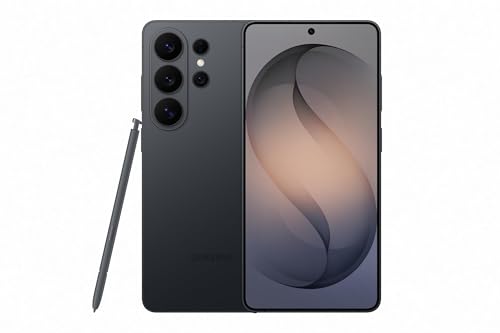
Samsung Galaxy S26 Ultra — Best Samsung Flagship for the Long Haul
The S26 Ultra’s title is a flagship roll call: an unlocked 2026 phone with 256GB, a Privacy Display, Galaxy AI, an AI camera, Super Fast Charging 3.0, a durable battery claim, and a US one-year warranty, in black. For this guide’s purposes, the important line is the invisible one. Samsung publicly committed its Galaxy S flagship line, from the S24 generation onward, to seven years of security and OS updates, and the S26 Ultra — the newest flagship in this roundup, launched in 2026 per its title — sits at the very start of that clock. No other pick here offers as much remaining runway: a seven-year commitment on a phone from this year is the longest future a phone buyer can currently purchase in this category.
That arithmetic is the review, and everything else is supporting cast — though the cast is strong. The Ultra is Samsung’s everything phone: the camera system, the display with its privacy feature, the charging speed, the build. A reader who keeps a phone for the full commitment wants the hardware to deserve the software’s lifespan, and the recurring failure of long-support phones is a body or battery that gives up in year four of a seven-year promise. Samsung’s flagship hardware, backed by the widest repair and accessory ecosystem in Android, is the safest bet in this guide against that failure — parts, batteries and knowledgeable shops will exist for this model for as long as the patches do.
The cautions are the flagship cautions. The price class is the ceiling of this roundup, unspoken here as everywhere; the phone is large, as Ultras are; and the commitment should still be verified in Samsung’s current documentation for the exact model and region, because this guide’s rule — the maker’s page decides — applies to the phones it praises most, not just the ones it questions. For the reader who wants one purchase to close the phone question until the next decade, this is the closing argument.
- Model: Samsung Galaxy S26 Ultra, unlocked Android smartphone (2026)
- Storage: 256GB; colour: Black
- Display: Privacy Display, per the listing title
- Charging: Super Fast Charging 3.0, per the listing title
- Warranty: US 1-year warranty, per the listing title
- Update commitment: Not stated in the listing title — Samsung’s published commitment for its recent Galaxy S flagship line is seven years of updates; verify in Samsung’s documentation
Strengths
- The newest flagship here — the full seven-year runway still ahead of it.
- Hardware and repair ecosystem most likely to outlast the software promise.
- Samsung’s flagship delivery record on monthly patches is long and public.
Trade-offs
- The flagship price class buys years many owners will not use — honest keepers only.
- A large handset for the whole of a long ownership.
- The commitment figure still requires verification in Samsung’s documentation, per this guide’s rule.
Best for: a buyer who intends, in writing, to keep one phone until the early 2030s and wants the hardware worthy of the plan. Not suited for: a two-year upgrader — they would be buying six years of commitment and using one, at the highest price in the guide.

Samsung Galaxy A37 5G (2026) — Best Mid-Range Samsung for Support
The A37 is where Samsung’s support story meets the middle of the market: a 2026 US-version unlocked phone with 128GB, an AMOLED display, a triple camera, IP68 sealing, a 5,000mAh battery and a US one-year warranty, in Awesome Lavender. A generation ago, a phone at this level carried a short, vague support promise and a two-year realistic life. Samsung’s recent A-series generations changed that expectation, with published multi-year commitments — spanning both security patches and OS upgrades — that moved the mid-range decisively closer to the flagship pattern. The A37 arrives inside that era, and this guide credits the direction of the line’s published policy while sending the reader to Samsung’s documentation for the exact span for this model, because mid-range figures are precisely where precision matters and approximation fails.
That discipline aside, the phone itself is a keeper’s phone in its bones. IP68 sealing at this level protects the long life from the short accidents; a 5,000mAh battery is the size that ages gracefully; the AMOLED display and triple camera are the parts an owner looks at daily for years, specced here without obvious economising. An A-series buyer keeping a phone for four or five years — the realistic ambition this pick serves — gets a handset whose hardware and whose maker’s support culture are finally pulling in the same direction.
The debits are the honest mid-range ones. Its patch cadence in later years will likely run to the slower rhythm Samsung applies beyond its flagships, and the exact commitment span is a documentation check, not a headline this review will print as fact. Readers for whom the number of years is the whole decision should compare Samsung’s published A37 figure against the Pixels’ seven before choosing. Readers for whom the phone is the decision — Samsung’s software, this size, this sealing, at this level — can buy it knowing the support era it was born into is the generous one.
- Model: Samsung Galaxy A37 5G (2026), unlocked, US version
- Display: AMOLED, per the listing title
- Sealing: IP68, per the listing title
- Battery: 5,000mAh
- Storage: 128GB; colour: Awesome Lavender; US 1-year warranty
- Update commitment: Not stated in the listing title — Samsung publishes multi-year commitments for its recent A-series; verify the exact span for this model in Samsung’s documentation
Strengths
- A 2026 A-series phone born into Samsung’s extended-support era.
- IP68 sealing and a 5,000mAh battery — hardware specced for a long life.
- US version with a US warranty, unlocked for carrier freedom.
Trade-offs
- The exact update span requires Samsung’s documentation — the title is silent.
- Later-year patch cadence on A-series typically runs slower than the flagships’.
- 128GB is the configuration offered here.
Best for: a four-to-five-year keeper who wants Samsung’s software and sealing at the middle of the market. Not suited for: a years-or-nothing purist — until Samsung’s exact figure for this model is in front of them, the Pixels’ published seven is the firmer ground.

Samsung Galaxy S25 FE — Best Fan-Edition Long-Term Buy
Samsung’s FE line exists to sell the flagship experience at a friendlier position, and the S25 FE’s title lists the recipe: a 2025 phone with 128GB, AI features, a large display, a 4,900mAh battery, a high-resolution camera with AI photo edits, a durability claim and a US one-year warranty, in JetBlack. Its seat in this guide comes from its family. The S25 generation sits inside Samsung’s published seven-year flagship commitment, and the FE was launched as a member of that family under the same policy umbrella — a fact Samsung published at the line’s launch, and the reason a value-positioned phone can be recommended in a longevity guide without the usual mid-range asterisks. As always here, the title itself prints no span, and the reader verifies the current figure for the exact model in Samsung’s documentation.
The FE proposition suits keepers particularly well because of where its economising falls. The Fan Edition trims ceremony — materials, camera exotica — rather than the platform’s core, so the phone’s daily speed and its support life resemble its flagship siblings’ far more than its price position suggests. For a reader who will keep a phone for five-plus years, the arithmetic is attractive: flagship-length safety, flagship-family software, and a bill that leaves room in the budget for the case, the spare charger and the battery service in year four that long ownership eventually involves.
Two honest notes. The clock on the S25 family started at its 2025 launch, so this phone’s remaining runway is a year shorter than the S26 Ultra’s — the subtraction from the guide section, applied. And 128GB is, again, the configuration in this listing, which a long keeper should weigh seriously: storage is the one specification that cannot be patched later, and a seven-year phone filled in year two is a short phone wearing a long promise.
- Model: Samsung Galaxy S25 FE (2025), unlocked Android
- Storage: 128GB; colour: JetBlack
- Battery: 4,900mAh, per the listing title
- Display: Described as large in the listing title; size not stated there
- Warranty: US 1-year warranty, per the listing title
- Update commitment: Not stated in the listing title — the S25 line sits under Samsung’s published seven-year flagship commitment; verify for this model in Samsung’s documentation
Strengths
- Flagship-family support life at the FE’s friendlier position.
- Economising that trims ceremony rather than platform or longevity.
- A 4,900mAh battery and durability claim suited to long ownership.
Trade-offs
- One year of the family clock has already run since the 2025 launch.
- 128GB cannot be expanded by any update — count a keeper’s needs honestly.
- Its camera and materials sit a rung below the Ultra’s, by design.
Best for: a value-minded keeper who wants the S family’s support span without the Ultra’s bill or bulk. Not suited for: a media hoarder planning seven years of video on 128GB — the storage, not the software, will retire this phone early.

Fairphone 5 — Best Repairable Longevity Pick
Fairphone is the only maker in this guide for whom longevity is not a policy but the entire company. The Fairphone 5 listing is an international GSM-unlocked phone with 256GB and 8GB of RAM, dual SIM by nano plus eSIM, Android 13 as launched, in the Transparent Edition — the finish that shows the phone’s modular, repairable insides through its back, which is either a design statement or a manifesto depending on the reader. Fairphone published an unusually long support ambition for this model, with security support aimed toward 2031 — a horizon that, for a phone launched in 2023, rivals or exceeds the headline commitments elsewhere in this guide — and it pairs that software horizon with the thing no other pick offers: hardware designed to be opened, with parts like the battery and screen replaceable by the owner.
That pairing is the deepest answer in this guide to the longevity problem, because phones die of two causes — abandoned software and broken hardware — and every other pick here only solves the first. A Fairphone with a tired battery in year five gets a new battery, fitted at the kitchen table; a cracked screen is a spare part, not a funeral. For the reader whose question is not “how long will they patch it” but “how long can this object serve me”, the Fairphone is the most complete philosophy on the page.
There is also a transparency point, in both senses. The Transparent Edition’s visible insides make the phone’s philosophy legible to anyone who picks it up — screws, modules, a battery that is plainly a replaceable object rather than a sealed secret — and owners report that the design starts the right conversations about how long things should last. In a guide about commitments, that legibility counts for something: this is the one phone whose long-life promise you can see, literally, through its back, and whose maker publishes spare-part availability as a feature rather than treating repair as a threat to next year’s sales.
The compromises are real and should be chosen knowingly. Fairphone is a small maker: its patch cadence runs slower than Google’s monthly drumbeat, its camera and performance sit in the mid-range, its international GSM build asks US buyers to check band fit for their carrier, and it launched on Android 13, so its upgrade journey is longer than the phones born yesterday. None of that is hidden here, because the Fairphone buyer is not buying a spec sheet — they are buying a decade-shaped intention, from the one company whose whole existence argues for it.
- Model: Fairphone 5 5G, GSM unlocked, international version
- Memory and storage: 256GB + 8GB RAM, per the listing title
- SIM: Dual SIM (nano-SIM + eSIM)
- Platform at launch: Android 13, per the listing title
- Design: Transparent Edition; modular, owner-repairable construction per the maker’s design
- Update commitment: Not stated in the listing title — Fairphone’s published aim for this model is security support toward 2031; verify the current position in Fairphone’s documentation
Strengths
- Software horizon aimed toward 2031, paired with hardware the owner can repair.
- Replaceable battery and screen turn the commonest phone deaths into spare parts.
- 256GB of storage — the long keeper’s specification — as standard here.
Trade-offs
- A small maker’s slower patch cadence than Google’s monthly rhythm.
- Mid-range camera and performance, and an international GSM build to check against US carriers.
- Launched on Android 13 — its runway is long but its start line was earlier.
Best for: a repair-minded keeper who wants one phone to serve, with their own screwdriver’s help, toward the next decade. Not suited for: a monthly-patch purist on a US carrier whose bands this international model does not serve — the Pixels answer that reader’s brief directly.
How Do the Six Long-Support Picks Compare?
| Phone | Maker’s published commitment (line) | Stated in listing title? | Launch anchor | Storage | Longevity extra |
|---|---|---|---|---|---|
| Pixel 9a | Seven years (Pixel 9 line) | No | Pixel 9 generation | 128GB | Direct monthly updates from Google |
| Pixel 9 | Seven years (Pixel 9 line) | No | Pixel 9 generation | 128GB | Compact 6.3″ body for long ownership |
| Galaxy S26 Ultra | Seven years (Galaxy S flagship line) | No | 2026 | 256GB | Widest repair ecosystem |
| Galaxy A37 5G | Multi-year A-series commitment — exact span per Samsung | No | 2026 | 128GB | IP68 sealing for the long life |
| Galaxy S25 FE | Seven years (Galaxy S25 family) | No | 2025 | 128GB | Flagship policy at FE position |
| Fairphone 5 | Security support aimed toward 2031 | No | 2023 | 256GB | Owner-repairable hardware |
Notice also the storage column’s quiet warning: five of the six configurations sit at 128GB or 256GB, and for a phone intended to serve most of a decade, storage is the specification time cannot forgive. The buyer who stretches one configuration upward at purchase is buying years; the buyer who saves there is renting them.
Two columns of that table do the teaching. The “stated in title” column is a row of honest negatives — the listings simply do not sell this quality — and the launch-anchor column is the subtraction every buyer must perform, because a commitment is a span from a birthday, not from a purchase. Read those two columns together and you are shopping this category the way it deserves to be shopped.
How Do Regions, Variants and Sellers Change the Promise?
A commitment is published for a model line, but it is delivered to a specific phone in a specific place, and the gaps between those two statements are where long-term buyers get caught. Regional variants of the same phone can sit on different update tracks; a model bought as an international import may receive its patches on the schedule of a market the buyer does not live in. Carrier-locked variants add the carrier’s own approval layer. Even the seller matters: a phone sourced through unofficial channels may be a variant whose paperwork — warranty, update track, band fit — belongs to another continent. Every pick in this guide is a named variant in a verified listing, and the reviews flag the international builds, like the Fairphone’s, precisely so the buyer checks the right documentation for the phone actually in the basket.
The verification habit this implies is short enough to become reflex. Before purchase: open the maker’s support page for the exact model number, confirm the commitment and its end date as currently published, and confirm the variant matches your region and carrier. After purchase: check once that the phone’s software page shows the expected version and patch level, and that automatic updates are on. That is the whole ritual — ten minutes at the start of a seven-year relationship — and it converts the commitment from a thing you read in a guide like this one into a thing you have personally confirmed with the only authority that can keep it.
Why Does This Category Matter More for Hand-Me-Down Phones?
Phones in real families cascade. The flagship bought today becomes a teenager’s first phone in three years and a grandparent’s handset in five, and at every handover the question that decides whether the cascade is kind or cruel is the one this guide asks: is it still supported? A phone passed down inside its commitment arrives as a safe, current device; a phone passed down beyond it arrives as a liability wearing a familiar face, holding a young person’s accounts or an older person’s banking on software nobody is patching anymore. Long-commitment phones are therefore not just longer-lived for their first owner — they are the only phones that can be honestly gifted twice.
This reframes the purchase arithmetic in a way the sticker never shows. A seven-year phone that serves two owners across its life has halved its cost per year of safe service before any resale value is counted, and it has kept two people out of the budget-phone replacement cycle entirely. Families choosing between a cheap short-support handset and a long-commitment one should run the cascade numbers, not the single-owner numbers — it is the rare comparison in consumer electronics where the more expensive object is cheaper in the only currency that compounds, which is years of safe use per household.
How Do You Keep a Phone Safe and Useful for Its Whole Supported Life?
Start at purchase with the end in mind. Note the commitment’s end date — from the maker’s documentation, not from this guide — in the same calendar that holds the warranty, and set a reminder a year before it. Buy the storage configuration for the life you are planning, not the life you have today: photographs accumulate, apps swell, and the 128GB that feels airy in year one is the ceiling that retires more long-commitment phones than any processor does. Register the warranty, keep the receipt somewhere findable, and photograph the phone’s identifiers into the cloud account the phone itself backs up to.
During the life, adopt the update rhythm rather than enduring it. Turn on automatic updates for both the system and apps, and let the monthly patch land when it offers itself — deferring security patches out of vague superstition is the one unforced error that cancels the entire point of buying a phone from this guide. Reboot occasionally, keep a sensible amount of storage free so updates install without drama, and once a year, on the phone’s birthday, audit the arrangement: Are the patches still arriving on the published rhythm? Has the maker’s page moved the end date? Is the battery’s health still serving the day? Ten minutes a year is the whole maintenance contract of a well-chosen phone.
Plan the hardware alongside the software. A seven-year software promise deserves a battery strategy: expect the cell to tire in the middle years, learn now whether your model offers a reasonable battery service — trivially, in the Fairphone’s case, by design; through Samsung’s wide service world for the Galaxies; through Google’s channels for the Pixels — and budget for it as maintenance rather than failure. Fit the case and the screen protector on day one of year one, not as accessories but as the physical half of the longevity plan.
And plan the succession before the end date plans it for you. In the final supported year, migrate the sensitive life — banking, health, work — to the successor phone first, and let the old handset retire gradually into music, photographs, smart-home duty and the spare drawer, offline where its duties allow. A phone that was bought by its end date, kept by its rhythm and retired by its owner’s choice has given exactly the service this category promises, and the habit of mind that produced that outcome is worth more than any single model in this roundup.
What Mistakes Do Long-Term Buyers Keep Making?
The first is believing the listing. As this guide’s spec boxes repeat to the point of pedantry, the titles print cameras and batteries and say nothing about updates — so a shopper who compares listings alone will choose a phone with a two-year support life over one with seven, without ever seeing the number that mattered. The commitment lives in the maker’s documentation. Go there, for the exact model, before the purchase and not after the first missed patch.
The second is forgetting the launch anchor. A seven-year commitment on a phone launched three years ago is a four-year phone, and the market is full of discounted previous-generation flagships whose support clocks are quietly half-spent. Sometimes that is still the right buy — the S25 FE’s review does that arithmetic openly — but it must be bought as the shorter phone it is, at a price that admits it.
The third is starving the phone at purchase: 128GB for a seven-year life, a battery already small, a case deferred until after the first drop. Long ownership punishes every economised specification in turn, because time multiplies small shortages. The keeper’s discipline is to buy the boring surpluses — storage, battery size, protection — and let the glamorous specifications go.
The fourth is deferring the patches on a phone bought precisely for its patches. Automatic updates exist; turn them on. A reader who disables updates to preserve a familiar interface is keeping the photograph of security rather than the thing itself, and the first duty of a long-support phone is to be allowed to do its job.
Final Recommendation
For most readers who asked this question, the Pixel 9a is the answer in its purest form: the seven-year commitment without the flagship bill, delivered monthly and directly, in a phone that asks nothing exotic of its owner. Readers who want the complete Pixel should take the Pixel 9; readers in Samsung’s world who want the longest runway money can buy should take the S26 Ultra, with the S25 FE as the same family’s value route and the A37 as the mid-range Samsung born into the generous era. And the reader who wants to hold the whole idea in one object — software supported toward 2031, hardware their own hands can mend — should take the Fairphone 5 and its manifesto. Whichever you choose, write the end date in the calendar today, turn the automatic updates on tonight, and buy the storage for the life you intend — because a phone kept safe for seven years is not an accident of good hardware, it is the result of a buyer who read the promise carefully, believed the arithmetic, and then let the years do what they were committed to do.
Frequently Asked Questions
What is the difference between security updates and Android version upgrades?
Security updates are the regular patches — monthly or quarterly — that close newly discovered vulnerabilities; they are the safety-critical stream. Version upgrades are the annual jumps to a new Android release, bringing features and the platform support that apps gradually require. A strong commitment, like the flagship lines’ seven-year policies discussed here, covers both; when a maker’s promise separates them, the security span is the one to read first.
Why does no listing title state the update commitment?
Because listings are written to sell cameras, screens and batteries, and update policy lives in the makers’ launch materials and support documentation instead. Every spec box in this guide records that silence deliberately. The practical rule: never infer support life from a listing, a review’s enthusiasm or a brand’s general reputation — read the maker’s published commitment for the exact model and region.
Does the seven-year clock start when I buy the phone?
No — commitments run from the model line’s launch. A phone bought a year after launch carries roughly six remaining years of a seven-year promise. This is why the comparison table lists launch anchors, and why a discounted older flagship can be either a bargain or a trap depending on whether the buyer did the subtraction. The maker’s documentation gives the dates; the arithmetic takes a minute.
Are unlocked phones better for updates than carrier phones?
Generally, yes. An unlocked phone receives its updates on the maker’s schedule, while carrier-sold variants can wait for an additional layer of carrier approval and customisation. Every pick in this guide is an unlocked model, which removes that variable. Carrier phones from these same lines still carry the same underlying commitments, but the unlocked route is the one whose timing the owner controls.
What should I do when my phone reaches the end of its updates?
Plan the succession rather than drifting into it: move banking, health and work accounts to a supported phone first, keep the old handset for lower-risk duties — media, photographs, home control — preferably with sensitive accounts removed, and replace it as the main device within a sensible window. An unsupported phone is not instantly dangerous, but its exposure only grows, and the end date was published years in advance precisely so this moment never has to be a surprise.
Can I check a phone’s patch level before buying a used one?
Yes, and you should: the Android version and security patch date are shown in the phone’s settings, and a used phone whose patch date is months stale tells you either that its owner deferred updates or that its support has already ended. Compare that date against the maker’s published end date for the model. A hand-me-down or second-hand purchase from the lines in this guide, checked this way, can be an excellent route into long support at a shorter remaining span — bought, as ever, with the arithmetic done in the open.
Do I need to install updates the day they arrive?
Promptly is wise; instantly is optional. Security patches close holes that are, by the time the patch ships, publicly known — so the weeks after a patch’s release are exactly when an unpatched phone is most exposed. Automatic updates with a sensible overnight schedule give you the protection without the vigilance. What this guide counsels against is the indefinite deferral: the reader who buys a phone for its seven years of patches and then declines to install them has purchased a promise and refused its delivery.
Is the Fairphone’s slower patch rhythm a deal-breaker?
It is a trade-off to choose knowingly. Google’s monthly cadence is the category’s fastest drumbeat; Fairphone ships more slowly, while offering a support horizon toward 2031 and hardware the owner can repair — a different route to a long, safe life. Readers whose threat model demands the freshest patch every month should take a Pixel. Readers who value repairability and total lifespan may fairly choose Fairphone’s bargain instead.
Related Guides
Long-keepers tend to share this batch’s other questions: our guide to the best android phones for emulation gaming covers phones bought for years of play, the best smartphones for signal strength tackles reception for rural keepers, and the best prepaid smartphones for senior citizens rounds up contract-free handsets for the family members whose phones you also maintain.


