What's inside
- Key Takeaways
- Quick Picks
- How Did We Judge Autofocus Without a Laboratory?
- Reading the Focus Table: Six Systems, Three Philosophies
- What Do Phase, Contrast and Hybrid Autofocus Actually Mean for Your Footage?
- How Should You Set Up Autofocus for a Talking-Head Channel?
- Which Focus Failures Should You Blame on the Lens or the Light Instead?
- How Does Autofocus Behave When the Room Goes Dark?
- Which Focus Mistakes Do Vloggers Make With Good Cameras?
- How Does Autofocus Change When You Stream Instead of Record?
- What Happens When Two Subjects Compete for the Focal Plane?
- How Long Does It Take to Learn to Trust an Autofocus System?
- Does Autofocus Quality Change How a Channel Gets Filmed?
- What Should You Check in the First Week With a New Autofocus Camera?
- How Do These Systems Handle Glasses, Hats and Other Focus Saboteurs?
- What Role Does the Kit Lens Play in the Focus Story?
- Final Recommendation
- Frequently Asked Questions
- Related Guides
As an Amazon Associate I earn from qualifying purchases. This post may contain affiliate links at no extra cost to you.
gizmoverdict.com is reader-supported. When you buy through links on our site, we may earn an affiliate commission.
Where to buy: Each camera below is linked to the listing held in this site’s verified pool — body-only where the pool says body-only, lens kit where a lens is named — so check the configuration line before ordering and you will receive exactly the camera its review describes.
Every other camera guide ranks a dozen virtues and hopes you will weight them yourself. This one ranks a single virtue, because the best autofocus vlogging cameras are chosen by the one system that decides whether solo footage survives. A vlogger working alone has no focus puller, no operator, no second pair of eyes on the monitor. There is a person talking, moving, gesturing, holding products toward the lens — and an autofocus system either holds that person’s eye with quiet certainty or wanders off to the bookshelf at the exact moment the sentence mattered. Everything else in this guide is context. Focus is the plot.
Judging autofocus honestly requires separating three talents that marketing merges into one word. The first is acquisition: how quickly the camera finds the right subject when the record button is pressed or the subject enters the frame. The second is loyalty: whether it stays with that subject through turns, occlusions, glasses, hats and the hand that rises to emphasise a point. The third is manners: whether focus transitions glide like a professional pull or snap and pulse like a nervous tic. A camera can be brilliant at the first and hopeless at the third, and vlogging — long, continuous, face-led — punishes weak loyalty and bad manners far more than slow acquisition.
The six cameras below earned their places with different technologies aimed at the same promise. Sony’s AI-driven subject recognition appears twice, in a compact full-frame body and in a vlogging flagship. Panasonic fields two phase-hybrid systems, one full-frame and one Micro Four Thirds, from the manufacturer that famously arrived late to phase detection and then engineered like it had something to prove. Fujifilm brings subject-detection to its APS-C hybrid, and Nikon fields the value pick — a camera whose autofocus is humbler in specification and smarter in practice than its price suggests. Read for the behaviour, not the badge.
Key Takeaways
- Autofocus quality for vlogging means acquisition, loyalty and smooth transitions — in that order of daily importance, loyalty first.
- Sony’s AI subject recognition in the a7C II and ZV-E1 is the current benchmark for set-and-forget face tracking.
- Panasonic’s phase hybrid systems in the S5IIX and GH7 ended that brand’s contrast-only era; both track subjects with genuine authority.
- The Fujifilm X-S20 adds subject detection to Fujifilm colour, though its tracking persistence sits a step behind Sony’s.
- The Nikon Z30 proves a modest specification can still deliver dependable eye focus for seated and walking vlogs.
- Lens choice shapes autofocus behaviour: native lenses with modern motors focus faster and quieter than adapted glass.
Quick Picks
| Pick | Badge | Why it earns its place |
|---|---|---|
| Sony a7C II | Best overall | AI-driven subject recognition in a compact full-frame body — the most trustworthy focus here, with stills to match. |
| Fujifilm X-S20 | Best APS-C | Subject-detection autofocus wrapped around Fujifilm colour and strong stabilisation for hybrid creators. |
| Panasonic LUMIX S5IIX | Best video features | Phase hybrid autofocus plus the deepest video toolkit in this guide, from ProRes to streaming. |
| Nikon Z30 | Best value | Dependable eye-detection autofocus in Nikon’s small creator body, sold with its wide kit zoom. |
| Sony ZV-E1 | Best low light | The full-frame vlogging flagship: AI focus intelligence on a 12.1MP sensor that sees in the dark. |
| Panasonic LUMIX GH7 | Best Micro Four Thirds | Phase hybrid focus in a professional video body with internal ProRes RAW and relentless recording manners. |
How Did We Judge Autofocus Without a Laboratory?
We judged the way a solo creator experiences it: by the footage that survives. A system scores well when a speaker can walk toward the camera, turn to fetch a prop, hold the prop between their face and the lens, then return to the chair — and the focal plane follows the story instead of commenting on it. Subject-detection breadth mattered next: people first, because vlogging is people, then animals and vehicles for the channels that film them. We also valued honesty in failure. Every system here can be beaten by a dark room, a backlit window or a face in extreme profile; the better cameras fail rarely, recover quickly and, crucially, fail softly rather than hunting in visible pulses.
Two disciplines governed the claims in this guide. First, we describe each system as its manufacturer frames it — Dual Pixel-style phase detection, phase hybrid, AI subject recognition — without inventing laboratory measurements. Second, we treat the lens as part of the system, because it is: a modern native lens with a fast, quiet motor will make any of these bodies look cleverer, and an adapted lens with a lazy motor will make the cleverest body look drunk. The reviews name the behaviour you can expect from the body with its natural glass, which is the only promise a buyer can actually take home.
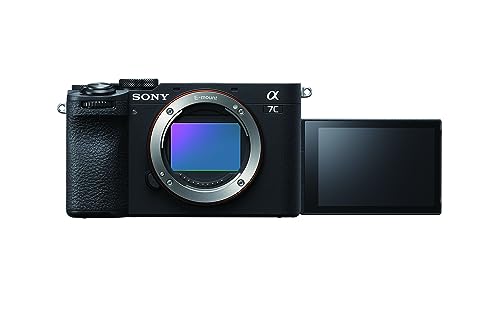
Sony a7C II — Best overall
The a7C II is what happens when flagship autofocus escapes into a body small enough to vlog with. Its AI processing unit does not merely find eyes; it estimates the whole human pose, so focus holds when the subject turns away, bends down or is briefly half-hidden behind the product they are demonstrating. Faces, animals, birds, vehicles and more are recognised as categories rather than contrast patterns, and the practical result is a camera you can genuinely stop supervising. Set it on a tripod, walk into frame, and behave like a person instead of a focus target.
Around that intelligence sits a complete full-frame hybrid: a 33-megapixel sensor that photographs superbly, 4K video with high frame rates available at a crop, and in-body stabilisation rated among the strongest in its class, which steadies the walking segments between the seated ones. The compact rangefinder-style body keeps a vlogging rig light, the vari-angle screen handles self-framing, and the E-mount catalogue offers every lens a focus system could wish for, including the quiet-motor glass that makes the tracking silent as well as sure. Heat on the longest 4K sessions and a single card slot are the professional caveats. As an autofocus-first purchase, it is the most complete answer in this guide.
Its focus manners deserve their own sentence, because they are what owners actually praise after the first month. Transitions between a face and a held object glide at a speed you can tune, breathing compensation keeps the framing calm with compatible lenses, and the touch interface lets a tap overrule the machine instantly when the story changes. Autofocus this good disappears, and a disappearing autofocus is the entire point: the audience watches the speaker, never the machinery. Creators upgrading from contrast-detection cameras describe the change as hiring an operator, and for once the metaphor undersells it, because operators blink.
- Sensor: full-frame, 33MP class
- Autofocus: AI processing unit, wide subject recognition
- Video: 4K, high frame rates with crop
- Stabilisation: in-body, five-axis
- Screen: vari-angle touchscreen
- Mount: Sony E, deepest native catalogue
Strengths
- Pose-aware tracking that survives turns and occlusions
- Full-frame stills and video in a genuinely small body
- Tunable, cinematic focus transitions
Trade-offs
- Long high-rate 4K sessions test its cooling
- Single card slot for professional workflows
- Body-only purchase; the lens is a second decision
Best for: solo creators who want the focus system to vanish from their attention entirely.
Not suited for: marathon event recording where dual slots and active cooling are the brief.

Fujifilm X-S20 — Best APS-C
The X-S20 brought Fujifilm’s autofocus into the modern subject-detection era and wrapped it in the most likeable hybrid body in this guide. Its autofocus recognises people, animals, birds, vehicles and more, prioritising eyes within faces with a persistence earlier Fujifilm generations could not claim. It is not the equal of the Sony pair here for stubbornness — a chaotic background or a fast-crossing subject can still talk it out of its decision — but for the seated presenter, the walking monologue and the family documentary, it tracks with a competence that lets the filming feel unchaperoned.
The rest of the camera argues strongly for itself. The 26.1-megapixel sensor carries Fujifilm’s film simulations, so footage leaves the camera with a finished look that suits creators allergic to grading. In-body stabilisation is genuinely effective for handheld work, the body records high-resolution open-gate video for editors who reframe between horizontal and vertical, and the whole package stays small and friendly in the hand. Battery endurance improved markedly over its predecessor, addressing the old APS-C complaint. For a creator whose channel mixes travel, family and talking-head work — and whose eye prefers Fujifilm’s colour to everyone else’s — the X-S20’s autofocus is now good enough that it stops being the reason to look elsewhere.
One honest note belongs in any Fujifilm focus discussion: the system rewards a moment of setup. Choosing the correct subject category rather than leaving detection on a generic setting, and keeping the firmware current as Fujifilm refines its algorithms, visibly improves the hit rate. Owners who treat those two minutes as part of the ritual describe a camera that rarely embarrasses them; owners who never open the autofocus menu sometimes blame the body for the menu’s defaults. That is a fair trade for the colour, the stabilisation and the price class — and it keeps the X-S20 as this guide’s APS-C recommendation for autofocus-led vlogging with a photographer’s soul.
- Sensor: 26.1MP APS-C X-Trans
- Autofocus: subject detection for people, animals, vehicles
- Video: open-gate high resolution, 4K modes
- Stabilisation: in-body image stabilisation
- Colour: Fujifilm film simulations
- Body: compact hybrid with deep grip
Strengths
- Subject detection added to beloved Fujifilm colour
- Stabilisation that flatters handheld vlogging
- Open-gate recording serves two aspect ratios
Trade-offs
- Tracking persistence a step behind Sony’s best
- Best results ask for deliberate AF setup
- Body-only listing; lens chosen separately
Best for: hybrid creators who want Fujifilm colour with modern, trustworthy tracking.
Not suited for: filming chaotic multi-subject scenes where focus must never waver.

Panasonic LUMIX S5IIX — Best video features
The S5IIX is the camera that ended a decade of jokes. Panasonic’s contrast-based DFD autofocus was once the automatic disqualification in any video conversation; the phase hybrid system in this body replaced it with on-sensor phase detection working alongside contrast, and the result tracks faces, eyes and bodies with the authority vloggers had been demanding from this brand for years. It will still occasionally deliberate where the Sony system simply knows, but the gap has closed from a canyon to a crack, and what Panasonic offers in exchange is the deepest video feature set in this guide.
Read the listing’s own words: 5.8K ProRes recording, RAW output over HDMI, IP streaming, and an Active I.S. mode that smooths walking footage to a degree that embarrasses cameras costing more. The 24.2-megapixel full-frame sensor is a proven low-light performer, the body is weather-sealed and fan-cooled for sessions that outlast the mirrorless norm, and the X variant’s all-black, creator-oriented trim hides the logos and adds the streaming and codec options professionals actually use. For the vlogger who is also a filmmaker — client work, events, productions where the vlog camera moonlights as the B-camera — no other pick here covers as much ground.
Its autofocus personality suits its professional brief. Subject detection covers people and animals, the tracking box is configurable, and focus transitions can be shaped for narrative work where a slow, deliberate pull is the desired look rather than a defect. Paired with L-mount lenses — a catalogue now shared across several manufacturers — the system grows in any direction a career points. The S5IIX asks more learning than the set-and-forget Sonys, and rewards it with control. In an autofocus guide it earns its podium honestly: not the single cleverest tracker, but the tracker attached to the most complete video instrument on the page.
- Sensor: 24.2MP full-frame
- Autofocus: phase hybrid AF with subject detection
- Video: 5.8K ProRes, RAW over HDMI, IP streaming
- Stabilisation: Active I.S. plus in-body system
- Cooling: fan-cooled body for long sessions
- Mount: L-mount, shared multi-brand catalogue
Strengths
- Phase hybrid tracking from a formerly contrast-only brand
- Professional codec and streaming toolkit built in
- Active stabilisation transforms walking footage
Trade-offs
- Focus deliberates a beat longer than Sony’s AI
- Feature depth means a real learning curve
- Larger rig than the compact full-frame picks
Best for: creator-filmmakers who need one body for vlogs and production work.
Not suited for: minimalists who want automation to make every decision.

Nikon Z30 — Best value
The Z30 is the reminder that autofocus quality and autofocus specification are different things. Nikon’s small creator body uses a hybrid system with eye detection for people and animals, and within its brief — a seated presenter, a walking monologue, a product held toward the lens — it behaves with a steadiness that embarrasses cameras with longer feature lists. It finds the eye, it keeps the eye, and it does so in a body with no viewfinder, a fully articulating screen and controls arranged by people who understood that its owner films alone at arm’s length.
The listing’s honesty helps: Nikon calls it their most compact, lightweight mirrorless stills and video camera, and pairs it with the 16-50mm wide zoom whose short end is genuinely wide enough for self-framing at a desk. Video runs to 4K at 30 frames per second, long recording is a strength of the design, and the microphone socket plus clean streaming output make it a legitimate desk-studio hub. Where the system shows its class is in low light and in tracking exotic subjects at speed — the phase systems above are cleverer, and a dim room will make the Z30’s focus breathe where the Sonys hold their nerve.
For its intended owner, those boundaries rarely appear on screen. The Z30’s focus is at its best exactly where vlogging happens: one person, conversational distance, reasonable light. It also inherits Nikon’s colour and a growing Z-mount lens range, so the value pick is not a dead end. Buyers choosing it over the systems above are not buying worse vlogs; they are declining to pay for tracking talents — birds in flight, vehicles at speed, faces in crowds — that their format never uses. That is not settling. That is shopping accurately, and this guide respects it enough to give the Z30 its own podium rather than a footnote.
- Sensor: APS-C, 20.9MP class
- Autofocus: hybrid with eye detection, people and animals
- Video: 4K up to 30fps, long-record friendly
- Screen: fully articulating touchscreen, no viewfinder
- Kit: 16-50mm wide zoom in this listing
- Audio: microphone input fitted
Strengths
- Eye focus that behaves far above its class
- Small, simple body designed around solo filming
- Long sessions without drama or overheating theatre
Trade-offs
- Focus breathes in genuinely dim rooms
- No in-body stabilisation
- Subject menu narrower than the AI systems
Best for: seated and walking vloggers who want dependable eye focus without flagship money.
Not suited for: low-light event filming where tracking must be infallible.
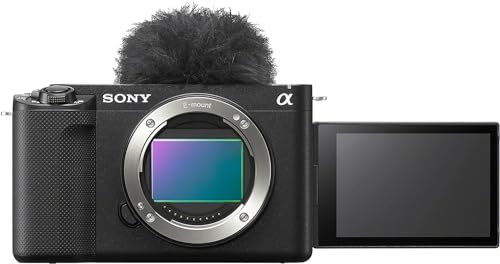
Sony ZV-E1 — Best low light
The ZV-E1 takes the a7C II’s autofocus intelligence and mounts it on the most light-hungry sensor Sony makes for creators: a 12.1-megapixel full-frame chip whose enormous pixels keep faces clean and focus confident in light that turns other cameras tentative. Autofocus and low light are secretly the same subject, because focus systems hunt when they cannot see; the ZV-E1 sees in near-darkness, and its AI subject recognition — people, animals, birds, vehicles, even body-part detection when a face turns away — operates in conditions where lesser systems have already given up and started pulsing.
Everything else about the body serves the solo night-owl creator. The 4K recording runs to high frame rates for slow motion, five-axis in-body stabilisation steadies the frame, and features like focus breathing compensation and an AI-driven auto-framing mode — which crops and follows you within the frame like a virtual operator — push the one-person-crew illusion further than any rival here. The trade-offs are thermal and photographic: the compact body works hard at its highest settings, so long top-spec sessions need managing, and 12 megapixels limits stills cropping. Neither matters much to its intended owner, for whom this is the autofocus king after dark.
Its focus behaviour in mixed company deserves emphasis. Hand it a frame containing a face, a dog and a product, and the priority logic behaves the way a director would instruct: the person leads, the presented object gets its moment when raised, and the system returns to the eye without being asked. That judgement, executed silently dozens of times per video, is what separates an autofocus system from a focus feature. Creators filming interviews, demonstrations or family life — scenes where the important subject changes by the second — will find the ZV-E1 making correct decisions they did not know a camera could make.
- Sensor: 12.1MP full-frame Exmor R
- Autofocus: AI unit, subject and body-part recognition
- Video: 4K up to 60p, higher via modes
- Stabilisation: five-axis in-body, dynamic active mode
- Extras: auto-framing, breathing compensation
- Mount: Sony E
Strengths
- Focus stays authoritative in very low light
- AI priority decisions mirror a human operator’s
- Auto-framing crops and follows a moving speaker
Trade-offs
- Top settings demand thermal respect
- 12MP stills limit cropping ambitions
- Premium body with a premium lens bill to follow
Best for: creators filming evenings, interiors and events where light cannot be arranged.
Not suited for: stills-led hybrids who crop photographs aggressively.

Panasonic LUMIX GH7 — Best Micro Four Thirds
The GH7 completes Panasonic’s autofocus redemption on the Micro Four Thirds side. Its phase hybrid system — phase detection working with contrast, with subject detection for people, animals and vehicles — tracks with a confidence that would have been unimaginable from this line a generation ago, and it does so inside the most professionally serious video body in this guide: internal ProRes RAW recording, real-time LUTs, an Adobe-cloud-friendly workflow and cooling that treats long sessions as a design requirement rather than a hope.
Micro Four Thirds brings its own autofocus advantages that spec sheets undersell. The smaller sensor’s deeper depth of field is forgiving in a way full-frame is not: a speaker leaning toward the lens stays within acceptable focus through a wider range of movement, which makes the GH7’s tracking look even steadier in practice than its algorithms alone would earn. The included 12-60mm lens covers the vlogging distances and far beyond, and the system’s lenses are small enough that a full kit travels in a sling. The listing’s workflow language — shooting to post-production — is accurate: this is a camera for creators whose vlog is one output of a serious video practice.
Reliability is the closing argument. The GH-series built its reputation on recording that does not stop, focus that does not wander and bodies that survive working lives, and the GH7’s phase hybrid system removes the one asterisk that used to follow the family name. For documentary-style vloggers — travel series, process films, anything shot in uncontrolled light over uncontrolled hours — that combination of tracking, depth-of-field forgiveness and stamina is a distinct philosophy of autofocus quality: not the cleverest brain, but the fewest surprises across a thousand hours of footage.
- Sensor: Micro Four Thirds, 25.2MP class
- Autofocus: phase hybrid with subject detection
- Video: internal ProRes RAW, real-time LUT
- Kit: 12-60mm f/2.8-4.0 lens in this listing
- Workflow: Adobe Cloud compatible pipeline
- Cooling: designed for extended recording
Strengths
- Phase hybrid tracking in a stamina-first body
- Deep depth of field forgives speaker movement
- Professional codecs without external recorders
Trade-offs
- Smaller sensor trails full-frame in darkness
- Professional depth means professional menus
- System investment in a smaller-format mount
Best for: documentary and production vloggers who record long and grade seriously.
Not suited for: shallow-depth romantics who film mainly for background melt.
Reading the Focus Table: Six Systems, Three Philosophies
| Camera | AF system | Subject detection | Sensor | Stabilisation | Focus personality |
|---|---|---|---|---|---|
| Sony a7C II | Phase with AI unit | People, animals, birds, vehicles and more | Full-frame 33MP | In-body | Set-and-forget |
| Fujifilm X-S20 | Subject-detection AF | People, animals, birds, vehicles | APS-C 26.1MP | In-body | Capable, setup-rewarded |
| Panasonic S5IIX | Phase hybrid | People, animals | Full-frame 24.2MP | Active I.S. | Professional control |
| Nikon Z30 | Hybrid with eye detection | People, animals | APS-C 20.9MP | Lens-based | Dependable simplicity |
| Sony ZV-E1 | Phase with AI unit | Wide menu plus body-part tracking | Full-frame 12.1MP | In-body, dynamic | Low-light authority |
| Panasonic GH7 | Phase hybrid | People, animals, vehicles | MFT 25.2MP | In-body | Stamina and forgiveness |
Three philosophies organise the table. Sony’s is prediction: an AI unit that understands bodies and intentions, holding focus through the moments when the face itself is unavailable. Panasonic’s is engineering completeness: phase detection added to mature contrast systems, inside bodies built to record forever. Fujifilm and Nikon represent the pragmatic school — detection systems tuned to the subjects their owners actually film, at prices that leave budget for lenses. None of these philosophies is a placeholder for the others, and the right one is the one whose failure modes your format never triggers.
What Do Phase, Contrast and Hybrid Autofocus Actually Mean for Your Footage?
Contrast-detection autofocus judges focus by trying it: the lens nudges back and forth until the image’s contrast peaks, which is why older systems visibly pulse. It is accurate at rest and maddening in motion. Phase detection measures the distance to the subject directly from the sensor, so the lens drives straight to the answer — fast, decisive, and the foundation of every modern tracking system. Hybrid systems combine them, using phase for the journey and contrast for the final polish, which is the arrangement in Panasonic’s current bodies and, in spirit, in every serious camera here.
The AI layer sits above all of this and matters more to vloggers than the optics beneath it. A phase system without subject intelligence will focus beautifully on the wrong thing — the microphone, the bookshelf spines, the dog — while an AI system understands the scene’s cast and assigns priority like an operator. That is why this guide weighs recognition breadth and priority logic as heavily as raw speed. For a talking-head channel, a mid-tier system with excellent eye priority beats a faster system with no opinion about what matters in the frame.
How Should You Set Up Autofocus for a Talking-Head Channel?
Begin with the mode the manufacturer built for you: continuous autofocus with subject or eye detection enabled and the detection category set to people rather than left on automatic. Then run the four-move test — walk in, sit, present an object to the lens, stand and exit — and watch the playback at full size. You are checking three things: whether the object presentation steals focus and returns it gracefully, whether the system reacquires your eye after the exit-and-return, and whether transitions glide or snap. Most of these cameras let you tune transition speed and tracking sensitivity; slower transitions and moderate sensitivity suit a seated speaker, while the reverse suits sport and children.
While you are in the menus, set the camera to show a focus indicator you can read at a glance — a box that changes colour on lock is worth more than a subtle icon — and assign focus-mode switching to a button your hand can find without leaving the performance. The goal of the whole exercise is a camera that can be corrected mid-take with one touch and otherwise ignored, and every setting above serves that single goal.
Two settings rescue more footage than any other. Lock the focus area logic to a mode that prioritises the detected subject over the frame’s centre, so a bookshelf at centre-frame stops auditioning for the lead role. And if your camera offers a product-showcase or presentation mode, learn its exact trigger behaviour before filming a review, because a mode that jumps to a held object eagerly will also jump to a coffee cup raised mid-sentence. Ten minutes of this calibration, done once, is the difference between an autofocus system you describe as flawless and the identical system another owner describes as haunted.
Which Focus Failures Should You Blame on the Lens or the Light Instead?
Not every soft take is the autofocus system’s confession. Slow-focusing lenses — older designs, adapted glass, long telephotos at their dim end — physically cannot keep the promises the body makes, and the fix is native glass with a modern motor rather than a new body. Light is the second innocent suspect: autofocus sensors, however clever, need something to see, and a face lit by a single candle-toned bulb at the room’s far end will make even the ZV-E1 work visibly harder. Add light before adding blame; a modest lamp aimed at the speaker improves focus, exposure and mood in one purchase.
A fourth suspect hides in plain sight: the subject’s wardrobe. Autofocus reads contrast, and a plain black jumper against a dark bookcase offers it almost nothing to read, while the same speaker in a textured shirt against a lit background is a gift to every algorithm here. Wardrobe is rarely discussed as a focus variable, which is a pity, because a patterned top has rescued more evening shoots than any firmware update.
The third suspect is the operator’s own settings archaeology. A camera left in single-shot focus from a stills session will lock once and let a walking speaker drift soft for minutes. A focus limiter switch on the lens, set for distant subjects, will forbid the close focus your desk work needs. Before concluding that a system in this guide underperforms, audit those three — lens, light, settings — in that order. Professional focus pullers check the same list, in the same order, on sets where the camera costs more than a car.
How Does Autofocus Behave When the Room Goes Dark?
Low light is where autofocus marketing goes to be humbled, because every system is ultimately reading light, and less light means slower, less certain reading. The hierarchy in this guide reorders itself after sunset. The ZV-E1’s large pixels give its phase system the clearest signal, so it keeps acquiring faces in rooms where the APS-C bodies have begun to deliberate. The a7C II follows closely, its AI estimation compensating for what its smaller pixels lose. The full-frame S5IIX is a strong low-light focuser by design heritage, while the GH7 trades raw sensitivity for depth of field — its focus may be a fraction slower to acquire in the dark, but the deeper acceptable-focus zone means a moving speaker stays presentable through a wider range of error.
The X-S20 and Z30 ask the most of the room, and the honest advice for their owners is to treat light as part of the autofocus system. A single soft lamp between camera and speaker transforms both cameras’ behaviour more than any menu excavation, because it raises the signal every algorithm downstream depends on. Creators filming evening content on a budget should therefore read this section as a shopping order: lamp first, fast lens second, body upgrade last. Autofocus in the dark is a physics problem wearing a software costume, and physics accepts payment in photons.
Which Focus Mistakes Do Vloggers Make With Good Cameras?
The commonest mistake is leaving the camera in a stills focus mode for video — a single lock at the record button, after which a leaning speaker drifts into softness that only appears in the edit. The second is choosing the widest possible focus area in a cluttered room and then blaming the camera for loving the bookshelf; detection modes exist precisely to give the machine an opinion, and switching them off returns the opinion to chance. The third is mounting a microphone, a light or a monitor directly in the focus system’s favourite sightline and wondering why the subject keeps changing.
Two subtler errors deserve their place. Creators often test autofocus by waving a hand violently in front of the lens — a test no real video will ever repeat — and reject systems that handle actual speaking beautifully. And many owners never update firmware, missing the quiet autofocus refinements manufacturers ship for years after launch; Fujifilm and Panasonic in particular have improved tracking behaviour through updates, so the camera you bought is not necessarily the camera you own. Test your system with your format, in your room, on current firmware, and its report card will finally be about your channel rather than about a hand-wave.
How Does Autofocus Change When You Stream Instead of Record?
Streaming also changes the failure arithmetic: a recorded channel can tolerate one soft take in ten because nine survive, while a live channel wears every error in public and in real time. That is why streamers gravitate to the systems with the most conservative tracking personalities, even at the cost of slower subject changes — a bias worth copying whatever you record.
Streaming removes the edit, and with it every forgiveness the edit provided. A focus pulse that would be trimmed from a recording becomes a live event witnessed by the audience, which raises the value of smooth transitions and conservative tracking settings. The S5IIX was specced with streaming in its brief, and its stable behaviour over long live sessions reflects that. The Sony pair’s AI priority logic is equally at home live, holding the speaker through the gestures and prop-work of a presentation without an operator’s hand ever intervening.
Setup discipline matters more than model choice. Streamers should fix their detection category to people, disable any mode that re-centres aggressively, and rehearse the exact movements the show involves — standing, sitting, holding the product, turning to a second screen — because each is a small focus exam the camera will sit live. A wired connection, a locked white balance and a focus system rehearsed in the actual room: those three unglamorous preparations separate the streams that feel televised from the ones that feel like video calls, and every camera in this guide can deliver the televised kind.
What Happens When Two Subjects Compete for the Focal Plane?
Interviews, co-hosted shows and family filming all pose the question single-subject channels never meet: whose eye wins? The AI systems here answer with a hierarchy — the nearest face, the largest face, or the face you tap — and the tap is the professional’s tool, because it converts the camera from a voter into an employee. The a7C II and ZV-E1 let a touch on the screen assign priority instantly, and their tracking then defends that assignment through the conversation’s overlaps and interruptions. Panasonic’s systems offer subject-locking that suits a two-person frame, holding the designated speaker while the other reacts — the exact behaviour an interview editor prays for.
The humble systems need choreography instead. On the Z30 or X-S20, seat your subjects at similar distances so the depth of field covers both, and let the detection share its attention rather than forcing a duel the algorithms will settle inconsistently. Stopping the lens down a little — trading some background melt for a deeper zone of acceptable focus — is the oldest trick in interview filming, and on APS-C and Micro Four Thirds it costs almost nothing visually. The lesson generalises: autofocus intelligence and depth of field are two currencies for buying the same certainty, and the wise creator spends whichever is cheaper in the scene at hand.
How Long Does It Take to Learn to Trust an Autofocus System?
There is a financial footnote to trust as well. A focus system you believe in deletes the safety takes — the repeated performances filmed purely as insurance — and with them the card space, the battery cycles and the editing hours they consumed. Channels filming on trusted autofocus publish measurably more per week than identical channels filming defensively, because the bottleneck was never ideas; it was the re-shoots. When a camera in this guide costs more than a rival, part of the difference is quite literally time returned to its owner, week after week, for the life of the channel.
Trust arrives in stages, and naming them helps new owners persist through the first one. In the first week, you watch the screen instead of performing, checking the focus box like a new driver checks mirrors — constantly, and at the cost of the very naturalness the system was bought to protect. By the third or fourth week of regular filming, the checks space out: a glance at the tally, a glance at the framing, and the focus box demoted to peripheral vision. Somewhere in the second month comes the first session reviewed with genuine surprise at how much movement the system absorbed without comment, and after that the trust is structural — you compose, gesture and present as if an operator were present, because functionally one is.
The cameras in this guide reach that trust at different speeds, which is a legitimate way to choose between them. The Sonys earn it almost immediately, because their failures are so rare that the checking habit starves. The Panasonic pair earn it through configuration: once set for your format, they stop surprising you, and predictability compounds into confidence. The X-S20 and Z30 earn it within their design briefs and ask you to respect the borders. A buyer who understands that trust, not specification, is the product being purchased will read every review in this guide — including the rivals’ — with the right question in mind: how quickly will I stop watching the focus box?
Does Autofocus Quality Change How a Channel Gets Filmed?
Yes, and the change is creative rather than technical. A creator who distrusts focus films defensively: seated, centred, hands quiet, products pre-placed at the focal distance like exhibits. The videos are sharp and slightly embalmed. A creator who trusts the system films the way people actually communicate — standing to demonstrate, walking to the shelf mid-sentence, holding the object close enough to fill the frame — and the videos gain the physical energy that separates a presenter from a narrator. Several channels’ visible growth spurts trace to exactly this transition, and it is purchased not with a lens or a light but with a focus system the owner finally believed.
This is why the guide ranks a mid-priced dependable system above several technically richer cameras for many buyers. The Z30’s honest eye focus, inside its brief, unlocks the same behavioural freedom as the flagship systems for a seated or walking presenter. The freedom is the product; the specification is merely its delivery mechanism. When you test any camera from this page, do not perform a focus test — perform your actual video, at full energy, and watch whether the camera’s confidence becomes your own. That transfer of confidence is what the money is for.
What Should You Check in the First Week With a New Autofocus Camera?
Run the examinations that map to your format and write down the results, because memory flatters equipment. Film the four-move test described earlier and count the visible focus errors at full-screen size; single figures across a five-minute test is a healthy system in its home conditions. Film your dimmest regular scene and note whether acquisition slows gracefully or collapses into hunting. Film a presented object at your usual demonstration distance and check both the jump to it and the return to your eye. Finally, film your longest typical session to confirm that heat, battery and card behave as a system, because autofocus brilliance is wasted on a camera that stops at minute forty.
Then update the firmware, repeat the worst test, and file the results with the camera’s settings noted beside them. That small dossier becomes your baseline: when footage disappoints six months later, it tells you whether the camera changed, the room changed or the settings drifted. Owners who keep it describe their autofocus as flawless for years, not because their systems are magic, but because every deviation gets diagnosed against evidence instead of vibes. It is the least glamorous advice in this guide and the most likely to still be helping you in three years.
How Do These Systems Handle Glasses, Hats and Other Focus Saboteurs?
Real faces arrive decorated, and decorations are where detection systems earn or lose their reputations. Glasses challenge eye detection by adding reflections and a second set of edges; the AI systems here handle them by tracking the face and head as a unit rather than depending on a naked eye, which is why spectacle-wearing presenters report the Sony pair as effectively unbothered. Hats and caps shadow the eyes in overhead light, pushing systems toward face-and-body estimation — again, the pose-aware bodies cope best, while simpler detection may settle for the face’s general plane, which depth of field usually forgives at conversational distances.
Hands are the recurring saboteur no specification mentions. A speaker who talks with their hands near their face — which is to say, most engaging speakers — repeatedly offers the focus system a nearer, higher-contrast subject. Mature systems weigh the hand’s transience and stay with the face; eager systems dart. Tracking sensitivity settings exist for exactly this negotiation, and the presenter with expressive hands should set sensitivity toward stubborn and test with their real delivery. Your gestures are part of your presenting voice; the correct response is a camera configured to respect them, not a performance with the life trained out of it.
What Role Does the Kit Lens Play in the Focus Story?
Every autofocus verdict in this guide quietly assumes native glass, and the assumption deserves daylight. The kit zooms bundled with the Z30 and GH7 here use modern motors designed for video — quiet, quick and happy to be driven by the body’s detection brain — so the systems perform as reviewed out of the box. Step outside the kit and the rules are consistent across brands: native lenses with linear or stepping motors focus fastest and most silently; older screw-driven or adapted lenses introduce lag and noise that no body can legislate away. A creator whose focus disappoints should therefore interrogate the lens before the body, because the pair is the system and the weaker half sets the grade.
There is a creative corollary. A lens that focuses by wire with a fly-by feel makes manual focus corrections during a take impractical, which raises the stakes on the autofocus being right — one more reason the detection systems in this guide matter. Conversely, the GH7 and S5IIX ecosystems include lenses with proper manual focus character for filmmakers who split their work between auto and manual. Match the glass to the working method, keep the firmware of body and lens both current, and the focus system you read about is the focus system you get.
Final Recommendation
If autofocus is the purchase — and if you are reading this guide, it is — the Sony a7C II is the most complete answer: AI tracking that survives real behaviour, in a full-frame body small enough to carry the channel anywhere. The ZV-E1 takes the same intelligence into the dark and adds a virtual operator’s tricks, at a stills price its 12-megapixel sensor states honestly. Panasonic’s pair serve the professionals: the S5IIX for full-frame production depth, the GH7 for stamina and forgiveness. The X-S20 wraps capable tracking in Fujifilm colour, and the Z30 proves how far dependable simplicity goes. Choose the system whose failures your format never provokes, set it up once with care, and then enjoy the strangest luxury in solo filming — never thinking about focus again.
Frequently Asked Questions
Does phase-detection autofocus really matter for a seated vlogger?
Yes, though quietly. A seated speaker still leans, gestures, holds objects up and turns to screens, and phase systems handle those micro-movements without the visible pulsing that contrast systems introduce. The difference is not whether focus is found but whether the audience ever notices it being found — and on a talking-head channel, invisible focus is the entire product.
Which of these cameras tracks pets and children best?
The Sony pair lead, because their AI recognition includes animals and their body-part estimation holds subjects whose faces turn away mid-chaos. The GH7’s depth of field makes it a forgiving family camera in practice, and the X-S20 and Z30 both detect animal eyes competently in reasonable light. Expect to film generously and edit ruthlessly with any system; unpredictability is the subject’s job.
Can a fast lens improve autofocus more than a better body?
Often, yes. A bright native lens feeds the focus system more light and moves its elements with a faster motor, sharpening acquisition and low-light confidence on any body here. Owners of the Z30 or X-S20 who film in dim rooms will usually gain more from one fast prime than from trading up a body tier — a rare case of the cheaper purchase being the correct one.
What is focus breathing, and should a vlogger care?
Breathing is the slight zoom-like shift in framing as focus moves between near and far subjects. In narrative filming it can look amateur; in vlogging it appears when focus jumps between your face and a presented product. The Sony bodies here offer breathing compensation with compatible lenses, and Panasonic’s and Fujifilm’s modern glass minimises it by design. If your format lives on face-to-product transitions, it is worth caring about — test it in the shop with your own hands.
How do I stop the camera focusing on my microphone or background?
Use subject or eye detection rather than a fixed centre point, keep the microphone out of the direct line between lens and face where the format allows, and set tracking sensitivity so brief obstructions do not trigger a subject change. On the AI Sonys, the system’s priority logic handles most of this unaided. A thirty-second test recording after any rig change will show you exactly what the camera has decided to love.
Is the Nikon Z30’s autofocus good enough for a growing channel?
For the formats it was designed around — seated presentation, walking monologues, desk reviews in decent light — yes, with room to grow. Its limits appear at the edges: dim venues, crowded scenes, fast exotic subjects. A channel growing toward those edges will eventually want a phase-and-AI system, but the Z30’s lenses carry forward into Nikon’s range, so the upgrade wastes nothing.
Do I need subject detection if I only ever film myself?
Yes — you are the subject, and detection is what turns “the camera found a face-shaped region” into “the camera has committed to your eye and will defend that commitment against your bookshelf, your microphone and your own raised hand.” Solo filming is not the simple case for autofocus; it is the case where detection matters most, because nobody else is watching the monitor.
Which pick is kindest to a creator upgrading from a phone?
The Z30, whose eye detection delivers the phone-like experience of focus that simply happens, in a body that adds a real lens mount and microphone socket. The a7C II is the deeper upgrade for those ready to learn a system. Either way, the first week’s revelation is the same: a camera that holds focus while you move feels less like equipment and more like a colleague.
Related Guides
Continue the research with beginner vlog cameras chosen for forgiving first shoots, the Canon-only vlogging shelf from pocket to full-frame and low-cost vlogging cameras judged honestly on resolution.


