Our Top Picks
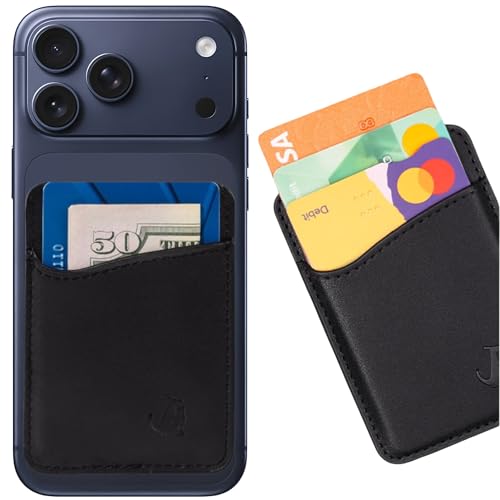
 QYQBOON Mag-Safe Wallet Magnetic Wallet for Phone Lightweight4 x 2.6 x 0.5 inches4 x 2.6 x 0.5 inchesCheck on Amazon
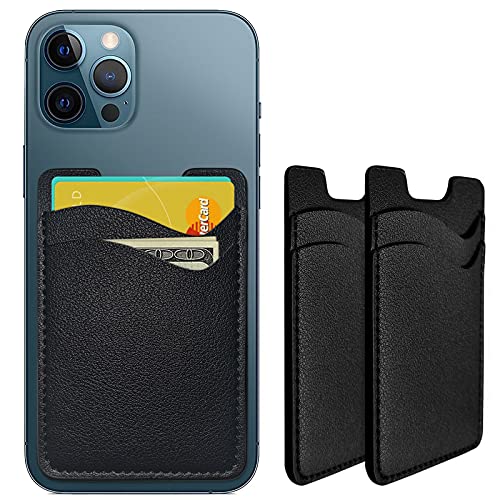
 Wallaroo Premium Leather Cell Phone Wallet Stick OnSlim3.63 x 2.5 x 0.2 inches0.04 poundsCheck on Amazon


What's inside
- What a wallet case actually replaces, and what it does not
- Folio, book-style and back-cover designs compared
- Card slots, cash space and the real capacity question
- Materials: genuine leather, corrected leather, polyurethane and fabric
- Protection in falls, bags and everyday abrasion
- The kickstand: angles, stability and video habits
- Wireless charging, magnetic systems and NFC behaviour
- Fit by model: dimensions, variants and buying the right shell
- Bulk, pockets, grip and carrying the loaded case
- Care, ageing and when to replace a wallet case
- Check prices on Amazon
- Choosing by routine: commuters, travellers, minimalists and parents
As an Amazon Associate I earn from qualifying purchases. This post may contain affiliate links at no extra cost to you.
Reader note: some links on this page are referral links. If a purchase follows one of those links, this site may receive a commission from the retailer, and that commission helps pay for research, writing and site upkeep without changing the amount charged at checkout.
A wallet for an Android phone, in the sense used throughout this guide, is not software. It is a physical case that carries the handset together with payment cards, identification, folded notes and sometimes a transit pass, all inside one object that leaves a trouser pocket or a small bag as a single unit. The two dominant shapes are the folio, where a front cover folds over the display like the cover of a paperback, and the book-style wallet, where that same cover carries most of the storage and a fitted shell holds the phone on the right-hand side. A third family, the back-cover wallet, keeps card slots on the rear panel and leaves the screen uncovered, trading display protection for a slimmer profile. Choosing well means matching storage, bulk, charging behaviour and exact model fit, because a case moulded for one handset rarely suits another, even when screen sizes look close on a specification sheet.
Android adds a complication that a single-brand ecosystem avoids. Samsung, Google, Motorola, OnePlus and dozens of regional manufacturers place power keys, volume rockers, fingerprint readers, camera islands and charging coils in different positions, and they refresh those layouts every year. A folio that clears the camera bar of a Pixel can crowd the corner lens of a Galaxy, and a shell that exposes a side-mounted fingerprint sensor on one Motorola can bury the same sensor on the next. For that reason this guide treats fit as a model-specific decision rather than a size category, and it compares designs using published dimensions, manufacturer material descriptions, documented closure and stand mechanisms, and patterns that recur across large volumes of owner feedback, instead of assuming that a universal wallet exists.
What a wallet case actually replaces, and what it does not
The honest starting point is consolidation. A good folio replaces a separate card holder for daily essentials: typically a payment card, an identity card, a transit or access card, and a small reserve of folded notes tucked behind the card row. It does not sensibly replace a full wallet for someone who carries loyalty cards for six shops, paper receipts for a month, coins, a house key and a second phone. Coins are the classic failure point, because a coin pocket inside a folio presses hard points against the display whenever the cover closes, and loose metal near a magnetic clasp invites scratches. Keys belong elsewhere for the same reason. Buyers who accept that boundary tend to be satisfied, because the case does exactly the job it was shaped for, while buyers who expect a filing cabinet in a phone case tend to blame the stitching for a problem created by overloading.
Consolidation also changes loss and theft behaviour in ways worth thinking through before purchase. One object is easier to keep track of at a café table, in a taxi or through airport security, and a single item is quicker to check for during the pat-down ritual before leaving home. The reverse is equally true: losing that one object means losing handset, payment method and identification together, at the worst possible moment. A practical mitigation is to keep a backup payment card separate from the phone, at home or in a different bag, and to make sure the handset itself is protected by a strong screen lock, biometric unlock and a find-my-device service that has been signed in and checked. A wallet case is a convenience layer, never a security strategy on its own, and the lock screen settings matter more than the leather grade.
There is also a subtle change to how the phone gets used. With cards riding in the cover, opening the phone becomes a two-part gesture, cover first and screen second, which slows the reflexive unlock-and-glance habit. Many owners describe that small friction as a benefit, because notifications get checked deliberately rather than continuously, and the closed folio gives a clear social signal that the phone is put away. Others find the flap maddening during one-handed use on a train, where the cover dangles, catches a sleeve, or folds back unevenly and makes the handset feel twice as wide. Neither reaction is wrong. The divide is about routine, and routine is predictable: a person who already reads long articles and watches video on a phone will likely enjoy a cover that becomes a stand, while a person who unlocks a phone forty times an hour for messages may prefer slots on the back and no flap at all.
Folio, book-style and back-cover designs compared
A folio in the strict sense is defined by its front cover, hinged along the long left edge for right-handed opening, although a minority of designs hinge along the bottom edge and open upward like a notepad. The cover does three jobs. It shields the display from keys, grit and bag hardware while the phone is carried. It hosts most of the storage, usually two to four card slots stacked over a full-length note pocket. And it folds behind the handset or into a triangular prism that props the screen up for viewing. Because the cover sits against the glass all day, its inner lining matters as much as its outer material: a soft microfibre or suede-like lining reduces micro-abrasion, while a rough inner face with exposed stitching near the edges can mark a screen protector over months of sliding in and out of pockets.
Book-style wallets are folios with a stronger emphasis on capacity and structure. They often add a zip around three sides, a wrist strap, a detachable inner shell held by magnets or a rail, and enough card rows to reach eight or more. That capacity suits travellers who want passport-adjacent organisation in a cabin bag, but it pushes thickness toward the point where wireless charging fails, pockets strain, and the phone becomes awkward for photography, because a large cover must be folded fully back or left hanging while the camera is used. Detachable inner shells answer that problem elegantly: the slim shell stays on the phone for charging and photography, then clicks into the wallet section when leaving the house. The trade-off is dependence on the strength and alignment of the detachable connection, which should hold through a drop onto a hard floor yet release without a fingernail-breaking struggle.
Back-cover wallets take the opposite approach. Two or three slots, or a single elastic pouch, sit on the rear of a conventional protective shell, sometimes hidden behind a sliding door or a mirrored flap. The screen stays exposed, so a separate screen protector becomes close to mandatory, and the total card count stays low. In exchange, the phone remains recognisably a phone: it fits car mounts more easily, works with more charging pads, and can be used one-handed without managing a cover. A sliding-door design also keeps card numbers out of sight, which matters on public transport where an open slot row displays card edges to anyone standing behind. Readers comparing handsets before choosing a case may find it useful to start with the device itself, since case availability follows popularity; the guide to best affordable android phones shows which models attract the widest accessory support.
How the hinge and clasp shape daily use
Closure mechanisms look minor in product photographs and dominate ownership in practice. A magnetic tab that snaps over the front edge keeps a folio shut in a bag and prevents the cover from gaping when cards thicken the package, but the tab adds a small lump that catches on pocket seams. An elastic strap is forgiving of overfilling and never demagnetises anything, yet it stretches with age and can fray where it rubs the shell corner. Some folios rely on the stiffness of the cover alone, with no clasp at all, which keeps the silhouette clean and the opening gesture fast, at the cost of the cover drifting open inside a handbag and exposing the display to exactly the objects it was meant to block. Magnetic strength also interacts with the phone itself, a topic covered in depth later in this guide, because a clasp magnet placed carelessly can interfere with a stylus layer or a compass reading.
Hinge construction deserves the same scrutiny. A cover stitched directly to the shell spine flexes thousands of times along the same crease, and the quality of that crease decides whether the folio still folds flat after a year. Leather hinges soften and often improve with use, developing a relaxed fold that lets the cover wrap behind the phone without springing back. Stiff synthetic hinges can fight the user, pushing the cover into the palm during calls. A separate fabric or reinforced spine panel, wider than a single stitch line, distributes the flex and usually survives longer, although it adds a visible design seam that minimalists may dislike. When a folio is described as converting into a stand, the hinge and the cover stiffness work together, so a hinge that has gone floppy often means a stand that collapses under the weight of a large handset.
Card slots, cash space and the real capacity question
Manufacturers count slots; owners should count behaviour. A slot rated for one card often holds two after the material relaxes, and a folio advertised with four slots plus a note pocket can physically swallow seven cards and folded notes, but the relevant question is what that load does to the rest of the object. Every added card thickens the closed package, bends the cover away from the display at the hinge side, increases the leverage on the clasp, and presses the lowest card against the shell edge. In a back-cover design, extra cards sit directly over the charging coil and steadily erode charging reliability. A sensible rule drawn from owner reports across many brands is to treat the stated slot count as the comfortable count, not the starting point for negotiation, and to choose one size up in capacity rather than planning to stretch a smaller case.
Slot cut and orientation change retrieval speed more than slot count does. Vertical slots, opening toward the top edge of the cover, keep cards seated when the folio is opened with the phone upright, and they suit a thumb-push gesture where the card slides up and out in one motion. Horizontal slots, opening toward the hinge or the outer edge, display more of each card face, which helps when several similar cards must be told apart quickly, but they can spill a loose card when the cover is opened carelessly over a pavement. Clear identification windows, usually a mesh or transparent panel over one slot, exist for licences and identity cards that get shown without removal, although the window material can stick to a card surface in hot weather and should be checked for that tendency in owner feedback for warm climates.
Cash handling separates casual designs from considered ones. A full-length note pocket behind the card row accepts unfolded or once-folded notes in most currencies, while a shallow pocket forces multiple folds that bulk out one corner and twist the cover. Travellers dealing with larger note sizes should pay particular attention, because a pocket dimensioned around one currency can cramp another, and a folio that closes flat at home can refuse to close flat abroad. Some designs add a second hidden pocket between lining and outer material, useful for an emergency note or a spare transit card, though hidden pockets are also where forgotten receipts accumulate until the cover stops lying flat. A short weekly habit of emptying paper from the case does more for its lifespan than any material upgrade.
Contactless cards, transit passes and interference
Carrying a contactless payment or transit card inside a closed folio raises a practical puzzle: can the card be tapped without opening the case and removing it? Results vary because the phone itself, its metal mid-frame, its battery and any magnetic clasp all sit between the card and the reader. Many owners report reliable taps through a thin cover with the card in the outermost slot, furthest from the handset body, while the same card in the slot nearest the phone fails repeatedly. Reader strength differs between transit gates, shop terminals and access doors, so a combination that works at a local station may fail at an unfamiliar one. The dependable approach is to dedicate the outer slot to the card used most often for tapping, keep only one contactless card in the folio to avoid card clash at gates that reject multiple presented cards, and accept that removal will occasionally be necessary.
That single-card discipline matters because transit systems commonly detect every contactless card presented at once and refuse the whole transaction rather than guessing. A folio holding three payment cards and a transit pass presents four candidates through its cover. Owners who tap the whole case against a gate and receive an error are often experiencing card clash, not a defective case. Solutions include using the phone’s own payment service for transit where supported, moving the transit card to a separate holder, or opening the folio and presenting one card deliberately. None of these require a different case, only a routine that matches how readers behave.
Materials: genuine leather, corrected leather, polyurethane and fabric
Genuine leather remains the prestige material for folios, and the terminology around it is worth decoding because labels are used loosely. Full-grain leather keeps the original outer surface of the hide, with its pores and minor scars, and it tends to develop a patina, darkening and softening where hands and pockets polish it. Top-grain leather has been lightly sanded for a more uniform finish, trading some character for consistency. Products described simply as genuine leather in marketing copy may use a lower split of the hide with a surface coating, which can look excellent when new yet crack sooner at the hinge crease. None of these grades guarantees a good case, because the shell underneath, the stitching and the hinge design carry as much of the lifespan as the hide itself, but grade does predict how gracefully the surface ages rather than whether it ages at all.
Polyurethane leather, usually shortened to PU, is a polymer coating over a fabric or split-leather base. Its strengths are consistency, water resistance, low weight and a surface that wipes clean after contact with rain, coffee or sunscreen. Its weakness is time: lower-quality coatings can peel or flake, especially at flex points and edges, and heat inside a parked car accelerates that process. Higher-quality PU with a thicker coating and a woven backing performs far better and can outlast cheap natural leather, which is why material name alone is a poor ranking tool. Owner feedback mentioning edge peeling within months is a stronger signal than any label, and it tends to cluster around specific production runs rather than the material category as a whole. Readers who prioritise a slim handset often pair material choice with device choice, and the roundup of best android small smartphones is relevant because compact phones keep a loaded folio pocketable.
Fabric and hybrid designs occupy a growing middle ground. Woven polyester and nylon covers shrug off water, weigh very little and grip a palm more securely than smooth leather, which matters when a loaded wallet case becomes the heaviest object in a hand. Some fabric folios borrow the language of technical luggage, with ballistic weaves and welded seams instead of stitching, and they suit outdoor work where a leather case would scuff and stain within weeks. Their card slots are often elastic rather than cut pockets, which grips cards firmly when new and relaxes gradually. Canvas with a waxed finish offers a different compromise, resisting light rain and developing wear marks that many owners find attractive, though waxed canvas can transfer a faint residue to light-coloured cards in hot weather, a niche complaint that appears repeatedly in feedback from warmer regions.
Shell materials and what holds the phone
Inside almost every folio sits a shell of polycarbonate, thermoplastic polyurethane, or a layered combination of both. Hard polycarbonate gives precise fit and crisp button covers, and it resists stretching so the phone stays seated after repeated removal. Its rigidity transmits shock rather than absorbing it, so better designs add softer corner material where impacts concentrate. Flexible TPU shells install easily, cushion edges and tolerate slight dimensional differences between regional variants of the same model, but a very soft shell can let a phone pop out in a twisting fall, the exact scenario where protection matters most. Hybrid shells, rigid at the back and yielding at the rim, are the current mainstream answer, and the detail to verify is retention: a shell should grip all four corners, rise slightly above the display around its full perimeter, and keep the handset seated when the open folio is held face-down and shaken gently, a check owners describe performing over a bed rather than a hard floor.
Camera protection follows the same logic. A raised lip or a plateau around the camera island keeps lenses off flat surfaces when the folio lies open, and a sliding camera cover appears on some rugged designs for users who want physical lens privacy. The cutout must match the model’s exact lens arrangement and flash position, because a millimetre of drift can shadow a flash or clip an ultrawide field of view at the corners, producing dark edges in photographs that owners initially blame on the phone. Verifying cutout alignment against the specific model year is essential, since manufacturers reuse model names across generations with different camera layouts.
Protection in falls, bags and everyday abrasion
A closed folio is, in effect, a padded enclosure around the most fragile surface of the phone, and that is its strongest protection argument. Displays usually crack from corner impacts and from direct strikes, and a cover intercepts the second category completely while the shell rim and the cover’s cushioning soften the first. Drop protection claims in this category should be read carefully: a statement about surviving falls from a stated height onto a stated surface, under a named standard, carries meaning, whereas a vague military-grade label without a standard number carries mostly decoration. Even honest ratings describe laboratory conditions, a fresh case, a controlled surface and a limited number of drops, while real falls involve kerbs, gravel, stair edges and a case already softened by a year of use. Treat any rating as evidence of design intent, then look at the physical signs: corner thickness, rim height above the screen, cover padding and whether the clasp keeps the folio closed during a fall, because an open folio at impact protects far less than a closed one.
Abrasion is the quieter threat that a folio handles unusually well. Phones carried loose in bags accumulate micro-scratches from zips, keys, coins, charger plugs and grit that collects at the bottom of every bag eventually. A closed cover removes the display from that environment entirely, and leather or fabric outer surfaces take the scuffs instead, often visibly, which is why a dark folio can look worn while the phone inside remains immaculate. That trade is the point of the product. Buyers who want the case itself to stay pristine should favour hard-coated synthetics and lighter colours that hide scuffing, and should expect to replace the case more often than buyers who accept patina as the record of work done.
Water deserves a separate, sober paragraph. A folio is not a waterproof product. Leather absorbs rain, fabric wicks it, seams admit it, and the phone sits inside with its ports exposed at the shell edges. A wallet case may keep drizzle off a display during a short walk, and its cover may stop a splash from reaching the screen directly, but submersion, heavy rain or a spilled drink require the phone’s own ingress rating and prompt drying, not faith in a case. Owners in wet climates should also consider that a damp leather cover dries slowly against a screen, so removing the phone and airing the case after a soaking prevents the musty smell that otherwise develops in the lining and the note pocket.
The kickstand: angles, stability and video habits
Most folios become a stand by folding the cover behind the phone and tucking its edge into a groove, a slot or a magnetic resting point, producing a landscape prop for video, video calls, bedside clocks and recipe reading. The usefulness of that stand depends on three variables that photographs hide. The first is angle: a steep angle suits video calls and desk viewing, a shallower angle suits a kitchen counter where the viewer stands, and a design offering only one fixed angle will be wrong for one of those settings. Multi-angle designs use a row of grooves or a stiffened cover that holds intermediate positions, and they are worth seeking for anyone who uses the stand daily. The second variable is surface behaviour, because a stand that works on a wooden desk may skate across a glass table or a train tray, especially when the screen is tapped. A textured cover edge or a rubberised spine strip makes a measurable difference in those settings.
The third variable is stability with the specific handset. Large phones raise the centre of gravity, and a stand geometry that feels solid with a compact model can tip backwards with a taller, heavier one when a notification vibrates or a table is nudged. Folding phones and models with offset weight distribution add their own quirks. Owner feedback organised by exact model is the best guide here, which is another reason accessory research should begin after the handset is chosen rather than before. For readers whose viewing centres on photography trips and long video sessions, the camera-focused models in best 5g camera phones pair naturally with folios that fold fully flat, so the cover never intrudes into the frame or the grip.
Using the cover during calls and photography
Two everyday gestures expose weak folio design faster than any specification. The first is the phone call. With the cover folded back, the handset gains thickness and the cover can press against the fingers or partially cover a microphone hole near the bottom edge, muffling the caller’s voice in a way that gets blamed on the network. Better designs route the fold so the cover sits flat and clear of both microphones, and some include a small cutout or a speaker slot in the cover so a call can be taken with the folio closed, keeping the screen clean and the conversation private. The second gesture is photography. A hanging cover swings, catches wind and occasionally drifts across a corner lens outdoors, while a cover folded back changes the grip and can place fingertips near the camera island. Detachable shells, covers that fold completely flat against the rear, and a habit of supporting the folded cover with the little finger all mitigate the problem, but a buyer who photographs constantly should weight this heavily and may be happier with a back-cover wallet that never enters the equation.
Flash use with a folio deserves a specific mention. If the shell’s camera opening is deep and narrow, the flash can reflect off the opening’s inner wall and wash out close subjects, an effect most visible in dim restaurants and evening indoor shots. Generous, angled cutout walls reduce it. Similarly, a thick cover folded behind the phone can block a rear microphone used for video sound, thinning recorded audio. These are small faults, but they are exactly the kind that only appear after purchase, so scanning owner comments for the exact model name plus words like flash, muffled or echo is a worthwhile ten minutes before ordering.
Wireless charging, magnetic systems and NFC behaviour
Wireless charging through a wallet case is a negotiation between physics and convenience. Inductive charging tolerates a few millimetres of separation between coil and pad, and a thin shell back with no cards behind the phone often charges normally, if slightly slower and warmer. Cards change the calculation in two ways. Their thickness adds distance, and some cards contain metal elements or antennas that disturb the field, trigger foreign-object detection and stop the charge entirely, occasionally with heat concentrated near the card. The widely repeated advice from manufacturers and experienced owners agrees on the safe routine: remove cards, or remove the phone from the wallet section, before placing it on a pad, and never leave payment cards in a folio on an active charging pad overnight. Detachable designs turn that routine into a two-second click rather than a wrestling match, which is a genuine quality-of-life advantage for anyone who charges wirelessly every night.
Magnetic accessory systems complicate the picture further. A growing number of Android handsets and cases support magnetic alignment for chargers and mounts, and a folio’s clasp magnets, card slots and cover all sit in the path of that alignment. A wallet case can be compatible in the narrow sense that charging occurs, while the magnetic hold is too weak for a car mount to survive a speed bump. Buyers who rely on a magnetic dashboard mount should treat a folio as a likely obstacle and consider either a detachable shell with its own magnetic ring or a return to a clamp-style mount. Conversely, the magnets inside some mounts and chargers can affect the phone’s compass calibration temporarily and can interact with a folio’s clasp, pulling a cover open or holding it shut depending on polarity and position. These interactions are annoyances rather than dangers in most reports, but they explain why a combination that looks compatible on paper can feel wrong in a car.
Magnets, styli and credit card stripes
Three magnet concerns recur in owner discussions, and they deserve separating because their seriousness differs sharply. First, magnetic stripe cards: strong, close magnets can degrade a stripe over time, and hotel key cards are notoriously fragile in this respect, often failing after a night beside a clasp magnet. Chip and contactless cards are far more robust, and modern payment cards rarely depend on the stripe, so the practical advice is to keep hotel keys and older stripe-dependent cards away from the clasp side of the folio. Second, stylus input: on handsets with an electromagnetic stylus layer, a magnet in the cover or clasp can create a small dead or distorted zone on the writing area when the cover is folded behind the screen. The effect disappears when the cover is moved, and it matters mainly to note-takers who write with the folio attached all day. Third, the phone’s own sensors: a cover magnet is commonly used deliberately to trigger sleep and wake behaviour on models that support it, which is a feature when aligned correctly and a nuisance when a folded-back cover triggers sleep mid-task. Checking whether a given folio is known for unwanted sleep triggering on the exact model is a high-value step in pre-purchase reading.
Radio-frequency shielding is the mirror image of the magnet topic. Some folios advertise blocking layers intended to prevent remote reading of contactless cards while they sit in the case. A shielding pocket works by surrounding the card with a conductive layer, and designs differ in whether every slot is shielded or only one designated pocket. Shielding every slot also blocks the intentional tap described earlier, so a fully shielded folio commits the owner to removing cards for every payment and gate, which some buyers want and others find defeats the convenience they paid for. A single shielded pocket offers a middle path: the everyday card stays tappable in an outer slot, while a passport card or a spare payment card rests behind shielding. As with charging, the correct choice follows the owner’s routine rather than any abstract ranking of features.
Fit by model: dimensions, variants and buying the right shell
No section of this guide matters more than this one, because most wallet case disappointment is fit disappointment. Android model names conceal variants: a handset sold under one name may have different dimensions, camera islands or button placements across regions, network editions and model years. A case listing that names a model without a year or variant should be treated as incomplete information. The reliable identifiers are the exact model number in the phone’s settings, the release year, and the physical camera layout, which can be compared against the cutout in product images. Measuring the handset with a ruler sounds excessive until a return shipment is priced; height, width and thickness figures from the manufacturer’s specification page settle most doubts in a minute.
Foldable phones require their own caution. A folding handset already carries a hinge and two halves, and adding a folio cover produces an object that many owners find unmanageable, while the flexible inner display needs protection that a traditional wallet shell cannot provide in the usual way. Dedicated designs for foldables tend to protect the outer screen and the spine, carry cards on a rear panel, and accept compromises that owners of slab phones never face. Similarly, rugged phones with thick factory bodies and prominent corner armour often fit no standard folio at all, and their owners are better served by a belt pouch or a separate slim card holder. Checking whether a manufacturer even lists the model is the fastest filter: absence from the compatibility list is information, not an oversight to gamble on.
Screen size misleads buyers because cases fit bodies, not displays. Two phones with identical diagonal screen measurements can differ by several millimetres in width and height due to bezel design and aspect ratio, and a shell moulded to one will either crush its buttons or let the other rattle. Aspect ratio also shapes the folio stand experience and the note pocket’s usable width. When a household owns two similar handsets, marking each case discreetly, or choosing different colours per phone, prevents the morning mix-up where a handset is forced into a sibling’s shell and a button cover ends up pressing a volume key continuously, a small comedy that appears in feedback with surprising regularity. Readers still deciding between handsets, including the unlocked models in best affordable android phones unlocked, should confirm case availability for the precise variant before committing, since unlocked and carrier editions occasionally differ.
Buttons, ports, speakers and fingerprint readers
A well-made shell treats every opening as a promise. Button covers should transmit a distinct click without extra force, because spongy covers lead owners to press harder and can hold a key half-depressed in a pocket, waking the screen repeatedly. Cutouts for charging ports must accept not only the supplied cable but also thicker third-party plugs and right-angle connectors, and the opening around a speaker should not channel sound into the case body. Side-mounted fingerprint readers need a genuinely open window, not a shallow recess, and the window’s edge should guide the finger onto the sensor rather than away from it. Under-display fingerprint readers are unaffected by the shell but can be affected by a thick screen protector added at the same time as the case, so owners who install both should re-register fingerprints after fitting the protector, a step that resolves many complaints about sudden unlock failures.
Stylus silos, headphone sockets on the models that retain them, infrared blasters, lanyard holes and secondary microphones each create another chance for a generic shell to block something specific. A folio with a wrist strap anchor can be a blessing for travel photography and market days, provided the anchor is reinforced where it meets the shell, because a strap that tears out during a snatch or a drop converts a safety feature into a failure point. Buyers with a particular port or accessory habit, such as a wired headset used daily or a phone lanyard used while hiking, should put that habit at the top of the checklist rather than discovering a blocked opening after the return window has closed.
Bulk, pockets, grip and carrying the loaded case
Every wallet case decision is ultimately a decision about thickness. A bare modern handset is a slim slab; a folio carrying three cards and notes can double or triple that thickness and add the weight of the cards, the cover and the shell. Front trouser pockets tolerate that package in loose fits and protest in narrow ones, jacket pockets handle it easily, and small handbags either swallow it or reject it depending on their internal dividers. There is no universal answer, only a measurement: owners who measure their usual pocket or bag compartment and compare it with the closed dimensions of a loaded folio avoid the most common post-purchase surprise. Weight matters over a full day as well, particularly for anyone with wrist or hand strain, where a heavy case plus a large phone changes how long the device can be held for reading or navigation.
Grip improves or worsens with material and cover position. Leather and woven fabric usually offer more purchase than glossy synthetic shells, and a folio opened for use gives the hand extra material to hold, which some owners with smaller hands find reassuring and others find cumbersome. A cover folded flat behind the phone can create a ridge along one side that settles into the fingers, while a cover left hanging during one-handed use acts as a pendulum that makes the phone feel unstable. Cases with a hand strap on the rear, or a finger loop integrated into a back-cover design, address grip directly and are popular with commuters who read standing on moving transport. For anyone who has dropped a phone onto a platform edge, that strap is not a decorative extra.
Car mounts, gimbals, tripod adapters and gaming controllers all assume a phone of roughly standard thickness, and a loaded folio defeats most of them. Detachable shells solve the mount problem by leaving the wallet section in a bag, and back-cover wallets sometimes fit clamp mounts if the card bulge sits clear of the clamp arms. Cyclists and drivers who depend on a mount should rank this constraint early, because a beautiful folio that must be stripped from the phone at the start of every journey becomes an irritation repeated twice a day. The same logic applies to bedside docks and charging stands with fixed geometry, where a thick cover can prevent the handset from seating deeply enough to charge or to trigger a clock display.
Care, ageing and when to replace a wallet case
Leather care for a phone folio is lighter than shoe care but not imaginary. Keeping the case away from prolonged soaking, wiping rain off rather than letting it dry in place, and occasionally using a small amount of a conditioner intended for smooth leather keeps the hinge supple and delays surface cracking. Dark dyes from new jeans and printed receipts are the two common staining sources, and both transfer most readily when the leather is warm and slightly damp. Synthetic covers ask less: a wipe with a damp cloth, mild soap for stubborn marks, and air drying away from radiators covers nearly everything, with alcohol-based cleaners best avoided because they can cloud some coatings. Fabric covers can often be hand-washed, though card slots should be emptied and the shell removed first, and the case must dry completely before the phone returns, because a damp lining against a handset overnight invites odours and corrosion at the charging port.
Replacement timing is a safety question disguised as a cosmetic one. A shell with a cracked corner, a hinge torn halfway across, slots stretched until cards slide out when the folio tilts, or a clasp that no longer holds the cover closed has stopped performing the functions that justified carrying it. Card retention deserves a monthly check: hold the open folio upside down over a sofa and tilt it slowly, and any card that travels more than a few millimetres needs a tighter slot, a different slot assignment, or a case nearing retirement. Stitching failures usually begin at the bottom of the most-used slot and at the hinge ends, both visible on inspection before they become failures in the street. A case that has absorbed a serious fall and shows shell deformation has spent its protective budget and should be replaced even if the phone survived, because the same corner rarely performs twice.
Screen protectors alongside a folio
Pairing a screen protector with a wallet case seems redundant, since the cover guards the display while carried, yet the protector earns its place whenever the phone is in use, which is when drops onto hard ground actually happen. Compatibility between protector and shell is the catch: a shell rim that grips close to the display edge can lift the corner of a full-coverage glass protector, producing a growing bubble and eventually a cracked protector edge. Case-friendly protectors, cut slightly narrower, exist precisely for this pairing. Owners should also keep the inside of the folio cover clean, because a single grain of grit trapped between cover and glass, pressed and slid repeatedly, can etch a visible mark through a protector over weeks. A weekly wipe of the lining with a dry microfibre cloth is a thirty-second habit with an outsized payoff.
Camera lens protectors raise a similar pairing question. A folio shell with a deep camera plateau may not accommodate an added lens cover, and forcing the combination can rock the phone inside the shell or prevent the cover from closing evenly. Where the shell already raises a protective lip above the lenses, an extra lens protector adds little. Where the handset’s lenses sit proud and the shell is shallow, a lens protector or a different shell becomes the safer choice, particularly for owners who set the open folio down on outdoor surfaces, café tables and workshop benches where grit is guaranteed.
Check prices on Amazon
Live listings for the shortlist in this guide are pulled from Amazon below, so prices and availability are always current at the moment you look.


Choosing by routine: commuters, travellers, minimalists and parents
A commuter who taps through gates, buys coffee and answers messages in short bursts needs speed above capacity. Two or three accessible slots, a tappable transit card in the outer position, a clasp that opens with one thumb movement and a cover that folds flat for quick replies define the right folio, and a hand strap adds security on crowded platforms. Extra capacity only slows this owner down, because a thicker case takes longer to open, to seat in a pocket and to present at a gate. A back-cover wallet is a legitimate alternative for this routine, sacrificing screen cover for immediacy, provided a protector guards the display and the cards sit behind a door or under a flap rather than exposed to every glance on the train.
A traveller optimises for different failures: unfamiliar readers, larger notes, a passport card, a room key that dies beside magnets, and long periods where the phone is both map and boarding pass. A book-style wallet with a detachable shell, a full-length note pocket, one shielded pocket and a wrist strap fits that pattern, and the detachable shell earns its keep at security trays, on charging pads in hotels and during photography at viewpoints. Travellers should also consider colour in a practical sense, because a dark case on a dark aircraft seat is easy to leave behind, while a distinctive colour gets spotted during the final cabin check. The same distinctiveness deters casual opportunists less than it aids recovery, so visibility is a recovery strategy rather than a security claim.
A minimalist who carries one payment card and an identity card should resist buying capacity that will silently fill. A slim folio with two slots, or a back-cover design with a single hidden compartment, keeps the phone close to its original thickness and preserves wireless charging more often than larger designs. Minimalists also benefit most from quality materials, because a two-slot case has nowhere to hide poor stitching and its entire value lies in finish and feel. Parents, meanwhile, tend to value a stand that survives a kitchen counter, a cover that wipes clean, a strap that prevents a toddler-assisted drop onto tiles, and card storage that stays firmly shut when small hands explore. For that routine, a robust synthetic folio with a strong clasp and a multi-angle stand outperforms a beautiful leather case that stains at the first encounter with juice.
A pre-purchase checklist grounded in specifications
- Exact model: confirm model number, year and camera layout against the case compatibility list, not just the marketing name.
- Closed thickness: estimate the loaded thickness with the intended number of cards, and compare it with the pocket, bag and mount used daily.
- Charging routine: decide whether cards will be removed nightly, or choose a detachable shell if a charging pad is part of the routine.
- Tap routine: plan one contactless card in the outer slot, and expect occasional removal at unfamiliar readers.
- Magnet sensitivities: note any stylus use, hotel key habits and stripe-dependent cards before choosing a strong magnetic clasp.
- Stand needs: match stand angles to the actual settings, desk, kitchen or travel tray, where video and calls happen.
- Material temperament: pick leather for patina and feel, coated synthetics for wipe-clean ease, fabric for grip and low weight.
- Retention details: look for four-corner shell grip, a rim above the display, and slot stitching that owners describe as firm after months.
That checklist converts a vague preference for a nice wallet into a set of verifiable conditions, and it explains why two owners of the same phone can choose opposite designs and both be right. The case is an interface between a handset and a routine, and routines differ more than handsets do. Price bands, brand prestige and colour ranges all sit downstream of those conditions, and a case that satisfies the list in a modest material will serve better than a luxurious case that fails the charging or tap routine every single day. Where a condition cannot be verified from published information, owner feedback filtered to the exact model is the next best source, read with attention to how long the reviewer had owned the case, because slot stretch, hinge softening and coating wear are time-dependent faults that a first-week impression cannot reveal.
One final consideration belongs to resale and hand-me-down use. A phone passed to a family member often travels with its case, and a folio moulded for that model remains useful, while a heavily personalised or worn case may not. Keeping the original slim shell or the retail packaging costs nothing and preserves options. Equally, a buyer of a used handset who inherits a wallet case should inspect the shell corners and slot retention before trusting it, since protective value depends on condition rather than appearance. A case is a consumable with a service life, and treating it that way, buying the right design, maintaining it lightly and replacing it when its grip, closure or stitching fades, is what turns a simple accessory into dependable everyday equipment, leaving the phone ready for the next journey, the next gate tap and the next ordinary day carried in a single pocket.


