Our Top Picks

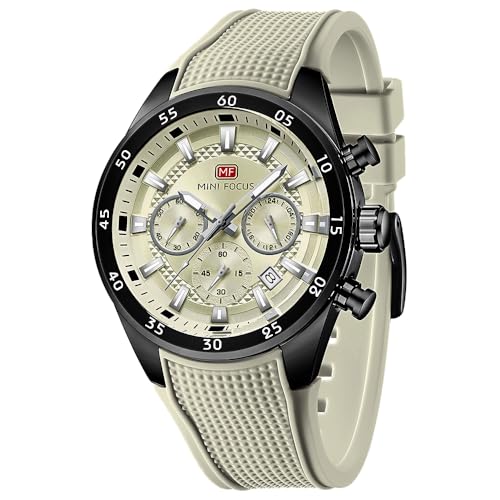
What's inside
- The architecture: what the 7750 actually is
- Cam actuation versus column wheel: the honest trade
- The signature layout and its variants
- The Sellita SW500: the dimensional twin
- Rotor behaviour: the wobble, explained mechanically
- Grades, regulation, and realistic accuracy
- Cases built around a tall movement
- Ownership: service, parts, and buying used
- Alternatives in the family tree, and when the default holds
- Check prices on Amazon
- A final checklist in the order that matters
As an Amazon Associate I earn from qualifying purchases. This post may contain affiliate links at no extra cost to you.
Few movements have shaped what a chronograph watch looks like as completely as the Valjoux 7750, the automatic calibre that Valjoux introduced in the early nineteen seventies and that ETA continued after absorbing its maker. Its influence is visible before any specification is read: a watch with subdials at six, nine, and twelve and a day and date at three is, in the great majority of cases, announcing the movement inside. That recognisability is both the calibre’s triumph and the source of the lazy criticism that all such watches are the same. They are not. Around a shared architecture, manufacturers have built slim dress chronographs and tall tool watches, polished pilot’s pieces and bead-blasted divers, and the differences lie in case construction, dial execution, regulation, and finishing decisions that the base movement permits but does not dictate. This guide reads the 7750 from the inside outward, so that a buyer can separate what the movement guarantees from what each maker chose to do with it.
Links from this page to the retailer may return a commission that supports the site, with no change to the price a reader pays. Everything that follows is drawn from movement documentation, manufacturer specification sheets, and published technical references, presented so that claims about dimensions, frequencies, and constructions can be checked against the source material for each specific reference.
The architecture: what the 7750 actually is
The 7750 is an integrated automatic chronograph movement, meaning the chronograph mechanism was designed as part of the calibre rather than added as a separate module on top of a time-only base. In its standard form it measures about thirty millimetres in diameter, commonly quoted as thirteen and a quarter lignes, and about seven point nine millimetres in thickness before a dial and hands are fitted. It carries twenty-five jewels, beats at twenty-eight thousand eight hundred vibrations per hour, which is four hertz, and offers a power reserve in the region of forty-four to forty-eight hours depending on execution and condition. Those figures explain the watches built around it more directly than any styling discussion can. A movement nearly eight millimetres thick, topped by a dial, a set of stacked chronograph hands, and a crystal with clearance above them, cannot produce a genuinely slim watch, and the familiar height of 7750 chronographs is arithmetic, not a failure of design imagination.
The four-hertz rate divides each second into eight steps, giving the chronograph seconds hand a visibly stepped sweep and allowing elapsed time to be read to an eighth of a second in principle, though the printed dial scale and human reaction time make that precision theoretical for ordinary timing. The rate was a forward-looking choice when the movement appeared, when many chronographs still beat more slowly, and it contributes to rate stability because a higher-frequency balance recovers from disturbances more quickly. Hacking seconds, the ability to stop the seconds hand by pulling the crown, and hand-winding through the crown are present on standard executions, features that were not universal in its era. Quickset date mechanisms allow the date, and on the standard version the day, to be advanced without turning the hands through repeated twenty-four-hour cycles, with the familiar caution that quickset functions should not be operated near the midnight change, when the calendar mechanism is already engaged.
Construction follows the industrial logic that made the movement successful. The chronograph work is arranged on the dial side and bridge side in a layout designed for efficient manufacture and straightforward assembly by trained watchmakers, using stamped and machined components where they perform as well as more laboriously finished ones. This is not a movement conceived as a display object, though display case backs have made it one by default in many watches. Its decoration in most executions is functional: Geneva stripes or perlage on bridges and rotor in higher grades, plain finishing in entry grades, and a rotor engraved or signed according to the brand. Judging a 7750 watch by movement decoration alone misses its purpose, which was to deliver a reliable automatic chronograph at a price that allowed dozens of brands to offer one at all during and after the quartz crisis that destroyed many of its rivals.
Longevity followed from volume. Because the movement was produced in large numbers across decades, and fitted by brands at every price level from modest to distinctly premium, an ecosystem formed around it: independent watchmakers learned it, parts were stocked widely, and complete movements remained available as replacements or upgrades. The calibre survived corporate consolidation, the reorganisation of movement supply within the Swiss industry, and the arrival of its own dimensional twin from Sellita, discussed later in this guide. When a movement remains in production and in service knowledge for half a century, that continuity itself becomes a specification, arguably the one with the greatest effect on the total cost and risk of ownership.
Variants begin at the factory rather than at the brand. ETA catalogued the base 7750 with day and date, and derived executions that remove the day, remove the calendar entirely, add calendar complications, or rearrange the displays, each with its own suffix. Understanding a particular watch therefore starts with identifying which execution it contains, because two watches both described simply as powered by the 7750 may differ in subdial positions, calendar behaviour, and correct setting procedure. The sections that follow take those differences in turn, beginning with the mechanism that gives the chronograph its distinctive pusher feel and much of its service character.
Cam actuation versus column wheel: the honest trade
The 7750 starts, stops, and resets its chronograph through a cam system, often described as a coulisse-lever or shuttle-cam arrangement, rather than through the column wheel used in many prestige chronographs. In a column-wheel movement, the pushers rotate a toothed wheel whose columns and gaps guide levers into and out of engagement, a mechanism admired for its crisp, consistent pusher action and for the visual elegance of the wheel itself. In the cam system, a shaped cam and lever perform the same sequencing work with fewer parts, lower manufacturing cost, and greater tolerance of the variations that mass production inevitably produces. The functional sequence is identical to the user in outcome: one press starts the chronograph, another stops it, and the lower pusher resets the hands to zero, with reset locked out while the chronograph is running to protect the mechanism.
Engagement between the movement and the chronograph is handled by an oscillating pinion, a small component that tilts into mesh with the chronograph centre wheel when the chronograph is started. This arrangement is compact and robust, and it explains a behaviour new owners sometimes notice: a slight jump or stutter of the chronograph seconds hand at the moment of starting, as the pinion engages and the train takes up its clearances. That initial movement is characteristic of the architecture rather than a defect in an individual watch, though a pronounced or worsening stutter is worth a watchmaker’s opinion. The pinion approach also keeps the chronograph train disengaged cleanly when stopped, so a 7750 left with its chronograph off is not dragging the full timing train against its power reserve in the way some other engagement systems can.
Pusher feel is where the debate lives, and honesty requires describing it accurately. A cam-actuated start typically requires a firmer, longer press than a well-adjusted column wheel, with a less distinct break at the point of engagement. For timing a race, a dive plan, or a parking limit, that difference is inconsequential. For a collector who starts the chronograph repeatedly for the pleasure of the action, it is noticeable every time. Neither response is wrong; they are answers to different questions. What the cam system returns for its firmer press is durability and serviceability: the parts are sturdy, their adjustment is well understood, and a competent watchmaker can restore correct action during a routine service without the specialist fitting that some column-wheel mechanisms demand when components wear or are damaged.
Cost implications run through the whole life of the watch. At manufacture, cam actuation helped hold the movement’s price at a level that kept mechanical chronographs commercially alive. At service, the same simplicity holds labour time down relative to more intricate mechanisms. At resale, however, the market often prices column-wheel movements above cam-actuated ones of comparable quality, a premium driven by tradition, scarcity, and feel rather than by measured accuracy or reliability. A buyer who understands that the premium is for experience and exclusivity, not for chronometric superiority, can decide rationally whether to pay it. The broader comparison with other wrist-worn timing instruments, including the electronic ones covered at best all around smartwatches, reinforces the point: the mechanism that times best on paper and the mechanism that satisfies its owner are related but separate judgements.
It is also worth correcting a persistent exaggeration in both directions. The cam system is sometimes dismissed as a cheap substitute, which ignores that it was a deliberate, patented engineering solution that outperformed many contemporaries in robustness. Conversely, the presence of a column wheel in a competing movement does not guarantee superior pusher feel, because execution, adjustment, and pusher geometry in the case all intervene between the wheel and the fingertip. The 7750’s system should be judged as what it is: a proven industrial mechanism with a characteristic feel, a long service record, and a cost structure that shaped an entire segment of watchmaking. Collectors who prize it tend to prize exactly those qualities, while collectors who move on to column-wheel calibres usually do so knowing precisely what extra they are paying for.
The signature layout and its variants
The standard 7750 arranges its displays in a pattern so consistent that it functions as a visual signature. The chronograph minute counter sits at twelve, the hour counter at six, and the running small seconds at nine, with the day and date apertures sharing the three o’clock position. That last detail explains the layout’s balance: the calendar occupies the space where a fourth subdial might otherwise sit, and the running seconds at nine counterweights it. Reading elapsed time follows the arrangement logically, with the central chronograph seconds read against the main track, completed minutes accumulated at twelve up to thirty, and hours accumulated at six up to twelve. New owners most often confuse the small seconds at nine, which runs constantly, with the chronograph seconds in the centre, which moves only when the chronograph is started; the distinction becomes automatic within days of wear.
The hour counter at six deserves explanation because it changes how longer timings are read. A thirty-minute counter alone suits short events, but flights, decompression planning in its era, and long drives benefit from hours, and the 7750 was among the movements that made a twelve-hour counter common at accessible prices. The counter advances in steps or creeps depending on execution and observation, and its hand is deliberately smaller and often differently coloured or shaped from the minute counter’s hand to prevent misreading. Dial designers working with this layout must resist crowding: three subdials plus a double calendar aperture is already a dense field of information, and added scales, oversized logos, or decorative rings quickly tip a dial from informative to cluttered. The most legible 7750 dials share restraint in typography and a clear hierarchy between the time display and the chronograph displays.
The 7751 extends the architecture into a full calendar. It adds a central date hand pointing to a date track around the dial’s edge, a month aperture, and a moonphase display, while retaining day indication, producing the triple-calendar chronograph layout seen on many traditional models. Setting a 7751 demands patience and correct sequence, because its calendar indications are interdependent and several are advanced by pushers or crown positions specific to the execution; the maker’s instructions for the exact reference should be followed rather than a generic routine. The 7753 rearranges the chronograph counters to the three, six, and nine positions in a row, removing the day display and producing the symmetrical tricompax appearance many buyers prefer, with the date typically at four or six depending on the watch. The 7754 adds a second time zone through an additional central hand and a modified calendar, aimed at travellers who want chronograph and dual-time functions in one case.
No-date and reduced executions serve cleaner dials and specific uses. Removing the calendar allows a maker to close the three o’clock space with a subdial or leave it plain, and it removes the setting cautions and the midnight change mechanism from the owner’s concerns entirely. Some brands have also commissioned modified executions with counters removed, most famously conversions that delete the chronograph minute and hour registers to create a simpler appearance, or that rework the movement for a bicompax layout. Such modifications vary in quality and in factory support, and a buyer considering one should establish whether the base execution and the modification are documented by the brand, because undocumented conversions complicate servicing and depress resale clarity. Factory variants carry parts support; private conversions carry questions.
Dial-side consequences follow from each variant. A moonphase aperture requires a disc and a cut-out that change dial manufacture; a central date hand requires an additional hand and a printed outer track that competes with any tachymeter scale for the dial’s edge; the 7753’s row of counters requires different dial feet and printing from the standard vertical arrangement. These are not interchangeable faces on a single movement but distinct executions with distinct components, which is why a dial or hand set from one variant cannot be assumed to fit another. For the buyer, the practical lesson is to choose the layout by how it will be read daily. The standard day-date version maximises information, the 7753 maximises symmetry, the 7751 maximises calendar romance, and the no-date versions maximise calm, and each choice is a legitimate answer to a different wrist.
The Sellita SW500: the dimensional twin
When patent protection and supply arrangements in the Swiss movement industry shifted, Sellita, a company that had long assembled movements for ETA, developed its SW500 family as a direct dimensional equivalent of the 7750. Equivalent here has a precise meaning: the SW500 matches the 7750’s diameter, thickness, hand and dial fitting dimensions, and functional layout closely enough that a watch designed around one can be built around the other with minimal case and dial changes. Sellita catalogues the family with the same twenty-eight thousand eight hundred vibrations per hour and a comparable jewel count and power reserve, and offers parallel variants mirroring the 7750’s calendar and layout options. To the wearer, a well-executed SW500 watch starts, stops, resets, winds, and reads like its ETA counterpart, because it was engineered to occupy the same space and perform the same functions.
Which brands moved, and when, is a history of supply rather than of quality verdicts. As ETA’s parent group progressively restricted movement sales outside its own brands, independent manufacturers that had built their chronograph ranges on the 7750 needed a continuing source, and many adopted the SW500 wholly or alongside remaining ETA supply. Some brands disclose the calibre plainly in their specifications, some use an in-house designation for a movement based on the SW500 with their own rotor or finishing, and a few were slow to clarify during the transition years, leaving buyers of certain model years to establish the movement from reference numbers and case-back markings. For a used purchase, the movement identity matters for parts ordering and for honest description at resale, so it should be confirmed rather than assumed from the model name alone.
Differences exist, and they are worth stating without exaggeration. Internal component choices, finishing standards, and quality-control regimes are Sellita’s own, and early production of any movement family attracts scrutiny that mature production answers over time. Power reserve on some SW500 executions is quoted slightly differently from ETA equivalents, and regulation ranges and grade structures follow Sellita’s catalogue rather than ETA’s. Service experience among independent watchmakers is now extensive, and parts availability through material houses is established, though a watchmaker should still confirm the exact execution before ordering components, since assuming interchangeability of every individual part between the two families would go beyond what dimensional equivalence promises. Cases, dials, and hands interchange by design; every internal component should be verified by part number.
For the buyer choosing between two otherwise similar watches, one with each movement, the rational factors are price, brand support in the buyer’s country, disclosed grade and regulation, and the specific watch’s condition and service history. The movement badge alone predicts little about how either individual watch will perform after five years of wear. This equivalence also strengthened the whole segment: with two industrial sources for the same architecture, brands could continue offering mechanical chronographs at prices that in-house development would have multiplied, and owners gained a second supply of expertise and components. The 7750’s greatest legacy may be that its architecture became a standard robust enough to survive being made by more than one company.
Collectors sometimes ask whether an SW500 watch belongs in a guide to the 7750 at all. The answer is that the two cannot be separated in the modern market, because the same model lines, sometimes the same references across different production years, contain either movement, and advice that ignored the twin would fail buyers at the moment of purchase. Treat them as sibling executions of one architecture, verify the individual watch, and let condition, specification, and price decide. Readers interested in how electronic timing platforms consolidated around shared architectures in a similar way may find a useful parallel in the sleep-focused models at best smartwatches with sleep tracking, where common sensor suites appear across many brands.
Rotor behaviour: the wobble, explained mechanically
Almost every account of owning a 7750 mentions the wobble, the moment when the watch, given a flick of the wrist, shudders or spins on its strap as if something loose were travelling inside the case. Something is moving, but nothing is loose. The 7750’s automatic winding is unidirectional: its rotor winds the mainspring when rotating in one direction and freewheels in the other. In the freewheeling direction, the rotor meets little resistance and can accelerate to a high speed from a modest wrist movement, and a heavy rotor spinning fast inside a case acts as a gyroscope whose momentum the wearer feels as a distinct rocking or vibration. The sensation is strongest when the watch is held loosely, worn on a loose strap, or flicked deliberately, and many owners learn to produce it on demand within a week of ownership.
Unidirectional winding is sometimes misread as a deficiency, as if winding in both directions must be twice as efficient. Efficiency depends on gearing, rotor mass, and the arcs through which a real wrist actually moves, and a well-designed unidirectional system keeps a watch fully wound on an active wrist as reliably as its bidirectional counterparts. Its advantages are mechanical simplicity and a reduction in the reversing components that bidirectional systems require. Its costs are the free-spin behaviour itself and a winding sound that can be audible in a quiet room, as the rotor spins freely or the winding train engages. Neither cost affects timekeeping. A watch that wobbles and keeps excellent time is behaving exactly as its architecture predicts, while a watch whose rotor scrapes, grinds, or has stopped winding altogether is describing a worn bearing or another fault that deserves attention; the distinction is between smooth, silent spinning with a felt gyroscopic effect, and any noise or resistance that suggests contact where contact should not be.
Hand-winding feel follows from the same design. Turning the crown of a healthy 7750 produces a fine, slightly granular resistance as the winding train drives the mainspring, and as the spring approaches full wind, a slipping bridle in the barrel allows the spring to slide rather than overwind, which the hand may perceive as a subtle change in feel. The rotor may move in sympathy with vigorous crown winding on some executions, another harmless characteristic. What should not be present is a crown that turns with no resistance, suggesting a disconnected or broken winding component, or one that resists harshly and unevenly, suggesting contamination or damage. Because many owners hand-wind a watch that has rested for a weekend, the crown is also the first diagnostic they touch on Monday morning, and learning its normal feel is a practical form of condition monitoring that costs nothing.
Rotor decoration and bearing design vary by grade and brand. Higher executions may carry a signed, striped, or skeletonised rotor, and some brands fit rotors shaped to their identity, all turning on a ball bearing whose condition governs noise and winding efficiency across decades. A dry or worn rotor bearing is among the common findings at service on older examples, and its replacement is a routine part of a competent overhaul. Owners can support bearing life by keeping the watch serviced at sensible intervals and by not treating the wobble as a party trick to be provoked hundreds of times; the bearing tolerates normal wear indefinitely better than deliberate abuse. Enjoyed occasionally and understood correctly, the wobble is the movement’s most direct piece of communication with its owner, a reminder that a mechanical system with mass and momentum, not a silent electronic circuit, is keeping the watch alive on the wrist.
Position on the wrist modifies the experience. A top-heavy 7750 watch worn loosely will wobble more noticeably and will also rotate around the wrist, while the same watch fitted snugly on a strap that matches its weight stays composed. This is one of several places in this guide where case, strap, and movement cannot be assessed separately. The movement supplies the spinning mass; the case determines how that mass is distributed; the strap decides whether the wearer feels the distribution as character or as a nuisance. Trying a watch on, with its actual strap or bracelet adjusted to size, reveals more about living with the rotor than any specification sheet can, and buyers ordering unseen should weight return arrangements accordingly.
Grades, regulation, and realistic accuracy
ETA produced the 7750 in graded executions, conventionally described as elaboré, top, and chronometer grades, differing in balance and hairspring materials, in the regulation range targeted at the factory, and in decoration. An elaboré movement uses standard materials and is adjusted in fewer positions; a top-grade movement receives upgraded components, including a glucydur balance and an anachron hairspring in the classic specification, and adjustment in more positions; a chronometer-grade movement meets the same component standard and is then submitted to an independent examination body, which certifies individual movements that pass its rate criteria across positions and temperatures. The grade is a property of the movement as supplied, and a brand’s catalogue or the movement’s markings, where visible, are the evidence for it. A decorated rotor alone does not establish a top grade, since decoration packages can be ordered across levels.
Published tolerance figures should be read as ranges a maker accepts, not as promises about an individual watch. Standard-grade executions have historically been quoted with daily rate ranges that appear wide beside what owners actually report, because a range must accommodate production variation, while a specific well-regulated example may run within a few seconds per day. Top and chronometer executions carry tighter stated ranges, and chronometer certification imposes its own criteria, famously centred on an average daily rate between minus four and plus six seconds across the examination period for mechanical movements in its category. Real-world accuracy then depends on wear pattern, state of wind, temperature, magnetism exposure, and time since service. A 7750 worn daily at full wind will usually show a steadier rate than the same watch worn intermittently and left to run down, because a mainspring near the end of its reserve delivers less consistent torque to the balance.
Regulation on the 7750 is performed through an index regulator acting on the hairspring, accessible to a watchmaker with the case open, and fine adjustment is a matter of small movements and patience rather than component changes. Some executions and brand modifications use alternative regulator arrangements, which is another reason a watchmaker identifies the exact calibre before work begins. For owners, the practical implication is encouraging: a healthy 7750 that runs consistently fast or slow by a steady amount is an excellent candidate for regulation to a much tighter rate, because consistency, not the raw figure, is what regulation can correct. A watch whose rate varies wildly by position or across a day may be describing worn pivots, a magnetised hairspring, or contamination, and regulation alone will not cure it. A timing machine reading at service distinguishes the two situations in minutes.
Magnetism deserves specific mention for modern owners, because phones, tablet covers, bag clasps, and speakers expose watches to fields that a nineteen-seventies design never anticipated. A magnetised hairspring coils stick together, shortening the effective spring and causing a large, sudden gain in rate, sometimes minutes per day. The cure is demagnetisation, a quick, inexpensive procedure, and the diagnosis is suggested whenever a previously steady watch begins racing after no impact or other event. Owners should suspect magnetism before suspecting serious damage, and should keep a watch that has been corrected away from the same source. None of this is unique to the 7750, but its enormous population in daily wear makes it the movement through which many owners first learn these lessons.
Expectations set correctly, a serviced 7750 in any grade should satisfy anyone whose timing needs are human rather than laboratory-grade. It will not match a quartz watch, and it should not be asked to. Its accuracy case rests on consistency, adjustability, and the fact that its rate can be restored at every service for decades, because the knowledge and parts to do so remain in circulation. Buyers choosing between grades should weigh the premium for top or chronometer executions against the cost of one regulation by a good watchmaker, and against the reality that condition and service history dominate grade after ten years of wear. The grade is the starting point of an individual watch’s story, not its ending.
Cases built around a tall movement
Case dimensions for 7750 watches cluster in a recognisable band because the movement sets a floor beneath them. Diameters from about thirty-eight to forty-six millimetres are common, with forty to forty-two millimetres the centre of the market, and total heights most often between thirteen and sixteen millimetres once dial, hand stack, and crystal are included. A maker can approach the lower end of that height range with a flat crystal, a shallow rehaut, and disciplined dial construction, or exceed it with a domed crystal, a deep chapter ring, and a display back whose sapphire and frame add their own thickness. Height figures in listings are therefore worth comparing between specific models rather than assuming the movement decides them entirely. Two watches sharing a calibre can differ by two millimetres of height, and two millimetres at these dimensions is the difference between a watch that slides under a cuff and one that announces itself to every sleeve.
Weight and balance follow the height. A thick steel case with a steel bracelet concentrates mass high above the wrist, and the watch head wants to tip away from the arm unless the bracelet is fitted closely enough to hold it centred. On a strap, the same head can feel more manageable because the total weight falls, but a light strap under a heavy head allows rotation, and many owners solve this with a strap of substance, a deployant clasp that adds counterweight, or a rubber strap whose friction against the wrist resists movement. Lug curvature is the quiet variable: lugs that turn downward and follow the wrist’s curve reduce the effective span and let a large case sit securely, while straight lugs on a long case create overhang, leverage, and the familiar sensation of a watch wearing larger than its diameter. Lug-to-lug length, where published, predicts comfort better than diameter for this family.
Case design also has to house the chronograph pushers and crown at the movement’s fixed positions, and their execution shapes daily use. Screw-down pushers, fitted to some dive-capable models, must be unscrewed before the chronograph can be operated, which protects water resistance at the cost of immediate timing; standard pump pushers operate instantly and rely on gaskets rather than threads. Crown size matters because the crown performs winding, time setting, and calendar correction, and a small, smooth crown on a movement with a firm winding feel is an ergonomic failure that no dial can compensate for. Case finishing, brushed against polished surfaces, decides how visibly the tall case sides record scratches, and for a watch bought to be worn rather than stored, predominantly brushed finishing is the forgiving choice that keeps a thick case looking honest for years.
Water resistance in this family spans the full range from splash-resistant dress pieces to professional divers, because the movement imposes no limit; the case, crystal, gaskets, and crown system decide. Buyers should therefore read water resistance as a property of the specific watch, never of the calibre, and should treat any used example’s rating as historical until the seals have been examined and the case pressure-checked. The same discipline applies to magnetic resistance and shock protection, which are case and component features that vary by brand. This separation of movement facts from watch facts is the single most useful habit in evaluating the family, and it is why specification sheets for the complete watch, not the calibre alone, are the documents that matter at purchase. The music-and-training models at best fitness and music smartwatches present the electronic version of the same lesson, where a shared platform supports very different cases and ratings.
Strap and bracelet choice can be revisited after purchase more cheaply than any other variable, and standard lug widths across most of the family make that easy. A watch that arrives on a bracelet can move to a strap for summer or for a lower profile, and lug widths of twenty, twenty-one, or twenty-two millimetres cover most production, with the odd sizes worth confirming before ordering straps. Curved spring bars and straps with fitted ends exist for cases whose lug geometry leaves a gap with straight straps. Given the height of these watches, a strap that tapers moderately and holds the head without bulk under the wrist usually wears best, while very thick padded straps add height beneath an already tall case and should be chosen with that arithmetic in mind.
Ownership: service, parts, and buying used
A mechanical chronograph is the most complex common watch movement, and its service reflects that. Manufacturers typically recommend an overhaul interval in the region of four to seven years for watches in regular use, with the exact guidance varying by brand and by how the watch is worn. A full service involves complete disassembly, cleaning of every component, replacement of worn parts and of the mainspring as a matter of routine in many workshops, reassembly with specified lubricants at specified points, regulation across positions, and resealing with new gaskets followed by a pressure examination. Chronograph work adds its own layer: the cam, levers, pinion, and counter mechanisms must be checked for wear and adjusted so that start, stop, and reset actions are clean and the hands return precisely to zero. This is skilled labour measured in hours, and its price, while significant, should be compared with the price of the in-house chronograph services discussed below rather than with the cost of a quartz battery change.
Parts availability is the 7750’s strategic advantage, and it compounds with age. Because the movement was produced in such volume, components remain obtainable through material suppliers, donor movements exist, and the knowledge to fit them is distributed across independent workshops in most countries. An owner is rarely captive to a single service centre, and competitive quotes for an overhaul are realistic in a way they are not for a low-volume in-house calibre, where the brand’s own workshop may be the only source of both parts and expertise. That independence also protects against corporate change: brands have been sold, revived, and discontinued around this movement for decades, and their watches remain serviceable because the movement’s ecosystem does not depend on any one brand’s survival. For a purchase intended to be kept for decades, that resilience is a concrete financial property, not a sentimental one.
Buying used requires checks specific to this architecture. Run the chronograph through a full cycle: start it and watch the central seconds for the characteristic small engagement movement and for any continuing stutter, stop it, and reset it, confirming that the central hand and both counter hands return exactly to their zero marks. A counter hand that resets off zero may need adjustment at service or may indicate a loose hand, and either finding belongs in the price negotiation. Check the calendar behaviour by advancing the time through midnight and watching when the day and date change and whether they complete their change cleanly; the change on this family is a gradual process across the late evening rather than an instantaneous snap, which is normal, but a date that stalls half-changed is not. Operate the quickset functions outside the danger hours near midnight, confirm the crown screws down if it is threaded, and listen to the rotor for scraping that would suggest bearing wear beyond the normal free-spin behaviour.
Service history documentation changes the value of a used example more than cosmetic grading does. A watch with a recent, receipted overhaul from a competent workshop has had its largest foreseeable cost already paid by someone else, while an identical watch with unknown history should be priced as if a service is due immediately, because for planning purposes it is. Sellers’ descriptions of a watch as running well describe its present rate, not the condition of its lubricants or the wear state of its chronograph levers, and only an inspection or a service record addresses those. Buyers should also verify the movement variant and, on transitional models, whether the watch contains the ETA calibre or its Sellita twin, and confirm that the dial layout matches the variant claimed, since dial and movement swaps, while uncommon, are possible in a family this large and this interchangeable at the case level.
Running costs beyond service are modest and predictable. Straps and spring bars are consumables, gaskets are replaced at service, and a crystal replacement, if ever needed, uses standard sizes in most cases. Insurance and secure storage are personal decisions scaled to value. The total picture is of a movement whose ownership costs are knowable in advance to an unusual degree, because so many owners have paid them before and so many workshops publish their prices. In a hobby where surprise costs are common, that predictability is a form of value that rarely appears in a specification table, and it is a major reason the family retains a loyal population of owners who could afford more exotic machinery and choose this instead.
Documentation is the owner’s quiet ally in all of this, and it is worth gathering deliberately rather than assuming it will be available later. Keep the brand’s instruction booklet for the exact reference, because setting sequences for the calendar variants differ in detail that memory blurs, particularly the correct order for advancing day, date, and moonphase indications and the hours during which quickset correction should be avoided. Record the calibre designation and, where a case back or movement photograph shows it, the grade marking and serial information, and file service receipts with the dates and the workshop’s name rather than discarding them with the packaging. Photograph the watch, including the dial layout and case back, when it enters the collection and after any service. None of this effort is glamorous, yet it converts directly into value and confidence at resale, into faster and more accurate work at the next service, and into certainty about which execution is inside the case when a parts question arises years after purchase. In a family where the same case style can contain several variants and two manufacturers’ movements, the owner who can document exactly what they own holds an advantage that no amount of later guesswork can reproduce, and building that record takes minutes at the start rather than hours of reconstruction at the end.
Alternatives in the family tree, and when the default holds
The 7750 sits in a family tree with branches worth naming by their architecture. Above it in prestige sit integrated column-wheel chronographs, both the historic hand-wound calibres that preceded the automatic era and modern automatic in-house movements from large manufactures, offering finer finishing, slimmer or more elaborate constructions, and the pusher feel discussed earlier, at multiples of the price and with service ecosystems tied more closely to their makers. Beside it sit modular chronographs, in which a chronograph module is mounted on a time-only base movement; these can achieve distinctive layouts and slimmer marketing stories, but the module’s position often places the chronograph pushers out of line with the crown, service requires module expertise, and in some designs the base movement’s crown positions and date behaviour betray the construction. Below it in complexity, hand-wound cam-actuated chronographs derived from earlier Valjoux architecture continue in production for vintage-styled watches, trading automatic convenience for thinner cases.
Each alternative answers a real preference. A buyer who values a slim case above automatic winding is rationally served by a hand-wound movement, because removing the rotor and its gearing removes height that no case design can hide. A buyer who values pusher feel and movement finishing as daily pleasures is rationally served by a column-wheel calibre, provided the service network and price are acceptable. A buyer who wants a chronograph integrated into a watch that also carries other complications may find a modular or manufacture solution that the 7750 family, even in its 7751 form, does not match. Naming these honestly strengthens rather than weakens the case for the default, because the 7750’s claim was never to be the finest chronograph movement available. Its claim is to be the most completely supported automatic chronograph architecture at its price, and that claim survives comparison.
The default holds most firmly for three kinds of buyer. The first is the owner who intends to wear one chronograph daily for years and wants any competent watchmaker in any city to be able to maintain it. The second is the buyer entering mechanical chronographs for the first time, who benefits from a movement whose behaviours, from rotor wobble to calendar change timing, are documented in decades of owner experience rather than discoverable only through a brand’s support channel. The third is the used buyer, for whom the depth of the market means choice, comparable examples, and transparent pricing. The round-case value segment explored at best affordable round android smartwatches shows an electronic echo of the same principle, where a mature shared platform gives buyers depth of choice and support that bespoke alternatives cannot.
Where the default weakens, it does so on dimensions this guide has already isolated. If the wrist is small and the available cases are all tall and long, the architecture’s physics will defeat its economics, and a slimmer alternative will be worn more and therefore serve better. If the purchase is primarily about movement artistry, the industrial finishing of most 7750 executions will disappoint in a way no service advantage can offset. If the intended use is precise timing of many short events daily, an electronic instrument outperforms every mechanical chronograph, and honesty requires saying so in a guide that exists to match tools to tasks. These exceptions define the boundary of a recommendation rather than undermining it, and a buyer who has considered them and still chooses the 7750 does so with the confidence of someone who knows what the movement is and what it is not.
Check prices on Amazon
Live listings for the shortlist in this guide are pulled from Amazon below, so prices and availability are always current at the moment you look.

Watch Hand Replacement For Rolex Daytona Watch 7750-7753 Valjoux Movement

Horotec MSA 09.050-01 Valjoux 7750 Plastic Movement Holder 13 1/4

Winding Stem Parts Replacement For Valjoux 7750 7740 7720 7730 7760 Swiss Made T7 1.20mm 3pcs
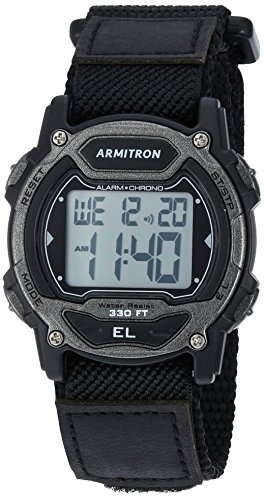
Armitron Sport Unisex 45/7004GBK Digital Chronograph Black Nylon Strap Watch


A final checklist in the order that matters
Start with the wrist, because the movement’s dimensions make fit the first filter rather than the last. Measure the wrist, note its flat width, and compare candidate watches by lug-to-lug length and total height before diameter, favouring heights toward the lower end of the family’s range for smaller wrists and for wear under cuffs. Try the watch on its actual strap or bracelet, adjusted, and move the wrist through its ordinary range: the head should stay centred, the crown should not press into the hand in extension, and the rotor’s behaviour should register as character rather than disturbance. A watch that fails this stage will not be rescued by a preferred dial layout, because an unworn watch delivers none of its functions. This ordering, wrist before variant before history, is deliberate, and reversing it is how buyers end up owning admired watches that live in boxes.
Next, choose the variant by the information the watch must present. The standard day-date execution suits an owner who wants the full calendar at three and the classic vertical counters. The 7753’s horizontal counters suit a preference for symmetry and a cleaner right side of the dial. The 7751 suits a buyer who genuinely wants a full calendar and moonphase and accepts its setting discipline. The 7754 suits regular travel across time zones, and a no-date execution suits anyone who finds calendar apertures interrupt a dial and who sets the watch after rests often enough to resent correcting a date. Within the chosen variant, examine the specific dial for hand contrast, subdial legibility, and the hierarchy between time and chronograph indications, remembering that these will be read in poor light and in motion, not only in the favourable conditions of a shop or a product photograph.
Then establish grade, movement identity, and condition from evidence. Read the brand’s specification for the calibre designation and grade, confirm whether the movement is the ETA calibre or the Sellita twin where the model line spans both, and treat decoration as decoration rather than as proof of grade. For a new watch, confirm the warranty and the brand’s service route and pricing. For a used watch, run the chronograph and calendar checks described in this guide, ask for service documentation, price an imminent overhaul into any example without it, and verify that the dial layout and movement variant agree with each other. A seller who welcomes those questions is providing information as valuable as the answers, while resistance to basic functional checks on a mechanical chronograph is itself a finding that should end a negotiation calmly.
Close by planning ownership rather than merely purchase. Budget for the first service at the interval the maker recommends, keep the watch away from strong magnetic sources, store it where its state of wind and the date of its last wear are known, and choose straps that balance the head so the watch is comfortable enough to become the default it was designed to be. Half a century after its introduction, the 7750 endures not because it is flawless but because every one of its compromises was made in the open, in favour of reliability, serviceability, and price, and a buyer who shares those priorities will find, on the wrist and across the years, that the movement keeps the promises its architecture makes.


