Our Top Picks
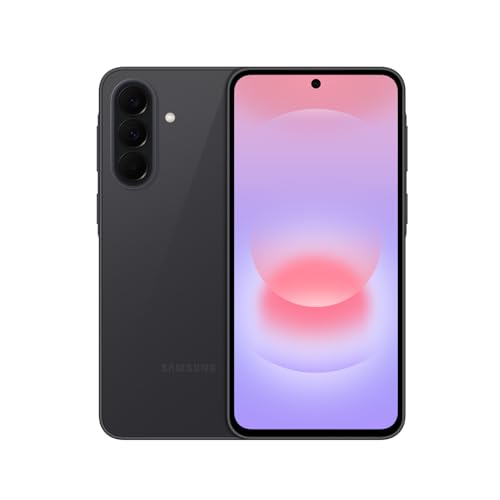
 Rogue R67S Unlocked 4G LTE Smartphone for T-Mobile6.78 x 3.13 x 0.39 inches0.5 poundsCheck on Amazon


What's inside
- Broadcast Standards Decide Everything Before Branding Does
- USB-C Plug-In Tuners: Small Hardware, Long Compatibility Lists
- Network Tuners: The Rooftop Antenna Learns New Tricks
- Antennas: The Unglamorous Half of Every Success Story
- Companion Applications Make or Break the Experience
- DRM, Encryption, and the Channels a Tuner Cannot Show
- Picture, Sound, and the Phone Itself
- Choosing Between a Dongle and a Gateway for Real Situations
- Setup Routines That Prevent the Common Failures
- Troubleshooting by Symptom, Without Guesswork
- What Ownership Looks Like Over Several Years
- A Calm Buying Sequence for Android Viewers
- Radio Services, Data Services, and the Channels Nobody Mentions
- Check prices on Amazon
- Travel Across Regions: Realistic Plans for Portable Viewing
As an Amazon Associate I earn from qualifying purchases. This post may contain affiliate links at no extra cost to you.
This publication earns money in a straightforward way: retailers sometimes pay a referral fee when a reader follows an outbound link and later buys something. Readers pay nothing additional for that arrangement. Selections below follow published specifications and documented compatibility, not fee levels, and manufacturers do not approve the wording.
Watching live broadcast television on an Android phone sounds like a novelty until a power cut, a campsite, a dormitory room, or a long rail journey makes streaming feel fragile. Broadcast signals travel without a data allowance, they do not buffer when a cell tower congests, and in many countries the main channels remain free to receive with nothing more than a tuner and an antenna. A TV receiver built for Android bridges that older, resilient medium and the screen already in a pocket. The bridge, however, comes in two very different forms, and choosing between them shapes everything from battery drain to which channels can legally be recorded.
The first form plugs directly into the phone. Compact USB-C tuners for DVB-T and DVB-T2, and equivalents for other regional standards, draw power from the handset, decode the broadcast on the spot, and hand pictures to a companion application. The second form never touches the phone at all. A network tuner sits at home beside a proper rooftop or loft antenna, receives broadcasts once, and streams them over the local network, or in some cases remotely, to an Android client wherever the viewer happens to be. Both approaches end with live television on the same phone screen, yet their costs, failure modes, and channel lineups diverge sharply.
This comparison is grounded in manufacturer specifications, broadcast standard documentation, application descriptions, and recurring themes in owner feedback. Nothing here rests on a claim of personal bench time with each dongle on each handset, because handset compatibility in this category is too fragmented for any single collection of phones to settle the question. Instead, the guide teaches a buyer how to verify a specific phone, a specific tuner, and a specific region against one another, which is the only honest way to shop for broadcast hardware in a world divided by incompatible transmission systems.
Broadcast Standards Decide Everything Before Branding Does
Television broadcasting fragmented long before smartphones existed, and the fragments never reconciled. Much of Europe, Africa, Asia, and Oceania uses DVB-T for older transmissions and DVB-T2 for modern high definition services, with countries migrating at different speeds and some running both side by side during transition periods. North America and South Korea use ATSC, with ATSC 1.0 entrenched and ATSC 3.0, marketed as NextGen TV, rolling out unevenly and carrying different tuner and rights requirements. Japan and much of Latin America use ISDB-T, including a one segment mobile variant historically built into domestic Japanese handsets. China uses DTMB. A tuner built for one family will stare blankly at signals from another, no matter how elegant its Android application looks.
Even inside a single standard, national choices create traps. DVB-T2 services differ in modulation, guard intervals, and whether high definition channels use HEVC or the older H.264 video codec. A tuner may receive a multiplex perfectly while the phone struggles to decode its video, or an older dongle may handle standard definition broadcasts in a country whose high definition tier moved to a codec it cannot pass through cleanly. The United Kingdom, Germany, Italy, France, and Australia all sit under the broad DVB umbrella yet present different channel plans, interactive services, and radio services carried alongside television. Buyers crossing borders with a tuner in a luggage pocket should expect partial success at best and should research the destination system channel by channel.
ATSC shoppers face a generational fork. Plenty of USB tuners exist for ATSC 1.0, and Android support for them has a long, if niche, history. ATSC 3.0 promises improved reception, higher resolution pathways, and interactive features, but it also introduces receiver certification and content protection questions that have slowed the accessory market considerably. A phone owner in the United States who buys a bargain ATSC dongle without checking the generation may receive today lineup perfectly and still own hardware with no path to the newer broadcasts spreading through major markets. Conversely, paying early adopter money for 3.0 hardware in a market with no local 3.0 service buys potential that may expire before it becomes useful.
Regional verification therefore starts outside the shop entirely. National broadcast regulators and transmitter network operators publish coverage maps, multiplex listings, and migration timetables. Freeview in the United Kingdom, comparable bodies elsewhere, and transmitter finder services tell a buyer which channels broadcast from which site, on which frequencies, with which polarisation. That information determines antenna choice and even whether indoor reception is plausible at a given address. A tuner purchase made before that homework is a gamble; the same purchase made after it becomes a calculated decision with known weak channels and known workarounds.
USB-C Plug-In Tuners: Small Hardware, Long Compatibility Lists
The appeal of a plug-in tuner is immediacy. Insert the dongle, attach a small antenna, open the companion application, scan, and watch. No router configuration, no home server, no account. Products in this space include the MyGica and PadTV style DVB-T2 dongles sold under several regional names, Hauppauge accessories in certain markets, and assorted no name USB-C receivers whose packaging promises far more than their support pages deliver. August International and other consumer brands have offered Android oriented tuners in Europe, while North American buyers encounter a thinner, more enthusiast driven selection.
Compatibility is the category defining problem, and it has three layers. First, the phone must support USB On-The-Go host behaviour on its USB-C port, supplying power and data to an accessory rather than merely charging and syncing. Most mid range and flagship Android handsets do, but some budget models omit or limit host support, and a phone that happily reads a flash drive may still mishandle a continuously streaming tuner. Second, the tuner application must support the handset Android version and processor architecture. Third, digital rights and codec support on the phone must cover the broadcasts being received. A failure at any layer produces the same blank screen, which is why owner reviews for these products swing wildly between delight and fury: the same dongle is genuinely excellent on one handset and genuinely unusable on another.
Power draw deserves blunt attention. A plug-in tuner plus continuous video decoding plus a bright screen is a heavy combined load, and the tuner occupies the only charging port while it works. Some dongles provide a pass through charging arrangement or work through a suitable hub, but hub compatibility is itself inconsistent, and a cheap splitter that carries power without proper data negotiation will disappoint. Viewers planning long sessions, a football match, an election night, a day of test cricket, should think in terms of starting charge, screen brightness discipline, and whether a network tuner at home would serve the occasion better. Anyone assembling a travel kit alongside best chargers for international travel should note that broadcast hardware changes the charging equation more than most accessories ever do.
Connector mechanics matter more than marketing photographs admit. A dongle hanging directly from a phone port places leverage on that port whenever the handset is picked up, propped against a mug, or slipped into a loose pocket with an antenna cable attached. Short extension cables relieve that strain and also move the tuner away from the phone metal body, which can help reception marginally. Cases complicate fit as well; a thick protective case with a narrow port cutout may prevent a wide dongle seating fully, producing intermittent contact that masquerades as poor signal. Buyers who protect their phones heavily should favour tuners bundled with, or tolerant of, a short flexible lead.
Network Tuners: The Rooftop Antenna Learns New Tricks
A network tuner moves reception to where reception is best. Devices in the HDHomeRun family from SiliconDust, the Tablo range in North America, VBox gateways aimed largely at DVB markets, and TVHeadend servers built by enthusiasts on small computers all share one architecture: connect a serious antenna once, tune broadcasts centrally, and distribute programmes over the home network to phones, tablets, televisions, and computers. The Android phone becomes a viewer rather than a receiver, which removes the dongle compatibility lottery and replaces it with networking questions that are usually easier to answer.
Tuner count is the headline specification inside this architecture. A dual tuner unit can record one channel while someone watches another, or serve two viewers on different channels simultaneously. A quad tuner expands that headroom for households where recordings collide during prime time. Single tuner gateways are cheaper and adequate for a lone viewer, yet frustrating the first evening a scheduled recording and a live match overlap. Buyers should count simultaneous ambitions honestly: each Android phone watching a distinct live channel consumes a tuner, each recording consumes a tuner, and background guide or scanning tasks on some platforms briefly claim capacity as well.
Transcoding separates otherwise similar products. Some gateways pass the broadcast stream through largely unchanged, preserving quality and placing decoding burden on the phone. Others convert video into formats friendlier to mobile playback or remote streaming, reducing bandwidth at the cost of processing delay and sometimes picture softness. On a home network with a modern handset, pass through usually looks best and starts fastest. Over a hotel connection or a constrained upload link at home, a transcoded stream may be the difference between watching and buffering. Product documentation states which models transcode, in which resolutions, and whether the feature applies to live viewing, recordings, or both; those paragraphs repay close reading.
Remote viewing introduces account, security, and legality layers absent from plug-in hardware. Some ecosystems offer an official remote feature tied to a subscription or a paired account, others expect the owner to arrange secure access to the home network, and a few simply do not support viewing away from home at all. Exposing a tuner directly to the public internet without vendor guidance is poor practice. There are also content licence considerations when a household member studies or works abroad and streams domestic broadcasts across a border; platform terms and national rules vary, and this guide does not pretend a single answer covers them. What can be said plainly is that a phone with a strong display, such as those compared in guides to best 1440p android phones, makes an excellent remote screen once the access path is legitimate and stable.
Storage architecture follows from the gateway choice. Certain Tablo models record to internal or attached USB storage and present recordings inside their own applications. HDHomeRun recording depends on a separate engine running on a computer, network storage, or a dedicated recording appliance, paired with its service. VBox and TVHeadend arrangements hand the owner still more control and still more configuration. Android viewers mostly consume the result, browsing a library rather than managing disks, yet the owner who sets the system up must decide where recordings live, how long they are kept, and what happens when a disk fills during a series finale.
Antennas: The Unglamorous Half of Every Success Story
Most disappointing tuner experiences are antenna experiences wearing a disguise. The telescopic whip or tiny loop bundled with a plug-in tuner works near a transmitter, near a window, or outdoors with line of sight. It struggles in a basement flat, a steel framed building, a valley, or anywhere the desired transmitter sits tens of kilometres away behind terrain. Signal strength bars inside an application describe the result after the antenna has done its work; no software update can manufacture radio energy that never arrived.
Indoor antennas divide into passive designs that simply collect what reaches them and amplified designs that boost weak signals along with noise and interference. Amplification helps when losses come from cable runs or splitters after a decent signal has been captured. It harms when a strong nearby transmitter or a noisy LED lighting installation overloads the front end, and it cannot rescue a location where the wanted signal is absent. Placement experiments cost nothing and teach a great deal: raising an antenna, moving it to a window facing the transmitter, rotating it between horizontal and vertical polarisation, and keeping it away from large metal objects and switching power supplies routinely transform a channel lineup. A methodical scan after each move, with notes, beats an hour of random wiggling.
Outdoor and loft antennas remain the reference standard for network tuners. A correctly aimed aerial sized for the local frequency bands, connected with intact coaxial cable and weatherproofed joints, delivers the margin that makes marginal multiplexes reliable in rain and seasonal foliage. Viewers in apartment buildings may inherit a communal aerial system whose outlets carry a filtered channel range; that filter can silently remove multiplexes added later by broadcasters, a maddening fault that presents as a tuner missing channels a neighbour with a private aerial receives. Building management documentation, or a spectrum aware installer, resolves that mystery faster than repeated rescans.
Frequency planning has become more complicated as mobile broadband expands into former television spectrum. In many regions, 4G and 5G services now operate near or within bands antennas were built to receive broadly, and a wideband aerial can deliver strong mobile signals that desensitise a tuner. Filters designed to reject those mobile bands, fitted between antenna and receiver, are inexpensive and frequently transformative in urban flats close to a base station. Their correct placement matters: filtering before an amplifier protects the amplifier itself, while filtering after it leaves overload upstream untouched. Manufacturer guidance for local markets usually names the appropriate filter type, since band edges differ by country.
Portable viewing has its own antenna etiquette and physics. On a train, reception changes with cuttings, tunnels, station canopies, and the carriage body itself, and a window seat with the antenna near glass outperforms an aisle seat dramatically. At campsites, height and openness help, while wet trees and nearby vehicles hinder. Boats add motion and reflections from water that produce rapidly varying multipath. None of this makes portable broadcast viewing futile; it makes expectations situational. A downloaded recording or a catch up stream remains the sensible backup for a journey where a particular programme truly matters, with live broadcast as a welcome bonus when geography cooperates.
Companion Applications Make or Break the Experience
Hardware delivers a transport stream; the application turns that stream into television. The best Android clients present a legible electronic programme guide, allow channel reordering and favourites, start playback quickly, remember volume and subtitle preferences, and handle a brief signal loss without collapsing back to a home screen. Weaker clients expose raw channel lists in scan order, bury audio track selection, forget settings between sessions, and treat every dropout as a fatal error. Because plug-in tuners often depend on a single vendor application, that application quality is effectively part of the hardware purchase and should be investigated with the same seriousness.
Guide data comes from several sources with different reliability. Many broadcasts carry their own electronic programme information inside the signal, which costs nothing and works offline, though depth may extend only a few days and descriptions can be terse. Gateway ecosystems often layer richer guide data from an online service, sometimes bundled, sometimes subscription based, enabling series recording rules and better search. Enthusiast platforms pull guide information from community or broadcaster feeds whose configuration falls on the owner. An Android user should know which source a product uses, what happens when guide data lapses, and whether manual recording by time and channel remains possible as a fallback.
Playback features vary in ways that affect daily pleasure. Timeshifting, pausing live television into a buffer, depends on available storage and on whether the application writes that buffer to the phone or to a gateway disk. Subtitle and audio description support matters enormously to viewers who rely on it, and broadcast subtitles travel in formats that not every mobile player renders. Secondary audio, multiple language tracks, and radio channels carried on the same multiplex all test an application maturity. A buyer with specific accessibility needs should verify those exact features in support documentation rather than assuming that a player which handles the main channel audio will handle every auxiliary service gracefully.
Recording from a plug-in tuner to a phone raises storage and filesystem questions that marketing rarely mentions. An hour of high definition broadcast can occupy several gigabytes depending on bitrate, and a modest handset fills quickly during a tournament or a series binge. Recording to expandable storage helps where the phone supports it, which is why viewers who archive programmes often cross reference storage guidance such as best android micro sd cards before committing to a dongle based workflow. Android scoped storage rules and application permissions also influence whether recordings can be moved, renamed, or played in another application, and some companion programs keep recordings inside a private container that resists export by design.
Third party players widen the options for network tuners in particular. A gateway that publishes streams in standard formats can be watched through general purpose Android players, DVR client applications, or media centre front ends, each with a different interface philosophy. That openness protects the owner if a vendor application stagnates, and it lets a household standardise on one viewing interface across phones and televisions. It also introduces setup surface: addresses, authentication, guide mapping, and deinterlacing settings may need attention. Buyers who value an appliance experience should weight official application polish heavily; buyers who enjoy configuring systems will regard the same openness as the main attraction.
DRM, Encryption, and the Channels a Tuner Cannot Show
Free to air does not always mean free to decode on any device. Some nominally free channels broadcast with encryption tied to a conditional access module, a smart card, or a certified receiver scheme, particularly where rights holders demand platform control or where a broadcaster shares satellite and terrestrial infrastructure decisions. Pay television multiplexes are encrypted as a matter of course. A USB tuner without a card slot or CI interface, and most network gateways sold for free services, will list such channels during a scan and then refuse to display them, a behaviour that confuses buyers who equate detection with availability.
ATSC 3.0 sharpens this issue in the United States. Content protection requirements attached to the newer standard have led to certified gateway and receiver programmes, and broadcasters have applied encryption to some signals in ways that older or uncertified equipment cannot handle. The situation continues to evolve through regulatory discussion and manufacturer certification, so a purchase decision made from a forum post written a year ago may rest on expired facts. Current vendor statements about certification status, plus broadcaster information for the local market, are the reliable sources. A buyer whose favourite local station has encrypted its newer signal should weigh a certified path carefully against simply remaining on the widely supported earlier standard while it lasts.
Recording restrictions follow a related logic. Some platforms permit recording of free broadcasts without meaningful limitation, some encrypt recordings to the account or device that made them, and some disable recording or external playback for protected channels entirely. Copy control flags embedded in broadcasts can also influence what a compliant recorder may do. For a viewer, the practical questions are concrete. Can a recording be watched on a second phone? Does it survive changing handsets? Can it be moved to a computer for long term keeping where the law and the platform terms allow? Answers live in product documentation and terms, not in a feature checklist bullet that merely says recording supported.
Regional lockouts in applications add a final, quieter barrier. A companion program distributed through an app store may be unavailable in a country where the hardware is sold through import channels, or a gateway service may restrict account creation by territory. Sideloading an application from an untrusted source to bypass such a restriction trades a television problem for a device security problem and is a poor bargain. Travellers who rely on a phone for banking, identity, and communication, perhaps while also comparing best 5g android phones before a handset change, should keep the broadcast hobby inside reputable distribution channels and accept that some imported hardware is effectively unsupported abroad.
Picture, Sound, and the Phone Itself
Broadcast television arrives interlaced in many markets, especially high definition services built around 1080i, and phones are progressive displays that must deinterlace that material well or show combing artefacts on moving sport and news tickers. Hardware decoding paths differ between chipsets, and some Android players deinterlace in software with a visible cost in heat and battery. A handset that plays streaming services beautifully may still handle a raw broadcast stream less gracefully, because streaming platforms deliver encodes tailored for mobile playback while a tuner hands over the broadcast encode exactly as transmitted. Checking codec and deinterlacing behaviour for a specific phone and player combination is therefore worthwhile for viewers sensitive to motion artefacts.
Resolution labels also mislead in broadcast contexts. A channel branded high definition may broadcast at 720p, 1080i, or 1080p depending on country and multiplex economics, and standard definition channels upscaled by a good player can look respectable on a phone sized screen while disappointing on a cast television. Bitrate matters as much as pixel count: a generously encoded standard definition channel can appear cleaner than a starved high definition multiplex crowded with shopping and plus one services. Phone viewing is forgiving, which is part of the attraction, yet viewers planning to cast recordings to a large screen should judge quality on that screen before building a library around a marginal multiplex.
Audio deserves equal billing. Broadcasts may carry stereo, multichannel sound folded into compatible formats, descriptive audio for visually impaired viewers, or a clean feed without commentary on certain events. Whether an Android player passes multichannel audio to headphones, folds it intelligently to stereo, or simply drops channels depends on decoder licences and player design. Dialogue that sounds hollow or effects that overwhelm speech during an action scene often trace back to a careless downmix rather than the broadcast itself. Players exposing audio track choice, downmix behaviour, and volume normalisation give the viewer tools to correct that balance.
Heat and endurance shape long viewing sessions in ways specifications rarely capture. Continuous decoding, a bright panel, and, for dongle users, tuner power draw combine into a warm handset and a falling battery gauge. A network tuner shifts reception power to the mains powered gateway, leaving the phone with decoding and Wi-Fi duties only, which is one reason home based viewing feels more relaxed over an evening. For portable sessions, lowering brightness indoors, downloading guide data in advance where the application allows, and closing unrelated background work all extend usable time more reliably than carrying the largest power bank in a bag and hoping the port stays free.
Choosing Between a Dongle and a Gateway for Real Situations
- Solo traveller inside one broadcast region: A verified USB-C tuner for the local standard, a short extension lead, and modest expectations about indoor reception form a light, self contained kit.
- Household with a good rooftop aerial: A multi tuner gateway turns that aerial into a shared asset for every phone and television, with recordings managed centrally.
- Student in rented rooms: A plug-in tuner avoids installation entirely, while a gateway only makes sense where an aerial outlet already exists and housemates will share it.
- Sports household with clashing fixtures: Tuner count and dependable series recording matter more than dongle portability, because simultaneous matches punish single tuner setups.
- Viewer in a mobile signal shadow: A gateway by a window aerial or a carefully placed indoor antenna at home will outperform a whip antenna held beside a sofa.
Consider a commuter who wants breakfast news and evening football without touching a data allowance. If the journey is mostly above ground inside a strong coverage city, a plug-in tuner matched to the national standard and verified against the exact handset can deliver that modest ambition cheaply. Consider a family in a house with an excellent loft aerial, two Android phones, a tablet, and a habit of recording drama series. The gateway wins on every axis that matters to them: reception margin, simultaneous use, central storage, and no dongle dangling from a phone during dinner. Neither answer generalises, which is precisely why format choice precedes brand choice in a sensible purchase.
A second home, caravan, or boat introduces a hybrid pattern. Some owners install a gateway at the main house for recordings and everyday viewing, then carry a simple dongle for trips where the destination shares the same broadcast standard. Others place a gateway permanently in a caravan with a roof antenna, treating the leisure property as a small second network. The deciding factors are whether the destination has power and networking worth maintaining, whether local reception justifies a fixed aerial, and whether the same channels even broadcast there. A touring viewer crossing from a DVB country into an ISDB country gains nothing from either device and should plan around downloads and local streaming instead.
Budget reasoning in this category should count the whole chain. A dongle path may require a better portable antenna, an extension lead, a storage card, and eventually a replacement when a phone upgrade changes port or compatibility behaviour. A gateway path may require an aerial installation, network cabling or a stronger access point, storage, and possibly a guide subscription. Comparing only the receiver shelf price understates both, but especially the gateway, whose supporting infrastructure is also what gives it superior results. Households that already own a good aerial and home network are closer to gateway value than the headline price suggests; travellers with none of that infrastructure are closer to dongle value for the mirror image reason.
Setup Routines That Prevent the Common Failures
For a plug-in tuner, setup order matters. Install the companion application from its official store listing first, grant only the permissions it can justify, connect the tuner with the phone unlocked, and let the application detect the hardware before attaching a large antenna or hub. Run the first channel scan in the strongest available location, ideally near a window with a known transmitter direction, so the initial channel list reflects capability rather than a dead corner of a building. Save or note that baseline list. Later scans in weaker spots can then be judged against it, and a channel missing everywhere points to a broadcast or compatibility issue while a channel missing in one room points to reception.
For a gateway, begin with the antenna feed and a television or a known good receiver if one is available, confirming the aerial itself delivers the expected multiplexes before networking enters the story. Connect the gateway by wired Ethernet where possible during setup, even if wireless placement is the eventual goal, because a wired baseline separates tuner problems from Wi-Fi problems cleanly. Update firmware when the vendor offers it, set the correct region and guide source, run a full scan, and only then introduce Android clients one at a time. Testing two phones simultaneously early, including a channel change on each, reveals tuner count behaviour while the setup is still fresh in mind.
Recording tests are the step almost everyone skips and later regrets. Schedule a short recording on a secondary channel, confirm it starts while live viewing continues on another channel if the tuner count promises that, play it back on the phone, and check that subtitles or alternate audio survived if those matter. Test what happens when storage approaches full, when the gateway reboots, and when a recording spans a programme change on the same channel. Series rules deserve a trial week on a low stakes programme before being trusted with a season of appointments television, because guide identifier quirks can duplicate episodes or miss a rescheduled instalment in ways a single manual recording never exposes.
Network hygiene supports the whole arrangement quietly. A gateway with a reserved local address is easier for client applications to find after a router reboot. A home network name that stays stable, a router placed sensibly, and firmware kept current reduce the mysterious dropouts owners often blame on the tuner. Remote access, if used, should follow the vendor documented method with strong account credentials and two factor protection where offered. A television gateway may seem too humble to attract hostile attention, yet any always on networked device benefits from the same basic discipline applied to a router or a storage box.
Troubleshooting by Symptom, Without Guesswork
A scan that finds no channels at all invites a disciplined sequence rather than a replacement purchase. Confirm the region and standard selected in the application match the country underfoot. Confirm the antenna is actually connected, since some dongles use the same port style for antenna and extension accessories and a half seated connector looks connected at a glance. Move to a window or outdoors and rescan. Try the antenna with a household television if one exists, or try the tuner on a second compatible phone. Each step halves the suspect list, and the pattern of results, not any single attempt, identifies whether the fault lives in signal, hardware, handset, or software.
Channels that appear and then break into blocks or freeze usually indicate marginal reception or overload rather than a decoding defect. Marginal signals worsen in heavy rain for some frequencies, at certain times of day with atmospheric conditions, and when a viewer hand or body shadows a small antenna. Overload produces similar artefacts in strong signal areas, especially with an amplified antenna at full gain, which is why reducing amplification is a legitimate diagnostic even though it feels backwards. Signal quality readings, distinct from strength readings, are the more honest guide where an application exposes both: a strong but corrupted signal needs filtering, repositioning, or less gain, not more.
Audio playing without picture, or picture without sound, points toward codec and track selection. The receiver has found the multiplex, so reception is broadly working, but the phone or player cannot decode a chosen elementary stream, or an alternate audio track has been selected accidentally. Switching player engines where the application permits, choosing a different audio track, or confirming that the handset supports the regional high definition codec resolves many such cases. A standard definition channel working while its high definition sibling fails is a classic signature of a codec boundary rather than an antenna problem, and recognising that pattern saves an afternoon of pointless aerial adjustment.
Guide gaps and missed recordings belong to a different family again. Broadcast delivered guide data can be incomplete after a scan performed on the wrong multiplex, since some receivers gather guide information from channels as they are visited. Online guide services can misalign a regional variation, listing the national feed schedule for a channel that carries local news opt outs. Time zone and daylight saving handling on a gateway configured in a hurry can shift every recording by an hour after a clock change. Each cause has a specific remedy, refreshing guide source, correcting region, checking clock settings, and none of them involves replacing reception hardware.
What Ownership Looks Like Over Several Years
Broadcast ecosystems change slowly and then suddenly. A country announces a migration from DVB-T to DVB-T2, an older multiplex closes to free spectrum for mobile services, a gateway vendor revises its application, or a phone upgrade quietly drops a permission the tuner relied upon. Owners who keep a short record of their setup, standard, transmitter, antenna arrangement, application versions that worked well, and account recovery details, adapt to those changes with far less pain than owners reconstructing everything from memory during a major sporting event. That record belongs with household documents, not buried in a messaging thread.
Phone upgrades deserve a specific compatibility ritual in this niche. Before trading in a handset that works with a plug-in tuner, confirm the replacement supports USB host behaviour properly, carries the needed codecs, and runs a current version of the companion application from its official listing. Store reviews filtered by recent handset models can reveal breakage after an operating system release sooner than a vendor compatibility page is updated. Keeping the older phone as a dedicated broadcast viewer is also a legitimate strategy for enthusiasts: a retired handset on home Wi-Fi, paired with a gateway, becomes a kitchen or workshop television without risking the main phone battery or port.
Accessory ecosystems age at different speeds. A gateway with standard network protocols and exportable recordings retains usefulness through application changes and handset generations, because new clients can usually be found for open streams. A proprietary dongle tied to one application lives and dies by that application maintenance. That asymmetry does not make dongles a mistake; portability may be worth a shorter expected life, and the purchase cost is usually lower. It does mean a buyer should price a dongle as a device for the current phone and current broadcast landscape, while a gateway can reasonably be judged as infrastructure for the household over a longer horizon.
There is also a resilience argument that grows more persuasive with each severe weather season. Broadcast networks are engineered for wide area delivery from hardened transmitter sites, and a battery powered phone with a working tuner can receive emergency information, news, and public announcements when mobile data is congested or a home connection is down, provided local transmitters remain on air and the phone retains charge. That capability should not be romanticised into a survival plan, and it depends entirely on regional infrastructure and handset endurance. As one layer among several, alongside radio and downloaded information, it gives this old fashioned technology a thoroughly modern justification.
A Calm Buying Sequence for Android Viewers
Start with geography. Identify the broadcast standard at home and at any destination where portable use genuinely matters, then list the channels that carry the programmes actually watched, noting which are standard definition, which are high definition, and whether any are encrypted or pay services. Check transmitter coverage for the real addresses involved, not a city centre approximation. That single exercise eliminates most unsuitable hardware before a single brand name enters the discussion.
Decide the architecture next. A lone viewer who travels inside one region and already knows the exact handset passes compatibility checks can favour a plug-in tuner for simplicity. A household with a decent aerial, several screens, recording ambitions, or problem rooms where a phone antenna will never thrive should favour a gateway and accept its setup weekend. Mixed households can stage the decision: begin with the gateway as shared infrastructure, and add a dongle later only if portable viewing proves to be a real habit rather than an imagined one.
Interrogate the application before the hardware arrives. Read its store listing for the current version, its permission demands, its recording and subtitle claims, and its update history. Look for documentation naming supported Android versions, storage behaviour, and guide sources. For gateways, confirm tuner count under simultaneous live and recording load, transcoding behaviour, and the precise terms attached to remote viewing and guide data. Vague answers at this stage become specific frustrations after installation, when returning a partly configured system feels far harder than asking one more question did.
Plan the antenna as a line item, not an afterthought. Budget attention, and if necessary money, for placement, a filter where local mobile signals demand one, sound coaxial connections, and for fixed installations a proper outdoor or loft aerial aimed with transmitter information in hand. Most delighted owners in this category are not the ones who bought the most exotic receiver; they are the ones whose signal arrives strong and clean, whose application matches their phone, and whose recordings land on storage they understand.
Radio Services, Data Services, and the Channels Nobody Mentions
Television multiplexes carry more than television. National and local radio stations ride the same transmissions in many countries, often with excellent audio quality and no dependence on a data connection, and an Android tuner application that surfaces those stations turns a phone into a resilient radio for news, sport commentary, and music during network outages or long drives where a passenger can manage reception. Some players hide radio behind a mode switch or list it alphabetically among hundreds of television services, while better organised clients separate audio services into their own guide with programme information. A buyer who values radio should confirm that separation in advance, because scrolling past shopping channels to find a favourite station every morning quickly kills the habit.
Interactive and data services occupy a stranger corner of the broadcast world. Hybrid services link a broadcast channel to broadband delivered extras when the receiver supports the relevant standard and is connected to the internet, offering restart programmes, additional streams, and enhanced guide pages. A phone based tuner may ignore those hooks entirely, presenting the underlying channel without its interactive layer, while a gateway ecosystem may support some features through its own applications. Neither behaviour is a fault in itself, yet viewers accustomed to pressing a coloured button on a household television remote should not assume the same prompts will appear, or function, inside an Android client.
Regional variations within a single channel brand create another layer of discovery after a scan. A national channel may carry different news, weather, advertising, or even sport depending on the transmitter region, and a gateway connected to a powerful aerial sometimes receives overlapping regions at once. Duplicate channels in a list are therefore not always a scanning error; they can be genuinely different regional services with identical names. Thoughtful applications let the owner rename, reorder, and hide duplicates while keeping the strongest or preferred region as the default. That housekeeping, done once with local knowledge, prevents the recurring annoyance of recording a bulletin intended for viewers two hundred kilometres away.
Audio described and signed programming also travels inside these multiplexes in forms that vary by broadcaster. Some services provide a separate audio track, others a separate signed version of a programme at a scheduled hour, and listings data does not always flag either clearly in a mobile guide. Viewers who depend on those services benefit from applications that remember track preferences per channel and expose them without excavation. Households choosing a gateway for an older relative should walk through that exact workflow on the relative phone, at the relative preferred text size, before declaring the system finished.
Check prices on Amazon
Live listings for the shortlist in this guide are pulled from Amazon below, so prices and availability are always current at the moment you look.



Travel Across Regions: Realistic Plans for Portable Viewing
A tuner that delights at home can become dead weight abroad, and honest travel planning starts by accepting that broadcast geography is unforgiving. A DVB-T2 dongle bought for a British address will serve much of Europe and several other regions at the level of basic radio reception, yet codec choices, encryption, and channel plans still differ, and the same dongle is useless for terrestrial reception across most of North America or Japan. Multi standard marketing claims deserve particular scepticism. Genuine multi standard hardware exists in enthusiast circles, but a single inexpensive dongle promising every world system, every codec, and every future upgrade should be read as a warning rather than a bargain.
For a long trip through one compatible region, preparation multiplies success. Download the companion application and any regional channel resources while still on a trusted connection, research transmitter locations along the route, and carry a compact antenna with a magnetic base or suction mount that can exploit a window or a vehicle roof where local rules and safety allow. A short cable that lets the antenna sit apart from the phone improves both reception and ergonomics during an evening in a rented apartment. Testing the complete kit at home first, including a recording and a subtitle check, means faults are discovered where spare parts and patience are plentiful.
For travel between incompatible regions, the rational kit changes completely. A gateway left at home, accessed through its vendor supported remote route where terms permit, can keep familiar recordings and channels available on the phone without any local tuner at all. Downloaded programmes, broadcaster catch up applications for the destination, and a local prepaid data option cover the remaining gaps. Trying to force portable broadcast hardware across a standards border usually ends with a traveller troubleshooting a scan in a hotel room instead of sleeping, which is a poor exchange on any itinerary.
Border regions at home present a milder version of the same puzzle. Homes near a national frontier, or near an internal transmitter boundary, may receive foreign or neighbouring services with programming unavailable domestically, sometimes in another language and sometimes with a time offset in guide data. Gateways and applications differ in whether they allow two regions to coexist in one channel list, and time zone handling can become genuinely confusing when a receiver clock follows one country while the viewer lives in another. Naming channels explicitly and documenting which transmitter each favourite uses turns that complexity into a small, stable pleasure rather than a recurring setup mystery.
Second screen habits complete the picture of modern broadcast viewing on a phone. Many viewers keep a handset beside a main television for a second match, a news channel during a film, or subtitles rendered personally while the room hears the programme audio. A gateway serves that habit gracefully because the main set and the phone draw from the same aerial and recording library, while a dongle keeps the second screen wholly independent when tuner capacity at home is exhausted. Social viewing across households, a family group following the same final from different cities, also benefits from broadcast simultaneity, since terrestrial delivery avoids the uneven delays that make streaming viewers hear a neighbour celebrate a goal long before their own screen shows it. That shared instant, increasingly rare in on demand media, remains a distinctive strength of a live transmission received the old way and displayed on the newest screen in the room.
One final practical check concerns software updates during major events. Operating system releases, application updates, and gateway firmware all tend to arrive on their own schedules, and changing any layer of the chain on the morning of a final, an election, or a national ceremony invites avoidable risk. Postponing non urgent updates until after an important broadcast, while keeping security updates in perspective, is a small discipline experienced owners adopt quietly.
Live television on a phone will never replace streaming for on demand choice, nor should it try; its charm is immediacy, independence from data networks, and the small pleasure of a national moment arriving at the same instant for everyone watching, and the Android handset that receives that moment through a well chosen tuner, in a railway carriage with rain on the windows and the commentary running half a breath ahead of the crowd noise from the platform below, earns its place in a travel bag in a way no specification table can quite capture.


