Our Top Picks
 Sony SS-CS5M2 3-Way 3-Driver Hi-Res Compact Bookshelf Speakers8.7 x 7 x 13.2 inches1 poundsCheck on Amazon


What's inside
- Why sensitivity matters more than almost anything else here
- What to check before you buy any pair on this list
- The shortlist in full
- How the Klipsch pairs differ from each other
- Where the Sony three-way design fits
- Edifier and Elimavi: the value-focused passive options
- Setting up a vintage receiver and modern bookshelf speakers
- Which pair should you choose?
- Living with a vintage receiver day to day
- Room acoustics without the jargon
- Why pairs are sold and placed as pairs
- Long-term care for speakers and receiver
- Check prices on Amazon
- Disclosure
As an Amazon Associate I earn from qualifying purchases. This post may contain affiliate links at no extra cost to you.
A Pioneer SX-550 belongs to a different era of home audio. It is a vintage stereo receiver from the late 1970s, built for a living room where records, radio, and later cassettes were the main sources, and where speakers were expected to make useful volume from a low-powered vintage receiver rather than from a large modern amplifier. That single fact shapes this entire guide. Every speaker below is a passive bookshelf model, which means it needs a receiver or amplifier to operate, and every recommendation is judged first on sensitivity, impedance behaviour, size, and how honestly it will work at the modest output levels a receiver of this period provides.
Our research for this guide started from published manufacturer material, product titles, and widely understood principles of speaker and amplifier matching. We checked sensitivity as a concept rather than chasing a single headline number, because a speaker that converts a small amount of power into useful sound will almost always be the safer partner for an older receiver. We also looked at impedance, because a friendly load asks less of an ageing amplifier section, and at cabinet size, because bookshelf speakers still need sensible placement, breathing room from walls, and stands or shelves that keep the tweeter close to ear level.
If you are shopping more broadly across sizes and formats, our related coverage of best 5 25 bookshelf speakers is a useful companion, especially if a 5.25-inch woofer class is where your room and your listening habits naturally land.
Why sensitivity matters more than almost anything else here
Sensitivity describes how much sound a speaker produces from a given amount of input power at a given distance. In practical terms, a more sensitive speaker will play louder with the same receiver, or play at the same level with less effort from the receiver. With a low-powered vintage receiver, that difference is not a minor technical footnote. It decides whether you listen comfortably in the middle of the volume range or push the control toward the point where an old amplifier section is working hard, running warm, and leaving little headroom for musical peaks.
Headroom matters because music is not a steady tone. A vocal line, a drum hit, or an orchestral swell asks for short bursts of extra power. If a speaker is already using most of what the receiver can give just to reach normal listening level, those peaks have nowhere to go. A sensitive speaker preserves that margin. It also tends to sound more alive at low volume, which suits evening listening, smaller rooms, and the kind of near-field or modest-distance setups where a vintage receiver often ends up today, perhaps on a sideboard with a turntable beside it.
Impedance is the second half of the match. Speakers are commonly described with a nominal impedance figure, and many bookshelf models sit in a range that ordinary receivers handle without concern. What matters for a vintage pairing is avoiding a difficult load and being honest about volume expectations. A friendly impedance, a sensitive design, and a room that is not overly large form a sensible triangle. Break one side of that triangle and the others have to compensate, usually by asking more of the receiver than a late-1970s design should be asked to give every day.
What to check before you buy any pair on this list
- Confirm the speakers are passive and that your receiver speaker terminals and wiring are in good order, with clean contacts and no frayed strands that could short across terminals.
- Think about sensitivity first, then impedance, then size, in that order, because that is the order in which a low-powered vintage receiver will feel the difference.
- Measure your shelf or stand space honestly, including depth for rear clearance and room for speaker cable to bend without strain.
- Plan placement before purchase: tweeters near ear level, speakers pulled a little away from the back wall, and toe-in adjusted gradually while listening from your usual seat.
- Check what is included. Some pairs below list cables in the box and some do not, and that small detail affects what else you need on the day everything arrives.
- Keep expectations realistic about bass. Bookshelf cabinets trade deep low-frequency extension for size, and a well-placed pair will sound balanced rather than oversized.
Placement deserves more attention than it usually receives in short buying guides. A bookshelf speaker placed directly against a wall will emphasise low frequencies in a way that can sound thick or boomy, while the same speaker moved a short distance into the room often sounds clearer through the midrange. Corners exaggerate the effect further. If your only option is a shelf inside furniture, choose a compact model, keep the front baffle close to the shelf edge so sound does not reflect off surrounding surfaces, and accept that the result is a compromise worth managing rather than a reason to abandon the pairing.
The shortlist in full
Klipsch R-41M Reference Bookshelf Speakers (Pair), Black
Klipsch R-41M Reference Bookshelf Speakers (Pair), Black earns its place here because it fits the basic brief for a vintage pairing: it is a passive bookshelf pair, it is sized for real rooms rather than for a showroom, and it offers a smaller bookshelf footprint that can sit on a shelf, a credenza, or a pair of stands without dominating a modest listening room. In a system built around a Pioneer SX-550, that combination matters more than fashionable extras. There is no powered input stage to bypass the receiver, no wireless feature competing with the source you already own, and no need to rethink how the system is wired. You connect speaker cable, set the receiver to the source you want, and listen.
Consider the compact Klipsch pair in this group if your priority is a straightforward match. Sensitivity and load are the questions to keep returning to while you compare it with the other pairs in this guide. Read the published specifications from the manufacturer, compare them on the same basis where the figures allow it, and remember that a specification measured in a different way is not a clean comparison. Our research notes treat headline claims cautiously for exactly that reason, and they favour the overall pattern of a design over a single impressive-looking line in a table.
In daily use, think about the music you actually play. Acoustic recordings, jazz trios, vocal-led albums, classic rock, and radio all place slightly different demands on a small speaker. A design that stays clear and composed at modest volume will serve a vintage receiver well across all of them, because the receiver is rarely the limiting factor when the speaker is efficient and the room is cooperative. Push any small bookshelf speaker to fill a large, open-plan space and the physics change, no matter which badge is on the grille.
Build quality and finish also deserve a plain assessment. A bookshelf pair lives in view, often at eye level, and it will be dusted, moved for cleaning, and occasionally repositioned when furniture changes. Solid cabinets, tidy binding posts or terminals, and a finish that suits the room are not luxuries. They are part of why a pair stays in a system for years. With the compact Klipsch pair in this group, judge those details from the published images and descriptions, and choose the finish you will be happiest seeing every day.
Klipsch R-51M Bookshelf Speaker (Pair), Black
Klipsch R-51M Bookshelf Speaker (Pair), Black earns its place here because it fits the basic brief for a vintage pairing: it is a passive bookshelf pair, it is sized for real rooms rather than for a showroom, and it offers a step up in cabinet and driver scale within the same Reference family idea, useful when the room is a little bigger or the listening distance is a little longer. In a system built around a Pioneer SX-550, that combination matters more than fashionable extras. There is no powered input stage to bypass the receiver, no wireless feature competing with the source you already own, and no need to rethink how the system is wired. You connect speaker cable, set the receiver to the source you want, and listen.
Consider the larger Klipsch R-51M pair if your priority is a straightforward match. Sensitivity and load are the questions to keep returning to while you compare it with the other pairs in this guide. Read the published specifications from the manufacturer, compare them on the same basis where the figures allow it, and remember that a specification measured in a different way is not a clean comparison. Our research notes treat headline claims cautiously for exactly that reason, and they favour the overall pattern of a design over a single impressive-looking line in a table.
In daily use, think about the music you actually play. Acoustic recordings, jazz trios, vocal-led albums, classic rock, and radio all place slightly different demands on a small speaker. A design that stays clear and composed at modest volume will serve a vintage receiver well across all of them, because the receiver is rarely the limiting factor when the speaker is efficient and the room is cooperative. Push any small bookshelf speaker to fill a large, open-plan space and the physics change, no matter which badge is on the grille.
Build quality and finish also deserve a plain assessment. A bookshelf pair lives in view, often at eye level, and it will be dusted, moved for cleaning, and occasionally repositioned when furniture changes. Solid cabinets, tidy binding posts or terminals, and a finish that suits the room are not luxuries. They are part of why a pair stays in a system for years. With the larger Klipsch R-51M pair, judge those details from the published images and descriptions, and choose the finish you will be happiest seeing every day.
Sony SS-CS5M2 3-Way 3-Driver Hi-Res Compact Bookshelf Speakers (Pair)
Sony SS-CS5M2 3-Way 3-Driver Hi-Res Compact Bookshelf Speakers (Pair) earns its place here because it fits the basic brief for a vintage pairing: it is a passive bookshelf pair, it is sized for real rooms rather than for a showroom, and it offers a 3-way, 3-driver layout with a 5.12-inch woofer and high precision tweeters, built around Hi-Res Audio playback from suitable sources. In a system built around a Pioneer SX-550, that combination matters more than fashionable extras. There is no powered input stage to bypass the receiver, no wireless feature competing with the source you already own, and no need to rethink how the system is wired. You connect speaker cable, set the receiver to the source you want, and listen.
Consider the Sony three-way design if your priority is a straightforward match. Sensitivity and load are the questions to keep returning to while you compare it with the other pairs in this guide. Read the published specifications from the manufacturer, compare them on the same basis where the figures allow it, and remember that a specification measured in a different way is not a clean comparison. Our research notes treat headline claims cautiously for exactly that reason, and they favour the overall pattern of a design over a single impressive-looking line in a table.
In daily use, think about the music you actually play. Acoustic recordings, jazz trios, vocal-led albums, classic rock, and radio all place slightly different demands on a small speaker. A design that stays clear and composed at modest volume will serve a vintage receiver well across all of them, because the receiver is rarely the limiting factor when the speaker is efficient and the room is cooperative. Push any small bookshelf speaker to fill a large, open-plan space and the physics change, no matter which badge is on the grille.
Build quality and finish also deserve a plain assessment. A bookshelf pair lives in view, often at eye level, and it will be dusted, moved for cleaning, and occasionally repositioned when furniture changes. Solid cabinets, tidy binding posts or terminals, and a finish that suits the room are not luxuries. They are part of why a pair stays in a system for years. With the Sony three-way design, judge those details from the published images and descriptions, and choose the finish you will be happiest seeing every day.
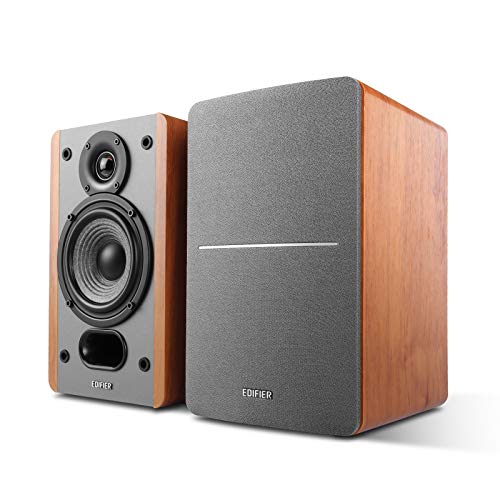
Edifier P12 Passive Bookshelf Speaker, 2-Way, Wood Color, Pair
Edifier P12 Passive Bookshelf Speaker, 2-Way, Wood Color, Pair earns its place here because it fits the basic brief for a vintage pairing: it is a passive bookshelf pair, it is sized for real rooms rather than for a showroom, and it offers a 2-way passive design with a built-in wall-mount bracket, which gives placement options that ordinary box speakers do not always offer. In a system built around a Pioneer SX-550, that combination matters more than fashionable extras. There is no powered input stage to bypass the receiver, no wireless feature competing with the source you already own, and no need to rethink how the system is wired. You connect speaker cable, set the receiver to the source you want, and listen.
Consider the Edifier P12 passive pair if your priority is a straightforward match. Sensitivity and load are the questions to keep returning to while you compare it with the other pairs in this guide. Read the published specifications from the manufacturer, compare them on the same basis where the figures allow it, and remember that a specification measured in a different way is not a clean comparison. Our research notes treat headline claims cautiously for exactly that reason, and they favour the overall pattern of a design over a single impressive-looking line in a table.
In daily use, think about the music you actually play. Acoustic recordings, jazz trios, vocal-led albums, classic rock, and radio all place slightly different demands on a small speaker. A design that stays clear and composed at modest volume will serve a vintage receiver well across all of them, because the receiver is rarely the limiting factor when the speaker is efficient and the room is cooperative. Push any small bookshelf speaker to fill a large, open-plan space and the physics change, no matter which badge is on the grille.
Build quality and finish also deserve a plain assessment. A bookshelf pair lives in view, often at eye level, and it will be dusted, moved for cleaning, and occasionally repositioned when furniture changes. Solid cabinets, tidy binding posts or terminals, and a finish that suits the room are not luxuries. They are part of why a pair stays in a system for years. With the Edifier P12 passive pair, judge those details from the published images and descriptions, and choose the finish you will be happiest seeing every day.
Elimavi Passive Bookshelf Speakers, Brown, 2-Way Design with 4-inch Woofer and 1-inch Silk Horn Tweeter
Elimavi Passive Bookshelf Speakers, Brown, 2-Way Design with 4-inch Woofer and 1-inch Silk Horn Tweeter earns its place here because it fits the basic brief for a vintage pairing: it is a passive bookshelf pair, it is sized for real rooms rather than for a showroom, and it offers a 2-way passive design with a 4-inch woofer and a 1-inch silk horn tweeter, supplied with cables included in the box as listed. In a system built around a Pioneer SX-550, that combination matters more than fashionable extras. There is no powered input stage to bypass the receiver, no wireless feature competing with the source you already own, and no need to rethink how the system is wired. You connect speaker cable, set the receiver to the source you want, and listen.
Consider the Elimavi pair in brown if your priority is a straightforward match. Sensitivity and load are the questions to keep returning to while you compare it with the other pairs in this guide. Read the published specifications from the manufacturer, compare them on the same basis where the figures allow it, and remember that a specification measured in a different way is not a clean comparison. Our research notes treat headline claims cautiously for exactly that reason, and they favour the overall pattern of a design over a single impressive-looking line in a table.
In daily use, think about the music you actually play. Acoustic recordings, jazz trios, vocal-led albums, classic rock, and radio all place slightly different demands on a small speaker. A design that stays clear and composed at modest volume will serve a vintage receiver well across all of them, because the receiver is rarely the limiting factor when the speaker is efficient and the room is cooperative. Push any small bookshelf speaker to fill a large, open-plan space and the physics change, no matter which badge is on the grille.
Build quality and finish also deserve a plain assessment. A bookshelf pair lives in view, often at eye level, and it will be dusted, moved for cleaning, and occasionally repositioned when furniture changes. Solid cabinets, tidy binding posts or terminals, and a finish that suits the room are not luxuries. They are part of why a pair stays in a system for years. With the Elimavi pair in brown, judge those details from the published images and descriptions, and choose the finish you will be happiest seeing every day.
Elimavi Passive Bookshelf Speakers, Walnut, 2-Way Design with 4-inch Woofer and 1-inch Silk Horn Tweeter
Elimavi Passive Bookshelf Speakers, Walnut, 2-Way Design with 4-inch Woofer and 1-inch Silk Horn Tweeter earns its place here because it fits the basic brief for a vintage pairing: it is a passive bookshelf pair, it is sized for real rooms rather than for a showroom, and it offers the same 2-way passive layout as its brown counterpart, offered in a walnut finish for rooms where that tone fits the furniture better. In a system built around a Pioneer SX-550, that combination matters more than fashionable extras. There is no powered input stage to bypass the receiver, no wireless feature competing with the source you already own, and no need to rethink how the system is wired. You connect speaker cable, set the receiver to the source you want, and listen.
Consider the Elimavi pair in walnut if your priority is a straightforward match. Sensitivity and load are the questions to keep returning to while you compare it with the other pairs in this guide. Read the published specifications from the manufacturer, compare them on the same basis where the figures allow it, and remember that a specification measured in a different way is not a clean comparison. Our research notes treat headline claims cautiously for exactly that reason, and they favour the overall pattern of a design over a single impressive-looking line in a table.
In daily use, think about the music you actually play. Acoustic recordings, jazz trios, vocal-led albums, classic rock, and radio all place slightly different demands on a small speaker. A design that stays clear and composed at modest volume will serve a vintage receiver well across all of them, because the receiver is rarely the limiting factor when the speaker is efficient and the room is cooperative. Push any small bookshelf speaker to fill a large, open-plan space and the physics change, no matter which badge is on the grille.
Build quality and finish also deserve a plain assessment. A bookshelf pair lives in view, often at eye level, and it will be dusted, moved for cleaning, and occasionally repositioned when furniture changes. Solid cabinets, tidy binding posts or terminals, and a finish that suits the room are not luxuries. They are part of why a pair stays in a system for years. With the Elimavi pair in walnut, judge those details from the published images and descriptions, and choose the finish you will be happiest seeing every day.
Klipsch Reference Next-Generation R-50M Horn-Loaded Bookshelf Speakers with 5.25-inch Spun-Copper Woofers, Black
Klipsch Reference Next-Generation R-50M Horn-Loaded Bookshelf Speakers with 5.25-inch Spun-Copper Woofers, Black earns its place here because it fits the basic brief for a vintage pairing: it is a passive bookshelf pair, it is sized for real rooms rather than for a showroom, and it offers a horn-loaded design with 5.25-inch spun-copper woofers, representing the newer Reference generation in this shortlist. In a system built around a Pioneer SX-550, that combination matters more than fashionable extras. There is no powered input stage to bypass the receiver, no wireless feature competing with the source you already own, and no need to rethink how the system is wired. You connect speaker cable, set the receiver to the source you want, and listen.
Consider the next-generation Klipsch R-50M if your priority is a straightforward match. Sensitivity and load are the questions to keep returning to while you compare it with the other pairs in this guide. Read the published specifications from the manufacturer, compare them on the same basis where the figures allow it, and remember that a specification measured in a different way is not a clean comparison. Our research notes treat headline claims cautiously for exactly that reason, and they favour the overall pattern of a design over a single impressive-looking line in a table.
In daily use, think about the music you actually play. Acoustic recordings, jazz trios, vocal-led albums, classic rock, and radio all place slightly different demands on a small speaker. A design that stays clear and composed at modest volume will serve a vintage receiver well across all of them, because the receiver is rarely the limiting factor when the speaker is efficient and the room is cooperative. Push any small bookshelf speaker to fill a large, open-plan space and the physics change, no matter which badge is on the grille.
Build quality and finish also deserve a plain assessment. A bookshelf pair lives in view, often at eye level, and it will be dusted, moved for cleaning, and occasionally repositioned when furniture changes. Solid cabinets, tidy binding posts or terminals, and a finish that suits the room are not luxuries. They are part of why a pair stays in a system for years. With the next-generation Klipsch R-50M, judge those details from the published images and descriptions, and choose the finish you will be happiest seeing every day.
How the Klipsch pairs differ from each other
Three Klipsch models appear in this guide, and they are not interchangeable. The R-41M is the compact entry point, the R-51M is the larger sibling in the same earlier Reference line, and the R-50M represents the next-generation Reference approach with horn-loaded design language and spun-copper woofers as listed in its title. Klipsch is widely associated with horn-loaded designs and with speakers that are generally understood to be sensitive, which is precisely why the brand recurs in conversations about low-powered amplifiers and vintage receivers.
Choosing between them is mostly about room size, listening distance, and how much cabinet you can place properly. A compact pair that is positioned well will usually outperform a larger pair squeezed into a bad position. If your shelf depth is limited or your listening seat is close, the smaller cabinet is not a compromise to apologise for. If you listen from further away, or your room absorbs a lot of sound through soft furnishings, the larger cabinet may give you the scale you want without asking the receiver for noticeably more effort at the same perceived level.
Readers comparing woofer sizes across the wider market may also find best 8 ohm bookshelf speakers helpful, because impedance is a subject that rewards a calm, separate explanation rather than a hurried paragraph in a product roundup.
Where the Sony three-way design fits
The Sony SS-CS5M2 is the clearest structural alternative in this group. Where most of the other pairs are 2-way designs, the Sony is listed as a 3-way, 3-driver speaker with a 5.12-inch woofer and high precision tweeters, and with Hi-Res Audio as part of its stated purpose. A three-way layout divides the frequency range across more specialised drivers. That does not automatically make a speaker better, and our research treats it as a design choice with trade-offs rather than as a score to be tallied, but it does give the Sony a distinct identity for listeners whose sources include high-resolution files or discs and who want a speaker explicitly built with that playback in mind.
For a vintage receiver, the source chain deserves a moment of honesty. The SX-550 predates digital sources, so a modern high-resolution player, streamer, or disc player will usually connect through its line-level inputs, sometimes with an external digital-to-analogue converter in between. That is a perfectly normal way to use an older receiver today. The speaker does not know or care whether the signal began as a record or a file. What matters is that the overall chain is clean, the levels are sensible, and the speaker sensitivity suits the power available at the end of that chain.
Edifier and Elimavi: the value-focused passive options
The Edifier P12 and the two Elimavi pairs address a different part of the brief. The P12 is a 2-way passive bookshelf speaker that explicitly needs an amplifier or receiver to operate, and its built-in wall-mount bracket is a genuinely practical detail. Wall mounting can free shelf space, help in a room where stands are not welcome, and place speakers at a sensible height in a kitchen, workshop, or secondary listening space. Mounting does fix the position, so measure and think before drilling, and remember that a wall directly behind a speaker changes its low-frequency balance.
The Elimavi pairs, in brown and in walnut, are listed as 2-way passive designs with a 4-inch woofer and a 1-inch silk horn tweeter, requiring a receiver or amplifier, with cables included. Two finishes of essentially the same design is not duplication for its own sake. Finish is a legitimate buying decision in a living space, and choosing between brown and walnut is about the room the speakers will live in. The included cables are also worth noting for a first setup, because they reduce the small friction of realising, after unboxing, that a separate purchase is still needed before any music plays.
If your space is genuinely tight, our guide to best small bookshelf speakers covers the wider small-cabinet landscape and can help you decide whether a compact pair is a preference or a necessity in your room.
Setting up a vintage receiver and modern bookshelf speakers
- Start with the receiver powered off while you connect speaker cable, and double-check polarity so both speakers are wired the same way round.
- Set tone controls to a neutral starting point, turn loudness features off for your first listen, and begin at low volume before raising it gradually.
- Place both speakers at a similar distance from your listening position, with a clear line from the tweeters to your ears and no tall objects blocking one side.
- Listen to a familiar recording at your normal level, then adjust toe-in and distance from the wall in small steps, changing one thing at a time.
- Give an older receiver ventilation. Do not stack equipment directly on top of it, and keep its vents clear, because heat is the quiet enemy of ageing electronics.
- If something sounds thin, distorted, or one-sided, stop and check wiring and source connections before assuming the speakers are at fault.
Cable deserves a calm word. Ordinary speaker cable of a sensible gauge for the run length is what a system like this needs. Very long runs benefit from thicker cable, short runs do not demand anything exotic, and clean, secure terminations matter more than decorative claims. Keep cable runs tidy, avoid running them where they will be walked on, and leave a little slack so speakers can be repositioned without pulling terminals sideways. These are unglamorous details, but they are the details that separate a system that works reliably for years from one that develops intermittent faults nobody can trace.
It is also worth deciding early whether this system will ever grow. Some listeners begin with a vintage receiver and bookshelf speakers and later wonder about powered alternatives for a second room or a desk. That is a different category with a different wiring logic, and our coverage of best powered bookshelf speakers for vinyl explains that side of the market if your plans expand in that direction. For the SX-550 itself, passive speakers remain the correct and intended partner.
Which pair should you choose?
Choose the Klipsch R-41M if you want the compact Klipsch option and your room or shelf space is limited. Choose the R-51M if you like the same family approach but have room for the larger pair and listen from a little further away. Choose the R-50M if you prefer the next-generation Reference design and its listed spun-copper woofer presentation. Each of these decisions is really a decision about scale and placement first, and about brand preference second.
Choose the Sony SS-CS5M2 if the 3-way, 3-driver layout and Hi-Res Audio focus match your sources and your curiosity about a different design philosophy. Choose the Edifier P12 if wall mounting solves a real placement problem in your room, or if its wood colour finish suits a space where black cabinets would look out of place. Choose either Elimavi pair if you want a compact 4-inch-woofer design with cables included, and let the choice between brown and walnut be made by your furniture rather than by any imagined difference in character.
Whichever pair you pick, keep the pairing principles intact. Sensitivity first, a friendly load, honest placement, and volume expectations that respect what a low-powered vintage receiver is. Follow those principles and the SX-550 stops being a limitation to work around and becomes what it was designed to be: the centre of a modest, musical stereo system that suits the room it sits in.
Living with a vintage receiver day to day
An older receiver asks for a little more patience than a new amplifier. Switches and controls that have sat unused can benefit from gentle use, lights and dials behave in ways modern displays do not, and the warm, mechanical feel of tuning across a radio band is part of the appeal rather than a flaw to be corrected. Building a speaker choice around that character is sensible. Sensitive bookshelf speakers let the receiver work in a comfortable range, so the experience stays relaxed at the listening seat and unstrained at the amplifier, whether the source is a morning radio programme or a favourite record after dinner.
Room acoustics without the jargon
Every room adds its own sound to a pair of speakers. Hard floors, bare walls, and large windows reflect sound and can make a system seem bright or restless, while carpets, curtains, and upholstered furniture absorb energy and calm the result. You do not need specialist treatment to improve a bookshelf setup. A rug between the speakers and your seat, curtains at a large window, and speakers positioned away from corners will usually do more for clarity than a change of cable or a small difference in specification ever could.
Why pairs are sold and placed as pairs
Bookshelf speakers are sold in pairs because stereo is a two-channel idea. The sense of a voice centred between the speakers, or of instruments arranged across a stage, depends on both speakers being matched, similarly placed, and similarly distant from nearby surfaces. If one speaker sits in a corner and the other stands in open space, the image will pull and the bass balance will differ from side to side. Symmetry is not fussiness. It is the cheapest improvement available in any stereo system, and it costs nothing beyond a tape measure and ten patient minutes.
Long-term care for speakers and receiver
Dust gently, keep cabinets out of prolonged direct sunlight, and avoid placing drinks on top of either the receiver or the speakers. Check speaker cable connections once in a while, especially after moving furniture, and listen for the early signs of a loose contact, such as crackling at low volume or a channel that fades. A vintage receiver that is kept ventilated and used regularly at sensible levels will usually give more reliable service than one stored in damp conditions and then pushed hard on its first day back.
Check prices on Amazon
Live listings for the shortlist in this guide are pulled from Amazon below, so prices and availability are always current at the moment you look.


Disclosure
This guide is based on published manufacturer documents, listed product specifications, and established principles of matching passive speakers to a low-powered vintage receiver, rather than on any claim of personal product trials. Product details can change, so check the current listing and the manufacturer documentation before buying. As an Amazon Associate we earn from qualifying purchases.

