Our Top Picks
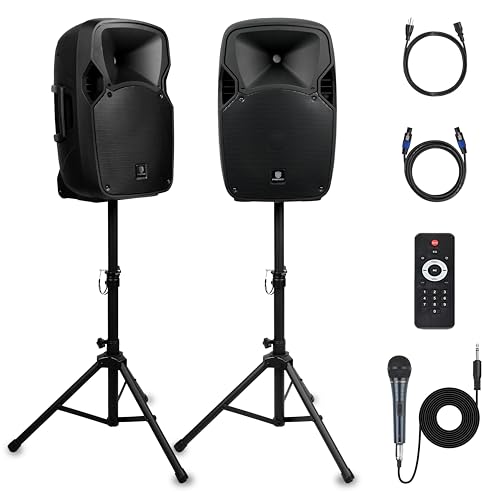
 Anchor Audio Megavox 2 with Built-in Bluetooth Dual17.65 x 15.6 x 9.7 inches17.53 poundsWMACheck on Amazon
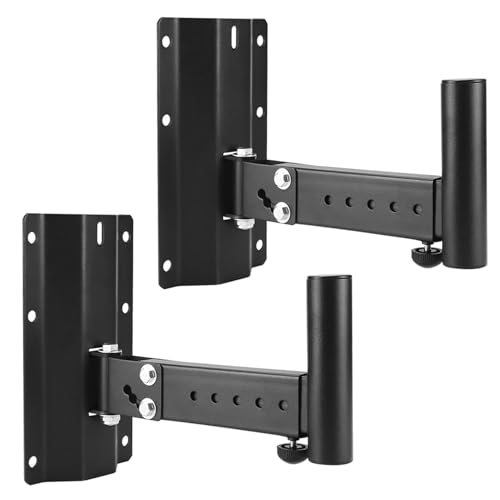
 Desyeryamimi PA Speaker Wall Mount Brackets Speaker Stand11.5×8.9×4.9in11.5 x 4.9 x 8.9 inches7.2 poundsCheck on Amazon


What's inside
- Why Anchor Audio occupies its own corner of the PA market
- What a self-contained portable PA actually is
- The Anchor Audio lines at a glance
- Liberty: the flagship portable PA
- Beacon: the line-array column that sets up fast
- Bigfoot: the largest battery system, for the biggest crowds
- Go Getter: the smaller, lighter all-rounder
- MegaVox: voice-only reach for coaches and officials
- Councilman: the conference and meeting system
- Coverage and power: how to read the published figures
- Battery systems: chemistry, runtime and replacement
- Wireless microphones: receivers, transmitters and channels
- Inputs and connectivity: wired microphones, music and line-out
- Companion speakers and scaling to bigger spaces
- Use cases: matching the line to the gathering
- Buying checks when ordering through major online retailers
- Check prices on Amazon
- Ownership costs and care: batteries, charging and storage
As an Amazon Associate I earn from qualifying purchases. This post may contain affiliate links at no extra cost to you.
Why Anchor Audio occupies its own corner of the PA market
Most loudspeaker shopping starts with a powered cabinet, a mixer, a microphone and a long extension lead. Anchor Audio starts somewhere else entirely. The company is a United States maker that has specialised in self-contained, battery-powered portable public address systems since the 1970s, and that single focus shapes every product it sells. An Anchor system folds the loudspeaker, the amplifier, the rechargeable battery and, on most configurations, one or two wireless microphone receivers into one cabinet that one person can carry, set on a tripod or stand on the ground, switch on and speak through within minutes. There is no rack, no separate power amplifier and no requirement for a wall outlet at the point of use.
That difference matters more than it first appears. A conventional powered speaker is an excellent tool where mains power is reliable and close at hand, but it still needs a mixer or a microphone preamp in front of it, a power feed behind it and cables between everything. On a school field, at a graveside ceremony, beside a training pitch or in a village hall with two sockets in the wrong corners, those requirements become the whole problem. The Anchor approach trades raw output and deep bass for independence: the system works where the crowd is, not where the building wiring happens to be.
This guide walks through the Anchor Audio range line by line, using the roles and specifications the manufacturer publishes for each family. It explains how to read the published power, coverage and battery figures, how the wireless microphone options fit together, what companion speakers do, and which line suits which kind of gathering. It also covers the practical buying checks that matter when a heavy, battery-powered cabinet is ordered through a major online retailer, and the ownership habits that decide whether a battery system is still dependable in its fifth and sixth years.
One boundary is worth stating early. This guide rests on published specifications, manufacturer documentation and established public address practice. It is a desk-based comparison of documented equipment, not a diary of field use, and it should be read that way. Where a figure is quoted, it is the figure the manufacturer publishes for that line, and the sections below explain how such figures are usually derived and where their limits lie.
What a self-contained portable PA actually is
Public address, at its simplest, is the job of making one voice intelligible to a group too large or too spread out for that voice to carry unaided. A self-contained portable PA system does that job with four elements in a single enclosure. First, a loudspeaker, usually a woofer paired with a horn or compression driver tuned for speech clarity. Second, an amplifier matched to that loudspeaker by the maker, so the buyer never has to pair components. Third, a rechargeable battery with its own charging circuit, sized by the manufacturer for a stated number of hours of typical use. Fourth, a small built-in mixer section with microphone and line inputs, volume controls and, very commonly, one or two wireless receivers already fitted inside the cabinet.
The wireless element is the part newcomers most often underestimate. In a conventional rig, wireless microphones mean a separate receiver box, its own power supply, its own audio cable and its own antennas to position. In an Anchor cabinet, the receiver is part of the furniture. The presenter wears or holds a transmitter, walks to wherever the audience can see them, and speaks. For a teacher managing an assembly, an auctioneer working a sale ring or a coach running drills across a wide pitch, that freedom of movement is not a luxury feature. It is the reason the product category exists.
Portability in this category is also about setup time rather than weight alone. Several Anchor lines are built around the idea of arriving, unfolding or raising the cabinet, switching on and being heard in under a few minutes. That design priority shows in details such as built-in handles, speaker stands that pack with the system, controls placed on the rear panel in a simple row, and cabinets shaped to sit stable on grass or hall floors. A system that takes twenty minutes and two people to rig will simply not be used for a ten-minute announcement, however good it sounds once running.
Buyers comparing across categories will find the wider market covered in our companion coverage of conventional cabinets, including best 10 inch pa speakers for readers whose events always have power nearby and who want a standard powered box instead. The rest of this guide, though, stays with the battery-powered approach and the six Anchor lines that define it.
The Anchor Audio lines at a glance
Anchor builds its range as a ladder of cabinet sizes and coverage abilities rather than as a single product with options. At the top sit the large systems intended for crowds in the high hundreds and beyond: the Bigfoot, the largest battery-powered system in the catalogue, and the Liberty, the long-running flagship portable PA. The Beacon takes a different physical form, a line-array style column that opens up for fast deployment and wide, even coverage. Below those, the Go Getter covers smaller gatherings in a lighter cabinet, the MegaVox serves voice-only work in a compact megaphone-class format, and the Councilman takes the same wireless and battery thinking indoors to meetings and conference tables.
Shared DNA runs through the ladder. Every line is designed to run from its internal battery as well as from mains power, every line offers wireless microphone capability in the configurations the manufacturer documents, and every line can be extended with companion speakers for wider coverage. What changes as you climb the ladder is horn and woofer size, amplifier output, battery capacity, the number of people the published coverage figures describe, and the physical effort involved in moving the cabinet.
Liberty: the flagship portable PA
The Liberty is the line most people picture when the Anchor name comes up, and it has served as the flagship portable PA in the range for many years and several generations. In documented form it is a two-way cabinet built around a ten-inch woofer and a horn-loaded high-frequency driver, a combination chosen because speech lives in the midrange and upper midrange, where a horn can project consonants across a field far more efficiently than a small dome tweeter. Current generations publish amplifier output in the region of one hundred watts on mains power, with a lower figure on battery, a pattern explained in the coverage section below.
Manufacturer coverage descriptions for the Liberty talk in terms of crowds of roughly fifteen hundred people and clear reach over distances around one hundred feet, figures that assume the cabinet is raised on a stand, the speaker is outdoors or in a large hall, and the content is speech rather than full-range music. Those are best-case published numbers, and the sensible way to use them is as a ceiling for planning, not a promise for a windy day with a restless crowd. Even discounted generously, they place the Liberty firmly in assembly, ceremony and sports-day territory rather than classroom territory.
Two wireless microphone channels are available in typical Liberty configurations, alongside wired microphone and line inputs, which lets a presenter and a second speaker, or a handheld microphone passed to the floor, work from the same cabinet. Bluetooth audio appears in current generations for music playback from a phone or tablet. The cabinet can also drive an unpowered companion speaker, doubling the coverage area without a second battery system, a scaling route covered in detail later in this guide.
Who is it for? Schools that run outdoor assemblies and prize-giving on the same field, sports clubs that host tournaments, houses of worship holding outdoor services, and event organisers who need one dependable voice system that travels between venues. The Liberty is rarely the right answer for a single small room, where its size and cost are wasted, and it is not a music-first system for a DJ, where deep bass and very high sustained output matter more than speech reach. Within its intended job, though, it is the reference point against which the rest of the range is measured.
Beacon: the line-array column that sets up fast
The Beacon solves the same problem as the Liberty with a different shape. Instead of a conventional rectangular cabinet, it uses a line-array style column: a vertical stack of small drivers in a tall, narrow enclosure that folds or telescopes into its travelling form and opens up on site. Line arrays, even compact ones like this, spread sound more evenly from front to back of an audience than a single point-source cabinet, because the vertical pattern is narrower and better controlled. Listeners near the front are less likely to be blasted while listeners at the back strain to hear.
Speed is the Beacon headline trait in the manufacturer literature. The system is presented as one that a single operator can deploy very quickly, with the array section rising from the base and the whole unit ready without separate stands or loose cabling. For venues that host several events a day, or for staff who set up alone before an early start, that difference between a two-minute and a fifteen-minute setup decides whether the system gets used at all.
Published coverage descriptions for the Beacon are in the same broad class as the Liberty, aimed at crowds in the low thousands in favourable conditions, again for speech-led content. The battery system, wireless receiver provision and input layout follow the same house pattern: configurations with one or two wireless channels, wired inputs for microphones and line sources, and Bluetooth on current generations. Because the drivers are smaller and more numerous, the Beacon voicing leans toward even, articulate speech across a deep audience area rather than the punchy projection of a single large horn.
The Beacon suits gymnasiums, assembly halls, exhibition spaces and outdoor ceremonies where the audience sits or stands in a long block and the operator values fast, tidy deployment. It is also a sensible choice where appearance matters: a slim column reads as less intrusive in a place of worship or at a wedding ceremony than a big trapezoidal cabinet on a tripod. Readers whose events are music-heavy and indoors, with power at the stage, may still prefer a conventional array of powered cabinets, and our guide to best 12 active pa speakers covers that route in depth.
Bigfoot: the largest battery system, for the biggest crowds
Where the Liberty and Beacon stop, the Bigfoot continues. It is documented as the largest and most powerful battery-powered system in the Anchor catalogue, a tall cabinet built around a line-array section of neodymium drivers with subwoofer support in the base, intended for crowds that the manufacturer describes in terms of several thousand people and coverage across very large outdoor areas such as air shows, sprawling sports grounds and festival announcement work.
Scale changes the ownership picture as much as the sound. A Bigfoot-class cabinet is a serious lift and a serious piece of freight, and it earns its keep only where the audience genuinely numbers in the thousands or the ground to be covered is measured in hundreds of feet. For a school of four hundred pupils it is money and effort spent on headroom that will never be used. For a county show, a large graduation on a stadium field or an emergency information point serving a whole site, it may be the only battery-powered option that avoids hiring a generator and a full rig.
The feature pattern remains familiar despite the size: internal rechargeable power with long published runtime for speech use, multiple wireless microphone channels in typical configurations, wired inputs, and provision for companion coverage. That familiarity is a genuine operational benefit for institutions that already run smaller Anchor systems, because presenters and technicians meet the same control layout and the same wireless accessories rather than a wholly new workflow.
Planning a Bigfoot purchase should start with transport and storage rather than with sound. Measure the vehicle, the doorway and the cupboard. Confirm who will move it, and whether a wheeled solution or a second pair of hands is part of the routine. Systems of this class fail their owners not through weak output but through being left behind because moving them felt like a project. If the honest answer is that the big cabinet would stay in storage for all but two events a year, hiring for those two events and owning a Liberty or Beacon for the rest is usually the wiser spend.
Go Getter: the smaller, lighter all-rounder
The Go Getter is the entry point to the full Anchor pattern in a cabinet that one person can carry without thinking twice. Documented as a compact portable PA with a smaller woofer and horn combination than the Liberty, it keeps the essential formula intact: internal battery, built-in amplification, microphone and line inputs, wireless receiver provision and Bluetooth on current generations. Published coverage figures are correspondingly more modest, describing crowds in the region of five hundred people in favourable conditions, which in practice means school halls, club rooms, small outdoor gatherings and sideline use at youth sports.
That modesty is a virtue when matched to the right work. A lighter cabinet gets carried to the small events that a flagship system never leaves the store room for: the reading group on the lawn, the parents evening spilling into the hall, the training session that moves between pitches. Battery runtime in published documentation follows the same pattern as the larger lines, quoted for typical speech use across a full day of intermittent announcements rather than continuous full-volume music, and the cabinet can run from mains power while its battery charges.
The Go Getter also works as a second system inside a larger fleet. Institutions that own a Liberty for assemblies often add a Go Getter for departmental events, and because the wireless ecosystem and control layout are shared, staff need no fresh training. As a first Anchor purchase for a small school, a scout group, a place of worship with a modest congregation or a sports club, it is usually the most defensible place to start, with the larger lines held in reserve for the day the crowds outgrow it.
MegaVox: voice-only reach for coaches and officials
The MegaVox strips the portable PA idea down to its voice-only essence. It is a compact, megaphone-class system, worn or carried or set on a stand, built around a horn speaker and a high-efficiency amplifier, with a published reach described in terms of distance and crowd sizes around a thousand people for spoken commands in open air. There is no pretence of music reproduction here. The horn that makes it sound stark with a guitar track is exactly what lets a shouted instruction stay intelligible across a windy field.
Its natural users are coaches, referees, lifeguards, drill instructors, tour leaders and safety officers: people whose PA need is short, urgent spoken messages delivered outdoors, often while moving. Wireless handheld and headset options in the MegaVox ecosystem matter here, because a coach with a whistle in one hand and a clipboard in the other needs a headset transmitter, not a handheld microphone. Battery life in the published documentation is generous relative to the cabinet size, precisely because the amplifier only works hard in short bursts of speech.
Choosing between a MegaVox and a small full-range system such as the Go Getter comes down to content. If the job includes music, ceremony or indoor meetings, the MegaVox is the wrong tool and will disappoint. If the job is purely voice, outdoors, at distance, in weather, the MegaVox does it with less weight, less cost and less fuss than any cabinet in the range. It is also the line most often bought in multiples, one per coach or official, rather than as a single shared asset.
Councilman: the conference and meeting system
The Councilman turns the same thinking toward the boardroom and the council chamber. Rather than one cabinet addressing a crowd, it is a conference system built around a base unit with wireless capability and a set of delegate microphones, documented for meetings where every participant needs to be heard by the room and, often, by a recording or a hybrid audience. The design goal shifts from throw and coverage to even, feedback-controlled pickup around a table.
In published form, Councilman configurations centre on a master unit that handles amplification and wireless reception, with lapel or gooseneck style delegate units and a chairman unit with priority control in typical meeting layouts. The battery-powered heritage shows in portability: the system can be set up in a room with no installed audio, used for the session and packed away, which suits councils, courts, school boards and companies that rotate meetings between spaces.
The Councilman is the one line in this guide that should not be compared on crowd figures at all. Its published descriptions talk about participant counts and room sizes, and that is the correct frame. A buyer choosing between a Councilman and a Liberty is not choosing between two sizes of the same thing; they are choosing between addressing a room full of listeners and giving a table full of speakers equal voice. Organisations that do both kinds of event, as many schools and councils do, sometimes own both, and the shared wireless conventions across the Anchor range keep that pairing manageable.
Coverage and power: how to read the published figures
Specification sheets in this category mix three different kinds of number, and separating them is the key skill in comparing Anchor lines with each other and with rival systems. The first is amplifier wattage. Anchor documentation typically publishes one figure for operation on mains power and a lower figure for battery operation, because a battery cannot sustain the same output as a wall feed without draining quickly. A system described at around one hundred watts on mains and somewhat less on battery is not being evasive; it is describing two honest operating states. What matters for speech work is that even the battery figure is ample, for reasons covered below.
The second kind of number is coverage, expressed by the manufacturer in crowd size and sometimes in distance. These figures assume speech content, a raised cabinet, an audience facing the system and reasonably quiet surroundings. They are useful for ranking lines against each other inside one maker catalogue, where the measurement habits are consistent. They are far less reliable across brands, where one maker crowd figure may assume a seated, silent audience and another may assume a standing crowd at a fairground. Treat any crowd number as a best case, then plan for perhaps half to two-thirds of it in wind, traffic noise or a restless audience.
The third number is maximum sound pressure level, given in decibels at a stated distance. SPL figures explain why speech systems can claim such large crowds from modest wattage. A horn-loaded driver converts electrical power into acoustic output very efficiently in the speech band, and intelligibility depends on the voice being clearly above background noise in the two to four kilohertz region where consonants live, not on deep bass or on concert-level volume. Doubling amplifier wattage adds only a small step in perceived loudness; doubling horn efficiency achieves the same step without touching the battery.
This is also why voice reinforcement needs so much less power than music. Speech is intermittent, with pauses between phrases, and its energy sits in a narrow band the system is voiced for. Music is continuous, spans the full spectrum and asks the woofer to move large amounts of air at low frequencies, which drains batteries and heats amplifiers. A cabinet that runs all day on announcements may give a far shorter runtime playing music at celebration volume, and published runtime figures in Anchor documentation are framed around typical voice use for exactly this reason.
Clarity deserves a final word, because buyers often shop for loudness when their real problem is intelligibility. A system can be loud and still muddy if the cabinet sits on the ground behind the first row, if the presenter holds the microphone too far from the mouth, or if two cabinets fight each other from opposite ends of a hall. Height, microphone technique and sensible placement, all covered later in this guide, do more for understanding every word than another fifty watts ever will. Readers weighing a music-led event should look at larger conventional cabinets such as those in best 15 powered speakers, where the design priorities run the other way.
Battery systems: chemistry, runtime and replacement
The battery is the component that defines both the freedom and the maintenance burden of an Anchor system, and the range spans two chemistries. Older generations of several lines used sealed lead-acid batteries: heavy, inexpensive, tolerant of simple charging circuits and well understood, but with a limited working life measured in a few years of regular use and a strong dislike of being stored flat. Current generations have moved toward lithium battery packs in much of the range, bringing lighter cabinets, longer service life and better behaviour under partial charging, at a higher replacement cost when the pack eventually fades.
Published runtime figures across the lines generally fall in a broad band from around six hours to well into double figures of typical speech use, depending on the model, the volume and the content. Read those numbers the way the coverage figures should be read: as maker-stated results under favourable, speech-led conditions. Continuous music, high volume and cold weather all shorten real runtime, while announcement work with long quiet gaps can stretch it. The practical planning rule is to choose a system whose published runtime is at least double the longest event on the calendar, which leaves margin for age, weather and the day someone forgets to charge it beforehand.
Charge time matters almost as much as runtime for busy institutions. A system used for a morning assembly and an evening event needs to recover meaningfully in the hours between, and Anchor documentation publishes charging figures for each line that should be checked against the actual timetable of use. Most systems in the range can operate from mains power while charging, which rescues the forgotten-charge scenario: plug the cabinet in at the venue and the event proceeds, with the battery refilling as the system runs.
Replacement is a when, not an if. Lead-acid packs in older units are typically a user-serviceable swap through an access panel, and their cost is modest enough to budget as a consumable every few years. Lithium packs last longer but cost more and should be sourced as the correct part for the exact model and generation, since connectors and charging behaviour differ. A battery that has been left discharged for a school holiday season may never recover its full capacity, whatever its chemistry, which is why the storage habits in the ownership section below carry real financial weight.
Finally, note the weight consequence. In lead-acid generations, the battery is a large share of what makes the cabinet heavy, and published product weights should be read with that in mind when comparing an older used unit against a current lithium one. Two cabinets with the same name and similar appearance can differ noticeably in lift weight, runtime and remaining battery life purely because they belong to different generations, a theme the buying section returns to.
Wireless microphones: receivers, transmitters and channels
Wireless capability is built into the Anchor concept rather than bolted onto it. Most configurations across the Liberty, Beacon, Bigfoot and Go Getter lines include one or two wireless receivers fitted in the cabinet, paired with a choice of transmitters from the same ecosystem. The Councilman applies the same principle around a meeting table, and even the MegaVox offers wireless options for coaches who cannot hold a microphone. When comparing listings, the first task is to establish exactly how many receivers a given configuration contains and which transmitters, if any, are bundled, because the same cabinet name can cover several factory configurations.
Transmitter choice follows the job. A handheld transmitter suits presenters, singers, auctioneers and any situation where the microphone passes between people, and it doubles as a question-and-answer tool for audience members. A beltpack transmitter paired with a lapel microphone suits speakers who gesture, demonstrate or read from notes, keeping the microphone at a fixed distance from the mouth and the hands free. A beltpack with a headset microphone suits coaches, fitness instructors, referees and tour guides, holding the microphone close and steady even while the wearer moves, turns and raises their voice. Of the three, the headset gives the most consistent level and the best resistance to feedback, because the distance to the mouth never changes.
One wireless channel or two? A single channel covers the lone presenter, who is the majority user of portable PA. Two channels earn their cost when a second voice is routine: a co-presenter, a translator, a student respondent, a singer joining a speaker, or a handheld kept ready for questions while the main presenter wears a lapel. Buying a two-channel configuration at the outset is generally simpler than adding wireless later, since the receivers are internal. Buyers should confirm whether a listing describes receiver count or merely wireless readiness, two phrases that sound alike and mean very different things.
Frequency coordination sounds forbidding but rests on a few plain habits. Each transmitter must be set to a clear channel that its receiver is tuned to, two transmitters must never share one channel, and channels should be spread apart rather than adjacent where the system allows a choice. Modern Anchor wireless generations handle much of this with selectable channels and clear pairing routines described in their manuals, and in most school, worship and sports settings a brief scan for a quiet channel at setup is all the coordination an event needs. Problems grow in dense environments such as conference centres and festivals, where many systems compete; arriving early and setting channels before neighbouring rigs switch on is the professional habit.
The compatibility warning in this section deserves emphasis, because it drives many disappointed purchases. Wireless transmitters and receivers must match in frequency band and generation. A transmitter from an older Anchor generation may not pair with a receiver in a current cabinet, and a bargain transmitter bought separately may sit in a different band entirely. Before buying any add-on transmitter, match its full model designation against the compatibility list in the manual for the exact cabinet and generation owned. The same discipline applies to replacement beltpacks and handhelds bought years later, when the original has been lost by a graduating class or a departing coach.
Inputs and connectivity: wired microphones, music and line-out
For all the wireless emphasis, the wired inputs on the rear panel decide how flexible an Anchor system feels day to day. Wired microphone inputs in the range use the professional standards: XLR connectors and quarter-inch jacks, in some configurations as combination sockets that accept either. A wired microphone remains the zero-fuss option for a fixed lectern, a singer who stays in one place, or the backup that rescues an event when a transmitter battery dies mid-ceremony. Keeping one wired microphone and a long cable in the storage case is cheap insurance that experienced users swear by.
Line inputs accept music sources and other equipment at line level: phones, tablets, laptops, media players and the output of a small mixer. Current generations of the main lines add Bluetooth reception, which removes the cable for background music and playback during ceremonies, sports days and celebrations. Bluetooth range and behaviour follow the usual rules of the technology, so the playback device should stay near the cabinet and the operator should expect the connection to be a convenience feature rather than a mission-critical link. Anything that must not drop out, such as the audio for a recorded dance routine or an examination playback, belongs on a cable.
Level discipline at the inputs is the unglamorous skill that separates clear events from distorted ones. Microphone inputs expect a small signal and amplify it heavily; line inputs expect a stronger signal and amplify it gently. Feeding a phone at full volume into a microphone input produces harsh distortion that no volume knob downstream can undo, while feeding a microphone into a line input leaves it too quiet however far the knob turns. The rear panels label these clearly, and the manuals describe the intended sources for each socket. Two minutes with the manual before the first event prevents the most common sound quality complaint in the whole category.
A line output completes the connectivity picture. It lets the system feed a recorder, a streaming laptop, an assistive listening setup or the input of a second powered system, carrying the mixed result of every microphone and source in use. For ceremonies that are recorded for families, for council sessions that must be minuted from audio, and for hybrid meetings, that single socket can be the reason a particular configuration is chosen. Where a second Anchor cabinet covers another area, the companion arrangements in the next section usually give a tidier result than a long line-level cable, but the output remains valuable for recording even when it is not used for coverage.
Readers building a mixed rig, with an Anchor system for announcements and conventional speakers for music, will find the karaoke and entertainment side of that pairing discussed in best jbl speakers for karaoke, which covers speakers chosen for singing and playback rather than for speech reach.
Companion speakers and scaling to bigger spaces
Every Anchor line reaches a crowd size or a room shape where one cabinet, however capable, leaves the far corners under-served. The range answers that limit with companion speakers in two forms. The first is the unpowered companion cabinet: a speaker-only version of the main unit, connected by a speaker cable and driven by the amplifier inside the powered cabinet. It carries the same programme to a second position with no battery or controls of its own, at a lower cost than a second full system. The second form is the wireless companion link, sold under the Anchor AIR name, where a transmitter in the main unit feeds a receiver in a companion or a second powered system, removing the cable run between positions.
Choosing between cabled and wireless companions is a venue decision. A cable is simple, dependable and free of any radio concerns, but it must cross the ground the audience crosses, which means ramps, tape, mats or a route around the edge, plus a realistic limit on distance. A wireless link deploys anywhere within its published range and keeps walkways clear, at higher cost and with one more radio link to set a channel for. Halls with a fixed layout often suit the cable; fields, processions and split sites usually suit the wireless route.
Placement matters more than quantity. Two cabinets side by side on one stand add loudness but little coverage. The same two cabinets separated, each covering its own half of the audience and angled toward it, transform intelligibility at the edges. Awkward shapes reward this thinking: the L-shaped hall where the second cabinet turns the corner, the long narrow field where a companion sits halfway down, the ceremony with guests on two sides of a garden. Before buying a larger flagship, many owners find that a mid-size system plus a well-placed companion covers their real events better, because coverage is a geometry problem before it is a power problem.
Height is the other half of placement. Speech clarity improves markedly when the cabinet is raised so the horn sits above head height, projecting over the front rows to the back instead of being absorbed by the first bodies it meets. The tripod stands offered across the range exist for this reason, and using them is the single cheapest upgrade to any Anchor setup. Outdoors, height also lifts the horn clear of ground effect and light wind disturbance at audience level. Indoors, a raised cabinet aimed slightly downward along the seating usually needs less volume for the same clarity, which in turn reduces feedback risk and listener fatigue.
Scaling has a ceiling worth respecting. Two or three cabinets cover a great deal of ground, but a site that needs six positions, delay fills and zoned announcements has outgrown the portable category and belongs to an installed or hired production system. Recognising that boundary protects the budget: Anchor systems hold their value in the work they are built for, and stretching them into festival production duty serves neither the event nor the equipment.
Use cases: matching the line to the gathering
Schools are the classic Anchor customer, and their calendar shows why the ladder exists. A Go Getter handles classroom celebrations and small hall events. A Liberty or Beacon covers assemblies, sports days, fetes and prize evenings. A MegaVox lives with the PE department for fixtures and training. The buying conversation in a school should therefore start from the biggest regular event, not the biggest imaginable one, and should count how many separate spaces need sound at the same time on a normal week, since two mid-size systems often serve a school better than one flagship that can only be in one place.
Coaches and referees belong to the MegaVox, with headset transmitters, for the reasons given in its section: voice only, outdoors, mobile, urgent. Auctioneers sit at the other end of the craft. Their work is continuous rapid speech where every word carries money, usually in a barn, ring or saleroom with hard surfaces and a restless crowd; a Liberty-class system with a well-fitted headset or a quality handheld, set up early and checked at working volume, is the professional pattern, and a companion cabinet for a second yard or an overflow area is a common addition.
Houses of worship use Anchor systems in two distinct ways: as the main voice system for smaller congregations and outdoor services, where a Liberty or Beacon with two wireless channels covers the officiant and readers, and as the portable overflow or graveside system for larger churches whose main room has installed audio. Tour guides favour the smaller lines and the MegaVox for walking groups, where the guide wears the transmitter and the cabinet or horn covers a group that gathers and moves. In both settings, discretion and setup speed matter as much as output.
Emergency and civic use deserves its own mention, because it changes the buying criteria. For evacuation announcements, incident information points and community events run by councils and emergency planners, the decisive traits are battery independence, instant readiness after storage and simple controls that any staff member can operate under pressure. Those criteria point to keeping a charged Liberty or Go Getter in a known location with its transmitters paired and labelled, and they argue for the storage and charging discipline covered in the ownership section. A system that needs an hour of setup and a technician is not an emergency tool, whatever its output figures say.
Outdoor ceremonies, from weddings in gardens to remembrance services at memorials, combine several of these threads: no power, a seated and quiet audience, music as well as speech, and a strong preference for tidy, discreet equipment. A Beacon or Liberty on a stand, with Bluetooth or a cabled source for music, a lapel transmitter for the officiant and a handheld for readings, is the well-worn pattern. The planning detail that most affects the day is a rehearsal at the actual site, at the actual hour, because wind, traffic and crowd noise at two in the afternoon are rarely what the organiser imagined at a desk in the morning.
Buying checks when ordering through major online retailers
Anchor systems are commercial equipment sold through specialist dealers and major online retailers, and listings for them reward careful reading. The headline trap is generation drift. Several lines have run for many years, and a listing may describe a current lithium model, an earlier lead-acid model or a mixture of copy from both. Before ordering, pin down the exact model designation, the battery chemistry, the wireless band and generation, and the published runtime for that specific version. If the listing text and the specification table disagree, believe neither until the seller or the manufacturer documentation for that exact model settles it.
The second trap is the bundle boundary. A headline configuration may include the cabinet alone, the cabinet with one transmitter, or a package with transmitters, stands and a companion speaker, and the photographs do not always match the variant selected in the options menu. Read the included-items list for the exact variant in the basket, and price the missing pieces separately: a stand, a second transmitter, a companion cabinet and a transport case can together add a substantial share to the true cost of a working system. A listing that looks unusually cheap for the line is usually a cabinet-only configuration, which may still be the right buy for an owner adding to an existing fleet, as long as it is bought with open eyes.
Wireless details deserve a line-by-line check. Confirm how many receivers are fitted, which transmitter types are included, handheld, lapel or headset, and whether the wireless system belongs to the current generation for that line. Confirm also that the transmitters operate in a band that is legal and sensible for the country of use, since professional wireless equipment is built for regional bands and a grey import can bring real compliance and interference problems. The manual for the exact model, available from the manufacturer, is the reference that settles every one of these questions.
Warranty and commercial use terms matter more for this category than for home audio. Anchor equipment is built for institutional work, and its published warranty terms reflect that, but buyers should still read the duration, the battery warranty, which is commonly shorter than the electronics warranty, and any conditions around commercial hire use. An organisation that plans to hire the system out, or to use it daily in a school, should confirm that its intended pattern of use sits inside the written terms rather than assuming goodwill later.
Finally, plan for the physical delivery. These are heavy cabinets, and the larger lines ship at freight-like weights with packaging to match. Check the delivered weight and dimensions against the route from the door to the store room, confirm who signs for and moves the delivery, and read the returns terms for heavy goods before ordering, since returning a cabinet of this size is a very different exercise from posting back a pair of headphones. Inspect the unit on arrival, charge it fully, run every input and every transmitter, and do all of that inside the returns window rather than on the morning of the first event.
Check prices on Amazon
Live listings for the shortlist in this guide are pulled from Amazon below, so prices and availability are always current at the moment you look.




Ownership costs and care: batteries, charging and storage
The purchase price of an Anchor system is the start of its cost, not the whole of it, and honest budgeting makes ownership far more satisfying. The predictable costs are battery replacement on the cycle described earlier, transmitter batteries or rechargeable cells consumed week by week, the occasional lost or damaged microphone, and accessories that working life demands: a proper transport case or cover, a spare stand, windscreens and clips that vanish at outdoor events. None of these is large alone. Together they are the difference between a system that is always ready and one that is always nearly ready.
Charging discipline is the highest-value habit in the whole ownership picture. Charge the system fully after every use rather than waiting for the next event to approach, follow the maker guidance on leaving the unit connected or disconnected between uses for the chemistry fitted, and never let a lead-acid generation sit discharged, since deep discharge left standing is the classic way those packs die young. Lithium generations forgive partial charging and irregular use far better, but they still reward a routine: a named person, a known charging point and a simple log on the store room wall beat good intentions in every institution.
Storage charge and storage conditions decide how a system ages through quiet seasons. Batteries of both chemistries self-discharge slowly, so a cabinet stored after the summer term and ignored until spring can wake up with a tired or damaged pack. The manuals for each line give storage guidance, and the practical version is simple: store the system charged, in a dry room at ordinary temperatures, and put a recurring reminder in the calendar to top up the charge every few months during long gaps. Transmitters should be stored with their batteries managed as their own manuals direct, and microphones kept in their cases rather than loose in a drawer with the sports kit.
Transport care is the other half of longevity. The cabinets are built for working life, but horns, antennas and control knobs dislike being the load-bearing surface in a car boot. A padded case or at least a cover, a fixed place in the vehicle and a rule that the PA never travels under the hockey goals will add years. After outdoor events, a dry cloth over the grille and controls before storage keeps dust and moisture out of the places where they cause crackles and corrosion.
There is also an honest limit to record. Where an event has reliable mains power at the stage, a large music programme and a skilled operator, a conventional powered PA will outperform a battery system on sound and often on cost per event, and where power is absent but the crowd is huge and the programme long, a hired rig with a generator is the professional answer. Anchor systems win the wide middle ground: speech-led events, awkward power, fast setup and regular use by non-specialists. Buying one for that ground, and caring for its battery as the consumable heart of the machine, is how owners get a decade of dependable service from the category.
A note on how this guide was put together: it is drawn from published specifications and manufacturer documentation for the lines named, rather than from hands-on use of the systems, and readers should treat quoted figures as the makers published figures for each model and generation. Where a purchase is made through links to the retailer, the site may earn a commission on the sale, at no added cost to the buyer; that arrangement does not decide which lines are covered or how they are described here.
For the school secretary ordering in August, the coach loading a car in the rain and the celebrant setting up alone in an empty garden, the right Anchor is simply the smallest line whose published reach covers the crowd, charged the night before and raised on its stand before the first guest arrives.

