Our Top Picks
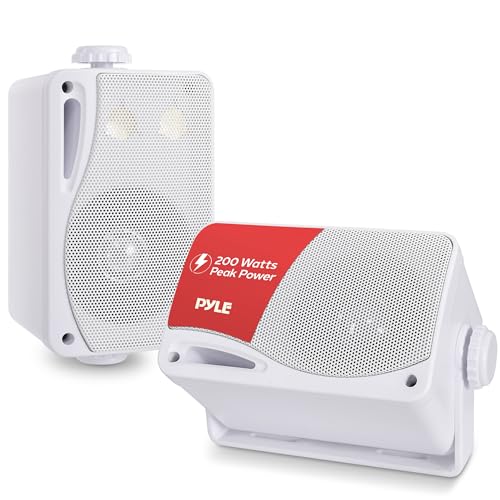
 Pyramid 3-Way Indoor Outdoor Speaker System5.25''W x 3.75''H x 3.75''D4.33 x 8.86 x 6.5 inches1.98 poundsCheck on Amazon
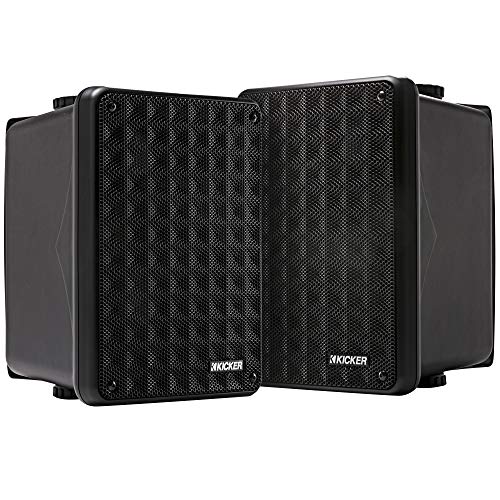 KICKER KB6B 2-Way Full Range Indoor Outdoor Speakers6.5 Inch (Pack of 2)17 x 10 x 16 inchesCheck on Amazon

What's inside
- Why the soffit is a hostile location in winter
- Mounting geometry, ceiling height and coverage
- Speaker types that actually fit the space
- Cold weather and what cones and surrounds are made of
- Moisture defence, IP ratings and enclosures
- Wiring through attics, eaves and walls
- Amplifiers, impedance and distributed lines
- A placement plan for a typical porch and patio
- Reading a specification sheet with winter in mind
- Freeze-thaw, condensation and winter failure modes
- Check prices on Amazon
- Seasonal checks and the spring inspection
As an Amazon Associate I earn from qualifying purchases. This post may contain affiliate links at no extra cost to you.
A speaker tucked into a soffit looks protected. It sits above head height, shaded from direct rain, hidden behind a neat grille that blends with the trim. That tidy appearance is misleading. The soffit is one of the more demanding places on a house to put a loudspeaker, and winter exposes every weakness in the choice. Cold air pools there on still nights, warm moist air leaks up from the living space below and condenses on cold surfaces, wind drives fine snow into vents that never see liquid rain in summer, and freeze-thaw cycles work on every seal, screw and surround for months at a time. A speaker that sounds pleasant on a June evening can crackle, fade or fall silent by February if its materials, enclosure and wiring were chosen for a sheltered shelf rather than an eave.
This guide works through the soffit as an engineering problem before it becomes a shopping problem. Mounting geometry decides whether sound reaches the patio evenly or concentrates in a hot spot under one speaker while the far corner hears mostly reflections. Material choices decide whether a cone still moves freely at minus fifteen degrees or stiffens into a dull, strained version of itself. Enclosure and ingress protection decide whether meltwater finds the voice coil. Wiring and amplifier choices decide whether four pairs of speakers present a load the amplifier can drive safely through a long attic run. None of these questions can be answered from a headline power figure, and none of them require exotic equipment. They require reading published specification classes carefully and matching them to the actual cavity, climate and coverage area of a particular house.
Why the soffit is a hostile location in winter
A soffit is the underside of a roof overhang, the horizontal or gently sloped surface between the top of an exterior wall and the edge of the roof. It is outdoors in temperature but semi-enclosed in structure, and that combination creates conditions neither indoor nor fully exposed outdoor products are quite designed for. Indoor ceiling speakers assume a stable, dry, heated void above them. Fully exposed outdoor speakers assume open air, drainage on all sides and no cavity behind them to trap moisture. A soffit speaker lives between those assumptions, mounted in a thin panel with an attic or roof void behind it, exposed below to winter air and above to whatever humidity and temperature gradients the house produces.
Temperature swings arrive quickly in that thin structure. A dark roof in weak winter sun can warm the void noticeably by midday, then the temperature collapses after sunset. The speaker, its mounting ring and the soffit panel itself expand and contract at different rates. Over a season those small movements loosen push-fit grilles, work screws in soft material and open hairline gaps around cutouts that were sealed in autumn. Each gap is a path for insects in spring and for moist air in every season, and each path matters more because the speaker sits directly in the route that vented soffits use to feed air into the attic.
Vented soffits deserve particular attention. Many houses draw attic ventilation air in through perforated soffit panels and exhaust it at the ridge. Cutting speaker holes into a vented run interrupts that airflow locally, and mounting a deep speaker or a bulky back box can block a meaningful share of the intake path if the layout is careless. Blocking ventilation to gain music is a poor trade, because a poorly vented attic grows its own moisture and ice-dam problems. The practical response is to map the vented sections first, favour solid soffit areas for speakers where the construction allows it, keep back boxes as shallow as the design permits, and never assume the prettiest symmetrical layout is the one the roof structure can accept.
Wind behaves oddly under eaves as well. The overhang shelters the surface from vertical rain, yet turbulent air curls up and under it, carrying fine precipitation sideways. Powder snow is especially mobile. It drifts through gaps that stop rain, settles on upward-facing surfaces inside the cavity, and melts later when the void warms. A speaker can therefore get wet from behind and from inside, not just from the face the listener sees. Any plan that only considers spray on the grille has missed the more common winter route for water.
Mounting geometry, ceiling height and coverage
Soffit speakers fire downwards. That single fact shapes everything about how a porch or patio sounds. A conventional bookshelf speaker aims its output horizontally at ear level, and the listener sits inside a fairly predictable cone of sound. A down-firing speaker aims at the floor, and listeners standing or sitting off to the side hear it at a steep angle from its axis. Published dispersion figures, usually given as a coverage or conical dispersion angle at a stated frequency, describe how wide that cone is before output falls by a specified amount. Wide dispersion matters more in a low soffit than in a high one, because the lower the mounting height, the less distance the sound has to spread before it reaches head height.
Typical residential soffits sit roughly two and a half to three and a half metres above the patio surface, though porches with raised decks and single-storey eaves can fall outside that band in either direction. At the lower end of the range, a narrow-dispersion speaker creates a distinct circle of loudness almost directly beneath it and a noticeable step down just outside that circle. People gravitate out of the hot spot, turn the volume up for the edges, and make the centre uncomfortably loud in the process. At greater heights the cones from neighbouring speakers overlap more naturally, spacing can widen, and the system becomes more forgiving. Measuring the real mounting height, from finished patio surface to soffit panel rather than from ground level beside a raised deck, is the first useful number in the whole plan.
Spacing follows from height and dispersion together. A common planning approach works with overlapping coverage circles at head height: each speaker is responsible for a radius, and neighbours are placed so their radii overlap modestly rather than merely touching. Gaps in overlap produce dead zones at standing height even when a plan view drawn at floor level looks continuous, because the effective listening plane for a standing adult is well above the floor the sound eventually strikes. Seated listening lowers that plane and widens the effective circles slightly, which is one reason a layout that feels even around a patio table can feel patchy for people standing at a grill or a doorway. Deciding who the system mainly serves, seated groups or a whole working deck, changes the spacing that counts as correct.
Reflections complicate the picture further. Patio slabs, decking, exterior walls and glass doors all bounce down-fired sound back into the listening area. Hard parallel surfaces, such as a soffit above a stone patio with a brick wall at one end, can produce a surprisingly live, echoing character at modest volumes. Softer surroundings with planting, timber and open sides absorb and scatter more. There is no specification that captures a specific garden, so the sensible method is to expect the first installation to be a draft: mount, listen from several positions at several heights, and be prepared to nudge spacing or toe the plan towards more, smaller coverage zones rather than fewer, louder ones. Readers comparing distributed sound with conventional room systems will recognise the contrast in guides such as best 5 1 home theater speakers without receiver, where seating geometry is fixed and predictable in a way a patio never is.
Cutout size, depth and what is behind the panel
Every in-ceiling style speaker needs a cutout diameter and a mounting depth, both published as specification classes by manufacturers, and both easy to get wrong in a soffit. Soffit panels are thinner than ceiling plasterboard in many constructions, and the void behind them may be shallower than a normal ceiling void, crossed by rafters, blocking, ventilation baffles and sometimes wiring or ductwork. A speaker whose depth fits a house ceiling may foul a rafter tail in an eave. Checking depth against the shallowest point of the actual cavity, not the deepest, prevents the familiar failure of a speaker that sits proud of the panel because something solid is behind it.
Clamping systems also assume a panel thickness range. Dog-leg clamps and similar mechanisms are rated for a span of material thicknesses; a very thin metal or vinyl soffit panel may fall below the range that lets the clamp bite, while a doubled timber panel may exceed it. Where the panel is flexible, a rigid mounting ring or a backing plate spreads the load and stops the panel drumming at bass frequencies. That drumming is not a cosmetic detail. A resonating soffit panel adds its own buzz to the music and accelerates the loosening of every fastener nearby.
Speaker types that actually fit the space
Two broad families dominate soffit installations. The first is the weather-resistant in-ceiling speaker, a round or occasionally square unit that sits flush in a cutout with only its grille visible. The second is the surface-mount outdoor speaker, a small enclosed box on a bracket, tucked up under the eave and angled towards the listening area. Each family solves some soffit problems and creates others, and the right choice often depends on the building more than on sound quality in the abstract.
Flush in-ceiling models give the cleanest appearance and the least exposure to knocks, ladders and wind load. Nothing projects to catch a gust or a raised garden tool. The trade-offs are the cutout itself, which is hard to reverse, the fixed downward aim, and dependence on the cavity behind the panel. Some models include aimable tweeters or pivoting drivers that tilt the high-frequency output towards the seating area, which helps because treble is the most directional part of the range and the part listeners judge clarity by. A pivoting tweeter cannot redirect bass, nor should it need to, since low frequencies spread widely on their own. What it can do is lift dialogue and detail towards people sitting at the edge of the coverage circle instead of sending that detail straight into the patio stones.
Surface-mount boxes avoid cutting the soffit and can be angled freely, which makes them attractive on houses where the eave structure is unknown, rented, or historically sensitive. Their enclosures are complete, so they do not rely on the cavity for their acoustic loading or their weather defence. Against that, they hang in the weather stream more than a flush unit, their brackets and knobs become the weak points for corrosion and slippage, and their appearance is unmistakably equipment rather than architecture. In narrow soffits they may not fit at all once bracket swing is allowed for. Measuring the soffit depth from wall to fascia and comparing it with the full mounted depth of the box, bracket included, settles the question quickly.
A third, smaller category deserves a mention: low-profile and shallow-mount designs made for restricted voids. These trade cone area or excursion for depth, and they exist precisely because eaves and shallow ceilings are common. Their published sensitivity and bass extension figures usually reflect the compromise, with less low-frequency output than a full-depth equivalent. In a soffit that trade is often acceptable, because outdoor listening rarely benefits from deep bass the way a room does. Bass outdoors dissipates rather than building up, neighbours hear low frequencies through fences more readily than they hear treble, and a modest, clean midrange carries further in open air than specifications alone suggest. Comparisons with indoor categories such as best 2 1 speakers underline the point: a subwoofer-led balance that flatters a living room is seldom the priority under an eave.
One pair, two pairs, or a distributed run
The number of speakers matters as much as their type. A single pair over a small porch can be entirely sufficient, and adding speakers to a small area mainly adds wiring complexity and opportunities for overlap problems. Larger patios, L-shaped decks and long verandas behave differently. There, a distributed approach with more speakers each playing more quietly almost always sounds better than a single loud pair at one end. Evenness, not maximum volume, is the quality people notice at a gathering, because conversation happens everywhere in the space rather than at a sweet spot.
Distributed layouts also change the electrical picture, which is covered later in this guide. Each added pair alters the total impedance or adds a tap on a distributed line, so the acoustic plan and the amplifier plan must be drawn together. Deciding the count after the cable is run is a reliable way to discover that the amplifier and the layout disagree.
Cold weather and what cones and surrounds are made of
Cold changes how a speaker moves. The surround, the flexible ring that connects the cone to the frame, is the component most sensitive to temperature, because its whole job is to flex. Two material families appear repeatedly in published specifications for outdoor and marine-influenced designs: butyl rubber and foam. They behave very differently in January.
Butyl rubber surrounds stay comparatively supple at low temperatures and resist moisture, ozone and ultraviolet exposure well. Their compliance changes with cold, as every elastomer does, but the change is gradual and they return to their normal behaviour as temperature rises. For a speaker that must work through a whole winter rather than survive it in storage, that stability is valuable. Butyl also tolerates the damp, still air of a soffit cavity without the slow degradation that affects some foams in humid conditions.
Foam surrounds are light and can sound excellent, and treated foams used in outdoor designs are not the fragile material of old indoor speakers. Even so, foam generally stiffens more noticeably in deep cold and has a shorter long-term life in damp, polluted or sunlit air. In a soffit the ultraviolet load is low, which helps, but moisture and freeze-thaw cycling remain. A foam-surround speaker in a mild coastal winter faces a different life from the same speaker in a continental climate with weeks below freezing. Climate honesty matters more than brand loyalty here: match the material to the coldest sustained conditions the house actually sees, not to an average winter day.
Cone material follows a similar pattern. Polypropylene cones are widely used in weather-resistant designs because the material is inherently waterproof, light and stable across temperature. It does not absorb moisture, swell or rot, and it keeps its shape through freeze-thaw cycles. Paper cones, including treated and coated variants, can offer fine stiffness and damping indoors, yet paper is fundamentally absorbent. Coatings slow moisture uptake rather than abolishing it, and a coating that is scratched, aged or imperfect at the edge leaves a route in. In a cavity where condensation forms on cold surfaces, an untreated paper cone is a poor gamble. Metal and composite cones appear in some designs and bring their own behaviours, including excellent stiffness and, in the case of some metals, a need for careful crossover design to manage breakup modes; for soffit duty their moisture resistance is generally good, and the deciding factors shift back to surround, seals and hardware.
Ferrofluid, voice coils and cold starts
Some tweeters use ferrofluid in the voice coil gap, a magnetic fluid that improves heat transfer and damping. At low temperatures ferrofluid thickens. Manufacturers publish operating temperature ranges for a reason, and a tweeter that is perfectly behaved at room temperature can sound muted or respond sluggishly on the coldest mornings until playing warms it slightly. This is rarely a reason to reject a design outright, since the effect is temporary and most winter listening happens well inside rated ranges in temperate climates. It is a reason to read the stated temperature range rather than assuming a speaker rated for outdoor use in one region suits every region.
Cold starts also stress a system electrically in a small way. Materials contract, connections that were marginal in summer can open intermittently, and an amplifier driving a stiffened speaker may be asked for more current at a given volume because efficiency has dropped. The practical habit is simple: start winter listening at modest volume and let the system settle for a few minutes rather than demanding full output from cold. That courtesy extends the life of surrounds that are being asked to flex while still near their stiffest.
Moisture defence, IP ratings and enclosures
Ingress protection ratings give buyers a shared language for moisture and dust resistance. The IP code has two digits: the first describes protection against solid objects and dust, the second against water. Higher water digits describe more demanding exposures, from dripping water through spray and jets to immersion, each defined by a test rather than by marketing language. For soffit speakers the useful readings are usually in the middle of the scale. A unit intended for sheltered outdoor mounting may carry a rating that reflects spray resistance rather than immersion, which is appropriate, because a soffit speaker should never be immersed and should rarely face direct jets. What matters is that a rating exists, that it applies to the assembled product rather than to a component, and that the installation method in the manual preserves it. A well-rated speaker mounted with an unsealed cutout and no regard for drainage can perform worse in the field than its code promises.
Equally important is understanding what an IP rating does not say. The tests use clean water under controlled conditions for limited durations. They do not simulate years of condensation, salt-laden coastal air, insect activity, or water arriving from behind the mounting surface. They also do not cover the cable entry unless the product is tested with it fitted as intended. Treat the rating as a floor of competence, then look at the physical details that handle the water the test never met.
Sealed back boxes are the strongest of those details for flush speakers. A back box is an enclosure fitted behind the driver, inside the cavity. It does three jobs at once. It keeps insulation, dust and debris off the back of the cone. It gives the driver a defined air volume to work against, which stabilises bass behaviour regardless of how large or leaky the soffit void happens to be. And it forms a barrier between the moist cavity air and the living space, reducing both sound leakage into the room above the porch and the migration of warm humid air into the cold void. Where a design offers an integrated sealed enclosure rather than an open back, that feature deserves real weight in a winter climate, even at some cost in mounting depth.
Drainage sounds unglamorous and decides lifespans. Any enclosure or mounting arrangement that can collect water will eventually hold it against something that corrodes or swells. Surface-mount boxes often include drain paths or are designed to be mounted in an orientation that sheds water; fitting one upside down for cable convenience can defeat that. Flush units rely more on seals and on the cavity staying dry, which returns attention to the soffit itself: slipped flashing, a blocked gutter overflowing into the eave, or a roof leak above the speaker will defeat any product-level defence. Fix the building first. No grille material compensates for a gutter that pours into the cavity every thaw.
Grilles, screws and the slow problem of corrosion
Grilles live in the dampest air the speaker meets and show corrosion first. Published material descriptions for outdoor designs commonly cite aluminium or stainless steel for grilles and hardware, sometimes with powder-coated or otherwise treated finishes. Aluminium resists rust in the way people usually mean it, forming a stable oxide rather than flaking, though it can still pit in salty air. Stainless steel hardware resists the seized, rust-streaked fate of plain steel screws, which matters when a speaker needs removing in five years rather than five months. Painted mild steel grilles can look fine initially and then bloom with rust spots that stain the soffit panel below, a cosmetic failure that also signals moisture sitting where it should not.
Fastener choice interacts with the materials around it. Mixing metals in a damp environment invites galvanic corrosion, where one metal sacrifices itself for another. Using the hardware supplied with the speaker, or replacements in a compatible material, avoids turning a screw swap into a chemistry experiment. A dab of the sealant the manufacturer recommends, where the manual calls for it, is likewise better than improvising with whatever tube is open in the garage, since some sealants release compounds while curing that attack particular plastics and foams.
Magnetic grilles deserve a winter-specific note. They make removal for inspection easy, which encourages the spring checks described later, but their hold depends on clean mating surfaces. Paint build-up, corrosion products or a distorted panel weaken the grip, and a grille that survives summer can drop after a winter of thermal cycling. Mechanical fixings are less elegant and more certain. Whichever system a design uses, a gentle pull check in autumn is cheaper than a grille on the patio in January.
Wiring through attics, eaves and walls
Speaker cable for soffit runs lives a double life, part indoors through attic space and part effectively outdoors at the eave. Cable published as outdoor-rated or direct-burial class addresses the outdoor half: its jacket resists moisture and ultraviolet light and tolerates being in damp environments that would degrade a basic indoor jacket over time. Even where a run is technically inside the attic for most of its length, the final section sits in a cold, sometimes condensing void, so choosing the tougher jacket for the whole run simplifies buying and removes a junction. Jackets also carry flame and installation ratings that local electrical codes may require for in-wall and attic runs, and those code classes, printed on the cable itself, are the ones an inspector will look for. Checking the local rules before buying a drum of cable is not bureaucracy; it is how a music project avoids becoming a compliance problem.
Gauge selection follows length and impedance. Longer runs and lower impedances both increase the share of amplifier power lost in the cable and can soften the amplifier control over the driver. Published cable guidance relates gauge, run length and load impedance in tables, and soffit systems with attic detours routinely involve longer runs than a tape measure across the patio suggests, because cable follows joists, drops through walls and detours around obstacles. Measuring the actual route, then choosing gauge from the table for that length and load, keeps resistance losses in the small range the tables intend. Skimping on gauge for a long run to the far end of a veranda is false economy that shows up as one quiet, dull speaker.
Drip loops are a small detail with an outsized effect at the speaker end. Where cable approaches a surface-mount speaker or a junction in the eave, arranging a short downward loop before the entry point means water travelling along the jacket drips off the bottom of the loop instead of running into the terminal or enclosure. Gravity does the work for free, forever, with no sealant to age. Entries from above are the worst arrangement and entries from below with a loop are the best; where the building forces an entry from above, a properly sealed gland matters much more.
Attic practice, insulation and heat
Attic runs need mechanical care. Cable should be supported rather than left to lie across sharp metalwork, kept clear of recessed light fittings and flues that run hot, and routed so that future attic work does not crush it under stored boards. Where cable passes through the top plate of a wall or through a fire barrier, the penetrations may need sealing under local code, and that sealing also serves the moisture strategy by limiting warm air leakage into the eave. Insulation displaced to fit a back box should be restored around it in a way that does not press on the speaker or block ventilation baffles. An installer who leaves a neat ring of missing insulation above an occupied room has traded a cold ceiling patch for a speaker, and the room will report it every winter night.
Labelling both ends of every run sounds like professional fussiness until a fault appears. A simple tag naming the position, such as porch left or deck far corner, turns a winter fault-finding session in a cold attic from a guessing game into a short task. Photographing routes before panels or insulation are replaced costs nothing and answers questions years later about what is behind a given section of soffit.
Amplifiers, impedance and distributed lines
Most domestic amplifiers expect to drive loads in a familiar range, with eight ohms as the reference point printed in countless specifications. A single pair of eight-ohm speakers on short cables is the simplest load in audio. Soffit systems complicate it by adding pairs. Wiring two eight-ohm speakers in parallel on one channel presents four ohms; three pairs in parallel present a load under three ohms, which many amplifiers will protest against by running hot, limiting output or shutting down. Series wiring raises impedance and keeps the amplifier comfortable but reduces output and makes the speakers interact in unwelcome ways, particularly where their impedance varies with frequency, which it always does. The honest options for multi-pair soffits are to use an amplifier with channels for each pair, an impedance-matching arrangement designed for the purpose, or a distributed line system built for exactly this job.
Impedance-matching volume controls and speaker selectors exist to present a safe combined load while letting several pairs run from one amplifier. Their published settings must match the actual number of pairs and their impedance, and the protection they offer assumes the settings were configured correctly at installation. They also dissipate some power as heat, so ventilation around them matters. For two pairs on a modest porch these devices are a practical, well-understood answer. For a long veranda with five pairs, they become a compromise stretched past its comfort zone.
That larger case is where seventy-volt and hundred-volt distributed lines earn their place. In a distributed system the amplifier outputs a constant-voltage line, and each speaker connects through a small transformer with selectable taps that set how much power that speaker draws. Adding a speaker means adding a tap, not recalculating a parallel impedance, and long cable runs lose less power because the line operates at higher voltage and lower current. This is the architecture behind music in restaurants, hotels and long external walkways, and it scales gracefully down a garden or along a wraparound porch. Its costs are the transformers themselves, a small penalty in ultimate fidelity, especially at the bass extremes, and the need to sum tap values so the total stays within the amplifier rating. For most two-pair domestic soffits it is more system than necessary. For sprawling layouts it is the tidy solution, and knowing it exists stops homeowners forcing a home amplifier into a commercial job. Larger indoor categories, surveyed in roundups like best 12 inch speakers, rarely face this scaling question at all, because a room sets a natural limit on speaker count that a veranda does not.
Power, sensitivity and realistic volume outdoors
Published sensitivity figures, expressed as output at a stated distance for a stated input, tell more about outdoor volume than headline wattage. Outdoors there are no walls to reinforce sound and no room gain at low frequencies, so a speaker needs to produce the level directly. A more sensitive speaker reaches a given patio volume with less amplifier power, runs cooler and leaves headroom for peaks in the music. Pursuing a high maximum power figure while ignoring sensitivity inverts the useful information. The amplifier still needs enough power to drive the least sensitive speaker in the system to the loudest level anyone will genuinely use, with margin, but that level should be estimated honestly. Background music for conversation sits far below party volume, and a system specified only for the loudest hour of the year will be oversized, and possibly over-budgeted, for the other hundreds of hours.
Protection behaviour matters in winter. An amplifier that shuts down gracefully on an overload or a short is protecting itself from a real soffit hazard, because a chafed cable in a damp eave can present exactly the fault that triggers it. Repeated shutdowns are diagnostic information, not an annoyance to defeat by turning the volume down and carrying on. They say a run, a terminal or a speaker needs inspection, ideally before the fault becomes permanent.
A placement plan for a typical porch and patio
Consider a common arrangement: a covered porch along the back of a house, perhaps six metres wide and three metres deep, opening onto an open patio, with a soffit height a little under three metres. The seating clusters on the porch, the grill stands near one end, and people drift between the two. A sensible starting plan places one pair of flush speakers in the porch soffit, spaced to cover the seating width with overlapping cones at standing head height, set in from the side walls enough to avoid strong early reflections and in from the fascia enough to keep the cutout in solid panel with room for a back box. If the open patio beyond needs its own coverage rather than spill from the porch pair, a second pair under the eave at the patio edge, or surface-mount units angled outwards, extends the even zone without forcing the porch pair to shout across it.
Symmetry with the architecture helps both looks and sound. Aligning speakers with posts, beams or panel joints hides them visually and usually lands them at structurally sensible points between rafters. Centring a speaker in each bay of a divided soffit is often the layout the building was quietly suggesting all along. What should be avoided is centring on the room indoors or on a window pattern that has nothing to do with the outdoor seating. The listeners are outside; the geometry should be drawn from their chairs.
Stereo imaging deserves a realistic word. A true stereo sweet spot is a fragile thing outdoors, where listeners move and wind carries sound. Many soffit systems are therefore run as summed mono or dual mono, so every speaker carries the full programme and no seat hears only the left half of a song. The loss is the pinpoint imaging a listening chair indoors can offer, of the sort pursued by enthusiasts comparing best 10 inch pa speakers for focused listening or reinforcement. The gain is that a vocal stays complete and intelligible from every chair on the porch. For background and social listening that trade is usually correct, and some amplifiers and processors offer it as an explicit mode rather than a wiring trick.
Zones, controls and neighbours
Separate volume control for separate areas is worth planning before cable is run. The porch pair and the patio pair rarely want the same level at the same moment, and a cook working beside a speaker at grill height has different needs from guests at a table. Whether control lives at the amplifier, in an app, or on wall controls in weather-appropriate positions, it must be reachable without entering the attic or opening a sealed enclosure in the rain. Outdoor wall controls themselves need the same moisture thinking as the speakers, including enclosures and cable entries that respect their ratings.
Neighbours are part of the placement plan too. Sound fired downwards onto a hard patio reflects outwards, and on a still winter evening, when leaves are down and ambient noise is low, music carries surprisingly far. Aiming coverage at the seating rather than the boundary, keeping levels at the modest end for the hour, and remembering that bass travels through structures all keep a system welcome on its own street. A layout that achieves even coverage at lower volume is not just better sounding; it is better manners, engineered in.
Reading a specification sheet with winter in mind
A specification sheet rewards slow reading, because the numbers that decide a soffit winter are rarely the numbers printed largest. Sensitivity, dispersion, rated temperature range, ingress code, mounting depth, cutout diameter, panel thickness range, impedance and recommended amplifier range all appear in the smaller print, and together they describe whether a unit belongs in an eave at all. A buyer who lines up four candidate models and compares only those fields, column by column, will learn more in twenty minutes than a week of reading opinion can offer. Where a field is missing, that absence is information too. A speaker offered for outdoor use with no stated temperature range and no ingress information is asking to be bought on faith, and an eave in February is a poor place for faith.
Frequency response figures need context before they mean anything. A response quoted with wide tolerances, or measured under conditions the maker does not state, cannot be compared directly with a tighter figure from another maker. For soffit use the deeper question is rarely how low a small ceiling speaker reaches on paper; it is whether the midrange, where voices, acoustic instruments and most musical detail live, is delivered evenly across the coverage angle. Off-axis response, when published, speaks to exactly that, because almost nobody on a patio sits on the axis of a down-firing speaker. A model with a modest on-axis claim and smooth off-axis behaviour will usually serve a porch better than a model with a flattering centre line and ragged edges.
Power handling figures also split into kinds that are often confused. A continuous or programme rating describes sustained use, while a peak figure describes brief transients, and the two can differ by a wide margin on the same product page. Neither figure is a target to aim at in normal listening. They are ceilings that describe survivability, and a system gains nothing by operating near them outdoors, where distortion carries across a garden and announces itself to every neighbour. Sizing the amplifier for clean, comfortable output at social volumes, with headroom in reserve, is the interpretation that keeps both speakers and relationships intact.
Finally, documentation quality predicts ownership quality. A manual that states grille material, hardware material, sealant guidance, drainage orientation for a surface-mount enclosure, tap values for a distributed model and a clear statement of what the warranty excludes in outdoor service has been written by a maker who expects the product to live outside. A manual that says little beyond a wiring diagram leaves the owner to discover winter behaviour experimentally. Given two otherwise similar candidates, the one with the fuller documentation is usually the safer soffit choice, because every question this guide has raised, from clamp thickness to cold behaviour, has to be answered from that document sooner or later.
Budgeting effort rather than hunting features
Money in a soffit project divides between speakers, cable, amplification, enclosures and the unglamorous building work that keeps the cavity dry, and the proportions matter. Spending the whole allowance on speakers while leaving a leaking gutter above them reverses the logic of durability. A moderate speaker in a dry, well-sealed, correctly wired soffit will outlast and often outplay a premium speaker in a wet one. The same applies to labour: an hour spent air-sealing a ceiling penetration or correcting a cable entry is worth more to the tenth winter than any feature a product page can list. Planning the budget around the building first, the wiring second and the speakers third feels backwards to most buyers and is, in practice, the order that winter rewards.
Freeze-thaw, condensation and winter failure modes
Condensation is the quiet mechanism behind many soffit failures. Warm air from the house carries moisture. Where that air meets a surface below the dew point, water appears, and in a winter eave the cold surfaces include the back of the speaker, its terminals and the inside of its enclosure if it has one. Repeated nightly condensation followed by freezing builds a cycle that corrodes terminals, swells absorbent materials and works ice into seams. Ice occupies more volume than the water it came from, so a seam that admits a film of water can be wedged wider by the freeze that follows, admitting more water next time. Freeze-thaw damage is therefore progressive and self-accelerating, which is why a speaker can survive its first winter and fail in its third without any single dramatic event.
Reducing condensation is building work before it is audio work. Air sealing between the living space and the attic, correctly fitted vapour control layers where the construction uses them, and ventilation that actually flows all lower the moisture load in the eave. A sealed back box then protects the individual speaker from whatever moisture remains. Desiccant tricks and improvised vents in enclosures tend to disappoint; a speaker enclosure should stay as its designer made it, and the cavity around it should be managed as part of the roof.
The failure modes themselves have recognisable signatures. A crackle that appears in cold weather and clears as the day warms often points to a marginal connection contracting, or to moisture at a terminal. A channel that drops in level through the winter may have corrosion building at a joint, adding resistance in series with the speaker. Distortion at modest volume from one unit can mean a surround that has stiffened unevenly, a cone obstructed by debris or insect nesting behind the grille, or a voice coil rubbing after moisture damage. A completely silent speaker after a thaw deserves a check for water ingress before it is driven again, because power applied to a corroded or shorted unit can damage the amplifier channel as well.
Insects and small animals belong in any honest failure list. A warm, sheltered cavity with a round hole in it is attractive real estate. Nesting material against a cone restricts movement and holds moisture exactly where it does most harm. Mesh and intact grilles are the defence, along with inspections that actually look behind the grille rather than assuming the face tells the whole story. A speaker that sounded muffled in spring has sometimes simply been sharing its enclosure with a winter tenant.
Check prices on Amazon
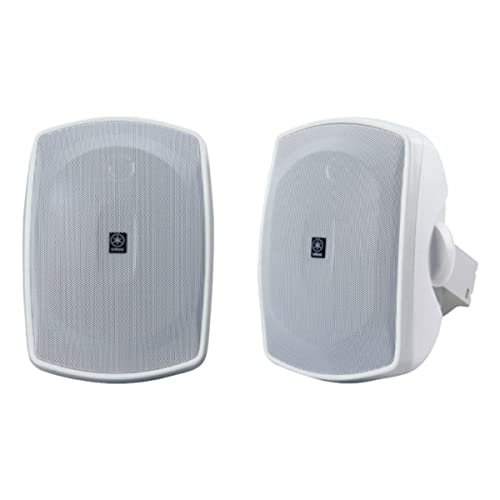
Live listings for the shortlist in this guide are pulled from Amazon below, so prices and availability are always current at the moment you look.


Seasonal checks and the spring inspection
A soffit system asks for two structured looks a year, one before winter and one after it, plus a glance after any severe storm. The autumn check is about readiness. Grilles come off where the design allows, cones and surrounds are inspected for cracks, tears or deformation, terminals are checked for the green or white bloom of corrosion, and cable entries and seals are examined for gaps opened by summer heat. Fasteners get a firmness check rather than enthusiastic tightening, since over-tightening into a thin panel creates the cracks the check exists to prevent. The amplifier end matters too: connections there loosen with heat cycling, and a selector or impedance-matching setting that was altered during a summer project should be confirmed against the actual speaker count before winter listening begins.
Listening forms part of the inspection. Playing a familiar recording at moderate volume and walking the coverage area reveals more than any visual check. Note any position where clarity falls away, any speaker that sounds thin compared with its pair, and any buzz that follows bass notes, which often traces to a loose grille, a resonating panel or an object resting against a back box in the attic. Writing those notes down, with dates, turns a vague sense that something changed into a record that shows whether it is getting worse.
The spring inspection looks for what winter did. Meltwater stains on the soffit panel, rust tracks below a grille, or a musty smell in the attic near the eave all point to water that went somewhere it should not. Surrounds are checked again, because freeze damage often shows as small cracks that were invisible in autumn. Terminals that were clean in October and corroded in April identify the wettest positions in the system, and those positions deserve building attention, a better seal, a drip loop corrected, a gutter repaired, rather than another replacement speaker sacrificed to the same leak. Replacing a failed unit without fixing the water route simply restarts the clock.
Cleaning should be gentle. A soft brush and a barely damp cloth handle most grilles and cones. Solvents, pressure washers and enthusiastic hosing have no place near a soffit speaker, whatever its water rating says, because the rating never contemplated a jet aimed upwards at the grille from a ladder at close range. If a pressure washer is being used on the house, the speakers should be treated as openings to protect, not as surfaces to clean.
When to repair, when to replace
Judgement about repair depends on where the damage sits. A corroded terminal that cleans up to bright metal, a perished cable section that can be replaced back to sound jacket, or a loose grille are maintenance items. A cracked surround, a cone that has absorbed moisture and warped, or a voice coil that scrapes through part of its travel are end-of-life signs for that unit, because the moving assembly is the speaker in every way that matters. Replacing in pairs preserves matched sound across a stereo or dual-mono zone, though in a distributed background system a single like-for-like replacement is usually inaudible as a mismatch. Keeping a note of the exact model, impedance and tap settings at installation makes any later replacement a short task instead of an investigation.
Records close the loop. A simple file with the layout sketch, cable routes, amplifier settings, tap values where used, and the dates of each inspection is the difference between a system that ages gracefully and one that becomes a mystery attached to the house. Houses outlive installations and owners; the next person to open that soffit will be grateful for the drawing.
None of this requires professional equipment to apply. A tape measure, a torch for the attic, a notebook for settings and inspection dates, and the patience to read one manual fully before ordering will prevent nearly every failure described in this guide, in any climate.
Under a January eave, the speakers that endure are rarely the loudest; they are the ones whose materials, seals and wiring were chosen for the cold that was actually coming.
This guide rests on published specification classes and installation documentation for weather-resistant loudspeakers, distributed audio and outdoor cable, rather than on any bench session with the products named in its categories. Figures such as dispersion angles, ingress codes and impedance values are quoted as classes to compare against a specific house and climate, and the retailer listings for any individual model remain the place to confirm its current published values before buying. Where a detail in a listing conflicts with the manual for the same product, the manual should win, and a careful installer will read both before cutting a single hole in a soffit.

