Our Top Picks
 Snap & Zap custom-fit towing mirror extension pairDriver and Passenger Side18.8 x 8.7 x 9.5 inches2.25 poundsCheck on Amazon
 Heated Tow Mirrors Compatible with 2007-2013 Chevy SilveradoLarge21.67 x 14.18 x 14.58 inchesCheck on Amazon
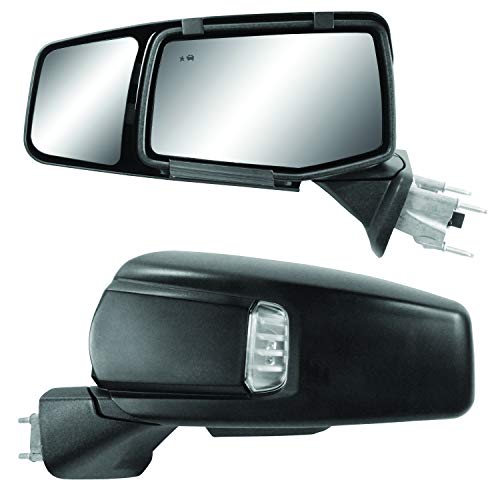 Snap & Zap towing mirror extension pair forDriver and Passenger Side8.5 x 6 x 3.5 inches3 poundsCheck on Amazon


What's inside
- Why the 2007 model year needs extra care
- Why extenders matter when a trailer is behind the truck
- What matters most when comparing extenders
- Clip-on universal extenders
- Slide-on custom-fit sleeves for the GMT900 housing
- Replacement extendable tow mirrors
- Glass choices: flat, convex, and spotter elements
- Comparing the three families side by side
- Use cases: matching the setup to the trailer
- Setup and adjustment workflow
- Compatibility pitfalls worth checking twice
- Care, storage, and a pre-trip checklist
- Reading maker documentation and fitment claims with care
- Frequently asked questions
- Check prices on Amazon
- Closing guidance for Sierra owners
As an Amazon Associate I earn from qualifying purchases. This post may contain affiliate links at no extra cost to you.
Why the 2007 model year needs extra care
The 2007 GMC Sierra 1500 sits at a split point that confuses many owners, parts counters, and even experienced trailer towers. General Motors sold two different trucks under the same name and the same model year. One was the Sierra Classic, a carryover of the earlier GMT800 platform that had already served for several seasons. The other was the fully redesigned GMT900 truck, with a new frame, new cab sheet metal, new interior, and, most important for this guide, a different exterior mirror design. Both trucks wear Sierra badges, both were built for the 2007 model year, and both appear in used listings with little mention of the distinction. Yet a mirror extender shaped for one will often fit the other poorly, loosely, or not at all.
The practical difference starts with the mirror head itself. The Classic uses the slimmer, more upright housing carried over from the GMT800 era, with a flatter outer shell and a simpler mounting face. The GMT900 housing is larger, more sculpted, and more integrated into the door, with a broader glass area and a housing that tapers differently toward the outer edge. Clip points, strap paths, and sleeve contours all follow those shapes. A universal clip-on unit may bridge the gap if its clamps have enough adjustment range, but a molded slide-on sleeve is platform specific by design. Ordering a sleeve by model year alone, without naming the platform, is the single most common cause of returns in this category.
Identification is not difficult once you know where to look. The GMT900 truck has a more upright grille treatment, a different headlamp shape, and an interior with a distinct instrument panel and door trim. The Classic keeps the earlier cab profile and the earlier dashboard layout. The vehicle identification number and the build label inside the driver door jamb can confirm the build, and the original window sticker, if it survives, will name the trim and body plainly. Owners who bought used should also check whether a previous owner swapped mirrors, because replacement tow mirrors from the later 2007 to 2013 range are a popular upgrade and may already be fitted. If the truck already carries extendable replacement mirrors, an extender may be unnecessary or may need a different clamp style entirely.
This guide works through the three main families of product: universal clip-on extenders, custom slide-on sleeves for the GMT900 housing, and full replacement extendable tow mirrors for the 2007 to 2013 Sierra range. It also covers glass choices, adjustment workflow, vibration control, storage, and the small compatibility traps created by mirror caps, chrome covers, puddle lamps, and power functions. Throughout, the goal is the same: a stable rearward view down both sides of a trailer, with the least possible shake, glare, and fiddling at the roadside.
Why extenders matter when a trailer is behind the truck
A stock Sierra mirror was designed first for solo driving. It gives a good view of the adjacent lane, the rear corner of the truck bed, and traffic closing from behind. Hook up a trailer, and the geometry changes at once. A travel trailer, enclosed cargo trailer, or boat on a wide trailer can stretch to eight and a half feet across, which is the common legal width limit for many road trailers in the United States. The truck cab is far narrower than that. From the driver seat, the stock mirrors may show little more than the front wall of the trailer and a thin slice of the lane beside it. The rest of the trailer side, the trailer wheels, and the lane behind fall outside the reflected view.
Many state rules expect a towing driver to be able to see traffic approaching from behind, and a widely cited benchmark is a clear view to a point about two hundred feet behind the trailer. Exact wording differs by state, and enforcement differs too, but the underlying safety logic is uniform. A driver who cannot see a vehicle overtaking on the left, a cyclist near the trailer wheels, or a car tucked close behind the trailer cannot change lanes, merge, or back up with confidence. Extenders move the reflective surface outward, past the plane of the trailer side, so the sight line runs down the flank of the trailer and into the lane beyond it.
The benefit shows up in ordinary moments rather than emergencies alone. With a wider mirror stance, the driver can watch the trailer tires during a tight turn and judge curb clearance. On a multi-lane road, the driver can confirm that the full length of the trailer has cleared a slower vehicle before moving back over. At a fuel stop, the driver can see the trailer corner swing as the rig threads between pumps. In a campground or a boat ramp queue, a better view of the rear corners shortens the backing process and reduces reliance on a spotter for every small correction. None of this replaces a spotter for a difficult reverse, and none of it replaces walking the rig before departure. It simply restores the information that the stock mirror position takes away once a wide trailer is attached.
Blind spots deserve separate attention. Every mirror setup leaves some area unobserved, and a trailer adds a long blind zone along each side. A vehicle can travel in that zone for a surprising distance, hidden by the trailer body. Extenders shrink the zone but do not erase it. Drivers should still turn their head for a direct shoulder check before a lane change when traffic allows, signal early, and move gradually. A convex spotter element, covered later in this guide, helps widen the field at the cost of distance distortion. The honest summary is that extenders are a visibility tool with clear limits, and the best setups acknowledge those limits in their glass layout and adjustment rather than pretending a single flat pane can show everything.
What matters most when comparing extenders
Fit security comes first. An extender that shifts at highway speed, folds under wind load, or works loose on a rough road is worse than a narrower view that stays put, because a moving mirror forces the driver to interpret a shaking image and to reach out the window to correct it. Look at how the unit attaches: the number of contact points, the shape of the clamps or straps, whether tension can be set evenly, and whether the design resists both vertical bounce and slow outward creep. Spec sheets and manufacturer fitment notes are the starting point, and owner documentation for the specific mirror housing on your truck is the check that confirms them.
Glass quality and glass shape come second. A well made mirror element has a clean reflective surface, a sealed edge that resists moisture entry, and a backing that does not flex separately from the housing. Flat glass shows distance accurately. Convex glass shows more area with compressed depth. Dual-glass layouts try to offer both at once. The glass section below treats each option in detail, because the right choice differs for a driver who tows a narrow utility trailer twice a year and a driver who pulls a wide travel trailer through mountain passes every month.
Third is the effect on the factory mirror functions. Many 2007 Sierra mirrors include power adjustment, heated glass for frost and fog clearing, and, on some trims, integrated turn signal indicators. A sleeve or clip-on unit should leave the factory glass free to move, should not block a signal repeater, and should not trap heat or moisture against the housing. A replacement mirror must go further and match the electrical connector and the function set, or the owner trades visibility for a dead switch on the door panel. Compatibility notes from the maker, read against the trim level of the actual truck, matter more here than any general claim of broad fitment.
Fourth is day to day practicality. Extenders are fitted and removed often, stored in garages and truck boxes, and handled with gloves in cold weather. Strap buckles that can be worked with gloves, sleeves that slide on without tools, and replacement mirrors that fold for parking all earn their keep over a season. Weight matters modestly, bulk matters more, and a design that stores flat will be carried more willingly than one left behind because it takes up too much room. Finally, consider finish. A black textured sleeve that echoes the factory housing looks settled on the truck, while a chrome add-on over a black housing can look mismatched and may complicate fit if a chrome cap is already present.
Clip-on universal extenders
Universal clip-on extenders are the most flexible and usually the simplest entry point. They attach to the factory mirror head with clamps, straps, or a combination of both, and they add a separate mirror element outboard of the stock glass. Because they are not molded to one housing, they can move between vehicles, which suits a household with more than one tow vehicle or a driver who rents and borrows trucks. The trade is that universality depends on adjustment, and adjustment depends on careful fitting each time the unit goes on.
Rubber strap designs
The classic strap design uses two elastic rubber straps that hook over the top and bottom, or around the back, of the factory mirror housing. The extender body sits against the outer edge of the housing, and strap tension holds it there. Good versions use thick straps with reinforced hook points and a body shape that cradles the housing edge rather than balancing on a single narrow lip. Fitting is quick, no tools are involved, and removal at the end of a trip takes seconds. For an occasional tower with a narrow or mid-width trailer, that convenience is a genuine virtue.
The weaknesses are equally clear. Rubber ages. Heat, sunlight, and ozone harden straps over seasons of use, and a strap that looked sound in the driveway can snap or stretch at speed. Tension is also hard to set evenly by feel, so one strap may carry most of the load while the other merely follows. At highway speed the extender can buzz or flutter, especially if the factory housing has a rounded profile that gives the straps little to grip. A careful owner inspects straps before each trip, replaces them at the first sign of cracking or permanent stretch, and carries a spare set in the glove box. Strap designs also press directly on the housing finish, so a dirty housing or grit trapped under a strap can leave marks over time. Cleaning the housing before fitting and checking that no grit sits under the contact points reduces that risk.
Ratchet and clamp designs
Ratchet-style extenders replace elastic tension with a mechanical clamp, often a geared strap or a screw-driven jaw that tightens in small, repeatable steps. The benefit is consistency: the driver can set the same tension on both sides of the truck, and the clamp holds that setting far better over a long drive. Some designs add a secondary safety strap as a backup, which is a thoughtful touch, because a tethered extender that slips is an annoyance while an extender lost on the road is a hazard to following traffic.
Clamp geometry still decides success. A jaw shaped for a thick housing edge may sit poorly on a thin one, and the GMT800 Classic housing and the GMT900 housing present different edge profiles. Before a trip, the fitted unit should be pulled firmly by hand in several directions. Any rocking at the clamp, any creak that suggests a point load on thin plastic, and any contact between the clamp and the factory glass are reasons to refit or to choose a different model. Ratchet units also take a little longer to fit and remove, and their mechanisms collect road grit, so a rinse and a dry before storage keeps the gear teeth working smoothly.
Glass and vibration in clip-on units
Most clip-on extenders use a single mirror element, either flat or convex. Flat versions preserve distance judgment and suit drivers who mainly need to see straight down the trailer side. Convex versions widen the field and help with lane awareness, but objects appear smaller and farther away than they are, which takes practice during backing. Some clip-on bodies allow the glass angle to be set independently of the clamp position, a useful feature because the factory mirror angle that suits solo driving rarely aims the extender correctly for a trailer.
Vibration is the recurring complaint in this family, and it has several sources. The factory mirror itself moves slightly on its mount. The clamp adds a second joint. The extender arm adds length, and length magnifies every small movement at the glass. Wind load rises with speed and with the frontal area of the extender. The result can range from a mild shimmer that still allows vehicle shapes to be read, to a blur that makes the mirror nearly useless above town speeds. Shorter arms, stiffer bodies, and two-point attachment all help. So does honest expectation: a clip-on will rarely match the steadiness of a molded sleeve or a full replacement mirror, and a driver who tows long highway distances regularly will feel that difference most.
Drivers comparing visibility aids often look at camera systems alongside mirrors, and a useful starting point is our roundup of best aftermarket rearview mirror backup cameras for the view directly behind the rig. Cameras complement mirrors rather than replacing the legal and practical need to see down the trailer sides, and the two together cover different zones.
Slide-on custom-fit sleeves for the GMT900 housing
A slide-on sleeve takes the opposite approach to universality. Instead of clamping to many housings, it is molded to one housing shape, and for the Sierra buyer that usually means the GMT900 mirror fitted to the redesigned 2007 truck and its following years. The sleeve slips over the factory mirror head from the outer side, wraps the housing with a close-fitting shell, and is usually secured with a wedge, a thumb screw, or a small clamp at the inner edge. When the molding matches, the result looks close to a factory tow mirror and behaves like one in the wind.
Stability is the headline advantage. Because the shell contacts the housing over a broad area, loads spread out and the add-on glass moves with the factory mirror rather than dancing on straps. Highway shimmer is typically far lower than with a strap unit, and the sleeve does not creep outward over a long drive. The outer glass on most sleeves is positioned to extend the sight line past a wide trailer, and many designs pair a flat main element with a smaller convex spotter below or beside it.
Fit verification is strict. A sleeve listed for the GMT900 housing will not suit the Sierra Classic, and it may not suit a GMT900 truck whose mirrors were replaced with a different style, whose housings carry aftermarket chrome covers, or whose trim uses a different mirror variant. The maker documentation normally names the exact mirror style, sometimes with a diagram of the housing outline. Compare that outline with the truck in the driveway, including the shape of the lower edge and the position of any signal indicator, before ordering. A sleeve that must be forced is a sleeve made for a different housing, and forcing it risks cracking either part.
Factory functions generally survive a sleeve well. The shell covers the housing, not the glass, so power adjustment of the factory element still works, and the heated element still clears frost, though the sleeve glass itself is usually unheated and can fog on a cold morning until cabin air and road speed clear it. Turn signal repeaters built into the factory glass or housing edge can be partly covered on some designs, so check the maker notes for signal visibility. Puddle lamps on the underside of higher-trim mirrors may also be blocked. None of these points is a reason to avoid sleeves as a class, but each is a reason to match the sleeve to the trim rather than to the model year alone.
Finish match is better here than in any other add-on family. Most sleeves use a black textured surface close to the factory housing texture, so the fitted pair reads as one unit. On trucks with painted or chrome mirror caps, the sleeve covers the cap area, which changes the look while towing and restores it when the sleeves come off. Storage is the main practical cost: sleeves are bulky, shaped objects that do not stack flat, and they deserve a padded bag or a dedicated shelf spot so the glass faces are not scratched between trips.
Replacement extendable tow mirrors
The third family removes the factory mirror entirely and bolts on a purpose-built tow mirror in its place. For the Sierra, these mirrors are commonly listed for the 2007 to 2013 range on the GMT900 platform, which means the redesigned 2007 truck is covered while the 2007 Classic generally is not, a distinction sellers do not always make prominent. A replacement tow mirror has a larger head, a dual-glass layout on most models, and an arm that telescopes outward for towing and slides back in for daily driving. Once installed, there is nothing to clip on or store; the towing view is part of the truck.
Manual and power telescoping
Manual telescoping mirrors extend when the driver pulls the head outward by hand and stay at the chosen position through friction or detents. They are simple, they add no wiring demands, and they suit drivers who tow on a predictable schedule and set the mirrors before departure. Power telescoping versions extend and retract from a cab switch. The convenience is real when the rig moves between narrow gates, car washes, and open road in one trip, and it reduces the chance of a driver skipping the extension step out of haste. Power versions cost more effort to install correctly, because the telescoping function must be wired and the switchgear must match, and they add a motor that can fail years later. Neither approach changes the glass area; the choice is about habit and convenience.
Heated glass, signals, and plug compatibility
Replacement mirrors are sold in many function combinations: manual or power glass adjustment, heated or unheated glass, with or without turn signal indicators in the glass or on the housing, and with or without puddle lamps. The truck side of the equation is fixed by its trim and options. The door harness connector, the number of pins populated, and the switch functions on the door panel decide what will work when the new mirror is plugged in. A mirror with more functions than the truck supports may still bolt on and adjust, while its extra features stay dark. A mirror with fewer functions than the truck can leave a heated-glass switch doing nothing.
The careful method is to note the exact functions the truck has today, confirm each one works, and then match the replacement listing function by function. Maker fitment tables usually separate mirrors by those function sets, and the connector photo in a listing is worth comparing with the connector on the truck. Adapters exist for some combinations, but an adapter is a plan, not a surprise to discover with the door panel off. Owners of trucks with memory seats or other door-module features should be especially careful, because mirror behavior on those trims runs through the module and a mismatched mirror can behave oddly.
Installation effort and expectations
A mirror swap on this platform is a moderate driveway job for a methodical owner. The door trim panel comes off to reach the mirror bolts and the harness connector, the factory mirror unbolts from the door, and the replacement seats on the same studs or bolt points. The work rewards patience: trim clips break when pried in a hurry, and a dropped nut inside the door costs more time than the rest of the job. Weather sealing at the mirror base should be seated cleanly, and the harness grommet should be refitted so water stays out of the door. After installation, both mirrors should be checked for full glass travel, heating function on a cool morning or with a careful hand check per maker guidance, signal operation, and telescoping travel through the full range.
Replacement mirrors change the truck every day, not only on towing days. The larger head creates a larger blind area directly beside the front doors, and the wider stance demands more care in drive-through lanes, parking structures, and narrow garage doors. Most designs fold, manually or by power depending on the function set, and drivers should fold them in tight spaces rather than trusting clearance. For a truck that tows often, those daily trade-offs are usually worth accepting. For a truck that tows twice a year, a sleeve or clip-on that comes off between trips may be the better balance.
Many towers pair wider mirrors with a recording setup for the road ahead and behind, and our guide to best 2 channel dash cameras covers front-and-rear coverage that suits long towing days. Mirror visibility remains the primary tool while driving; recordings serve a different purpose after an incident.
Glass choices: flat, convex, and spotter elements
Flat glass is the reference standard. It reflects the scene at true scale, so the distance of a vehicle behind can be judged in the same way as in the factory driver-side mirror, which is flat by regulation in the United States for that position. When the task is to judge whether the trailer has cleared a vehicle being passed, true scale is valuable. The cost of flat glass is field width: a flat element shows a narrower slice of the world, so the blind zone beside the trailer stays larger.
Convex glass curves outward and compresses a wider field into the same area. It reveals vehicles alongside the trailer sooner and keeps them visible longer during a pass. The compression also makes vehicles look smaller and farther away, a distortion every driver knows from the passenger-side factory mirror and its familiar warning text. On an extender, a fully convex main element can make backing judgment harder, because the trailer corner appears more distant than it is. Drivers new to convex towing glass should spend time in a quiet lot learning how the reflected distances relate to real gaps before relying on it in traffic.
Spotter mirrors are small convex elements added to a mainly flat layout, often at the lower or outer portion of the head. They watch the zone beside the trailer and the trailer tires, while the flat main glass handles distance judgment behind. Dual-glass replacement mirrors commonly use this arrangement, with a large flat upper element and a wide convex lower element that can be aimed at the trailer wheels or the lane beside them. Sleeves often include a smaller spotter as well. The dual layout is the most informative arrangement in this guide, provided each element is adjusted separately and the driver learns which element answers which question: main glass for the lane behind, spotter for the zone alongside.
Glass quality details matter over seasons of use. Look for elements with sealed edges, because moisture behind the reflective layer shows up as dark creeping spots from the edge inward. Heated elements, where fitted, should clear evenly rather than in patches. Tinted or auto-dimming features are uncommon in the extender families and more relevant to factory mirrors; if night glare from following headlights is a concern, a slightly lower aim on the extender glass and correct headlamp aim on the trailer-towing truck both help more than any coating claim. Replacement glass availability is also worth checking for replacement mirrors, because a cracked element on a common model is a small repair, while an orphan design can mean replacing the whole head.
Comparing the three families side by side
Set against the same criteria, the families separate cleanly. Clip-on universal units lead on flexibility and storage between vehicles, sit in the middle on fitting time, and trail on stability at speed. Slide-on sleeves lead on stability among removable options and on factory appearance, apply to one housing shape only, and take the most storage room of the removable options. Replacement tow mirrors lead on glass area, on integration with truck functions when matched correctly, and on readiness, since they are always fitted; they trail on installation effort, on daily-driving bulk, and on the care needed to match electrical functions.
Trailer width sharpens the choice. A narrow utility trailer or a small open trailer may need only a modest outward shift, which a clip-on supplies easily. A full-width travel trailer or enclosed trailer at or near eight and a half feet needs the sight line moved well outboard and held steady for hours, which favors sleeves or replacement mirrors. Trip length matters in the same direction: short local tows forgive vibration that would exhaust a driver over a full day on the highway. Frequency matters most of all. Gear that is fitted for every trip should be quick and pleasant to fit, or it will be left in the garage on the trip when it was needed.
Budget reasoning, stated in relative terms, follows the same order. Clip-on units are generally the least costly route and the easiest to replace if a strap or clamp fails. Sleeves sit in the middle, with value tied to how well the molding matches the housing. Replacement mirrors are the largest outlay and the largest time investment, offset by years of always-ready use and by retaining value when the truck is sold to another towing owner, provided the factory mirrors are kept and can be refitted. In each family, spending a little more for better attachment hardware and better glass usually matters more than spending for cosmetic extras.
Use cases: matching the setup to the trailer
Travel trailers and fifth-wheel support towing
A travel trailer is the demanding case: full width, tall sides, and a long blind zone. The driver needs a steady view down both flanks, a spotter view of the trailer tires for tight turns, and mirrors that stay set through hours of highway running. Sleeves on a GMT900 truck or replacement tow mirrors answer that brief best. The adjustment target is a sight line that just grazes the trailer side and opens into the lane beyond, with the spotter aimed low enough to catch the tires at the rear of the trailer. Drivers who tow in mountains should also expect crosswind gusts to load the mirror heads; a setup that is merely adequate on a calm morning can flutter in a pass, which is another argument for the stiffest attachment the budget allows.
Enclosed cargo and car trailers
Enclosed trailers share the width problem and add a slab-sided sensitivity to wind. Their drivers benefit from the same wide stance, with extra attention to the passenger side, where the trailer wall hides the lane longest during a merge. Car trailers sit lower, so the spotter element can be aimed to watch the trailer deck edge and the wheels of the vehicle being carried. Tie-down checks in the mirror during the first miles of a trip are a good habit: a strap end fluttering at the deck edge shows clearly in a well aimed spotter.
Boats, utility trailers, and occasional towing
Boat trailers are often narrower than the boat itself at the widest point of the hull, and the towing view is partly over and around the hull rather than down a flat wall. A clip-on extender frequently suffices, and its quick fitting suits the rhythm of ramp days. Utility trailers for yard work, motorcycles, or building materials are narrower still, and some owners find the stock mirrors adequate for the trailer body while an extender helps mainly for backing, where the trailer is short and reacts quickly. For short trailers, a convex spotter earns its place because the trailer tail swings into view late; seeing it sooner makes small steering inputs possible instead of large corrections.
Work trucks and mixed fleets
A Sierra that tows for work may share trailers with other trucks, and the mirror gear may be fitted by different drivers. In that setting, repeatability beats peak performance. Sleeves that fit one truck should be labeled for that truck. Clip-on units should be stored with their straps inspected and their clamp settings noted. A short written adjustment routine in the cab, covering mirror extension, glass aim, and a pull test on each side, keeps the standard consistent across drivers. Fleet buyers also value replacement mirrors for a dedicated tow truck in the group, because the always-fitted setup removes the fitting step from a busy morning entirely.
Wide-angle coverage is a theme that runs beyond towing, and readers planning a fuller view around the vehicle may also look at best 360 degree dash cameras for how multi-lens recording handles the zones mirrors cannot show. For the towing task itself, glass aimed well still answers faster than any screen.
Setup and adjustment workflow
Good adjustment starts with the trailer attached, the rig parked straight on level ground, and the trailer aligned directly behind the truck. Sit in the normal driving position, with the seat and steering wheel set as they will be on the road, because mirror aim is relative to eye position. A helper standing at the rear corner of the trailer, visible first directly and then in the mirror, gives a reference point that makes aim concrete rather than guessed.
For each side, begin with the factory mirror set for a conventional solo view, then fit the extender or extend the replacement mirror to its towing position. Aim the main extender glass so the side of the trailer appears as a thin sliver at the inner edge of the glass and the lane beside the trailer fills the rest. If the trailer side fills half the glass, the mirror points too far inward and the lane view suffers. If the trailer cannot be seen at all, the mirror points too far outward and the driver loses the reference line that makes judging the trailer path possible. The sliver is the reference; the lane is the subject.
Aim the spotter element separately. Its job is the zone alongside and low: the trailer tires, the curb in a turn, and vehicles traveling beside the trailer. A downward tilt that feels excessive while parked often proves correct once the rig is moving and the driver glances down during a turn. After the first aim, drive a short loop with gentle lane changes where traffic is light, then stop and refine. Most drivers need two or three iterations before the view feels natural, and the setting should be noted for each trailer the truck tows, because a travel trailer and a boat trailer rarely share the same ideal aim.
Anti-vibration checks before and during a trip
With the rig parked, tap each mirror head firmly and watch the glass. A well secured extender settles at once; a loose one keeps trembling or shifts position. Pull each clip-on or sleeve outward and downward with steady force, simulating wind and road load. Check strap hooks, ratchet teeth, wedge screws, and clamp pads for full engagement. On replacement mirrors, confirm the telescoping sections lock at the chosen extension and that the folding joint has no play beyond its designed movement.
On the road, the first fuel stop is the natural recheck point. Straps can seat themselves and lose a little tension in the first hour, sleeves can settle onto the housing, and clamp pads can compress. A thirty-second walk-around that touches each mirror, checks each strap, and confirms glass aim from the driver seat prevents the slow drift that otherwise appears two hours later as a mystery change in the view. After driving in rain, check again, because water lubricates contact surfaces and can let a marginal clamp creep.
Compatibility pitfalls worth checking twice
- Mirror caps and chrome covers change the outer dimensions of the housing, so a sleeve molded for a bare housing may not seat, and a clamp may grip the cover rather than the housing structure.
- Puddle lamps on the underside of some factory mirrors can be covered by sleeves or struck by low clamps, removing a feature the owner may use nightly.
- Turn signal repeaters in the glass or on the housing edge must stay visible; a blocked repeater is both a safety and a legal concern.
- Power folding mirrors need clearance through their fold arc, and an extender fitted without checking the fold can jam against the door glass or the housing stop.
- Heated glass still needs its connector and its defrost function undisturbed during a replacement swap; a mirror that bolts on but leaves the heater unplugged will fog on the first cold tow.
- Aftermarket replacement mirrors already fitted by a previous owner may have a different housing outline from factory mirrors, which changes sleeve and clamp fit completely.
Two further traps deserve mention. First, some listings group the Sierra with its Chevrolet twin across wide year ranges and gloss over the 2007 split. A listing that names 2007 without naming Classic or the new body style should be treated as unconfirmed until the maker fitment notes are read. Second, glass handedness matters: driver-side and passenger-side elements differ in curvature and sometimes in shape, and a bargain pair with two identical elements will disappoint on one side. Confirm that the set is a true matched pair for the truck.
Small electrical loads add up on long trips, and drivers who run coolers, tire pumps, and phone charging from the cab may find our notes on best 18w car chargers useful for keeping devices fed without overloading a single outlet. The mirror work itself draws little power beyond heating and signal functions already built into the truck.
Care, storage, and a pre-trip checklist
Extenders live a rough life at the outer corners of the truck, where they collect insects, road film, salt spray, and the occasional brush with a fuel station bollard. Cleaning the glass with a soft cloth and a mild glass cleaner keeps the reflective surface clear; abrasive pads and dry wiping of gritty glass scratch the surface and scatter headlight glare at night. Plastic housings and sleeves respond to ordinary soap and water. Rubber straps should be washed free of grit, dried out of direct sun, and stored unstressed rather than stretched over the extender body for months, which shortens their useful life.
Storage discipline protects glass most of all. Sleeves should rest glass-up or in a padded bag, never glass-down on a workbench. Clip-on units should be stored with straps relaxed and clamps closed so springs and ratchets are not held under load. Replacement mirrors need no storage, but their telescoping tracks benefit from being cycled occasionally and kept free of packed dirt, and the folding joint should be worked through its range now and then so it does not stiffen from disuse.
A short checklist, used the same way before every towing trip, turns care into habit:
- Confirm the extender or replacement mirror matches the truck platform and housing actually fitted.
- Inspect straps, clamps, wedges, and telescoping locks for cracks, stretch, grit, and full engagement.
- Clean the factory housing contact areas and the extender glass before fitting.
- Fit both sides, perform a firm pull test on each, and check the fold clearance where applicable.
- Aim the main glass for a thin trailer sliver plus the lane, and aim the spotter at the trailer tires.
- Verify factory functions still work: power adjustment, heating, signals, and puddle lamps where fitted.
- Drive a short loop, stop, recheck tension and aim, and note the settings for that trailer.
- Carry spare straps for strap designs and the small tool a ratchet or wedge design needs, if any.
Seasonal checks round out the routine. Before winter towing, confirm heated elements clear frost evenly and that straps remain supple in the cold. Before a summer of long trips, look for sun damage on straps and for hairline cracks around clamp points on older plastic bodies. Any extender that has struck a post or been dropped onto concrete should be inspected at the glass edge and the mounting points before it is trusted at highway speed again, because hidden cracks tend to announce themselves under vibration rather than in the driveway.
Reading maker documentation and fitment claims with care
Fitment language in this category rewards slow reading. A listing that says a unit fits the 2007 Sierra may mean the redesigned truck, the Classic, or, in the loosest cases, whichever housing the seller happened to measure. Look for the platform name, the housing outline diagram, and a list of excluded trims or mirror options. Documentation that names the mirror functions it supports, states whether chrome caps must be removed, and gives the strap or clamp adjustment range in plain terms is documentation written by a maker who expects the buyer to verify fit. Vague promises of universal fit, with no housing dimensions and no exclusions, should be read as an invitation to measure your own housing and compare every figure before relying on the claim.
Measurements worth taking are simple. Note the height and width of the factory mirror head, the thickness of the housing at the outer edge where a clamp will grip, and the distance from the housing to the door when the mirror is folded. Photograph the back of the housing and the underside, where lamps and seams hide, and keep those photographs with the truck records. When a sleeve or clamp arrives, compare it against those records before the return window becomes a concern, and do a full fitting in the driveway rather than at the start of a trip. A fitting discovered to be wrong on departure morning tempts owners to improvise with extra padding or uneven strap tension, and improvised fittings are the ones that loosen, buzz, and mark housings.
Finally, keep the paperwork that comes with whichever family you choose. Strap replacement intervals, wedge screw sizes, glass replacement part names, and wiring notes for replacement mirrors are all easier to find in a folder kept with the trailer documents than in a listing that may change or vanish. Note the date straps were last replaced and the settings used for each trailer on the same sheet. That small record turns mirror setup from a fresh puzzle each season into a repeatable routine, and it gives the next owner of the truck a clear account of what is fitted and why.
Frequently asked questions
How can I tell whether my 2007 Sierra is the Classic or the GMT900 truck?
Compare the cab, grille, headlamps, and interior with the two designs: the Classic carries the earlier GMT800 styling inside and out, while the GMT900 truck has the redesigned body and dashboard introduced for that generation. The build label in the driver door jamb and the vehicle identification number give the definitive record, and a dealer parts counter or the maker fitment guide can decode them. Check the mirrors themselves as well, because a previous owner may have fitted later replacement mirrors that change which extender style applies.
Will a slide-on sleeve fit if my mirrors have chrome caps?
Often it will not seat correctly. Caps and covers add thickness and change the housing outline that the sleeve was molded around. Some owners remove caps while towing, but that is practical only if the caps were designed to come off without damage. The safer route is to confirm with the sleeve maker whether the listing supports capped housings, or to choose a clamp design with enough adjustment range for the added thickness.
Do extenders satisfy mirror laws on their own?
Rules differ by state and by trailer, and this guide does not give legal advice. The widely used expectation is that the driver must be able to see along both sides of the trailer and into the lanes behind it, with a benchmark view far behind the trailer often cited in state guidance. A correctly fitted extender that delivers that view is the practical way most Sierra owners meet the expectation. Drivers who tow across state lines should read the rules for the states on their route.
Why does the passenger-side extender seem harder to aim?
Distance and angle work against the driver on that side. The mirror is farther from the eye, the viewing angle is shallower, and the factory passenger glass is convex, which changes how the extender view relates to the familiar image. Extra iterations during setup are normal. Aim that side with a helper at the trailer corner, and judge the result from the exact driving seat position rather than leaning toward the center of the cab.
Can I leave clip-on or sleeve extenders fitted when not towing?
You can, but there are costs. The wider stance is easier to strike in parking areas, the added frontal area collects debris, and strap and clamp parts age faster under constant sun and wind load. Most owners remove removable extenders between trips and store them properly, which also creates a natural inspection moment at each fitting. Replacement mirrors, by contrast, are designed to stay fitted and simply slide inward.
What should I do if an extender vibrates badly at highway speed?
Slow down, stop safely, and refit rather than enduring a blurred view. Check for uneven strap tension, a clamp seated on a curved part of the housing, grit under a contact pad, or a wedge screw that was never fully tightened. If the setup is correctly fitted and still blurs, the design itself is the limit: a shorter arm, a stiffer body, a sleeve matched to the housing, or a replacement mirror will each step steadiness upward. A blurred mirror is not a minor annoyance on a long tow; it erodes the driver attention the mirror was meant to support.
Check prices on Amazon
Live listings for the shortlist in this guide are pulled from Amazon below, so prices and availability are always current at the moment you look.


Closing guidance for Sierra owners
The right choice for a 2007 Sierra 1500 begins with naming the truck correctly. Classic owners should shop the universal families with care and confirm any replacement claim against the GMT800 housing. GMT900 owners can choose among all three families, with sleeves offering the steadiest removable view and replacement mirrors offering the most complete long-term answer for frequent towing. In every family, attachment security, honest glass, and preserved factory functions matter more than cosmetic extras, and a careful first setup with a helper at the trailer corner pays back on every mile that follows.
Links on this page may earn a commission from the retailer when a reader buys through them, which helps fund this guide without changing the price paid. Choose the setup that matches your trailer width and towing frequency, fit it patiently, recheck it at the first stop, and the Sierra will tow with the calm, wide view the job deserves.