Our Top Picks



What's inside
- What a domed crystal is
- Dome height and the total thickness stack
- Crystal materials compared: acrylic, mineral, and sapphire
- Optical distortion at oblique angles, and the double-dome fix
- Vintage design language and modern retro reissues
- Water resistance with domed crystals
- Readability: reflections and anti-reflective coatings on curved surfaces
- Replacement and aftermarket domed crystals: sizing that leaves no room for guessing
- Polishing acrylic domes, and replacing mineral and sapphire
- Pairing a domed watch with straps
- Buying checklist for a domed crystal watch
- Measuring a dome yourself, and living with one through the seasons
- Check prices on Amazon
- Frequently asked questions
As an Amazon Associate I earn from qualifying purchases. This post may contain affiliate links at no extra cost to you.
A domed crystal can make two watches with identical case dimensions wear like entirely different objects, which is why this guide treats the curve itself as a specification worth choosing deliberately. Guidance here is funded through affiliate commissions, and those commissions support the research behind the guide, while every recommendation follows published specifications, manufacturer documentation, and aggregated owner reports rather than commission rates. Read the dome height, the material, and the edge profile before the dial colour, and most of the surprises owners describe in the first month of wearing a domed watch disappear.
What a domed crystal is
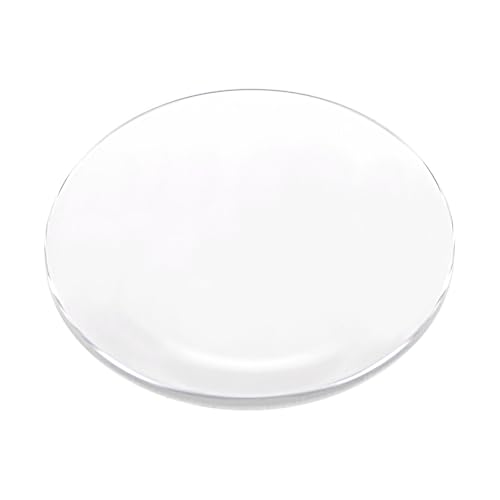
A watch crystal is the transparent cover over the dial, and a domed crystal is one whose outer surface curves upward across the dial instead of lying flat. The curve is usually spherical, meaning it follows a section of a very large sphere, so the centre of the crystal sits higher than its edges by a measured amount called the dome height. On a restrained dress watch that rise might be well under a millimetre, visible only as a soft highlight that moves across the dial. On a vintage-styled diver it can be several millimetres, high enough to catch on a cuff, to distort the dial visibly from the side, and to define the entire character of the watch.
The vocabulary matters because listings use it loosely. A boxed crystal is flat in the centre with sharply raised, near-vertical edges, a profile common on some modern divers; it is not a dome, however tall it stands. A top-hat crystal pushes that boxed idea further. A true dome curves continuously. Within true domes, the key distinction is between single-domed and double-domed construction. A single-domed crystal curves on the outer surface and is flat on the inner surface, which makes it thicker at the centre than at the edge and gives it the optical behaviour of a weak magnifying lens. A double-domed crystal curves on both surfaces, with the inner curve following the outer one, so thickness stays roughly even across the diameter and the lensing effect largely cancels. That distinction drives the distortion discussion later in this guide, and it should appear in any serious specification sheet; when a listing says only domed without saying which kind, treat the missing word as a question to ask the seller rather than a detail to assume.
Domes exist for three reasons that blend differently in every model. The historical reason is manufacturing: for decades, acrylic was the practical crystal material, and acrylic is formed and polished most easily in curved profiles, so mid-century watches are domed because their material wanted to be. The optical reason is that a curved surface can reduce the flat mirror effect of a level crystal and give a dial depth and movement as the wrist turns. The structural reason, most relevant to dive watches, is that an arch resists pressure more efficiently than a flat plate of the same thickness, a principle borrowed from far older engineering than horology. A modern buyer is usually buying the look created by the first reason, enjoying the second, and benefiting from the third without needing it.
Measuring a dome requires more than the headline numbers brands publish. Case diameter excludes the crystal’s behaviour entirely. Total thickness includes it, but brands measure thickness inconsistently, some to the top of the dome, some to the case back’s lowest point including a protruding back, some with the bezel as the highest element. The useful figures to request or measure are the crystal diameter, the dome height above the bezel or case line, and the total thickness measured with calipers across the highest and lowest points. With those three numbers, the wearing experience becomes predictable. Without them, a buyer is shopping from photographs, and photographs of domes are notoriously flattering because a curve photographs as character from every angle except the wearer’s own.
Dome height and the total thickness stack
Every watch wears as a stack of layers, and the dome is the layer buyers most often forget to add. From the wrist upward, the stack runs: case back, movement space, dial and hand clearance, inner crystal surface, crystal material at its thickest point, and finally the dome’s rise above the case. A manufacturer quoting a slim case thickness may be describing the metalwork alone or the watch to the bezel line, while the dome quietly adds its height on top. This is the arithmetic behind the familiar owner report that a watch specified around twelve millimetres wears like fourteen. Nothing was misrepresented in a legal sense; the dome simply lives in the gap between two different, defensible ways of measuring.
The practical consequences arrive in a predictable order. First, cuffs: a domed watch slides under a shirt cuff less willingly than a flat watch of the same case thickness, because the highest point is a smooth hill the fabric must climb rather than a flat ledge it can rest against, and because the dome’s peak sits at the centre of the case where cuff pressure is greatest. Second, knocks: the dome is the first surface to meet door frames, desk edges, and seatbelt buckles, and its centre, the part most likely to strike, is also the part farthest from the protection of the bezel. Third, perceived size: a high dome makes a watch read larger on the wrist than its diameter suggests, which flatters smaller cases and can push an already large case into costume territory. Owners consistently describe high domes as adding presence, a word that means visual size in showroom language and occasional inconvenience in daily language.
Dome height interacts with hand clearance in a way specification sheets rarely spell out. The hands travel beneath the crystal’s inner surface, and a single-domed crystal, flat inside, offers the same clearance at the centre as at the edge. A double-domed crystal’s inner curve rises toward the centre, which actually increases centre clearance where the hand stack is tallest, around the central pinion where hour, minute, and seconds hands pile up. Watch designers use that geometry deliberately: a double dome can allow a slimmer case for the same hand stack, or a taller, more dramatic hand stack, applied indices, and a dished dial inside the same total thickness. When a brand pairs a double dome with a visibly deep dial, that is usually the trade being made.
For buyers comparing two otherwise similar watches, the working method is simple. Add the stated dome height to any thickness figure that excludes it, compare totals rather than case figures, and then discount the total slightly for shape: a smoothly domed fourteen millimetres wears easier than a slab-sided flat fourteen, because the dome presents no sharp edge to cuffs or knocks and its visual mass concentrates at the centre. Thickness panic is as misleading as thickness denial. What matters is where the millimetres sit, and on a domed watch they sit in the most forgiving place available, up in the air rather than out at the lugs.
Weight follows a similar pattern. A tall acrylic dome weighs almost nothing. A tall sapphire dome, in a dense material at several millimetres of centre thickness, adds a noticeable share of the watch’s total mass and places it high, which some wearers perceive as top-heaviness on a loose strap. The cure is strap fit, discussed near the end of this guide, not dome avoidance.
Crystal materials compared: acrylic, mineral, and sapphire
Three material families cover nearly every domed crystal in production, and the dome shape amplifies each family’s strengths and weaknesses because a curve exposes its centre to contact in a way a recessed flat crystal avoids. Judge materials on four behaviours: scratching, shattering, optical quality over time, and the cost class they impose on the watch and on eventual replacement.
Acrylic, often listed under trade names for watch-grade acrylic sheet, is the original dome material and still the most forgiving. It scratches easily, picking up hairlines from sleeves, desks, and cleaning cloths with grit in them, but those scratches sit in a soft surface that can be polished back repeatedly at home, a process detailed in a later section. It does not shatter. Struck hard, acrylic cracks, crazes, or pops out of its seat, but it does not produce the explosive spray of fragments associated with brittle materials, one reason it was favoured for military and tool watches. Optically, fresh acrylic is warm and clear with a slight softness owners describe as character. Its weaknesses are chemical and thermal: solvents, some sunscreens, and insect repellents can craze it, and heat can distort it. Its cost class is the lowest of the three by a wide margin, in both original manufacture and replacement, which is why acrylic remains the rational choice for watches that will be worn hard and serviced by their owners.
Mineral glass, including the hardened variants sold under names such as K1, sits in the middle on nearly every axis. It resists scratching far better than acrylic, shrugs off the casual contacts that mark acrylic within weeks, and costs moderately more. When it fails, it fails like glass: a hard point impact can chip the edge or shatter the pane, and a dome’s exposed centre gives impacts a clear target. Mineral cannot be polished back in any practical home sense; scratches and chips are permanent, and the remedy is replacement. Its optical quality is crisp and neutral, and it holds that quality for years provided it avoids the one bad knock. K1-type hardened mineral narrows the scratch gap toward sapphire while keeping a cost and shatter profile closer to ordinary mineral, and it has become a common specification in vintage-styled watches that want a dome’s look without sapphire’s price or acrylic’s upkeep.
Sapphire, synthetic corundum grown for industrial and watch use, is the hardness leader by a large margin. On the Mohs scale it sits at nine, below only diamond, which means everyday materials, steel, stone, concrete in most encounters, cannot scratch it, though they can certainly be scratched by it and though a diamond or another sapphire edge still can mark it. A domed sapphire keeps a new watch looking new at its most exposed point for years, which is precisely why buyers pay for it on a dome. The costs are literal and physical. Domed sapphire is the most expensive crystal to manufacture because grinding and polishing a curve in such hard material is slow, and replacement costs follow the same curve. It is also brittle in the specific sense that a sharp, hard impact can shatter it outright rather than deforming, and its density makes a tall dome measurably heavier. Anti-reflective coatings, discussed under readability, are near-mandatory partners for sapphire because the material’s high refractive index produces strong reflections off a curved surface.
Choosing among the three is therefore a wearing decision disguised as a materials decision. A watch worn daily in manual environments, serviced at home, and loved for its vintage accuracy points to acrylic. A watch worn daily in an office, expected to look clean for years with zero maintenance, points to sapphire. Mineral and its hardened variants serve the broad middle: watches worn often but not abused, bought at prices where a sapphire dome would consume an unreasonable share of the total. Aggregated owner reports support that mapping strongly; regret stories usually involve a mismatch, the acrylic dome worn against solvents and impatience, or the sapphire dome bought for a watch whose owner then fears the single knock that matters.
Optical distortion at oblique angles, and the double-dome fix
Tilt a single-domed watch to forty-five degrees and the dial changes. Indices near the far edge stretch, compress, or slide behind the crystal’s curve; numerals can double at the rim; the hand near the edge appears to bend. This is not a defect in an individual watch. It is the predictable optics of a plano-convex lens, which is exactly what a single-domed crystal is: flat on one side, convex on the other, with real refractive power. The dome magnifies the dial slightly when viewed straight on, an effect many owners enjoy as dial presence, and it bends light ever more strongly as the viewing angle grows, which is the same physics viewed from less flattering geometry.
Whether distortion bothers a wearer depends on how the watch is actually read. Most people read a watch near head-on, with a quick wrist turn that presents the dial fairly squarely, and at those angles even a tall single dome behaves well. Distortion becomes a daily issue for people who read the time at a glance without moving the wrist, drivers with hands fixed on a wheel, desk workers reading from a resting forearm, and anyone who photographs watches, where the oblique angle is the whole point of the picture. It also matters more on dials with information at the perimeter: minute tracks, tachymeter scales, and date windows near the edge all live in the high-distortion zone, while a clean three-hand dial with central information tolerates a tall dome gracefully.
The double dome is the engineered answer. By curving the inner surface to follow the outer one, the crystal’s two surfaces bend light in opposing senses, and the net refractive power falls close to zero. The dial then stays geometrically honest at angles where a single dome is performing tricks. Watch brands that specify double-domed sapphire are selling that honesty, and it is a genuine, measurable difference rather than a marketing syllable. The trade-offs are manufacturing difficulty, since both curves must be ground and polished and kept concentric, and a subtle loss of the vintage lensing character that some buyers actively want. A double dome looks cleaner and more modern in person even when its profile matches a single dome’s silhouette exactly, because the eye reads distortion as age.
There is also a middle path in the market: shallow single domes whose low height keeps distortion negligible in practice. Distortion scales with dome height and with the steepness near the edge, so a gentle dome of well under a millimetre behaves optically like a flat crystal for almost all wearers while still softening reflections and appearance. When a dress watch lists a domed crystal without drama, that shallow profile is usually what is being described, and it needs no double-dome correction.
A practical evaluation method for buyers shopping in person or from owner photographs: look for images or angles showing the watch from the side at dial level, and check whether the minute track remains legible and evenly spaced around the full circle. Even spacing at an oblique angle indicates a double dome or a shallow profile. A track that melts at the edges indicates a tall single dome, which is a legitimate aesthetic choice, the full vintage effect, provided the buyer chooses it knowingly and reads the time mostly head-on.
Vintage design language and modern retro reissues
The dome is the single most efficient vintage signal a watch can send, because for roughly three decades of twentieth-century production it was not a signal at all, just how crystals were made. Mid-century dress watches wore modest acrylic domes over thin cases, often with faceted or applied indices tall enough to cast shadows into the space the dome created. Mid-century dive watches wore taller domes, partly for pressure geometry and partly because thick acrylic was the available route to strength, and their bezels, dials, and handsets were proportioned around that height. When a modern watch adds a dome, it is quoting that entire era in one component, which is why a dome can make a contemporary case feel nostalgic and why removing it in a redesign can make the same watch feel abruptly sterile.
Modern retro reissues handle the quotation with varying honesty. The most faithful reissues reproduce the original profile in acrylic or in hardened mineral formed to the same curve, accept the original’s distortion and upkeep as part of the product, and price accordingly. A second school keeps the silhouette and upgrades the material to double-domed sapphire with modern coatings, selling vintage looks with contemporary durability; these watches photograph like their ancestors and behave better in every measurable way, at a higher price and with a slightly cooler, crisper visual temperature that purists can identify across a room. A third school applies a token dome, a barely curved crystal on an otherwise modern watch, borrowing a hint of softness without committing to the profile. None of these schools is dishonest by definition. Problems arise only when marketing language borrows the first school’s romance for the third school’s product.
Proportions are where reissues most often stumble, and the dome is usually innocent. Original mid-century watches were smaller in diameter, so their domes sat in a compact, tall-for-their-width package that read as purposeful. Stretching the same concept to a much larger modern diameter while keeping dome height modest produces a wide, flat watch with a curved centre that can read as indecisive. The reissues owners praise most consistently in aggregated feedback are the ones that kept original diameters or scaled every dimension, dome included, in proportion.
For a buyer who simply likes the look without caring about reissue politics, the useful translation is this: choose the dome for the era feeling you want on your own wrist, verify the material and distortion behaviour that come with it, and let the heritage narrative be a bonus rather than the specification. The watches that satisfy longest are the ones whose physical behaviour, height, reflections, upkeep, matches the wearer’s life, whatever decade their styling references.
Water resistance with domed crystals
A domed crystal seals differently from a flat one, and the difference explains both the dome’s historical strength on dive watches and the care needed with modern examples. In most contemporary cases the crystal is held by a gasket, a ring of nylon or similar material into which the crystal’s edge is pressed, creating an interference fit around the full circumference. The seal depends on even compression of that gasket and on the crystal’s edge profile matching the seat it presses into. A dome changes the load path above the seal rather than the seal itself: external water pressure pushes on the curved surface, and the arch converts part of that downward force into outward and compressive forces distributed around the rim, which can actually seat the crystal more firmly as pressure rises, within the design’s limits.
That arch advantage is real but narrow, and it should not be inflated into a general claim that domed watches are more water resistant. The rating on a watch, expressed in metres, atmospheres, or bar on the dial or case back, is a property of the complete system: crystal seat, case construction, crown and tube seals, case back gasket, and the condition of every one of those parts today. A vintage watch with a glorious original dome and a forty-year-old gasket has a historical rating, not a current one, and owners who swim in vintage pieces without a recent pressure verification and gasket service are relying on hope. Modern domed divers from established manufacturers carry contemporary ratings earned by the whole system, and their domes are engineered as one component of it.
Acrylic adds a specific behaviour worth knowing: it flexes. Under pressure an acrylic dome can deform slightly, and vintage dive watch design sometimes exploited that flex to tighten the seal, with the crystal pressed against a supporting ledge as depth increased. The same flex means an aged acrylic crystal with crazing or micro-cracks is a poor pressure component regardless of how clear it still looks. Any domed watch intended for actual water use deserves a service conversation that names the crystal explicitly, not only the gaskets, because a replacement crystal with a slightly different edge profile can change the seal’s behaviour even when its diameter matches.
Everyday water discipline for domed watches is otherwise unremarkable, which is good news. Rinse salt and grit away from the crystal’s edge where it meets the case, since trapped grit works at the gasket line. Avoid thermal shock, the hot shower followed by cold water pattern that stresses every seal and crystal material through differential expansion. Keep crowns screwed or pushed fully home as the design requires. And treat any fogging under a dome as an urgent signal rather than a cosmetic one: moisture inside a curved crystal announces itself early and visibly, and prompt service at that point is inexpensive compared with the movement damage that follows delay.
Readability: reflections and anti-reflective coatings on curved surfaces
A flat crystal reflects like a mirror in one direction at a time; tilt it slightly and the reflection leaves. A domed crystal reflects somewhere at almost every angle, because its surface presents a continuum of angles to the light, so some band of the dome is nearly always aligned to throw a highlight toward the eye. This is the readability price of the profile, and managing it is a story of dial design and coatings rather than of the dome alone.
Dial design carries the first share of the work. Matte and finely grained dials tolerate dome reflections because the reflected highlight sits on a surface that does not compete with its own shine. Gloss dials under tall domes can turn into a hall of moving light in which the hands must be hunted, beautiful in a showroom and tiring outdoors. High-contrast handsets, generous lume plots where the style permits, and polished hand edges that catch light differently from the dial all help a wearer find the time inside the reflections. When evaluating a domed watch from photographs, discount studio images, where lighting is arranged to flatter curves, and seek outdoor owner photographs, where the reflection behaviour shows honestly.
Anti-reflective coatings carry the second share. These coatings, thin optical layers applied to one or both crystal surfaces, suppress reflections by interference, and on curved sapphire they are close to essential because sapphire’s reflectivity is high. Coating on the underside only is the conservative standard: protected from wear, effective at cutting the dial’s ghost reflections, and invisible in normal use. Coating on the outer surface as well suppresses reflections further and can give a dome an almost invisible quality at good angles, but the outer coating is itself a surface that can scratch, scuff, and eventually wear in patches, at which point the crystal beneath remains perfect while its coating tells the story of every knock. Owners divide sharply on outer coatings for exactly that reason, and there is no universal right answer; there is only the match between coating choice and how the wearer treats objects.
On acrylic domes, coatings are uncommon and largely unnecessary, since the material’s lower reflectivity and polishable surface solve the problem differently: a fresh polish restores clarity that a coated mineral or sapphire crystal can only keep by avoiding damage. On mineral domes, coatings appear at the upper end of the material’s range. In all cases, cleaning discipline preserves readability more cheaply than any coating: a dome cleaned with a clean microfibre cloth, rinsed first if grit is present, stays clearer than a technically superior crystal wiped with a shirttail carrying desk dust in circles across its highest, most exposed point.
Replacement and aftermarket domed crystals: sizing that leaves no room for guessing
Domed crystals are replaced for three reasons: damage, deterioration, and deliberate restoration of a vintage profile that a previous service flattened with a generic flat crystal. Whatever the reason, the sizing discipline is stricter than most owners expect, because a crystal must match on several dimensions simultaneously and a dome adds profile dimensions that flat crystals do not have.
Diameter is specified in tenths of a millimetre, and the tenths matter. Watch crystals are catalogued in sizes stepping by zero point one millimetre, and the correct size is the one that produces the specified gasket compression in that particular case: too small and the seal is loose and the crystal can rotate or leak; too large and the crystal can crack at fitting, distort the gasket, or stress the case seat. The diameter to order is measured on the old crystal if it survives intact, or in the case seat with proper gauging, and it is not safely inferred from the watch’s advertised case diameter, which describes the outside of the metal, not the aperture the crystal fills. Two watches with identical case diameters from the same era routinely take crystals several tenths apart.
Edge profile is the second dimension, and on domes it decides both fit and look. Crystals are made with different edge shapes: flat edges for press-fit gasket seats, stepped edges, and edges shaped to sit under a bezel or tension ring. The dome’s height and the point where the curve meets the edge, sometimes called the break of the dome, determine whether the crystal clears the hands, sits at the intended height above the bezel, and presents the intended silhouette. Aftermarket catalogues from established watch material houses list domed crystals by diameter, height class, and edge type precisely because all three must match. A generic high dome of the right diameter and wrong edge can sit too high, rock in its seat, or leave the gasket unevenly loaded.
Material substitution during replacement deserves an explicit decision rather than a default. Replacing acrylic with mineral or sapphire of the same diameter changes weight, reflection, distortion, and the seal’s behaviour, because the substitute’s edge and stiffness differ from the original’s, and on a vintage watch it also changes the object’s historical integrity and resale description. Replacing like with like is the conservative standard for collectible pieces. For a watch worn as a daily tool, an informed upgrade can be sensible, but it should be specified by the watchmaker doing the fitting, who owns the consequences for the seal, rather than ordered by diameter alone from a listing.
Fitting itself is a press operation with dedicated dies shaped to bear on the crystal correctly, and a dome concentrates the risk: pressure applied at the peak of a brittle dome rather than distributed at its edge can crack a new crystal in the final second of an otherwise perfect job. This is the practical reason replacement belongs with a watchmaker or an experienced hobbyist with the correct press dies, even for owners who happily polish, strap-change, and regulate their own watches. The part cost of an acrylic dome is low; the skill cost of fitting it wrong is a second crystal and, occasionally, a dial marked by fragments of the first.
best affordable round android smartwatches
Polishing acrylic domes, and replacing mineral and sapphire
The maintenance fork in domed watches is absolute: acrylic can be renewed, the glass-family materials essentially cannot, and knowing which side of the fork a watch sits on should shape both purchase and daily habits.
The established home method for acrylic uses a dedicated plastic polish of the type sold for watch crystals and fine acrylic work, a soft cloth, water, and patience. The method, in its careful form, runs as follows. Wash the watch head or the removed crystal first, so no grit participates. Mask the bezel and case around the crystal with tape, because polish that strays onto brushed or polished metal changes finishes. Apply a small amount of polish to the cloth, not the crystal, and work in small circles with light pressure across the whole dome, keeping the surface damp and the strokes even, so the curve’s profile is preserved rather than flattened at the peak where pressure naturally concentrates. Wipe, rinse, inspect under a raking light, and repeat for deeper marks. Hairlines vanish in one or two passes. Deeper scratches need a preliminary stage with extremely fine abrasive paper used wet, worked through successively finer grades before the polish stage, and that deeper work removes material, so it belongs to scratches that genuinely justify it. The dome’s height survives careful polishing for many cycles because each session removes a layer measured in microns, but a heavy-handed session at the peak can visibly flatten a profile, which is why light pressure and constant motion are the whole craft.
Equally important is what not to use. Toothpaste circulates in owner folklore as a polish substitute; its abrasives are uncontrolled, its results are inconsistent, and dedicated polish costs little, so the substitution saves nothing worth having. Solvent-based cleaners and ultrasonic baths are inappropriate for acrylic in place on an assembled watch, both for the crystal’s own chemistry and for the gaskets sharing the bath. Heat, including enthusiastic friction at one spot, can haze acrylic from inside its surface, a damage no polish reaches.
Mineral and sapphire domes invert the philosophy: protect, because renewal is replacement. Their scratches do not polish out with consumer products in any meaningful way, whatever miracle compounds promise, because removing a scratch from glass-hard or corundum-hard material means regrinding an optical curve, a factory operation. The owner’s toolkit for these materials is therefore preventive: awareness at door frames and seatbelts, a cloth that lives clean in a pocket or desk, and storage that keeps the dome from resting against other watches or metal. When a mineral dome chips or a sapphire dome cracks, the path is the sizing and fitting discipline of the previous section, with one addition: inspect the dial and hands for fragments after any shattering failure before the watch is wound or the hands move, since glass debris on a dial causes secondary damage that a prompt crystal replacement alone cannot undo.
Cost expectations follow the materials section. An acrylic dome replacement is the least expensive crystal job in watchmaking. Mineral sits in the middle, with hardened variants above standard. Domed sapphire, especially double-domed with coatings, can cost a substantial fraction of a modest watch’s whole value, which is a rational argument for choosing acrylic or mineral on a watch bought to be worn without anxiety, and an equally rational argument for insuring or simply accepting the risk on a sapphire watch bought for its permanence. Neither argument wins universally; both should be heard before purchase rather than after the first crack.
Pairing a domed watch with straps
A dome changes strap choice through geometry before aesthetics. The dome raises the watch’s centre of mass and moves its highest point to mid-case, so a watch that balanced happily on a flat crystal can feel tippy on a dome when the strap is loose, thin, or narrow at the lugs. The first pairing rule is therefore fit: a domed watch should be worn a touch more securely than a flat one, snug enough that the case does not rotate around the wrist, because rotation is what swings the exposed dome into door frames. Wearers who prefer a loose, bracelet-like fit often find a high dome is the specification that finally changes their habit.
Strap thickness at the lugs interacts with the profile visually and physically. A thick padded strap raises the wrist-side of the watch and can make a tall dome look integrated, the whole package reading as one deliberate stack. A very thin strap under a tall-domed case exaggerates the watch’s height by contrast and lets the case sit proud and mobile. Neither is wrong; the combination to avoid is the accidental one, where a strap chosen for colour alone happens to be thin, stretchy, and loose, and the dome pays for it in knocks. Spring bar and lug clearance also deserve a glance on thick straps, since a strap that presses against the case edge changes how the watch head settles, though the dome itself, sitting above the dial, never contacts the strap directly.
Material pairings follow the watch’s era language. Leather, especially tapered leather with modest padding, is the historical partner for dress domes and softens their height with a warm visual base. Steel bracelets suit domed divers and field watches, add the wrist mass that balances a heavy sapphire dome, and protect the case flanks in the same knocks the dome survives or does not. Woven nylon straps pass under the case, adding a layer of thickness beneath it that lifts the whole stack; on an already tall domed watch that extra layer can push total height past comfort under cuffs, a specific and common owner complaint that is solved by single-pass arrangements or by returning to a two-piece strap. Rubber and silicone serve water use and mute the vintage signal into something more technical, which some wearers want precisely because it stops the watch from feeling like a costume.
Colour and texture choices can either echo the dome’s softness or contrast it. A glossy strap under a glossy dome doubles the shine budget of the outfit; a matte, grained, or suede-textured strap lets the dome be the single polished element and usually reads as more considered. Buckle choice is minor but real: a substantial buckle balances a top-heavy watch on the underside of the wrist, improving the very stability the dome asks for.
Buyers comparing domed mechanical watches with the flat-fronted wearables in neighbouring categories will feel the strap difference immediately, since a device designed around a level screen distributes its height evenly in a way no dome attempts.
Buying checklist for a domed crystal watch
Work the list in order; each step eliminates a class of regret that later steps cannot fix. First, establish the dome’s identity from the specification, not the photographs: single or double, material by name rather than by implication, and dome height or at least total thickness measured to the top of the crystal. A seller who cannot supply those three facts is asking the buyer to absorb the research risk, and the price should reflect that or the purchase should wait.
Second, run the thickness arithmetic from the earlier section. Combine case and dome into one honest total, compare it against a watch you already wear comfortably, and decide about cuffs and sleeves with your actual wardrobe in mind rather than a generic lifestyle. Third, match material to wearing life with the honesty the materials section demanded: solvents, manual work, and home maintenance point one way; office wear and zero-upkeep expectations point another; the broad middle has its own hardened answer. Fourth, judge distortion by your reading habit. If the time gets read at a glance from resting arms all day, favour a double dome or a shallow profile and verify with oblique photographs; if the watch will be read head-on and loved as an object, a tall single dome’s lensing may be the feature you are actually buying.
Fifth, for any watch that will meet water, confirm the rating belongs to the current, serviced watch rather than to its model line’s history, and budget for the gasket and crystal conversation at the first service. Sixth, price the downside before purchase: know roughly what a replacement crystal in the chosen material costs for that case, fitted, and decide whether that number is a shrug or a problem. Seventh, handle the strap plan as part of the purchase, not an afterthought: secure fit, appropriate thickness at the lugs, and a texture that leaves the dome as the intended highlight. Eighth and last, buy the profile you will still enjoy when it is no longer novel. A dome is the most visible component on the watch, encountered at every glance, in every reflection, at every cuff. Novelty fades in a month; geometry stays.
Measuring a dome yourself, and living with one through the seasons
Specifications go further when a buyer can verify them, and a dome is unusually verifiable with simple tools. A pair of digital calipers, used gently so the jaws never bear on the crystal’s peak with force, measures total thickness directly: close the jaws across the watch from the top of the dome to the lowest point of the case back, reading the span without squeezing. Subtracting a brand’s stated case-only thickness, where one is published, gives a working figure for the dome’s contribution. A straight edge laid across the bezel, with feeler gauges or even a stack of paper slips of known count filling the gap to the dome’s peak, gives dome height above the bezel line closely enough to distinguish a shallow dress profile from a tall vintage one. Photographing the watch in strict side profile against a ruler, with the camera at dial height, preserves the silhouette for comparison with listings and proves useful evidence if a replacement crystal ever needs its predecessor’s profile documented after the original has shattered.
Diameter verification follows the discipline of the replacement section: the number that matters lives at the crystal’s edge, not on the case’s exterior, and it is properly taken from the removed crystal or the seat by whoever fits the replacement. Owners documenting a watch for service should record the movement reference, case reference, and any numbers engraved inside the case back at the same sitting, because those references are how a watchmaker orders the correct profile the first time rather than the plausible profile that almost fits.
Daily life with a dome also has a seasonal rhythm that specification sheets never mention. In winter, coat and jacket cuffs are heavier, zips and metal fasteners ride closer to the wrist, and a tall dome meets more hardware; wearers who rotate straps seasonally often move a high-domed watch to a slimmer strap in winter precisely to recover cuff clearance. In summer, bare wrists expose acrylic domes to sunscreen and insect repellent, two of the few everyday substances that can craze the material, so the habit of applying such products before putting the watch on, and wiping the dome with a damp cloth after swimming or heavy application, preserves an acrylic crystal’s surface through the season when it is most at risk. Sapphire and mineral domes shrug those chemicals off, which is a genuine, if rarely advertised, point in their favour for summer-first wearers.
Temperature and light play smaller roles. Prolonged storage in strong sunlight through a window can age dials and fade straps while the crystal itself, in any of the three materials, remains essentially indifferent; the dome’s contribution to storage wisdom is simply that a watch stored face-up under a skylight is using its crystal as a lens housing for everything beneath it, so a drawer or box remains the better home. Cold makes gaskets less compliant in every watch, domed or not, which is one more reason the water discipline section counselled against thermal shocks: the seal, not the curve, is the component that minds the weather.
Travel concentrates several of these themes. A domed watch in a luggage-adjacent life meets seatbelt buckles, security trays, overhead-bin latches, and hotel safes, all hard edges at exactly dome height. A simple travel case that holds the watch on its side, dome facing soft material rather than a tray’s base, prevents the classic holiday injury: a flawless watch going into a plastic airport tray and emerging with a hairline across the peak. Owners who travel with one watch and wear it through the journey avoid the tray problem entirely, which may be the most practical argument in this entire guide for choosing a dome height that suits cuffs, sleeves, and daily hardware in the first place.
None of this upkeep is burdensome once it is habitual, and that is the honest summary of dome ownership. The curve asks for a handful of specific awarenesses, about chemicals for acrylic, about impacts for the glass family, about cuffs and trays for tall profiles, and in exchange it returns the depth, softness, and era character that made the buyer choose it. Watches whose demands match their owners’ habits get worn; watches that get worn get maintained almost without noticing. Matching those habits is the real work the buying checklist formalises.
Check prices on Amazon
Live listings for the shortlist in this guide are pulled from Amazon below, so prices and availability are always current at the moment you look.


Nine West Women's Crystal Accented Gold-Tone Bracelet Watch
Frequently asked questions
Does a domed crystal make a watch harder to read?
At head-on angles, no; a dome can even make a dial feel larger and more present through mild magnification on single-domed designs. At oblique angles, a tall single dome distorts the dial’s edges noticeably, and any domed crystal shows moving reflections that a flat crystal avoids. Double-domed construction removes most distortion, and matte dials with strong hand contrast minimise the reflection cost, so the honest answer is that readability is a property of the whole specification, dome profile, material, coating, and dial together, rather than of the dome alone.
Which dome material is best?
Each material wins a different contest. Acrylic wins on toughness against shattering, on home repairability, and on cost, and loses on scratch resistance. Sapphire wins on scratch resistance by a wide margin and loses on replacement cost, weight in tall profiles, and shattering under a sharp hard impact. Mineral glass and its hardened variants win on balance for watches worn often at moderate prices. The best material is the one whose failure mode the owner is genuinely prepared to live with, which is why the checklist insists on pricing the replacement before buying the watch.
Can a flat crystal be swapped for a domed one?
Sometimes, and it should be a watchmaker-led decision. The swap requires matching diameter in tenths of a millimetre, a compatible edge profile for the case seat and gasket, and verified clearance for the hand stack under the dome’s inner surface, plus acceptance that water resistance must be re-established and verified for the new component. On many cases a modest dome fits and transforms the watch’s character; on others the seat, bezel, or hand height forbids it. What the swap should never be is a diameter-only purchase fitted hopefully at home.
How should a domed crystal be cleaned?
Rinse first if there is any chance of grit, then wipe with a clean microfibre cloth, following the curve rather than scrubbing at its peak. That sequence protects every material, and it protects outer anti-reflective coatings, which are the most delicate surface in the whole assembly. Avoid solvent cleaners on acrylic, avoid paper towels on everything, since their fibres and fillers can mark softer surfaces, and keep the cloth itself clean; a dirty microfibre is just an organised way of applying grit evenly across the highest point of the watch.
Does a dome improve water resistance?
The arch shape distributes pressure efficiently and can help a crystal seat under load, which is one reason historical dive watches used the profile. A modern watch’s rating, however, belongs to its complete sealing system in its current serviced condition, gaskets, crown, case back, and crystal seat together. A dome neither guarantees a rating nor substitutes for service, and a vintage domed watch should be treated as water-fragile until its seals and crystal have been inspected and its resistance verified as it stands today.
Why do some domed watches look distorted in photographs but fine on the wrist?
Because photographs of watches are usually taken at exactly the oblique angles where a single dome’s lensing is strongest, while wearing presents the dial close to head-on, where the same crystal is well behaved. Photographers also light domes to emphasise the curve, since the curve is the character. Judging a dome by photographs alone therefore overstates its distortion and its reflections in daily use, which is why this guide keeps returning to measured specifications: height, material, and single versus double construction predict the wrist experience more reliably than any gallery.
Choose the dome by its measured height, its named material, and its behaviour at the angles you actually read a watch, and the curve stops being a styling gamble and becomes the most deliberate millimetres on your wrist.


