Our Top Picks
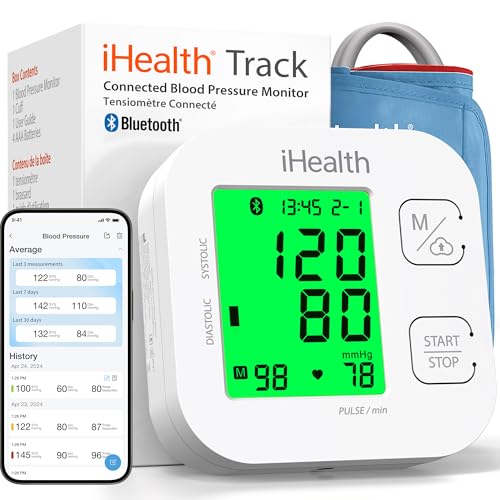 iHealth Track Smart Upper Arm Blood Pressure Monitor1 Count (Pack of 1)3.9 x 3.9 x 1.6 inches1 poundsCheck on Amazon
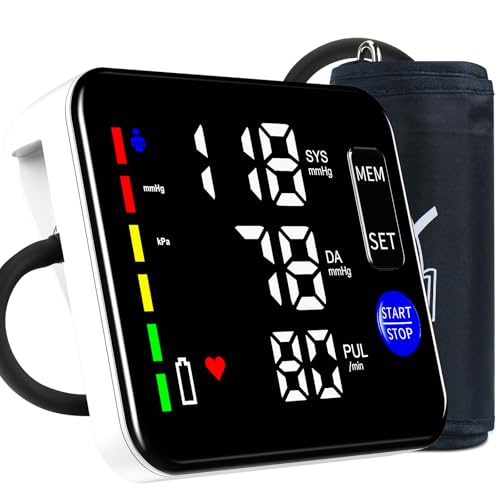
 Oklar FDA Cleared Blood Pressure Monitor Upper ArmLarge4.96 x 3.34 x 1.1 inches0.7 poundsCheck on Amazon
 BENECEN Blood Pressure Monitor FDA-Cleared Automatic BP CuffMedium3.35 x 0.93 x 2.68 inchesCheck on Amazon


What's inside
- Why people who train measure around workouts
- The shortlist at a glance
- The physiology, in plain terms
- How oscillometric measurement works, and why motion defeats it
- Upper arm versus wrist: the accuracy question
- Validation: the credential that actually matters
- Cuff sizing: the lifter’s problem
- Device-by-device profiles
- Apps, logging, and getting data out
- Building a measurement routine that survives a training week
- When a home pattern is a reason to talk to a clinician
- Irregular pulses, error codes, and readings that fail
- Looking after the instrument
- Check prices on Amazon
- Choosing, finally
As an Amazon Associate I earn from qualifying purchases. This post may contain affiliate links at no extra cost to you.
A blood pressure monitor is an unusual piece of training equipment. It does not count repetitions, measure pace, or record a single thing that happens during a workout itself, and yet for people who train regularly it can become one of the most informative devices they own, because the numbers that matter are the ones gathered quietly, at rest, across weeks and months. A lifter tracking whether a heavy training block coincides with a drift in morning readings, a runner returning to exercise after a break and wanting a tidy log to share at a routine appointment, a masters athlete who simply likes complete records: all of them need the same thing, which is a device that measures accurately when used correctly, and a routine that keeps the conditions of each measurement close enough together for the record to mean something.
Some of the links on this page are affiliate links, which means the site may receive a commission if you choose to buy through them. That arrangement never decides which devices appear here; the selection below follows published validation status, cuff range documentation, and manufacturer specifications.
Two boundaries frame everything that follows. First, this guide describes measurement technique and device characteristics in factual terms; it does not interpret anyone’s readings, and a pattern in a home log that raises questions belongs in a conversation with a clinician, who can place it alongside everything else they know about the person. Second, the honest headline about exercise and blood pressure measurement is that the useful measurements happen before and after training, seated and rested, not during it. Devices that promise meaningful blood pressure numbers in the middle of a set are promising something the underlying measurement method cannot deliver, for reasons the physiology section below explains in plain terms.
Why people who train measure around workouts
Regular exercise and resting blood pressure have a well-documented relationship in the public health literature, and many training programmes encourage participants to keep an eye on resting values as one marker among many. For the individual, though, the practical reasons to own a monitor are usually more concrete than population-level findings. A home log establishes a personal baseline: the typical morning range of a particular person, measured on the same arm, at the same time, in the same chair. Against that baseline, changes become visible that a single annual measurement at an appointment cannot show, such as the difference between a heavy training phase and a deload week, or the effect of a disrupted month of sleep.
Trainers also measure because structured programmes ask them to. Some coached plans include a resting measurement on waking as part of a readiness check alongside resting heart rate and perceived recovery. Some return-to-training pathways after illness or a long layoff involve home monitoring agreed with a clinician, with the log forming part of the review. In each case the value lies in consistency of method. A reading taken standing in a kitchen after carrying shopping upstairs and a reading taken seated after five quiet minutes are measurements of two different physiological moments, and a log that mixes them freely teaches its owner very little.
What this guide will not do is treat any single number as a verdict. Blood pressure varies across a day, across a week, and across seasons of training, and the standard guidance from hypertension societies is built around averages of repeated measurements for exactly that reason. The devices below are therefore judged as instruments for building a reliable average: how sound their validation record is, how well their cuff fits the arms of people who lift, how consistently they can be positioned, and how cleanly they export the log they collect.
The shortlist at a glance
| Device | Type | Cuff range note | Best suited to |
|---|---|---|---|
| Omron Evolv | Upper-arm, all-in-one | Wide-range cuff, 22 to 42 cm | Simple, validated home routine |
| Omron Platinum | Upper-arm, separate unit | Wide-range cuff, 22 to 42 cm | Detailed logging and morning averages |
| Garmin Index BPM | Upper-arm, all-in-one | Adjustable cuff, 22 to 42 cm | Athletes already logging in one ecosystem |
| Withings BPM Connect | Upper-arm, tube-free | Cuff covering 22 to 42 cm | Compact kit bags and travel |
| Withings BPM Core | Upper-arm with added sensors | Cuff covering 22 to 42 cm | Users wanting ECG and stethoscope features |
| QardioArm | Upper-arm, compact | Cuff covering 22 to 42 cm | Frequent travellers who train away |
| iHealth Track | Upper-arm, standalone | Standard and large cuff options | Low-cost entry with optional app sync |
| Omron HeartGuide | Wrist, watch-form | Rigid wrist cuff, sized by wrist | Position-guided wrist measurement |
Treat the table as a map of approaches rather than a ranking of equals. The upper-arm devices share the measurement site that validation protocols and clinical practice are built around, and they dominate this guide for that reason. The wrist entry is included because its design addresses the positioning problem head-on, and because some readers will only ever measure consistently with a device that lives on the wrist; a correctly positioned wrist measurement taken daily serves a log better than an upper-arm cuff that stays in a drawer. Cuff ranges are stated from manufacturer documentation and should be confirmed against the exact model revision before buying, since ranges and included cuff sizes change between production runs.
Readers who log training through a watch as well may want to compare ecosystems first; our roundup of best android smartwatches fitness trackers under 100 covers the budget end of that market and shows which platforms the monitors in this guide will sit alongside.
The physiology, in plain terms
Blood pressure is reported as two numbers. Systolic pressure is the peak in the arteries as the heart contracts and ejects blood; diastolic pressure is the lower value as the heart relaxes and refills. Both are expressed in millimetres of mercury, written mmHg, a unit inherited from the column instruments the earliest measurements used. At rest, in a seated person who has been quiet for several minutes, those numbers settle into the range a home log is designed to capture. During exertion, they do not sit still at all, and understanding why explains nearly every rule in this guide.
During dynamic exercise such as running or cycling, systolic pressure rises substantially as the heart pumps more blood per minute to working muscle, while diastolic pressure changes comparatively little or falls slightly as blood vessels in active muscle dilate. During heavy resistance exercise the picture sharpens further: a hard set, particularly one involving straining against a closed airway, can drive systolic pressure to very high transient peaks that fall again within moments of the set ending. These are normal physiological responses to effort, documented in exercise science literature for decades, and they are precisely why a reading captured mid-workout describes the effort, not the person. No home device worn or held during a set can separate the two, and none should be asked to.
Post-exercise hypotension and the timing trap
After exercise ends, a second phenomenon complicates scheduling. Post-exercise hypotension is the tendency for blood pressure to sit below its pre-exercise baseline for a period after a session, as vessels in previously active muscle remain dilated and blood volume redistributes. The effect is well documented after endurance exercise and appears after resistance sessions as well, with a duration measured in tens of minutes and, in some studies, longer. For the home logger this creates a simple trap: a reading taken twenty minutes after a run and a reading taken before breakfast on a rest day are not samples of the same state, and a log that mixes them will show a scatter that looks like instability in the person when it is actually instability in the method.
The remedy is scheduling, not equipment. Standard measurement guidance calls for a seated rest of at least five minutes before a reading, no exercise in the period immediately beforehand, and a consistent time of day so that the log compares like with like. Most home routines settle on the morning, before training and before the day’s first coffee, because that slot is the easiest to keep identical across a training week that includes early sessions, evening sessions, and rest days. The routine section near the end of this guide turns these principles into a step-by-step sequence.
How oscillometric measurement works, and why motion defeats it
Nearly every automated home monitor, upper-arm or wrist, uses the oscillometric method. The cuff inflates until it briefly stops blood flow in the artery beneath it, then deflates in a controlled way while a pressure sensor records the small oscillations in cuff pressure caused by each pulse. The point of maximum oscillation corresponds closely to mean arterial pressure, and the device then estimates systolic and diastolic values from the shape of the oscillation envelope using a proprietary algorithm. Two consequences follow from that design, and both matter to people who train.
The first consequence is that the algorithm is part of the instrument. Two devices with identical cuffs and sensors can report different values from the same arm because their estimation methods differ, which is why independent validation of the complete device, algorithm included, is the meaningful credential, and why the validation section of this guide carries so much weight. The second consequence is that the method depends on a clean pulse signal. Movement of the arm, talking, muscle tension in the limb being measured, and the irregular vibration of exercise all contaminate the oscillation record. A device measuring a tensed, working arm is not producing a slightly noisy version of a resting reading; it is producing a number whose relationship to any standardised measurement is unknown.
What this means for wearable blood pressure estimates
Smartwatches and fitness bands now offer blood pressure features, and athletic buyers are their natural audience, so the limits deserve a direct account. Some watches estimate pressure from pulse transit timing or pulse wave shape, measured optically at the wrist. These are estimates derived from a signal that correlates with pressure rather than a measurement of pressure itself, and the designs that take the task seriously require periodic calibration against a cuff device, because the relationship between the optical signal and actual pressure drifts as vessels, hydration, and temperature change. Between calibrations, movement, wrist position, strap tightness, and skin contact all move the estimate.
None of that makes a wearable useless. Worn consistently, a watch that tracks resting heart rate, sleep, and activity gives training context that a cuff cannot, and its pressure estimate, treated as a rough trend line rather than a measurement, may prompt its owner to take a proper cuff reading. What it cannot do is replace the cuff for a log that will be discussed with a clinician, or satisfy a monitoring plan that specifies validated measurements. Readers comparing watch platforms for the training side of this picture will find our guide to best fitness and music smartwatches helpful, since it separates genuine training features from headline claims in the same spirit.
Upper arm versus wrist: the accuracy question
The upper arm is the reference site for blood pressure measurement. The brachial artery there is large, the cuff technology is mature, the validation literature is deep, and the artery sits at roughly heart level when the arm rests supported on a table, which removes the largest positioning variable. When hypertension societies and validated-device registries discuss home measurement, the default mental image is an upper-arm cuff used seated, and the devices with the longest validation records are upper-arm designs. For a person buying one monitor to serve for years, that default is the right starting point and, for most, the right finishing point too.
Wrist devices measure at the radial artery, a smaller vessel further from the heart, and their readings are far more sensitive to position. Hydrostatic pressure is the reason, and it is simple physics: a column of blood between heart and cuff adds or subtracts pressure according to the height difference. A wrist resting in a lap, well below heart level, will read higher than the same wrist held at heart level; a wrist raised above the heart reads lower. The difference across a plausible range of lazy positions is large enough to swamp the changes a training log exists to detect. Wrist measurement therefore comes with a rule that cannot be negotiated: the wrist must be supported at heart level, every time, in the same posture.
Who wrist devices genuinely suit
There are real cases for the wrist. Some upper arms, particularly very large or very conical ones shaped by years of lifting, are genuinely difficult to fit with a standard cuff, and a poorly fitting upper-arm cuff is its own source of error. Some people have medical reasons, discussed with their clinician, to avoid upper-arm compression on a given side. Some travellers will measure daily with a watch-form device and sporadically with a suitcase cuff, and consistency has a value of its own. The HeartGuide design answers the positioning problem with a rigid cuff structure and on-screen position guidance that coaches the wrist to heart level before inflating, which is the most thoughtful engineering response to the wrist problem in a consumer device. A buyer choosing the wrist route should choose that kind of design deliberately, understand the heart-level rule as the price of admission, and confirm the device’s validation listing like any other.
Validation: the credential that actually matters
A blood pressure monitor can be sold with impressive industrial design, a polished app, and accuracy claims in its marketing, yet none of that establishes that its numbers agree with a reference standard. Validation does. The relevant framework is the AAMI, ESH and ISO collaboration that produced the ISO 81060-2 standard, a universal protocol under which a device is compared against trained observers using a reference instrument, across a defined population with specified arm sizes and pressure ranges, and must meet set criteria for the average difference and its spread. Earlier national and society protocols have largely converged on this standard, and when a registry lists a device as validated, this family of protocols is what the listing refers to.
Public registries make this checkable by anyone. Independent listings maintained by hypertension organisations compile devices with published validation evidence, and professional bodies in several countries maintain their own recommended lists for clinical and home use. The buyer’s task is unglamorous and decisive: find the exact model, including its generation, on such a registry before purchase. Manufacturers revise internals under familiar names, and a validation earned by one generation does not automatically transfer to a successor with a different algorithm. A device absent from every registry is not necessarily inaccurate, but its accuracy is unestablished, and for a purchase whose entire purpose is trustworthy numbers, unestablished should be treated as a failing grade.
Reading a validation claim like a sceptic
Packaging language rewards close reading. Phrases that a device uses clinically validated technology, or was developed with hospitals, or meets accuracy standards, are not the same claim as the device itself having passed a published validation protocol. Clearance or registration as a medical device in a given market addresses safety and manufacturing oversight, and in some jurisdictions a substantial-equivalence pathway can bring a device to market by comparison with an earlier one rather than by fresh validation. None of these routes is improper; they simply answer different questions from the one a buyer is asking. The question is whether this model, in this generation, appears on an independent validated list with a citable study behind it. Every upper-arm device in the shortlist was selected with that question in mind, and buyers comparing alternatives beyond this guide should apply the same filter before comparing prices, apps, or colours.
Cuff sizing: the lifter’s problem
Cuff fit is the most common source of systematic error in home measurement, and people who train meet it sooner than most. An inflatable bladder that is too small for the arm must be inflated to higher pressure to occlude the artery and tends to overestimate the reading; a bladder far too large tends to underestimate, generally by less. Either way the error is consistent, which makes it dangerous in a log, because it does not look like noise. It looks like a stable personal range that happens to be wrong, and it will shift the day the owner changes device or cuff, producing an apparent change in the person that is actually a change in the instrument.
The measurement that settles fit takes a tape and thirty seconds. Wrap it around the midpoint of the upper arm, halfway between shoulder and elbow, with the arm relaxed, and note the circumference in centimetres. Then compare that number with the cuff range printed for the device, which for the wide-range cuffs in this shortlist typically spans 22 to 42 cm. The arm’s measurement should sit comfortably inside the range rather than at its very edge, because conical arms, common where a developed biceps meets a narrower point above the elbow, seat a cylindrical cuff unevenly even when the tape number looks safe. Several manufacturers offer separate large cuffs extending beyond 42 cm, and a lifter whose arm measures near or past that boundary should treat the large cuff as part of the purchase rather than an accessory to consider later.
Fitting the cuff on the day
Documentation for every device in this guide repeats the same fitting instructions, because they are where accuracy is won or lost. The cuff goes on bare skin, not over a training top sleeve, since fabric bunches unevenly under pressure. Its lower edge sits a short distance above the elbow crease, with the artery marker or tube line over the inner arm where the brachial artery runs. It should be snug enough that two fingertips can slide under its edge and no more, and the arm then rests supported on a table, palm relaxed, rather than hanging or holding the cuff in place. A cuff applied over a pumped arm straight after a session, on a limb that is warm, engorged, and larger than its resting size, fails both the fit test and the timing test at once, which is one more reason the routine in this guide places measurement before training rather than after it.
For readers whose training is built around outdoor and multi-sport watches rather than gym sessions, our comparison of best activity smartwatches covers the tracking side, and the same cuff-first logic applies regardless of which watch records the workout.
Device-by-device profiles
Omron Evolv
The Evolv folds the cuff, the pump, and the display into a single unit that wraps the upper arm with no tubes and no separate console, and that integration is its whole argument. There is nothing to connect wrongly, nothing to knock off a table, and the wide-range cuff documented for 22 to 42 cm arms covers most adults, including many lifters, without a separate purchase. Its validation record is part of the reason it anchors this shortlist: the model appears in independent validated listings, and its manufacturer documentation is unusually clear about positioning and fit. Results sync by Bluetooth to the companion app, where they can be reviewed as trends and exported.
The integrated design carries two trade-offs worth naming. The display sits on the arm itself, which some users find less convenient to read mid-measurement than a tabletop unit, though reading during inflation is discouraged anyway since the arm should be still and relaxed. And because everything is in the cuff unit, a failed cuff means a failed device rather than a replaceable part. For a buyer who wants the fewest possible steps between deciding to measure and having a trustworthy number stored, those are acceptable terms, and the Evolv is the device this guide would hand to a training partner who asked for one simple recommendation.
Omron Platinum
The Platinum takes the conventional layout, a separate console joined to the cuff by a tube, and aims it at the detailed logger. Its documented features include storage for multiple users, averaging of recent readings, and a morning hypertension indicator in its display logic, along with the same wide cuff range as its sibling. The console format suits a fixed measuring station: the same chair, the same table, the device living where the routine happens rather than travelling in a gym bag. Bluetooth sync carries readings into the app for longer trend views and export, and the console’s own memory means a missed sync loses nothing.
Buyers should note that feature sets and included cuffs vary between markets and production periods for this class of device, so the validation listing and cuff range should be matched to the exact variant on offer. Within those checks, the Platinum suits the person who treats the log itself as the product: someone building months of morning averages to review alongside a training diary, possibly at a clinician’s request, who wants the averaging and storage handled by the device rather than by a spreadsheet maintained by hand.
Garmin Index BPM
Garmin’s Index BPM exists for one clear reason: a large population of athletes already keeps its training life inside a single platform, and a blood pressure log that lands in the same place as workouts, sleep, and resting heart rate is more likely to be kept and reviewed than one stranded in a separate app. The device itself is an all-in-one upper-arm design with an adjustable cuff documented across the usual wide range, a clear display on the unit, and sync over Wi-Fi and Bluetooth into the platform’s health record, where readings appear beside the rest of the wearer’s data.
Its validation status should be checked against the registries like any other device, and buyers outside the Garmin ecosystem gain less from it, since the premium in its positioning buys integration they will not use. For the committed platform user, though, the integration is not a gimmick. Patterns are easier to see when the log of a hard training block, a poor week of sleep, and the morning measurements share one timeline, and the device removes the export step entirely. It is the clearest example in this guide of choosing the ecosystem as the feature, provided the underlying instrument passes the same validation and cuff checks as its rivals.
Withings BPM Connect
The BPM Connect is the traveller’s upper-arm monitor: a tube-free unit that rolls around its own body, charges over USB, and is small enough to live permanently in a wash bag or a corner of a kit bag without resenting the space. It displays the result on the device itself in a simple LED readout, stores readings when out of phone range, and syncs when it next meets the app, over Wi-Fi as well as Bluetooth, which means a hotel room measurement can reach the log without the phone being present at all. Its cuff covers the standard wide range, and the model carries published validation behind it.
Its simplicity is deliberate and defines its limits. There is no multi-user console experience and no elaborate on-device averaging display; the intelligence lives in the app, where trends and exports are handled. For a lifter who trains at home it offers no advantage over a console unit, but for a runner whose training involves race travel, or a lifter whose work takes them away weekly, it solves the actual problem, which is that a routine survives travel only if the instrument travels too.
Withings BPM Core
The BPM Core extends the Connect concept with additional sensors in the same tube-free form: a digital stethoscope surface and electrodes that add single-lead ECG recording and heart sound capture to the blood pressure function. Those additions place it in a different category of purchase, aimed at users whose clinician has suggested keeping an eye on rhythm alongside pressure, or who have a specific reason to want the extra data streams in one device and one app. The blood pressure side follows the same oscillometric method and cuff principles as everything else in this guide, and the same validation check applies to it independently of its extra features.
The caution is about purpose rather than quality. Extra sensors cost money and add steps to each session, and a buyer whose need is a clean pressure log gains nothing from them except a longer routine that is slightly harder to keep daily. The Core earns its place here for the narrower audience it serves well, and it illustrates a general rule for this category: buy the instrument that matches the monitoring task actually in front of you, not the one with the longest feature list, because adherence to a simple routine beats ownership of an elaborate one.
QardioArm
The QardioArm is another compact upper-arm design, built around portability and an app-first experience, with a cuff that wraps the unit for storage and a form small enough for daily carrying. Its app emphasises sharing, including options to send readings to a nominated contact or to export summaries in formats intended for a clinician’s inbox, which suits people whose monitoring is part of an agreed plan with regular review. Multi-user support through separate accounts and location tagging of readings are thoughtful touches for a log kept across home, office, and travel.
As with every device here, the deciding checks come first: confirm the current model’s presence on a validated registry and the cuff range against your own arm measurement, since compact designs historically shipped with narrower ranges in some variants. Where those checks pass, the QardioArm is a legitimate alternative for the app-centred buyer, and its emphasis on sharing reflects a truth about home monitoring generally, which is that a log nobody reviews is only half finished.
iHealth Track
The Track represents the standalone end of the market: a straightforward upper-arm monitor with a clear display, onboard memory, colour-coded result indication against standard reference bands, and optional app connection rather than dependence on it. That independence is a genuine feature for some buyers. A parent who trains, a household where the phone is not always nearby, or a user who simply prefers a device that works fully the moment it is switched on will find the format honest and sufficient, and the availability of a large cuff option extends its reach to bigger arms at modest cost.
The checks matter most exactly here, at the budget end. Validation status varies across the many models sold in this tier under many names, and the buyer should verify this specific model’s registry position and study quality before trusting its log, however attractive the price or tidy the display. A validated budget device used daily is a better instrument than an unvalidated premium one, and a better instrument than a validated one left unused, so the tier is not the problem; unverified claims within the tier are.
Omron HeartGuide
The HeartGuide is the wrist exception that this guide includes on the strength of its engineering intent. Built in the form of a watch, it uses an inflatable band with a rigid structure that holds its shape around the wrist, and its measurement flow actively guides positioning, prompting the wearer to bring the wrist to heart level before it will proceed. That guidance addresses the wrist category’s central weakness directly, and the device carries validation work behind its design that most fashion-led wearable pressure features do not attempt. It also functions as a watch with activity and sleep tracking, which for some owners is what makes daily measurement a habit rather than an event.
Its constraints are equally clear. Wrist sizing must be matched carefully, since the rigid band comes in sizes and a poor fit undermines the design. The heart-level discipline remains the wearer’s responsibility in every measurement, guided or not. And a buyer whose clinician has specified upper-arm measurement should follow that specification. Within its brief, though, the HeartGuide is the most defensible answer to the person who says, realistically, that a wrist device is the one they will actually use every morning.
Athletes who split their year between gym blocks and trail seasons may also want to look at our selection of best adventure fit smartwatches, since the watch that records the expedition and the cuff that records the recovery answer different questions and pair well.
Apps, logging, and getting data out
A monitor’s app decides whether a log becomes an asset or a chore. The functions that matter are few and specific. Automatic sync without manual entry, because hand-typed logs decay within a fortnight for almost everyone. A trend view that shows averages over weeks rather than celebrating or alarming over single readings, since averages are the unit that standard guidance is built on. Storage that survives a phone change, which means an account or a reliable export. And export itself, in an open format such as a spreadsheet file or a printable summary, because a log that cannot leave its app cannot be handed to a clinician, a coach working within an agreed plan, or the owner’s own training diary.
Multi-user handling deserves attention in households where two people train and measure. Devices that keep separate profiles, whether on the console or through separate app accounts, prevent the quiet corruption of two people’s data merging into one meaningless average. Timestamps deserve a check too: a device that records the time of each reading automatically allows the routine to be audited, revealing whether the morning slot has drifted to after coffee across a busy month. Notes fields, where offered, are best used sparingly and factually, recording context such as a poor night’s sleep or a session the previous evening, rather than interpretations of the numbers themselves.
Keeping the blood pressure log beside the training log
The most useful context for a resting measurement is the training record around it, and the practical question is how the two meet. Platform devices such as the Index BPM solve this by residence, placing readings in the same system as workouts. For everyone else, a weekly export habit works: readings summarised into the same diary or spreadsheet that holds training load, resting heart rate, and sleep, one line per week rather than a daily data project. The weekly rhythm matters because it matches the timescale on which resting values meaningfully change, and it protects the owner from the least useful habit in home monitoring, which is reacting to individual readings. A log reviewed weekly, as averages, in context, is an instrument of patience, and patience is what separates monitoring from rumination.
Building a measurement routine that survives a training week
Standard guidance from hypertension societies converges on a sequence that is easy to state and worth following exactly, because every step removes a known source of variation. Measure at the same time each day, with the morning before training, food, and caffeine being the slot most routines adopt; guidance also advises avoiding caffeine, exercise, and smoking in the thirty minutes before a measurement, and emptying the bladder first. Sit in a chair with the back supported, feet flat on the floor, legs uncrossed, and rest quietly for at least five minutes before the first reading. Talking during the rest and the measurement both count as disturbances and should be set aside along with the phone.
Fit the cuff on the same arm each time, the arm specified when the routine was established, since readings between arms can differ and consistency matters more than the choice itself. Rest the arm supported on a table so the cuff sits at heart level, relax the hand, and let the device work without watching the numbers form. Take at least two readings, a minute or two apart, and record them both rather than selecting the preferred one; many devices automate this with an averaging mode, which is the better option where available. A routine built this way takes under ten minutes, and its very plainness is the point: the less a measurement session varies, the more any genuine change in the averages stands out against the background.
- Same time daily, ideally morning before training, food, or caffeine
- No exercise, caffeine, or smoking in the thirty minutes beforehand
- Bladder emptied, then five minutes seated quietly before starting
- Back supported, feet flat, legs uncrossed, no talking during readings
- Cuff on bare skin of the same arm, arm supported at heart level
- Two readings a minute apart, both recorded, or device averaging used
- Log reviewed as weekly averages, never reacted to reading by reading
Making the routine stick during heavy training blocks
Adherence fails for predictable reasons: the device lives in a different room from the chair, the routine competes with an early session, or travel breaks the chain and the chain is never repaired. The countermeasures are environmental rather than motivational. Keep the monitor, the chair, and the log in one place, ideally where the morning already begins. Attach the measurement to an existing anchor, such as the minutes while a kettle boils after the rest period has been observed, rather than to a resolution. During travel, carry the compact device or accept a defined pause and resume on return without attempting to reconstruct the missing days. During the heaviest training weeks, when mornings are least orderly, protect the routine by simplifying everything around it, because those weeks are precisely when a consistent log has the most context to offer later.
When a home pattern is a reason to talk to a clinician
This guide’s role ends at measurement, and its final responsibility is to be clear about where interpretation lives. A home log can show patterns: averages that sit persistently in a range the owner did not expect, a sustained change from an established personal baseline across several weeks of consistent measurement, or readings that arrive with symptoms such as headaches, dizziness, chest discomfort, or breathlessness. Each of those is a reason to contact a clinician and share the log, promptly in the case of symptoms, and none of them is a prompt to adjust medication, begin medication, or redesign a training programme around a home interpretation. Medication decisions in particular belong entirely to the clinician who prescribed, with the full picture in front of them.
Bringing the device itself to an appointment is a practical step that clinicians commonly welcome, because a reading taken on the home device in the clinic can be compared with the clinic’s own measurement, confirming that the home log rests on a trustworthy instrument. Bring the cuff size used, the routine followed, and the exported log rather than a phone full of screenshots. That conversation, held with real data gathered consistently, is what the entire apparatus of this guide exists to make possible: the validated device, the correctly sized cuff, the rested and seated routine, and the patience to review averages rather than moments.
Irregular pulses, error codes, and readings that fail
Oscillometric devices assume a reasonably regular pulse, because the algorithm reads the pattern of oscillations beat by beat as cuff pressure falls. When the rhythm is irregular, the pattern becomes harder to interpret, and many devices respond with an irregular heartbeat symbol or an error rather than a number. That symbol is a detection notice, not a diagnosis: it records that the pulse pattern during that measurement looked irregular to the device’s algorithm, which can also happen because the wearer moved, talked, or had the cuff fitted loosely. A single appearance carries little information. A symbol that appears repeatedly, across properly taken measurements on different days, is one of the patterns worth mentioning to a clinician, who can assess rhythm with appropriate instruments.
Failed measurements have their own etiquette. An error code usually means the device could not find a clean oscillation pattern, and the correct response is to check the ordinary causes first: cuff position and snugness, arm support, stillness, and a minute of quiet before trying again. Repeatedly inflating the cuff in quick succession is counterproductive, because the arm itself changes under repeated compression and the readings that follow a string of attempts describe an irritated limb rather than a rested person. Device manuals list their own error codes with specific remedies, and a code that persists after fit and posture are corrected, on a device that previously worked, points toward a hardware or cuff problem rather than a problem with the wearer.
Arm shape, muscle, and the conical arm problem in detail
Lifters meet a fitting subtlety that general guides mention only briefly. A developed upper arm is often markedly conical: broad at the midpoint where the tape is taken and narrowing quickly toward the elbow. A standard cylindrical cuff applied to a cone migrates toward the narrow end as it inflates and grips unevenly, tight at one edge and loose at the other, which distorts the pressure it transmits to the artery. Some manufacturers offer contoured or pre-shaped cuffs that follow a tapered arm more faithfully, and rigid or semi-rigid cuff structures in several of the devices profiled above exist partly for this reason. The practical checks are simple: the cuff should stay where it was placed through a full inflation without sliding, its lower edge should sit evenly all the way around the arm rather than flaring at the back, and the fit should feel uniform. A lifter whose readings jump when the cuff is refitted, yet settle when a contoured cuff is used carefully, has learned something about instruments rather than about their own circulation.
Looking after the instrument
A monitor is a measuring instrument with a finite service life, and its accuracy at year five depends on treatment that begins at purchase. The cuff and its bladder are the wearing parts. Repeated folding along the same crease, storage in a hot car, and exposure to chalk dust in a home gym all age the materials, and a bladder that develops a slow leak announces itself through longer inflation times and eventual error codes. Manufacturers sell replacement cuffs for their major models, and replacing a tired cuff restores the fit the validation assumed. Keeping the original cuff size when replacing matters, since the algorithm’s expectations are tied to the cuff geometry it was validated with.
Batteries and power sound trivial until a log develops gaps. A device running on weakening batteries may complete measurements while its pump works harder to reach target pressure, and several manufacturers advise that readings taken on nearly exhausted batteries be treated with suspicion. Mains adapters, where offered, remove the variable for a fixed measuring station. Accuracy checks form the final piece of maintenance: some manufacturers and biomedical services can compare a device against a reference instrument, and the appointment comparison described earlier, home device against clinic measurement in the same sitting, gives every owner a periodic sanity check without any special equipment. A device that drifts far from the clinic comparison, or that begins producing implausible variation between consecutive readings taken a minute apart, has given its owner information too, and the information is that it is time to service or replace it.
A sample week, and what a good log actually looks like
Consider a recreational lifter training on Monday, Wednesday, and Friday evenings, with a conditioning session on Saturday. A workable pattern places measurement on waking each day, before food and caffeine, after the seated rest, using two readings averaged by the device. Rest days and training days alike are measured, because the comparison between them across several weeks is where context accumulates. The log records the averaged values, a brief factual note where the day genuinely differed, such as short sleep or travel, and nothing else. At the week’s end the owner glances at the average for the week rather than at any single morning, and files the export beside the training record.
Across a twelve-week training block, that modest habit produces a document with real texture: weekly averages that can be laid beside training load, body mass changes, and sleep quality, and discussed intelligently with anyone helping to steer the programme. It also produces something less obvious, which is calibration of the owner’s own expectations. People who measure this way learn the ordinary size of their own day-to-day variation, and that knowledge is the strongest protection against over-reacting to a single unusual number, because they have seen unusual numbers arrive and depart within an otherwise steady record many times before.
Temperature, season, and other honest sources of variation
A consistent routine removes the variation a logger can control, and what remains is worth understanding so it is not mistaken for error. Readings taken in a cold room, with the arm exposed and the body still adjusting after coming in from winter air, tend to differ from readings taken in a warm room at the height of summer, and population studies have long noted seasonal patterns in resting values. A hard evening session can still be present in the following morning’s physiology through fatigue and incomplete recovery, which is context rather than malfunction. Even the social shape of a week leaves a trace: measurements on a quiet Sunday morning and measurements grabbed before a rushed commute are different events wearing the same label, which is why the routine fixes the slot and why notes about genuinely unusual mornings are worth the ten seconds they take to record.
None of this variation invalidates the log. It defines the resolution of the instrument the owner has actually built, which is a person, a cuff, a chair, and a habit, taken together. Weekly averages absorb most of it, monthly averages nearly all of it, and the trends that survive that averaging are the ones worth attention. A logger who understands this stops asking the device for a precision it never promised and starts getting the steady, comparable record it was designed to give.
Check prices on Amazon
Live listings for the shortlist in this guide are pulled from Amazon below, so prices and availability are always current at the moment you look.


Choosing, finally
For most people who train, the decision resolves into a short sequence. Start with an upper-arm device whose exact model appears on an independent validated registry. Measure your arm and buy the cuff that fits it properly, including a large cuff where the tape says one is needed. Prefer the format that matches your life: an all-in-one unit for simplicity, a console for a fixed measuring station and detailed onboard averaging, a platform device when your training already lives in that platform, or a compact traveller when your routine must survive hotels. Reserve the wrist route for the cases it genuinely suits, and choose a design that guides positioning if you take it.
Everything after the purchase is routine, and routine is where the value accumulates. A modest device used identically every morning for a year teaches its owner more than a flagship used enthusiastically for a fortnight, and a log kept that way becomes a document worth sharing at any appointment where training and health are discussed together. Measure rested, measure consistently, review averages, and let questions raised by the pattern travel to the person qualified to answer them.
Ten quiet minutes in the same chair each morning will tell a training life more truth than any number grabbed in the heat of a workout ever could.
Related guides
- Best 25–35 Inch Monitors With Lowest Display Lag: An Honest Ranking Without Invented Numbers
- Best 1440p 165Hz Monitors: One Native 165Hz Pick, Three 180Hz Upgrades, an Overclock Headline and a 160Hz Ultrawide
- Best 24 Inch Monitors
- Best Senior Monitors: Bigger Text, Honest Eye-Care Claims and Six Comfortable Picks


