Our Top Picks
 Zacurate 500 Series Fingertip Pulse Oximeter Blood Oxygen1 Count (Pack of 1)2.25 x 1.25 x 1.25 inches0.2 poundsCheck on Amazon
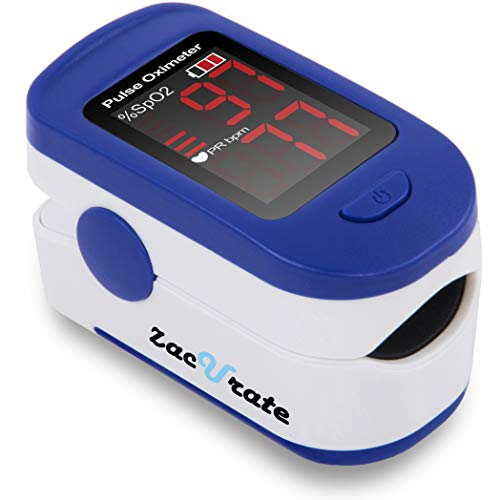 Zacurate 500BL Fingertip Pulse Oximeter Blood Oxygen Saturation1 Count (Pack of 1)2.1 x 1.1 x 1.3 inches4 ouncesCheck on Amazon
 Healthtree JKS50B Pulse Oximeter Fingertip2.25 x 1.2 x 1.25 inches2.25 x 1.2 x 1.25 inchesCheck on Amazon
 Innovo Deluxe iP900AP Fingertip Pulse Oximeter Blood Oxygen1 Count (Pack of 1)2.5 x 1.35 x 1.25 inchesCheck on Amazon


What's inside
- How a fingertip oximeter actually measures oxygen
- What the accuracy claim really promises
- Perfusion index, cold hands and the enemies of a clean signal
- Displays, orientation and everyday readability
- Medical clearance, wellness labelling and what the distinction means
- Use cases, handled carefully
- Fit, finger size and sensor placement
- Battery behaviour and automatic shutdown
- Logging models, Bluetooth and phone applications
- A practical method for taking a reading worth trusting
- Buying checks before choosing a model
- How averaging, response time and sampling shape what you see
- Comparing a fingertip reading with other devices in the home
- Check prices on Amazon
- Ownership details that decide whether a device lasts
As an Amazon Associate I earn from qualifying purchases. This post may contain affiliate links at no extra cost to you.
This guide is reader-supported, which means purchases made through links on this page may earn a commission that helps fund the research and writing behind it, at no extra cost to the reader. That support never decides which models are described favourably, which limitations are spelled out, or which buying checks are recommended, and every specification discussed here can be verified against manufacturer documentation and published clinical references.
A fingertip pulse oximeter is a small clamp that estimates two numbers that would otherwise need a blood sample or a far larger machine: the percentage of haemoglobin in arterial blood that is carrying oxygen, and the pulse rate at which that blood is moving. It does both without a needle, in a few seconds, through the skin of a fingertip. That convenience explains why the devices sit in bathroom cabinets, gym bags, mountain kits and the bedside drawers of people managing long-term respiratory conditions. Convenience, however, is not the same as certainty, and the gap between what the display shows and what the number actually means is where most buying mistakes happen.
Choosing well therefore starts with understanding rather than with a shortlist. Two oximeters can look identical, quote the same accuracy figure in the same size type, and behave very differently on cold hands, on a small finger, or on a wearer who cannot keep still. The sections that follow work through the sensing method, the meaning and limits of the accuracy claim, the signal-quality indicators that tell you whether to trust a reading at all, and the practical differences in displays, fit, power and data handling that separate a dependable spot-check tool from a frustrating one.
How a fingertip oximeter actually measures oxygen
The sensing method is called photoplethysmography, and it rests on a simple optical fact: oxygenated and deoxygenated haemoglobin absorb light differently. Inside the clamp, two light-emitting diodes shine through the finger. One emits red light at a wavelength near 660 nanometres, which deoxygenated haemoglobin absorbs more strongly. The other emits infrared light near 940 nanometres, which oxygenated haemoglobin absorbs more strongly. A photodetector on the opposite side of the finger measures how much of each wavelength gets through, many times per second.
If that were the whole story, the device would mostly be measuring skin, bone, venous blood and tissue, none of which change from beat to beat. The clever step is that the oximeter isolates the part of the signal that pulses. With each heartbeat, a surge of arterial blood enters the finger and briefly increases the volume of blood in the optical path, so absorption rises and falls in rhythm. Engineers call the pulsing part the AC component and the steady background the DC component. By comparing the AC-to-DC ratio for red light with the same ratio for infrared light, the device produces a value known as the ratio of ratios.
That ratio is then mapped to an oxygen saturation figure using a calibration curve. The curve is not derived from physics alone; it was built empirically, historically by comparing oximeter ratios against laboratory analysis of arterial blood samples taken from volunteers breathing controlled gas mixtures. This origin matters for buyers, because it explains why accuracy is quoted only across a defined range, why different manufacturers can produce slightly different curves, and why a reading is properly described as an estimate of arterial saturation rather than a direct measurement of it.
The same pulsing signal yields the pulse rate. The device counts the peaks in the waveform, averages them over a short window, and displays beats per minute. It also produces, on many models, a drawn waveform called the plethysmograph, which traces the rise and fall of blood volume across each beat. That trace is far more informative than its decorative appearance suggests, and a later section explains how to read it as a quality check on everything else the screen claims.
Why two wavelengths are enough, and where they struggle
Two wavelengths suffice because the absorption behaviour of the two forms of haemoglobin crosses over in a predictable way across the red and infrared bands. As saturation falls, red absorption by the blood rises relative to infrared, and the ratio shifts in a direction the calibration curve can interpret. The method struggles when something else in the optical path absorbs light in a similar pattern. Certain nail coatings, discussed below, are the everyday example. Less commonly, abnormal haemoglobin variants can distort the relationship, which is one reason clinicians treat a surprising oximeter value as a prompt for a blood test rather than as a verdict.
It also struggles when the pulsing component is tiny compared with the background. If very little arterial blood is reaching the fingertip, the AC component shrinks toward the level of electronic noise, and the ratio becomes unstable. Manufacturers address this with amplification, filtering and signal-averaging algorithms, and the quality of that processing is a genuine differentiator between models that share the same headline specification. It is also invisible on a specification sheet, which is why the signal-quality indicators described later deserve more attention than the marketing summary.
What the accuracy claim really promises
Most reputable fingertip oximeters quote accuracy as plus or minus two percentage points across a saturation range of seventy to one hundred percent. That phrasing is easy to misread. It does not mean every reading is within two points of the truth. In the underlying standards work, the figure is a statistical measure, broadly the root-mean-square difference between oximeter readings and reference blood measurements across many paired observations. Individual readings can fall outside the band even when a device meets its claim, and roughly a third of observations may sit beyond one standard spread by the nature of the distribution.
For home use, the practical translation is this: a reading of ninety-six could correspond to a true value a couple of points either side, and small differences between consecutive readings are usually noise rather than change. What the device is genuinely good at is showing a stable level and revealing a meaningful trend. A wearer whose readings sit consistently in the high nineties and then settle in the low nineties across repeated, well-taken measurements is seeing something worth attention. A single point of difference between morning and evening is not.
Below seventy percent saturation, quoted accuracy generally does not apply at all. The calibration data become sparse at those levels for ethical reasons, since deliberately holding volunteers at very low saturation carries risk, so manufacturers extrapolate rather than measure. Displays will still show numbers in the sixties and below, and those numbers correctly signal that saturation is low, but their precise value should not be relied on. Anyone whose device repeatedly shows readings in that territory needs urgent medical assessment, not a more expensive oximeter.
Accuracy in the real world versus the laboratory
Laboratory validation happens under controlled conditions: warm hands, still subjects, trained operators, and a reference standard drawn from arterial blood. Home conditions differ in almost every respect. Fingers are cold from coming indoors. The wearer talks, shifts in a chair, or holds the hand below heart level. Light leaks around a poorly seated finger. Each factor adds error on top of the headline figure, so a sensible buyer treats the quoted accuracy as a best-case property of the sensor system and treats technique as the variable they actually control.
Research literature has also examined whether accuracy varies across populations, including work on skin pigmentation and on low-perfusion states, and regulatory bodies in several countries have revisited guidance in response. The balanced conclusion for a home buyer is not that the devices are unreliable, but that readings near a threshold that matters should be repeated carefully, compared against how the person feels and breathes, and discussed with a clinician who knows the individual. A number that disagrees sharply with obvious symptoms should never be waved away because a screen printed it.
Pulse-rate accuracy is usually quoted separately, often as plus or minus two beats per minute or a small percentage across a stated range. It tends to be more robust than the saturation figure because counting peaks is simpler than resolving a ratio, but it degrades when the waveform is irregular or weak. People comparing an oximeter pulse reading with a watch or a phone app should expect small differences from averaging windows alone, since each device smooths over a different span of beats.
Perfusion index, cold hands and the enemies of a clean signal
Many mid-range and premium fingertip models display a perfusion index, usually abbreviated to PI, expressed as a percentage. It represents the strength of the pulsing arterial signal relative to the steady background signal at the sensor site. A warm, well-supplied finger might show a value of several percent. A cold or poorly perfused finger can show a fraction of one percent. There is no universal pass mark, because the scale depends on the manufacturer’s own processing, but within a single device the trend is informative: a rising PI after warming the hands means the sensor is seeing a stronger signal, and the saturation figure beside it deserves more confidence.
Low perfusion is the most common cause of the classic home oximetry frustrations: the device hunts for a reading, displays dashes, produces a number that jumps several points between attempts, or freezes on a stale value. Cold is the usual culprit, because the body narrows the small vessels in the fingers to conserve core heat. Raynaud-type responses, recent caffeine or nicotine, a tight ring left on the measured finger, and simply holding the hand in cold air during a winter walk can all produce the same effect. Warming the hands, resting the arm supported at roughly heart level, and waiting a minute before measuring resolves most of these episodes without any fault in the device.
Nail polish and artificial nails interfere by a different route. Dark blue, green and black coatings absorb red and infrared light in ways that can bias the ratio, and thick decorative nails can prevent the finger from seating fully between emitter and detector. Modern sensors tolerate some coatings better than older designs did, but the dependable advice remains to use an unpolished nail where possible, or to turn the finger sideways so the light path crosses the nail bed edge rather than the coating, a technique described in several manufacturer manuals. Henna and deeply stained skin from occupational dyes can have a smaller effect of the same kind.
Motion is the third enemy. The algorithm assumes that the only thing pulsing in the light path is arterial blood. Tapping, shivering, tremor or a child swinging an arm introduces rhythmic changes that the processor can mistake for pulse, corrupting both the rate and the ratio. Better devices include motion-resistant processing that cross-checks the optical signal against expected pulse patterns, and this is one area where paying for a model from a manufacturer with a genuine clinical product line tends to buy real engineering rather than decoration. For any model, the simplest improvement is stillness: rest the hand flat, keep the finger relaxed inside the clamp, and let the reading settle for ten to twenty seconds before recording it.
Reading the plethysmograph waveform
Where a model draws the plethysmograph, learn to glance at it before trusting the digits. A healthy trace shows a regular series of rounded peaks, evenly spaced, each rising briskly and falling with a slight shoulder on the downslope. Even spacing confirms the processor has locked onto a genuine pulse rhythm. A trace that wanders, doubles up, collapses into jagged noise or flattens while numbers still display is telling you the digits are being computed from a poor signal. Some models add a bar graph or a blinking heart symbol synchronised to each detected beat; the same logic applies, and a blink that matches the wearer’s felt pulse at the wrist is a reassuring cross-check.
People who already track heart rhythm with a watch sometimes compare the two traces, and readers comparing wearable options will find the discussion in best activity smartwatches useful for understanding what wrist-based optical sensors can and cannot show. The fingertip device remains the better tool for saturation, because its light passes through the finger rather than reflecting from skin, but both technologies share the same underlying photoplethysmography and many of the same weaknesses around motion and perfusion.
Displays, orientation and everyday readability
The cheapest oximeters use a simple LED display showing saturation and pulse rate in one fixed orientation. LED screens are bright and sip power, but they usually show nothing else: no waveform, no perfusion index, no battery gauge beyond a warning blink. OLED displays cost more and draw more power, yet they allow smaller text, drawn waveforms, colour coding and, most usefully, rotation. A multi-direction display that flips when the device is turned lets a wearer read their own finger comfortably and lets a carer read the same device from the opposite side without twisting it off the finger.
Colour deserves a sceptical note. Some models colour the saturation figure green, amber or red according to thresholds set by the manufacturer. That can help a quick glance, but the thresholds are not personalised, and a colour change at a boundary chosen by a factory should not be mistaken for a clinical judgement about an individual. Treat colour as a readability aid, not as an interpretation. Similarly, large digits help many users, particularly older wearers or anyone checking a reading at night, and a display that remains legible in bright daylight matters for outdoor and altitude use, where glare washes out dim screens.
Brightness adjustment and screen timeout settings are worth checking in the manual before purchase if the device will be used at night. A screen that blazes at full brightness in a dark bedroom is a minor annoyance that becomes a real one during repeated overnight spot checks. Conversely, a display that dims too aggressively outdoors is worse than a plain LED. Product photographs rarely convey either behaviour, so manual text and the specification of display type are the buyer’s best evidence.
Controls and alarms
Most fingertip units have a single button, and the interaction model is deliberately minimal: insert a finger and the device wakes, press the button to rotate the display or enter settings, remove the finger and it shuts down. Models with alarms add a layer of configuration, allowing high and low thresholds for saturation and pulse rate, with a beep or flashing alert when a reading crosses them. For a home spot-check device, alarms are optional. For someone monitoring a family member who may not notice a falling reading, or for overnight checks where the wearer is asleep, an audible alert has genuine value, provided its volume and its ability to be silenced are both sensible.
Buyers should confirm whether alarm settings persist between sessions or reset each time the device powers down. A threshold that silently returns to a factory default after every battery-saving shutdown is a feature that exists on paper only. Manuals usually state this behaviour plainly, and it is one of several small details, along with lanyard and case inclusion, gathered in the buying checks at the end of this guide.
Medical clearance, wellness labelling and what the distinction means
Fingertip oximeters reach the market under two broad kinds of labelling, and the difference is more than paperwork. A device sold as a medical device will have passed through the relevant regulatory route for its market: clearance or certification covering its stated accuracy claims, its intended population, and its manufacturing quality system. Its manual will name an intended use, list contraindications, and state the conditions under which its accuracy was validated. A device sold for general wellness, sport or aviation interest may carry no such clearance, may make vaguer claims, and may never have been validated against blood reference measurements at all.
For a buyer, the practical meaning is about evidence rather than prestige. A cleared device gives you a documented accuracy claim tied to a standard, a traceable manufacturer, and instructions that a regulator has reviewed. An uncleared device might use a similar sensor and perform respectably, but you have only the seller’s word for that. When the readings will inform conversations with a clinician, or when a household is monitoring a diagnosed condition on professional advice, the cleared category is the defensible choice. When the use is curiosity during a mountain holiday, some buyers accept the wellness category knowingly, understanding the evidential gap.
Certification marks on the packaging should be read with the same care. A mark indicating conformity with a general product-safety or electromagnetic standard is not the same as validation of oximetry accuracy. Look for reference to the specific pulse oximetry standard in the manual, for a named authorised representative in regulated markets, and for a model number that matches the manufacturer’s own catalogue rather than only a marketplace listing. Counterfeit and lookalike units borrowing the casing design of respected models are a documented problem in this category, and an implausibly anonymous supply chain is itself a quality signal.
Prescription and over-the-counter status
In some markets, medical oximeters are formally prescription devices even though identical-looking units are widely sold directly to the public, while in others they are ordinary over-the-counter medical products. The distinction affects labelling and marketing claims more than the physical hardware. What matters for a home user is not the prescription label itself but whether the specific model, in the specific configuration sold, carries the clearance its listing implies. Checking the manufacturer’s own product page and manual, rather than a reseller’s bullet points, is the reliable way to confirm this, because reseller copy in this category is frequently copied between unrelated models.
Insurance and reimbursement questions sit outside this guide, but one related point is worth stating: clinicians asked to interpret home readings will usually ask what device produced them. Being able to name a cleared model, and to describe how readings were taken, makes those conversations more productive than arriving with numbers from an unidentified gadget.
Use cases, handled carefully
The most common home use is monitoring during respiratory illness. A person recovering from a chest infection, or managing a condition such as chronic obstructive pulmonary disease or asthma under a clinician’s plan, may be asked to record saturation alongside symptoms and temperature. Used that way, the oximeter contributes one data stream to a picture that also includes breathing effort, alertness, fever and the trajectory of the illness. A falling trend across a day, or a reading persistently below a level a clinician has set for that individual, is a reason to seek care promptly. A single comfortable reading is not a guarantee that an illness is mild, and breathlessness that feels severe should be treated as severe regardless of the number on the screen. The device estimates one variable; it does not assess the work of breathing, carbon dioxide levels, or circulation as a whole.
Sleep apnoea raises a different expectation that needs correcting. Repeated overnight dips in saturation are part of the apnoea picture, and recording oximeters are used in some screening pathways. A standard fingertip spot-check unit, worn for twenty seconds before bed, can reveal nothing about events that happen during sleep. Even a recording model worn overnight produces a trace that requires interpretation: dips can arise from a loosening sensor, a cold hand or a change in sleeping position as well as from disordered breathing. Oximetry alone does not diagnose sleep apnoea, which is established through sleep studies that measure airflow, effort and other channels together. A buyer hoping a fingertip device will settle the question will be disappointed; a buyer using one to gather preliminary information to discuss with a doctor is using it appropriately.
Altitude is the third classic use. As elevation rises, the partial pressure of oxygen falls, and healthy bodies respond with faster breathing and pulse while saturation drifts lower than sea-level norms. Travellers and trekkers use fingertip readings as one input when judging acclimatisation, alongside headache, nausea, sleep quality and exercise tolerance. The cautions compound at altitude: fingers are often cold, perfusion is poor, and the wearer may be checking immediately after exertion. Warm the hand inside a jacket, rest for several minutes, and treat the trend across days as more meaningful than any single figure. No oximeter reading, reassuring or otherwise, overrides the established rule that worsening altitude symptoms mean descending.
Fitness and recovery use is the most casual category. Some athletes glance at morning saturation as part of a readiness routine, and readers who follow wearable recovery metrics may compare notes with the coverage in best fitness and music smartwatches, which discusses how watches present overnight data. The honest summary is that day-to-day saturation in a healthy person at home varies little, so it adds less information than resting pulse or sleep duration for most people. It does no harm as a habit, provided nobody treats a normal reading as proof of fitness or a slightly lower one as a diagnosis.
What these devices do not do
A fingertip oximeter does not measure ventilation, does not detect carbon monoxide poisoning reliably, since standard two-wavelength devices can read carboxyhaemoglobin as if it were oxygenated haemoglobin, and does not assess anaemia, because saturation describes the proportion of haemoglobin carrying oxygen rather than the total amount of haemoglobin present. Someone can have a normal saturation reading and still be significantly anaemic or unwell. Holding these limits in mind is not pedantry; it is the difference between a helpful home instrument and a source of false reassurance.
Fit, finger size and sensor placement
The clamp design assumes a finger that fills the optical path without being squeezed. On a finger that is too small, light leaks around the sides and the detector sees a mixture of transmitted and stray light, which corrupts the ratio. On a finger that is too large, the clamp may not close fully, the emitter and detector may sit out of alignment, and pressure can itself restrict the blood flow the device needs to detect. Manufacturers state a recommended finger thickness or weight range for the user, and those figures deserve more attention than they usually receive, because a household often buys one device for adults of quite different builds.
Placement technique is simple but not automatic. The nail should face the emitter side indicated in the manual, usually upward, the finger should be inserted to the internal stop rather than perched at the opening, and the hand should rest supported so the device is not dangling from the fingertip and dragging it out of alignment. The middle or index finger of the non-dominant hand is a common recommendation, partly for size and partly because that hand is easier to keep still. Long nails can prevent full insertion, which is another reason sideways placement is sometimes suggested in manuals.
Children are a special case rather than a smaller version of the same purchase. Adult fingertip clamps are generally validated for adult finger dimensions, and a loose fit on a child’s finger produces exactly the light-leak and alignment errors described above. Paediatric sensors exist in wrap and small-clamp formats designed for small fingers and toes, with their own validation. A parent advised to monitor a child at home should ask the treating clinician which sensor format is appropriate instead of improvising with the family adult unit, and should expect movement to make readings harder to obtain, since few young children will hold a finger still on request.
Choosing a finger and building a routine
Consistency improves comparability. Using the same finger, at a similar time, in a similar seated position, with warm hands, turns a scatter of numbers into a series that can be compared meaningfully. People keeping a log for a clinician benefit from noting the circumstances beside unusual values: just climbed the stairs, hands cold from outdoors, reading taken during a coughing fit. Those annotations often explain outliers that would otherwise cause worry, and they model exactly the scepticism about single readings that this guide has argued for throughout.
Readers who track daily activity alongside such a log sometimes pair the habit with a general-purpose watch, and the roundup at best all around smartwatches covers how those devices present resting pulse trends that sit naturally beside a saturation log. The fingertip reading remains the reference point in that pairing, because its transmissive measurement is less exposed to the fit and skin-contact problems that affect reflected wrist signals during the day.
Battery behaviour and automatic shutdown
Most fingertip oximeters run on two AAA cells, either disposable alkaline or rechargeable nickel-metal hydride, while a minority use a built-in rechargeable cell charged over USB. Battery life claims in this category are usually expressed in hours of continuous operation or in numbers of spot checks, and the second framing is the honest one for home use: a device used for thirty seconds at a time, a few times a day, can run for many months on a set of cells. Models with colour OLED screens and Bluetooth radios consume noticeably more than a plain LED unit, which is a real if modest argument for simplicity in a device bought purely for spot checks.
Automatic shutdown is nearly universal and genuinely useful. Typically the device powers down within five to ten seconds of the finger being removed, which protects against the most common battery drain in this category: being left switched on in a drawer. Check whether the shutdown also applies when a reading session is simply left idle with a finger still inserted, and whether a low-battery warning appears with enough margin to finish a monitoring session rather than expiring mid-reading. A device that fades without warning will eventually do so at the worst moment.
Rechargeable models trade cell-swapping convenience for a different failure mode. A built-in cell that has aged will not announce itself until runtime shortens, and when it finally fails the whole device is finished rather than revived by fresh cells. For a household device that may sit unused for months between illnesses, removable cells that can be taken out during storage, preventing leakage damage, have a practical edge that specification tables rarely mention. Whichever format is chosen, keeping spare cells or a cable with the device, in its case, is the detail that decides whether it works on the night it is actually needed.
Logging models, Bluetooth and phone applications
The product range divides into simple spot-check units, which show a reading and forget it, and connected models, which store sessions internally, transfer them to a phone application over Bluetooth, or in a few designs record continuously for hours. The connected category suits defined jobs: overnight recording for a screening conversation with a clinician, a structured log during recovery from illness, or monitoring during altitude travel where a trend chart is more useful than memory. For occasional checks by a healthy household, the simple category does the same measurement with fewer accounts, permissions and updates to manage.
Application quality varies more than sensor quality in this tier. Before buying a connected model, establish what the application records, whether data can be exported in a portable format such as a document or spreadsheet rather than trapped in a proprietary feed, whether the application works without creating an account, and what happens to historical data if the manufacturer withdraws the service. A clinician can use an exported table; a screenshot of a colourful chart is harder to file and easier to misread. Continuous-recording models also raise a fit question, since a clamp comfortable for twenty seconds may not be comfortable for six hours, and some overnight designs use a soft wrap sensor on a cable for exactly that reason.
Privacy deserves a sentence of its own. Saturation and pulse logs are health data, and an application that transmits them to remote servers under vague terms deserves the same scrutiny a buyer would give any health application. Checking the data policy before the first sync is easier than untangling it afterwards. Readers who already manage health data from a watch may find the comparison in best android smartwatches fitness trackers under 100 helpful on how budget wearables handle export and accounts, since the same questions apply and the answers are often similarly buried.
Internal memory without a phone
A middle category stores a limited run of readings on the device itself, scrollable on the small screen or downloadable by cable. This suits users who want a record without an application ecosystem, including carers checking a relative who does not use a smartphone. The limitation is capacity and convenience: a few dozen stored values with timestamps are enough for a week of structured checks, but reviewing them on a two-line display is slow. If the log matters enough to keep, it matters enough to choose the storage route deliberately rather than accepting whatever a listing mentions in passing.
A practical method for taking a reading worth trusting
Technique deserves its own section because it influences results more than the difference between competent models. Begin by sitting down and resting for a few minutes, especially after walking, climbing stairs or coming in from the cold. Warm the hands if they feel cool. Remove polish from the chosen nail where practical, take off a tight ring, and sit with the hand supported on a table or cushion at about heart height. Insert the finger fully, nail facing the indicated direction, and keep the hand relaxed and still.
Watch the waveform or pulse indicator first, not the saturation digits. When the trace has settled into regular, evenly spaced peaks, allow the numbers ten to twenty seconds to stabilise, since the displayed value is an average over a rolling window and the earliest figures reflect the moment the sensor was still finding the pulse. Record the settled value, the pulse rate, and anything unusual about the circumstances. If the result surprises you, in either direction, repeat the process on a different finger after a short pause rather than immediately re-clamping the same finger and hoping for a different answer.
Disagreement between repeats is information, not a tie to be broken by taking a third reading and choosing the middle one. Persistent disagreement usually points to a signal problem: perfusion, fit, motion or placement. Work through those causes in order before concluding anything about the person. Conversely, consistent readings that sit below a level a clinician has set for the individual, or readings accompanied by worsening breathlessness, chest discomfort, confusion or blue-grey colouring of the lips, call for prompt medical help rather than further home measurement. The device supports judgement; it never replaces it.
Cleaning, storage and service life
The sensor surfaces inside the clamp should be kept clean, since films of lotion or dust on the emitter or detector windows reduce the light reaching the detector and mimic a low-perfusion finger. Manufacturers typically advise wiping the interior with a soft cloth lightly dampened with a specified cleaning agent, never immersing the unit, and allowing it to dry fully before use. The clamp hinge and spring also have a service life; a device that no longer grips evenly may misalign the optics long before its electronics fail. Storing the unit in its case, out of bathroom humidity where possible, with cells removed during long idle periods, covers most of what ownership requires.
Buying checks before choosing a model
Start with the regulatory question. Confirm, from the manufacturer’s own documentation, whether the model carries medical clearance for its market or is sold as a wellness product, and match that status to the job the device will do. Read the stated accuracy claim in full, including the range it covers and the population it was validated on, and be wary of listings that quote a percentage without a range or a standard reference. Check that the perfusion index and waveform are displayed if signal quality matters to your use, which it should for anyone with cold hands, circulation problems or a tremor.
Then work through the physical checks. Confirm the recommended finger size range covers every intended user in the household, and treat paediatric use as a separate purchase decision guided by clinical advice. Choose the display for the setting: rotatable OLED for shared or night use, simple LED for maximum battery economy and daylight clarity. Decide honestly whether alarms, internal logging or Bluetooth export will be used, and verify the details that decide whether those features work in practice, including whether alarm thresholds persist, whether data export produces a portable file, and whether the application demands an account.
Finish with the unglamorous items that listings bury. A lanyard sounds trivial until a small device is dropped onto a hard floor during a night check; a fitted case keeps the optics clean and the spares together. Confirm which batteries the unit takes and whether any are included, whether a low-battery warning exists, and how long the automatic shutdown delay runs. Look for a warranty from a manufacturer that can actually be contacted, a manual in a language the household reads comfortably, and certification marks that correspond to the claims being made rather than to unrelated electrical standards. A seller who cannot supply the manual before purchase is telling you something about the support available afterwards.
Finally, set expectations before the first reading. Agree in the household what the device is for, what a normal range looks like for each person who will use it, and at what point a reading becomes a reason to call a clinician rather than to measure again. Those conversations, held calmly in advance, are worth more than any single feature on a specification sheet, because the moment a reading causes worry is the worst moment to improvise a plan. A fingertip oximeter chosen with its limits understood, and used with warm hands, a still finger and a sceptical eye on its own signal quality, earns its place as one of the most useful small instruments a home can own.
For the household that keeps its oximeter beside a notebook of morning readings, the lasting value is not any single number but the calm, comparable series built up patiently over weeks of ordinary days.
How averaging, response time and sampling shape what you see
One specification that rarely appears in consumer listings explains a great deal of real-world behaviour: the averaging window. Because the raw ratio fluctuates with every beat, no oximeter displays an instantaneous value. Each model averages the signal over a span of beats or seconds, and manufacturers choose that span differently. A short window responds quickly when saturation genuinely changes, which matters in clinical settings, but it also lets transient artefacts through, so the displayed figure dances around during ordinary home use. A longer window produces the calm, stable display home users prefer, at the cost of lagging behind a real change and of smoothing a brief dip out of sight entirely.
Neither choice is wrong, but the difference explains why two reputable devices worn in succession can disagree by a point or two without either being faulty: they are reporting averages over different slices of a fluctuating signal, taken at slightly different moments, on a finger whose perfusion is itself changing as the clamp warms it. It also explains why removing and replacing the device restarts a settling period. The processor discards its accumulated average and rebuilds it, and the first figures shown during that rebuild deserve the patience recommended earlier in this guide.
Response behaviour matters more for some uses than others. For a spot check during illness, stability is the priority and a longer average is a friend. For a traveller glancing at a reading after arriving at a high lodge, the lag is irrelevant because the correct method involves resting first anyway. For anyone hoping to catch brief dips during exercise, a fingertip clamp is the wrong instrument regardless of its averaging, since motion corrupts the signal long before the averaging window becomes the limiting factor. Matching the device’s temperament to the job is part of buying well, and manuals that state an averaging or update interval deserve credit for candour.
Signal processing claims, translated
Listings often advertise advanced signal processing under trademarked names. Stripped of branding, these systems generally do three things: they identify and reject beats whose waveform shape looks wrong, they weight recent clean beats more heavily than suspect ones, and they hold the last credible value briefly rather than displaying nonsense during a momentary signal loss. That last behaviour is worth understanding, because a frozen display can mean the device is deliberately holding an earlier reading while it searches, not that the wearer’s saturation is genuinely motionless. A model that blanks or shows dashes when the signal is lost is being honest in a different style. Either approach is defensible; what matters is that the buyer recognises a static number during obvious movement as a processing decision, not a measurement.
Low-cost units sometimes omit these refinements, which shows up as a characteristic pattern: plausible readings on a warm, still hand, and wild ones the moment conditions deteriorate. Since home readings are disproportionately taken exactly when conditions are poor, late at night, during illness, with cold hands, processing quality is not a luxury feature in this category. It is close to the whole product, and it is the strongest argument for choosing a manufacturer whose main business is patient monitoring over one whose catalogue spans hundreds of unrelated gadgets.
Comparing a fingertip reading with other devices in the home
Many households now own several devices that claim some view of oxygen or pulse: a watch estimating saturation overnight, a phone application using a camera and torch, a fingertip clamp. Their disagreements confuse people, so the hierarchy is worth stating plainly. The fingertip clamp, used well, is the most trustworthy of the three for saturation, because it shines light through a finger with a dedicated detector and a validated calibration. Wrist estimates rely on reflected light from a site with weaker pulsatile signal and are better treated as overnight trend indicators. Camera applications lack controlled wavelengths and calibration altogether and should be regarded as novelties where saturation is concerned, whatever their pulse counting can do.
Pulse rate invites a fairer comparison, because counting beats is a simpler task that watches perform creditably at rest. Even there, expect offsets. A watch may average over a longer period, a clamp over a few seconds, and a manual count at the wrist over fifteen seconds multiplied up will disagree with both by a beat or two. These are rounding and windowing differences, not errors worth chasing. What deserves attention is a persistent, large discrepancy, which usually traces back to one device losing the signal: a loose watch strap, a cold finger, a tremor, or an irregular rhythm that different algorithms handle differently.
People with an irregular pulse rhythm should know that all optical counters can struggle when beats vary in strength, because a weak beat may not register optically even though it occurred. A reading that seems implausibly low beside a felt pulse can reflect dropped optical beats rather than a slow heart. That is another situation where the waveform display earns its keep, since irregular spacing and varying peak heights are visible at a glance, and where a conversation with a clinician about which home measurements are meaningful for that individual is worth more than any device upgrade.
When to stop measuring and seek help
Every section of this guide has circled back to judgement, and it is worth gathering the threads. Seek urgent help for severe or worsening breathlessness, an inability to speak in full sentences because of breath, chest pain, confusion or unusual drowsiness, or lips and face turning pale, grey or blue, whether or not an oximeter is available and whatever it shows. Use the device, in calmer circumstances, to add a careful, well-taken reading to the information a clinician or urgent-care adviser will ask for. A tool that prompts the right call at the right time has done its most important work, and a household that understands that will get more from an ordinary model than a household expecting miracles from a premium one.
When winter evenings bring cold hands and a bout of flu to the same household at the same time, the oximeter that still coaxes a steady trace from a warmed fingertip is the one that was worth choosing.
Check prices on Amazon
Live listings for the shortlist in this guide are pulled from Amazon below, so prices and availability are always current at the moment you look.


Ownership details that decide whether a device lasts
Beyond the sensor, an oximeter is a small hinged object that will be opened and closed thousands of times, dropped occasionally, and handled by people who may be unwell, elderly or half asleep. The spring that sets clamping pressure has to balance two demands: firm enough to hold alignment and exclude stray light, gentle enough not to squeeze blood out of the fingertip it is measuring. A clamp that leaves a deep mark or a tingling finger after a short reading is applying more force than measurement requires, and wearers will understandably rush their checks with such a device, undermining technique. Padding inside the jaws, a smooth hinge action and a housing that does not creak or flex are modest virtues that product photographs hide and in-hand impressions reveal immediately, which is one reason return policies matter in this category.
The interior optical surfaces also deserve a look on arrival. Emitter and detector windows should sit flush and centred opposite one another, with no moulding flash or misalignment visible. A unit whose halves sit crookedly when closed has an optical path that will never quite line up on a finger, and no processing can fully repair geometry. Checking this takes seconds and is far easier in the first week than after months of puzzling over erratic readings.
Finally, consider who else will use the device and whether its instructions travel with it. A printed quick guide kept in the case, covering finger choice, warming, settling time and the meaning of the perfusion indicator, helps a family member produce a comparable reading at three in the morning without hunting through a downloaded manual. Households that lend the device to relatives should include the same note. Consistency between operators is an underrated source of accuracy, and it costs nothing but a few minutes of writing at the moment of purchase, when the manual is open and the method described in this guide is still fresh in mind.
That same written note can record each regular user’s typical settled range on a healthy day, observed over several calm mornings rather than assumed from a textbook chart. Baselines differ slightly between individuals, and a change measured against a person’s own ordinary values carries more meaning than a comparison against a population figure printed on packaging. Review those baselines occasionally, note any lasting shift alongside medication or health changes, and share the record when a clinician asks how long a pattern has been present, since a dated series answers that question far better than recollection.
Keep that baseline note with the device itself, dated and written in plain figures, so any member of the household can compare a new reading against the right person’s ordinary range without guessing.
Related guides
- Best 25–35 Inch Monitors With Lowest Display Lag: An Honest Ranking Without Invented Numbers
- Best 1440p 165Hz Monitors: One Native 165Hz Pick, Three 180Hz Upgrades, an Overclock Headline and a 160Hz Ultrawide
- Best 24 Inch Monitors
- Best Senior Monitors: Bigger Text, Honest Eye-Care Claims and Six Comfortable Picks


