Our Top Picks
 VTech Super Long Range DECT 6.0 Cordless Phone5 Handsets8.73 x 4.48 x 7.4 inches4.13 poundsCheck on Amazon
 AT&T 5-Handset DECT 6.0 Cordless Home and Business5 Handsets9.5 x 6.1 x 7.3 inches4.3 poundsCheck on Amazon
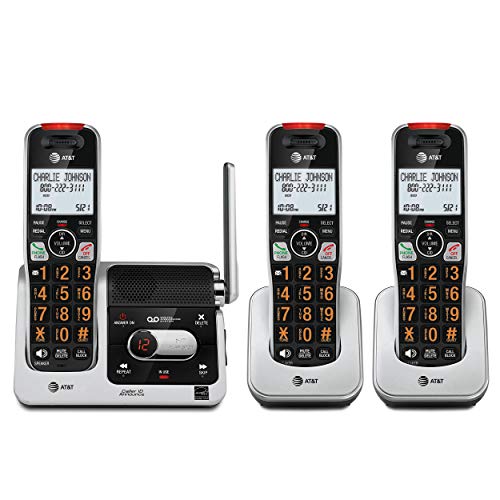 AT&T BL102-3 DECT 6.0 3-Handset Cordless Phone for3 Handset3.81 x 6.04 x 7.21 inches1.98 poundsCheck on Amazon


What's inside
- What DECT 6.0 means and why the 1.9 GHz band matters
- How digital DECT carries a call and why privacy improved
- System sizes, expandability and one-line versus two-line sets
- Range in real buildings, base placement and repeaters
- Answering systems: recording time, retrieval and screening
- Caller ID, call blocking and smart screening
- Bluetooth cell pairing as a separate feature class
- Batteries: Ni-MH packs, talk time and ageing
- Accessibility, speakerphones and audio quality
- Intercom, baby-monitor mode and everyday extras
- Check prices on Amazon
- A final buying checklist by house, lines and habits
As an Amazon Associate I earn from qualifying purchases. This post may contain affiliate links at no extra cost to you.
A cordless telephone set looks simple from the outside, yet the buying decision rests on radio engineering, battery chemistry, answering-system memory and call-management software that differ sharply between models which otherwise share a similar handset shape. DECT 6.0 is the North American implementation of Digital Enhanced Cordless Telecommunications, and understanding what that label actually guarantees, and what it does not, prevents the most common disappointments: handsets that drop calls two rooms away, answering systems that fill up in a week, batteries that cannot be replaced two years later, and blocking features that stop telemarketers on one model but do almost nothing on another. This guide works through the published specifications in the order a household actually experiences them, beginning with the radio band itself and ending with a checklist tied to house size, line count and the person who answers most often.
Some links in this guide point to retailers and may earn this site a commission if you buy through them, at no extra cost to you, and that support helps keep our specification-based guides free to read. We base every comparison here on manufacturer manuals, published radio and battery specifications and regulatory documentation rather than on any claim of personal use, so please check the exact model revision and included handset count before ordering through the retailer.
What DECT 6.0 means and why the 1.9 GHz band matters
DECT 6.0 operates in the UPCS band, short for Unlicensed Personal Communications Services, which in the United States and Canada covers 1920 to 1930 megahertz. That narrow 10 megahertz slice was set aside specifically for cordless voice devices, which is the single most important fact about the system. Earlier generations of cordless telephones shared spectrum with everything else in the house. Analogue 900 megahertz phones competed with baby monitors and early wireless devices, 2.4 gigahertz phones sat directly inside the band used by Wi-Fi routers, microwave oven leakage and Bluetooth radios, and 5.8 gigahertz phones avoided some of that congestion only to suffer shorter useful range through walls because higher frequencies are absorbed more readily by building materials. A DECT handset does not have to fight a router for airtime, and a microwave oven heating lunch does not raise its noise floor in any meaningful way.
The 6.0 in the name is marketing rather than a version number in the engineering sense, and it does not mean six gigahertz. Manufacturers adopted it to distinguish the 1.9 gigahertz digital generation from the older 900 megahertz, 2.4 gigahertz and 5.8 gigahertz analogue and digital-spread-spectrum phones that preceded it. Shoppers sometimes assume a higher number promises a newer radio standard with each model year, but two sets both labelled DECT 6.0, one sold a decade ago and one sold today, use fundamentally the same air interface. What changes between generations is everything around the radio: larger colour displays, better call blocking, Bluetooth pairing on some models, improved speakerphone acoustics, lower standby consumption and more efficient charging circuits. Judging a set by the DECT 6.0 badge alone therefore tells you the band and the basic digital behaviour, and almost nothing about call quality in a particular home.
Inside that 10 megahertz band, the system divides spectrum into ten carriers spaced 1.728 megahertz apart, and each carrier is divided in time into frames that repeat every 10 milliseconds. A frame carries 24 time slots, organised so that the base and handset take turns transmitting and receiving on the same frequency, a method called time-division duplexing. Because the handset only transmits during its assigned slots, its average power draw stays low, which is part of why a small nickel-metal hydride pack can deliver many hours of talk time. The base continuously scans for the clearest carrier and slot combination, and a call can move between carriers without the user hearing a break, which is one reason DECT calls tend to stay stable when someone walks from a kitchen into a garden while talking.
Voice is digitised using ADPCM coding at 32 kilobits per second in the classic DECT profile, producing speech that is noticeably cleaner than analogue cordless audio, where hiss rose and fell with distance and where a neighbour with a compatible analogue handset could sometimes hear fragments of a conversation through a scanner or a mismatched handset. Digital coding does not make DECT high-fidelity in the music sense; the audio bandwidth remains tailored to speech intelligibility, roughly the telephone band that emphasises consonants. It does make the quality predictable. A call near the base and a call near the edge of coverage sound much alike until the link reaches its limit, at which point dropouts rather than gradually growing static warn the user that range has run out.
Interference avoidance also comes from etiquette rules built into the band allocation. DECT devices must listen before transmitting and select a channel with low interference, a behaviour sometimes described as dynamic channel selection. In a dense apartment building where six neighbours may each run a base station, the bases distribute themselves across carriers and slots instead of all crowding onto a fixed channel. That matters more in practice than headline range figures. A condominium hallway full of competing bases is a harder radio environment than a detached house, even though the distances are shorter, and a system that manages channel selection well will feel more reliable than one whose specification sheet quotes a longer open-field distance.
How digital DECT carries a call and why privacy improved
Each handset registers to a single base using an authentication exchange, and the base will not hand a call to an unregistered handset simply because it is nearby. During registration the handset and base exchange identifiers and derive keys used for the link, and DECT includes encryption of the voice stream between handset and base in normal consumer implementations. No consumer cordless system should be treated as secure in the way a properly configured business system with current firmware might be, but the practical contrast with analogue cordless telephones is large. Analogue sets radiated speech in a form that inexpensive receivers could pick up; DECT requires the receiving device to understand the framing, slot timing, hopping behaviour and registration relationship before speech can be recovered.
Frequency and time diversity also explain clarity. A DECT link does not sit on one vulnerable frequency for an entire call. The system monitors signal quality and can shift the bearer to a cleaner carrier, and because speech is carried in short bursts, brief interference that would produce a loud crackle on an analogue set may affect only a frame or two, which error handling can conceal. Multipath reflections inside a house, where the signal bounces off metal appliances, filing cabinets and foil-backed insulation, create nulls at particular positions. Moving the handset a short distance often restores a strong path, and the digital link tolerates weaker moments without the constant background hiss that made analogue users raise their voices without realising it.
Call setup behaviour is another quiet advantage. When a handset is lifted from its cradle or the talk key is pressed, the handset synchronises to the base beacon, requests a bearer and connects, typically fast enough that the user perceives only a short pause before dial tone or incoming speech. Intercom calls between handsets follow a similar path through the base rather than directly handset to handset in most residential systems, which is why intercom range mirrors telephone-call range and why the base must remain powered for internal calls to work. If the base loses mains power, ordinary handsets lose service unless the model provides a power-backup feature in which one handset placed on the base can power the system for a limited period, a feature worth checking in regions with frequent outages.
Some sets advertise HD voice or wideband audio, and that claim needs careful reading. The DECT standard family includes profiles using G.722 wideband coding that can carry a broader speech range when both ends of the path support it, notably on internal intercom calls or with compatible VoIP bases. On a conventional analogue landline delivered through a copper pair or a cable telephony adapter, the network itself usually limits audio to the traditional narrow telephone band, so a wideband-capable handset cannot invent frequencies the line never delivered. Wideband support is therefore most meaningful for intercom quality and for households whose telephone service arrives through a VoIP gateway configured for wideband codecs, and least meaningful as a promise about ordinary calls to other landlines.
System sizes, expandability and one-line versus two-line sets
Residential DECT sets are sold as a base with a stated number of included handsets, and most are expandable to a stated ceiling. Common ceilings in published specifications are six, ten or twelve handsets registered to one base, though the number included in the box is often two, three, four or five. The distinction between included and supported handsets matters for total cost and for compatibility hunting later. A set that includes three handsets and expands to six gives a household room to add a workshop or bedroom handset; a set already sold at its ceiling leaves no such option. Accessory handsets must match the brand and usually the model family, and they are sometimes discontinued earlier than the base systems they extend, so a household that knows it will need six handsets is usually better served buying a bundle that includes most of them at the outset.
Registration is normally a menu-driven process: the accessory handset is placed in pairing mode, the base is put into registration mode, often by holding a locator or registration key for several seconds, and the handset is assigned the next free handset number. That number becomes its intercom identity, shown on the display and used when another handset dials it directly. Deregistering a lost or damaged handset frees its slot, and manuals describe a separate procedure for resetting a handset that was previously registered to a different base, a common stumbling block with second-hand accessory handsets that appear unresponsive until their old registration is cleared.
Only one handset typically engages the outside line at a time on a single-line system, although many models allow a second handset to join an ongoing call by pressing talk, a behaviour sometimes called conference or call sharing that can be disabled for privacy. Intercom calls, by contrast, can often proceed while another handset is on an outside call, depending on model. Families should check whether intercom plus outside call concurrency is supported if the plan is for one person to coordinate from the kitchen while another is on a business call in a study.
Two-line systems serve a different household: one with a home business line alongside a personal line, or a household that kept a second number for a fax-era line now used for work. A two-line base presents line 1 and line 2 keys, separate ringer settings and the ability for two handsets to hold two different outside calls simultaneously, one per line. Handsets on such systems show which line is ringing, and answering-system models may record messages per line or into a shared mailbox depending on design. Two-line hardware costs more, its handsets are model-specific, and its menus are more complex, so it is a deliberate purchase rather than a default upgrade. A household with a single line gains nothing from a two-line base except spare capacity it will never use.
Line type also matters at installation. A traditional landline connects to the base through an RJ11 telephone jack, and the base is the only device that needs the line connection; every other handset needs only mains power for its charging cradle. That architecture simplifies placement enormously compared with wired extensions. It also concentrates risk: if the base is unplugged from the telephone line during furniture rearrangement, every handset in the house loses outside service while still showing a normal display, a fault that confuses households until someone checks the base connections. Keeping the base in a fixed, visible location rather than behind furniture reduces that risk.
VoIP and cable telephony households connect the base to the analogue telephone adapter port on their router or gateway in exactly the same way, and DECT behaviour is unchanged because the base sees an ordinary analogue line. Features that depend on network signalling, such as caller ID delivery between the first and second rings, pass through the adapter, and any limitation in how the provider sends caller ID names will appear on the handset display regardless of the handset’s own capabilities. When a display shows a number but only a generic location instead of a name, the cause is usually the provider’s name database rather than a handset fault.
Range in real buildings, base placement and repeaters
Manufacturers quote range in two very different settings, and comparing them directly misleads. Indoor figures are commonly stated around 50 metres in open internal space, and outdoor figures around 300 metres with clear line of sight, though exact published numbers vary by brand and region. Neither figure describes a brick house with a steel-reinforced floor, a foil-lined roof or a base tucked inside a metal equipment cabinet. Radio at 1.9 gigahertz passes through timber and plasterboard reasonably well, loses strength through brick and concrete, and is heavily attenuated by metal, mirrors with metallic backing, large aquariums and dense masonry. Each floor slab between base and handset can cost more range than several ordinary internal walls.
Practical range planning starts with base placement rather than with the specification sheet. A base placed centrally, elevated on a shelf rather than on the floor, and away from large metal objects and from the router, television and microwave oven, gives handsets the shortest average path in every direction. Placing the base at one end of a long house because that is where the telephone socket happens to be is the most common cause of a dead spot in the far bedroom. Where the line socket cannot move, a longer telephone extension lead or a secondary socket installation can relocate the base to the centre of the home, which usually improves real coverage more than buying a set with a nominally higher range figure.
Houses with outbuildings present a separate test. A handset used in a detached garage or garden office must cross at least one external wall and open air, and weather, vehicles and metal garage doors all change the path. Users who need reliable coverage in a workshop should confirm that the specific handset remains registered and can both make and receive calls from that building, because a handset may show signal at rest yet fail when a large vehicle parks between it and the house. Some households solve this with a repeater positioned at the house edge nearest the outbuilding, effectively relaying the base signal toward it.
A DECT repeater, sometimes sold as a range extender, receives the base signal and retransmits it, extending coverage in one direction. Repeaters must be registered to the base like a handset, they require mains power, and they must themselves sit within good coverage of the base; a repeater placed in the dead spot it is meant to fix has nothing clean to relay. There is also a capacity trade-off that specification sheets mention in footnotes: in many DECT implementations, enabling repeater mode reduces the number of simultaneous calls the system can support in the repeated zone, because the relay occupies bearer capacity to carry the same conversation twice. For a household that rarely has two simultaneous calls this is irrelevant; for a busy two-line home office it can matter.
Not every base supports repeaters, and repeater compatibility is brand and model specific in the consumer market, unlike business DECT systems built around roaming between multiple base stations. A consumer repeater does not provide the seamless enterprise-style roaming that large office systems offer, although a handset moving between base coverage and repeater coverage generally maintains its call under the conditions described in the manual. Buyers who already know their house defeats a single base, because a previous cordless set dropped calls in one wing, should choose a system whose manufacturer lists a compatible repeater by model number rather than assuming a universal extender exists.
Interference inside the DECT band itself is uncommon in a single house but grows in multi-unit buildings, where many bases share the same ten carriers. DECT handles this gracefully up to a point, yet a handset on an upper floor may see bases from several neighbouring units. If calls are clear in the daytime and deteriorate in the evening when neighbours are home, channel congestion is a plausible explanation, and relocating the base away from a shared wall can improve matters more than changing handsets. Keeping the base away from baby monitors or wireless devices that operate near the band edges is also sensible, even though DECT was designed to coexist with them far better than 2.4 gigahertz phones coexisted with Wi-Fi.
Battery state interacts with perceived range. A handset with an aged pack whose voltage sags under transmit load may drop a call at a distance where a healthy pack holds it, leading owners to blame the building when the true cause is a battery at the end of its service life. Before investing in a repeater, swapping in a known-good pack from another handset in the same system is a simple diagnostic that manuals support, since packs within a system are usually identical. If the weak handset follows the battery, the fix is a replacement pack rather than radio hardware.
Answering systems: recording time, retrieval and screening
Built-in answering systems record digitally onto flash memory in the base, and manufacturers state capacity in total minutes rather than in number of messages. Published figures for current residential models commonly fall between roughly 14 and 60 minutes depending on model and recording quality setting, with many mainstream sets clustering around 17 to 25 minutes. That total is shared across all callers, so a household that receives long messages from chatty relatives, medical offices and delivery services can fill a smaller memory faster than expected. When memory fills, systems typically either stop answering, answer and announce that memory is full, or delete the oldest messages if a setting allows it, and the manual for each model states which behaviour applies.
Message indicators matter for daily use. Bases provide a counter or indicator light, handsets display an icon or a count, and some models add a slow flashing light visible across a room. Retrieval from any registered handset is now standard on answering-system models, which means messages can be played from a bedroom handset without walking to the base, and individual messages can be deleted, skipped or repeated during playback. Voice prompts and a speaking date-and-time stamp help households where several people share one mailbox, because the stamp resolves arguments about whether a message arrived before or after a particular appointment.
Remote access uses a PIN entered from an outside telephone, after which the caller can play, save and delete messages and change the greeting. Manuals urge changing the default PIN, which is often a simple factory code printed in the guide, because anyone who knows the model defaults could otherwise try them. Some systems also offer remote turn-on, allowing a household that left home with the answering system switched off to activate it by calling in and letting the phone ring a set number of times. Toll-saver settings complement this by answering after fewer rings when new messages exist, so a caller checking from outside can hang up before the answer point and avoid a charge or a wasted minute on services where that still applies.
Call screening takes two forms. In the traditional form, the base speaker plays the caller’s message aloud as it records, and anyone near the base can pick up a handset to join the call, at which point recording stops. In the newer screening form tied to call blocking, described in the next section, the system challenges unknown callers before the handsets ever ring. Both forms are useful, but they serve different goals: the first helps a person decide whether to interrupt dinner for a call in progress, the second prevents unwanted callers from reaching the household at all. Greeting length, recording quality settings and whether screening audio plays through the base, the handsets or both are all model-specific details listed in manuals rather than on retail boxes.
Households that rely on provider voicemail instead of a base answering system should consider the interaction between the two. If the base answering system is set to answer after four rings and provider voicemail answers after three, callers will never reach the base system, and messages will accumulate in a mailbox the household may check rarely. Conversely, disabling provider voicemail gives the household a visible counter and handset playback but loses the provider mailbox’s ability to take a message while the line is busy unless the service offers busy forwarding. Choosing one answering point deliberately, and setting ring counts accordingly, prevents lost messages that owners often blame on the handset hardware.
Message backup during power cuts is another specification worth reading. Because recordings live in non-volatile memory in the base, stored messages survive an outage, but the system cannot answer new calls while power is out unless the model offers a handset-powered backup mode, and even then recording functions may be limited. The clock that provides time stamps usually has its own backup or resets and announces that it needs setting, which explains the familiar flashing clock display after an outage. Models that obtain time automatically from caller ID signals restore the clock on the next incoming call, a small convenience that keeps time stamps trustworthy without manual intervention.
Caller ID, call blocking and smart screening
Caller ID on a DECT handset displays the incoming number and, where the provider supplies it and the number matches a phonebook entry, the caller’s name. Handset phonebooks vary widely in capacity, from a few dozen entries on basic models to several hundred on premium sets, and better models synchronise the phonebook across all registered handsets so an entry added in the kitchen appears on the study handset. Caller ID log capacity is a separate figure, commonly around 30 to 50 entries, after which the oldest entries roll off. Households that screen calls by reviewing the log in the evening should note that capacity, because a day heavy with robocalls can push a genuine missed call out of a short log before anyone sees it.
Call blocking began as a simple list: numbers added to a block list cause the system to disconnect or to answer and drop the call without ringing. Published block-list capacities range from a few dozen numbers on entry models to one thousand or more on models marketed around call control. A dedicated one-touch block key on handsets and base lets the user add the current caller mid-call or the most recent caller from the log, which is how block lists actually grow in real households; a system that requires menu navigation to block a number will be used far less, however large its list capacity. Blocked callers on some models hear a busy signal or a recorded notice, and on others the call is silently terminated, a difference that matters if a blocked number belongs to a persistent but legitimate organisation the household would rather signal clearly.
Withheld and international numbers expose the limits of list-based blocking, since a robocaller rotating spoofed numbers presents a new identity on every call. Manufacturers responded with smart call block, known by several brand names, in which calls from numbers not in the phonebook and not in an allow list are challenged before ringing: the caller hears a prompt to announce their name or to press a key, and only then do handsets ring, playing the announced name so the household can accept or reject. Automated diallers rarely complete such a challenge, which is why screening of this kind reduces nuisance ringing far more effectively than list blocking alone. The trade-off is friction for genuine first-time callers, such as a clinic calling from an unfamiliar number, who must be willing to announce themselves; households expecting important calls from rotating numbers should understand that behaviour before enabling the strictest screening mode.
Screening modes usually come in graded settings rather than a single on-off switch. A permissive setting may challenge only callers with no caller ID information, a middle setting may challenge all unknown numbers, and the strictest may require every caller outside the phonebook to announce themselves on every call. Some models learn from accepted calls by offering to add the caller to the phonebook or allow list after a successful screening, gradually reducing challenges for regular contacts. Others integrate a pre-recorded name announcement from the household, so the challenge sounds personal rather than robotic, which increases the chance a genuine caller completes it.
Ringer control is part of the same management picture. Per-handset ringer volume, distinctive rings for phonebook groups, a silent or night mode that suppresses ringing during set hours while still allowing designated numbers through, and a first-ring suppression option for blocked calls all appear across model ranges. First-ring behaviour deserves attention: on some systems a blocked call still produces a single short ring because caller ID information arrives between the first and second rings and the system cannot act until it has read it. Models that advertise no ringing for blocked calls achieve it by delaying the audible ring until identification completes, which slightly delays genuine rings as well.
Call waiting caller ID, conference with an outside line, and the ability to transfer an outside call to a specific handset round out call handling on better sets. Transfer is particularly valuable in larger homes: instead of shouting up the stairs, the person who answered can intercom a specific handset, announce the caller and transfer, or simply park the call for pickup elsewhere depending on model design. These behaviours are described in each manual under slightly different names, so comparing the transfer and intercom sections of two manuals is more informative than comparing feature bullet points on packaging.
Bluetooth cell pairing as a separate feature class
A distinct group of DECT systems adds Bluetooth pairing with mobile phones, marketed under names such as Link2Cell and similar brand labels. These bases pair with one or two mobile phones and treat them as additional lines: an incoming mobile call rings every DECT handset in the house, and an outgoing call from a handset can be routed through the mobile account instead of the landline. Some models also download a mobile phonebook, announce mobile caller ID through talking caller ID, and in certain implementations notify handsets of mobile text messages or allow a handset to act as a speakerphone extension for the mobile. This is a genuinely different product class from a pure landline DECT set, and it should be evaluated on its own terms rather than treated as a simple bonus feature.
The use case that justifies it is a household with weak mobile reception in parts of the home. If a mobile phone gets reliable signal only near a front window, pairing it to a base stationed at that window lets the household answer mobile calls from comfortable handsets anywhere the DECT system reaches. It also suits households that have dropped landline service entirely but still want proper handsets with speakerphones, intercom and a shared phonebook instead of carrying a mobile from room to room. For a home worker whose clients call a mobile number, answering on a DECT handset with a headset jack or a high-quality speakerphone can be more comfortable across a long day than holding a mobile handset.
There are real costs to the complexity. Pairing adds menus, firmware behaviour and failure modes that a pure landline set never presents: a mobile that fails to reconnect after leaving and returning home, Bluetooth interference management, phonebook downloads that duplicate entries, and ringer confusion when landline and mobile calls arrive together with different tones. Households that keep a landline precisely because it is simple and always works may find that a Bluetooth base undermines the quality they valued. The deciding question is whether mobile calls need to reach house handsets; if everyone in the home is content answering the mobile directly, the pure landline set is the cleaner purchase and often the cheaper one at the same handset count.
Specification details separate good implementations from frustrating ones. Published details to compare include how many mobile phones can pair simultaneously, whether both can be active for calls at once or only connected in sequence, whether the system works with no landline connected at all, how many phonebook entries can be downloaded per mobile, and whether handsets can distinguish mobile-line calls by ringtone and display label. USB charging ports on some bases, intended for keeping the paired mobile charged at its best-signal spot, are a thoughtful addition because a mobile left at the base location all day will otherwise run down exactly where it is needed most.
It is also worth separating Bluetooth cell pairing from the unrelated use of Bluetooth for a wireless headset. A few bases and handsets support a Bluetooth headset connection directly, but many do not, and a mobile-pairing feature does not imply headset support. Buyers whose primary need is a wireless headset for long calls should check the headset specification explicitly rather than inferring it from the presence of Bluetooth in the feature list, because the two functions use Bluetooth in entirely different roles.
best cordless phone dual earpiece headsets
Batteries: Ni-MH packs, talk time and ageing
Almost every residential DECT handset runs on nickel-metal hydride rechargeable cells, most commonly a pack built from two AAA-size Ni-MH cells, though some slim handsets use a proprietary flat pack. Published talk time for current models typically falls between about 9 and 17 hours depending on handset design, speakerphone use and battery capacity, with standby times commonly quoted between roughly 4 and 11 days off the charger. Speakerphone use draws more current than handset-to-ear use, backlight settings shorten standby, and an ageing pack delivers a fraction of its original figures long before it fails completely, which is why talk time complaints usually appear gradually.
The great advantage of standard AAA-based packs is replaceability. A two-cell Ni-MH pack in the common corded format is a commodity part sold by the original manufacturer and by third parties, and swapping it takes seconds once the battery cover is removed. Households can keep a system in service for many years by replacing packs as they fade, and a spare pack charged in rotation is unnecessary because handsets live on their chargers. Manuals specify the chemistry and capacity range to use and warn against substituting alkaline cells in a charging cradle, which the charger would attempt to recharge. They also warn against mixing an old and new cell inside a pack, which is one reason pre-made packs are preferable to loose cells even where the handset accepts individual AAA cells.
Proprietary flat packs change the long-term calculation. They allow slimmer handsets and sometimes higher capacity in a shaped space, but when the manufacturer discontinues the pack, the handset’s life ends with its last battery regardless of how well its electronics still work. This is the mechanism by which otherwise functional cordless systems age out of service. A buyer choosing between two similar sets, one using standard AAA Ni-MH packs and one using a unique pack, should weigh that difference seriously if the intention is to keep the system for a decade, and should check that replacement packs for a proprietary design are actually listed as available at the time of purchase rather than merely mentioned in the manual.
Charging behaviour is simple but often misunderstood. Ni-MH packs in DECT handsets are maintained by slow charging on the cradle, and modern charge circuits manage the pack without the severe memory effect associated with older nickel-cadmium cells. Leaving handsets on their chargers continuously is the intended pattern, and taking a handset off its charger every night to preserve the battery is unnecessary and counterproductive, since it adds discharge cycles. What does shorten pack life is heat: a charging cradle in direct sun or beside a radiator ages its pack faster, and a handset left in a hot car or conservatory will show reduced capacity sooner than its siblings indoors.
Low-battery behaviour gives useful warning when owners know what to look for. Handsets display a battery icon with declining segments, beep during calls as the pack nears exhaustion and eventually display a charge message and refuse calls. A handset that beeps within minutes of leaving its cradle, or that resets when the talk key is pressed, is showing classic end-of-life pack behaviour: voltage collapsing under load. Replacing the pack restores such a handset in the great majority of cases, and it is the first step to try before concluding that a handset or an entire system has failed. Eco modes offered on some models reduce handset transmit power when the handset is close to the base and can extend talk time modestly, at the cost of behaviour described in the manual that users sometimes mistake for reduced range.
Base power consumption also belongs in the battery conversation for households concerned with outages. A base draws a small continuous load, and during a power cut the whole system depends on whatever backup the model provides. Systems with a power-backup handset feature draw on that handset’s pack to run the base at reduced function, typically allowing a limited duration of calls and disabling some features such as the answering system or speakerphone on the base. The manual states the expected backup duration, and households in outage-prone areas should read that figure rather than assume a full working day of backup from a single handset pack.
Accessibility, speakerphones and audio quality
Audio features decide whether a set works for the people who actually use it, and published specifications give more guidance here than marketing language suggests. Handset speakerphones vary from a small rear speaker adequate for listening to voicemail prompts to full-duplex designs that allow both parties to speak simultaneously without clipping the beginning of sentences. Full-duplex behaviour matters in family calls where several people gather around a handset; half-duplex speakerphones cut off whoever starts speaking second, producing the stilted turn-taking that makes group calls tiring. Base speakerphones add a larger speaker and microphone in a fixed position, useful for a kitchen or office where the base lives, and their quality depends heavily on the surface and room acoustics where the base sits.
Hearing-aid compatibility is described by ratings under the applicable standards, with handsets rated for reduced interference with hearing aids in both microphone and telecoil modes where applicable. Buyers shopping for a hearing-aid user should look for the published HAC rating of the specific handset rather than a general claim of compatibility, and should understand that a cordless handset’s radio sits close to the ear, which is exactly why the rating exists. Amplified models go further, offering receive volume boost measured in decibels above standard levels, adjustable tone control that emphasises the frequencies a particular user hears least well, and in some designs a louder ringer with a visual flashing alert. Amplification figures and tone-control ranges appear in the manuals of accessibility-focused models and are the right basis for comparison.
Talking caller ID announces the incoming caller’s name or number through the handset or base speaker, which helps users with low vision and anyone whose hands are occupied when the phone rings. Its usefulness depends on pronunciation quality and on whether the announcement repeats, and better models let the user toggle it per handset so a bedroom handset stays quiet while the kitchen handset announces. Large-button models pair this with oversized, high-contrast keypads, bigger display fonts, simplified menus and sometimes photo-dial keys on the base that place a call to a pictured contact with one press. Those base photo keys serve households where dialling a full number has become difficult, and they work even if the handsets are elsewhere in the house.
Display readability is part of accessibility too. Backlit keypads, adjustable display contrast, white-on-black or large-font display modes and handset naming all reduce misdialling. A handset locator key on the base, which makes all registered handsets ring or beep, is a small feature with outsized value in homes where handsets migrate to sofa cushions and laundry rooms. Belt clips, wall-mountable chargers for hallway handsets, and a headset jack keep the system adaptable as needs change.
Headset support deserves a precise check. Many handsets include a 2.5 millimetre or 3.5 millimetre headset jack, and the manual states which size and whether the jack supports a microphone as well as an earpiece. A wired headset transforms long calls for home workers and for anyone who needs hands free to type or cook, and it avoids the cost and pairing complexity of wireless options. Where a model lacks a jack, its speakerphone becomes the only hands-free option, which should be a deliberate trade-off rather than a surprise discovered after purchase.
Intercom, baby-monitor mode and everyday extras
Intercom calling between handsets is the feature families underestimate before purchase and rely on daily afterwards. Calling a specific handset by its number or name, or broadcasting to all handsets at once on models that offer a voice-paging mode, replaces shouting through floors. Intercom calls use the base as the exchange, sound clearer than outside calls on wideband-capable models, and cost nothing. In houses with a home office, an intercom call that can be declined or sent to silent is preferable to a page that blares through every room, so the intercom options in the manual, including whether a called handset can auto-answer for hands-free reply, are worth reading. Auto-answer intercom is genuinely useful for checking on a child or an elderly relative in another room, and equally clearly a privacy setting that should be enabled knowingly.
Baby-monitor mode on DECT handsets uses one handset as a listening unit placed in the child’s room and another as the parent unit, with sensitivity settings and, on some models, a talk-back function. DECT is well suited to this because its link is digital, private to the registered system and typically longer-ranged within a house than inexpensive standalone audio monitors using shared analogue channels. The handset in the child’s room must be kept charged or placed on its cradle, its display light may need dimming, and parents should remember that a handset acting as a monitor is unavailable for calls. It is a valuable secondary use of a system already in the home rather than a reason to buy a phone system on its own.
Other extras appear unevenly across ranges and reward a manual check. Handset alarm clocks, key-lock to prevent pocket dialling from a belt-clipped handset, chain dialling, redial memory size and a dedicated mute key all exist somewhere in the market, and two otherwise equal sets are often separated by exactly these small behaviours.
Date and time handling, automatic daylight-saving adjustment and caller-ID-based clock setting reduce maintenance to nearly zero on better models. Shared phonebook synchronisation, already mentioned, deserves repeating here because its absence is a persistent irritant: on systems without it, every handset keeps its own phonebook, entries must be typed repeatedly, and the household inevitably ends up with inconsistent names for the same numbers, which then undermines talking caller ID and screening allow lists that depend on phonebook matches. When comparing two sets, phonebook sharing is one of the highest-value lines in the specification table relative to its prominence on the box.
Check prices on Amazon
Live listings for the shortlist in this guide are pulled from Amazon below, so prices and availability are always current at the moment you look.


A final buying checklist by house, lines and habits
Start with coverage. Count the floors and the construction materials between the likely base position and the farthest handset location, and be honest about outbuildings. A flat or a small timber-framed house is served well by any mainstream set with sensible base placement. A large house with concrete floors, a metal-clad extension or a detached workshop calls for a system with a listed compatible repeater, or for base placement planning before purchase rather than after disappointment. If a previous cordless phone already failed in one room, treat that room as the design case.
Next, count handsets realistically, including the rooms people forget: the bedroom where calls are answered at night, the kitchen where hands are wet, the office where calls are longest, and the hallway or landing that serves an upper floor. Compare that count with both the included handsets and the expansion ceiling, and favour standard AAA Ni-MH packs if the system is expected to serve for many years. Check that accessory handsets for the chosen family are still listed as current, because an expandable system whose extra handsets have been discontinued is not expandable in practice.
Then settle the line question. One line with heavy nuisance-call traffic argues for the strongest screening implementation available, with a large block list, a dedicated block key and announce-yourself screening for unknown callers. Two genuine lines argue for a true two-line base rather than workarounds. No landline at all, with mobile calls needing house-wide handsets, argues for the Bluetooth pairing class, evaluated by how many mobiles it handles and whether it operates without a landline connected. Mixing these cases up is the most expensive category of mistake, because the hardware classes do not convert into one another later.
Decide where messages should live. A base answering system gives a visible counter, handset playback and screening through the base speaker, with capacity measured in minutes that should be matched to how long the household’s typical messages run and how often anyone deletes them. Provider voicemail suits households that prefer checking messages from anywhere and need a message taken while the line is busy. Running both without setting ring counts deliberately is the configuration most likely to lose a message, so whichever is chosen, set the other to match or disable it.
Match the audio and accessibility features to the person who answers most. That person might need amplification and tone control, talking caller ID, a headset jack for long calls, a full-duplex speakerphone for family calls, or simply a handset with a backlit keypad and a display that remains readable in a dim hallway. Buying for the heaviest user first, and checking the published ratings and figures for that user’s needs, produces a system the whole household finds easy, whereas buying for an abstract average user often leaves the person with the greatest need struggling with the smallest print.
Finally, read the manual sections that describe failure behaviour before ordering: what happens when memory fills, when power fails, when a handset goes out of range mid-call, when a blocked caller rings, and when a battery reaches the end of its life. Manufacturers document these behaviours plainly, and they reveal more about living with a system than any feature list. A DECT 6.0 set chosen on those terms, with its base placed thoughtfully and its screening set up on the first evening, will quietly handle a household’s calls for years without demanding attention.
best kids smartwatches for texting and calling
For the household that still values a ringing phone in every room, the right DECT set is the one whose radio, batteries and screening match the building and the people in it, and that match, once made, tends to be forgotten precisely because the calls simply work.


