Our Top Picks
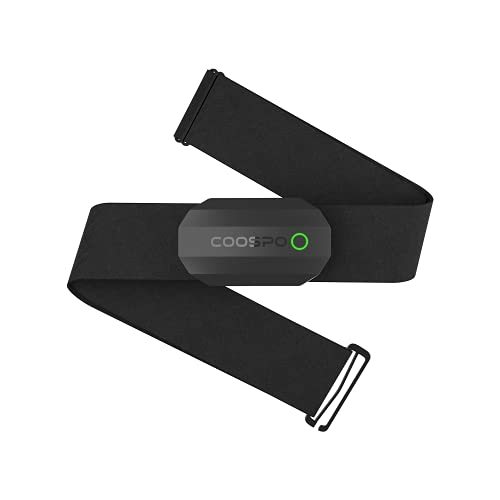 COOSPO Bluetooth Heart Rate Monitor Chest Strap H808S1 Count (Pack of 1)2.36 x 1.37 x 0.59 inches0 poundsCheck on Amazon



What's inside
- How a chest strap senses the heart
- Chest straps versus optical wrist sensors
- Radios: Bluetooth, ANT+ and simultaneous connections
- Onboard memory: recording without a receiver
- Battery: coin cells, rechargeable pods and rated life
- Water resistance and pool use
- Fit, sizing and electrode design
- Strap care: washing and longevity
- Heart-rate variability and RR intervals
- Compatibility: watches, bike computers, gym equipment and apps
- Dropouts, spikes and signal problems
- How to compare listings systematically
- Who benefits from a strap, and who is fine with optical
- Session types and what each one demands
- Data files, exports and long-term records
- Check prices on Amazon
- A final specification checklist
As an Amazon Associate I earn from qualifying purchases. This post may contain affiliate links at no extra cost to you.
A chest-strap heart-rate monitor is one of the simplest instruments in sports technology: two electrodes against the skin, a small transmitter pod, and a stream of numbers sent to a watch, a bike computer or a phone. Yet within that simple description sits a wide spread of capability. One strap broadcasts on a single radio to a single device and forgets everything when the session ends. Another holds two Bluetooth connections and an ANT+ broadcast at once, stores a swim or a phone-free workout in onboard memory, reports beat-to-beat intervals for heart-rate variability analysis, and runs for hundreds of hours on one coin cell. This guide explains how to tell those products apart using published specifications and manufacturer documentation, and how the sensing method itself explains the accuracy reputation chest straps carry.
Reading this guide costs you nothing extra if you later buy through some of its links, though those links may return a small commission that helps support the site. The comparisons below rest on documented specifications — radio counts, rated battery life, memory capacity, water-resistance ratings and stated compatibility — rather than on any claim that the straps were worn for this article, so every point can be checked against the specification sheet of the model you are considering.
That documentary approach suits this category particularly well, because heart-rate hardware is unusually standardised. The Bluetooth heart-rate service is a published standard, ANT+ heart-rate profiles are documented, water resistance follows defined rating scales, and the electrical sensing method has decades of clinical and sports-science literature behind it. A buyer who understands a handful of those standards can read almost any listing in the category and know, within minutes, what a strap will connect to, how long its battery should last, whether it can record a swim, and whether its beat-to-beat data will satisfy a variability app. The sections that follow build that literacy piece by piece.
How a chest strap senses the heart
Every heartbeat is triggered by an electrical event. A signal spreads through the heart muscle, coordinating contraction, and that signal is strong enough to be detected at the skin surface as a tiny voltage change. This is the same phenomenon a medical electrocardiogram records with multiple electrodes, reduced in a chest strap to a practical minimum: two electrode areas on the strap, sitting either side of the chest, measure the voltage difference between them many times per second. When the waveform shows the sharp spike associated with ventricular contraction, the transmitter counts a beat and measures the interval since the previous one. Heart rate is derived from those intervals, which is why a strap can also supply true beat-to-beat timing rather than only an averaged pulse.
Because the strap detects the triggering electrical signal itself, rather than a downstream consequence of it, its timing is precise in a way that matters for several uses. The interval between successive beats can be resolved to millisecond-level precision in well-implemented units, and that precision underpins heart-rate variability measurement, discussed in its own section below. It also explains the strap’s responsiveness: the number changes as soon as the rhythm changes, with no need to wait for blood flow at the wrist to reflect an effort that began seconds earlier. Manufacturer documentation for the leading strap families describes exactly this electrical method, and the sports-science literature comparing strap output against clinical electrocardiography is the foundation of the category’s accuracy reputation.
The method has one practical requirement that shapes everything about strap design: the electrodes need good electrical contact with the skin. Dry skin is a mediocre conductor, so straps are designed to work with moisture — water, electrode gel or, once exercise begins, sweat — bridging the gap between electrode and skin. This is why instructions for every major strap family begin with wetting the electrode area, why readings in the first dry minutes of a session can wander, and why strap care focuses so heavily on the electrode surfaces. The sensing is electrical, so the interface is everything, and most user complaints about chest straps trace back to that interface rather than to the electronics behind it.
Chest straps versus optical wrist sensors
Optical heart-rate sensing, the method used by most watches and wrist trackers, works entirely differently. Green light is shone into the skin and a photodetector measures how much returns; blood absorbs green light, so the returning signal pulses with each surge of blood volume through the wrist’s small vessels. Algorithms then convert that pulsing signal into a heart rate. The method is convenient, passive and good enough for resting heart rate, sleep tracking and steady-state exercise for many people. Its weaknesses are physical rather than electronic. The sensor must maintain optical contact while the wrist flexes, the watch shifts, tendons move, and blood flow to the hands falls in cold weather — all while the device tries to separate a faint pulse signal from motion artefacts that occur at similar frequencies.
Published comparisons between the two methods, including validation studies in sports-science journals and manufacturers’ own technical notes, converge on a consistent pattern. At rest and during steady, moderate exercise, modern optical sensors often agree closely with strap readings. During intervals, rapid transitions, weight training with gripping and wrist flexion, cold conditions and very high intensities, agreement degrades and optical traces show lag, dropouts or cadence-lock, where the algorithm mistakes step rhythm for pulse. A chest strap’s electrical signal is largely indifferent to wrist motion, grip and skin blood flow, so its trace follows transitions promptly. Neither method is magic: a dry, loose strap can produce nonsense, and a well-fitted modern watch can be entirely adequate for a runner whose training is steady and whose analysis needs are general.
The buyer’s question is therefore not which technology wins in the abstract, but which error pattern matters for their training. An athlete following heart-rate-based interval sessions, where the whole point is how quickly the rate rises and falls between efforts, is exposed to exactly the conditions where optical lag distorts the session. A walker, a steady cyclist on a trainer with a watch already owned, or someone tracking general activity trends may never encounter a discrepancy that changes a decision. Later sections return to this who-benefits question directly, after the hardware specifications that distinguish one strap from another have been laid out, because the right answer often combines both: the use case sets the requirement, and the specification sheet shows which products meet it.
What accuracy claims in listings actually mean
Listings in this category use the language of accuracy loosely, so it helps to know what a substantiated claim looks like. Serious manufacturers describe the sensing method, publish the radio protocols supported, and may reference validation against electrocardiography in their technical material. What they rarely publish is a single universal accuracy percentage, because accuracy depends on fit, activity and conditions, and an honest figure would need all three attached. A listing that promises a precise-sounding accuracy number with no method, no conditions and no reference should be read the way a battery listing with an implausible discharge rating is read: as marketing, not measurement. The specification details that follow — radios, memory, battery, ratings and sizing — are the parts of a listing that can be verified, and they are where comparison effort pays off.
Radios: Bluetooth, ANT+ and simultaneous connections
A chest strap earns its living by broadcasting, and the first specification to examine is how many simultaneous connections it can sustain, and on which protocols. Bluetooth Low Energy, usually shortened to BLE or Bluetooth Smart in older documentation, is the universal language: phones, most modern watches, tablets and many bike computers speak it, and the standard Bluetooth heart-rate service means any compliant app or device can read any compliant strap. ANT+ is a second, older low-power protocol entrenched in cycling and in the watch ecosystems of several major brands. Its distinctive convenience is that it broadcasts openly to any receiver in range, so one strap can feed a watch, a bike computer and a gym console simultaneously without pairing negotiations, and devices simply listen.
The number of simultaneous Bluetooth connections is the specification that separates current premium straps from basic ones. A strap with a single Bluetooth connection can talk to one Bluetooth device at a time: pair it to a watch and the phone app goes without, or pair it to a phone and the watch does. Straps offering two simultaneous Bluetooth connections, a feature published prominently in the documentation of recent flagship models from the major makers, can feed a watch and a phone, or a bike computer and a training app, at the same time, while an ANT+ broadcast continues in parallel for anything else listening. For a user whose setup is one watch and nothing else, this is irrelevant. For a triathlete moving data between a watch, a head unit, a smart trainer platform and a phone, it is the difference between a strap that fits the system and one that must be re-paired between sessions.
Range and behaviour follow from the physics of low-energy radio. Both protocols operate in the same crowded 2.4 gigahertz region as Wi-Fi and wireless earbuds, with a practical working range measured in metres rather than tens of metres once a human body — mostly water, and an effective absorber — sits between transmitter and receiver. Documentation typically describes connections in terms of devices in the same room or on the same athlete, which matches reality: a strap talks to the watch on the wrist above it or the computer on the bars in front of it. Expecting a strap to hold a link to a phone left across a gym is expecting the protocol to do something it was not designed for, and dropouts in that arrangement are a specification mismatch, not a defect. Signal behaviour and its failure modes get a dedicated section later in this guide.
Onboard memory: recording without a receiver
Some straps can record a session internally and transfer it afterwards, and this single feature reorganises what the strap can be used for. The mechanism is straightforward: the transmitter stores heart-rate data, typically timestamped at one-second or beat-to-beat resolution, in internal memory measured either in hours of recording or in number of sessions, and uploads it to the maker’s app when a phone next connects. Manufacturer documentation states the capacity for each model, and the figures differ enough between models that they belong on any comparison shortlist. A strap without memory is a live-only device; if no receiver is listening, the session’s heart-rate data simply never exists.
Swimming is the use case that makes memory close to essential. Radio at 2.4 gigahertz attenuates extremely quickly in water, so neither Bluetooth nor ANT+ can carry a live signal from a submerged strap to a watch on the swimmer’s wrist with any reliability; some ecosystems use a proprietary low-frequency link for live pool data, but the mainstream solution is storage. A memory-equipped strap records the session in the pool and delivers it when the swimmer is back at a phone, merging it with the watch’s own record of the swim. The same storage serves contact sports where watches cannot be worn, gym sessions where the phone stays in a locker, and team settings where athletes wear straps during play and sync afterwards. Buyers in those situations should treat memory not as a bonus but as the core feature, and check its stated capacity against their longest sessions.
Memory specifications reward careful reading. Some straps store a single session and overwrite it with the next, which is adequate for a swimmer who syncs after every session and inadequate for a training camp with several sessions between syncs. Others store many hours across multiple sessions. Documentation also clarifies what is stored: heart rate alone, or heart rate with beat-to-beat intervals, and in some advanced models additional running or swimming metrics captured by accelerometers in the pod. If variability analysis of a recorded session matters, the buyer needs confirmation that intervals, not only averaged rate, are what the memory keeps. These distinctions are all published by the major makers; they are simply spread across specification tables rather than headlines, which is why this guide keeps returning to the tables.
Battery: coin cells, rechargeable pods and rated life
Two battery philosophies divide the category. The majority of straps use a replaceable coin cell, most commonly the CR2032, sealed behind a twist or snap cover on the transmitter pod. Rated life for these models is published in hours of use, and the figures from major manufacturers commonly run to several hundred hours — a year or more of training for most athletes at typical weekly volumes. The advantages are operational simplicity: no charging routine, no cable, and a flat battery is a two-minute replacement rather than a missed session. The obligations are keeping a spare cell, opening the cover carefully so the sealing ring stays seated, and disposing of the old cell through battery recycling rather than household waste.
The minority approach is a rechargeable pod, charged by a proprietary cradle, clip or magnetic cable, with rated life published in hours per charge — figures that are far smaller than coin-cell totals, typically in the region of twenty to thirty hours for current models, because the pod must stay small and light. Rechargeable designs allow slimmer, fully sealed pods with no cover to compromise, which suits swimming-focused products, and they remove coin-cell purchases from the routine. Their discipline cost is real: the strap joins the list of devices that must be charged before a training block, and a forgotten charge means no data. Neither approach is superior in the abstract. The comparison that matters is the published hours figure set against the buyer’s weekly training hours and tolerance for charging routines, and specification sheets state those figures plainly.
Battery claims also interact with features. A strap broadcasting on multiple radios, recording to memory and running accelerometer-based metrics draws more than a basic single-radio strap, and honest documentation reflects model-specific figures rather than a family-wide slogan. Cold weather shortens effective battery life for both chemistries, and a coin cell nearing its end often announces itself through dropouts and erratic readings before it dies completely, a pattern worth knowing before blaming a strap’s electronics. When a previously reliable strap begins producing strange traces, a fresh battery is the cheapest diagnostic in the category, and support documentation from every major maker puts it near the top of the troubleshooting list for exactly that reason.
Water resistance and pool use
Water resistance in this category is expressed either as a depth rating in metres or as an IP code, and the two systems describe test conditions rather than guarantees for every activity. A strap rated to 30 metres, a common figure for swim-capable models, is documented as suitable for swimming; basic splash-resistant straps carry lower ratings or IPX codes that cover rain and sweat but not immersion. The IP system rates ingress protection under standardised conditions, with the final digit describing water exposure from dripping through to sustained immersion, and manufacturer pages state which code each model carries. Buyers planning pool or open-water use should look for an explicit swimming statement in the documentation alongside the number, because the number alone, read carelessly, overpromises: ratings are established under static test conditions, while swimming adds movement, pressure changes and repeated impact with the water.
Practical pool use adds three further considerations. First, as covered above, live transmission through water is not available on the standard radios, so a swimmer needs onboard memory or a proprietary live link within one brand’s ecosystem. Second, pool chemicals and salt water are hard on textiles and electrode surfaces, so care instructions for swim-used straps emphasise rinsing in fresh water after sessions. Third, fit behaves differently in water: drag on the strap during push-offs and tumble turns tests the sizing and the grip of the strap’s inner surface far more than running does, and some swim-oriented models add silicone grip patterns or a firmer elastic specification for this reason. All three points appear in the documentation of swim-capable models, and their absence from a listing is a useful hint that swimming is not that product’s intended territory.
Fit, sizing and electrode design
A chest strap measures best when it does not move, and it does not move when it fits correctly. The strap sits around the lower chest, with the electrode band against the skin just below the pectoral muscles and the pod centred, worn directly on skin rather than over clothing. Manufacturers publish size ranges as chest circumferences for each strap size, commonly in configurations such as a standard size spanning a broad middle range and extended sizes at either end, sometimes achieved with different strap lengths rather than different electronics, since the pod usually detaches and moves between straps. The correct size is the one that stays snug at the middle of its adjustment range, leaving room to tighten as the elastic ages and to loosen slightly for long, easy sessions where comfort dominates.
Fit failures produce recognisable data failures. A strap that is too loose slides as sweat lubricates the skin, generating spikes, dropouts and implausible jumps as electrodes lose and regain contact. A strap worn too high rides onto muscle that moves more with breathing and arm action; worn too low it can migrate under impact. Women’s fit deserves specific attention in listings: strap geometry interacts with sports-bra bands, and some manufacturers publish guidance or alternative strap designs intended to sit comfortably below or integrated with a bra’s lower band. Documentation that addresses this directly is a sign the maker has thought about the whole market rather than a default torso, and buyers should prefer the model whose sizing guidance matches their actual training clothing.
Electrode design is the other half of the interface. Electrode areas are typically conductive rubber, conductive textile or thin metallic elements integrated into the strap’s inner face, and their size and placement affect how forgiving the strap is of imperfect positioning. Larger electrode areas tolerate small placement errors and maintain contact through more movement; textured or silicone-dotted inner surfaces resist sliding. The pod’s attachment matters too: snap fasteners are the common pattern, letting the pod detach for strap washing and battery changes, and the snaps themselves are part of the electrical path, so corrosion or a bent snap shows up as intermittent data. A listing that describes electrode material, strap construction and replacement-strap availability is giving the buyer the information that predicts year-two satisfaction, because straps wear out faster than pods and a replaceable strap extends the whole system’s life.
Moisture, gel and the first five minutes
Because the measurement is electrical, moisture management is a skill worth learning deliberately. The standard routine in every major maker’s instructions is to wet the electrode area thoroughly before putting the strap on — running water is sufficient — and to ensure the skin beneath is damp as well. Electrode gel or a small amount of saline solution improves contact further and is a common recommendation for users with dry skin, users training in cold, dry air, and users who see erratic readings in the opening minutes before sweat arrives. Once exercise is underway, sweat normally sustains the interface for the rest of the session, which is why strap problems so often concentrate at the start and why a trace that settles after ten minutes points to contact, not electronics.
Static electricity from synthetic training tops is the other early-session culprit. A dry technical shirt rubbing against a strap can generate electrical noise that the transmitter reads as extra beats, producing the classic implausibly high opening trace that settles once the shirt is damp. Cotton shirts, wetter electrodes and, in persistent cases, antistatic treatment of the garment all address the same cause. Knowing this pattern prevents two common mistakes: discarding a good strap as faulty, and trusting an opening-minutes spike as a genuine cardiac event worth worrying about. Context, as in so much of this category, converts alarming data into explained data.
Strap care: washing and longevity
Care instructions in manufacturer documentation follow a consistent pattern, and following them is the difference between a strap that lasts a season and one that lasts years. The textile strap accumulates salt from sweat, and salt both degrades elastic and interferes with electrode performance, so makers direct users to rinse the strap after use and to wash it regularly — commonly described as a machine wash after a set number of uses, with the pod removed, in a wash bag, without fabric softener, which can coat electrode surfaces and impair conductivity. The pod itself is not machine washed; it is rinsed or wiped, and its contacts and snaps are dried so corrosion does not build in the attachment points.
Storage habits complete the care picture. Detaching the pod from the strap between sessions is recommended by several major makers for two reasons: it prevents the transmitter from staying awake sensing a circuit through a damp strap, which drains the battery, and it lets the strap dry fully rather than staying folded and moist in a gym bag. Hanging the strap to dry, keeping it out of prolonged direct heat, and replacing it when the elastic no longer holds position or the electrode surface cracks or peels are all documented guidance. Replacement straps are sold separately by the major brands, and their availability and sizing are worth confirming at purchase time, because the strap is a consumable by design and the pod is not.
Heart-rate variability and RR intervals
Heart-rate variability, or HRV, is the variation in time between consecutive heartbeats, and it has become one of the main reasons athletes choose a chest strap over a wrist sensor. A healthy heart does not beat like a metronome; intervals lengthen and shorten under the influence of breathing, recovery state and nervous-system balance, and apps analyse those fluctuations to estimate readiness, training load response and stress. The measurement depends entirely on precise beat timing. If each interval is recorded with millisecond-level accuracy, the variability statistics are meaningful; if the device reports only a smoothed rate once per second, or its timing is coarse, the statistics built on top are unreliable. This is the technical heart of the matter, and it is why the specification to look for is explicit RR-interval support — RR being the interval between successive R peaks in the electrical waveform.
Transmission standards determine whether that interval data reaches the apps that use it. The standard Bluetooth heart-rate service includes a field for RR intervals, so a strap implementing that part of the specification can feed any app built to read it. ANT+ heart-rate profiles likewise carry beat timing information used by compatible devices. Third-party variability and readiness apps publish their own compatibility lists naming the strap families they support, and those lists exist precisely because implementation varies: some budget straps report heart rate only, and some report intervals with filtering that undermines fine variability analysis. A buyer whose primary purpose is morning readiness measurement should start from the app’s published compatibility list and work backwards to the strap, rather than buying a strap and hoping the app accepts its data.
It is equally important to understand what HRV measurement requires of the user. Readings are taken at rest, typically lying or seated on waking, for a short defined period, with the strap fitted and electrodes moistened, because movement and posture changes alter the signal being measured. The value of the practice is longitudinal: a personal baseline built over weeks, against which today’s reading is compared, rather than any single universal number. Wrist devices increasingly estimate variability during sleep using optical methods, which suits some users well enough for trend-spotting. The strap’s advantage is precision and standardisation of the raw intervals, which matters to users feeding data into detailed analysis platforms, research contexts or coaching systems that expect RR files rather than summaries. Buyers comparing the watches that might receive strap data will find the distinctions in best activity smartwatches useful, since a watch’s handling of external sensor data varies more than its marketing suggests.
Compatibility: watches, bike computers, gym equipment and apps
Compatibility in this category is mostly a question of protocols, and that is good news, because protocols can be checked. A strap broadcasting the standard Bluetooth heart-rate service works with the enormous range of phones, watches and applications implementing that service. A strap adding ANT+ works additionally with the cycling computers, watches and consoles built around that ecosystem. Gym equipment forms a third environment: many treadmills, bikes and rowers carry receivers for one or both standards, and equipment in older facilities may still listen for an older analogue transmission used by classic strap systems, which some current straps retain as a third signal precisely so a gym’s console can display the user’s heart rate during a session. Manufacturer compatibility pages list tested pairings, and those pages, rather than a marketplace listing’s claims, are the authoritative source.
The receiving device’s behaviour matters as much as the strap’s signal. Watches differ in whether they prioritise an external strap automatically when one is present, whether they record the strap’s beat-to-beat data or only its averaged rate, and whether their post-session files preserve the external source. Bike computers differ in how many sensors they juggle and how their screens and alerts use live rate. Phone applications differ in background-recording reliability, which is an operating-system behaviour as much as an app feature. None of this is a reason for pessimism; the standards genuinely work, and the mainstream combinations from major makers are extensively documented. It is a reason to verify the specific chain — this strap, this watch, this app — in the makers’ compatibility documentation before assuming the chain behaves as the general standard promises. Riders assembling a mixed-brand cockpit, in particular, should note the dual-radio discussion above, and trail and ultra runners comparing receiving watches may also want the rugged options surveyed in best adventure fit smartwatches, since case size and strap pairing behaviour differ across that class.
Smart trainers and indoor platforms add one more link to many chains. A strap feeding a watch outdoors may be expected to feed a tablet running a training platform indoors, possibly while also feeding the watch. That is a two-Bluetooth-connection scenario on many setups, or a Bluetooth-plus-ANT+ scenario where the trainer ecosystem supports it, and it is exactly the scenario the simultaneous-connection specification exists to answer. Buyers should map their own chain on paper — every screen that should show heart rate, in every environment — and count the simultaneous links required. The count, compared against the published connection specification, settles the model choice more reliably than any feature headline.
Dropouts, spikes and signal problems
Every long-term strap user meets imperfect traces, and most imperfections have mundane, published explanations. Dropouts — stretches where the receiver shows nothing or holds a stale value — arise when the radio link is interrupted, when electrode contact is lost, or when a fading battery can no longer sustain transmission. Spikes to implausible values usually trace to static from clothing, dry electrodes at a session’s start, or momentary contact noise as a loose strap shifts. A trace that flatlines at one value through efforts that obviously changed intensity often indicates the receiver has fallen back to a wrist sensor, or that the strap’s signal is being received intermittently and interpolated. Reading a bad trace is a diagnostic skill: the shape of the failure points at its cause, and support documentation from the major makers is organised around exactly these patterns.
A sensible troubleshooting order follows from the causes. First, contact: re-wet the electrodes, confirm the strap’s position and snugness, and try electrode gel if dry skin is suspected. Second, power: replace or charge the battery, because marginal power produces symptoms that imitate every other fault. Third, the radio environment: check whether the receiver has quietly connected to a different sensor, whether another app has claimed the strap’s single Bluetooth connection, and whether the receiving device is within realistic range with the athlete’s body not blocking the path. Fourth, the strap itself: inspect electrodes for cracking, snaps for corrosion and elastic for the looseness that no adjustment cures. Worked in that order, most problems resolve at step one or two, which is why experienced users treat persistent electronic failure as the last hypothesis rather than the first.
Interference deserves a calm word, because crowded radio environments are now normal. A gym contains dozens of transmitters, wireless earbuds, Wi-Fi networks and machines with their own electronics, all sharing spectrum. The protocols in use are designed with channel management for such environments, and genuine collisions are rarer than contact problems, but a strap that behaves flawlessly outdoors and erratically in one particular gym is giving environmental information worth believing. Trying a different position in the room, a different receiver, or the ANT+ path where available can separate an environmental quirk from a failing unit. What interference almost never explains is a pattern that follows the strap across every environment; that pattern belongs to the strap, its battery or its fit.
How to compare listings systematically
A systematic comparison of two or three candidate straps can be done on one page of notes, using only published specifications. Begin with radios: list the protocols offered and the number of simultaneous Bluetooth connections, and set that against the connection map of your own devices drawn earlier. Add memory: whether onboard recording exists, its stated capacity in hours or sessions, and whether it stores intervals or only rate. Add battery: chemistry type, the published hours figure, and the replacement or charging method. Add water resistance: the rating and any explicit swimming statement. Add sizing: the chest-circumference ranges offered, whether extended sizes exist, and whether replacement straps are sold. Add variability support: explicit RR-interval transmission and presence on the compatibility lists of the apps you intend to use. Finish with documentation quality itself: whether the maker’s own page states all of the above clearly, because a maker vague about specifications tends to be vague about support as well.
Certain omissions in a listing are informative in the same way as in other specification-driven categories. A strap listing that never mentions ANT+ almost certainly does not have it. One that celebrates connectivity without stating a simultaneous-connection count is usually describing a single Bluetooth link. One that claims swim suitability without a depth or IP rating, or without memory, is describing a strap that survives water rather than one that records in it. And one that promises variability features without mentioning RR intervals is borrowing the vocabulary without the mechanism. None of these readings requires insider knowledge; they require only the habit of treating absent specifications as absent features, which is the single most transferable skill in this entire guide.
Buyers should also weigh ecosystem gravity honestly. A strap is a small purchase that plugs into a larger system of watches, applications and stored history, and the smoothest choice is often the one whose maker’s applications already hold the buyer’s data — unless its specifications fail a hard requirement such as dual Bluetooth or swim memory. Conversely, because the underlying protocols are standard, a strap is one of the easiest devices to buy across brands: a strap from one maker feeding a watch from another is a normal, documented configuration, not a hack. That portability protects the purchase. If the watch changes next year, a standards-based strap usually survives the change, which cannot be said for every accessory in the training-technology cupboard. Listeners who train with music from the wrist as well as data from the strap can cross-check receiver choices against best fitness and music smartwatches, where audio features and sensor handling are considered together.
Extra metrics beyond heart rate
Some current pods contain accelerometers and capture more than heart rate, and listings should be read carefully to separate the strap’s own measurements from metrics the receiving device calculates. Depending on the model and its paired receiver, documented extras include running dynamics such as cadence, ground contact time and vertical oscillation when the strap is worn for running, breathing rate derived from chest movement, and offline capture of motion data alongside heart rate for later analysis. These features are model-specific, often require the maker’s own watch or application to appear at all, and are described in each maker’s documentation with their conditions attached. A buyer attracted by an extra metric should confirm the full chain that metric needs — strap, receiver and app — rather than assuming the strap delivers it to any screen.
Who benefits from a strap, and who is fine with optical
The clearest beneficiaries are athletes whose training decisions depend on accurate, responsive heart rate. Interval runners and cyclists steering sessions by heart-rate zones need the rise and fall between efforts recorded faithfully, and that is the strap’s home ground. Athletes using variability measurements for readiness, whether through a dedicated morning routine or a coaching platform expecting interval files, need RR data of a quality optical sensors are not designed to guarantee. Swimmers who want heart-rate records at all need a memory-equipped strap, because their watches cannot hear a live signal underwater. Participants in sports where watches are impractical or prohibited, from martial arts to team field sports in some settings, gain data they otherwise simply would not have. For these users the strap is not an upgrade to a watch; it is the instrument that makes a category of information exist.
The users who are genuinely fine with optical sensing are just as identifiable. Someone tracking general activity, resting trends, sleep and steady recreational exercise already receives data adequate for every decision they are making, from a device they own and wear anyway. A runner whose sessions are steady and whose watch’s optical trace has proven stable in their conditions gains convenience by skipping a second device, a second battery and a washing routine. Cold-weather and grip-heavy edge cases can be handled, for many, by wearing the watch under a cuff, tightening its strap for sessions, or accepting that one workout’s trace in twenty will be imperfect. Honesty about actual use is the deciding tool: the strap market thrives partly on athletes buying precision their training never consults.
Budget, in the sense of total cost of ownership rather than any single listing’s figure, also belongs in this decision, and it can be assessed without reference to current prices. A strap system involves the initial unit, eventual replacement straps as textiles wear, and coin cells or charging time across years of use. A watch’s optical sensor involves no additions at all. Set against that, a standards-based strap typically outlives several watches and phones, because its protocols change slowly and its job never expands. Users who do buy should therefore buy for the specification sheet rather than the season: the model with the radios, memory and interval support they need will still meet that need when the receiving devices around it have been replaced twice. Shoppers whose real constraint is the price of the receiving watch itself, rather than the strap, will find the relevant shortlist in best android smartwatches fitness trackers under 100, read best alongside the compatibility checks described above.
Session types and what each one demands
Different sessions interrogate a strap in different ways, and walking through the main types exposes which specifications matter where. A steady endurance run is the gentlest test: once contact is established and sweat is flowing, almost any correctly fitted strap from a reputable maker will produce a clean trace for hours, and the deciding specifications are comfort, battery life and whether the receiving watch records the external data properly. A buyer whose training is mostly this can prioritise fit and simplicity over radio counts and memory without giving up anything they will actually use, which is a legitimate and economical conclusion rather than a compromise.
Interval sessions invert those priorities. Short, hard repetitions separated by incomplete recoveries produce rapid heart-rate excursions, and the value of the session record lies in the shape of those excursions: how high each repetition carried the rate, how far it fell before the next began, and whether the pattern drifted as fatigue accumulated. Electrical sensing follows those swings with minimal lag, but the recording chain must keep up as well, so the buyer should confirm that the watch or application records at one-second or beat-to-beat resolution rather than smoothing the session into coarse averages that erase the very detail the session was performed to create. That recording setting is documented for major platforms, and it is as much a part of the specification check as anything printed on the strap’s own box.
Strength training presents a different problem set. Gripping, bracing and wrist flexion are precisely the conditions that disturb optical sensors, while a chest strap is largely unaffected by what the hands are doing, which is why heart-rate records from lifting sessions are a common reason for a first strap purchase. The strap’s own challenges in the gym are positional and environmental: benches, straps and harnesses can press on the pod, crowded radio space tests the connection, and a barbell resting against the chest is a reason some lifters position the pod slightly off-centre, a practice manufacturer guidance addresses for several models. None of these are reasons to avoid a strap for lifting; they are reasons to read the fit guidance for the specific model rather than assuming the running instructions transfer unchanged.
Open-water and multisport use layer the demands together. A triathlete may need the strap to record a swim from memory, broadcast to a watch on the run, feed a bike computer on the ride, and still have battery margin for a full race day, all while surviving salt water, sunscreen, wetsuit pressure and rapid transitions. That combination is exactly what the premium end of the category is documented to do, and it is also a combination a basic strap cannot be stretched into by optimism. The practical lesson generalises beyond triathlon: list the hardest day the strap must survive, not the average day, and check the specification sheet against that day. Equipment chosen for the average tends to fail publicly on the day that mattered.
Data files, exports and long-term records
What happens to the data after the session is a specification question too, though it is usually answered in the receiving platform’s documentation rather than the strap’s. Standard recording formats used across the industry preserve heart rate, and where recorded, beat-to-beat intervals, in files that can be exported between platforms, analysed in third-party tools and retained independently of any single company’s application. A buyer building a long-term training record should confirm that the intended chain — strap, receiver, application — exports complete files rather than locking the detailed data inside one service’s summaries. This matters most for variability users, whose analysis tools often need the interval series itself, and for coached athletes, whose coaches work in analysis platforms the athlete does not choose.
Privacy and account dependence follow from the same architecture. A basic strap broadcasting standard protocols can be used with local recording applications that keep data on the user’s own device, while some advanced features, including certain memory-sync and extra-metric functions, require the maker’s account and cloud service. Manufacturer documentation and privacy policies describe which functions need an account, and a buyer with strong preferences either way should check before purchase rather than after the first session. The strap category is, by the standards of modern sports technology, relatively open: the core measurement travels on public protocols and remains useful with third-party software. Preserving that openness in a particular purchase is simply a matter of confirming that the specific features being paid for do not quietly depend on a service the buyer does not want.
Finally, longevity of support deserves one line in any comparison. Straps are simple devices, but their applications, firmware update routes and compatibility lists evolve, and a maker that maintains published compatibility documentation across receiver generations is signalling that the strap will remain usable as watches and phones change around it. Firmware updates for straps are delivered through the maker’s application and are infrequent, which suits a measurement instrument: stability is a feature. The buyer is not choosing entertainment software that should reinvent itself yearly, but a sensor whose highest virtue is that next year’s trace is directly comparable with this year’s, because the instrument did not change underneath the athlete.
One further habit separates satisfied long-term owners from frustrated ones: a short verification routine whenever any element of the chain changes. When a new watch, phone, application or strap enters the system, a single easy session with a known profile — a steady route or a familiar trainer programme — shows whether the new element records as expected before an important session depends on it. The trace from such a session should rise smoothly, hold plausibly and contain no unexplained gaps, and the resulting file should appear in the intended application with its interval data intact where that data is required. Five minutes of checking after a change prevents the classic discovery, made at a start line or in a coach’s inbox, that a pairing defaulted to the wrong sensor or that an application update quietly altered a recording setting. Documentation from the major makers recommends re-pairing and a brief check after firmware changes for the same reason, and treating that advice as routine rather than as troubleshooting keeps the whole system boring in the best sense: the technology disappears, and only the training remains visible.
Check prices on Amazon
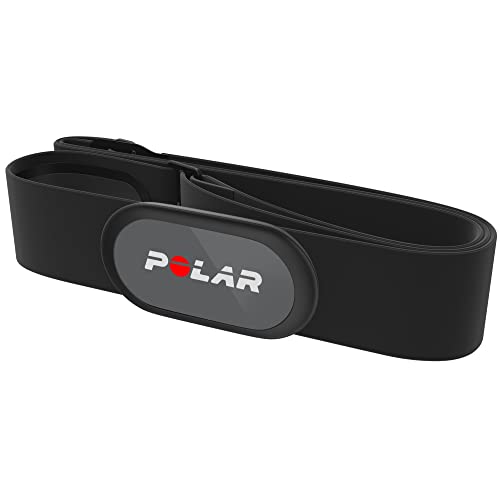
Live listings for the shortlist in this guide are pulled from Amazon below, so prices and availability are always current at the moment you look.


A final specification checklist
Before settling on a model, a buyer can compress this guide into eight questions, each answerable from published documentation. Does the sensing method suit the training — electrical measurement being the strap’s defining strength? Do the radios and simultaneous-connection count cover every screen in the intended setup, indoors and out? Does onboard memory exist if any session happens away from a receiver, above all in the pool, and is its capacity stated? Is RR-interval output explicit if variability analysis is planned, and does the intended app list the model as compatible? Does the battery approach — coin cell with its long rated life, or rechargeable pod with its shorter cycle — fit the buyer’s routines, with the hours figure checked rather than assumed? Is the water rating, with an explicit swimming statement where needed, sufficient for the wettest intended use? Do the published sizes cover the buyer’s chest measurement with adjustment room to spare, and are replacement straps available? And does the maker’s documentation answer all of these plainly, in numbers, on its own product page?
A strap that passes those eight questions will not merely record a pulse; it will integrate quietly into a training system and keep doing so across seasons, devices and disciplines, which is the real product being bought. Choose the strap whose published specifications match the way you actually train, and its quiet, precise stream of beats will still be serving your training long after flashier gadgets have been replaced.
Related guides
- Best 24 Inch Monitors
- Best 25–35 Inch Monitors With Lowest Display Lag: An Honest Ranking Without Invented Numbers
- Best 1440p 165Hz Monitors: One Native 165Hz Pick, Three 180Hz Upgrades, an Overclock Headline and a 160Hz Ultrawide
- Best Computer Monitors Graphic Designers Can Trust for Print and Screen Work


