Our Top Picks
 Kaunosta ADS-B SDR Radio Antenna 900-1800MHz/Compatible with 978MHz&1090MHzAntenna 1pcsCheck on Amazon

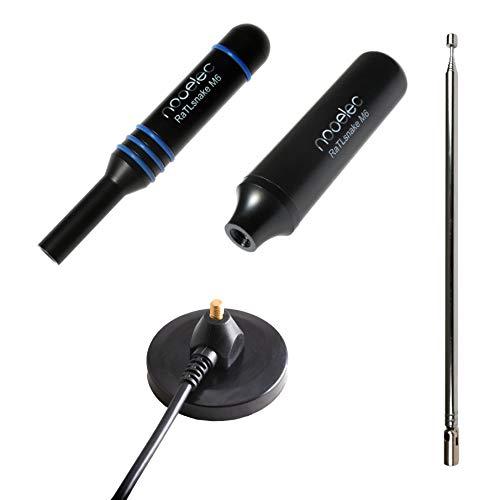


What's inside
- One receiver, a continent of spectrum
- The discone: breadth bought with honest mediocrity
- The telescopic dipole: the kit antenna that teaches the hobby
- Active loops: quiet ears for a noisy century
- Whips and verticals: excellence at one address
- The wideband problem stated plainly
- Connectors: SMA, BNC, and MCX in the SDR world
- Baluns, ununs, and the diplomacy of impedance
- Indoors, attic, or rooftop: the geography of a receiving site
- Noise, grounding, and the battle for a quiet floor
- Long wires and end-fed spans for the lower bands
- Directional antennas for listeners with a target
- Matching the antenna to the listening you actually do
- Maintenance, weather, and the slow enemies
- Assembling a station: a calm order of operations
- Preamplifiers and filters: seasoning, not the meal
- Field operation: the antenna leaves the house
- Five misunderstandings that follow SDR buyers home
- Check prices on Amazon
- Reading an antenna specification like a sceptic
As an Amazon Associate I earn from qualifying purchases. This post may contain affiliate links at no extra cost to you.
Reader note: this guide points to outside sellers through referral links in a few places; following one and buying may earn the site a commission, and that arrangement never adds anything to the amount a reader hands over.
One receiver, a continent of spectrum
Software-defined radio rearranges the relationship between listener and antenna more radically than any receiver that came before it. A traditional set arrives with a purpose: it hears the broadcast band, or the airband, or a slice of amateur spectrum, and its supplied antenna reflects that narrow calling. An SDR dongle or desktop receiver instead tunes across an enormous span, from long waves that cross oceans to microwave chatter overhead, all through one small input socket. The software handles demodulation for nearly anything it finds, which leaves the antenna as the single component still bound by old-fashioned physics.
That freedom creates the central puzzle of this guide. Wavelength shrinks as frequency climbs, so a structure sized beautifully for one end of the dial becomes electrically tiny or absurdly oversized at the other. No single passive antenna performs superbly everywhere across such a span, and anyone promising otherwise is selling optimism rather than engineering. The realistic goal is a considered compromise, or a small stable of antennas that divide the spectrum among themselves.
Reception forgives compromises that transmission never would, and that mercy shapes every recommendation ahead. A transmitting antenna must match its radio carefully or reflected power can damage the output stage. A receiving antenna with an imperfect match merely delivers a little less signal to a receiver that usually has sensitivity to spare. SDR listeners can therefore experiment boldly with odd wires, borrowed whips, and kitchen-table constructions that would horrify a transmitting amateur. The dial rewards curiosity, provided the listener understands where the real limits live.
Those limits are noise, dynamic range, and geography, more than raw sensitivity. Modern dongles hear astonishingly faint signals; the challenge is that they also hear the roar of household electronics, and strong local transmitters can overwhelm their modest front ends. Antenna choice influences all three factors at once. A quieter antenna in a better position, feeding a receiver protected from overload, will outperform a theoretically superior antenna drowning in interference every single evening.
The sections ahead tour the main antenna families an SDR owner actually encounters. Discones promise breadth, telescopic dipoles promise adjustability, active loops promise quiet, and whips promise simplicity at a chosen frequency. Connectors, matching transformers, mounting choices, and grounding each get their own examination, because in practice those supporting details decide whether a promising antenna delights or disappoints. By the end, the reader should be able to assemble a receiving setup matched to a home, a neighbourhood, and a listening appetite.
The discone: breadth bought with honest mediocrity
Few antennas announce their purpose as clearly as the discone, whose silhouette resembles a lampshade designed by a radio engineer. A horizontal disc sits above a cone of sloping rods, and that odd geometry produces an unusually wide working range with a mostly omnidirectional pattern. Commercial discones commonly cover from the upper shortwave region through the VHF and UHF bands and beyond, which maps almost perfectly onto the span a typical SDR explores most. For a listener who wants one rooftop structure feeding everything from airband to weather satellites, the discone is the default starting point.
Its pattern deserves a clear-eyed description. A discone radiates and receives chiefly toward the horizon, with sensitivity falling away at steep upward angles and below the horizontal. Ground stations, aircraft at distance, repeaters, and terrestrial services all live near that horizon, so the pattern suits them well. Satellites passing directly overhead fall into the weaker zone, which is why dedicated satellite listeners eventually add antennas shaped for the sky. Knowing this in advance prevents the discone from being blamed for a geometry it never claimed to serve.
Performance at the lowest advertised frequencies needs similar honesty. The discone remains usable surprisingly far down, yet its efficiency thins as wavelengths grow long compared with its modest dimensions. Shortwave broadcast and utility signals are strong enough that the thinning rarely matters in practice. Weak-signal connoisseurs pursuing faint beacons at the band edges will eventually want a dedicated long-wire or loop for those depths. The discone covers the territory; it simply does not dominate it.
Construction quality varies enormously across the discone market, and the differences show up outdoors. Stainless hardware resists the corrosion that creeps into cheaper plated fittings after two wet winters. Rod elements should lock firmly rather than wobble, because a tilted rod subtly distorts the pattern and invites water into the hub. The central insulator, where disc meets cone, carries the entire electrical design on its shoulders, so a cracked or sun-rotted insulator quietly ruins an otherwise sound antenna. Buyers comparing models should weigh materials and weatherproofing as heavily as frequency charts.
Size misleads newcomers in both directions. A discone looks substantial beside a dongle, yet its active dimensions are small compared with the wavelengths at its lower limit, which is exactly why that limit behaves as it does. Mounting one indoors, in an attic or beside a window, still yields respectable results across the stronger services, because VHF and UHF signals penetrate building materials more readily than folklore suggests. Attic mounting also shelters the hardware from weather and from planning restrictions that govern visible rooftop metalwork in some neighbourhoods.
The ground plane kit and other discone variations
Some discones ship with a vertical whip rising from the disc centre, extending useful coverage downward into lower VHF territory. That addition changes the antenna character at those frequencies from discone behaviour toward a ground-plane vertical, using the disc and cone as its counterpoise. Listeners interested in the lowest part of the range should look for that feature explicitly rather than assuming every model includes it. The whip usually tunes by length adjustment, so its instructions deserve reading rather than the usual drawer exile.
Compact indoor discones also exist for desks and windowsills, trading the rooftop virtues for convenience. Their reduced dimensions surrender the lowest octave or two and some horizon reach, yet for strong local services — airband from a nearby airport, marine traffic near a coast, urban repeaters — they perform entirely respectably. A listener in a flat with no roof access is not excluded from the hobby by that constraint. Geography forgives small antennas when the transmitters of interest are close and powerful.
The telescopic dipole: the kit antenna that teaches the hobby
Many SDR bundles include a pair of telescopic elements on a small magnetic mount, arranged as an adjustable dipole, and newcomers often underestimate the teaching value packed into that modest kit. Each element slides to change the antenna resonant length, which turns an abstract relationship between frequency and dimension into something fingertips learn directly. Shorten both sides for the UHF bands, extend them for VHF, and the received world audibly changes character as the match improves. No other beginner antenna makes the physics so tangible.
Used vertically with one element up and one down, the same kit behaves like a simple vertical dipole for local services. Rotated horizontal, it gains directionality and some rejection of vertically polarised local noise, at the cost of favouring signals arriving broadside to it. The magnetic foot encourages experiments on radiators, filing cabinets, and window frames, each surface altering behaviour in ways worth observing. Owners frequently report that an afternoon of such fiddling taught them more about their local spectrum than weeks of reading could.
Its limitations are structural rather than shameful. Telescopic joints loosen, elements bend, and the thin supplied cable was chosen for packing convenience rather than low loss. Below the VHF range the elements simply cannot extend far enough to resonate, so lower frequencies arrive through an electrically short, inefficient structure. Strong shortwave broadcasters still appear, because their signals are enormous, but the kit should be judged as a VHF and UHF instrument with incidental lower coverage. Within that honest remit, it remains the antenna against which every later upgrade gets compared.
Active loops: quiet ears for a noisy century
The magnetic loop antenna answers the defining problem of modern reception, which is not weak signals but deafening interference. A loop of wire or tubing, typically a metre or less across, responds primarily to the magnetic component of a radio wave, while most household interference couples electrically. That distinction lets a well-sited loop deliver signals standing clear of a noise floor that swamps a wire antenna in the same room. For shortwave and medium-wave listening in electrically filthy environments, the difference can feel less like an improvement and more like a relocation to the countryside.
Active designs place a small amplifier at the loop itself, and that amplifier is not a concession but the enabling idea. A passive small loop delivers minuscule voltages at lower frequencies; the built-in amplifier raises them to useful levels while preserving the loop directional character. Power reaches the amplifier through the same coaxial cable that carries the signal back, a scheme called bias-tee feeding, or through a separate small supply. Buyers must confirm their receiver or an external injector can provide that power, because an unpowered active loop performs like a decorative hoop.
Directionality is the loop other gift. Its reception pattern has two deep nulls, directions from which signals arrive dramatically weakened, and rotating the loop can swing a null onto an interfering neighbour, a noisy building, or a dominant station masking a weaker neighbour on the dial. Patient rotation is a listening skill unique to loop ownership, and it regularly rescues frequencies that a fixed antenna writes off entirely. Mounting the loop on an inexpensive rotating support, or simply within arm reach of the listening chair, keeps that skill practical.
Loops have boundaries that honest guidance must state. Their natural home is the spectrum below roughly 30 megahertz, with some designs stretching usefully into low VHF. They will not replace a discone for airband or UHF services, and their amplifiers, like any amplifier, can be overwhelmed by extremely strong nearby transmitters. Within their home territory, though, a loop transforms what an urban listener can hear after dark, when the lower bands fill with distant signals and local noise sources finally rest. Many experienced listeners end up owning both a loop for the depths and a discone for the heights, which is less extravagance than division of labour.
Passive loops, wire loops, and the do-it-yourself branch
Not every loop needs electronics. Larger passive loops, including multi-turn designs for medium wave and resonant frame antennas, serve listeners whose receivers provide generous gain of their own. Indoor wire loops strung around a window frame or along picture rails offer a nearly invisible installation that landlords rarely notice. The do-it-yourself tradition runs deep here, because a loop is fundamentally a shaped conductor, and household materials approximate one surprisingly well. Experimenters should simply remember that amplifier-free designs trade away the sensitivity at long wavelengths that makes active models so liberating.
Whips and verticals: excellence at one address
The humble whip inverts the discone philosophy completely. Instead of spreading competence across a continent of spectrum, a whip concentrates on a chosen band and performs there with an efficiency broadband designs cannot match. Its length approximates a quarter wavelength at the target frequency, standing over a ground plane or counterpoise that completes the other half of the antenna system. For a listener devoted to one service — a local repeater network, a marine channel set, an aviation frequency group — a whip cut for that service is the rational antenna.
Band-specific whips multiply quickly once a listener tastes that efficiency. A short stub serves UHF, a longer telescopic section covers VHF airband, and a base-loaded design compresses lower-frequency performance into a manageable height by trading bandwidth for size. Each remains inexpensive compared with broadband structures, so a row of whips on a shelf is a normal sight in an established listening station. The discipline lies in labelling them, because two whips differing by a few centimetres can belong to bands a hundred megahertz apart.
Handheld-scanner whips with flexible construction deserve mention for portable SDR use. A dongle paired with a small computer becomes a field instrument for surveying signals at parks, hilltops, and event venues, and a bendable whip survives the backpack in ways rigid elements do not. Owners frequently report that elevation during such outings matters more than the whip itself: a modest antenna on a hill hears a different world from a superb antenna in a basement. Portable operation teaches that lesson faster than any specification sheet.
Cellular antennas belong in this section as cousins worth recognising. The whips and paddles supplied with mobile broadband gear follow identical quarter-wave logic at their own frequencies, and readers curious about that neighbouring ecosystem can browse the routers gathered at best 4g lte routers to see how the same principles dress for a different job. An SDR listener who understands one such antenna understands the family resemblance in all of them.
The wideband problem stated plainly
It helps to state the coverage dilemma numerically, because the numbers explain why every SDR antenna is a negotiated settlement. A receiver spanning from long wave to the lower microwave region covers frequencies whose wavelengths range from over a kilometre down to a few centimetres. A resonant antenna wants dimensions tied to its wavelength, so no fixed structure can be resonant across that entire expanse. Broadband designs accept non-resonant operation and manage the consequences; narrowband designs decline the bargain and shine locally instead.
Non-resonant operation is not failure, especially for receiving. It means the antenna presents a varying, often awkward impedance to the cable, and some signal reflects or dissipates instead of reaching the receiver. Modern SDR front ends tolerate that gracefully across much of the range, and strong signals remain strong. The losses bite hardest exactly where signals are faintest and most coveted, which is why serious listeners stratify their antennas by band rather than demanding one structure do everything. A discone above, a loop below, and a whip or two for favourite services is not indecision; it is the mature shape of the hobby.
Software encourages a complementary strategy of scheduled attention. Because an SDR can record spectrum and revisit it, a listener can rotate antennas by interest: the loop connected for evening shortwave, the discone for a daytime airband session, the whip when a particular net convenes. A simple patch arrangement or even disciplined manual swapping keeps each antenna doing the work it suits. Readers who also run always-on data services may recognise the pattern from home networking gear such as the units at best 5g routers, where one box similarly juggles bands with different personalities.
Connectors: SMA, BNC, and MCX in the SDR world
Receiver inputs speak several connector dialects, and fluency prevents a familiar species of frustration. Most current SDR dongles present an SMA female socket, compact and threaded, borrowed from the wider radio trade. Larger desktop receivers and older scanner equipment favour BNC, the bayonet fitting that connects with a push and a quarter twist and disconnects just as quickly. Tiny MCX sockets appear on some miniature receivers and internal boards, where space forbids anything larger.
Adapters bridge these dialects, and a small drawer of them is standard equipment in any listening station. Each adapter should be bought with its direction stated plainly, because SMA alone splinters into standard and reverse-polarity variants inherited from wireless networking gear. An adapter described ambiguously in a listing is an adapter that will arrive wrong roughly half the time, in the experience reported by many hobbyists. Photographs showing the centre contact settle the question, exactly as they do when desktop networking antennas are involved.
Mechanical sympathy matters with the smaller fittings. MCX connectors tolerate limited mating cycles and resent side loads, so an adapter that converts MCX to a sturdier socket, left permanently attached, protects the receiver socket from daily wear. SMA threads cross easily when hurried, and a cross-threaded joint can feel deceptively tight while making poor contact. BNC bayonets forgive haste but loosen gradually on cables that get moved often, introducing intermittent crackle that masquerades as atmospheric noise. Every mysterious burst of static deserves a connector wiggle before it earns a deeper investigation.
Cable connectors carry the same responsibilities at the antenna end. Outdoor joints need weather protection, because water inside a coaxial connector corrodes the contact surfaces and creeps into the cable dielectric, raising loss month by month. Self-amalgamating tape, properly stretched and overlapped, remains the hobby standard for sealing such joints. Indoor joints need only stay snug and strain-relieved, though the strain relief part is neglected surprisingly often, judging by the antennas that fail where cable meets plug.
Gender, polarity, and the adapter that almost fits
Connector vocabulary trips buyers because gender describes the centre contact while polarity variants invert it, and listings compress both facts into one abbreviation. A reverse-polarity SMA plug carries a socket where a standard plug carries a pin, yet both thread onto the same shell dimensions. The result is fittings that start together, bind early, and never connect electrically, leaving the receiver apparently deaf. Checking any new adapter against a known fitting before connecting the receiver takes seconds. That habit, repeated faithfully, prevents the single most common hardware embarrassment in the hobby.
Baluns, ununs, and the diplomacy of impedance
Two transformer families appear wherever SDR owners connect antennas that were not born for coaxial cable, and their names encode their jobs. A balun joins a balanced antenna, such as a dipole or loop, to an unbalanced coaxial feedline, discouraging the cable itself from behaving like part of the antenna. An unun joins two unbalanced systems of different impedances, most famously matching a long random wire down toward the values a receiver expects. Both are small, passive, and easy to overlook, yet each can change a setup audibly.
The random wire is where ununs earn their reputation. A length of wire strung to a tree presents a wildly varying, often very high impedance, and connecting it straight to a dongle wastes much of what the wire collects while inviting the feedline to gather household noise. A 9:1 unun at the wire end, paired with a proper ground or counterpoise, tames that impedance and lets the coaxial run carry the signal indoors comparatively quietly. Owners frequently report the noise floor settling and weak stations emerging after adding one, a result that feels disproportionate to the little box responsible.
Baluns serve the dipole and loop owner in a quieter way. Without one, the outside of the coaxial shield becomes an unintended antenna element, ferrying indoor interference outward to the antenna and upsetting the pattern the designer intended. A 1:1 balun or a good common-mode choke at the feedpoint interrupts that path. The symptom it cures — noise that changes when the cable is touched or rerouted — is so characteristic that experienced listeners diagnose it on description alone. Anyone whose reception improves when a hand grips the feedline has met common-mode current personally.
Ratios and ratings on these devices deserve the same scepticism applied to any specification. A transformer wound for the lower bands may behave very differently at VHF, and a unit intended for transmitting power levels is overbuilt, though harmless, for receiving. For receive-only duty the priorities are bandwidth honesty, weather sealing where relevant, and connector sanity. The transformer should disappear from the listener attention once installed, which is the highest praise passive hardware can earn.
Indoors, attic, or rooftop: the geography of a receiving site
Every antenna decision eventually becomes a real-estate decision, because position governs performance more than pedigree does. A rooftop discone enjoys an unobstructed horizon, distance from household noise sources, and the height that VHF and UHF signals reward so generously. Against those virtues stand weather exposure, cable length, lightning considerations, and the simple labour of working safely at height. The rooftop is the best seat in the house, and like most best seats it charges for admission.
Attic installations split the difference with surprising grace. Height is mostly preserved, weather is entirely avoided, and cable runs to the listening room often shorten. The costs are subtler: roofing materials attenuate, metal foil insulation can nearly seal the space, and the antenna shares air with ducting, wiring, and stored clutter. For the lower bands an attic wire or loop may actually benefit from separation from the living-space noise below it. Many listeners begin in the attic and discover they never need to go higher.
Indoor antennas at the listening desk remain the starting point for most of the hobby, and their virtues are immediacy and adjustability. A loop within reach can be rotated for each frequency; a telescopic dipole can be re-tuned in seconds; a whip can swap for its sibling between one transmission and the next. The desk environment, however, is the noisiest in the home, saturated with emissions from the very computer the receiver plugs into. Distance, even a few metres of cable placing the antenna at a window, frequently outperforms a theoretically better antenna sitting beside the monitor. The window seat is the indoor antenna best friend, combining building penetration losses at their thinnest with a view toward the horizon.
Balconies occupy a useful middle territory for flat-dwellers. A small discone or vertical at the railing escapes the building shadow on one side, and many buildings tolerate modest balcony hardware that a rooftop would never permit. Orientation matters there: an antenna on the side of the building facing away from the services of interest works through the structure rather than around it. Even so, owners frequently report balcony setups hearing startlingly well, because elevation plus one clear hemisphere beats ground-level omnidirectionality in a courtyard.
Feedline: the longer the run, the more it matters
Between any elevated antenna and the receiver stretches coaxial cable, and its appetite for signal grows with both length and frequency. At shortwave frequencies a long run of modest cable loses little that matters. At UHF, the same run can consume most of a weak signal before it reaches the desk, which is why satellite and high-UHF enthusiasts fuss over cable grades that shortwave listeners ignore. Choosing a lower-loss cable for long or high-frequency runs is unglamorous spending that protects every other investment in the chain.
Routing discipline preserves what the cable grade promises. Gentle bends, protection where the cable passes windows or doors, drip loops before entry points, and sealed outdoor connectors all prevent the slow degradations that owners misattribute to ageing antennas. A cable entering the house should also carry a lightning arrestor where codes and prudence call for one, bonded to a proper earth. Receiving antennas attract the same sky as transmitting ones, and the safety conversation is not optional decoration.
Noise, grounding, and the battle for a quiet floor
Ask experienced listeners what limits their reception and few will name receiver sensitivity. The modern home radiates interference from switching power supplies, LED lighting, network gear, solar inverters, and a dozen chargers, each contributing a rasp, buzz, or wandering carrier somewhere on the dial. An SDR waterfall display renders that pollution visible, which is both depressing and diagnostic. The antenna strategy that follows from this reality is simple to state: gather signal from where the noise is not, and refuse to gather noise on the way back.
Separation is the first weapon. Every metre between the antenna and the household electronics lowers the interference the antenna can hear, because local noise fields collapse quickly with distance. That single fact explains why a mediocre antenna outdoors routinely defeats an excellent antenna indoors, and why feedline chokes matter: an unchoked cable imports the indoor noise field straight to the outdoor antenna feedpoint. The system must be quiet end to end, or the noisy segment defines the whole.
Grounding serves two distinct masters that are often confused. Safety grounding protects people and equipment from lightning and mains faults, follows electrical codes, and is non-negotiable for outdoor installations. Radio-frequency grounding, by contrast, concerns counterpoises for vertical antennas and quiet return paths that keep noise out of the receiving system. A ground rod that excels at the first job may contribute little to the second, and long ground leads can even import noise from the building electrical system. Knowing which problem is being solved prevents the cargo-cult earthing that fills hobby forums with disappointment.
Single-point discipline helps both causes. Bonding antenna earth, arrestor, and shack equipment to one common point avoids the loops that hum, buzz, and occasionally bite. Short, wide conductors outperform long thin ones for these bonds, because inductance, not resistance, dominates at radio frequencies. Where a true earth is impractical, as in upper-floor flats, a counterpoise of wire along the skirting or beneath a rug can serve the radio-frequency purpose for vertical antennas surprisingly adequately. Perfection is unavailable in most homes; thoughtful approximation is not.
Receiver settings join the fight from the other end. Excess gain is the beginner most reliable route to misery, because amplifying everything raises the noise and pushes strong signals into distortion that splatters across the display. Reducing gain until the noise floor just begins to fall, then stopping, is a calibration ritual worth learning early. Attenuators, preselection filters, and notch filters each address specific overload situations, and the antenna that delivers a cleaner, slightly weaker signal often needs none of them. Quiet, in this hobby, is a system property, never a single purchase.
Identifying a noise source without losing a weekend
Method beats folklore when a new interference appears. Switching off household circuits one at a time while watching the waterfall narrows the culprit to a room or a device category within minutes. A portable receiver carried around the home turns that suspicion into an identification, because local noise grows dramatically louder within a metre of its source. Owners frequently report that one bargain phone charger or one failing lamp supply accounted for a band-wide rasp they had blamed on the neighbours or the power company. Replacing a single offender can return entire bands to service, which makes the hunt the highest-value hour in the hobby.
Long wires and end-fed spans for the lower bands
Below the discone comfortable territory lies a region where wire, height, and patience have ruled for a century. A long wire antenna is exactly what its name confesses: a span of conductor, as long and as high as the property allows, brought indoors through a matching transformer. It costs little, hides well along fences and rooflines, and gathers shortwave and medium-wave signals with an appetite no desktop structure can imitate. For listeners whose hearts live below 15 megahertz, it remains the benchmark against which loops argue their quieter case.
Length helps until it complicates. A longer wire collects more signal and develops lobes and nulls that favour some arrival directions over others, which the listener cannot steer after installation. Trees sway, insulation weathers, and the far support is rarely where the designer would have chosen it in an empty field. None of that prevents excellent results; it merely means the wire should be strung with realistic expectations and safe clearances from power lines treated as absolute law. No antenna project justifies contact with the mains distribution network, ever, under any schedule pressure.
End-fed geometry concentrates the practical questions at the near end, where the unun, the ground or counterpoise, and the feedline all meet. That junction decides how much of the collected signal survives the trip indoors and how much household noise hitchhikes outward along the cable. A choke placed a short distance down the feedline is cheap insurance with an audible return. Owners frequently report that attention to this unglamorous junction mattered more than adding extra metres of wire, a pattern that repeats across the whole receiving discipline.
Directional antennas for listeners with a target
Omnidirectional convenience stops being a virtue when the wanted signal is weak, distant, and fixed in one direction. Yagi arrays, log-periodic designs, and panel antennas concentrate reception into a beam, gaining sensitivity toward the target while rejecting interference arriving from elsewhere. Weather-satellite enthusiasts, weak-signal VHF devotees, and listeners stalking a particular distant repeater all graduate to directional hardware eventually. The beam is a bargain: extra performance in one direction, paid for with indifference or deafness in the others.
Log-periodic designs deserve special attention from the SDR community because they keep that beam across a wide frequency span. A log-periodic aimed out a window can serve airband, the VHF amateur region, and UHF services with one structure, which suits a receiver defined by breadth. The price is size and the need to aim, sometimes with a small rotator where targets move or multiply. Fixed listeners with one dominant direction of interest get the simplest version of the bargain and usually the most satisfaction from it.
Satellite work bends the directional story upward. Passes arc across the sky, so fixed beams miss most of each orbit, and the community has answered with antennas whose patterns favour the heavens: turnstiles, eggbeaters, and quadrifilar designs that listen upward in every direction at once. Those shapes look eccentric because the problem is eccentric. A discone owner frustrated by overhead fades is not doing anything wrong; the sky simply wants a different geometry, and adding one upward-looking antenna completes a station more honestly than replacing everything below it.
Matching the antenna to the listening you actually do
Abstract comparisons resolve quickly once a listener names the services that fill their evenings. Aviation devotees live between roughly 108 and 137 megahertz, where a vertical with a clear horizon and modest height performs beautifully, and where the bundled telescopic dipole, properly extended, already surprises newcomers. Marine listeners near coasts want the neighbouring VHF channels served by similar vertical geometry, plus patience for the quiet hours between transmissions.
Shortwave broadcast and utility hunters inhabit the opposite extreme, where loops and wires divide the honours according to how noisy the home is. Amateur-band listeners split by band in the same way, with the added pleasure that directional HF arrays exist for those with gardens and ambition. Utility decoders following data signals from smart meters and weather balloons care about specific UHF neighbourhoods where a band-cut whip and a quiet site outperform any broadband compromise. Readers who arrived here from home networking will recognise the logic: the router surveys filed under best 11ac long range routers reward the same habit of matching hardware generation and band to the job, rather than buying the broadest claim on the shelf.
Aircraft tracking at 1090 megahertz has grown into a hobby of its own, with dedicated small verticals and filters tuned to that single frequency. Its popularity teaches a general lesson about SDR antennas: a narrow, optimised solution for one beloved service often delivers more joy than a universal antenna serving everything adequately. The same applies to the desktop realm, where the antennas discussed alongside best 2 band wifi routers succeed precisely because their designers refused to chase every band at once. Specialisation is not a limitation in radio; it is frequently the entire point.
New listeners should therefore sequence purchases by curiosity rather than completeness. Start with whatever arrived in the box, learn the local spectrum for a month, and let genuine appetites announce themselves. The first upgrade then answers a named frustration — noise on the lower bands, fades on the airband, silence where a satellite should sing — instead of a vague suspicion that better must exist. That discipline keeps the antenna shelf purposeful and the budget pointed at audible returns.
Maintenance, weather, and the slow enemies
Outdoor antennas live hard lives, and their failures arrive gradually enough to be mistaken for changing conditions. Ultraviolet light embrittles plastic insulators and cable jackets over seasons, turning flexible parts into cracked invitations for water. Corrosion creeps across dissimilar-metal joints, raising resistance at exactly the interfaces the signal must cross. A yearly inspection with binoculars from the ground, plus a hands-on check whenever access is safe, catches most of this decline while remedies are still cheap.
Water deserves its reputation as the chief saboteur of receiving systems. It enters through unsealed connectors, wicks along cable braids, and changes the electrical character of everything it touches, usually for the worse and always without announcement. The signature is a setup that degrades after rain and partially recovers in dry spells, a pattern owners frequently report diagnosing only after months of blaming propagation. Drip loops, sealed joints, and cables replaced at the first sign of jacket cracking are the unglamorous defences that actually work.
Indoor hardware ages more gently but not eternally. Telescopic elements develop intermittent joints, magnetic mounts lose their bite as their rubber pads perish, and adapter threads wear toward looseness. A contact cleaner approved for electronics, applied sparingly, restores many sulking connections. Keeping one known-good spare antenna and one spare cable in the station turns every future fault into a five-minute substitution test instead of a week of speculation.
Assembling a station: a calm order of operations
A sensible SDR antenna plan assembles itself in layers, each layer answering the limitation the previous one revealed. Layer one is position: get any antenna, including the bundled one, as high, as clear, and as far from the computer as the home allows. Layer two is breadth: add the broadband structure, usually a discone outside or a decent vertical, that maps the VHF and UHF world. Layer three is depth: add the loop or wire that opens the lower bands with a noise floor the indoor antennas could never offer.
Layer four is refinement, and it is deliberately last. Chokes, transformers matched to the actual wires in use, lower-loss cable on the runs that need it, and perhaps one directional or upward-looking specialist all belong here. Bought earlier, refinements polish a compromised foundation; bought in order, they compound. The listener who follows that sequence can name what each purchase changed, which is the difference between a station and a pile of hopeful hardware.
Budget follows the same layering without strain. Position costs almost nothing, breadth costs a moderate structure and its mounting, depth costs one specialised antenna, and refinement spreads across small items bought as frustrations identify themselves. Nothing in the sequence demands completion, and a two-layer station in a quiet location will embarrass a four-layer station beside a failing solar inverter. Geography and noise discipline outrank expenditure at every step of this hobby.
Safety threads through the plan as a constant rather than a layer. Outdoor work respects ladders, weather, and power lines; mast work respects wind loading and the strength of whatever the mast attaches to; electrical work respects codes for earthing and lightning protection. Receiving-only stations sometimes lull owners into treating these as transmitting-station concerns, which they are not. The sky does not check whether an antenna ever transmitted before deciding where lightning goes.
In the end, the finest SDR antenna is the one matched so thoughtfully to its home and its listener that it disappears, leaving only the voices, beacons, weather reports, and distant music it was raised to hear.
Preamplifiers and filters: seasoning, not the meal
Sooner or later every SDR owner meets the temptation of a masthead preamplifier, a small powered box promising to lift weak signals out of the murk. Such devices have one legitimate job: overcoming loss in a long feedline by amplifying at the antenna, before the cable can dilute the signal with its own contribution. Used for that job, with modest gain matched to the cable loss involved, a preamplifier is honest engineering. Used as a general tonic at the receiver input, it amplifies the noise alongside the signal and invites overload from every strong transmitter in the neighbourhood.
Overload is the tax that SDR hardware pays for its breadth and affordability. A powerful FM broadcast station or a nearby pager transmitter can consume the receiver dynamic range, generating phantom signals that masquerade as genuine spectrum activity. The cures are unglamorous: less gain, better selectivity, and antennas that do not deliver the entire spectrum at maximum enthusiasm. A notch filter that quiets the broadcast band can transform a struggling station more completely than any amplifier, because it removes the specific bully rather than shouting over it.
Band-pass filters extend that logic constructively, admitting one region of interest while declining the rest. A listener devoted to airband, or to a satellite downlink, or to a single utility allocation gains dynamic-range headroom by filtering everything else away. Filters belong between antenna and receiver, ahead of any amplification, so that the amplifier never wastes its composure on signals nobody wants. The antenna remains the first filter of all, which circles back to why band-appropriate antennas outperform universal ones in strong-signal environments.
Field operation: the antenna leaves the house
Taking an SDR outdoors reorders antenna priorities in instructive ways. The noise floor in a park or on a hilltop can sit so far below the home floor that modest antennas suddenly perform like heroes, and the bundled telescopic kit becomes a serious instrument. Elevation replaces amplification as the great lever: a ridge or a tall building rooftop opens horizons that no indoor hardware at sea level will ever see. Owners frequently report that one afternoon on high ground recalibrated their sense of what their receiver could do.
Portability favours antennas that collapse, bend, or pack flat, and that tolerate imperfect mounting on railings, tripods, or vehicle roofs. Magnetic mounts earn their keep here, gripping a car roof as an instant ground plane for vertical whips. Wind becomes a design factor that indoor listeners never meet, punishing tall, loosely jointed elements and rewarding compact ones. A field kit assembled with the same layered thinking as a home station — one broadband option, one lower-band option, adapters, and a choke — fits in a small bag and answers most situations the landscape proposes.
Recording completes the field method. Because the receiver can capture whole slices of spectrum to a file, a short session on a hilltop can stock an evening of indoor exploration, signals and all. Antennas in that workflow serve as gathering instruments rather than live companions, and comparisons between two candidate antennas become exact: record the same pass or the same minute on each, then study both files at leisure. Few home experiments offer that cleanliness, which is why field trips punch above their recreational weight in listener education.
Five misunderstandings that follow SDR buyers home
The first misunderstanding equates bigger with better across the whole dial. Size serves wavelength, so the enormous antenna that devours shortwave may be mediocre at UHF, while the tiny whip that sparkles at 1090 megahertz hears almost nothing below VHF. The second misunderstanding treats advertised frequency range as a promise of uniform performance, when every broadband antenna has regions of strength and regions of mere adequacy hiding inside that range.
The third misunderstanding blames the antenna for noise that the feedline imported or the receiver gain created, sending owners shopping when a choke or a settings change held the answer. The fourth expects a receiving antenna to need the anxious precision of a transmitting one, forgetting that reception forgives mismatch with a gentleness transmission never shows. The fifth, and most expensive, buys completeness in advance: a shelf of antennas for services the listener has not yet discovered an appetite for, gathering dust while the two actually used do all the work.
Underneath all five sits a single corrective habit, which is to change one variable at a time and listen long enough for conditions to vary. Radio conditions breathe across hours and days, and a verdict formed in ten minutes often convicts an innocent antenna for the crime of a quiet band. Patience is diagnostic equipment. The listeners who develop reliable judgement are simply the ones who let each experiment run its full course.
Raised with that patience, sited with that care, and matched with that honesty about its limits, an SDR antenna stops being an accessory and becomes what it always was underneath: the half of the receiver that lives outdoors, gathering the sky on behalf of the half that lives in software.
Check prices on Amazon
Live listings for the shortlist in this guide are pulled from Amazon below, so prices and availability are always current at the moment you look.


Reading an antenna specification like a sceptic
Specification sheets for receiving antennas reward the same scepticism applied to any catalogue, because the numbers are real but selectively framed. A frequency range states where an antenna functions, not where it flourishes, and the honest makers publish gain or efficiency curves that show the hills and valleys inside that range. A flat claim of coverage from a seller who shows no curve is asking for faith where evidence was available. Comparing two curves teaches more in a minute than comparing two range claims teaches in an hour.
Gain figures for receiving antennas carry the same directional fine print encountered everywhere in radio. A quoted number describes the favoured direction under stated conditions, and omnidirectional claims deserve a look at the pattern plot to see how even the coverage truly is. Polarisation, rarely printed in large type, decides whether a vertically mounted whip and a horizontally polarised distant signal ever truly meet. None of this makes specifications useless; it makes them a beginning of the conversation rather than its conclusion.
Reviews and owner reports fill the gaps that sheets leave, provided they are read for conditions rather than verdicts. A listener praising an antenna from a rural hilltop and a listener damning the same model from a city basement are both telling the truth about different radios, in effect. Extract the site details — height, surroundings, noise environment, receiver used — and the reports become data instead of opinion. The hobby literature is full of such reports, and learning to mine them is a permanent skill that outlasts any single purchase.
Documentation supplied with the antenna itself deserves the same attention. Assembly diagrams that specify element lengths per band, torque guidance for small fittings, and honest notes about where performance tapers all signal a maker who expects the product to be used thoughtfully. Vague paperwork correlates with vague engineering more often than chance allows. Keep the good documents with the station log, because the adjustment that mattered in spring will be forgotten by autumn unless paper remembers it.
Trust, then, but verify against the dial itself, since the spectrum is the one reviewer that cannot be flattered, bribed, or mistaken about what arrived at the receiver input on a given evening in a given place.
One last habit separates stations that improve from stations that merely accumulate: a simple logbook, paper or digital, noting each antenna change, each new noise source identified, and each band that surprised the listener on a given night. Months later those notes reveal patterns no memory holds reliably, from seasonal propagation shifts to the evening hours when a particular neighbour device poisons a favourite frequency. The log turns ownership into knowledge, and knowledge is the compound interest of this hobby.
Begin where the curiosity is loudest, raise the antenna that curiosity demands, and let the dial itself grade every decision from there.


