Our Top Picks
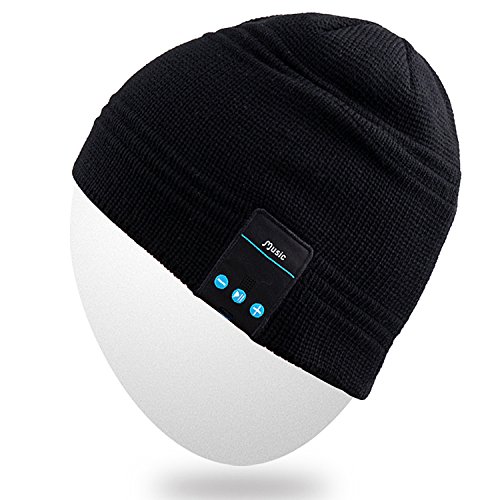 Rotibox Bluetooth Beanie Hat for Fitness Skiing RunningOne Size10.2 x 9.8 x 1 inches0.2 poundsCheck on Amazon

What's inside
- How a speaker beanie actually works
- Driver placement and why the sound leaks by design
- Battery capacity and honest play time in cold weather
- Bluetooth versions, range, and multipoint
- The built-in microphone, calls, and the glove problem
- Washing, removable electronics, and the knits themselves
- Where a speaker beanie earns its place
- When earbuds or bone conduction fit better
- Fit over helmets, hoods, and other winter layers
- Charging connectors and the small failure points
- What different listening sounds like through a beanie
- Comfort over a full outing
- Pairing problems and simple troubleshooting
- Durability, repairs, and living with knitwear
- Staying aware: volume discipline on roads and trails
- Sharing the hat, family use, and hygiene
- A calm method for choosing your beanie
- Check prices on Amazon
- Closing thoughts on hats that play music
As an Amazon Associate I earn from qualifying purchases. This post may contain affiliate links at no extra cost to you.
A beanie with speakers built in sounds like a novelty until the first cold morning makes the logic clear. Earbuds ache under a tight hat, over-ear headphones fight the hat for the same space, and a phone speaker in a pocket muffles under layers of clothing. A speaker beanie folds the audio into the hat you were going to wear anyway: two thin drivers sit over your ears inside the knit, a small control module handles power, pairing, and calls, and a rechargeable battery hides in a pocket behind the fabric. The result will never rival a good pair of headphones for fidelity, and it is not meant to. It is a comfort product for winter walks, runs, yard work, and commutes, where hearing your surroundings still matters and where taking gloves off to manage a phone is the real enemy. This guide explains how the design works, where its sound limits come from, how battery claims behave in real cold, what Bluetooth versions and multipoint change in daily use, how the electronics come out for washing, and when earbuds or bone conduction serve you better. It is written from product documentation, Bluetooth specification material, and textile care conventions, not from any claim of personal evaluation.
If a purchase through links on this page earns a commission paid by the retailer, that arrangement adds nothing to your price and plays no part in the standards set out in this guide.
How a speaker beanie actually works
Strip the idea down and every speaker beanie is the same four parts arranged the same way. First, the hat itself: a knitted beanie, sometimes with a fleece band or full lining, cut long enough to cover the ears fully. Second, the drivers: two thin, flat loudspeaker units, each roughly the size of a large coin and only a few millimetres thick, slipped into pockets or stitched pouches in the fabric over each ear. Third, the control module: a small flat unit, usually sitting at the side or back of the hat, holding the Bluetooth radio, the amplifier, the battery, a microphone, control buttons, and a charging port. Fourth, the wiring: fine cables run through channels inside the knit from the module to each driver, hidden from view and, ideally, protected from the stretching the hat does every time it is pulled on.
Pairing follows the pattern of any simple Bluetooth audio device. You hold the power button until an indicator light or tone announces pairing mode, select the beanie on your phone, and the connection is remembered for later sessions. Most models power on with a long press, answer or end a call with a short press of the main button, and adjust volume or skip tracks with combinations of presses on two or three buttons. There is no app on most designs, no equaliser, and no firmware journey. That simplicity is a genuine feature in winter: the whole interface is three glove-friendly decisions, and nothing about the hat depends on a phone application staying updated.
Because the electronics are a removable system rather than part of the yarn, build quality shows in the details around them. Look in the documentation for how the drivers sit in their pouches, whether the module pocket closes with a fastener or is simply a slit in the lining, and whether cable channels are stitched or left loose inside the knit. Loose internal wiring migrates, twists, and eventually pulls on solder joints when the hat stretches. Stitched channels and a module pocket that closes keep the system where the maker placed it, which matters for sound as much as for durability, since a driver that has drifted an inch back from the ear sounds distant no matter how good it is.
Driver placement and why the sound leaks by design
Sound quality in a speaker beanie is mostly geometry. The drivers do not seal against the ear. They rest in fabric near the ear, separated from it by knit, by hair, and often by a small and variable air gap that changes every time you pull the hat on. Without a seal, low frequencies escape instead of building pressure, so bass is light by physics rather than by poor manufacture. Midrange, where voices live, carries well, which is why spoken word, radio, podcasts, and acoustic music suit these hats and why dense, bass-led music sounds thin. Volume also has a ceiling set by driver size and battery power: enough for a walker on a quiet street, strained on a windy ridge or beside heavy traffic, where turning the hat up mainly adds distortion and leak.
Placement accuracy matters more than any driver specification printed on a box. A driver centred over the ear canal sounds full and balanced between left and right. A driver sitting high, low, or toward the back of the head sounds muffled and lopsided, and no volume increase repairs it. Better designs give the driver pouches some adjustment, letting you slide each unit while wearing the hat until voices centre properly. When you first fit any speaker beanie, spend two minutes on this. Play speech rather than music, move each driver slowly, and settle it where speech sounds clearest at modest volume. That position is also the most efficient one, so your battery lasts longer than it would with a misaligned driver played louder to compensate.
The leak that limits bass is also the product safety story. Because nothing blocks the ear canal, traffic, bicycle bells, a colleague calling your name, and a dog barking behind you all remain audible. Designers describe this as open listening, and for outdoor winter activity it is the correct trade: you give up immersion and gain awareness. The same openness means people near you can hear a faint version of your audio at high volume, especially in quiet indoor spaces such as trains and waiting rooms. A speaker beanie is a poor choice for a library carriage and a good choice for a frosty towpath, and choosing it honestly for the second setting, rather than forcing it into the first, is most of what satisfaction with this category comes down to. For indoor and office listening, purpose-built options covered in best bluetooth headsets for noisy office follow a different design logic altogether.
Battery capacity and honest play time in cold weather
Battery figures in this category are quoted in milliamp hours for the cell and in hours for the listening time, and both need translating. Small beanie modules commonly carry a cell in the region of a few hundred milliamp hours, which makers convert into claims that often land somewhere between six and ten hours of play at moderate volume. Those claims are measured under mild conditions: room temperature, steady mid-level volume, and a continuous stream from a phone held nearby. Your winter morning differs on every point. Volume rises outdoors to compete with wind and traffic, and higher volume draws more current. Distance and body shielding interrupt the radio link, and reconnections cost energy. Above all, cold itself reduces what a lithium cell can deliver.
The cold effect is chemistry, not a defect in any particular hat. A lithium-ion cell relies on reactions that slow as temperature falls, so a battery that delivers its full capacity on a mild autumn day delivers noticeably less on a hard frost morning, and the beanie module sits in exactly the wrong place to escape it: thin fabric at the side of the head, exposed to moving air. The effect reverses as the cell warms, so a hat that fades early on a freezing run has not necessarily developed a fault. Practical planning follows from this. Charge the night before a cold outing rather than relying on charge held from last week, keep expectations at perhaps two-thirds of the headline figure in deep cold, and treat a spare ordinary hat as sensible backup on long days, because a dead speaker beanie is still a hat, but a flat battery ends the audio part of the plan completely.
Charging time deserves the same plain reading. Small cells recharge in roughly one and a half to two and a half hours on most documented models, and the indicator behaviour, usually a light that changes colour or goes out, is described in the manual. Fast charging is rare and unnecessary at this cell size. What matters more is the low-battery warning: some models give a tone with useful time remaining, others warn late and cut out soon after. Documentation rarely states the warning interval, so build your own margin by recharging after any long session rather than running the cell to empty each time. Lithium cells also age by cycle and by calendar, and a beanie battery that cannot be replaced, which is most of them, sets the service life of the whole product. Gentle habits, avoiding full discharge, avoiding charging a freezing-cold hat immediately, and storing it partly charged in summer, extend that life in ways no specification sheet will do for you.
Bluetooth versions, range, and multipoint
Speaker beanies appear with Bluetooth versions from older 4-series radios through 5-series variants, and the version number changes daily life in specific, limited ways. Newer 5-series radios generally hold a steadier link at the edge of range, use less power for the same work, and reconnect faster when you walk back toward your phone. They do not transform sound quality, because the limiting factors remain driver size and the open fit described earlier. Audio codec support on these hats is typically the basic standard codec, occasionally with AAC for phones that prefer it. Given the drivers involved, codec differences rank far below fit and placement as reasons to choose one hat over another.
Range claims of around ten metres describe open space with line of sight. Real winter use inserts a body, a thick coat, and a phone buried in an inside pocket between the radio and the hat, and each layer shortens the working distance. In practice the link is a same-room, same-person link: phone in your pocket, hat on your head, no problem; phone left on a kitchen counter while you clear snow from a long driveway, dropouts at the far end. Plan around that reality. Keep the phone on your person during outdoor work, and treat any extra range you experience indoors as a bonus rather than a specification to rely on.
Multipoint, the ability to stay connected to two devices at once, appears on some models and is worth wanting if your day splits between a laptop and a phone. With multipoint, a video call on the laptop can pause while a phone call comes through on the same hat, and you avoid the pairing dance of disconnecting one device to hear the other. Without it, switching sources means toggling Bluetooth on one device or re-pairing, which with gloves on is exactly the friction this product exists to remove. Check the manual wording carefully: some hats remember two devices but connect to one at a time, which is memory, not multipoint. True multipoint is stated plainly when it is present. If your listening is phone-only, as it is for most runners and dog walkers, multipoint adds nothing and should not sway a choice. For mixed-device days, compare also the dedicated calling options in best bluetooth headsets for making phone calls, since a beanie microphone has limits the next section explains.
The built-in microphone, calls, and the glove problem
Every speaker beanie microphone fights the same battle: it sits in the hat, near the cheek or forehead depending on module position, far from the mouth and close to wind, fabric rustle, and the sound of your own footsteps transmitted through the knit. Indoors and on calm days, callers usually report speech that is clear enough for a short conversation, a delivery instruction, or a quick coordination call. Outdoors in wind, the same microphone delivers your voice wrapped in weather, and callers will ask you to repeat yourself. This is a geometry limit shared by the whole category. A boom microphone near the mouth will always win for call quality, which is why anyone whose winter work runs on long, important calls should treat the beanie as a listening device that can take a call, not as a call device that happens to play music.
Call handling itself is deliberately simple. A short press of the main button answers or ends a call on most models, a long press rejects it, and some designs add a double press to redial the last number or summon the phone voice assistant. Learn the press pattern for your model at home, with bare hands, before you need it on a cold street. Voice assistant access is quietly one of the best features in this category: asking for the time, the weather, or a route reminder by voice avoids the phone entirely, and it works through the same microphone, with the same wind caveat.
Gloves decide whether any of this is usable. Good beanie controls use one to three large, raised buttons on the module, spaced so a gloved thumb can find them by touch and firm enough to press through a glove without ambiguity. Poor controls use flush touch panels or tiny buttons in a row, which demand bare fingers and eyes on the module, defeating the purpose. Documentation and product photographs usually reveal which approach a model takes: raised symbols you can see standing proud of the module surface are the glove-friendly sign. Button placement matters too. A module at the side of the head, reachable without disturbing the hat fit, beats one at the back that shifts the hat every time you reach for it. If you wear thick ski gloves rather than thin liners, favour the largest buttons you can find and accept fewer functions in exchange for controls you can actually operate at the moment a call arrives.
Washing, removable electronics, and the knits themselves
Getting the electronics out, and back in
The single most important care question for a speaker beanie is whether every electronic part comes out before washing, and how. On well-designed models, the module lifts from its pocket and each driver slides from its pouch, sometimes with the wiring harness coming away as one connected piece, sometimes with a small connector to unplug. The manual should show this removal in pictures, because you will do it several times a year and any design that requires force, guesswork, or threading cables blind through the knit will eventually break a wire. After washing, the reverse journey matters just as much: drivers must return to the same pouches, in the same orientation, with cables lying flat in their channels. A driver refitted backwards or a cable twisted across the ear is the most common cause of a hat that sounds wrong after its first wash.
Never wash the electronics. The module, drivers, and wiring are not waterproof in the laundry sense, whatever splash resistance the product claims for rain and sweat. If a model on your shortlist does not clearly document full removal of the electronics, treat that as a serious mark against it, because a hat worn for exercise and outdoor work will need washing, and an unwashable winter hat has a short and unpleasant life. Between washes, airing the hat inside out after each sweaty session and spot-cleaning marks with a damp cloth keeps the knit fresh and stretches the interval between full washes.
Knit materials, lining, and care labels
Most speaker beanies use acrylic knit for the outer hat. Acrylic is light, warm for its weight, colourfast, tolerant of washing, and free of the shrink risk that haunts wool in a warm machine cycle. Its weaknesses are a tendency to pill where it rubs against coat collars and straps, and less natural temperature regulation than wool, so a hard run can feel clammy sooner. Wool and wool-blend versions exist and breathe better, at the cost of stricter washing rules. Fleece lining, either a band around the ears or a full inner layer, adds wind resistance and a softer feel against skin, and it holds the driver pouches in a stable position. An ear band of fleece is often the smarter design for active use, since a fully lined hat can be too warm once you are moving, while the band still shields the ears, which are both the coldest point and the listening point.
Follow the care label over any general advice, including this guide. Typical labels for this category call for a cool, gentle machine wash or hand wash once the electronics are removed, drying flat rather than in a tumble dryer, and no iron over the driver area even after refitting. Drying flat matters because a wet knit hung by one edge stretches under its own water weight, and a stretched beanie fits loosely forever after, which loosens the driver position and quietly ruins the sound you fitted so carefully. Store the hat dry, uncrushed where possible, and out of prolonged direct sunlight that fades acrylic colours.
Sizing and stretch
Most speaker beanies are sold as one size, relying on knit stretch to cover a range of heads. Stretch solves circumference but not proportions. On a smaller head, a generous beanie can sit low enough that the drivers land below the ears and the brim crowds the eyes. On a larger head, the same hat rides high, the drivers sit above the ears, and the fabric tension presses the module uncomfortably against the skull. Look for any stated head circumference range in the documentation, any choice of sizes, and the depth of the hat from crown to brim if it is given. A deep watch-cap style that can be worn with the brim folded up gives you adjustment in both directions: fold more for a smaller fit and a double layer over the ears, fold less when you need coverage. Remember that hair volume, a balaclava underneath, and glasses arms all change the effective fit, and glasses wearers should check that the driver pressure over the ear does not press spectacle arms into the skin over a long walk.
Where a speaker beanie earns its place
Winter running is the showcase use. The hat stays put where earbuds work loose, there are no cables, the open sound keeps traffic audible, and the controls work through gloves at the moment you want to skip a track or take a call. The limits are sweat and wind: choose a lighter knit or an ear-band lining for hard efforts, and expect wind noise across the fabric on exposed routes to compete with the audio. Dog walking suits the product almost as well, at lower intensity and longer duration, where a podcast at modest volume and full awareness of the park around you is exactly the brief. One hand holds a lead, the other may hold a light or a bag, and neither is available for phone management, which is the whole point of putting the controls on your head.
Snow work and outdoor chores, shovelling, clearing a car, stacking wood, working a market stall, reward the same hands-free logic over longer, slower sessions. Battery planning matters more here, since a morning of intermittent listening still drains the cell in cold air, and a module button you can hit with a work glove matters more than any audio refinement. Commuting splits by mode. Walking to a station and standing on a windy platform suits a speaker beanie well. A crowded carriage does not, because of the sound leak described earlier, and a cycling commute raises a separate question covered in the helmet section below. For desk and home working, the hat has little to offer beyond novelty, and the broader headset field in best affordable bluetooth headsets serves long indoor listening far better.
When earbuds or bone conduction fit better
Honest comparison strengthens this category rather than weakening it, because a speaker beanie bought for the wrong job satisfies nobody. Earbuds win whenever sound quality, privacy, or noise handling leads the brief. A sealed earbud delivers the bass a beanie cannot, keeps your listening private in shared spaces, and, in noise-cancelling form, removes the train or aircraft drone that a beanie leaves untouched. Earbuds also win in mild weather, when a warm hat is a burden. Their winter weaknesses are fit under hats, controls that demand bare fingers or a phone, and the sealed-off awareness that many outdoor users actively dislike. If your winter listening is mostly a loud commute where the outside world is noise rather than information, earbuds are the better tool and the beanie is the spare.
Bone conduction headphones are the closest relative in spirit. They rest on the cheekbones, leave the ear canal open, and preserve the same situational awareness that makes the beanie appealing, while working in every season and with any hat worn over or under them. They generally offer better water resistance for sport, replaceable and standalone construction that survives a hat wearing out, and clearer upgrade paths. Their winter friction is mechanical: headbands and frames compete with the beanie for the same real estate around the ears, glasses add a third tenant, and the combination can press and shift over a long outing. A speaker beanie removes that contest by merging the layers. Choose bone conduction if you want one open-listening device for the whole year. Choose the beanie if your open listening is overwhelmingly a cold-weather habit and you value the merged, nothing-extra-to-carry simplicity. For call-centred open listening in compact form, the single-ear options gathered in best mono bluetooth headsets occupy yet another point on the same map.
Fit over helmets, hoods, and other winter layers
Helmets expose the limits of the merged design. A speaker beanie under a ski or snowboard helmet adds bulk exactly where helmet padding expects a thin liner, can create pressure points over the drivers and module, and may shift the helmet fit that protects you. Some low-profile beanies work under helmets with ear pads removed or with helmet liners designed to accept them, but this is an experiment to conduct at home with care, never a reason to loosen a helmet fit. If your helmet days matter, bone conduction worn under helmet straps, or helmet-specific audio inserts where the helmet maker offers them, are the more respectful answers. For cycling, add the legal and safety dimension: rules on headphones while riding vary by place, awareness of traffic is paramount, and a hat under a cycle helmet changes fit in the same way. Check local rules and never let audio compromise a helmet that sits correctly.
Hoods are an easier negotiation. A jacket hood worn over a speaker beanie adds a layer of fabric between driver and world, muffling sound slightly and sometimes pressing the module, but the combination works and adds real warmth and wind protection. A hood worn under the beanie, as with a hooded mid-layer, can push the hat up and move the drivers off the ears, so settle the order of layers before you leave and refit driver position after layering, not before. Buffs, neck gaiters pulled high, and balaclavas each steal or add a few millimetres around the ear. The universal rule is to do your final fit check in the full layer system you will actually wear outdoors, standing in front of a mirror, with speech playing, because that is the configuration whose sound you are choosing.
Charging connectors and the small failure points
Two connector families divide this category. Older and budget designs use micro-USB, a small trapezoidal plug that fits one way only, wears its retaining clips over time, and is slowly vanishing from the rest of your kit bag, which means one more dedicated cable to carry and lose. Newer designs use USB-C, reversible, sturdier, and shared with most current phones and laptops, so a single cable in a coat pocket serves everything. All else equal, USB-C is the better buy for a product you may keep for several winters, simply because the cable ecosystem around it will still be there. Whichever connector a model uses, check where the port sits. A port under a fabric flap stays cleaner and drier. A port that requires bending the module out of its pocket at an awkward angle stresses the port surround every single charge.
Cable strain is the quiet killer in this category, and it acts at two points. At the charging port, repeated plugging with cold, stiff cables levers against a tiny socket soldered to a small board. At the drivers, the fine internal wires flex every time the hat stretches over your head, and they fatigue first at the points where they enter the driver housing or leave the module. You cannot redesign these points, but you can refuse to abuse them. Charge on a table with the cable supported rather than dangling from the hat. Pull the hat on with both hands spread wide rather than dragging it by one side. Remove the electronics for washing by sliding drivers gently from pouches instead of pulling cables. When a model documents a replaceable cable harness or sells spare modules, that support is worth real weight in a buying decision, because it converts the most likely failure from a dead product into a spare part.
Water resistance claims need a careful read in this context. Ratings and phrases in documentation usually address sweat and light rain during use, not immersion, not washing, and not charging while damp. Never charge a module that is wet or cold-condensed from coming indoors, since moisture in a charging port plus current is a corrosion recipe. Let the hat reach room temperature and dry fully first. That patience, like letting a cold battery warm before charging, costs an hour and protects the two components, port and cell, that decide how long the whole product lives.
What different listening sounds like through a beanie
Spoken word is the natural diet of this product. News, talk radio, podcasts, and audiobooks place their energy in the midrange, exactly where an unsealed small driver performs at its best, and they remain intelligible at the modest volumes that preserve both awareness and battery. A narrator stays clear at a level where a companion walking beside you can still hold a conversation, which makes shared walks more sociable than the earbud alternative, where one person usually removes a bud and dangles it. If your winter listening is mostly speech, you are in the centre of what this design does well, and small differences between models matter less than fit and controls.
Music divides by genre. Acoustic recordings, folk, jazz combos, and singer-led material carry their identity in voice and midrange instruments, and they survive the beanie translation with their character intact, if not their weight. Orchestral music loses the foundation under the strings and sounds smaller, though the lines remain clear. Electronic and hip-hop production, built on deep bass and sub-bass movement, loses its main event entirely and can sound like a sketch of itself. Rock sits between, guitars and vocals present, kick drum reduced to a click. None of this is a reason to avoid music on a beanie. It is a reason to set expectations by genre and to keep a different listening device for the records you love in full. Many owners settle into a natural split: speech and light music outdoors in winter, serious listening indoors on equipment built for it.
Video introduces a separate variable: delay. Bluetooth audio carries a small lag between picture and sound, governed by the codec and the devices at both ends. On most phone and beanie combinations the lag is small enough that a news clip or a casual video on a platform bench is perfectly watchable, while a rhythm game or tightly edited dialogue in a film can show lips and voice drifting apart. Documentation rarely quotes latency for this category, and the drivers cannot change it. If platform viewing is a planned use, favour models whose documentation mentions a low-latency or video-friendly mode, and keep expectations modest. The beanie is an outdoor companion first and a cinema last.
Comfort over a full outing
Comfort in a speaker beanie is a sum of small pressures. The knit presses lightly everywhere, the drivers press at two points over the ears, the module presses at one point at the side or back, and glasses, earrings, or a hearing aid may already occupy some of that territory. Over twenty minutes almost any design feels fine. Over two hours, a hard driver edge, a module corner, or a seam in the wrong place becomes the only thing you think about. Documentation cannot fully predict this, but design clues help: drivers described as flexible or fabric-covered, modules with rounded profiles, flat internal seams, and fleece between hardware and skin all point the right way. So does moderate knit tension. A hat that grips hard enough to stay on in wind will also grip the hardware against your head, so very windy use and very long use pull the ideal tension in opposite directions.
Heat is the other comfort axis. A beanie traps warmth by design, and an active wearer generates plenty. The result is a product best matched to cold rather than merely cool weather, and to steady activity rather than hard intervals. For runners, a thinner unlined or band-lined model worn only in genuinely cold conditions avoids the overheated, damp feeling that makes people abandon the category after one mild-day mistake. For slow, long, cold exposure, standing at a match, working an outdoor shift, watching a parade, the fully lined version earns its warmth and the audio becomes a companion to endurance. Match the insulation to the outing as carefully as you match the electronics to the phone, because the hat half of this product obeys hat rules first.
Sweat deserves a plain word. Forehead and ear areas sweat under exertion, the knit absorbs it, and the driver fabric sits in that environment session after session. The removable design exists partly for this reason. Air the hat inside out after every active use, wash it on the rhythm the care label allows, and never store it sealed in a gym bag between sessions. A hat that smells tired makes its owner reach for something else, and the audio quality of an unworn beanie is irrelevant.
Pairing problems and simple troubleshooting
Most speaker beanie faults are connection habits rather than broken hardware. If a hat will not appear in a phone Bluetooth list, the usual causes are that it is not in pairing mode, which on most models requires a longer button hold from the off state rather than a quick press, or that it is still connected to another device nearby, such as a laptop it paired with yesterday. Turning off Bluetooth on the competing device, or removing the hat from that device list, frees it to pair again. If sound comes from one side only, suspect fit before electronics: a driver that migrated during washing or storage is far more common than a failed channel, and reseating both drivers in their pouches cures most cases. Check also that no connector inside the hat, on designs that have one, has half-separated.
Dropouts outdoors usually trace to the phone rather than the hat. A phone in a back pocket, shielded by your body from a module on the far side of your head, at the limit of a crowded radio environment, will stutter where the same phone in a chest pocket plays cleanly. Move the phone before blaming the beanie. Charging faults follow a similar pattern of mundane causes: a cable that has failed internally, a port with pocket lint packed into it, or a module that is too cold to accept charge and needs to warm indoors first. Gentle cleaning of a port with a dry, soft brush, a known-good cable, and a room-temperature hat resolve most charging complaints without any repair. Keep a note of which cable and charger combination works, and let that pairing travel with the hat.
When a real fault does arrive, its shape tells you where it lives. Crackling that changes when you move your head points to a fatigued internal wire. A module that will not hold charge after a full cycle points to an aged cell. Buttons that need ever harder presses point to wear in the module switch layer. None of these is a home repair on most models, which returns the buying decision to support: a maker who sells a spare module or harness turns these endings into maintenance, while a sealed, unsupported design turns them into replacement. Read the spare parts picture before you need it, exactly as you would with the washing instructions.
Durability, repairs, and living with knitwear
A speaker beanie ages on two clocks at once. The knit ages like any hat: surface pilling where it rubs, gradual loss of snap in the ribbing, fading if it lives on a sunny hook, and the occasional snagged loop from a key, a branch, or a hook-and-loop strap on a jacket. A fabric shaver restores a pilled surface in minutes. A snagged loop should be drawn through to the inside with a needle rather than cut, which can start a ladder in the knit. The electronics age on the battery clock described earlier, with button wear and wire fatigue behind it. The product dies when either clock runs out, which is the honest structural weakness of merged products, and the reason removable, replaceable modules matter so much in this category.
Small repairs are realistic at home. Restitching a driver pouch that has opened, re-seating a cable channel, or replacing a lost charging cable all sit within ordinary care. Soldering a broken internal wire is possible for a skilled hand but rarely wise, since the wire usually broke from fatigue along a flexing run and its neighbours are close behind. Judge a hat at the end of its second winter with clear eyes: if the knit is sound and the battery is tired, a spare module, where offered, is the economical path; if the knit is stretched and pilled and the module fades early, replacement of the whole product is the honest one, and your notes on what failed should steer the next choice.
Travel usefully tests all of this. A speaker beanie packs flat, weighs little, doubles as a sleep mask pulled low on a bright early train in winter, and keeps ears warm on a cold walk from a station when earbuds would sit in a pocket. It also concentrates risk: lose the hat and you lose hat and headphones together. Frequent travellers often keep the beanie for the outdoor parts of a trip and carry simple wired or bud backups in a coat pocket, a belt-and-braces habit that costs almost nothing in weight. Label the module pocket or add a small tag with a phone number inside the hat, the same low-tech recovery trick that reunites lost gloves and hats every winter.
Staying aware: volume discipline on roads and trails
The open design of a speaker beanie preserves awareness only if the wearer cooperates. Played loudly enough, any sound source near the ears masks the environment, whatever the brochure says about open listening. The discipline is simple to state and worth stating plainly: set volume where you can still hear a bicycle bell, a shouted warning, and the change in traffic sound as a vehicle approaches from behind, and lower it further at junctions, crossings, car parks, and shared paths where movement comes from several directions. Many runners adopt a one-context rule, pausing audio entirely through complex road sections and restarting on the quiet stretch, a habit the glove-friendly main button makes easy. That pause button, used willingly, is a safety feature as real as the open fit itself.
Night and low light add a second duty that has nothing to do with audio. A dark beanie on an unlit path makes its wearer less visible at exactly the moment they may feel most immersed in a programme. Models with reflective yarn, a reflective logo, or light colours answer part of this, and a small clip light answers the rest. If your winter walking or running happens in darkness on roads, treat visibility as part of the product choice rather than an afterthought, and check whether the hat you favour offers a reflective variant. Hearing a vehicle is only half of the exchange; being seen by its driver is the other half.
Trail and park etiquette follows the same spirit. Keep volume low enough that a greeting from another walker does not need repeating, yield audio attention at dog meet points, horse crossings, and narrow gates, and remember that a faint leak of your programme into a quiet woodland is a small imposition on everyone sharing it. None of these habits costs real enjoyment. They are the operating manners of a product designed around awareness, and owners who adopt them keep both the safety benefit and the goodwill of the places they use.
Sharing the hat, family use, and hygiene
A speaker beanie invites sharing in a way personal earbuds do not, and sharing raises practical points worth settling in advance. Fit changes with the head, so a hat adjusted for one wearer will place its drivers wrongly for the next, and each borrower should redo the two-minute driver positioning rather than judging the sound from the previous wearer settings. Pairing also multiplies: a shared hat accumulates phones, and the connection confusion described in the troubleshooting section grows with each added device. Households do best by giving the hat a primary phone and treating other pairings as deliberate, temporary acts, cleared afterwards.
Children raise the volume question in a sharper form. Young ears and long listening are a poor mix at high levels, and a beanie gives a child easy, comfortable access to sustained sound with no natural break. If a child uses the hat, an adult should set a sensible maximum using any volume limit the phone offers, keep sessions bounded, and favour speech and shared listening over solitary loud music. Check the maker age guidance where it exists, supervise charging as you would for any lithium product in a bedroom, and remember that the hat is an adult product in most of its documentation unless a maker states otherwise.
Hygiene is the final sharing point, and it is straightforward. A hat worn against skin and hair, absorbing sweat across a winter, should be washed before it changes long-term owner and on a regular rhythm for a single owner too, always with the electronics removed as the care section describes. Lining fabric that touches the ears deserves the same attention as the outer knit. A clean, aired, correctly refitted hat is also simply more pleasant to lend, and a product people are happy to share on a cold walk earns its place in a household far beyond the solo uses that dominate its marketing.
A calm method for choosing your beanie
Start with the job, stated in one sentence: the winter activity, its typical length, and whether listening or calls lead. That sentence sets your priorities in order. For long outdoor sessions, battery honesty in cold and a USB-C port outrank everything. For call-heavy days, button size and module position outrank audio claims. For exercise, lining choice and washability lead. Next, apply the removal test: confirm from the manual that all electronics come out for washing, in a process you can picture yourself doing without force. Then apply the fit test: any stated size range, hat depth, and driver pouch adjustment. Follow with the control test from photographs and documentation: large, raised, well-spaced buttons you could operate in your thickest gloves. Only then compare Bluetooth version and multipoint, which refine a sound choice rather than rescue a poor one.
Common mistakes in this category are consistent. Buyers believe the headline play time and plan a full cold day around it. They wash the hat with the module still inside, once, and own a dead hat with clean fabric. They ignore driver adjustment and judge the sound from wherever the drivers happened to land. They buy for a crowded commute and discover the leak. They choose touch controls and spend winter removing gloves. Each mistake is visible in documentation before purchase, which is why this guide keeps returning to manuals, labels, and photographs of buttons and pockets rather than to brand reputation. A final quiet mistake is forgetting summer: store the hat clean, dry, and partly charged, and recharge it once during the off-season, so the first frost morning does not begin with a cell that sat empty for six months.
Value in this category is seasons of mornings made easier, not specifications per coin. A beanie with removable electronics, honest battery documentation, glove-proof controls, and a knit that suits your activity will serve for years, because none of its parts faces a hard life when treated as described. A cheaper hat that fails the washing test or the glove test fails completely, whatever its driver claims. The category sweet spot is a well-made simple thing: three buttons, a steady radio, drivers you can position, and fabric you would happily wear with the power off. Judge every candidate against that picture and the choice usually makes itself.
Before the first outing, do the quiet setup work at home: charge the module fully, pair it with your phone, learn the button presses with gloves on, position both drivers against speech, and read the removal steps in the manual once while your hands are warm and patient. That twenty minutes converts the first cold morning from an experiment into a routine, and it surfaces any missing cable, confusing control, or poor fit while a return or exchange is still simple. Keep the charging cable in the coat you wear most, keep the manual photograph of the electronics layout on your phone, and the hat will ask very little of you for the rest of the winter, beyond an airing after wet weather and a wash whenever the lining begins to feel less than fresh against your skin.
Check prices on Amazon
Live listings for the shortlist in this guide are pulled from Amazon below, so prices and availability are always current at the moment you look.
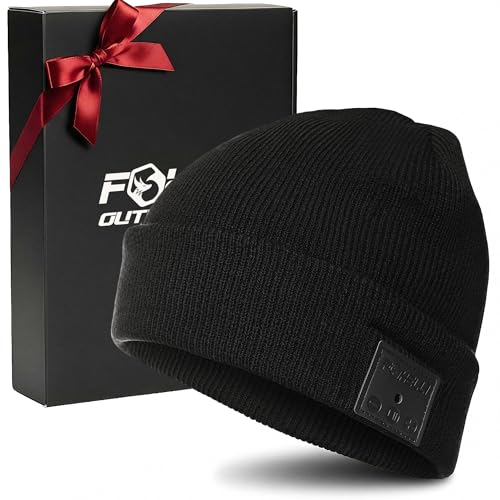

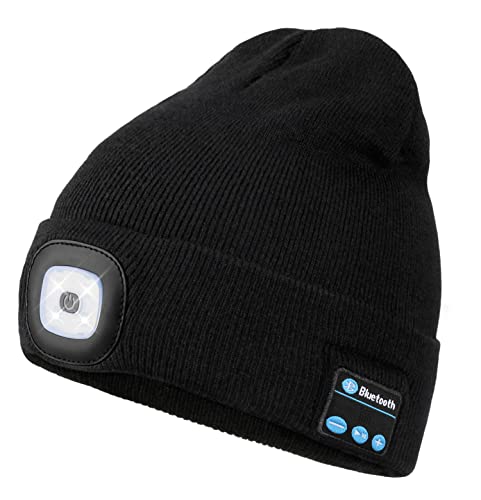
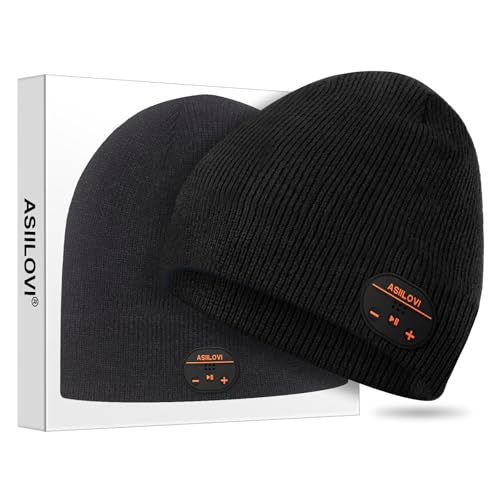
Bluetooth Beanie Hat with Headphones, Wireless Winter Hat Built in Microphone and Stereo Speakers (Black)


Closing thoughts on hats that play music
The speaker beanie succeeds when it disappears: a warm hat, a familiar voice in your ear, traffic still audible, gloves still on, and a walk that feels shorter in the cold because part of your mind was happily elsewhere. It fails when it asks to be treated as serious audio equipment or as a phone replacement, roles its open drivers and distant microphone were never built to fill. Buy it for the towpath, the dog park, the shovelled driveway, and the windy platform, fit its drivers with care, wash it with its electronics safely out, and charge it the night before the frost. Judged on those mornings, and only on those mornings, a good speaker beanie is not a compromise at all but the right tool wearing a knitted disguise.

