What's inside
- Key Takeaways
- Quick Picks
- How Did We Judge Chargers Whose Key Figure Is Usually Missing?
- Six Chargers, One Gap: Reading the Case Evidence Together
- How Thick Is Too Thick? Measuring a Case Against a Charger
- How Should a Cased Phone Be Placed for a Reliable Night’s Charge?
- What Mistakes Turn a Good Through-Case Setup Bad?
- How Do Work Phones and Rugged Cases Change the Stakes?
- What Should Be Tested in the First Three Nights?
- Final Recommendation
- Frequently Asked Questions
- Related Guides
As an Amazon Associate I earn from qualifying purchases. This post may contain affiliate links at no extra cost to you.
gizmoverdict.com is reader-supported. When you buy through links on our site, we may earn an affiliate commission.
Where to buy: The six picks below are Qi wireless chargers sold through Amazon, chosen for one job: charging a phone that stays in its case. Only the lead pick states a case-thickness figure in its title — a full 10mm, naming OtterBox and heavy-duty cases outright — and every other pick’s case limit is recorded below as not stated where its title is silent, rather than guessed. A battery case is a different product and appears nowhere as a pick; these are pads, stands and one 3-in-1 dock that charge the phone through the case it already wears.
The search for the best Qi chargers for phone with case begins with a small act of refusal: the refusal to undress a phone every night. A protective case is bought to stay on — through drops, through pockets full of keys, through the life of the phone — and a charging routine that demands its removal each evening is a routine quietly training its owner to charge less, or to drop the phone during one of the nightly removals. Wireless charging promised to end the cable fumble; through-case wireless charging ends the case fumble too, provided the charger can push its field across the extra millimetres of plastic, rubber and air between its coil and the phone’s.
Those millimetres are the whole physics of this guide. Inductive charging couples two coils across a gap, and the coupling weakens as the gap grows. A slim case adds a millimetre or two and most pads shrug it off. A heavy-duty case — the dual-layer, port-covered, drop-tested kind — can double or triple that gap, and a pad that charged a bare phone beautifully may respond to a rugged case with a slow trickle, a warm phone, or a connection that drops at 3 a.m. when the phone shifts a fraction. Case thickness is therefore the specification that matters most here, and it is the specification listings most often omit — a silence this guide handles by recording it, pick by pick, instead of papering over it.
One pick breaks that silence completely. The Eazpower dock at the top of this list states in its title that it is built for thick cases of 10mm, naming OtterBox and heavy-duty cases as its intended tenants. Ten millimetres is a generous allowance — beyond most rugged cases — and stating it in the title makes the Eazpower the reference pick for the hardest version of this problem. The other five picks make softer claims: ‘Case Compatible’ in one title, a MagSafe-case mention in another, and silence in the rest. Silence does not mean failure — it means the exact limit lives in the maker’s documentation, and a buyer with a very thick case should read that limit before money moves.
Form is the second axis. This list holds flat pads, upright stands and a 3-in-1 dock, and the case question interacts with form in ways buyers miss. A flat pad forgives placement least when a thick case widens the gap, because nothing holds the phone in the coil’s sweet spot. A stand cradles the phone at a fixed angle against its coil, which keeps the gap consistent. A magnetic pad with a MagSafe-compatible case restores alignment entirely. The sections below judge each pick on its form as well as its figures, because through a case, geometry is half the specification.
Key Takeaways
- Only the Eazpower states a case-thickness limit in its title: 10mm, naming OtterBox and heavy-duty cases — the reference pick for rugged cases.
- Every other pick’s maximum case thickness is recorded as not stated below where the title is silent; verify the exact figure with the maker’s documentation.
- Wattage splits the list into 15W pads and a 10W max pad; through a thick case, delivered pace depends on the gap as much as the rating.
- Two picks ship without an AC adapter or with adapter details unstated — the wall brick is part of the through-case equation.
- Stands hold the phone against the coil at a fixed angle, which keeps the case gap consistent; flat pads rely on careful placement.
- Metal plates, card wallets and ring grips between case and charger defeat every pick here regardless of rating.
Quick Picks
| Pick | Badge | Why it is here |
|---|---|---|
| Eazpower Wireless Charger for Thick Cases of 10MM, 3 in 1 Dock | Stated 10mm case support | The only title here that publishes a case-thickness figure — 10mm, OtterBox named — wrapped in a 3-in-1 dock for phone, Watch and AirPods. |
| Amazon Basics Wireless Charger, 15W Qi Certified Pad | Case Compatible stated | A 15W Qi-certified pad whose title says ‘Case Compatible’ outright and includes its USB cable — the value baseline. |
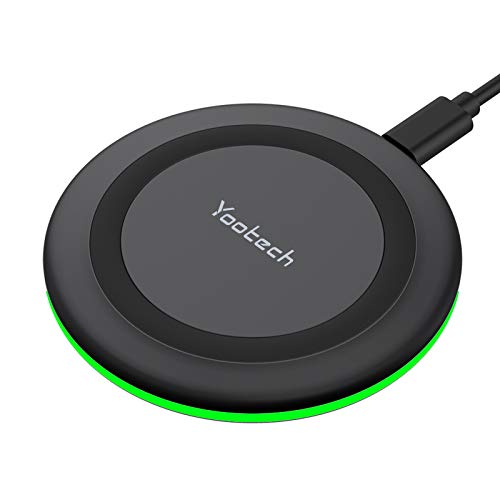
| Yootech Wireless Charger, 10W Max Pad | Gentle overnight pad | A 10W max pad with a long compatibility list and no AC adapter in the box, sized for the bedside rather than the race. |
| NANAMI Wireless Charging Stand, 2 Pack | Two upright stands | A two-pack of charging stands, so the desk and the bedside both get the cradle geometry that keeps a cased phone aligned. |
| TOZO W1 Max 15W Fast Wireless Charger | Aluminium sleep-friendly pad | A 15W pad in aircraft aluminium calling itself anti-slip and sleep-friendly — flat-pad virtues aimed at the nightstand. |
| PureGear Kickstand 15W Qi-Certified Charging Pad | Magnetic, MagSafe-case ready | A 15W Qi-certified pad with a kickstand whose title states it works with a MagSafe case — magnetic alignment through the case. |
How Did We Judge Chargers Whose Key Figure Is Usually Missing?
The judging problem in this category is that the decisive specification — maximum case thickness — appears in exactly one of the six titles. A guide has three options in that situation: invent figures, ignore the question, or build the ranking on what is stated and mark the gaps honestly. This guide chose the third. The Eazpower leads on the strength of a stated figure. The other picks were ranked on their stated wattage, their form, their certification and the precise wording of any case claim they do make — ‘Case Compatible’ is a claim, a MagSafe-case mention is a claim, and both were weighed as claims of different strengths rather than as numbers.
Form received unusual weight for a reason grounded in the physics above. Through a thick case, the coil gap is already wide; anything that lets the phone drift — a smooth flat pad, a careless placement — widens the effective gap further or misaligns the coils entirely. A stand’s cradle and a magnetic pad’s snap are therefore not conveniences in this guide but gap-control mechanisms, and they were scored as such. The NANAMI stands and the magnetic PureGear earn their places on geometry as much as on electricity.
Certification and adapter honesty formed the third criterion. Qi certification is named in three titles, and it matters through a case because a certified charger’s behaviour at the edge of its coupling range is the tested behaviour. Adapter positions were recorded exactly: one pad states no AC adapter, several state nothing, and the Amazon Basics includes its USB cable per its title. Finally, a boundary was held: battery cases — cases with their own stored charge — were excluded, because a battery case answers the problem by replacing the case, while this guide’s question is how to charge through the case already owned and trusted.

Eazpower Wireless Charger for Thick Cases of 10MM, 3 in 1 Dock — Stated 10mm case support
This is the pick the whole guide is organised around, because its title does what no other title here does: it publishes the number. Ten millimetres of case — with OtterBox and heavy-duty cases named as the intended tenants — is a thick-case promise stated in the open, where a buyer with a rugged case can read it before purchase rather than discovering it across a week of failed nights. Ten millimetres covers the overwhelming majority of protective cases in the wild, including the dual-layer designs that defeat ordinary pads, and a charger engineered and advertised around that gap is engineered around the actual problem.
The product wrapped around that promise is a 3-in-1 charging dock: a phone stand plus places for an Apple Watch and AirPods, per its title, aimed at iPhone Pro Max generations among others. The stand form suits the thick-case mission — the phone rests against the charging surface at a fixed angle, held by the dock’s geometry rather than by the user’s placement luck, so the wide gap stays at least a consistent gap. One dock on a bedside then retires three cables, and the phone’s rugged case never has to come off for any of it, which is the entire point of the purchase stated as a routine.
What the title does not state is the dock’s wattage, and the spec list records that silence rather than estimating a figure. Where the priority is the fastest possible charge through a moderate case, the 15W pads below weigh in; a genuinely thick case has exactly one stated answer in this guide, and it is this dock. Priorities in this category are case-first: a charger that connects reliably through 10mm at an unstated pace beats a 15W pad that connects through the same case intermittently or not at all.
- Case support: up to 10mm thick cases stated in the listing title (OtterBox, heavy duty named)
- Type: 3-in-1 charging dock — phone stand, Apple Watch, AirPods
- Stated compatibility: iPhone Pro Max generations and multiple devices
- Output wattage: Not stated in the listing title — verify with Eazpower documentation
- Wall adapter inclusion: Not stated in the listing title — verify with Eazpower documentation
Strengths
- The only stated case-thickness figure in the guide — 10mm — aimed squarely at rugged cases.
- Stand geometry holds the cased phone at a consistent angle and gap.
- Three devices retire three cables: phone, Watch and AirPods on one dock.
Trade-offs
- Wattage is unstated in the title, so raw pace cannot be compared from the listing.
- A dock is a fixed bedside or desk fixture, not a travel pad.
- The Watch and AirPods spots serve the Apple ecosystem specifically.
Best for: a buyer seeking a bedside dock that charges a phone through a heavy-duty case up to the stated 10mm, with Watch and AirPods alongside.
Not suited for: a minimalist traveller, or a speed-first setup for a phone in a slim case.

Amazon Basics Wireless Charger, 15W Qi Certified Pad — Case Compatible stated
Amazon’s own pad makes the second-strongest case statement in this guide, and it makes it in two words: ‘Case Compatible’, printed in the title beside a 15W output and Qi certification. That phrase is a claim without a number — the title does not say how thick a case it has in mind — and this guide weighs it as exactly that: a manufacturer’s public statement that the pad is designed to work through cases, with the precise limit left to the documentation. For the large population of ordinary cases, the slim-to-medium kind most phones actually wear, a 15W Qi-certified pad with a case-compatible claim is the sensible, inexpensive default.
The rest of the package is baseline done properly. Fifteen watts is the full Qi pace for the iPhones in its compatibility list, which runs across many iPhone generations plus Samsung and LG models — an unusually ecumenical list that suits a mixed household. The USB cable is included per the title, removing one small variable, though the wall adapter to feed it remains the buyer’s to supply at adequate output, as with most pads in this guide. Amazon Basics as a line competes on adequacy at a low tier, and this pad’s adequacy is certified, which is the right kind of boring for a device that will sit energised on a nightstand for years.
Through-case behaviour is where the honest caveat lives. ‘Case Compatible’ pads earn that label against typical cases; the heavy-duty end of the case world — the 8mm and 10mm fortresses — is the Eazpower’s stated territory, not this pad’s. An ordinary case can take this pad without anxiety. A case with a name like a military operation calls for stepping up to the stated 10mm dock, or for verifying this pad’s documented limit first. That is not a criticism of the pad; it is the guide’s whole method, matching stated claims to stated needs.
- Output: 15W, Qi certified
- Case claim: ‘Case Compatible’ stated in the listing title
- Maximum case thickness: Not stated in the listing title — verify with Amazon Basics documentation
- Bundled: USB cable included per listing title
- Stated compatibility: iPhone generations, Samsung and LG models
- Wall adapter inclusion: Not stated in the listing title — verify with Amazon Basics documentation
Strengths
- 15W Qi-certified charging with a case-compatible claim, at the value end of the list.
- The broadest phone compatibility here, spanning iPhone, Samsung and LG.
- USB cable included — one less variable in the setup.
Trade-offs
- No thickness figure behind the case claim; rugged-case owners must check the documentation.
- A flat pad, so placement through a case is the user’s nightly responsibility.
- The wall adapter is not stated as included.
Best for: a buyer seeking an inexpensive 15W pad for a phone in an ordinary slim-to-medium case, across a mixed-brand household.
Not suited for: the heaviest-duty cases, where the Eazpower’s stated 10mm support is the safer ground.
Yootech Wireless Charger, 10W Max Pad — Gentle overnight pad
The Yootech is the elder design in this list, and its title is a model of plain dealing: 10W max, no AC adapter, and a compatibility list that sprawls across iPhone generations, Galaxy models and AirPods. Ten watts is not the fastest Qi pace, and through a case it will not pretend to be; what it is, is the classic overnight rate — a phone set down at midnight and full well before the alarm, charged gently, with the modest heat that gentle charging produces. For the bedside role, that trade has always been defensible, and for battery temperament across years of nightly charges, it may even be the kind one.
The adapter exclusion is stated in the title itself — ‘No AC Adapter’ — which this guide counts as a virtue of disclosure even as it notes the consequence: the buyer must supply a wall brick, and the brick’s output will influence what the pad can deliver. Yootech built its name on exactly this tier of honest, inexpensive pads, and the enormous installed base behind this model is its own kind of evidence: designs that failed through cases in large numbers do not stay on the market this long. Its title makes no case claim at all, however, and the spec list records the thickness limit as not stated; the everyday-case population is its natural constituency, and rugged-case owners should verify before relying on it.
Where the Yootech quietly shines is in the second-charger role. Once the main charging place is solved with a faster pad, a second, gentler place is often needed — the guest room, the office drawer, the kitchen counter — where pace is irrelevant and reliability is everything. A proven 10W pad at this tier fills that role without ceremony, and its AirPods compatibility, stated in the title, extends the same pad to the smallest device in the drawer on the nights the phone is elsewhere.
- Output: 10W max
- Wall adapter: not included — stated in the listing title
- Stated compatibility: iPhone generations, Galaxy models, AirPods
- Maximum case thickness: Not stated in the listing title — verify with Yootech documentation
- Case claim in title: none stated
Strengths
- A long-proven, inexpensive pad with its limitations printed in its own title.
- Gentle 10W overnight pacing suits the bedside role and battery temperament.
- AirPods compatibility gives the pad a second tenant.
Trade-offs
- 10W is the slowest ceiling in this guide, and a thick case will tax it further.
- No case claim of any kind appears in the title.
- The required adapter is an extra item if the drawer lacks one.
Best for: a buyer seeking a proven, gentle overnight pad for a phone in an ordinary case, or a second charging place where pace does not matter.
Not suited for: fast top-ups, or heavy-duty cases at the weight where a stated thickness figure becomes necessary.

NANAMI Wireless Charging Stand, 2 Pack — Two upright stands
The NANAMI entry competes on geometry and quantity: two charging stands in one pack, so the two places a phone charges — desk and bedside, typically — both get the upright cradle that this guide counts as a gap-control mechanism. A stand holds the phone at a fixed angle, its back resting against the charging surface along a consistent line, so a cased phone’s coil gap is the same gap every night. On a flat pad, a thick-cased phone can sit a fraction off-centre and charge at half pace without any visible sign; on a stand, the cradle removes most of that variance by shape.
The upright posture pays its second dividend in usability: the phone remains a phone while it charges — face visible for notifications, angled for video, readable as a bedside clock. The title’s compatibility spans iPhone generations and Galaxy models, and the two-pack framing is the honest headline: this is a household purchase, two rooms solved in one box, at a tier where buying two singles would cost more and match less. Travellers also split such packs well, one stand at home and one living in the suitcase’s permanent kit.
The title’s silence is its wattage: no output figure is stated, and the spec list records that plainly rather than borrowing a number from the brand’s other models. Its case position is likewise unstated — no thickness figure, no case claim — so the stands’ through-case case rests on their geometry and on the documentation a careful buyer will check. Within this guide’s method, the NANAMI is the form-first pick: chosen for cradle consistency and two-room coverage, with its electrical figures to be confirmed in the maker’s pages.
- Type: wireless charging stands, 2 pack
- Stated compatibility: iPhone generations, Galaxy models
- Output wattage: Not stated in the listing title — verify with NANAMI documentation
- Maximum case thickness: Not stated in the listing title — verify with NANAMI documentation
- Wall adapter inclusion: Not stated in the listing title — verify with NANAMI documentation
Strengths
- Two stands solve two rooms in one purchase — the only multi-unit pick here.
- Cradle geometry keeps a cased phone’s coil gap consistent night after night.
- The phone stays visible and usable while charging, at desk and bedside alike.
Trade-offs
- No wattage figure in the title — pace must be confirmed in the documentation.
- No stated case-thickness limit; very thick cases remain a verification question.
- Stands are fixtures, bulkier to pack than a flat pad for travel.
Best for: a buyer seeking upright stands for two charging places, where consistent placement through a case matters more than headline wattage.
Not suited for: speed-first shopping, or a case at the heavy-duty extreme.

TOZO W1 Max 15W Fast Wireless Charger — Aluminium sleep-friendly pad
The TOZO W1 Max is the flat pad refined for its natural habitat, the nightstand. Its title stacks three considered details onto a 15W fast-charging base: an aircraft-aluminium body, an anti-slip surface, and a sleep-friendly design. Each speaks to a real flat-pad failure mode. Aluminium sheds heat better than plastic and feels like furniture rather than packaging. Anti-slip matters more through a case than bare, because a cased phone on a smooth pad is a phone that migrates — and migration across a coil, mid-night, is how phones wake at 60%. Sleep-friendly, in this product class, describes a pad that does not announce itself with lights or noise in a dark room, the bedside virtue nobody lists until they have slept beside its absence.
Fifteen watts gives the TOZO the joint-fastest rating in this guide, and its compatibility list spans recent iPhone generations and Galaxy models. The case position is the familiar one for this list: no thickness figure and no explicit case claim appear in the title, so the limit is recorded as not stated, to be verified in TOZO’s documentation whenever the case runs thick. For the ordinary-case majority, a 15W aluminium pad with an anti-slip face is a strong bedside answer; the anti-slip surface is, in effect, its case strategy — hold the phone where the coils meet, all night, without drama.
Portability is the TOZO’s quiet second role. A slim aluminium disc travels flat, survives a bag better than plastic, and works in a hotel exactly as it works at home. Between the bedside and the suitcase, this is the pad in the list most likely to be bought twice by the same household — once for the nightstand it was designed for, and once for the travel kit it happens to suit.
- Output: 15W fast wireless charging
- Body: aircraft aluminium, anti-slip, sleep-friendly per listing title
- Stated compatibility: iPhone generations, Galaxy models
- Maximum case thickness: Not stated in the listing title — verify with TOZO documentation
- Case claim in title: none stated
- Wall adapter inclusion: Not stated in the listing title — verify with TOZO documentation
Strengths
- Anti-slip surface fights the mid-night migration that silently slows cased phones on flat pads.
- Aluminium body sheds heat and travels well.
- 15W matches the fastest Qi pace in this guide.
Trade-offs
- No stated case limit — thick-case performance is a documentation question.
- A flat pad still depends on the user’s placement each night.
- Adapter inclusion is unstated in the title.
Best for: a buyer seeking a 15W bedside pad in a slim metal body, for a phone in an ordinary case that must not slide off the sweet spot overnight.
Not suited for: heavy-duty cases, where a stated thickness guarantee is essential.

PureGear Kickstand 15W Qi-Certified Charging Pad — Magnetic, MagSafe-case ready
The PureGear approaches the case problem from the magnetic direction. Its title states 15W, Qi certification, a kickstand — and the phrase that earns its place in this guide: it works with a MagSafe case. A magnetic case carries its own magnet ring, and a magnetic pad meeting that ring restores the one thing a thick case usually destroys, which is alignment. The coils snap into register through the case, the gap stays at its designed minimum, and the 15W rating becomes a delivered 15W rather than a hope. Where the case is a MagSafe model — a large and growing population of cases — this is the through-case mechanism with the least friction of all.
The kickstand adds the posture dividend seen elsewhere in this guide: the phone stands for video, calls and clock duty while it charges, held by magnets and propped by the stand. The compatibility list in the title is iPhone-led across many generations, with AirPods and Galaxy models named as well, and the Qi certification underwrites the electrical behaviour formally. PureGear’s accessory-maker pedigree shows in the title’s completeness — wattage, certification, mechanism and case position all stated in one line, a disclosure standard several picks here could learn from.
The boundary of its case promise deserves the same precision as its promise. ‘Works with MagSafe case’ describes magnetic cases; a thick non-magnetic rugged case gains the kickstand’s posture but not the magnetic alignment, and its owner remains in documentation-checking territory for thickness. Within its stated constituency, though, the PureGear is arguably the most complete single-device pick in this guide: certified pace, alignment through the case, and a stand, in one pad.
- Output: 15W, Qi-certified fast charging
- Case position: works with MagSafe case, stated in the listing title
- Maximum non-magnetic case thickness: Not stated in the listing title — verify with PureGear documentation
- Stand: kickstand for upright use
- Stated compatibility: iPhone generations, AirPods, Galaxy models
Strengths
- Magnetic alignment through a MagSafe case — the surest through-case mechanism here.
- 15W Qi-certified pace with a kickstand’s posture in one pad.
- The title states wattage, certification and case position together — complete disclosure.
Trade-offs
- The magnetic benefit presumes a MagSafe case; plain cases get a good pad, not the snap.
- Single-device charging only.
- Non-magnetic thick cases still need a documentation check for their limit.
Best for: a buyer seeking a 15W pad that aligns magnetically through a MagSafe case and props the phone upright while it charges.
Not suited for: a phone in a thick non-magnetic case, where the Eazpower’s stated 10mm support is the firmer ground.
Six Chargers, One Gap: Reading the Case Evidence Together
| Pick | Form | Output | Case evidence in title | Adapter position |
|---|---|---|---|---|
| Eazpower 3-in-1 Dock | Dock with stand | Not stated in title | 10mm stated; OtterBox named | Not stated in title |
| Amazon Basics Pad | Flat pad | 15W Qi certified | ‘Case Compatible’ stated | USB cable included; adapter not stated |
| Yootech Pad | Flat pad | 10W max | No case claim stated | No AC adapter, stated |
| NANAMI Stands (2 Pack) | Stands | Not stated in title | No case claim stated | Not stated in title |
| TOZO W1 Max | Flat pad | 15W | No case claim stated | Not stated in title |
| PureGear Kickstand Pad | Pad with kickstand | 15W Qi certified | Works with MagSafe case, stated | Not stated in title |
The case-evidence column is the most honest column this guide could print, and its pattern is the category’s pattern: one number, one phrase, one mechanism, and three silences. Read it as a map of certainty rather than a league table. A buyer with a measured case — and cases can be measured, with a ruler, in ten seconds — can match a stated figure to a stated need exactly once in this list, at the Eazpower. Everywhere else, the match runs through the maker’s documentation, and the table’s silences mark precisely where that homework lives.
The output column teaches the complementary lesson: wattage is the figure listings love to state, and it is the figure that matters least through a thick case, where coupling quality decides what fraction of the rating ever reaches the phone. A well-aligned 10W connection can out-deliver a misaligned 15W one across the same case. That is why the stands and the magnetic pad hold their places in this guide against higher-rated flat rivals — geometry, through a case, is an electrical specification.
How Thick Is Too Thick? Measuring a Case Against a Charger
A case’s charging thickness is not its marketing thickness. What matters is the material stack directly over the phone’s charging coil, which sits in the middle of the phone’s back: case wall, plus any wallet layer, card, metal plate, ring grip or decorative insert riding over that spot. A case advertised as slim can still stack a card slot and two cards over the coil and present the charger with a five-millimetre sandwich. Conversely, a bulky case whose back panel is plain over the coil may present less obstruction than its silhouette suggests. Measure the stack at the centre of the back, not at the armoured corners, because the corners never meet the coil.
Against that measurement, the guide’s figures become usable. A stack at or under the Eazpower’s stated 10mm is its home ground. A stack in the ordinary two-to-four-millimetre range is the home ground of every pick here, including the gentle Yootech. The grey zone — five to eight millimetres of plain, non-metallic case — is where form decides: a stand’s cradle or a magnetic snap keeps the coupling honest, while a flat pad becomes a nightly placement exam. Metal anywhere in the stack changes the question entirely, because metal in the field is not a thicker gap but a different physics, and no pick in this guide is rated to charge through it.
Heat is the field diagnostic for all of this. A phone that finishes a night’s charge mildly warm is coupling well. A phone that wakes hot, or wakes at 80%, is reporting a gap or alignment problem in the only language it has. Before replacing a charger, the cheap experiments come first: centre the phone deliberately, remove the card wallet, try the stand instead of the pad. Most through-case disappointments are geometry disappointments, and geometry can be fixed for free.
How Should a Cased Phone Be Placed for a Reliable Night’s Charge?
Placement ritual differs by form, and each form’s ritual is short. On a flat pad, set the phone down by its centre, wait for the charging indication, and give the phone one confirming glance a minute later — the moment most failed charges announce themselves. Keep the pad’s surface clean; grit under a cased phone lifts one edge and tilts the coil plane. On a stand, seat the phone fully into the cradle rather than balancing it on the lip, and check that a thick case’s bottom edge has not propped the phone above the stand’s coil line — the one stand-specific failure, cured by reseating.
With a magnetic pad and a MagSafe case, placement is the snap itself: bring the phone near, let the rings find each other, and trust the click. The failure to avoid there is the half-snap, where the phone hangs by a corner of the magnet ring at an angle — visually attached, electrically compromised. A flat surface beneath catches that mistake early, because a half-snapped phone on a kickstand leans in a way a fully snapped one does not.
Overnight environment matters at the margins. A charger on a soft surface — a bed, a pile of laundry — insulates heat and invites migration; a charger on a hard, clear surface keeps both the temperature and the geometry honest. Route the pad’s cable so that nothing drags at the phone in the night: a cable under tension is a slow hand pulling the phone off its coil, one millimetre per hour, until the morning reveals the result.
What Mistakes Turn a Good Through-Case Setup Bad?
The champion mistake is the accessory stack: a wallet case with cards, a metal plate for a car mount, a ring grip for selfies — each added innocently, together building an impassable sandwich over the coil. The charger gets the blame; the stack is the cause. Second is adapter starvation: a pad fed by an ancient low-output brick, through a case, at the far end of a thin cable, being asked for a pace the supply chain cannot deliver at any single link. Third is buying on wattage alone in a category where coupling decides delivery, the error this guide’s comparison table was built to prevent.
Fourth is assuming a case claim transfers between cases. ‘Case Compatible’ earned against ordinary cases does not stretch to a 10mm fortress, and a MagSafe-case mechanism does nothing for a case without magnets. Fifth is the nightly removal habit persisting by inertia — owners who keep undressing the phone for a charger bought specifically to end that ritual, usually because the first week’s placement was careless and the conclusion ‘it does not work with my case’ hardened before the geometry was checked. The first week deserves the checks in the placement section above before any verdict is passed.
How Do Work Phones and Rugged Cases Change the Stakes?
For a meaningful slice of this guide’s readers, the case is not a style choice but equipment. Phones on building sites, in workshops, on delivery routes and in warehouses wear heavy-duty cases because their working environment breaks unprotected phones as a matter of routine, and those phones also tend to be the ones that must not die: the site phone carries the drawings, the delivery phone carries the route, the warehouse phone carries the scanner’s second job. A charging setup that fails through such a case is not an inconvenience in that world; it is a phone at 15% by mid-afternoon in a place with no patience for it. That is the readership the Eazpower’s stated 10mm exists for, and its dock form — built for a depot desk or a kitchen counter at home — fits the rhythm of a work phone parked in one place every night without fail.
The work-phone pattern also reframes the second-charger question. A rugged phone often charges in two worlds: at home overnight, and in a vehicle or site cabin during the day. The home place can be the dock; the day place rewards the stand or the anti-slip pad, forms that tolerate being used by tired hands in poor light. What the day place cannot be is a charger that requires the case to come off, because a case removed in a site cabin is a case that fills with dust at the seals and a phone exposed during its most dangerous hours. Through-case charging, for this readership, is a protective-equipment issue disguised as a convenience feature.
Employers issuing phones in rugged cases should read this guide’s evidence table as a procurement note: buy the charger with the stated figure, deploy it with the phones, and write the placement ritual into the same one-page guide that covers the phone’s other care. The cost of the dock is trivial against the cost of one cracked screen on a phone that was undressed for charging, and that arithmetic — not gadget enthusiasm — is the strongest argument in this entire article.
What Should Be Tested in the First Three Nights?
Through-case setups announce their quality quickly, and three nights of deliberate testing settle what months of vague dissatisfaction cannot. Night one tests placement: set the phone down by the usual habit, note the morning’s charge and the phone’s warmth. A full, cool morning means the geometry is already right. Night two tests the disturbance: charge the phone in its real overnight spot with its real neighbours — the alarm clock’s cable, the book, the glass of water — and see whether ordinary bedside life nudges it off the coil. Night three tests the stack: charge with everything the case normally carries — minus cards and metal, which never belong in the field — and confirm the rate survives the full everyday configuration.
A setup that passes three nights will pass three hundred, because the variables in this category are geometric and do not drift. A setup that fails should be adjusted in the cheap order: placement first, then the stack, then the adapter, then the form — pad to stand, stand to magnetic — and only then the charger itself. Most failures die at the first or second adjustment. The Eazpower’s stated figure exists to short-circuit this whole process for the thickest cases, but even its buyers benefit from the three-night discipline, because a dock can be placed badly and an adapter can starve any charger in this guide.
Final Recommendation
Match the stated evidence to the measured case. A heavy-duty case takes the Eazpower and its published 10mm, and nothing else in this guide should be asked to promise what it has not stated. A MagSafe case takes the PureGear, where alignment survives the case by magnetism. An ordinary case takes its pick of the rest by form and pace: the Amazon Basics for certified 15W value, the TOZO for the anti-slip aluminium nightstand, the NANAMI pair for two upright rooms, the Yootech for a gentle, proven overnight post. Measure the stack over the coil, honour what each title actually claims, and the case can stay on the phone — which was, from the first paragraph, the entire point.
Frequently Asked Questions
How thick a case can these chargers handle?
Only one figure is stated in a title: the Eazpower dock supports cases up to 10mm, naming OtterBox and heavy-duty designs. The Amazon Basics claims ‘Case Compatible’ without a number, and the PureGear states it works with a MagSafe case. For every other pick — and for exact limits on those two — the figure lives in the maker’s documentation, and this guide records it as not stated rather than estimating it.
Why does a phone charge slowly through a case on a 15W pad?
Because the rating describes the pad, not the delivery. The case widens the coil gap, the coupling weakens, and the phone negotiates a lower rate — or the phone sits slightly off-centre and the coupling weakens further. Alignment fixes (a stand’s cradle, a magnetic snap) and a centred placement recover more real speed through a case than a higher headline rating does.
Can wireless charging work through a wallet case with cards?
Cards and metal in the stack are the hardest obstruction in this category: they widen the gap and, if metallic, interfere with the field itself. The reliable practice is to remove cards and wallet attachments before charging, whatever the charger. No pick in this guide claims to charge through a loaded wallet case, and the wallet layer should be treated as part of the nightly removal the rest of the case is spared.
Does through-case charging damage the phone or the case?
Properly coupled, no: the phone and charger negotiate the rate, and mild warmth is normal. The risk pattern is chronic poor coupling — a phone left hot and undercharged night after night by a misaligned or over-gapped setup — which is a reason to fix geometry, not to fear the technology. If a setup repeatedly wakes the phone hot or short of full, change the placement, the case stack or the charger form before blaming wireless charging itself.
Is a stand or a flat pad better for a thick case?
A stand, on geometry: the cradle holds the phone at a fixed angle against the coil, so the gap stays consistent and the phone cannot migrate off the sweet spot in the night. A flat pad can serve a thick case well — the Eazpower’s stated support comes in dock form for a reason — but it asks the user for a careful placement every night, and it forgives nothing when the phone is nudged.
Does the phone need to be centred exactly on a pad?
Within a few millimetres, yes — and a case quietly widens the penalty for missing, because the coupling is already working across a gap. The charging indicator is the honest referee: if it lights and stays lit, the placement is good enough, whatever it looks like. Phones that charge on a stand or a magnetic pad outsource this judgement to the hardware, which is the deeper reason those forms recur throughout this guide.
Are charging stands safe for a phone in a heavy case at the bedside?
Yes, with the seating check described in the placement section: a heavy case’s bottom edge can prop the phone slightly high in some cradles, and one deliberate reseat on the first night establishes whether the pairing sits correctly. After that, the stand is arguably the safest bedside form for a heavy phone, since the cradle holds it against knocks that would slide it off a flat pad entirely — the same knocks that, on a pad, end the charge and occasionally end with the phone on the floor.
What changes when the household has two different case styles?
Each phone should be matched to a charger by its own case, not by the household’s average. A slim-cased phone thrives on any pad here; a rugged-cased phone belongs on the stated-10mm dock or on a stand whose geometry flatters its gap. Shared charging places complicate the match, and the honest solution is the one this guide’s two-pack and dock model in different ways: give the demanding case its own dedicated place, and let the easy case use whatever else the household owns. Averaging the two cases into one compromise charger serves the easy phone perfectly and the hard phone marginally, which is the wrong way round.
Does a thicker case slow charging even when it works?
Usually somewhat, yes. The wider gap weakens the coupling, and the phone and charger settle at a rate below the pad’s headline figure — the thicker the case, the gentler the session tends to be. For overnight charging that trade is invisible by morning. For a daytime top-up it is the difference between a useful hour and a disappointing one, which is why the guide separates the roles: through-case setups are at their best as overnight infrastructure, and a cased phone in a hurry is still best served by the cable that lives in the drawer for exactly that hour.
Why do some mornings show a full charge and others only partial?
Intermittency is the signature of a marginal coupling: the phone sits close enough to the coil’s edge that small nightly differences — a fraction of placement, a degree of warmth, a cable tugged by a book — tip the session between success and failure. A marginal setup should not be tolerated as luck; it should be moved one step up the geometry ladder, from pad to stand or from stand to magnetic alignment, or the case stack should be thinned. The chargers in this guide span that whole ladder precisely so that a marginal morning has somewhere to go.
Should the case come off occasionally anyway?
For cleaning, yes — grit migrates between case and phone over months and can mark the phone’s finish, so a monthly removal for a wipe-down is good ownership. That is a maintenance ritual, not a charging ritual, and the distinction is the guide’s whole thesis: the case should come off on the owner’s schedule, in good light, over a table — never nightly, in the dark, as the price of a charged phone. Owners who keep that distinction find their cases last longer too, since the nightly flexing of removal is what loosens most case fits over time.
Can a phone in a case charge on a car mount the same way?
The same physics applies with worse conditions: vibration works the phone across the coil all journey long, so the forms that win at home win bigger in a vehicle — a cradle or a magnetic mount that fixes the geometry mechanically. A flat pad has no place in a moving car for a cased phone. The case stack rules also tighten in the car, because the metal plate many drivers add for magnetic mounts sits exactly where it most obstructs wireless charging; a MagSafe-style magnetic system is the cleaner way to get both mounting and charging from one mechanism.
Do these chargers work with folding phones and small phones?
Coil position is the question. A folding phone’s coil may sit in one half of the device, and a small phone’s coil may sit high or low relative to a pad’s centre; stands with a fixed coil line can miss both. The flat pads in this guide forgive odd coil positions more readily, since the phone can be shifted until the charge engages. Through a case, that shifting is harder to judge by feel, so the charging indicator becomes the positioning tool — set the phone down, watch for the indication, adjust once, and let the geometry settle.
What wall adapter should feed these chargers?
One with enough output for the charger’s rating, connected by the cable the maker supplies or an equivalent. The Yootech states no AC adapter in its box, the Amazon Basics includes its USB cable, and several titles are silent on the point — all recorded in the spec lists. An underpowered brick throttles any of these chargers before the case question is even reached, so the adapter check comes first in any slow-charging investigation.
Related Guides
For the magnetic end of wireless charging, see our MagSafe chargers for iPhone 13 Pro guide. For the wired side of the drawer, our multi device chargers roundup covers stations that feed a whole household, and our Anker wall chargers guide sizes the bricks that feed pads like these.
Related guides
- Best Basic Phones Camera Buyers Can Trust: Flip Phones and Simple Handsets That Still Take a Photograph
- Best Sony Full Frame Cameras for Astrophotography: Sensitivity vs Resolution
- Best Affordable Android Tablets: Five True Android Slates and One Fire OS Specialist, Clearly Labelled
- Best 3rd Party MacBook Chargers: 96W-Class Alternatives, the 100W Cable Rule, and the Apple Benchmark


