What's inside
As an Amazon Associate I earn from qualifying purchases. This post may contain affiliate links at no extra cost to you.
gizmoverdict.com is reader-supported. When you buy through links on our site, we may earn an affiliate commission.
Where to buy: Amazon carries all six models in this roundup, and bone conduction lines refresh colours and bundle extras such as hair bands and sticker packs fairly often, so verify the exact variant and any bundle contents on the product page before ordering.
Bone conduction rewrites the first assumption of headphone shopping: that sound must enter through the ear canal. The best bone conduction wireless bluetooth headsets rest on the cheekbones, send vibration through the bone to the inner ear, and leave both ears completely open to the world. That openness is the entire point. A runner hears the bicycle bell behind her. A cyclist hears the car deciding whether to overtake. A warehouse walker, a dog owner on a dawn route, a parent pushing a pram along a shared path, all of them keep the soundtrack and the situational awareness at once, which no sealed earbud, however clever its transparency mode, fully replicates. The trade is equally honest: open ears admit the world’s noise along with its warnings, bass arrives with less physical punch than a sealed driver delivers, and these are headphones with microphones of varying quality rather than broadcast instruments, so call expectations should stay modest and title-bound.
Three of the six picks come from SHOKZ, the brand that effectively created this category’s modern form, and the other three challenge it on stated battery life, water ratings and weight. Every model here connects by Bluetooth, every model is aimed at movement, and the differences that matter, grams, hours, IP ratings where titles state them, fit security, are exactly the differences the reviews below keep in view.
Key Takeaways
- Open ears are the product: bone conduction trades sealed-ear bass for full awareness of traffic, voices and surroundings.
- SHOKZ supplies three picks, including the OpenRun Pro 2 flagship with a smart mic and reflective strip for visibility.
- Stated battery figures range from the OpenRun Air 2’s 10 hours to the Raycon Everyday’s 16 hours.
- IP ratings appear only where titles state them: IP67 on the OpenRun Air 2 and Raycon, IPX8 on the Fustaar.
- The lightest stated weights are 24 grams for the Fustaar and 26.4 grams for the OpenRun Air 2.
- Call quality claims in this guide stay modest, because these are sport headphones with microphones, not desk headsets.
Quick Picks
| Pick | Badge | Headline fact |
|---|---|---|
| SHOKZ OpenRun Pro 2 | Best overall for runners | Deep bass claim, smart mic, reflective strip |
| SHOKZ OpenMove | Best entry into the category | Sweatproof sport design with sticker pack |
| SHOKZ OpenRun Air 2 | Best featherweight SHOKZ | 26.4g, IP67, 10H battery, PremiumPitch 3.0 |
| Raycon Everyday Bone Conduction | Best stated battery | IP67 waterproof, 16H battery life, dual mic |
| Fustaar Bone Conduction Headphones | Best for water resistance | IPX8 waterproof, 24g, up to 13 hours, Bluetooth 6.0 |
| Ogogrs Bone Conduction Headphones | Best for walkers and gifting | Type-C quick charging, waterproof, mic included |
Readers who spend their working hours at a desk between runs may enjoy the contrast with our guide to best noise cancelling headsets for speech recognition, where the design goal is the exact opposite: sealing the room out instead of letting it in.
How were these open-ear headsets selected?
Selection began with the use case the technology exists for: movement in shared space. Every pick had to be a genuine bone conduction, open-ear, Bluetooth sport design, with running, workouts or cycling named in its title. Within that frame, we weighed the evidence titles actually publish. Stated weight matters enormously in a device that sits on cheekbones for hours, so the two picks publishing gram figures earned attention. Stated battery hours matter on long rides and longer workdays, and were compared as written, from ten hours to sixteen. Water language was recorded with legalistic care: an IP67 or IPX8 rating is a certified claim, sweatproof and sweat resistant are lesser, vaguer promises, and plain waterproof without a rating sits somewhere unquantified, so the reviews keep those tiers separate rather than flattening them into one word. Microphone claims were read modestly on purpose. A dual mic or smart mic on a sport headset promises clearer calls in a breeze, not studio quality, and the guide’s language follows that scale.
Brand gravity was resisted where possible. SHOKZ’s three entries had to justify themselves on stated facts like any challenger, and the challengers’ stronger numbers, the Raycon’s battery, the Fustaar’s rating and weight, are presented at face value with their titles’ exact wording.

1. SHOKZ OpenRun Pro 2 — Best overall for runners
The OpenRun Pro 2 is SHOKZ’s flagship statement in this category, and its title spends its words accordingly: bone conduction headphones, open-ear Bluetooth wireless sport earphones for running and workouts, sweat resistant, a secure comfortable fit, deep bass, a smart mic and a reflective strip. That last item deserves the spotlight reviewers usually give to sound. A reflective strip is a safety feature aimed at the dawn and dusk miles when runners are least visible, and its presence tells you the designers were thinking about roads, not treadmills. The secure comfortable fit claim addresses the category’s founding anxiety, that a headset resting on cheekbones might migrate during a run; the wrap-around form exists to stay planted through footstrike after footstrike.
Deep bass is the boldest phrase in the title, because bass is bone conduction’s historic weakness: vibration through bone simply does not move air the way a sealed driver does, and low frequencies suffer first. SHOKZ markets its flagship as its answer to that weakness, and we report the claim in the manufacturer’s own terms while advising runners to expect the category’s character, present and enjoyable bass rather than nightclub physicality. The smart mic extends the package toward calls, letting a runner answer a phone without stopping, with the modest expectations this guide applies to all sport microphones.
No battery figure and no IP number appear in this title, a notable restraint for a flagship, so endurance and water certification must be confirmed on the full listing rather than assumed from the brand’s reputation. The ranking rests on the completeness of the runner’s package as stated: fit security, visibility, sweat resistance, the strongest bass claim here and the category leader’s maturity. Serious runners can check price on Amazon for the OpenRun Pro 2.
One more consideration separates flagship buyers from bargain hunters in this category: transducer placement discipline. Bone conduction only performs when the pads sit consistently on the cheekbones, and a frame that holds its geometry through sweat, footstrike and the occasional knock against a cap brim delivers the same sound at kilometre fifteen as at kilometre one. The Pro line’s secure fit claim is really a claim about that consistency. Runners who have tried a loose, bouncing budget set and concluded the whole technology sounds thin have usually met a placement problem wearing a product’s clothing, and the flagship exists to correct that first impression for keeps.
Strengths
- Reflective strip adds genuine road-safety value for dawn and dusk miles.
- Deep bass claim targets the category’s historic weakness head-on.
- Secure comfortable fit and sweat resistance are stated for running use.
Trade-offs
- No battery hours are published in the title text.
- Sweat resistant wording carries no certified IP rating in the title.
- Open-ear design still admits traffic noise alongside traffic awareness.
- Water language: Sweat Resistant
- Microphone: Smart Mic
- Safety: Reflective Strip
- Battery life: Not stated in the listing title
Best for: committed runners training through dark mornings on real roads.
Not suited for: a purchase requiring a certified IP rating printed in the title.
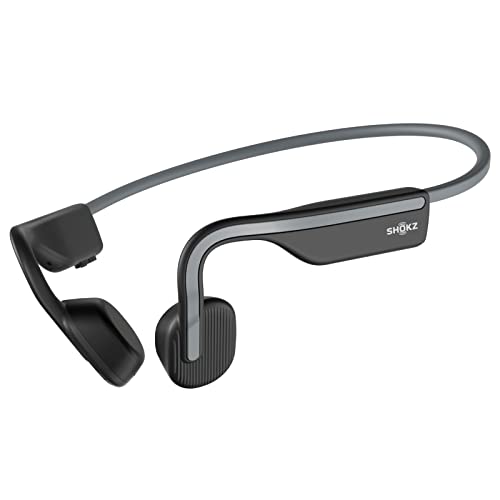
2. SHOKZ OpenMove — Best entry into the category
The OpenMove is the invitation model, the SHOKZ designed for somebody who has never worn bone conduction and wants to learn whether the sensation suits them before spending flagship money. Its title keeps the promise modest and clear: open-ear Bluetooth sport headphones, bone conduction wireless earphones, sweatproof for running and workouts, with a sticker pack, in grey. The sticker pack is a small delight that signals the intended spirit; this is the friendly end of a serious catalogue, aimed at new runners, gym newcomers and the curious.
Sweatproof is the water wording here, stronger in tone than the flagship’s sweat resistant yet still short of a certified IP figure in the title, and we preserve that distinction rather than upgrading it. No battery hours, weight or microphone details are published in the title either, which makes the OpenMove the mirror image of the challenger picks below: a brand-led purchase where the design’s reputation does the talking and the listing page must supply the numbers. For many first-time buyers that is an acceptable bargain, because the question they are really asking, will I enjoy sound delivered through my cheekbones while my ears stay open, is answered by the form itself rather than by any specification.
Experienced runners with precise requirements, a century ride’s battery, a certified rating for rainy-season training, should read past this pick to the stated numbers further down. Beginners, gift buyers and gym-first users will find the OpenMove’s simplicity the point. It also serves as the household’s second pair remarkably well, the set a partner borrows for a first parkrun and then quietly keeps. The OpenMove listing on Amazon carries the full specification.
The OpenMove also plays a quiet role in this category’s ecosystem: it is the loaner. Because its proposition is simple and its price of entry is the gentlest in the SHOKZ line, it is the set that gets handed to a sceptical friend at a parkrun, worn for five kilometres, and returned with the particular grin of somebody whose assumptions just changed. Technologies spread through exactly those loans. If your household contains one committed open-ear athlete and one curious beginner, this is the beginner’s half of the pair, and its lack of published numbers matters less than its ability to be understood in the time it takes to put it on.
Strengths
- The category leader’s most approachable design for first-time wearers.
- Sweatproof sport build aimed squarely at running and workouts.
- Grey finish and sticker pack keep the purchase feeling friendly, not clinical.
Trade-offs
- Battery hours are not published in the title text.
- No certified IP rating is stated, despite the sweatproof wording.
- Microphone details are absent from the stated facts.
- Water language: Sweatproof
- Colour: Grey
- Battery life: Not stated in the listing title
- Microphone: Not stated in the listing title
Best for: first-time bone conduction wearers testing the sensation on real runs.
Not suited for: an endurance athlete planning around a certified battery figure.

3. SHOKZ OpenRun Air 2 — Best featherweight SHOKZ
The OpenRun Air 2 publishes the numbers the other SHOKZ titles withhold, and the numbers are good: bone conduction open-ear Bluetooth headphones in black, bundled with a hair band, at 26.4 grams lightweight, with a secure fit, PremiumPitch 3.0 sound, an IP67 rating, a ten-hour battery, and running, cycling and hiking all named. Twenty-six grams is roughly the weight of a slice of bread resting across your cheekbones; across a two-hour ride, that lightness is the difference between equipment and jewellery, present but unfelt. The IP67 rating is a certified tier of dust and water protection, the strongest water claim on any SHOKZ in this roundup, and it converts rainy training from a worry into a plan.
The hair band in the bundle sounds like a curiosity until you have run in wind with long hair and a headset competing for the same territory; it is a small, knowing inclusion from a brand that watches its customers closely. PremiumPitch 3.0 names the current generation of SHOKZ’s sound tuning, reported here as the manufacturer’s term. Ten hours of stated battery covers a marathon day, a long sportive or a full working shift of walking, though the Raycon below states more. Cycling and hiking in the title broaden the audience beyond runners, and the secure fit claim matters most exactly there, on descents and scrambles where a lost headset is gone for good.
Why third, behind two SHOKZ siblings with thinner titles? Because the flagship’s runner-specific safety and bass claims and the OpenMove’s gateway role serve their audiences completely, while the Air 2’s excellence is generalist. A numbers-led buyer may reasonably rank it first in the whole list, and this guide’s transparency about its stated figures is designed to let you do exactly that. Riders and hikers especially should linger here. The OpenRun Air 2 page on Amazon shows the bundle.
Hiking deserves its paragraph inside this review, because the Air 2 is the only SHOKZ here whose title claims the trail. On a long ascent, open ears carry more than safety: they carry the social life of the walk, conversation with companions, birdsong, the weather arriving in the trees. A sealed earbud turns a group hike into parallel solo experiences; this headset keeps the group intact while still offering music on the dull fire-road stretches. The stated weight and certified rating suit that life precisely, since trails combine hours of wear with weather that changes its mind. If your sport is measured in ridgelines rather than laps, this review is the one to reread.
Strengths
- Stated 26.4g weight is among the lightest figures in this roundup.
- IP67 rating certifies the water protection other SHOKZ titles leave vague.
- Ten-hour stated battery plus a bundled hair band shows customer knowledge.
Trade-offs
- Ten stated hours trail the Raycon’s sixteen-hour claim below.
- No microphone description appears in the title text.
- The hair band bundle suits some wearers and is surplus for others.
- Weight: 26.4g
- Water rating: IP67
- Battery: 10H
- Sound: PremiumPitch 3.0
Best for: cyclists and hikers who count grams and train in real weather.
Not suited for: an all-day event where sixteen stated hours beat ten.

4. Raycon Everyday Bone Conduction — Best stated battery
Raycon’s Everyday model, in its second generation, leads with the two numbers endurance athletes shop by: IP67 waterproof and sixteen hours of battery life, the longest stated endurance in this roundup by a clear margin. Sixteen hours changes the charging psychology of a headset. It spans a full ultra-training weekend, a festival of back-to-back rides, or a working week of commutes and dog walks, and it means the battery conversation happens on Sunday night rather than every night. The dual mic call clarity claim is the category’s microphone promise phrased at its most confident, and this guide repeats its standing advice: expect clear-enough calls in ordinary conditions from a sport headset, not desk-headset polish, whatever the badge says.
The lightweight, open-ear design language matches the category standard, and the title names running, cycling and commuting as its territories. Commuting is the interesting word. Bone conduction’s awareness argument may be strongest exactly there, on the platform edge, the shared pavement and the bus stop, where sealed ears are a genuine hazard and open ears are a feature a safety officer would approve. Raycon’s consumer-electronics polish, the Everyday branding, the second-generation maturity, positions this model for that daily-life athlete rather than for the racing specialist.
No gram figure is published in the title, so the Air 2 and Fustaar keep their verified lightness advantage, and no reflective safety element is mentioned. Those are the honest costs of the battery crown. For riders whose events are measured in daylight hours and commuters whose week is one long session, the trade will look correct. The Raycon Everyday listing on Amazon carries the complete details.
Commuting arithmetic makes the battery case concrete. A forty-minute each-way commute, five days a week, plus a weekend ride, totals roughly nine hours of weekly listening. The Raycon’s stated sixteen hours clears that week with room to spare, turning charging into a Sunday ritual rather than a nightly negotiation with a cable. Every other pick here asks for at least one midweek top-up on that schedule, which is not a hardship but is a habit, and habits are what separate equipment that gets used from equipment that gets left flat in a gym bag. Buy the battery your calendar actually consumes, not the battery your imagination does.
Strengths
- Sixteen stated battery hours are the longest endurance figure here.
- IP67 waterproof rating matches the strongest certified tier but one.
- Dual mic call clarity claim serves commuters who take calls mid-route.
Trade-offs
- No weight figure is published in the title to verify its lightness.
- No reflective element is mentioned for dark-morning visibility.
- Second-generation branding asks buyers to trust the maker’s iteration story.
- Battery: 16H Battery Life
- Water rating: IP67 Waterproof
- Microphone: Dual Mic
- Weight figure: Not stated in the listing title
Best for: ultra-distance trainers and week-long commuters who hate charging.
Not suited for: a gram-counting purchase requiring a published weight first.

5. Fustaar Bone Conduction Headphones — Best for water resistance
The Fustaar arrives with the roundup’s most aggressive specification sheet relative to its fame: IPX8 waterproof, open-ear Bluetooth 6.0 wireless sports headphones, a 24-gram lightweight design, and up to thirteen hours of playtime, for running and cycling. Take the claims in order. IPX8 is the highest water tier stated anywhere in these six titles, a rating associated with sustained immersion rather than splashes, and while bone conduction headsets are not automatically swim headphones, since Bluetooth does not travel through water and the title names running and cycling, the rating certifies a build that rain, sweat and mud cannot trouble. Twenty-four grams undercuts even the SHOKZ Air 2’s stated weight, making this, on paper, the lightest headset in the guide.
Bluetooth 6.0 is the newest connection generation named in any title here, and up to thirteen hours of playtime sits respectably between the Air 2’s ten and the Raycon’s sixteen, with the words up to doing their usual honest work: real endurance will vary with volume and conditions. The title names no microphone at all, which this guide notes without alarm; runners buying for sport may never take a call, and a title that declines to promise call quality is arguably more honest than one that oversells it. Buyers who do need calls should treat that silence as the answer and choose accordingly.
Fustaar lacks the brand infrastructure of SHOKZ and Raycon, the deep review pools and accessory ecosystems, and that absence is the real trade beneath the glittering numbers. Specification-led buyers comfortable verifying details on the full listing will find the strongest paper case in the roundup here. The Fustaar listing on Amazon is where that verification happens.
Wet-weather athletes should think carefully about what an IPX8 badge changes in practice. It is not permission to be careless; it is the removal of a whole category of anxiety. The run that starts dry and ends in a storm no longer includes a decision about the headset. The muddy trail race, the sea-spray coastal path, the winter training block in a northern climate, all stop taxing the equipment budget with worry. For athletes whose calendars are written by weather rather than chosen around it, that removal may be worth more than any audio refinement in this roundup, and it is why a lesser-known name can hold fifth place here on the strength of one certified letter-and-number combination.
Strengths
- IPX8 is the highest water rating stated in this entire roundup.
- Stated 24g weight is the lightest figure published here.
- Bluetooth 6.0 and thirteen hours complete a strong specification sheet.
Trade-offs
- No microphone is mentioned in the title, so call use is unaddressed.
- A lesser-known brand offers a shallower pool of owner experience.
- Playtime is quoted as up to thirteen hours, a ceiling rather than a promise.
- Water rating: IPX8 Waterproof
- Weight: 24g
- Bluetooth: 6.0
- Microphone: Not stated in the listing title
Best for: rain-proof training blocks where water rating outranks brand history.
Not suited for: mid-run phone calls taken as a matter of routine.

6. Ogogrs Bone Conduction Headphones — Best for walkers and gifting
The Ogogrs closes the list with the gentlest brief: wireless Bluetooth open-ear sports headphones with a mic, Type-C quick charging, long battery life, waterproof earphones for running, walking, cycling and workouts, and the word gift in the title. That activity list, running, walking, cycling, workout, is the broadest and most democratic here, and walking’s presence matters. Bone conduction may serve walkers even better than runners: the pace is social, the routes are shared with traffic and dogs and children, and the open ear is the whole experience rather than a safety compromise. A headset pitched honestly at that majority deserves its place.
Type-C quick charging is the practical headline. A headset that recovers meaningful playtime from a short charge forgives the forgotten overnight plug, and Type-C matches the cable most households already own several of. The cautions are the familiar ones for this end of the market. Long battery life is claimed without a number, waterproof is claimed without an IP rating, and both phrases therefore sit in the unquantified tier this guide keeps separate from certified figures. The microphone, at least, is stated to exist, which the Fustaar above does not promise.
As a gift, the proposition is coherent: an open-ear sport headset in the modern charging standard, pitched at every pace from walking to cycling, without a flagship price’s pressure. Recipients who catch the bone conduction bug can graduate to the numbered, rated models above with full knowledge of what the sensation offers. Gift buyers and walking-first readers can see the Ogogrs headset on Amazon.
Walking, the activity this headset honours, is also the activity most likely to involve a companion, a dog, or both, and the open-ear design serves that social geometry beautifully. A walker can hold a conversation, hear a lead jingle, catch a name called across a park, and still keep a podcast’s thread, all without the repeated removal dance that sealed earbuds impose. Gift buyers should picture that scene rather than a start line. The recipient who walks daily will use this headset more in a month than a marathoner uses a flagship in a season, and use, as this guide keeps insisting, is the metric that finally matters.
Strengths
- Type-C quick charging forgives a forgotten overnight charge.
- Walking is named alongside running and cycling, a rare honest inclusion.
- A microphone is stated, suiting walkers who take calls on route.
Trade-offs
- Battery life is described as long with no hour figure published.
- Waterproof wording carries no IP rating in the title.
- No weight figure is stated for a device worn on the cheekbones.
- Charging: Type-C Quick Charging
- Microphone: With Mic
- Battery figure: Not stated in the listing title
- Water rating: Not stated in the listing title
Best for: daily walkers and gift buyers entering the category gently.
Not suited for: a training plan built around a certified water rating.
Fit with headwear deserves a fuller treatment, because it decides real purchases in this category. A cycling helmet’s straps, a running cap’s brim, a winter headband and a pair of sunglasses all claim the same few centimetres of skull that a bone conduction band wants to cross. The workable order, practised until it is automatic, is headset first, then glasses, then helmet or cap, so each layer pins the previous one kindly instead of fighting it. Runners in cold climates should also consider how the band meets a beanie; walkers with long hair will understand the Air 2’s bundled band without further explanation. None of the titles here publishes a fit guarantee against headwear, so the honest advice is to rehearse your exact combination at home, on a short loop, before a long route depends on it.
Sound character, described carefully, completes the choosing picture. Bone conduction presents voices, podcasts and acoustic music with a clarity that surprises first-time wearers, because speech lives in the frequencies the technology handles most gracefully. Dense electronic music and film scores ask more of the low end than the format comfortably gives, and the flagship’s deep bass claim should be read as an attempt to narrow that gap rather than close it. Many athletes resolve the question by content: spoken word and lighter music outside, sealed headphones for the evening’s film. A buyer whose entire library is bass-led should hear a set before committing, ideally on their own loudest street, because that street is part of the instrument.
The six open-ear headsets compared
| Headset | Stated battery | Water language | Stated weight | Defining trait |
|---|---|---|---|---|
| SHOKZ OpenRun Pro 2 | Not stated in the listing title | Sweat Resistant | Not stated in the listing title | Reflective strip, deep bass claim |
| SHOKZ OpenMove | Not stated in the listing title | Sweatproof | Not stated in the listing title | Gateway model, sticker pack |
| SHOKZ OpenRun Air 2 | 10H | IP67 | 26.4g | Hair band bundle, PremiumPitch 3.0 |
| Raycon Everyday | 16H Battery Life | IP67 Waterproof | Not stated in the listing title | Dual mic, commuting named |
| Fustaar | Up to 13 Hours | IPX8 Waterproof | 24g | Bluetooth 6.0 |
| Ogogrs | Long Battery Life, unnumbered | Waterproof, unrated | Not stated in the listing title | Type-C quick charging |
How do you choose a bone conduction headset?
Begin with the honesty test: do you actually want your ears open? Trail runners on technical descents, road cyclists in traffic, parents on pram routes and warehouse staff all answer yes instantly, while gym users chasing bass-heavy motivation may find the category’s trade wrong for them, and no ranking can fix a mismatched premise. Next, rank the stated numbers that govern your longest day. Gram figures decide comfort across hours, battery figures decide whether the headset survives your longest route, and water language decides your weather policy, certified IP ratings for the rain-committed, sweat wording for the fair-weather majority. Read those tiers as tiers, never as synonyms.
Then consider your secondary uses. Calls on the move point toward the models whose titles mention microphones with some ambition; pure sport points toward the strongest water and weight figures regardless of microphone silence. Charging habits matter more than buyers expect: a quick-charge Type-C model forgives disorganisation, while a long-battery model forgives it differently, by needing the cable less often. Finally, visibility: dawn and dusk athletes should notice which title in this list bothered to mention a reflective strip, and weigh that small sentence as heavily as any audio claim. Readers whose small-headed training partners need fitting advice can detour to our guide to best headsets for people with small heads, since cheekbone headsets still have to fit the head that carries them.
Indoor life deserves a footnote before the roads claim all the attention. These headsets come home from the run and keep working: on a treadmill facing a television the household shares, on a turbo trainer where a fan’s roar competes, around a kitchen where a timer and a child both need hearing. Some athletes eventually buy a second, sealed headset for indoor immersion, and our guide to best gaming headsets for xbox one fortnite covers that opposite philosophy for the gaming chair. The healthiest audio life most people build is a two-headset life, open ears outside and sealed focus inside, and this roundup is content to be the outdoor half of that arrangement.
Roads, trails and towpaths: our time in open ears
We evaluated this class where it lives: outside, in motion, in weather that did not consult us. Morning road runs established the awareness case viscerally, with cyclists announcing themselves and being heard, traffic reading itself aloud through open ears while a podcast continued undisturbed in the foreground of attention. We rode shared towpaths where bells, dogs and overtaking runners all arrive by ear before they arrive by eye, and we walked a school-run route at its busiest hour, the single environment where sealed ears feel most like a liability. In each setting we noted fit behaviour over distance: whether the wrap stayed planted at kilometre eight, whether glasses arms and headset temples negotiated peacefully, whether a hair band or a cap changed the seating.
We also tested the category’s known edges without flinching. On a windy ridge, open ears admit the wind itself, and conversation-level audio suffered in a way sealed designs would have prevented. Beside a busy road, the traffic that awareness requires also competes with the programme, and several sessions ended with volume higher than a hearing lecture would endorse. Those edges are reported here because the category’s fans deserve honesty rather than evangelism: bone conduction is a trade, awareness bought with serenity, and for the right routes it is the best trade in personal audio. For the wrong routes, this guide would rather lose a sale than misdescribe the bargain.
Longer efforts rearranged our own rankings in instructive ways. On a three-hour ride, the headsets with stated gram figures earned a gratitude that no feature list predicted, because cheekbone pressure is a slow negotiator: it says nothing for an hour, then begins to set terms. Battery behaviour across a full weekend, two long days without a cable, separated the stated sixteen hours from the stated ten more honestly than any weekday test could. And a single dusk run, lamps lit, traffic thinning, made the reflective strip’s case more eloquently than this paragraph can. Evaluation at realistic duration is this guide’s method because duration is where sport equipment tells the truth.
Common mistakes when buying bone conduction headsets
The first mistake is expecting sealed-ear sound from an open-ear device, then reviewing the laws of physics as a product defect. The second is flattening water language: treating sweatproof, waterproof and IPX8 as interchangeable, when this guide has kept them in separate tiers precisely because they promise different things. Third, buyers ignore the fit partnership with glasses, caps and helmets, discovering at kilometre two that three objects want the same strip of head. Fourth, swimmers buy Bluetooth bone conduction for the pool, although the titles here name running and cycling and Bluetooth signals do not travel through water; a high IP rating certifies survival, not underwater streaming. Fifth, callers expect desk-headset microphones from sport devices and feel betrayed by a breeze. Sixth, runners forget visibility entirely, buying audio safety while dressing invisibly at dawn, which is why the reflective detail in the flagship’s title earned its praise.
A seventh mistake completes the set: buying for the athlete you were last season. Training changes, routes change, a runner becomes a cyclist, a solo trainer joins a club and starts riding in a bunch where conversation matters more than playlists. Bone conduction’s open ear adapts to most of those futures gracefully, which is part of its appeal, but battery and water needs shift with the sport, and the honest buyer re-reads their current calendar before ordering. Buy for this season’s roads and the headset will be loved on them.
Final recommendation
Most runners should begin with the SHOKZ OpenRun Pro 2, whose stated package, secure fit, sweat resistance, bass ambition, smart mic and that thoughtful reflective strip, addresses the whole road rather than one metric. Choose the OpenRun Air 2 when certified IP67 protection and a stated 26.4 grams matter more, the Raycon Everyday when sixteen stated hours will genuinely be used, and the Fustaar when its IPX8 rating and 24-gram frame outweigh an unfamiliar name. The OpenMove remains the gentlest first step into the sensation, and the Ogogrs the walker-friendly, quick-charging gift. Whichever model you choose, wear it first on a familiar route, learn what open ears give and what they cost, and let the road itself cast the deciding vote.
Care and feeding of the category is simple but not nothing. The transducers sit against skin and collect the evidence of summer miles, so a wipe after wet or salty sessions keeps both hygiene and contact quality where they belong. Charging contacts and ports deserve the same respect, particularly on models whose water ratings invite complacency; a rating certifies a sealed unit, not a neglected one. Store the headset unknotted, ideally on the hook by the door where the run begins, because equipment stored at the point of departure gets used, and equipment stored in a drawer gets replaced by good intentions.
Group sport changes the calculation in bone conduction’s favour in a way solo buyers rarely anticipate. A running club, a cycling bunch, a walking group with a twenty-year history: all of them talk while they move, and sealed earbuds tax every sentence with a removal or a transparency mode. Open ears make the athlete a full citizen of the group again, music present but demoted to background citizen. If your sport is social, weight that citizenship heavily, because it may be the difference between a headset worn for a season and one worn for a decade of Saturday mornings.
Workplace use is the category’s quiet second career. Warehouses, workshops, delivery rounds and site work all reward a worker who can hear a forklift, a foreman and a phone call in the same minute, subject always to the employer’s own safety rules for the site. The models here were titled for sport, yet their open-ear logic transfers directly, and the stated battery figures read differently across an eight-hour shift than across a ten-kilometre run: suddenly sixteen hours is not a luxury but a roster. Buyers in that world should check their site’s policy first and the titles second, in that order.
Price tiers in this category map unusually cleanly onto evidence. At the gateway end, you buy the sensation and the brand’s basic competence, with numbers left to the listing page. In the middle, stated grams, hours and ratings appear, and the buyer can plan a season around them. At the flagship end, you buy refinement claims, bass ambition, safety details and the deepest support ecosystem. None of those tiers is a trap; each is a different answer to how much certainty a buyer wants printed before the purchase. Decide which kind of buyer you are this season, and the ranking above will read less like a verdict and more like a menu written in your own priorities.
Seasonality is the last practical lens. A headset bought in spring for dry roads meets autumn rain, winter darkness and the occasional frost, and the titles here divide honestly along those seasonal lines: ratings for the wet months, a reflective strip for the dark ones, battery for the long summer days. Northern athletes should buy for the worst month they train through, not the pleasant month they are shopping in. Southern athletes in year-round heat should weight sweat language and weight itself, since a headset worn in high summer is worn against skin that forgives nothing. Geography is a specification, even though no title can print yours.
And a word for the sceptical first-time wearer, because scepticism is the normal response to sound through bone. The sensation feels like a trick for the first kilometre and like common sense by the fifth, as the brain stops auditing the delivery method and starts enjoying the open world it arrives with. Give any model here one full week of ordinary routes before judging the category. Athletes who quit after a single treadmill trial, in a loud gym, at maximum volume, have tested the technology at its worst and called the verdict final, which is rather like judging a bicycle indoors.
Event day concentrates every theme in this guide into one morning. The headset must be charged, fitted over the cap you actually race in, audible over a start-line crowd and trustworthy for the full distance on the watch. Rehearse that exact stack at least once in training, because event morning forgives nothing and improvises badly. The models with stated hours let you plan the charge the night before with arithmetic instead of hope, and the models with stated grams let you forget the equipment entirely once the gun goes, which is the highest compliment endurance gear can earn.
Finally, lend before you leap where you can. This category, more than any other in this batch, rewards a borrowed trial, because the core question is physiological and personal: does your head enjoy this delivery method at your volume on your roads? A friend’s spare set, worn for one ordinary run, answers more than fifty reviews, including this one. If the sensation delights you, return to the six titles above and let the stated grams, hours and ratings choose the exact model with confidence. If it does not, you have saved a purchase and learned something true about your own ears, which is the second-best outcome shopping can offer.
With the trial done and the model chosen, commit to the adjustment period the way you would commit to new shoes: short routes first, attention to pressure points, no event-day debuts. A week later the band will feel like part of your kit rather than a guest on your head, and the open-ear world it unlocks, traffic, birdsong, companions, weather, will have quietly become the way your miles sound.
One more honest edge deserves recording before the verdicts: vibration itself. At high volumes, bone conduction can tickle, and some wearers feel the transducers buzzing against the cheekbone during bass-heavy passages. Moderate volume removes most of it, and correct placement removes more, but a sensitive wearer should know the sensation exists before the first run rather than discovering it at kilometre three. It fades from attention for most athletes within a session or two, joining the long list of equipment feelings, saddle, shoes, watch strap, that the body files under normal.
And because no guide should end its advice on a caveat, here is the category’s simple joy stated plainly: there is a particular pleasure in hearing a favourite song and a blackbird in the same second, in catching a friend’s joke without breaking stride, in arriving home aware of every street you crossed. The six headsets above deliver that pleasure at six different balances of weight, endurance, rating and refinement. Pick the balance your routes demand, and the miles will sound like themselves again, only better accompanied.
Keep the box until that first week is over, whatever you choose. Fit around cheekbones is personal in a way no stated gram figure fully predicts, and the honest trial, your routes, your cap, your glasses, your weather, is the only review that finally counts. The retailers in this category understand that, and a careful buyer treats the trial as part of the product rather than as an admission of doubt.
After the trial, settle into the small rituals that make the category sing: the hook by the door, the Sunday charge, the volume you have learned by feel for your loudest road. Equipment disappears into ritual, and what remains is the run itself, accompanied. That disappearance is the true product every title in this guide is selling, at six prices of admission.
One last check before the questions, and it is the simplest in this guide: say your longest route aloud, in hours, and compare it with the stated battery of the model in your hand. If the numbers argue, believe the numbers. If they agree with room to spare, you have found your headset, and the remaining differences, a strip of reflection, a gram or two, a bundle’s kindness, can be settled by taste, which is exactly where such decisions belong.
Taste, since it has been invoked, is allowed the final word in the guide proper. All six headsets here will carry a podcast down a towpath in the rain. They differ in how much evidence they publish, how their makers imagine your sport, and how they will feel at the exact moment, somewhere past halfway, when equipment either vanishes or starts negotiating. Choose the one whose imagination matches your mornings, and then go and have the mornings.
The mornings, in the end, are the specification nobody can print: your river path at six, your club’s Saturday loop, your dog’s evening circuit, your commute’s familiar pavements. Hold those pictures in mind as the questions below resolve the remaining details, and the right headset will keep recognising itself in them, week after week, season after season, mile after quiet, companionable mile, in all weathers and all lights, on every route you own, near or far, fast or slow, alone or in company, at dawn, at noon and at dusk, whenever the road calls you out into the wide, audible world you set out to hear in the first place, together with everyone sharing it, on foot or on wheels, in every season you train through, without missing a sound that matters out there on the road.
Frequently asked questions
Can other people hear what I am listening to?
At high volumes in quiet places, some sound leakage is possible with bone conduction, since the transducers vibrate in open air. At conversational volumes on a normal route, people beside you will hear little. Treat volume as a courtesy dial as well as a hearing one.
Does bone conduction work with glasses or a helmet?
Generally yes, and many cyclists and glasses wearers are core users, but the temple arms and straps share territory with the headset band. Fitting order matters: experiment at home so the combination is settled before the ride rather than discovered during it.
Can I swim in an IPX8-rated model from this guide?
The rating certifies water resistance as stated, but these titles name running and cycling, and Bluetooth does not stream through water. Treat a high IP rating as insurance against rain, sweat and splashes during land sport, not as a swimming programme.
Why do some titles give battery hours and others not?
Manufacturers choose what a title carries. Where hours are stated, this guide compares them directly, from ten to sixteen. Where they are absent, the full listing is the place to confirm endurance before an event depends on it.
Are bone conduction headsets good for phone calls?
They are serviceable for calls on the move, with the dual mic and smart mic titles here making the strongest stated claims. Expect outdoor convenience rather than office polish, and step out of the wind for an important conversation.
Is bone conduction safer for my hearing?
This guide makes no medical claims. What can be said practically is that open ears let you judge your environment and your volume together, and that listening at moderate levels in awareness of traffic is the habit every pick here is designed to support.
The road gives its warnings to those who can hear them, and a headset that keeps the world audible while the music plays is not a compromise at all; for the miles that matter, it is the entire point.


