Our Top Picks



What's inside
- Two ways of measuring the same heartbeat
- Meet the straps: H9 and H10 compared
- The Vantage line: Polar’s flagship training platform
- Grit X: the outdoor branch of the family
- Pacer and Pacer Pro: running focus at a lighter weight
- Ignite: fitness watch, honest limits
- Connections: Bluetooth, ANT+, and the 5 kHz GymLink
- Swimming with a chest strap
- Heart rate variability and recovery testing
- Training features that quietly depend on the strap
- Fitting, wetting, and wearing the strap correctly
- Care, washing, and the CR2025 battery
- Troubleshooting the faults owners actually meet
- Who genuinely needs a strap, and who can skip it
- Choosing your combination
- Living with the system day to day
- How the numbers reach Polar Flow, and what to check there
- Safety, skin, and medical caveats worth stating plainly
- Check prices on Amazon
- A brief history of why the chest strap came first
As an Amazon Associate I earn from qualifying purchases. This post may contain affiliate links at no extra cost to you.
Heart rate looks like a single number on a watch screen, yet the route that number travels matters enormously. A Polar watch worn alone reads the pulse optically through the skin of the wrist, while the same watch paired with an H9 or H10 chest strap receives an electrical signal measured directly across the chest. Those two paths produce different latency, different behaviour during hard intervals, and different quality in the beat-to-beat data that feeds recovery metrics. This guide explains how the combination works, model by model and signal by signal, so a runner, cyclist, rower, or swimmer can judge whether a strap belongs in the kit bag alongside a Vantage, Grit X, Pacer, or Ignite.
Readers who support independent buying guides through affiliate links help keep detailed technical coverage like this available. As an Amazon Associate we earn from qualifying purchases. That support changes nothing about the criteria below: every recommendation rests on published specifications, documented sensor behaviour, and the practical limits that data sheets and manuals describe.
The short version is simple. Wrist optics are convenient, always present, and good enough for steady aerobic work, sleep tracking, and all-day trends. A chest strap is a measurement instrument first and an accessory second: its electrodes detect the heart’s electrical activity, time each beat precisely, and forward clean interval data that optical sensors struggle to match when arms swing, skin cools, or effort changes abruptly. Anyone training by heart rate zones, following structured intervals, or relying on heart rate variability scores should understand what the strap adds before deciding the watch alone is sufficient.
Two ways of measuring the same heartbeat
A chest strap sensor such as the Polar H10 sits in a small pod snapped onto an elastic band, with two conductive electrode areas pressed against the skin below the pectoral muscles. Each heartbeat begins with an electrical impulse, and the electrodes pick up that electrocardiogram signal as it spreads across the chest. Because the measurement is electrical rather than optical, the strap registers the actual depolarisation event of the heart, not a downstream change in blood volume. Manuals describe this as ECG-based measurement, and it explains the strap’s reputation for accuracy: there is no algorithmic guesswork about when a pulse wave arrived at the wrist, because the electrical trigger itself is what gets timed.
From that signal the strap derives two outputs. The first is heart rate in beats per minute, usually averaged or updated every second for display. The second is the RR interval series, the time in milliseconds between successive R waves of the ECG waveform. RR data sounds obscure until training software enters the picture: heart rate variability analysis, recovery tests, and many readiness scores are built entirely from those intervals. A strap that times beats to millisecond precision gives analysis tools a clean foundation, whereas an optical sensor that samples blood volume changes must estimate beat timing through filtering, and small errors there distort variability calculations far more than they distort average heart rate.
Wrist-based optical measurement, which Polar calls Precision Prime in its higher-end watches, shines light into the skin and reads reflections from blood flowing beneath. Modern implementations combine multiple LED colours, several photodiodes, and contact electrodes to reduce noise, and for steady running or easy cycling the results track a strap closely. The weaknesses are physical rather than electronic. Cold weather constricts peripheral blood flow, a loose fit lets ambient light leak in, tattoos can absorb the light, and gripping handlebars or carrying poles changes blood distribution in the forearm. None of that makes optical sensing poor; it makes it conditional, and conditions deteriorate exactly when training gets intense or the weather turns.
Cadence lock is the classic optical failure runners meet. During the first minutes of a run, before sweat improves contact and blood flow rises, the sensor may lock onto the rhythm of foot strikes instead of the pulse, reporting values near step cadence that look plausible but are wrong. A chest strap cannot make that mistake, because foot strikes generate no electrical cardiac signal. Similar artefacts appear in rowing, where forearm flexion disturbs the optical path each stroke, and in weight training, where gripping a bar hard briefly throttles blood flow through the wrist. Buyers comparing systems should weigh these scenarios honestly: the strap wins not on a laboratory bench but in the messy middle of real sessions.
Meet the straps: H9 and H10 compared
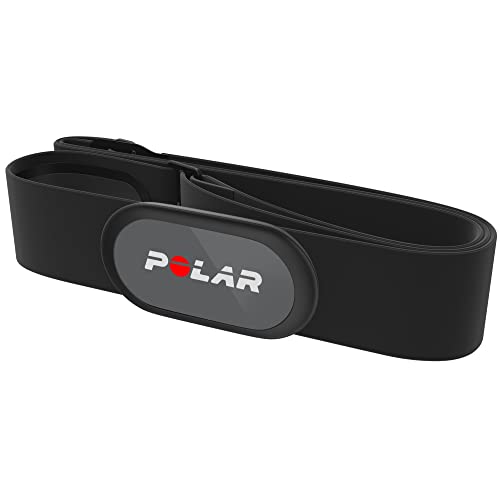
The Polar H9 is the simpler of the two current straps, aimed at users who want reliable heart rate for training without paying for recording features. It transmits over Bluetooth Low Energy and ANT+ simultaneously, so a watch and a gym console or cycling computer can listen at the same time. Its pod runs on a replaceable CR2025 coin cell, manufacturer figures put battery life around four hundred hours of use, and the strap itself is the soft textile Pro Strap style with silicone grip dots that help it stay put once the skin warms and sweat builds. For many athletes the H9 covers the whole job: accurate beats, dual transmission, and nothing extra to manage.
The H10 adds three capabilities that justify its higher price for the right user. First, it carries internal memory that can record one complete training session without any watch or phone nearby, a feature aimed squarely at swimmers, team-sport players, and martial artists who cannot wear a watch during activity. Second, its Bluetooth radio supports two simultaneous connections rather than one, letting a watch and a phone app receive the same live signal. Third, Polar has historically used the H10 as its reference sensor for firmware updates and for features such as recording RR intervals for later download, so it tends to receive capability additions first. Data sheets list the same CR2025 cell and a similar operating life, and the pod’s dimensions are close enough that both straps feel alike on the chest.
Choosing between them is mostly a question about recording habits. If a watch is always on the wrist during exercise, the H9’s live transmission does everything required and costs less. If sessions happen where watches are banned, impractical, or likely to be damaged, the H10’s onboard memory becomes the deciding feature rather than a luxury. Swimmers fall into a special category discussed later, because radio signals behave badly underwater and the H10’s separate 5 kilohertz transmission exists precisely for that environment. Buyers should also note that both pods detach from their straps, so a worn textile band can be replaced without buying a whole new sensor, which keeps long-term ownership costs modest.
Comfort differs subtly between individual bodies rather than between the two models. The electrode band must sit flat against the sternum area, and people with a pronounced chest curvature sometimes find any strap migrates downward during running unless the fit is snug. Polar sells the Pro Strap in sizes, and choosing by chest circumference rather than guessing matters more than the choice of pod. A strap that is too loose produces dropouts that look like sensor failure; a strap adjusted correctly disappears from awareness within minutes. That fitting theme returns in the care section, because most reported accuracy problems trace back to contact and placement, not electronics.
The Vantage line: Polar’s flagship training platform
The Vantage series sits at the top of Polar’s range, and current models such as the Vantage V3 and the remaining Vantage V2 stock share a design philosophy: multi-band satellite positioning on newer units, detailed training load analysis, and full support for external sensors including both chest straps discussed above. Pairing a strap with a Vantage watch unlocks the platform’s most distinctive tools, because several of its recovery and performance tests assume clean RR interval input. The watch will happily record heart rate from its own optical sensor, but the data sheets and support material make clear that strap input takes priority whenever both are present, and the watch switches automatically once the strap wakes and connects.
Training Load Pro is the headline analysis on Vantage models, splitting strain into cardio load, muscle load, and perceived load. Cardio load derives from training impulse calculations that depend on heart rate accuracy across the whole session. During a threshold workout with surges, an optical sensor that lags on each rise and fall smears the load estimate; a strap that follows each change within a beat or two keeps the calculation honest. Athletes who periodise training around load targets feel that difference across a season, because systematic under-reading on hard days and over-reading on easy days quietly corrupts the trend lines coaches rely on.
The Vantage platform also hosts the Orthostatic Test, a structured heart rate variability protocol covered in depth later in this guide. That test explicitly requires a chest strap, since it analyses RR intervals while the user lies down and then stands, looking for shifts in autonomic balance. Owning a flagship watch without a strap therefore leaves one of its signature features unused. The same applies to the running performance and cycling performance tests on supported models, which estimate aerobic capacity from submaximal work and demand stable heart rate data to produce believable results. Readers comparing the flagship tier against broader sport categories may also browse best activity smartwatches for context on how dedicated training watches differ from general activity devices.
Hardware details round out the flagship picture. Vantage watches offer long battery life measured in days of smartwatch use and tens of hours of continuous satellite tracking, bright displays readable in sunlight, and barometric altitude for hill work. None of those features change how a strap behaves, yet they shape the overall system: a watch that records for a full ultra-distance event needs a heart rate source that lasts just as long, and a coin-cell strap rated in hundreds of hours comfortably outlasts any single charge of the watch itself. System thinking, rather than spec-sheet shopping, is what makes the flagship-plus-strap combination coherent.
Grit X: the outdoor branch of the family
The Grit X line, including the Grit X Pro and the second-generation Grit X2 models, takes Polar’s training platform into rougher terrain. Cases are built to military-grade durability standards, bezels and buttons are designed for gloved hands, and route guidance features such as Hill Splitter and turn-by-turn navigation serve trail runners, hikers, and mountain bikers. Underneath the armour, the sensor support matches the Vantage approach: Bluetooth accessories pair in the same way, and a chest strap remains the reference source for heart rate whenever terrain makes wrist readings unreliable.
Trail and mountain environments attack optical sensing from several directions at once. Cold wind at altitude reduces peripheral circulation, poles occupy the hands and change arm swing, and technical descents involve gripping, scrambling, and sudden posture changes. A strap under a base layer is indifferent to all of that. For ultra-distance trail events there is a second benefit: optical sensors draw continuous power for their LEDs, while receiving strap data over Bluetooth is comparatively frugal, so offloading measurement to the chest can extend the watch’s tracking endurance on the longest days. Manufacturers do not always publish that saving as a headline figure, but the physics of the two methods makes the direction of the effect clear.
Grit X models also emphasise fueling and weather tools, including carbohydrate reminders and on-wrist forecasts, which pair naturally with accurate effort data. A fueling alert triggered by time and estimated expenditure means more when the expenditure estimate rests on solid heart rate input. Likewise, the outdoor dashboards that show ascent, descent, and altitude profiles become more useful in post-session analysis when heart rate overlays align precisely with the climb that caused them, rather than drifting several seconds late as optical readings sometimes do on steep, arm-heavy ascents.
Pacer and Pacer Pro: running focus at a lighter weight
The Pacer line strips Polar’s platform down to what runners actually use, in a thin, light case that many owners forget they are wearing. The Pacer Pro adds a barometer, more training tests, and a snappier processor, while the standard Pacer keeps the essentials: satellite positioning, wrist heart rate, sleep tracking, and full Bluetooth sensor pairing. Both models accept the H9 and H10, and for runners the strap pairing may matter more here than anywhere else in the range, because running is where optical lag and cadence artefacts are most studied and most felt.
Interval sessions expose the difference starkly. Consider a workout of eight repetitions of two minutes hard with one minute floating recovery. On each hard start, actual heart rate climbs within seconds; an optical sensor must detect changing blood volume through moving tissue and typically trails the real curve, sometimes by ten seconds or more early in a session. On the recovery, the same lag delays the fall. The recorded graph looks smoothed and shifted, peak values are clipped, and time-in-zone totals misreport the session’s true shape. A chest strap follows the electrical signal almost immediately, so the graph shows crisp steps that match the workout as run. Coaches reviewing files can tell at a glance which sensor produced them.
Zone-based easy running benefits in a quieter way. Many runners drift above their intended ceiling on gentle days because wrist readings under-report on cool mornings, a known optical tendency when peripheral flow is low. The strap removes that systematic error, and easy days stay genuinely easy. Over months, that discipline protects the hard sessions that drive adaptation. The Pacer family’s running programmes and race-time predictors also consume heart rate history, so cleaner inputs compound into better guidance, an argument for buying the strap early rather than after a season of noisy data.
Ignite: fitness watch, honest limits
The Ignite series is Polar’s fitness-focused line, with a bright touchscreen, a slim case, and an emphasis on sleep and daily readiness through features such as Nightly Recharge and FitSpark workout suggestions. Ignite models pair with chest straps for workouts, and doing so sharpens the calorie and intensity estimates that feed the watch’s daily guidance. For gym classes, spin sessions, and circuit training, where wrist flexion and gripping constantly disturb optical readings, the improvement is not subtle: strap data holds steady through burpees, kettlebell work, and rowing intervals that send wrist graphs into spikes and dropouts.
FitSpark deserves specific mention because its suggestions adapt to recovery status. The system looks at sleep and autonomic recovery, then proposes cardio, strength, or supportive sessions accordingly. Heart rate variability sits under several of those calculations, and while the watch estimates overnight variability optically during sleep, training-session variability and any formal testing still favour strap input. An Ignite owner who adds an H9 gets a meaningfully more trustworthy training picture without stepping up to a flagship watch, which is arguably the best value upgrade path in the whole Polar catalogue.
There are limits to acknowledge. Ignite watches lack the advanced performance tests of the Vantage line, their satellite feature set is simpler, and touchscreen operation in rain or with gloves frustrates some users. None of that undermines the strap pairing, but buyers choosing a watch primarily for structured endurance training should weigh the Pacer or Vantage tiers first. Readers whose interests lean toward music and connected features alongside training may find best fitness and music smartwatches a useful comparison point before settling on a fitness-first device.
Connections: Bluetooth, ANT+, and the 5 kHz GymLink
A modern Polar strap is a small radio station with three ways to talk. Bluetooth Low Energy is the primary channel to watches and phones. ANT+ runs in parallel on both the H9 and H10, serving cycling computers, gym equipment, and older receivers that speak that protocol. The third path, GymLink, is Polar’s long-standing 5 kilohertz transmission, a low-frequency signal with a short range of roughly one metre that compatible treadmills, bikes, and rowers in gyms have received for years. Understanding which channel does what prevents most pairing confusion, because a strap can be connected to one device over Bluetooth while remaining invisible to another until the first connection is released or a second channel is used.
The H10’s dual Bluetooth support changes multi-device setups materially. A runner can send live heart rate to a watch and simultaneously to a phone running a training app, or to a watch and a tablet showing a virtual cycling world. The H9 supports one Bluetooth connection, so the same user must choose which device listens, although ANT+ can feed a second receiver at the same time since that protocol broadcasts rather than connects. Cyclists with an ANT+ head unit and a Polar watch therefore lose nothing with the H9, while phone-centric users recording to apps often prefer the H10’s flexibility.
GymLink earns its keep in the pool. Bluetooth and ANT+ signals at 2.4 gigahertz are absorbed by water within centimetres, which is why no wristwatch receives live strap data while swimming, whatever the marketing around either device suggests. The 5 kilohertz magnetic signal travels through water far better, and compatible pool-side equipment or older Polar receivers can use it. For modern watches, though, the practical swimming answer is the H10’s memory: record the session inside the strap, then sync afterwards. GymLink also explains the heart rate symbols that appear on gym machines when a strap wearer steps onto a treadmill, a small daily convenience that costs nothing to use.
Pairing procedure is deliberately mundane. The strap wakes when its electrodes detect moisture and skin contact, which is why instructions insist on wetting the electrode area before putting it on. In the watch’s sensor menu, the wearer selects pairing while wearing the strap, and the two remember each other afterwards. Subsequent sessions connect automatically within seconds of the strap going on. Problems usually trace to a strap already connected to a phone app in the background, a flat coin cell, or electrodes too dry to trigger wake-up. Working through those three causes in order resolves the overwhelming majority of connection complaints without any deeper technical intervention.
Swimming with a chest strap
Pool swimming is the use case that separates casual interest from genuine need. Wrist optical sensors do function in water on many watches, and Polar’s models record heart rate during swims, but the readings suffer from water flushing between sensor and skin, from the catch phase of each stroke disturbing contact, and from cooler water constricting blood flow. Coaches who prescribe heart-rate-based swim sets generally trust strap-recorded data more, and the H10’s offline recording exists for exactly this discipline. The wearer starts a recording from the Polar app before entering the water, swims the session with no live display, and merges the heart rate file with the watch’s swim metrics afterwards in Polar Flow.
Open-water swimming adds wetsuit complications. A strap worn under a wetsuit stays in place well and its electrodes maintain contact, but starting a recording must happen before the suit is zipped, and the watch on the wrist still cannot receive live data through the water. Triathletes often wear the strap under their race kit from the start, letting it record the swim, then connect live for the bike and run legs where Bluetooth works normally. That single-strap, whole-race pattern is one of the strongest practical arguments for the H10 over the H9, since the H9 has no memory and would contribute nothing during the swim leg beyond what GymLink-compatible receivers might catch.
Chlorine and salt water both punish equipment slowly. Manuals advise rinsing the strap in fresh water after swims, detaching the pod, and letting the textile dry fully rather than storing it damp in a kit bag. The electrode material tolerates pool chemicals well when rinsed, but a strap left wet and salty for weeks will stiffen and eventually crack at the conductive areas. Given that replacement straps cost far less than pods, treating the textile as a consumable with a finite life, and the pod as the durable component, is the realistic ownership model for regular swimmers.
Heart rate variability and recovery testing
Heart rate variability, the fluctuation in time between consecutive heartbeats, reflects the push and pull of the autonomic nervous system. Higher variability at rest generally signals a recovered, adaptable state; suppressed variability often follows hard training, poor sleep, illness, or psychological stress. Because the measurement lives in millisecond differences between RR intervals, the sensor’s timing precision sets the ceiling on the analysis quality. This is the technical heart of the strap argument: optical sensors estimate beat timing from a smoothed blood-volume waveform, while a strap timestamps the electrical R peak directly, and variability mathematics amplifies that difference.
The Orthostatic Test on higher-end Polar watches formalises variability into a repeatable protocol. The user lies down quietly for a few minutes while the strap records, then stands and remains still while recording continues. The software examines resting heart rate, standing heart rate, and several variability indices, comparing them against the individual’s own baseline built over previous tests. Deviations flag accumulated fatigue or incomplete recovery before the athlete feels obviously flat. Polar’s guidance suggests repeating the test on a regular schedule, at the same time of day, under similar conditions, because the value lies in the trend rather than any single morning’s numbers. A strap is mandatory for this test, full stop; the watch cannot substitute its optical sensor.
Nightly Recharge takes a different route, measuring during sleep with the watch’s optical sensor to produce an ANS charge score from heart rate, variability, and breathing rate across the first hours of the night. It requires no strap, which is precisely its appeal: passive, nightly, and effortless. The two systems complement rather than compete with each other. Nightly data gives a continuous background trend, while a scheduled Orthostatic Test with a strap offers a sharper, clinic-style snapshot on key mornings, such as during heavy training blocks or before important races. Serious users run both and pay attention when they disagree, since disagreement itself is information about measurement conditions or genuine physiological change.
Readers should keep expectations proportionate. Variability scores are decision aids, not diagnoses, and every platform’s documentation says so. A suppressed reading after a known hard block confirms what the training plan already predicted; a suppressed reading out of nowhere, repeated across several days alongside elevated resting heart rate, is a reasonable prompt to ease off and watch for illness. The strap’s contribution is trustworthiness of input. Decisions about rest days carry real training cost in both directions, resting unnecessarily and pushing through genuine fatigue alike, so feeding those decisions with the cleanest available signal is worth the modest hassle of wearing a band around the chest for a few morning minutes.
Training features that quietly depend on the strap
Several Polar features consume heart rate data without advertising how sensitive they are to its quality. Running Index, the platform’s estimate of running effectiveness derived from speed and heart rate, drifts when heart rate lags behind pace changes on rolling courses. The aerobic decoupling visible in long-run files, where heart rate climbs at constant pace as fatigue and heat accumulate, only reads cleanly when the sensor tracks promptly; optical smoothing can manufacture or mask apparent drift. Even simple zone distribution summaries at the end of a week, the pie charts showing how much training sat in each intensity band, shift noticeably between sensor types for athletes who do much of their work near zone boundaries.
Heart rate zones themselves deserve a moment of scrutiny. Default zones calculated from age-predicted maximum heart rate are population averages with wide individual error, and no sensor fixes that. What a strap does fix is execution: once a user has established a realistic maximum or threshold from a field assessment, the strap ensures the watch reports which side of a boundary the body is actually on, second by second. During a tempo run ridden along the top of zone three, optical lag can show zone two for the first minute of every surge, encouraging the runner to push harder into genuine threshold work unintentionally. The strap’s immediacy turns zone training from an approximation into a discipline.
Strength training and indoor sports present the opposite pattern, where wrist data is not merely laggy but often unusable. Barbell work, gymnastics, climbing, and racket sports all involve forceful wrist movement or gripping that defeats optical contact repeatedly. A strap records a continuous, believable trace through a whole session, which matters for anyone using heart rate to gauge conditioning work or to keep conditioning circuits in a target band. For off-road and backcountry training where both hands stay busy and conditions turn harsh, the comparison material at best adventure fit smartwatches shows how outdoor-oriented devices handle the same sensor trade-offs.
Fitting, wetting, and wearing the strap correctly
Placement follows anatomy. The strap sits around the chest just below the pectoral muscles, with the pod centred on the sternum and the Polar logo upright. The band should be snug enough that it does not slide when the wearer jumps or bends, yet loose enough to allow a full deep breath without restriction. Most new users err toward looseness, then blame the sensor for dropouts that are really the electrodes losing contact during arm movement. A useful check is to fit the strap, take several deep breaths, and perform a few vigorous arm swings; if the band migrates, tighten it a notch before starting the session rather than adjusting mid-run.
Wetting the electrodes is not a ritual, it is how the circuit completes. Dry skin is a poor conductor, and the strap detects heartbeats through the electrode areas only when moisture bridges skin and conductive material. Tap water works, saliva works in a pinch, and commercial electrode gels exist for people with very dry skin or for cold-weather use where sweat arrives late. In winter, many runners find the first ten minutes produce erratic readings until perspiration takes over; applying water or gel before leaving home, and wearing the strap under layers where it warms quickly, largely eliminates that early-session noise.
Clothing interactions cause a subtler fault. Synthetic sports tops can generate static electricity, especially in dry indoor air, and static discharges near the electrodes may appear as impossibly high heart rate spikes in the opening minutes of a workout. The standard remedies are wetting the shirt area over the strap as well as the electrodes, choosing natural-fibre base layers in winter, or applying a little moisture to the chest before dressing. Heart rate traces showing a brief period of absurd values that settle once the athlete sweats are a signature of this effect, and recognising the pattern saves users from concluding that a healthy strap is faulty.
Care, washing, and the CR2025 battery
Maintenance divides neatly between pod and textile. The pod should be detached after sessions, wiped dry, and stored away from the damp strap, because leaving it snapped in keeps it awake longer whenever residual moisture bridges the snaps, draining the cell faster. The textile strap needs rinsing after sweaty use and a gentle machine wash periodically; Polar’s guidance suggests washing after several uses, using a laundry bag, and never washing the pod itself. Detergent residue can irritate skin and degrade electrode surfaces over time, so thorough rinsing matters, and fabric softeners are best avoided entirely since they coat fibres and conductive areas alike.
Battery replacement is a user task by design. Both the H9 and H10 pods open to reveal a standard CR2025 coin cell, sealed by an O-ring that keeps sweat and pool water out. When readings begin dropping out, transmission range shrinks, or the watch reports a low sensor battery, the fix is a fresh cell, a careful reseat of the O-ring, and firm closure of the cover. Manufacturer estimates around four hundred hours of operation mean most athletes replace the cell roughly once a year, heavy users somewhat sooner. Keeping a spare cell in the kit bag is cheap insurance against a dead strap on race morning, and the swap takes minutes with a coin to turn the cover.
Longevity expectations should stay realistic. Textile straps typically last one to two years of frequent use before elasticity fades and electrode surfaces wear, at which point accuracy deteriorates gradually rather than failing outright. The pod, protected from the worst of the sweat and washing, lasts far longer. Budgeting for periodic strap replacement, and recognising declining data quality as the signal, keeps the system performing as designed. Users who rotate two straps, letting each dry fully between sessions, report noticeably longer textile life, a trick borrowed from running-shoe rotation that costs little and works for the same moisture-related reasons.
Troubleshooting the faults owners actually meet
Dropouts during a session, where the trace falls to zero or freezes, almost always involve contact, battery, or interference in that order of likelihood. Contact fails when the strap dries out in cold air, when it has slipped down the torso, or when the textile is worn out. Battery problems announce themselves through shortened range and intermittent connection rather than sudden death. Interference is rarer than users assume, but crowded start lines with hundreds of Bluetooth devices, and indoor gyms dense with wireless equipment, can produce brief gaps that resolve once the athlete moves. Checking the simple causes first, in that sequence, resolves the great majority of complaints without contacting support.
Spikes to implausible values have their own short list. Static from clothing leads the causes, followed by dry electrodes in the opening minutes, and occasionally a strap worn over a heart-rate-reactive medical device or near strong electrical equipment. Genuine cardiac events can of course produce unusual traces, and persistent strange readings accompanied by symptoms are a matter for a clinician, not a gear guide. The practical habit worth building is reviewing traces after sessions rather than staring at live numbers: patterns repeat, and a fault that appears in the same circumstances across several workouts points to its own cause once the user lays the files side by side.
Pairing failures after months of smooth use usually follow a phone software update, a watch firmware change, or the strap being claimed by another application. The reliable reset sequence is to remove the strap from the watch’s paired sensor list, close training apps on the phone, ensure the strap is awake by wearing it with wetted electrodes, and pair again from the watch menu. Removing and reseating the battery for a short period resets the pod itself in stubborn cases. These steps sound basic because they are, and support documentation repeats them because they work; exotic faults in these mature products are genuinely uncommon.
Who genuinely needs a strap, and who can skip it
Honesty about necessity keeps this guide credible. A recreational runner doing three easy outings a week, a walker tracking daily activity, or a gym-goer following general classes will get full value from a Polar watch’s optical sensor alone, and the strap would mostly gather dust. Sleep tracking, resting heart rate trends, step counts, and gentle zone awareness all work well from the wrist. The strap becomes compelling when specific demands appear, and naming those demands precisely helps buyers decide without either overspending or under-equipping themselves for goals they have genuinely set.
The clearest cases are these. Athletes training seriously with intervals need response speed the wrist cannot offer. Anyone wanting the Orthostatic Test or dependable variability analysis needs RR precision by definition. Swimmers who want trustworthy heart rate need the H10’s memory because live radio fails underwater. Team-sport players, judoka, and others barred from wearing watches during play need recorded sessions for the same reason. Rowers, climbers, and lifters whose wrists work too hard for optics gain continuous data they otherwise lack. Finally, cold-climate athletes, and people whose skin, tattoos, or circulation defeat optical sensors, find the strap simply works when the wrist does not.
There is also a middle group worth addressing: data-curious owners who enjoy the Polar Flow analysis ecosystem. Flow’s training reports, season planners, and long-term trends all deepen with cleaner inputs, and the platform rewards consistency. A strap worn for the two or three key weekly sessions, while the watch handles easy days optically, is a pragmatic compromise many experienced users adopt. It limits strap laundry and battery use, protects the sessions where accuracy changes decisions, and accepts optical approximations where they cost nothing. Perfection across every recorded minute is not required for the system to deliver its value.
Budget thinking should include the secondhand and longevity angle. Straps are simple, durable devices with standard batteries, and a pod bought today will pair with the next Polar watch its owner upgrades to, since Bluetooth sensor support spans generations of the range. The same cannot be said for many watch-specific accessories. Viewed as a multi-year, multi-watch instrument rather than a single gadget purchase, the strap’s cost per recorded session falls to very little, which reframes the buying question from whether it is worth the outlay to whether the owner’s training includes any of the clear cases listed above.
Choosing your combination
Pairing decisions resolve into a few sensible bundles. A runner building toward structured training pairs a Pacer Pro with an H9, gaining barometric altitude, performance tests, and precise interval data at a moderate total cost. An ultrarunner or triathlete pairs a Vantage or Grit X model with an H10, because memory recording, dual Bluetooth, and the full test suite all earn their place across swim, bike, and run disciplines. A fitness-focused owner pairs an Ignite with an H9 to stabilise gym data and sharpen FitSpark’s inputs without buying flagship hardware whose tests they will never open. Each bundle starts from the activity and adds the strap that activity actually uses.
Android phone owners comparing across ecosystems should remember that Polar’s straps are not locked to Polar watches. The same H10 that serves a Vantage also talks to phones, cycling computers, and gym kit, and plenty of athletes run one strap across several hosts. Those weighing a Polar watch against a wrist-only tracker from another brand can scan best android smartwatches fitness trackers under 100 to see what the lower-cost tracker segment offers, keeping in mind that none of those devices accepts an external ECG strap feed into their native analysis in the way Polar’s platform does.
Before buying, a short checklist prevents the common regrets. Confirm the watch model supports external Bluetooth sensors, as a few entry devices in various brands restrict pairing even when the radio exists. Choose strap size by measured chest circumference, not by clothing size guesses. Decide honestly whether offline recording matters, because that single feature separates the H10 from the H9 more than any other. Plan where the strap will dry and live, since a strap with a home gets used, and one lost in a kit bag does not. Finally, budget a spare coin cell from day one; it weighs nothing and removes the only consumable surprise the system can spring.
Living with the system day to day
Routine determines whether technology helps or nags. Owners who keep the strap draped over their running shoes, wet the electrodes as part of dressing, and rinse the band while showering after a session report that the whole arrangement adds under a minute to each workout. The watch side asks even less: it finds the strap automatically, prioritises its data, and files the session to Polar Flow with the sensor noted, so later analysis can distinguish strap sessions from optical ones. That provenance tagging matters when comparing files across months, because apparent changes in fitness sometimes turn out to be changes in measurement method, and Flow’s records let a careful user check which was which.
Travel and racing compress these habits. A strap packs flat, survives being stuffed into a shoe, and needs no charger, which makes it the lowest-maintenance item in a race bag. The watch charger, by contrast, is the classic forgotten cable, and a strap cannot rescue a dead watch; experienced racers charge the watch the night before and treat the strap’s coin cell as a monthly checklist item instead. In multi-day events, the strap’s indifference to charging becomes a genuine logistical advantage, since every other device in the kit competes for the same power bank capacity.
Data review habits complete the picture. A weekly glance at zone distribution, a monthly look at resting heart rate and variability trends, and an Orthostatic Test at consistent intervals during heavy blocks extract most of the system’s insight without turning training into spreadsheet labour. Polar Flow presents these views without demanding deep configuration, and the strap’s cleaner data makes the trends smoother and easier to trust at a glance. The technology fades into the background, which is the proper fate of measurement tools: present when a decision needs them, invisible the rest of the time.
How the numbers reach Polar Flow, and what to check there
Every recorded session travels from watch to phone to Polar Flow, where the service stores heart rate alongside pace, altitude, route, and cadence. That merged file is where strap quality shows itself most clearly to a reviewing eye. A strap session displays a heart rate trace with crisp edges at interval boundaries and a stable line during steady work, while an optical session often shows rounded corners and small oscillations that reflect the sensor’s filtering rather than the athlete’s physiology. Learning to recognise those signatures takes only a few comparisons, and once learned, they inform how much weight to place on any single file when adjusting training.
Flow also exposes the RR-based data to export for users who analyse variability in dedicated tools. Because the strap timestamps beats electrically, exported interval series from strap sessions hold up under the artefact scrutiny that variability software applies, with very few beats flagged for correction. Optical exports typically need heavier correction, and aggressive correction itself alters the statistics being studied. Researchers and meticulous amateurs alike therefore treat strap recording as the entry requirement for serious variability work, a standard that originates in laboratory practice where chest electrodes have always been the reference instrument for ambulatory recording.
One more setting deserves attention: some Polar watches can record heart rate from the strap while using the watch’s optical sensor for other purposes, or broadcast heart rate onward to gym equipment and apps from the watch itself. These routing options suit indoor cycling studios and group training environments where a large screen displays everyone’s effort. Configuring them once, at home rather than in a busy studio, avoids the familiar scene of an athlete wrestling with menus while a class warms up around them. The strap, again, simply supplies the signal; the watch acts as its post office.
Safety, skin, and medical caveats worth stating plainly
Chest straps are non-invasive external sensors, and manufacturers list few restrictions, but sensible caveats apply. People with implanted cardiac devices should follow their clinician’s guidance about any equipment worn over the chest, and Polar’s own documentation directs such users to medical advice rather than offering blanket assurances. Skin reactions occasionally develop where electrodes sit, particularly when a strap is worn for many hours daily or when detergent residue remains in the textile; rotating straps, rinsing thoroughly, and giving the skin rest days resolves most irritation. A strap should never be worn so tightly that it marks deeply or restricts breathing, and persistent discomfort is a fitting problem to solve, not a sensation to endure.
It is equally important to state what these devices are not. A consumer strap and watch combination is a training instrument, not a diagnostic medical device, and neither its heart rate trace nor its variability scores can rule cardiac conditions in or out. Unusual symptoms during exercise, palpitations, dizziness, chest discomfort, or fainting, warrant medical evaluation regardless of what any wearable displays, and a normal-looking trace should never be used to dismiss them. Used within those boundaries, the system is a remarkably capable everyday tool; used outside them, it risks offering false reassurance that no training gadget is qualified to give.
Check prices on Amazon
Live listings for the shortlist in this guide are pulled from Amazon below, so prices and availability are always current at the moment you look.
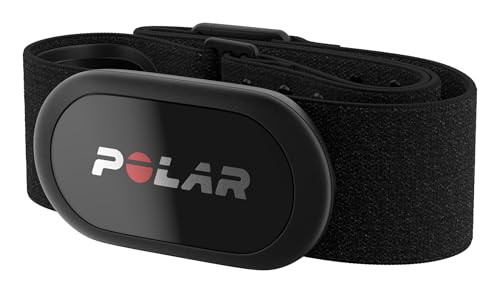
Polar H10 Heart Rate Monitor Chest Strap - ANT + Bluetooth, Waterproof HR Sensor for Men and Women, Black, M-XXL

A brief history of why the chest strap came first
It helps to remember that the chest strap is not an accessory invented to support watches; historically, the relationship ran the other way. Polar built its reputation in the late twentieth century on wireless heart rate systems where a chest transmitter sent beats to a simple wrist receiver, at a time when no optical wrist sensor existed in consumer products at all. The wrist unit began as a display for the strap’s data. Decades of coaching practice, laboratory validation work, and athlete habit formed around that architecture, which is why training literature treats strap data as the reference standard and judges newer optical methods against it, rather than the reverse.
That heritage explains design choices that otherwise look conservative. The detachable pod, the textile band, the coin cell, and the low-frequency GymLink signal all descend from equipment refined over thousands of training halls and pool decks. It also explains why the ecosystem’s analysis features assume strap-grade input: the software’s models were built in an era when the electrical signal was the only signal there was. Optical sensing arrived later as a convenience layer, genuinely impressive in its progress, but still the junior partner in any honest account of measurement quality. Buying a strap today is therefore less like adding an accessory and more like reconnecting a modern watch to the original instrument its software was designed around.
None of this freezes the future. Optical sensors improve with each hardware generation, multi-wavelength arrays and better algorithms keep narrowing the gap during steady exercise, and for many daily purposes the gap has effectively closed. The strap’s remaining advantages concentrate where physics resists cleverness: instantaneous electrical events versus delayed blood-volume changes, underwater recording versus absorbed radio, and hands that grip, pull, and strike versus a sensor that needs a quiet wrist. Those niches happen to include most of the moments athletes care about most, which is why the oldest component in the system remains the easiest to recommend without qualification.
One last practical habit ties the whole system together: glance at the sensor indicator when starting each session. Polar watches show which source is supplying heart rate, and confirming the strap icon before the first interval takes two seconds. That tiny check prevents the quiet disappointment of discovering, an hour later, that a flat coin cell or an unclaimed Bluetooth connection left the watch recording optically all along. Habits of that size, repeated without thought, are what separate owners who trust their data from owners who merely collect it.
It also helps to keep one spare strap snap-side up in a drawer, because the morning a band finally tears at a worn electrode is never the morning with spare time to shop, and a five-minute swap beats a week of improvised repairs with tape that was never going to hold through a single sweaty session anyway.
For the athlete whose mornings begin with cold air, quiet roads, and a plan written the night before, the small ritual of a dampened strap clicking awake beneath a base layer becomes part of the run itself, a brief promise that today’s effort will be recorded as faithfully as it is felt.


