What's inside
- Key Takeaways
- Quick Picks
- How Did We Order Six Pairs When None of Them Names the Truck?
- Why Has the 6×8 Oval Outlived So Many Round Speakers?
- How Do the Six Compare Side by Side?
- How Do You Replace Speakers in a Truck This Old Without Breaking It?
- What Mistakes Do Owners of Ageing Explorers Make?
- What Should You Check Before Ordering for a 2000 Explorer Specifically?
- How Will You Know the Rescue Worked?
- How Do the Brands Here Actually Differ in Voice?
- What Does the First Year After the Swap Look Like?
- How Do You Read These Six Listings Like a Parts Counter?
- What Role Does the Head Unit Play in a Truck of This Age?
- How Should You Stage a Four-Corner Rescue on a Budget?
- Should You Add Sound Treatment While the Doors Are Open?
- What About Water, Dust and the Next Twenty-Five Years?
- Final Recommendation
- Frequently Asked Questions
- Related Guides
As an Amazon Associate I earn from qualifying purchases. This post may contain affiliate links at no extra cost to you.
gizmoverdict.com is reader-supported. When you buy through links on our site, we may earn an affiliate commission.
Where to buy: Amazon lists all six pairs reviewed below. Names in the Quick Picks table and in the review headings link to the exact listings whose titles supplied the sizes and watt figures used here, so check the detail page of the pair you choose against your Explorer’s door and rear locations before ordering.
The best replacement speakers for 2000 Ford Explorer owners rest on one of the simplest fitment stories in this entire batch: your truck’s factory openings take the 6×8 oval, and four of the six pairs in this guide say so in their own titles. No listing in the pool names the Explorer itself, and this guide will not pretend otherwise — the claim here is a size claim, repeated across brands, and it is a strong one because the 6×8 oval was Ford’s house size across its truck line of that era. A 2000 Explorer is also a quarter-century old, which reframes the purchase: you are not chasing the last degree of fidelity, you are rescuing a sound system whose speakers have outlived the design life of their own materials, in a vehicle whose owners prize it precisely because it keeps working.
That age shapes every recommendation that follows. Surrounds perish, cones sag, terminals corrode in doors that have swallowed twenty-five winters of slush, and the factory head unit — if it survives at all — feeds whatever is left. The good news is that the Explorer’s speaker job is mercifully straightforward, the oval size is plentiful, and the six pairs below span the honest range of answers: a modern Kicker two-pack, two three-way and two-way designs from the classic American and Japanese brands, a JBL whose title stays silent about size, and one unbranded listing that this guide includes with its caution label printed in large type.
Key Takeaways
- The 2000 Explorer’s speaker story is a size story: 6×8 ovals, a size four of these six titles state outright.
- No pick names the Explorer in its title, so every fitment claim in this guide is a size claim — verify mounting depth and pattern on the listing you choose.
- Two picks state power in their titles: the Kenwood at 250 watts and the Pioneer G-Series at 250 watts max; both figures describe the pair’s rating as printed, not a feeding target.
- The JBL Club 864F title states neither size nor power, so its place here depends on the size confirmation waiting on its detail page.
- The final pick is an unbranded listing titled only as a 6×8 replacement speaker — included for completeness, recommended only with eyes open.
- At twenty-five years old, your Explorer’s wiring and connectors deserve as much inspection as the speakers themselves.
Quick Picks
| Pick | Badge | Why it is here |
|---|---|---|
| KICKER CS Series CSC68 6 x 8 Inch Car Audio System Speaker, Black (2 Pack) | Best modern default | A current CS Series 6×8 sold as a two-pack, the straightforward first look for an Explorer needing one location rescued properly. |
| Rockford Fosgate P1683 Punch 6×8 3-Way Coaxial Full Range Speakers (Pair) | Three-way Punch pair | A 6×8 three-way coaxial pair from the Punch line, for owners who want the extra driver division in a brand they already trust. |
| JBL Club 864F | Silent-title brand pick | A JBL Club entry whose title declares no size or power; its case must be made on the detail page, and this guide says so plainly. |
| Kenwood KFC-C6866S 6×8 2-Way 250 Watt Car Stereo Speakers | Stated-figure two-way | A 6×8 two-way pair whose title prints a 250-watt figure, from a brand whose factory-replacement manners suit an ageing truck. |
| PIONEER G-Series TS-G6820S 6 x 8 2-Way Coaxial Car Speakers 250W Max | Value-line Pioneer | Pioneer’s G-Series take on the same oval, a two-way coaxial pair with 250 watts max printed in its title. |
| 6×8 Replacement Speaker | Unbranded, caution attached | A listing titled with nothing but the size and the job; the budget floor of the category, reviewed here with its risks itemised. |
How Did We Order Six Pairs When None of Them Names the Truck?
We ordered them by the completeness of their titles, because in a size-only shortlist the title is the specification sheet you are actually given. The Kicker CSC68 leads because its title is a model of the form: series, size with spaces an adult can read, format as a two-pack. The Rockford P1683 follows with size, a three-way layout and pair format all declared. The Kenwood and Pioneer state size, layout and a watt figure each. The JBL states a series and a number and trusts you to do the rest, and the unbranded listing states a size and a hope. That descending order of declared information is, in a purchase like this, a descending order of buying confidence — and we would rather rank honestly by evidence than invent a hierarchy of sound we cannot substantiate from titles.
We also kept the Explorer’s reality in view. This is a working truck of a certain age, often a second vehicle, a family hauler, a winter beater with dignity. Its owner needs speakers that survive doors full of weather and a head unit of modest gifts, and that can be replaced again in another decade without drama. Every pair here is a coaxial designed for factory-style power and factory-style openings; nothing in the list demands an amplifier, a crossover mounting project or a door rebuild, because the keyword asks for replacement speakers, not for a second career.
Why Has the 6×8 Oval Outlived So Many Round Speakers?
The oval exists because doors are not round. Ford’s designers of the period needed cone area inside shallow, rectangular door real estate, and an oval delivers more radiating surface than the largest circle the same space would accept. More surface moving modestly beats less surface moving violently, especially on the feeble power a factory radio provides, so the 6×8 became the truck-line standard and stayed in production long enough to build a deep aftermarket. Your Explorer benefits from that history every time a modern brand still bothers to mould a fresh 6×8 — which, as this pool shows, they still do.
The practical consequence is choice without adaptation. A round-speaker vehicle of the same age often forces its owner into adapter plates, altered openings and compromises; the Explorer’s owner orders the oval the truck was born with and spends the saved effort on the things that actually determine success at this age: connector condition, door moisture, and whether the speaker’s mounting holes still have sound metal to bite into. Size loyalty, in a twenty-five-year-old truck, is not nostalgia. It is the whole strategy.

KICKER CS Series CSC68 6 x 8 Inch Car Audio System Speaker, Black (2 Pack) — Best modern default
The CSC68 is what a factory-replacement speaker looks like when a major brand designs it for the present day rather than for a catalogue photograph. Kicker’s CS Series is the company’s working tier — the line aimed at exactly your situation, a tired factory system and a standard radio — and the 6×8 two-pack format matches the Explorer’s one-location-at-a-time reality. Kicker voices this tier for clarity on modest power, which matters in a truck whose head unit was never generous and whose cabin, all glass and hard surfaces, rewards a speaker that stays composed rather than one that shouts.
The two-pack framing deserves respect. Speakers in a twenty-five-year-old truck should be replaced in pairs, because a single fresh driver beside a perished partner produces a stereo image like a conversation between a singer and a man humming through a wall. A two-pack prices and packages that wisdom correctly. Its title states no watt figure, and on factory power that absence costs you nothing; what the title does state — series, size, count — is everything the purchase actually turns on.
Choose the CSC68 as the default when one location has failed and you want the modern, supported, no-drama answer. Owners replacing all four corners can simply double the order with a clear conscience, knowing the voicing will match across the cabin because the product was designed as a family rather than assembled from strangers.
- Fitment basis: 6 x 8 inch oval size, per the listing title; no vehicle named in the title
- Format: 2 pack
- Series: KICKER CS Series
- Power handling: Not stated in the listing title — verify with KICKER documentation
- Layout: Not stated in the listing title — verify with KICKER documentation
Strengths
- A current-production design from a major brand’s factory-replacement tier
- Two-pack format matches the replace-in-pairs discipline an old truck demands
- Voiced for modest factory power rather than for an amplifier you do not own
Trade-offs
- No power or layout figures in the title for the specification-minded
- Size-only fitment claim; depth and pattern still need a listing check
- One pack rescues one location — a four-corner rescue is two purchases
Best for: an Explorer owner replacing a failed or faded location with the modern default choice. Not suited for: a purchase that needs every specification printed in the title itself.
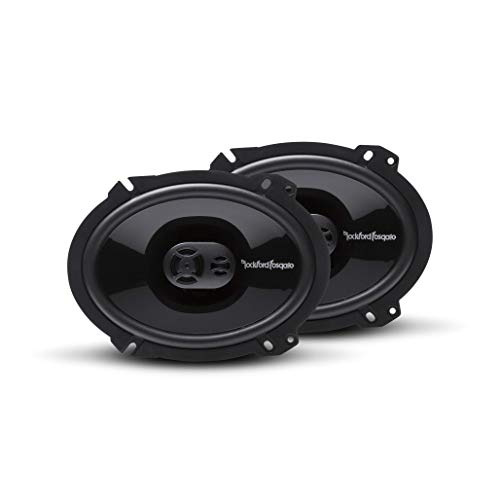
Rockford Fosgate P1683 Punch 6×8 3-Way Coaxial Full Range Speakers (Pair) — Three-way Punch pair
Rockford Fosgate’s P1683 makes the most complete declaration in this guide: 6×8, three-way coaxial, full range, pair. The three-way layout is its distinguishing idea — where a two-way divides the music between a woofer and a tweeter, a three-way inserts a midrange driver between them, and in a big, upright cabin like the Explorer’s that middle voice carries the range where speech and most instruments live. Punch tuning adds the brand’s characteristic presence, a forwardness that suits a truck cabin full of road rumble and HVAC fan.
There is a generational comfort to this pick, too. The Punch line was already the aftermarket’s answer when your Explorer was young, and its survival in the catalogue means the design has been bought, fitted and judged by two decades of Ford owners. That history does not guarantee your satisfaction, but it does mean the failure modes are known and the fitment folklore is deep — the questions beneath the listing will read like a reunion of trucks exactly like yours.
The title states no wattage, so plan as this guide keeps advising: on factory power, by ear, in pairs. If your Explorer’s complaint is a general dullness rather than a single dead corner, a three-way pair at the front doors is the most defensible first spend in the whole list, because it improves the location where the driver actually sits and judges.
- Fitment basis: 6×8 oval size, per the listing title; no vehicle named in the title
- Layout: 3-way coaxial, full range
- Format: pair
- Series: Rockford Fosgate Punch
- Power handling: Not stated in the listing title — verify with Rockford Fosgate documentation
Strengths
- The most completely declared title in the guide — size, layout and format
- A dedicated midrange driver serves the vocal band a truck cabin swallows
- Two decades of Ford fitment folklore stand behind the Punch oval line
Trade-offs
- Three-way complexity is wasted if your listening is mostly talk at low volume
- No stated power figure for owners who plan by numbers
- Presence-forward tuning may feel assertive in a quiet, parked cabin
Best for: an Explorer driver whose front doors sound dull and who wants the extra midrange division. Not suited for: a minimal repair where one basic pair at the lowest effort is the whole ambition.

JBL Club 864F — Silent-title brand pick
JBL Club 864F. That is the entire title, and this review is built around respecting its brevity. No size is printed, no layout, no power figure, no vehicle. The Club series is JBL’s factory-replacement family and the brand’s voicing reputation is genuine, but a reputation is not a dimension, and this guide will not borrow the measurements of neighbouring Club models to fill the silence. What the pool guarantees is that this listing was verified for this keyword; what you must guarantee, on the detail page, is the one fact the purchase turns on — that the speaker behind this short title is the oval your Explorer’s openings expect.
Handled that way, the pick is perfectly respectable. JBL builds Club speakers to flatter factory power, and owners who confirm the size often find the brand’s clarity-first tuning a pleasure in a truck that has spent years sounding muffled. The verification is neither long nor difficult: the detail page carries the dimensions in JBL’s own figures, and a two-minute read converts this from the guide’s biggest question mark into an ordinary brand choice standing beside the Rockford and the Kenwood.
What this pick should never be is a reflex. A famous badge on a silent title is a prompt to check, not a substitute for checking, and the Explorer owner who clicks through on faith may receive a fine speaker in a shape no Ford door wants. Do the two minutes. The reward is a legitimate sixth flavour in a guide otherwise dominated by the usual American names.
- Fitment basis: Not stated in the listing title — verify with JBL documentation
- Speaker size: Not stated in the listing title — verify with JBL documentation
- Layout: Not stated in the listing title — verify with JBL documentation
- Power handling: Not stated in the listing title — verify with JBL documentation
- Series: JBL Club
Strengths
- JBL’s Club family is purpose-built for factory-system replacement
- A clarity-led alternative voice in a guide of American-tuned pairs
- Becomes an ordinary, confident purchase once the size is confirmed
Trade-offs
- The heaviest homework in the guide: every key field is unstated in the title
- Cannot be compared on paper against the fully declared rivals
- An unverified order risks a shape your doors cannot use
Best for: a JBL loyalist willing to confirm the size on the detail page before ordering. Not suited for: a one-click purchase made without checking the detail page first.
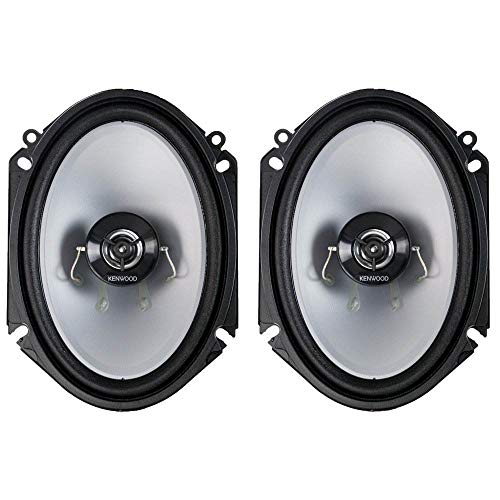
Kenwood KFC-C6866S 6×8 2-Way 250 Watt Car Stereo Speakers — Stated-figure two-way
Kenwood’s entry is the guide’s model of a plain-spoken listing: model, 6×8, two-way, 250 watts, car stereo speakers. The two-way architecture is the traditional factory-replacement layout — woofer for the body, tweeter for the air — and Kenwood has spent decades tuning exactly this class of speaker for exactly this class of vehicle. In an Explorer, that lineage translates to manners: a balanced, unfussy sound that improves everything a little and shows off about nothing, which suits a truck whose stereo shares the drive with conversation, weather radio and the occasional grandchild’s film in the back.
The 250-watt figure in the title is the pair’s printed rating, offered here exactly as Kenwood prints it and with the standing caution of this guide: a headline watt number is a rating, not a requirement, and your factory head unit will feed these speakers a small fraction of it while sounding entirely respectable. What the figure usefully tells you is that the speaker was built with headroom in mind rather than as the system’s fragile link.
Set against the three-way Rockford, the Kenwood is the simpler instrument, and simplicity has its own fidelity — fewer drivers, fewer transitions, a sound that many long-distance drivers find easier to live with for six hours straight. If your Explorer is a road-trip vehicle, that stamina is a real specification, whatever the titles decline to print.
- Fitment basis: 6×8 oval size, per the listing title; no vehicle named in the title
- Layout: 2-way
- Power figure: 250 watts, as stated in the listing title
- Model: Kenwood KFC-C6866S
- Format: Not stated in the listing title — verify with Kenwood documentation
Strengths
- A fully legible title: size, layout and a printed watt figure
- Balanced, long-haul manners that suit a working truck’s mixed listening
- Kenwood’s factory-replacement lineage runs deep in this exact size
Trade-offs
- Two-way layout gives up the Rockford’s dedicated midrange division
- The headline watt figure invites the usual misreading as a feeding target
- Format details live on the detail page rather than in the title
Best for: an Explorer owner who wants a declared, balanced two-way pair from a seasoned brand. Not suited for: a listener chasing maximum top-end sparkle or a three-way layout.

PIONEER G-Series TS-G6820S 6 x 8 2-Way Coaxial Car Speakers 250W Max — Value-line Pioneer
Pioneer’s G-Series is the company’s value line, and value, honestly pursued, is a virtue in a twenty-five-year-old truck. The TS-G6820S title is commendably explicit: 6 x 8, two-way coaxial, 250 watts max. That final word is doing honest work — Pioneer labels the figure as a maximum, a peak the speaker can handle in passing, and this guide repeats the label every time the number appears. Read it as headroom and the speaker makes sense; read it as a continuous rating and you will misunderstand both the speaker and your head unit.
The G-Series tuning philosophy differs from its A-Series sibling in the Mustang guide the way a house wine differs from a reserve: less ceremony, a straightforward balance, and an expectation of being driven by ordinary equipment. In the Explorer that is a feature. The truck’s factory radio is ordinary equipment, and a speaker designed without pretension for exactly that partnership will usually outperform, in lived experience, a fussier design starved of the amplifier it was secretly hoping for.
Consider this pair the rational floor of the branded market: everything declared, nothing extravagant, a famous name’s engineering at its most accessible tier. For an Explorer kept as a second vehicle — the winter truck, the boat-tower, the faithful spare — that proportionality is not a compromise. It is the correct answer wearing its price class openly.
- Fitment basis: 6 x 8 oval size, per the listing title; no vehicle named in the title
- Layout: 2-way coaxial
- Power figure: 250W max, as stated in the listing title (peak figure, not a continuous rating)
- Series: Pioneer G-Series
- Model: TS-G6820S
Strengths
- Every important field declared in the title, with the watt figure honestly labelled max
- Value-line tuning designed for ordinary factory power, which is what your truck has
- Proportional spending for a second-vehicle or working-truck rescue
Trade-offs
- Value tier materials and finish trail the guide’s pricier brand pairs
- Peak figure still risks misreading by number-first shoppers
- Two-way simplicity will not satisfy a detail-hungry listener
Best for: a cost-conscious Explorer rescue where declared specs and brand backing matter. Not suited for: an owner building the best-sounding cabin the truck can hold.

6×8 Replacement Speaker — Unbranded, caution attached
The final listing in this guide has no brand, no series, no layout and no watt figure. Its title is a job description: 6×8 Replacement Speaker. This guide includes it because the pool verified it and because honesty about the bottom of a market is part of a guide’s job — some Explorer owners, facing a truck worth modest money and a speaker that has dissolved entirely, will rationally choose the cheapest object that fills the hole and makes sound. That is a legitimate decision. It should be made with the risks itemised rather than discovered.
The risks are structural. Without a brand there is no documentation to consult, no specification to verify against, no warranty culture to appeal to, and no assurance that a second unit ordered later will match the first. Fit is a size claim and nothing more: mounting pattern, depth, connector arrangement and even whether the price buys one speaker or a pair must all be extracted from the detail page, because the title declines to say. Workmanship at this tier varies by batch, and the gap between a pleasant surprise and a disposable noisemaker is luck.
So the recommendation is narrow and sincere. If the Explorer is a farm truck whose radio competes with a chainsaw, and silence is the only unacceptable outcome, this listing answers. If the truck is your daily driver, your family hauler or your keeper, every branded pair above it earns its premium in documentation alone, before a single note is played. Spend the difference once, and spend it where a name stands behind the cone.
- Fitment basis: 6×8 size, per the listing title; no brand or vehicle named
- Brand: Not stated in the listing title — verify with the seller on the listing page
- Layout: Not stated in the listing title — verify with the seller on the listing page
- Power handling: Not stated in the listing title — verify with the seller on the listing page
- Format (single or pair): Not stated in the listing title — verify with the seller on the listing page
Strengths
- The budget floor of the category for a truck where any sound beats silence
- Correct headline size for the Explorer’s openings
- A rational choice for a work vehicle at the end of its cosmetic life
Trade-offs
- No brand, no documentation, no specification — every fact must be excavated
- Batch-to-batch consistency and longevity are unknowable in advance
- Even the single-versus-pair question is unanswered by the title
Best for: a rough-duty Explorer needing the cheapest route back to audible. Not suited for: a keeper truck, a family hauler, or any purchase you would rather not repeat.
How Do the Six Compare Side by Side?
| Pick | Size in title | Layout in title | Power in title |
|---|---|---|---|
| KICKER CSC68 | 6 x 8 | Not stated | Not stated |
| Rockford Fosgate P1683 | 6×8 | 3-way coaxial | Not stated |
| JBL Club 864F | Not stated | Not stated | Not stated |
| Kenwood KFC-C6866S | 6×8 | 2-way | 250 watts |
| Pioneer TS-G6820S | 6 x 8 | 2-way coaxial | 250W max |
| 6×8 Replacement Speaker | 6×8 | Not stated | Not stated |
The table is this guide in miniature: five branded answers of varying candour and one anonymous answer of none. Choose by how much certainty you want printed on the box, then by the voice you want in the cabin.
How Do You Replace Speakers in a Truck This Old Without Breaking It?
Age changes the etiquette of interior work. The Explorer’s door cards come off the way they did in 2000, but the clips holding them have spent twenty-five years becoming brittle, the wiring insulation has stiffened, and the screws may be wearing a coat of corrosion. Work warm if you can — a cabin heated by a short drive makes old plastic measurably more forgiving — and budget replacement clips before you start, because several will retire during the job no matter how careful your hands are. Disconnect the battery, photograph every connector, and keep a magnetic tray for fasteners that have survived a quarter-century and deserve to survive the afternoon.
Inside the door, expect evidence. Water tracks, a perished vapour barrier, perhaps a speaker surround that has become dust with ambitions. Clean the mounting surface, check that the holes still hold a screw with conviction, and look hard at the speaker wires themselves: green corrosion at a terminal adds crackle that owners misdiagnose as a dying radio. Test each new speaker at low volume before the card returns, voice first and music second, because a spoken presenter exposes a reversed connection instantly. Only when both sides image correctly should the trim go back, one clip at a time, in the reverse of the order that freed it.
What Mistakes Do Owners of Ageing Explorers Make?
The first is assuming the speakers are the whole story. In a truck this old, the head unit, the wiring and the connectors are all suspects, and a new pair fitted to corroded terminals will be convicted of the wiring’s crime. Clean and inspect as you go. The second mistake is its opposite — deciding that because everything is old, everything must be replaced at once, and turning a pleasant Saturday rescue into a rewiring saga. Speakers first, judged honestly, then decide what else, if anything, has earned replacement.
Third, number worship. Two titles in this guide print 250 in some form, and neither figure means the speakers are twins, twins in appetite or twins in quality; one is printed plainly, the other is labelled max, and both are ratings rather than recipes. Fourth, brand reflex in both directions — trusting the silent JBL title without the two-minute check, or dismissing the unbranded listing without admitting the narrow job it can honestly do. Fifth, replacing a single speaker. In a cabin this size, a lone new driver beside a perished partner sounds worse than the matched decay it replaced; pairs are the smallest unit of honesty.
What Should You Check Before Ordering for a 2000 Explorer Specifically?
Confirm which locations you are actually rescuing. Sit in the truck, fade the system front and rear in turn, and map the damage by ear before you map it by wallet; Explorers often present with dead rears and merely tired fronts, or the reverse, and the correct first pair follows the map. Then confirm the physical ground truth: pull one speaker, measure the opening and the depth behind it, and photograph the connector. That single removed speaker is your reference sample for every claim a listing makes — size, pattern, depth, plug — and it converts the size-based reasoning of this guide into certainty about your particular truck, which may carry a previous owner’s improvisations.
Decide, too, what the truck is for. A daily-driven Explorer that carries family earns the branded pairs and the careful install. A farm or site truck earns the right to be served cheaply and quickly. Neither answer shames the other; the only failure is buying for a truck you do not own — audiophile hardware for a beater, or anonymous hardware for a keeper you will curse at every rattle for the next five years.
How Will You Know the Rescue Worked?
Judge on the roads the truck actually travels, with material you know. A voice should hold together at working volume without the papery edge that perished surrounds add. Music should present as one cabin rather than four unrelated corners, and the rear pair — so often the Explorer’s silent partners — should contribute a sense of space instead of a rumour. Give the result a fortnight before grading it finally; ears recalibrate, and the improvement in an old truck often announces itself negatively, in the irritations that stop occurring: the volume you no longer ride, the presenter you no longer strain to follow, the passenger who stops asking you to turn it up and then, paradoxically, to turn it down.
How Do the Brands Here Actually Differ in Voice?
Specifications sort the shortlist; voices decide the marriage. Kicker’s CS tier speaks in a clear, forward register, designed to cut through the ambient roar of a working vehicle without turning brittle — in the Explorer it reads as competence, the sound of a system that has stopped apologising. Rockford Fosgate’s Punch three-way adds a dedicated midrange voice and a touch more theatre, flattering rock and country, the genres these trucks were raised on, and giving spoken word a chestiness that suits talk radio on long hauls. Neither is subtle, and in a glassy, upright cabin subtlety is mostly wasted anyway.
Kenwood and Pioneer divide the Japanese vote by temperament. Kenwood balances — nothing exaggerated, nothing missing, a tuning you can listen to for a full day’s drive without developing opinions about it, which is praise of a high order in a family vehicle. Pioneer’s G-Series, even at the value tier, keeps the family habit of a lively top end, and drivers who found the factory sound muffled often experience that lift as the single most obvious improvement of the whole swap. JBL, once its size is confirmed, brings the clarity-first voicing its Club line is known for, frequently the most articulate of the group at low volume — a virtue for owners whose listening happens in driveways, campsites and school queues rather than at motorway pace.
The unbranded listing has no voice to describe, and that is precisely its position in this guide: an unknown quantity whose tuning will be whatever the batch produced. Some will be pleasantly plain. Some will be dreadful. The branded pairs cost more partly because their voices are known quantities, reviewed by thousands of owners before you, and consistency across four corners of one cabin is itself a sonic feature no single cheap speaker can offer.
What Does the First Year After the Swap Look Like?
The first month is honeymoon and audit at once. You will notice the improvement most on familiar roads with familiar music, and you will also notice every new rattle the cleaner sound unmasks — a door card clip that did not seat, a connector resting where it can buzz against the panel at one particular engine speed. This is normal, and it is why the install section insists on photographs and patience: most post-swap complaints are installation echoes, not speaker faults, and they yield to one calm hour with the trim tools rather than to a returns label.
Across the seasons, the Explorer will teach you its own acoustics. Winter stiffens trim and makes the cabin rattle over frozen ruts in ways that vanish by April; summer heat tests whether your mounting screws kept their bite. Check the rescued locations once when the season turns — a quarter-turn on a loosened screw is the whole maintenance programme — and otherwise leave the system alone. Replacement speakers earn their keep by disappearing, and the owners who report the deepest satisfaction a year on are the ones who stopped thinking about audio entirely somewhere around month two, which is the true destination of a rescue like this.
There is a value dimension, too, though it is measured in use rather than money. A 2000 Explorer with a working, pleasant stereo is a vehicle the family keeps choosing — for the tip run, the holiday tow, the learner’s first year — while one with a dead or dreadful system quietly slides toward being sold. Speakers are among the cheapest ways to change how old a vehicle feels from the driver’s seat, and in a truck whose mechanicals were built for the long haul, that feeling is worth more than the parts cost to create it.
How Do You Read These Six Listings Like a Parts Counter?
Read for the physical claim first: size, in the title, in inches. Five of the six listings make it; the JBL does not, and that single absence is the whole of its homework. Read for format second — pair, two-pack, or silence — because a rescue priced per speaker when you assumed a pair is the oldest disappointment in car audio, and the unbranded listing’s silence on the question is its most important sentence. Read for layout third, where it exists: the three-way’s extra driver is a real architectural difference, not a badge, and the two-ways’ simplicity is equally real. Read the watt figures last and least, as ratings printed by their makers, one of them explicitly a maximum, none of them a description of your head unit’s duties.
Then read what the titles collectively refuse to say, because the refusal is information too. No vehicle is named, by any of them, so the fitment contract in this entire category is a size contract, and your removed speaker — measured, photographed, compared — is the only authority that can upgrade it to certainty. Owners who accept that contract and do the ten minutes of verification it asks for are almost never disappointed. Owners who buy the photograph, the brand or the number, in place of the measurement, supply the cautionary tales in every forum thread on the subject.
What Role Does the Head Unit Play in a Truck of This Age?
Every recommendation in this guide assumes the Explorer’s factory radio, or something of similar modesty, is doing the driving — and for most surviving trucks that assumption holds. It is worth understanding what that partnership means. A factory head unit of this era delivers gentle power and a tonal balance chosen to flatter the factory speakers it was sold with. Fresh speakers reveal that balance honestly: most owners hear a system that suddenly sounds like the radio’s intentions rather than the cones’ decay, and stop there, satisfied. A minority hear the radio itself as the remaining limit — its tuner, its worn volume control, its missing modern inputs — and that is a separate purchase with a separate guide, not a verdict on the speakers.
If a previous owner has already fitted an aftermarket head unit, your position improves in one way and complicates in another. Output is usually cleaner and stronger, so the pairs here will show more of themselves; but installation history in a twenty-five-year-old truck is often creative, and the wiring behind the dash may hold splices, adapters and mysteries that the door speakers will be blamed for. Test each location with a known voice recording after the swap, and if one corner misbehaves, suspect the archaeology before the archaeology’s newest layer. The speakers are the most honest component in the chain precisely because they are new; give them the benefit of that doubt during diagnosis.
How Should You Stage a Four-Corner Rescue on a Budget?
Few Explorer owners need four speakers on the same Saturday, and the staged path has real virtues beyond spreading cost. Begin where the driver sits: the front doors define the system’s character, and rescuing them first produces the largest perceived change per pair bought. Live with that change for a few weeks. The rears will now sound worse by contrast — that contrast is diagnostic gold, because it confirms the rears’ condition with fresh evidence rather than assumption, and it tells you whether the rear location matters enough in your actual use to justify the second pair. Family trucks with regular rear passengers usually conclude that it does; two-occupant working trucks often conclude that the fronts were the whole job.
When the second pair’s turn comes, buy its twin. Matching voicing across the cabin is worth more than upgrading the second location to a fancier family, because the ear forgives a modest speaker everywhere far sooner than it forgives two different ideas of the same voice arguing across the seats. This is the quiet argument for choosing a mainstream pair — Kicker, Rockford, Kenwood, Pioneer — at the first stage: its sibling will still be on sale, under the same name, when stage two arrives. The unbranded listing fails this test by design, since a no-name batch cannot promise its own future availability, and that, more than any sonic guess, is why it sits last in a staged plan.
Should You Add Sound Treatment While the Doors Are Open?
The temptation arrives with the door card in your hands: surely a sheet of damping material, a foam baffle, a general campaign of improvement should ride along with the new speakers. Resist the campaign; permit the targeted fix. A 2000 Explorer’s doors are large, thin-skinned and honest about it, and a modest piece of damping directly behind a speaker can calm the specific buzz that one mounting surface produces on one bass note. That is rattle control, and it is worthwhile. What it is not is a transformation of the truck’s acoustic character, and owners who blanket every panel in pursuit of saloon-car hush usually succeed only in adding weight, hiding future faults behind adhesive, and making the next diagnosis — there is always a next diagnosis in a vehicle this age — slower and messier.
Sequence is the whole secret. Fit the speakers plainly first, drive the truck for a week across its real roads, and write down which panel complains, at which moment, in which song. Treat only the offenders, one at a time, re-testing as you go. The same restraint governs foam baffles: they can shield a speaker from the door’s weather, which in an Explorer is a genuine consideration, but a baffle fitted by ritual rather than by need can also strangle the air volume the speaker expected behind it. Old trucks reward owners who change one variable at a time, because every change you can isolate is a change you can judge — and, if necessary, reverse.
What About Water, Dust and the Next Twenty-Five Years?
Door speakers live in the wettest room of the vehicle. Window seals are designed to shed most rain outside and to drain the remainder through the door’s bottom, which means the back of every door speaker exists in a climate of splashes and condensation. The factory speakers survived as long as they did partly by being cheap enough to be nearly waterproof in spirit; their replacements deserve the same defensive thinking. When you fit a pair, route its wires so drips fall away from the terminals rather than along them, keep the vapour barrier’s seal intact or renewed where you disturbed it, and confirm the door’s drain holes are clear before the card goes back. Five minutes of drainage hygiene is worth more to a speaker’s lifespan than any specification printed on its box.
Dust and vibration write the other half of the story. Explorers earn their living on gravel, sites and winter roads, and fine dust migrates into every cone surround while vibration works patiently at every screw. A yearly ritual — one panel popped, screws checked, connectors wiggled and reseated, a glance at the surrounds — keeps a rescue permanent rather than temporary. None of the titles in this guide promises a service life, and this guide promises none on their behalf; but a branded pair, fitted dry and checked yearly, is the closest thing this category offers to a fit-and-forget decade. That, for a truck entering its second quarter-century, is the real product being bought.
Final Recommendation
Start with the Kicker CSC68 two-pack for the location your listening map indicted, or the Rockford P1683 if a three-way front stage appeals; both declare themselves properly and suit the truck’s factory power. The Kenwood and the Pioneer G-Series are the honest value alternatives with figures printed in their titles, the JBL rewards two minutes of verification with a different flavour of clarity, and the unbranded listing should be bought only by an owner who has read its cautions and chosen them deliberately. A quarter-century-old Explorer that still starts every morning deserves speakers that will still be singing at its thirtieth birthday — buy the pair that treats the old truck as a keeper, and it will repay you at every mile marker.
Frequently Asked Questions
Do any of these speakers name the 2000 Explorer directly?
No — every fitment claim in this guide is a size claim built on the 6×8 oval. That is normal for a vehicle of this age, and it is why the guide insists on confirming depth, mounting pattern and connector against the speaker you remove from your own truck.
What do the two 250-watt figures mean?
The Kenwood title prints 250 watts and the Pioneer title prints 250 watts max. Treat both as the manufacturers’ printed ratings for their pairs — the Pioneer’s is explicitly a maximum — and not as amounts your head unit must supply. Factory power drives either pair comfortably.
Should I replace all four speakers at once?
Only if your listening map says all four are equally tired. A staged rescue — worst location first, judged over a fortnight — usually spends less and teaches you more about what the truck actually needed.
Is the unbranded 6×8 listing ever the right buy?
Yes, in a narrow case: a rough-duty truck where any sound beats silence and the purchase is made knowing there is no brand documentation behind it. For a keeper or a family hauler, the branded pairs earn their premium in verified specifications alone.
How do I verify the JBL Club 864F before ordering?
Its title states no size, so read the dimensions on the detail page in JBL’s own figures and match them to the oval opening you measured. If the page cannot confirm the size your truck needs, choose one of the fully declared pairs instead.
My Explorer’s rear speakers are silent. Is it definitely the speakers?
Not definitely — at this age the wiring and the head unit are suspects too. Swap a known-good speaker into the silent location during your install test; if the silence follows the location rather than the speaker, you have a wiring or source fault, and no new pair would have fixed it.
How long does a door pair take to fit on a truck this age?
Allow a unhurried couple of hours for the first door and less for every door after it. The work itself is simple; the time goes to brittle clips, corroded screws and the archaeological layers any twenty-five-year-old door contains. Rushing old plastic is how a speaker job becomes a trim-sourcing job, so the honest schedule includes photographs, a test listen before each card returns, and the humility to replace any clip that comes out looking tired.
Can I mix brands between the front and rear locations?
You can, and the truck will play, but this guide advises against it as a plan. Different brands voice the same voice differently, and the ear notices the seam every time music pans across the cabin. If circumstance forces a mix — one location rescued now with what is available — treat it as a stage on the way to a matched set rather than as the finished article, and keep the eventual matching pair at the top of the list.
Will these speakers work if I later change the head unit?
Yes. Replacement speakers chosen for factory power remain entirely at home behind a modern head unit, which will generally feed them a cleaner signal than the factory radio could. Changing the source later does not strand the speakers; if anything, a speaker-first rescue is what makes a later head-unit change judgeable, because the new source will be heard through healthy cones rather than through the old decay.
What should I do with the factory speakers I remove?
Keep them for a month, labelled by location. They are your control group: if a buzz or imbalance develops, refitting an original for ten minutes tells you whether the fault lives in the new pair or in the truck. After a clean month they can go on a shelf, where a complete set of original parts quietly supports the story of a well-kept Explorer if the truck ever changes hands.
Related Guides
The size-first discipline in this guide applies across the Ford family and beyond. Owners who rescue an old truck’s audio tend to become methodical about the rest of the fleet as well: measure the opening, read what the title actually declares, distrust any number that arrives without a label, and let the vehicle in the driveway — not the vehicle in the advertisement — have the final word on fitment. That habit, once learned on an Explorer’s forgiving doors, transfers intact to every other vehicle in this batch and every other ageing machine in the household, from the Mustang in the garage to the pickup that has not yet admitted its own speakers are tired, and onward to every boat, camper and workshop radio in the family’s care, in every season of the year, without exception or apology. See best replacement speakers for 2008 Mustang GT, best replacement speakers for 2004 Toyota Tundra and best plug and play speakers for Jeep Wrangler for the same method worked through different openings.


