What's inside
- Key Takeaways
- Quick Picks: The Best Easy Maintenance CPU Water Coolers at a Glance
- How Did We Choose These Picks?
- What Does “Maintenance” Actually Mean for a Water Cooler?
- What Should You Check Before Committing to a Serviceable Loop?
- Which Maintainable Loops Deserve Your Money?
- How Do the Six Compare Side by Side?
- What Does a Top-Up Actually Involve?
- What Mistakes Do Owners of Serviceable Loops Make?
- Final Recommendation
- How Do You Flush and Refill a Serviceable Loop When the Time Comes?
- How Should You Plan an Expansion Before You Need It?
- What Does Each Philosophy Cost Over Eight Years?
- Why Does the Pump Unit Look Different on a Serviceable Loop?
- Are 360mm Loops Louder Than the Sealed Mainstream?
- Which of the Six Matches Your Kind of Ownership?
- What Should a Serviceable-Loop Owner Keep in the Cupboard?
- Frequently Asked Questions
- Related Guides
As an Amazon Associate I earn from qualifying purchases. This post may contain affiliate links at no extra cost to you.
gizmoverdict.com is reader-supported. When you buy through links on our site, we may earn an affiliate commission.
Where to buy: All six coolers below were matched to checked listings in this site’s product pool, and each carries a purchase link to its verified listing. The specifications in the boxes come from those listing titles; where a title gives only the model and radiator size, the box says no more than that, and the maintenance discussion stays at the level of each product line’s design.
Most liquid coolers are sealed with intent: you fit them, they run, and when the pump tires years later you replace the whole unit and think no more about it. A certain kind of owner finds that arrangement unsatisfying, and shoppers looking for the best easy maintenance cpu water coolers are usually that owner. They want a loop they can top up when the coolant level drifts down over the years. They want to be able to expand it — a graphics card block added later, a bigger radiator when the case changes. They want fittings that open with fingers rather than a warranty-voiding decision.
That philosophy has a name in this market, and the name is Alphacool’s Eisbaer. Four of the six picks here are Eisbaer variants — the Aurora 360, the LT360 Aurora HPE, the original-format 240, and the Eisbaer Pro Aurora 360 — because the line was designed from the start as the serviceable, expandable middle ground between a sealed AIO and a full custom loop. The other two picks, be quiet!’s Silent Loop 3 360mm and Pure Loop 2 FX 360mm, represent the sealed side’s answer: premium loops from a maker that designs for longevity and includes a refill provision in the Pure Loop line’s design, for owners who want low maintenance rather than an expandable hobby.
The honest framing is that “easy maintenance” means two different things, and this guide keeps them separate. For the Eisbaer owner it means maintainable: the loop invites you in. For the be quiet! owner it means maintenance-light: the loop asks almost nothing of you, for as long as possible. Both are legitimate answers to the same impatience with disposable hardware — they just disagree about whether the owner should hold a wrench.
Key Takeaways
- Four of the six picks are Alphacool Eisbaer models, the line designed around serviceability: refillable coolant, expandable loops, and quick-release thinking throughout.
- Radiator sizes here run larger than the sealed mainstream: 360mm for five picks and 240mm for the Eisbaer 240 — check your case’s radiator mounts first.
- The be quiet! Silent Loop 3 360mm and Pure Loop 2 FX 360mm serve the maintenance-light buyer: premium sealed loops built for long, quiet service.
- An expandable loop is a commitment as well as a feature — coolant, fittings and the occasional top-up become part of ownership.
- Maintenance access changes the failure maths: a loop you can top up and service ages gracefully instead of expiring on the pump’s schedule.
Quick Picks: The Best Easy Maintenance CPU Water Coolers at a Glance
| Pick | Badge | Why it earns its place |
|---|---|---|
| Alphacool Eisbaer Aurora 360 | The serviceable standard | The Eisbaer formula in 360mm Aurora form: a CPU loop built to be opened, topped up and extended. |
| Alphacool Eisbaer LT360 Aurora HPE | Slim-pump variant | The LT version’s compact pump unit suits crowded builds while keeping the line’s serviceable design. |
| Alphacool Eisbaer 240 | The original, smaller | The 240mm Eisbaer for cases that cannot host a 360 radiator but want the same philosophy. |
| Alphacool Eisbaer Pro Aurora 360 | Pro tier | The Pro Aurora steps the Eisbaer concept up for higher-end processors and serious expansion plans. |
| be quiet! Silent Loop 3 360mm | Maintenance-light flagship | A 360mm ARGB loop built for overclocking headroom and quiet, from the silence specialists. |
| be quiet! Pure Loop 2 FX 360mm | Refill-friendly sealed loop | A 360mm loop whose line is known for a refill port — sealed-loop simplicity with an escape hatch. |
How Did We Choose These Picks?
The category defines itself by a design question — can the owner service this loop? — so the first filter was architectural. We looked for loops whose makers design for access: refill points, standard fittings, expansion paths, radiators and pumps treated as components rather than as a sealed sacrament. Alphacool’s Eisbaer line is the industry’s standing answer to that question, which is why it holds four places; a guide to maintainable water cooling without the Eisbaer would be a guide to Hamlet without the prince.
The second filter was contrast, deliberately. Not every reader wants a hobby; many want a loop that simply refuses to become e-waste on a pump’s timetable. be quiet!’s two 360mm entries represent the premium sealed approach at its best — long-life engineering, quiet pumps, and in the Pure Loop line a refill provision that acknowledges coolant levels drift over years and gives the owner a sanctioned way to correct it. Including both philosophies lets the reader choose their relationship with the product, which is the real decision in this category.
Third came size realism. Five of the six are 360mm radiator units and the sixth is a 240, because serviceable loops are bought by builders with cases that host radiators properly. We did not pad the list with 120mm units pretending to an expansion future they cannot serve. If your case tops out at a 240 mount, the Eisbaer 240 is your pick in this guide and the others are a case upgrade’s business.
As throughout this batch, every pick was verified against the site’s pool, and the spec boxes quote only what the checked listing titles state — model, line, radiator size, and in the Silent Loop’s case its stated purpose. The maintenance character of each line is discussed as design, which is what it is; no invented flow rates, no fabricated decibels.
What Does “Maintenance” Actually Mean for a Water Cooler?
Three distinct things, and a buyer should know which ones they are signing for. The first is coolant stewardship. Every loop, sealed or open, loses coolant very slowly through its tubing over years, and loses it faster if it runs hot. In a sealed loop that loss is a countdown the owner cannot reset. In a serviceable loop it is a five-minute top-up through a fill port, with the maker’s coolant, on a schedule measured in years. The Eisbaer’s design assumes this ritual; the Pure Loop’s refill port acknowledges it; the fully sealed mainstream pretends it away.
The second is cleaning. Radiators gather dust on their fins and, in an open-able loop, the cold plate’s micro-channels can eventually gather residue that a flush clears. Owners of serviceable loops can open, flush and refill as a system’s fifth-year birthday present to itself. Sealed-loop owners dust the outside and accept the inside as it is — which, to be fair, is usually fine for the loop’s whole life.
The third is expansion and repair, the deepest divide. A serviceable loop’s pump, radiator and block are components: add a radiator when the case grows, add a GPU block when the graphics card joins the loop, replace a pump without discarding a radiator. That is the custom-loop world’s logic delivered in a pre-filled, pre-assembled product, and it is why the Eisbaer line exists. If none of that appeals — if your honest plan is to fit a cooler and think about it never — the maintenance-light picks will serve you better and this guide will not pretend otherwise.
There is a fourth, quieter meaning worth adding: information. A maintainable loop shows you its state — a reservoir level, a coolant colour, fittings you can inspect — while a sealed loop is a black box that reports only success and, eventually, failure. Many owners discover that the visibility is what they actually valued: not the wrench, but the knowledge. A machine you can inspect is a machine you can trust at year six, and trust, in a component holding liquid above your graphics card, is not a small thing.
What Should You Check Before Committing to a Serviceable Loop?
Case first, as always: a 360mm radiator needs a front or top mount with room for fans and fittings, and an expandable loop needs working room around it — a case so tight that the loop can never be opened in place quietly cancels the point of buying an openable one. Check also where the pump unit sits and whether its fill access remains reachable once the graphics card is in; the Eisbaer LT’s compact pump exists precisely because that space is contested in smaller builds.
Then check yourself. A serviceable loop asks for an owner who will actually do the small rituals: glance at coolant level when the panel is off, keep a bottle of the correct coolant in the cupboard, flush on a long schedule. None of it is hard, and all of it is optional in the way that oil changes are optional — the product forgives neglect for a long time and then presents the bill at once. The maintenance-light picks exist for owners honest enough to know the rituals would not happen.
Finally, plan the loop’s future if expansion is your reason for buying. The value of an expandable CPU loop compounds when the graphics card joins it, and that day goes better if the radiator capacity was bought with headroom — one more argument for the 360mm picks over the 240 if your case allows both. Buy the radiator your future build wants, and the Eisbaer’s expandability becomes a strategy instead of a brochure word.
Which Maintainable Loops Deserve Your Money?
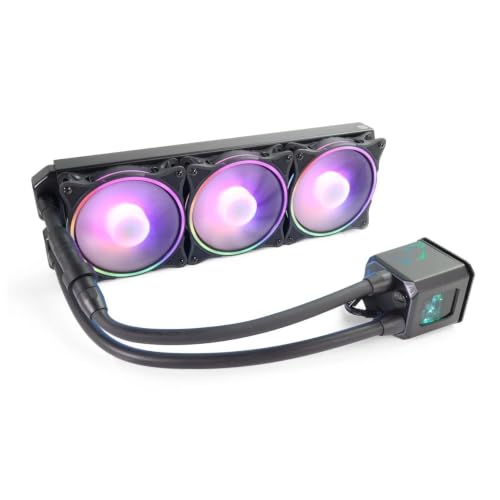
Alphacool Eisbaer Aurora 360 — The serviceable standard
The Eisbaer Aurora 360 is the reference point for this entire category: a 360mm CPU loop from Alphacool — a company whose home territory is custom water cooling — built on the Eisbaer principle that an AIO should be a loop you own rather than a loop you rent from its pump’s lifespan. The Eisbaer design centres on a pump-and-reservoir block unit with a fill port, standard-thread fittings and quick-release couplings in the line’s architecture, so the loop can be topped up, drained, extended and reconfigured with the same fittings language the custom world speaks. The Aurora generation dresses that engineering in addressable lighting, because a loop this considered usually lives behind glass.
The ownership experience is the product. Coolant low after some years? Open the port, top up, done — a ritual of minutes that a sealed loop turns into a replacement purchase. New case with room for a second radiator, or a graphics card begging to join the loop? The Eisbaer’s fittings and Alphacool’s catalogue make it an afternoon project rather than a new cooling system. For builders who keep PCs for a long time and upgrade them in pieces, this compounding usefulness is worth more than any single temperature figure.
The conditions are honest ones. A 360mm radiator demands a case that hosts it with room to work. The loop’s flexibility means more connections than a sealed unit has, and every connection is a place that rewards being fitted carefully and checked once after the first heat cycles. And the buyer should want this — an owner who never opens the loop has paid for doors they never walk through, though even they benefit from a top-up extending the loop’s life years past a sealed unit’s. As the standard-bearer of maintainable cooling, the Aurora 360 earns the first place in this guide on design intent alone.
- Format: 360mm CPU liquid cooler, Eisbaer line
- Design: serviceable and expandable Eisbaer architecture, Aurora generation
- Maker: Alphacool
Strengths
- Refillable, expandable design outlives the sealed-loop replacement cycle.
- Standard fittings language connects it to a huge custom-cooling catalogue.
- 360mm radiator gives expansion plans real headroom.
Trade-offs
- Needs a 360-capable case with working room around the loop.
- More connections to fit carefully than a sealed unit has.
- Its virtues compound over years — wasted on a build you will replace whole.
Best for: long-term builders who upgrade in pieces and want cooling that keeps up. Not suited for: cases without a 360mm radiator mount — its radiator simply has nowhere to live in one.

Alphacool Eisbaer LT360 Aurora HPE — Slim-pump variant
The LT in this Eisbaer’s name marks the line’s low-profile pump unit, and the listing’s “LT360 Aurora HPE (11996)” carries the family’s intent into builds where the standard Eisbaer block would crowd the socket. The LT concept exists because the pump-and-reservoir unit on a serviceable loop is physically larger than a sealed loop’s slim block — it contains more, and does more — and in compact or densely arranged builds that volume argues with memory, VRM heatsinks and tubing runs. The LT answers by shrinking the unit while keeping the Eisbaer essentials: refillable, expandable, standard fittings.
That makes this the thinking builder’s Eisbaer. The 360mm radiator still delivers the line’s cooling and expansion headroom, while the compact pump opens the design to cases and boards the standard unit fits awkwardly. The HPE designation marks this variant within Alphacool’s range, and the Aurora lighting keeps it presentable behind glass. For a small-footprint build with big-loop ambitions — the sort of PC that gets a GPU block added in year two — the LT360 is frequently the only version of the idea that physically assembles.
Judge the trade plainly: the compact pump unit is the component doing the line’s hardest job in the least space, and builders planning extreme expansion — multiple blocks, multiple radiators — should weigh the Pro variant below, whose brief is exactly that. For a CPU loop today with a credible expansion path tomorrow, in a case that measures its socket clearance in millimetres, the LT360 Aurora HPE is the most precisely aimed product in this guide.
- Format: 360mm CPU liquid cooler, Eisbaer LT line
- Pump unit: compact LT design, per the product name
- Variant code in the title: HPE (11996)
Strengths
- Eisbaer serviceability in a pump unit sized for crowded sockets.
- Full 360mm radiator keeps expansion headroom intact.
- Opens the expandable-loop idea to smaller cases.
Trade-offs
- Compact pump is the hardest-working part — heavy expansion plans belong to the Pro.
- Still needs a 360mm mount despite its compact block.
- Niche variant: community knowledge is thinner than the standard Eisbaer’s.
Best for: compact builds that want an expandable loop without a bulky pump unit. Not suited for: multi-block, multi-radiator expansion projects, where the Eisbaer Pro’s brief takes over.

Alphacool Eisbaer 240 — The original, smaller
The Eisbaer 240 is where the line’s idea meets the most common radiator size in PC cases. Its title is the plainest here — “Alphacool Eisbaer 240 AIO CPU Cooler” — and that plainness suits it: this is the serviceable-loop concept without the Aurora lighting generation’s presentation, at 240mm, for the enormous installed base of cases whose radiator mounts top out at exactly that. Everything the Eisbaer stands for is present: the fillable, expandable architecture, the pump unit designed to be opened rather than discarded, the fittings that speak the custom world’s language.
For many builders this is the correct size of the idea. A 240mm radiator serves mainstream and mid-range processors completely, and in a mid-tower it mounts at the top without the case-planning a 360 demands. The expansion story is more modest than its 360 siblings’ — a single 240 is a CPU loop with a future, not a whole-system loop in waiting — but the maintenance story is identical, and maintenance is this guide’s subject. A top-up in year four, a flush in year five, a pump serviced instead of a cooler landfilled: the 240 delivers the philosophy whole.
Its age as a design cuts both ways. The Eisbaer 240 has been in the field for years, which means its behaviour is thoroughly documented and its quirks are known — a genuine virtue in a product category where surprises are wet. It also means its presentation predates the Aurora generation’s polish. Buyers choosing between it and the Aurora 360 are choosing size and finish, not philosophy; the loop they can service is the same idea at two scales.
- Format: 240mm AIO CPU cooler, Eisbaer line
- Design: serviceable and expandable Eisbaer architecture
- Maker: Alphacool
Strengths
- The full Eisbaer maintenance philosophy at the commonest radiator size.
- Years in the field mean thoroughly documented behaviour.
- Fits the mid-towers a 360 cannot enter.
Trade-offs
- Less radiator headroom for future whole-system expansion.
- Presentation predates the Aurora generation’s finish.
- High-power processors will want the 360mm siblings’ capacity.
Best for: mid-tower builders who want a serviceable loop at a standard size. Not suited for: cases limited to a single 120mm mount, or flagship processors planned for heavy expansion.
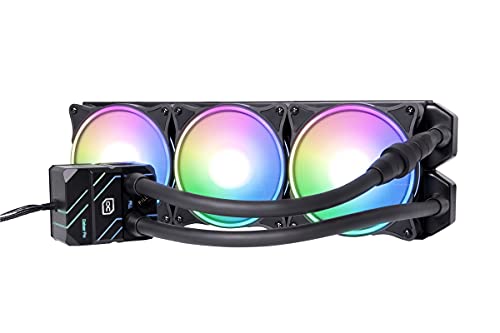
Alphacool Eisbaer Pro Aurora 360 — Pro tier
The Eisbaer Pro Aurora 360 — the listing carries its variant code, “(11771)” — is the line’s answer for the processors and plans the standard Eisbaer politely declines. The Pro tier steps up the pump unit and cold plate for the high-core-count, high-power end of the desktop market, the chips whose cooling is a project in itself, while keeping the architecture that defines the family: refillable coolant, expandable loop, standard fittings, Aurora lighting over the top. If the standard Eisbaer is a loop you can grow, the Pro is a loop built to start grown-up.
Its natural home is the workstation-gaming hybrid: a many-core processor under sustained loads, in a case with a 360 mount and an owner who treats the PC as infrastructure. There, the Pro’s combination matters in a way it does not in a casual build — serviceability on a machine that cannot afford downtime is a maintenance window you control, and expandability on a machine that will gain drives, cards and eventually a GPU block is a cooling system that never needs replacing, only extending.
The Pro asks for the Pro’s context in return. It is priced as the top of the Eisbaer range, its capacity is wasted on a mainstream gaming chip that the standard 360 already serves completely, and its pump unit assumes a build planned around it. This guide lists it fourth among the Eisbaers not because it is lesser — it is the most capable loop here — but because most readers’ processors and plans are honestly served a step below it. The readers it is for will recognise themselves immediately, and for them it is the first pick in the guide wearing a later number.
- Format: 360mm CPU liquid cooler, Eisbaer Pro line
- Design: serviceable and expandable Eisbaer architecture, Aurora generation
- Variant code in the title: (11771)
Strengths
- The line’s highest capacity for many-core, high-power processors.
- Full Eisbaer serviceability at workstation scale.
- Built for expansion plans that are schedules, not wishes.
Trade-offs
- Priced at the top of the range for capacity most builds never use.
- Over-specified for mainstream gaming processors.
- Demands a case and a build plan worthy of it.
Best for: many-core workstations and serious expansion builds. Not suited for: mainstream gaming processors, whose needs the standard Eisbaer 360 already covers for less money.

be quiet! Silent Loop 3 360mm — Maintenance-light flagship
The Silent Loop 3 changes the subject in the most useful way. Its title — “360mm AiO ARGB Liquid CPU Cooler, For Overclocking” — announces a sealed premium loop aimed at performance headroom, from the company whose entire identity is the sound a PC does not make. Its maintenance proposition is the opposite of the Eisbaers’: not that you can service it, but that its engineering is aimed at needing as little service as possible for as long as possible, while cooling processors run beyond stock settings.
be quiet!’s design language in this class centres on the pump — a powerful, damped unit engineered to do its work without announcing itself — and on fans from a catalogue that silence enthusiasts already trust. In a build, the Silent Loop 3 is the loop for the owner whose maintenance plan is “none, and I would like that to be a feature”. Dust the radiator, glance at temperatures twice a year, and let the machine be a machine. For a great many excellent PCs, that is not a lesser philosophy; it is the correct one, honestly held.
The trade is the sealed loop’s eternal trade, and it should be chosen knowingly: when this loop eventually ages — coolant drifted, pump tired, years from now — the remedy is replacement, not a top-up. You are buying the longest, quietest postponement of that day that a sealed design can offer, plus overclocking headroom the Eisbaer 240 cannot match. Buyers whose PCs live or die by uptime and quiet, and whose appetite for coolant rituals is zero, will find this the most grown-up product in the guide.
- Format: 360mm AIO liquid cooler with ARGB
- Stated purpose in the title: for overclocking
- Maker: be quiet!, Silent Loop line, third generation
Strengths
- Overclocking headroom with the quietest manners in this guide.
- Premium sealed engineering aimed at long, unattended service.
- ARGB presentation suits a flagship windowed build.
Trade-offs
- Sealed: end-of-life means replacement, not refurbishment.
- No expansion path to a GPU block later.
- Premium pricing for a loop you are not meant to open.
Best for: quiet, high-performance builds whose owners want zero cooling rituals. Not suited for: builders planning to expand the loop to other components — a sealed loop cannot grow.

be quiet! Pure Loop 2 FX 360mm — Refill-friendly sealed loop
The Pure Loop 2 FX occupies the thoughtful middle of this guide. It is a 360mm sealed loop in be quiet!’s more accessible line — FX denoting the lit, fan-forward presentation — but the Pure Loop design is known among owners for a detail that matters enormously in a maintenance guide: a refill port, with coolant included in the box, acknowledging that a sealed loop’s coolant level drifts over years and giving the owner a sanctioned way to restore it. That single provision moves the Pure Loop out of the disposable category without asking its owner to become a custom-loop hobbyist.
The result is a loop with an unusually honest lifespan story. The ritual it asks is the smallest one in this guide — an occasional top-up, on a schedule of years, with the fluid the maker supplied — and in exchange its service life stretches well past the point where a strictly sealed unit’s owner starts shopping for a replacement. Around that idea sits a competent 360mm loop with the brand’s quiet-first fan tuning and ARGB presentation, sized for the same cases as the Silent Loop and aimed at processors a class below the overclocking flagship’s brief.
Know the boundary of the middle path: a refill port is not an expansion port. The Pure Loop 2 FX cannot grow a GPU block or a second radiator; its loop is its loop, maintained but not extended. Buyers who feel the pull of both philosophies — who want longevity without a fittings catalogue — will find it the most precisely aimed compromise in the category. Buyers certain they will expand should start with an Eisbaer and not look back.
- Format: 360mm CPU liquid cooler, Pure Loop 2 FX line
- Design note: Pure Loop line’s refill provision for coolant top-ups
- Maker: be quiet!
Strengths
- Refill port extends a sealed loop’s service life by years.
- The smallest maintenance ritual in this guide — a top-up, occasionally.
- be quiet! fan tuning and ARGB at the accessible end of its range.
Trade-offs
- Refillable is not expandable: no GPU blocks, no extra radiators.
- Still a sealed architecture at the pump and block.
- Coolant top-ups require the correct fluid — keep the supplied bottle.
Best for: owners who want a sealed loop’s simplicity with a lifespan escape hatch. Not suited for: any build with expansion ambitions — the loop’s size and shape are fixed at purchase.
How Do the Six Compare Side by Side?
| Cooler | Radiator | Maintenance model | Expansion |
|---|---|---|---|
| Alphacool Eisbaer Aurora 360 | 360mm | Serviceable: refill, flush, reconfigure | Yes — fittings-based |
| Alphacool Eisbaer LT360 Aurora HPE | 360mm | Serviceable, compact pump unit | Yes — fittings-based |
| Alphacool Eisbaer 240 | 240mm | Serviceable: refill, flush, reconfigure | Yes — within 240mm headroom |
| Alphacool Eisbaer Pro Aurora 360 | 360mm | Serviceable, pro-tier pump and plate | Yes — built for it |
| be quiet! Silent Loop 3 360mm | 360mm | Maintenance-light sealed flagship | No |
| be quiet! Pure Loop 2 FX 360mm | 360mm | Sealed with a refill provision | No |
What Does a Top-Up Actually Involve?
Less than folklore suggests. On a serviceable loop, the fill port sits on the pump unit or reservoir; with the PC off and the loop cool, you open the port, add the maker’s coolant a little at a time until the level is restored, work any introduced air out by tilting the case gently and running the pump briefly, and close it. The whole ritual is measured in minutes and sips. The disciplines that matter are cleanliness — a loop is a closed ecosystem and should be filled like one — and using the correct fluid rather than improvising, because coolants are chemistry as much as they are water: corrosion inhibitors and biocides in the right proportions are what keep a loop’s inside clean for years.
How often is a matter of years, not months, and the loop tells you when: a reservoir level visibly lower than your baseline, temperatures a few degrees warmer at the same fan speeds, or a pump note that has gained a gurgle as air finds it. Owners of serviceable loops learn to glance at the level whenever the side panel is off for any other reason, the way a driver glances at a fuel gauge — not a chore, just a habit the machine rewards.
Take a baseline the week the loop is fitted: a photograph of the reservoir level, and a note of the temperature your longest workload settles at, with the fan speeds that hold it. Every future judgement in this section — is it lower, is it warmer, is it noisier — is a comparison against that baseline, and a comparison needs two numbers. Builders who skip the baseline end up maintaining by vibes, which is how small drifts become large surprises.
What Mistakes Do Owners of Serviceable Loops Make?
The first is treating expandability as an obligation — adding a second radiator or a GPU block because the loop allows it, into a case and a budget that did not ask for it, and inheriting complexity nobody wanted. The second is coolant improvisation: topping up with whatever fluid is at hand, mixing chemistries, and growing a science project inside the cold plate. The maker’s coolant exists for a reason and costs little. The third is forgetting that more fittings mean more first-week checks: run a new or reconfigured loop, then look at every connection after the first heat cycles, the way you would check a bicycle’s bolts after its first ride.
Fourth is the mirror-image error on the sealed side: buying a maintenance-light loop and then maintaining it anxiously anyway, opening what should stay shut and worrying at a pump hum that was always in specification. And fifth, for both philosophies, is neglecting the radiator’s outside while tending its inside — a dust-felted 360 is a 240 wearing a coat, whatever its coolant level says.
Final Recommendation
Choose your philosophy first and your product second. If you keep PCs for years, upgrade them in pieces and like the idea that your cooler can be topped up, flushed and extended instead of replaced, the Alphacool Eisbaer Aurora 360 is this category’s standard — with the LT360 Aurora HPE for crowded sockets, the Eisbaer 240 for 240mm cases, and the Eisbaer Pro Aurora 360 when the processor and the plans are genuinely pro-tier. If your honest maintenance plan is no plan at all, the be quiet! Silent Loop 3 360mm buys the quietest, longest postponement of every ritual, and the Pure Loop 2 FX 360mm splits the difference with a refill port for owners who want one small ritual and no more. The worst purchase in this category is a philosophy you will not practise — so pick the loop whose idea of care matches the care you will actually give it, and it will repay you in the only currency cooling has: years of not thinking about it, on your own terms.
How Do You Flush and Refill a Serviceable Loop When the Time Comes?
A flush is the deepest maintenance a loop ever asks for, and on an Eisbaer-class design it is a kitchen-table job rather than a workshop one. Work with the PC off, cool and unplugged, over a towel, with the case laid so the loop’s drain path runs downhill. Open the loop at its quick-release or lowest fitting, let gravity do the patient work, and catch the old coolant in a container — it is not drain cleaner, but it is not sink water either, and it should be disposed of with household chemicals rather than poured away thoughtlessly.
With the loop open, the honest options are a gentle rinse with distilled water — never tap water, whose minerals plate themselves onto exactly the surfaces you are trying to clean — or a purpose-made loop preparation fluid if the system has run for many years or changed coolant types. Refill with fresh premixed coolant, slowly, tilting the case to walk air pockets toward the pump unit’s reservoir, then run the pump alone if your setup allows, or the whole system with the panel off, watching the level settle and topping as it does. Check every disturbed fitting after the first heat cycle and again after the first week. That is the whole ceremony. Owners who do it once discover it was smaller than its reputation, which is true of most maintenance that marketing departments prefer to keep mysterious.
When is it due? Not on a calendar — on evidence. Coolant that has darkened or grown cloudy, temperatures that have crept despite clean radiators and correct levels, or a coolant-type change forced by an expansion are the triggers. A loop on one good coolant, at sane temperatures, can run for years between flushes; the serviceable design simply means that when the evidence arrives, you have a remedy that is not a purchase.
How Should You Plan an Expansion Before You Need It?
The builders who expand happily are the ones who bought the first loop as the first chapter. Three decisions made at purchase time decide how the story goes. Radiator capacity is the first: a CPU-only loop on a 240 is complete, but a CPU-plus-GPU loop wants more surface, and the 360mm Eisbaers in this guide are the ones whose second chapter does not begin with replacing the radiator. The second is case choice — expansion consumes mounts, tube runs and working room, and a case bought with one radiator position is a promise the loop cannot keep. The third is fittings discipline: stay within the standard thread and tube sizes the loop already speaks, and every future component is a bolt-on rather than an adaptation.
There is also a financial shape to plan around. An expandable loop converts cooling from a per-build purchase into an accumulating asset: the radiator, pump unit and fittings persist while blocks change with sockets and graphics cards. Across two builds, the serviceable route often costs less than two sealed loops — and across three, it is not close. That arithmetic only works if the first purchase is genuinely the expandable article, which is why this guide separates refillable-and-expandable from merely refillable with such care. The Pure Loop’s port will save it from the coolant countdown; it will not make it the foundation of a growing loop, and it does not claim to.
Finally, plan the human side. Keep the loop’s spares — the extra fittings, the coolant bottle, the manual — in one labelled box with the build’s other hardware. Expansion day, years later, goes well when the box exists and badly when it is a rumour. The owners who love serviceable loops are, disproportionately, owners with a labelled box.
What Does Each Philosophy Cost Over Eight Years?
Run the two ownership stories forward. The sealed flagship — the Silent Loop 3’s story — costs its purchase price, a few minutes of dusting a year, and, somewhere in the far years, a replacement when pump or coolant finally calls time. The bill is predictable and the effort is nearly zero; the waste is one whole loop, discarded with its radiator and fans still sound, because its smallest part aged out.
The serviceable story costs its purchase price — comparable money — plus a bottle of coolant or two across the decade, an hour of rituals in total, and possibly a pump unit or a set of fittings if an expansion or a repair calls for them. The loop at year eight is recognisably the loop bought at year one, having cooled two processors and gained a radiator along the way. The Pure Loop’s story sits between: sealed-loop effort, one extra ritual, and a lifespan stretched by exactly the provision its maker built in.
Neither story is the thrifty one in every household, because the currencies differ: one spends money, the other spends attention, and households are rich in different ones. What this guide insists on is only that the choice be made as a choice. The disappointed owners in this category are never the ones who picked the “wrong” philosophy — they are the ones who never noticed there were two, and discovered at year five which one they had bought by the sound of a tiring pump.
Why Does the Pump Unit Look Different on a Serviceable Loop?
Because it is doing three jobs in one housing. A sealed loop’s block contains a cold plate and a small pump, and nothing else fits. An Eisbaer-class unit adds a small reservoir — the visible coolant volume you check at a glance — and the fill port that makes top-ups a tidy ritual instead of a disassembly. That is why serviceable pump units are chunkier than sealed blocks, why the LT variant’s compactness is an engineering achievement worth its own model, and why the first measurement a serviceable-loop buyer takes is not the radiator but the neighbourhood around the socket.
The reservoir earns its space every year of the loop’s life. It gives expanding coolant somewhere to go, gives air a place to separate from the flow instead of visiting the pump, and gives the owner information — a level, a colour, a state of health — that a sealed loop keeps secret until temperatures confess it. Owners coming from custom loops consider this ordinary; owners arriving from sealed AIOs find it quietly revelatory, the difference between a car with a bonnet that opens and one welded shut.
It also changes installation rhythm. The unit is fitted with the awareness that it will be opened again: fill access left reachable, tube runs given a little slack, the case laid out so a future top-up is a panel-off minute rather than a rebuild. Builders who think that way at installation are the ones whose year-four maintenance takes the five minutes this guide keeps promising.
Are 360mm Loops Louder Than the Sealed Mainstream?
They have more fans, and a careless curve can make more noise with more fans — but surface area is the great silencer in liquid cooling, and a 360mm radiator has half again the area of a 240 and three times a 120. Three fans turning slowly move more air, more quietly, than one fan spinning hard, which is why big radiators are the quiet build’s friend when the case can host them. The be quiet! entries in this guide exist to prove the point at the premium end, and the Eisbaers benefit from the same physics with fans chosen by a maker whose catalogue is built for component builders.
The pump remains the sound floor, as in any loop, and here the serviceable designs offer an unexpected acoustic tool: a loop you can bleed properly is a loop whose pump is not chewing air. Most “loud pump” stories in the expandable world are air stories, and the fill port and reservoir that define these products are precisely the equipment that ends them. Maintenance and quiet, in this category, are not two features. They are the same feature, wearing its work clothes and its evening clothes.
Which of the Six Matches Your Kind of Ownership?
Picture three owners. The first keeps a PC the way a good landlord keeps a building: nothing is disposable, everything is maintained, upgrades arrive as projects and leave as improvements. That owner’s cooler is an Eisbaer — the Aurora 360 by default, the Pro if the processor is a many-core worker, the LT if the case is tight around the socket, the 240 if the case is a mid-tower with honest limits. Every ritual in this guide reads to them not as a burden but as the pleasure of the thing.
The second owner builds a beautiful, quiet, powerful PC and then wants to live with it rather than administer it. Their cooler is the Silent Loop 3: fitted once, curved once, and then forgotten behind class-leading quiet for years, with replacement accepted as a distant and fair price for total peace. The third owner stands between — willing to perform exactly one small ritual if it doubles the useful life of a sealed loop, unwilling to catalogue fittings. The Pure Loop 2 FX was designed by people who had met this owner, and its refill port is their handshake.
Notice what is not in any of these portraits: a wrong answer. The category’s only failure mode is mismatch — the hobbyist loop bought by the forgetter, the sealed loop bought by the tinkerer who will spend years resenting its welded bonnet. Read the three portraits, recognise yourself without flattery, and the six picks sort themselves into a shortlist of one or two. That self-knowledge, more than any radiator dimension, is what this category actually sells.
What Should a Serviceable-Loop Owner Keep in the Cupboard?
A short list, and none of it exotic. The maker’s coolant, one bottle, bought with the loop rather than during the first top-up’s urgency. A small funnel or a fill bottle with a nozzle that fits the port — the difference between a clean ritual and a blue puddle is usually this object. Distilled water, a litre, for rinsing if a flush ever happens. A soft brush for the radiator’s fins, which you probably own already. Paper towels you do not mind sacrificing, and the loop’s manual, which you will otherwise hunt for at the worst moment.
Beyond consumables, keep the loop’s identity: the receipt, the exact model name, the variant code — the Eisbaer Pro’s listing carries “(11771)”, the LT360’s “(11996)”, and those unglamorous numbers are how a maker knows precisely which pump unit and fittings your loop speaks when you write to them in year six. Photograph the installed loop before the panel goes on, too. A picture of the tube runs and fitting positions is worth a page of notes when you plan an expansion from your desk instead of from inside the case.
That cupboard shelf is the whole material culture of easy maintenance. Everything else about these products — the radiators, the pumps, the fittings — is bought once and works for years. The owners who describe this category as “easy” are the ones whose shelf exists; the ones who describe it as “fiddly” are usually describing a funnel they did not own at midnight. Preparation is the maintenance; the rest is pouring.
Frequently Asked Questions
Is a serviceable loop more likely to leak than a sealed one?
It has more connections, and each connection is a place to be careful — but the fittings in the Eisbaer line are the same standard-thread and quick-release hardware the custom-loop world trusts, and a carefully fitted, checked loop is not a risky object. The risk difference between the philosophies is real but small, and it is bought back many times over in service life. The fittings most likely to weep are the ones disturbed most recently, which is why this guide repeats its one ritual: after any work on the loop, look at every connection you touched, after the first heat cycle and again within the week.
How often does coolant actually need topping up?
On a schedule of years. Coolant permeates tubing very slowly, faster in hot-running systems. The signs are a visibly lower reservoir level, slightly warmer temperatures at familiar fan speeds, or new pump noise as air reaches it. Check when the panel is off for other reasons and the loop will never surprise you. If you bought the loop used, shorten your first interval: you do not know its baseline, so establish one in the first month and judge everything after that against your own numbers.
Can I really add a graphics card block to an Eisbaer later?
That is the design’s purpose: the loop uses standard fittings, so blocks and radiators from the wider custom-cooling catalogue can be added, with coolant and care. Plan radiator capacity for it — a single 240 serving a CPU and a powerful GPU is a hard life — which is why this guide steers expansion-minded buyers toward the 360mm picks.
What coolant should I use for a top-up?
The loop maker’s own, or a premixed coolant specified for PC water cooling with corrosion inhibitors and biocide. Do not mix brands or chemistries casually, and do not use plain tap water, whose minerals and biology will furnish your cold plate’s fine channels with everything they do not need. If the loop’s history is unknown — a used purchase, a gift — a full flush and a single known coolant is the clean start, after which your own records govern.
Does the Pure Loop’s refill port make it expandable too?
No — and the distinction is the point of its design. The port exists to restore coolant level over the years, extending a sealed loop’s life; the loop’s components and capacity stay as bought. Expansion is the Eisbaer line’s territory, with fittings designed to open the loop to new components.
Are these loops suitable for a first-time liquid buyer?
The be quiet! picks, yes, entirely — fit them and follow the fan-curve basics. The Eisbaers suit a first-timer who is mechanically comfortable and likes the idea of ownership; the skills involved are modest, but the disposition matters. A first-timer who knows they will never open a loop should buy the sealed side without a flicker of guilt. And a first-timer who is unsure should notice that uncertainty itself is information: the refillable middle path exists for exactly that state of mind.
Do I need to open a serviceable loop on a schedule?
No — serviceable means able to be opened when evidence calls for it, not obliged to be opened by the calendar. Check the coolant level when the panel is off anyway, watch temperatures against your baseline, and let the loop tell you when it wants attention. Most owners perform a top-up a handful of times across a loop’s whole life, and a flush less often than that. The owners who struggle with these products are rarely the lazy ones; they are the anxious ones, opening a healthy loop to check that it is healthy.
Related Guides
For smaller cases and simpler needs, our guide to single 120mm closed-loop liquid coolers covers the sealed mainstream. Builders comparing philosophies should also read our air-versus-liquid cooling comparison for gaming PCs, and if the Eisbaer route appeals, our introduction to planning a first custom loop shows where the expandable road eventually leads.


