Our Top Picks
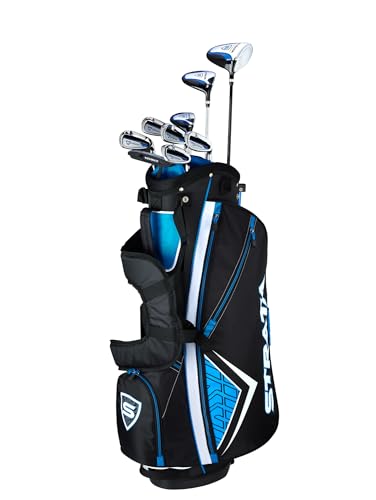 Callaway Golf Men's Strata Complete 12 Piece Package12 Piece (Strata)48 x 11 x 11 inches12 poundsCheck on Amazon
 Callaway Golf Men's Strata Intro Complete 9 Piece9 Piece (Strata Intro)48 x 11 x 11 inchesCheck on Amazon
 Callaway Golf Women's Strata Ultimate Complete Golf Set16 Piece (Strata Ultimate)48 x 14 x 10 inches16 poundsCheck on Amazon


What's inside
- What a complete package set actually contains
- Who should buy a package set instead of separate clubs
- Driver design in bundled sets
- Fairway woods and the second-shot problem
- Hybrids and why they replaced long irons
- Iron construction: cavity backs, soles and offsets
- Wedges included, wedges missing
- Putter styles supplied in bundles
- The stand bag: dividers, legs and carrying comfort
- Shaft flex explained without jargon
- Matching club length to player height
- Left-handed, women’s and senior configurations
- Beginner sets versus intermediate sets
- Counting pieces honestly: 10, 12, 14 and 16
- Materials: stainless steel, titanium and graphite
- Distance gapping across the full bag
- How our research compared complete sets
- Set-up checks when the box arrives
- Learning curve: what improves first, what lags
- Durability and care over several seasons
- Playing different course types with one set
- Common buying mistakes to avoid
- Upgrading later: which club to replace first
- Value judgement: where bundles save and where they compromise
- Fitting questions to ask before ordering
- What to practise with each part of the set
- Seasonal buying timing and stock patterns
- Travel, storage at the club and everyday logistics
- A short pre-purchase checklist
- Check prices on Amazon
- Affiliate disclosure
As an Amazon Associate I earn from qualifying purchases. This post may contain affiliate links at no extra cost to you.
What a complete package set actually contains
A complete package set bundles the clubs a golfer needs for a full round into one carton, rather than forcing separate purchases for every slot in the bag. Most configurations for adults include a driver, one fairway wood, one or two hybrids, a run of irons starting near the 6-iron or 7-iron, a pitching wedge, a putter, and a stand bag with a rain hood. Counts vary between ten and sixteen pieces when headcovers and the bag itself are included in the headline number, so the useful comparison is club by club, not the large figure printed on the box.
The driver in these bundles usually carries 10.5 degrees of loft for regular flex versions, with some senior and ladies configurations moving to 12 degrees to help launch the ball higher. Fairway woods most often arrive as a 3-wood at 15 or 16 degrees, occasionally paired with a 5-wood at 18 or 19 degrees. Hybrids commonly sit at 21, 24, or 27 degrees, bridging the gap between the longest iron and the fairway wood. Reading those loft numbers in sequence tells you more about coverage than any marketing label, because even spacing of roughly four degrees between clubs produces predictable distance steps.
Irons in a typical bundle run from 6 through 9, plus a pitching wedge at about 45 degrees and sometimes a sand wedge near 55 degrees. Cavity-back heads dominate this category, with wide soles and low centres of gravity intended to lift the ball despite contact low on the face. Putters split between mallet shapes with alignment lines and classic blade profiles, almost always fitted with a steel shaft around 34 or 35 inches long. The stand bag completes the picture, usually weighing between 2 and 2.7 kilograms, with four or five divider slots, retractable legs, and a dual shoulder strap.
Who should buy a package set instead of separate clubs
New golfers benefit most because the bundle removes dozens of early decisions that require experience to make well. A beginner cannot yet judge whether a 21-degree hybrid suits their swing better than a 4-iron, and a matched set sidesteps that guesswork with lofts chosen to work together. The same logic applies to returning players whose older equipment predates modern hybrid designs, and to occasional golfers playing fewer than ten rounds a year who need reliable gear without building a bag piece by piece across several seasons.
Intermediate players face a narrower case. Someone already breaking 90 regularly, striking the centre of the face consistently, and planning lessons may outgrow entry-level shafts within a season or two. For that golfer, a package set still works as a stopgap for travel, a spare bag at a second home, or a loaner for guests, but the primary bag often moves toward separate components with fitted lengths and lie angles. Honest self-assessment matters here: handicap, typical score, and how often practice sessions happen each month predict satisfaction far better than enthusiasm alone.
Junior and teen golfers occupy a third category, where growth changes the calculation entirely. Sets segmented by height bands, rather than age alone, allow a 145-centimetre player to use shorter, lighter clubs that can actually be swung on plane. Parents should expect a well-chosen junior bundle to serve roughly two seasons before length becomes limiting, and should measure the player against a wall, in socks, before ordering, because a two-centimetre difference can shift the recommended size bracket.
Driver design in bundled sets
Nearly every driver supplied in a package measures 460 cubic centimetres, the maximum head volume permitted under the rules of golf. That large footprint moves weight toward the perimeter, raising resistance to twisting when contact drifts toward heel or toe. Faces are titanium or titanium alloy in mid-tier bundles and stainless steel in the least expensive ones, a distinction that affects total head weight and therefore how fast the club can be swung by a slower player.
Loft choice deserves more attention than head material. A 10.5-degree driver paired with a regular flex shaft suits swing speeds roughly between 85 and 95 miles per hour with the driver, a range covering many adult beginners. Slower swings, often below 80 miles per hour, launch the ball too low with that loft and usually gain carry from 12 degrees. Faster swings above 100 miles per hour may prefer the stiff flex versions some bundles offer, which sometimes reduce loft to 9.5 degrees, although those variants are less common in complete sets than in component drivers.
Shaft length on bundled drivers clusters around 45 inches, half an inch shorter than many standalone models sold separately. That modest reduction tends to improve centre contact for developing players, trading a small amount of theoretical clubhead speed for a meaningful gain in strike quality. Grip size is almost universally standard, about 0.6 inches in diameter at the butt end, and players with unusually large hands should budget for regripping rather than assuming the stock grip will feel right after several months of practice.
Fairway woods and the second-shot problem
The fairway wood exists to solve a specific problem: advancing the ball a long way from a tight lie on short grass, where the driver cannot be used because its face is too tall and its loft too low. A 3-wood at 15 degrees with a head near 170 cubic centimetres can be struck from the fairway or used from the tee on narrow par-4 holes where position matters more than maximum distance. In many bundles this is the hardest club for beginners to elevate, which is why some configurations substitute a 5-wood as the only fairway option.
A 5-wood at 18 or 19 degrees launches higher, lands softer, and shortens the distance gap to the longest hybrid. For players whose home course features several par-5 holes reachable only with two strong second shots, keeping both woods makes sense. For shorter courses under 5,800 yards from the tees actually played, one wood plus two hybrids usually covers the same distances with less duplication, and the saved slot can hold an extra wedge for scoring shots inside 90 yards.
Steel shafts still appear in fairway woods inside lower-priced bundles, adding weight that stronger players may welcome and slower swingers usually do not. Graphite shafts, typically 55 to 65 grams in this slot, keep total club weight down and help maintain tempo late in a round. Checking the shaft material listed for each wood, rather than assuming graphite throughout, prevents a common surprise when the box is opened on the first tee.
Hybrids and why they replaced long irons
Hybrids combine a wood-like head shape with an iron-length shaft, producing a club that launches the ball from rough, fairway bunkers, and uneven lies where a 3-iron or 4-iron would dig or twist. A 4-hybrid at 24 degrees typically replaces the 4-iron, while a 5-hybrid at 27 degrees covers the 5-iron slot. Their wider soles slide through longer grass instead of snagging, and their faces sit deeper from front to back, placing more mass behind the ball at impact.
Most bundles include at least one hybrid, and better-specified ones include two. That second hybrid matters for golfers who struggle to carry long irons over water hazards or onto elevated greens, because it turns a low-percentage punch into a genuine scoring attempt. Distances overlap deliberately: a player might carry the 5-hybrid 165 yards and the 6-iron 160 yards, with the hybrid reserved for poor lies and the iron chosen when a lower, running flight is wanted into the wind.
Hybrid shafts are graphite in nearly all modern bundles, weighing roughly 55 to 75 grams depending on flex. Lengths run about an inch longer than the iron they replace, which helps generate speed without demanding a wider swing arc. Players comparing sets should confirm whether hybrid headcovers are supplied, since exposed hybrid heads chip easily against iron heads inside a crowded bag compartment during car transport.
Iron construction: cavity backs, soles and offsets
Game-improvement irons dominate package sets for sound mechanical reasons. A deep cavity behind the face redistributes mass to the heel, toe, and sole, enlarging the effective hitting area. Perimeter weighting cannot rescue a severe mishit, yet it preserves more ball speed on strikes half an inch from centre, which describes a large share of beginner contact. Published sole widths on these irons often reach 22 to 28 millimetres on the long irons, helping the club glide across turf rather than digging a deep divot on slightly heavy contact.
Offset, the distance the leading edge sits behind the hosel, appears generously in bundled irons. That geometry gives the hands a fraction more time to square the face and encourages a higher flight. Low-handicap players sometimes dislike the look at address, but for the intended audience the trade favours straighter, higher shots. Lie angles are fixed at standard values, commonly 61 degrees for a 5-iron progressing to about 64.5 degrees for the pitching wedge, and cannot be adjusted as easily on cast heads as on forged ones.
Shaft choice in irons splits the market. Steel shafts near 95 to 110 grams reward stronger, faster players with tighter dispersion and a firmer feel through impact. Graphite iron shafts between 60 and 80 grams reduce overall effort, soften vibration on cold mornings, and suit seniors, juniors, and anyone managing wrist or elbow discomfort. Neither option is universally superior; matching shaft weight to strength and tempo decides which one produces repeatable contact during the back nine, when fatigue begins altering swings.
Wedges included, wedges missing
Almost every bundle supplies a pitching wedge, and roughly half add a sand wedge. Gap wedges near 50 degrees are rare in complete sets, leaving a yardage hole between a 45-degree pitching wedge and a 55-degree sand wedge that can stretch to 25 yards for mid-length hitters. That gap shows up on approach shots from 95 to 115 yards, precisely the distances many club golfers face after a good drive on a short par-4, so an extra wedge is often the first separate purchase owners make.
Bounce angle on the included sand wedge usually falls between 10 and 14 degrees, a versatile range for soft bunkers and fluffy lies around greens. Players at courses with firm, wet sand may find that much bounce causes the leading edge to skid into the ball, while those at soft coastal courses will appreciate it. Because bundled wedges share the iron shaft and grip, they feel consistent with the rest of the set, which helps distance control on partial swings at three-quarter length.
Lob wedges near 60 degrees are almost never included, and that omission is defensible. High-lofted wedges demand precise contact and punish casual technique with thin shots that run across the green. Developing players score better learning a single sand wedge for bunker play and short pitches, then adding specialty lofts only after their short game repeats under pressure during friendly matches and club competitions alike.
Putter styles supplied in bundles
Mallet putters appear in most current bundles, recognisable by their larger, often semicircular or fanged heads and a prominent alignment line on the flange. Their extra mass sits away from the face, stabilising the stroke when contact strays from centre on long putts. Blade putters still appear in traditional-styled sets, suiting golfers who prefer a compact look and who stroke the ball with a noticeable arc rather than a straight-back path.
Length is the specification buyers overlook most often. A 35-inch putter suits many golfers between 175 and 185 centimetres tall who set up with moderate knee bend, while a 34-inch model often fits shorter players or those who stand closer to the ball with eyes nearly over it. Putting with a shaft that is too long pushes the elbows outward and lifts the toe of the head, changing aim without the player realising why putts keep missing left during practice sessions.
Grips on bundled putters have shifted toward thicker pistol and paddle shapes around 1.1 inches across, which quiet wrist movement. Face inserts made of polymer produce a softer sound and slightly slower rebound than milled steel faces, a difference most noticeable on firm winter greens. Either surface works; consistency of distance on 20-foot putts depends far more on strike location and green reading than on insert chemistry.
The stand bag: dividers, legs and carrying comfort
A stand bag must do three jobs: protect club shafts, deploy stable legs on uneven ground, and distribute weight across shoulders during a walking round of roughly seven kilometres. Divider counts range from four-way tops, where several irons share each compartment, to fourteen-way tops giving every club its own slot. Four-way tops are lighter and cheaper, but graphite shafts rub against each other more, and pulling one iron from a crowded section can drag two others with it on a busy first tee.
Leg mechanisms deserve a physical check whenever possible. Springs should extend the legs fully when the bag tilts, and the feet should grip wet grass without sinking. Bags in better bundles add a base activator plate that deploys legs as the bag is set down, plus a hip pad where the bag rests against the carrier. Storage typically includes an apparel pocket large enough for a waterproof jacket, a fleece-lined valuables pocket, a drinks holder, and a ball pocket holding a dozen balls without bulging into the leg mechanism.
Cart compatibility varies more than brochures admit. Some stand bags twist on a trolley because their base shape was designed only for carrying, while others include a cart strap pass-through and a flatter base. Golfers who ride or push a trolley for most rounds should confirm the bag sits squarely on their model, because a rotating bag wears grip material and makes club selection awkward by the turn. Rain hoods, umbrella holders, and towel rings sound minor until a November round turns wet at the eleventh hole.
Shaft flex explained without jargon
Flex describes how much a shaft bends during the swing, and manufacturers label it ladies, senior, regular, stiff, or extra stiff. No industry-wide standard governs those labels, so one brand’s regular can play firmer than another brand’s stiff, yet the relative steps inside a single bundle remain meaningful. Choosing one step too stiff commonly produces low, rightward shots for right-handed players, while one step too soft can exaggerate hooks and ballooning flight when tempo quickens.
Driver swing speed offers the simplest guide. Below roughly 75 miles per hour, senior or ladies flex paired with higher loft usually maximises carry. Between 75 and 90 miles per hour, regular flex fits most adults learning the game. From 90 to 105 miles per hour, stiff becomes plausible, particularly for players with an aggressive transition at the top. These bands overlap because tempo matters: a smooth 92-mile-per-hour swinger may control regular flex better than a forceful 86-mile-per-hour player controls the same shaft.
Flex also interacts with shaft weight and torque. A lightweight regular shaft with high torque can feel loose even when its bend profile suits the player, whereas a heavier low-torque shaft feels boardy to the same hands. Bundles rarely publish torque figures for every club, but many list shaft weights, and comparing total set weight between two otherwise similar packages gives a practical sense of which one will feel more stable during a full round.
Matching club length to player height
Standard men’s iron length centres on a 7-iron near 37 inches, with each successive iron changing by half an inch. That standard assumes a player roughly 175 to 183 centimetres tall with average arm length. Taller golfers above 188 centimetres often need clubs half an inch to an inch longer, plus a more upright lie, otherwise they crouch at address and pull shots from an cramped posture that strains the lower back over eighteen holes.
Wrist-to-floor measurement refines the estimate better than height alone. Standing in golf shoes, arms relaxed, the distance from wrist crease to ground clusters near 86 to 89 centimetres for standard length. Measurements above 91 centimetres point toward longer clubs, while readings below 84 centimetres suggest shorter ones. Some bundle ranges offer petite or tall variants differing by about an inch across the set, which is the single most valuable option a tall or short beginner can select.
Women’s bundles typically run one inch shorter than men’s equivalents, with lighter shafts and smaller grips, and are not simply recoloured versions in better product lines. Junior sets step down in clear bands, for example ages grouped by height ranges near 100, 115, 130, 145, and 160 centimetres. Buying a size up for a child to grow into usually backfires, because excess length forces a flat, baseball-style swing that coaches then spend months correcting at the range.
Left-handed, women’s and senior configurations
Left-handed versions exist for most major bundle ranges but sell out faster and appear in fewer colour schemes, so left-handed buyers should order earlier in the season. The specifications mirror the right-handed equivalents exactly, including loft progressions and flex options, though tall and petite left-handed variants can be genuinely scarce. Checking handedness at checkout sounds obvious, yet returns data from retailers consistently shows wrong-hand orders among first-time buyers purchasing gifts for relatives.
Senior configurations combine several adjustments at once: lighter graphite shafts throughout, senior flex bend profiles, higher driver loft near 12 degrees, and sometimes larger grips to ease hand strain. Those changes target swing speeds that have declined gradually, helping the ball climb without demanding a harder swing. A senior player who still drives the ball firmly may prefer regular flex with graphite weight, which is why better bundle ranges separate the flex decision from the age label printed on the carton.
Women’s sets deserve evaluation on specifications rather than styling. Useful questions include whether the driver loft reaches 12 or 13 degrees, whether two hybrids are included, and whether iron shafts weigh closer to 50 grams than 70. Some ranges add a dedicated chipper or extra wedge tailored to shorter approach distances. A well-specified women’s bundle supports a player for years; a cosmetic one with steel shafts and low lofts frustrates from the first month.
Beginner sets versus intermediate sets
Beginner-oriented bundles emphasise launch and forgiveness above workability. Expect higher lofts, wider iron soles, two hybrids instead of a 3-iron, and a mallet putter with a long alignment aid. Shafts lean lighter, grips lean softer, and the bag prioritises carrying comfort. The design goal is a ball that gets airborne from imperfect contact and a set that remains enjoyable while the player learns grip, stance, and alignment fundamentals during the first fifty rounds.
Intermediate bundles shift the balance. Iron heads shrink slightly, offset reduces, and soles narrow enough to handle tighter lies and deliberate shot shaping. Some ranges introduce a forged-feel face insert or a more compact hybrid profile that sits closer to the turf. Flex options expand to include stiff, and a few ranges offer steel iron shafts as standard rather than an upgrade. A player shooting in the mid-80s will notice these differences most on approaches from 140 to 175 yards, where dispersion rather than height decides scoring.
The transition point between categories is not a fixed handicap, because course difficulty and playing frequency distort that number. Better signals include how often iron contact finds the centre third of the face, whether hybrid shots start on the intended line, and whether the golfer has begun choosing clubs by carry distance rather than total distance. When those habits appear, an intermediate bundle stops feeling like a compromise and starts feeling like equipment chosen on purpose for the next stage of development.
Counting pieces honestly: 10, 12, 14 and 16
Piece counts in product names follow inconsistent conventions that confuse comparison shopping. One brand counts only clubs, another adds the bag, and a third adds headcovers for the driver, wood, and hybrids. A so-called 16-piece set might contain eleven clubs, a bag, and four headcovers, while a 12-piece rival could contain the same eleven clubs and a bag with no covers counted. Listing actual clubs on paper, slot by slot, cuts through the arithmetic in under a minute.
The rules of golf permit fourteen clubs during a round, so bundles exceeding that count force a choice before competitive play. Casual golfers rarely mind, but anyone entering club competitions should confirm which club stays home, usually the duplicated hybrid or the extra wedge. Sets below fourteen clubs leave room to grow, which many coaches prefer: a fitted gap wedge or a personalised putter can join the bag later without retiring a bundled club that was paid for only months earlier.
Headcover quality also varies. Knit sock-style covers protect woods during transport but slide off during rounds, while magnetic or zippered covers stay put and cost more to replace. Putter covers are included in better bundles and omitted in the cheapest, leaving the putter face to clash against wedge heads in the same divider section, a small oversight that produces visible nicks within a single season of regular play.
Materials: stainless steel, titanium and graphite
Stainless steel remains the workhorse material for iron heads and budget wood heads because it casts accurately, resists corrosion, and tolerates bag chatter. Titanium appears in driver faces and crowns of higher bundles, where its low density lets designers enlarge the head without exceeding playable weight. The practical difference for the buyer is not prestige; titanium drivers in bundles tend to weigh 10 to 20 grams less overall, which slower swingers convert into speed more readily than stronger players do.
Graphite shaft quality spans a wider range than head materials. Entry graphite can feel inconsistent from club to club within the same set, with weight tolerances looser than premium shafts. Better bundles specify shaft weights per club group, for example 55 grams in woods and 65 grams in irons, signalling deliberate design rather than generic stock. Steel iron shafts remain the consistency benchmark at bundle prices, which is why many regular-flex men’s sets still default to steel below the hybrid slot.
Grip material matters in wet climates. Standard rubber grips lose tackiness when damp unless wiped, while corded grips maintain friction at the cost of a harsher feel and faster glove wear. Most bundles ship smooth rubber, and players in rainy regions often regrip the driver and 7-iron first, since those clubs see the most range use. Grip replacement is inexpensive relative to the set, and treating it as routine maintenance rather than a defect keeps expectations realistic across several seasons.
Distance gapping across the full bag
A coherent set produces carry steps of roughly 10 to 15 yards between neighbouring clubs through the middle of the bag. Trouble starts when two clubs fly the same distance, wasting a slot, or when a 25-yard hole appears between the longest iron and the shortest wood. Beginners can map their gaps at a range with launch-monitor bays or by pacing out well-struck shots on a quiet practice ground, recording carry rather than where the ball eventually stops on firm summer turf.
Loft is the primary lever, but shaft length and head design shift results too. A 24-degree hybrid commonly carries 8 to 12 yards farther than a 24-degree iron because its shaft is longer and its face hotter. That is why hybrid lofts look stronger on paper yet play equivalent in practice. When comparing two bundles, line up their hybrid and iron lofts together rather than judging each club family in isolation, and look for smooth progression from driver at 10.5 degrees down to sand wedge near 55.
Altitude, temperature, and ball choice move every number. A set gapped perfectly at a sea-level course in October will fly roughly two percent farther per 300 metres of elevation gain, and cold balls on a February morning can cost half a club. None of that invalidates careful gapping; it simply means golfers should recheck distances when travelling to mountain courses or links trips, instead of trusting the yardages memorised on their home practice ground all year.
How our research compared complete sets
Our research gathered published specifications from manufacturers, retailer listings, and governing-body equipment rules, then cross-checked loft progressions, shaft weights, and piece counts against one another. Where sources disagreed about a club’s length or loft, the manufacturer’s own specification sheet took precedence, and the discrepancy was noted in our research notes. This guide avoids ranking bundles by a single score, because the right choice depends on height, swing speed, handedness, and how often the owner actually plays.
Readers who record their rounds with wearable technology may find our coverage of best fitness and music smartwatches useful for tracking walking distance and recovery between rounds. Those who film their swings for coaching feedback can compare options in best cameras to record golf on course, since frame rate and shutter behaviour matter when analysing impact position frame by frame.
Simulator owners form a growing audience for package sets, because a second bag often lives beside the home screen. Our roundup at best golf projectors covers brightness and throw distance for garage installations. Meanwhile, golfers who capture practice sessions outdoors in poor weather should review best action cameras besides gopro for sealed housings and mounting options that survive a wet range session without fogging.
Set-up checks when the box arrives
Unpack the set on a carpeted floor and inventory every club against the packing list before removing protective film. Check each shaft for straightness by rolling it gently on a flat table, inspect faces for transit dents, and confirm the putter headcover and rain hood are present. Photograph any damage before the first round, because retailers resolve transit claims far faster with dated images than with descriptions written weeks later after the clubs have been used outdoors.
Grip alignment is the next check. With the club soled naturally, the grip’s alignment mark or logo should sit on top centre; a twisted grip rotates the face relative to the hands and quietly bends ball flight. Stand bags should be loaded and carried around the house for ten minutes, adjusting the dual strap until the bag sits high and level across the back rather than sagging toward the knees. Legs should deploy on grass, not only on smooth flooring, before the warranty window for easy exchanges closes.
Finally, hit the 7-iron, hybrid, and driver at a range before playing a full round. Those three clubs reveal most manufacturing faults: loose heads rattle, cracked shafts click at the top of the swing, and misaligned grips show immediately. Keep receipts and serial information in a single folder, since warranty claims on bundled sets are handled per club in some ranges and per set in others, a distinction that affects whether one faulty iron means returning the entire carton.
Learning curve: what improves first, what lags
Most new owners see the earliest gains with the hybrid and the 7-iron, because both clubs forgive the low-face contact that dominates early swings. Driving improves more slowly, since the longest shaft and lowest loft amplify every path error, and many beginners score better for months by teeing off with the 3-wood or hybrid on tight holes. Putting progress depends almost entirely on practice volume; ten minutes of distance drills twice a week changes scores more than any putter technology inside a bundle.
Short-game shots expose bundled wedges around the six-month mark. As players learn to open the face for bunker shots and control trajectory on pitches, the single sand wedge starts to feel limiting, and a gap wedge usually joins the bag. That progression is healthy rather than a failure of the original purchase: the set carried the player from first lessons to the point where finer tools became usable, which is precisely the job description of a complete package.
Score expectations should stay grounded. A true beginner moving from no golf to regular play often needs a full season to break 100 on a regulation course, and equipment alone rarely accelerates that timeline by more than a few strokes. Lessons, deliberate practice, and course management contribute the rest. Buying a coherent, correctly sized bundle removes gear as an excuse and lets the player see clearly which errors belong to technique, a clarity that itself speeds improvement.
Durability and care over several seasons
Cast iron heads in bundles tolerate years of range mats and sandy soil, provided faces are wiped after each shot and grooves cleaned with a soft brush weekly during heavy play. Graphite shafts fail differently: they chip when iron heads strike them inside the bag and can crack after being slammed into a car boot edge. Using the divider layout as intended, woods at the top and wedges at the bottom, prevents most of that contact damage during transport.
Grips are consumables with a life near forty rounds or one year of frequent range use, whichever arrives sooner. Slippery grips cause players to squeeze harder, introducing tension that ruins tempo, so regripping the most-used clubs belongs in the annual budget alongside balls and gloves. Stand bag zips and leg springs also wear; rinsing mud from the base mechanism and letting the bag dry upright in a ventilated space doubles the useful life of both parts in damp climates.
Storage conditions matter more than many owners expect. Leaving clubs in a hot car boot through summer can weaken grip adhesive and warp soft putter inserts, while a damp garage corner encourages mould on headcovers and rust spots on unplated wedge faces. A cool, dry indoor spot, clubs cleaned and dried, remains the simplest longevity measure available, and it costs nothing beyond the habit of unpacking within an hour of arriving home from the course.
Playing different course types with one set
Parkland courses with tree-lined fairways reward the controlled clubs in a bundle: the hybrid from the tee on short par-4s, mid-irons that flight under branches after a wayward drive, and a sand wedge for the soft, deep bunkers guarding raised greens. Links courses change the brief entirely. Wind demands lower trajectories, so the same golfer may grip down on the fairway wood, choose the longest iron instead of the hybrid, and putt from off the green with the 7-iron on closely mown run-offs where a wedge would bounce unpredictably.
Short executive and par-3 courses compress the bag’s workload. The driver may stay home, the hybrids cover the longest holes, and scoring turns on wedge distances and putting. A package set suits these venues particularly well because nothing in it is overspecialised; every club earns its place across nine quick holes after work. Owners who play mostly short courses can even travel lighter, carrying a Sunday configuration of seven clubs in the same stand bag with alternate dividers left empty.
Mountain and resort courses introduce elevation changes that scramble memorised yardages. A 150-yard approach playing twenty yards downhill behaves like a 130-yard shot, and thin air adds carry on top. Bundled sets hold up fine in these conditions, but the golfer must trust the caddie sheet or rangefinder numbers rather than habit. That adaptability, reading conditions instead of repeating stock shots, marks the point where a package-set owner starts playing golf rather than merely operating equipment.
Common buying mistakes to avoid
Choosing by colour or by the largest piece count leads the list of errors our research encounters repeatedly. Neither predicts whether the lofts gap sensibly or whether the driver flex suits the buyer. A second mistake is purchasing stiff flex as an aspiration, assuming the swing will grow into it; shafts do not train speed, they merely respond to it, and an overly stiff set can ingrain compensations that coaches later have to unwind over a winter of lessons.
Ignoring the bag is another frequent oversight. A flimsy stand mechanism or a single-strap design makes walking unpleasant enough that owners start riding carts by default, changing both the cost and the character of their golf. Similarly, forgetting to check whether headcovers are included leads to early cosmetic damage that hurts resale value when the player upgrades. Small omissions compound, and a ten-minute specification review before ordering prevents nearly all of them without any specialist knowledge.
Gift buyers make a distinct set of mistakes: guessing flex, guessing handedness, and guessing length, sometimes all three at once. The safer route is a bundle in the recipient’s known configuration or a voucher toward one, accompanied by a proper measurement session. Golf equipment is personal in ways that resemble footwear more than electronics, and a correctly sized standard set will always outperform a premium set built around three wrong assumptions about the person swinging it.
Upgrading later: which club to replace first
When improvement outpaces the bundle, the putter is usually the wisest first replacement, because it is used on nearly every hole and personal preference for head shape, length, and grip size becomes clear quickly. A fitted putter bought after a season of play reflects real habits rather than guesses. The driver follows for many golfers, since shaft fitting there unlocks the largest dispersion gains once the swing repeats, while bundled irons often remain serviceable longest of all.
Wedges wear rather than become obsolete. Grooves on a sand wedge used for practice can dull within two seasons of sandy range work, reducing spin on bunker shots and pitches that check. Replacing wedges on condition, judged by whether a clean strike still grips on a 40-yard pitch, keeps scoring sharp without disturbing the iron set’s distance gapping. Hybrids and fairway woods sit between those extremes, typically replaced when a player’s speed changes enough to reopen the long-game gaps.
Selling or passing on the original bundle closes the loop sensibly. Complete sets retain appeal for the next beginner precisely because they are complete, and a cleaned set with a sound bag often finds a junior or a friend starting the game. Keeping the original carton and headcovers, trivial as it sounds during the excitement of upgrading, makes that handover easier and preserves whatever value the equipment still holds after years of honest use.
Value judgement: where bundles save and where they compromise
Bundles save money through shared manufacturing, single shipping, and simplified specification, and the saving against buying equivalent separate clubs new is substantial for the first set a golfer owns. The compromise concentrates in adjustability: no loft or lie bending session, no shaft upgrade path inside the set, and grips that fit the statistical middle of the market. For the intended audience those compromises are theoretical, because beginners cannot yet specify the adjustments they would supposedly be missing.
The calculation flips for experienced golfers assembling a second bag, who can compare bundle pricing against used component clubs with known specifications. Even there, the bundle’s warranty, matched cosmetics, and immediate availability carry weight, particularly before a golf trip with a firm departure date. What matters is entering the decision with clear priorities: convenience and coherence now, or granular control assembled slowly over several purchases and fitting appointments spread across a season or more.
Environmental considerations increasingly enter reader questions. One carton, one delivery, and equipment designed to serve several seasons compares favourably with repeated single-club orders, each shipped separately. Longevity is the strongest sustainability claim any golf product can make, and a correctly chosen bundle that stays in play for five years beats a succession of ill-fitting bargains replaced annually. Buying once, sizing carefully, and maintaining grips and grooves turns a modest purchase into durable sporting equipment rather than disposable starter gear.
Fitting questions to ask before ordering
Five measurements settle most of the decision: height, wrist-to-floor distance, typical driver swing speed if known, glove size as a proxy for grip needs, and dominant hand. With those numbers, a buyer can select length variant, flex, and handedness confidently from a specification table. Retailers with fitting carts can verify the choices in fifteen minutes, and even a basic range session hitting a demo 7-iron in two flexes reveals more than hours of reading conflicting opinions in online forums.
Players between sizes face the classic dilemma, and the tie-breaker is posture. If longer clubs force an upright stance that feels natural and shorter ones cause stooping, choose longer; if choking down slightly on a standard club feels comfortable, standard length preserves resale ease. Lie angle interacts here as well, because longer clubs usually need flatter lies to keep the sole level, a refinement most bundle ranges approximate in their tall variants rather than offering separately.
Coaches can shorten the learning curve further when consulted before purchase. A single lesson that establishes grip and stance also produces a reliable flex recommendation, since instructors watch hundreds of swings weekly and recognise tempo patterns instantly. Spending a small portion of the equipment budget on that guidance protects the larger portion, and it reframes the bundle as one element of a learning plan rather than a solitary purchase expected to deliver improvement by itself.
What to practise with each part of the set
Structured practice multiplies the value of any bundle. Drivers and woods respond to tee-height experiments and target alignment drills on the range, where the goal is a repeatable start line rather than maximum distance on every swing. Hybrids reward drills from poor lies, including balls placed in light rough at the practice ground, because that is where they will be used on the course when a drive drifts or a par-5 second shot must advance safely.
Irons benefit from distance calibration: ten well-struck shots per club, extremes discarded, average carry recorded on a card kept in the bag. Wedges need partial-swing practice at half and three-quarter lengths, building a small matrix of distances for each effort level. Putters demand the simplest routine of all, long putts for pace and short putts for start line, repeated briefly and often rather than in rare marathon sessions that groove fatigue instead of touch.
Keeping research notes on those sessions, in a notebook or phone file stored with the bag, turns vague impressions into evidence over a season. Yardages drift as technique improves, grips wear, and winter rust accumulates, and dated notes reveal those changes early. Golfers who review their notes monthly adjust practice toward the club currently costing strokes, which is a more productive loop than buying replacement equipment whenever a round goes badly in difficult weather.
Seasonal buying timing and stock patterns
Bundle ranges refresh on a predictable cycle, with new cosmetics and minor specification changes usually arriving in late winter ahead of the spring season. The outgoing versions often remain excellent value at that moment, because loft progressions and shaft options rarely change fundamentally between generations. Buyers who care about performance per unit of spending, rather than owning the newest colour scheme, can time a purchase to that transition and secure a set that would have been recommended without hesitation only weeks earlier.
Stock patterns also differ by configuration. Standard-length, regular-flex, right-handed men’s sets are produced in the largest quantities and remain available longest, while tall, left-handed, and senior variants sell through earlier and restock less predictably. A player needing one of those less common configurations should treat availability itself as a decision factor in midsummer, because waiting for a cosmetic preference can mean losing the length and flex combination that actually fits their body and swing.
Sizing exchanges are easiest within the first month, before grips accumulate range wear and faces collect ball marks. Reputable sellers publish their exchange windows clearly, and buyers should read those terms before ordering two sizes to compare at home, a strategy that works well only when the return conditions genuinely allow it. Keeping the carton, film, and headcovers intact until the range session confirms the choice preserves every option, including a straightforward swap to the tall or petite variant.
Finally, consider the calendar of the player, not only the calendar of the shops. A set bought six weeks before a first lesson series gives the instructor equipment to work with from the opening session, while a set bought the night before a long-anticipated golf trip leaves no time to learn its distances. The strongest purchases share a pattern: measured sizing, a brief range trial, notes recorded, and then a full season of play before any judgement about upgrading is entertained seriously.
Travel, storage at the club and everyday logistics
Owners who travel with a bundle should measure the loaded bag before booking, because stand bags vary from about 86 to 94 centimetres in height with the driver installed, and some travel covers swallow that length easily while others force the driver to be packed separately with its head removed or reversed in the bag. Airlines treat golf bags as sports equipment with their own weight allowances, commonly near 23 kilograms, which a bundle plus shoes, balls, and a travel cover approaches faster than first-time travellers expect on the morning of departure.
At the home club, locker dimensions can quietly dictate satisfaction. Narrow lockers accept four-way top bags without complaint but squeeze fourteen-way models sideways, bending stand legs over a season. Measuring the locker door and interior depth, then comparing those figures with the bag’s stated width, takes two minutes and prevents a year of small daily annoyances. Where no locker exists, a boot-friendly routine of drying grips, emptying wet pockets, and storing headcovers loosely rather than sealed keeps the whole set fresher between weekend rounds.
A short pre-purchase checklist
Before paying, write down the driver loft, the fairway wood loft, both hybrid lofts where fitted, the shortest and longest irons, every wedge loft, putter length, shaft material for each club family, total piece breakdown, bag divider style, and the length variant selected. If any line on that list cannot be filled from the product information available, treat the gap as a reason to pause rather than a detail to discover after delivery, because each missing specification corresponds to a real decision about fit, gapping, or comfort that the player will live with for seasons.
Check prices on Amazon
Live listings for the shortlist in this guide are pulled from Amazon below, so prices and availability are always current at the moment you look.
Callaway Golf Men's Strata Complete 12 Piece Package Set (Blue, 12 Piece (Strata), Men;s, Right Hand)
Callaway Golf Men's Strata Intro Complete 9 Piece Package Set (Gray, 9 Piece (strata Intro), Men's, Right Hand)
Callaway Golf Women's Strata Ultimate Complete Golf Set (16-Piece, Right Hand, Graphite), Purple


Affiliate disclosure
Please note: links in this guide may earn this site a commission when readers buy through them, at no additional cost to the reader. That support helps fund the research and writing behind guides like this one, and it never changes which specifications we describe or how we compare them. Prices and availability change frequently, so confirm current details on the product page before ordering any set discussed above.
Choosing a complete golf set is ultimately a matching exercise between a player’s body, tempo, and ambitions and a fixed bundle of lofts, lengths, and weights, and when that match is made carefully on a quiet evening with a tape measure rather than in a hurry at the first tee, the clubs disappear from attention and the walk, the company, and the next well-struck hybrid become the whole point of the afternoon.


